Commerce, Economics and Political Science
This study has addressed the regional and international orientations towards the Red Sea as well as the Yemeni role in the light of the repercussions of the Al-Aqsa Typhoon which took place on October 7, 2023. The problem of the study was to know the geopolitical importance of the Red Sea region in the international politics, and the most prominent international and regional variables. It also aimed at knowing the Yemeni role in supporting the Palestinian Issue, and the military, economic, commercial and security repercussions it has caused. The researcher followed the descriptive analytical approach to analyze the orientations that contributed to the events of the Red Sea, especially after the Al-Aqsa Typhoon operation. The researcher also used the realistic approach, which focuses on the concepts of power and the national interest. The study was divided into four chapters which discuss the regional and international orientations towards the Red Sea. The results of the study show that the Red Sea enjoys great geopolitical advantages that make it the focus of attention of the influential international powers, led by the United States of America, China and the European countries. In addition to the active regional countries that are competing to achieve control and influence in the service of their interests and ambitions, at the expense of the interests, security and well-being of the people of the region. The Yemeni role was to attack the Israeli interests in the Red Sea and the occupied Palestine, and to confront and confuse them. Attacking the trade that is linked to Israel has positive repercussions in terms of supporting the Palestinian issue.
Ahmed Hussein Al Raid (2024). Regional and International Orientations towards the Red Sea and the Yemeni Role in the Light of Al-Aqsa Typhoon Impacts: Future Scenarios-October/2024. Sana'a University Journal of Human Sciences, 443 - 471. DOI: https://doi.org/10.59628/jhs.v3i8.1291
Ahmed Hussein Al Raid. “ Regional and International Orientations towards the Red Sea and the Yemeni Role in the Light of Al-Aqsa Typhoon Impacts: Future Scenarios-October/2024.” Sana'a University Journal of Human Sciences, 2024, pp. 443 - 471. https://doi.org/10.59628/jhs.v3i8.1291. Accessed 9 Sep. 2026.
Ahmed Hussein Al Raid. 2024. “ Regional and International Orientations towards the Red Sea and the Yemeni Role in the Light of Al-Aqsa Typhoon Impacts: Future Scenarios-October/2024.” Sana'a University Journal of Human Sciences : 443 - 471. DOI: https://doi.org/10.59628/jhs.v3i8.1291
Ahmed Hussein Al Raid (2024) ‘ Regional and International Orientations towards the Red Sea and the Yemeni Role in the Light of Al-Aqsa Typhoon Impacts: Future Scenarios-October/2024’, Sana'a University Journal of Human Sciences, pp. 443 - 471. doi: 10.59628/jhs.v3i8.1291
@article{jhs2024_art1291,
author = {Ahmed Hussein Al Raid},
title = { Regional and International Orientations towards the Red Sea and the Yemeni Role in the Light of Al-Aqsa Typhoon Impacts: Future Scenarios-October/2024},
journal = {Sana'a University Journal of Human Sciences}, year = {2024}, month = {December}, pages = {443 - 471}, doi = {10.59628/jhs.v3i8.1291},
url = {https://doi.org/10.59628/jhs.v3i8.1291},}
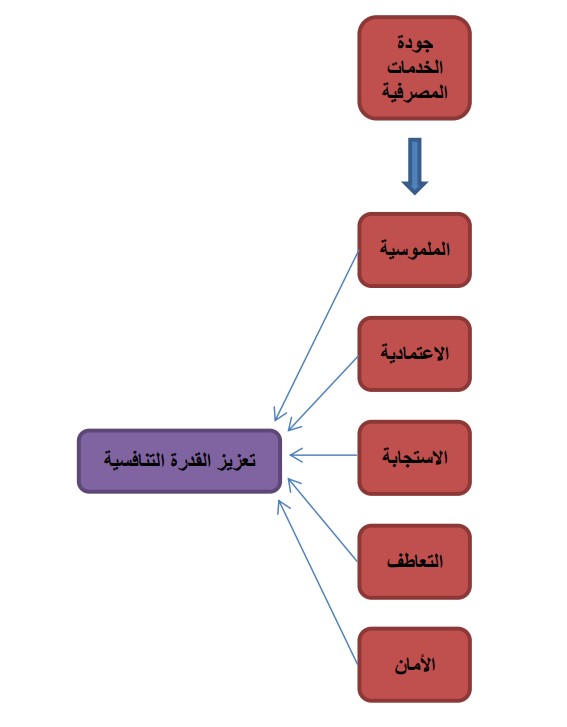
This study aims to assess the impact of the quality of Air Navigation Services on the competitive advantage of the Sana'a Flight Information Region (FIR) within the Civil Aviation and Meteorology Authority (CAMA) of the Republic of Yemen. To achieve this objective, a quantitative research methodology was employed, utilizing a descriptive-analytical approach. A questionnaire was designed to collect primary data on the independent variable (quality) and the dependent variable (competitive advantage of Sana'a FIR), using a comprehensive survey method. The survey targeted 120 employees and air traffic controllers in the Air Navigation Sector of CAMA, yielding 98 valid responses. Data analysis was performed using SPSS. The results indicated a strong positive correlation between the quality of services provided and the competitive advantage of Sana'a FIR. Notably, tangibles and responsiveness were found to be crucial in enhancing this advantage. While reliability and safety are important factors, the statistical analysis did not reveal a direct impact on the competitive advantage of Sana'a FIR.
Ashraf Yahya Ahmed Shenaif, Nabil Mohammed Ali Al-Olofi (2024). The Impact of Quality Navigation Services on the Competitive Advantage of Sana’a Flight Information Region (FIR): A Study of the Civil Aviation and Meteorology Authority. Sana'a University Journal of Human Sciences, 386-397. DOI: https://doi.org/10.59628/jhs.v3i6.1125
Ashraf Yahya Ahmed Shenaif, Nabil Mohammed Ali Al-Olofi. “ The Impact of Quality Navigation Services on the Competitive Advantage of Sana’a Flight Information Region (FIR): A Study of the Civil Aviation and Meteorology Authority.” Sana'a University Journal of Human Sciences, 2024, pp. 386-397. https://doi.org/10.59628/jhs.v3i6.1125. Accessed 9 Sep. 2026.
Ashraf Yahya Ahmed Shenaif, Nabil Mohammed Ali Al-Olofi. 2024. “ The Impact of Quality Navigation Services on the Competitive Advantage of Sana’a Flight Information Region (FIR): A Study of the Civil Aviation and Meteorology Authority.” Sana'a University Journal of Human Sciences : 386-397. DOI: https://doi.org/10.59628/jhs.v3i6.1125
Ashraf Yahya Ahmed Shenaif, Nabil Mohammed Ali Al-Olofi (2024) ‘ The Impact of Quality Navigation Services on the Competitive Advantage of Sana’a Flight Information Region (FIR): A Study of the Civil Aviation and Meteorology Authority’, Sana'a University Journal of Human Sciences, pp. 386-397. doi: 10.59628/jhs.v3i6.1125
@article{jhs2024_art1125,
author = {Ashraf Yahya Ahmed Shenaif, Nabil Mohammed Ali Al-Olofi},
title = { The Impact of Quality Navigation Services on the Competitive Advantage of Sana’a Flight Information Region (FIR): A Study of the Civil Aviation and Meteorology Authority},
journal = {Sana'a University Journal of Human Sciences}, year = {2024}, month = {October}, pages = {386-397}, doi = {10.59628/jhs.v3i6.1125},
url = {https://doi.org/10.59628/jhs.v3i6.1125},}
This study aimed to identify the role of the Board of Directors, in its dimensions (supervisory commitment, oversight commitment, ethical commitment), in implementing governance in Yemeni banks, and to examine the level of application of governance principles, in its dimensions (transparency, accountability, fairness, responsibility), in Yemeni private banks. The study adopted a descriptive-analytical approach and used a questionnaire to collect data from a sample of 443 administrative and supervisory leaders in Yemeni private banks. Data were analyzed using SPSS. The study found that the Board of Directors in the banks under study adheres to its role in implementing bank governance at a high level, reaching 81%. It also revealed a statistically significant role of the Board of Directors in applying governance principles, as the Board explained 45.7% of the variance in the implementation of governance principles in the banks under study. The study recommended that the Central Bank update the Banks’ Governance Guide according to the latest international principles and best practices in governance. It also recommended enhancing the Boards of Directors in Yemeni banks to effectively apply governance principles by developing a comprehensive framework that includes clear policies and procedures to promote transparency, accountability, fairness, and responsibility at all organizational levels.
Omar Qasem Al-Muzallam, Jamal Dirhem Zaid (2026). " The Role of the Board of Directors in Implementing Governance in Yemeni Banks :A Field Study in Yemeni Private Banks". Sana'a University Journal of Human Sciences, 589 - 623. DOI: https://doi.org/10.59628/jhs.v5i7.2587
Omar Qasem Al-Muzallam, Jamal Dirhem Zaid. “" The Role of the Board of Directors in Implementing Governance in Yemeni Banks :A Field Study in Yemeni Private Banks".” Sana'a University Journal of Human Sciences, 2026, pp. 589 - 623. https://doi.org/10.59628/jhs.v5i7.2587. Accessed 9 Sep. 2026.
Omar Qasem Al-Muzallam, Jamal Dirhem Zaid. 2026. “" The Role of the Board of Directors in Implementing Governance in Yemeni Banks :A Field Study in Yemeni Private Banks".” Sana'a University Journal of Human Sciences : 589 - 623. DOI: https://doi.org/10.59628/jhs.v5i7.2587
Omar Qasem Al-Muzallam, Jamal Dirhem Zaid (2026) ‘" The Role of the Board of Directors in Implementing Governance in Yemeni Banks :A Field Study in Yemeni Private Banks"’, Sana'a University Journal of Human Sciences, pp. 589 - 623. doi: 10.59628/jhs.v5i7.2587
@article{jhs2026_art2587,
author = {Omar Qasem Al-Muzallam, Jamal Dirhem Zaid},
title = {" The Role of the Board of Directors in Implementing Governance in Yemeni Banks :A Field Study in Yemeni Private Banks"},
journal = {Sana'a University Journal of Human Sciences}, year = {2026}, month = {July}, pages = {589 - 623}, doi = {10.59628/jhs.v5i7.2587},
url = {https://doi.org/10.59628/jhs.v5i7.2587},}
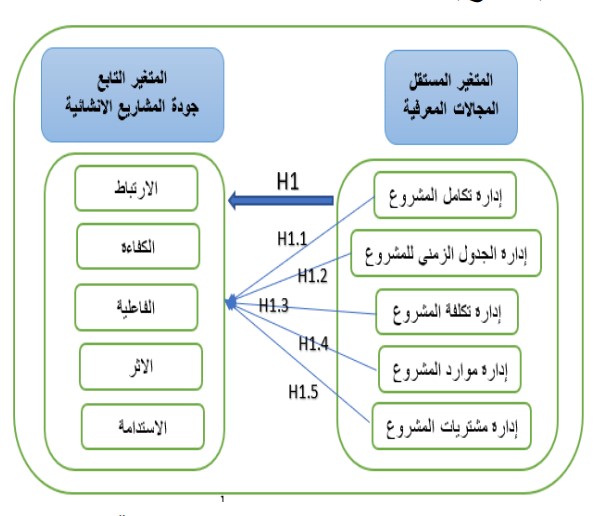
The study aimed to analyze the relationship between the knowledge areas of construction projects according to the (PMBOK) framework, with its dimensions: (Project Integration Management, Project Schedule Management, Project Cost Management, Project Resource Management, and Project Procurement Management), and the quality of construction projects (USAID) with its dimensions: (Relevance, Efficiency, Effectiveness, Impact, and Sustainability) in the construction sector of the Yemeni Economic Corporation. The study adopted a descriptive-analytical approach and used a comprehensive survey method, targeting a sample of 73 employees.
The study found a strong positive and statistically significant relationship between the knowledge areas and project quality, with Project Resource Management and Project Integration Management having the most significant impact.
The study recommended adopting (PMBOK) standards as a mandatory system for project management, enhancing training and capacity building in project design, implementation, and management, and increasing awareness of quality management through training courses and workshops. It also emphasized implementing a quality system based on the five quality standards as a measurement tool to ensure efficiency, sustainability, and continuous improvement of construction projects.
Abdullah Abdullrab Ahmed Abdulkarem , Abdullah Ali Al-Qurashi (2025). "The Knowledge Areas of Project Management and Their Relationship with the Quality of Construction Projects" A Field Study in the Construction Sector of the Yemeni Economic Corporation. Sana'a University Journal of Human Sciences, 500 – 536. DOI: https://doi.org/10.59628/jhs.v4i3.1233
Abdullah Abdullrab Ahmed Abdulkarem , Abdullah Ali Al-Qurashi. “"The Knowledge Areas of Project Management and Their Relationship with the Quality of Construction Projects" A Field Study in the Construction Sector of the Yemeni Economic Corporation.” Sana'a University Journal of Human Sciences, 2025, pp. 500 – 536. https://doi.org/10.59628/jhs.v4i3.1233. Accessed 9 Sep. 2026.
Abdullah Abdullrab Ahmed Abdulkarem , Abdullah Ali Al-Qurashi. 2025. “"The Knowledge Areas of Project Management and Their Relationship with the Quality of Construction Projects" A Field Study in the Construction Sector of the Yemeni Economic Corporation.” Sana'a University Journal of Human Sciences : 500 – 536. DOI: https://doi.org/10.59628/jhs.v4i3.1233
Abdullah Abdullrab Ahmed Abdulkarem , Abdullah Ali Al-Qurashi (2025) ‘"The Knowledge Areas of Project Management and Their Relationship with the Quality of Construction Projects" A Field Study in the Construction Sector of the Yemeni Economic Corporation’, Sana'a University Journal of Human Sciences, pp. 500 – 536. doi: 10.59628/jhs.v4i3.1233
@article{jhs2025_art1233,
author = {Abdullah Abdullrab Ahmed Abdulkarem , Abdullah Ali Al-Qurashi},
title = {"The Knowledge Areas of Project Management and Their Relationship with the Quality of Construction Projects" A Field Study in the Construction Sector of the Yemeni Economic Corporation},
journal = {Sana'a University Journal of Human Sciences}, year = {2025}, month = {March}, pages = {500 – 536}, doi = {10.59628/jhs.v4i3.1233},
url = {https://doi.org/10.59628/jhs.v4i3.1233},}
This study aims to identify the role of Human Resource Management (HRM) in enhancing Organizational Citizenship Behavior (OCB) within international humanitarian organizations operating in Yemen. It analyzes the relationship between HRM practices (planning, organizing, recruitment, and development) and employees’ OCB. The study adopted a descriptive-analytical methodology and was applied to a stratified random sample of 186 employees out of a total population of 361 working in three international organizations in Sana’a: the World Health Organization (WHO), UNICEF, and the World Food Programme (WFP). The results revealed a high level of HRM practices and OCB overall, with some variation among their dimensions. Furthermore, the findings indicated a statistically significant relationship between HRM practices and OCB. The study recommends strengthening HRM practices, involving employees in development plans, and improving organizational structures and recruitment policies to enhance loyalty and job stability.
Ahlam Ahmed Hajar Hameed Al-Maghrabi, Abdulaziz Mohammed Ahmed Al-Mukhlafi (2026). "The Role of Human Resource Management in Enhancing Organizational Citizenship Behavior in International Humanitarian Organizations Operating in Yemen". Sana'a University Journal of Human Sciences, 37 - 72. DOI: https://doi.org/10.59628/jhs.v5i7.2305
Ahlam Ahmed Hajar Hameed Al-Maghrabi, Abdulaziz Mohammed Ahmed Al-Mukhlafi. “"The Role of Human Resource Management in Enhancing Organizational Citizenship Behavior in International Humanitarian Organizations Operating in Yemen".” Sana'a University Journal of Human Sciences, 2026, pp. 37 - 72. https://doi.org/10.59628/jhs.v5i7.2305. Accessed 9 Sep. 2026.
Ahlam Ahmed Hajar Hameed Al-Maghrabi, Abdulaziz Mohammed Ahmed Al-Mukhlafi. 2026. “"The Role of Human Resource Management in Enhancing Organizational Citizenship Behavior in International Humanitarian Organizations Operating in Yemen".” Sana'a University Journal of Human Sciences : 37 - 72. DOI: https://doi.org/10.59628/jhs.v5i7.2305
Ahlam Ahmed Hajar Hameed Al-Maghrabi, Abdulaziz Mohammed Ahmed Al-Mukhlafi (2026) ‘"The Role of Human Resource Management in Enhancing Organizational Citizenship Behavior in International Humanitarian Organizations Operating in Yemen"’, Sana'a University Journal of Human Sciences, pp. 37 - 72. doi: 10.59628/jhs.v5i7.2305
@article{jhs2026_art2305,
author = {Ahlam Ahmed Hajar Hameed Al-Maghrabi, Abdulaziz Mohammed Ahmed Al-Mukhlafi},
title = {"The Role of Human Resource Management in Enhancing Organizational Citizenship Behavior in International Humanitarian Organizations Operating in Yemen"},
journal = {Sana'a University Journal of Human Sciences}, year = {2026}, month = {July}, pages = {37 - 72}, doi = {10.59628/jhs.v5i7.2305},
url = {https://doi.org/10.59628/jhs.v5i7.2305},}
The study aimed to measure the role of intellectual capital with its dimensions (human capital, structural capital, and customer capital) in implementing Total Quality Management (TQM) with its dimensions (customer focus, continuous improvement, top management commitment, and employee participation) in commercial banks in the capital city of Sana'a. The study population consisted of employees from the general administration and branches of commercial banks operating in Sana'a, totaling 1,505 individuals. A stratified random sample of 439 respondents from different job levels was selected. The study found that intellectual capital was at a high level across all its dimensions. The results also showed that the dimensions of TQM (customer focus, continuous improvement, top management commitment, and employee participation) were also at high levels, indicating that the banks adopt TQM practices. Additionally, the study revealed a strong, statistically significant relationship and impact of all intellectual capital dimensions on Total Quality Management.
Fadl Mohammed Almahmodi, Yahya Mohammed Yahya Almazhani (2026). "The role of intellectual capital in the application of comprehensive quality management " A field study on Yemeni commercial banks operating in the capital, Sana'a. Sana'a University Journal of Human Sciences, 86- 110. DOI: https://doi.org/10.59628/jhs.v5i2.1981
Fadl Mohammed Almahmodi, Yahya Mohammed Yahya Almazhani. “"The role of intellectual capital in the application of comprehensive quality management " A field study on Yemeni commercial banks operating in the capital, Sana'a.” Sana'a University Journal of Human Sciences, 2026, pp. 86- 110. https://doi.org/10.59628/jhs.v5i2.1981. Accessed 9 Sep. 2026.
Fadl Mohammed Almahmodi, Yahya Mohammed Yahya Almazhani. 2026. “"The role of intellectual capital in the application of comprehensive quality management " A field study on Yemeni commercial banks operating in the capital, Sana'a.” Sana'a University Journal of Human Sciences : 86- 110. DOI: https://doi.org/10.59628/jhs.v5i2.1981
Fadl Mohammed Almahmodi, Yahya Mohammed Yahya Almazhani (2026) ‘"The role of intellectual capital in the application of comprehensive quality management " A field study on Yemeni commercial banks operating in the capital, Sana'a’, Sana'a University Journal of Human Sciences, pp. 86- 110. doi: 10.59628/jhs.v5i2.1981
@article{jhs2026_art1981,
author = {Fadl Mohammed Almahmodi, Yahya Mohammed Yahya Almazhani},
title = {"The role of intellectual capital in the application of comprehensive quality management " A field study on Yemeni commercial banks operating in the capital, Sana'a},
journal = {Sana'a University Journal of Human Sciences}, year = {2026}, month = {February}, pages = {86- 110}, doi = {10.59628/jhs.v5i2.1981},
url = {https://doi.org/10.59628/jhs.v5i2.1981},}
The study aimed to verify the effectiveness of activating investment instruments through crowdfunding platforms to evaluate the Saudi experience from the point of view of users of crowdfunding platforms who have a real experience in investing through these platforms. To achieve the study objectives, the researcher used the analytical descriptive approach by applying the electronic questionnaire to a random sample of 120 users. The results revealed that the reality of applying the regulatory, legislative, legal and economic dimensions in supporting the activation of investment instruments through crowdfunding platforms in Saudi Arabia was high. The results also revealed a range of challenges facing investors in crowdfunding platforms, most notably weak transparency and disclosure, difficulty in verifying the credibility of projects, limited exit options and weak liquidity, as well as the lack of adequate legal protection and some legitimate and cognitive risks. The study recommended that regulatory and legislative frameworks related to crowdfunding platforms and investment instruments should be further developed to keep pace with global technical and financial developments and enhance investor confidence.
Yahya Abdullah Ahmed Qatran, Abdulmajid Obaid Hasan Saleh (2026). Activating Investment Sukuk through Crowdfunding Platforms: An Evaluation of the Saudi Experience. Sana'a University Journal of Human Sciences, 1 - 20. DOI: https://doi.org/10.59628/jhs.v5i5.2512
Yahya Abdullah Ahmed Qatran, Abdulmajid Obaid Hasan Saleh. “Activating Investment Sukuk through Crowdfunding Platforms: An Evaluation of the Saudi Experience.” Sana'a University Journal of Human Sciences, 2026, pp. 1 - 20. https://doi.org/10.59628/jhs.v5i5.2512. Accessed 9 Sep. 2026.
Yahya Abdullah Ahmed Qatran, Abdulmajid Obaid Hasan Saleh. 2026. “Activating Investment Sukuk through Crowdfunding Platforms: An Evaluation of the Saudi Experience.” Sana'a University Journal of Human Sciences : 1 - 20. DOI: https://doi.org/10.59628/jhs.v5i5.2512
Yahya Abdullah Ahmed Qatran, Abdulmajid Obaid Hasan Saleh (2026) ‘Activating Investment Sukuk through Crowdfunding Platforms: An Evaluation of the Saudi Experience’, Sana'a University Journal of Human Sciences, pp. 1 - 20. doi: 10.59628/jhs.v5i5.2512
@article{jhs2026_art2512,
author = {Yahya Abdullah Ahmed Qatran, Abdulmajid Obaid Hasan Saleh},
title = {Activating Investment Sukuk through Crowdfunding Platforms: An Evaluation of the Saudi Experience},
journal = {Sana'a University Journal of Human Sciences}, year = {2026}, month = {May}, pages = {1 - 20}, doi = {10.59628/jhs.v5i5.2512},
url = {https://doi.org/10.59628/jhs.v5i5.2512},}
The study aimed to provide a rigorous economic analysis of fishery production in Yemen from 1990 to 2021. It highlighted the sector’s potential to enhance food security and national income, as well as its strategic importance. The fisheries sector contributes approximately 1.7% to the gross domestic product (GDP) and provides employment for approximately 700,000 people. Despite its extensive coastline and rich marine resources, Yemen's fishery production remains low, averaging only 159,258 tons per year. This figure is significantly below the sector’s sustainable capacity of 500,000 tons per year without compromising fish stock levels.
The results showed that the average fish production reached approximately 159,258 tons annually during the study period, with a general upward trend at an annual growth rate of 2.54%. However, the production efficiency of both fishermen and boats declined significantly. The productivity per fisherman dropped from 4.64 tons per fisherman in 2003 to 1.11 tons in 2018, and boat efficiency also deteriorated. The study attributes this decline to structural challenges such as lack of modern knowledge, absence of government support, high fishing costs, and the impact of the Conflict in Yemen, which has hindered access to fishing areas.
The study employed standard econometric models to estimate the impact of several economic variables (number of fishermen, number of boats, prices, consumption, and imports), in addition to a dummy variable reflecting the impact of the Conflict against production since 2015. The results revealed statistically significant positive relationships between production and both the number of fishermen and local consumption. Meanwhile, the model showed that the Conflict led to a 39.4% decrease in production, equivalent to a productivity loss of approximately 60,000 tons per year.
The study adopted a double-logarithmic model that explained 91% of the variations in fish production, making it a highly efficient model for interpreting the Yemeni reality. The study recommends formulating national strategies for the recovery of the fisheries sector, including supporting fishermen, developing infrastructure, and ensuring maritime security, in order to achieve food security and sustainable development.
. Marzooq A Mohsen, Ali Alysani (2026). An Analytical Economic Study of Fish Production in Yemen During the Period 1990-2021. Sana'a University Journal of Human Sciences, 601 - 626. DOI: https://doi.org/10.59628/jhs.v5i6.2019
. Marzooq A Mohsen, Ali Alysani. “An Analytical Economic Study of Fish Production in Yemen During the Period 1990-2021.” Sana'a University Journal of Human Sciences, 2026, pp. 601 - 626. https://doi.org/10.59628/jhs.v5i6.2019. Accessed 9 Sep. 2026.
. Marzooq A Mohsen, Ali Alysani. 2026. “An Analytical Economic Study of Fish Production in Yemen During the Period 1990-2021.” Sana'a University Journal of Human Sciences : 601 - 626. DOI: https://doi.org/10.59628/jhs.v5i6.2019
. Marzooq A Mohsen, Ali Alysani (2026) ‘An Analytical Economic Study of Fish Production in Yemen During the Period 1990-2021’, Sana'a University Journal of Human Sciences, pp. 601 - 626. doi: 10.59628/jhs.v5i6.2019
@article{jhs2026_art2019,
author = {. Marzooq A Mohsen, Ali Alysani},
title = {An Analytical Economic Study of Fish Production in Yemen During the Period 1990-2021},
journal = {Sana'a University Journal of Human Sciences}, year = {2026}, month = {June}, pages = {601 - 626}, doi = {10.59628/jhs.v5i6.2019},
url = {https://doi.org/10.59628/jhs.v5i6.2019},}
The study aimed to identify crisis management according to Imam Al-Maqrizi in his book (Eghathat Al Umma Fi Kashf Al Ghumma), introducing Imam Al-Maqrizi as one of the most prominent Muslim scholars, highlighting his scientific standing, and seeking to find out the book (Eghathat Al Umma Fi Kashf Al Ghumma), and the scientific material it contains, and a statement of the author's approach. The study used a qualitative approach using inductive and deductive content analysis. The study reached many results, the most important of which are: Al-Maqrizi’s contribution to administrative thought, his precedence in establishing many economic theories, his rooting of crises, and his presentation of an analysis of various economic, social, and political phenomena by clarifying their causes and consequences in order to achieve the integrated construction of administrative theory, and Al-Maqrizi’s interest in the economic problems resulting from various crises, studying the phenomena of those crises and tribulations, and identifying their economic and political repercussions, in addition to Al-Maqrizi’s agreement in his book Relief for the Nation by Revealing the Grief in his explanation of the crises and explaining their causes, and detailing their factors and stages of emergence, and the differences in their severity and impact, with modern theories of crisis management.
Akram Mohammed Al-Arashani (2024). Crisis management according to Imam Taqi Al-Din Ahmed Al-Maqrizi in his book )Eghathat Al Umma Fi Kashf Al Ghumma). Sana'a University Journal of Human Sciences, 379 - 397. DOI: https://doi.org/10.59628/jhs.v3i8.1294
Akram Mohammed Al-Arashani. “Crisis management according to Imam Taqi Al-Din Ahmed Al-Maqrizi in his book )Eghathat Al Umma Fi Kashf Al Ghumma).” Sana'a University Journal of Human Sciences, 2024, pp. 379 - 397. https://doi.org/10.59628/jhs.v3i8.1294. Accessed 9 Sep. 2026.
Akram Mohammed Al-Arashani. 2024. “Crisis management according to Imam Taqi Al-Din Ahmed Al-Maqrizi in his book )Eghathat Al Umma Fi Kashf Al Ghumma).” Sana'a University Journal of Human Sciences : 379 - 397. DOI: https://doi.org/10.59628/jhs.v3i8.1294
Akram Mohammed Al-Arashani (2024) ‘Crisis management according to Imam Taqi Al-Din Ahmed Al-Maqrizi in his book )Eghathat Al Umma Fi Kashf Al Ghumma)’, Sana'a University Journal of Human Sciences, pp. 379 - 397. doi: 10.59628/jhs.v3i8.1294
@article{jhs2024_art1294,
author = {Akram Mohammed Al-Arashani},
title = {Crisis management according to Imam Taqi Al-Din Ahmed Al-Maqrizi in his book )Eghathat Al Umma Fi Kashf Al Ghumma)},
journal = {Sana'a University Journal of Human Sciences}, year = {2024}, month = {December}, pages = {379 - 397}, doi = {10.59628/jhs.v3i8.1294},
url = {https://doi.org/10.59628/jhs.v3i8.1294},}
Study aimed to determination effect of supply chain integration (SCI) in its dimensions (internal integration, supplier's integration, customer's integration) on organizational performance (OP) in Yemeni pharmaceutical companies and learn about the best practices of integration, which have the most effect on OP. Study used the descriptive analytical method using a questionnaire, where 350 questionnaires were distributed, 325 questionnaires were retrieved, of which 311 were valid for analysis. The study population was represented in 10 operating companies, and the data was analyzed using SPSS ver. 28. The most important results of the study were the existence of an application of the dimensions of SCI in the companies under study, especially supplier's integration, followed by internal integration. Study also demonstrated that there is an effect of SCI in its dimensions on OP, as the correlation was strong at 74.5% and that 55.5% of changes in OP are due to SCI.
Study also showed that the internal integration is the most influential, followed by the customer's integration, while there is no effect for the supplier's integration.
Study recommends increasing interest in applying the customer's integration, as it is the least applied and in internal integration because of its significant effect on OP.
Omar Mohammed Ali Abdulrab, Mogahed Yahya Al-Mashriqy (2024). Effect of Supply Chain Integration on Organizational Performance in Yemeni Pharmaceutical Companies". Sana'a University Journal of Human Sciences, 26 -54. DOI: https://doi.org/10.59628/jhs.v2i1.849
Omar Mohammed Ali Abdulrab, Mogahed Yahya Al-Mashriqy. “Effect of Supply Chain Integration on Organizational Performance in Yemeni Pharmaceutical Companies".” Sana'a University Journal of Human Sciences, 2024, pp. 26 -54. https://doi.org/10.59628/jhs.v2i1.849. Accessed 9 Sep. 2026.
Omar Mohammed Ali Abdulrab, Mogahed Yahya Al-Mashriqy. 2024. “Effect of Supply Chain Integration on Organizational Performance in Yemeni Pharmaceutical Companies".” Sana'a University Journal of Human Sciences : 26 -54. DOI: https://doi.org/10.59628/jhs.v2i1.849
Omar Mohammed Ali Abdulrab, Mogahed Yahya Al-Mashriqy (2024) ‘Effect of Supply Chain Integration on Organizational Performance in Yemeni Pharmaceutical Companies"’, Sana'a University Journal of Human Sciences, pp. 26 -54. doi: 10.59628/jhs.v2i1.849
@article{jhs2024_art849,
author = {Omar Mohammed Ali Abdulrab, Mogahed Yahya Al-Mashriqy},
title = {Effect of Supply Chain Integration on Organizational Performance in Yemeni Pharmaceutical Companies"},
journal = {Sana'a University Journal of Human Sciences}, year = {2024}, month = {April}, pages = {26 -54}, doi = {10.59628/jhs.v2i1.849},
url = {https://doi.org/10.59628/jhs.v2i1.849},}
This study aims to investigate the impact of electronic management on financial performance in Yemeni mobile phone companies. The researcher used a descriptive and analytical approach، and data collection relied on a questionnaire tool. The study population consists of five mobile phone companies in Yemen، and the sample size is 301، using a comprehensive random sampling method. The data was analyzed and the results were presented using the statistical software (SPSS-27) and (AMOS-26). The study reveals that the level of availability of electronic management in its dimensions (human components، physical components، database، reports) in mobile phone companies is generally high، with an average of 5.08، a standard deviation of 1.05، and a percentage of 73%. It also found that the level of availability of financial performance in its dimensions (return on equity، return on assets) in mobile phone companies is generally high، with an average of 4.89، a standard deviation of 1.24، and a percentage of 70%. One of the notable results of the study is the statistically significant positive impact of electronic management on financial performance in mobile phone companies.
Abdualfatah Ibrahim Al-Mualmi, Mohamed Ali Al-Makradi, Senan Ghaleb Al-Marhdi (2024). Electronic Management and Its Impact on Financial Performance (Afield Study in Mobile Phone Companies). Sana'a University Journal of Human Sciences, 183- 216. DOI: https://doi.org/10.59628/jhs.v1i2.790
Abdualfatah Ibrahim Al-Mualmi, Mohamed Ali Al-Makradi, Senan Ghaleb Al-Marhdi. “Electronic Management and Its Impact on Financial Performance (Afield Study in Mobile Phone Companies).” Sana'a University Journal of Human Sciences, 2024, pp. 183- 216. https://doi.org/10.59628/jhs.v1i2.790. Accessed 9 Sep. 2026.
Abdualfatah Ibrahim Al-Mualmi, Mohamed Ali Al-Makradi, Senan Ghaleb Al-Marhdi. 2024. “Electronic Management and Its Impact on Financial Performance (Afield Study in Mobile Phone Companies).” Sana'a University Journal of Human Sciences : 183- 216. DOI: https://doi.org/10.59628/jhs.v1i2.790
Abdualfatah Ibrahim Al-Mualmi, Mohamed Ali Al-Makradi, Senan Ghaleb Al-Marhdi (2024) ‘Electronic Management and Its Impact on Financial Performance (Afield Study in Mobile Phone Companies)’, Sana'a University Journal of Human Sciences, pp. 183- 216. doi: 10.59628/jhs.v1i2.790
@article{jhs2024_art790,
author = {Abdualfatah Ibrahim Al-Mualmi, Mohamed Ali Al-Makradi, Senan Ghaleb Al-Marhdi},
title = {Electronic Management and Its Impact on Financial Performance (Afield Study in Mobile Phone Companies)},
journal = {Sana'a University Journal of Human Sciences}, year = {2024}, month = {March}, pages = {183- 216}, doi = {10.59628/jhs.v1i2.790},
url = {https://doi.org/10.59628/jhs.v1i2.790},}
This study aimed to evaluate the efficiency and sustainability of food security and agriculture projects implemented by UN and international organizations in Yemen, amid the country’s challenging humanitarian and economic conditions. The study employed a descriptive-analytical approach and relied on primary data collected through a structured questionnaire. The study population consisted of 19 UN and international organizations, selected using a comprehensive enumeration method. A total of 190 questionnaires were distributed, and 158 valid responses were retrieved for analysis.
The results showed that the efficiency criterion was applied with a mean score of 4.07, while the sustainability criterion scored a mean of 3.63, indicating the need to strengthen sustainability aspects in project design and implementation. Furthermore, the findings revealed no statistically significant differences in respondents’ mean estimates regarding the evaluation of project efficiency and sustainability, attributed to personal and organizational variables.
The study recommended enhancing coordination between UN and international organizations and relevant government agencies to ensure efficiency, sustainability, and funding continuity. It also emphasized supporting sustainable agricultural projects, such as the adoption of modern technologies and the construction of greenhouses, due to their role in improving agricultural productivity, increasing farmers’ income, and strengthening food security in Yemen.
Akram Abdullah ALi Gushim, Khalid Nassir Mohamad AL-haj , Eman Abdullah Hussin Aljlal, Ebrahim Hasan Abdullah Albar (2025). Evaluation of the Efficiency and Sustainability of Food security and Agriculture Projects implemented by UN and international organizations in Yemen. Sana'a University Journal of Human Sciences, 552 - 580. DOI: https://doi.org/10.59628/jhs.v4i11.2082
Akram Abdullah ALi Gushim, Khalid Nassir Mohamad AL-haj , Eman Abdullah Hussin Aljlal, Ebrahim Hasan Abdullah Albar. “Evaluation of the Efficiency and Sustainability of Food security and Agriculture Projects implemented by UN and international organizations in Yemen.” Sana'a University Journal of Human Sciences, 2025, pp. 552 - 580. https://doi.org/10.59628/jhs.v4i11.2082. Accessed 9 Sep. 2026.
Akram Abdullah ALi Gushim, Khalid Nassir Mohamad AL-haj , Eman Abdullah Hussin Aljlal, Ebrahim Hasan Abdullah Albar. 2025. “Evaluation of the Efficiency and Sustainability of Food security and Agriculture Projects implemented by UN and international organizations in Yemen.” Sana'a University Journal of Human Sciences : 552 - 580. DOI: https://doi.org/10.59628/jhs.v4i11.2082
Akram Abdullah ALi Gushim, Khalid Nassir Mohamad AL-haj , Eman Abdullah Hussin Aljlal, Ebrahim Hasan Abdullah Albar (2025) ‘Evaluation of the Efficiency and Sustainability of Food security and Agriculture Projects implemented by UN and international organizations in Yemen’, Sana'a University Journal of Human Sciences, pp. 552 - 580. doi: 10.59628/jhs.v4i11.2082
@article{jhs2025_art2082,
author = {Akram Abdullah ALi Gushim, Khalid Nassir Mohamad AL-haj , Eman Abdullah Hussin Aljlal, Ebrahim Hasan Abdullah Albar},
title = {Evaluation of the Efficiency and Sustainability of Food security and Agriculture Projects implemented by UN and international organizations in Yemen},
journal = {Sana'a University Journal of Human Sciences}, year = {2025}, month = {November}, pages = {552 - 580}, doi = {10.59628/jhs.v4i11.2082},
url = {https://doi.org/10.59628/jhs.v4i11.2082},}
The aim of the research is to know the impact of customs smuggling on the national economy, especially after the impact of the aggression on our homeland. After the war waged by the coalition countries directly affected the economic situation in Yemen, both industrial and commercial, including targeting ports, airports, tankers, etc., in addition to obstructing the flow of international trade to and from the territory of the Republic of Yemen
The descriptive analytical approach was used to delve into the depths of the current study through the preliminary data that we obtained to address the phenomenon, and the most prominent findings of the study are:
Yemen has suffered huge economic losses over the past seven years of war and blockade, which has led to increased poverty, unemployment and acute malnutrition.
Increased unemployment and an economic contraction exceeding 50%, according to official international reports.
Hassan Abduallah Ali Ghalab (2023). Exacerbation of customs smuggling and its effects on the national economy. Sana'a University Journal of Human Sciences. DOI: https://doi.org/10.59628/jhs.v3i1.209
Hassan Abduallah Ali Ghalab. “Exacerbation of customs smuggling and its effects on the national economy.” Sana'a University Journal of Human Sciences, 2023, https://doi.org/10.59628/jhs.v3i1.209. Accessed 9 Sep. 2026.
Hassan Abduallah Ali Ghalab. 2023. “Exacerbation of customs smuggling and its effects on the national economy.” Sana'a University Journal of Human Sciences DOI: https://doi.org/10.59628/jhs.v3i1.209
Hassan Abduallah Ali Ghalab (2023) ‘Exacerbation of customs smuggling and its effects on the national economy’, Sana'a University Journal of Human Sciences. doi: 10.59628/jhs.v3i1.209
@article{jhs2023_art209,
author = {Hassan Abduallah Ali Ghalab},
title = {Exacerbation of customs smuggling and its effects on the national economy},
journal = {Sana'a University Journal of Human Sciences}, year = {2023}, month = {May}, doi = {10.59628/jhs.v3i1.209},
url = {https://doi.org/10.59628/jhs.v3i1.209},}
The study aimed to examining the mediating role of Functional Flexibility in the relationship between Human Resources Management Functions & Educational Services Quality in University of Dongola. The problem of the study focuses on decrease of Educational Services Quality level in University of Dongola because of unawareness of implementing effective managerial systems as well as Human Resources Management The study was conducted on a sample of (187) teaching staff members working at University of Dongola, using the survey method. The results of path analysis showed that the partial mediation was achieved, as the value of the indirect effect of Human Resources Management Functions on Educational Services Quality through the median variable (Functional Flexibility) (0.176) was statistically significant. The study recommends that the need to increase awareness of achieving Functional Flexibility for teaching staff members, and focusing on applying Human Resources Management Functions at University of Dongola.
Mahmoud Abdelmuty Hashim Abdelhameed (2025). Examining the Mediating Role of Functional Flexibility in the Relationship Between Human Resources Management Functions & Educational Services Quality at University of Dongola. Sana'a University Journal of Human Sciences, 228 – 256. DOI: https://doi.org/10.59628/jhs.v4i4.1421
Mahmoud Abdelmuty Hashim Abdelhameed . “Examining the Mediating Role of Functional Flexibility in the Relationship Between Human Resources Management Functions & Educational Services Quality at University of Dongola.” Sana'a University Journal of Human Sciences, 2025, pp. 228 – 256. https://doi.org/10.59628/jhs.v4i4.1421. Accessed 9 Sep. 2026.
Mahmoud Abdelmuty Hashim Abdelhameed . 2025. “Examining the Mediating Role of Functional Flexibility in the Relationship Between Human Resources Management Functions & Educational Services Quality at University of Dongola.” Sana'a University Journal of Human Sciences : 228 – 256. DOI: https://doi.org/10.59628/jhs.v4i4.1421
Mahmoud Abdelmuty Hashim Abdelhameed (2025) ‘Examining the Mediating Role of Functional Flexibility in the Relationship Between Human Resources Management Functions & Educational Services Quality at University of Dongola’, Sana'a University Journal of Human Sciences, pp. 228 – 256. doi: 10.59628/jhs.v4i4.1421
@article{jhs2025_art1421,
author = {Mahmoud Abdelmuty Hashim Abdelhameed },
title = {Examining the Mediating Role of Functional Flexibility in the Relationship Between Human Resources Management Functions & Educational Services Quality at University of Dongola},
journal = {Sana'a University Journal of Human Sciences}, year = {2025}, month = {April}, pages = {228 – 256}, doi = {10.59628/jhs.v4i4.1421},
url = {https://doi.org/10.59628/jhs.v4i4.1421},}
Health management defines goals and coordinates the activities of the administrative, medical and professional workforce in order to achieve the desired and expected goals in health institutions, This study aimed to identify the obstacles facing the administrative work in the health section in Sana'a Governorate directorates to reach conclusions and recommendations that may work to limit these obstacles in order to improve the quality of health services. After reviewing the previous studies related to the subject of the study, the researcher used descriptive analytical method, relying on the collection of data on the questionnaire tool that was distributed to the community of the study consisting of 35 health, hospitals and programs managers in the directorates of Sana'a Governorate. The data were analyzed using statistical program software system (SPSS).
The results show an existence of administrative, technical, economic and socio-cultural obstacles affecting the administrative work in health section in directorates of Sana'a Governorate. The economic obstacles were the highest with an average of (4.04) followed by technical and professional obstacles with an average of (4) and thirdly the administrative obstacles with an average of (3.80) while socio-cultural obstacles came at last with an average of (3.54).
Abbas Mohammed Alarafy, Ahmed mohsen ALkohaly (2024). Health Administration Obstacles from the Perspective of Health and Hospitals Managers in Sana'a Governorate. Sana'a University Journal of Human Sciences, 528-574. DOI: https://doi.org/10.59628/jhs.v3i6.1174
Abbas Mohammed Alarafy, Ahmed mohsen ALkohaly. “Health Administration Obstacles from the Perspective of Health and Hospitals Managers in Sana'a Governorate.” Sana'a University Journal of Human Sciences, 2024, pp. 528-574. https://doi.org/10.59628/jhs.v3i6.1174. Accessed 9 Sep. 2026.
Abbas Mohammed Alarafy, Ahmed mohsen ALkohaly. 2024. “Health Administration Obstacles from the Perspective of Health and Hospitals Managers in Sana'a Governorate.” Sana'a University Journal of Human Sciences : 528-574. DOI: https://doi.org/10.59628/jhs.v3i6.1174
Abbas Mohammed Alarafy, Ahmed mohsen ALkohaly (2024) ‘Health Administration Obstacles from the Perspective of Health and Hospitals Managers in Sana'a Governorate’, Sana'a University Journal of Human Sciences, pp. 528-574. doi: 10.59628/jhs.v3i6.1174
@article{jhs2024_art1174,
author = {Abbas Mohammed Alarafy, Ahmed mohsen ALkohaly},
title = {Health Administration Obstacles from the Perspective of Health and Hospitals Managers in Sana'a Governorate},
journal = {Sana'a University Journal of Human Sciences}, year = {2024}, month = {October}, pages = {528-574}, doi = {10.59628/jhs.v3i6.1174},
url = {https://doi.org/10.59628/jhs.v3i6.1174},}
Sustainability has evolved from being an optional consideration to a mandatory requisite, particularly in light of the excessive exploitation of natural resources by developed nations in pursuit of profitability. This overconsumption has necessitated a shift towards sustainable practices, often prioritized through lean manufacturing, which is closely tied to profitability. However, this shift presents significant challenges for small and medium enterprises (SMEs), especially in developing countries, where the adoption of essential capabilities such as effective leadership is critical to addressing these issues. This study explores the relationship between transformational leadership and the environmental performance (EP) of manufacturing SMEs in Yemen, adopting a multidimensional approach. Data were gathered from 199 managers and owners of SMEs through a structured survey questionnaire, and the analysis was conducted using structural equation modeling. The findings, derived using PLS 4.0, reveal a positive and significant influence of individual consideration on EP, while other dimensions of transformational leadership—charisma, inspirational motivation, and intellectual stimulation—do not exhibit a significant effect on EP. These results provide actionable recommendations for stakeholders aiming to enhance the environmental performance of SMEs through targeted leadership strategies
Yahya Ali AL-Dhobee, Majid Mabkhot Joaill, Majed Ali AL-Dhobee\ (2025). Impact of Transformational leadership Dimensions on environmental Performance of Small and medium Enterprises in Yemen. . Sana'a University Journal of Human Sciences, 428 - 446. DOI: https://doi.org/10.59628/jhs.v4i5.1502
Yahya Ali AL-Dhobee, Majid Mabkhot Joaill, Majed Ali AL-Dhobee\. “Impact of Transformational leadership Dimensions on environmental Performance of Small and medium Enterprises in Yemen. .” Sana'a University Journal of Human Sciences, 2025, pp. 428 - 446. https://doi.org/10.59628/jhs.v4i5.1502. Accessed 9 Sep. 2026.
Yahya Ali AL-Dhobee, Majid Mabkhot Joaill, Majed Ali AL-Dhobee\. 2025. “Impact of Transformational leadership Dimensions on environmental Performance of Small and medium Enterprises in Yemen. .” Sana'a University Journal of Human Sciences : 428 - 446. DOI: https://doi.org/10.59628/jhs.v4i5.1502
Yahya Ali AL-Dhobee, Majid Mabkhot Joaill, Majed Ali AL-Dhobee\ (2025) ‘Impact of Transformational leadership Dimensions on environmental Performance of Small and medium Enterprises in Yemen. ’, Sana'a University Journal of Human Sciences, pp. 428 - 446. doi: 10.59628/jhs.v4i5.1502
@article{jhs2025_art1502,
author = {Yahya Ali AL-Dhobee, Majid Mabkhot Joaill, Majed Ali AL-Dhobee\},
title = {Impact of Transformational leadership Dimensions on environmental Performance of Small and medium Enterprises in Yemen. },
journal = {Sana'a University Journal of Human Sciences}, year = {2025}, month = {May}, pages = {428 - 446}, doi = {10.59628/jhs.v4i5.1502},
url = {https://doi.org/10.59628/jhs.v4i5.1502},}
The study aimed to determine the impact of Information Technology on the Quality of Strategic Decisions at Banks in Yemen, which consisted of 10 banks, registered in the banking activity in Yemen based on the reports of the Central bank for the year 2015. The study used the descriptive and analytical approach. For the purpose of collecting data, a questionnaire was designed for the study sample, which consisted of all employees in the higher managements of the bank’s leadership, the study sample included (385) questionnaires distributed to banks as a simple random sample, (310) valid forms were retrieved for analysis. After collecting data from them, many statistical methods were used to analyze the data and test the study hypotheses, the formative model and the reflective model were also used in building the study model, and partial least squares modeling was used to test the hierarchical model with (Smart PLS v.3.2.9) program, and the Statistical Package for Social Sciences (SPSS v.23).
The study reached that there is a high level of Information Technology and Quality of Strategic Decisions at Banks in Yemen. The results of the study also showed that there is a statistically significant of Information Technology at Quality of Strategic Decisions. The study recommended the development of clear future plans that enable Yemeni banks to benefit from information Technology in the Quality of Strategic Decisions and to face the problems that may result from them.
Abdulsalam Abdulrakib A. Al-Romimah, وائل سلطان عبدالله الحكيمي (2024). Information Technology and its Impact on Quality of Strategic Decisions: A Field Study at Banks in Yemen. Sana'a University Journal of Human Sciences. DOI: https://doi.org/10.59628/jhs.v1i1.582
Abdulsalam Abdulrakib A. Al-Romimah, وائل سلطان عبدالله الحكيمي. “Information Technology and its Impact on Quality of Strategic Decisions: A Field Study at Banks in Yemen.” Sana'a University Journal of Human Sciences, 2024, https://doi.org/10.59628/jhs.v1i1.582. Accessed 9 Sep. 2026.
Abdulsalam Abdulrakib A. Al-Romimah, وائل سلطان عبدالله الحكيمي. 2024. “Information Technology and its Impact on Quality of Strategic Decisions: A Field Study at Banks in Yemen.” Sana'a University Journal of Human Sciences DOI: https://doi.org/10.59628/jhs.v1i1.582
Abdulsalam Abdulrakib A. Al-Romimah, وائل سلطان عبدالله الحكيمي (2024) ‘Information Technology and its Impact on Quality of Strategic Decisions: A Field Study at Banks in Yemen’, Sana'a University Journal of Human Sciences. doi: 10.59628/jhs.v1i1.582
@article{jhs2024_art582,
author = {Abdulsalam Abdulrakib A. Al-Romimah, وائل سلطان عبدالله الحكيمي},
title = {Information Technology and its Impact on Quality of Strategic Decisions: A Field Study at Banks in Yemen},
journal = {Sana'a University Journal of Human Sciences}, year = {2024}, month = {January}, doi = {10.59628/jhs.v1i1.582},
url = {https://doi.org/10.59628/jhs.v1i1.582},}
This study aimed to develop a performance evaluation in Yemeni companies through the integration of the Balanced Scorecard (BSC) and Benchmarking (BM) to enhance strategic performance. This was achieved by reviewing the shortcomings of traditional financial performance measures in Yemeni companies, the extent to which the integration of BSC and BM covers the areas that need to be developed in performance evaluation for Yemeni companies, the availability of an application environment for their Integration to develop performance evaluation for Yemeni companies, and the extent to which their integration contributes to enhancing the strategic performance of Yemeni companies. The study data was collected using a questionnaire designed for this purpose based on the results of previous studies in this field, and was directed to a sample of academics and legal accountants in the Republic of Yemen, the number of respondents reached 78 persons.
The results showed that academics and legal accountants agree with the study on the shortcomings of traditional financial performance measures in evaluating the performance of Yemeni companies, due to the failure of the traditional approach based on financial measures to respond to technological and competitive developments in the modern environment. The results also showed that the integration of BSC and BM covers the areas that need to be developed in performance evaluation for Yemeni companies, to translate the strategy into a comprehensive set of financial and non-financial performance measures that work to communicate the strategy to all employees of the organization, and also the availability of an application environment for their integration to develop performance evaluation for Yemeni companies. The results also showed that the Integration between them contributes to enhancing the strategic performance of Yemeni companies, due to the multiplicity and diversity of performance measures and their comprehensiveness of all aspects that represent the organization's performance as a whole, which gives a clear picture that enables the measurement of Its efficiency and effectiveness
Ebrahim Ali M. Mahdy, Akram Mohammed Al-Washali (2025). Integration of the Balanced Scorecard (BSC) and Benchmarking (BM) to Enhance Strategic Performance: A Field Study in Yemen.. Sana'a University Journal of Human Sciences, 345 - 380. DOI: https://doi.org/10.59628/jhs.v4i5.1538
Ebrahim Ali M. Mahdy, Akram Mohammed Al-Washali. “Integration of the Balanced Scorecard (BSC) and Benchmarking (BM) to Enhance Strategic Performance: A Field Study in Yemen..” Sana'a University Journal of Human Sciences, 2025, pp. 345 - 380. https://doi.org/10.59628/jhs.v4i5.1538. Accessed 9 Sep. 2026.
Ebrahim Ali M. Mahdy, Akram Mohammed Al-Washali. 2025. “Integration of the Balanced Scorecard (BSC) and Benchmarking (BM) to Enhance Strategic Performance: A Field Study in Yemen..” Sana'a University Journal of Human Sciences : 345 - 380. DOI: https://doi.org/10.59628/jhs.v4i5.1538
Ebrahim Ali M. Mahdy, Akram Mohammed Al-Washali (2025) ‘Integration of the Balanced Scorecard (BSC) and Benchmarking (BM) to Enhance Strategic Performance: A Field Study in Yemen.’, Sana'a University Journal of Human Sciences, pp. 345 - 380. doi: 10.59628/jhs.v4i5.1538
@article{jhs2025_art1538,
author = {Ebrahim Ali M. Mahdy, Akram Mohammed Al-Washali},
title = {Integration of the Balanced Scorecard (BSC) and Benchmarking (BM) to Enhance Strategic Performance: A Field Study in Yemen.},
journal = {Sana'a University Journal of Human Sciences}, year = {2025}, month = {May}, pages = {345 - 380}, doi = {10.59628/jhs.v4i5.1538},
url = {https://doi.org/10.59628/jhs.v4i5.1538},}
The aim of the research was to determine the level of burnout among employees in privat schools in the capital – Sana'a
The study used the descriptive analytical method, and the questionnaire to collect data, a simple randorn sample of (325) male and fernale employees of the school community of the study was selected, the questionnaire was distributed to the sample membets and (273) of them suitable for analysis. By relying on the statistical analysis program (SPSS) and other statistical methods, the study reached a set of results: -
The level of job burnout was average, God willing, and The study recommended the need to focus on reducinh the phenomenon of job burnout by holding training courses, the capabilities of workers and the burdens placed on their shoulders, their qualiftcations and abilities them achieve their personal goals and meet their ambitions and work to create a fair rewards and incentives system.
Aisha Ali Mohammed Rezq AL-Yazily (2024). Level of The Job Burnout in Private Schools in The Capital Sana'a. Sana'a University Journal of Human Sciences, 203 - 230. DOI: https://doi.org/10.59628/jhs.v3i8.1257
Aisha Ali Mohammed Rezq AL-Yazily. “Level of The Job Burnout in Private Schools in The Capital Sana'a.” Sana'a University Journal of Human Sciences, 2024, pp. 203 - 230. https://doi.org/10.59628/jhs.v3i8.1257. Accessed 9 Sep. 2026.
Aisha Ali Mohammed Rezq AL-Yazily. 2024. “Level of The Job Burnout in Private Schools in The Capital Sana'a.” Sana'a University Journal of Human Sciences : 203 - 230. DOI: https://doi.org/10.59628/jhs.v3i8.1257
Aisha Ali Mohammed Rezq AL-Yazily (2024) ‘Level of The Job Burnout in Private Schools in The Capital Sana'a’, Sana'a University Journal of Human Sciences, pp. 203 - 230. doi: 10.59628/jhs.v3i8.1257
@article{jhs2024_art1257,
author = {Aisha Ali Mohammed Rezq AL-Yazily},
title = {Level of The Job Burnout in Private Schools in The Capital Sana'a},
journal = {Sana'a University Journal of Human Sciences}, year = {2024}, month = {December}, pages = {203 - 230}, doi = {10.59628/jhs.v3i8.1257},
url = {https://doi.org/10.59628/jhs.v3i8.1257},}
Commercial papers, in general, and the cheque in particular have the power of legal exoneration, which made it a legal payment tool just like money. This legal status of the cheque has become linked to bank payment operations fulfillments, which made it vulnerable to many problems, especially in the Yemeni environment, which has lost confidence in dealing with it due to the weak official role to protect this paper as a tool of payment.
One of the serious problems facing the cheque is the bank's failure to pay it to its legal holder, due to the opposition of the writer for any reason, in violation of the provisions of the law. This entails harm to the beneficiary, which was worthy of research and rooting, in order to avoid critical banking activity and litigation without the basis of the law, if the cheque was cashed despite the opposition of the drafter, and at the same time if the drawee bank failed to pay it to the bearer.
This issue would not have caused the slightest problem if the status was restored to the previous one, which is the inevitable possible result of the opposition. However, the reality has revealed to us otherwise, and we have shown that the opposition system is nothing more than a temporary measure that does not affect the right of the beneficiary but seeks to delay his fulfillment. Through this research, we have tried to answer some questions about the mistakes made by the banking system when responding to the wishes of the writer in various forms. Whether in the scope of traditional or electronic cheques.
We have explained the legal reasons for the opposition, and the jurisprudence and the judiciary have concluded by analogy with the reasons stipulated for the union of the cause, since they are not addressed in Yemeni legislation, because the legislator cannot predict the psychological potential of the cheque writer on the date of its issuance. We have called on the Yemeni legislator to adopt these reasons, so that they are not subject to different judgments, and many interpretations. In this paper, we have clarified the considered interests in litigation, and we have shown the importance of the lawsuit entitlement accompanying the opposition, as it cannot be allowed to expose people's interests to malicious lawsuits.
I do not claim pride of my findings, but I tried to answer through the descriptive analytical approach the position of the Yemeni legislator, and the judgment of jurisprudence and the justice system, reaching practical results that serve the subject. It is enough that I have tried, and if I succeed, it is thanks to Allah, and if it is the opposite, it is only that I am a human being.

Hamoud Mohammed Mohammed Shamsan (2024). Opposition by fulfilling the cheque Study in Yemeni Commercial Law. Sana'a University Journal of Human Sciences, 503- 534. DOI: https://doi.org/10.59628/jhs.v2i1.766
Hamoud Mohammed Mohammed Shamsan. “Opposition by fulfilling the cheque Study in Yemeni Commercial Law.” Sana'a University Journal of Human Sciences, 2024, pp. 503- 534. https://doi.org/10.59628/jhs.v2i1.766. Accessed 9 Sep. 2026.
Hamoud Mohammed Mohammed Shamsan. 2024. “Opposition by fulfilling the cheque Study in Yemeni Commercial Law.” Sana'a University Journal of Human Sciences : 503- 534. DOI: https://doi.org/10.59628/jhs.v2i1.766
Hamoud Mohammed Mohammed Shamsan (2024) ‘Opposition by fulfilling the cheque Study in Yemeni Commercial Law’, Sana'a University Journal of Human Sciences, pp. 503- 534. doi: 10.59628/jhs.v2i1.766
@article{jhs2024_art766,
author = {Hamoud Mohammed Mohammed Shamsan},
title = {Opposition by fulfilling the cheque Study in Yemeni Commercial Law},
journal = {Sana'a University Journal of Human Sciences}, year = {2024}, month = {April}, pages = {503- 534}, doi = {10.59628/jhs.v2i1.766},
url = {https://doi.org/10.59628/jhs.v2i1.766},}
This study aimed to determine the impact of organizational justice، in its dimensions (distributive justice، procedural justice، and interactional justice)، on organizational performance، with its dimensions (efficiency and effectiveness)، in insurance companies in Sana'a، Yemen. The study utilized a descriptive-analytical approach. Data was analyzed using the Statistical Package for the Social Sciences (SPSS) program. To collect data from the study sample، a questionnaire was designed and distributed to 279 individuals، from which 240 valid questionnaires were retrieved for analysis. The study population consisted of administrative leaders at all functional levels in Yemeni insurance companies in the capital city.
The study reached several key findings، the most important of which are: the level of organizational performance in these companies is relatively high، with effectiveness being the most prominent dimension، followed by efficiency. The practice of organizational justice is generally high، with a greater focus on procedural and interactional justice، while distributive justice is the lowest. There are statistically significant effects of organizational justice on organizational performance، indicating that improving organizational justice leads to improved performance.
Based on these findings، a number of recommendations were made، the most important of which are: the necessity for senior management in these companies to adopt clear criteria for performance evaluation; the need to provide employees with outstanding administrative abilities with real opportunities for career development; and the provision of adequate allocations for training employees to acquire new expertise.
Fairoz Hasan Gaber Shobel, Abdu Ahmed Ali AL- Ameri (2026). Organizational Justice and lts lmpact on Organizational Performance An Applied Study on lnsurance Companies in the Capital' Sana'a، Yemen. Sana'a University Journal of Human Sciences, 583 - 612. DOI: https://doi.org/10.59628/jhs.v5i2.2056
Fairoz Hasan Gaber Shobel, Abdu Ahmed Ali AL- Ameri. “Organizational Justice and lts lmpact on Organizational Performance An Applied Study on lnsurance Companies in the Capital' Sana'a، Yemen.” Sana'a University Journal of Human Sciences, 2026, pp. 583 - 612. https://doi.org/10.59628/jhs.v5i2.2056. Accessed 9 Sep. 2026.
Fairoz Hasan Gaber Shobel, Abdu Ahmed Ali AL- Ameri. 2026. “Organizational Justice and lts lmpact on Organizational Performance An Applied Study on lnsurance Companies in the Capital' Sana'a، Yemen.” Sana'a University Journal of Human Sciences : 583 - 612. DOI: https://doi.org/10.59628/jhs.v5i2.2056
Fairoz Hasan Gaber Shobel, Abdu Ahmed Ali AL- Ameri (2026) ‘Organizational Justice and lts lmpact on Organizational Performance An Applied Study on lnsurance Companies in the Capital' Sana'a، Yemen’, Sana'a University Journal of Human Sciences, pp. 583 - 612. doi: 10.59628/jhs.v5i2.2056
@article{jhs2026_art2056,
author = {Fairoz Hasan Gaber Shobel, Abdu Ahmed Ali AL- Ameri},
title = {Organizational Justice and lts lmpact on Organizational Performance An Applied Study on lnsurance Companies in the Capital' Sana'a، Yemen},
journal = {Sana'a University Journal of Human Sciences}, year = {2026}, month = {February}, pages = {583 - 612}, doi = {10.59628/jhs.v5i2.2056},
url = {https://doi.org/10.59628/jhs.v5i2.2056},}
The study aims to highlight two key dimensions of the Prophetic experience in state-building. The first concerns Prophetic leadership and the construction of the state of Madinah, through examining and analyzing the concepts of leadership and state-building, as well as addressing Prophetic leadership in terms of its defining characteristics and its political dimension.

The second dimension is devoted to reviewing, studying, and analyzing the challenges that confronted Prophetic leadership in its endeavor to establish the state of Madinah, the manner in which the Prophet Muhammad (peace be upon him) faced and dealt with these challenges, and the presence of divine providence in supporting him in confronting them. To this end, the researcher employed two methodological approaches: the historical method and the inductive method, in addition to content analysis as an analytical technique.
The study concludes by crystallizing the concepts of leadership and the building of the state of Madinah, and by demonstrating that Prophetic leadership constituted a unique model of realistic leadership, grounded in an accurate reading of reality, an ethical and value-based exercise of authority, and the establishment of institutions. This, in turn, enabled the transition of the Madinan society from a tribal structure to a state-based structure.
One of the most important recommendations of the study is the need to draw inspiration from the outstanding Prophetic experience in building a contemporary Islamic institutional state, and to invoke the exemplary qualities of Prophetic leadership when selecting leadership for such a state, without the necessity of reverting to Western criteria
Abdullah Hassan Mohammed Al-Hamran (2026). Prophetic Leadership and the Challenges of Building the Medina State(An Analytical Study). Sana'a University Journal of Human Sciences, 386 - 421. DOI: https://doi.org/10.59628/jhs.v5i6.2557
Abdullah Hassan Mohammed Al-Hamran. “Prophetic Leadership and the Challenges of Building the Medina State(An Analytical Study).” Sana'a University Journal of Human Sciences, 2026, pp. 386 - 421. https://doi.org/10.59628/jhs.v5i6.2557. Accessed 9 Sep. 2026.
Abdullah Hassan Mohammed Al-Hamran. 2026. “Prophetic Leadership and the Challenges of Building the Medina State(An Analytical Study).” Sana'a University Journal of Human Sciences : 386 - 421. DOI: https://doi.org/10.59628/jhs.v5i6.2557
Abdullah Hassan Mohammed Al-Hamran (2026) ‘Prophetic Leadership and the Challenges of Building the Medina State(An Analytical Study)’, Sana'a University Journal of Human Sciences, pp. 386 - 421. doi: 10.59628/jhs.v5i6.2557
@article{jhs2026_art2557,
author = {Abdullah Hassan Mohammed Al-Hamran},
title = {Prophetic Leadership and the Challenges of Building the Medina State(An Analytical Study)},
journal = {Sana'a University Journal of Human Sciences}, year = {2026}, month = {June}, pages = {386 - 421}, doi = {10.59628/jhs.v5i6.2557},
url = {https://doi.org/10.59628/jhs.v5i6.2557},}
The study aimed to address the similarities and differences between separatist tendencies in the world. The study used the comparative approach, comparing six cases that fall under three types of secessionist tendencies: the first type is a comparison between the provinces of Quebec and Scotland as two cases demanding secession by following the democratic mechanism through negotiations, the second is between of the Kurdistan Region of Iraq and the Catalan Region, they seek unilateral secession in the face of strong opposition from the their two central governments, and the last type is a comparison between the Somali Region and South Yemen, which were independent states before they both unite into a merger state, they declared secession and are still seeking independence as internationally recognized states. The study concluded that whatever the justifications for secession or the nature of the path taken by the separatist movement to achieve its efforts towards independence, whether through negotiation or unilaterally, the positions of the central governments are the decisive factor, followed by regional and international positions that stem from their fear of the repercussions of this in reviving separatist tendencies in their territories, and the impact of this on the stability of international relations
Adnan Yassin Al-Maktary (2025). Secessionist Tendencies in the World: Comparative Study. Sana'a University Journal of Human Sciences, 181 -212. DOI: https://doi.org/10.59628/jhs.v4i7.1575
Adnan Yassin Al-Maktary. “Secessionist Tendencies in the World: Comparative Study.” Sana'a University Journal of Human Sciences, 2025, pp. 181 -212. https://doi.org/10.59628/jhs.v4i7.1575. Accessed 9 Sep. 2026.
Adnan Yassin Al-Maktary. 2025. “Secessionist Tendencies in the World: Comparative Study.” Sana'a University Journal of Human Sciences : 181 -212. DOI: https://doi.org/10.59628/jhs.v4i7.1575
Adnan Yassin Al-Maktary (2025) ‘Secessionist Tendencies in the World: Comparative Study’, Sana'a University Journal of Human Sciences, pp. 181 -212. doi: 10.59628/jhs.v4i7.1575
@article{jhs2025_art1575,
author = {Adnan Yassin Al-Maktary},
title = {Secessionist Tendencies in the World: Comparative Study},
journal = {Sana'a University Journal of Human Sciences}, year = {2025}, month = {July}, pages = {181 -212}, doi = {10.59628/jhs.v4i7.1575},
url = {https://doi.org/10.59628/jhs.v4i7.1575},}
The current research aims to improve the performance of the General Authority for Endowments by identifying the degree to which it practices strategic planning and the Balanced Scorecard (BSC) and if there are statistically significant differences in the answers of sample members due to the variables (academic qualification, job position, and years of experience.
To achieve this, the researcher used both types of descriptive method: survey and developmental. The questionnaire was used as a tool for collecting data, which was applied to a stratified random sample of (160) individuals, representing (34%). The study tool was distributed to them, from which (131) questionnaires were retrieved from the original community (476) individuals working in the General Authority for Endowments. To reach the results of the field study, the questionnaire data was processed in the statistical package program (SPSS), and the research
reached the following results:
Zayed Ali AbdulKhaleq Al-manzuoa, Mokhtar Muhammad Ahmad Sharafuddin (2024). Strategic planning is a key to improving the performance of Yemeni public institutions Using the Balanced Scorecard. Sana'a University Journal of Human Sciences, 94 - 134. DOI: https://doi.org/10.59628/jhs.v3i8.812
Zayed Ali AbdulKhaleq Al-manzuoa, Mokhtar Muhammad Ahmad Sharafuddin. “Strategic planning is a key to improving the performance of Yemeni public institutions Using the Balanced Scorecard.” Sana'a University Journal of Human Sciences, 2024, pp. 94 - 134. https://doi.org/10.59628/jhs.v3i8.812. Accessed 9 Sep. 2026.
Zayed Ali AbdulKhaleq Al-manzuoa, Mokhtar Muhammad Ahmad Sharafuddin. 2024. “Strategic planning is a key to improving the performance of Yemeni public institutions Using the Balanced Scorecard.” Sana'a University Journal of Human Sciences : 94 - 134. DOI: https://doi.org/10.59628/jhs.v3i8.812
Zayed Ali AbdulKhaleq Al-manzuoa, Mokhtar Muhammad Ahmad Sharafuddin (2024) ‘Strategic planning is a key to improving the performance of Yemeni public institutions Using the Balanced Scorecard’, Sana'a University Journal of Human Sciences, pp. 94 - 134. doi: 10.59628/jhs.v3i8.812
@article{jhs2024_art812,
author = {Zayed Ali AbdulKhaleq Al-manzuoa, Mokhtar Muhammad Ahmad Sharafuddin},
title = {Strategic planning is a key to improving the performance of Yemeni public institutions Using the Balanced Scorecard},
journal = {Sana'a University Journal of Human Sciences}, year = {2024}, month = {December}, pages = {94 - 134}, doi = {10.59628/jhs.v3i8.812},
url = {https://doi.org/10.59628/jhs.v3i8.812},}
This study aimed to recognize the historical periods of the Palestinian struggle against Israeli occupation from 1948 until 7/10/2023. This study focused on the strategic ideology for Palestinian resistance, as well as its armed struggle, which resulted in the destruction of the Iron Dome System through the military strategy of Al-Aqsa Flood. The researcher entitled a chapter in (reasons of Al-Aqsa Flood and its consequences) defining this operation and what are the reasons prompted the Palestinian resistance to carry out this operation. The researcher focused on the consequences of the events and the execution of field operations. The researcher pointed out the relationship of the Al-Aqsa Flood operation with the axis of resistance and the methods of interaction and support.
This study also analyzed the positions of Arabic and Islamic governments and nations regarding the turn of events in the Palestinian territory. Hence, recognizing the impacts of these events on the future of Palestinian cause. The researcher used content analysis methods to analyze the core positions of Arab governments and nations as well as the political behavior of the axis of resistance and relies on the information and data provided by the media regarding Al-Aqsa Flood in Palestine. In addition, the study used the historical methodology to explore the history of the Palestinian struggle and its outcomes.
Ali Motaher Al-Othrubi (2024). The Al-Aqsa Flood and the Palestinian Struggle: An Analytical Study 1948-2023 AD. Sana'a University Journal of Human Sciences, 474- 502. DOI: https://doi.org/10.59628/jhs.v2i1.802
Ali Motaher Al-Othrubi. “The Al-Aqsa Flood and the Palestinian Struggle: An Analytical Study 1948-2023 AD.” Sana'a University Journal of Human Sciences, 2024, pp. 474- 502. https://doi.org/10.59628/jhs.v2i1.802. Accessed 9 Sep. 2026.
Ali Motaher Al-Othrubi. 2024. “The Al-Aqsa Flood and the Palestinian Struggle: An Analytical Study 1948-2023 AD.” Sana'a University Journal of Human Sciences : 474- 502. DOI: https://doi.org/10.59628/jhs.v2i1.802
Ali Motaher Al-Othrubi (2024) ‘The Al-Aqsa Flood and the Palestinian Struggle: An Analytical Study 1948-2023 AD’, Sana'a University Journal of Human Sciences, pp. 474- 502. doi: 10.59628/jhs.v2i1.802
@article{jhs2024_art802,
author = {Ali Motaher Al-Othrubi},
title = {The Al-Aqsa Flood and the Palestinian Struggle: An Analytical Study 1948-2023 AD},
journal = {Sana'a University Journal of Human Sciences}, year = {2024}, month = {April}, pages = {474- 502}, doi = {10.59628/jhs.v2i1.802},
url = {https://doi.org/10.59628/jhs.v2i1.802},}
The study aims to examine the role of Arab and Western powers in enabling the Jews to establish themselves in Palestine, focusing on the period preceding the Nakba and the declaration of the Israeli state. The research analyzes the main actors and the impact of their policies on the developments in the region, highlighting the Arab shift toward the West and the overt Western ambitions regarding Palestine. The study relies on the historical descriptive and analytical approach to examine official documents, correspondence, and personal memoirs of political leaders, in addition to a comparative method to identify similarities and differences between Western and Arab positions. The results indicate that the Arab and Western roles, represented by Arab kings and princes and Western governments, were jointly influential in shaping the course of events, with some Arab monarchs and princes involved in undermining Palestinian revolutionary movements, reflecting a conflict of interests with popular aspirations, especially during the 1936 Palestinian revolt and the 1948 war. The study confirms that failure was not due to a lack of popular will but to conflicting political agendas. It concludes that there is a need to reconsider the selection of political leadership and understand the reasons behind enabling the occupation to strengthen national and collective unity in facing ongoing threats.
Noha Abdullah Al-Sod, Abdul Aziz Murshid (2026). The Arab and Western Role in the Occupation of Palestine(1917-1948). Sana'a University Journal of Human Sciences, 181- 224. DOI: https://doi.org/10.59628/jhs.v5i3.2040
Noha Abdullah Al-Sod, Abdul Aziz Murshid. “The Arab and Western Role in the Occupation of Palestine(1917-1948).” Sana'a University Journal of Human Sciences, 2026, pp. 181- 224. https://doi.org/10.59628/jhs.v5i3.2040. Accessed 9 Sep. 2026.
Noha Abdullah Al-Sod, Abdul Aziz Murshid. 2026. “The Arab and Western Role in the Occupation of Palestine(1917-1948).” Sana'a University Journal of Human Sciences : 181- 224. DOI: https://doi.org/10.59628/jhs.v5i3.2040
Noha Abdullah Al-Sod, Abdul Aziz Murshid (2026) ‘The Arab and Western Role in the Occupation of Palestine(1917-1948)’, Sana'a University Journal of Human Sciences, pp. 181- 224. doi: 10.59628/jhs.v5i3.2040
@article{jhs2026_art2040,
author = {Noha Abdullah Al-Sod, Abdul Aziz Murshid},
title = {The Arab and Western Role in the Occupation of Palestine(1917-1948)},
journal = {Sana'a University Journal of Human Sciences}, year = {2026}, month = {March}, pages = {181- 224}, doi = {10.59628/jhs.v5i3.2040},
url = {https://doi.org/10.59628/jhs.v5i3.2040},}
The study aimed to investigate the Role of the Artificial Intelligence as an interactive Variable between Using Solar Energy & Sustainable Development under the Mediation of Quality of Life and Food Security (Applying on The Solar Energy Companies in Dongola City). The study followed the descriptive analytical method. The study sample consist of (200) Workers. The results indicate there is an indirect (interactive) impact relationship of Using Solar Energy in the interaction with the Artificial Intelligence in Sustainable Development with a change in the determination coefficient of (0.063), In addition, Quality of Life and Food Security fully mediates the relationship between Using Solar Energy & Sustainable Development with an indirect (mediated) effect of (0.656). The study recommended the need for The Solar Energy Companies in Dongola City to care about Using Solar Energy in generating electricity because of its importance in achieving Sustainable Development, and the need for The Solar Energy Companies in Dongola City to develop appropriate plans and procedures that will overcome the obstacles that face Users life Quality & Support Food Security properly.
محمود عبد المعطي هاشم عبد الحميد مقلد (2026). The Artificial Intelligence as an interactive Variable between Using Solar Energy & Sustainable Development under the Mediation of Quality of Life and Food Security (Applying on The Solar Energy Companies in Dongola City). Sana'a University Journal of Human Sciences, 497 - 537. DOI: https://doi.org/10.59628/jhs.v5i1.2086
محمود عبد المعطي هاشم عبد الحميد مقلد. “The Artificial Intelligence as an interactive Variable between Using Solar Energy & Sustainable Development under the Mediation of Quality of Life and Food Security (Applying on The Solar Energy Companies in Dongola City).” Sana'a University Journal of Human Sciences, 2026, pp. 497 - 537. https://doi.org/10.59628/jhs.v5i1.2086. Accessed 9 Sep. 2026.
محمود عبد المعطي هاشم عبد الحميد مقلد. 2026. “The Artificial Intelligence as an interactive Variable between Using Solar Energy & Sustainable Development under the Mediation of Quality of Life and Food Security (Applying on The Solar Energy Companies in Dongola City).” Sana'a University Journal of Human Sciences : 497 - 537. DOI: https://doi.org/10.59628/jhs.v5i1.2086
محمود عبد المعطي هاشم عبد الحميد مقلد (2026) ‘The Artificial Intelligence as an interactive Variable between Using Solar Energy & Sustainable Development under the Mediation of Quality of Life and Food Security (Applying on The Solar Energy Companies in Dongola City)’, Sana'a University Journal of Human Sciences, pp. 497 - 537. doi: 10.59628/jhs.v5i1.2086
@article{jhs2026_art2086,
author = {محمود عبد المعطي هاشم عبد الحميد مقلد},
title = {The Artificial Intelligence as an interactive Variable between Using Solar Energy & Sustainable Development under the Mediation of Quality of Life and Food Security (Applying on The Solar Energy Companies in Dongola City)},
journal = {Sana'a University Journal of Human Sciences}, year = {2026}, month = {January}, pages = {497 - 537}, doi = {10.59628/jhs.v5i1.2086},
url = {https://doi.org/10.59628/jhs.v5i1.2086},}
This study analyzes the economic opportunities and risks associated with Yemen's involvement in China's Belt and Road Initiative, focusing on Yemen's position within the initiative and how China utilizes economic and investment tools to achieve strategic influence in the region. It assesses whether the initiative represents economic development or an "economic constraint" that threatens sovereignty and deepens dependency. The study employs a descriptive-analytical approach to identify and analyze opportunities and risks, evaluate their potential economic and strategic implications, and considers national interest. The study's significance lies in its contribution to the academic literature on the Belt and Road Initiative by analyzing the central issue of "opportunities versus risks" within the Yemeni context. It proposes an innovative analytical model that allows for an analysis of how the project can simultaneously be both an opportunity and a threat, enabling a comprehensive understanding and analysis of the initiative's multifaceted impacts. This will help Yemeni decision-makers grasp the opportunities and risks before entering into strategic partnerships.
The study concluded that Yemen's strategic importance and natural resources make it a focus of interest for China, which pursues a policy of economic dominance through the Belt and Road Initiative investments. Despite the cooperative slogans, the initiative conceals purely economic objectives, as loans and projects are used as tools for indirect dominance, which portends new forms of dependency. Many of the initiative's projects in different countries have been characterized as unsustainable. The study concluded that the Belt and Road Initiative will not succeed in Yemen unless it is designed in accordance with Yemeni national priorities, ensuring the preservation of economic and political sovereignty, and identifying strategic projects that serve the Yemeni economy, thus preventing the relationship with China from turning into economic dependency or political influence. The study emphasizes that the success of the initiative in Yemen requires adopting a conscious negotiating policy that ensures a balanced distribution of benefits and the achievement of sustainable development.
Elham Ali Mahyoub Saeed Al Hammadi (2026). The Belt and Road Initiative: Economic Opportunities, Challenges, and Cautions in the Yemeni Context. Sana'a University Journal of Human Sciences, 95 - 112. DOI: https://doi.org/10.59628/jhs.v5i5.2427
Elham Ali Mahyoub Saeed Al Hammadi. “The Belt and Road Initiative: Economic Opportunities, Challenges, and Cautions in the Yemeni Context.” Sana'a University Journal of Human Sciences, 2026, pp. 95 - 112. https://doi.org/10.59628/jhs.v5i5.2427. Accessed 9 Sep. 2026.
Elham Ali Mahyoub Saeed Al Hammadi. 2026. “The Belt and Road Initiative: Economic Opportunities, Challenges, and Cautions in the Yemeni Context.” Sana'a University Journal of Human Sciences : 95 - 112. DOI: https://doi.org/10.59628/jhs.v5i5.2427
Elham Ali Mahyoub Saeed Al Hammadi (2026) ‘The Belt and Road Initiative: Economic Opportunities, Challenges, and Cautions in the Yemeni Context’, Sana'a University Journal of Human Sciences, pp. 95 - 112. doi: 10.59628/jhs.v5i5.2427
@article{jhs2026_art2427,
author = {Elham Ali Mahyoub Saeed Al Hammadi},
title = {The Belt and Road Initiative: Economic Opportunities, Challenges, and Cautions in the Yemeni Context},
journal = {Sana'a University Journal of Human Sciences}, year = {2026}, month = {May}, pages = {95 - 112}, doi = {10.59628/jhs.v5i5.2427},
url = {https://doi.org/10.59628/jhs.v5i5.2427},}
This study introduces a novel probability distribution known as the Beta Transmuted Fréchet Distribution (BTFr), which integrates the Rank Transmutation Map (RTM) and Beta Generalized (B-G) techniques with the classical Fréchet (Fr) distribution to enhance the capability and flexibility of statistical modeling for complex data characteristics (e.g., heavy tails and asymmetric skewness). The proposed distribution encompasses several well-known distributions as special cases and is characterized by five parameters, making it more flexible in representing asymmetric skewness and heavy tails compared to classical distributions like the original Fréchet (Fr) and its common generalizations (BFr, TFr, EFr). The study derives the mathematical properties of the new distribution, including survival and hazard functions, moments, quantiles, moment-generating functions, random number generation, and order statistics. Parameter estimation is performed using the maximum likelihood method (MLE), with the observed information matrix employed to estimate approximate variances of the estimators and construct confidence intervals. A simulation study evaluates the performance of the estimators in finite samples and analyzes their asymptotic efficiency, demonstrating their consistency and efficiency. The study also includes a practical application to two real-world datasets to illustrate the significance, efficiency, and utility of the proposed distribution in modeling complex data. The performance of BTFr is compared to its sub-distributions using well-known goodness-of-fit tests and likelihood ratio (LR) tests. The results confirm the superior fit and statistical significance of BTFr in representing and modeling extreme-value data, with the additional parameters providing a meaningful improvement in flexibility compared to its sub-distributions. The study recommends using this distribution in fields such as financial risk analysis and engineering reliability.
Sami Abdullah Ali Othman (2025). The Beta Transmuted Fréchet Distribution: Statistical Inference and Applications. Sana'a University Journal of Human Sciences, 352 - 375. DOI: https://doi.org/10.59628/jhs.v4i10.1938
Sami Abdullah Ali Othman. “The Beta Transmuted Fréchet Distribution: Statistical Inference and Applications.” Sana'a University Journal of Human Sciences, 2025, pp. 352 - 375. https://doi.org/10.59628/jhs.v4i10.1938. Accessed 9 Sep. 2026.
Sami Abdullah Ali Othman. 2025. “The Beta Transmuted Fréchet Distribution: Statistical Inference and Applications.” Sana'a University Journal of Human Sciences : 352 - 375. DOI: https://doi.org/10.59628/jhs.v4i10.1938
Sami Abdullah Ali Othman (2025) ‘The Beta Transmuted Fréchet Distribution: Statistical Inference and Applications’, Sana'a University Journal of Human Sciences, pp. 352 - 375. doi: 10.59628/jhs.v4i10.1938
@article{jhs2025_art1938,
author = {Sami Abdullah Ali Othman},
title = {The Beta Transmuted Fréchet Distribution: Statistical Inference and Applications},
journal = {Sana'a University Journal of Human Sciences}, year = {2025}, month = {October}, pages = {352 - 375}, doi = {10.59628/jhs.v4i10.1938},
url = {https://doi.org/10.59628/jhs.v4i10.1938},}
This research proposes a novel five-parameter statistical distribution called the Beta Transmuted Mukherjee-Islam (BTM-I) distribution. This distribution has been developed to enhance the capability and flexibility of statistical modeling for various data characteristics. It integrates the Beta technique and the quadratic rank transmutation map method with the Mukherjee-Islam distribution. The proposed distribution encompasses several competing models as special cases and is characterized by five parameters, making it more flexible in representing diverse data types.
The study derives the mathematical properties of the new distribution, including moments, moment generating function, mean deviation, order statistics, and reliability analysis. The estimation of the parameters is performed using the Maximum Likelihood method (MLE). The accuracy of these estimators is evaluated through an extensive simulation study of key performance metrics like Bias, Standard Error (SE), and Mean Squared Error (MSE). Crucial measures for assessing confidence intervals, such as Coverage Probability (CP) and Coverage Length (CL), were also utilized. The results demonstrated that the maximum likelihood estimators were consistent and the obtained CP and CL values were satisfactory, confirming the reliability and effectiveness of the estimations.
The study also includes a practical application to three real-world datasets to illustrate the significance, efficiency, and utility of the proposed distribution. The performance of the BTM-I distribution was compared to that of several competing statistical models. The results conclusively showed that the BTM-I distribution possesses superior flexibility that enables it to effectively model various types of data and outperform the competing models. These findings confirm that the BTM-I distribution is a robust and effective tool and represents a valuable addition for statisticians and researchers across multiple fields.
Zainab Ali Ahmed Farhan (2026). The Beta Transmuted Mukherjee-Islam Distribution:Estimation and Applications. Sana'a University Journal of Human Sciences, 621 - 639. DOI: https://doi.org/10.59628/jhs.v5i1.2177
Zainab Ali Ahmed Farhan. “The Beta Transmuted Mukherjee-Islam Distribution:Estimation and Applications.” Sana'a University Journal of Human Sciences, 2026, pp. 621 - 639. https://doi.org/10.59628/jhs.v5i1.2177. Accessed 9 Sep. 2026.
Zainab Ali Ahmed Farhan. 2026. “The Beta Transmuted Mukherjee-Islam Distribution:Estimation and Applications.” Sana'a University Journal of Human Sciences : 621 - 639. DOI: https://doi.org/10.59628/jhs.v5i1.2177
Zainab Ali Ahmed Farhan (2026) ‘The Beta Transmuted Mukherjee-Islam Distribution:Estimation and Applications’, Sana'a University Journal of Human Sciences, pp. 621 - 639. doi: 10.59628/jhs.v5i1.2177
@article{jhs2026_art2177,
author = {Zainab Ali Ahmed Farhan},
title = {The Beta Transmuted Mukherjee-Islam Distribution:Estimation and Applications},
journal = {Sana'a University Journal of Human Sciences}, year = {2026}, month = {January}, pages = {621 - 639}, doi = {10.59628/jhs.v5i1.2177},
url = {https://doi.org/10.59628/jhs.v5i1.2177},}
This study seeks to provide a practical and theoretical framework about the effect of abusive supervision on workplace deviant behaviors and indirect through organizational cynicism & moral disengagement has been building the theoretical framework, according to the four variables of the study and that its light has been the development of the basic assumptions for this study. And it applied and tested in this study the public health sector in Sudan represented in Dongola Specialized Hospital. The questionnaire was used as data collection method for this study and the sample size was amounted to (170) individuals working in the nursing stuff. The path analysis software (Amos V24) was used to test the hypotheses of the study. The results showed that the direct positive effect (0.499) for abusive supervision on workplace deviant behaviors, and there is positive indirect effect (mediate) (0.590) for abusive supervision on workplace deviant behaviors through the mediating variables organizational cynicism & moral disengagement. In the light of study results, a set of recommendations for the Hospital was suggested to reduce behaviors of abusive supervision, organizational cynicism and moral disengagement, furthermore decrease deviant behaviors in the Hospital.
Mahmoud Abdelmuty Hashim Abdelhameed (2025). The Effect of Abusive Supervision on Workplace Deviant Behaviors: The Mediating Role of Organizational Cynicism and Moral Disengagement. Sana'a University Journal of Human Sciences, 73 - 93. DOI: https://doi.org/10.59628/jhs.v4i12.2254
Mahmoud Abdelmuty Hashim Abdelhameed. “The Effect of Abusive Supervision on Workplace Deviant Behaviors: The Mediating Role of Organizational Cynicism and Moral Disengagement.” Sana'a University Journal of Human Sciences, 2025, pp. 73 - 93. https://doi.org/10.59628/jhs.v4i12.2254. Accessed 9 Sep. 2026.
Mahmoud Abdelmuty Hashim Abdelhameed. 2025. “The Effect of Abusive Supervision on Workplace Deviant Behaviors: The Mediating Role of Organizational Cynicism and Moral Disengagement.” Sana'a University Journal of Human Sciences : 73 - 93. DOI: https://doi.org/10.59628/jhs.v4i12.2254
Mahmoud Abdelmuty Hashim Abdelhameed (2025) ‘The Effect of Abusive Supervision on Workplace Deviant Behaviors: The Mediating Role of Organizational Cynicism and Moral Disengagement’, Sana'a University Journal of Human Sciences, pp. 73 - 93. doi: 10.59628/jhs.v4i12.2254
@article{jhs2025_art2254,
author = {Mahmoud Abdelmuty Hashim Abdelhameed},
title = {The Effect of Abusive Supervision on Workplace Deviant Behaviors: The Mediating Role of Organizational Cynicism and Moral Disengagement},
journal = {Sana'a University Journal of Human Sciences}, year = {2025}, month = {December}, pages = {73 - 93}, doi = {10.59628/jhs.v4i12.2254},
url = {https://doi.org/10.59628/jhs.v4i12.2254},}
The aim of this study was to assess the impact of various dimensions of entrepreneurial orientation on the organizational performance of banking institutions in the Yemeni context. The study employed a correlational survey design, targeting leadership and supervisory positions within local banks. The study population consisted of 1504 individuals occupying leadership and supervisory roles across 13 banks. A stratified sample of 310 participants was selected using a stratified sampling approach. A specialized questionnaire was developed and distributed among the targeted sample, resulting in the collection of 310 valid responses. After excluding 28 invalid responses, 282 valid responses were considered for analysis. Data analysis was conducted using the Statistical Package for the Social Sciences (SPSS), revealing statistically significant positive effects of entrepreneurial orientation on organizational performance. The results further indicated that sub-factors of entrepreneurial orientation, including proactiveness, innovativeness, and aggressive competitiveness, exhibited positive and significant effects on organizational performance. Conversely, no statistically significant impact of the risk factor on organizational performance was supported.
Mohammad Abdu Hamood Al-Sayyad, Tawfeeq Mosleh Al-Sanabani (2024). The Effect of Entrepreneurial Orientation on Organizational Performance: A Field Study in Yemeni Banks. Sana'a University Journal of Human Sciences. DOI: https://doi.org/10.59628/jhs.v1i1.600
Mohammad Abdu Hamood Al-Sayyad, Tawfeeq Mosleh Al-Sanabani. “The Effect of Entrepreneurial Orientation on Organizational Performance: A Field Study in Yemeni Banks.” Sana'a University Journal of Human Sciences, 2024, https://doi.org/10.59628/jhs.v1i1.600. Accessed 9 Sep. 2026.
Mohammad Abdu Hamood Al-Sayyad, Tawfeeq Mosleh Al-Sanabani. 2024. “The Effect of Entrepreneurial Orientation on Organizational Performance: A Field Study in Yemeni Banks.” Sana'a University Journal of Human Sciences DOI: https://doi.org/10.59628/jhs.v1i1.600
Mohammad Abdu Hamood Al-Sayyad, Tawfeeq Mosleh Al-Sanabani (2024) ‘The Effect of Entrepreneurial Orientation on Organizational Performance: A Field Study in Yemeni Banks’, Sana'a University Journal of Human Sciences. doi: 10.59628/jhs.v1i1.600
@article{jhs2024_art600,
author = {Mohammad Abdu Hamood Al-Sayyad, Tawfeeq Mosleh Al-Sanabani},
title = {The Effect of Entrepreneurial Orientation on Organizational Performance: A Field Study in Yemeni Banks},
journal = {Sana'a University Journal of Human Sciences}, year = {2024}, month = {January}, doi = {10.59628/jhs.v1i1.600},
url = {https://doi.org/10.59628/jhs.v1i1.600},}
This paper aimed to determine the effect of Total Quality Management (TQM) on improving Organizational Performance (OP) in private hospitals in Yemen. To achieve the objectives of the study, a quantitative approach was used, utilizing both the descriptive and the analytical methods. The study population consisted of management levels such as Top management, Middle management and First-line management, Medical and Technical from private hospitals in the capital city, Yemen. A stratified random sampling was also taken, including 50% of the number of employees in each position. Questionnaires served as the primary tool for data collection. A total of (444) questionnaires were distributed, and (399) valid questionnaires (89.87%) response rate was collected for analysis. Data were analyzed using appropriate statistical methods within the (SPSS 26v) software, and Structural Equation Modeling (SEM) was applied using (AMOS 21v). The study concluded that there is a positive effect of TQM on improving organizational performance in private hospitals in Yemen. The paper presented a number of recommendations including the following: Top Management Commitment should pay more attention to improving TQM because of its ability to have an effective positive impact on organization performance levels. In order to maintain modern technology in all administrative, medical, and technical domains of work and to achieve efficient and effective performance, professionals in these fields must get ongoing training. An organization's strong management and medical culture contribute to higher performance levels. In order to improve performance, managers make connections between applying TQM and performance of their organizations.

Ahmed Mohammed Al-Shami , Samah Motlak Al-Sufi (2024). The Effect of Total Quality Management on Improving Organizational Performance: A Case Study of Some Private Hospitals in Yemen. Sana'a University Journal of Human Sciences, 558 -573. DOI: https://doi.org/10.59628/jhs.v3i1.915
Ahmed Mohammed Al-Shami , Samah Motlak Al-Sufi. “The Effect of Total Quality Management on Improving Organizational Performance: A Case Study of Some Private Hospitals in Yemen.” Sana'a University Journal of Human Sciences, 2024, pp. 558 -573. https://doi.org/10.59628/jhs.v3i1.915. Accessed 9 Sep. 2026.
Ahmed Mohammed Al-Shami , Samah Motlak Al-Sufi. 2024. “The Effect of Total Quality Management on Improving Organizational Performance: A Case Study of Some Private Hospitals in Yemen.” Sana'a University Journal of Human Sciences : 558 -573. DOI: https://doi.org/10.59628/jhs.v3i1.915
Ahmed Mohammed Al-Shami , Samah Motlak Al-Sufi (2024) ‘The Effect of Total Quality Management on Improving Organizational Performance: A Case Study of Some Private Hospitals in Yemen’, Sana'a University Journal of Human Sciences, pp. 558 -573. doi: 10.59628/jhs.v3i1.915
@article{jhs2024_art915,
author = {Ahmed Mohammed Al-Shami , Samah Motlak Al-Sufi},
title = {The Effect of Total Quality Management on Improving Organizational Performance: A Case Study of Some Private Hospitals in Yemen},
journal = {Sana'a University Journal of Human Sciences}, year = {2024}, month = {May}, pages = {558 -573}, doi = {10.59628/jhs.v3i1.915},
url = {https://doi.org/10.59628/jhs.v3i1.915},}
The study aimed to investigate the impact of training on the quality of health services in private hospitals in the capital, Sana'a. A descriptive and analytical methodology was adopted, using a questionnaire as the primary tool for data collection. The sample consisted of 307 healthcare staff members from eight private hospitals in Sana'a that were rated Category (A). The sample was selected using a simple stratified random sampling method. Statistical analysis revealed a statistically significant impact of training on the quality of healthcare services in the hospitals under study. However, there were no differences in the level of healthcare service quality attributable to organizational variables, such as the hospital’s age and size. Based on these findings, the study offered several recommendations, most notably the need for senior management in private hospitals to prioritize training, as it is an effective means of improving service quality and performance. It also emphasized the importance of accurately identifying training needs.
Yahsub Mohammed Ali Al-Rabeea, Senan Ghaleb Al-Marhady (2025). The Effect of Training in Quality Health Services: A study on Private Hospitals in the Capital's Sana’a Secretariat . Sana'a University Journal of Human Sciences, 64 - 93. DOI: https://doi.org/10.59628/jhs.v4i1.1327
Yahsub Mohammed Ali Al-Rabeea, Senan Ghaleb Al-Marhady. “The Effect of Training in Quality Health Services: A study on Private Hospitals in the Capital's Sana’a Secretariat .” Sana'a University Journal of Human Sciences, 2025, pp. 64 - 93. https://doi.org/10.59628/jhs.v4i1.1327. Accessed 9 Sep. 2026.
Yahsub Mohammed Ali Al-Rabeea, Senan Ghaleb Al-Marhady. 2025. “The Effect of Training in Quality Health Services: A study on Private Hospitals in the Capital's Sana’a Secretariat .” Sana'a University Journal of Human Sciences : 64 - 93. DOI: https://doi.org/10.59628/jhs.v4i1.1327
Yahsub Mohammed Ali Al-Rabeea, Senan Ghaleb Al-Marhady (2025) ‘The Effect of Training in Quality Health Services: A study on Private Hospitals in the Capital's Sana’a Secretariat ’, Sana'a University Journal of Human Sciences, pp. 64 - 93. doi: 10.59628/jhs.v4i1.1327
@article{jhs2025_art1327,
author = {Yahsub Mohammed Ali Al-Rabeea, Senan Ghaleb Al-Marhady},
title = {The Effect of Training in Quality Health Services: A study on Private Hospitals in the Capital's Sana’a Secretariat },
journal = {Sana'a University Journal of Human Sciences}, year = {2025}, month = {January}, pages = {64 - 93}, doi = {10.59628/jhs.v4i1.1327},
url = {https://doi.org/10.59628/jhs.v4i1.1327},}
The study aims to know the reality of practicing transformational leadership in private hospitals in Taiz Governorate and determine the level of job engagement for its employees. The study also aims to measure the impact of transformational leadership with its dimensions (ideal influence, inspirational motivation, intellectual consultation, and individual morality) simultaneously and separately on job engagement in the hospitals under study. The study population consisted of (708) male and female employees, including administrators, doctors, and technicians who work in these hospitals, and who are distributed in (13) hospitals in Taiz Governorate. The study sample selected by the stratified random sampling method consisted of (250) questionnaires, of which (228) questionnaires were approved in statistical analysis. To achieve the objectives of the study, the descriptive approach and a number of statistical methods were used, such as arithmetic means, standard deviations, the composite reliability coefficient (CR), average variance extracted (AVE), and structural equation modeling. The results showed that the level of practicing transformational leadership in the hospitals under study is high, and the level of employee job engagement is also high. The results also showed that there is a statistically significant effect of transformational leadership with its simultaneously dimensions on job engagement. The effect of the intellectual consultation dimension on job engagement. was positive While the rest of the dimensions, represented by ideal influence, inspirational motivation, and individual consideration, have no effect.

Abdul Malik Khaled Nasr Al-Hajj, Abdulrahaman Mohammed Ahmed Al-Sufyani (2024). The Effect of Transformational Leadership on Job Engagement: A Field Study in Private Hospitals in Taiz Governorate. Sana'a University Journal of Human Sciences, 535- 573. DOI: https://doi.org/10.59628/jhs.v2i1.666
Abdul Malik Khaled Nasr Al-Hajj, Abdulrahaman Mohammed Ahmed Al-Sufyani. “The Effect of Transformational Leadership on Job Engagement: A Field Study in Private Hospitals in Taiz Governorate.” Sana'a University Journal of Human Sciences, 2024, pp. 535- 573. https://doi.org/10.59628/jhs.v2i1.666. Accessed 9 Sep. 2026.
Abdul Malik Khaled Nasr Al-Hajj, Abdulrahaman Mohammed Ahmed Al-Sufyani. 2024. “The Effect of Transformational Leadership on Job Engagement: A Field Study in Private Hospitals in Taiz Governorate.” Sana'a University Journal of Human Sciences : 535- 573. DOI: https://doi.org/10.59628/jhs.v2i1.666
Abdul Malik Khaled Nasr Al-Hajj, Abdulrahaman Mohammed Ahmed Al-Sufyani (2024) ‘The Effect of Transformational Leadership on Job Engagement: A Field Study in Private Hospitals in Taiz Governorate’, Sana'a University Journal of Human Sciences, pp. 535- 573. doi: 10.59628/jhs.v2i1.666
@article{jhs2024_art666,
author = {Abdul Malik Khaled Nasr Al-Hajj, Abdulrahaman Mohammed Ahmed Al-Sufyani},
title = {The Effect of Transformational Leadership on Job Engagement: A Field Study in Private Hospitals in Taiz Governorate},
journal = {Sana'a University Journal of Human Sciences}, year = {2024}, month = {April}, pages = {535- 573}, doi = {10.59628/jhs.v2i1.666},
url = {https://doi.org/10.59628/jhs.v2i1.666},}
This study seeks to provide a practical and theoretical framework about the effect of workplace bulling on turnover intentions and indirect through workplace ostracism and workplace gossip has been building the theoretical framework, according to the four variables of the study and that its light has been the development of the basic assumptions for this study. And it applied and tested in this study the public Engineering sector in Sudan represented in the Northern State Water & Sanitation Authority. The questionnaire was used as data collection method for this study and the sample size was amounted to (231) individuals working in the lower management of the authority. The path analysis software (Amos V.24) was used to test the hypotheses of the study. The results showed that the direct positive effect of workplace bulling on turnover intentions, as well as demonstrated the indirect positive effect of workplace bulling on turnover intentions through the mediating variables workplace ostracism and workplace gossip. In the light of study results, a set of recommendations for the Authority was suggested to reduce behaviors of bulling, ostracism and gossip in the workplace, furthermore decrease turnover intentions.
Mahmoud Abdelmuty Hashim Abdelhameed (2026). The Effect of Workplace Bulling on Turnover Intentions: The Mediating Role of Workplace Ostracism and Workplace Gossip. Sana'a University Journal of Human Sciences, 111 - 147. DOI: https://doi.org/10.59628/jhs.v5i2.2217
Mahmoud Abdelmuty Hashim Abdelhameed. “The Effect of Workplace Bulling on Turnover Intentions: The Mediating Role of Workplace Ostracism and Workplace Gossip.” Sana'a University Journal of Human Sciences, 2026, pp. 111 - 147. https://doi.org/10.59628/jhs.v5i2.2217. Accessed 9 Sep. 2026.
Mahmoud Abdelmuty Hashim Abdelhameed. 2026. “The Effect of Workplace Bulling on Turnover Intentions: The Mediating Role of Workplace Ostracism and Workplace Gossip.” Sana'a University Journal of Human Sciences : 111 - 147. DOI: https://doi.org/10.59628/jhs.v5i2.2217
Mahmoud Abdelmuty Hashim Abdelhameed (2026) ‘The Effect of Workplace Bulling on Turnover Intentions: The Mediating Role of Workplace Ostracism and Workplace Gossip’, Sana'a University Journal of Human Sciences, pp. 111 - 147. doi: 10.59628/jhs.v5i2.2217
@article{jhs2026_art2217,
author = {Mahmoud Abdelmuty Hashim Abdelhameed},
title = {The Effect of Workplace Bulling on Turnover Intentions: The Mediating Role of Workplace Ostracism and Workplace Gossip},
journal = {Sana'a University Journal of Human Sciences}, year = {2026}, month = {February}, pages = {111 - 147}, doi = {10.59628/jhs.v5i2.2217},
url = {https://doi.org/10.59628/jhs.v5i2.2217},}
The study aimed to investigate the Role of Ethical Behavior of Workers as an interactive Variable between Marketing Communications & Customer Loyalty to the Brand under the Mediation of Customer Value and Customer Satisfaction (A Field Study on The Telecommunications Sector in Sudan). The study followed the descriptive analytical method & cognitive interaction approach. The study sample consist of (400) Customers. The results indicate there is an indirect (interactive) impact relationship of Marketing Communications in the interaction with Ethical Behavior of Workers in Customer Loyalty to the Brand with a change in the determination coefficient of (0.061), In addition, Customer Value and Customer Satisfaction fully mediates the relationship between Marketing Communications & Customer Loyalty to the Brand with an indirect (mediated) effect of (0.779). The study recommended the need for the Telecommunications Sector in Sudan to care about Marketing Communications and implementing it professionally because of its importance in Customer Loyalty to the Brand, and the need for the Sector to develop appropriate plans and procedures that will overcome the obstacles that face building the Brand properly.
Mahmoud Abdelmuty Hashim Abdelhameed (2025). The Ethical Behavior of Workers as an interactive Variable between Marketing Communications & Customer Loyalty to the Brand under the Mediation of Customer Value and Customer Satisfaction (A Field Study on The Telecommunications Sector in Sudan). Sana'a University Journal of Human Sciences, 376 - 417. DOI: https://doi.org/10.59628/jhs.v4i10.1964
Mahmoud Abdelmuty Hashim Abdelhameed. “The Ethical Behavior of Workers as an interactive Variable between Marketing Communications & Customer Loyalty to the Brand under the Mediation of Customer Value and Customer Satisfaction (A Field Study on The Telecommunications Sector in Sudan).” Sana'a University Journal of Human Sciences, 2025, pp. 376 - 417. https://doi.org/10.59628/jhs.v4i10.1964. Accessed 9 Sep. 2026.
Mahmoud Abdelmuty Hashim Abdelhameed. 2025. “The Ethical Behavior of Workers as an interactive Variable between Marketing Communications & Customer Loyalty to the Brand under the Mediation of Customer Value and Customer Satisfaction (A Field Study on The Telecommunications Sector in Sudan).” Sana'a University Journal of Human Sciences : 376 - 417. DOI: https://doi.org/10.59628/jhs.v4i10.1964
Mahmoud Abdelmuty Hashim Abdelhameed (2025) ‘The Ethical Behavior of Workers as an interactive Variable between Marketing Communications & Customer Loyalty to the Brand under the Mediation of Customer Value and Customer Satisfaction (A Field Study on The Telecommunications Sector in Sudan)’, Sana'a University Journal of Human Sciences, pp. 376 - 417. doi: 10.59628/jhs.v4i10.1964
@article{jhs2025_art1964,
author = {Mahmoud Abdelmuty Hashim Abdelhameed},
title = {The Ethical Behavior of Workers as an interactive Variable between Marketing Communications & Customer Loyalty to the Brand under the Mediation of Customer Value and Customer Satisfaction (A Field Study on The Telecommunications Sector in Sudan)},
journal = {Sana'a University Journal of Human Sciences}, year = {2025}, month = {October}, pages = {376 - 417}, doi = {10.59628/jhs.v4i10.1964},
url = {https://doi.org/10.59628/jhs.v4i10.1964},}
This study aimed to examine the extent to which Yemeni universities adopt and implement International Accounting Education Standards (IAES) and the impact of this adoption on the quality of accounting education. The focus was on the first four essential IAES standards, which cover entry requirements for accounting education programs (IAES1), technical competencies for accountants (IAES2), professional skills (IAES3), and professional ethical conduct (IAES4). These standards represent the foundations for the initial professional development of accounting students .A questionnaire was used as the primary tool for collecting data from a sample that included faculty members from some Yemeni universities, practicing Yemeni certified accountants, and accounting graduates. The study found that Yemeni universities adopt and implement these standards to varying degrees, with IAES4 being the most adopted and IAES1 the least. The results revealed a positive relationship between the adoption and implementation of the four IAES standards and the improvement of accounting education quality in Yemen, which enhances the efficiency of graduates and improves their performance in the labor market. The study recommended several measures, including enhancing the adoption and application of international accounting standards, developing accounting curricula to align with international standards, increasing field training opportunities, utilizing technology, and fostering collaboration between universities and the labor market.
Fayza Mohammad Abdul Hadi Al-Masani (2025). The Extent of Adopting and Implementing International Accounting Education Standards(IAES) in Yemeni Universities and its Impact on Improving Accounting Education Quality (Field Study). Sana'a University Journal of Human Sciences, 346 – 385 . DOI: https://doi.org/10.59628/jhs.v4i3.1459
Fayza Mohammad Abdul Hadi Al-Masani. “The Extent of Adopting and Implementing International Accounting Education Standards(IAES) in Yemeni Universities and its Impact on Improving Accounting Education Quality (Field Study).” Sana'a University Journal of Human Sciences, 2025, pp. 346 – 385 . https://doi.org/10.59628/jhs.v4i3.1459. Accessed 9 Sep. 2026.
Fayza Mohammad Abdul Hadi Al-Masani. 2025. “The Extent of Adopting and Implementing International Accounting Education Standards(IAES) in Yemeni Universities and its Impact on Improving Accounting Education Quality (Field Study).” Sana'a University Journal of Human Sciences : 346 – 385 . DOI: https://doi.org/10.59628/jhs.v4i3.1459
Fayza Mohammad Abdul Hadi Al-Masani (2025) ‘The Extent of Adopting and Implementing International Accounting Education Standards(IAES) in Yemeni Universities and its Impact on Improving Accounting Education Quality (Field Study)’, Sana'a University Journal of Human Sciences, pp. 346 – 385 . doi: 10.59628/jhs.v4i3.1459
@article{jhs2025_art1459,
author = {Fayza Mohammad Abdul Hadi Al-Masani},
title = {The Extent of Adopting and Implementing International Accounting Education Standards(IAES) in Yemeni Universities and its Impact on Improving Accounting Education Quality (Field Study)},
journal = {Sana'a University Journal of Human Sciences}, year = {2025}, month = {March}, pages = {346 – 385 }, doi = {10.59628/jhs.v4i3.1459},
url = {https://doi.org/10.59628/jhs.v4i3.1459},}
The study aimed to know the reality of applying the principles of good governance in the local authority in the capital Sana'a. To achieve the objectives of the study, the descriptive approach was used, and the study reached a number of results that the application of the principles of good governance was available to a moderate degree, at a rate of (60) % in the local authority, and that the principles of transparency and accountability are the least applied. The local authority suffers from a scarcity of local financial resources, a weak ability to develop its own resources, and dependence on central support, and decline in its the level of services provided to citizens. The study recommended the need to make efforts to implement the principles of good governance in the local authority, pay attention to achieving transparency by publishing the information on the Internet, strengthen the principle of accountability, and enhance the participation of citizens and civil society organizations in the process of planning and evaluation of projects and providing local services. There is a need to move towards electronic local administration. the Ministry of Local Administration have to raise awareness and spread the culture of good governance among local councils.
Mohammed Abdullah Mohammed Al-Gori (2024). The fact of applying the principles of good governance in the local authority in Yemen Field study in the local authority in Sana'a capital. Sana'a University Journal of Human Sciences, 267 - 301. DOI: https://doi.org/10.59628/jhs.v3i1.889
Mohammed Abdullah Mohammed Al-Gori. “The fact of applying the principles of good governance in the local authority in Yemen Field study in the local authority in Sana'a capital.” Sana'a University Journal of Human Sciences, 2024, pp. 267 - 301. https://doi.org/10.59628/jhs.v3i1.889. Accessed 9 Sep. 2026.
Mohammed Abdullah Mohammed Al-Gori. 2024. “The fact of applying the principles of good governance in the local authority in Yemen Field study in the local authority in Sana'a capital.” Sana'a University Journal of Human Sciences : 267 - 301. DOI: https://doi.org/10.59628/jhs.v3i1.889
Mohammed Abdullah Mohammed Al-Gori (2024) ‘The fact of applying the principles of good governance in the local authority in Yemen Field study in the local authority in Sana'a capital’, Sana'a University Journal of Human Sciences, pp. 267 - 301. doi: 10.59628/jhs.v3i1.889
@article{jhs2024_art889,
author = {Mohammed Abdullah Mohammed Al-Gori},
title = {The fact of applying the principles of good governance in the local authority in Yemen Field study in the local authority in Sana'a capital},
journal = {Sana'a University Journal of Human Sciences}, year = {2024}, month = {May}, pages = {267 - 301}, doi = {10.59628/jhs.v3i1.889},
url = {https://doi.org/10.59628/jhs.v3i1.889},}
This study aimed to investigate the accounting disclosure of forward-looking information through integrated reports. It also sought to clarify the extent of disclosure of this information in Yemeni commercial banks and its impact on their financial and operational performance. A representative sample of (9) commercial banks from the Yemeni banking sector was selected, and the annual reports issued by these banks were analyzed for the period from 2015 to 2022. To achieve the study's objectives, a descriptive-analytical approach was used.
The study concluded with several key findings, including: The existence of an impact of accounting disclosure of forward-looking information through integrated reports on enhancing the financial performance of commercial banks in Yemen, and no impact on operational performance. The lack of full and transparent disclosure of future financial and non-financial information or future risks facing the banking sector in Yemen.
The study recommended the importance of establishing a framework and guiding principles in the Republic of Yemen for banks regarding the accounting disclosure of forward-looking information, in accordance with the International Integrated Reporting Council (IIRC) guidelines. It is also recommended that commercial banks should develop and disclose future plans to achieve their objectives and confront risks. Additionally, the study recommended training and qualifying bank employees to help them move towards the gradual application of integrated reporting requirements.
Fawaz Mohammed Qasem AL-Qadri, Abdulhameed Manaa Ali Alsyeh (2026). The Impact of Accounting Disclosure of Forward-Looking Information Through Integrated Reports on Enhancing the Performance of Commercial Banks in Yemen. Sana'a University Journal of Human Sciences, 139 - 180. DOI: https://doi.org/10.59628/jhs.v5i3.2216
Fawaz Mohammed Qasem AL-Qadri, Abdulhameed Manaa Ali Alsyeh. “The Impact of Accounting Disclosure of Forward-Looking Information Through Integrated Reports on Enhancing the Performance of Commercial Banks in Yemen.” Sana'a University Journal of Human Sciences, 2026, pp. 139 - 180. https://doi.org/10.59628/jhs.v5i3.2216. Accessed 9 Sep. 2026.
Fawaz Mohammed Qasem AL-Qadri, Abdulhameed Manaa Ali Alsyeh. 2026. “The Impact of Accounting Disclosure of Forward-Looking Information Through Integrated Reports on Enhancing the Performance of Commercial Banks in Yemen.” Sana'a University Journal of Human Sciences : 139 - 180. DOI: https://doi.org/10.59628/jhs.v5i3.2216
Fawaz Mohammed Qasem AL-Qadri, Abdulhameed Manaa Ali Alsyeh (2026) ‘The Impact of Accounting Disclosure of Forward-Looking Information Through Integrated Reports on Enhancing the Performance of Commercial Banks in Yemen’, Sana'a University Journal of Human Sciences, pp. 139 - 180. doi: 10.59628/jhs.v5i3.2216
@article{jhs2026_art2216,
author = {Fawaz Mohammed Qasem AL-Qadri, Abdulhameed Manaa Ali Alsyeh},
title = {The Impact of Accounting Disclosure of Forward-Looking Information Through Integrated Reports on Enhancing the Performance of Commercial Banks in Yemen},
journal = {Sana'a University Journal of Human Sciences}, year = {2026}, month = {March}, pages = {139 - 180}, doi = {10.59628/jhs.v5i3.2216},
url = {https://doi.org/10.59628/jhs.v5i3.2216},}
The study aimed to identify the impact of applying Activity Based Costing (ABC) system on reducing Marketing Costs (MC) for Yemeni industrial companies in Hodeida. (201) questionnaires were distributed to (13) major companies, included managers, employees of financial, accounting, costs, marketing, sales, and internal auditing. The (SPSS) program was used to data analysis. The result that there is a positive impact of applying ABC on reducing MC, and there is a strong link between (allocating of marketing resources to activities, identifying the causes of activities, and determining the cost pools of activities) and reducing MC, while there is a moderate link between (allocating marketing costs to products) and reducing MC. that companies in Hodeida are aware of the importance of MC, the risks of their rise, and their endeavor to reduce their costs. there is a high positive impact of allocating marketing resources in activities, followed by identifying the causes of marketing activities on reducing MC. also there is no impact of identifying the cost pools of marketing activities and allocating MC for products on reducing MC. recommended to study the reasons for the increase MC, to reduce it, evaluate cost systems, and use ABC for reducing costs
Faizah Mohammed Al-Masani, Amal Hazza’a Saeed Qassim (2026). The Impact of Activity Based Costing in the Reducing Marketing Costs A Field Study at Industrial Companies in Hodeidah City, Yemen. Sana'a University Journal of Human Sciences, 718 - 759. DOI: https://doi.org/10.59628/jhs.v5i2.2176
Faizah Mohammed Al-Masani, Amal Hazza’a Saeed Qassim . “The Impact of Activity Based Costing in the Reducing Marketing Costs A Field Study at Industrial Companies in Hodeidah City, Yemen.” Sana'a University Journal of Human Sciences, 2026, pp. 718 - 759. https://doi.org/10.59628/jhs.v5i2.2176. Accessed 9 Sep. 2026.
Faizah Mohammed Al-Masani, Amal Hazza’a Saeed Qassim . 2026. “The Impact of Activity Based Costing in the Reducing Marketing Costs A Field Study at Industrial Companies in Hodeidah City, Yemen.” Sana'a University Journal of Human Sciences : 718 - 759. DOI: https://doi.org/10.59628/jhs.v5i2.2176
Faizah Mohammed Al-Masani, Amal Hazza’a Saeed Qassim (2026) ‘The Impact of Activity Based Costing in the Reducing Marketing Costs A Field Study at Industrial Companies in Hodeidah City, Yemen’, Sana'a University Journal of Human Sciences, pp. 718 - 759. doi: 10.59628/jhs.v5i2.2176
@article{jhs2026_art2176,
author = {Faizah Mohammed Al-Masani, Amal Hazza’a Saeed Qassim },
title = {The Impact of Activity Based Costing in the Reducing Marketing Costs A Field Study at Industrial Companies in Hodeidah City, Yemen},
journal = {Sana'a University Journal of Human Sciences}, year = {2026}, month = {February}, pages = {718 - 759}, doi = {10.59628/jhs.v5i2.2176},
url = {https://doi.org/10.59628/jhs.v5i2.2176},}
The study aimed to examine the impact of compliance with corporate governance principles on the efficiency of financial performance in Yemeni Islamic banks, according to the SCAMELS model.
The research focused on six key governance principles: the existence of an effective and binding governance framework, shareholders’ rights and equitable treatment, the role of regulatory bodies and investors, disclosure and transparency, sustainability and resilience, and the responsibilities of the board of directors — and analyzed the effect of each on financial performance efficiency.
Subsequently, the SCAMELS model was applied, which is based on seven main dimensions: Capital Adequacy, Asset Quality, Management Efficiency, Earnings, Liquidity, Sensitivity to Market Risk, and Shari’ah Compliance, to measure the financial performance of these banks.
The descriptive–analytical method was employed, and a field study was conducted using a structured questionnaire as the main data collection tool. The study population included employees of Yemeni Islamic banks, specialized staff from the Central Bank of Yemen, and external auditors, with a sample of 275 specialists representing various administrative and supervisory levels. Data were analyzed using the Statistical Package for the Social Sciences (SPSS). The results revealed a strong positive effect of compliance with governance principles on the financial performance efficiency of Yemeni Islamic banks according to the SCAMELS model. Furthermore, all six governance dimensions significantly contributed to enhancing financial performance, although the degree of their impact varied. The SCAMELS model was also applied to the average performance of Yemeni Islamic banks for the years 2020–2023, showing strong capital adequacy and liquidity, low market risk sensitivity (strong rating), and moderate management efficiency and profitability due to the prevailing economic conditions, along with weak Shariah compliance attributed to insufficient Shariah-related disclosure and transparency.The study recommends adopting the SCAMELS model as a national supervisory benchmark and updating banks’ governance manuals in line with the latest G20/OECD Principles (2023) to align with modern developments in disclosure, sustainability, and risk management.
Ali Ahmed Ali Al-Ghuthify, Ibrahim Abdulqudos Ahmed Mofadel (2026). The impact of adherence to governance principles on the financial performance efficiency of Yemeni Islamic banks according to the SCAMELS model (a field and applied study). Sana'a University Journal of Human Sciences, 286 - 323. DOI: https://doi.org/10.59628/jhs.v5i4.2386
Ali Ahmed Ali Al-Ghuthify, Ibrahim Abdulqudos Ahmed Mofadel. “The impact of adherence to governance principles on the financial performance efficiency of Yemeni Islamic banks according to the SCAMELS model (a field and applied study).” Sana'a University Journal of Human Sciences, 2026, pp. 286 - 323. https://doi.org/10.59628/jhs.v5i4.2386. Accessed 9 Sep. 2026.
Ali Ahmed Ali Al-Ghuthify, Ibrahim Abdulqudos Ahmed Mofadel. 2026. “The impact of adherence to governance principles on the financial performance efficiency of Yemeni Islamic banks according to the SCAMELS model (a field and applied study).” Sana'a University Journal of Human Sciences : 286 - 323. DOI: https://doi.org/10.59628/jhs.v5i4.2386
Ali Ahmed Ali Al-Ghuthify, Ibrahim Abdulqudos Ahmed Mofadel (2026) ‘The impact of adherence to governance principles on the financial performance efficiency of Yemeni Islamic banks according to the SCAMELS model (a field and applied study)’, Sana'a University Journal of Human Sciences, pp. 286 - 323. doi: 10.59628/jhs.v5i4.2386
@article{jhs2026_art2386,
author = {Ali Ahmed Ali Al-Ghuthify, Ibrahim Abdulqudos Ahmed Mofadel},
title = {The impact of adherence to governance principles on the financial performance efficiency of Yemeni Islamic banks according to the SCAMELS model (a field and applied study)},
journal = {Sana'a University Journal of Human Sciences}, year = {2026}, month = {April}, pages = {286 - 323}, doi = {10.59628/jhs.v5i4.2386},
url = {https://doi.org/10.59628/jhs.v5i4.2386},}
The current study aimed to investigate the impact of administrative creativity in improving the organizational performance in Yemeni insurance companies in Sana'a Capital. The researchers depended on the analytical descriptive approach, and on the questionnaire as a tool for the study, and the study population composed of all employees with job titles (Chairman of the Board of Directors, General Manager, Deputy General Director, Director of Administration, Deputy Director of Administration, Head of Department) in the studied companies. In view of the small population of the study, a comprehensive enumeration method was used for all (276) individuals in the study at the specified job levels. The hypotheses of the study were tested using a set of statistical methods. The study concluded a set of results, the most important results are as follows:
- The level of practicing administrative creativity in its dimensions in the Yemeni insurance companies - Sana'a Capital was high for all dimensions, and the dimension of fluency was the most practiced dimension, and the dimension of risk was the least practiced. The level of organizational performance in its dimensions (efficiency and effectiveness) was high from the point of view of the study sample.
- There is a statistically significant effect of the dimensions of administrative creativity (originality - flexibility - fluency - risk - sensitivity to problems) in improving the organizational performance of Yemeni insurance companies.
- The results also showed that there were no statistical differences between the averages of the respondents' responses towards the study axes represented in (administrative creativity - organizational performance) due to personal and functional characteristics at a significant level (0.05).
The study recommended the need to provide the necessary resources and capabilities to improve organizational performance in companies and develop the individual skills of workers, as well as creating an environment that encourages and motivates workers to produce and present innovative ideas to face various work problems and take responsibility for the results, whatever the risks.
Mahmoud Abdullah Abd Al-Rahman Saeed Al-Muqri, Fadel Muhammad Ibrahim Al-Mahmudi, Gabr Abdulqawi Esmail Al-Sanabani (2023). The Impact of Administrative Creativity in Improving Organizational Performance Field Study on Yemeni Insurance Companies in the Capital Trust. Sana'a University Journal of Human Sciences. DOI: https://doi.org/10.59628/jhs.v5i1.566
Mahmoud Abdullah Abd Al-Rahman Saeed Al-Muqri, Fadel Muhammad Ibrahim Al-Mahmudi, Gabr Abdulqawi Esmail Al-Sanabani. “The Impact of Administrative Creativity in Improving Organizational Performance Field Study on Yemeni Insurance Companies in the Capital Trust.” Sana'a University Journal of Human Sciences, 2023, https://doi.org/10.59628/jhs.v5i1.566. Accessed 9 Sep. 2026.
Mahmoud Abdullah Abd Al-Rahman Saeed Al-Muqri, Fadel Muhammad Ibrahim Al-Mahmudi, Gabr Abdulqawi Esmail Al-Sanabani. 2023. “The Impact of Administrative Creativity in Improving Organizational Performance Field Study on Yemeni Insurance Companies in the Capital Trust.” Sana'a University Journal of Human Sciences DOI: https://doi.org/10.59628/jhs.v5i1.566
Mahmoud Abdullah Abd Al-Rahman Saeed Al-Muqri, Fadel Muhammad Ibrahim Al-Mahmudi, Gabr Abdulqawi Esmail Al-Sanabani (2023) ‘The Impact of Administrative Creativity in Improving Organizational Performance Field Study on Yemeni Insurance Companies in the Capital Trust’, Sana'a University Journal of Human Sciences. doi: 10.59628/jhs.v5i1.566
@article{jhs2023_art566,
author = {Mahmoud Abdullah Abd Al-Rahman Saeed Al-Muqri, Fadel Muhammad Ibrahim Al-Mahmudi, Gabr Abdulqawi Esmail Al-Sanabani},
title = {The Impact of Administrative Creativity in Improving Organizational Performance Field Study on Yemeni Insurance Companies in the Capital Trust},
journal = {Sana'a University Journal of Human Sciences}, year = {2023}, month = {November}, doi = {10.59628/jhs.v5i1.566},
url = {https://doi.org/10.59628/jhs.v5i1.566},}
This research aims at finding the impact of applying the principles of total quality (top management commitment to quality, focus on customers and beneficiaries, employee participation, continuous improvement and development, focus on processes) in the strategic performance of Yemen Mobile Company. It aims also at finding the level of applying the principles of total quality and finding the level of strategic performance. The descriptive analytical approach was used. The questionnaire was used. The study population consists of all employees of Yemen mobile, (543) employees, under the job titles) chairman of the board of directors, CEO, the assistant of the CEO, Managers, supervisors, and specialists). The sample was selected using a random stratified sampling method, with a sample size of (225) employees. The study reaches several conclusions, the most important of which are: There is a statistically significant impact of the principles of total quality management on the strategic performance of Yemen Mobile. The level of strategic performance in Yemen Mobile Company has obtained a high degree. The study suggests several recommendations, the most important of which are: Yemen Mobile Company needs to pay more attention to apply the principles of total quality in the company in all its activities and functions, as they are the major factors in improving strategic performance. The company's management should continue to enhance the company competitive position by providing high quality services that meet the needs of all segments of society with competitive prices.
Basheer Ali Farhan Tagaddin, Abdulaziz Mohammed Ahmed Al-Mekhlafi (2024). The Impact of Applying the Principles of Total Quality in the Strategic Performance: A Case Study on Yemen Mobile Company. Sana'a University Journal of Human Sciences, 50-81. DOI: https://doi.org/10.59628/jhs.v3i5.1119
Basheer Ali Farhan Tagaddin, Abdulaziz Mohammed Ahmed Al-Mekhlafi. “The Impact of Applying the Principles of Total Quality in the Strategic Performance: A Case Study on Yemen Mobile Company.” Sana'a University Journal of Human Sciences, 2024, pp. 50-81. https://doi.org/10.59628/jhs.v3i5.1119. Accessed 9 Sep. 2026.
Basheer Ali Farhan Tagaddin, Abdulaziz Mohammed Ahmed Al-Mekhlafi. 2024. “The Impact of Applying the Principles of Total Quality in the Strategic Performance: A Case Study on Yemen Mobile Company.” Sana'a University Journal of Human Sciences : 50-81. DOI: https://doi.org/10.59628/jhs.v3i5.1119
Basheer Ali Farhan Tagaddin, Abdulaziz Mohammed Ahmed Al-Mekhlafi (2024) ‘The Impact of Applying the Principles of Total Quality in the Strategic Performance: A Case Study on Yemen Mobile Company’, Sana'a University Journal of Human Sciences, pp. 50-81. doi: 10.59628/jhs.v3i5.1119
@article{jhs2024_art1119,
author = {Basheer Ali Farhan Tagaddin, Abdulaziz Mohammed Ahmed Al-Mekhlafi},
title = {The Impact of Applying the Principles of Total Quality in the Strategic Performance: A Case Study on Yemen Mobile Company},
journal = {Sana'a University Journal of Human Sciences}, year = {2024}, month = {September}, pages = {50-81}, doi = {10.59628/jhs.v3i5.1119},
url = {https://doi.org/10.59628/jhs.v3i5.1119},}
The study aimed to measure the impact of the total quality management through its dimensions including (client focus, continuous improvement, employee participation, senior management support and operations focus) that affects the institutional performance on Yemeni commercial Banks operating within the Capital Sana'a through its dimensions (efficiency and effectiveness).
The study employed both analytical and descriptive curriculum, and using a questionnaire to collect the primary data. The study community consisted of 1,452 individuals, distributed on seven commercial banks, the sample size (304) individuals, (220) questionnaires were returned, the Social Sciences Statistical Package Program (SPSS V.26) processed data.
According to the study, there is a statistically significant effect (α ≤ 0.05) of total quality management on institutional performance of Yemeni commercial banks. The overall quality management dimensions, which include (senior management support, client focus, continuous improvement, and process focus), have a statistically significant effect on institutional performance. In the context of this study, there was no statistically significant effect of (employee participation) on institutional performance.
The study presented a set of recommendations, which highlighted the central role of TQM in enhancing institutional performance. Implementing effective practices for managing TQM accurately leads to superior institutional results. Senior managerial leaders in commercial banks must participate in supporting quality initiatives while demonstrating their commitment and clear support towards those principles. They should also increase employee participation in decision-making and cultivate a sense of engagement among employee.
Khalid Abdulla Mohammed Al-Asad, Fadl Mohammed Al-Mahmodi (2024). The Impact of applying Total Quality Management on Institutional Performance of Yemeni commercial Banks Operating within the Capital Sana'a. Sana'a University Journal of Human Sciences, 680 - 711. DOI: https://doi.org/10.59628/jhs.v1i2.763
Khalid Abdulla Mohammed Al-Asad, Fadl Mohammed Al-Mahmodi. “The Impact of applying Total Quality Management on Institutional Performance of Yemeni commercial Banks Operating within the Capital Sana'a.” Sana'a University Journal of Human Sciences, 2024, pp. 680 - 711. https://doi.org/10.59628/jhs.v1i2.763. Accessed 9 Sep. 2026.
Khalid Abdulla Mohammed Al-Asad, Fadl Mohammed Al-Mahmodi. 2024. “The Impact of applying Total Quality Management on Institutional Performance of Yemeni commercial Banks Operating within the Capital Sana'a.” Sana'a University Journal of Human Sciences : 680 - 711. DOI: https://doi.org/10.59628/jhs.v1i2.763
Khalid Abdulla Mohammed Al-Asad, Fadl Mohammed Al-Mahmodi (2024) ‘The Impact of applying Total Quality Management on Institutional Performance of Yemeni commercial Banks Operating within the Capital Sana'a’, Sana'a University Journal of Human Sciences, pp. 680 - 711. doi: 10.59628/jhs.v1i2.763
@article{jhs2024_art763,
author = {Khalid Abdulla Mohammed Al-Asad, Fadl Mohammed Al-Mahmodi},
title = {The Impact of applying Total Quality Management on Institutional Performance of Yemeni commercial Banks Operating within the Capital Sana'a},
journal = {Sana'a University Journal of Human Sciences}, year = {2024}, month = {March}, pages = {680 - 711}, doi = {10.59628/jhs.v1i2.763},
url = {https://doi.org/10.59628/jhs.v1i2.763},}
The study aimed to find out the impact of the quality of banking service on the competitiveness of Yemeni banks. The researcher used the descriptive and analytical approach, and to collect data, he relied on the questionnaire tool. The study population was customers of Yemeni banks, and the sample was (100) client. using the stratified random sampling method. The data was analyzed and the results were presented using the statistical program (SPSS-27). The study showed that the level of availability of banking service quality in its dimensions (tangibility, reliability, security, empathy, responsiveness) in Yemeni banking was (high) in general, as the arithmetic average reached (3.92), with a standard deviation of (0.76), and a percentage of (78%), and the level of competitiveness in Yemeni banks is (high) in general, as the arithmetic mean reached (3.95), and with a standard deviation of (0.66). With a percentage (99%), one of the most prominent results of the study is the presence of a statistically significant positive effect of the quality of banking services on the competitiveness of Yemeni banks.
Yaser Mohammed Alhammadi , Mohamed Ali Al-Makradi (2025). The Impact of Banking Services Quality on Competitiveness of Yemeni Banks (An Applied Study at A Sample of Banks in The Republic of Yemen). Sana'a University Journal of Human Sciences, 195 - 226. DOI: https://doi.org/10.59628/jhs.v4i3.1345
Yaser Mohammed Alhammadi , Mohamed Ali Al-Makradi. “The Impact of Banking Services Quality on Competitiveness of Yemeni Banks (An Applied Study at A Sample of Banks in The Republic of Yemen).” Sana'a University Journal of Human Sciences, 2025, pp. 195 - 226. https://doi.org/10.59628/jhs.v4i3.1345. Accessed 9 Sep. 2026.
Yaser Mohammed Alhammadi , Mohamed Ali Al-Makradi. 2025. “The Impact of Banking Services Quality on Competitiveness of Yemeni Banks (An Applied Study at A Sample of Banks in The Republic of Yemen).” Sana'a University Journal of Human Sciences : 195 - 226. DOI: https://doi.org/10.59628/jhs.v4i3.1345
Yaser Mohammed Alhammadi , Mohamed Ali Al-Makradi (2025) ‘The Impact of Banking Services Quality on Competitiveness of Yemeni Banks (An Applied Study at A Sample of Banks in The Republic of Yemen)’, Sana'a University Journal of Human Sciences, pp. 195 - 226. doi: 10.59628/jhs.v4i3.1345
@article{jhs2025_art1345,
author = {Yaser Mohammed Alhammadi , Mohamed Ali Al-Makradi},
title = {The Impact of Banking Services Quality on Competitiveness of Yemeni Banks (An Applied Study at A Sample of Banks in The Republic of Yemen)},
journal = {Sana'a University Journal of Human Sciences}, year = {2025}, month = {March}, pages = { 195 - 226}, doi = {10.59628/jhs.v4i3.1345},
url = {https://doi.org/10.59628/jhs.v4i3.1345},}
This study sought to analyze and explore the impact of Business Process Reengineering (BPR) with its dimensions (strategic planning, human resources, information technology, organizational structure) on Total Quality Management (TQM) in Yemeni mobile phone companies. The study adopted the descriptive analytical method, and data were collected from the study sample using a questionnaire. The study population consisted of all employees, numbering (2,181) employees in the mobile phone companies in the capital Sana'a, and there are 3 companies: Yemen Mobile, YOU, and SabaFon Company. The study sample members were selected using the stratified random sampling method, as the sample numbered (527) individuals, to whom the questionnaire was distributed, and (399) valid questionnaires were returned for analysis. The study concluded that Business Process Reengineering (BPR) has a statistically significant effect on Total Quality Management (TQM) in Yemeni mobile phone companies in the capital city of Sana'a. The study recommended increasing attention to continuous changes and improvements in internal environmental factors within Yemeni mobile phone companies through BPR, given its significant impact on improving performance and product quality, helping these companies adapt to rapid changes in the surrounding environment, enhancing their competitiveness, and ensuring their sustainability.
Homadi Rashed Mohammed Sagher, Senan Ghaleb Al-Marhdi (2026). The impact of Business Process Reengineering on Total Quality ManagementA field study on mobile phone companies in the Republic of Yemen. Sana'a University Journal of Human Sciences, 252 - 291. DOI: https://doi.org/10.59628/jhs.v5i5.2634
Homadi Rashed Mohammed Sagher, Senan Ghaleb Al-Marhdi. “The impact of Business Process Reengineering on Total Quality ManagementA field study on mobile phone companies in the Republic of Yemen.” Sana'a University Journal of Human Sciences, 2026, pp. 252 - 291. https://doi.org/10.59628/jhs.v5i5.2634. Accessed 9 Sep. 2026.
Homadi Rashed Mohammed Sagher, Senan Ghaleb Al-Marhdi. 2026. “The impact of Business Process Reengineering on Total Quality ManagementA field study on mobile phone companies in the Republic of Yemen.” Sana'a University Journal of Human Sciences : 252 - 291. DOI: https://doi.org/10.59628/jhs.v5i5.2634
Homadi Rashed Mohammed Sagher, Senan Ghaleb Al-Marhdi (2026) ‘The impact of Business Process Reengineering on Total Quality ManagementA field study on mobile phone companies in the Republic of Yemen’, Sana'a University Journal of Human Sciences, pp. 252 - 291. doi: 10.59628/jhs.v5i5.2634
@article{jhs2026_art2634,
author = {Homadi Rashed Mohammed Sagher, Senan Ghaleb Al-Marhdi},
title = {The impact of Business Process Reengineering on Total Quality ManagementA field study on mobile phone companies in the Republic of Yemen},
journal = {Sana'a University Journal of Human Sciences}, year = {2026}, month = {August}, pages = {252 - 291}, doi = {10.59628/jhs.v5i5.2634},
url = {https://doi.org/10.59628/jhs.v5i5.2634},}
The current research aimed to examine the impact of the business strategies and its dimensions (cost, leadership strategy, differentiation strategy, and focus strategy) on the organizational performance in the public and private universities in Yemen.
The study used a quantitative research approach which applied a structured questionnaire to collect the data from the respondents. The current study targeted the academic and administrative leaders in the public and private universities in Sana’a city, the capital of Yemen. A total of (384) survey questionnaires were distributed and only (326) questionnaires were received with (309) valid for analysis. The data was analyzed by using IBM SPSS statistics software, version 28.
The results of the study show that there is a high level of application of the business strategies and high level of the organizational performance in public and private universities in Yemen. The results of the study also show that there are positive and significant impact of the dimensions of the business strategies (cost leadership strategy, differentiation strategy, and focus strategy) on the organizational performance in public and private universities in Yemen.
Sama Anees Al-Ariqi, Wail Sultan Al-Hakimi (2025). The Impact of Business Strategies on Organizational Performance in Public and Private Universities in Yemen. Sana'a University Journal of Human Sciences, 576 - 597. DOI: https://doi.org/10.59628/jhs.v4i6.1552
Sama Anees Al-Ariqi, Wail Sultan Al-Hakimi. “The Impact of Business Strategies on Organizational Performance in Public and Private Universities in Yemen.” Sana'a University Journal of Human Sciences, 2025, pp. 576 - 597. https://doi.org/10.59628/jhs.v4i6.1552. Accessed 9 Sep. 2026.
Sama Anees Al-Ariqi, Wail Sultan Al-Hakimi. 2025. “The Impact of Business Strategies on Organizational Performance in Public and Private Universities in Yemen.” Sana'a University Journal of Human Sciences : 576 - 597. DOI: https://doi.org/10.59628/jhs.v4i6.1552
Sama Anees Al-Ariqi, Wail Sultan Al-Hakimi (2025) ‘The Impact of Business Strategies on Organizational Performance in Public and Private Universities in Yemen’, Sana'a University Journal of Human Sciences, pp. 576 - 597. doi: 10.59628/jhs.v4i6.1552
@article{jhs2025_art1552,
author = {Sama Anees Al-Ariqi, Wail Sultan Al-Hakimi},
title = {The Impact of Business Strategies on Organizational Performance in Public and Private Universities in Yemen},
journal = {Sana'a University Journal of Human Sciences}, year = {2025}, month = {June}, pages = {576 - 597}, doi = {10.59628/jhs.v4i6.1552},
url = {https://doi.org/10.59628/jhs.v4i6.1552},}
The objective of this study is to determine the impact of change management on digital transformation initiatives in Yemeni telecom sector. A quantitative approach with analytical and deductive methods was adopted to examine the relationship and determine impact between change management and digital transformation. The study targeted a population of 902 managers and team leaders in the sector. A questionnaire was developed and distributed to a stratified sample of 226 respondents. The random sample was 25% of each stratum. Questionnaire items were designed to measure the change management dimensions (Change Urgency, Visionary Coalition, Empowerment and Sustainability) and digital transformation dimensions (Technology, Processes, People, Culture and Business Model). The results generated show a highly significant positive relationship between effective change Management practices and the successful implementation of digital transformation initiatives (substantial positive coefficient B of 0.786, R2 of 0.62 and high t-value of 29.34, and the extremely low p-value below 0.001). In conclusion, this study indicates that digital transformation initiatives require practicing proper and structural change management practices.
Nizar Abdulwahab Ali Al-Moaid, Senan Ghaleb Al-Marhdi (2024). The Impact of Change Management on Digital Transformation in The Yemeni Telecom Sector. Sana'a University Journal of Human Sciences, 470 - 482. DOI: https://doi.org/10.59628/jhs.v1i2.836
Nizar Abdulwahab Ali Al-Moaid, Senan Ghaleb Al-Marhdi. “The Impact of Change Management on Digital Transformation in The Yemeni Telecom Sector.” Sana'a University Journal of Human Sciences, 2024, pp. 470 - 482. https://doi.org/10.59628/jhs.v1i2.836. Accessed 9 Sep. 2026.
Nizar Abdulwahab Ali Al-Moaid, Senan Ghaleb Al-Marhdi. 2024. “The Impact of Change Management on Digital Transformation in The Yemeni Telecom Sector.” Sana'a University Journal of Human Sciences : 470 - 482. DOI: https://doi.org/10.59628/jhs.v1i2.836
Nizar Abdulwahab Ali Al-Moaid, Senan Ghaleb Al-Marhdi (2024) ‘The Impact of Change Management on Digital Transformation in The Yemeni Telecom Sector’, Sana'a University Journal of Human Sciences, pp. 470 - 482. doi: 10.59628/jhs.v1i2.836
@article{jhs2024_art836,
author = {Nizar Abdulwahab Ali Al-Moaid, Senan Ghaleb Al-Marhdi},
title = {The Impact of Change Management on Digital Transformation in The Yemeni Telecom Sector},
journal = {Sana'a University Journal of Human Sciences}, year = {2024}, month = {March}, pages = {470 - 482}, doi = {10.59628/jhs.v1i2.836},
url = {https://doi.org/10.59628/jhs.v1i2.836},}
The study aims to identify the extent to which the creative leadership style was adopted in the Palestinian Ministry of Education، as well as to identify the reality of crisis management among workers in the Palestinian Ministry of Education، and it also aims to identify the impact of the creative leadership style on crisis management in the Palestinian Ministry of Education. The researcher used the descriptive analytical approach، and in order to achieve this، the researcher developed a questionnaire consisting of (59) paragraphs divided into two dimensions، the first dimension is creative leadership، and the second dimension is crisis management. The researcher applied the study tool to all (507) employees of the Palestinian Ministry of Education) male and female employees in the Ministry’s building in Ramallah belong to the following categories (administrative employee، department head، department manager) ، and the study sample consisted of (224) male and female employees. The Palestinian Ministry of Education was high، and the reality of crisis management among workers in the Palestinian Ministry of Education was high، and there was a positive impact of creative leadership in crisis management. In light of this، the researcher made several recommendations، including: Strengthening the creative leader pattern in the ministry Continuity in supporting and enhancing creative leadership at different levels with the participation of employees with those in charge of implementation، and continuity in setting controls that ensure their effectiveness to achieve the desired goals. This is through conducting specialized courses on leadership patterns، especially the creative pattern that represents a modern pattern. Modern is able to provide managers with additional skills that enable them to deal with unusual situations and circumstances، especially in the Palestinian environment. Interest in establishing a crisis observatory consisting of a team specialized in crisis management and from all administrative levels in order to monitor any signs of crises that may threaten the work of the ministry، as the crisis observatory is able to identify alarming indicators that warn of crises
Salah Y. Sabri, Saed Erziqat (2024). The Impact of Creative Leadership on Crisis Management in The Palestinian Ministry of Education. Sana'a University Journal of Human Sciences, 651 - 679. DOI: https://doi.org/10.59628/jhs.v1i2.711
Salah Y. Sabri, Saed Erziqat. “The Impact of Creative Leadership on Crisis Management in The Palestinian Ministry of Education.” Sana'a University Journal of Human Sciences, 2024, pp. 651 - 679. https://doi.org/10.59628/jhs.v1i2.711. Accessed 9 Sep. 2026.
Salah Y. Sabri, Saed Erziqat. 2024. “The Impact of Creative Leadership on Crisis Management in The Palestinian Ministry of Education.” Sana'a University Journal of Human Sciences : 651 - 679. DOI: https://doi.org/10.59628/jhs.v1i2.711
Salah Y. Sabri, Saed Erziqat (2024) ‘The Impact of Creative Leadership on Crisis Management in The Palestinian Ministry of Education’, Sana'a University Journal of Human Sciences, pp. 651 - 679. doi: 10.59628/jhs.v1i2.711
@article{jhs2024_art711,
author = {Salah Y. Sabri, Saed Erziqat},
title = {The Impact of Creative Leadership on Crisis Management in The Palestinian Ministry of Education},
journal = {Sana'a University Journal of Human Sciences}, year = {2024}, month = {April}, pages = {651 - 679}, doi = {10.59628/jhs.v1i2.711},
url = {https://doi.org/10.59628/jhs.v1i2.711},}
This study aimed to measure the impact of mental image of customers on market share, an applied study on the Yemen Company for Industry and commerce (YCIC)-Yemen. To achieve the study's objectives, the descriptive-analytical approach was used. The study relied on a questionnaire as the as the main tool for collecting data, with a stratified proportional sample of (870) respondents selected from the company's customers in various sales outlet sectors across the Republic of Yemen. The data were analyzed using the Statistical Package for the Social Sciences (SPSS) and the Analysis of Moment Structures (AMOS) software. The study revealed several key findings, the most important of which was that the level of the mental image of customers in YCIC is practiced at a high level, and that the market share of the YCIC was at a high level. Moreover, there is a statistically significant effect of the mental image of customers on the market share of YCIC. Based on these findings, the study proposed several recommendations, the most important of which include the company's continued investment in enhancing customers' cognitive aspects by providing accurate and comprehensive information about its products through innovative marketing strategies. Additionally, the company should intensify strategies that promote customer interaction and improve elements related to their experiences, conduct periodic assessments of customer satisfaction and analyze the results to enhance products and services, and develop integrated strategies to reinforce a positive brand image among customers to ensure the continuous expansion of market share.
Wael Bakil Ali Hashed, Fadl Mohammed Ibrahim Al-MahmoudI (2025). The impact of customers' mental image on market share (An applied study in the Yemen Company for Industry and commerce - Yemen). Sana'a University Journal of Human Sciences, 579- 604. DOI: https://doi.org/10.59628/jhs.v4i7.1543
Wael Bakil Ali Hashed, Fadl Mohammed Ibrahim Al-MahmoudI. “The impact of customers' mental image on market share (An applied study in the Yemen Company for Industry and commerce - Yemen).” Sana'a University Journal of Human Sciences, 2025, pp. 579- 604. https://doi.org/10.59628/jhs.v4i7.1543. Accessed 9 Sep. 2026.
Wael Bakil Ali Hashed, Fadl Mohammed Ibrahim Al-MahmoudI. 2025. “The impact of customers' mental image on market share (An applied study in the Yemen Company for Industry and commerce - Yemen).” Sana'a University Journal of Human Sciences : 579- 604. DOI: https://doi.org/10.59628/jhs.v4i7.1543
Wael Bakil Ali Hashed, Fadl Mohammed Ibrahim Al-MahmoudI (2025) ‘The impact of customers' mental image on market share (An applied study in the Yemen Company for Industry and commerce - Yemen)’, Sana'a University Journal of Human Sciences, pp. 579- 604. doi: 10.59628/jhs.v4i7.1543
@article{jhs2025_art1543,
author = {Wael Bakil Ali Hashed, Fadl Mohammed Ibrahim Al-MahmoudI},
title = {The impact of customers' mental image on market share (An applied study in the Yemen Company for Industry and commerce - Yemen)},
journal = {Sana'a University Journal of Human Sciences}, year = {2025}, month = {July}, pages = {579- 604}, doi = {10.59628/jhs.v4i7.1543},
url = {https://doi.org/10.59628/jhs.v4i7.1543},}
This research aims to determine the impact of emotional intelligence on organizational commitment in private Yemeni universities. The descriptive analytical approach was used, and the study population consisted of professors and employees of private universities that have been established for ten years or more. A stratified random sample was taken according to the size of the universities (282) individuals. Data were collected using a questionnaire consisting of (43) items to measure emotional intelligence and organizational commitment.
The research results show that there is a positive relationship between emotional intelligence and organizational commitment, and that emotional intelligence explains (29.4%) of the variance in organizational commitment. The results also show that the dimensions of emotional intelligence (empathy, social skills, and motivation) are the most influential on the level of organizational commitment.
Based on the research findings, the researchers recommend private Yemeni universities to enhance the emotional intelligence skills of their employees by providing training and development opportunities, adopting an approach based on emotional intelligence in leadership and employee management styles, and recommended further studies to identify the most influential variables in increasing organizational commitment among private Yemeni universities.
Abdulkhaleq H. Tawwaf, Yasmeen senan (2024). The Impact of Emotional Intelligence on Organizational Commitment in Private Yemeni Universities. Sana'a University Journal of Human Sciences, 384-408. DOI: https://doi.org/10.59628/jhs.v3i5.1050
Abdulkhaleq H. Tawwaf, Yasmeen senan. “The Impact of Emotional Intelligence on Organizational Commitment in Private Yemeni Universities.” Sana'a University Journal of Human Sciences, 2024, pp. 384-408. https://doi.org/10.59628/jhs.v3i5.1050. Accessed 9 Sep. 2026.
Abdulkhaleq H. Tawwaf, Yasmeen senan. 2024. “The Impact of Emotional Intelligence on Organizational Commitment in Private Yemeni Universities.” Sana'a University Journal of Human Sciences : 384-408. DOI: https://doi.org/10.59628/jhs.v3i5.1050
Abdulkhaleq H. Tawwaf, Yasmeen senan (2024) ‘The Impact of Emotional Intelligence on Organizational Commitment in Private Yemeni Universities’, Sana'a University Journal of Human Sciences, pp. 384-408. doi: 10.59628/jhs.v3i5.1050
@article{jhs2024_art1050,
author = {Abdulkhaleq H. Tawwaf, Yasmeen senan},
title = {The Impact of Emotional Intelligence on Organizational Commitment in Private Yemeni Universities},
journal = {Sana'a University Journal of Human Sciences}, year = {2024}, month = {September}, pages = {384-408}, doi = {10.59628/jhs.v3i5.1050},
url = {https://doi.org/10.59628/jhs.v3i5.1050},}
This study aims to determine the impact of empowering employees on administrative creativity in the Yemeni telecommunications sector. The researchers use the descriptive analytical method and to collect field data, they rely on a questionnaire tool. The size of the study population was (4266) employees, and a sample was taken using the stratified random sampling method, its size represented by (352) individuals. The most prominent results of the study were the following: - The level of employee empowerment in the Yemeni telecommunications sector under study from the point of view of workers in general was moderate. It obtained an arithmetic mean of (4.31) with a standard deviation of (0.87) and a percentage of (61.57%). The results of the study also showed that the level of administrative creativity in the Yemeni telecommunications sector from the point of view of workers was high. It obtained an arithmetic mean of (4.83) with a standard deviation of (0.71) and a percentage of (69%). The results of the study also showed that there is a statistically significant effect at the level (α≤0.05) of employee empowerment in its dimensions (delegation of authority, training, motivation, work team, participation in decision-making) on administrative creativity in the Yemeni telecommunications sector. This study recommended the need to create an appropriate organizational climate to implement the concept of administrative empowerment, develop an incentive system characterized by fairness and objectivity. Organizing training courses for all employees and constantly updating them. Distributing work collectively, providing support and assistance to employees, encouraging employees to adopt new ideas and not hesitate to apply them and take responsibility for the results regardless of the risks. Educating employees about the importance of their position as an important and effective element in management.
Mohammed Ahmed Mohammed Al-Mutaa, Abduluziz Mohammed Ahmed Almekhlafi (2024). The Impact of Employee Empowerment on Administrative Creativity in the Yemeni Telecommunications Sector . Sana'a University Journal of Human Sciences, 244-286. DOI: https://doi.org/10.59628/jhs.v3i5.1126
Mohammed Ahmed Mohammed Al-Mutaa, Abduluziz Mohammed Ahmed Almekhlafi. “The Impact of Employee Empowerment on Administrative Creativity in the Yemeni Telecommunications Sector .” Sana'a University Journal of Human Sciences, 2024, pp. 244-286. https://doi.org/10.59628/jhs.v3i5.1126. Accessed 9 Sep. 2026.
Mohammed Ahmed Mohammed Al-Mutaa, Abduluziz Mohammed Ahmed Almekhlafi. 2024. “The Impact of Employee Empowerment on Administrative Creativity in the Yemeni Telecommunications Sector .” Sana'a University Journal of Human Sciences : 244-286. DOI: https://doi.org/10.59628/jhs.v3i5.1126
Mohammed Ahmed Mohammed Al-Mutaa, Abduluziz Mohammed Ahmed Almekhlafi (2024) ‘The Impact of Employee Empowerment on Administrative Creativity in the Yemeni Telecommunications Sector ’, Sana'a University Journal of Human Sciences, pp. 244-286. doi: 10.59628/jhs.v3i5.1126
@article{jhs2024_art1126,
author = {Mohammed Ahmed Mohammed Al-Mutaa, Abduluziz Mohammed Ahmed Almekhlafi},
title = {The Impact of Employee Empowerment on Administrative Creativity in the Yemeni Telecommunications Sector },
journal = {Sana'a University Journal of Human Sciences}, year = {2024}, month = {September}, pages = {244-286}, doi = {10.59628/jhs.v3i5.1126},
url = {https://doi.org/10.59628/jhs.v3i5.1126},}
Entrepreneurial organizations play a prominent and important role in economic life in general and in the banking sector in particular because of its impact on public life. Therefore, this study aimed to achieve a main goal, which is to measure the impact of entrepreneurship strategies in achieving advantage in Yemeni banks. The researcher used the descriptive analytical approach. Data related to the field study were collected through the study population, represented by (9) Yemeni banks, through a questionnaire. The size of the study population was (1852) factors, and a sample was taken using the stratified random sampling method, representing its size (318). The most prominent results were that the level of achieving Entrepreneurship strategies in Yemeni banks with their various dimensions of (creativity, risk-taking, proactiveness) was high, and the level of achieving competitive advantage in Yemeni banks with their dimensions of (excellence, cost, flexibility, delivery) was also high. The study proved that there is a statistically significant impact of Entrepreneurship strategies on competitive advantage in Yemeni banks. The study came up with a number of recommendations, including working to enhance competitive advantage by consolidating Entrepreneurship strategies in banks.
Esmail Sharaf Hadi Al-Hubaishi, Abdullah Ali Al-Qurashi (2024). The impact of Entrepreneurship Strategies in achieving Competitive Advantage in Yemeni banks. Sana'a University Journal of Human Sciences, 1 - 31. DOI: https://doi.org/10.59628/jhs.v3i7.1055
Esmail Sharaf Hadi Al-Hubaishi, Abdullah Ali Al-Qurashi. “The impact of Entrepreneurship Strategies in achieving Competitive Advantage in Yemeni banks.” Sana'a University Journal of Human Sciences, 2024, pp. 1 - 31. https://doi.org/10.59628/jhs.v3i7.1055. Accessed 9 Sep. 2026.
Esmail Sharaf Hadi Al-Hubaishi, Abdullah Ali Al-Qurashi. 2024. “The impact of Entrepreneurship Strategies in achieving Competitive Advantage in Yemeni banks.” Sana'a University Journal of Human Sciences : 1 - 31. DOI: https://doi.org/10.59628/jhs.v3i7.1055
Esmail Sharaf Hadi Al-Hubaishi, Abdullah Ali Al-Qurashi (2024) ‘The impact of Entrepreneurship Strategies in achieving Competitive Advantage in Yemeni banks’, Sana'a University Journal of Human Sciences, pp. 1 - 31. doi: 10.59628/jhs.v3i7.1055
@article{jhs2024_art1055,
author = {Esmail Sharaf Hadi Al-Hubaishi, Abdullah Ali Al-Qurashi},
title = {The impact of Entrepreneurship Strategies in achieving Competitive Advantage in Yemeni banks},
journal = {Sana'a University Journal of Human Sciences}, year = {2024}, month = {November}, pages = {1 - 31}, doi = {10.59628/jhs.v3i7.1055},
url = {https://doi.org/10.59628/jhs.v3i7.1055},}
The study aimed to determine the impact of environmental management systems (EMS) - including environmental policy، planning، implementation، checking، and corrective action، and management review - on sustainable development in cement factories in Yemen. Additionally، the study aimed to identify the level of EMS implementation in these factories. A descriptive-analytical approach was adopted. The study population consisted of 1392 administrative employees from five cement factories. A stratified random sampling technique was used to select a sample of 305 administrative employees، of which 292 questionnaires were retrieved and 281 were considered valid for analysis. The results revealed that the level of EMS implementation in Yemeni cement factories was relatively high. Moreover، the study found that the level of contribution of cement factories in Yemen to sustainable development was also relatively high. The results also indicated a positive correlation between EMS and sustainable development، and a statistically significant impact of EMS on sustainable development
Abdulkarem Ali Nji Alammari , Zayed Naji Shawesh (2025). The impact of environmental management systems on sustainable development in cement factories in Yemen. Sana'a University Journal of Human Sciences, 295 - 321. DOI: https://doi.org/10.59628/jhs.v4i2.1240
Abdulkarem Ali Nji Alammari , Zayed Naji Shawesh . “The impact of environmental management systems on sustainable development in cement factories in Yemen.” Sana'a University Journal of Human Sciences, 2025, pp. 295 - 321. https://doi.org/10.59628/jhs.v4i2.1240. Accessed 9 Sep. 2026.
Abdulkarem Ali Nji Alammari , Zayed Naji Shawesh . 2025. “The impact of environmental management systems on sustainable development in cement factories in Yemen.” Sana'a University Journal of Human Sciences : 295 - 321. DOI: https://doi.org/10.59628/jhs.v4i2.1240
Abdulkarem Ali Nji Alammari , Zayed Naji Shawesh (2025) ‘The impact of environmental management systems on sustainable development in cement factories in Yemen’, Sana'a University Journal of Human Sciences, pp. 295 - 321. doi: 10.59628/jhs.v4i2.1240
@article{jhs2025_art1240,
author = {Abdulkarem Ali Nji Alammari , Zayed Naji Shawesh },
title = {The impact of environmental management systems on sustainable development in cement factories in Yemen},
journal = {Sana'a University Journal of Human Sciences}, year = {2025}, month = {February}, pages = {295 - 321}, doi = {10.59628/jhs.v4i2.1240},
url = {https://doi.org/10.59628/jhs.v4i2.1240},}
This research is specialized in the field of financial and business management, specifically in the area of banking. It aims to explore the impact of ethical leadership on job performance in Yemeni commercial banks operating in the Capital Secretariat of Sana'a. The study seeks to identify the level of commitment of administrative leadership in these banks to applying ethical leadership concepts in banking transactions, as well as to assess the level of job performance among employees in these institutions. The researcher adopted the descriptive analytical method and used a questionnaire as the primary research tool. The study population consisted of six Yemeni commercial banks operating in the Capital Secretariat, with a total of 1,487 employees. A sample of 306 participants representing all job levels was selected. Questionnaires were distributed accordingly, and 284 were returned, of which 274 were valid for analysis—representing 89% of the total research sample. Several modern statistical measures were used to perform data analysis, including the internal consistency test for study variables and items, VIF (Variance Inflation Factor), as well as simple, multiple, and stepwise regression analyses to test the effects of independent variables on dependent ones. Additionally, the ANOVA test was applied. The researcher used SPSS and AMOS software to analyze and test the results. The study concluded with several key findings, the most important of which are:
1. Yemeni commercial banks in Sana'a apply ethical leadership to a relatively high degree.
2. Job performance levels were found to be high.
3. There is a statistically significant impact of ethical leadership on job performance in these banks.
The research provided several recommendations based on the findings, the most notable being:
1. A recommendation for bank management to place greater emphasis on implementing ethical codes across all employees and formally communicating these codes to clients.
2. A recommendation to increase efforts in conducting training and qualification programs to improve employee job performance and to reinforce and encourage ethical behavior in all banking tasks.
Hamid Abdo Hassan Qatran, Ahmed A. Al-Samawi (2026). The Impact of Ethical Leadership on Job Performance A Field Study of Yemeni Commercial Banks in the Capital, Sana'a. Sana'a University Journal of Human Sciences, 46 - 81. DOI: https://doi.org/10.59628/jhs.v5i5.2242
Hamid Abdo Hassan Qatran, Ahmed A. Al-Samawi. “The Impact of Ethical Leadership on Job Performance A Field Study of Yemeni Commercial Banks in the Capital, Sana'a.” Sana'a University Journal of Human Sciences, 2026, pp. 46 - 81. https://doi.org/10.59628/jhs.v5i5.2242. Accessed 9 Sep. 2026.
Hamid Abdo Hassan Qatran, Ahmed A. Al-Samawi. 2026. “The Impact of Ethical Leadership on Job Performance A Field Study of Yemeni Commercial Banks in the Capital, Sana'a.” Sana'a University Journal of Human Sciences : 46 - 81. DOI: https://doi.org/10.59628/jhs.v5i5.2242
Hamid Abdo Hassan Qatran, Ahmed A. Al-Samawi (2026) ‘The Impact of Ethical Leadership on Job Performance A Field Study of Yemeni Commercial Banks in the Capital, Sana'a’, Sana'a University Journal of Human Sciences, pp. 46 - 81. doi: 10.59628/jhs.v5i5.2242
@article{jhs2026_art2242,
author = {Hamid Abdo Hassan Qatran, Ahmed A. Al-Samawi},
title = {The Impact of Ethical Leadership on Job Performance A Field Study of Yemeni Commercial Banks in the Capital, Sana'a},
journal = {Sana'a University Journal of Human Sciences}, year = {2026}, month = {August}, pages = {46 - 81}, doi = {10.59628/jhs.v5i5.2242},
url = {https://doi.org/10.59628/jhs.v5i5.2242},}
This study aims to analyze the effect of ethical leadership on organizational citizenship behavior among employees in the Yemeni telecommunications sector. The study adopted a descriptive, analytical, and correlational approach, and data were collected using a questionnaire designed based on contemporary theoretical frameworks of ethical leadership and organizational citizenship behavior. A total of 356 randomly selected employees from the telecommunications sector participated in the survey. The data were analyzed using appropriate statistical methods to measure the relationship between the study variables, employing SPSS version 28.
The findings revealed that ethical leadership is practiced at a moderate level within telecommunications institutions, while organizational citizenship behavior appears at a good level, reflecting employees’ willingness to support their organizations despite existing challenges. The results also indicated a positive and statistically significant effect of ethical leadership on organizational citizenship behavior, suggesting that leaders’ integrity, fairness, transparency, and respect directly contribute to enhancing voluntary behaviors that support performance stability and operational effectiveness within the sector.
Abdullah Al-Zandany, Abdualazeez Al-Mekhlafi (2026). The Impact of Ethical Leadership on Organizational Behavior CitizenshipEmpirical study in Yemeni Telecomunication Sector. Sana'a University Journal of Human Sciences, 1 - 33. DOI: https://doi.org/10.59628/jhs.v5i6.2545
Abdullah Al-Zandany, Abdualazeez Al-Mekhlafi. “The Impact of Ethical Leadership on Organizational Behavior CitizenshipEmpirical study in Yemeni Telecomunication Sector.” Sana'a University Journal of Human Sciences, 2026, pp. 1 - 33. https://doi.org/10.59628/jhs.v5i6.2545. Accessed 9 Sep. 2026.
Abdullah Al-Zandany, Abdualazeez Al-Mekhlafi. 2026. “The Impact of Ethical Leadership on Organizational Behavior CitizenshipEmpirical study in Yemeni Telecomunication Sector.” Sana'a University Journal of Human Sciences : 1 - 33. DOI: https://doi.org/10.59628/jhs.v5i6.2545
Abdullah Al-Zandany, Abdualazeez Al-Mekhlafi (2026) ‘The Impact of Ethical Leadership on Organizational Behavior CitizenshipEmpirical study in Yemeni Telecomunication Sector’, Sana'a University Journal of Human Sciences, pp. 1 - 33. doi: 10.59628/jhs.v5i6.2545
@article{jhs2026_art2545,
author = {Abdullah Al-Zandany, Abdualazeez Al-Mekhlafi},
title = {The Impact of Ethical Leadership on Organizational Behavior CitizenshipEmpirical study in Yemeni Telecomunication Sector},
journal = {Sana'a University Journal of Human Sciences}, year = {2026}, month = {June}, pages = {1 - 33}, doi = {10.59628/jhs.v5i6.2545},
url = {https://doi.org/10.59628/jhs.v5i6.2545},}
The purpose of this study is to analyze the impact of the European Foundation for Quality Management Excellence Model (EFQM-EM) in terms of the executional excellence practices (EEPs) on organizational performance (OP) in the mobile network operators (MNOs) in Yemen, and analyze the mediating role of knowledge application (KAp) in this relationship. A quantitative approach was adopted to explore this relationship and study the conceptual model. A survey was developed to gather empirical data and distributed to mid and high-level management participants across four MNOs. A total of 219 questionnaires were valid for analysis with a response rate of 86 percent. This study employed the Partial Least Squares Structural Equation Modeling (PLS-SEM) to validate the research model through SmartPLS software. The results showed a significant impact of EEPs on OP, and a complementary mediation by KAp in the relationship between the EEPs and OP. The findings indicate that KAp promote the impact of the EEPs on OP. The findings indicate the importance of aligning knowledge application with high performance enablers, i.e., the excellence practices. The study elucidates that executive excellence practices require knowledge application practices to enhance organizational performance.
Ali Mohammed Zaid Al-Shami , Murad Mohammed Al-Nashmi (2024). The Impact of Executional Excellence Practices on Organizational Performance: Knowledge Application as a Mediator (a Field Study in Mobile Network Operators in Yemen) . Sana'a University Journal of Human Sciences, 325 - 340. DOI: https://doi.org/10.59628/jhs.v3i7.956
Ali Mohammed Zaid Al-Shami , Murad Mohammed Al-Nashmi. “The Impact of Executional Excellence Practices on Organizational Performance: Knowledge Application as a Mediator (a Field Study in Mobile Network Operators in Yemen) .” Sana'a University Journal of Human Sciences, 2024, pp. 325 - 340. https://doi.org/10.59628/jhs.v3i7.956. Accessed 9 Sep. 2026.
Ali Mohammed Zaid Al-Shami , Murad Mohammed Al-Nashmi. 2024. “The Impact of Executional Excellence Practices on Organizational Performance: Knowledge Application as a Mediator (a Field Study in Mobile Network Operators in Yemen) .” Sana'a University Journal of Human Sciences : 325 - 340. DOI: https://doi.org/10.59628/jhs.v3i7.956
Ali Mohammed Zaid Al-Shami , Murad Mohammed Al-Nashmi (2024) ‘The Impact of Executional Excellence Practices on Organizational Performance: Knowledge Application as a Mediator (a Field Study in Mobile Network Operators in Yemen) ’, Sana'a University Journal of Human Sciences, pp. 325 - 340. doi: 10.59628/jhs.v3i7.956
@article{jhs2024_art956,
author = {Ali Mohammed Zaid Al-Shami , Murad Mohammed Al-Nashmi},
title = {The Impact of Executional Excellence Practices on Organizational Performance: Knowledge Application as a Mediator (a Field Study in Mobile Network Operators in Yemen) },
journal = {Sana'a University Journal of Human Sciences}, year = {2024}, month = {November}, pages = {325 - 340}, doi = {10.59628/jhs.v3i7.956},
url = {https://doi.org/10.59628/jhs.v3i7.956},}
This study aimed to determine the impact of governance in its dimensions (transparency, independence, participation, accountability, effectiveness) in enhancing the competitive advantage in Yemeni private universities in the capital Sana’a. It also aims to determine the reality of governance in Yemeni private universities, and to study the extent of Yemeni private universities’ interest in the advantage. Competitiveness. In order to achieve the objectives of the study, the study followed the descriptive, correlational survey method. The study population consisted of academic and administrative leaders in ten private universities, numbering (524) members. A questionnaire form was developed as a measurement tool and distributed to a sample size of (222) individuals, from which it was retrieved ( 205) Questionnaires valid for statistical analysis, and after conducting statistical analyses, the study concluded: There is a somewhat high interest in applying governance and achieving competitive advantage in Yemeni private universities. The results of the study also showed that there is a statistically significant effect of applying governance in achieving competitive advantage in Yemeni private universities. In light of the results, the study came out with a number of recommendations, including: the need to increase interest in applying governance principles in the universities under study in all their fields; Because it is an appropriate methodology for dealing with the competitive environment, it ensures the integrity of the business process, and the necessity of paying more attention to enhancing competitive advantage in all its dimensions, especially the cost dimension. Because it was the least verified dimension.
Abdualsalam Abduallah Haza’a Al-Alimi, Gabr Abdulqawi Esmail Al-Sanabani (2023). The impact of governance in enhancing competitive advantage: a field study in Yemeni private universities. Sana'a University Journal of Human Sciences. DOI: https://doi.org/10.59628/jhs.v5i1.629
Abdualsalam Abduallah Haza’a Al-Alimi, Gabr Abdulqawi Esmail Al-Sanabani. “The impact of governance in enhancing competitive advantage: a field study in Yemeni private universities.” Sana'a University Journal of Human Sciences, 2023, https://doi.org/10.59628/jhs.v5i1.629. Accessed 9 Sep. 2026.
Abdualsalam Abduallah Haza’a Al-Alimi, Gabr Abdulqawi Esmail Al-Sanabani. 2023. “The impact of governance in enhancing competitive advantage: a field study in Yemeni private universities.” Sana'a University Journal of Human Sciences DOI: https://doi.org/10.59628/jhs.v5i1.629
Abdualsalam Abduallah Haza’a Al-Alimi, Gabr Abdulqawi Esmail Al-Sanabani (2023) ‘The impact of governance in enhancing competitive advantage: a field study in Yemeni private universities’, Sana'a University Journal of Human Sciences. doi: 10.59628/jhs.v5i1.629
@article{jhs2023_art629,
author = {Abdualsalam Abduallah Haza’a Al-Alimi, Gabr Abdulqawi Esmail Al-Sanabani},
title = {The impact of governance in enhancing competitive advantage: a field study in Yemeni private universities},
journal = {Sana'a University Journal of Human Sciences}, year = {2023}, month = {November}, doi = {10.59628/jhs.v5i1.629},
url = {https://doi.org/10.59628/jhs.v5i1.629},}
This study aimed to examine the impact of Human Resource Management (HRM) practices—namely human resource planning, recruitment and selection, training and development, rewards and compensation, occupational health and safety, and performance appraisal—on organizational performance. It also sought to assess the level of implementation of HRM practices and the level of organizational performance in mobile telecommunications companies in Sana’a Capital Secretariat. The study adopted a quantitative approach using the descriptive-analytical method. A questionnaire was employed as the primary data collection instrument. The study population consisted of all employees (1,648) working at the headquarters of three mobile telecommunications companies (Sabafon, YOU, and Yemen Mobile). A stratified random sampling technique was used to select the sample. A total of (313) questionnaires were distributed, of which (305) valid responses were analyzed, yielding a response rate of 97%.
The findings revealed that the level of implementation of HRM practices and the level of organizational performance were both high. The results also indicated a statistically significant effect of HRM practices on organizational performance. The study recommends strengthening and further developing HRM practices, ensuring greater support from top management, and aligning these practices with corporate strategies and development policies to enhance performance efficiency, achieve organizational objectives more effectively, and improve competitive capability.
Mohammed Abdulrahman Baha Addin Hamza, Mohammed Abdullah Ahmed Al-Ashwal (2026). The Impact of Human Resource Management Practices on Organizational Performance: A field study in Mobile phone Companies in the capital Sana'a. Sana'a University Journal of Human Sciences, 431 - 473. DOI: https://doi.org/10.59628/jhs.v5i7.2608
Mohammed Abdulrahman Baha Addin Hamza, Mohammed Abdullah Ahmed Al-Ashwal. “The Impact of Human Resource Management Practices on Organizational Performance: A field study in Mobile phone Companies in the capital Sana'a.” Sana'a University Journal of Human Sciences, 2026, pp. 431 - 473. https://doi.org/10.59628/jhs.v5i7.2608. Accessed 9 Sep. 2026.
Mohammed Abdulrahman Baha Addin Hamza, Mohammed Abdullah Ahmed Al-Ashwal. 2026. “The Impact of Human Resource Management Practices on Organizational Performance: A field study in Mobile phone Companies in the capital Sana'a.” Sana'a University Journal of Human Sciences : 431 - 473. DOI: https://doi.org/10.59628/jhs.v5i7.2608
Mohammed Abdulrahman Baha Addin Hamza, Mohammed Abdullah Ahmed Al-Ashwal (2026) ‘The Impact of Human Resource Management Practices on Organizational Performance: A field study in Mobile phone Companies in the capital Sana'a’, Sana'a University Journal of Human Sciences, pp. 431 - 473. doi: 10.59628/jhs.v5i7.2608
@article{jhs2026_art2608,
author = {Mohammed Abdulrahman Baha Addin Hamza, Mohammed Abdullah Ahmed Al-Ashwal},
title = {The Impact of Human Resource Management Practices on Organizational Performance: A field study in Mobile phone Companies in the capital Sana'a},
journal = {Sana'a University Journal of Human Sciences}, year = {2026}, month = {July}, pages = {431 - 473}, doi = {10.59628/jhs.v5i7.2608},
url = {https://doi.org/10.59628/jhs.v5i7.2608},}
This study aimed to analyze the impact of identity on Yemeni foreign policy during the period 2014–2025, relying on the foreign policy analysis approach and constructivist theory in international relations. The study employed content analysis as a tool to analyze the discourse of the revolutionary and political leadership. The study reached a number of findings, most notably: the multiplicity of definitions of the concept of identity, which, despite agreeing that identity signifies distinctiveness, differed regarding its elements, components, types, and levels. The results also showed that the dominant identity within Yemeni identity is the faith-based Islamic identity, whose principles and features are those of the tolerant Islamic religion, represented in: the principle of liberation from servitude to tyranny and servitude to anyone other than God, awareness, enlightenment and insight, preserving human and moral values, justice and equity, and responsibility. The study also demonstrated that this identity has a clear impact on the principles, goals, and orientations of Yemeni foreign policy, and that this faith-based Islamic identity is of great importance, which calls for re-examining many topics in political science in general, and highlights the importance of proceeding according to the divine approach rather than the positivist theories that have proven to be failed and inadequate.
Noha Abdullah Hussein Al-Sadmi (2026). The impact of identity on Yemeni foreign policy2014-2025. Sana'a University Journal of Human Sciences, 150 - 180. DOI: https://doi.org/10.59628/jhs.v5i6.2790
Noha Abdullah Hussein Al-Sadmi. “The impact of identity on Yemeni foreign policy2014-2025.” Sana'a University Journal of Human Sciences, 2026, pp. 150 - 180. https://doi.org/10.59628/jhs.v5i6.2790. Accessed 9 Sep. 2026.
Noha Abdullah Hussein Al-Sadmi. 2026. “The impact of identity on Yemeni foreign policy2014-2025.” Sana'a University Journal of Human Sciences : 150 - 180. DOI: https://doi.org/10.59628/jhs.v5i6.2790
Noha Abdullah Hussein Al-Sadmi (2026) ‘The impact of identity on Yemeni foreign policy2014-2025’, Sana'a University Journal of Human Sciences, pp. 150 - 180. doi: 10.59628/jhs.v5i6.2790
@article{jhs2026_art2790,
author = {Noha Abdullah Hussein Al-Sadmi},
title = {The impact of identity on Yemeni foreign policy2014-2025},
journal = {Sana'a University Journal of Human Sciences}, year = {2026}, month = {June}, pages = {150 - 180}, doi = {10.59628/jhs.v5i6.2790},
url = {https://doi.org/10.59628/jhs.v5i6.2790},}
This study aimed to identify the impact of implementing the Theory of Constraints (TOC) in enhancing the Strategic Role of Balanced Scorecard (BSC) in the Yemeni Telecommunications Sector. The study population consisted of 605 elements: supervisory leaders in the Yemeni Telecommunications Sector, including the Chairman of the Board, Board Members, General Managers, Deputy General Managers, Executive Managers, Department Managers, and Department Heads. The study employed a descriptive-analytical research methodology, utilizing a questionnaire as the primary data collection instrument. A quota sampling technique was selected as the most appropriate method to achieve the study's objectives. Based on Stephen Thompson's formula, the sample size was determined to be 235 subjects. A total of 240 questionnaires were distributed to Yemeni telecommunications companies that had implemented the Balanced Scorecard (the Public Telecommunications Corporation and Yemen Mobile Company). Of these, 229 questionnaires were successfully retrieved and subjected to statistical analysis. The study revealed significant findings, notably a statistically significant impact (α ≥ 0.05) of implementing the Theory of Constraints (TOC) and its dimensions (constraint identification, exploitation, subordination, elevation, and repetition) on enhancing the Strategic Role of Balanced Scorecard (BSC) within the Yemeni telecommunications sector. Based on the findings and conclusions of this study, several key recommendations emerge. Most notably, Yemeni telecommunications companies should prioritize the implementation of the Theory of Constraints to significantly enhance the Strategic Role of Balanced Scorecard. Moreover, it is imperative for these companies to integrate social and environmental perspective into the Balanced Scorecard
Ammar Saleh Mohammed Al-Yanaeai, Khaled Saleh Ali Al-Matary (2025). The impact of implementing the Theory of Constraints in enhancing the Strategic Role of Balanced Scorecardin the Yemeni Telecommunications Sector. Sana'a University Journal of Human Sciences, 399 - 441. DOI: https://doi.org/10.59628/jhs.v4i6.1504
Ammar Saleh Mohammed Al-Yanaeai, Khaled Saleh Ali Al-Matary. “The impact of implementing the Theory of Constraints in enhancing the Strategic Role of Balanced Scorecardin the Yemeni Telecommunications Sector.” Sana'a University Journal of Human Sciences, 2025, pp. 399 - 441. https://doi.org/10.59628/jhs.v4i6.1504. Accessed 9 Sep. 2026.
Ammar Saleh Mohammed Al-Yanaeai, Khaled Saleh Ali Al-Matary. 2025. “The impact of implementing the Theory of Constraints in enhancing the Strategic Role of Balanced Scorecardin the Yemeni Telecommunications Sector.” Sana'a University Journal of Human Sciences : 399 - 441. DOI: https://doi.org/10.59628/jhs.v4i6.1504
Ammar Saleh Mohammed Al-Yanaeai, Khaled Saleh Ali Al-Matary (2025) ‘The impact of implementing the Theory of Constraints in enhancing the Strategic Role of Balanced Scorecardin the Yemeni Telecommunications Sector’, Sana'a University Journal of Human Sciences, pp. 399 - 441. doi: 10.59628/jhs.v4i6.1504
@article{jhs2025_art1504,
author = {Ammar Saleh Mohammed Al-Yanaeai, Khaled Saleh Ali Al-Matary},
title = {The impact of implementing the Theory of Constraints in enhancing the Strategic Role of Balanced Scorecardin the Yemeni Telecommunications Sector},
journal = {Sana'a University Journal of Human Sciences}, year = {2025}, month = {June}, pages = {399 - 441}, doi = {10.59628/jhs.v4i6.1504},
url = {https://doi.org/10.59628/jhs.v4i6.1504},}
This study aimed to determine the impact of Information Technology (IT) Governance on mitigating financial statement fraud within Yemeni banks, specifically utilizing the COBIT 2019 framework. The research focused on the five key dimensions of IT governance: Plan and Organize, Acquisition and Implement, Delivery and Support, Direct and Monitor, and Evaluate, examining the individual effect of each on reducing financial statement fraud.
A descriptive analytical approach was employed, and a field study was conducted using a questionnaire as the primary data collection tool. The study population included employees from 16 Yemeni banks: five Islamic banks, four government and mixed banks, five private commercial banks, and two microfinance banks. Additionally, specialized staff from the Central Bank of Yemen and external auditors of Yemeni banks were included. The study's sample comprised 154 specialists from various departments, including senior management, finance, risk management and compliance, and internal audit, alongside the specialists from the Central Bank of Yemen and external auditors.Data analysis was performed using the Statistical Package for the Social Sciences (SPSS). The key findings revealed a strong positive impact of IT governance, as represented by the COBIT 2019 framework, on reducing financial statement fraud in Yemeni banks. Furthermore, the study confirmed that all five dimensions of IT governance (Plan and Organize, Acquisition and Implement, Delivery and Support, Direct and Monitor, and Evaluate) significantly contribute to financial statement fraud reduction, though their degrees of impact varied.
Emad Abdulmalik Ali Al-Matari, Ibrahim Abdulqudos Ahmed Mofadel (2025). The Impact of information technology governance on mitigating financial statement fraud in Banks – A COBOT 2019 framework )A Field Study in Yemeni Banks). Sana'a University Journal of Human Sciences, 480 - 519. DOI: https://doi.org/10.59628/jhs.v4i10.1768
Emad Abdulmalik Ali Al-Matari, Ibrahim Abdulqudos Ahmed Mofadel. “The Impact of information technology governance on mitigating financial statement fraud in Banks – A COBOT 2019 framework )A Field Study in Yemeni Banks).” Sana'a University Journal of Human Sciences, 2025, pp. 480 - 519. https://doi.org/10.59628/jhs.v4i10.1768. Accessed 9 Sep. 2026.
Emad Abdulmalik Ali Al-Matari, Ibrahim Abdulqudos Ahmed Mofadel. 2025. “The Impact of information technology governance on mitigating financial statement fraud in Banks – A COBOT 2019 framework )A Field Study in Yemeni Banks).” Sana'a University Journal of Human Sciences : 480 - 519. DOI: https://doi.org/10.59628/jhs.v4i10.1768
Emad Abdulmalik Ali Al-Matari, Ibrahim Abdulqudos Ahmed Mofadel (2025) ‘The Impact of information technology governance on mitigating financial statement fraud in Banks – A COBOT 2019 framework )A Field Study in Yemeni Banks)’, Sana'a University Journal of Human Sciences, pp. 480 - 519. doi: 10.59628/jhs.v4i10.1768
@article{jhs2025_art1768,
author = {Emad Abdulmalik Ali Al-Matari, Ibrahim Abdulqudos Ahmed Mofadel},
title = {The Impact of information technology governance on mitigating financial statement fraud in Banks – A COBOT 2019 framework )A Field Study in Yemeni Banks)},
journal = {Sana'a University Journal of Human Sciences}, year = {2025}, month = {October}, pages = {480 - 519}, doi = {10.59628/jhs.v4i10.1768},
url = {https://doi.org/10.59628/jhs.v4i10.1768},}
The study aimed to know the impact of information technology in its dimensions: (hardware and equipment, human resources, software, networks, databases) in evaluating strategic performance in a sample of Yemeni industrial companies. The study used the descriptive analytical approach through the questionnaire tool in collecting data from a sample size of (314) individuals from general managers, department managers, department heads and supervisors in the following departments: (financial management, production management, sales management, human resources management) in (26) industrial companies. The data were analyzed using statistical analysis programs (SPSS. 27). The study reached a set of conclusions, the most important of which are: the existence of a statistically significant impact of information technology in its dimensions (hardware and equipment, human resources, software, networks) in evaluating strategic performance in Yemeni industrial companies. The study also showed the absence of a statistically significant impact of databases in evaluating strategic performance.
Zakaria Abd-Alglil Mahmod Hassan, Fadl Mohammed Al-Mahmodi (2025). The Impact of Information Technology in Strategic Performance Evaluation A Field Study at the Industrial Companies in Yemen. Sana'a University Journal of Human Sciences, 411 - 438. DOI: https://doi.org/10.59628/jhs.v4i8.1545
Zakaria Abd-Alglil Mahmod Hassan, Fadl Mohammed Al-Mahmodi. “The Impact of Information Technology in Strategic Performance Evaluation A Field Study at the Industrial Companies in Yemen.” Sana'a University Journal of Human Sciences, 2025, pp. 411 - 438. https://doi.org/10.59628/jhs.v4i8.1545. Accessed 9 Sep. 2026.
Zakaria Abd-Alglil Mahmod Hassan, Fadl Mohammed Al-Mahmodi. 2025. “The Impact of Information Technology in Strategic Performance Evaluation A Field Study at the Industrial Companies in Yemen.” Sana'a University Journal of Human Sciences : 411 - 438. DOI: https://doi.org/10.59628/jhs.v4i8.1545
Zakaria Abd-Alglil Mahmod Hassan, Fadl Mohammed Al-Mahmodi (2025) ‘The Impact of Information Technology in Strategic Performance Evaluation A Field Study at the Industrial Companies in Yemen’, Sana'a University Journal of Human Sciences, pp. 411 - 438. doi: 10.59628/jhs.v4i8.1545
@article{jhs2025_art1545,
author = {Zakaria Abd-Alglil Mahmod Hassan, Fadl Mohammed Al-Mahmodi},
title = {The Impact of Information Technology in Strategic Performance Evaluation A Field Study at the Industrial Companies in Yemen},
journal = {Sana'a University Journal of Human Sciences}, year = {2025}, month = {August}, pages = {411 - 438}, doi = {10.59628/jhs.v4i8.1545},
url = {https://doi.org/10.59628/jhs.v4i8.1545},}
The study aims to investigate the impact of information technology in its dimensions (Devices and equipment, Human resources, Software) In the Priorities of Competitive Manufacturing at the Industrial Companies of the Group of Hayel Saeed Anam & Co.- Yemen. The study employed a descriptive analytical approach and utilized a questionnaire as the primary data collection tool. the study population represented of all employees in the Industrial Companies of the Group of Hayel Saeed Anam & Co.-Yemen, which amounts to (326) employees. The study relied on the comprehensive enumeration method, resulting in the distribution of (326) questionnaires, of these, (308) were returned, with (301) deemed valid for statistical analysis. The data were processed statistically using SPSS.27. The study has reached a number of findings; the most important of which are: There is a statistically significant positive impact of information technology in its combined dimensions on the Priorities of Competitive Manufacturing at the Industrial Companies of the Group of Hayel Saeed Anam & Co.- Yemen.
Additionally, there is a statistically significant positive impact from the individual dimensions of Devices and equipment, software on Priorities of Competitive Manufacturing. However, the dimension of Human resources did not show a statistically significant effect on Priorities of Competitive Manufacturing when considered alone.
Abdulwahab Abdulhameed Mohammed Saif, Mohammed Noaman Mohammed Aqlan (2025). The Impact of Information Technology in The Priorities of Competitive Manufacturing A Field Study at the Industrial Companies of The Group of Hayel Saeed Anam & Co. - Yemen. Sana'a University Journal of Human Sciences, 1 - 35. DOI: https://doi.org/10.59628/jhs.v4i1.1331
Abdulwahab Abdulhameed Mohammed Saif, Mohammed Noaman Mohammed Aqlan . “The Impact of Information Technology in The Priorities of Competitive Manufacturing A Field Study at the Industrial Companies of The Group of Hayel Saeed Anam & Co. - Yemen.” Sana'a University Journal of Human Sciences, 2025, pp. 1 - 35. https://doi.org/10.59628/jhs.v4i1.1331. Accessed 9 Sep. 2026.
Abdulwahab Abdulhameed Mohammed Saif, Mohammed Noaman Mohammed Aqlan . 2025. “The Impact of Information Technology in The Priorities of Competitive Manufacturing A Field Study at the Industrial Companies of The Group of Hayel Saeed Anam & Co. - Yemen.” Sana'a University Journal of Human Sciences : 1 - 35. DOI: https://doi.org/10.59628/jhs.v4i1.1331
Abdulwahab Abdulhameed Mohammed Saif, Mohammed Noaman Mohammed Aqlan (2025) ‘The Impact of Information Technology in The Priorities of Competitive Manufacturing A Field Study at the Industrial Companies of The Group of Hayel Saeed Anam & Co. - Yemen’, Sana'a University Journal of Human Sciences, pp. 1 - 35. doi: 10.59628/jhs.v4i1.1331
@article{jhs2025_art1331,
author = {Abdulwahab Abdulhameed Mohammed Saif, Mohammed Noaman Mohammed Aqlan },
title = {The Impact of Information Technology in The Priorities of Competitive Manufacturing A Field Study at the Industrial Companies of The Group of Hayel Saeed Anam & Co. - Yemen},
journal = {Sana'a University Journal of Human Sciences}, year = {2025}, month = {January}, pages = {1 - 35}, doi = {10.59628/jhs.v4i1.1331},
url = {https://doi.org/10.59628/jhs.v4i1.1331},}
This study investigates the impact of information technology (IT) across its five key dimensions: hardware, software, networks, databases, and human resources, on competitive advantage within Yemen’s five operational cement factories. Adopting a descriptive, quantitative, analytical approach, data were collected through a structured questionnaire administered to the entire workforce, excluding personnel in security, services, agriculture, and manual labor roles. Out of a total population of 1,485 employees, a stratified random sample of 400 was selected, yielding 357 responses, of which 338 were deemed valid for analysis.
Data analysis was conducted using SPSS (version 28) and SMART PLS (version 4.08.6), employing a range of appropriate statistical techniques. The findings revealed a relatively high level of IT adoption across the studied factories, alongside a significant presence of competitive advantage practices. Furthermore, when considered collectively, the study confirmed a statistically significant relationship between IT and competitive advantage. Among the individual IT dimensions, the human resources component exerted the most substantial impact, followed by software and communication networks. In contrast, hardware and databases did not demonstrate statistically significant effects.
The study recommends fostering a culture of digital transformation within cement factories through targeted training programs, modernization of IT infrastructure, and balanced investment across all IT components. Additionally, it emphasizes the strategic use of IT in quality control and data analytics, as well as allocating dedicated budgets for upskilling personnel in advanced systems.
Hameed Hussein Hatem Al-Mwuad'a, Prof (2025). The impact of Information technology on competitive advantage: A Field Study at Cement Factories in Yemen . Sana'a University Journal of Human Sciences, 194 - 227. DOI: https://doi.org/10.59628/jhs.v4i9.1796
Hameed Hussein Hatem Al-Mwuad'a, Prof. “The impact of Information technology on competitive advantage: A Field Study at Cement Factories in Yemen .” Sana'a University Journal of Human Sciences, 2025, pp. 194 - 227. https://doi.org/10.59628/jhs.v4i9.1796. Accessed 9 Sep. 2026.
Hameed Hussein Hatem Al-Mwuad'a, Prof. 2025. “The impact of Information technology on competitive advantage: A Field Study at Cement Factories in Yemen .” Sana'a University Journal of Human Sciences : 194 - 227. DOI: https://doi.org/10.59628/jhs.v4i9.1796
Hameed Hussein Hatem Al-Mwuad'a, Prof (2025) ‘The impact of Information technology on competitive advantage: A Field Study at Cement Factories in Yemen ’, Sana'a University Journal of Human Sciences, pp. 194 - 227. doi: 10.59628/jhs.v4i9.1796
@article{jhs2025_art1796,
author = {Hameed Hussein Hatem Al-Mwuad'a, Prof},
title = {The impact of Information technology on competitive advantage: A Field Study at Cement Factories in Yemen },
journal = {Sana'a University Journal of Human Sciences}, year = {2025}, month = {September}, pages = {194 - 227}, doi = {10.59628/jhs.v4i9.1796},
url = {https://doi.org/10.59628/jhs.v4i9.1796},}
The research aimed to investigate the impact of information technology in enhancing regulatory genes in the Yemeni telecommunications sector. The researcher used the descriptive analytical method and to collect field data, he relied on a questionnaire tool. The size of the study population was (806) male and female workers, and a sample was taken using the stratified random sampling method, representing its size of (261) workers. The most prominent results were that the level of availability of information technology in the telecommunications sector under study was high in all dimensions, and the level of availability of regulatory genes in the telecommunications sector under study was moderate. The results of the study also showed that the level of availability of information technology in the Yemeni telecommunications sector from the point of view of workers in general was high. It obtained an arithmetic mean of (5.34) with a standard deviation of (0.88) and a percentage of (76.29%). The results of the study also showed that the level of availability of regulatory genes in the Yemeni telecommunications sector from the point of view of workers in general was average, as it obtained an arithmetic mean of (4.49). With a standard deviation of (0.98) and a percentage of (64.14%), there is also a statistically significant effect at the level (0.05≥α) of information technology in its dimensions (hardware and equipment - software - databases - communication networks - individuals’ skills) on organizational genes in the Yemeni telecommunications sector.
Yasser Mohammad Abdulaziz Al-Khalid, Jamal Nasser Al-Kameem (2023). The impact of information technology on enhancing organizational genes in the Yemeni telecommunications sector. Sana'a University Journal of Human Sciences. DOI: https://doi.org/10.59628/jhs.v5i1.530
Yasser Mohammad Abdulaziz Al-Khalid, Jamal Nasser Al-Kameem. “The impact of information technology on enhancing organizational genes in the Yemeni telecommunications sector.” Sana'a University Journal of Human Sciences, 2023, https://doi.org/10.59628/jhs.v5i1.530. Accessed 9 Sep. 2026.
Yasser Mohammad Abdulaziz Al-Khalid, Jamal Nasser Al-Kameem. 2023. “The impact of information technology on enhancing organizational genes in the Yemeni telecommunications sector.” Sana'a University Journal of Human Sciences DOI: https://doi.org/10.59628/jhs.v5i1.530
Yasser Mohammad Abdulaziz Al-Khalid, Jamal Nasser Al-Kameem (2023) ‘The impact of information technology on enhancing organizational genes in the Yemeni telecommunications sector’, Sana'a University Journal of Human Sciences. doi: 10.59628/jhs.v5i1.530
@article{jhs2023_art530,
author = {Yasser Mohammad Abdulaziz Al-Khalid, Jamal Nasser Al-Kameem},
title = {The impact of information technology on enhancing organizational genes in the Yemeni telecommunications sector},
journal = {Sana'a University Journal of Human Sciences}, year = {2023}, month = {November}, doi = {10.59628/jhs.v5i1.530},
url = {https://doi.org/10.59628/jhs.v5i1.530},}
The research aimed to investigate the impact of information technology in Improve product quality in the Yemeni pharmaceutical companies. The researcher used the descriptive analytical method and to collect field data, she relied on questionnaire tool. The size of the study population was (2106) male and female workers, and a sample was taken using the stratified random sampling method, representing its size of (251) workers. The most prominent results were that the level of availability of information technology in the pharmaceutical industry sector under study was high in all dimensions, and the level of availability of product quality in Yemeni pharmaceutical industry sector under study was high. The result of the study also showed that the level of availability of information technology in Yemeni pharmaceutical industry sector from the point of view of workers in general was high.it obtained an arithmetic mean of (5.50) with a standard deviation of (0.87) and a percentage of (78.6%) ،. The result of the study also showed that the level of availability of product quality in the Yemeni pharmaceutical industry sector from the point of view of workers in general was high. As it obtained an arithmetic mean of (5.78). With a standard deviation of (0.94) and a percentage of (82.5%), there is also a statistically significant effect at the of information technology in its dimensions (Human resource- hardware- software- database-Telecommunication network--Information Security) in improving product quality in the Yemeni pharmaceutical companies.
Safinaz Ahmed Ali Al-Aqili, Fadil Mohammed Al-Mahmodi (2024). The impact of information technology on improving product quality in Yemeni pharmaceutical manufacturing companies. Sana'a University Journal of Human Sciences, 286 - 313. DOI: https://doi.org/10.59628/jhs.v2i2.931
Safinaz Ahmed Ali Al-Aqili, Fadil Mohammed Al-Mahmodi. “The impact of information technology on improving product quality in Yemeni pharmaceutical manufacturing companies.” Sana'a University Journal of Human Sciences, 2024, pp. 286 - 313. https://doi.org/10.59628/jhs.v2i2.931. Accessed 9 Sep. 2026.
Safinaz Ahmed Ali Al-Aqili, Fadil Mohammed Al-Mahmodi. 2024. “The impact of information technology on improving product quality in Yemeni pharmaceutical manufacturing companies.” Sana'a University Journal of Human Sciences : 286 - 313. DOI: https://doi.org/10.59628/jhs.v2i2.931
Safinaz Ahmed Ali Al-Aqili, Fadil Mohammed Al-Mahmodi (2024) ‘The impact of information technology on improving product quality in Yemeni pharmaceutical manufacturing companies’, Sana'a University Journal of Human Sciences, pp. 286 - 313. doi: 10.59628/jhs.v2i2.931
@article{jhs2024_art931,
author = {Safinaz Ahmed Ali Al-Aqili, Fadil Mohammed Al-Mahmodi},
title = {The impact of information technology on improving product quality in Yemeni pharmaceutical manufacturing companies},
journal = {Sana'a University Journal of Human Sciences}, year = {2024}, month = {May}, pages = {286 - 313}, doi = {10.59628/jhs.v2i2.931},
url = {https://doi.org/10.59628/jhs.v2i2.931},}
This study aimed to measure the impact of innovative marketing, with its various dimensions (product innovation, price innovation, distribution innovation, and promotion innovation), on the decision-making process for purchasing cosmetics among female students at Sana'a University. To achieve the study's objectives, a descriptive-analytical approach was used, and a questionnaire was employed as the data collection tool. A random sample of 300 female students from Sana'a University was selected using a questionnaire designed and distributed electronically. The study concluded with a number of key findings, the most important of which are::
The level of innovative marketing (product innovation, pricing innovation, distribution innovation, and promotion innovation) was high, as was the level of purchasing decision-making among Sana'a University students. The results also showed a statistically significant impact of the dimensions of innovative marketing (product innovation, distribution innovation, and promotion innovation) on the purchasing decision of Sana'a University students. However, the pricing innovation dimension did not show a statistically significant impact on the purchasing decision of Sana'a University students.
Dunya Taleb Hussin Al salami, Fadl Mohammed Ibrahim Al-Mahmoudi (2026). The impact of innovative marketing on the decision to purchase cosmetics"A study on a sample of female students at Sana'a University". Sana'a University Journal of Human Sciences, 465 - 495. DOI: https://doi.org/10.59628/jhs.v5i8.2802
Dunya Taleb Hussin Al salami, Fadl Mohammed Ibrahim Al-Mahmoudi. “The impact of innovative marketing on the decision to purchase cosmetics"A study on a sample of female students at Sana'a University".” Sana'a University Journal of Human Sciences, 2026, pp. 465 - 495. https://doi.org/10.59628/jhs.v5i8.2802. Accessed 9 Sep. 2026.
Dunya Taleb Hussin Al salami, Fadl Mohammed Ibrahim Al-Mahmoudi. 2026. “The impact of innovative marketing on the decision to purchase cosmetics"A study on a sample of female students at Sana'a University".” Sana'a University Journal of Human Sciences : 465 - 495. DOI: https://doi.org/10.59628/jhs.v5i8.2802
Dunya Taleb Hussin Al salami, Fadl Mohammed Ibrahim Al-Mahmoudi (2026) ‘The impact of innovative marketing on the decision to purchase cosmetics"A study on a sample of female students at Sana'a University"’, Sana'a University Journal of Human Sciences, pp. 465 - 495. doi: 10.59628/jhs.v5i8.2802
@article{jhs2026_art2802,
author = {Dunya Taleb Hussin Al salami, Fadl Mohammed Ibrahim Al-Mahmoudi},
title = {The impact of innovative marketing on the decision to purchase cosmetics"A study on a sample of female students at Sana'a University"},
journal = {Sana'a University Journal of Human Sciences}, year = {2026}, month = {August}, pages = {465 - 495}, doi = {10.59628/jhs.v5i8.2802},
url = {https://doi.org/10.59628/jhs.v5i8.2802},}
This study examines the impact of job analysis on employee’s performance in Yemeni Red Crescent Society (YRCS). The researcher adopted a quantitative approach and implemented a hypothetical study to test developed hypotheses and address research questions. The study aims to test the causal relationship between job analysis (independent variable) and employees’ performance (dependent variable). The convenience sampling is the sampling technique employed in this study, and the data was collected through a self-administered questionnaire distributed electronically via WhatsApp and Emails to randomly selected respondents. The collected data, consisting of responses from 183 participants, were analyzed using the SPSS statistical software. The result of this study shows job analysis significantly impacts employees’ performance in (YRCS). Furthermore, the result reveals significant impacts of job description on employees’ performance, and there is a significant impact of job specifications on employees’ performance. Based on the results of the study, several recommendations were made, the most important of which are: The organization should consider updating the job analysis once the employee's status changes in order to ensure high performance, and the organization should enhance the job analysis in the working conditions and environment and explain it clearly to employees
Hussein Abdullah Mujammel Ali, Senan Ghaleb Al-Marhdi (2025). The Impact of Job Analysis on Employees Performance – A Descriptive Study in Humanitarian Section – Yemen Red Crescent Society 2024 . Sana'a University Journal of Human Sciences, 447 - 461. DOI: https://doi.org/10.59628/jhs.v4i5.1521
Hussein Abdullah Mujammel Ali, Senan Ghaleb Al-Marhdi. “The Impact of Job Analysis on Employees Performance – A Descriptive Study in Humanitarian Section – Yemen Red Crescent Society 2024 .” Sana'a University Journal of Human Sciences, 2025, pp. 447 - 461. https://doi.org/10.59628/jhs.v4i5.1521. Accessed 9 Sep. 2026.
Hussein Abdullah Mujammel Ali, Senan Ghaleb Al-Marhdi. 2025. “The Impact of Job Analysis on Employees Performance – A Descriptive Study in Humanitarian Section – Yemen Red Crescent Society 2024 .” Sana'a University Journal of Human Sciences : 447 - 461. DOI: https://doi.org/10.59628/jhs.v4i5.1521
Hussein Abdullah Mujammel Ali, Senan Ghaleb Al-Marhdi (2025) ‘The Impact of Job Analysis on Employees Performance – A Descriptive Study in Humanitarian Section – Yemen Red Crescent Society 2024 ’, Sana'a University Journal of Human Sciences, pp. 447 - 461. doi: 10.59628/jhs.v4i5.1521
@article{jhs2025_art1521,
author = {Hussein Abdullah Mujammel Ali, Senan Ghaleb Al-Marhdi},
title = {The Impact of Job Analysis on Employees Performance – A Descriptive Study in Humanitarian Section – Yemen Red Crescent Society 2024 },
journal = {Sana'a University Journal of Human Sciences}, year = {2025}, month = {May}, pages = {447 - 461}, doi = {10.59628/jhs.v4i5.1521},
url = {https://doi.org/10.59628/jhs.v4i5.1521},}
This study aimed to know the impact of knowledge management in its dimensions )knowledge generation, knowledge storage, knowledge distribution, knowledge application (on the strategic performance in Yemeni telecommunications companies, and the study used the descriptive analytical approach, and relied on the questionnaire as a main tool for data collection, and the study population consisted of the Yemeni telecommunications companies numbering (5) companies (Yemen Mobile, Sabafon, YOU, Y, TeleYemen (with all its employees of (2183) employees, and the study adopted the method of random stratified sample is not relative to select the members of the study sample,(560) questionnaires were distributed, (515) questionnaires were recovered, of which (479) questionnaires are valid for analysis. The study found the most important results that there is a statistically significant positive impact of knowledge management in its combined dimensions on the strategic performance of Yemeni telecommunications companies, and there is a statistically significant impact of the dimensions of knowledge management) knowledge generation, knowledge distribution, knowledge application) alone on strategic performance, and there is no statistically significant effect of the dimension of storing knowledge individually in strategic performance .The study recommended that Yemeni telecommunications companies increase attention to the application of knowledge management in accordance with best practices, adopt modern technologies for storing, retrieving and distributing knowledge, encourage a culture of sharing and exchange of knowledge, pay attention to nurturing creative ideas and research and development efforts and develop the skills of workers in knowledge management because of its significant impact on raising the level of strategic performance.
Isam Ali Ahmed Al-Hamli, Senan Ghaleb Al-Marhdy (2024). The Impact of Knowledge Management on Strategic Performance in Yemeni Telecommunications Companies. Sana'a University Journal of Human Sciences, 469-513. DOI: https://doi.org/10.59628/jhs.v3i4.1084
Isam Ali Ahmed Al-Hamli, Senan Ghaleb Al-Marhdy . “The Impact of Knowledge Management on Strategic Performance in Yemeni Telecommunications Companies.” Sana'a University Journal of Human Sciences, 2024, pp. 469-513. https://doi.org/10.59628/jhs.v3i4.1084. Accessed 9 Sep. 2026.
Isam Ali Ahmed Al-Hamli, Senan Ghaleb Al-Marhdy . 2024. “The Impact of Knowledge Management on Strategic Performance in Yemeni Telecommunications Companies.” Sana'a University Journal of Human Sciences : 469-513. DOI: https://doi.org/10.59628/jhs.v3i4.1084
Isam Ali Ahmed Al-Hamli, Senan Ghaleb Al-Marhdy (2024) ‘The Impact of Knowledge Management on Strategic Performance in Yemeni Telecommunications Companies’, Sana'a University Journal of Human Sciences, pp. 469-513. doi: 10.59628/jhs.v3i4.1084
@article{jhs2024_art1084,
author = {Isam Ali Ahmed Al-Hamli, Senan Ghaleb Al-Marhdy },
title = {The Impact of Knowledge Management on Strategic Performance in Yemeni Telecommunications Companies},
journal = {Sana'a University Journal of Human Sciences}, year = {2024}, month = {August}, pages = {469-513}, doi = {10.59628/jhs.v3i4.1084},
url = {https://doi.org/10.59628/jhs.v3i4.1084},}
This research aimed to measure the moderating-mediating role of term work & organizational citizenship behavior on the relationship between lean manufacturing system and production development within Nile Poultry Company in Sudan. The research adopted the descriptive analytical method. The research sample consist of (200) employees from all job sectors. The research found a set of results, the most important of which are: the presence of a statistically significant impact on lean manufacturing system in its dimensions: (Focus on Customers Satisfaction, Top Management Support and Continuous Improvement) on production development with multiple correlation coefficient of (0.861), They also show that organizational citizenship behavior partially mediates the relationship between lean manufacturing system & production development with an indirect effect of (0.647), and the existence of a statistically significant impact of team work in modifying and improving the impact of lean manufacturing system in its dimensions: (Focus on Customers Satisfaction, Top Management Support and Continuous Improvement) on production development with a change in the determination coefficient of (0.026). The research recommends that the need to increase awareness of team work & organizational citizenship behavior importance, and focusing on applying lean manufacturing system at the Company.
Mahmoud Abdelmuty Hashim Abdelhameed , Mashair Hussien Khalifa Ali (2025). The Impact of Lean Manufacturing System on Production Development: Moderating-Mediating Role of Team Work & Organizational Citizenship Behavior at Nile Poultry Company in Sudan. Sana'a University Journal of Human Sciences, 465 – 499 . DOI: https://doi.org/10.59628/jhs.v4i3.1460
Mahmoud Abdelmuty Hashim Abdelhameed , Mashair Hussien Khalifa Ali . “The Impact of Lean Manufacturing System on Production Development: Moderating-Mediating Role of Team Work & Organizational Citizenship Behavior at Nile Poultry Company in Sudan.” Sana'a University Journal of Human Sciences, 2025, pp. 465 – 499 . https://doi.org/10.59628/jhs.v4i3.1460. Accessed 9 Sep. 2026.
Mahmoud Abdelmuty Hashim Abdelhameed , Mashair Hussien Khalifa Ali . 2025. “The Impact of Lean Manufacturing System on Production Development: Moderating-Mediating Role of Team Work & Organizational Citizenship Behavior at Nile Poultry Company in Sudan.” Sana'a University Journal of Human Sciences : 465 – 499 . DOI: https://doi.org/10.59628/jhs.v4i3.1460
Mahmoud Abdelmuty Hashim Abdelhameed , Mashair Hussien Khalifa Ali (2025) ‘The Impact of Lean Manufacturing System on Production Development: Moderating-Mediating Role of Team Work & Organizational Citizenship Behavior at Nile Poultry Company in Sudan’, Sana'a University Journal of Human Sciences, pp. 465 – 499 . doi: 10.59628/jhs.v4i3.1460
@article{jhs2025_art1460,
author = {Mahmoud Abdelmuty Hashim Abdelhameed , Mashair Hussien Khalifa Ali },
title = {The Impact of Lean Manufacturing System on Production Development: Moderating-Mediating Role of Team Work & Organizational Citizenship Behavior at Nile Poultry Company in Sudan},
journal = {Sana'a University Journal of Human Sciences}, year = {2025}, month = {March}, pages = {465 – 499 }, doi = {10.59628/jhs.v4i3.1460},
url = {https://doi.org/10.59628/jhs.v4i3.1460},}
This study aimed to explore the direct impact of narcissism leadership and it’s authoritarian on job anxiety and indirect through break and violation of psychological contract & job procrastination as mediators variables, and organizational dehumanization & job envy as moderators variables. It employed a descriptive-analytical method and utilized a questionnaire as the primary study tool, applied to a sample of (384) employees from Dal Group Industrial Companies. The key findings revealed that the level of narcissism leadership, authoritarian leadership, break and violation of psychological contract, job procrastination, organizational dehumanization & job envy were high, with mean scores of (4.05), (3.59), (3.98), (3.68), (3.84), (3.91), and (3.82), respectively. Additionally, there was a direct effect of narcissism leadership and it’s authoritarian on job anxiety, with determination coefficient of (0.150), and (0.221), respectively, the break and violation of psychological contract & job procrastination mediates the relationship between narcissism leadership and it’s authoritarian & job anxiety with an indirect effect of (0.193) and (0.346), respectively, and organizational dehumanization & job envy moderates the relationship between narcissism leadership and it’s authoritarian & job anxiety, with a change in the determination coefficient of (0.142), and (0.174), respectively. The study recommends focusing on reduce negative behaviors at workplace, which play a crucial in decrease feeling of job anxiety within the Group.
Mahmoud Abdelmuty Hashim Abdelhameed (2026). The Impact of Narcissism Leadership and it’s Authoritarian on Job Anxiety: The Mediating Role of Break and Violation of Psychological Contract & Job Procrastination and the Moderating Role of Organizational Dehumanization & Job Envy. Sana'a University Journal of Human Sciences, 337 - 375. DOI: https://doi.org/10.59628/jhs.v5i3.2256
Mahmoud Abdelmuty Hashim Abdelhameed. “The Impact of Narcissism Leadership and it’s Authoritarian on Job Anxiety: The Mediating Role of Break and Violation of Psychological Contract & Job Procrastination and the Moderating Role of Organizational Dehumanization & Job Envy.” Sana'a University Journal of Human Sciences, 2026, pp. 337 - 375. https://doi.org/10.59628/jhs.v5i3.2256. Accessed 9 Sep. 2026.
Mahmoud Abdelmuty Hashim Abdelhameed. 2026. “The Impact of Narcissism Leadership and it’s Authoritarian on Job Anxiety: The Mediating Role of Break and Violation of Psychological Contract & Job Procrastination and the Moderating Role of Organizational Dehumanization & Job Envy.” Sana'a University Journal of Human Sciences : 337 - 375. DOI: https://doi.org/10.59628/jhs.v5i3.2256
Mahmoud Abdelmuty Hashim Abdelhameed (2026) ‘The Impact of Narcissism Leadership and it’s Authoritarian on Job Anxiety: The Mediating Role of Break and Violation of Psychological Contract & Job Procrastination and the Moderating Role of Organizational Dehumanization & Job Envy’, Sana'a University Journal of Human Sciences, pp. 337 - 375. doi: 10.59628/jhs.v5i3.2256
@article{jhs2026_art2256,
author = {Mahmoud Abdelmuty Hashim Abdelhameed},
title = {The Impact of Narcissism Leadership and it’s Authoritarian on Job Anxiety: The Mediating Role of Break and Violation of Psychological Contract & Job Procrastination and the Moderating Role of Organizational Dehumanization & Job Envy},
journal = {Sana'a University Journal of Human Sciences}, year = {2026}, month = {March}, pages = {337 - 375}, doi = {10.59628/jhs.v5i3.2256},
url = {https://doi.org/10.59628/jhs.v5i3.2256},}
The study aims to identify the impact of organizational climate (organizational structure, leadership style, communication style, participation in decision-making) on improving the job performance of employees in development funds in the Republic of Yemen. It also seeks to understand the current state and practical implementation of job performance in its various dimensions within these development funds. The study population consisted of (338) male and female employees across four development funds in the Republic of Yemen. A representative sample was selected, and based on the Thompson formula, a sample size of (224) was determined, given a target population of (338), with a confidence level of (%0.99) and a standard error of (%6.3). A total of (212) questionnaires were analyzed using the statistical software programs SPSS and Amos, version 26.
The study concluded that the development funds possess a suitable organizational climate. The overall level of organizational climate within the funds under study was moderate. The dimensions of organizational climate were ranked in descending order as follows: communication style ranked first, followed by organizational structure, then leadership style, and finally participation in decision-making. The study also found that the job performance level of employees in the targeted development funds was high. The availability and achievement of job performance dimensions were ranked in descending order as follows: job commitment ranked first, followed by the quality of completed work, and finally the quantity of completed work.
Shukri Ahmed Ali Abdulrab Al-Abbasi, Zayed Naji Nasser Shawsh (2025). The impact of organizational climate on Improving job performance "A Field Study of development Funds in the Republic of Yemen". Sana'a University Journal of Human Sciences, 562 - 601. DOI: https://doi.org/10.59628/jhs.v4i9.1684
Shukri Ahmed Ali Abdulrab Al-Abbasi, Zayed Naji Nasser Shawsh. “The impact of organizational climate on Improving job performance "A Field Study of development Funds in the Republic of Yemen".” Sana'a University Journal of Human Sciences, 2025, pp. 562 - 601. https://doi.org/10.59628/jhs.v4i9.1684. Accessed 9 Sep. 2026.
Shukri Ahmed Ali Abdulrab Al-Abbasi, Zayed Naji Nasser Shawsh. 2025. “The impact of organizational climate on Improving job performance "A Field Study of development Funds in the Republic of Yemen".” Sana'a University Journal of Human Sciences : 562 - 601. DOI: https://doi.org/10.59628/jhs.v4i9.1684
Shukri Ahmed Ali Abdulrab Al-Abbasi, Zayed Naji Nasser Shawsh (2025) ‘The impact of organizational climate on Improving job performance "A Field Study of development Funds in the Republic of Yemen"’, Sana'a University Journal of Human Sciences, pp. 562 - 601. doi: 10.59628/jhs.v4i9.1684
@article{jhs2025_art1684,
author = {Shukri Ahmed Ali Abdulrab Al-Abbasi, Zayed Naji Nasser Shawsh},
title = {The impact of organizational climate on Improving job performance "A Field Study of development Funds in the Republic of Yemen"},
journal = {Sana'a University Journal of Human Sciences}, year = {2025}, month = {September}, pages = {562 - 601}, doi = {10.59628/jhs.v4i9.1684},
url = {https://doi.org/10.59628/jhs.v4i9.1684},}
This study generally aims to analyze the impact of organizational culture dimensions (organizational expectations, organizational norms, organizational values, and organizational beliefs) individually on organizational loyalty dimensions (affective loyalty, ethical loyalty, and continuance loyalty) collectively, through organizational justice dimensions (distributive justice, procedural justice, and interactive justice) individually, in private universities in Yemen's capital city .The study population consisted of all employees across various job levels in eleven private universities, totaling 4,235 individuals. A stratified random sample of 451 participants from different job levels was selected. To collect data, a questionnaire was designed as the study tool, with its items measured using a seven-point Likert scale. The data was statistically analyzed using the Statistical Package for the Social Sciences (SPSS), employing descriptive and inferential statistical methods to measure the study objectives and test its hypotheses. The study concluded that organizational culture has a positive and significant impact on organizational loyalty, with strong statistical evidence confirming the relationship between organizational culture and organizational loyalty. The results demonstrated varying effects of organizational culture dimensions on organizational loyalty. The findings indicated that organizational values, organizational expectations, and organizational norms are influential dimensions in enhancing organizational loyalty, while organizational beliefs did not show a statistically significant impact.
Ahmed Abdullah Naji Daris, Sinan Ghaleb Al-Marhadhi (2026). The impact of organizational culture on organizational loyalty "A field study on Yemeni private universities in the capital, Sana'a. Sana'a University Journal of Human Sciences, 519 - 550. DOI: https://doi.org/10.59628/jhs.v5i2.1991
Ahmed Abdullah Naji Daris, Sinan Ghaleb Al-Marhadhi. “The impact of organizational culture on organizational loyalty "A field study on Yemeni private universities in the capital, Sana'a.” Sana'a University Journal of Human Sciences, 2026, pp. 519 - 550. https://doi.org/10.59628/jhs.v5i2.1991. Accessed 9 Sep. 2026.
Ahmed Abdullah Naji Daris, Sinan Ghaleb Al-Marhadhi. 2026. “The impact of organizational culture on organizational loyalty "A field study on Yemeni private universities in the capital, Sana'a.” Sana'a University Journal of Human Sciences : 519 - 550. DOI: https://doi.org/10.59628/jhs.v5i2.1991
Ahmed Abdullah Naji Daris, Sinan Ghaleb Al-Marhadhi (2026) ‘The impact of organizational culture on organizational loyalty "A field study on Yemeni private universities in the capital, Sana'a’, Sana'a University Journal of Human Sciences, pp. 519 - 550. doi: 10.59628/jhs.v5i2.1991
@article{jhs2026_art1991,
author = {Ahmed Abdullah Naji Daris, Sinan Ghaleb Al-Marhadhi},
title = {The impact of organizational culture on organizational loyalty "A field study on Yemeni private universities in the capital, Sana'a},
journal = {Sana'a University Journal of Human Sciences}, year = {2026}, month = {February}, pages = {519 - 550}, doi = {10.59628/jhs.v5i2.1991},
url = {https://doi.org/10.59628/jhs.v5i2.1991},}
The study aimed to identify the impact of organizational development on improving the quality of services in the public works sector. To achieve the study objectives, the researchers relied on the descriptive approach with a survey and correlation type. Information was collected through a questionnaire distributed to a sample of (203) participants. The study concluded that the reality of organizational development in the public works sector was at an average level with an arithmetic mean of (3.09). While the level of application of service quality came in at a high degree with an arithmetic mean of (3.43), this is due to the presence of interest in service provision standards, which was reflected in the opinions of the study sample. The study results also confirmed the presence of a statistically significant effect of organizational development in all its dimensions on the quality of services in the public works sector. The most prominent recommendations were the need to consolidate the concepts and objectives of organizational development among employees in the public works sector at all administrative levels, and to continuously develop the organizational structure on a regular basis, in line with modern changes and developments, to become more flexible and support the process of communication and contact between all departments. The Public Works Sector should adopt the application of service quality dimensions, as a safety valve for the continuity of service provision in the sector and the satisfaction of beneficiaries with the services provided. It should also increase attention to the tangible material aspects of the sector, to ensure the quality of services provided to beneficiaries.
Mohammed Hemood Mohammed Rabe’a, Ahmed Mohammed Nasser (2026). The Impact of Organizational Development in Improving the Quality of Services A Field Study on the Public Works Sector in the Republic of Yemen. Sana'a University Journal of Human Sciences, 566 - 592. DOI: https://doi.org/10.59628/jhs.v5i1.1721
Mohammed Hemood Mohammed Rabe’a, Ahmed Mohammed Nasser. “The Impact of Organizational Development in Improving the Quality of Services A Field Study on the Public Works Sector in the Republic of Yemen.” Sana'a University Journal of Human Sciences, 2026, pp. 566 - 592. https://doi.org/10.59628/jhs.v5i1.1721. Accessed 9 Sep. 2026.
Mohammed Hemood Mohammed Rabe’a, Ahmed Mohammed Nasser. 2026. “The Impact of Organizational Development in Improving the Quality of Services A Field Study on the Public Works Sector in the Republic of Yemen.” Sana'a University Journal of Human Sciences : 566 - 592. DOI: https://doi.org/10.59628/jhs.v5i1.1721
Mohammed Hemood Mohammed Rabe’a, Ahmed Mohammed Nasser (2026) ‘The Impact of Organizational Development in Improving the Quality of Services A Field Study on the Public Works Sector in the Republic of Yemen’, Sana'a University Journal of Human Sciences, pp. 566 - 592. doi: 10.59628/jhs.v5i1.1721
@article{jhs2026_art1721,
author = {Mohammed Hemood Mohammed Rabe’a, Ahmed Mohammed Nasser},
title = {The Impact of Organizational Development in Improving the Quality of Services A Field Study on the Public Works Sector in the Republic of Yemen},
journal = {Sana'a University Journal of Human Sciences}, year = {2026}, month = {January}, pages = {566 - 592}, doi = {10.59628/jhs.v5i1.1721},
url = {https://doi.org/10.59628/jhs.v5i1.1721},}
The study aimed to identify the impact of organizational development in total quality management, and to identify the level of Implementation of the two variables in Yemeni mobile phone companies. The study used the descriptive and analytical approach, and the questionnaire was the tool for collecting data by using the Stratified random sample method. The (412) questionnaires were collected from employees of the four mobile phone companies operating in the capital, Sana’a. The data were analyzed using the SPSS 28 program. The study concluded that there is a statistically significant effect of organizational development on total quality management, where the correlation coefficient reached (R=0.885), and the coefficient of determination (R²=0.784) degree. The study also found that the level of organizational development reached an average level with a score of (4.767), and that the level of total quality management was also average with a score of (4.721). The study recommended increasing attention to organizational development to raise the level of application of total quality management.
Abdulaziz Sultan Hasan Saleh, Abdullah Abdullah Al Sanafi (2026). The Impact of Organizational Development on Total Quality Management in Yemeni Mobile Companies. Sana'a University Journal of Human Sciences, 429 - 460. DOI: https://doi.org/10.59628/jhs.v5i4.2407
Abdulaziz Sultan Hasan Saleh, Abdullah Abdullah Al Sanafi. “The Impact of Organizational Development on Total Quality Management in Yemeni Mobile Companies.” Sana'a University Journal of Human Sciences, 2026, pp. 429 - 460. https://doi.org/10.59628/jhs.v5i4.2407. Accessed 9 Sep. 2026.
Abdulaziz Sultan Hasan Saleh, Abdullah Abdullah Al Sanafi. 2026. “The Impact of Organizational Development on Total Quality Management in Yemeni Mobile Companies.” Sana'a University Journal of Human Sciences : 429 - 460. DOI: https://doi.org/10.59628/jhs.v5i4.2407
Abdulaziz Sultan Hasan Saleh, Abdullah Abdullah Al Sanafi (2026) ‘The Impact of Organizational Development on Total Quality Management in Yemeni Mobile Companies’, Sana'a University Journal of Human Sciences, pp. 429 - 460. doi: 10.59628/jhs.v5i4.2407
@article{jhs2026_art2407,
author = {Abdulaziz Sultan Hasan Saleh, Abdullah Abdullah Al Sanafi},
title = {The Impact of Organizational Development on Total Quality Management in Yemeni Mobile Companies},
journal = {Sana'a University Journal of Human Sciences}, year = {2026}, month = {April}, pages = {429 - 460}, doi = {10.59628/jhs.v5i4.2407},
url = {https://doi.org/10.59628/jhs.v5i4.2407},}
The study aimed to identify the impact of organizational factors in their dimensions (administrative leadership, organizational culture, human resources) on the practice of strategic planning in Yemeni private universities. The study adopted the descriptive approach, and the questionnaire was used as a study tool. The study population consisted of more than 50% of Yemeni private universities that were established more than (20) years ago and whose main headquarters is the capital, Sana'a. The study sample consisted of (4) universities selected using a simple random method, from which (159) individuals were selected using a facilitated random method. The study reached several results, the most prominent of which are: the level of effectiveness of organizational factors and the level of strategic planning practice in Yemeni private universities is high. The results also revealed a statistically significant positive impact of organizational factors and their dimensions on the practice of strategic planning in Yemeni private universities, with the most influential being the human resources dimension. The study recommended several recommendations, the most prominent of which are: enhancing the sustainability of the effectiveness of organizational factors (administrative leadership, organizational culture, human resources), and paying attention to the practice of strategic planning in Yemeni private universities due to its importance in improving performance.
Marwan Taher Abdo Saif Al-mekhlafi, Abdulaziz Mohammed Ahmed Al-mekhlafi (2025). The Impact of Organizational Factors on Strategic Planning Practice (A Field Study of Yemeni Private Universities in the Capital, Sana'a). Sana'a University Journal of Human Sciences, 326 - 352. DOI: https://doi.org/10.59628/jhs.v4i12.2028
Marwan Taher Abdo Saif Al-mekhlafi, Abdulaziz Mohammed Ahmed Al-mekhlafi. “The Impact of Organizational Factors on Strategic Planning Practice (A Field Study of Yemeni Private Universities in the Capital, Sana'a).” Sana'a University Journal of Human Sciences, 2025, pp. 326 - 352. https://doi.org/10.59628/jhs.v4i12.2028. Accessed 9 Sep. 2026.
Marwan Taher Abdo Saif Al-mekhlafi, Abdulaziz Mohammed Ahmed Al-mekhlafi. 2025. “The Impact of Organizational Factors on Strategic Planning Practice (A Field Study of Yemeni Private Universities in the Capital, Sana'a).” Sana'a University Journal of Human Sciences : 326 - 352. DOI: https://doi.org/10.59628/jhs.v4i12.2028
Marwan Taher Abdo Saif Al-mekhlafi, Abdulaziz Mohammed Ahmed Al-mekhlafi (2025) ‘The Impact of Organizational Factors on Strategic Planning Practice (A Field Study of Yemeni Private Universities in the Capital, Sana'a)’, Sana'a University Journal of Human Sciences, pp. 326 - 352. doi: 10.59628/jhs.v4i12.2028
@article{jhs2025_art2028,
author = {Marwan Taher Abdo Saif Al-mekhlafi, Abdulaziz Mohammed Ahmed Al-mekhlafi},
title = {The Impact of Organizational Factors on Strategic Planning Practice (A Field Study of Yemeni Private Universities in the Capital, Sana'a)},
journal = {Sana'a University Journal of Human Sciences}, year = {2025}, month = {December}, pages = {326 - 352}, doi = {10.59628/jhs.v4i12.2028},
url = {https://doi.org/10.59628/jhs.v4i12.2028},}
This study aimed to evaluate the impact of Takaful insurance practices, with its developmental, legislative, and governance dimensions, on achieving sustainable development in its economic, social, environmental, and cultural dimensions in Yemeni insurance companies.
The study adopted a quantitative, descriptive, and analytical approach. A robust questionnaire consisting of (38) items was administered to a purposive sample comprising all employees at the main headquarters of (9) Yemeni Takaful insurance companies in the capital, Sana'a. The sample size was (220) individuals. Data were analyzed using descriptive and analytical statistical methods (simple and multiple regression analysis).
The results showed a statistically significant positive impact of Takaful insurance on sustainable development, explaining 40.8% of the variance in the dependent variable. The governance (β=0.539) and development (β=0.386) dimensions had the greatest positive impact. In contrast, the legislative dimension showed a statistically significant negative effect (β = -0.166), attributed to the absence of a specific law regulating Takaful insurance activities and appropriate to its nature. The results also revealed disparities in the level of practice, with both dimensions (legislative and governance) recording a relatively high level, while the development dimension was the weakest.
Based on the study's findings, it recommended a set of outcomes, the most important of which are: issuing a law specific to Takaful insurance and strengthening the governance and developmental role of insurance companies.
Ali Ahmed Mohammed Al-Idrisi, Jabr Abdul Qawi Ismail Al-Sunbani (2026). The Impact of Practicing Takaful Insurance on Sustainable Development in Yemeni Insurance Companies. Sana'a University Journal of Human Sciences, 376 - 406. DOI: https://doi.org/10.59628/jhs.v5i3.2195
Ali Ahmed Mohammed Al-Idrisi, Jabr Abdul Qawi Ismail Al-Sunbani. “The Impact of Practicing Takaful Insurance on Sustainable Development in Yemeni Insurance Companies.” Sana'a University Journal of Human Sciences, 2026, pp. 376 - 406. https://doi.org/10.59628/jhs.v5i3.2195. Accessed 9 Sep. 2026.
Ali Ahmed Mohammed Al-Idrisi, Jabr Abdul Qawi Ismail Al-Sunbani. 2026. “The Impact of Practicing Takaful Insurance on Sustainable Development in Yemeni Insurance Companies.” Sana'a University Journal of Human Sciences : 376 - 406. DOI: https://doi.org/10.59628/jhs.v5i3.2195
Ali Ahmed Mohammed Al-Idrisi, Jabr Abdul Qawi Ismail Al-Sunbani (2026) ‘The Impact of Practicing Takaful Insurance on Sustainable Development in Yemeni Insurance Companies’, Sana'a University Journal of Human Sciences, pp. 376 - 406. doi: 10.59628/jhs.v5i3.2195
@article{jhs2026_art2195,
author = {Ali Ahmed Mohammed Al-Idrisi, Jabr Abdul Qawi Ismail Al-Sunbani},
title = {The Impact of Practicing Takaful Insurance on Sustainable Development in Yemeni Insurance Companies},
journal = {Sana'a University Journal of Human Sciences}, year = {2026}, month = {March}, pages = {376 - 406}, doi = {10.59628/jhs.v5i3.2195},
url = {https://doi.org/10.59628/jhs.v5i3.2195},}
This study aimed to identify the level of risk impact on the application of capital adequacy standards in accordance with Basel decisions in Yemeni commercial banks. The study relied on the descriptive analytical method, and the questionnaire was used as a tool for the study.
the study reached many conclusions. The most significant are: the availability of the basic principles of risk Management with the commitment of Yemeni commercial banks to apply the requirements of the Basel committee standards to provide an appropriate environment for measurement capital adequacy and Risk Management. This confirms the presence of a greater motivation for application, risk measurement in Yemeni commercial banks is not effective for not keeping pace with modern measurement methods according to Basel 2,3.
The study suggested: creating a time-bound plan to eliminate the challenges faced by the Yemeni Banking sector to meet the three versions of the Basel standards, amending the instructions of the Central Bank to measure capital adequacy by adding all risks, and establishing a national institution for credit ratings. The need to start implementing the mechanism provided to adjust the capital of Yemeni commercial banks in accordance with the third decisions of Basel.
Ibrahim Naser Al-Awawi, Saleh Mohammed Humaid, Nagat Mohammed Juoman (2024). The impact of risks on the application of capital adequacy standards in accordance with Basel decisions in Yemeni commercial banks.. Sana'a University Journal of Human Sciences, 617 - 650. DOI: https://doi.org/10.59628/jhs.v1i2.743
Ibrahim Naser Al-Awawi, Saleh Mohammed Humaid, Nagat Mohammed Juoman. “The impact of risks on the application of capital adequacy standards in accordance with Basel decisions in Yemeni commercial banks..” Sana'a University Journal of Human Sciences, 2024, pp. 617 - 650. https://doi.org/10.59628/jhs.v1i2.743. Accessed 9 Sep. 2026.
Ibrahim Naser Al-Awawi, Saleh Mohammed Humaid, Nagat Mohammed Juoman. 2024. “The impact of risks on the application of capital adequacy standards in accordance with Basel decisions in Yemeni commercial banks..” Sana'a University Journal of Human Sciences : 617 - 650. DOI: https://doi.org/10.59628/jhs.v1i2.743
Ibrahim Naser Al-Awawi, Saleh Mohammed Humaid, Nagat Mohammed Juoman (2024) ‘The impact of risks on the application of capital adequacy standards in accordance with Basel decisions in Yemeni commercial banks.’, Sana'a University Journal of Human Sciences, pp. 617 - 650. doi: 10.59628/jhs.v1i2.743
@article{jhs2024_art743,
author = {Ibrahim Naser Al-Awawi, Saleh Mohammed Humaid, Nagat Mohammed Juoman},
title = {The impact of risks on the application of capital adequacy standards in accordance with Basel decisions in Yemeni commercial banks.},
journal = {Sana'a University Journal of Human Sciences}, year = {2024}, month = {March}, pages = {617 - 650}, doi = {10.59628/jhs.v1i2.743},
url = {https://doi.org/10.59628/jhs.v1i2.743},}
This study investigates the current state of strategic agility and organizational sustainability in Yemeni private universities. It further explores the influence of strategic agility on achieving organizational sustainability within these institutions. Employing a descriptive-analytical approach and utilizing a questionnaire to gather data, the study reveals several key findings. Firstly, both strategic agility and organizational sustainability exist at a moderate level within Yemeni universities. Finally, the research highlights a significant positive impact of organizational agility dimensions on achieving organizational sustainability in Yemeni private universities.
Abdullah Thabet Farhan Ali (2024). The Impact of Strategic Agility on Achieving Organizational Sustainability: An Applied Study in Yemeni private Universities in Amanat Al asimah.. Sana'a University Journal of Human Sciences, 27-49. DOI: https://doi.org/10.59628/jhs.v3i5.1113
Abdullah Thabet Farhan Ali. “The Impact of Strategic Agility on Achieving Organizational Sustainability: An Applied Study in Yemeni private Universities in Amanat Al asimah..” Sana'a University Journal of Human Sciences, 2024, pp. 27-49. https://doi.org/10.59628/jhs.v3i5.1113. Accessed 9 Sep. 2026.
Abdullah Thabet Farhan Ali. 2024. “The Impact of Strategic Agility on Achieving Organizational Sustainability: An Applied Study in Yemeni private Universities in Amanat Al asimah..” Sana'a University Journal of Human Sciences : 27-49. DOI: https://doi.org/10.59628/jhs.v3i5.1113
Abdullah Thabet Farhan Ali (2024) ‘The Impact of Strategic Agility on Achieving Organizational Sustainability: An Applied Study in Yemeni private Universities in Amanat Al asimah.’, Sana'a University Journal of Human Sciences, pp. 27-49. doi: 10.59628/jhs.v3i5.1113
@article{jhs2024_art1113,
author = {Abdullah Thabet Farhan Ali},
title = {The Impact of Strategic Agility on Achieving Organizational Sustainability: An Applied Study in Yemeni private Universities in Amanat Al asimah.},
journal = {Sana'a University Journal of Human Sciences}, year = {2024}, month = {September}, pages = {27-49}, doi = {10.59628/jhs.v3i5.1113},
url = {https://doi.org/10.59628/jhs.v3i5.1113},}
This study aimed to explore the direct impact of strategic engineering on housing projects quality management and indirect through strategic improvisation & strategic renewal as mediators variables, and strategic behavior & strategic awareness as moderators variables. It employed a descriptive-analytical method and utilized a questionnaire as the primary study tool, applied to a sample of (50) employees from The Housing and Development Fund at the Northern State in Sudan. The key findings revealed that the level of strategic engineering, projects quality management, strategic improvisation, strategic renewal, strategic behavior & strategic awareness were low, with mean scores of (2.54), (2.36), (2.51), (2.45), (2.56), and (2.20), respectively. Additionally, there was a direct effect of strategic engineering on projects quality management with regression weights of (0.63), the strategic improvisation & strategic renewal together fully mediates the relationship between strategic engineering on projects quality management with an indirect effect of (0.667), and strategic behavior & strategic awareness together moderates the relationship between strategic engineering, strategic improvisation & strategic renewal together and projects quality management, with a change in the determination coefficient of (0.204). The study recommends focusing on usage from strategic management fields, which play a crucial in housing projects quality within the Fund
Mahmoud Abdelmuty Hashim Abdelhameed (2026). The Impact of Strategic Engineering on Housing Projects Quality Management: The Mediating Role of Strategic Improvisation & Strategic Renewal and the Moderating Role of Strategic Behavior & Strategic Awareness. Sana'a University Journal of Human Sciences, 221 - 258. DOI: https://doi.org/10.59628/jhs.v5i4.2373
Mahmoud Abdelmuty Hashim Abdelhameed. “The Impact of Strategic Engineering on Housing Projects Quality Management: The Mediating Role of Strategic Improvisation & Strategic Renewal and the Moderating Role of Strategic Behavior & Strategic Awareness.” Sana'a University Journal of Human Sciences, 2026, pp. 221 - 258. https://doi.org/10.59628/jhs.v5i4.2373. Accessed 9 Sep. 2026.
Mahmoud Abdelmuty Hashim Abdelhameed. 2026. “The Impact of Strategic Engineering on Housing Projects Quality Management: The Mediating Role of Strategic Improvisation & Strategic Renewal and the Moderating Role of Strategic Behavior & Strategic Awareness.” Sana'a University Journal of Human Sciences : 221 - 258. DOI: https://doi.org/10.59628/jhs.v5i4.2373
Mahmoud Abdelmuty Hashim Abdelhameed (2026) ‘The Impact of Strategic Engineering on Housing Projects Quality Management: The Mediating Role of Strategic Improvisation & Strategic Renewal and the Moderating Role of Strategic Behavior & Strategic Awareness’, Sana'a University Journal of Human Sciences, pp. 221 - 258. doi: 10.59628/jhs.v5i4.2373
@article{jhs2026_art2373,
author = {Mahmoud Abdelmuty Hashim Abdelhameed},
title = {The Impact of Strategic Engineering on Housing Projects Quality Management: The Mediating Role of Strategic Improvisation & Strategic Renewal and the Moderating Role of Strategic Behavior & Strategic Awareness},
journal = {Sana'a University Journal of Human Sciences}, year = {2026}, month = {April}, pages = {221 - 258}, doi = {10.59628/jhs.v5i4.2373},
url = {https://doi.org/10.59628/jhs.v5i4.2373},}
This study aimed to determine the impact of strategic leadership on achieving organizational effectiveness in Yemeni private universities in the capital city, and to know the level of strategic leadership practice and the level of organizational effectiveness in Yemeni private universities. The study relied on the descriptive analytical method, and a questionnaire to collect data from a sample of (328) academic and administrative leaders in nine private universities in the capital city. The study concluded that: strategic leadership is practiced at a high level in Yemeni private universities, and it was shown that organizational effectiveness is prevalent at a somewhat high level in Yemeni private universities. The results also showed that there is an impact of strategic leadership with its dimensions (strategic orientation, core capabilities, investment in human capital, strengthening strategic control) on achieving organizational effectiveness in Yemeni private universities.
Abdu Mohammed Sharaf Morshed, Jamal Dirham Zaid (2026). The impact of strategic leadership on Achieving Organizational Effectiveness in Yemeni private universities in the capital city of Sana'a. Sana'a University Journal of Human Sciences, 1 - 36. DOI: https://doi.org/10.59628/jhs.v5i7.2674
Abdu Mohammed Sharaf Morshed, Jamal Dirham Zaid. “The impact of strategic leadership on Achieving Organizational Effectiveness in Yemeni private universities in the capital city of Sana'a.” Sana'a University Journal of Human Sciences, 2026, pp. 1 - 36. https://doi.org/10.59628/jhs.v5i7.2674. Accessed 9 Sep. 2026.
Abdu Mohammed Sharaf Morshed, Jamal Dirham Zaid. 2026. “The impact of strategic leadership on Achieving Organizational Effectiveness in Yemeni private universities in the capital city of Sana'a.” Sana'a University Journal of Human Sciences : 1 - 36. DOI: https://doi.org/10.59628/jhs.v5i7.2674
Abdu Mohammed Sharaf Morshed, Jamal Dirham Zaid (2026) ‘The impact of strategic leadership on Achieving Organizational Effectiveness in Yemeni private universities in the capital city of Sana'a’, Sana'a University Journal of Human Sciences, pp. 1 - 36. doi: 10.59628/jhs.v5i7.2674
@article{jhs2026_art2674,
author = {Abdu Mohammed Sharaf Morshed, Jamal Dirham Zaid},
title = {The impact of strategic leadership on Achieving Organizational Effectiveness in Yemeni private universities in the capital city of Sana'a},
journal = {Sana'a University Journal of Human Sciences}, year = {2026}, month = {July}, pages = {1 - 36}, doi = {10.59628/jhs.v5i7.2674},
url = {https://doi.org/10.59628/jhs.v5i7.2674},}
The study aimed to explore the impact of strategic leadership practices and its dimensions (defining the strategic direction - exploiting core capabilities - developing human capital - strengthening organizational culture - balanced organizational control) on crisis management in Yemeni private hospitals in Sana'a.
The study adopted the correlational descriptive quantitative method. The study targeted the administrative positions (general managers، deputies، head of departments، and officers) in 7 Yemeni private hospitals in the capital Sana'a. A total of 288 questionnaires were distributed to the study sample، 264 were returned and only 244 questionnaires were valid for analysis. Data were analyzed using SPSS software version28.
The study found that there is a high level of practicing strategic leadership and crisis management in Yemeni private hospitals in the capital Sana'a. The results of the study also showed that there is a statistically significant effect of strategic leadership on crisis management.
Fahmi Mohammed Abdu Salam, Waeil Sultan Al-Hakimi (2023). The Impact of Strategic Leadership on Crisis Management: An Empirical Study in Yemeni Private Hospitals in Sana'a. Sana'a University Journal of Human Sciences. DOI: https://doi.org/10.59628/jhs.v3i1.143
Fahmi Mohammed Abdu Salam, Waeil Sultan Al-Hakimi. “The Impact of Strategic Leadership on Crisis Management: An Empirical Study in Yemeni Private Hospitals in Sana'a.” Sana'a University Journal of Human Sciences, 2023, https://doi.org/10.59628/jhs.v3i1.143. Accessed 9 Sep. 2026.
Fahmi Mohammed Abdu Salam, Waeil Sultan Al-Hakimi. 2023. “The Impact of Strategic Leadership on Crisis Management: An Empirical Study in Yemeni Private Hospitals in Sana'a.” Sana'a University Journal of Human Sciences DOI: https://doi.org/10.59628/jhs.v3i1.143
Fahmi Mohammed Abdu Salam, Waeil Sultan Al-Hakimi (2023) ‘The Impact of Strategic Leadership on Crisis Management: An Empirical Study in Yemeni Private Hospitals in Sana'a’, Sana'a University Journal of Human Sciences. doi: 10.59628/jhs.v3i1.143
@article{jhs2023_art143,
author = {Fahmi Mohammed Abdu Salam, Waeil Sultan Al-Hakimi},
title = {The Impact of Strategic Leadership on Crisis Management: An Empirical Study in Yemeni Private Hospitals in Sana'a},
journal = {Sana'a University Journal of Human Sciences}, year = {2023}, month = {May}, doi = {10.59628/jhs.v3i1.143},
url = {https://doi.org/10.59628/jhs.v3i1.143},}
This study aims to measure the impact of strategic leadership, with its dimensions of (strategic direction, emphasis on ethical practices, enhancing organizational culture, developing human capital, core capabilities, and implementing balanced organizational oversight), on institutional performance, which comprises dimensions of (efficiency, effectiveness, and customer focus). The study population consists of all employees with job titles (general manager, deputy general manager, administration director, deputy director of administration, department head, specialist, technician) in the institution under study, totaling (896) employees. A proportional stratified random sample of (270) individuals was selected.
To collect data, a questionnaire was designed as a tool for the study, with item scores distributed according to a seven-point Likert scale. The study data were statistically analyzed using the Statistical Package for the Social Sciences (SPSS v.28) program, employing descriptive and inferential statistical methods to measure the study's objectives and test its hypotheses.
The study yielded several important results, including the following:
Mohammed Mohammed Ahmed Al-Dhamari, Tawfik Musleh Saleh Al-Sanabani (2024). The Impact of Strategic Leadership on Institutional Performance A Field study on the General Electricity Corporation (General Administration and the Electricity of the Capital Secretariat). Sana'a University Journal of Human Sciences, 32 - 66. DOI: https://doi.org/10.59628/jhs.v3i7.1153
Mohammed Mohammed Ahmed Al-Dhamari, Tawfik Musleh Saleh Al-Sanabani . “The Impact of Strategic Leadership on Institutional Performance A Field study on the General Electricity Corporation (General Administration and the Electricity of the Capital Secretariat).” Sana'a University Journal of Human Sciences, 2024, pp. 32 - 66. https://doi.org/10.59628/jhs.v3i7.1153. Accessed 9 Sep. 2026.
Mohammed Mohammed Ahmed Al-Dhamari, Tawfik Musleh Saleh Al-Sanabani . 2024. “The Impact of Strategic Leadership on Institutional Performance A Field study on the General Electricity Corporation (General Administration and the Electricity of the Capital Secretariat).” Sana'a University Journal of Human Sciences : 32 - 66. DOI: https://doi.org/10.59628/jhs.v3i7.1153
Mohammed Mohammed Ahmed Al-Dhamari, Tawfik Musleh Saleh Al-Sanabani (2024) ‘The Impact of Strategic Leadership on Institutional Performance A Field study on the General Electricity Corporation (General Administration and the Electricity of the Capital Secretariat)’, Sana'a University Journal of Human Sciences, pp. 32 - 66. doi: 10.59628/jhs.v3i7.1153
@article{jhs2024_art1153,
author = {Mohammed Mohammed Ahmed Al-Dhamari, Tawfik Musleh Saleh Al-Sanabani },
title = {The Impact of Strategic Leadership on Institutional Performance A Field study on the General Electricity Corporation (General Administration and the Electricity of the Capital Secretariat)},
journal = {Sana'a University Journal of Human Sciences}, year = {2024}, month = {November}, pages = {32 - 66}, doi = {10.59628/jhs.v3i7.1153},
url = {https://doi.org/10.59628/jhs.v3i7.1153},}
The study aimed to measure the impact of Strategic Management in its dimensions namely (Environmental Analysis, Strategy Formulation, Strategy Implementation, and Supervision and Evaluation) to achieve Total Quality Management through its dimensions including (client focus, continuous improvement, employee participation, senior management support, and operations focus) in Yemeni commercial banks operating in the Capital Sana’a.
The study employed both analytical and descriptive curriculum, and using a questionnaire to collect the primary data. The study community consisted of 1,452 individuals, distributed on seven commercial banks, the sample size (304) individuals. The Social Sciences Statistical Package Program (SPSS V.26) processed the data.
According to the study, there is a statistically significant effect (α ≤ 0.05) of strategic management in achieving total quality management at Yemeni banks operating in the capital Sana'a, The dimensions of strategic management including environmental analysis, strategy formulation, strategy implementation, and supervision and evaluation affect the achievement of comprehensive quality management in Yemeni commercial banks operating in the capital Sana’a.
Khalid Abdulla Mohammed Alasad , Fadl Mohammed Almahmodi (2024). The Impact of Strategic Management in Achieving Total Quality Management at Yemeni Banks Operating within the Capital Sana'a. Sana'a University Journal of Human Sciences, 326 - 360. DOI: https://doi.org/10.59628/jhs.v3i1.969
Khalid Abdulla Mohammed Alasad , Fadl Mohammed Almahmodi. “The Impact of Strategic Management in Achieving Total Quality Management at Yemeni Banks Operating within the Capital Sana'a.” Sana'a University Journal of Human Sciences, 2024, pp. 326 - 360. https://doi.org/10.59628/jhs.v3i1.969. Accessed 9 Sep. 2026.
Khalid Abdulla Mohammed Alasad , Fadl Mohammed Almahmodi. 2024. “The Impact of Strategic Management in Achieving Total Quality Management at Yemeni Banks Operating within the Capital Sana'a.” Sana'a University Journal of Human Sciences : 326 - 360. DOI: https://doi.org/10.59628/jhs.v3i1.969
Khalid Abdulla Mohammed Alasad , Fadl Mohammed Almahmodi (2024) ‘The Impact of Strategic Management in Achieving Total Quality Management at Yemeni Banks Operating within the Capital Sana'a’, Sana'a University Journal of Human Sciences, pp. 326 - 360. doi: 10.59628/jhs.v3i1.969
@article{jhs2024_art969,
author = {Khalid Abdulla Mohammed Alasad , Fadl Mohammed Almahmodi},
title = {The Impact of Strategic Management in Achieving Total Quality Management at Yemeni Banks Operating within the Capital Sana'a},
journal = {Sana'a University Journal of Human Sciences}, year = {2024}, month = {May}, pages = {326 - 360}, doi = {10.59628/jhs.v3i1.969},
url = {https://doi.org/10.59628/jhs.v3i1.969},}
The study aimed to identify the impact of strategic planning, with its dimensions (environmental analysis, strategic orientation, and strategy formulation), in achieving a competitive advantage, with its dimensions (efficiency, quality, renewal and innovation, and responsiveness to customer needs), in private universities in Sana’a, Yemen. The study employed a descriptive-analytical approach, using a questionnaire as the research instrument. The study population consisted of 338 academic and administrative leaders from eight private universities that have been established for 15 years or more and have their main headquarters in Sana’a. The study employed a census survey, with 287 valid questionnaires available for analysis, representing 85% of the study population. The results showed a statistically significant impact of strategic planning on achieving a competitive advantage in Yemeni private universities. The study recommended several measures, including enhancing current strategies, adopting flexible strategies capable of adapting to internal and external environmental changes, improving universities' responsiveness to customer needs, developing educational programs that align with labor market requirements, continuously enhancing quality, and expanding employee participation in strategic planning processes.
Radfan Saleh Yahya Saeed, Jamal Dirhim Ahmed Said (2025). The impact of strategic planning on achieving the competitive advantage A field study in Yemeni civil universities. Sana'a University Journal of Human Sciences, 24 - 52. DOI: https://doi.org/10.59628/jhs.v4i10.1659
Radfan Saleh Yahya Saeed, Jamal Dirhim Ahmed Said. “The impact of strategic planning on achieving the competitive advantage A field study in Yemeni civil universities.” Sana'a University Journal of Human Sciences, 2025, pp. 24 - 52. https://doi.org/10.59628/jhs.v4i10.1659. Accessed 9 Sep. 2026.
Radfan Saleh Yahya Saeed, Jamal Dirhim Ahmed Said. 2025. “The impact of strategic planning on achieving the competitive advantage A field study in Yemeni civil universities.” Sana'a University Journal of Human Sciences : 24 - 52. DOI: https://doi.org/10.59628/jhs.v4i10.1659
Radfan Saleh Yahya Saeed, Jamal Dirhim Ahmed Said (2025) ‘The impact of strategic planning on achieving the competitive advantage A field study in Yemeni civil universities’, Sana'a University Journal of Human Sciences, pp. 24 - 52. doi: 10.59628/jhs.v4i10.1659
@article{jhs2025_art1659,
author = {Radfan Saleh Yahya Saeed, Jamal Dirhim Ahmed Said},
title = {The impact of strategic planning on achieving the competitive advantage A field study in Yemeni civil universities},
journal = {Sana'a University Journal of Human Sciences}, year = {2025}, month = {October}, pages = {24 - 52}, doi = {10.59628/jhs.v4i10.1659},
url = {https://doi.org/10.59628/jhs.v4i10.1659},}
The study aimed to determine the impact of Strategic Planning in its dimensions (environmental analysis, strategic direction, strategy formulation), in improving the of banks operating in Yemen in the capital Sana'a performance its dimensions (customers dimension, internal operation, learning and growth, financial dimension). The study also aimed to determine the level of banks. practice of strategic planning and measurS the level of improvement of their performance in which the study used the descriptive approach with its analytical methods. The field survey of the study population was carried out through the study tool(Questionnaire), according to the stratified random sample method, and determine the study population from the Head qurters of the main banks operating in Yemen in the capital Sana'a (17 banks), where (14banks) responded to the procedures of the field study, the target community will be (401 individuals), in which (401 questionnaires), were distributed which (340) were recovered, of which (17 questionnaires) were unanalyesble, and the (323 questionnaires) were analyzed using The program (spss26) and (AMOS26) to analyze the study data and test its hypotheses the study found that the level of strategic planning practiceD in banks operating in Yemen in Sana'a in general is (average) and improve its performance in general (high) in all its dimensions, and that there is a positive impact of strategic planning in improving the performance of banks operating in Yemen in the capital Sana'a, The study recommends strengthening the practice of strategic planning in banks operating in Yemen in the capital Sana'a, in a broader manner and in all its dimensions and focusing on aspects that improve their performance continuously.
Taha Mohammad Abdullah Al-Rahoumi, Mohammad Mohammad Hizam Al-Qutaybi (2024). The impact of strategic planning on improving the performance of banks: A field study in banks operating in in Sana'a- Yemen . Sana'a University Journal of Human Sciences. DOI: https://doi.org/10.59628/jhs.v1i1.594
Taha Mohammad Abdullah Al-Rahoumi, Mohammad Mohammad Hizam Al-Qutaybi. “The impact of strategic planning on improving the performance of banks: A field study in banks operating in in Sana'a- Yemen .” Sana'a University Journal of Human Sciences, 2024, https://doi.org/10.59628/jhs.v1i1.594. Accessed 9 Sep. 2026.
Taha Mohammad Abdullah Al-Rahoumi, Mohammad Mohammad Hizam Al-Qutaybi. 2024. “The impact of strategic planning on improving the performance of banks: A field study in banks operating in in Sana'a- Yemen .” Sana'a University Journal of Human Sciences DOI: https://doi.org/10.59628/jhs.v1i1.594
Taha Mohammad Abdullah Al-Rahoumi, Mohammad Mohammad Hizam Al-Qutaybi (2024) ‘The impact of strategic planning on improving the performance of banks: A field study in banks operating in in Sana'a- Yemen ’, Sana'a University Journal of Human Sciences. doi: 10.59628/jhs.v1i1.594
@article{jhs2024_art594,
author = {Taha Mohammad Abdullah Al-Rahoumi, Mohammad Mohammad Hizam Al-Qutaybi},
title = {The impact of strategic planning on improving the performance of banks: A field study in banks operating in in Sana'a- Yemen },
journal = {Sana'a University Journal of Human Sciences}, year = {2024}, month = {January}, doi = {10.59628/jhs.v1i1.594},
url = {https://doi.org/10.59628/jhs.v1i1.594},}
The study aims to identify the reality of strategic planning in commercial banks in the capital city of Sana'a, and to identify the level of sustainable performance in commercial banks in the capital city of Sana'a. The study also aims to determine the impact of strategic planning in its various dimensions: environmental analysis, strategic direction, strategic plan implementation, and strategic control over sustainable performance in its dimensions: environmental, economic, social, internal operations, education, growth in commercial banks in the capital city of Sana'a under study. The study followed a descriptive, survey, and correlational approach, and the study population was defined as 500 employees in eight banks operating in Yemen, which were selected based on a comprehensive census method, where the study tool (questionnaire) (330) was distributed to the study population, and the researcher retrieved 307 questionnaires, with a recovery rate of 93%. Of these, 285 questionnaires were valid for analysis, with a rate of 86%.
The study found a statistically significant effect at the 0.05 level for strategic planning in the two dimensions of strategic plan implementation and strategic control on sustainable performance in commercial banks in the capital city of Sana'a. The results of the study also showed that there is no statistically significant effect at the 0.05 level for strategic planning in the dimensions of strategic direction and environmental analysis on sustainable performance in commercial banks in the capital city of Sana'a.
Hiba Ahmed Ali Al-Quraishi, Zayed Naji Shawesh (2026). The impact of strategic planning on sustainable performance in commercial banks in the capital, Sana'a. Sana'a University Journal of Human Sciences, 190 - 232. DOI: https://doi.org/10.59628/jhs.v5i2.2164
Hiba Ahmed Ali Al-Quraishi, Zayed Naji Shawesh. “The impact of strategic planning on sustainable performance in commercial banks in the capital, Sana'a.” Sana'a University Journal of Human Sciences, 2026, pp. 190 - 232. https://doi.org/10.59628/jhs.v5i2.2164. Accessed 9 Sep. 2026.
Hiba Ahmed Ali Al-Quraishi, Zayed Naji Shawesh. 2026. “The impact of strategic planning on sustainable performance in commercial banks in the capital, Sana'a.” Sana'a University Journal of Human Sciences : 190 - 232. DOI: https://doi.org/10.59628/jhs.v5i2.2164
Hiba Ahmed Ali Al-Quraishi, Zayed Naji Shawesh (2026) ‘The impact of strategic planning on sustainable performance in commercial banks in the capital, Sana'a’, Sana'a University Journal of Human Sciences, pp. 190 - 232. doi: 10.59628/jhs.v5i2.2164
@article{jhs2026_art2164,
author = {Hiba Ahmed Ali Al-Quraishi, Zayed Naji Shawesh},
title = {The impact of strategic planning on sustainable performance in commercial banks in the capital, Sana'a},
journal = {Sana'a University Journal of Human Sciences}, year = {2026}, month = {February}, pages = {190 - 232}, doi = {10.59628/jhs.v5i2.2164},
url = {https://doi.org/10.59628/jhs.v5i2.2164},}
This study aimed to examine the impact of strategic thinking on service quality in Yemeni mobile phone companies. The study adopted a descriptive, analytical, causal methodology. Data were collected via a questionnaire designed according to a seven-point Likert scale and distributed to a proportional stratified random sample of 388 administrative employees from three Yemeni telecommunications companies (Yemen Mobile, Sabafon, and Y). Structural Equation Modeling (SEM) was used for data analysis.
The results revealed a statistically significant positive impact of strategic thinking on service quality, with an effect coefficient of (β = 0.76). The results also indicated that opportunistic thinking and thinking in time were the only two dimensions that had a statistically significant impact on service quality. The study concluded with a set of practical recommendations to enhance the application of effective strategic thinking in the Yemeni telecommunications sector
Salem Ahmed Yahya Al-Arran, Abdulkhaleq Hadi Mohsen Tawaf (2026). The Impact of Strategic Thinking on Service Quality in Yemeni Mobile Telecommunications Companies. Sana'a University Journal of Human Sciences, 12 - 45. DOI: https://doi.org/10.59628/jhs.v5i5.2698
Salem Ahmed Yahya Al-Arran, Abdulkhaleq Hadi Mohsen Tawaf. “The Impact of Strategic Thinking on Service Quality in Yemeni Mobile Telecommunications Companies.” Sana'a University Journal of Human Sciences, 2026, pp. 12 - 45. https://doi.org/10.59628/jhs.v5i5.2698. Accessed 9 Sep. 2026.
Salem Ahmed Yahya Al-Arran, Abdulkhaleq Hadi Mohsen Tawaf. 2026. “The Impact of Strategic Thinking on Service Quality in Yemeni Mobile Telecommunications Companies.” Sana'a University Journal of Human Sciences : 12 - 45. DOI: https://doi.org/10.59628/jhs.v5i5.2698
Salem Ahmed Yahya Al-Arran, Abdulkhaleq Hadi Mohsen Tawaf (2026) ‘The Impact of Strategic Thinking on Service Quality in Yemeni Mobile Telecommunications Companies’, Sana'a University Journal of Human Sciences, pp. 12 - 45. doi: 10.59628/jhs.v5i5.2698
@article{jhs2026_art2698,
author = {Salem Ahmed Yahya Al-Arran, Abdulkhaleq Hadi Mohsen Tawaf},
title = {The Impact of Strategic Thinking on Service Quality in Yemeni Mobile Telecommunications Companies},
journal = {Sana'a University Journal of Human Sciences}, year = {2026}, month = {August}, pages = {12 - 45}, doi = {10.59628/jhs.v5i5.2698},
url = {https://doi.org/10.59628/jhs.v5i5.2698},}
The study aimed to investigate the impact of strategic vigilance on organizational excellence in the Yemeni telecommunications sector. The researcher used the descriptive analytical method and to collect field data، he relied on the questionnaire tool. The size of the study population was (515) male and female workers، and a sample was taken using the stratified random sampling method، representing its size of (220) male and female workers. The most prominent results were that the level of availability of strategic vigilance in the telecommunications sector under study was high in all its dimensions، and the level of availability of organizational excellence in the telecommunications sector under study was high. The results of the study also showed that the level of availability of strategic vigilance in the Yemeni telecommunications sector from the point of view of employees in general was high، as He obtained an arithmetic mean of (5.36) with a standard deviation of (0.71) and a percentage of (76.57%). The results of the study also showed that the level of availability of organizational excellence in the Yemeni telecommunications sector from the point of view of employees as a whole was high، as he obtained an arithmetic mean of (5.09) with a deviation Standard (0.89) with a percentage of (72.71%)، and there is a statistically significant effect at the level (0.05≥α) of strategic vigilance in its dimensions (technological vigilance، commercial vigilance، environmental vigilance، competitive vigilance) on organizational excellence in the Yemeni telecommunications sector.
Mohammad Ali Hussain Al-Dhufri, Muhammad Abdullah Al-Ashwal (2024). The impact of strategic vigilance in organizational excellence in the Yemeni telecom sector. Sana'a University Journal of Human Sciences, 597- 618. DOI: https://doi.org/10.59628/jhs.v2i1.828
Mohammad Ali Hussain Al-Dhufri, Muhammad Abdullah Al-Ashwal. “The impact of strategic vigilance in organizational excellence in the Yemeni telecom sector.” Sana'a University Journal of Human Sciences, 2024, pp. 597- 618. https://doi.org/10.59628/jhs.v2i1.828. Accessed 9 Sep. 2026.
Mohammad Ali Hussain Al-Dhufri, Muhammad Abdullah Al-Ashwal. 2024. “The impact of strategic vigilance in organizational excellence in the Yemeni telecom sector.” Sana'a University Journal of Human Sciences : 597- 618. DOI: https://doi.org/10.59628/jhs.v2i1.828
Mohammad Ali Hussain Al-Dhufri, Muhammad Abdullah Al-Ashwal (2024) ‘The impact of strategic vigilance in organizational excellence in the Yemeni telecom sector’, Sana'a University Journal of Human Sciences, pp. 597- 618. doi: 10.59628/jhs.v2i1.828
@article{jhs2024_art828,
author = {Mohammad Ali Hussain Al-Dhufri, Muhammad Abdullah Al-Ashwal},
title = {The impact of strategic vigilance in organizational excellence in the Yemeni telecom sector},
journal = {Sana'a University Journal of Human Sciences}, year = {2024}, month = {April}, pages = {597- 618}, doi = {10.59628/jhs.v2i1.828},
url = {https://doi.org/10.59628/jhs.v2i1.828},}
The study aimed to determine the level of the impact of strategic vigilance on the quality of health services through in private hospitals in the capital city. The study used the quantitative approach with its descriptive and analytical method and the questionnaire was distributed to a sample consisting of (400) individuals working in the administrative and medical levels and assisting in the private hospitals under study.
The study concluded a number of results, the most important of which are: the level of strategic vigilance and the quality of health services in the private hospitals in the capital city under study came to a high degree, and that there was a statistically significant effect of strategic vigilance on the quality of health services in the private hospitals in the capital city under study.
The study concluded a number of recommendations, the most important of which are: paying attention to strategic vigilance as it is one of the most important methods in improving the quality of health services and making the administration ready to face any emergency circumstance, enhancing the dissemination of the culture of strategic vigilance and raising awareness of its importance in improving performance by providing a strategy that works to implement vigilance by eliminating it.
Abdulrahman Naji AL-Samawi, Abdulkareem K. Al-Sayaghi (2024). The Impact of Strategic Vigilance on the Quality of Health Services A field study on sample of private health facilities in the capital city. Sana'a University Journal of Human Sciences, 459 - 496. DOI: https://doi.org/10.59628/jhs.v3i1.900
Abdulrahman Naji AL-Samawi, Abdulkareem K. Al-Sayaghi. “The Impact of Strategic Vigilance on the Quality of Health Services A field study on sample of private health facilities in the capital city.” Sana'a University Journal of Human Sciences, 2024, pp. 459 - 496. https://doi.org/10.59628/jhs.v3i1.900. Accessed 9 Sep. 2026.
Abdulrahman Naji AL-Samawi, Abdulkareem K. Al-Sayaghi. 2024. “The Impact of Strategic Vigilance on the Quality of Health Services A field study on sample of private health facilities in the capital city.” Sana'a University Journal of Human Sciences : 459 - 496. DOI: https://doi.org/10.59628/jhs.v3i1.900
Abdulrahman Naji AL-Samawi, Abdulkareem K. Al-Sayaghi (2024) ‘The Impact of Strategic Vigilance on the Quality of Health Services A field study on sample of private health facilities in the capital city’, Sana'a University Journal of Human Sciences, pp. 459 - 496. doi: 10.59628/jhs.v3i1.900
@article{jhs2024_art900,
author = {Abdulrahman Naji AL-Samawi, Abdulkareem K. Al-Sayaghi},
title = {The Impact of Strategic Vigilance on the Quality of Health Services A field study on sample of private health facilities in the capital city},
journal = {Sana'a University Journal of Human Sciences}, year = {2024}, month = {May}, pages = {459 - 496}, doi = {10.59628/jhs.v3i1.900},
url = {https://doi.org/10.59628/jhs.v3i1.900},}
The study aimed to investigate the impact of strategy typology on the performance of Yemeni business organizations. It also aimed to identify the differences in the performance levels of these organizations based on strategy typology, organization age, and industry field. To achieve these objectives, the study adopted a descriptive methodology using a questionnaire to collect data from a sample of 305 individuals from the leadership of 43 industrial and service organizations. Data analysis was conducted using statistical analysis programs (SPSS.26) and (Smart PLS 4). The results indicated that the prospector strategy is the most widely implemented by Yemeni business organizations. Furthermore, the performance level of the organizations included in the study improved moderately over the past three years. The study found a significant positive impact of Prospector and Analyzer strategies on organizational performance, while the impact of defender strategy was not significant. The results revealed that Prospector, defender, and Analyzer organizations achieved similar performance levels, regardless of whether they operated in the industrial or service sector, and their performance did not vary according to their age. The study provided several recommendations, the most important of which include the necessity of enhancing the internal capabilities of Yemeni business organizations to capitalize on existing market opportunities, as well as gradually striving to achieve a balance between flexibility and efficiency to enable rapid responses to environmental changes. Additionally, it emphasized the importance of conducting regular performance evaluations to identify and strengthen points of strength while addressing weaknesses.
Abdalkareem Aldilami, Senan Ghaleb Almarhdy (2024). The Impact of Strategy Typology on the Performance of Yemeni Business Organizations. Sana'a University Journal of Human Sciences, 170 - 202. DOI: https://doi.org/10.59628/jhs.v3i8.1196
Abdalkareem Aldilami, Senan Ghaleb Almarhdy. “The Impact of Strategy Typology on the Performance of Yemeni Business Organizations.” Sana'a University Journal of Human Sciences, 2024, pp. 170 - 202. https://doi.org/10.59628/jhs.v3i8.1196. Accessed 9 Sep. 2026.
Abdalkareem Aldilami, Senan Ghaleb Almarhdy. 2024. “The Impact of Strategy Typology on the Performance of Yemeni Business Organizations.” Sana'a University Journal of Human Sciences : 170 - 202. DOI: https://doi.org/10.59628/jhs.v3i8.1196
Abdalkareem Aldilami, Senan Ghaleb Almarhdy (2024) ‘The Impact of Strategy Typology on the Performance of Yemeni Business Organizations’, Sana'a University Journal of Human Sciences, pp. 170 - 202. doi: 10.59628/jhs.v3i8.1196
@article{jhs2024_art1196,
author = {Abdalkareem Aldilami, Senan Ghaleb Almarhdy},
title = {The Impact of Strategy Typology on the Performance of Yemeni Business Organizations},
journal = {Sana'a University Journal of Human Sciences}, year = {2024}, month = {December}, pages = {170 - 202}, doi = {10.59628/jhs.v3i8.1196},
url = {https://doi.org/10.59628/jhs.v3i8.1196},}
This study aimed to identify the impact of talent management, with its dimensions (talent attraction, talent development and training, and talent retention), on entrepreneurial strategies in mobile telecommunications companies in Yemen.
The study adopted the descriptive method through the surveying and correlational approaches. The study population consisted of all administrative leaders (general managers and their deputies, department managers and their deputies) in mobile telecommunications companies in Yemen, totaling (135) individuals. Due to the small size of the study population and the possibility of accessing all its members, the comprehensive census method was adopted. Accordingly, the questionnaire was distributed to all members of the study population, and the results were analyzed using the Statistical Package for the Social Sciences (SPSS V27).
The results showed the existence of a strong impact relationship between talent management, with its dimensions, and entrepreneurial strategies in the surveyed companies. The findings also indicated a moderate level of implementation of talent management practices across its three dimensions, and a high level of implementation of entrepreneurial strategies. In addition, the results revealed that the talent retention dimension represents the strongest and most influential driver of entrepreneurial strategies.
The study recommended strengthening the adoption of talent management as a strategic approach within the surveyed companies, and directly linking its practices to entrepreneurial strategies in a way that contributes to achieving sustainability and competitive advantage. It also recommended raising the level of implementation of talent management practices from a moderate level to a higher level through the development of relevant policies and procedures, and giving top priority to talent retention policies as the most influential dimension in enhancing entrepreneurial strategies.
Hussein Ahmed Ghamdhan, Sinan Ghalib Almarhadi (2026). The Impact of Talent Management on Entrepreneurship StrategiesA Field Study on Mobile Telecommunications Companies in Yemen. Sana'a University Journal of Human Sciences, 114 - 147. DOI: https://doi.org/10.59628/jhs.v5i5.2818
Hussein Ahmed Ghamdhan, Sinan Ghalib Almarhadi. “The Impact of Talent Management on Entrepreneurship StrategiesA Field Study on Mobile Telecommunications Companies in Yemen.” Sana'a University Journal of Human Sciences, 2026, pp. 114 - 147. https://doi.org/10.59628/jhs.v5i5.2818. Accessed 9 Sep. 2026.
Hussein Ahmed Ghamdhan, Sinan Ghalib Almarhadi. 2026. “The Impact of Talent Management on Entrepreneurship StrategiesA Field Study on Mobile Telecommunications Companies in Yemen.” Sana'a University Journal of Human Sciences : 114 - 147. DOI: https://doi.org/10.59628/jhs.v5i5.2818
Hussein Ahmed Ghamdhan, Sinan Ghalib Almarhadi (2026) ‘The Impact of Talent Management on Entrepreneurship StrategiesA Field Study on Mobile Telecommunications Companies in Yemen’, Sana'a University Journal of Human Sciences, pp. 114 - 147. doi: 10.59628/jhs.v5i5.2818
@article{jhs2026_art2818,
author = {Hussein Ahmed Ghamdhan, Sinan Ghalib Almarhadi},
title = {The Impact of Talent Management on Entrepreneurship StrategiesA Field Study on Mobile Telecommunications Companies in Yemen},
journal = {Sana'a University Journal of Human Sciences}, year = {2026}, month = {August}, pages = {114 - 147}, doi = {10.59628/jhs.v5i5.2818},
url = {https://doi.org/10.59628/jhs.v5i5.2818},}
Education in Yemen had been facing significant challenges even before the political, economic, and social crises that erupted in 2011. However, the aggression that began in 2014 intensified these challenges and profoundly affected the quality of both basic and higher education. This study focuses on higher education, aiming to examine the impact of the war on the academic achievement of students at the Faculty of Engineering, Sana’a University, as a model that can be generalized to other faculties.
The research employed a quantitative approach using a questionnaire distributed to faculty members and teaching assistants, covering 85% of the total staff. Statistical analysis revealed that the general academic situation, shaped by the war, had a significant impact on students’ academic achievement. Respondents confirmed the presence of multiple influencing factors, ranked according to their statistical importance. Findings also indicated that the war negatively affected students’ academic performance through intertwined educational, social, and economic challenges.
The study concludes with several recommendations, most notably the need to adopt educational and social policies to mitigate the consequences of war and crises, and to develop effective mechanisms for assessing the quality of higher education during conflict periods to ensure continuity and improved outcomes.
Nadia Yahya Al-Kawkabani (2026). The Impact of the Aggression on Yemen and Its Effect on University Students’ Academic Achievement: The Faculty of Engineering – Sana’a University as a Case Study (2014–2024). Sana'a University Journal of Human Sciences, 315 - 334. DOI: https://doi.org/10.59628/jhs.v5i1.2134
Nadia Yahya Al-Kawkabani. “The Impact of the Aggression on Yemen and Its Effect on University Students’ Academic Achievement: The Faculty of Engineering – Sana’a University as a Case Study (2014–2024).” Sana'a University Journal of Human Sciences, 2026, pp. 315 - 334. https://doi.org/10.59628/jhs.v5i1.2134. Accessed 9 Sep. 2026.
Nadia Yahya Al-Kawkabani. 2026. “The Impact of the Aggression on Yemen and Its Effect on University Students’ Academic Achievement: The Faculty of Engineering – Sana’a University as a Case Study (2014–2024).” Sana'a University Journal of Human Sciences : 315 - 334. DOI: https://doi.org/10.59628/jhs.v5i1.2134
Nadia Yahya Al-Kawkabani (2026) ‘The Impact of the Aggression on Yemen and Its Effect on University Students’ Academic Achievement: The Faculty of Engineering – Sana’a University as a Case Study (2014–2024)’, Sana'a University Journal of Human Sciences, pp. 315 - 334. doi: 10.59628/jhs.v5i1.2134
@article{jhs2026_art2134,
author = {Nadia Yahya Al-Kawkabani},
title = {The Impact of the Aggression on Yemen and Its Effect on University Students’ Academic Achievement: The Faculty of Engineering – Sana’a University as a Case Study (2014–2024)},
journal = {Sana'a University Journal of Human Sciences}, year = {2026}, month = {January}, pages = {315 - 334}, doi = {10.59628/jhs.v5i1.2134},
url = {https://doi.org/10.59628/jhs.v5i1.2134},}
The study aimed to identify the reasons that led to the outbreak of the Al-Aqsa Flood Battle, the positions of different countries towards it, especially the Yemeni position, and what is the impact of that battle on the future of international relations. In the methodology of the study, the researcher used the descriptive and analytical approach, in addition to the power (national interest) approach, and it was The main result of the study is that the future of international relations will witness important changes as a result of that battle, so that it can be said that international relations before the Battle of Al-Aqsa Flood are not what they were after. This became clear in the presence of a number of influences on the future of international relations, including: the emergence of Yemen as a regional power. New, the emergence of international blocs (political and economic) opposed to Western policy, and the emergence and growing role of unofficial resistance forces in the Arab-Zionist conflict.
Saud Mohammad Al-Shawish (2024). The impact of the Al-Aqsa Flood Battle on the future of international relations. Sana'a University Journal of Human Sciences, 55 - 81. DOI: https://doi.org/10.59628/jhs.v2i1.842
Saud Mohammad Al-Shawish. “The impact of the Al-Aqsa Flood Battle on the future of international relations.” Sana'a University Journal of Human Sciences, 2024, pp. 55 - 81. https://doi.org/10.59628/jhs.v2i1.842. Accessed 9 Sep. 2026.
Saud Mohammad Al-Shawish. 2024. “The impact of the Al-Aqsa Flood Battle on the future of international relations.” Sana'a University Journal of Human Sciences : 55 - 81. DOI: https://doi.org/10.59628/jhs.v2i1.842
Saud Mohammad Al-Shawish (2024) ‘The impact of the Al-Aqsa Flood Battle on the future of international relations’, Sana'a University Journal of Human Sciences, pp. 55 - 81. doi: 10.59628/jhs.v2i1.842
@article{jhs2024_art842,
author = {Saud Mohammad Al-Shawish},
title = {The impact of the Al-Aqsa Flood Battle on the future of international relations},
journal = {Sana'a University Journal of Human Sciences}, year = {2024}, month = {April}, pages = {55 - 81}, doi = {10.59628/jhs.v2i1.842},
url = {https://doi.org/10.59628/jhs.v2i1.842},}
This research aims to study the impact of the internal work environment represented by the dimensions (organizational structure - organizational culture - leadership - technology and information - training) in achieving job satisfaction at the airport. The research followed the descriptive analytical approach, and data were collected using a questionnaire. The research community represented all administrative leaders in the General Administration of Sana'a International Airport (Director General, Deputy Director General, Department Managers, Heads of Departments). The comprehensive enumeration method was used for the research community, which amounted to (94) individuals, and was distributed to the sample members and retrieved in full. The research concluded with a number of results, the most important of which are: There is a statistically significant impact of the internal work environment in achieving job satisfaction at Sana'a International Airport 0
Abdulrahman Ahmed Manaa , Abdullah Ali Mohammed Yaser (2025). The Impact of the internal work Environment on achieving job satisfaction at Sana'a International Airport. Sana'a University Journal of Human Sciences, 227 - 251. DOI: https://doi.org/10.59628/jhs.v4i3.1081
Abdulrahman Ahmed Manaa , Abdullah Ali Mohammed Yaser. “The Impact of the internal work Environment on achieving job satisfaction at Sana'a International Airport.” Sana'a University Journal of Human Sciences, 2025, pp. 227 - 251. https://doi.org/10.59628/jhs.v4i3.1081. Accessed 9 Sep. 2026.
Abdulrahman Ahmed Manaa , Abdullah Ali Mohammed Yaser. 2025. “The Impact of the internal work Environment on achieving job satisfaction at Sana'a International Airport.” Sana'a University Journal of Human Sciences : 227 - 251. DOI: https://doi.org/10.59628/jhs.v4i3.1081
Abdulrahman Ahmed Manaa , Abdullah Ali Mohammed Yaser (2025) ‘The Impact of the internal work Environment on achieving job satisfaction at Sana'a International Airport’, Sana'a University Journal of Human Sciences, pp. 227 - 251. doi: 10.59628/jhs.v4i3.1081
@article{jhs2025_art1081,
author = {Abdulrahman Ahmed Manaa , Abdullah Ali Mohammed Yaser},
title = {The Impact of the internal work Environment on achieving job satisfaction at Sana'a International Airport},
journal = {Sana'a University Journal of Human Sciences}, year = {2025}, month = {March}, pages = {227 - 251}, doi = {10.59628/jhs.v4i3.1081},
url = {https://doi.org/10.59628/jhs.v4i3.1081},}
The study aimed to determine the impact of the organizational climate (organizational structure, leadership pattern, communication pattern, working procedures, participation in decision-making, human resources development) on the performance of workers in the Yemeni telecommunications sector. The study also aims to identify the reality of the organizational climate in the Yemeni telecommunications sector, and to identify the reality of the performance of workers in its dimensions in the Yemeni telecommunications sector. The study followed the descriptive analytical approach, and the study population was determined by (475) employees in leadership and supervisory positions in three companies in the Yemeni telecommunications sector that were selected based on the comprehensive inventory method, as the study tool was distributed to all individuals The community, and the researcher retrieved (404) questionnaires with a recovery rate of (85.05%), of which (389) questionnaires are valid for analysis and a rate of (81.89%), and due to the lack of responsiveness of all community items, it can be considered a large random sample representative of the study community, and (389) questionnaires were analyzed using the two programs (SPSS) (Amos) version (26), and the study found that the telecommunications sector has a highly appropriate regulatory climate, and the study also found that there is a high level of performance of workers in the Yemeni telecommunications sector, and the results of the study showed that there is Statistically significant impact of the organizational climate in terms of its dimensions(leadership pattern, communication pattern, working procedures, participation in the decision) on the performance of workers, and there is no statistically significant impact of each of (organizational structure, and human resources development) on the performance of workers in the Yemeni telecommunications sector.
Sabri Ameen Mohammed Al-Dhubhani, Zayed Naji Shawesh (2024). The impact of the organizational climate on the performance of workers in the Yemeni telecommunications sector. Sana'a University Journal of Human Sciences, 389 - 418. DOI: https://doi.org/10.59628/jhs.v3i1.906
Sabri Ameen Mohammed Al-Dhubhani, Zayed Naji Shawesh. “The impact of the organizational climate on the performance of workers in the Yemeni telecommunications sector.” Sana'a University Journal of Human Sciences, 2024, pp. 389 - 418. https://doi.org/10.59628/jhs.v3i1.906. Accessed 9 Sep. 2026.
Sabri Ameen Mohammed Al-Dhubhani, Zayed Naji Shawesh. 2024. “The impact of the organizational climate on the performance of workers in the Yemeni telecommunications sector.” Sana'a University Journal of Human Sciences : 389 - 418. DOI: https://doi.org/10.59628/jhs.v3i1.906
Sabri Ameen Mohammed Al-Dhubhani, Zayed Naji Shawesh (2024) ‘The impact of the organizational climate on the performance of workers in the Yemeni telecommunications sector’, Sana'a University Journal of Human Sciences, pp. 389 - 418. doi: 10.59628/jhs.v3i1.906
@article{jhs2024_art906,
author = {Sabri Ameen Mohammed Al-Dhubhani, Zayed Naji Shawesh},
title = {The impact of the organizational climate on the performance of workers in the Yemeni telecommunications sector},
journal = {Sana'a University Journal of Human Sciences}, year = {2024}, month = {May}, pages = {389 - 418}, doi = {10.59628/jhs.v3i1.906},
url = {https://doi.org/10.59628/jhs.v3i1.906},}
This study aimed to determine the impact of total quality management (TQM) with its dimensions (top management support, continuous improvement, management with facts and data, feedback) on strategic performance. The study also aimed to identify the level of application of (TQM) and the level of strategic performance in Yemeni telecommunications companies in the capital secretariat of Sana’a.
The study used a quantitative research method, through which the descriptive analytical method was used. The questionnaire was used as a main tool to collect the data necessary for the purposes of this study.
The study population consisted of all (4,034) employees of (5) Yemeni telecommunications companies in Sana'a: (Sabafon, You, Yemen Mobile, TeleYemen Company, and the General Telecommunications Corporation). The stratified random sampling method was used to select the study sample. (975) questionnaires were distributed to the study sample members. (808) valid questionnaires were retrieved for analysis, with a rate of (83%).
The study concluded that the level of achievement of (TQM) was (somewhat high), and the level of achievement of strategic performance was (somewhat high). The results of the study also showed that there is a statistically significant impact of (TQM) on the strategic performance of Yemeni telecommunications companies in Sana'a.
The study recommended the need to increase attention to applying (TQM) in Yemeni telecommunications companies according to a comprehensive quality strategy, written clearly and accurately, and as part of the company’s strategic plan, because of its significant impact on improving strategic performance in those companies.
Homadi Rashed Mohammed Sagher, Senan Ghaleb Almarhdy (2024). The Impact of Total Quality Management (TQM) on strategic performance: A field study in Yemeni Telecommunications Companies in Sana’a. Sana'a University Journal of Human Sciences. DOI: https://doi.org/10.59628/jhs.v1i1.580
Homadi Rashed Mohammed Sagher, Senan Ghaleb Almarhdy. “The Impact of Total Quality Management (TQM) on strategic performance: A field study in Yemeni Telecommunications Companies in Sana’a.” Sana'a University Journal of Human Sciences, 2024, https://doi.org/10.59628/jhs.v1i1.580. Accessed 9 Sep. 2026.
Homadi Rashed Mohammed Sagher, Senan Ghaleb Almarhdy. 2024. “The Impact of Total Quality Management (TQM) on strategic performance: A field study in Yemeni Telecommunications Companies in Sana’a.” Sana'a University Journal of Human Sciences DOI: https://doi.org/10.59628/jhs.v1i1.580
Homadi Rashed Mohammed Sagher, Senan Ghaleb Almarhdy (2024) ‘The Impact of Total Quality Management (TQM) on strategic performance: A field study in Yemeni Telecommunications Companies in Sana’a’, Sana'a University Journal of Human Sciences. doi: 10.59628/jhs.v1i1.580
@article{jhs2024_art580,
author = {Homadi Rashed Mohammed Sagher, Senan Ghaleb Almarhdy},
title = {The Impact of Total Quality Management (TQM) on strategic performance: A field study in Yemeni Telecommunications Companies in Sana’a},
journal = {Sana'a University Journal of Human Sciences}, year = {2024}, month = {January}, doi = {10.59628/jhs.v1i1.580},
url = {https://doi.org/10.59628/jhs.v1i1.580},}
The objective of this study is to determine the impact of change management on digital transformation initiatives in Yemeni telecom sector. A quantitative approach with analytical and deductive methods was adopted to examine the relationship and determine the impact between change management and digital transformation. The study targeted a population of 902 managers and team leaders in the sector. A questionnaire was developed and distributed to a stratified sample of 226 respondents. The random sample was 25% of each stratum. The questionnaire items were designed to measure the change management dimensions (Change Urgency, Visionary Coalition, Empowerment and Sustainability) and digital transformation dimensions (Technology, Processes, People, Culture and Business Model). The results generated show a highly significant positive relationship between effective change management practices and the successful implementation of digital transformation initiatives (substantial positive coefficient B of 0.786, R2 of 0.62 and high t-value of 29.34, and the extremely low p-value below 0.001). In conclusion, this study indicates that digital transformation initiatives require practicing proper and structural change management practices.
Akram Mohammed Al-Arashani, Abdolkareem K. Al-Syaghi (2024). The Importance of Decision Making in Improving the Artificial intelligence by Applying to Decision-Makers in the Private Banks in Yemen. Sana'a University Journal of Human Sciences, 870 - 886. DOI: https://doi.org/10.59628/jhs.v1i2.744
Akram Mohammed Al-Arashani, Abdolkareem K. Al-Syaghi. “The Importance of Decision Making in Improving the Artificial intelligence by Applying to Decision-Makers in the Private Banks in Yemen.” Sana'a University Journal of Human Sciences, 2024, pp. 870 - 886. https://doi.org/10.59628/jhs.v1i2.744. Accessed 9 Sep. 2026.
Akram Mohammed Al-Arashani, Abdolkareem K. Al-Syaghi. 2024. “The Importance of Decision Making in Improving the Artificial intelligence by Applying to Decision-Makers in the Private Banks in Yemen.” Sana'a University Journal of Human Sciences : 870 - 886. DOI: https://doi.org/10.59628/jhs.v1i2.744
Akram Mohammed Al-Arashani, Abdolkareem K. Al-Syaghi (2024) ‘The Importance of Decision Making in Improving the Artificial intelligence by Applying to Decision-Makers in the Private Banks in Yemen’, Sana'a University Journal of Human Sciences, pp. 870 - 886. doi: 10.59628/jhs.v1i2.744
@article{jhs2024_art744,
author = {Akram Mohammed Al-Arashani, Abdolkareem K. Al-Syaghi},
title = {The Importance of Decision Making in Improving the Artificial intelligence by Applying to Decision-Makers in the Private Banks in Yemen},
journal = {Sana'a University Journal of Human Sciences}, year = {2024}, month = {March}, pages = {870 - 886}, doi = {10.59628/jhs.v1i2.744},
url = {https://doi.org/10.59628/jhs.v1i2.744},}
Nothing has been published in this category yet.
Sana'a University Journal
of Human Sciences
A peer-reviewed, open-access journal publishing high-quality research in human sciences since 2023