Arts and Humanities
With the establishment of the university in 1970 AD, humanities studies were taught within the curricula of the College of Education, which received its first batch of students in 1970 AD. The number of students enrolled in that year reached (64) male and female students, of which the Arts Division’s share was (12) male and female students. In 1971 AD, A new college was established that includes arts, education, and sciences. In 1973, the College of Arts was established - within the framework of Sana'a University - an independent educational institution that includes five departments: Arabic language, English language, history, geography, and social sciences, and the first class graduated. (Nine students) in the college in 1973/1974. Thus, the college began to develop year after year, noticeably, as the College of Arts opened other specializations, a total of twelve specializations so far. The college was not limited to the first stage of university study (bachelor’s), but rather expanded by opening the stage of postgraduate studies in arts and humanities, and qualifies Whoever successfully passes this stage will obtain a diploma, master’s or doctoral degree.

Through this scientific research, the researcher sought to highlight the achievement of a part of a distinguished jurisprudential scientific book of the Aishen label: The Book of Sunni Talents Explained the Urban Introduction.
Our objective in this research is to work towards achieving a chapter of this book in order to complete its full realization and dissemination of the distinguished scientific legacy of civilization. in addition to making an effort to make the most of this unique book, The problem of research was the quest to know Sheikh Baashan, his jurisprudence, his writing of Sunni talents and his jurisprudence in the investigative part And we came up with the result of this research to introduce the sign to living and writing his Sunni talents, In addition to deciphering the verified part of that book, the researcher has conducted his investigation work by attributing Quranic verses to her wall, The graduation of prophetic hadiths and commentary on some questions of jurisprudence. In this research, the researcher used the descriptive and historical curriculum. The research was divided into researchers: The first research introduces Sheikh Al-Marah Baashan and his book Sunni talents, and the second research achieves (prayer contraindications) of the book Prayer of Sunni Talents Explanation of the Urban Introduction.
Mohammad Jamal Mohammad Al-Saqqaf (2025). Sheikh Al-ama Baashin and his book "Al-Mawahib Al-Saniyyah," an explanation of the Hadrami Introduction Book, Chapter on the Conditions of Prayer (Verification and Annotation). Sana'a University Journal of Human Sciences, 135 - 171. DOI: https://doi.org/10.59628/jhs.v4i1.1127
Mohammad Jamal Mohammad Al-Saqqaf. “ Sheikh Al-ama Baashin and his book "Al-Mawahib Al-Saniyyah," an explanation of the Hadrami Introduction Book, Chapter on the Conditions of Prayer (Verification and Annotation).” Sana'a University Journal of Human Sciences, 2025, pp. 135 - 171. https://doi.org/10.59628/jhs.v4i1.1127. Accessed 3 Sep. 2026.
Mohammad Jamal Mohammad Al-Saqqaf. 2025. “ Sheikh Al-ama Baashin and his book "Al-Mawahib Al-Saniyyah," an explanation of the Hadrami Introduction Book, Chapter on the Conditions of Prayer (Verification and Annotation).” Sana'a University Journal of Human Sciences : 135 - 171. DOI: https://doi.org/10.59628/jhs.v4i1.1127
Mohammad Jamal Mohammad Al-Saqqaf (2025) ‘ Sheikh Al-ama Baashin and his book "Al-Mawahib Al-Saniyyah," an explanation of the Hadrami Introduction Book, Chapter on the Conditions of Prayer (Verification and Annotation)’, Sana'a University Journal of Human Sciences, pp. 135 - 171. doi: 10.59628/jhs.v4i1.1127
@article{jhs2025_art1127,
author = {Mohammad Jamal Mohammad Al-Saqqaf},
title = { Sheikh Al-ama Baashin and his book "Al-Mawahib Al-Saniyyah," an explanation of the Hadrami Introduction Book, Chapter on the Conditions of Prayer (Verification and Annotation)},
journal = {Sana'a University Journal of Human Sciences}, year = {2025}, month = {January}, pages = {135 - 171}, doi = {10.59628/jhs.v4i1.1127},
url = {https://doi.org/10.59628/jhs.v4i1.1127},}
The research addressed the rules of preference related to the Quranic readings according to Al-Hakim Al-Jashmi, due to their great importance in preferring between the different interpretations of the commentators on a single verse, using the inductive, comparative, and historical method.
The aim of this research is to demonstrate Al-Hakim Al-Jashmi’s approach to weighing up conflicting interpretive opinions, by reviewing five diverse rules of weighing up, and to determine the extent to which he agrees or disagrees with other interpreters, both ancient and modern.
The most important finding of the researcher was that Al-Hakim Al-Jashmi had a great position among the men of the Mu'tazila classes as a great interpreter, and this is evident from his great interest in the various Quranic readings in his interpretation and his reasoning with them, and his guidance of them. The Quranic readings in Al-Hakim Al-Jashmi's interpretation represented one of the rules of preference between the different sayings of the people of interpretation in some verses in which the sayings of the interpreters varied.
Ali Abdullah Saleh Al-Banna (2025). The rules of preference in interpretation related to the Qur’anic readings according to Al-Hakim Al-Jushami (d. 494 AH) in his book Al-Tahdhib fi Al-Tafsir. Sana'a University Journal of Human Sciences, 395 - 420. DOI: https://doi.org/10.59628/jhs.v4i12.2045
Ali Abdullah Saleh Al-Banna. “ The rules of preference in interpretation related to the Qur’anic readings according to Al-Hakim Al-Jushami (d. 494 AH) in his book Al-Tahdhib fi Al-Tafsir.” Sana'a University Journal of Human Sciences, 2025, pp. 395 - 420. https://doi.org/10.59628/jhs.v4i12.2045. Accessed 3 Sep. 2026.
Ali Abdullah Saleh Al-Banna. 2025. “ The rules of preference in interpretation related to the Qur’anic readings according to Al-Hakim Al-Jushami (d. 494 AH) in his book Al-Tahdhib fi Al-Tafsir.” Sana'a University Journal of Human Sciences : 395 - 420. DOI: https://doi.org/10.59628/jhs.v4i12.2045
Ali Abdullah Saleh Al-Banna (2025) ‘ The rules of preference in interpretation related to the Qur’anic readings according to Al-Hakim Al-Jushami (d. 494 AH) in his book Al-Tahdhib fi Al-Tafsir’, Sana'a University Journal of Human Sciences, pp. 395 - 420. doi: 10.59628/jhs.v4i12.2045
@article{jhs2025_art2045,
author = {Ali Abdullah Saleh Al-Banna},
title = { The rules of preference in interpretation related to the Qur’anic readings according to Al-Hakim Al-Jushami (d. 494 AH) in his book Al-Tahdhib fi Al-Tafsir},
journal = {Sana'a University Journal of Human Sciences}, year = {2025}, month = {December}, pages = {395 - 420}, doi = {10.59628/jhs.v4i12.2045},
url = {https://doi.org/10.59628/jhs.v4i12.2045},}
Through this scientific research، the researcher sought to highlight the achievement of a part of a distinguished jurisprudential scientific book of the Aishen label: The Book of Sunni Talents Explained the Urban Introduction.
Our objective in this research is to work towards achieving a chapter of this book in order to complete its full realization and dissemination of the distinguished scientific legacy of civilization. in addition to making an effort to make the most of this unique book، The problem of research was the quest to know Sheikh Baashan، his jurisprudence، his writing of Sunni talents and his jurisprudence in the investigative part And we came up with the result of this research to introduce the sign to living and writing his Sunni talents، In addition to deciphering the verified part of that book، the researcher has conducted his investigation work by attributing Quranic verses to her wall، The graduation of prophetic hadiths and commentary on some questions of jurisprudence. In this research، the researcher used the descriptive and historical curriculum. The research was divided into researchers: The first research introduces Sheikh Al-Marah Baashan and his book Sunni talents، and the second research (Reasons for prostration of forgetfulness) of the book Prayer of Sunni Talents Explanation of the Urban Introduction.
Saleh Abdul Qader Ali Bahomid (2025). Achieving (Reasons for prostration of forgetfulness) in the Sunni talents book Explanation of the urban introduction of Sheikh Said Baishen (d. 1270 H) (Verification and Annotation). Sana'a University Journal of Human Sciences, 343 - 373. DOI: https://doi.org/10.59628/jhs.v4i2.1351
Saleh Abdul Qader Ali Bahomid. “ Achieving (Reasons for prostration of forgetfulness) in the Sunni talents book Explanation of the urban introduction of Sheikh Said Baishen (d. 1270 H) (Verification and Annotation).” Sana'a University Journal of Human Sciences, 2025, pp. 343 - 373. https://doi.org/10.59628/jhs.v4i2.1351. Accessed 3 Sep. 2026.
Saleh Abdul Qader Ali Bahomid. 2025. “ Achieving (Reasons for prostration of forgetfulness) in the Sunni talents book Explanation of the urban introduction of Sheikh Said Baishen (d. 1270 H) (Verification and Annotation).” Sana'a University Journal of Human Sciences : 343 - 373. DOI: https://doi.org/10.59628/jhs.v4i2.1351
Saleh Abdul Qader Ali Bahomid (2025) ‘ Achieving (Reasons for prostration of forgetfulness) in the Sunni talents book Explanation of the urban introduction of Sheikh Said Baishen (d. 1270 H) (Verification and Annotation)’, Sana'a University Journal of Human Sciences, pp. 343 - 373. doi: 10.59628/jhs.v4i2.1351
@article{jhs2025_art1351,
author = {Saleh Abdul Qader Ali Bahomid},
title = { Achieving (Reasons for prostration of forgetfulness) in the Sunni talents book Explanation of the urban introduction of Sheikh Said Baishen (d. 1270 H) (Verification and Annotation)},
journal = {Sana'a University Journal of Human Sciences}, year = {2025}, month = {February}, pages = {343 - 373}, doi = {10.59628/jhs.v4i2.1351},
url = {https://doi.org/10.59628/jhs.v4i2.1351},}
This research examines the constraints on the authority of criminal judges in evaluating electronic evidence, focusing on the Yemeni legal system. It highlights how technological advancements have led to cybercrimes and digital evidence, yet traditional Yemeni laws fail to keep pace, creating challenges in the admissibility and proof of electronic evidence.
The study addresses the legality of electronic evidence, its value in conviction or acquittal, and its legal status in Yemen, along with the applicability of existing legal restrictions. It also explores the impact of digital authenticity on criminal procedures and compares the Latin and Anglo-Saxon systems regarding illegally obtained evidence.
The research concludes that Yemeni laws require updates to address legislative gaps, including enacting a dedicated cybercrime law and amending evidence and criminal procedure laws to ensure the legitimacy and admissibility of electronic evidence.
Abdualsalam Abdualkareem Abdullah Al-mhbashi (2025). Constraints on the Criminal judge's Authority in Evaluating Electronic Evidence. Sana'a University Journal of Human Sciences, 439 - 464. DOI: https://doi.org/10.59628/jhs.v4i8.1724
Abdualsalam Abdualkareem Abdullah Al-mhbashi. “ Constraints on the Criminal judge's Authority in Evaluating Electronic Evidence.” Sana'a University Journal of Human Sciences, 2025, pp. 439 - 464. https://doi.org/10.59628/jhs.v4i8.1724. Accessed 3 Sep. 2026.
Abdualsalam Abdualkareem Abdullah Al-mhbashi. 2025. “ Constraints on the Criminal judge's Authority in Evaluating Electronic Evidence.” Sana'a University Journal of Human Sciences : 439 - 464. DOI: https://doi.org/10.59628/jhs.v4i8.1724
Abdualsalam Abdualkareem Abdullah Al-mhbashi (2025) ‘ Constraints on the Criminal judge's Authority in Evaluating Electronic Evidence’, Sana'a University Journal of Human Sciences, pp. 439 - 464. doi: 10.59628/jhs.v4i8.1724
@article{jhs2025_art1724,
author = {Abdualsalam Abdualkareem Abdullah Al-mhbashi},
title = { Constraints on the Criminal judge's Authority in Evaluating Electronic Evidence},
journal = {Sana'a University Journal of Human Sciences}, year = {2025}, month = {August}, pages = {439 - 464}, doi = {10.59628/jhs.v4i8.1724},
url = {https://doi.org/10.59628/jhs.v4i8.1724},}
The study aims to explore the presence of gemstone therapy in its various forms in Yemen, emphasizing the significance of using gemstones for therapeutic purposes. It identifies locations where these gemstones can be found and outlines their potential benefits for treating a wide range of physical and spiritual ailments across different age groups. The findings indicate that Yemenis primarily utilize gemstones for decorative purposes, often unaware of their therapeutic properties. Furthermore, the research uncovers the existence of healers who use gemstones in Yemen, albeit on a limited scale.
The researcher notes that gemstone therapy has roots in Islamic tradition, with historical precedents for using gemstones in treatment. Additionally, the researcher references several foreign studies that address this topic.
The researcher also clarifies the formal legal stance on gemstone therapy, which is based on the religious principle that if a treatment's therapeutic benefits are established both religiously and scientifically through experimentation—and if it serves the legitimate purpose of preserving human life—then seeking such treatment is not only permissible but may also be obligatory.
The study presents several findings, including that Yemeni agate, in its various colors, is among the finest types of agate globally. Gemstones, particularly agate, are noted for their therapeutic benefits, addressing the underlying causes of diseases rather than merely alleviating symptoms.
Lastly, the researcher offers a series of recommendations and suggestions that underscore the importance of gemstone therapy and calls for further research in this field.
Kawthar Hammoud Al-Mekhlafi (2024). Gemstone Therapy Between Theory and Practice (from an Islamic perspective). Sana'a University Journal of Human Sciences, 386 - 412. DOI: https://doi.org/10.59628/jhs.v3i7.1141
Kawthar Hammoud Al-Mekhlafi. “ Gemstone Therapy Between Theory and Practice (from an Islamic perspective).” Sana'a University Journal of Human Sciences, 2024, pp. 386 - 412. https://doi.org/10.59628/jhs.v3i7.1141. Accessed 3 Sep. 2026.
Kawthar Hammoud Al-Mekhlafi. 2024. “ Gemstone Therapy Between Theory and Practice (from an Islamic perspective).” Sana'a University Journal of Human Sciences : 386 - 412. DOI: https://doi.org/10.59628/jhs.v3i7.1141
Kawthar Hammoud Al-Mekhlafi (2024) ‘ Gemstone Therapy Between Theory and Practice (from an Islamic perspective)’, Sana'a University Journal of Human Sciences, pp. 386 - 412. doi: 10.59628/jhs.v3i7.1141
@article{jhs2024_art1141,
author = {Kawthar Hammoud Al-Mekhlafi},
title = { Gemstone Therapy Between Theory and Practice (from an Islamic perspective)},
journal = {Sana'a University Journal of Human Sciences}, year = {2024}, month = {November}, pages = {386 - 412}, doi = {10.59628/jhs.v3i7.1141},
url = {https://doi.org/10.59628/jhs.v3i7.1141},}
The study of health facilities is one of the important archaeological and architectural studies as part of the architectural heritage of the city, and its presence can be considered a distinction for the city from the village as it constitutes an important element in the urban formation and cultural manifestations of the city, and among these facilities are saunas, which are built independently, whether single or attached to a religious facility, and considering the importance of this type of facilities, the research was directed to the study of the steam bath and study an architectural archaeological study, and the importance of the study lies in being the only bathroom in the city since its establishment to the present day, and the people of villages and neighboring areas come to benefit from its services, and it is one of the shared bathrooms allocated certain days for women and others for men, and Islamic architecture has known the type of shared bathrooms and specializes in the afternoon for men and the afternoon for women[1], Despite its historical as well as functional importance, it did not receive a documented archaeological study except for what was done by the French researcher Lucien[2] to limit some facilities in the city of Thala, but her study did not follow the proper architectural descriptive approach, and the study was interested in the architectural description of all service sections of the bathroom from halls and accessories and correcting all the errors mentioned by Lucine, and the study was also interested in knowing the extent of the architect's commitment to implementing the architectural conditions in the style of construction of the bathroom and the distribution of its service accessories, and comparing its planning The architect and its units with the baths spread in the Islamic world or pre-Islamic eras, which were all associated and shared a common denominator in the presence of three main halls of the bath, to which the bather gradually turns, in order to reach his architectural features.
To answer these previous questions, the study approaches the theoretical side through field visits that help the study in the descriptive and documentary approach, in addition to the analytical and comparative approach, to give a clear study on the steam bath as one of the health service facilities in the city of Thula.
[1] The system was when the bathroom was limited to receiving women, a handkerchief or a piece of linen cloth was hung at the entrance so that men never set foot on its threshold, and the bathroom workers had left the bathroom a short time ago and the workers replaced them, Khaled Azab, Jurisprudence of Islamic Architecture, Universities Publishing House, Cairo, 1997, p. 89.
[2] -Lucien Golvin, THULA ARCHITECTUTE ET URBANISME D'une cite' De Haute Montagne En Re'publiqe Arabe Du YE'MEN, Editions Recherche sur les Civilisations, Paris.1984.
Randa Khamis Ahmed Al-Moaidi (2024). Steam bath in Thula city Republic of Yemen Architectural archaeological study. Sana'a University Journal of Human Sciences, 313 - 334. DOI: https://doi.org/10.59628/jhs.v3i8.1074
Randa Khamis Ahmed Al-Moaidi. “ Steam bath in Thula city Republic of Yemen Architectural archaeological study.” Sana'a University Journal of Human Sciences, 2024, pp. 313 - 334. https://doi.org/10.59628/jhs.v3i8.1074. Accessed 3 Sep. 2026.
Randa Khamis Ahmed Al-Moaidi. 2024. “ Steam bath in Thula city Republic of Yemen Architectural archaeological study.” Sana'a University Journal of Human Sciences : 313 - 334. DOI: https://doi.org/10.59628/jhs.v3i8.1074
Randa Khamis Ahmed Al-Moaidi (2024) ‘ Steam bath in Thula city Republic of Yemen Architectural archaeological study’, Sana'a University Journal of Human Sciences, pp. 313 - 334. doi: 10.59628/jhs.v3i8.1074
@article{jhs2024_art1074,
author = {Randa Khamis Ahmed Al-Moaidi},
title = { Steam bath in Thula city Republic of Yemen Architectural archaeological study},
journal = {Sana'a University Journal of Human Sciences}, year = {2024}, month = {December}, pages = {313 - 334}, doi = {10.59628/jhs.v3i8.1074},
url = {https://doi.org/10.59628/jhs.v3i8.1074},}
The study dealt with the root (FRᶜ) in the ancient Yemeni inscriptions, It showed that this root was and still one of the living expressions in the Yemeni linguistic heritage, because it was subject to the use of speakers and the conditions of time and place, so it developed and changed in its morphological structure (FARAᶜ,TAFFRAᶜA, TEFFRAᶜ YAFFRAᶜ, HFARAᶜ, FARᶜ, ALFAREᶜ, MUFAREᶜ, MAFAREᶜ, MAFAREᶜAT) and acquired semantic shades, with sensory and moral characteristics that kept it away from its original use, a little or a lot.
The study also showed that the ancient Yemenis used to call the early things and their beginnings a branch, which is a sensual signification from which they derived the rest of the intangible connotations of most of the words derived from the same root, as the signification of height in the votive inscriptions expressed by the name of the ancient Yemeni deity "FARᶜ" ending with the extra letter N at the end to denote the definition, i.e., "ALFARᶜ or the highest" And the connotation of leadership and taking responsibility for reconciliation between members of society and solving their problems that the term carried Social (FRᶜAN), and it differs from the connotation of arrogance, arrogance, and loftiness with which the pharaoh, derived from the same root, was described in the heavenly books and in the dictionaries of the Arabic language.
Ahmed Ali Saleh Mohammad Faqaas (2025). الجذر (ف ر ع) في النقوش اليمنية القديمة ودلالاته الاجتماعية والدينية دراسة لغوية تاريخية مقارنة باللغات السامية. Sana'a University Journal of Human Sciences, 94 - 111. DOI: https://doi.org/10.59628/jhs.v4i1.1295
Ahmed Ali Saleh Mohammad Faqaas. “ الجذر (ف ر ع) في النقوش اليمنية القديمة ودلالاته الاجتماعية والدينية دراسة لغوية تاريخية مقارنة باللغات السامية.” Sana'a University Journal of Human Sciences, 2025, pp. 94 - 111. https://doi.org/10.59628/jhs.v4i1.1295. Accessed 3 Sep. 2026.
Ahmed Ali Saleh Mohammad Faqaas. 2025. “ الجذر (ف ر ع) في النقوش اليمنية القديمة ودلالاته الاجتماعية والدينية دراسة لغوية تاريخية مقارنة باللغات السامية.” Sana'a University Journal of Human Sciences : 94 - 111. DOI: https://doi.org/10.59628/jhs.v4i1.1295
Ahmed Ali Saleh Mohammad Faqaas (2025) ‘ الجذر (ف ر ع) في النقوش اليمنية القديمة ودلالاته الاجتماعية والدينية دراسة لغوية تاريخية مقارنة باللغات السامية’, Sana'a University Journal of Human Sciences, pp. 94 - 111. doi: 10.59628/jhs.v4i1.1295
@article{jhs2025_art1295,
author = {Ahmed Ali Saleh Mohammad Faqaas},
title = { الجذر (ف ر ع) في النقوش اليمنية القديمة ودلالاته الاجتماعية والدينية دراسة لغوية تاريخية مقارنة باللغات السامية},
journal = {Sana'a University Journal of Human Sciences}, year = {2025}, month = {January}, pages = {94 - 111}, doi = {10.59628/jhs.v4i1.1295},
url = {https://doi.org/10.59628/jhs.v4i1.1295},}
The present study aims to discover the reality of E-marketing of information services in the surveyed university libraries. It scrutinizes the types of information services provided by such libraries as well as the modern methods and means they use to electronically market the information services and attract the users. The survey method was used in preparing the study, relying on data collection tools, which includes the questionnaire as the main tool. The study covered the entire community of private university libraries (made up of 26 libraries) in the city of Sana'a. Some of the significant findings are as follows: (19) of the surveyed university libraries, representing 73.08%, do not have E-marketing for their available information services. On the other hand, (7) of these libraries, representing 26.92%, are electronically marketing their available information services. The study provided a number of significant recommendations as follows: The university libraries, which were surveyed and found that they do not have marketing, shall have to introduce the E-marketing process within their services and keep abreast of technological developments, owing to their usefulness for meeting the library users’ needs. The surveyed university libraries must also introduce themselves to the community of actual and potential users in a good and distinguished manner so as to encourage them to use their services via various means of communication. This can be achieved by investing Web 2.0 Technologies in introducing and developing their marketing means and methods, which should be made interactive, in order to make it easier for the users to access information at any time.
Samar Gamal Ahmed Al-Habari (2023). Extent of Applying TQM Principles in E-Marketing of Information Services in University Libraries. Sana'a University Journal of Human Sciences. DOI: https://doi.org/10.59628/jhs.v3i2.372
Samar Gamal Ahmed Al-Habari. “ Extent of Applying TQM Principles in E-Marketing of Information Services in University Libraries.” Sana'a University Journal of Human Sciences, 2023, https://doi.org/10.59628/jhs.v3i2.372. Accessed 3 Sep. 2026.
Samar Gamal Ahmed Al-Habari. 2023. “ Extent of Applying TQM Principles in E-Marketing of Information Services in University Libraries.” Sana'a University Journal of Human Sciences DOI: https://doi.org/10.59628/jhs.v3i2.372
Samar Gamal Ahmed Al-Habari (2023) ‘ Extent of Applying TQM Principles in E-Marketing of Information Services in University Libraries’, Sana'a University Journal of Human Sciences. doi: 10.59628/jhs.v3i2.372
@article{jhs2023_art372,
author = {Samar Gamal Ahmed Al-Habari},
title = { Extent of Applying TQM Principles in E-Marketing of Information Services in University Libraries},
journal = {Sana'a University Journal of Human Sciences}, year = {2023}, month = {July}, doi = {10.59628/jhs.v3i2.372},
url = {https://doi.org/10.59628/jhs.v3i2.372},}
The interpretation of the Holy Quran is one of the most important and greatest sciences, as the interpreters seek to reveal the secrets of the Book of Allah and its great meanings. Among these scholars is Yahya bin al-Qasim bin Amr al-Alawi, known as (al-Fadil al-Yamani), who was distinguished by his thorough investigation of the connotations of words and their linguistic structures. The study aimed to introduce al-Fadil al-Yamani and his footnote, with the verification of Surat Saba'. The researcher used the historical descriptive approach in the study, and the inductive approach in the verification section, then presented a model of the full verification of Surat Saba'.
This manuscript is based on tracking the statements of al-Zamakhshari and what he mentioned in his interpretation "al-Kashshaf", and clarifying the most precise problems through the induction of the text and the deduction of linguistic connotations. Al-Fadil used the sciences of grammar, morphology, and rhetoric, and he chose what needs explanation, clarification, and commentary, which he expressed in his introduction "Durr al-Asdaf fi Hall 'Aqd al-Kashshaf". The study recommends collecting, studying, and verifying the grammatical and rhetorical opinions in the footnote of "Durr al-Asdaf".
Mohammed Saeed Ali Nasser AL-Dhabyani (2025). "A Study and Investigation of the Interpretation of Surah Saba' by Al-Fadil Al-Yamani in his Footnote 'Durr al-Asdaf fi Hal 'Uqad al-Kashshaf'." . Sana'a University Journal of Human Sciences, 238 - 262. DOI: https://doi.org/10.59628/jhs.v4i6.1451
Mohammed Saeed Ali Nasser AL-Dhabyani. “"A Study and Investigation of the Interpretation of Surah Saba' by Al-Fadil Al-Yamani in his Footnote 'Durr al-Asdaf fi Hal 'Uqad al-Kashshaf'." .” Sana'a University Journal of Human Sciences, 2025, pp. 238 - 262. https://doi.org/10.59628/jhs.v4i6.1451. Accessed 3 Sep. 2026.
Mohammed Saeed Ali Nasser AL-Dhabyani. 2025. “"A Study and Investigation of the Interpretation of Surah Saba' by Al-Fadil Al-Yamani in his Footnote 'Durr al-Asdaf fi Hal 'Uqad al-Kashshaf'." .” Sana'a University Journal of Human Sciences : 238 - 262. DOI: https://doi.org/10.59628/jhs.v4i6.1451
Mohammed Saeed Ali Nasser AL-Dhabyani (2025) ‘"A Study and Investigation of the Interpretation of Surah Saba' by Al-Fadil Al-Yamani in his Footnote 'Durr al-Asdaf fi Hal 'Uqad al-Kashshaf'." ’, Sana'a University Journal of Human Sciences, pp. 238 - 262. doi: 10.59628/jhs.v4i6.1451
@article{jhs2025_art1451,
author = {Mohammed Saeed Ali Nasser AL-Dhabyani},
title = {"A Study and Investigation of the Interpretation of Surah Saba' by Al-Fadil Al-Yamani in his Footnote 'Durr al-Asdaf fi Hal 'Uqad al-Kashshaf'." },
journal = {Sana'a University Journal of Human Sciences}, year = {2025}, month = {June}, pages = {238 - 262}, doi = {10.59628/jhs.v4i6.1451},
url = {https://doi.org/10.59628/jhs.v4i6.1451},}
"This research aims to investigate the function of the proper noun 'Muhammad' in every verse where it is mentioned in the Holy Qur'an. To achieve this, we have adopted an analytical methodology that focuses on examining structural elements and their various branches. Furthermore, we utilized certain characteristics of the structuralist and descriptive approaches whenever it was necessary to describe linguistic synthetic phenomena and their connotations prior to the primary analysis.
This abstract highlights several key findings, including: the proper noun 'Muhammad' appears in the Holy Qur'an four times, rather than five as some scholars suggest. This is because the fifth instance is the title of the Surah itself, which is not considered a numbered verse; moreover, classical exegetes did not address it as part of their textual analysis of the verses.
The study also reveals that the five exegetes consulted did not explicitly state the reason for the specific choice of the name 'Muhammad' in these verses over other names and attributes abundant in the Qur'an. In our view—and Allah knows best—the name 'Muhammad' was chosen to emphasize, with profound emotional resonance, that the one most beloved and near to his Lord is ultimately a human being. Had immortality been granted to any mortal or bestowed upon any servant of Allah, it would have been the Prophet Muhammad (Peace and Blessings of Allah be upon him and his family)."
Sukaina Ahmed Hashem, Mohammed Nasser Humaid (2026). "The Name Muhammad in the Qur'anA Linguistic Structure and Socio-Religious Significance Study". Sana'a University Journal of Human Sciences, 521 - 551. DOI: https://doi.org/10.59628/jhs.v5i6.2476
Sukaina Ahmed Hashem, Mohammed Nasser Humaid. “"The Name Muhammad in the Qur'anA Linguistic Structure and Socio-Religious Significance Study".” Sana'a University Journal of Human Sciences, 2026, pp. 521 - 551. https://doi.org/10.59628/jhs.v5i6.2476. Accessed 3 Sep. 2026.
Sukaina Ahmed Hashem, Mohammed Nasser Humaid. 2026. “"The Name Muhammad in the Qur'anA Linguistic Structure and Socio-Religious Significance Study".” Sana'a University Journal of Human Sciences : 521 - 551. DOI: https://doi.org/10.59628/jhs.v5i6.2476
Sukaina Ahmed Hashem, Mohammed Nasser Humaid (2026) ‘"The Name Muhammad in the Qur'anA Linguistic Structure and Socio-Religious Significance Study"’, Sana'a University Journal of Human Sciences, pp. 521 - 551. doi: 10.59628/jhs.v5i6.2476
@article{jhs2026_art2476,
author = {Sukaina Ahmed Hashem, Mohammed Nasser Humaid},
title = {"The Name Muhammad in the Qur'anA Linguistic Structure and Socio-Religious Significance Study"},
journal = {Sana'a University Journal of Human Sciences}, year = {2026}, month = {June}, pages = {521 - 551}, doi = {10.59628/jhs.v5i6.2476},
url = {https://doi.org/10.59628/jhs.v5i6.2476},}
This study aims to identify the stereotypes that have been constructed around the writings of Professor Abdullah Hussein Al-Bar. The goal is to confirm, interpret, and challenge these stereotypes, and to explore alternative representations that both reflect and are represented by Al-Bar's work. The study is based immanent approach as well as the outcomes of his critical work, with the aim of uncovering the power and cultural dimensions that have helped stereotype his writings and the direction of his critical engagement, or uncovering what his writings implications that influenced his public and private spheres. To achieve all of that, the study used some of the analytical procedures of cultural studies that have addressed the phenomenon of bias. The findings of this study reveal that the stereotypes imposed on Al-Bar's writings are to broke down such stereotypes and revealing cultural dimensions that demonstrate his interest in society, in communicating with it, and in developing and promoting it at various levels.
Muhammad Murshid Muhammad Al-Hajj Al-Kumaim (2024). A cultural study in partiality the writings of Dr. Abdullah Hussein Al-Bar. Sana'a University Journal of Human Sciences, 217 - 268. DOI: https://doi.org/10.59628/jhs.v1i2.749
Muhammad Murshid Muhammad Al-Hajj Al-Kumaim. “A cultural study in partiality the writings of Dr. Abdullah Hussein Al-Bar.” Sana'a University Journal of Human Sciences, 2024, pp. 217 - 268. https://doi.org/10.59628/jhs.v1i2.749. Accessed 3 Sep. 2026.
Muhammad Murshid Muhammad Al-Hajj Al-Kumaim. 2024. “A cultural study in partiality the writings of Dr. Abdullah Hussein Al-Bar.” Sana'a University Journal of Human Sciences : 217 - 268. DOI: https://doi.org/10.59628/jhs.v1i2.749
Muhammad Murshid Muhammad Al-Hajj Al-Kumaim (2024) ‘A cultural study in partiality the writings of Dr. Abdullah Hussein Al-Bar’, Sana'a University Journal of Human Sciences, pp. 217 - 268. doi: 10.59628/jhs.v1i2.749
@article{jhs2024_art749,
author = {Muhammad Murshid Muhammad Al-Hajj Al-Kumaim},
title = {A cultural study in partiality the writings of Dr. Abdullah Hussein Al-Bar},
journal = {Sana'a University Journal of Human Sciences}, year = {2024}, month = {March}, pages = {217 - 268}, doi = {10.59628/jhs.v1i2.749},
url = {https://doi.org/10.59628/jhs.v1i2.749},}
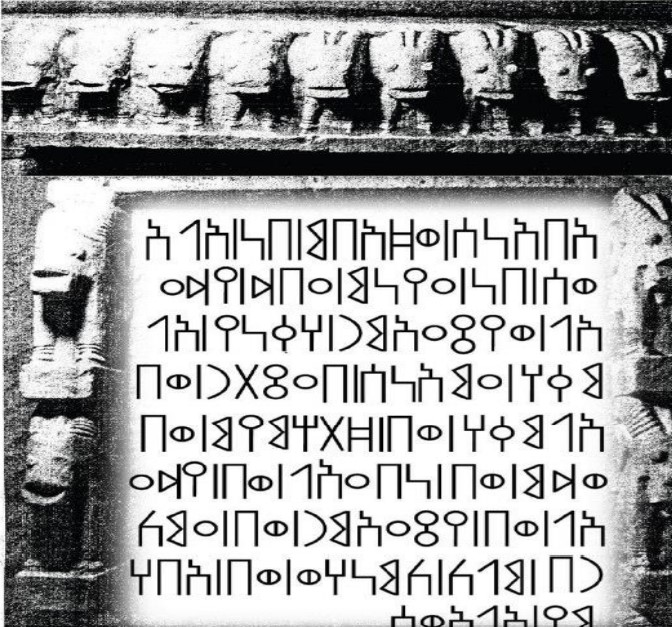
This study presents A New Sabaean Inscription; it is published for the first time. The content of this inscription indicates that it is one of the inscriptions of the dedications of humans for the god £lmqh, and the source of the Inscription is the city of Kamanhu (Kamna) of Ma'in, in Al-Jawf, Yemen, as it contains for the first time the name of (¥mkrb), as the king of the city of Kamna, and the inscription can be traced back to the eighth century BC.
The study was divided into an introduction followed by the text of the inscription in Arabic and Latin letters, then the meaning of the inscription in Arabic, a linguistic analysis of its words, an explanation of the political, religious and social implications of its content, and then a presentation of the most important results reached by this study.
Hadeel Yosif Mohammed Al-Silwy (2025). A New Sabaean Dedicating Inscription a study of its linguistic, political connotations and religious. Sana'a University Journal of Human Sciences, 455 – 464 . DOI: https://doi.org/10.59628/jhs.v4i3.1476
Hadeel Yosif Mohammed Al-Silwy. “A New Sabaean Dedicating Inscription a study of its linguistic, political connotations and religious.” Sana'a University Journal of Human Sciences, 2025, pp. 455 – 464 . https://doi.org/10.59628/jhs.v4i3.1476. Accessed 3 Sep. 2026.
Hadeel Yosif Mohammed Al-Silwy. 2025. “A New Sabaean Dedicating Inscription a study of its linguistic, political connotations and religious.” Sana'a University Journal of Human Sciences : 455 – 464 . DOI: https://doi.org/10.59628/jhs.v4i3.1476
Hadeel Yosif Mohammed Al-Silwy (2025) ‘A New Sabaean Dedicating Inscription a study of its linguistic, political connotations and religious’, Sana'a University Journal of Human Sciences, pp. 455 – 464 . doi: 10.59628/jhs.v4i3.1476
@article{jhs2025_art1476,
author = {Hadeel Yosif Mohammed Al-Silwy},
title = {A New Sabaean Dedicating Inscription a study of its linguistic, political connotations and religious},
journal = {Sana'a University Journal of Human Sciences}, year = {2025}, month = {March}, pages = {455 – 464 }, doi = {10.59628/jhs.v4i3.1476},
url = {https://doi.org/10.59628/jhs.v4i3.1476},}
This study critically delves into the self-Orientalist discourse inherent in Anglophone Arab literature, where Arab novelists participate in a form of neo-Orientalism by portraying Islam in ways that resonate with established stereotypes prevalent among Western audiences. Focusing on Fadia Faqir's novel Willow Trees Don't Weep, the analysis reveals how the author ascribes negative attributes to Islam and its adherents. The theoretical framework of self-Orientalism, as stated by Lisa Lau, suggests that Anglophone authors often do not reject Orientalist stereotypes; but they often reinforce them within their literary narratives. The study has shown that Faqir, despite her Muslim heritage, does not challenge the dominant stereotypes associated with Islam. Rather, her novel perpetuates these stereotypes, offering a reductive representation of Islam as a religion characterized by intolerance and violence, and as a breeding ground for fanaticism. Muslims are depicted as embodying backwardness, prioritizing superstition over rational thought. Imams are portrayed as exploitative, appearing to prey on the innocence of youth for personal gain. Additionally, the veil is portrayed not only as a constraint imposed on women but also as a tool of oppression. Even veiled women are rendered as "the other," described with contempt. Therefore, Faqir engages in self-Orientalism, perpetuating the very stereotypes she should have aimed to challenge
Omer S. Badbeis (2024). A Self-Orientalist Representation of Islam in Fadia Faqir's Willow Trees Don't Weep. Sana'a University Journal of Human Sciences, 464-474. DOI: https://doi.org/10.59628/jhs.v3i6.1178
Omer S. Badbeis. “A Self-Orientalist Representation of Islam in Fadia Faqir's Willow Trees Don't Weep.” Sana'a University Journal of Human Sciences, 2024, pp. 464-474. https://doi.org/10.59628/jhs.v3i6.1178. Accessed 3 Sep. 2026.
Omer S. Badbeis. 2024. “A Self-Orientalist Representation of Islam in Fadia Faqir's Willow Trees Don't Weep.” Sana'a University Journal of Human Sciences : 464-474. DOI: https://doi.org/10.59628/jhs.v3i6.1178
Omer S. Badbeis (2024) ‘A Self-Orientalist Representation of Islam in Fadia Faqir's Willow Trees Don't Weep’, Sana'a University Journal of Human Sciences, pp. 464-474. doi: 10.59628/jhs.v3i6.1178
@article{jhs2024_art1178,
author = {Omer S. Badbeis},
title = {A Self-Orientalist Representation of Islam in Fadia Faqir's Willow Trees Don't Weep},
journal = {Sana'a University Journal of Human Sciences}, year = {2024}, month = {October}, pages = {464-474}, doi = {10.59628/jhs.v3i6.1178},
url = {https://doi.org/10.59628/jhs.v3i6.1178},}
This research addresses the definition of one of the prominent narrators of eloquent Bedouins, Abu al-Ghamr al-Uqayli. It then collects his linguistic narrations, which are scattered without a specific order within Arabic dictionaries and Arab heritage books, comparing and cross-referencing some of them. The study also includes correcting errors, misreadings, and distortions found in these narrations.
The research relies on thoroughly examining these narrations, regardless of their sources, and tracing them from various linguistic, heritage, and non-linguistic sources across different eras. These sources, arranged chronologically, include: Al-Jim by al-Shibani (206 AH), Al-Islah al-Mantiq by Ibn Sikkit (244 AH), Gharib al-Hadith by al-Harrabi (285 AH), Al-Bar' fi al-Lugha by Abu Ali al-Qali (356 AH), Al-Tahdhib by Al-Azhari (370 AH), Al-Sihah by Al-Jawhari (393 AH), Al-Bawarez wa al-Dakhā’ir by Al-Tawhidi (around 400 AH), Kitab al-Af'al by Ibn al-Haddad (after 400 AH), Al-Fusus by Saad al-Ruba'i (417 AH), Al-Mukhasas by Ibn Sīdeh (458 AH), Al-Abab al-Zakhir by Al-Saghani (650 AH), Lisan al-Arab by Ibn Manzur (711 AH), and Taj al-‘Urous by Zabidi (1205 AH). Most of the narrations were collected from Al-Jim and Al-Islah al-Mantiq.
These narrations were carefully compiled and organized alphabetically in a comprehensive linguistic dictionary, covering all that has been documented. This effort will provide researchers with accessible means to gather the narrations of the eloquent Bedouin narrators, many of which have not received proper attention, collection, or study. This foundation will enable further linguistic and critical research and benefit from their content.
Moqbe al-Tam al-Ahmadi (2025). Abu al-Ghamr al-Uqayli His linguistic narrations in Arab heritage. Sana'a University Journal of Human Sciences, 263 - 279. DOI: https://doi.org/10.59628/jhs.v4i12.2115
Moqbe al-Tam al-Ahmadi. “Abu al-Ghamr al-Uqayli His linguistic narrations in Arab heritage.” Sana'a University Journal of Human Sciences, 2025, pp. 263 - 279. https://doi.org/10.59628/jhs.v4i12.2115. Accessed 3 Sep. 2026.
Moqbe al-Tam al-Ahmadi. 2025. “Abu al-Ghamr al-Uqayli His linguistic narrations in Arab heritage.” Sana'a University Journal of Human Sciences : 263 - 279. DOI: https://doi.org/10.59628/jhs.v4i12.2115
Moqbe al-Tam al-Ahmadi (2025) ‘Abu al-Ghamr al-Uqayli His linguistic narrations in Arab heritage’, Sana'a University Journal of Human Sciences, pp. 263 - 279. doi: 10.59628/jhs.v4i12.2115
@article{jhs2025_art2115,
author = {Moqbe al-Tam al-Ahmadi},
title = {Abu al-Ghamr al-Uqayli His linguistic narrations in Arab heritage},
journal = {Sana'a University Journal of Human Sciences}, year = {2025}, month = {December}, pages = {263 - 279}, doi = {10.59628/jhs.v4i12.2115},
url = {https://doi.org/10.59628/jhs.v4i12.2115},}
This research aims to introduce Imam Al-Dailami (d. 444 AH) and Imam Al-Mawardi (d. 450 AH), and to explain their agreement in interpretation in the Arabic language through their interpretations: (Al-Burhan, Al-Nukat wa Al-Uyun), from the grammatical, morphological, and phonetic aspects, and the importance of these two books, and their sources, Which are considered important sources in the science of interpretation. The researcher used the descriptive approach , the comparative approach, and the historical method.
The researcher divided the research into two sections. The first included: introducing the two imams Abu al-Fath al-Dailami and Abu Al-Hasan Al-Mawardi and their interpretations, and the second: agreements according to the two imams Abu al-Fath al-Dailami and Abu al-Hasan al-Mawardi on the interpretation in the Arabic language through their interpretations (Al-Burhan and al-Nukat wa al-Uyoun).
One of the most prominent results reached by the researcher was: This research included (11) issues, including (4) issues on the grammatical side, (4) issues on the morphological side, (3) issues on the phonetic side, it became clear the agreement between the two imams in interpretation in the Arabic language, . In the Arabic language, and it became clear to the two imams that the phenomena of assimilation and syncopating are two phonetic phenomena that occur among the Arabs. The phenomenon of syncopating occurs in Bedouin environments, such as Tamim and Bakr, and the phenomenon of assimilation occurs in urban environments, such as the Hijaz. The two imams discussed the issue of extra letters in the Qur’an and concluded that it is not permissible to cancel the words From human speech, it is more likely in speech of God, as it has become clear that the substitution according to the two imams occurs between the two letters that are close in the noun and unite in the adjective due to a morphological or phonetic relationship between them, such as: (Sijeel - sijeen), (Jibreel - Jibreen), and (Rafl - Rafn).
Zohair Mohammad Hadi Alfaqeeh (2025). Agreements in the two imams of the Abi Al-Fatah Al-dailami and Abi Al Hassan Al-Mawrdi in the interpretation in the Arabic language through their interpretation of the Al-Burhan and Al-nokat wa Al-oyon. From the beginning of Surat Hood to the end of the Surat The Cave.. Sana'a University Journal of Human Sciences, 36 - 63. DOI: https://doi.org/10.59628/jhs.v4i1.1333
Zohair Mohammad Hadi Alfaqeeh. “Agreements in the two imams of the Abi Al-Fatah Al-dailami and Abi Al Hassan Al-Mawrdi in the interpretation in the Arabic language through their interpretation of the Al-Burhan and Al-nokat wa Al-oyon. From the beginning of Surat Hood to the end of the Surat The Cave..” Sana'a University Journal of Human Sciences, 2025, pp. 36 - 63. https://doi.org/10.59628/jhs.v4i1.1333. Accessed 3 Sep. 2026.
Zohair Mohammad Hadi Alfaqeeh. 2025. “Agreements in the two imams of the Abi Al-Fatah Al-dailami and Abi Al Hassan Al-Mawrdi in the interpretation in the Arabic language through their interpretation of the Al-Burhan and Al-nokat wa Al-oyon. From the beginning of Surat Hood to the end of the Surat The Cave..” Sana'a University Journal of Human Sciences : 36 - 63. DOI: https://doi.org/10.59628/jhs.v4i1.1333
Zohair Mohammad Hadi Alfaqeeh (2025) ‘Agreements in the two imams of the Abi Al-Fatah Al-dailami and Abi Al Hassan Al-Mawrdi in the interpretation in the Arabic language through their interpretation of the Al-Burhan and Al-nokat wa Al-oyon. From the beginning of Surat Hood to the end of the Surat The Cave.’, Sana'a University Journal of Human Sciences, pp. 36 - 63. doi: 10.59628/jhs.v4i1.1333
@article{jhs2025_art1333,
author = {Zohair Mohammad Hadi Alfaqeeh},
title = {Agreements in the two imams of the Abi Al-Fatah Al-dailami and Abi Al Hassan Al-Mawrdi in the interpretation in the Arabic language through their interpretation of the Al-Burhan and Al-nokat wa Al-oyon. From the beginning of Surat Hood to the end of the Surat The Cave.},
journal = {Sana'a University Journal of Human Sciences}, year = {2025}, month = {January}, pages = {36 - 63}, doi = {10.59628/jhs.v4i1.1333},
url = {https://doi.org/10.59628/jhs.v4i1.1333},}
This research aims to explore the concept of Ihsan and its connection to the purpose of preserving religion from the perspective of self-annihilation (Fana'). This is to demonstrate the comprehensiveness of Ihsan and its relation to all aspects of life. The preservation of religion through self-annihilation is achieved by individuals, society, and the state. The study employs an inductive, analytical, and jurisprudential approach focused on purposes (Maqasidi) to analyze the elements of the subject. It explains the ultimate goal of Ihsan towards religion, which increases the reader's faith, satisfaction in their conscience, love for the Sharia, steadfastness, and adherence to their religion, making them proud and honored by it. Ihsan is a noble trait that Muslims should embody throughout their lives and adhere to in all their affairs. It is essential for every educator, preacher, and teacher of good to possess this commendable quality, as it elevates anyone who adopts it and diminishes anyone who neglects it.
Mohammed Mohammed Mahdi Al-Soudi (2025). Al-Ihsan and Its Relationship to the Purpose of Preserving Religion: An Objective Study. Sana'a University Journal of Human Sciences, 297 - 331. DOI: https://doi.org/10.59628/jhs.v4i6.1567
Mohammed Mohammed Mahdi Al-Soudi. “Al-Ihsan and Its Relationship to the Purpose of Preserving Religion: An Objective Study.” Sana'a University Journal of Human Sciences, 2025, pp. 297 - 331. https://doi.org/10.59628/jhs.v4i6.1567. Accessed 3 Sep. 2026.
Mohammed Mohammed Mahdi Al-Soudi. 2025. “Al-Ihsan and Its Relationship to the Purpose of Preserving Religion: An Objective Study.” Sana'a University Journal of Human Sciences : 297 - 331. DOI: https://doi.org/10.59628/jhs.v4i6.1567
Mohammed Mohammed Mahdi Al-Soudi (2025) ‘Al-Ihsan and Its Relationship to the Purpose of Preserving Religion: An Objective Study’, Sana'a University Journal of Human Sciences, pp. 297 - 331. doi: 10.59628/jhs.v4i6.1567
@article{jhs2025_art1567,
author = {Mohammed Mohammed Mahdi Al-Soudi},
title = {Al-Ihsan and Its Relationship to the Purpose of Preserving Religion: An Objective Study},
journal = {Sana'a University Journal of Human Sciences}, year = {2025}, month = {June}, pages = {297 - 331}, doi = {10.59628/jhs.v4i6.1567},
url = {https://doi.org/10.59628/jhs.v4i6.1567},}
This research studies and investigates the book "Muntahā al-Ilmām bi-Aḥādīth al-Aḥkām" (The Utmost Comprehension of the Hadiths of Rulings) by the eminent scholar Judge Muḥammad ibn Ṣāliḥ al-Samāwī (d. 1241 AH), with a focus on the hadiths related to "Ṣadaqat al-Fiṭr" (the charity of breaking the fast), through verification and authentication. The research aims to highlight the scholarly value of the book by analyzing Imam al-Samāwī's methodology in dealing with hadith, identifying his sources, and his methods of authentication and judgment on hadiths. The research begins with a comprehensive biography of Imam al-Samāwī, then moves to a study of his methodology in his book, and provides a practical model by verifying and authenticating the hadiths of Ṣadaqat al-Fiṭr.
The researcher followed the analytical and critical method in studying the hadiths, the descriptive method in presenting the author's biography, and the inductive method in collecting the narrations. The research concluded that Imam al-Samāwī had a precise methodology in hadith classification, combining extensive authentication with scholarly criticism, which makes his book an important reference for both the jurist and the hadith scholar. The research recommends the necessity of completing the investigation of the heritage of this venerable scholar.
Abdullah Hamid Omar bin Hamid (2026). Al-ʿAllāmah al-Samāwī and His Book Muntahā al-Ilmām bi-Aḥādīth al-AḥkāmA Critical Study and Authentication of the Hadiths on Ṣadaqat al-Fiṭr. Sana'a University Journal of Human Sciences, 408 - 431. DOI: https://doi.org/10.59628/jhs.v5i5.2362
Abdullah Hamid Omar bin Hamid. “Al-ʿAllāmah al-Samāwī and His Book Muntahā al-Ilmām bi-Aḥādīth al-AḥkāmA Critical Study and Authentication of the Hadiths on Ṣadaqat al-Fiṭr.” Sana'a University Journal of Human Sciences, 2026, pp. 408 - 431. https://doi.org/10.59628/jhs.v5i5.2362. Accessed 3 Sep. 2026.
Abdullah Hamid Omar bin Hamid. 2026. “Al-ʿAllāmah al-Samāwī and His Book Muntahā al-Ilmām bi-Aḥādīth al-AḥkāmA Critical Study and Authentication of the Hadiths on Ṣadaqat al-Fiṭr.” Sana'a University Journal of Human Sciences : 408 - 431. DOI: https://doi.org/10.59628/jhs.v5i5.2362
Abdullah Hamid Omar bin Hamid (2026) ‘Al-ʿAllāmah al-Samāwī and His Book Muntahā al-Ilmām bi-Aḥādīth al-AḥkāmA Critical Study and Authentication of the Hadiths on Ṣadaqat al-Fiṭr’, Sana'a University Journal of Human Sciences, pp. 408 - 431. doi: 10.59628/jhs.v5i5.2362
@article{jhs2026_art2362,
author = {Abdullah Hamid Omar bin Hamid},
title = {Al-ʿAllāmah al-Samāwī and His Book Muntahā al-Ilmām bi-Aḥādīth al-AḥkāmA Critical Study and Authentication of the Hadiths on Ṣadaqat al-Fiṭr},
journal = {Sana'a University Journal of Human Sciences}, year = {2026}, month = {August}, pages = {408 - 431}, doi = {10.59628/jhs.v5i5.2362},
url = {https://doi.org/10.59628/jhs.v5i5.2362},}
After the contemporary Rússian philosopher Alexande Duginthe most important in the Russian Federation and the owner of the secret of the contemporary Russian Renaissance he presented his philosophical ideas since the beginning of the nineties of the last century and called everyone to his new Eurasian theory and its basic idea that it is a philosophy that explains people and level of their cultures and lifestyle through the geographical terrain in which they live and on this basis the strategies of future countries are built internally or outside their borders. On the other hand he calls for preserving values and religion and adhering to traditions in exchange for rejecting liberal ideas values terms and the ideology of Western modernity and rejecting the concept of European centrality. Philosopher basically urges the Russian people politicians and the worlds thinkers in general to adopt his theory which he considers the way out and the salvation for all problems and crises in Russia and the world. therefore Dugins Eurasian theory is based on the concept of geopolitical Because the concept of geopolitics is associated with Dugins theories of new Eurasianism and the forth political theory and the world of polar pleasures
Ahmed Mohammed AL-Abidi AL-Mahdi (2025). Alexander Dugin: Geopolitics and state strategy. Sana'a University Journal of Human Sciences, 204 - 231. DOI: https://doi.org/10.59628/jhs.v4i8.1511
Ahmed Mohammed AL-Abidi AL-Mahdi. “Alexander Dugin: Geopolitics and state strategy.” Sana'a University Journal of Human Sciences, 2025, pp. 204 - 231. https://doi.org/10.59628/jhs.v4i8.1511. Accessed 3 Sep. 2026.
Ahmed Mohammed AL-Abidi AL-Mahdi. 2025. “Alexander Dugin: Geopolitics and state strategy.” Sana'a University Journal of Human Sciences : 204 - 231. DOI: https://doi.org/10.59628/jhs.v4i8.1511
Ahmed Mohammed AL-Abidi AL-Mahdi (2025) ‘Alexander Dugin: Geopolitics and state strategy’, Sana'a University Journal of Human Sciences, pp. 204 - 231. doi: 10.59628/jhs.v4i8.1511
@article{jhs2025_art1511,
author = {Ahmed Mohammed AL-Abidi AL-Mahdi},
title = {Alexander Dugin: Geopolitics and state strategy},
journal = {Sana'a University Journal of Human Sciences}, year = {2025}, month = {August}, pages = {204 - 231}, doi = {10.59628/jhs.v4i8.1511},
url = {https://doi.org/10.59628/jhs.v4i8.1511},}
This research aims to introduce Judge Abdullah bin Ahmed Bamakhrama, and to explain his fatwas in the sale of custody. This study also attempted to present an aspect of the jurisprudential heritage left by the Hadrami school of Shafi’i jurisprudence.
And the systematic excellence of the men of the Hadrami Shafi’i school, as the scholar Bamakhrama is one of the famous scholars of Hadramout, whose scientific works have been and will continue to bear witness to their genius.
The research came to highlight Muslim scholars in general and Yemeni scholars in particular, and introduce them and their scientific effort in the service of Islamic jurisprudence, as well as highlighting the opinions of scholars in the ruling on selling custody.
And in this fatwa are full of various jurisprudential issues and various benefits, which every student of knowledge needs.
Ramy Salih Naseeb Al Jariri (2023). Allama Abdullah bin Ahmed Bamakhrama and his fatwas book transactions. Sana'a University Journal of Human Sciences. DOI: https://doi.org/10.59628/jhs.v5i2.417
Ramy Salih Naseeb Al Jariri. “Allama Abdullah bin Ahmed Bamakhrama and his fatwas book transactions.” Sana'a University Journal of Human Sciences, 2023, https://doi.org/10.59628/jhs.v5i2.417. Accessed 3 Sep. 2026.
Ramy Salih Naseeb Al Jariri. 2023. “Allama Abdullah bin Ahmed Bamakhrama and his fatwas book transactions.” Sana'a University Journal of Human Sciences DOI: https://doi.org/10.59628/jhs.v5i2.417
Ramy Salih Naseeb Al Jariri (2023) ‘Allama Abdullah bin Ahmed Bamakhrama and his fatwas book transactions’, Sana'a University Journal of Human Sciences. doi: 10.59628/jhs.v5i2.417
@article{jhs2023_art417,
author = {Ramy Salih Naseeb Al Jariri},
title = {Allama Abdullah bin Ahmed Bamakhrama and his fatwas book transactions},
journal = {Sana'a University Journal of Human Sciences}, year = {2023}, month = {December}, doi = {10.59628/jhs.v5i2.417},
url = {https://doi.org/10.59628/jhs.v5i2.417},}
This paper aims at studying certain syntactic and semantic aspects in English and Arabic. It specifically applies the syntactic method of Transformational Generative Grammar (TGG) and the semantic model thematic roles in certain English sentences and their Arabic translation from a linguistic point of view. It provides a theoretical background of TGG and thematic roles as the basic framework of the analysis applied in this study. The data includes selected English sentences from three different short stories along with their Arabic equivalents. The co-analysis of the English sentences and their Arabic translations is based syntactically on Chomsky's TGG (1965) and semantically on Fillmore's thematic roles (1977). The results of the study shows that syntax and semantics within these two languages make some kind of interface. This emphasizes the idea of linguistic universals advocated by Chomsky. The application of co-analysis indicates that the syntactic and semantic aspects can be relatively similar in English and Arabic particularly in terms of the type of the noun phrases in the deep and surface structures and semantic roles.
The study concludes that translation is a practical field where the feasibility and utility of linguistic theories and ideas can be tested, and that integration and application of more than one approach in translation such as TGG analysis and semantic roles can help in producing more appropriate translations. However, it should be stated that syntax semantics interface and its overlapping can't be solely used in translation studies.
Hamed Shoay Saleh Al-Mogarry (2024). An Application of Syntactic Semantic Analysis in English and Arabic Translation. Sana'a University Journal of Human Sciences. DOI: https://doi.org/10.59628/jhs.v1i1.215
Hamed Shoay Saleh Al-Mogarry. “An Application of Syntactic Semantic Analysis in English and Arabic Translation.” Sana'a University Journal of Human Sciences, 2024, https://doi.org/10.59628/jhs.v1i1.215. Accessed 3 Sep. 2026.
Hamed Shoay Saleh Al-Mogarry. 2024. “An Application of Syntactic Semantic Analysis in English and Arabic Translation.” Sana'a University Journal of Human Sciences DOI: https://doi.org/10.59628/jhs.v1i1.215
Hamed Shoay Saleh Al-Mogarry (2024) ‘An Application of Syntactic Semantic Analysis in English and Arabic Translation’, Sana'a University Journal of Human Sciences. doi: 10.59628/jhs.v1i1.215
@article{jhs2024_art215,
author = {Hamed Shoay Saleh Al-Mogarry},
title = {An Application of Syntactic Semantic Analysis in English and Arabic Translation},
journal = {Sana'a University Journal of Human Sciences}, year = {2024}, month = {January}, doi = {10.59628/jhs.v1i1.215},
url = {https://doi.org/10.59628/jhs.v1i1.215},}
The problem of soil erosion is one of the problems that many countries of the world suffer from, especially countries with complex topography and arid and semi-arid areas. Soil erosion causes the loss of large quantities and areas of fertile arable soil, especially in the mountainous regions of Yemen. This research aims to calculate the amount of eroded soil by applying the Global Equation of Soil Erosion (RUSLE) model using remote sensing technology and geographic information systems. The Digital Elevation Model (DEM) and Landsat-9 satellite images were used to calculate the amount of soil lost and predict the amount of eroded soil in the (Dhamar-Yarim) basin in Yemen. The results showed that the rate of soil loss in the study area ranged between 1-113 tons/ha/year, at an annual rate of 11.9 tons/ha/year. The total amount of soil lost or eroded annually is about 1,025,500 tons. The areas with a high risk of water erosion amount to about 3% of the total area of the study area, concentrated in the southern regions, as in the Yarim basin. The study area in general is classified as having light erosion, as the areas where the amount of erosion is less than 1 ton/ha/year reaching an area of 73% of the total area of the area. The use of modern geographical techniques is an effective and useful tool that saves effort, time and money in studying the problem of water erosion.
Mohammad Naji Ali Al-Shami (2023). Application of the RUSLE model to estimate soil erosion using remote sensing and GIS in the two basins (Dhamar-Yarim) - Yemen. Sana'a University Journal of Human Sciences. DOI: https://doi.org/10.59628/jhs.v4i1.255
Mohammad Naji Ali Al-Shami. “Application of the RUSLE model to estimate soil erosion using remote sensing and GIS in the two basins (Dhamar-Yarim) - Yemen.” Sana'a University Journal of Human Sciences, 2023, https://doi.org/10.59628/jhs.v4i1.255. Accessed 3 Sep. 2026.
Mohammad Naji Ali Al-Shami. 2023. “Application of the RUSLE model to estimate soil erosion using remote sensing and GIS in the two basins (Dhamar-Yarim) - Yemen.” Sana'a University Journal of Human Sciences DOI: https://doi.org/10.59628/jhs.v4i1.255
Mohammad Naji Ali Al-Shami (2023) ‘Application of the RUSLE model to estimate soil erosion using remote sensing and GIS in the two basins (Dhamar-Yarim) - Yemen’, Sana'a University Journal of Human Sciences. doi: 10.59628/jhs.v4i1.255
@article{jhs2023_art255,
author = {Mohammad Naji Ali Al-Shami},
title = {Application of the RUSLE model to estimate soil erosion using remote sensing and GIS in the two basins (Dhamar-Yarim) - Yemen},
journal = {Sana'a University Journal of Human Sciences}, year = {2023}, month = {August}, doi = {10.59628/jhs.v4i1.255},
url = {https://doi.org/10.59628/jhs.v4i1.255},}
This research presents an analytical study of a group of architectural structures of a fortification nature, along with water facilities, as well as five new Sabaean inscriptions discovered during surveys and archaeological excavations conducted by the Social Fund for Development under the supervision of the General Organization for Antiquities and Museums in the city and fort of Thila. These findings date back to the period from the seventh century BC to the first century. The significance of these architectural structures lies in the new information they provide about the history of this city and its fortress, which had remained uncertain until recently. The collection of inscriptions discovered serves as one of the clearest pieces of evidence indicating that the history of this city and its fortress dates back to the early Sabaean period.
Khaled Abdo Mohammad Al-Hajj (2024). Archaeological Evidence from the Early Sabaean Period in Thila Fort (Inscriptions and New Archaeological Evidence on the History Thila City) . Sana'a University Journal of Human Sciences, 195 - 223. DOI: https://doi.org/10.59628/jhs.v3i7.1264
Khaled Abdo Mohammad Al-Hajj. “Archaeological Evidence from the Early Sabaean Period in Thila Fort (Inscriptions and New Archaeological Evidence on the History Thila City) .” Sana'a University Journal of Human Sciences, 2024, pp. 195 - 223. https://doi.org/10.59628/jhs.v3i7.1264. Accessed 3 Sep. 2026.
Khaled Abdo Mohammad Al-Hajj. 2024. “Archaeological Evidence from the Early Sabaean Period in Thila Fort (Inscriptions and New Archaeological Evidence on the History Thila City) .” Sana'a University Journal of Human Sciences : 195 - 223. DOI: https://doi.org/10.59628/jhs.v3i7.1264
Khaled Abdo Mohammad Al-Hajj (2024) ‘Archaeological Evidence from the Early Sabaean Period in Thila Fort (Inscriptions and New Archaeological Evidence on the History Thila City) ’, Sana'a University Journal of Human Sciences, pp. 195 - 223. doi: 10.59628/jhs.v3i7.1264
@article{jhs2024_art1264,
author = {Khaled Abdo Mohammad Al-Hajj},
title = {Archaeological Evidence from the Early Sabaean Period in Thila Fort (Inscriptions and New Archaeological Evidence on the History Thila City) },
journal = {Sana'a University Journal of Human Sciences}, year = {2024}, month = {November}, pages = {195 - 223}, doi = {10.59628/jhs.v3i7.1264},
url = {https://doi.org/10.59628/jhs.v3i7.1264},}
This study examines the passage of the first hman, the nature of his living life, and the archaeological evidence, as the geographical and environmental location played a prominent role in this, as Yemen formed a link between the continents of Africa and Asia, which led to the beginning of the first human settlement movement in Yemen about one million and four
The oldest traces of human activity in Yemen date back to the Lower Paleolithic and the Middle Paleolithic, and traces of the Upper Paleolithic and Epi Paleolithic, known in the Levant as the Mesolithic, were found in a limited manner despite the difficulty of natural and human factors, in addition to the limited Research that period extensively. The analytical approach was followed to study and analyze and the comparison of that cultural evidence, which confirmed that Yemen was the home of the first humans, and the existence of a sequence and cultural development of those eras.
Mohammad Ahmed Ahmed Al Ali (2024). Archaeological evidence of the First human in Yemen in Paleolithic Age. Sana'a University Journal of Human Sciences, 93 - 112. DOI: https://doi.org/10.59628/jhs.v3i7.1205
Mohammad Ahmed Ahmed Al Ali. “Archaeological evidence of the First human in Yemen in Paleolithic Age.” Sana'a University Journal of Human Sciences, 2024, pp. 93 - 112. https://doi.org/10.59628/jhs.v3i7.1205. Accessed 3 Sep. 2026.
Mohammad Ahmed Ahmed Al Ali. 2024. “Archaeological evidence of the First human in Yemen in Paleolithic Age.” Sana'a University Journal of Human Sciences : 93 - 112. DOI: https://doi.org/10.59628/jhs.v3i7.1205
Mohammad Ahmed Ahmed Al Ali (2024) ‘Archaeological evidence of the First human in Yemen in Paleolithic Age’, Sana'a University Journal of Human Sciences, pp. 93 - 112. doi: 10.59628/jhs.v3i7.1205
@article{jhs2024_art1205,
author = {Mohammad Ahmed Ahmed Al Ali},
title = {Archaeological evidence of the First human in Yemen in Paleolithic Age},
journal = {Sana'a University Journal of Human Sciences}, year = {2024}, month = {November}, pages = {93 - 112}, doi = {10.59628/jhs.v3i7.1205},
url = {https://doi.org/10.59628/jhs.v3i7.1205},}
The research aims to identify the nature of the tendency toward mental illness among university students in light of the repercussions of the war in Yemen. The researchers adopted the measure of the tendency toward mental illness prepared by (Umm Hani، et al.، 2024)، and the research sample consisted of (401) male and female students، who were chosen. Randomly from Yemeni universities (government/private)، the results of the research showed that the sample members of university students had positive attitudes towards mental illness to a high degree. The results also showed that there were no differences in the attitude of university students towards mental illness according to the variable of gender and university، and there were also differences. In the direction of university students towards mental illness according to the specialization variable، in favor of psychology students in a positive direction with a high degree. In light of the results، the researchers presented a number of relevant recommendations.
Saleh Musleh Al-Maqaleh, Nasser Ali Al-Baddai (2024). Attitudes toward mental illness among university students In light of the repercussions of the war in Yemen. Sana'a University Journal of Human Sciences, 306 - 324. DOI: https://doi.org/10.59628/jhs.v3i7.1071
Saleh Musleh Al-Maqaleh, Nasser Ali Al-Baddai. “Attitudes toward mental illness among university students In light of the repercussions of the war in Yemen.” Sana'a University Journal of Human Sciences, 2024, pp. 306 - 324. https://doi.org/10.59628/jhs.v3i7.1071. Accessed 3 Sep. 2026.
Saleh Musleh Al-Maqaleh, Nasser Ali Al-Baddai. 2024. “Attitudes toward mental illness among university students In light of the repercussions of the war in Yemen.” Sana'a University Journal of Human Sciences : 306 - 324. DOI: https://doi.org/10.59628/jhs.v3i7.1071
Saleh Musleh Al-Maqaleh, Nasser Ali Al-Baddai (2024) ‘Attitudes toward mental illness among university students In light of the repercussions of the war in Yemen’, Sana'a University Journal of Human Sciences, pp. 306 - 324. doi: 10.59628/jhs.v3i7.1071
@article{jhs2024_art1071,
author = {Saleh Musleh Al-Maqaleh, Nasser Ali Al-Baddai},
title = {Attitudes toward mental illness among university students In light of the repercussions of the war in Yemen},
journal = {Sana'a University Journal of Human Sciences}, year = {2024}, month = {November}, pages = {306 - 324}, doi = {10.59628/jhs.v3i7.1071},
url = {https://doi.org/10.59628/jhs.v3i7.1071},}
This study aims to critically evaluate the scholarly editing of Al-Ghusoon al-Miyasa through a structured methodological approach combining descriptive, analytical, and critical methods. The descriptive method was used to assess the editor’s introduction and editorial approach; the analytical method compared the edited text with two manuscript copies and original sources; and the critical method identified methodological flaws and their impact on textual integrity.
The research is divided into two main sections: the first introduces the author, the book, and the editor; the second evaluates the editor’s performance across four thematic areas. The findings revealed major editorial issues, including reliance on a single manuscript, poor textual organization, lack of scholarly annotation, biographical inaccuracies, misattribution of sources, and conceptual errors in legal and theological content.
The study concludes with actionable recommendations: thorough collation of available manuscripts, adherence to editorial standards, inclusion of scholarly commentary, accurate biographical referencing, development of a methodological guide, digital collation tools, collaborative editing, and revision of academic publishing criteria. This research contributes to improving the quality and reliability of classical text editing in Islamic studies.
Muhammad Saleh Muhammad Haj (2026). Ayman Abdeljabbar Al-Buhairi’s Verification of _The Graceful and Flourishing Branches on the Evidences of Political Rulings by Ahmad Abdullah Hanash: A Metho-Critical Study. Sana'a University Journal of Human Sciences, 291 - 323. DOI: https://doi.org/10.59628/jhs.v5i5.2487
Muhammad Saleh Muhammad Haj. “Ayman Abdeljabbar Al-Buhairi’s Verification of _The Graceful and Flourishing Branches on the Evidences of Political Rulings by Ahmad Abdullah Hanash: A Metho-Critical Study.” Sana'a University Journal of Human Sciences, 2026, pp. 291 - 323. https://doi.org/10.59628/jhs.v5i5.2487. Accessed 3 Sep. 2026.
Muhammad Saleh Muhammad Haj. 2026. “Ayman Abdeljabbar Al-Buhairi’s Verification of _The Graceful and Flourishing Branches on the Evidences of Political Rulings by Ahmad Abdullah Hanash: A Metho-Critical Study.” Sana'a University Journal of Human Sciences : 291 - 323. DOI: https://doi.org/10.59628/jhs.v5i5.2487
Muhammad Saleh Muhammad Haj (2026) ‘Ayman Abdeljabbar Al-Buhairi’s Verification of _The Graceful and Flourishing Branches on the Evidences of Political Rulings by Ahmad Abdullah Hanash: A Metho-Critical Study’, Sana'a University Journal of Human Sciences, pp. 291 - 323. doi: 10.59628/jhs.v5i5.2487
@article{jhs2026_art2487,
author = {Muhammad Saleh Muhammad Haj},
title = {Ayman Abdeljabbar Al-Buhairi’s Verification of _The Graceful and Flourishing Branches on the Evidences of Political Rulings by Ahmad Abdullah Hanash: A Metho-Critical Study},
journal = {Sana'a University Journal of Human Sciences}, year = {2026}, month = {May}, pages = {291 - 323}, doi = {10.59628/jhs.v5i5.2487},
url = {https://doi.org/10.59628/jhs.v5i5.2487},}
This research aims to demonstrate that the collective writing of a singular narrative text results in a significant condensation of the interplay of literary genres, leading to a destabilization of its belonging to any of the recognized narrative genres. Proving this necessitated the adoption of (Structural Poetics) and (Textual Analysis) following the perspective of (Roland Barthes) as methodological procedures to examine the possibility of categorizing the collective narrative text. We have chosen "Kahanouf " as a field of application because it represents one of the most collectively written narrative texts, with nineteen writers collaborating in its composition. In order to categorize this collective text, it was imperative to begin with a theoretical discussion addressing the following: the distinction between individual and collective composition of texts, collective texts in Arabic literature, the difference between the concept of genre in literary theory and the various proposals for categorization in Structural Poetics and Textual Analysis, implication of categorization transformations, the generic nature of novels, and its modes of categories.
In the applied section, our endeavor focused on categorizing "Kahanouf" following an analysis of its narrative thresholds, mediators, narrators, the protagonist, his locations, voices, and techniques. We concluded that narrative texts are either individual or collective, with collective narratives being either “participatory”, “shared”, or “interactive”. The act of writing "Kahanouf" was indeed a collective participatory literary act that worked towards destabilizing the familiar narrative structure found in individual texts. Instead, it replaced it with a holistic structure that brought the text together in a duality of impasse and resolution, through the interplay of genres, themes, and techniques that led to propose a new category of "Kahanouf" which we have termed: “The Archipelago Novel”.
Mohammed Murshed Mohammed Al Haj Al Kumaim (2025). Categorizing Collective Narrative Texts -A Case Study of "Kahanouf" novel-. Sana'a University Journal of Human Sciences, 310 - 350. DOI: https://doi.org/10.59628/jhs.v4i1.1158
Mohammed Murshed Mohammed Al Haj Al Kumaim. “Categorizing Collective Narrative Texts -A Case Study of "Kahanouf" novel-.” Sana'a University Journal of Human Sciences, 2025, pp. 310 - 350. https://doi.org/10.59628/jhs.v4i1.1158. Accessed 3 Sep. 2026.
Mohammed Murshed Mohammed Al Haj Al Kumaim. 2025. “Categorizing Collective Narrative Texts -A Case Study of "Kahanouf" novel-.” Sana'a University Journal of Human Sciences : 310 - 350. DOI: https://doi.org/10.59628/jhs.v4i1.1158
Mohammed Murshed Mohammed Al Haj Al Kumaim (2025) ‘Categorizing Collective Narrative Texts -A Case Study of "Kahanouf" novel-’, Sana'a University Journal of Human Sciences, pp. 310 - 350. doi: 10.59628/jhs.v4i1.1158
@article{jhs2025_art1158,
author = {Mohammed Murshed Mohammed Al Haj Al Kumaim},
title = {Categorizing Collective Narrative Texts -A Case Study of "Kahanouf" novel-},
journal = {Sana'a University Journal of Human Sciences}, year = {2025}, month = {January}, pages = {310 - 350}, doi = {10.59628/jhs.v4i1.1158},
url = {https://doi.org/10.59628/jhs.v4i1.1158},}
This research aims to highlight the importance of intention (niyah) in worship, as it is a crucial condition for the validity of worship. A Muslim must intend to perform a specific worship before starting it. If worship has different types, such as prayer (obligatory or voluntary), a person must intend the specific type he/she intends to perform. This is because the intention is the spirit of the action.
The research also aims to clarify the time of the intention and the rulings on changing or switching intention during worship, which may lead to the invalidation of the worship.
The researcher used the comparative method to compare the different Islamic schools (Zaidi, Hanafi, Maliki, Shafi'i, and Hanbali) as well as used the inductive theoretical method followed by the descriptive analytical method to study the topic in a comparative jurisprudential study.
The researcher defined the key important terms mentioned in the research, and explained the importance of intention (Niyyah) in performing acts of worship and its influence on the acceptance of the deed before Allah Almighty, and that it is what distinguishes various acts of worship from one another.
The researcher also clarified that one of the reasons for choosing the topic is the lack of knowledge among many people regarding the rulings on transforming or changing the intention during the performance of acts of worship and its effect on the validity or invalidity of the worship.
The research reached several conclusions, including:
The research also provided several recommendations, including:
Kawthar Hammoud Al-Mekhlafi (2024). Changing One's Intention "Niyyah" during Worship. Sana'a University Journal of Human Sciences, 312-335. DOI: https://doi.org/10.59628/jhs.v3i4.1002
Kawthar Hammoud Al-Mekhlafi. “Changing One's Intention "Niyyah" during Worship.” Sana'a University Journal of Human Sciences, 2024, pp. 312-335. https://doi.org/10.59628/jhs.v3i4.1002. Accessed 3 Sep. 2026.
Kawthar Hammoud Al-Mekhlafi. 2024. “Changing One's Intention "Niyyah" during Worship.” Sana'a University Journal of Human Sciences : 312-335. DOI: https://doi.org/10.59628/jhs.v3i4.1002
Kawthar Hammoud Al-Mekhlafi (2024) ‘Changing One's Intention "Niyyah" during Worship’, Sana'a University Journal of Human Sciences, pp. 312-335. doi: 10.59628/jhs.v3i4.1002
@article{jhs2024_art1002,
author = {Kawthar Hammoud Al-Mekhlafi},
title = {Changing One's Intention "Niyyah" during Worship},
journal = {Sana'a University Journal of Human Sciences}, year = {2024}, month = {August}, pages = {312-335}, doi = {10.59628/jhs.v3i4.1002},
url = {https://doi.org/10.59628/jhs.v3i4.1002},}
The objective of this study is to explain the divine Islamic faith، and proving that it is one of the unseen and dependent matters that it is not permissible to review its، due to its reliance on the Book of God Almighty، and the authentic Sunnah of the Prophet، and that it is comprehensive and valid for every time and place.
Saddam Ahsan Abdu Al-Darwiniani (2024). Characteristics of the Islamic faith and its fruits. Sana'a University Journal of Human Sciences. DOI: https://doi.org/10.59628/jhs.v1i1.457

Saddam Ahsan Abdu Al-Darwiniani. “Characteristics of the Islamic faith and its fruits.” Sana'a University Journal of Human Sciences, 2024, https://doi.org/10.59628/jhs.v1i1.457. Accessed 3 Sep. 2026.
Saddam Ahsan Abdu Al-Darwiniani. 2024. “Characteristics of the Islamic faith and its fruits.” Sana'a University Journal of Human Sciences DOI: https://doi.org/10.59628/jhs.v1i1.457
Saddam Ahsan Abdu Al-Darwiniani (2024) ‘Characteristics of the Islamic faith and its fruits’, Sana'a University Journal of Human Sciences. doi: 10.59628/jhs.v1i1.457
@article{jhs2024_art457,
author = {Saddam Ahsan Abdu Al-Darwiniani},
title = {Characteristics of the Islamic faith and its fruits},
journal = {Sana'a University Journal of Human Sciences}, year = {2024}, month = {January}, doi = {10.59628/jhs.v1i1.457},
url = {https://doi.org/10.59628/jhs.v1i1.457},}
This research addresses a documentary examination on the coffee trade during the reign of Imam Yahya and his son, Imam Ahmed. The introduction to the study provided a historical political presentation about the era of Imam Yahya and his son, Imam Ahmed and an explanation of the events that took place during their reign until the end of the First World War. Then the era of independence from the Ottoman rule and the formation of an independent State.
In fact, it was necessary to provide the political presentation and the reflection of its events on agricultural activity, especially Yemeni coffee cultivation, which has been renowned throughout the world since the beginning of the 16th century.
Agriculture was and continues to be Yemen's first craft, and Yemeni farmers focused their attention on coffee cultivation because it became one of the sources of income. It is one of the most important global cash crops that Yemenis cared about. Yemen's coffee trade was therefore encouraged and European States and companies flocked to take up this trade.
Roads and commercial dealings of coffee crops, the type of excellent coffee and traditional cultivation methods, and Yemen's most important traders and receptors of the coffee trade were presented. The study also presented the names of villages, districts and regions famous for coffee cultivation in Yemen, as well as the extent of the ruling authority's interest in that trade.
Coffee production has been mentioned and collected in the books and records of incoming and outgoing entries. This was reflected in the interest in exports and the direct supervision of coffee exports through Yemen's ports.
The names of international companies that have been keen to buy Yemeni coffee and exchange it with machinery, medical devices and weapons have been presented.
The Yemeni authorities gave attention to the coffee trade and received many effective advice and suggestions to improve the coffee product's business methods and to prevent commercial competition.
Amat Al-Malik Ismaeel Qassim Al-Thawr (2023). Coffee Trade during the Reign of Imam Yahya bin Mohammed Hamiduddin and His Son, Imam Ahmed Yahya Hamiduddin 1322 AH - 1382 AH / 1904 – 1962 (A Historical Documentary Study " . Sana'a University Journal of Human Sciences. DOI: https://doi.org/10.59628/jhs.v5i1.586
Amat Al-Malik Ismaeel Qassim Al-Thawr. “Coffee Trade during the Reign of Imam Yahya bin Mohammed Hamiduddin and His Son, Imam Ahmed Yahya Hamiduddin 1322 AH - 1382 AH / 1904 – 1962 (A Historical Documentary Study " .” Sana'a University Journal of Human Sciences, 2023, https://doi.org/10.59628/jhs.v5i1.586. Accessed 3 Sep. 2026.
Amat Al-Malik Ismaeel Qassim Al-Thawr. 2023. “Coffee Trade during the Reign of Imam Yahya bin Mohammed Hamiduddin and His Son, Imam Ahmed Yahya Hamiduddin 1322 AH - 1382 AH / 1904 – 1962 (A Historical Documentary Study " .” Sana'a University Journal of Human Sciences DOI: https://doi.org/10.59628/jhs.v5i1.586
Amat Al-Malik Ismaeel Qassim Al-Thawr (2023) ‘Coffee Trade during the Reign of Imam Yahya bin Mohammed Hamiduddin and His Son, Imam Ahmed Yahya Hamiduddin 1322 AH - 1382 AH / 1904 – 1962 (A Historical Documentary Study " ’, Sana'a University Journal of Human Sciences. doi: 10.59628/jhs.v5i1.586
@article{jhs2023_art586,
author = {Amat Al-Malik Ismaeel Qassim Al-Thawr},
title = {Coffee Trade during the Reign of Imam Yahya bin Mohammed Hamiduddin and His Son, Imam Ahmed Yahya Hamiduddin 1322 AH - 1382 AH / 1904 – 1962 (A Historical Documentary Study " },
journal = {Sana'a University Journal of Human Sciences}, year = {2023}, month = {November}, doi = {10.59628/jhs.v5i1.586},
url = {https://doi.org/10.59628/jhs.v5i1.586},}
This study, entitled "Commitment to the Laws and Legislation of the homeland: The Manifestations & Effects", aims to highlight the manifestations of commitment to the laws and legislation of the homeland from an inductive reality.
It is also concerned with presenting evidence and effects that urge commitment to the laws and legislation of the homeland to be analyzed. The descriptive, inductive, and analytical approach has been use by the researcher to present the components of the research according to the academic tradition as well as the nature the research requires. The research consists of two sections and a conclusion.
In the first section, the most prominent manifestations of commitment to the laws and legislation of the homeland are presented; whereas the second section presents the most prominent effects that urge such a commitment and analyze them.
The study has been concluded with a conclusion in which the most prominent results and recommendations reached by the researcher are recorded, the most important of which are:
Adherence to the laws of the homeland and its effective and upright legislation is required by Islamic Sharia and logic. This is because applying them achieves honesty and justice, establishes the limits, and the estimated punishments are applied to everyone without discrimination.
There are many traces that urge adherence to the effective and upright laws of a homeland, that they take various forms in the Islamic intellectual perspective, the most important of which are: glorifying the importance of blood in Islam and calling for its preservation, considering justice as the scale of rights, calling for the fulfillment of contracts and upright contracts according to the principles of Islamic legislation and its directives; prohibiting treachery and betrayal and the societal effects that result from them.
The findings call for activating the principle of Islamic consultation, being keen to mend the rift and warning against all its preliminaries and causes, controlling the principle of religious freedoms with the controls of the true Sharia, caring for national loyalty based on the principles of the true Islam, and paying much more attention to social solidarity. The research has been also concluded with some recommendations, which are recorded in its conclusion.
Abdul Rahman Ahmed Al-Majidi, Saeed Abdul Salam Al Haddad (2024). Commitment to the Laws & Legislation of the Homeland: The Manifestations & Effects. Sana'a University Journal of Human Sciences, 425 - 442. DOI: https://doi.org/10.59628/jhs.v3i8.1278
Abdul Rahman Ahmed Al-Majidi, Saeed Abdul Salam Al Haddad. “Commitment to the Laws & Legislation of the Homeland: The Manifestations & Effects.” Sana'a University Journal of Human Sciences, 2024, pp. 425 - 442. https://doi.org/10.59628/jhs.v3i8.1278. Accessed 3 Sep. 2026.
Abdul Rahman Ahmed Al-Majidi, Saeed Abdul Salam Al Haddad. 2024. “Commitment to the Laws & Legislation of the Homeland: The Manifestations & Effects.” Sana'a University Journal of Human Sciences : 425 - 442. DOI: https://doi.org/10.59628/jhs.v3i8.1278
Abdul Rahman Ahmed Al-Majidi, Saeed Abdul Salam Al Haddad (2024) ‘Commitment to the Laws & Legislation of the Homeland: The Manifestations & Effects’, Sana'a University Journal of Human Sciences, pp. 425 - 442. doi: 10.59628/jhs.v3i8.1278
@article{jhs2024_art1278,
author = {Abdul Rahman Ahmed Al-Majidi, Saeed Abdul Salam Al Haddad},
title = {Commitment to the Laws & Legislation of the Homeland: The Manifestations & Effects},
journal = {Sana'a University Journal of Human Sciences}, year = {2024}, month = {December}, pages = {425 - 442}, doi = {10.59628/jhs.v3i8.1278},
url = {https://doi.org/10.59628/jhs.v3i8.1278},}
With the assistance of studies in genre analysis of writing in both professional and academic settings, features of different disciplines have been highlighted. However, hybrid disciplines received scant attention. The present study aimed at investigating the use of interactional metadiscourse markers (MMs) in two legal hybrid disciplines: medical law and IT law. Two tools were adopted to collect data: corpora consisting of 150 research article (RA) abstracts selected randomly from two high- impact factor journals and structured open-ended email interview with seven well-known scholars. For the analysis, Hyland's (2005) model of interpersonal MMs and thematic analysis were used. The results indicated that writers in medical law and IT law followed the steps of hard disciplines writers by preferring an objective writing style driven by data rather than by personal interpretations. In the light of these results, ESP instructors and curriculum designers can help writers in the said fields follow the conventions of hybrid disciplines. It is recommended that future studies be conducted to unveil the writing styles of more hybrid disciplines.
Naseem Ali Ahmed Al-Wazeer, Abdulhameed Ashjua'a (2025). Comparative Genre Analysis of Interactional Metadiscourse Markers in Research Article Abstracts of Medical Law and IT Law. Sana'a University Journal of Human Sciences, 1 - 26. DOI: https://doi.org/10.59628/jhs.v4i4.1465
Naseem Ali Ahmed Al-Wazeer, Abdulhameed Ashjua'a. “Comparative Genre Analysis of Interactional Metadiscourse Markers in Research Article Abstracts of Medical Law and IT Law.” Sana'a University Journal of Human Sciences, 2025, pp. 1 - 26. https://doi.org/10.59628/jhs.v4i4.1465. Accessed 3 Sep. 2026.
Naseem Ali Ahmed Al-Wazeer, Abdulhameed Ashjua'a. 2025. “Comparative Genre Analysis of Interactional Metadiscourse Markers in Research Article Abstracts of Medical Law and IT Law.” Sana'a University Journal of Human Sciences : 1 - 26. DOI: https://doi.org/10.59628/jhs.v4i4.1465
Naseem Ali Ahmed Al-Wazeer, Abdulhameed Ashjua'a (2025) ‘Comparative Genre Analysis of Interactional Metadiscourse Markers in Research Article Abstracts of Medical Law and IT Law’, Sana'a University Journal of Human Sciences, pp. 1 - 26. doi: 10.59628/jhs.v4i4.1465
@article{jhs2025_art1465,
author = {Naseem Ali Ahmed Al-Wazeer, Abdulhameed Ashjua'a},
title = {Comparative Genre Analysis of Interactional Metadiscourse Markers in Research Article Abstracts of Medical Law and IT Law},
journal = {Sana'a University Journal of Human Sciences}, year = {2025}, month = {April}, pages = {1 - 26}, doi = {10.59628/jhs.v4i4.1465},
url = {https://doi.org/10.59628/jhs.v4i4.1465},}
The judicial system in Islam is distinguished from man-made systems in many aspects that are unique to the Islamic judiciary. Human، its owners focus on achieving worldly material benefits، without looking at outcomes، and without looking at the devotional aspects that give people peace and contentment، and achieve happiness in this world and the hereafter.
The Islamic judiciary system includes many specializations، lofty principles، and splendid judgment that achieve justice and are not found in others، because its source is divine، and its goals are sublime، and by applying it، security and tranquility will come.
Abdel Hamid Abdo Mohsen Allao (2023). Competences and principles of achieving justice in the Islamic judiciary system. Sana'a University Journal of Human Sciences. DOI: https://doi.org/10.59628/jhs.v4i1.277
Abdel Hamid Abdo Mohsen Allao. “Competences and principles of achieving justice in the Islamic judiciary system.” Sana'a University Journal of Human Sciences, 2023, https://doi.org/10.59628/jhs.v4i1.277. Accessed 3 Sep. 2026.
Abdel Hamid Abdo Mohsen Allao. 2023. “Competences and principles of achieving justice in the Islamic judiciary system.” Sana'a University Journal of Human Sciences DOI: https://doi.org/10.59628/jhs.v4i1.277
Abdel Hamid Abdo Mohsen Allao (2023) ‘Competences and principles of achieving justice in the Islamic judiciary system’, Sana'a University Journal of Human Sciences. doi: 10.59628/jhs.v4i1.277
@article{jhs2023_art277,
author = {Abdel Hamid Abdo Mohsen Allao},
title = {Competences and principles of achieving justice in the Islamic judiciary system},
journal = {Sana'a University Journal of Human Sciences}, year = {2023}, month = {August}, doi = {10.59628/jhs.v4i1.277},
url = {https://doi.org/10.59628/jhs.v4i1.277},}
Conjunctives are usually assumed to be cohesive devices that are readily moveable to different places within a sentence (for example, Halliday and Matthiessen 2004; Thompson 2004). However, this assumption is based on observations about frequent profiles of all conjunctives across all types of sentences. No study has attempted a systematic analysis of the occurrences of particular conjunctives in particular types of sentences to examine the extent to which the moveability of those conjunctives to their frequent places in a sentence is possible; nor, to the best of my knowledge, has any study attempted to exactly identify the types of contextual factors that may dictate the appropriate placements of a conjunctive. The present study attempts to accomplish a systematic analysis of the occurrences of particular conjunctives in particular types of sentences to examine the extent to which the moveability of those conjunctives to their frequent places in a sentence is possible. It aims to identify the types of contextual factors that may dictate the appropriate placements of a conjunctive. It also aims to find out the pedagogical implications for EFL learners on the basis of the results, the present paper argues that the moveability and the placement of a conjunctive within a sentence appear to be more often than not restricted and determined by certain syntactic and/or pragmatic constraints. The paper also argues that it is such constraints that ESL/EFL learners need to be aware of should they wish to choose the appropriate placement of a conjunctive within a sentence in a manner that is felicitous and conforms to the expectations of the academic community.
Ahmed Mohammed Al-Bakri (2025). Contextual Constraints on Placement of Conjunctives within a Sentence: Pedagogical Implications for EFL Learners. Sana'a University Journal of Human Sciences, 609 - 628. DOI: https://doi.org/10.59628/jhs.v4i1.1385
Ahmed Mohammed Al-Bakri. “Contextual Constraints on Placement of Conjunctives within a Sentence: Pedagogical Implications for EFL Learners.” Sana'a University Journal of Human Sciences, 2025, pp. 609 - 628. https://doi.org/10.59628/jhs.v4i1.1385. Accessed 3 Sep. 2026.
Ahmed Mohammed Al-Bakri. 2025. “Contextual Constraints on Placement of Conjunctives within a Sentence: Pedagogical Implications for EFL Learners.” Sana'a University Journal of Human Sciences : 609 - 628. DOI: https://doi.org/10.59628/jhs.v4i1.1385
Ahmed Mohammed Al-Bakri (2025) ‘Contextual Constraints on Placement of Conjunctives within a Sentence: Pedagogical Implications for EFL Learners’, Sana'a University Journal of Human Sciences, pp. 609 - 628. doi: 10.59628/jhs.v4i1.1385
@article{jhs2025_art1385,
author = {Ahmed Mohammed Al-Bakri},
title = {Contextual Constraints on Placement of Conjunctives within a Sentence: Pedagogical Implications for EFL Learners},
journal = {Sana'a University Journal of Human Sciences}, year = {2025}, month = {January}, pages = {609 - 628}, doi = {10.59628/jhs.v4i1.1385},
url = {https://doi.org/10.59628/jhs.v4i1.1385},}
The stages of the beginning of literary criticism have varied since ancient times, and the Souk Okaz in the pre-Islamic era had a great impact, and it is one of the environments of literary criticism where poets meet every year.
As a result, critical Arabic criticism makes generalizations about poets’ poems, without explaining or justifying the defect. There is hostility between poets, linguists, grammarians, and critics, to the point that they set requirements for the poets’ column that they do not deviate from.
Arabic poetry has received mature critical, intellectual, and aesthetic studies, and the studies and opinions still contain ambiguous methods in their semantic levels that deserve adventure and the pleasure of interpretation, which prompted me to study (Critical Readings on Poetry in Ancient Literary Criticism), From it, critical opinions with critical dimensions were formed in the ancient Arab heritage, as most ancient sources are almost never without mentioning or referring to it.
The study included an introduction and two sections. In the introduction,
I explained some definitions related to critical readings in general. I made the first section to study the critical opinions of ancient poets, and I dedicated the second section to the critical opinions of the pillar of poetry, then a conclusion in which I explained the most important results that I reached.
Muslm Obaid Al-Rashedi (2026). Critical readings For poetry in ancient literary criticism. Sana'a University Journal of Human Sciences, 1 - 11. DOI: https://doi.org/10.59628/jhs.v5i5.2891
Muslm Obaid Al-Rashedi. “Critical readings For poetry in ancient literary criticism.” Sana'a University Journal of Human Sciences, 2026, pp. 1 - 11. https://doi.org/10.59628/jhs.v5i5.2891. Accessed 3 Sep. 2026.
Muslm Obaid Al-Rashedi. 2026. “Critical readings For poetry in ancient literary criticism.” Sana'a University Journal of Human Sciences : 1 - 11. DOI: https://doi.org/10.59628/jhs.v5i5.2891
Muslm Obaid Al-Rashedi (2026) ‘Critical readings For poetry in ancient literary criticism’, Sana'a University Journal of Human Sciences, pp. 1 - 11. doi: 10.59628/jhs.v5i5.2891
@article{jhs2026_art2891,
author = {Muslm Obaid Al-Rashedi},
title = {Critical readings For poetry in ancient literary criticism},
journal = {Sana'a University Journal of Human Sciences}, year = {2026}, month = {August}, pages = {1 - 11}, doi = {10.59628/jhs.v5i5.2891},
url = {https://doi.org/10.59628/jhs.v5i5.2891},}
The current research aims to identify the level of exposure of adolescent girls in sana'a capital municipality to cyberbullying, in addition to identifying their coping , Strategies, as well as identifying the differences in coping strategies according to the variables (age-academic level), The researcher used the descriptive approach, the sample of the research consisted (500) adolescent girls who were selected by stratified random sampling the researcher used the cyber bullying for victim scale and scale of coping strategies prepared by her .The results of the research showed that, the level of adolescent girls' exposure to cyberbullying was lower than the average, and that adolescent girls, used three strategies of coping, first, technological coping, second effective coping, and then ineffective coping, also, the results showed that there were no statistically significant differences in coping strategies according to the variables (age-academic level) , the researcher recommends holding seminars to raise awareness of adolescent girls and educate them on how to protect themselves from cyberbullying and educate them on how to cope with it in an effective way.
Afrah Qasem Yahya Al-Ammari (2023). Cyberbullying and the Strategies of Coping with It among Yemeni Adolescent Girls in Sana'a Capital Municipality. Sana'a University Journal of Human Sciences. DOI: https://doi.org/10.59628/jhs.v5i2.263
Afrah Qasem Yahya Al-Ammari. “Cyberbullying and the Strategies of Coping with It among Yemeni Adolescent Girls in Sana'a Capital Municipality.” Sana'a University Journal of Human Sciences, 2023, https://doi.org/10.59628/jhs.v5i2.263. Accessed 3 Sep. 2026.
Afrah Qasem Yahya Al-Ammari. 2023. “Cyberbullying and the Strategies of Coping with It among Yemeni Adolescent Girls in Sana'a Capital Municipality.” Sana'a University Journal of Human Sciences DOI: https://doi.org/10.59628/jhs.v5i2.263
Afrah Qasem Yahya Al-Ammari (2023) ‘Cyberbullying and the Strategies of Coping with It among Yemeni Adolescent Girls in Sana'a Capital Municipality’, Sana'a University Journal of Human Sciences. doi: 10.59628/jhs.v5i2.263
@article{jhs2023_art263,
author = {Afrah Qasem Yahya Al-Ammari},
title = {Cyberbullying and the Strategies of Coping with It among Yemeni Adolescent Girls in Sana'a Capital Municipality},
journal = {Sana'a University Journal of Human Sciences}, year = {2023}, month = {December}, doi = {10.59628/jhs.v5i2.263},
url = {https://doi.org/10.59628/jhs.v5i2.263},}
In order to emphasize the importance of grammar and syntax in comprehending the verses of the Holy Qur'an, the research attempts to determine the processes used to derive jurisprudential rulings from the Qur'anic verses and the relationship between that and syntax. It does this by applying the study to two verses of the rulings. Descriptive analytical methodology was employed by the researcher.
The primary source for all sciences is the Noble Qur’an. Jurisprudential rulings are one of the sciences that are derived from the Noble Qur’an because it serves as the initial framework for legislation and the derivation of such rulings. The verses from which rulings are derived may explicitly mention the ruling or may require the application of consideration and thought. Additionally, as the Qur’an is written in Arabic, the researcher (mujtahid) and jurists need to be proficient in language and syntax, since language allows one to infer the meaning intended by the verses. The researcher discovered a strong correlation between the variations in language and syntax used by jurists to derive rulings from the Qur’anic text and the variations in syntax and its various aspects, which in turn account for variations in rulings derived from the verses. The researcher studied two verses from Abu Hayyan Al-Andalusi's book Al-Bahr Al-Muhit that dealt with divorce rulings. Moreover, the researcher searched jurisprudence books from various schools of jurisprudence and explained how jurists' reliance on language and its rules affects how they derive their jurisprudential rulings. The researcher's findings then included the following: syntax and jurisprudential rulings are closely related because syntax aids in comprehending and extrapolating the meanings of Sharia texts; language and grammar rules served the Holy Qur'an and aided in its understanding.
Aishah Muhammad Hasan Al-Aidarous (2024). Deriving Jurisprudential Rulings from the Verses of Qur’an (An Applied Study of Some Divorce Rulings Found in the Tafsir of Al-Bahr Al-Muhit). Sana'a University Journal of Human Sciences, 341 - 366. DOI: https://doi.org/10.59628/jhs.v3i7.1244
Aishah Muhammad Hasan Al-Aidarous. “Deriving Jurisprudential Rulings from the Verses of Qur’an (An Applied Study of Some Divorce Rulings Found in the Tafsir of Al-Bahr Al-Muhit).” Sana'a University Journal of Human Sciences, 2024, pp. 341 - 366. https://doi.org/10.59628/jhs.v3i7.1244. Accessed 3 Sep. 2026.
Aishah Muhammad Hasan Al-Aidarous. 2024. “Deriving Jurisprudential Rulings from the Verses of Qur’an (An Applied Study of Some Divorce Rulings Found in the Tafsir of Al-Bahr Al-Muhit).” Sana'a University Journal of Human Sciences : 341 - 366. DOI: https://doi.org/10.59628/jhs.v3i7.1244
Aishah Muhammad Hasan Al-Aidarous (2024) ‘Deriving Jurisprudential Rulings from the Verses of Qur’an (An Applied Study of Some Divorce Rulings Found in the Tafsir of Al-Bahr Al-Muhit)’, Sana'a University Journal of Human Sciences, pp. 341 - 366. doi: 10.59628/jhs.v3i7.1244
@article{jhs2024_art1244,
author = {Aishah Muhammad Hasan Al-Aidarous},
title = {Deriving Jurisprudential Rulings from the Verses of Qur’an (An Applied Study of Some Divorce Rulings Found in the Tafsir of Al-Bahr Al-Muhit)},
journal = {Sana'a University Journal of Human Sciences}, year = {2024}, month = {November}, pages = {341 - 366}, doi = {10.59628/jhs.v3i7.1244},
url = {https://doi.org/10.59628/jhs.v3i7.1244},}
This study aimed to develop the communication skills of children with autism spectrum disorder in the Capital Secretariat of Sana'a. This was achieved through the following objectives: 1. Identifying the level of communication impairment among children with autism spectrum. 2. Enhancing their communication skills by training them to interact with others. 3. Recognizing the importance of training them in social communication through daily activities, such as group play and social behavior, to improve their communication simply and appealingly. The researcher employed a descriptive approach and utilized a communication behavior scale developed by the researcher. The scale consists of (30) items distributed across three dimensions (the verbal-communicative, non-verbal-gestural, and social dimensions), after being reviewed by a panel of experts to establish its validity and reliability before its application. The study sample consisted of (193) children, aged between (6-9) years, receiving training at special education centers in Sana'a. The training lasted five months. Results showed that the children in the research sample acquired communication skills, such as greeting others, waving, playing in a group, naming toys, and answering the question, "What is your name?"
Mariam Ahmed Abdullah Al-Ansi (2026). Developing Communication Behavior Skills among Children with Autism Spectrum Disorder in Sana'a Capital. Sana'a University Journal of Human Sciences, 274 - 290. DOI: https://doi.org/10.59628/jhs.v5i5.2615
Mariam Ahmed Abdullah Al-Ansi. “Developing Communication Behavior Skills among Children with Autism Spectrum Disorder in Sana'a Capital.” Sana'a University Journal of Human Sciences, 2026, pp. 274 - 290. https://doi.org/10.59628/jhs.v5i5.2615. Accessed 3 Sep. 2026.
Mariam Ahmed Abdullah Al-Ansi. 2026. “Developing Communication Behavior Skills among Children with Autism Spectrum Disorder in Sana'a Capital.” Sana'a University Journal of Human Sciences : 274 - 290. DOI: https://doi.org/10.59628/jhs.v5i5.2615
Mariam Ahmed Abdullah Al-Ansi (2026) ‘Developing Communication Behavior Skills among Children with Autism Spectrum Disorder in Sana'a Capital’, Sana'a University Journal of Human Sciences, pp. 274 - 290. doi: 10.59628/jhs.v5i5.2615
@article{jhs2026_art2615,
author = {Mariam Ahmed Abdullah Al-Ansi},
title = {Developing Communication Behavior Skills among Children with Autism Spectrum Disorder in Sana'a Capital},
journal = {Sana'a University Journal of Human Sciences}, year = {2026}, month = {May}, pages = {274 - 290}, doi = {10.59628/jhs.v5i5.2615},
url = {https://doi.org/10.59628/jhs.v5i5.2615},}
study aimed to identify the social and cultural challenges that affect the political empowerment of Yemeni women. In approaching and presenting the study, the researcher relied on the descriptive and analytical method, which is considered the most widely used method in the sciences of a psychological nature on the one hand, and which is appropriate to the subject of the study on the other hand, through the use of tools Collecting appropriate data, specifically the questionnaire tool that was applied to a purposive sample of women working in the public and private sectors, estimated at (120) workers, in addition to the interview tool that was conducted with some female political activists. And jurists in the field of women. The study reached a set of results, the most important of which is:
- Yemeni women face many social and cultural challenges that affect their political empowerment. Such as the marriage of minors, the discriminatory view based on gender, illiteracy, the traditional culture of the role of women, in addition to the absence of the role of civil society organizations in supporting women and defending their rights and the misunderstanding of the Islamic religion’s opposition to education and work. Woman.
- The low political empowerment of Yemeni women and their political marginalization are the result of several factors closely linked to the social and cultural challenges affecting them.
Khireyah Ali Mohmmed M. AL-Radae (2025). Difficulties Encountered by Postgraduate Translation Students in Translating English–Arabic Banking Terminology. Sana'a University Journal of Human Sciences, 511 – 531. DOI: https://doi.org/10.59628/jhs.v4i4.1431
Khireyah Ali Mohmmed M. AL-Radae. “Difficulties Encountered by Postgraduate Translation Students in Translating English–Arabic Banking Terminology.” Sana'a University Journal of Human Sciences, 2025, pp. 511 – 531. https://doi.org/10.59628/jhs.v4i4.1431. Accessed 3 Sep. 2026.
Khireyah Ali Mohmmed M. AL-Radae. 2025. “Difficulties Encountered by Postgraduate Translation Students in Translating English–Arabic Banking Terminology.” Sana'a University Journal of Human Sciences : 511 – 531. DOI: https://doi.org/10.59628/jhs.v4i4.1431
Khireyah Ali Mohmmed M. AL-Radae (2025) ‘Difficulties Encountered by Postgraduate Translation Students in Translating English–Arabic Banking Terminology’, Sana'a University Journal of Human Sciences, pp. 511 – 531. doi: 10.59628/jhs.v4i4.1431
@article{jhs2025_art1431,
author = {Khireyah Ali Mohmmed M. AL-Radae},
title = {Difficulties Encountered by Postgraduate Translation Students in Translating English–Arabic Banking Terminology},
journal = {Sana'a University Journal of Human Sciences}, year = {2025}, month = {April}, pages = {511 – 531}, doi = {10.59628/jhs.v4i4.1431},
url = {https://doi.org/10.59628/jhs.v4i4.1431},}
This study was aimed at examining digital transformation and its impact on the performance of human resources management (HRM) at Hayel Saeed Anam (HSA) Group (HQ) in Yemen. The study sample consisted of 164 employees at HSA Group. A quantitative approach was adopted using SPSS v21.0 to analyze the correlation and regression results.
The findings indicate that the independent variables—digital transformation components such as technological infrastructure, organizational culture, and transformational leadership—have a significant positive effect on HRM performance. The regression analysis explains 59.8% of the variation in HRM performance. A plausible interpretation of this positive result is that the selected independent variables are effective tools for enhancing HRM performance in that they can reshape HR functions and thus make them more effective and efficient.
Based on these findings, the study offers some practical recommendations for HSA Group should it wish to improve HRM performance and obtain a competitive status among other businesses.
The study also recommends that other industrial and commercial sectors in Yemen take into consideration these factors as they appear to have an immediate impact on HRM performance. Given the obvious limitations of the study, future research could pay closer attention to additional variables that may substantially enhance HRM performance as well as challenges that may undermine HRM practices.
Abdullah Omer Alselwi, Abdulkarem Ali Saleh Al-Magharem (2026). DIGITAL TRANSFORMATION AND ITS IMPACT ON HUMAN RESOURCES MANAGEMENT PERFORMANCE AT HSA GROUP (HQ) IN YEMEN. Sana'a University Journal of Human Sciences, 647 - 665. DOI: https://doi.org/10.59628/jhs.v5i5.2282
Abdullah Omer Alselwi, Abdulkarem Ali Saleh Al-Magharem. “DIGITAL TRANSFORMATION AND ITS IMPACT ON HUMAN RESOURCES MANAGEMENT PERFORMANCE AT HSA GROUP (HQ) IN YEMEN.” Sana'a University Journal of Human Sciences, 2026, pp. 647 - 665. https://doi.org/10.59628/jhs.v5i5.2282. Accessed 3 Sep. 2026.
Abdullah Omer Alselwi, Abdulkarem Ali Saleh Al-Magharem. 2026. “DIGITAL TRANSFORMATION AND ITS IMPACT ON HUMAN RESOURCES MANAGEMENT PERFORMANCE AT HSA GROUP (HQ) IN YEMEN.” Sana'a University Journal of Human Sciences : 647 - 665. DOI: https://doi.org/10.59628/jhs.v5i5.2282
Abdullah Omer Alselwi, Abdulkarem Ali Saleh Al-Magharem (2026) ‘DIGITAL TRANSFORMATION AND ITS IMPACT ON HUMAN RESOURCES MANAGEMENT PERFORMANCE AT HSA GROUP (HQ) IN YEMEN’, Sana'a University Journal of Human Sciences, pp. 647 - 665. doi: 10.59628/jhs.v5i5.2282
@article{jhs2026_art2282,
author = {Abdullah Omer Alselwi, Abdulkarem Ali Saleh Al-Magharem},
title = {DIGITAL TRANSFORMATION AND ITS IMPACT ON HUMAN RESOURCES MANAGEMENT PERFORMANCE AT HSA GROUP (HQ) IN YEMEN},
journal = {Sana'a University Journal of Human Sciences}, year = {2026}, month = {May}, pages = {647 - 665}, doi = {10.59628/jhs.v5i5.2282},
url = {https://doi.org/10.59628/jhs.v5i5.2282},}
In July 2024, Bangladesh witnessed a significant sociopolitical movement known as the July Revolution. Aims of this revolution were driven by demands for equality, justice, and fairness for all citizens. Prior to this event, many individuals in Bangladesh faced discrimination based on religion, gender, socio-economic background, and social class, leading to unequal opportunities and systemic marginalization. This study examines how the July Revolution contributed to building a non-discriminatory society by ensuring equal rights for all, regardless of wealth, gender, or background. Key outcomes of the revolution included the establishment of new laws and policies promoting equality, the amplification of the people's voice in governance, and a strong emphasis on accessible
education for every child. These changes have propelled Bangladesh towards a more inclusive, fair, and peaceful society where every individual is respected and treated equally. From this standpoint, this research proposes some recommendations, including promoting the values of justice and equality through educational curricula, establishing independent bodies to combat discrimination, involving youth in decision-making, creating support centers that provide legal and psychological counseling for its victims
Md Abul Kalam (2025). Dimensions of the July 2024 Student Revolution in Bangladesh in Building a Non-Discrimination Society: An analytical Study. Sana'a University Journal of Human Sciences, 369 - 383. DOI: https://doi.org/10.59628/jhs.v4i9.2127
Md Abul Kalam. “Dimensions of the July 2024 Student Revolution in Bangladesh in Building a Non-Discrimination Society: An analytical Study.” Sana'a University Journal of Human Sciences, 2025, pp. 369 - 383. https://doi.org/10.59628/jhs.v4i9.2127. Accessed 3 Sep. 2026.
Md Abul Kalam. 2025. “Dimensions of the July 2024 Student Revolution in Bangladesh in Building a Non-Discrimination Society: An analytical Study.” Sana'a University Journal of Human Sciences : 369 - 383. DOI: https://doi.org/10.59628/jhs.v4i9.2127
Md Abul Kalam (2025) ‘Dimensions of the July 2024 Student Revolution in Bangladesh in Building a Non-Discrimination Society: An analytical Study’, Sana'a University Journal of Human Sciences, pp. 369 - 383. doi: 10.59628/jhs.v4i9.2127
@article{jhs2025_art2127,
author = {Md Abul Kalam},
title = {Dimensions of the July 2024 Student Revolution in Bangladesh in Building a Non-Discrimination Society: An analytical Study},
journal = {Sana'a University Journal of Human Sciences}, year = {2025}, month = {September}, pages = {369 - 383}, doi = {10.59628/jhs.v4i9.2127},
url = {https://doi.org/10.59628/jhs.v4i9.2127},}
This research aims to study and investigate the points of doctrinal disagreement between the Zaydis and the Ash'arites in the book "Umdat Al-Mustarshidin Fundamentals of Religion " by the martyr Hamid
Al-Mahalli (d. 652 AH). The research focuses on pivotal issues presented by Al-Mahalli, namely: the vision of Allah, divine justice (including its relation to human actions, predestination, guidance, and misguidance), and the createdness of Qur'an.
The research employs a critical methodology to verify the selected text from the manuscript and a comparative analytical approach to its study. This involves presenting Al-Mahalli's arguments, which represent Zaydi thought in his era, and comparing them with the Ash'arite arguments he sought to refute. The study reveals the methodological foundations and the textual and rational evidence upon which each group based its position, thus illuminating an important aspect of the history of theological debate in the seventh century.
Nawal Mohammed Ahmed Abdulmughni (2026). Disagreements between between Zaidi and Asha'ir: The discussions of vision, justice, and the creation of the Qur'an in the book 'Umdat Al-Mustarshidin' written by Hamid Al-Mahalli (Date . 652 Higiri): A study and critical edition. Sana'a University Journal of Human Sciences, 148 - 176. DOI: https://doi.org/10.59628/jhs.v5i5.2714
Nawal Mohammed Ahmed Abdulmughni. “Disagreements between between Zaidi and Asha'ir: The discussions of vision, justice, and the creation of the Qur'an in the book 'Umdat Al-Mustarshidin' written by Hamid Al-Mahalli (Date . 652 Higiri): A study and critical edition.” Sana'a University Journal of Human Sciences, 2026, pp. 148 - 176. https://doi.org/10.59628/jhs.v5i5.2714. Accessed 3 Sep. 2026.
Nawal Mohammed Ahmed Abdulmughni. 2026. “Disagreements between between Zaidi and Asha'ir: The discussions of vision, justice, and the creation of the Qur'an in the book 'Umdat Al-Mustarshidin' written by Hamid Al-Mahalli (Date . 652 Higiri): A study and critical edition.” Sana'a University Journal of Human Sciences : 148 - 176. DOI: https://doi.org/10.59628/jhs.v5i5.2714
Nawal Mohammed Ahmed Abdulmughni (2026) ‘Disagreements between between Zaidi and Asha'ir: The discussions of vision, justice, and the creation of the Qur'an in the book 'Umdat Al-Mustarshidin' written by Hamid Al-Mahalli (Date . 652 Higiri): A study and critical edition’, Sana'a University Journal of Human Sciences, pp. 148 - 176. doi: 10.59628/jhs.v5i5.2714
@article{jhs2026_art2714,
author = {Nawal Mohammed Ahmed Abdulmughni},
title = {Disagreements between between Zaidi and Asha'ir: The discussions of vision, justice, and the creation of the Qur'an in the book 'Umdat Al-Mustarshidin' written by Hamid Al-Mahalli (Date . 652 Higiri): A study and critical edition},
journal = {Sana'a University Journal of Human Sciences}, year = {2026}, month = {August}, pages = {148 - 176}, doi = {10.59628/jhs.v5i5.2714},
url = {https://doi.org/10.59628/jhs.v5i5.2714},}
This study investigates the discoursal functions of English and Yemeni-Arabic idioms common in oral interactions and storytelling, providing a descriptive account of the data to highlight any cross-linguistic similarities and differences between these functions. Results reveal that many idioms in the two languages in question have similar discourse functions and patterns (praise, criticism, description, etc.). People of the two cultures tend to employ similar strategies to convey their reactions (e.g. silence, laugh, annoyance) towards idioms, and all this seems to be influenced both by the type of relationship between the interaction participants (familiarity vs. unfamiliarity) and by the type of the context of situation (formal vs. informal). As for the use of idioms in the codas of stories or casual conversations, the two cultures both employ them in more or less the same way using either observation-comment or event-evaluation clustering. Some English idioms and Yemeni-Arabic ones differ in terms of some of their component words, and others are quite similar. One of the remarkable distinctions between the English and Yemeni-Arabic idioms is the use of animal names and the intended connotations behind that use.
Mohammed Sho’ee Mohammed Damom, Fawwaz Mohammed Ahmed An-Nashef (2025). Discourse Functions of Idioms in English and Yemeni Arabic: A Comparative Study. Sana'a University Journal of Human Sciences, 440 - 454. DOI: https://doi.org/10.59628/jhs.v4i12.1686
Mohammed Sho’ee Mohammed Damom, Fawwaz Mohammed Ahmed An-Nashef. “Discourse Functions of Idioms in English and Yemeni Arabic: A Comparative Study.” Sana'a University Journal of Human Sciences, 2025, pp. 440 - 454. https://doi.org/10.59628/jhs.v4i12.1686. Accessed 3 Sep. 2026.
Mohammed Sho’ee Mohammed Damom, Fawwaz Mohammed Ahmed An-Nashef. 2025. “Discourse Functions of Idioms in English and Yemeni Arabic: A Comparative Study.” Sana'a University Journal of Human Sciences : 440 - 454. DOI: https://doi.org/10.59628/jhs.v4i12.1686
Mohammed Sho’ee Mohammed Damom, Fawwaz Mohammed Ahmed An-Nashef (2025) ‘Discourse Functions of Idioms in English and Yemeni Arabic: A Comparative Study’, Sana'a University Journal of Human Sciences, pp. 440 - 454. doi: 10.59628/jhs.v4i12.1686
@article{jhs2025_art1686,
author = {Mohammed Sho’ee Mohammed Damom, Fawwaz Mohammed Ahmed An-Nashef},
title = {Discourse Functions of Idioms in English and Yemeni Arabic: A Comparative Study},
journal = {Sana'a University Journal of Human Sciences}, year = {2025}, month = {December}, pages = {440 - 454}, doi = {10.59628/jhs.v4i12.1686},
url = {https://doi.org/10.59628/jhs.v4i12.1686},}
The study aimed to highlight and clarify the ghayul water drainage systems, which represented the backbone of life and a basic system around which ancient Yemeni societies revolved, including Wadi Dhala’ Hamdan, which has been famous since the dawn of history for its water facilities that were based on precise systems and standards, including the system for knowing time and the system of standards for water distribution and drainage. The system of area of agricultural land and its use in draining stormwater. The study dealt with three sections, the first of which reviewed the geographic location and historical material of the valley. The second section reviewed the floodwaters of Wadi Dala’ Hamdan and the irrigation system in them. The third section focused on mentioning the measurements of land areas in the valley and how they were used in determining the area of agricultural land, as well as its use in measuring stormwater drainage. The researcher relied on the inductive approach and the analytical approach, as well as the field study by conducting interviews with people related to the problems and solutions. They were interviewed in a way that was not codified with them. Among the most important results that were reached is that the irrigation system in Wadi Hamadan Districts was an ancient system dating back to the period of the Kingdom of Dhu Minarets, which appeared in the fifth century AD. Nine water systems were found that harvested surface water from geological rock layers and used it for irrigation. Irrigation facilities were accompanied by the emergence of other systems such as the water distribution system and the time system. The system of land area measurements that was used in the area of agricultural land and helped in draining storm water during the formation of cumulus clouds that blocked sunlight from the tools for measuring storm water drainage.
Mohammad Zafran Al-Bakir (2024). Drainage of storm water using the cadastral scale of agricultural land in Wadi Dala’ Hamdan (an archaeological study). Sana'a University Journal of Human Sciences. DOI: https://doi.org/10.59628/jhs.v1i1.626
Mohammad Zafran Al-Bakir. “Drainage of storm water using the cadastral scale of agricultural land in Wadi Dala’ Hamdan (an archaeological study).” Sana'a University Journal of Human Sciences, 2024, https://doi.org/10.59628/jhs.v1i1.626. Accessed 3 Sep. 2026.
Mohammad Zafran Al-Bakir. 2024. “Drainage of storm water using the cadastral scale of agricultural land in Wadi Dala’ Hamdan (an archaeological study).” Sana'a University Journal of Human Sciences DOI: https://doi.org/10.59628/jhs.v1i1.626
Mohammad Zafran Al-Bakir (2024) ‘Drainage of storm water using the cadastral scale of agricultural land in Wadi Dala’ Hamdan (an archaeological study)’, Sana'a University Journal of Human Sciences. doi: 10.59628/jhs.v1i1.626
@article{jhs2024_art626,
author = {Mohammad Zafran Al-Bakir},
title = {Drainage of storm water using the cadastral scale of agricultural land in Wadi Dala’ Hamdan (an archaeological study)},
journal = {Sana'a University Journal of Human Sciences}, year = {2024}, month = {January}, doi = {10.59628/jhs.v1i1.626},
url = {https://doi.org/10.59628/jhs.v1i1.626},}
The research problem stems from the sole economic resource in the Arabian Peninsula: trade. It defines it as one of the most important economic activities in the Arabian Peninsula, and identifies the most important seasons, markets, and goods sold there. The research attempts to answer the following question: What is the importance of trade in the Arabian Peninsula? Also, what is the importance of the strategic commercial location of the Arab countries? The research aims to answer the following main question: Did the presence of the Holy Kaaba contribute to the establishment of markets and seasons for pilgrims in and around Mecca? To achieve the study's objectives, the descriptive and analytical historical approach was used, based on collecting historical material from its original sources and employing it in formulating the various study topics with the aim of arriving at historical information. The research relied heavily on the contents of historical sources. The research was divided into two chapters. The first chapter deals with trade, covering the main and secondary trade routes and commercial centers. The second chapter addresses markets in the Arabian Peninsula, both permanent and seasonal, and the methods of commercial transactions within them.
Hamidan Mahmoud Hamidan Naji (2025). Economic life in the Arabian Peninsula during the sixth and seventh centuries AD "Trade as a model ". Sana'a University Journal of Human Sciences, 142 - 161. DOI: https://doi.org/10.59628/jhs.v4i7.1716
Hamidan Mahmoud Hamidan Naji. “Economic life in the Arabian Peninsula during the sixth and seventh centuries AD "Trade as a model ".” Sana'a University Journal of Human Sciences, 2025, pp. 142 - 161. https://doi.org/10.59628/jhs.v4i7.1716. Accessed 3 Sep. 2026.
Hamidan Mahmoud Hamidan Naji. 2025. “Economic life in the Arabian Peninsula during the sixth and seventh centuries AD "Trade as a model ".” Sana'a University Journal of Human Sciences : 142 - 161. DOI: https://doi.org/10.59628/jhs.v4i7.1716
Hamidan Mahmoud Hamidan Naji (2025) ‘Economic life in the Arabian Peninsula during the sixth and seventh centuries AD "Trade as a model "’, Sana'a University Journal of Human Sciences, pp. 142 - 161. doi: 10.59628/jhs.v4i7.1716
@article{jhs2025_art1716,
author = {Hamidan Mahmoud Hamidan Naji},
title = {Economic life in the Arabian Peninsula during the sixth and seventh centuries AD "Trade as a model "},
journal = {Sana'a University Journal of Human Sciences}, year = {2025}, month = {July}, pages = {142 - 161}, doi = {10.59628/jhs.v4i7.1716},
url = {https://doi.org/10.59628/jhs.v4i7.1716},}
this study aims to present multiple models of economic life in terms of civilized prosperity of ancient Yemenis, where several archaeological evidences emphasis, that historical economic significance in human life since ancients, as human being has lived to look for a live which provide food and water starting of hunter, gathering fishing animals that was a starting over the long ages, therefore, discovering agriculture and emerging stability which led to developed product and crops, which made first man to trade throughout swapping that’s how trade process appeared, it was ales clarified that there are resulted connections of similar influences, among economic systems the ancient world civilization.
This study lies on descriptive analytical approach and follows the stages of economic development life, the study concluded that there is a wealthy material which discovered excavation and archaeological cemeteries, in addition to, the consistency of some of economic growth methods with the civilization of ancient Yemenis.
Taghrid Ali Al-Safarjl (2026). Economic Life of the Ancient Yemenis: An Archaeological Study. Sana'a University Journal of Human Sciences, 534 - 556. DOI: https://doi.org/10.59628/jhs.v5i3.758
Taghrid Ali Al-Safarjl. “Economic Life of the Ancient Yemenis: An Archaeological Study.” Sana'a University Journal of Human Sciences, 2026, pp. 534 - 556. https://doi.org/10.59628/jhs.v5i3.758. Accessed 3 Sep. 2026.
Taghrid Ali Al-Safarjl. 2026. “Economic Life of the Ancient Yemenis: An Archaeological Study.” Sana'a University Journal of Human Sciences : 534 - 556. DOI: https://doi.org/10.59628/jhs.v5i3.758
Taghrid Ali Al-Safarjl (2026) ‘Economic Life of the Ancient Yemenis: An Archaeological Study’, Sana'a University Journal of Human Sciences, pp. 534 - 556. doi: 10.59628/jhs.v5i3.758
@article{jhs2026_art758,
author = {Taghrid Ali Al-Safarjl},
title = {Economic Life of the Ancient Yemenis: An Archaeological Study},
journal = {Sana'a University Journal of Human Sciences}, year = {2026}, month = {March}, pages = {534 - 556}, doi = {10.59628/jhs.v5i3.758},
url = {https://doi.org/10.59628/jhs.v5i3.758},}
The association of education with the term critical thinking has contributed to the emergence of the concept of critical education or critical pedagogy. Critical thinking has become an important educational issue because of its role in enriching the teaching-learning process in the first place, and its role in training the learner as a knowledge base whose critical skills lead him to express opinions, make judgements, generate ideas, etc. to enable him to confront many destructive ways of thinking in society, which helps him preserve his culture in the context of the development of the technological age. Since the educational system is an open socio-cultural system, based on philosophical, scientific, educational, psychological and social theories. It is bound to encounter a number of imbalances, constraints and pressures that reduce the realisation of its concerted objectives and limit its effectiveness. This necessitates working to overcome them by forming a critical vision while passing the outputs of the targeted competencies of the educational curriculum as part of it on the one hand, and working to teach the cultural patterns embedded in various texts and their linguistic structures on the other hand. This study aims to track the roles played by critical thinking and critical education in preserving cultural, literary and linguistic specificities, while its importance lies in monitoring the features of critical thinking and its importance in teaching culture in school textbooks, On this basis, we adopted a descriptive and analytical approach, and divided the research into four main sections
Moumine maryem, Hamza laayali (2025). Enhancing critical thinking skills in teaching culture, language and literature at the secondary level in the age of technology. Sana'a University Journal of Human Sciences, 237 - 254. DOI: https://doi.org/10.59628/jhs.v4i5.1646
Moumine maryem, Hamza laayali . “Enhancing critical thinking skills in teaching culture, language and literature at the secondary level in the age of technology.” Sana'a University Journal of Human Sciences, 2025, pp. 237 - 254. https://doi.org/10.59628/jhs.v4i5.1646. Accessed 3 Sep. 2026.
Moumine maryem, Hamza laayali . 2025. “Enhancing critical thinking skills in teaching culture, language and literature at the secondary level in the age of technology.” Sana'a University Journal of Human Sciences : 237 - 254. DOI: https://doi.org/10.59628/jhs.v4i5.1646
Moumine maryem, Hamza laayali (2025) ‘Enhancing critical thinking skills in teaching culture, language and literature at the secondary level in the age of technology’, Sana'a University Journal of Human Sciences, pp. 237 - 254. doi: 10.59628/jhs.v4i5.1646
@article{jhs2025_art1646,
author = {Moumine maryem, Hamza laayali },
title = {Enhancing critical thinking skills in teaching culture, language and literature at the secondary level in the age of technology},
journal = {Sana'a University Journal of Human Sciences}, year = {2025}, month = {May}, pages = {237 - 254}, doi = {10.59628/jhs.v4i5.1646},
url = {https://doi.org/10.59628/jhs.v4i5.1646},}
The idea of death and end of life has haunted the human mind since eternity. He did not understand the issue of the extinction of the soul after its existence. Writers of literary works were among those who were disturbed by the idea, so they started pouring out their opinions and perceptions in literary works, depicting the fate of this soul, and showing the nature of life in the world after death. Thus, this research focused on the subject of eschatological literature, and aimed at rooting this literary genre, tracing its early roots, and showing the stages of its development while defining its characteristics at each stage. It also aimed to reveal the relationship between eschatological literature and utopia. The research relied in its approach on the new historicism, which believes that the text is an aesthetic structure, which includes other subconscious, social, political and cultural structures, which should be manifested and its different contexts should be explained. Finally, the research came out with a set of results and suggestions.
Noora Ali Mahdi Annawm (2023). Eschatological Literature and its Relationship to Utopia: Concept, Roots and Characteristics. Sana'a University Journal of Human Sciences. DOI: https://doi.org/10.59628/jhs.v4i2.382
Noora Ali Mahdi Annawm. “Eschatological Literature and its Relationship to Utopia: Concept, Roots and Characteristics.” Sana'a University Journal of Human Sciences, 2023, https://doi.org/10.59628/jhs.v4i2.382. Accessed 3 Sep. 2026.
Noora Ali Mahdi Annawm. 2023. “Eschatological Literature and its Relationship to Utopia: Concept, Roots and Characteristics.” Sana'a University Journal of Human Sciences DOI: https://doi.org/10.59628/jhs.v4i2.382
Noora Ali Mahdi Annawm (2023) ‘Eschatological Literature and its Relationship to Utopia: Concept, Roots and Characteristics’, Sana'a University Journal of Human Sciences. doi: 10.59628/jhs.v4i2.382
@article{jhs2023_art382,
author = {Noora Ali Mahdi Annawm},
title = {Eschatological Literature and its Relationship to Utopia: Concept, Roots and Characteristics},
journal = {Sana'a University Journal of Human Sciences}, year = {2023}, month = {October}, doi = {10.59628/jhs.v4i2.382},
url = {https://doi.org/10.59628/jhs.v4i2.382},}
This study was carried out in the Al-Sahool Basin-Ibb Governorate with the aim of estimating the volume of surface runoff in the basin, which is one of the important basins with high rainfall. Its area is )433.5(km2. The importance of this study is to find solutions to the water problem in the basin by knowing the extent of the existing water gap between water withdrawal from groundwater reservoirs, and water recharge from rain through estimating the depth and volume of surface runoff in the basin, based on the USA Soil Conservation Hypothesis(SCS-)CN).which is known as the curve number method for estimating the volume of runoff surface, analyze Land cover data from Sentinel 2 satellite images as well as soil texture data. And determining the hydrological groups. All of these analyzes were done using GIS geographic information system and RS remote sensing techniques. The results of the study showed that the curve number values range between (49-98) with the value (49) representing areas of groundwater recharge, while the value (98) represents areas of surface runoff generation. The results also showed that the depth of annual surface runoff reached (20642.7) mm, and its volume reached (8947.6) during the study period)2000-2020(.
Abdulsalam Ali Ahmed Nasser Shakhab (2025). Estimating the Runoff volume of the Sahool Basin, Ibb Governorate, in Yemen Using Remote Sensing (RS) and Geogrphic Information Systems (GIS) Techniques. Sana'a University Journal of Human Sciences, 112 - 134. DOI: https://doi.org/10.59628/jhs.v4i1.995
Abdulsalam Ali Ahmed Nasser Shakhab. “Estimating the Runoff volume of the Sahool Basin, Ibb Governorate, in Yemen Using Remote Sensing (RS) and Geogrphic Information Systems (GIS) Techniques.” Sana'a University Journal of Human Sciences, 2025, pp. 112 - 134. https://doi.org/10.59628/jhs.v4i1.995. Accessed 3 Sep. 2026.
Abdulsalam Ali Ahmed Nasser Shakhab. 2025. “Estimating the Runoff volume of the Sahool Basin, Ibb Governorate, in Yemen Using Remote Sensing (RS) and Geogrphic Information Systems (GIS) Techniques.” Sana'a University Journal of Human Sciences : 112 - 134. DOI: https://doi.org/10.59628/jhs.v4i1.995
Abdulsalam Ali Ahmed Nasser Shakhab (2025) ‘Estimating the Runoff volume of the Sahool Basin, Ibb Governorate, in Yemen Using Remote Sensing (RS) and Geogrphic Information Systems (GIS) Techniques’, Sana'a University Journal of Human Sciences, pp. 112 - 134. doi: 10.59628/jhs.v4i1.995
@article{jhs2025_art995,
author = {Abdulsalam Ali Ahmed Nasser Shakhab},
title = {Estimating the Runoff volume of the Sahool Basin, Ibb Governorate, in Yemen Using Remote Sensing (RS) and Geogrphic Information Systems (GIS) Techniques},
journal = {Sana'a University Journal of Human Sciences}, year = {2025}, month = {January}, pages = {112 - 134}, doi = {10.59628/jhs.v4i1.995},
url = {https://doi.org/10.59628/jhs.v4i1.995},}
Water runoff is one of the most important water resources in arid and semi-arid environments. The amount of surface runoff is important for engineers working in the field of designing irrigation projects and water facilities. Therefore, the study aims to estimate the volume of surface runoff in the Zabid Wadi Basin, in Yemen, with approximately area of (5364.96 km²). Geospatial Analysis was implemented using Geographical Information System (GIS) and Remote Sensing (RS) techniques. Landsat-8 imagery was integrated with digital elevation model (DEM) to perform the analysis. Hydrological characteristics, land use and land cover, climate and soil classification based on the American Soil Conservative Services (SCS-CN), which is one of the most common methods for calculating the volume of surface runoff in rainwater aggregations. The study found that Zabid Wadi basin has hydrological conditions enable to generate water flow during periods of rainfall. This is due to the high value of the (CN) curve of (84). The values of (QV) ranged between (758,700,000-562,926) m³, and the surface runoff volume was (14308647640) m³. This confirms that there is a large amount of runoff water in the study area.
Belqees Mabkhoot Nasser Salah, Mohammed Ahmed Maias (2023). Estimation of surface runoff volume using the SCS(CN) model in Wadi Zabid Basin – Yemen. Sana'a University Journal of Human Sciences. DOI: https://doi.org/10.59628/jhs.v4i1.315
Belqees Mabkhoot Nasser Salah, Mohammed Ahmed Maias. “Estimation of surface runoff volume using the SCS(CN) model in Wadi Zabid Basin – Yemen.” Sana'a University Journal of Human Sciences, 2023, https://doi.org/10.59628/jhs.v4i1.315. Accessed 3 Sep. 2026.
Belqees Mabkhoot Nasser Salah, Mohammed Ahmed Maias. 2023. “Estimation of surface runoff volume using the SCS(CN) model in Wadi Zabid Basin – Yemen.” Sana'a University Journal of Human Sciences DOI: https://doi.org/10.59628/jhs.v4i1.315
Belqees Mabkhoot Nasser Salah, Mohammed Ahmed Maias (2023) ‘Estimation of surface runoff volume using the SCS(CN) model in Wadi Zabid Basin – Yemen’, Sana'a University Journal of Human Sciences. doi: 10.59628/jhs.v4i1.315
@article{jhs2023_art315,
author = {Belqees Mabkhoot Nasser Salah, Mohammed Ahmed Maias},
title = {Estimation of surface runoff volume using the SCS(CN) model in Wadi Zabid Basin – Yemen},
journal = {Sana'a University Journal of Human Sciences}, year = {2023}, month = {August}, doi = {10.59628/jhs.v4i1.315},
url = {https://doi.org/10.59628/jhs.v4i1.315},}
This research addresses the issue of the propulsion of lying about the narrator, with the aim of knowing the evidence through which lying about the narrator can be paid, resulting in its modification, demobilization, acceptance or reply.
I took the inductive approach, extrapolating the texts of modern scholars and their applications in propelling lying about the narrator, and the analytical approach by analyzing those texts to arrive at the evidence of propelling lying about the narrator.
its section for introduction, prelude, researchers and conclusion; Introduction: I mentioned the reasons for the selection of the subject, its importance, its problem, its objectives, its approach and plan, and mentioned in the preliminary introduction some of the matters that are an input to the main topic of research, such as the narrator's mistake and intentional lying, and in the first research: the evidence of the propulsion of lying about the narrator that relates to his or her updating, narrative and hearing, and in the second study: the evidence of lying about the narrator's situation.
One of the most notable findings of the research is that not everyone who has told a lie may have made a mistake, a clip, or been included in his book, but also the possibility that contemporary scholar could use these clues to weigh those who have disagreed between his mistake and his lies.
Mohammed zayed Al-Utaibi (2023). Evidence of the propulsion of lying about the narrator. Sana'a University Journal of Human Sciences. DOI: https://doi.org/10.59628/jhs.v4i1.495
Mohammed zayed Al-Utaibi. “Evidence of the propulsion of lying about the narrator.” Sana'a University Journal of Human Sciences, 2023, https://doi.org/10.59628/jhs.v4i1.495. Accessed 3 Sep. 2026.
Mohammed zayed Al-Utaibi. 2023. “Evidence of the propulsion of lying about the narrator.” Sana'a University Journal of Human Sciences DOI: https://doi.org/10.59628/jhs.v4i1.495
Mohammed zayed Al-Utaibi (2023) ‘Evidence of the propulsion of lying about the narrator’, Sana'a University Journal of Human Sciences. doi: 10.59628/jhs.v4i1.495
@article{jhs2023_art495,
author = {Mohammed zayed Al-Utaibi},
title = {Evidence of the propulsion of lying about the narrator},
journal = {Sana'a University Journal of Human Sciences}, year = {2023}, month = {August}, doi = {10.59628/jhs.v4i1.495},
url = {https://doi.org/10.59628/jhs.v4i1.495},}
This research deals with studying examples of synonymous words in contemporary Yemeni dialects, as an attempt by the researcher to reveal the richness of Yemeni dialects in words and the extent of their proximity to the Northern Arabic language and their convergence with some Semitic languages, through presenting the word and studying it lexically and comparing it with Northern Arabic and some Semitic languages. The researcher, to the best of his knowledge, did not find an independent research that deals with this phenomenon in Yemeni dialects. What the researcher concluded is that the phenomenon of synonymy is one of the widespread phenomena in Yemeni dialects and is worthy of study. The researcher used the descriptive and comparative approaches. The research consists of an introduction, a preface, three chapters, and a conclusion
Mohammed Ali Ahmed Al-mowallad (2024). Examples of Synonymous Words in Contemporary Yemeni Dialects: A Comparative Lexical Study. Sana'a University Journal of Human Sciences, 242-274. DOI: https://doi.org/10.59628/jhs.v3i6.980
Mohammed Ali Ahmed Al-mowallad. “Examples of Synonymous Words in Contemporary Yemeni Dialects: A Comparative Lexical Study.” Sana'a University Journal of Human Sciences, 2024, pp. 242-274. https://doi.org/10.59628/jhs.v3i6.980. Accessed 3 Sep. 2026.
Mohammed Ali Ahmed Al-mowallad. 2024. “Examples of Synonymous Words in Contemporary Yemeni Dialects: A Comparative Lexical Study.” Sana'a University Journal of Human Sciences : 242-274. DOI: https://doi.org/10.59628/jhs.v3i6.980
Mohammed Ali Ahmed Al-mowallad (2024) ‘Examples of Synonymous Words in Contemporary Yemeni Dialects: A Comparative Lexical Study’, Sana'a University Journal of Human Sciences, pp. 242-274. doi: 10.59628/jhs.v3i6.980
@article{jhs2024_art980,
author = {Mohammed Ali Ahmed Al-mowallad},
title = {Examples of Synonymous Words in Contemporary Yemeni Dialects: A Comparative Lexical Study},
journal = {Sana'a University Journal of Human Sciences}, year = {2024}, month = {October}, pages = {242-274}, doi = {10.59628/jhs.v3i6.980},
url = {https://doi.org/10.59628/jhs.v3i6.980},}
This research aims to highlight the verses of rulings from Surah Aal Imran and the detailed issues and rulings they contain، to benefit from them and apply them in a more comprehensive manner. Imam Ali bin Yahya Al-Banna is a well-established scholar and esteemed exegete، possesses extensive knowledge in various fields، particularly in exegesis، jurisprudence، and language. He is considered a rare scientific treasure، full with abundant information and precious insights.
The research used both inductive and analytical approaches. The research is divided into an introduction and two chapters. The introduction addresses the research problem، its importance، objectives، previous studies، research methodology، and structure. The first chapter highlights Al-Banna’s life، personality، and background، while the second chapter explores the exegesis of the rulings’ verses in Surah Al-Imran. The research concludes with a summary of the main findings and recommendations.
Abdul Rahman Abdul Baqi Ghalib Abduh (2025). Exegesis of Rulings Verses in the Book "Al-Manhaj Al-Qawim" (By Imam Ali bin Yahya Al-Banna) Surah Aal Imran as a Module. Sana'a University Journal of Human Sciences, 306 – 325 . DOI: https://doi.org/10.59628/jhs.v4i4.1450
Abdul Rahman Abdul Baqi Ghalib Abduh. “Exegesis of Rulings Verses in the Book "Al-Manhaj Al-Qawim" (By Imam Ali bin Yahya Al-Banna) Surah Aal Imran as a Module.” Sana'a University Journal of Human Sciences, 2025, pp. 306 – 325 . https://doi.org/10.59628/jhs.v4i4.1450. Accessed 3 Sep. 2026.
Abdul Rahman Abdul Baqi Ghalib Abduh. 2025. “Exegesis of Rulings Verses in the Book "Al-Manhaj Al-Qawim" (By Imam Ali bin Yahya Al-Banna) Surah Aal Imran as a Module.” Sana'a University Journal of Human Sciences : 306 – 325 . DOI: https://doi.org/10.59628/jhs.v4i4.1450
Abdul Rahman Abdul Baqi Ghalib Abduh (2025) ‘Exegesis of Rulings Verses in the Book "Al-Manhaj Al-Qawim" (By Imam Ali bin Yahya Al-Banna) Surah Aal Imran as a Module’, Sana'a University Journal of Human Sciences, pp. 306 – 325 . doi: 10.59628/jhs.v4i4.1450
@article{jhs2025_art1450,
author = {Abdul Rahman Abdul Baqi Ghalib Abduh},
title = {Exegesis of Rulings Verses in the Book "Al-Manhaj Al-Qawim" (By Imam Ali bin Yahya Al-Banna) Surah Aal Imran as a Module},
journal = {Sana'a University Journal of Human Sciences}, year = {2025}, month = {April}, pages = {306 – 325 }, doi = {10.59628/jhs.v4i4.1450},
url = {https://doi.org/10.59628/jhs.v4i4.1450},}
This research paper explores the concept of leadership in the novel By the Sea through an Islamic lens, distinguishing between the role of a leader and that of a manager. It highlights the evolving nature of leadership in contemporary context, where leaders must be mentors, change-oriented, and advocates for inclusion and ethical practices. The paper draws on the significance of exemplary behavior, as demonstrated by Prophet Muhammad (PBUH), highlighting the moral and ethical responsibilities inherent in leadership. Key qualities such as emotional intelligence, strategic thinking, and accountability are identified as essential for efficient leadership. By referencing to Quranic verses and prophetic traditions, the paper emphasizes the idea that true leadership is rooted in service, compassion, and a commitment to the collective welfare of the community. Ultimately, the paper reinforces the Islamic notion that leaders are entrusted "shepherds," accountable for their actions and their influence on society, and thus it urges a holistic understanding of leadership that transcends mere authority or position
Ahmed Saleh Mohammed Al-Bakri (2025). Exploring the Theme of Leadership in Abdulrazak Gurnah’s By the Sea from an Islamic Perspective. Sana'a University Journal of Human Sciences, 640-623. DOI: https://doi.org/10.59628/jhs.v4i7.1647
Ahmed Saleh Mohammed Al-Bakri. “Exploring the Theme of Leadership in Abdulrazak Gurnah’s By the Sea from an Islamic Perspective.” Sana'a University Journal of Human Sciences, 2025, pp. 640-623. https://doi.org/10.59628/jhs.v4i7.1647. Accessed 3 Sep. 2026.
Ahmed Saleh Mohammed Al-Bakri. 2025. “Exploring the Theme of Leadership in Abdulrazak Gurnah’s By the Sea from an Islamic Perspective.” Sana'a University Journal of Human Sciences : 640-623. DOI: https://doi.org/10.59628/jhs.v4i7.1647
Ahmed Saleh Mohammed Al-Bakri (2025) ‘Exploring the Theme of Leadership in Abdulrazak Gurnah’s By the Sea from an Islamic Perspective’, Sana'a University Journal of Human Sciences, pp. 640-623. doi: 10.59628/jhs.v4i7.1647
@article{jhs2025_art1647,
author = {Ahmed Saleh Mohammed Al-Bakri},
title = {Exploring the Theme of Leadership in Abdulrazak Gurnah’s By the Sea from an Islamic Perspective},
journal = {Sana'a University Journal of Human Sciences}, year = {2025}, month = {July}, pages = {640-623}, doi = {10.59628/jhs.v4i7.1647},
url = {https://doi.org/10.59628/jhs.v4i7.1647},}
This research, entitled: “Faith in Predestination and its Impact on the Individual and Society in Surah Al-Baqarah”, aims to introduce the definition of predestination and its impact on the individual and society in Surah Al-Baqarah and to instill tranquility and psychological comfort with what happens to the individual and then the society from the destinies of Allah Almighty, the research consisted of two research topics: the first topic: The definition of faith in Predestination and the evidence that it is obligatory to faith in them and various issues in two requirements, the first requirement: Definition of faith in Predestination and the evidence that it is obligatory to faith in them, the second requirement deals with miscellaneous issues in faith in Predestination, and the second topic deals with the ranks of Predestination , guidance and misguidance in Surah al-Baqarah in three demands, the first demand: The ranks of Predestination in Surah al-Baqarah, the second requirement: Types of guidance and misguidance, third requirement: The impact of faith in Predestination on the individual and society, the researcher used the research methodology: Inductive and analytical: By collecting the scientific material of the research topic from its references, studying it, categorizing it, extracting its results, then presenting its topics and categorizing its issues clearly and concisely, and the research ended with a conclusion that addressed the research findings and recommendations, written at the end of the research
TAHANI QASSEM AHMED ALMANSOORI (2025). Faith in Predestination and Its Impact on the Individual and Society in Surah Al-Baqarah. Sana'a University Journal of Human Sciences, 112 - 136. DOI: https://doi.org/10.59628/jhs.v4i5.1551
TAHANI QASSEM AHMED ALMANSOORI. “Faith in Predestination and Its Impact on the Individual and Society in Surah Al-Baqarah.” Sana'a University Journal of Human Sciences, 2025, pp. 112 - 136. https://doi.org/10.59628/jhs.v4i5.1551. Accessed 3 Sep. 2026.
TAHANI QASSEM AHMED ALMANSOORI. 2025. “Faith in Predestination and Its Impact on the Individual and Society in Surah Al-Baqarah.” Sana'a University Journal of Human Sciences : 112 - 136. DOI: https://doi.org/10.59628/jhs.v4i5.1551
TAHANI QASSEM AHMED ALMANSOORI (2025) ‘Faith in Predestination and Its Impact on the Individual and Society in Surah Al-Baqarah’, Sana'a University Journal of Human Sciences, pp. 112 - 136. doi: 10.59628/jhs.v4i5.1551
@article{jhs2025_art1551,
author = {TAHANI QASSEM AHMED ALMANSOORI},
title = {Faith in Predestination and Its Impact on the Individual and Society in Surah Al-Baqarah},
journal = {Sana'a University Journal of Human Sciences}, year = {2025}, month = {May}, pages = {112 - 136}, doi = {10.59628/jhs.v4i5.1551},
url = {https://doi.org/10.59628/jhs.v4i5.1551},}
This study seeks to elucidate the Jewish identity and the notion of absolute preference, while also examining the Quranic perspective on Jews as reflected in their most salient characteristics. Additionally, it aims to explore the role of Jews in shaping contemporary society. The research is organized into three main sections: the first section defines the Jewish identity; the second articulates the Quranic stance on Jews, focusing on their prominent traits; and the third investigates their contributions to modern society. The researcher employed inductive, descriptive, and analytical methodologies as deemed appropriate for the nature of the study. The findings reveal several key insights: the Jewish psyche is characterized by psychological complexities, including feelings of inferiority, resentment, and hostility; the Jewish community has historically exhibited resistance to divine laws; and they have been implicated in various forms of doctrinal, moral, and social corruption throughout history. Furthermore, the Quran has undertaken the task of revealing these attributes and behaviors. The study concludes that the negative traits attributed to Jews are consistent across time and geography, suggesting a continuity of character. The researcher also provides a series of recommendations and suggestions, which are detailed at the conclusion of the paper
Ahmed Mohammed Abdu Mutahar (2024). Features of Jewish Society in Light of the Verses of the Holy Quran. Sana'a University Journal of Human Sciences, 38-63. DOI: https://doi.org/10.59628/jhs.v3i6.1230
Ahmed Mohammed Abdu Mutahar. “Features of Jewish Society in Light of the Verses of the Holy Quran.” Sana'a University Journal of Human Sciences, 2024, pp. 38-63. https://doi.org/10.59628/jhs.v3i6.1230. Accessed 3 Sep. 2026.
Ahmed Mohammed Abdu Mutahar. 2024. “Features of Jewish Society in Light of the Verses of the Holy Quran.” Sana'a University Journal of Human Sciences : 38-63. DOI: https://doi.org/10.59628/jhs.v3i6.1230
Ahmed Mohammed Abdu Mutahar (2024) ‘Features of Jewish Society in Light of the Verses of the Holy Quran’, Sana'a University Journal of Human Sciences, pp. 38-63. doi: 10.59628/jhs.v3i6.1230
@article{jhs2024_art1230,
author = {Ahmed Mohammed Abdu Mutahar},
title = {Features of Jewish Society in Light of the Verses of the Holy Quran},
journal = {Sana'a University Journal of Human Sciences}, year = {2024}, month = {October}, pages = {38-63}, doi = {10.59628/jhs.v3i6.1230},
url = {https://doi.org/10.59628/jhs.v3i6.1230},}
This research seeks to study the features of the contextual theory of Abdul Qaher Al-Jurjani through his book, "Dala'il Al-I'jaz." The importance of the research lies in its exploration of the features of modern contextual theory in the work of an important ancient Arab critic.
The problem of the research lies in the richness of ancient Arabic critical, linguistic, and rhetorical studies, while semanticists bridge the gap between modern Western linguistic achievement and the earliest linguistic origins of the ancient Arabic heritage. The book addresses contextualism as a subject analyzed and viewed from the perspective of grammar and rhetoric. Thus, Al-Jurjani's perspective intersects with that of the proponents of the contextual school, and the arguments are similar, while the discussion differs.
The research methodology follows a descriptive-analytical approach, combining existing knowledge represented by modern contextual theory with Al-Jurjani's own personal insights, which he disseminated in his book, "Dala'il Al-I'jaz," about context and its impact on meaning.
The structure of the research is as follows: an introduction, four sections, and a conclusion. The study was limited to "Dala'il al-I'jaz" only, as it contains a profound linguistic theorization of the theory of syntax, in addition to grammar and syntax. Among the findings of the study are the presence of roots of contextual theory in the book "Dala'il al-I'jaz" and similarities in the semantic perspectives of K. Ammer, who divides context into four sections, each focused on guiding meaning semantically, and Al-Jurjani, who guiding meaning through context within the framework of the theory of syntax and its representations in grammatical structure.
Saeed Shawahneh, Omar Samih Ayash (2025). Features of the contextual theory of Abdul Qahir Al-Jurjani in his book, “Dala’il Al-I’jaz”. Sana'a University Journal of Human Sciences, 441 - 461. DOI: https://doi.org/10.59628/jhs.v4i9.1916
Saeed Shawahneh, Omar Samih Ayash. “Features of the contextual theory of Abdul Qahir Al-Jurjani in his book, “Dala’il Al-I’jaz”.” Sana'a University Journal of Human Sciences, 2025, pp. 441 - 461. https://doi.org/10.59628/jhs.v4i9.1916. Accessed 3 Sep. 2026.
Saeed Shawahneh, Omar Samih Ayash. 2025. “Features of the contextual theory of Abdul Qahir Al-Jurjani in his book, “Dala’il Al-I’jaz”.” Sana'a University Journal of Human Sciences : 441 - 461. DOI: https://doi.org/10.59628/jhs.v4i9.1916
Saeed Shawahneh, Omar Samih Ayash (2025) ‘Features of the contextual theory of Abdul Qahir Al-Jurjani in his book, “Dala’il Al-I’jaz”’, Sana'a University Journal of Human Sciences, pp. 441 - 461. doi: 10.59628/jhs.v4i9.1916
@article{jhs2025_art1916,
author = {Saeed Shawahneh, Omar Samih Ayash},
title = {Features of the contextual theory of Abdul Qahir Al-Jurjani in his book, “Dala’il Al-I’jaz”},
journal = {Sana'a University Journal of Human Sciences}, year = {2025}, month = {September}, pages = {441 - 461}, doi = {10.59628/jhs.v4i9.1916},
url = {https://doi.org/10.59628/jhs.v4i9.1916},}
This research aims to analyze the fiscal policy of the Prophetic era, extract the governing principles that structured it, and demonstrate its viability in addressing contemporary economic challenges. The study employs an inductive method to trace Prophetic financial practices and an analytical method to deconstruct and classify them within a functional framework. The findings reveal that the Prophetic fiscal policy evolved from a foundational stage, which relied on innovative tools, into a comprehensive financial system with a diversified revenue structure and a balanced distribution policy. It was found that this policy constitutes an integrated framework for economic governance based on the principles of transparency, accountability, and the prevention of wealth concentration, with direct applicability to tackling issues of unemployment and sustainability. The research recommends advancing foundational studies in the field of Prophetic finance and activating Islamic development finance tools in modern economic management.
Yahya Mohammed Hassan Al-Jiwry (2026). Fiscal Policy in the Prophetic Era: A Model for Solving Contemporary Economic Crises. Sana'a University Journal of Human Sciences, 34 - 72. DOI: https://doi.org/10.59628/jhs.v5i6.2723
Yahya Mohammed Hassan Al-Jiwry. “Fiscal Policy in the Prophetic Era: A Model for Solving Contemporary Economic Crises.” Sana'a University Journal of Human Sciences, 2026, pp. 34 - 72. https://doi.org/10.59628/jhs.v5i6.2723. Accessed 3 Sep. 2026.
Yahya Mohammed Hassan Al-Jiwry. 2026. “Fiscal Policy in the Prophetic Era: A Model for Solving Contemporary Economic Crises.” Sana'a University Journal of Human Sciences : 34 - 72. DOI: https://doi.org/10.59628/jhs.v5i6.2723
Yahya Mohammed Hassan Al-Jiwry (2026) ‘Fiscal Policy in the Prophetic Era: A Model for Solving Contemporary Economic Crises’, Sana'a University Journal of Human Sciences, pp. 34 - 72. doi: 10.59628/jhs.v5i6.2723
@article{jhs2026_art2723,
author = {Yahya Mohammed Hassan Al-Jiwry},
title = {Fiscal Policy in the Prophetic Era: A Model for Solving Contemporary Economic Crises},
journal = {Sana'a University Journal of Human Sciences}, year = {2026}, month = {June}, pages = {34 - 72}, doi = {10.59628/jhs.v5i6.2723},
url = {https://doi.org/10.59628/jhs.v5i6.2723},}
The study aimed to explore the Sheikh Jarrah neighborhood in Jerusalem during the period from 1838 to 1967. It relied on the most important original historical documents related to Sheikh Jarrah, shedding light on foreign and Zionist infiltration, particularly after the approval of property ownership and the issuance of the Foreign Ownership Law in 1859.
This was manifested in the acquisition of some properties, buildings, and lands, which were considered the beginning of this infiltration. The study's problem revolves around answering several questions, including: When did foreign and Zionist infiltration into Jerusalem begin? How did the Zionists settle in Sheikh Jarrah? The study seeks to answer these questions by identifying the origins of foreign infiltration into Jerusalem and its methods, and by examining how the Zionists settled in Sheikh Jarrah, along with the strategies they adopted for this purpose. The study aims to answer the following main question: Who are the true owners of Sheikh Jarrah neighborhood? Do the Zionists have any rightful claims to Sheikh Jarrah? To achieve the study's objectives, a historical methodology was employed, based on collecting information from sources, analyzing it, and critically evaluating it in alignment with the research's concept of proving Arab ownership of Sheikh Jarrah's lands.
The study was divided into five main sections: the first section covered the naming of the neighborhood, the second its geographical location, the third its origin, the fourth foreign infiltration, and the fifth Zionist infiltration. The study reached several conclusions, most notably that foreign infiltration in Sheikh Jarrah began with the approval of property ownership and the issuance of the Foreign Ownership Law in 1859. Additionally, the ownership of the disputed land in Sheikh Jarrah between Zionists and Arabs belongs to the Hijazi Al-Saadi family, as evidenced by the decision of the Ottoman Sharia Court of Jerusalem and official land registry records.
Muhammad Othman Al-Khatib, Murad Ali Ahmad Abu Subh (2025). Foreign and Zionist Infiltration in the City of Jerusalem "Sheikh Jarrah Neighborhood as a Case Study" (1838 – 1967(. Sana'a University Journal of Human Sciences, 1 - 26. DOI: https://doi.org/10.59628/jhs.v4i7.1669
Muhammad Othman Al-Khatib, Murad Ali Ahmad Abu Subh. “Foreign and Zionist Infiltration in the City of Jerusalem "Sheikh Jarrah Neighborhood as a Case Study" (1838 – 1967(.” Sana'a University Journal of Human Sciences, 2025, pp. 1 - 26. https://doi.org/10.59628/jhs.v4i7.1669. Accessed 3 Sep. 2026.
Muhammad Othman Al-Khatib, Murad Ali Ahmad Abu Subh. 2025. “Foreign and Zionist Infiltration in the City of Jerusalem "Sheikh Jarrah Neighborhood as a Case Study" (1838 – 1967(.” Sana'a University Journal of Human Sciences : 1 - 26. DOI: https://doi.org/10.59628/jhs.v4i7.1669
Muhammad Othman Al-Khatib, Murad Ali Ahmad Abu Subh (2025) ‘Foreign and Zionist Infiltration in the City of Jerusalem "Sheikh Jarrah Neighborhood as a Case Study" (1838 – 1967(’, Sana'a University Journal of Human Sciences, pp. 1 - 26. doi: 10.59628/jhs.v4i7.1669
@article{jhs2025_art1669,
author = {Muhammad Othman Al-Khatib, Murad Ali Ahmad Abu Subh},
title = {Foreign and Zionist Infiltration in the City of Jerusalem "Sheikh Jarrah Neighborhood as a Case Study" (1838 – 1967(},
journal = {Sana'a University Journal of Human Sciences}, year = {2025}, month = {July}, pages = {1 - 26}, doi = {10.59628/jhs.v4i7.1669},
url = {https://doi.org/10.59628/jhs.v4i7.1669},}
This research addresses a key issue in classical Arabic grammatical thought: grammatical reasoning. Early grammarians were deeply engaged in explaining various linguistic phenomena. The study examines this issue through two prominent figures in Arabic grammar, Sibawayh (d. 180 AH) and Al-Mubarrad (d. 285 AH), in their respective works, Al-Kitab and Al-Muqtaḍab. It employs a historical methodology that analyzes examples of reasoning in both texts, highlights the characteristics of each scholar's reasoning approach, and explores the differences between them and the reasons behind these differences. It also considers the perspectives on reasoning among grammarians between these two figures. The study investigates reasoning from multiple aspects, such as alignment with the inherent nature of language, reliance on rational, logical, and philosophical arguments, the role of reasoning in the grammarian's work, methodology used, and the attitude toward differing reasoning approaches by other grammarians. The study concludes with several findings, most notably the evolution of grammatical reasoning among grammarians after Sibawayh, with a shift away from the inherent nature of language toward a more rational, logical, and philosophical approach
Yahia Mohammad Ahmed Hushaidan, Abdullah Ahmed Hamzah Alnahari (2025). Grammatical Reasoning between Sibawaih and Al-Mubarred: A Historical Study.. Sana'a University Journal of Human Sciences, 36 - 55. DOI: https://doi.org/10.59628/jhs.v4i5.1400
Yahia Mohammad Ahmed Hushaidan, Abdullah Ahmed Hamzah Alnahari . “Grammatical Reasoning between Sibawaih and Al-Mubarred: A Historical Study..” Sana'a University Journal of Human Sciences, 2025, pp. 36 - 55. https://doi.org/10.59628/jhs.v4i5.1400. Accessed 3 Sep. 2026.
Yahia Mohammad Ahmed Hushaidan, Abdullah Ahmed Hamzah Alnahari . 2025. “Grammatical Reasoning between Sibawaih and Al-Mubarred: A Historical Study..” Sana'a University Journal of Human Sciences : 36 - 55. DOI: https://doi.org/10.59628/jhs.v4i5.1400
Yahia Mohammad Ahmed Hushaidan, Abdullah Ahmed Hamzah Alnahari (2025) ‘Grammatical Reasoning between Sibawaih and Al-Mubarred: A Historical Study.’, Sana'a University Journal of Human Sciences, pp. 36 - 55. doi: 10.59628/jhs.v4i5.1400
@article{jhs2025_art1400,
author = {Yahia Mohammad Ahmed Hushaidan, Abdullah Ahmed Hamzah Alnahari },
title = {Grammatical Reasoning between Sibawaih and Al-Mubarred: A Historical Study.},
journal = {Sana'a University Journal of Human Sciences}, year = {2025}, month = {May}, pages = {36 - 55}, doi = {10.59628/jhs.v4i5.1400},
url = {https://doi.org/10.59628/jhs.v4i5.1400},}
The research aims to identify the historical thinking skills necessary for social studies teachers at the basic education level from their perspective. A descriptive survey approach was employed, utilizing a questionnaire consisting of (27) skills distributed across five main areas of historical thinking. The research was conducted with (71) mentors and teachers.
The results indicated that the importance of historical thinking skills was rated high. Among these, the skills of chronology of events and historical understanding and comprehension were deemed the most crucial, with a rating of (86%). This was followed by the skill of historical research at (83%), and then the skills of historical interpretation, analysis of historical issues, and decision-making, each rated at (82%).
Marwah Saleh Saeed Alwi , الصلاحي (2024). Historical Thinking Skills Necessary for Social Studies Teachers at the Basic Education Level in Amanat Al-Asimah, Sana’a, from Their Perspective.. Sana'a University Journal of Human Sciences, 409-434. DOI: https://doi.org/10.59628/jhs.v3i5.1038
Marwah Saleh Saeed Alwi , الصلاحي. “Historical Thinking Skills Necessary for Social Studies Teachers at the Basic Education Level in Amanat Al-Asimah, Sana’a, from Their Perspective..” Sana'a University Journal of Human Sciences, 2024, pp. 409-434. https://doi.org/10.59628/jhs.v3i5.1038. Accessed 3 Sep. 2026.
Marwah Saleh Saeed Alwi , الصلاحي. 2024. “Historical Thinking Skills Necessary for Social Studies Teachers at the Basic Education Level in Amanat Al-Asimah, Sana’a, from Their Perspective..” Sana'a University Journal of Human Sciences : 409-434. DOI: https://doi.org/10.59628/jhs.v3i5.1038
Marwah Saleh Saeed Alwi , الصلاحي (2024) ‘Historical Thinking Skills Necessary for Social Studies Teachers at the Basic Education Level in Amanat Al-Asimah, Sana’a, from Their Perspective.’, Sana'a University Journal of Human Sciences, pp. 409-434. doi: 10.59628/jhs.v3i5.1038
@article{jhs2024_art1038,
author = {Marwah Saleh Saeed Alwi , الصلاحي},
title = {Historical Thinking Skills Necessary for Social Studies Teachers at the Basic Education Level in Amanat Al-Asimah, Sana’a, from Their Perspective.},
journal = {Sana'a University Journal of Human Sciences}, year = {2024}, month = {September}, pages = {409-434}, doi = {10.59628/jhs.v3i5.1038},
url = {https://doi.org/10.59628/jhs.v3i5.1038},}
This study is an attempt to address a gap in research on evaluating human versus AI translations of modern Arabic literary works. To achieve this objective, the study conducts a qualitative, quantitative descriptive-analytical comparison between Hilary Kilpatrick’s published English translation of Ghassan Kanafani's novella Men in the Sun (1963) and those generated by three AI tools: ChatGPT, Gemini, and DeepSeek. Using a corpus of randomly chosen 17 extracts from the novella and guided by Nord's functionalist error typology, the study focuses specifically on evaluating the data translations in terms of fluency, cultural adequacy, and literary devices. The findings reveal that the human translation has proved superior in that it, by means of adaptation, attends to the nuanced pragmatic and cultural aspects in the ST to preserve the original author's intent, a task that all AI models appear to frequently fail to undertake. The AI translations, though often linguistically fluent, exhibit pragmatically and culturally serious errors, tending to misinterpret contextual variables, idioms, and culture-specific references. Among the AI tools, it is DeepSeek that produced a translation with more lexical precision and stylistic alignment. The study concludes, then, that while AI is a powerful translation tool, it currently lacks the components that can efficiently handle deep contextual knowledge essential for literary translation, which reinforces the indispensability of the human translator’s role as a cultural mediator.
Ali Ali Ahmed Al-Aizar (2026). The Human Versus Artificial Intelligence Translations: A Contrastive Analysis of Ghassan Kanafani's Men in the Sun. Sana'a University Journal of Human Sciences, 593 - 613. DOI: https://doi.org/10.59628/jhs.v5i1.2474
Ali Ali Ahmed Al-Aizar. “The Human Versus Artificial Intelligence Translations: A Contrastive Analysis of Ghassan Kanafani's Men in the Sun.” Sana'a University Journal of Human Sciences, 2026, pp. 593 - 613. https://doi.org/10.59628/jhs.v5i1.2474. Accessed 3 Sep. 2026.
Ali Ali Ahmed Al-Aizar. 2026. “The Human Versus Artificial Intelligence Translations: A Contrastive Analysis of Ghassan Kanafani's Men in the Sun.” Sana'a University Journal of Human Sciences : 593 - 613. DOI: https://doi.org/10.59628/jhs.v5i1.2474
Ali Ali Ahmed Al-Aizar (2026) ‘The Human Versus Artificial Intelligence Translations: A Contrastive Analysis of Ghassan Kanafani's Men in the Sun’, Sana'a University Journal of Human Sciences, pp. 593 - 613. doi: 10.59628/jhs.v5i1.2474
@article{jhs2026_art2474,
author = {Ali Ali Ahmed Al-Aizar},
title = {The Human Versus Artificial Intelligence Translations: A Contrastive Analysis of Ghassan Kanafani's Men in the Sun},
journal = {Sana'a University Journal of Human Sciences}, year = {2026}, month = {January}, pages = {593 - 613}, doi = {10.59628/jhs.v5i1.2474},
url = {https://doi.org/10.59628/jhs.v5i1.2474},}
This research aims at defining Al-Emam Abu Sa'ad، Al-Muhsien Bin Mohammed Bin Karmah Al-Jashmi (T:494) ، and signifying his approach in mentioning the judgments in his interpretation: " The Courteousness in Interpretation" And the signification of this book and its sources which is considered as one of the important sources in interpretation science. The researcher used the historical inductive approach when identifying Al-Emam Abu Sa'ad، Al-Muhsien Bin Mohammed Bin Karmah Al-Jashmi (T:494). Also، the researcher used the descriptive approach when displaying the author's approach in the judgments and his style in the book. The researcher divided the research into two researches. The first one included the identification of Al-Emam Abu Sa'ad، Al-Muhsien Bin Mohammed Bin Karmah Al-Jashmi. The second one included the author's approach in mentioning the judgments.
The highlighted result of the researcher is that Al-Emam Abu Sa'ad، Al-Muhsien Bin Mohammed Bin Karmah Al-Jashmi is an interpreter and jurist، achiever of great knowledge، a great deal، and has a spotlighted role in interpretation and a high status among the interpretation scientists. His book " The Courteousness in Interpretation" adds valuable scientific item in the interpretation field. He has a special way in mentioning the judgments as it is stated in the research.
The researcher recommended signaling Al-jashmi's approach in the interpretation through his book " The Courteousness in Interpretation" in a scientific study.
Amat Al-Latif Abdul-Wahab Khairan (2023). Imam Abu Saad, Al-Muhsin bin Muhammad bin Karama Al-Jashmi: (d.: 494 AH) and his methodology in stating rulings in his interpretation of “Refinement in Interpretation”. Sana'a University Journal of Human Sciences. DOI: https://doi.org/10.59628/jhs.v3i2.229
Amat Al-Latif Abdul-Wahab Khairan. “Imam Abu Saad, Al-Muhsin bin Muhammad bin Karama Al-Jashmi: (d.: 494 AH) and his methodology in stating rulings in his interpretation of “Refinement in Interpretation”.” Sana'a University Journal of Human Sciences, 2023, https://doi.org/10.59628/jhs.v3i2.229. Accessed 3 Sep. 2026.
Amat Al-Latif Abdul-Wahab Khairan. 2023. “Imam Abu Saad, Al-Muhsin bin Muhammad bin Karama Al-Jashmi: (d.: 494 AH) and his methodology in stating rulings in his interpretation of “Refinement in Interpretation”.” Sana'a University Journal of Human Sciences DOI: https://doi.org/10.59628/jhs.v3i2.229
Amat Al-Latif Abdul-Wahab Khairan (2023) ‘Imam Abu Saad, Al-Muhsin bin Muhammad bin Karama Al-Jashmi: (d.: 494 AH) and his methodology in stating rulings in his interpretation of “Refinement in Interpretation”’, Sana'a University Journal of Human Sciences. doi: 10.59628/jhs.v3i2.229
@article{jhs2023_art229,
author = {Amat Al-Latif Abdul-Wahab Khairan},
title = {Imam Abu Saad, Al-Muhsin bin Muhammad bin Karama Al-Jashmi: (d.: 494 AH) and his methodology in stating rulings in his interpretation of “Refinement in Interpretation”},
journal = {Sana'a University Journal of Human Sciences}, year = {2023}, month = {July}, doi = {10.59628/jhs.v3i2.229},
url = {https://doi.org/10.59628/jhs.v3i2.229},}
The objective of this research is to introduce Imam Abu Al-Fath Al-Dailami ( Died in 444 Hijri) and his seminal work, Al-Burhan in the Interpretation of the Qur’an. This study specifically aims to present his jurisprudential interpretations as articulated in Surah Al-Baqarah, given its significance in addressing matters of disagreement. Additionally, it seeks to explore the methodologies and dimensions of his interpretations, assessing their applicability and utility. Employing an inductive and descriptive analytical approach, this research examines the views of Imam Al-Dailami and contrasts them with those of other commentators. The structure of the study comprises an introduction, two main sections, and a conclusion. The first section focuses on the life of Imam Al-Dailami and provides an overview of Al-Burhan in the Interpretation of the Qur’an, while the second section delves into his jurisprudential opinions as presented in Surah Al-Baqarah. The research concludes with findings and recommendations that underscore the significance of Imam Al-Dailami's contributions to jurisprudence and his interpretative insights within the broader context of Qur'anic exegesis.
Muhammad Al-Saghir Abdullah Qayed (2024). Imam Al-Dailami's Jurisprudential Preferences in Surat Al-Baqarah from His Interpretation of Al-Burhan in the Interpretation of the Holy Quran. Sana'a University Journal of Human Sciences, 336 -353. DOI: https://doi.org/10.59628/jhs.v3i4.1069
Muhammad Al-Saghir Abdullah Qayed. “Imam Al-Dailami's Jurisprudential Preferences in Surat Al-Baqarah from His Interpretation of Al-Burhan in the Interpretation of the Holy Quran.” Sana'a University Journal of Human Sciences, 2024, pp. 336 -353. https://doi.org/10.59628/jhs.v3i4.1069. Accessed 3 Sep. 2026.
Muhammad Al-Saghir Abdullah Qayed. 2024. “Imam Al-Dailami's Jurisprudential Preferences in Surat Al-Baqarah from His Interpretation of Al-Burhan in the Interpretation of the Holy Quran.” Sana'a University Journal of Human Sciences : 336 -353. DOI: https://doi.org/10.59628/jhs.v3i4.1069
Muhammad Al-Saghir Abdullah Qayed (2024) ‘Imam Al-Dailami's Jurisprudential Preferences in Surat Al-Baqarah from His Interpretation of Al-Burhan in the Interpretation of the Holy Quran’, Sana'a University Journal of Human Sciences, pp. 336 -353. doi: 10.59628/jhs.v3i4.1069
@article{jhs2024_art1069,
author = {Muhammad Al-Saghir Abdullah Qayed},
title = {Imam Al-Dailami's Jurisprudential Preferences in Surat Al-Baqarah from His Interpretation of Al-Burhan in the Interpretation of the Holy Quran},
journal = {Sana'a University Journal of Human Sciences}, year = {2024}, month = {August}, pages = {336 -353}, doi = {10.59628/jhs.v3i4.1069},
url = {https://doi.org/10.59628/jhs.v3i4.1069},}
The research reached a number of results, the most prominent of which are: that imitation is taken from the pendant, and comes in the sense of suspension, endurance, obligation, and imitation, and that the first thing that the obligated person must consider and think about; So, he knows what he should do. This is the doctrine of the people of justice and monotheism.
The researcher recommended several recommendations, the most prominent of which are: the necessity of carrying out a serious critical study of the issue of ijtihad among the followers of the modern rational school, and the necessity of urging researchers to study the issue of imitation in monotheism among the predecessors.
Mahmoud Muhammad Othman Al-Yami (2024). Imitation In Monotheism. Sana'a University Journal of Human Sciences. DOI: https://doi.org/10.59628/jhs.v1i1.710
Mahmoud Muhammad Othman Al-Yami. “Imitation In Monotheism.” Sana'a University Journal of Human Sciences, 2024, https://doi.org/10.59628/jhs.v1i1.710. Accessed 3 Sep. 2026.
Mahmoud Muhammad Othman Al-Yami. 2024. “Imitation In Monotheism.” Sana'a University Journal of Human Sciences DOI: https://doi.org/10.59628/jhs.v1i1.710
Mahmoud Muhammad Othman Al-Yami (2024) ‘Imitation In Monotheism’, Sana'a University Journal of Human Sciences. doi: 10.59628/jhs.v1i1.710
@article{jhs2024_art710,
author = {Mahmoud Muhammad Othman Al-Yami},
title = {Imitation In Monotheism},
journal = {Sana'a University Journal of Human Sciences}, year = {2024}, month = {January}, doi = {10.59628/jhs.v1i1.710},
url = {https://doi.org/10.59628/jhs.v1i1.710},}
This research aims to identify the most important global classifications currently used in classifying universities, as well as to identify the level of classification of Yemeni universities according to the indicators of these classifications. It also aims to develop a proposed vision to improve the performance of universities according to the criteria by which universities are ranked. To achieve these aims, the conduction of the research depended on both the deductive comparison as a method of thinking, and the descriptive approach as an operational method to stand on the reality of Yemeni universities in global classifications. the most important criteria of these classifications to advance their performance within these classifications. The research tools were the references and reports related to the research topic.
The findings of the research show that the most famous global classifications are the Shanghai ranking (ARWU), the Times ranking (THE), the QS ranking, and the Webometrics ranking. It is also found that there is a decline in the classification levels of Yemeni universities compared to many Arab and foreign universities. In light of the research findings, a mechanism is identified according to the criteria of the abovementioned classifications to improve the performance of universities, which in turn is reflected in the advancement of the universities' classification.
Ahmed Mohammed Mujahed Al-Qadasi, Abdulghani Mutaher Saleh Alnoor (2024). Improving the Performance of Yemeni Universities in lighting of Standards of International Classifications. Sana'a University Journal of Human Sciences, 177 - 203. DOI: https://doi.org/10.59628/jhs.v3i2.653
Ahmed Mohammed Mujahed Al-Qadasi, Abdulghani Mutaher Saleh Alnoor. “Improving the Performance of Yemeni Universities in lighting of Standards of International Classifications.” Sana'a University Journal of Human Sciences, 2024, pp. 177 - 203. https://doi.org/10.59628/jhs.v3i2.653. Accessed 3 Sep. 2026.
Ahmed Mohammed Mujahed Al-Qadasi, Abdulghani Mutaher Saleh Alnoor. 2024. “Improving the Performance of Yemeni Universities in lighting of Standards of International Classifications.” Sana'a University Journal of Human Sciences : 177 - 203. DOI: https://doi.org/10.59628/jhs.v3i2.653
Ahmed Mohammed Mujahed Al-Qadasi, Abdulghani Mutaher Saleh Alnoor (2024) ‘Improving the Performance of Yemeni Universities in lighting of Standards of International Classifications’, Sana'a University Journal of Human Sciences, pp. 177 - 203. doi: 10.59628/jhs.v3i2.653
@article{jhs2024_art653,
author = {Ahmed Mohammed Mujahed Al-Qadasi, Abdulghani Mutaher Saleh Alnoor},
title = {Improving the Performance of Yemeni Universities in lighting of Standards of International Classifications},
journal = {Sana'a University Journal of Human Sciences}, year = {2024}, month = {June}, pages = {177 - 203}, doi = {10.59628/jhs.v3i2.653},
url = {https://doi.org/10.59628/jhs.v3i2.653},}
This scientific research aims to clearly identify what has been mentioned in the noble hadiths regarding the issue and concept of "innovation in religion" (Ihdath). This is achieved by inductively examining relevant hadiths, followed by a descriptive and analytical reading, akin to a simple interpretation of various religious texts and noble hadiths that address the issue of innovation in religion. Innovation here refers to altering and changing the religion, establishing new matters that are not part of it, and attributing them to it. The research begins by discussing the concept of innovation and its rejection in religion, as well as its relationship with concepts such as fitnah (strife) and bid'ah (heresy). It then moves on to review texts that highlight the status of the Ahl al-Bayt (the family of the Prophet, peace be upon them) and the importance of their role in embodying true Islam. The research also examines examples of innovations attributed to Muawiyah ibn Abi Sufyan according to hadith and historical texts. Finally, the research discusses the hadiths of the Hawd (the Basin) and their relationship to the issue of innovation.
The research concludes that innovation is a problem that arises from within the Islamic community and that the Prophet (peace be upon him and his family) fortified religion and society by emphasizing adherence to the Quran and the Ahl al-Bayt. The hadiths of the Hawd, in general, refer to a group of Muslims who committed innovation in religion.
Among the recommendations of the research is that the concept of innovation still requires further refinement and a broader explanation of its details. Additionally, there is a need to address hadiths related to creed (aqidah) with the same objectivity as hadiths related to jurisprudence (fiqh)
Ebrahim Abdullah Qasim Al-Shami (2025). Innovation in Islam (A Brief Reading in Hadith and History) Muawiyah and His Followers as a Model. Sana'a University Journal of Human Sciences, 263 - 296. DOI: https://doi.org/10.59628/jhs.v4i6.1641
Ebrahim Abdullah Qasim Al-Shami. “Innovation in Islam (A Brief Reading in Hadith and History) Muawiyah and His Followers as a Model.” Sana'a University Journal of Human Sciences, 2025, pp. 263 - 296. https://doi.org/10.59628/jhs.v4i6.1641. Accessed 3 Sep. 2026.
Ebrahim Abdullah Qasim Al-Shami. 2025. “Innovation in Islam (A Brief Reading in Hadith and History) Muawiyah and His Followers as a Model.” Sana'a University Journal of Human Sciences : 263 - 296. DOI: https://doi.org/10.59628/jhs.v4i6.1641
Ebrahim Abdullah Qasim Al-Shami (2025) ‘Innovation in Islam (A Brief Reading in Hadith and History) Muawiyah and His Followers as a Model’, Sana'a University Journal of Human Sciences, pp. 263 - 296. doi: 10.59628/jhs.v4i6.1641
@article{jhs2025_art1641,
author = {Ebrahim Abdullah Qasim Al-Shami},
title = {Innovation in Islam (A Brief Reading in Hadith and History) Muawiyah and His Followers as a Model},
journal = {Sana'a University Journal of Human Sciences}, year = {2025}, month = {June}, pages = {263 - 296}, doi = {10.59628/jhs.v4i6.1641},
url = {https://doi.org/10.59628/jhs.v4i6.1641},}
This study investigates the manifestations of intellectual invasion in public school curricula in Bangladesh, with a special focus on cultural and doctrinal issues in the textbooks of civic education, social studies, Bengali, and English taught in grades 1–10 during the 2012–2022 curriculum cycle. A descriptive-analytical method was employed to examine the content of some textbooks selected from those which have been approved by the National Curriculum and Textbook Board (NCTB). To validate the findings, expert opinions from Islamic scholars and education specialists were consulted. The analysis revealed several elements that encourage the equalization of religions, promote participation in non-Islamic festivals, mislabel polytheistic rituals as “festivals,” and present religious innovations (bid‘ah) as Islamic holidays. Additionally, elements of Hindu culture were presented as national traditions, and secular perspectives on gender equality were embedded in educational materials. These practices pose significant risks to the preservation of Islamic creed and identity among students. The study concludes with recommendations for curriculum reform, emphasizing the need for alignment with Islamic principles while respecting cultural diversity.
Muhammad Aminul Hoque (2026). Intellectual Invasion in Public Education in Bangladesh: An Analysis of Curriculum Content. Sana'a University Journal of Human Sciences, 614 - 620. DOI: https://doi.org/10.59628/jhs.v5i1.2145
Muhammad Aminul Hoque. “Intellectual Invasion in Public Education in Bangladesh: An Analysis of Curriculum Content.” Sana'a University Journal of Human Sciences, 2026, pp. 614 - 620. https://doi.org/10.59628/jhs.v5i1.2145. Accessed 3 Sep. 2026.
Muhammad Aminul Hoque. 2026. “Intellectual Invasion in Public Education in Bangladesh: An Analysis of Curriculum Content.” Sana'a University Journal of Human Sciences : 614 - 620. DOI: https://doi.org/10.59628/jhs.v5i1.2145
Muhammad Aminul Hoque (2026) ‘Intellectual Invasion in Public Education in Bangladesh: An Analysis of Curriculum Content’, Sana'a University Journal of Human Sciences, pp. 614 - 620. doi: 10.59628/jhs.v5i1.2145
@article{jhs2026_art2145,
author = {Muhammad Aminul Hoque},
title = {Intellectual Invasion in Public Education in Bangladesh: An Analysis of Curriculum Content},
journal = {Sana'a University Journal of Human Sciences}, year = {2026}, month = {January}, pages = {614 - 620}, doi = {10.59628/jhs.v5i1.2145},
url = {https://doi.org/10.59628/jhs.v5i1.2145},}
The nature of the research necessitated to be divided into an introduction, two sections, and indexing. In it, the researcher used the descriptive, historical, inductive method, and scientific method used the investigation of manuscript. She concluded a number of results, the most important of which are:-
Saba'a Mohammed Hussein Ali Snhob (2023). Interpretation of verse (219) of Surat Al-Baqarah of Book Mukhtaser Al-Tahtheeb lil Imam Al-Mu'ayyad Billah Mohammed Bin Ismail May Allah be merciful to him -Studying and investigation- . Sana'a University Journal of Human Sciences. DOI: https://doi.org/10.59628/jhs.v4i2.548
Saba'a Mohammed Hussein Ali Snhob. “Interpretation of verse (219) of Surat Al-Baqarah of Book Mukhtaser Al-Tahtheeb lil Imam Al-Mu'ayyad Billah Mohammed Bin Ismail May Allah be merciful to him -Studying and investigation- .” Sana'a University Journal of Human Sciences, 2023, https://doi.org/10.59628/jhs.v4i2.548. Accessed 3 Sep. 2026.
Saba'a Mohammed Hussein Ali Snhob. 2023. “Interpretation of verse (219) of Surat Al-Baqarah of Book Mukhtaser Al-Tahtheeb lil Imam Al-Mu'ayyad Billah Mohammed Bin Ismail May Allah be merciful to him -Studying and investigation- .” Sana'a University Journal of Human Sciences DOI: https://doi.org/10.59628/jhs.v4i2.548
Saba'a Mohammed Hussein Ali Snhob (2023) ‘Interpretation of verse (219) of Surat Al-Baqarah of Book Mukhtaser Al-Tahtheeb lil Imam Al-Mu'ayyad Billah Mohammed Bin Ismail May Allah be merciful to him -Studying and investigation- ’, Sana'a University Journal of Human Sciences. doi: 10.59628/jhs.v4i2.548
@article{jhs2023_art548,
author = {Saba'a Mohammed Hussein Ali Snhob},
title = {Interpretation of verse (219) of Surat Al-Baqarah of Book Mukhtaser Al-Tahtheeb lil Imam Al-Mu'ayyad Billah Mohammed Bin Ismail May Allah be merciful to him -Studying and investigation- },
journal = {Sana'a University Journal of Human Sciences}, year = {2023}, month = {October}, doi = {10.59628/jhs.v4i2.548},
url = {https://doi.org/10.59628/jhs.v4i2.548},}
This study examines the intertextuality and adaptation in Ahmad Yahya Hamid Al-Din's poetry, focusing on his adaptation of Abu Feras Al-Hamadani's famous poem (I see you, defiant against tears). consists of an introduction, first part involves a biography of both poets, an exploration of the cultural and artistic context of their works, the second part involves definitions of intertextuality and adaptation section and it delves into first the types of intertextuality present in Hamid al-Din's adaptation, second the techniques used in this adaptation, and the unique characteristics of the new text. Key findings of the study include:
Recommendations:
The study recommends the following:
Focusing on Hamid al-Din's literary works: Hamid al-Din's literary works should be studied independently of his political role.
محمد عبد الله يحيى شرف الدين (2025). Intertextuality and Adaptation in Ahmad Yahya Hamid Al-Din's Poetry: A Study of his Adaptation of Abu Feras Al-Hamadani's " I see you, defiant against tears". Sana'a University Journal of Human Sciences, 412- 438. DOI: https://doi.org/10.59628/jhs.v4i2.1404
محمد عبد الله يحيى شرف الدين. “Intertextuality and Adaptation in Ahmad Yahya Hamid Al-Din's Poetry: A Study of his Adaptation of Abu Feras Al-Hamadani's " I see you, defiant against tears".” Sana'a University Journal of Human Sciences, 2025, pp. 412- 438. https://doi.org/10.59628/jhs.v4i2.1404. Accessed 3 Sep. 2026.
محمد عبد الله يحيى شرف الدين. 2025. “Intertextuality and Adaptation in Ahmad Yahya Hamid Al-Din's Poetry: A Study of his Adaptation of Abu Feras Al-Hamadani's " I see you, defiant against tears".” Sana'a University Journal of Human Sciences : 412- 438. DOI: https://doi.org/10.59628/jhs.v4i2.1404
محمد عبد الله يحيى شرف الدين (2025) ‘Intertextuality and Adaptation in Ahmad Yahya Hamid Al-Din's Poetry: A Study of his Adaptation of Abu Feras Al-Hamadani's " I see you, defiant against tears"’, Sana'a University Journal of Human Sciences, pp. 412- 438. doi: 10.59628/jhs.v4i2.1404
@article{jhs2025_art1404,
author = {محمد عبد الله يحيى شرف الدين},
title = {Intertextuality and Adaptation in Ahmad Yahya Hamid Al-Din's Poetry: A Study of his Adaptation of Abu Feras Al-Hamadani's " I see you, defiant against tears"},
journal = {Sana'a University Journal of Human Sciences}, year = {2025}, month = {February}, pages = {412- 438}, doi = {10.59628/jhs.v4i2.1404},
url = {https://doi.org/10.59628/jhs.v4i2.1404},}
This study investigates the impact of Grammar Translation Method (GTM) and the Direct Method (DM) on the development of reading skills of the first-year medical students at 21 September University for Medical and Applied Sciences in Sana'a. A total of 120 students enrolled in an English for Medical Purposes (EMP) course were selected through a random sampling technique and divided into three groups, each consisting of 40 participants. The first and second groups are assigned to Direct Method and Grammar Translation Method respectively, and the third (i.e., the control group) to Lecture Method (LM).
The study employed a quasi-experimental design with pre- and post-tests over a two-month intervention period. Data were collected through tests and semi-structured interviews. Test results were analyzed quantitively using SPSS and interview data were analyzed qualitatively to capture teachers’ perspectives. Findings from both quantitative and qualitative analyses indicated that Grammar Translation Method and Direct Method were more effective than Lecture Method in enhancing reading skills. These gains were evident in key reading domains, including comprehension, vocabulary, and grammatical accuracy. The study recommends further longitudinal research into varied instructional methods to assess their long-term effects on medical students’ reading proficiency and to inform EMP curriculum development
Ali Al-Sultan, Faisal Al-Dawli (2026). Investigating the Effectiveness of Direct Method and Grammar Translation Method in Teaching Reading Skills in Medical Sciences. Sana'a University Journal of Human Sciences, 677 - 695. DOI: https://doi.org/10.59628/jhs.v5i3.2261
Ali Al-Sultan, Faisal Al-Dawli. “Investigating the Effectiveness of Direct Method and Grammar Translation Method in Teaching Reading Skills in Medical Sciences.” Sana'a University Journal of Human Sciences, 2026, pp. 677 - 695. https://doi.org/10.59628/jhs.v5i3.2261. Accessed 3 Sep. 2026.
Ali Al-Sultan, Faisal Al-Dawli. 2026. “Investigating the Effectiveness of Direct Method and Grammar Translation Method in Teaching Reading Skills in Medical Sciences.” Sana'a University Journal of Human Sciences : 677 - 695. DOI: https://doi.org/10.59628/jhs.v5i3.2261
Ali Al-Sultan, Faisal Al-Dawli (2026) ‘Investigating the Effectiveness of Direct Method and Grammar Translation Method in Teaching Reading Skills in Medical Sciences’, Sana'a University Journal of Human Sciences, pp. 677 - 695. doi: 10.59628/jhs.v5i3.2261
@article{jhs2026_art2261,
author = {Ali Al-Sultan, Faisal Al-Dawli},
title = {Investigating the Effectiveness of Direct Method and Grammar Translation Method in Teaching Reading Skills in Medical Sciences},
journal = {Sana'a University Journal of Human Sciences}, year = {2026}, month = {March}, pages = {677 - 695}, doi = {10.59628/jhs.v5i3.2261},
url = {https://doi.org/10.59628/jhs.v5i3.2261},}
This study targets the aspects of agreement and difference in the science of occasions when the two Imams Al-Sam’ani in his interpretation: (Interpretation of the Qur’an) and Al-Joshmi in his interpretation: (refinement in interpretation); Because of its great importance among the investigations of the sciences of the Holy Qur’an، and a review of the concept of the science of occasion when linguists and scientists who specialize in this science، and an statement of the types of occasion in general، and the sayings of scholars in it،And an explanation of the most prominent people who wrote about this noble science، and an explanation of who had the upper hand in this knowledge between the two venerable imams.. The researcher has used the historical inductive method and the descriptive method.
One of the most prominent findings of the researcher was that Imam Al-Sama’ani and Imam Al-Joshmi touched on this honorable science (the science of occasions)، but Imam Al-Joshmi expanded on this science in his interpretation، and he has his own way in employing the strange occasion، where he declares it under the name (systems).)، and sometimes includes it implicitly in the meaning with (lamma)، which indicates connection and explanation.
Salah Ali Ahmed Al-Sarihi (2024). Knowing the Qur’anic occasions between Imams Al-Joshmi and Al-Sama’ani and the aspects of agreement and difference through their interpretations. Sana'a University Journal of Human Sciences, 239 - 256. DOI: https://doi.org/10.59628/jhs.v3i3.1029
Salah Ali Ahmed Al-Sarihi. “Knowing the Qur’anic occasions between Imams Al-Joshmi and Al-Sama’ani and the aspects of agreement and difference through their interpretations.” Sana'a University Journal of Human Sciences, 2024, pp. 239 - 256. https://doi.org/10.59628/jhs.v3i3.1029. Accessed 3 Sep. 2026.
Salah Ali Ahmed Al-Sarihi. 2024. “Knowing the Qur’anic occasions between Imams Al-Joshmi and Al-Sama’ani and the aspects of agreement and difference through their interpretations.” Sana'a University Journal of Human Sciences : 239 - 256. DOI: https://doi.org/10.59628/jhs.v3i3.1029
Salah Ali Ahmed Al-Sarihi (2024) ‘Knowing the Qur’anic occasions between Imams Al-Joshmi and Al-Sama’ani and the aspects of agreement and difference through their interpretations’, Sana'a University Journal of Human Sciences, pp. 239 - 256. doi: 10.59628/jhs.v3i3.1029
@article{jhs2024_art1029,
author = {Salah Ali Ahmed Al-Sarihi},
title = {Knowing the Qur’anic occasions between Imams Al-Joshmi and Al-Sama’ani and the aspects of agreement and difference through their interpretations},
journal = {Sana'a University Journal of Human Sciences}, year = {2024}, month = {July}, pages = {239 - 256}, doi = {10.59628/jhs.v3i3.1029},
url = {https://doi.org/10.59628/jhs.v3i3.1029},}
This research explores the phenomenon of learning Arabic in in early Arab-Islamic civilization, analyzing its social motivations. The study concludes that the learning of Arabic was a widespread social phenomenon. The reasons for studying Arabic included its national significance, as it held a distinguished place in the religious identity of Muslims; its religious importance, given its intrinsic connection to the Qur’an and all Islamic sciences; its scholarly necessity, as it served as the linguistic foundation for both religious and secular knowledge among the Arabs, with no intellectual discipline existing independently of it; and its social prestige, since mastery of refined Arabic (al-‘arabiyya al-mu‘arraba) functioned as a marker of class distinction, separating the elite from the rest of society. Additionally, proficiency in Arabic offered professional opportunities, enabling individuals to earn a living as tutors (ta’dīb), scribes (kitāba), and later as copyists (warrāqa). Furthermore, its standardized nature—not being the natural dialect of any single group but rather a rich synthesis of various Arab dialects—necessitated formal study for all, including Bedouins. The study also reveals that the learning of Arabic became widespread among mawālī, Arabs, and the rising generation. Scholars responded to this intellectual demand by composing works for general learners, addressing linguistic errors and corrections, as well as developing pedagogical grammatical texts for students.
Khaled Abdulhaleem Alabsi (2025). Learning Arabic in the Early Arab-Islamic Civilization In the Social Factors Behind the Emergence of Linguistics and Grammar Among the Arabs. Sana'a University Journal of Human Sciences, 510- 543. DOI: https://doi.org/10.59628/jhs.v4i7.1678
Khaled Abdulhaleem Alabsi. “Learning Arabic in the Early Arab-Islamic Civilization In the Social Factors Behind the Emergence of Linguistics and Grammar Among the Arabs.” Sana'a University Journal of Human Sciences, 2025, pp. 510- 543. https://doi.org/10.59628/jhs.v4i7.1678. Accessed 3 Sep. 2026.
Khaled Abdulhaleem Alabsi. 2025. “Learning Arabic in the Early Arab-Islamic Civilization In the Social Factors Behind the Emergence of Linguistics and Grammar Among the Arabs.” Sana'a University Journal of Human Sciences : 510- 543. DOI: https://doi.org/10.59628/jhs.v4i7.1678
Khaled Abdulhaleem Alabsi (2025) ‘Learning Arabic in the Early Arab-Islamic Civilization In the Social Factors Behind the Emergence of Linguistics and Grammar Among the Arabs’, Sana'a University Journal of Human Sciences, pp. 510- 543. doi: 10.59628/jhs.v4i7.1678
@article{jhs2025_art1678,
author = {Khaled Abdulhaleem Alabsi},
title = {Learning Arabic in the Early Arab-Islamic Civilization In the Social Factors Behind the Emergence of Linguistics and Grammar Among the Arabs},
journal = {Sana'a University Journal of Human Sciences}, year = {2025}, month = {July}, pages = {510- 543}, doi = {10.59628/jhs.v4i7.1678},
url = {https://doi.org/10.59628/jhs.v4i7.1678},}
Legal translation between English and Arabic is a complex process requiring linguistic proficiency as well as a deep understanding of legal systems and cultural contexts. While existing research on legal translation has focused on semantic and syntactic issues, broader cultural and systemic factors affecting processes and products in legal translation remain underexplored. This study therefore attempts to address this gap by analyzing the lexical and syntactic features of English and Arabic legal texts, identifying translation challenges, and proposing strategies to improve legal translation quality. Using a qualitative, descriptive, and comparative approach, the study examines a diverse corpus of legal texts, including contracts, statutes, and court rulings.
The findings reveal significant differences between English and Arabic legal texts in terms of lexical and syntactic structures, particularly in the use of archaic terms, binomial expressions, and passive constructions. Cultural and systemic factors (i.e. the influence of Islamic law in Arabic legal discourse) further complicate translation. The study concludes that a balanced approach, integrating linguistic accuracy with cultural adaptation, is essential for effective legal translation. Practical recommendations are also suggested for translators, educators, and policymakers to enhance translation quality.
It is hoped that this research can be a useful contribution to Translation Studies, as it offers a structured framework for better understanding and addressing the complexities of Arabic-English legal translation, emphasizing the need for interdisciplinary knowledge and further research.
Yusuf Abdulraheem Abdulmo'men Shamsan (2025). Legal Discourse in Arabic and English: A Lexico-Syntactic Study of Translation Challenges. Sana'a University Journal of Human Sciences, 464 - 480. DOI: https://doi.org/10.59628/jhs.v4i12.2023
Yusuf Abdulraheem Abdulmo'men Shamsan. “Legal Discourse in Arabic and English: A Lexico-Syntactic Study of Translation Challenges.” Sana'a University Journal of Human Sciences, 2025, pp. 464 - 480. https://doi.org/10.59628/jhs.v4i12.2023. Accessed 3 Sep. 2026.
Yusuf Abdulraheem Abdulmo'men Shamsan. 2025. “Legal Discourse in Arabic and English: A Lexico-Syntactic Study of Translation Challenges.” Sana'a University Journal of Human Sciences : 464 - 480. DOI: https://doi.org/10.59628/jhs.v4i12.2023
Yusuf Abdulraheem Abdulmo'men Shamsan (2025) ‘Legal Discourse in Arabic and English: A Lexico-Syntactic Study of Translation Challenges’, Sana'a University Journal of Human Sciences, pp. 464 - 480. doi: 10.59628/jhs.v4i12.2023
@article{jhs2025_art2023,
author = {Yusuf Abdulraheem Abdulmo'men Shamsan},
title = {Legal Discourse in Arabic and English: A Lexico-Syntactic Study of Translation Challenges},
journal = {Sana'a University Journal of Human Sciences}, year = {2025}, month = {December}, pages = {464 - 480}, doi = {10.59628/jhs.v4i12.2023},
url = {https://doi.org/10.59628/jhs.v4i12.2023},}
This study explores the jurisprudential rulings concerning the widow’s departure from her marital home during the ‘iddah (waiting period) following her husband’s death. It addresses a significant legal issue that reflects Islamic law’s concern for preserving marital bonds and safeguarding the family structure as the foundation of society. The research aims to clarify the concept, legitimacy, causes, timing, and duration of the ‘iddah, while analyzing scholarly opinions on the permissibility of the widow’s departure and the obligations of her residence.
The study adopts a comparative jurisprudential approach across the four schools of law and the Zaydi and Imami schools, relying on authoritative legal sources and recognized evidences. Methodologically, it integrates inductive analysis to survey juristic views, comparative analysis to highlight areas of consensus and divergence, and deductive reasoning to determine the most preponderant rulings.
The research is structured into three sections: the first defines the ‘iddah and its rationale; the second examines the ‘iddah of death in terms of cause, timing, and duration; and the third discusses the widow’s residence, her right to leave, and related legal implications.
Findings confirm consensus on the obligation of ‘iddah and the principle of remaining in the marital home, with allowances for daytime outings when necessary.
Bushra Ali Yahya Al-Imad (2026). Legal Rulings on the Widow،s Departure During the،Iddah of Death and Her Residence in the Marital HomeA Comparative Jurisprudential Study Across the Four Schools of Law and the Zaydi and Imami Schools. Sana'a University Journal of Human Sciences, 150 - 174. DOI: https://doi.org/10.59628/jhs.v5i4.2336
Bushra Ali Yahya Al-Imad. “Legal Rulings on the Widow،s Departure During the،Iddah of Death and Her Residence in the Marital HomeA Comparative Jurisprudential Study Across the Four Schools of Law and the Zaydi and Imami Schools.” Sana'a University Journal of Human Sciences, 2026, pp. 150 - 174. https://doi.org/10.59628/jhs.v5i4.2336. Accessed 3 Sep. 2026.
Bushra Ali Yahya Al-Imad. 2026. “Legal Rulings on the Widow،s Departure During the،Iddah of Death and Her Residence in the Marital HomeA Comparative Jurisprudential Study Across the Four Schools of Law and the Zaydi and Imami Schools.” Sana'a University Journal of Human Sciences : 150 - 174. DOI: https://doi.org/10.59628/jhs.v5i4.2336
Bushra Ali Yahya Al-Imad (2026) ‘Legal Rulings on the Widow،s Departure During the،Iddah of Death and Her Residence in the Marital HomeA Comparative Jurisprudential Study Across the Four Schools of Law and the Zaydi and Imami Schools’, Sana'a University Journal of Human Sciences, pp. 150 - 174. doi: 10.59628/jhs.v5i4.2336
@article{jhs2026_art2336,
author = {Bushra Ali Yahya Al-Imad},
title = {Legal Rulings on the Widow،s Departure During the،Iddah of Death and Her Residence in the Marital HomeA Comparative Jurisprudential Study Across the Four Schools of Law and the Zaydi and Imami Schools},
journal = {Sana'a University Journal of Human Sciences}, year = {2026}, month = {April}, pages = {150 - 174}, doi = {10.59628/jhs.v5i4.2336},
url = {https://doi.org/10.59628/jhs.v5i4.2336},}
This research aimed to determine the level of knowledge of coffee farmers and its Relationship With the most Important Production Variabies, and to determine the correlation between the level of knowledge and the independent variables studied of the respondents.
The sample included 151 respondents, representing 30% of the study population. Data was collected through personal interviews using a questionnaire form in four districts in Dhamar Governorate. The following statistical methods were used: frequencies, percentages, arithmetic mean, and Pearson correlation coefficient.
The results showed that (51.7%) of the respondents had an average level of knowledge, while (31.8%) had a high level. The results also showed that there is a positive significant correlation between the coffee farmers’ level of knowledge about and its Relationship With the most Important Production Variabies and the independent variables: (Educational level, monthly income, coffee-grown holding, production, productivity per unit area, and degree of use of agricultural information sources.
The researcher recommended taking the necessary solutions to the respondent's problems in the field of coffee cultivation, as well as implementing guidance and training programs to provide farmers with new knowledge on how to increase productivity of the coffee crop
Saddam Nasser Al-ward, Taha Y. Al-Adimi (2025). Level of Knowledge among Coffee Farmers and Its Relationship With the most Important Production Variabies Case Study Dhamar Governorate. Sana'a University Journal of Human Sciences, 125 - 144. DOI: https://doi.org/10.59628/jhs.v4i6.1564
Saddam Nasser Al-ward, Taha Y. Al-Adimi. “Level of Knowledge among Coffee Farmers and Its Relationship With the most Important Production Variabies Case Study Dhamar Governorate.” Sana'a University Journal of Human Sciences, 2025, pp. 125 - 144. https://doi.org/10.59628/jhs.v4i6.1564. Accessed 3 Sep. 2026.
Saddam Nasser Al-ward, Taha Y. Al-Adimi. 2025. “Level of Knowledge among Coffee Farmers and Its Relationship With the most Important Production Variabies Case Study Dhamar Governorate.” Sana'a University Journal of Human Sciences : 125 - 144. DOI: https://doi.org/10.59628/jhs.v4i6.1564
Saddam Nasser Al-ward, Taha Y. Al-Adimi (2025) ‘Level of Knowledge among Coffee Farmers and Its Relationship With the most Important Production Variabies Case Study Dhamar Governorate’, Sana'a University Journal of Human Sciences, pp. 125 - 144. doi: 10.59628/jhs.v4i6.1564
@article{jhs2025_art1564,
author = {Saddam Nasser Al-ward, Taha Y. Al-Adimi},
title = {Level of Knowledge among Coffee Farmers and Its Relationship With the most Important Production Variabies Case Study Dhamar Governorate},
journal = {Sana'a University Journal of Human Sciences}, year = {2025}, month = {June}, pages = {125 - 144}, doi = {10.59628/jhs.v4i6.1564},
url = {https://doi.org/10.59628/jhs.v4i6.1564},}
The current research aims to identify the level of suicidal thoughts among female clients of psychotherapy centers in Sana'a, and to identify the differences in suicidal thoughts among female clients of psychotherapy centers in Sana'a. The descriptive method was used, and the research sample consisted of (221) female clients of psychotherapy centers in Sana'a, selected by stratified random method, and used the suicidal thoughts scale (prepared by the researcher). The research results showed that (88) (39.8%) of the total sample (221) did not show any suicidal thoughts, while the rest of the sample (133) (60.2%) had suicidal thoughts, while the rest of the sample (133) (60. This is a serious indicator of the presence of the suicidal idea itself, whether it is low, medium or high, and showed that there are no statistically significant differences in the scores of suicidal thoughts among female clients of psychotherapy centers in Sana'a according to the variables of age and social status, while these differences were found in the scores of suicidal thoughts according to the variable of educational level, and the researcher recommends that health centers develop programs aimed at promoting mental health among female clients of psychotherapy centers, especially by providing health care centers
Faiza Ahmed Hussein Al-Wadeai, إلهام عبدالله الإرياني (2025). Level of Suicidal Thoughts Among Women Visiting Psychological Treatment Centers in Sana'a Capital City. Sana'a University Journal of Human Sciences, 416 - 440.
Faiza Ahmed Hussein Al-Wadeai, إلهام عبدالله الإرياني. “Level of Suicidal Thoughts Among Women Visiting Psychological Treatment Centers in Sana'a Capital City.” Sana'a University Journal of Human Sciences, 2025, pp. 416 - 440.
Faiza Ahmed Hussein Al-Wadeai, إلهام عبدالله الإرياني. 2025. “Level of Suicidal Thoughts Among Women Visiting Psychological Treatment Centers in Sana'a Capital City.” Sana'a University Journal of Human Sciences : 416 - 440.
Faiza Ahmed Hussein Al-Wadeai, إلهام عبدالله الإرياني (2025) ‘Level of Suicidal Thoughts Among Women Visiting Psychological Treatment Centers in Sana'a Capital City’, Sana'a University Journal of Human Sciences, pp. 416 - 440.
@article{jhs2025_art1837,
author = {Faiza Ahmed Hussein Al-Wadeai, إلهام عبدالله الإرياني},
title = {Level of Suicidal Thoughts Among Women Visiting Psychological Treatment Centers in Sana'a Capital City},
journal = {Sana'a University Journal of Human Sciences}, year = {2025}, month = {September}, pages = {416 - 440},}
Yemen's prolonged conflict has triggered widespread disruptions in the banking sector, primarily through liquidity shortages and exchange rate instability. These challenges have contributed to operational inefficiencies and heightened financial instability. This study examines the effects of liquidity constraints and currency volatility on the financial performance and systemic stability of Yemeni banks. Data were collected through a structured cross-sectional survey administered to professionals in ten Yemeni commercial banks, with 69 valid responses analyzed.
The study employs descriptive statistics, correlation analysis, and multiple regression modeling to investigate the relationships between liquidity issues, exchange rate fluctuations, and key banking functions. Results indicate that both liquidity shortages and exchange rate volatility significantly impair banking operations, weaken solvency, and increase exposure to systemic risks. However, the complexity of monetary policy and institutional fragmentation further undermines resilience.
The study underscores the importance of targeted financial reforms and enhanced regulatory capacity. While the findings provide context-specific insights into Yemen’s fragile banking environment, further research using broader macroeconomic data is recommended to support generalization and long-term policy development.
Zakaria Saeed Alkindi, Saif Sallam Alhakimi (2026). Liquidity, Exchange Rates Issues, and Challenges Affecting the Future of Yemeni Banks: A Quantitative Analysis. Sana'a University Journal of Human Sciences, 599- 615. DOI: https://doi.org/10.59628/jhs.v5i4.2142
Zakaria Saeed Alkindi, Saif Sallam Alhakimi. “Liquidity, Exchange Rates Issues, and Challenges Affecting the Future of Yemeni Banks: A Quantitative Analysis.” Sana'a University Journal of Human Sciences, 2026, pp. 599- 615. https://doi.org/10.59628/jhs.v5i4.2142. Accessed 3 Sep. 2026.
Zakaria Saeed Alkindi, Saif Sallam Alhakimi. 2026. “Liquidity, Exchange Rates Issues, and Challenges Affecting the Future of Yemeni Banks: A Quantitative Analysis.” Sana'a University Journal of Human Sciences : 599- 615. DOI: https://doi.org/10.59628/jhs.v5i4.2142
Zakaria Saeed Alkindi, Saif Sallam Alhakimi (2026) ‘Liquidity, Exchange Rates Issues, and Challenges Affecting the Future of Yemeni Banks: A Quantitative Analysis’, Sana'a University Journal of Human Sciences, pp. 599- 615. doi: 10.59628/jhs.v5i4.2142
@article{jhs2026_art2142,
author = {Zakaria Saeed Alkindi, Saif Sallam Alhakimi},
title = {Liquidity, Exchange Rates Issues, and Challenges Affecting the Future of Yemeni Banks: A Quantitative Analysis},
journal = {Sana'a University Journal of Human Sciences}, year = {2026}, month = {April}, pages = {599- 615}, doi = {10.59628/jhs.v5i4.2142},
url = {https://doi.org/10.59628/jhs.v5i4.2142},}
Children’s literature functions as a critical medium for engaging young readers with real-world challenges and the transformative power of literacy. This paper examines two children picture books by Jeanette Winter, namely The Librarian of Basra (2005) and Nasreen's Secret School (2009), both of which portray literacy as a tool of empowerment and resistance in conflict zones. Set against the backdrops of the Iraq War and Taliban-ruled Afghanistan, these two works center on individuals defying systematic oppression to safeguard education and knowledge. Despite their distinct settings, both stories portray the notion of literacy as a cornerstone of empowerment. Drawing on Freire’s (1970) conceptualization of education as a liberatory praxis, Vygotsky’s (1978) sociocultural theories of learning, Bishop’s (1990) framework of literature as “mirrors, windows, and sliding glass doors,” and through close textual and visual analysis, this paper analyses how Winter’s narratives construct literacy as a fundamental human right and a catalyst for social change. Additionally, it examines how Winter’s portrayals of the protagonists’ actions, along with the broader sociopolitical contexts in which they operate, serve to elevate the importance of education—even at great personal risk. Ultimately, this study asserts that Winter’s poignant portrayal of these struggles tends to amplify marginalized voices, inspiring young readers to recognize and defend the transformative power of literacy.
Erhab Abdullah Al-Arhabi (2025). Literacy as Empowerment and Resistance in Jeanette Winter’s The Librarian of Basra and Nasreen’s Secret School. Sana'a University Journal of Human Sciences, 445 - 463. DOI: https://doi.org/10.59628/jhs.v4i12.2043
Erhab Abdullah Al-Arhabi. “Literacy as Empowerment and Resistance in Jeanette Winter’s The Librarian of Basra and Nasreen’s Secret School.” Sana'a University Journal of Human Sciences, 2025, pp. 445 - 463. https://doi.org/10.59628/jhs.v4i12.2043. Accessed 3 Sep. 2026.
Erhab Abdullah Al-Arhabi. 2025. “Literacy as Empowerment and Resistance in Jeanette Winter’s The Librarian of Basra and Nasreen’s Secret School.” Sana'a University Journal of Human Sciences : 445 - 463. DOI: https://doi.org/10.59628/jhs.v4i12.2043
Erhab Abdullah Al-Arhabi (2025) ‘Literacy as Empowerment and Resistance in Jeanette Winter’s The Librarian of Basra and Nasreen’s Secret School’, Sana'a University Journal of Human Sciences, pp. 445 - 463. doi: 10.59628/jhs.v4i12.2043
@article{jhs2025_art2043,
author = {Erhab Abdullah Al-Arhabi},
title = {Literacy as Empowerment and Resistance in Jeanette Winter’s The Librarian of Basra and Nasreen’s Secret School},
journal = {Sana'a University Journal of Human Sciences}, year = {2025}, month = {December}, pages = {445 - 463}, doi = {10.59628/jhs.v4i12.2043},
url = {https://doi.org/10.59628/jhs.v4i12.2043},}
The issue of literal translation, especially in the context of the Qur’anic text, raises polarized arguments among translation scholars and practitioners. Orthodox Muslim scholars have fundamentally different views on the permissibility of literal translation of the Holy Qurʼān meanings, with the majority rejecting it. However, they approved translations that heavily relied on literal translation and deemed them reliable. This study aims to explore the various opinions of Muslim scholars regarding the literal translation of the Holy Qurʼān meanings, and provide a reconciliation of theoretical stances on literal translation with practical attitudes towards endorsed translations. A literature review of the debates surrounding literal translation, along with a critical reading of texts from a translation science perspective, reveals a potential misconception among Muslim scholars regarding the concepts of literal translation and word-for-word translation. While the vast majority of Muslim scholars maintained reservations, some accurately defined literal translation, supporting its use over other translation methods when possible. The research advocates for a dire assessment of literal translation, drawing from authenticated translations. By addressing the misconceptions of literal translation, it aims at a nuanced understanding of literal translation, which will help improve scholarly understanding and fortify the theoretical underpinnings for practical and theoretical translation initiatives.
Abeer Ali Hussien Dglan, Abdusalam Mohammed Al-Ghrafy, Abdul-Qader Khaleel Mohammed Al-Saqqaf (2025). Literal translation of the Holy Qurʼān: Bridging the gap between its prohibition and predominant presence in endorsed translations. Sana'a University Journal of Human Sciences, 498 - 512. DOI: https://doi.org/10.59628/jhs.v4i1.1349
Abeer Ali Hussien Dglan, Abdusalam Mohammed Al-Ghrafy, Abdul-Qader Khaleel Mohammed Al-Saqqaf. “Literal translation of the Holy Qurʼān: Bridging the gap between its prohibition and predominant presence in endorsed translations.” Sana'a University Journal of Human Sciences, 2025, pp. 498 - 512. https://doi.org/10.59628/jhs.v4i1.1349. Accessed 3 Sep. 2026.
Abeer Ali Hussien Dglan, Abdusalam Mohammed Al-Ghrafy, Abdul-Qader Khaleel Mohammed Al-Saqqaf. 2025. “Literal translation of the Holy Qurʼān: Bridging the gap between its prohibition and predominant presence in endorsed translations.” Sana'a University Journal of Human Sciences : 498 - 512. DOI: https://doi.org/10.59628/jhs.v4i1.1349
Abeer Ali Hussien Dglan, Abdusalam Mohammed Al-Ghrafy, Abdul-Qader Khaleel Mohammed Al-Saqqaf (2025) ‘Literal translation of the Holy Qurʼān: Bridging the gap between its prohibition and predominant presence in endorsed translations’, Sana'a University Journal of Human Sciences, pp. 498 - 512. doi: 10.59628/jhs.v4i1.1349
@article{jhs2025_art1349,
author = {Abeer Ali Hussien Dglan, Abdusalam Mohammed Al-Ghrafy, Abdul-Qader Khaleel Mohammed Al-Saqqaf},
title = {Literal translation of the Holy Qurʼān: Bridging the gap between its prohibition and predominant presence in endorsed translations},
journal = {Sana'a University Journal of Human Sciences}, year = {2025}, month = {January}, pages = {498 - 512}, doi = {10.59628/jhs.v4i1.1349},
url = {https://doi.org/10.59628/jhs.v4i1.1349},}
The fallacies were adopted by corrupt analogy, except in his image, material, or both, in general, the fallacies are flaws that weaken the arguments, even if they are convincing, Aristotle was the first to arrange them in a systematic list in his book Refuting the Sophistication or the Walls, the process of inference in the improper fallacies leads to a false result clearly and intentionally committing the error And sometimes unintentionally, and this in turn affects the thinking process, because the main problem is answering the question: How to avoid falling into the logical mistakes resulting from the measurements? And by analyzing Aristotle's theories of measurement, according to the analytical method, and one of the most important results that emerged during the research was that measurement is a type of indirect inference and has more than one introduction and the mind needs other limits to be used, and that sound premises that are based on the rules of measurement form and content lead us to sound results, and measurement as part of logic if not all of its impact on thinking processes Especially critical thinking
Ejlal Ali Mohammed AL-Makhathi (2025). Logical fallacies in Aristotelian syllogism. Sana'a University Journal of Human Sciences, 162 - 180. DOI: https://doi.org/10.59628/jhs.v4i7.1258
Ejlal Ali Mohammed AL-Makhathi. “Logical fallacies in Aristotelian syllogism.” Sana'a University Journal of Human Sciences, 2025, pp. 162 - 180. https://doi.org/10.59628/jhs.v4i7.1258. Accessed 3 Sep. 2026.
Ejlal Ali Mohammed AL-Makhathi. 2025. “Logical fallacies in Aristotelian syllogism.” Sana'a University Journal of Human Sciences : 162 - 180. DOI: https://doi.org/10.59628/jhs.v4i7.1258
Ejlal Ali Mohammed AL-Makhathi (2025) ‘Logical fallacies in Aristotelian syllogism’, Sana'a University Journal of Human Sciences, pp. 162 - 180. doi: 10.59628/jhs.v4i7.1258
@article{jhs2025_art1258,
author = {Ejlal Ali Mohammed AL-Makhathi},
title = {Logical fallacies in Aristotelian syllogism},
journal = {Sana'a University Journal of Human Sciences}, year = {2025}, month = {July}, pages = {162 - 180}, doi = {10.59628/jhs.v4i7.1258},
url = {https://doi.org/10.59628/jhs.v4i7.1258},}
This study addresses the issue of making up missed prayers (Qadāʾ as-salāh), a subject that highlights the Islamic Shariah،s concern for preserving one of the fundamental pillars of the religion—prayer. The research aims to clarify the concept of making up missed prayers, its status in Islamic jurisprudence, and the detailed rulings related to it. It further explores the diversity of juristic opinions and the variance in scholarly interpretations on this matter. The researcher has gathered relevant jurisprudential rulings and conducted a comparative fiqh analysis across the four Sunni schools as well as the Zaydi and Ja،fari (Imami) schools. Primary sources from Islamic jurisprudence were employed, with legal texts and evidences cited to substantiate the discussion-demonstrating the richness and plurality of Islamic legal thought.
The researcher utilized various scientific research methodologies, including the inductive method to survey the views of scholars on the concept, ruling, and related aspects of missed prayers; the comparative method to contrast juristic perspectives; and the deductive method to derive rulings based on the nature and needs of the topic.
The research is divided into three main sections:
Among the key findings is the obligation to make up missed prayers regardless of whether the prayer was missed due to a valid excuse or not. The research also shows that while some jurists deem maintaining chronological order between missed and current prayers as obligatory, others regard it as recommended. Additionally, the obligation of maintaining this order is waived in cases of forgetfulness, ignorance of its requirement, fear of missing the current prayer due to time constraints, or when there are many missed prayers—though juristic opinions vary in the specifics.
Bushra Ali Yahya Al-Emad (2025). Making Up Missed Prayers: A Comparative Jurisprudential Study Across the Four Sunni Schools and the Zaydi and Imami Doctrines. Sana'a University Journal of Human Sciences, 242 - 262. DOI: https://doi.org/10.59628/jhs.v4i12.1961
Bushra Ali Yahya Al-Emad. “Making Up Missed Prayers: A Comparative Jurisprudential Study Across the Four Sunni Schools and the Zaydi and Imami Doctrines.” Sana'a University Journal of Human Sciences, 2025, pp. 242 - 262. https://doi.org/10.59628/jhs.v4i12.1961. Accessed 3 Sep. 2026.
Bushra Ali Yahya Al-Emad. 2025. “Making Up Missed Prayers: A Comparative Jurisprudential Study Across the Four Sunni Schools and the Zaydi and Imami Doctrines.” Sana'a University Journal of Human Sciences : 242 - 262. DOI: https://doi.org/10.59628/jhs.v4i12.1961
Bushra Ali Yahya Al-Emad (2025) ‘Making Up Missed Prayers: A Comparative Jurisprudential Study Across the Four Sunni Schools and the Zaydi and Imami Doctrines’, Sana'a University Journal of Human Sciences, pp. 242 - 262. doi: 10.59628/jhs.v4i12.1961
@article{jhs2025_art1961,
author = {Bushra Ali Yahya Al-Emad},
title = {Making Up Missed Prayers: A Comparative Jurisprudential Study Across the Four Sunni Schools and the Zaydi and Imami Doctrines},
journal = {Sana'a University Journal of Human Sciences}, year = {2025}, month = {December}, pages = {242 - 262}, doi = {10.59628/jhs.v4i12.1961},
url = {https://doi.org/10.59628/jhs.v4i12.1961},}
The war on Yemen has led to the stoppage of salaries of the state’s employees. Consequently, the responsibilities placed on women have increased, so they went out looking for a source of income. A social restriction which prevents women from participating in the social and economic life has returned, so they started doing jobs usually done by men, at least in the Yemeni society. Moreover, there is a disparity in the usual income level in the Yemeni society.
This study answers the following question: What are the manifestations and factors of social transformations in the work of Yemeni women? What are the obstacles facing the work of Yemeni women in Sana'a Municipality (2015-2022), and what are the solutions?
This study uses the analytical approach to analyze the manifestations of social transformations in the work of Yemeni women in Sana'a Municipality (2015-2022), the comparative approach to compare time periods, and uses the case study method to study the cases of some working women. It concludes that Yemeni women carried out different works in Sana'a Municipality (2015-2022) due to the poor economic situation, until they have engaged in some works usually done by men, at least in the Yemeni society
Iman Abdulmalik Hassan BaSaid (2025). Manifestations of Social Transformations of Yemeni Women's Work During the Period 2015-2022 Sana'a Municipality as an Example. Sana'a University Journal of Human Sciences, 536- 558. DOI: https://doi.org/10.59628/jhs.v4i2.1338
Iman Abdulmalik Hassan BaSaid. “Manifestations of Social Transformations of Yemeni Women's Work During the Period 2015-2022 Sana'a Municipality as an Example.” Sana'a University Journal of Human Sciences, 2025, pp. 536- 558. https://doi.org/10.59628/jhs.v4i2.1338. Accessed 3 Sep. 2026.
Iman Abdulmalik Hassan BaSaid. 2025. “Manifestations of Social Transformations of Yemeni Women's Work During the Period 2015-2022 Sana'a Municipality as an Example.” Sana'a University Journal of Human Sciences : 536- 558. DOI: https://doi.org/10.59628/jhs.v4i2.1338
Iman Abdulmalik Hassan BaSaid (2025) ‘Manifestations of Social Transformations of Yemeni Women's Work During the Period 2015-2022 Sana'a Municipality as an Example’, Sana'a University Journal of Human Sciences, pp. 536- 558. doi: 10.59628/jhs.v4i2.1338
@article{jhs2025_art1338,
author = {Iman Abdulmalik Hassan BaSaid},
title = {Manifestations of Social Transformations of Yemeni Women's Work During the Period 2015-2022 Sana'a Municipality as an Example},
journal = {Sana'a University Journal of Human Sciences}, year = {2025}, month = {February}, pages = {536- 558}, doi = {10.59628/jhs.v4i2.1338},
url = {https://doi.org/10.59628/jhs.v4i2.1338},}
The aim of the study was to know the relevance of the outputs of higher Education institutions to the requirements of labor market in the Republic of Yemen in the light of the National Vision 2030. To achieve the objective of the study. The descriptive approach was used both survey and analytical types, the National Vision literature was also survey to know its strategic objectives to improve the outcomes of higher education institutions and adapt them to the requirements of labor market. The result of the study reached the most notable results of weakest alignments between the outputs of higher education institutions and the requirements of labor market. There is a gap between the outputs of higher education institutions and needs of labor market is not involved in formulating educational policies and strategic plants. To identify of the requirements of labor market, the study presented a number of recommendations, the most important are:
Restructuring the faculties of humanities to meet the needs of labor market from the outputs of educational institutions, re-draw the higher education policy in Yemen to meet the goal and objectives of the National Vision institutions.
Mohamed Ali Hussien Alshami, Fathia Ahmed Hussien Alalaya, Eleen Ali Mohammed Al-Ammari (2025). Marching The Out Puts Of Higher Education With Require Men's Of Yemen's Labor Marketing In The Light Of National Vision 2030. Sana'a University Journal of Human Sciences, 532 – 560. DOI: https://doi.org/10.59628/jhs.v4i4.1326
Mohamed Ali Hussien Alshami, Fathia Ahmed Hussien Alalaya, Eleen Ali Mohammed Al-Ammari. “Marching The Out Puts Of Higher Education With Require Men's Of Yemen's Labor Marketing In The Light Of National Vision 2030.” Sana'a University Journal of Human Sciences, 2025, pp. 532 – 560. https://doi.org/10.59628/jhs.v4i4.1326. Accessed 3 Sep. 2026.
Mohamed Ali Hussien Alshami, Fathia Ahmed Hussien Alalaya, Eleen Ali Mohammed Al-Ammari. 2025. “Marching The Out Puts Of Higher Education With Require Men's Of Yemen's Labor Marketing In The Light Of National Vision 2030.” Sana'a University Journal of Human Sciences : 532 – 560. DOI: https://doi.org/10.59628/jhs.v4i4.1326
Mohamed Ali Hussien Alshami, Fathia Ahmed Hussien Alalaya, Eleen Ali Mohammed Al-Ammari (2025) ‘Marching The Out Puts Of Higher Education With Require Men's Of Yemen's Labor Marketing In The Light Of National Vision 2030’, Sana'a University Journal of Human Sciences, pp. 532 – 560. doi: 10.59628/jhs.v4i4.1326
@article{jhs2025_art1326,
author = {Mohamed Ali Hussien Alshami, Fathia Ahmed Hussien Alalaya, Eleen Ali Mohammed Al-Ammari},
title = {Marching The Out Puts Of Higher Education With Require Men's Of Yemen's Labor Marketing In The Light Of National Vision 2030},
journal = {Sana'a University Journal of Human Sciences}, year = {2025}, month = {April}, pages = {532 – 560}, doi = {10.59628/jhs.v4i4.1326},
url = {https://doi.org/10.59628/jhs.v4i4.1326},}
This study aimed to investigate the nature of the relationship between mathematical thinking and social intelligence among mathematics students at the Faculty of Education, Sana’a University. To achieve this aim, a descriptive correlational research design was employed. The study sample consisted of all students enrolled in the Mathematics Department during the 2024–2025 academic year who were present during the administration of the study instruments, totaling 91 students. The researchers developed two instruments: a mathematical thinking scale based on the skills identified by Abu Zeina and Ababneh (2007), and a social intelligence scale grounded in the dimensions proposed by Silvera et al. (2001. (The findings revealed a generally low level of mathematical thinking among the participants, with no statistically significant differences attributable to academic level. In contrast, participants demonstrated a high level of social intelligence. Furthermore, the results showed a very weak negative correlation between mathematical thinking and social intelligence. In light of these findings, the researchers recommended conducting regular training programs and student workshops to enhance mathematical thinking skills.
Shohwd sharaf Gharsan Sallam, Sawsan Hasan Yahya Abo-Hadi (2025). Mathematical Thinking and Its Relationship with Social Intelligence among Mathematics Students at the Faculty of Education-Sana'a University. Sana'a University Journal of Human Sciences, 198 - 217. DOI: https://doi.org/10.59628/jhs.v4i12.1862
Shohwd sharaf Gharsan Sallam, Sawsan Hasan Yahya Abo-Hadi. “Mathematical Thinking and Its Relationship with Social Intelligence among Mathematics Students at the Faculty of Education-Sana'a University.” Sana'a University Journal of Human Sciences, 2025, pp. 198 - 217. https://doi.org/10.59628/jhs.v4i12.1862. Accessed 3 Sep. 2026.
Shohwd sharaf Gharsan Sallam, Sawsan Hasan Yahya Abo-Hadi. 2025. “Mathematical Thinking and Its Relationship with Social Intelligence among Mathematics Students at the Faculty of Education-Sana'a University.” Sana'a University Journal of Human Sciences : 198 - 217. DOI: https://doi.org/10.59628/jhs.v4i12.1862
Shohwd sharaf Gharsan Sallam, Sawsan Hasan Yahya Abo-Hadi (2025) ‘Mathematical Thinking and Its Relationship with Social Intelligence among Mathematics Students at the Faculty of Education-Sana'a University’, Sana'a University Journal of Human Sciences, pp. 198 - 217. doi: 10.59628/jhs.v4i12.1862
@article{jhs2025_art1862,
author = {Shohwd sharaf Gharsan Sallam, Sawsan Hasan Yahya Abo-Hadi},
title = {Mathematical Thinking and Its Relationship with Social Intelligence among Mathematics Students at the Faculty of Education-Sana'a University},
journal = {Sana'a University Journal of Human Sciences}, year = {2025}, month = {December}, pages = {198 - 217}, doi = {10.59628/jhs.v4i12.1862},
url = {https://doi.org/10.59628/jhs.v4i12.1862},}
The current research aims to identify the level of "meaning of life" among displaced Yemeni women in Sana’a Governorate and the capital secretariat, and to identify differences in the level of "meaning of life" according to the variable (age- educational level-social status- duration of displacement). The researcher used the descriptive approach, and the research sample consisted of (500) A displaced woman was selected by a stratified random method, and the researcher used the meaning of life scale prepared by (Mohmad Hassan Al-Abyad, 2010 AD). The results of the research showed that the level of meaning of life among displaced women is positive and above average. The results showed that there are differences in the level of meaning of life? among displaced women according to the variable (age and level of Educational and social status), and there are no statistically significant differences in the level of the meaning of life depending on the variable (the time period of displacement). The researcher recommends establishing guidance programs, programs and courses to enhance and strengthen the meaning of life among displaced Yemeni women and educate them on the importance of meaning in life, develop plans, set goals and strive to achieve them as much as possible. The importance of finding meaning in suffering, discovering and enhancing strengths, developing weaknesses, and developing capabilities and skills.
Najla'a Ahmad Abdullah Abdul Rahman Al-Azazi (2024). meaning of life among displaced Yemeni women in Sana’a Governorate. Sana'a University Journal of Human Sciences. DOI: https://doi.org/10.59628/jhs.v1i1.713
Najla'a Ahmad Abdullah Abdul Rahman Al-Azazi. “meaning of life among displaced Yemeni women in Sana’a Governorate.” Sana'a University Journal of Human Sciences, 2024, https://doi.org/10.59628/jhs.v1i1.713. Accessed 3 Sep. 2026.
Najla'a Ahmad Abdullah Abdul Rahman Al-Azazi. 2024. “meaning of life among displaced Yemeni women in Sana’a Governorate.” Sana'a University Journal of Human Sciences DOI: https://doi.org/10.59628/jhs.v1i1.713
Najla'a Ahmad Abdullah Abdul Rahman Al-Azazi (2024) ‘meaning of life among displaced Yemeni women in Sana’a Governorate’, Sana'a University Journal of Human Sciences. doi: 10.59628/jhs.v1i1.713
@article{jhs2024_art713,
author = {Najla'a Ahmad Abdullah Abdul Rahman Al-Azazi},
title = {meaning of life among displaced Yemeni women in Sana’a Governorate},
journal = {Sana'a University Journal of Human Sciences}, year = {2024}, month = {January}, doi = {10.59628/jhs.v1i1.713},
url = {https://doi.org/10.59628/jhs.v1i1.713},}
This research deals with the Quranic readings of Imam Al-Samin Al-Halabi through his two books. The research comes in an introduction، two chapters، and a conclusion. The introduction deals with the importance of the topic، the reasons of choosing it، the research objectives، the research problem، the research method and its division. The first topic: it contains two requirements. The first requirement: a brief translation of Imam Al-Sameen Al-Halabi. The second requirement: Defining the readings، their importance and the wisdom of their multiplicity. The second topic: it contains two requirements: The first requirement: Introducing the two books، Al-Durr Al-Masun and Umdat Al-Hafiz. The second requirement: the approach of Imam Al-Sameen Al-Halabi in the readings. As for the conclusion، it mentions the most important results and recommendations، the most important of which are: The Qur’anic readings enrich interpretation، multiply meanings and connotations. The great benefit that both interpretations contain in the different sciences، especially with regard to readings. Imam Al-Samin Al-Halabi was distinguished by mentioning the readings at great length and defended everyone who criticized the correct readings strongly، and he defended the abnormal readings according to his culture until he reached a point where his goods were lacking and he judged them to be abnormal.
Ghida Shoei Abker Gundus (2024). Method Al-Samin Al-Halabi in income Quranic readings through his two books Al-Durr Al-Masun and Umdat al-Hafiz).. Sana'a University Journal of Human Sciences, 86-103. DOI: https://doi.org/10.59628/jhs.v2i2.739
Ghida Shoei Abker Gundus. “Method Al-Samin Al-Halabi in income Quranic readings through his two books Al-Durr Al-Masun and Umdat al-Hafiz)..” Sana'a University Journal of Human Sciences, 2024, pp. 86-103. https://doi.org/10.59628/jhs.v2i2.739. Accessed 3 Sep. 2026.
Ghida Shoei Abker Gundus. 2024. “Method Al-Samin Al-Halabi in income Quranic readings through his two books Al-Durr Al-Masun and Umdat al-Hafiz)..” Sana'a University Journal of Human Sciences : 86-103. DOI: https://doi.org/10.59628/jhs.v2i2.739
Ghida Shoei Abker Gundus (2024) ‘Method Al-Samin Al-Halabi in income Quranic readings through his two books Al-Durr Al-Masun and Umdat al-Hafiz).’, Sana'a University Journal of Human Sciences, pp. 86-103. doi: 10.59628/jhs.v2i2.739
@article{jhs2024_art739,
author = {Ghida Shoei Abker Gundus},
title = {Method Al-Samin Al-Halabi in income Quranic readings through his two books Al-Durr Al-Masun and Umdat al-Hafiz).},
journal = {Sana'a University Journal of Human Sciences}, year = {2024}, month = {May}, pages = {86-103}, doi = {10.59628/jhs.v2i2.739},
url = {https://doi.org/10.59628/jhs.v2i2.739},}
The study aimed to identify the prevalence levels of study variables and to reveal the relationship between mindfulness, psychological resilience, and social support with post-traumatic growth, in addition to identifying the most important predictors of post-traumatic growth among Sana'a University students. The researcher used the descriptive correlational approach, and the study sample consisted of (524) male and female students from the Faculties of Arts and Humanities and the Faculty of Science, who were exposed to traumatic life events. To achieve the study's objectives, the researcher employed four scales: Mindfulness Scale, Psychological Resilience Scale, Perceived Social Support Scale, and Post-Traumatic Growth Scale. The results showed that the levels of all variables were high among the sample, as the percentages of respondents at the high and medium levels, respectively, for mindfulness (55.2%), (43.3%), for psychological resilience (76.5%), (22.5%), for perceived social support (54.6%), (34.2%), and for post-traumatic growth (56.5%), (39.9%). There were also statistically significant differences between the hypothetical and arithmetic means, in favor of the arithmetic means. The results also revealed statistically significant correlations at the (0.01) level between post-traumatic growth and each of mindfulness (0.43), psychological resilience (0.55), and perceived social support (0.42). The results of the regression analysis indicated that the three variables combined explained (0.41) of the variance in post-traumatic growth, indicating their effective predictive capacity.
Arwa Ahmed Al-izzy (2025). Mindfulness, psychological resilience, and social support as predictors of posttraumatic growth in university students. Sana'a University Journal of Human Sciences, 593 - 634. DOI: https://doi.org/10.59628/jhs.v4i8.1873
Arwa Ahmed Al-izzy. “Mindfulness, psychological resilience, and social support as predictors of posttraumatic growth in university students.” Sana'a University Journal of Human Sciences, 2025, pp. 593 - 634. https://doi.org/10.59628/jhs.v4i8.1873. Accessed 3 Sep. 2026.
Arwa Ahmed Al-izzy. 2025. “Mindfulness, psychological resilience, and social support as predictors of posttraumatic growth in university students.” Sana'a University Journal of Human Sciences : 593 - 634. DOI: https://doi.org/10.59628/jhs.v4i8.1873
Arwa Ahmed Al-izzy (2025) ‘Mindfulness, psychological resilience, and social support as predictors of posttraumatic growth in university students’, Sana'a University Journal of Human Sciences, pp. 593 - 634. doi: 10.59628/jhs.v4i8.1873
@article{jhs2025_art1873,
author = {Arwa Ahmed Al-izzy},
title = {Mindfulness, psychological resilience, and social support as predictors of posttraumatic growth in university students},
journal = {Sana'a University Journal of Human Sciences}, year = {2025}, month = {August}, pages = {593 - 634}, doi = {10.59628/jhs.v4i8.1873},
url = {https://doi.org/10.59628/jhs.v4i8.1873},}
The basin of Wadi al-Saqiyah is one of the basins of seasonal valleys in the northern regions of Yemen, and given the importance of the valley and the availability of the elements of agriculture, and the interest in the possibility of its rehabilitation, this study will present results and proposals based on the study of morphometric characteristics, spatial characteristics, and the characteristics of the water drainage network, as well as identifying some variables Hydrology, using analytical methods that deal with the phenomena of the earth’s surface using data taken from satellite visuals, the digital elevation model (DEM) and topographic maps, using geographic information systems to extract results and establish a morphometric and hydrological database, and the study recommends the need to use geographic information systems in determining the most appropriate sites for the construction of dams And water barriers to feed groundwater, and water retention in proportion to the amount of water, taking into account the future dimension, the increase in the population of the region, and the doubling of their water needs.
Amal Abdualrahman Ali Alghumari, Mohammed Ahmed Maias (2023). Modling The Morphometric Properties Of The Wadi Al-Saqiyah in North Yemen (Using Geomrphic Informatino Systems). Sana'a University Journal of Human Sciences. DOI: https://doi.org/10.59628/jhs.v4i1.340
Amal Abdualrahman Ali Alghumari, Mohammed Ahmed Maias. “Modling The Morphometric Properties Of The Wadi Al-Saqiyah in North Yemen (Using Geomrphic Informatino Systems).” Sana'a University Journal of Human Sciences, 2023, https://doi.org/10.59628/jhs.v4i1.340. Accessed 3 Sep. 2026.
Amal Abdualrahman Ali Alghumari, Mohammed Ahmed Maias. 2023. “Modling The Morphometric Properties Of The Wadi Al-Saqiyah in North Yemen (Using Geomrphic Informatino Systems).” Sana'a University Journal of Human Sciences DOI: https://doi.org/10.59628/jhs.v4i1.340
Amal Abdualrahman Ali Alghumari, Mohammed Ahmed Maias (2023) ‘Modling The Morphometric Properties Of The Wadi Al-Saqiyah in North Yemen (Using Geomrphic Informatino Systems)’, Sana'a University Journal of Human Sciences. doi: 10.59628/jhs.v4i1.340
@article{jhs2023_art340,
author = {Amal Abdualrahman Ali Alghumari, Mohammed Ahmed Maias},
title = {Modling The Morphometric Properties Of The Wadi Al-Saqiyah in North Yemen (Using Geomrphic Informatino Systems)},
journal = {Sana'a University Journal of Human Sciences}, year = {2023}, month = {August}, doi = {10.59628/jhs.v4i1.340},
url = {https://doi.org/10.59628/jhs.v4i1.340},}
This research seeks to introduce the scholar Muḥammad b. Yaḥya Ḥanash and publish a brief biography of him. The researcher tried to collect information about him from all available historical sources and references, and tried as much as possible to document, collect, and present a complete picture of him in this study. No study or research has been conducted on the scholar Hanash before. The researcher used the historical method and the descriptive analytical method. This research is the first work that talks about his life and biography through the biographical books that talked about him, and through his writings, especially his book “Yāqūtat al-Ghayāṣaḥ al-Jāmeʿa li-Maʿānī al-Khulāsah al-Nāfiʿa,” which is a book on theology. Through it, we can know the author's method in responding to those who disagree with the followers of Islamic and non-Islamic sects and groups on the issue of monotheism and transcendence of God Almighty, and what befits Him of attributes and what is not, and his method of presenting evidence and demonstrating the argument against them, and thus he arrives at establishing the Zaidi principles in the science of theology, and that the principles on which monotheism and justice are based for them are the most correct principles in transcending God Almighty from what is not befitting Him of attributes and states. Among the most prominent results of the research is that the jurist Hanash was limited to teaching and writing only, and that he was one of the great Zaidi scholars of his time, and that his book " Yāqūtat al-Ghayāṣaḥ " is his most famous and most important book in the science of theology; as it was adopted as a curriculum for students in science circles for a long period of time. Among the most important recommendations of the research is to include an investigation of all his works; as he has works in doctrine and jurisprudence, as well as to include shedding more light on his life, and studying his works and his Zaidi intellectual heritage.
Eman Mohammed Qaseem Al-Sharafi, Halima Abdullah Nasser Jahaf (2025). Moḥammad b. Yaḥya b. Aḥmed Ḥanash His life, knowledge and methodology through his book Yāqūtat al-Ghayāṣaḥ. Sana'a University Journal of Human Sciences, 415 – 436. DOI: https://doi.org/10.59628/jhs.v4i3.1426
Eman Mohammed Qaseem Al-Sharafi, Halima Abdullah Nasser Jahaf. “Moḥammad b. Yaḥya b. Aḥmed Ḥanash His life, knowledge and methodology through his book Yāqūtat al-Ghayāṣaḥ.” Sana'a University Journal of Human Sciences, 2025, pp. 415 – 436. https://doi.org/10.59628/jhs.v4i3.1426. Accessed 3 Sep. 2026.
Eman Mohammed Qaseem Al-Sharafi, Halima Abdullah Nasser Jahaf. 2025. “Moḥammad b. Yaḥya b. Aḥmed Ḥanash His life, knowledge and methodology through his book Yāqūtat al-Ghayāṣaḥ.” Sana'a University Journal of Human Sciences : 415 – 436. DOI: https://doi.org/10.59628/jhs.v4i3.1426
Eman Mohammed Qaseem Al-Sharafi, Halima Abdullah Nasser Jahaf (2025) ‘Moḥammad b. Yaḥya b. Aḥmed Ḥanash His life, knowledge and methodology through his book Yāqūtat al-Ghayāṣaḥ’, Sana'a University Journal of Human Sciences, pp. 415 – 436. doi: 10.59628/jhs.v4i3.1426
@article{jhs2025_art1426,
author = {Eman Mohammed Qaseem Al-Sharafi, Halima Abdullah Nasser Jahaf},
title = {Moḥammad b. Yaḥya b. Aḥmed Ḥanash His life, knowledge and methodology through his book Yāqūtat al-Ghayāṣaḥ},
journal = {Sana'a University Journal of Human Sciences}, year = {2025}, month = {March}, pages = { 415 – 436}, doi = {10.59628/jhs.v4i3.1426},
url = {https://doi.org/10.59628/jhs.v4i3.1426},}
The study aimed at analysis the morphometric characteristics of the Western Wadi Al-Boun Basin and highlighting its hydrological indicators. As well as building a digital database using Geographic Information Systems and relying on the Digital Elevation Model and standard mathematical equations The Western Wadi Al-Boun Basin is one of the seasonal runoff valleys that are famous for agriculture in the Amran Governorate, covering an area of approximately (193km²). Through hydrological analysis of the study area within a (GIS) environment and the application of morphometric mathematical equations, the study concluded that the basin tends to have a rectangular shape with an asymmetrical perimeter. The circularity ratio, elongation ratio, form factor, and compactness coefficient were found to be (0.40, 0.63, 0.32, 1.57) respectively, indicating hydrologically a medium surface runoff velocity and high water loss, which reduces the significance of flooding in the region. The basin is characterized by high slope and ruggedness, with a ruggedness index of (25.10 m/km). The hypsometric integral and ruggedness values suggest that the basin is in the early stages of its erosional cycle. The analysis of the drainage network indicated that the basin is of the fifth order, consisting of (395) streams with a total length of (349.3 km). The bifurcation ratio was (3.44), indicating a low drainage density. The values for linear drainage density, stream frequency, and stream maintenance were (1.80 km/km², 2.04 streams/km², 0.55 km²/km) respectively, reflecting the influence of climatic factors, rock type, and vegetation cover on the basin's morphometric characteristics
Ahlam Ali Mohamed AL-Sanhani, Mohamed Ahmed Hamoud Maiyas (2025). Morphometric Analysis of the Western Wadi Al-Boun Basin in Amran Governorate and its Hydrological Indicators Using Geographic Information Systems. Sana'a University Journal of Human Sciences, 371 - 398. DOI: https://doi.org/10.59628/jhs.v4i6.1654
Ahlam Ali Mohamed AL-Sanhani, Mohamed Ahmed Hamoud Maiyas. “Morphometric Analysis of the Western Wadi Al-Boun Basin in Amran Governorate and its Hydrological Indicators Using Geographic Information Systems.” Sana'a University Journal of Human Sciences, 2025, pp. 371 - 398. https://doi.org/10.59628/jhs.v4i6.1654. Accessed 3 Sep. 2026.
Ahlam Ali Mohamed AL-Sanhani, Mohamed Ahmed Hamoud Maiyas. 2025. “Morphometric Analysis of the Western Wadi Al-Boun Basin in Amran Governorate and its Hydrological Indicators Using Geographic Information Systems.” Sana'a University Journal of Human Sciences : 371 - 398. DOI: https://doi.org/10.59628/jhs.v4i6.1654
Ahlam Ali Mohamed AL-Sanhani, Mohamed Ahmed Hamoud Maiyas (2025) ‘Morphometric Analysis of the Western Wadi Al-Boun Basin in Amran Governorate and its Hydrological Indicators Using Geographic Information Systems’, Sana'a University Journal of Human Sciences, pp. 371 - 398. doi: 10.59628/jhs.v4i6.1654
@article{jhs2025_art1654,
author = {Ahlam Ali Mohamed AL-Sanhani, Mohamed Ahmed Hamoud Maiyas},
title = {Morphometric Analysis of the Western Wadi Al-Boun Basin in Amran Governorate and its Hydrological Indicators Using Geographic Information Systems},
journal = {Sana'a University Journal of Human Sciences}, year = {2025}, month = {June}, pages = {371 - 398}, doi = {10.59628/jhs.v4i6.1654},
url = {https://doi.org/10.59628/jhs.v4i6.1654},}
The current study is aimed at investigating students’ attitudes and motivation towards the use of the flipped classroom as a strategy for teaching English at secondary schools in Hajjah province. To this end, the study adopted a quantitative descriptive approach. A sample of thirty students were selected randomly from the 10th grade student population (91) of the schooling year 2023-2024 at Alzahra’a girls secondary school in Hajjah province. Two closed-ended questionnaires were designed according to Likert scale to measure students’ attitudes and motivation towards the flipped classroom strategy after the completion of the experiment (teaching English to the sample students using the flipped classroom strategy). The SPSS program was used to analyze the collected data. The obtained data were calculated and tabulated for analysis using descriptive statistics (Mean-standard deviation). The informants’ responses showed that the tenth grade students were motivated when the teacher used the flipped classroom strategy. The overall mean score of the students’ motivation scale was M = 4.14 with a Standard Deviation of =1.09. The responses to the attitude-related items of the questionnaire also indicated that the sample students had a positive attitude towards using the flipped classroom strategy in English classes. The overall mean score of the students’ attitude scale was 4.12 and the SD = 1.08. The study recommends further research on the effectiveness of this strategy using larger populations of English learners at other educational institutions such as language institutes, colleges and universities.
Naseem Ali Ahmed Qaid Alqua’fi, Qaid Dabwan Ali Farea, Fazee Khalid Alezi Mohammed Almuslimi (2026). Motivation and Attitudes of Secondary School Students in Hajjah Governorate Towards English Teachers’ Use of the Flipped Classroom StrategyMotivation and Attitudes of Secondary School Students in Hajjah Governorate Towards English Teachers’ Use of the Flipped Classroom Strategy. Sana'a University Journal of Human Sciences, 708 - 717. DOI: https://doi.org/10.59628/jhs.v5i2.2009
Naseem Ali Ahmed Qaid Alqua’fi, Qaid Dabwan Ali Farea, Fazee Khalid Alezi Mohammed Almuslimi. “Motivation and Attitudes of Secondary School Students in Hajjah Governorate Towards English Teachers’ Use of the Flipped Classroom StrategyMotivation and Attitudes of Secondary School Students in Hajjah Governorate Towards English Teachers’ Use of the Flipped Classroom Strategy.” Sana'a University Journal of Human Sciences, 2026, pp. 708 - 717. https://doi.org/10.59628/jhs.v5i2.2009. Accessed 3 Sep. 2026.
Naseem Ali Ahmed Qaid Alqua’fi, Qaid Dabwan Ali Farea, Fazee Khalid Alezi Mohammed Almuslimi. 2026. “Motivation and Attitudes of Secondary School Students in Hajjah Governorate Towards English Teachers’ Use of the Flipped Classroom StrategyMotivation and Attitudes of Secondary School Students in Hajjah Governorate Towards English Teachers’ Use of the Flipped Classroom Strategy.” Sana'a University Journal of Human Sciences : 708 - 717. DOI: https://doi.org/10.59628/jhs.v5i2.2009
Naseem Ali Ahmed Qaid Alqua’fi, Qaid Dabwan Ali Farea, Fazee Khalid Alezi Mohammed Almuslimi (2026) ‘Motivation and Attitudes of Secondary School Students in Hajjah Governorate Towards English Teachers’ Use of the Flipped Classroom StrategyMotivation and Attitudes of Secondary School Students in Hajjah Governorate Towards English Teachers’ Use of the Flipped Classroom Strategy’, Sana'a University Journal of Human Sciences, pp. 708 - 717. doi: 10.59628/jhs.v5i2.2009
@article{jhs2026_art2009,
author = {Naseem Ali Ahmed Qaid Alqua’fi, Qaid Dabwan Ali Farea, Fazee Khalid Alezi Mohammed Almuslimi},
title = {Motivation and Attitudes of Secondary School Students in Hajjah Governorate Towards English Teachers’ Use of the Flipped Classroom StrategyMotivation and Attitudes of Secondary School Students in Hajjah Governorate Towards English Teachers’ Use of the Flipped Classroom Strategy},
journal = {Sana'a University Journal of Human Sciences}, year = {2026}, month = {February}, pages = {708 - 717}, doi = {10.59628/jhs.v5i2.2009},
url = {https://doi.org/10.59628/jhs.v5i2.2009},}
This study examines and analyzes one of the most overlooked atrocities in the modern history of the Arabian Peninsula: the massacre of Yemeni pilgrims in Tanomah and Sadwan in 1923, carried out by the “Ikhwan” forces loyal to Abdulaziz Ibn Saud, with direct British complicity or supportive silence, amid an intense political and military struggle in southern Arabia. The research aims to uncover the direct and underlying causes that led to this massacre, identify the actual actors responsible for it, and dismantle the official Saudi narrative that has attempted to obscure the truth for nearly a century.
The study employs a composite historical-analytical methodology that integrates contemporary historical sources and documents, rare manuscripts, oral testimonies from survivors and descendants of the victims, and modern scholarly studies.
The research concludes with several key findings, most notably: that the massacre was neither an accidental incident nor an isolated act by individual fighters, but rather part of a deliberate political strategy intended to demonstrate loyalty to Britain and expand Najdi influence in Yemen and ‘Asir; that Ibn Saud’s forces carried out systematic mass killings targeting unarmed pilgrims en route to perform Hajj; and that attempts to exonerate Ibn Saud by attributing responsibility solely to the Ikhwan lack historical foundation.
The study further reveals the extent of deliberate concealment of the event in modern Saudi historiography. It recommends incorporating the massacre into Yemeni educational curricula, establishing a national center dedicated to its documentation, and encouraging academic research to reconstruct this critical period in the modern history of Yemen and the Arabian Peninsula.
Hammood Abdullah Yahya Al-Ahnoomi (2026). Motives and Events of the Massacre of Yemeni Pilgrims in Tanuma and Sadwan by Ibn Saud’s Forces in 1923. Sana'a University Journal of Human Sciences, 354 - 393. DOI: https://doi.org/10.59628/jhs.v5i1.2577
Hammood Abdullah Yahya Al-Ahnoomi. “Motives and Events of the Massacre of Yemeni Pilgrims in Tanuma and Sadwan by Ibn Saud’s Forces in 1923.” Sana'a University Journal of Human Sciences, 2026, pp. 354 - 393. https://doi.org/10.59628/jhs.v5i1.2577. Accessed 3 Sep. 2026.
Hammood Abdullah Yahya Al-Ahnoomi. 2026. “Motives and Events of the Massacre of Yemeni Pilgrims in Tanuma and Sadwan by Ibn Saud’s Forces in 1923.” Sana'a University Journal of Human Sciences : 354 - 393. DOI: https://doi.org/10.59628/jhs.v5i1.2577
Hammood Abdullah Yahya Al-Ahnoomi (2026) ‘Motives and Events of the Massacre of Yemeni Pilgrims in Tanuma and Sadwan by Ibn Saud’s Forces in 1923’, Sana'a University Journal of Human Sciences, pp. 354 - 393. doi: 10.59628/jhs.v5i1.2577
@article{jhs2026_art2577,
author = {Hammood Abdullah Yahya Al-Ahnoomi},
title = {Motives and Events of the Massacre of Yemeni Pilgrims in Tanuma and Sadwan by Ibn Saud’s Forces in 1923},
journal = {Sana'a University Journal of Human Sciences}, year = {2026}, month = {January}, pages = {354 - 393}, doi = {10.59628/jhs.v5i1.2577},
url = {https://doi.org/10.59628/jhs.v5i1.2577},}
This research aims at introduce the Imam Muhammad bin Ahmad bin Abdul Bari Al-Ahdal (D.: 1298 AH)، and to explain his methodology in the divine attributes. Presenting the Imam's approach to the divine attributes، and the most prominent findings of the researcher: that Imam Al-Ahdal was a great researcher، with a scientific status among the scholars of his time، in addition to the fact that he enriched the Islamic library with his writings.
Nahid Sadiq Abdo Qasim (2023). Muhammad bin Ahmed bin Abdul Bari Al-Ahdal (d. 1298 AH) and his approach to the divine attributes. Sana'a University Journal of Human Sciences. DOI: https://doi.org/10.59628/jhs.v5i1.433
Nahid Sadiq Abdo Qasim. “Muhammad bin Ahmed bin Abdul Bari Al-Ahdal (d. 1298 AH) and his approach to the divine attributes.” Sana'a University Journal of Human Sciences, 2023, https://doi.org/10.59628/jhs.v5i1.433. Accessed 3 Sep. 2026.
Nahid Sadiq Abdo Qasim. 2023. “Muhammad bin Ahmed bin Abdul Bari Al-Ahdal (d. 1298 AH) and his approach to the divine attributes.” Sana'a University Journal of Human Sciences DOI: https://doi.org/10.59628/jhs.v5i1.433
Nahid Sadiq Abdo Qasim (2023) ‘Muhammad bin Ahmed bin Abdul Bari Al-Ahdal (d. 1298 AH) and his approach to the divine attributes’, Sana'a University Journal of Human Sciences. doi: 10.59628/jhs.v5i1.433
@article{jhs2023_art433,
author = {Nahid Sadiq Abdo Qasim},
title = {Muhammad bin Ahmed bin Abdul Bari Al-Ahdal (d. 1298 AH) and his approach to the divine attributes},
journal = {Sana'a University Journal of Human Sciences}, year = {2023}, month = {November}, doi = {10.59628/jhs.v5i1.433},
url = {https://doi.org/10.59628/jhs.v5i1.433},}
The study aimed to collect the narrations related to the arrival of the delegation of the Yemeni Himyar tribe to the Prophet. the books of knowledge of the companions printed from it . He did not adhere to specific books in order to absorb the narrations of this delegation in the period that He specified as a subject for his study، then he followed that up by studying its chains of narrators in a careful study to clarify the correct statement from others. Relying in that on the method of the Hadith scholars in their criticism of the narrations. It required the nature of the study to be from an introduction and three sections as for the preamble. the researcher dealt with the concept of the delegation in terms of its definition in language and terminology. In the first topic، the researcher dealt with the narrations related to the arrival of the arrival of the Himyarite kings in terms of collecting، arranging and studying its chains of transmission. In the second topic، He dealt with the researcher is the answer of the Messenger of God to the book Kings of Himyar، and how the Messenger of God celebrated the Himyaric turnout to Islam، so he wrote to the leaders of Himyar who wrote it. praising their conversion to Islam، approving them of their property، specifying their duties، their rights and explained to them their princes who are entrusted with managing their affairs، praised their virtue with him، sent men from his companions to them and made their leader Muadh bin Jabal. In the third topic، the researcher dealt with the most important lessons that learned from the delegation of the Himyar tribe. the study reached to identify the approach of the Prophet In his dealings with the delegations that came to him. by confirming the practice of the Prophet with exemplary practical examples which are better than what the leaders’ practices have reached today. His distinguished behavior and great leadership characteristics are attested to as is
Keyword: payment، invalidity، preventive detention، public order، interest of the litigants. evident in his dealings with the delegations as he gave each delegation its status. The study concluded through the narrations about the nature and method of the call addressed to the kings of Himyar that the Messenger of God sent them more than one messenger. the first of whom was Al-Muhajir bin Abi Umayyah that was in the seventh year of migration. When none of the kings of Himyar surrendered in this At that time. the Messenger of God repeated the ball in the ninth year which is stated in the narrations that Malik bin Marara Al-Rahawi was the one who brought the glad tidings of the conversion of the Himyar kings. He met the Messenger of God in Medina in the month of Ramadan from the ninth year that was the turn of the Messenger of God from Tabuk. In light of the results، the study presented a set of recommendations and proposals.
Abdullah Rajeh Rajeh شSharpارب (2023). Narrations of the delegation of the Himyar tribe to the Prophet، collected and studied. . Sana'a University Journal of Human Sciences. DOI: https://doi.org/10.59628/jhs.v4i1.148
Abdullah Rajeh Rajeh شSharpارب. “Narrations of the delegation of the Himyar tribe to the Prophet، collected and studied. .” Sana'a University Journal of Human Sciences, 2023, https://doi.org/10.59628/jhs.v4i1.148. Accessed 3 Sep. 2026.
Abdullah Rajeh Rajeh شSharpارب. 2023. “Narrations of the delegation of the Himyar tribe to the Prophet، collected and studied. .” Sana'a University Journal of Human Sciences DOI: https://doi.org/10.59628/jhs.v4i1.148
Abdullah Rajeh Rajeh شSharpارب (2023) ‘Narrations of the delegation of the Himyar tribe to the Prophet، collected and studied. ’, Sana'a University Journal of Human Sciences. doi: 10.59628/jhs.v4i1.148
@article{jhs2023_art148,
author = {Abdullah Rajeh Rajeh شSharpارب},
title = {Narrations of the delegation of the Himyar tribe to the Prophet، collected and studied. },
journal = {Sana'a University Journal of Human Sciences}, year = {2023}, month = {August}, doi = {10.59628/jhs.v4i1.148},
url = {https://doi.org/10.59628/jhs.v4i1.148},}
This study aims to explore the narrations regarding the reasons for Quranic revelations and their effects on individuals and society, given their significant importance in this noble field. It provides an overview of the definitions of narrations concerning the reasons for Quranic revelations, the reliance of scholars on them, their benefits, and their effects. It also highlights the narrations regarding the descent of revelation upon the Prophet, his supplication, jihad, glad tidings, generosity, and his tribe's response and love, as well as the effects of all these on individuals and society. The researcher employed a descriptive methodology based on induction, analysis, and deduction.
The study concluds with several key findings, including that narrations are transmitted through chains of narrators, citing the Prophet, his companions, or scholars of the Tabi'in such as Mujahid and others. The effects and benefits of narrations concerning the causes of Quranic revelations include the connection between the Quran and the realities experienced by individuals and society. The narrations also depict the Prophet's state during the descent of revelation upon him, his supplication, jihad, glad tidings, and generosity, along with his presence among his tribe providing them with protection from punishment. The study also emphasizes that responding to Allah and His Messenger, loving them, and obeying them lead to strong faith and entry into Paradise.
Tawfiq Ghaithan Hussein Al-Amaki (2024). Narrations of the reasons behind the Qur’anic revelation and their effect on an individual and society. Sana'a University Journal of Human Sciences, 497 - 525. DOI: https://doi.org/10.59628/jhs.v3i2.985
Tawfiq Ghaithan Hussein Al-Amaki. “Narrations of the reasons behind the Qur’anic revelation and their effect on an individual and society.” Sana'a University Journal of Human Sciences, 2024, pp. 497 - 525. https://doi.org/10.59628/jhs.v3i2.985. Accessed 3 Sep. 2026.
Tawfiq Ghaithan Hussein Al-Amaki. 2024. “Narrations of the reasons behind the Qur’anic revelation and their effect on an individual and society.” Sana'a University Journal of Human Sciences : 497 - 525. DOI: https://doi.org/10.59628/jhs.v3i2.985
Tawfiq Ghaithan Hussein Al-Amaki (2024) ‘Narrations of the reasons behind the Qur’anic revelation and their effect on an individual and society’, Sana'a University Journal of Human Sciences, pp. 497 - 525. doi: 10.59628/jhs.v3i2.985
@article{jhs2024_art985,
author = {Tawfiq Ghaithan Hussein Al-Amaki},
title = {Narrations of the reasons behind the Qur’anic revelation and their effect on an individual and society},
journal = {Sana'a University Journal of Human Sciences}, year = {2024}, month = {June}, pages = {497 - 525}, doi = {10.59628/jhs.v3i2.985},
url = {https://doi.org/10.59628/jhs.v3i2.985},}
This study examines the figure of Nasr bin Muzahim Al-Manqari and the narratives attributed to him, which have been accused by Ibn Uday. Specifically, it focuses on five hadiths cited in Ibn Uday's work, "Al-Kamil fi Du'afa al-Rijal," in relation to Nasr bin Muzahim. The primary objective of this research is to conduct a thorough analysis of Nasr bin Muzahim's character through the lens of criticism (jarh) and endorsement (ta'dil). This involves a comprehensive review of the statements made about him, an examination of the contested narratives, and an evaluation of the supporting evidence.
The methodology employed includes both an inductive approach and a comparative analytical framework. The study meticulously follows the assertions made by scholars of jarh and ta'dil regarding Nasr bin Muzahim, while also scrutinizing the hadiths for which he has been deemed weak. The research is structured into two main sections: the first section provides a biographical account of Nasr bin Muzahim Al-Manqari, which is further divided into four subsections: (1) his name and lineage, (2) his teachers, students, and literary contributions, (3) the evaluations of scholars concerning his reliability, and (4) a discussion of the criticisms leveled against him. The second section addresses the specific narratives that have been labeled as weak in connection with Nasr bin Muzahim.
The findings of this research indicate that Nasr bin Muzahim Al-Manqari is a documented figure, with criticisms primarily stemming from sectarian biases related to his Shiite affiliations, which constitute a doctrinal critique. Furthermore, there exists substantial evidence and corroboration for the aforementioned hadiths. The study concludes with a recommendation for further analysis and investigation into all accounts reported by Nasr bin Muzahim, along with a thorough examination of their evidentiary support in other sources, in order to ascertain their authenticity through a rigorous scientific methodology.
Yahya Mohammed Hassan Al-Jiwry (2025). Nasr bin Muzahim And the Narratives that Accused by Ibn Adi". Sana'a University Journal of Human Sciences, 100 – 126. DOI: https://doi.org/10.59628/jhs.v4i4.1496
Yahya Mohammed Hassan Al-Jiwry. “Nasr bin Muzahim And the Narratives that Accused by Ibn Adi".” Sana'a University Journal of Human Sciences, 2025, pp. 100 – 126. https://doi.org/10.59628/jhs.v4i4.1496. Accessed 3 Sep. 2026.
Yahya Mohammed Hassan Al-Jiwry. 2025. “Nasr bin Muzahim And the Narratives that Accused by Ibn Adi".” Sana'a University Journal of Human Sciences : 100 – 126. DOI: https://doi.org/10.59628/jhs.v4i4.1496
Yahya Mohammed Hassan Al-Jiwry (2025) ‘Nasr bin Muzahim And the Narratives that Accused by Ibn Adi"’, Sana'a University Journal of Human Sciences, pp. 100 – 126. doi: 10.59628/jhs.v4i4.1496
@article{jhs2025_art1496,
author = {Yahya Mohammed Hassan Al-Jiwry},
title = {Nasr bin Muzahim And the Narratives that Accused by Ibn Adi"},
journal = {Sana'a University Journal of Human Sciences}, year = {2025}, month = {April}, pages = {100 – 126}, doi = {10.59628/jhs.v4i4.1496},
url = {https://doi.org/10.59628/jhs.v4i4.1496},}
This study examined the process of national reconciliation in Algeria following the civil war that the country experienced in the 1990s. It focused on the specific measures undertaken in the reconciliation process, particularly the security, judicial, media, and educational reforms, as well as the Civil Concord Law of 1999 and the Charter for Peace and National Reconciliation of 2005. These political tools formed a cornerstone for advancing economic, social, and political development, reinforcing democratic foundations, and achieving civil peace, mutual dialogue, and coexistence among the conflicting parties. The study sought to assess the effectiveness of these mechanisms and explore the potential for adapting them to the Palestinian context, particularly in light of the ongoing political and ideological divisions between Fatah and Hamas. Employing a descriptive methodology, the research aimed to propose practical approaches that may contribute to political unity, social cohesion, and sustainable peace in Palestine, by extracting relevant lessons and adapting applicable elements from the Algerian reconciliation model. The findings suggested that Algeria’s experience was largely successful. In contrast, Palestine has not only failed to overcome its internal division and advance reconciliation, but has also struggled to formulate a reconciliation framework accepted by all political and societal actors. There are many lessons that can be learned from the Algerian experience, particularly regarding how to deal with external influences and factors, amnesty procedures, the application of good governance principles, and the reform of state institutions such as the security services, the judiciary, the media, and the education system, in addition to launching public apology initiatives
Ahmed Fayek Dalloul, Fahmi Khamis Shurrab (2025). National Reconciliation in Algeria and Mechanisms for Benefiting from It in the Palestinian Situation. Sana'a University Journal of Human Sciences, 313 - 337. DOI: https://doi.org/10.59628/jhs.v4i9.1844
Ahmed Fayek Dalloul, Fahmi Khamis Shurrab. “National Reconciliation in Algeria and Mechanisms for Benefiting from It in the Palestinian Situation.” Sana'a University Journal of Human Sciences, 2025, pp. 313 - 337. https://doi.org/10.59628/jhs.v4i9.1844. Accessed 3 Sep. 2026.
Ahmed Fayek Dalloul, Fahmi Khamis Shurrab. 2025. “National Reconciliation in Algeria and Mechanisms for Benefiting from It in the Palestinian Situation.” Sana'a University Journal of Human Sciences : 313 - 337. DOI: https://doi.org/10.59628/jhs.v4i9.1844
Ahmed Fayek Dalloul, Fahmi Khamis Shurrab (2025) ‘National Reconciliation in Algeria and Mechanisms for Benefiting from It in the Palestinian Situation’, Sana'a University Journal of Human Sciences, pp. 313 - 337. doi: 10.59628/jhs.v4i9.1844
@article{jhs2025_art1844,
author = {Ahmed Fayek Dalloul, Fahmi Khamis Shurrab},
title = {National Reconciliation in Algeria and Mechanisms for Benefiting from It in the Palestinian Situation},
journal = {Sana'a University Journal of Human Sciences}, year = {2025}, month = {September}, pages = {313 - 337}, doi = {10.59628/jhs.v4i9.1844},
url = {https://doi.org/10.59628/jhs.v4i9.1844},}
This paper investigates the syntactic aspects of negation in the Sana'ani dialect (SD), focusing on the system of negation and the use of different negation markers based on their contexts. The paper thus aims to highlight the diverse syntactic structures of negation markers in this dialect. The paper also studies the distinctive roles of the negation markers ‘ma’ and ‘-sh’: ‘ma’ functions as the head of the Negation Phrase (NegP), while ‘-sh’ operates as a clitic occupying the specifier position within a related NegP. Thus, two NegP positions in the Sana’ani dialect can be identified — one above the Tense Phrase (TP) and another below it. Furthermore, the paper distinguishes variations in the negation system based on clause type and other syntactic features. It is hoped that the paper can help provide a clearer understanding of how negation is expressed in the Sana'ani dialect and how this dialect is different from and similar to other Arabic dialects.
Hana'a Ali Mohammed Adlan (2025). Negation in Sana'ani Dialect: A Syntactic Analysis. Sana'a University Journal of Human Sciences, 503 - 518. DOI: https://doi.org/10.59628/jhs.v4i12.2132
Hana'a Ali Mohammed Adlan. “Negation in Sana'ani Dialect: A Syntactic Analysis.” Sana'a University Journal of Human Sciences, 2025, pp. 503 - 518. https://doi.org/10.59628/jhs.v4i12.2132. Accessed 3 Sep. 2026.
Hana'a Ali Mohammed Adlan. 2025. “Negation in Sana'ani Dialect: A Syntactic Analysis.” Sana'a University Journal of Human Sciences : 503 - 518. DOI: https://doi.org/10.59628/jhs.v4i12.2132
Hana'a Ali Mohammed Adlan (2025) ‘Negation in Sana'ani Dialect: A Syntactic Analysis’, Sana'a University Journal of Human Sciences, pp. 503 - 518. doi: 10.59628/jhs.v4i12.2132
@article{jhs2025_art2132,
author = {Hana'a Ali Mohammed Adlan},
title = {Negation in Sana'ani Dialect: A Syntactic Analysis},
journal = {Sana'a University Journal of Human Sciences}, year = {2025}, month = {December}, pages = {503 - 518}, doi = {10.59628/jhs.v4i12.2132},
url = {https://doi.org/10.59628/jhs.v4i12.2132},}
The research deals with forty-three new legal documents that were inscribed in Musnad script on four facades of a sandstone obelisk, documenting the marriage of 43 merchants of the Kingdom of Ma'in to foreign women, from other regions and kingdoms of the ancient world, some of which are located within the geographical scope of the Arabian Peninsula or adjacent to it, and others are located within the scope of the countries and kingdoms of the ancient Near East and the regions of the Mediterranean Sea. These documents, whose Civilized connotation and historical importance will be studied, are presented during the period between the fifth and 2nd century BC. This is the historical era to which these documents are dated; Due to the unique picture it presents of the cultural aspect (historical, social, economic, and political) in the region, in addition to the new light it sheds on the regional map at that time.
Muammar Mohammad Abdel Wahed Al Amiri (2024). New Inscriptional Documents of Minaeans Marriage from Foreignism A Study of Its Historical and Cultural Indications. Sana'a University Journal of Human Sciences, 113 - 134. DOI: https://doi.org/10.59628/jhs.v3i7.1261
Muammar Mohammad Abdel Wahed Al Amiri. “New Inscriptional Documents of Minaeans Marriage from Foreignism A Study of Its Historical and Cultural Indications.” Sana'a University Journal of Human Sciences, 2024, pp. 113 - 134. https://doi.org/10.59628/jhs.v3i7.1261. Accessed 3 Sep. 2026.
Muammar Mohammad Abdel Wahed Al Amiri. 2024. “New Inscriptional Documents of Minaeans Marriage from Foreignism A Study of Its Historical and Cultural Indications.” Sana'a University Journal of Human Sciences : 113 - 134. DOI: https://doi.org/10.59628/jhs.v3i7.1261
Muammar Mohammad Abdel Wahed Al Amiri (2024) ‘New Inscriptional Documents of Minaeans Marriage from Foreignism A Study of Its Historical and Cultural Indications’, Sana'a University Journal of Human Sciences, pp. 113 - 134. doi: 10.59628/jhs.v3i7.1261
@article{jhs2024_art1261,
author = {Muammar Mohammad Abdel Wahed Al Amiri},
title = {New Inscriptional Documents of Minaeans Marriage from Foreignism A Study of Its Historical and Cultural Indications},
journal = {Sana'a University Journal of Human Sciences}, year = {2024}, month = {November}, pages = {113 - 134}, doi = {10.59628/jhs.v3i7.1261},
url = {https://doi.org/10.59628/jhs.v3i7.1261},}
The engraving was found in the Bite Al-Shutbi in the eastern quarter of Sanhan. it is located in the northern side of the Naad city, and 20 km away from it. On the eastern side, historic Gyman is located and 6 km away from it. The embossing consists of seven lines. The length of embossing is 30 cm, the width is 24 cm. The length of letters is (3,30 cm) and the distance between lines is (8mm) which was written in the Al-Balk stone. It is one of embossing of vows and offerings emissions that talks about the dity Hajar which is specific of Gyman. the Hajar engraving was damaged from the top of its part, which leds to loss the name of the owner of the engraving, the kind of offering that is given to the dity Hajar, and it talks about the praising to dity Hajar who brought them about abundant crops and praying to the dity to give them safety, grace and satisfaction of the masters, bany Thy- Gyman.
Mohammed Ali Ali Saeed (2023). New Sabaean engraving “Investigation and Study”. Sana'a University Journal of Human Sciences. DOI: https://doi.org/10.59628/jhs.v5i1.625
Mohammed Ali Ali Saeed. “New Sabaean engraving “Investigation and Study”.” Sana'a University Journal of Human Sciences, 2023, https://doi.org/10.59628/jhs.v5i1.625. Accessed 3 Sep. 2026.
Mohammed Ali Ali Saeed. 2023. “New Sabaean engraving “Investigation and Study”.” Sana'a University Journal of Human Sciences DOI: https://doi.org/10.59628/jhs.v5i1.625
Mohammed Ali Ali Saeed (2023) ‘New Sabaean engraving “Investigation and Study”’, Sana'a University Journal of Human Sciences. doi: 10.59628/jhs.v5i1.625
@article{jhs2023_art625,
author = {Mohammed Ali Ali Saeed},
title = {New Sabaean engraving “Investigation and Study”},
journal = {Sana'a University Journal of Human Sciences}, year = {2023}, month = {November}, doi = {10.59628/jhs.v5i1.625},
url = {https://doi.org/10.59628/jhs.v5i1.625},}
Nothing has been published in this category yet.
Sana'a University Journal
of Human Sciences
A peer-reviewed, open-access journal publishing high-quality research in human sciences since 2023