Research centers
This study aims to explore potential procedures that can ensure the success of a competent Yemeni government. It investigates how to regulate the processes of new political behavior and its interaction with the unique geographical and human components of Yemen, with the goal of achieving tangible positive outcomes. Additionally, the study examines the implications of such a government for the security, stability, and development of the Yemeni Republic, providing an analytical framework for appropriate political behavior during the forthcoming phase of contemporary political life. The significance of this research lies in addressing the emerging challenges related to the formation of a competent government, radical change, and the necessity of a political partnership that prioritizes public interest over private interests. This partnership is essential for bolstering political action, reinforcing the foundations of a national alliance to confront external aggression against Yemeni sovereignty, and enhancing the negotiation process for comprehensive peace. Furthermore, this study discusses three hypotheses and identifies a set of mechanisms that could assist the government in fulfilling its responsibilities. Employing an analytical and political analysis methodology, the researcher examines issues related to the concept of a competent government, radical change, and the inevitability of political partnership in Sana'a during the upcoming political phase.
The paper concludes with several anticipated outcomes, including the successful implementation of the Yemeni competencies program, which is expected to involve a group of esteemed Yemeni experts. Additionally, this government will operate under public and parliamentary oversight, which will facilitate an assessment of its strengths and weaknesses.
Ali Motaher Al-Othrubi (2024). Radical Change and National Partnership Mechanisms: The Yemeni Government of Competencies as a Case in Point A Vision for Future Development. Sana'a University Journal of Human Sciences, 1 - 21. DOI: https://doi.org/10.59628/jhs.v3i4.1033
Ali Motaher Al-Othrubi. “ Radical Change and National Partnership Mechanisms: The Yemeni Government of Competencies as a Case in Point A Vision for Future Development.” Sana'a University Journal of Human Sciences, 2024, pp. 1 - 21. https://doi.org/10.59628/jhs.v3i4.1033. Accessed 28 Oct. 2026.
Ali Motaher Al-Othrubi. 2024. “ Radical Change and National Partnership Mechanisms: The Yemeni Government of Competencies as a Case in Point A Vision for Future Development.” Sana'a University Journal of Human Sciences : 1 - 21. DOI: https://doi.org/10.59628/jhs.v3i4.1033
Ali Motaher Al-Othrubi (2024) ‘ Radical Change and National Partnership Mechanisms: The Yemeni Government of Competencies as a Case in Point A Vision for Future Development’, Sana'a University Journal of Human Sciences, pp. 1 - 21. doi: 10.59628/jhs.v3i4.1033
@article{jhs2024_art1033,
    author  = {Ali Motaher Al-Othrubi},
    title   = { Radical Change and National Partnership Mechanisms: The Yemeni Government of Competencies as a Case in Point A Vision for Future Development},
    journal = {Sana'a University Journal of Human Sciences},    year    = {2024},    month   = {August},    pages   = {1 - 21},    doi     = {10.59628/jhs.v3i4.1033},
    url     = {https://doi.org/10.59628/jhs.v3i4.1033},}
Radical Change and National Partnership Mechanisms: The Yemeni Government of Competencies as a Case in Point A Vision for Future Development

This study aimed to explore the role of smart leadership in enhancing administrative creativity in private technical education and vocational training colleges, and to examine the differences in their practice according to academic qualification and job title. The study employed the descriptive-analytical method, using a questionnaire administered to a sample of (400) participants comprising academic leaders and faculty members in technical education and vocational training colleges in Sana’a City and Amran Governorate. The findings revealed a statistically significant positive correlation between smart leadership and administrative creativity, with a path coefficient of (β = 1.04), indicating a strong influence of smart leadership on administrative creativity. Moreover, statistically significant differences were found according to job title in the dimensions of smart leadership (emotional intelligence, spiritual intelligence, and mental intelligence) and in the overall score, in favor of “department director.” Similarly, significant differences were observed in the sensitivity dimension and the overall score of administrative creativity, also in favor of “department director.” In contrast, no statistically significant differences were attributed to academic qualification. In light of these results, the study recommended the adoption of training programs to develop smart leadership skills among academic leaders and to foster a supportive and motivating work environment for administrative creativity in private technical education and vocational training colleges.
Sharaf Ali Mohammed Al-Makhadhi, Mojahed Yahya Saleh Al-Mashriqy (2026). "The Role of Smart Leadership in Enhancing Administrative Creativity: A Field Study on Technical Education and Vocational Training Colleges". Sana'a University Journal of Human Sciences, 75 - 110. DOI: https://doi.org/10.59628/jhs.v5i3.2163
Sharaf Ali Mohammed Al-Makhadhi, Mojahed Yahya Saleh Al-Mashriqy. “"The Role of Smart Leadership in Enhancing Administrative Creativity: A Field Study on Technical Education and Vocational Training Colleges".” Sana'a University Journal of Human Sciences, 2026, pp. 75 - 110. https://doi.org/10.59628/jhs.v5i3.2163. Accessed 28 Oct. 2026.
Sharaf Ali Mohammed Al-Makhadhi, Mojahed Yahya Saleh Al-Mashriqy. 2026. “"The Role of Smart Leadership in Enhancing Administrative Creativity: A Field Study on Technical Education and Vocational Training Colleges".” Sana'a University Journal of Human Sciences : 75 - 110. DOI: https://doi.org/10.59628/jhs.v5i3.2163
Sharaf Ali Mohammed Al-Makhadhi, Mojahed Yahya Saleh Al-Mashriqy (2026) ‘"The Role of Smart Leadership in Enhancing Administrative Creativity: A Field Study on Technical Education and Vocational Training Colleges"’, Sana'a University Journal of Human Sciences, pp. 75 - 110. doi: 10.59628/jhs.v5i3.2163
@article{jhs2026_art2163,
    author  = {Sharaf Ali Mohammed Al-Makhadhi, Mojahed Yahya Saleh Al-Mashriqy},
    title   = {"The Role of Smart Leadership in Enhancing Administrative Creativity: A Field Study on Technical Education and Vocational Training Colleges"},
    journal = {Sana'a University Journal of Human Sciences},    year    = {2026},    month   = {March},    pages   = {75 - 110},    doi     = {10.59628/jhs.v5i3.2163},
    url     = {https://doi.org/10.59628/jhs.v5i3.2163},}
"The Role of Smart Leadership in Enhancing Administrative Creativity: A Field Study on Technical Education and Vocational Training Colleges"
The study aimed to identify the criteria upon which the United States of America relies in its classifications of terrorism, using for this purpose the descriptive analytical approach and the force approach, in addition to the case study approach. The problem of the study was represented in the question: What are the standards adopted by the United States of America in its classifications of terrorism, and do they Did these classifications apply to "Ansar Allah" in Yemen or not? The study is of scientific importance as it is one of the first studies to address this topic and is considered one of the important topics on the international political scene. The study reached a number of results, including:
The terrorist classifications prepared by the United States of America are political classifications and a pressure card that it uses against its opponents, and these political classifications applied to “Ansar Allah” in Yemen.
Saoud Muhammad Al-Shawesh (2024). American classifications of terrorism and their standards Ansar Allah as a model. Sana'a University Journal of Human Sciences, 156-198. DOI: https://doi.org/10.59628/jhs.v2i2.876
Saoud Muhammad Al-Shawesh. “American classifications of terrorism and their standards Ansar Allah as a model.” Sana'a University Journal of Human Sciences, 2024, pp. 156-198. https://doi.org/10.59628/jhs.v2i2.876. Accessed 28 Oct. 2026.
Saoud Muhammad Al-Shawesh. 2024. “American classifications of terrorism and their standards Ansar Allah as a model.” Sana'a University Journal of Human Sciences : 156-198. DOI: https://doi.org/10.59628/jhs.v2i2.876
Saoud Muhammad Al-Shawesh (2024) ‘American classifications of terrorism and their standards Ansar Allah as a model’, Sana'a University Journal of Human Sciences, pp. 156-198. doi: 10.59628/jhs.v2i2.876
@article{jhs2024_art876,
    author  = {Saoud Muhammad Al-Shawesh},
    title   = {American classifications of terrorism and their standards Ansar Allah as a model},
    journal = {Sana'a University Journal of Human Sciences},    year    = {2024},    month   = {May},    pages   = {156-198},    doi     = {10.59628/jhs.v2i2.876},
    url     = {https://doi.org/10.59628/jhs.v2i2.876},}
American classifications of terrorism and their standards Ansar Allah as a model

The study aimed to examine the application of Total Quality Management on job performance development at the Ministry of Civil Service, within the framework of Quranic authenticity and the national vision, and to determine their relationship. The researcher used the descriptive-analytical approach, using a questionnaire on a sample of (197) employees from a population of (737). The study found the application of Total Quality Management achieved a high degree, and a 46% statistically significant effect of applying Quranic leadership and strategic guidance on job performance development. This is because Quranic leadership directs resources and efforts toward achieving goals, supports effective decision-making, and establishes a culture of institutional excellence and ethical commitment, positively reflecting on performance. Results also showed the job performance level in the ministry was high, attributed to employees' commitment to attendance and a strong professional culture despite difficult circumstances. Despite some limiting factors for development, the clarity of the national vision and its connection to employees' tasks enhances commitment and motivates improvement. In conclusion, the researcher recommended that administration is a responsibility rooted in servitude to God, enhancing Quranic leadership by building leaders' capacities, institutionalizing the national vision's principles, and removing obstacles to effective public service delivery.
Abdul Khalik Mohammed Ahmed Al jonid (2026). Applying Total Quality Management for Job Performance Development at the Ministry of Civil Service: A Framework of Quranic Principles and National Vision for Building the Modern Yemeni State. Sana'a University Journal of Human Sciences, 624 - 662. DOI: https://doi.org/10.59628/jhs.v5i7.2614
Abdul Khalik Mohammed Ahmed Al jonid. “Applying Total Quality Management for Job Performance Development at the Ministry of Civil Service: A Framework of Quranic Principles and National Vision for Building the Modern Yemeni State.” Sana'a University Journal of Human Sciences, 2026, pp. 624 - 662. https://doi.org/10.59628/jhs.v5i7.2614. Accessed 28 Oct. 2026.
Abdul Khalik Mohammed Ahmed Al jonid. 2026. “Applying Total Quality Management for Job Performance Development at the Ministry of Civil Service: A Framework of Quranic Principles and National Vision for Building the Modern Yemeni State.” Sana'a University Journal of Human Sciences : 624 - 662. DOI: https://doi.org/10.59628/jhs.v5i7.2614
Abdul Khalik Mohammed Ahmed Al jonid (2026) ‘Applying Total Quality Management for Job Performance Development at the Ministry of Civil Service: A Framework of Quranic Principles and National Vision for Building the Modern Yemeni State’, Sana'a University Journal of Human Sciences, pp. 624 - 662. doi: 10.59628/jhs.v5i7.2614
@article{jhs2026_art2614,
    author  = {Abdul Khalik Mohammed Ahmed Al jonid},
    title   = {Applying Total Quality Management for Job Performance Development at the Ministry of Civil Service: A Framework of Quranic Principles and National Vision for Building the Modern Yemeni State},
    journal = {Sana'a University Journal of Human Sciences},    year    = {2026},    month   = {July},    pages   = {624 - 662},    doi     = {10.59628/jhs.v5i7.2614},
    url     = {https://doi.org/10.59628/jhs.v5i7.2614},}
Applying Total Quality Management for Job Performance Development at the Ministry of Civil Service: A Framework of Quranic Principles and National Vision for Building the Modern Yemeni State
This study aimed to identify the attitudes towards women as a managers and leaders at Sana'a University. The importance of the study stems from the fact that it will help to identify the factors that prevent women from reaching higher leadership levels. The study relied on the descriptive and analytical approach through the questionnaire that was developed for this purpose. It also relied on secondary data collected from the various departments of the university to identify the level of representation of women at the different administrative and academic levels. A sample of 60 participants, male and female, was taken from employees and faculty members, according to administrative and academic ranking. The results showed that the internal consistency of the (WAMS) scale is acceptable and reliable. The attitudes of male and female workers at the university were also positive towards women's work, except for the attitudes that it is undesirable for women to work in jobs that require greater responsibility. In addition, the attitude that state it is not acceptable for women to assume leadership roles as often as men. The result also indicated that there are differences in the attitudes of the respondents based on gender and academic qualification. The results also demonstrated that there is an impact of gender and academic qualification on attitudes towards women as managers and leaders. The study recommended that: Positive attitudes should be reinforced by policy makers in the university and other institutions because of their impact on the behavior and convictions of their members.
Abdul Wahab Abdul Qader, Eilham Al-Reda (2023). Attitudes Towards Women as Managers and Leaders in Yemeni Universities (Case Study - Sana'a University). Sana'a University Journal of Human Sciences. DOI: https://doi.org/10.59628/jhs.v5i1.546
Abdul Wahab Abdul Qader, Eilham Al-Reda. “Attitudes Towards Women as Managers and Leaders in Yemeni Universities (Case Study - Sana'a University).” Sana'a University Journal of Human Sciences, 2023, https://doi.org/10.59628/jhs.v5i1.546. Accessed 28 Oct. 2026.
Abdul Wahab Abdul Qader, Eilham Al-Reda. 2023. “Attitudes Towards Women as Managers and Leaders in Yemeni Universities (Case Study - Sana'a University).” Sana'a University Journal of Human Sciences DOI: https://doi.org/10.59628/jhs.v5i1.546
Abdul Wahab Abdul Qader, Eilham Al-Reda (2023) ‘Attitudes Towards Women as Managers and Leaders in Yemeni Universities (Case Study - Sana'a University)’, Sana'a University Journal of Human Sciences. doi: 10.59628/jhs.v5i1.546
@article{jhs2023_art546,
    author  = {Abdul Wahab Abdul Qader, Eilham Al-Reda},
    title   = {Attitudes Towards Women as Managers and Leaders in Yemeni Universities (Case Study - Sana'a University)},
    journal = {Sana'a University Journal of Human Sciences},    year    = {2023},    month   = {November},    doi     = {10.59628/jhs.v5i1.546},
    url     = {https://doi.org/10.59628/jhs.v5i1.546},}
Attitudes Towards Women as Managers and Leaders in Yemeni Universities (Case Study - Sana'a University)

The study aimed to analyze the challenges facing volunteer work in local organizations in Sana’a, focusing on the factors affecting its sustainability and effectiveness. It adopted a descriptive-analytical approach, collecting data through an electronic questionnaire targeting 126 volunteers from 15 local organizations, with data analysis conducted using the SPSS program.
The study found that the absence of legal frameworks protecting volunteers, the lack of financial incentives, weak societal awareness, and the absence of clear organizational plans are among the main obstacles limiting the sustainability of volunteer work. It recommended developing policies to safeguard volunteers' rights, providing financial and moral incentives, promoting a culture of volunteerism through media and education, and improving organizational management to ensure the continuity and efficiency of volunteer efforts. This study contributes to offering practical solutions to enhance the role of volunteerism in sustainable development
Mohammed Adel Khudshi (2025). Challenges of Volunteer Work in Local Organizations in Sana'a. Sana'a University Journal of Human Sciences, 109 - 124. DOI: https://doi.org/10.59628/jhs.v4i6.1640
Mohammed Adel Khudshi. “Challenges of Volunteer Work in Local Organizations in Sana'a.” Sana'a University Journal of Human Sciences, 2025, pp. 109 - 124. https://doi.org/10.59628/jhs.v4i6.1640. Accessed 28 Oct. 2026.
Mohammed Adel Khudshi. 2025. “Challenges of Volunteer Work in Local Organizations in Sana'a.” Sana'a University Journal of Human Sciences : 109 - 124. DOI: https://doi.org/10.59628/jhs.v4i6.1640
Mohammed Adel Khudshi (2025) ‘Challenges of Volunteer Work in Local Organizations in Sana'a’, Sana'a University Journal of Human Sciences, pp. 109 - 124. doi: 10.59628/jhs.v4i6.1640
@article{jhs2025_art1640,
    author  = {Mohammed Adel Khudshi},
    title   = {Challenges of Volunteer Work in Local Organizations in Sana'a},
    journal = {Sana'a University Journal of Human Sciences},    year    = {2025},    month   = {June},    pages   = {109 - 124},    doi     = {10.59628/jhs.v4i6.1640},
    url     = {https://doi.org/10.59628/jhs.v4i6.1640},}
Challenges of Volunteer Work in Local Organizations in Sana'a
With the assistance of studies in genre analysis of writing in both professional and academic settings, features of different disciplines have been highlighted. However, hybrid disciplines received scant attention. The present study aimed at investigating the use of interactional metadiscourse markers (MMs) in two legal hybrid disciplines: medical law and IT law. Two tools were adopted to collect data: corpora consisting of 150 research article (RA) abstracts selected randomly from two high- impact factor journals and structured open-ended email interview with seven well-known scholars. For the analysis, Hyland's (2005) model of interpersonal MMs and thematic analysis were used. The results indicated that writers in medical law and IT law followed the steps of hard disciplines writers by preferring an objective writing style driven by data rather than by personal interpretations. In the light of these results, ESP instructors and curriculum designers can help writers in the said fields follow the conventions of hybrid disciplines. It is recommended that future studies be conducted to unveil the writing styles of more hybrid disciplines.
Naseem Ali Ahmed Al-Wazeer, Abdulhameed Ashjua'a (2025). Comparative Genre Analysis of Interactional Metadiscourse Markers in Research Article Abstracts of Medical Law and IT Law. Sana'a University Journal of Human Sciences, 1 - 26. DOI: https://doi.org/10.59628/jhs.v4i4.1465
Naseem Ali Ahmed Al-Wazeer, Abdulhameed Ashjua'a. “Comparative Genre Analysis of Interactional Metadiscourse Markers in Research Article Abstracts of Medical Law and IT Law.” Sana'a University Journal of Human Sciences, 2025, pp. 1 - 26. https://doi.org/10.59628/jhs.v4i4.1465. Accessed 28 Oct. 2026.
Naseem Ali Ahmed Al-Wazeer, Abdulhameed Ashjua'a. 2025. “Comparative Genre Analysis of Interactional Metadiscourse Markers in Research Article Abstracts of Medical Law and IT Law.” Sana'a University Journal of Human Sciences : 1 - 26. DOI: https://doi.org/10.59628/jhs.v4i4.1465
Naseem Ali Ahmed Al-Wazeer, Abdulhameed Ashjua'a (2025) ‘Comparative Genre Analysis of Interactional Metadiscourse Markers in Research Article Abstracts of Medical Law and IT Law’, Sana'a University Journal of Human Sciences, pp. 1 - 26. doi: 10.59628/jhs.v4i4.1465
@article{jhs2025_art1465,
    author  = {Naseem Ali Ahmed Al-Wazeer, Abdulhameed Ashjua'a},
    title   = {Comparative Genre Analysis of Interactional Metadiscourse Markers in Research Article Abstracts of Medical Law and IT Law},
    journal = {Sana'a University Journal of Human Sciences},    year    = {2025},    month   = {April},    pages   = {1 - 26},    doi     = {10.59628/jhs.v4i4.1465},
    url     = {https://doi.org/10.59628/jhs.v4i4.1465},}
Comparative Genre Analysis of Interactional Metadiscourse Markers in Research Article Abstracts of Medical Law and IT Law
The study aimed to examine the contributions of the Yemeni Ministry of Foreign Affairs in supporting the requirements of reconstruction. The research population consisted of (931) employees, while the study sample comprised 272 employees. The study adopted a descriptive-analytical methodology and utilized a questionnaire as the primary tool for data collection. The findings revealed that the Ministry of Foreign Affairs plays a significant role in supporting reconstruction requirements. The study recommended strengthening the contributions of governmental institutions through the development and activation of decision-making processes, with particular emphasis on strategic orientation as a key dimension of governmental performance—especially for the Government of Change and Development and the Ministry of Foreign Affairs in supporting reconstruction. Furthermore, the study called for intensified planning efforts for reconstruction, underscoring the importance of positioning reconstruction as a central pillar in national strategies, establishing a national model to support reconstruction, and ensuring continuous monitoring and evaluation of reconstruction projects to guarantee their effectiveness.
Abdulsamad Al-Mutawakel, Mahfoudh Ali Mohammed Al-Muafa (2026). Contributions of the Ministry of Foreign Affairs and Expatriates in Yemen to supporting reconstruction requirements. Sana'a University Journal of Human Sciences, 134 - 159. DOI: https://doi.org/10.59628/jhs.v5i9.2872
Abdulsamad Al-Mutawakel, Mahfoudh Ali Mohammed Al-Muafa. “Contributions of the Ministry of Foreign Affairs and Expatriates in Yemen to supporting reconstruction requirements.” Sana'a University Journal of Human Sciences, 2026, pp. 134 - 159. https://doi.org/10.59628/jhs.v5i9.2872. Accessed 28 Oct. 2026.
Abdulsamad Al-Mutawakel, Mahfoudh Ali Mohammed Al-Muafa. 2026. “Contributions of the Ministry of Foreign Affairs and Expatriates in Yemen to supporting reconstruction requirements.” Sana'a University Journal of Human Sciences : 134 - 159. DOI: https://doi.org/10.59628/jhs.v5i9.2872
Abdulsamad Al-Mutawakel, Mahfoudh Ali Mohammed Al-Muafa (2026) ‘Contributions of the Ministry of Foreign Affairs and Expatriates in Yemen to supporting reconstruction requirements’, Sana'a University Journal of Human Sciences, pp. 134 - 159. doi: 10.59628/jhs.v5i9.2872
@article{jhs2026_art2872,
    author  = {Abdulsamad Al-Mutawakel, Mahfoudh Ali Mohammed Al-Muafa},
    title   = {Contributions of the Ministry of Foreign Affairs and Expatriates in Yemen to supporting reconstruction requirements},
    journal = {Sana'a University Journal of Human Sciences},    year    = {2026},    month   = {September},    pages   = {134 - 159},    doi     = {10.59628/jhs.v5i9.2872},
    url     = {https://doi.org/10.59628/jhs.v5i9.2872},}
Contributions of the Ministry of Foreign Affairs and Expatriates in Yemen to supporting reconstruction requirements
Any intellectual project that is aimed to be a progressive project for society and the nation must embark on two parallel paths: first, engaging with the heritage of the nation, which is a part of its identity, by critically examining what remains relevant to the present and criticizing what deserves criticism, and second addressing the societal issues that concern the entire nation, focusing on the issues that trouble the hearts and minds of the nation, as no society is devoid of such concerns.
The research is based on the problem faced by some who deny the existence of an intellectual project by Al-Sayyid Hussein, which is built on solid foundations and has specific objectives and aims. The research seeks to affirm the authenticity of that project by exploring an important aspect of it, which is the critical examination of certain Islamic heritage books.
The research has reached several conclusions, including the idea that the Quranic intellectual project of Al-Sayyid Hussein Al-Houthi was a humanitarian, enlightening, progressive project. Its content has encompassed the components of a renaissance, reformist discourse, which made enlightenment, reform, and the advancement of the Ummah the ultimate goal and objective. It also emphasized that human beings are both the purpose and the means of this advancement and reform.
It has also concluded that his criticism of theology and the principles of jurisprudence was a constructive scientific criticism based on textual and rational foundations, relying on the power of logic derived from the Quran. It was not a superficial criticism for the sake of criticism, but rather a criticism that was concerned for the welfare of the Ummah, which had forsaken what Allah has provided in the Quran and turned to the teachings of the Mu'tazilah and the scholars of the principles of jurisprudence, which provides no benefit at all, especially when compared to the Holy Quran.
Arfat AbduAl-Khabeer Ali Al-Romaimh (2024). Critique of Islamic Theology in the thought of Al-Sayyid Hussain Al-Houthi. Sana'a University Journal of Human Sciences, 1-38. DOI: https://doi.org/10.59628/jhs.v3i3.820
Arfat AbduAl-Khabeer Ali Al-Romaimh. “Critique of Islamic Theology in the thought of Al-Sayyid Hussain Al-Houthi.” Sana'a University Journal of Human Sciences, 2024, pp. 1-38. https://doi.org/10.59628/jhs.v3i3.820. Accessed 28 Oct. 2026.
Arfat AbduAl-Khabeer Ali Al-Romaimh. 2024. “Critique of Islamic Theology in the thought of Al-Sayyid Hussain Al-Houthi.” Sana'a University Journal of Human Sciences : 1-38. DOI: https://doi.org/10.59628/jhs.v3i3.820
Arfat AbduAl-Khabeer Ali Al-Romaimh (2024) ‘Critique of Islamic Theology in the thought of Al-Sayyid Hussain Al-Houthi’, Sana'a University Journal of Human Sciences, pp. 1-38. doi: 10.59628/jhs.v3i3.820
@article{jhs2024_art820,
    author  = {Arfat AbduAl-Khabeer Ali Al-Romaimh},
    title   = {Critique of Islamic Theology in the thought of Al-Sayyid Hussain Al-Houthi},
    journal = {Sana'a University Journal of Human Sciences},    year    = {2024},    month   = {July},    pages   = {1-38},    doi     = {10.59628/jhs.v3i3.820},
    url     = {https://doi.org/10.59628/jhs.v3i3.820},}
Critique of Islamic Theology in the thought of Al-Sayyid Hussain Al-Houthi

Research objective: To identify the reality of digital education in basic schools in the Republic of Yemen, and to present a proposed conceptualization to develop that reality in light of contemporary challenges, the descriptive and constructivist approach was used, and the researcher used a questionnaire to know the reality of digital education in schools for people with disabilities, which he distributed to (129) people working in those schools, including principals, mentors and teachers. Results: The reality of digital education in schools for people with disabilities is low, as the sample confirmed the poor level of infrastructure in the schools, and that these schools do not provide lessons and do not conduct exams digitally. The research also came up with a proposed conceptualization for the development of digital education in schools for people with disabilities in the Republic of Yemen, consisting of objectives, premises, components, implementation mechanisms, as well as expected obstacles and ways to solve them. Recommendations: Work to implement the proposed conceptualization and benefit from its components and mechanisms, and that the responsible authorities work to prepare schools for people with disabilities to shift from traditional education to digital education.
Abdulghani Ahmed Ali Alhawri, Mansor Nasser Saleh Jubarah (2025). Developing digital education in basic schools for people with disabilities in the Republic of Yemen in light of contemporary challenges - a proposed scenario. Sana'a University Journal of Human Sciences, 147 - 170. DOI: https://doi.org/10.59628/jhs.v4i11.1677
Abdulghani Ahmed Ali Alhawri, Mansor Nasser Saleh Jubarah. “Developing digital education in basic schools for people with disabilities in the Republic of Yemen in light of contemporary challenges - a proposed scenario.” Sana'a University Journal of Human Sciences, 2025, pp. 147 - 170. https://doi.org/10.59628/jhs.v4i11.1677. Accessed 28 Oct. 2026.
Abdulghani Ahmed Ali Alhawri, Mansor Nasser Saleh Jubarah. 2025. “Developing digital education in basic schools for people with disabilities in the Republic of Yemen in light of contemporary challenges - a proposed scenario.” Sana'a University Journal of Human Sciences : 147 - 170. DOI: https://doi.org/10.59628/jhs.v4i11.1677
Abdulghani Ahmed Ali Alhawri, Mansor Nasser Saleh Jubarah (2025) ‘Developing digital education in basic schools for people with disabilities in the Republic of Yemen in light of contemporary challenges - a proposed scenario’, Sana'a University Journal of Human Sciences, pp. 147 - 170. doi: 10.59628/jhs.v4i11.1677
@article{jhs2025_art1677,
    author  = {Abdulghani Ahmed Ali Alhawri, Mansor Nasser Saleh Jubarah},
    title   = {Developing digital education in basic schools for people with disabilities in the Republic of Yemen in light of contemporary challenges - a proposed scenario},
    journal = {Sana'a University Journal of Human Sciences},    year    = {2025},    month   = {November},    pages   = {147 - 170},    doi     = {10.59628/jhs.v4i11.1677},
    url     = {https://doi.org/10.59628/jhs.v4i11.1677},}
Developing digital education in basic schools for people with disabilities in the Republic of Yemen in light of contemporary challenges - a proposed scenario

The present research paper investigates the challenges faced by postgraduate translation students at Yemeni universities when translating banking terminology from English into Arabic. It also identifies the main reasons behind these challenges and proposes effective solutions. It adopts the descriptive analytical method employing the qualitative-quantitative approach. For data collection, the research employed three instruments to achieve its objectives. Firstly, a test, including thirty-four diversified English banking terms, was conducted to examine the challenges encountered by postgraduate translation students. Secondly, a close-ended questionnaire was administered to postgraduate translation students to find out the main reasons behind these challenges. The questionnaire comprised fifteen statements. Thirdly, another closed-ended questionnaire with twenty-six statements was used to identify solutions for these challenges. The research findings revealed that postgraduate translation students face significant lexical challenges when translating banking terminology. This is primarily due to their limited knowledge and inadequate training in commercial translation in general, and banking terminology in particular. The findings presented effective solutions and recommendations to overcome these difficulties, emphasizing the need for students to possess sufficient practical knowledge and employ appropriate strategies when translating banking terms.
Mujeeb Ali Murshed Qasim , Elham Dahan Hussien Fadhel (2025). Difficulties Encountered by Postgraduate Translation Students in Translating English–Arabic Banking Terminology. Sana'a University Journal of Human Sciences, 591 – 604 . DOI: https://doi.org/10.59628/jhs.v4i3.1412
Mujeeb Ali Murshed Qasim , Elham Dahan Hussien Fadhel . “Difficulties Encountered by Postgraduate Translation Students in Translating English–Arabic Banking Terminology.” Sana'a University Journal of Human Sciences, 2025, pp. 591 – 604 . https://doi.org/10.59628/jhs.v4i3.1412. Accessed 28 Oct. 2026.
Mujeeb Ali Murshed Qasim , Elham Dahan Hussien Fadhel . 2025. “Difficulties Encountered by Postgraduate Translation Students in Translating English–Arabic Banking Terminology.” Sana'a University Journal of Human Sciences : 591 – 604 . DOI: https://doi.org/10.59628/jhs.v4i3.1412
Mujeeb Ali Murshed Qasim , Elham Dahan Hussien Fadhel (2025) ‘Difficulties Encountered by Postgraduate Translation Students in Translating English–Arabic Banking Terminology’, Sana'a University Journal of Human Sciences, pp. 591 – 604 . doi: 10.59628/jhs.v4i3.1412
@article{jhs2025_art1412,
    author  = {Mujeeb Ali Murshed Qasim  , Elham Dahan Hussien Fadhel },
    title   = {Difficulties Encountered by Postgraduate Translation Students in Translating English–Arabic Banking Terminology},
    journal = {Sana'a University Journal of Human Sciences},    year    = {2025},    month   = {March},    pages   = {591 –  604 },    doi     = {10.59628/jhs.v4i3.1412},
    url     = {https://doi.org/10.59628/jhs.v4i3.1412},}
Difficulties Encountered by Postgraduate Translation Students in Translating English–Arabic Banking Terminology

This study investigates the discoursal functions of English and Yemeni-Arabic idioms common in oral interactions and storytelling, providing a descriptive account of the data to highlight any cross-linguistic similarities and differences between these functions. Results reveal that many idioms in the two languages in question have similar discourse functions and patterns (praise, criticism, description, etc.). People of the two cultures tend to employ similar strategies to convey their reactions (e.g. silence, laugh, annoyance) towards idioms, and all this seems to be influenced both by the type of relationship between the interaction participants (familiarity vs. unfamiliarity) and by the type of the context of situation (formal vs. informal). As for the use of idioms in the codas of stories or casual conversations, the two cultures both employ them in more or less the same way using either observation-comment or event-evaluation clustering. Some English idioms and Yemeni-Arabic ones differ in terms of some of their component words, and others are quite similar. One of the remarkable distinctions between the English and Yemeni-Arabic idioms is the use of animal names and the intended connotations behind that use.
Mohammed Sho’ee Mohammed Damom, Fawwaz Mohammed Ahmed An-Nashef (2025). Discourse Functions of Idioms in English and Yemeni Arabic: A Comparative Study. Sana'a University Journal of Human Sciences, 440 - 454. DOI: https://doi.org/10.59628/jhs.v4i12.1686
Mohammed Sho’ee Mohammed Damom, Fawwaz Mohammed Ahmed An-Nashef. “Discourse Functions of Idioms in English and Yemeni Arabic: A Comparative Study.” Sana'a University Journal of Human Sciences, 2025, pp. 440 - 454. https://doi.org/10.59628/jhs.v4i12.1686. Accessed 28 Oct. 2026.
Mohammed Sho’ee Mohammed Damom, Fawwaz Mohammed Ahmed An-Nashef. 2025. “Discourse Functions of Idioms in English and Yemeni Arabic: A Comparative Study.” Sana'a University Journal of Human Sciences : 440 - 454. DOI: https://doi.org/10.59628/jhs.v4i12.1686
Mohammed Sho’ee Mohammed Damom, Fawwaz Mohammed Ahmed An-Nashef (2025) ‘Discourse Functions of Idioms in English and Yemeni Arabic: A Comparative Study’, Sana'a University Journal of Human Sciences, pp. 440 - 454. doi: 10.59628/jhs.v4i12.1686
@article{jhs2025_art1686,
    author  = {Mohammed Sho’ee Mohammed Damom, Fawwaz Mohammed Ahmed An-Nashef},
    title   = {Discourse Functions of Idioms in English and Yemeni Arabic: A Comparative Study},
    journal = {Sana'a University Journal of Human Sciences},    year    = {2025},    month   = {December},    pages   = {440 - 454},    doi     = {10.59628/jhs.v4i12.1686},
    url     = {https://doi.org/10.59628/jhs.v4i12.1686},}
Discourse Functions of Idioms in English and Yemeni Arabic: A Comparative Study
Study aimed to determination effect of supply chain integration (SCI) in its dimensions (internal integration, supplier's integration, customer's integration) on organizational performance (OP) in Yemeni pharmaceutical companies and learn about the best practices of integration, which have the most effect on OP. Study used the descriptive analytical method using a questionnaire, where 350 questionnaires were distributed, 325 questionnaires were retrieved, of which 311 were valid for analysis. The study population was represented in 10 operating companies, and the data was analyzed using SPSS ver. 28. The most important results of the study were the existence of an application of the dimensions of SCI in the companies under study, especially supplier's integration, followed by internal integration. Study also demonstrated that there is an effect of SCI in its dimensions on OP, as the correlation was strong at 74.5% and that 55.5% of changes in OP are due to SCI.
Study also showed that the internal integration is the most influential, followed by the customer's integration, while there is no effect for the supplier's integration.
Study recommends increasing interest in applying the customer's integration, as it is the least applied and in internal integration because of its significant effect on OP.
Omar Mohammed Ali Abdulrab, Mogahed Yahya Al-Mashriqy (2024). Effect of Supply Chain Integration on Organizational Performance in Yemeni Pharmaceutical Companies". Sana'a University Journal of Human Sciences, 26 -54. DOI: https://doi.org/10.59628/jhs.v2i1.849
Omar Mohammed Ali Abdulrab, Mogahed Yahya Al-Mashriqy. “Effect of Supply Chain Integration on Organizational Performance in Yemeni Pharmaceutical Companies".” Sana'a University Journal of Human Sciences, 2024, pp. 26 -54. https://doi.org/10.59628/jhs.v2i1.849. Accessed 28 Oct. 2026.
Omar Mohammed Ali Abdulrab, Mogahed Yahya Al-Mashriqy. 2024. “Effect of Supply Chain Integration on Organizational Performance in Yemeni Pharmaceutical Companies".” Sana'a University Journal of Human Sciences : 26 -54. DOI: https://doi.org/10.59628/jhs.v2i1.849
Omar Mohammed Ali Abdulrab, Mogahed Yahya Al-Mashriqy (2024) ‘Effect of Supply Chain Integration on Organizational Performance in Yemeni Pharmaceutical Companies"’, Sana'a University Journal of Human Sciences, pp. 26 -54. doi: 10.59628/jhs.v2i1.849
@article{jhs2024_art849,
    author  = {Omar Mohammed Ali  Abdulrab, Mogahed Yahya Al-Mashriqy},
    title   = {Effect of Supply Chain Integration on Organizational Performance in Yemeni Pharmaceutical Companies"},
    journal = {Sana'a University Journal of Human Sciences},    year    = {2024},    month   = {April},    pages   = {26 -54},    doi     = {10.59628/jhs.v2i1.849},
    url     = {https://doi.org/10.59628/jhs.v2i1.849},}
Effect of Supply Chain Integration on Organizational Performance in Yemeni Pharmaceutical Companies"
This study aims to investigate the impact of electronic management on financial performance in Yemeni mobile phone companies. The researcher used a descriptive and analytical approach، and data collection relied on a questionnaire tool. The study population consists of five mobile phone companies in Yemen، and the sample size is 301، using a comprehensive random sampling method. The data was analyzed and the results were presented using the statistical software (SPSS-27) and (AMOS-26). The study reveals that the level of availability of electronic management in its dimensions (human components، physical components، database، reports) in mobile phone companies is generally high، with an average of 5.08، a standard deviation of 1.05، and a percentage of 73%. It also found that the level of availability of financial performance in its dimensions (return on equity، return on assets) in mobile phone companies is generally high، with an average of 4.89، a standard deviation of 1.24، and a percentage of 70%. One of the notable results of the study is the statistically significant positive impact of electronic management on financial performance in mobile phone companies.
Abdualfatah Ibrahim Al-Mualmi, Mohamed Ali Al-Makradi, Senan Ghaleb Al-Marhdi (2024). Electronic Management and Its Impact on Financial Performance (Afield Study in Mobile Phone Companies). Sana'a University Journal of Human Sciences, 183- 216. DOI: https://doi.org/10.59628/jhs.v1i2.790
Abdualfatah Ibrahim Al-Mualmi, Mohamed Ali Al-Makradi, Senan Ghaleb Al-Marhdi. “Electronic Management and Its Impact on Financial Performance (Afield Study in Mobile Phone Companies).” Sana'a University Journal of Human Sciences, 2024, pp. 183- 216. https://doi.org/10.59628/jhs.v1i2.790. Accessed 28 Oct. 2026.
Abdualfatah Ibrahim Al-Mualmi, Mohamed Ali Al-Makradi, Senan Ghaleb Al-Marhdi. 2024. “Electronic Management and Its Impact on Financial Performance (Afield Study in Mobile Phone Companies).” Sana'a University Journal of Human Sciences : 183- 216. DOI: https://doi.org/10.59628/jhs.v1i2.790
Abdualfatah Ibrahim Al-Mualmi, Mohamed Ali Al-Makradi, Senan Ghaleb Al-Marhdi (2024) ‘Electronic Management and Its Impact on Financial Performance (Afield Study in Mobile Phone Companies)’, Sana'a University Journal of Human Sciences, pp. 183- 216. doi: 10.59628/jhs.v1i2.790
@article{jhs2024_art790,
    author  = {Abdualfatah Ibrahim Al-Mualmi, Mohamed Ali Al-Makradi, Senan Ghaleb Al-Marhdi},
    title   = {Electronic Management and Its Impact on Financial Performance (Afield Study in Mobile Phone Companies)},
    journal = {Sana'a University Journal of Human Sciences},    year    = {2024},    month   = {March},    pages   = {183- 216},    doi     = {10.59628/jhs.v1i2.790},
    url     = {https://doi.org/10.59628/jhs.v1i2.790},}
Electronic Management and Its Impact on Financial Performance (Afield Study in Mobile Phone Companies)

The consumption of qat is a deeply rooted practice in Yemeni society for centuries, initially beginning for religious and medicinal purposes before gradually spreading across all social classes, becoming a daily habit. Despite numerous studies highlighting the impacts of qat consumption on health, the economy, and social well-being, the behavioral patterns associated with this phenomenon have not significantly changed. This underscores the need for new approaches to analyze this complex issue. In the context of using computer-based social simulation relying on Agent-Based Modeling (ABM) to model the dynamics of qat consumption in Yemen, a sample of 545 individuals from the capital was analyzed using a stratified random sample in 2024. The study employed descriptive, analytical, and experimental methods with the goal of developing a model capable of simulating individual behavior in making decisions about qat consumption within a virtual society. Several hypotheses were tested to analyze the relationships between these factors and qat consumption, using multiple statistical tests and Principal Component Analysis (PCA) to consolidate the initial variables into latent demographic, economic, social, and health factors. The model relies on a non-linear logistic regression equation to estimate the probability of qat consumption based on the individuals' demographic, economic, social, and health characteristics. The results showed that the model is an effective tool for predicting individual decisions regarding qat consumption, achieving an accuracy of 94.93% and an Area Under the Curve (AUC-ROC) of 98%. This model aids in a better understanding of the widespread impacts of qat consumption on public health and the economy, providing a valuable tool for developing effective intervention strategies within the context of social simulation.
Elham Al-kholani, Adnan AlSanoy (2025). Estimating the Probability of Qat Consumption Based on the Distinctive Characteristics of Yemeni Individual. Sana'a University Journal of Human Sciences, 552 – 590 . DOI: https://doi.org/10.59628/jhs.v4i3.1416
Elham Al-kholani, Adnan AlSanoy. “Estimating the Probability of Qat Consumption Based on the Distinctive Characteristics of Yemeni Individual.” Sana'a University Journal of Human Sciences, 2025, pp. 552 – 590 . https://doi.org/10.59628/jhs.v4i3.1416. Accessed 28 Oct. 2026.
Elham Al-kholani, Adnan AlSanoy. 2025. “Estimating the Probability of Qat Consumption Based on the Distinctive Characteristics of Yemeni Individual.” Sana'a University Journal of Human Sciences : 552 – 590 . DOI: https://doi.org/10.59628/jhs.v4i3.1416
Elham Al-kholani, Adnan AlSanoy (2025) ‘Estimating the Probability of Qat Consumption Based on the Distinctive Characteristics of Yemeni Individual’, Sana'a University Journal of Human Sciences, pp. 552 – 590 . doi: 10.59628/jhs.v4i3.1416
@article{jhs2025_art1416,
    author  = {Elham Al-kholani, Adnan AlSanoy},
    title   = {Estimating the Probability of Qat Consumption Based on the Distinctive Characteristics of Yemeni Individual},
    journal = {Sana'a University Journal of Human Sciences},    year    = {2025},    month   = {March},    pages   = { 552 –  590 },    doi     = {10.59628/jhs.v4i3.1416},
    url     = {https://doi.org/10.59628/jhs.v4i3.1416},}
Estimating the Probability of Qat Consumption Based on the Distinctive Characteristics of Yemeni Individual

The study aimed to identify the nature of the relationship between ethical leadership and organizational loyalty in Yemeni public universities. The study adopted the descriptive approach in its two forms (survey and correlational). A questionnaire was used as a tool for collecting primary data from a sample consisting of (370) academic and administrative leaders working in five Yemeni public universities. The findings revealed several key results. Most notably, the overall level of practicing ethical leadership in Yemeni public universities was moderate, with a mean of (3.35). In contrast, the overall level of organizational loyalty was high, with a mean of (3.86). The results also indicated a positive, statistically significant correlation between ethical leadership and organizational loyalty in Yemeni public universities, with correlation coefficients of (0.739). Furthermore, statistically significant differences were found in the level of practicing ethical leadership attributable to the variables of university and years of experience, while no significant differences were found with respect to gender, job title, and academic qualification. Regarding organizational loyalty, statistically significant differences were observed attributable to the variables of university and academic qualification, whereas no significant differences were found with respect to gender, job title, and years of experience. In light of these findings, the study recommended enhancing the level of ethical leadership practices in Yemeni public universities due to their importance in increasing the level of organizational loyalty.
Faiza Ahmed Hsgary Ahmed, Abduljabbar Al-Tayeb Ameen, Abdulaziz Abdulhadi Al-Ameri (2026). Ethical Leadership and its Relationship to Organizational Loyalty in Yemeni Public Universities from the Perspective of Academic and Administrative LeadersEthical Leadership and its Relationship to Organizational Loyalty in Yemeni Public Universities from the Perspective of Academic and Administrative Leaders. Sana'a University Journal of Human Sciences, 1 - 40. DOI: https://doi.org/10.59628/jhs.v5i9.2782
Faiza Ahmed Hsgary Ahmed, Abduljabbar Al-Tayeb Ameen, Abdulaziz Abdulhadi Al-Ameri. “Ethical Leadership and its Relationship to Organizational Loyalty in Yemeni Public Universities from the Perspective of Academic and Administrative LeadersEthical Leadership and its Relationship to Organizational Loyalty in Yemeni Public Universities from the Perspective of Academic and Administrative Leaders.” Sana'a University Journal of Human Sciences, 2026, pp. 1 - 40. https://doi.org/10.59628/jhs.v5i9.2782. Accessed 28 Oct. 2026.
Faiza Ahmed Hsgary Ahmed, Abduljabbar Al-Tayeb Ameen, Abdulaziz Abdulhadi Al-Ameri. 2026. “Ethical Leadership and its Relationship to Organizational Loyalty in Yemeni Public Universities from the Perspective of Academic and Administrative LeadersEthical Leadership and its Relationship to Organizational Loyalty in Yemeni Public Universities from the Perspective of Academic and Administrative Leaders.” Sana'a University Journal of Human Sciences : 1 - 40. DOI: https://doi.org/10.59628/jhs.v5i9.2782
Faiza Ahmed Hsgary Ahmed, Abduljabbar Al-Tayeb Ameen, Abdulaziz Abdulhadi Al-Ameri (2026) ‘Ethical Leadership and its Relationship to Organizational Loyalty in Yemeni Public Universities from the Perspective of Academic and Administrative LeadersEthical Leadership and its Relationship to Organizational Loyalty in Yemeni Public Universities from the Perspective of Academic and Administrative Leaders’, Sana'a University Journal of Human Sciences, pp. 1 - 40. doi: 10.59628/jhs.v5i9.2782
@article{jhs2026_art2782,
    author  = {Faiza Ahmed Hsgary Ahmed, Abduljabbar Al-Tayeb Ameen, Abdulaziz Abdulhadi Al-Ameri},
    title   = {Ethical Leadership and its Relationship to Organizational Loyalty in Yemeni Public Universities from the Perspective of Academic and Administrative LeadersEthical Leadership and its Relationship to Organizational Loyalty in Yemeni Public Universities from the Perspective of Academic and Administrative Leaders},
    journal = {Sana'a University Journal of Human Sciences},    year    = {2026},    month   = {September},    pages   = {1 - 40},    doi     = {10.59628/jhs.v5i9.2782},
    url     = {https://doi.org/10.59628/jhs.v5i9.2782},}
Ethical Leadership and its Relationship to Organizational Loyalty in Yemeni Public Universities from the Perspective of Academic and Administrative LeadersEthical Leadership and its Relationship to Organizational Loyalty in Yemeni Public Universities from the Perspective of Academic and Administrative Leaders
The study aimed to identify the effectiveness of teaching methods in development the skills of accounting students in Yemeni universities from the viewpoint of students. In order to achieve the study objectives, the descriptive analytical method was used and questionnaire which consisted of (3) fields was prepared to collect data from study sample which consisted of (386) students. The study employed the SPSS for statistical analysis using statistical methods including frequencies, percentages of samples characteristics, means, standard deviation. In addition, the independent samples t- test was utilized to test the differences of means between the variable of gender and university. Cronbach’s alpha coefficient was used to test the reliability which was (0.91). The results revealed that the mean score of evaluation was in medium. The study recommended paying attention of evaluation of a teaching method constantly and conducting intensive training courses and workshops for universities accounting teachers.
Abdullah Al-Tayeb Saleh Al-Noor, Ali Mohammad Shamlan (2024). Evaluating the effectiveness of the teaching performance of faculty members in developing the skills of accounting students in Yemeni universities - an exploratory study. Sana'a University Journal of Human Sciences, 125- 149. DOI: https://doi.org/10.59628/jhs.v1i2.761
Abdullah Al-Tayeb Saleh Al-Noor, Ali Mohammad Shamlan. “Evaluating the effectiveness of the teaching performance of faculty members in developing the skills of accounting students in Yemeni universities - an exploratory study.” Sana'a University Journal of Human Sciences, 2024, pp. 125- 149. https://doi.org/10.59628/jhs.v1i2.761. Accessed 28 Oct. 2026.
Abdullah Al-Tayeb Saleh Al-Noor, Ali Mohammad Shamlan. 2024. “Evaluating the effectiveness of the teaching performance of faculty members in developing the skills of accounting students in Yemeni universities - an exploratory study.” Sana'a University Journal of Human Sciences : 125- 149. DOI: https://doi.org/10.59628/jhs.v1i2.761
Abdullah Al-Tayeb Saleh Al-Noor, Ali Mohammad Shamlan (2024) ‘Evaluating the effectiveness of the teaching performance of faculty members in developing the skills of accounting students in Yemeni universities - an exploratory study’, Sana'a University Journal of Human Sciences, pp. 125- 149. doi: 10.59628/jhs.v1i2.761
@article{jhs2024_art761,
    author  = {Abdullah Al-Tayeb Saleh Al-Noor, Ali Mohammad Shamlan},
    title   = {Evaluating the effectiveness of the teaching performance of faculty members in developing the skills of accounting students in Yemeni universities - an exploratory study},
    journal = {Sana'a University Journal of Human Sciences},    year    = {2024},    month   = {March},    pages   = {125- 149},    doi     = {10.59628/jhs.v1i2.761},
    url     = {https://doi.org/10.59628/jhs.v1i2.761},}
Evaluating the effectiveness of the teaching performance of faculty members in developing the skills of accounting students in Yemeni universities - an exploratory study

This study aimed to assess the quality level of nursing care provided in cesarean delivery units at Al-Jumhuri and 22 May Hospitals in Sana’a. It also sought to identify the impact of demographic variables and professional experience on the quality of care. A descriptive methodology was employed, involving a random sample of 102 nurses and midwives. Data were collected using a specially designed questionnaire and analyzed statistically using SPSS software through frequencies, percentages, and arithmetic means.
The results indicated that the overall level of nursing care quality was moderate, at 69.1%, a trend consistent across the three stages of cesarean delivery (preoperative 69.8%, intraoperative 68%, and postoperative 69.7%). Most aspects of care were rated at a moderate level, except for the use of the partograph, which was rated low at 58.8%. Statistically significant differences in quality levels were found based on years of experience, particularly among staff with more than 10 years of service, while educational level and age showed no notable impact.
The study recommends activating continuous training and qualification programs focused on quality care policies, with emphasis on enhancing documentation skills and the use of advanced tools to ensure improved quality standards and achieve patient safety and satisfaction.
Abbas Mohammad Yahya Alarafy, mojahed alrumim (2026). Evaluating the Quality of Nursing Care During Caesarean Sections: A Field Study at Al-Jumhuri Hospital and 22 May Hospital in Sana'a, 2024. Sana'a University Journal of Human Sciences, 538 - 565. DOI: https://doi.org/10.59628/jhs.v5i1.1939
Abbas Mohammad Yahya Alarafy, mojahed alrumim. “Evaluating the Quality of Nursing Care During Caesarean Sections: A Field Study at Al-Jumhuri Hospital and 22 May Hospital in Sana'a, 2024.” Sana'a University Journal of Human Sciences, 2026, pp. 538 - 565. https://doi.org/10.59628/jhs.v5i1.1939. Accessed 28 Oct. 2026.
Abbas Mohammad Yahya Alarafy, mojahed alrumim. 2026. “Evaluating the Quality of Nursing Care During Caesarean Sections: A Field Study at Al-Jumhuri Hospital and 22 May Hospital in Sana'a, 2024.” Sana'a University Journal of Human Sciences : 538 - 565. DOI: https://doi.org/10.59628/jhs.v5i1.1939
Abbas Mohammad Yahya Alarafy, mojahed alrumim (2026) ‘Evaluating the Quality of Nursing Care During Caesarean Sections: A Field Study at Al-Jumhuri Hospital and 22 May Hospital in Sana'a, 2024’, Sana'a University Journal of Human Sciences, pp. 538 - 565. doi: 10.59628/jhs.v5i1.1939
@article{jhs2026_art1939,
    author  = {Abbas Mohammad Yahya Alarafy, mojahed alrumim},
    title   = {Evaluating the Quality of Nursing Care During Caesarean Sections:  A Field Study at Al-Jumhuri Hospital and 22 May Hospital in Sana'a, 2024},
    journal = {Sana'a University Journal of Human Sciences},    year    = {2026},    month   = {January},    pages   = {538 - 565},    doi     = {10.59628/jhs.v5i1.1939},
    url     = {https://doi.org/10.59628/jhs.v5i1.1939},}
Evaluating the Quality of Nursing Care During Caesarean Sections: A Field Study at Al-Jumhuri Hospital and 22 May Hospital in Sana'a, 2024
This research aims to investigate the relationship between human resource development and the achievement of service quality, with an empirical study conducted on Al-Montab Brothers Exchange and Financial Transfers Company. To achieve the research objective, the researcher adopted a descriptive analytical approach and conducted a comprehensive survey among all employees in the company's Administration Head Office by distributing questionnaires to a total of 115 employees. After performing statistical analysis using SPSS software, several key findings were obtained. It was found that the current status of human resource development in the company is average, while the service quality was rated high. Furthermore, a statistically significant relationship was identified between human resource development and service quality at Al-Muntab Brothers Exchange.
In the light of these results, the researcher has reached a number of findings. The most important of which are: enhancing and improving the focus on human resource development within the company and strengthening the process of enhancing service quality. This will enable the company to provide exceptional services that align with its competitive position in the market.
Ammar Shueai Hasan Al-Sharafi (2024). Human Resource Development and its Relationship to the Service Quality A Case Study on Al-Muntab Brothers Exchange and Financial Transfers Company. Sana'a University Journal of Human Sciences, 887 - 921. DOI: https://doi.org/10.59628/jhs.v1i2.723
Ammar Shueai Hasan Al-Sharafi. “Human Resource Development and its Relationship to the Service Quality A Case Study on Al-Muntab Brothers Exchange and Financial Transfers Company.” Sana'a University Journal of Human Sciences, 2024, pp. 887 - 921. https://doi.org/10.59628/jhs.v1i2.723. Accessed 28 Oct. 2026.
Ammar Shueai Hasan Al-Sharafi. 2024. “Human Resource Development and its Relationship to the Service Quality A Case Study on Al-Muntab Brothers Exchange and Financial Transfers Company.” Sana'a University Journal of Human Sciences : 887 - 921. DOI: https://doi.org/10.59628/jhs.v1i2.723
Ammar Shueai Hasan Al-Sharafi (2024) ‘Human Resource Development and its Relationship to the Service Quality A Case Study on Al-Muntab Brothers Exchange and Financial Transfers Company’, Sana'a University Journal of Human Sciences, pp. 887 - 921. doi: 10.59628/jhs.v1i2.723
@article{jhs2024_art723,
    author  = {Ammar Shueai Hasan Al-Sharafi},
    title   = {Human Resource Development and its Relationship  to the Service Quality A Case Study on Al-Muntab Brothers Exchange and Financial Transfers Company},
    journal = {Sana'a University Journal of Human Sciences},    year    = {2024},    month   = {March},    pages   = {887 - 921},    doi     = {10.59628/jhs.v1i2.723},
    url     = {https://doi.org/10.59628/jhs.v1i2.723},}
Human Resource Development and its Relationship to the Service Quality A Case Study on Al-Muntab Brothers Exchange and Financial Transfers Company
This study aims to identify the Saudi and Emirati presence in Yemen, according to the theories of realism and dependency in international relations, through their military occupation of some Yemeni provinces, ports, and islands. The study also examines the background of the Saudi and Emirati interests in the Yemeni territories. The two countries used the theory of realism and the theory of dependency in international relations to justify their military presence in Yemen. Furthermore, the study adopted the historical methodology and the content analysis approach.
As findings showed, the military presence of the Saudi and Emirati regimes in the Yemeni territories reveals colonial ambitions that contradict what has been declared and violate the principles of relations between states. The theory of realism was applied as a material force for this intervention, and the theory of dependency was also applied to implement its ambitions and what is dictated by external forces.
The study is divided into an introduction that includes the methodological framework of the study, and four chapters, as follows:
Hussain Mohammad Hussain Motahar (2024). Identify the Saudi and Emirati presence in Yemen, according to the theories of realism and dependency in international relations. Sana'a University Journal of Human Sciences, 346-376. DOI: https://doi.org/10.59628/jhs.v2i2.319
Hussain Mohammad Hussain Motahar. “Identify the Saudi and Emirati presence in Yemen, according to the theories of realism and dependency in international relations.” Sana'a University Journal of Human Sciences, 2024, pp. 346-376. https://doi.org/10.59628/jhs.v2i2.319. Accessed 28 Oct. 2026.
Hussain Mohammad Hussain Motahar. 2024. “Identify the Saudi and Emirati presence in Yemen, according to the theories of realism and dependency in international relations.” Sana'a University Journal of Human Sciences : 346-376. DOI: https://doi.org/10.59628/jhs.v2i2.319
Hussain Mohammad Hussain Motahar (2024) ‘Identify the Saudi and Emirati presence in Yemen, according to the theories of realism and dependency in international relations’, Sana'a University Journal of Human Sciences, pp. 346-376. doi: 10.59628/jhs.v2i2.319
@article{jhs2024_art319,
    author  = {Hussain Mohammad Hussain Motahar},
    title   = {Identify the Saudi and Emirati presence in Yemen, according to the theories of realism and dependency in international relations},
    journal = {Sana'a University Journal of Human Sciences},    year    = {2024},    month   = {May},    pages   = {346-376},    doi     = {10.59628/jhs.v2i2.319},
    url     = {https://doi.org/10.59628/jhs.v2i2.319},}
Identify the Saudi and Emirati presence in Yemen, according to the theories of realism and dependency in international relations
This study aimed at identify the impact of management information systems (MISs) on supply chain management (SCM). The study followed the analytical descriptive approach and developed a questionnaire to collect the primary data from the study population which included all the 25 bottled water plants in Yemen existed in 4 governorates, namely; Sana'a, Aden, Hodeidah and Hadramout. The complete census method was used to identify the study sample which included 346 individuals. Data were analyzed using SPSS v23 and The partial least squares structural equation modeling (PLS-SEM) was used to test the hierarchical model of the study by using the Smart PLS v3. The study results revealed that there is strong impact of MISs on SCM practices, with a different ratio of impact between dimensions of MISs, where the most influential was the database dimension, followed by the human resources dimension, while the hardware and equipment and the software dimensions had no impact on improving supply chain management. The study recommended the bottled water factories to enhance the level of adoption of management information systems in all of its dimensions, due to its positive impact on improving supply chain management practices.
Hussein Abobakr Mohammed Abobakr, Hamoud Abdullah Saleh Aklan (2024). Impact of Management Information Systems on Supply Chain Management A Field Study at Bottled Water Plants in the Republic of Yemen. Sana'a University Journal of Human Sciences, 82 - 111. DOI: https://doi.org/10.59628/jhs.v2i1.803
Hussein Abobakr Mohammed Abobakr, Hamoud Abdullah Saleh Aklan. “Impact of Management Information Systems on Supply Chain Management A Field Study at Bottled Water Plants in the Republic of Yemen.” Sana'a University Journal of Human Sciences, 2024, pp. 82 - 111. https://doi.org/10.59628/jhs.v2i1.803. Accessed 28 Oct. 2026.
Hussein Abobakr Mohammed Abobakr, Hamoud Abdullah Saleh Aklan. 2024. “Impact of Management Information Systems on Supply Chain Management A Field Study at Bottled Water Plants in the Republic of Yemen.” Sana'a University Journal of Human Sciences : 82 - 111. DOI: https://doi.org/10.59628/jhs.v2i1.803
Hussein Abobakr Mohammed Abobakr, Hamoud Abdullah Saleh Aklan (2024) ‘Impact of Management Information Systems on Supply Chain Management A Field Study at Bottled Water Plants in the Republic of Yemen’, Sana'a University Journal of Human Sciences, pp. 82 - 111. doi: 10.59628/jhs.v2i1.803
@article{jhs2024_art803,
    author  = {Hussein Abobakr Mohammed Abobakr, Hamoud Abdullah Saleh Aklan},
    title   = {Impact of Management Information Systems on Supply Chain Management  A Field Study at Bottled Water Plants in the Republic of Yemen},
    journal = {Sana'a University Journal of Human Sciences},    year    = {2024},    month   = {April},    pages   = {82 - 111},    doi     = {10.59628/jhs.v2i1.803},
    url     = {https://doi.org/10.59628/jhs.v2i1.803},}
Impact of Management Information Systems on Supply Chain Management A Field Study at Bottled Water Plants in the Republic of Yemen

institutional excellence in the industrial companies affiliated with the Hail Saeed Anam Group and Partners. The study adopted a descriptive–analytical approach. The study population consisted of administrative employees in the companies under investigation, with a sample size of 341 respondents. Data were collected using a questionnaire as the main research instrument. The data were analyzed using the Statistical Package for the Social Sciences (SPSS) and Structural Equation Modeling (AMOS).
The findings revealed a statistically significant effect of HRM strategies on achieving institutional excellence in the studied companies. In particular, recruitment and training strategies were found to have a statistically significant impact on enhancing institutional excellence in the industrial companies. However, no statistically significant effect was found for human resource planning strategies, employee performance appraisal, or compensation strategies on achieving institutional excellence.
The study recommended the continued implementation of HRM strategies with efficiency and effectiveness, alongside regular updating and development to align with changes in the work environment. It also emphasized the importance of continuously improving products and services as a fundamental means of ensuring the sustainability of institutional excellence.
Salah Abdul Jalil Qassem Abdul rab, Abdul Baqi Abdul Mohsen Mohammed Thabit (2026). Impact of The Strategies of Human Resources Management on Achieving The Institutional Distinction(A Field Study in the Industrial Companies of Hayel Saeed's Group). Sana'a University Journal of Human Sciences, 195 - 230. DOI: https://doi.org/10.59628/jhs.v5i7.2612
Salah Abdul Jalil Qassem Abdul rab, Abdul Baqi Abdul Mohsen Mohammed Thabit. “Impact of The Strategies of Human Resources Management on Achieving The Institutional Distinction(A Field Study in the Industrial Companies of Hayel Saeed's Group).” Sana'a University Journal of Human Sciences, 2026, pp. 195 - 230. https://doi.org/10.59628/jhs.v5i7.2612. Accessed 28 Oct. 2026.
Salah Abdul Jalil Qassem Abdul rab, Abdul Baqi Abdul Mohsen Mohammed Thabit. 2026. “Impact of The Strategies of Human Resources Management on Achieving The Institutional Distinction(A Field Study in the Industrial Companies of Hayel Saeed's Group).” Sana'a University Journal of Human Sciences : 195 - 230. DOI: https://doi.org/10.59628/jhs.v5i7.2612
Salah Abdul Jalil Qassem Abdul rab, Abdul Baqi Abdul Mohsen Mohammed Thabit (2026) ‘Impact of The Strategies of Human Resources Management on Achieving The Institutional Distinction(A Field Study in the Industrial Companies of Hayel Saeed's Group)’, Sana'a University Journal of Human Sciences, pp. 195 - 230. doi: 10.59628/jhs.v5i7.2612
@article{jhs2026_art2612,
    author  = {Salah Abdul Jalil Qassem Abdul rab, Abdul Baqi Abdul Mohsen Mohammed Thabit},
    title   = {Impact of The Strategies of  Human Resources Management on Achieving The Institutional Distinction(A Field Study in the Industrial Companies of Hayel Saeed's Group)},
    journal = {Sana'a University Journal of Human Sciences},    year    = {2026},    month   = {July},    pages   = {195 - 230},    doi     = {10.59628/jhs.v5i7.2612},
    url     = {https://doi.org/10.59628/jhs.v5i7.2612},}
Impact of The Strategies of Human Resources Management on Achieving The Institutional Distinction(A Field Study in the Industrial Companies of Hayel Saeed's Group)

This study aims to assess the impact of the Unconditional Cash Transfer (UCT) program on household poverty and living conditions in Sana’a, Yemen, during 2021. For data collection, 133 beneficiaries were selected out of 1,000 households enrolled in the Social Welfare Fund. The collected data were analyzed using a quantitative approach. Findings show that the UCT program positively affected household income, food security, healthcare access, and educational expenditures, while its impact on income-generating activities and structural housing improvements appeared to be limited. The majority of participants reported a high level of satisfaction, with 87% considering the program effective. The study recommends adjusting transfer amounts to meet inflation, complementing UCTs with livelihood support, and integrating cash transfers into broader social protection strategies to maximize impact.
Faisal Abdullah Ali Darem (2026). Impact of Unconditional Cash Transfers (UCT) on Household Poverty in Sana’a, Yemen. Sana'a University Journal of Human Sciences, 226 - 543. DOI: https://doi.org/10.59628/jhs.v5i4.2399
Faisal Abdullah Ali Darem. “Impact of Unconditional Cash Transfers (UCT) on Household Poverty in Sana’a, Yemen.” Sana'a University Journal of Human Sciences, 2026, pp. 226 - 543. https://doi.org/10.59628/jhs.v5i4.2399. Accessed 28 Oct. 2026.
Faisal Abdullah Ali Darem. 2026. “Impact of Unconditional Cash Transfers (UCT) on Household Poverty in Sana’a, Yemen.” Sana'a University Journal of Human Sciences : 226 - 543. DOI: https://doi.org/10.59628/jhs.v5i4.2399
Faisal Abdullah Ali Darem (2026) ‘Impact of Unconditional Cash Transfers (UCT) on Household Poverty in Sana’a, Yemen’, Sana'a University Journal of Human Sciences, pp. 226 - 543. doi: 10.59628/jhs.v5i4.2399
@article{jhs2026_art2399,
    author  = {Faisal Abdullah Ali Darem},
    title   = {Impact of Unconditional Cash Transfers (UCT) on Household Poverty in Sana’a, Yemen},
    journal = {Sana'a University Journal of Human Sciences},    year    = {2026},    month   = {April},    pages   = {226 - 543},    doi     = {10.59628/jhs.v5i4.2399},
    url     = {https://doi.org/10.59628/jhs.v5i4.2399},}
Impact of Unconditional Cash Transfers (UCT) on Household Poverty in Sana’a, Yemen

This study investigates the impact of Urban Rooftop Rainwater Harvesting (URWH) on water availability and scarcity in Sana’a City, Yemen. Given the city’s chronic water shortages and irregular municipal supply, households rely increasingly on alternative sources. This research employs a qualitative exploratory approach to analyze the data collected through semi-structured interviews. A sample of 33 residents was determined based on the principle of data saturation, where interviews continued until no new themes or information emerged; the distribution (26 in Tahrir District and 7 in Al-Sab'een District) reflects the higher population density and more acute water distress in the traditional urban downtown of Tahrir. Additionally, 9 key stakeholders were selected using purposive sampling to ensure a multi-dimensional perspective, representing government water authorities, NGOs, and academia. Findings were derived through Inductive Thematic Analysis, involving systematic coding of interview transcripts to identify recurring patterns and consensus among participants. The results indicate that rainwater harvesting can significantly alleviate water scarcity during rainy months, particularly for low-income households. However, the utilization of rainwater in the areas under study is hindered by a host of barriers, including roof suitability, limited storage capacity, and lack of institutional support. The study highlights the potential of URWH as a locally appropriate adaptation strategy and emphasizes the need for targeted interventions, including the provision of storage tanks, technical guidance, and policy support to maximize its impact.
Noori Yasin Kaid Assad Taher, Iman Ahmed AL-Gawfi, Sharafaddin Abdullah (2026). Impact of Urban Rooftop Rainwater Harvesting on Water Security in Sana'a, Yemen: Assessing Adaptation Strategies to Water ScarcityImpact of Urban Rooftop Rainwater Harvesting on Water Security in Sana'a, Yemen: Assessing Adaptation Strategies to Water Scarcity. Sana'a University Journal of Human Sciences, 691 - 716. DOI: https://doi.org/10.59628/jhs.v5i7.2563
Noori Yasin Kaid Assad Taher, Iman Ahmed AL-Gawfi, Sharafaddin Abdullah. “Impact of Urban Rooftop Rainwater Harvesting on Water Security in Sana'a, Yemen: Assessing Adaptation Strategies to Water ScarcityImpact of Urban Rooftop Rainwater Harvesting on Water Security in Sana'a, Yemen: Assessing Adaptation Strategies to Water Scarcity.” Sana'a University Journal of Human Sciences, 2026, pp. 691 - 716. https://doi.org/10.59628/jhs.v5i7.2563. Accessed 28 Oct. 2026.
Noori Yasin Kaid Assad Taher, Iman Ahmed AL-Gawfi, Sharafaddin Abdullah. 2026. “Impact of Urban Rooftop Rainwater Harvesting on Water Security in Sana'a, Yemen: Assessing Adaptation Strategies to Water ScarcityImpact of Urban Rooftop Rainwater Harvesting on Water Security in Sana'a, Yemen: Assessing Adaptation Strategies to Water Scarcity.” Sana'a University Journal of Human Sciences : 691 - 716. DOI: https://doi.org/10.59628/jhs.v5i7.2563
Noori Yasin Kaid Assad Taher, Iman Ahmed AL-Gawfi, Sharafaddin Abdullah (2026) ‘Impact of Urban Rooftop Rainwater Harvesting on Water Security in Sana'a, Yemen: Assessing Adaptation Strategies to Water ScarcityImpact of Urban Rooftop Rainwater Harvesting on Water Security in Sana'a, Yemen: Assessing Adaptation Strategies to Water Scarcity’, Sana'a University Journal of Human Sciences, pp. 691 - 716. doi: 10.59628/jhs.v5i7.2563
@article{jhs2026_art2563,
    author  = {Noori Yasin Kaid Assad Taher, Iman Ahmed AL-Gawfi, Sharafaddin Abdullah},
    title   = {Impact of Urban Rooftop Rainwater Harvesting on Water Security in Sana'a, Yemen: Assessing Adaptation Strategies to Water ScarcityImpact of Urban Rooftop Rainwater Harvesting on Water Security in Sana'a, Yemen: Assessing Adaptation Strategies to Water Scarcity},
    journal = {Sana'a University Journal of Human Sciences},    year    = {2026},    month   = {July},    pages   = {691 - 716},    doi     = {10.59628/jhs.v5i7.2563},
    url     = {https://doi.org/10.59628/jhs.v5i7.2563},}
Impact of Urban Rooftop Rainwater Harvesting on Water Security in Sana'a, Yemen: Assessing Adaptation Strategies to Water ScarcityImpact of Urban Rooftop Rainwater Harvesting on Water Security in Sana'a, Yemen: Assessing Adaptation Strategies to Water Scarcity
This research aims to identify the most important global classifications currently used in classifying universities, as well as to identify the level of classification of Yemeni universities according to the indicators of these classifications. It also aims to develop a proposed vision to improve the performance of universities according to the criteria by which universities are ranked. To achieve these aims, the conduction of the research depended on both the deductive comparison as a method of thinking, and the descriptive approach as an operational method to stand on the reality of Yemeni universities in global classifications. the most important criteria of these classifications to advance their performance within these classifications. The research tools were the references and reports related to the research topic.
The findings of the research show that the most famous global classifications are the Shanghai ranking (ARWU), the Times ranking (THE), the QS ranking, and the Webometrics ranking. It is also found that there is a decline in the classification levels of Yemeni universities compared to many Arab and foreign universities. In light of the research findings, a mechanism is identified according to the criteria of the abovementioned classifications to improve the performance of universities, which in turn is reflected in the advancement of the universities' classification.
Ahmed Mohammed Mujahed Al-Qadasi, Abdulghani Mutaher Saleh Alnoor (2024). Improving the Performance of Yemeni Universities in lighting of Standards of International Classifications. Sana'a University Journal of Human Sciences, 177 - 203. DOI: https://doi.org/10.59628/jhs.v3i2.653
Ahmed Mohammed Mujahed Al-Qadasi, Abdulghani Mutaher Saleh Alnoor. “Improving the Performance of Yemeni Universities in lighting of Standards of International Classifications.” Sana'a University Journal of Human Sciences, 2024, pp. 177 - 203. https://doi.org/10.59628/jhs.v3i2.653. Accessed 28 Oct. 2026.
Ahmed Mohammed Mujahed Al-Qadasi, Abdulghani Mutaher Saleh Alnoor. 2024. “Improving the Performance of Yemeni Universities in lighting of Standards of International Classifications.” Sana'a University Journal of Human Sciences : 177 - 203. DOI: https://doi.org/10.59628/jhs.v3i2.653
Ahmed Mohammed Mujahed Al-Qadasi, Abdulghani Mutaher Saleh Alnoor (2024) ‘Improving the Performance of Yemeni Universities in lighting of Standards of International Classifications’, Sana'a University Journal of Human Sciences, pp. 177 - 203. doi: 10.59628/jhs.v3i2.653
@article{jhs2024_art653,
    author  = {Ahmed Mohammed Mujahed Al-Qadasi, Abdulghani Mutaher Saleh Alnoor},
    title   = {Improving the Performance of Yemeni Universities in lighting of Standards of International Classifications},
    journal = {Sana'a University Journal of Human Sciences},    year    = {2024},    month   = {June},    pages   = {177 - 203},    doi     = {10.59628/jhs.v3i2.653},
    url     = {https://doi.org/10.59628/jhs.v3i2.653},}
Improving the Performance of Yemeni Universities in lighting of Standards of International Classifications
The study aimed to determine the impact of Information Technology on the Quality of Strategic Decisions at Banks in Yemen, which consisted of 10 banks, registered in the banking activity in Yemen based on the reports of the Central bank for the year 2015. The study used the descriptive and analytical approach. For the purpose of collecting data, a questionnaire was designed for the study sample, which consisted of all employees in the higher managements of the bank’s leadership, the study sample included (385) questionnaires distributed to banks as a simple random sample, (310) valid forms were retrieved for analysis. After collecting data from them, many statistical methods were used to analyze the data and test the study hypotheses, the formative model and the reflective model were also used in building the study model, and partial least squares modeling was used to test the hierarchical model with (Smart PLS v.3.2.9) program, and the Statistical Package for Social Sciences (SPSS v.23).
The study reached that there is a high level of Information Technology and Quality of Strategic Decisions at Banks in Yemen. The results of the study also showed that there is a statistically significant of Information Technology at Quality of Strategic Decisions. The study recommended the development of clear future plans that enable Yemeni banks to benefit from information Technology in the Quality of Strategic Decisions and to face the problems that may result from them.
Abdulsalam Abdulrakib A. Al-Romimah, وائل سلطان عبدالله الحكيمي (2024). Information Technology and its Impact on Quality of Strategic Decisions: A Field Study at Banks in Yemen. Sana'a University Journal of Human Sciences. DOI: https://doi.org/10.59628/jhs.v1i1.582
Abdulsalam Abdulrakib A. Al-Romimah, وائل سلطان عبدالله الحكيمي. “Information Technology and its Impact on Quality of Strategic Decisions: A Field Study at Banks in Yemen.” Sana'a University Journal of Human Sciences, 2024, https://doi.org/10.59628/jhs.v1i1.582. Accessed 28 Oct. 2026.
Abdulsalam Abdulrakib A. Al-Romimah, وائل سلطان عبدالله الحكيمي. 2024. “Information Technology and its Impact on Quality of Strategic Decisions: A Field Study at Banks in Yemen.” Sana'a University Journal of Human Sciences DOI: https://doi.org/10.59628/jhs.v1i1.582
Abdulsalam Abdulrakib A. Al-Romimah, وائل سلطان عبدالله الحكيمي (2024) ‘Information Technology and its Impact on Quality of Strategic Decisions: A Field Study at Banks in Yemen’, Sana'a University Journal of Human Sciences. doi: 10.59628/jhs.v1i1.582
@article{jhs2024_art582,
    author  = {Abdulsalam Abdulrakib  A. Al-Romimah, وائل سلطان عبدالله الحكيمي},
    title   = {Information Technology and its Impact on Quality of Strategic Decisions: A Field Study at Banks in Yemen},
    journal = {Sana'a University Journal of Human Sciences},    year    = {2024},    month   = {January},    doi     = {10.59628/jhs.v1i1.582},
    url     = {https://doi.org/10.59628/jhs.v1i1.582},}
Information Technology and its Impact on Quality of Strategic Decisions: A Field Study at Banks in Yemen
The aim of the study was to shed light on the impact of internal service quality on customer satisfaction through achieving employee satisfaction at the National Center for Public Health Laboratories in Sana'a, Yemen. Data was collected from )112(employees and )203(customers. The descriptive analytical approach was used to describe the phenomenon of the study, analyze the data, and explore the relationships and effects among its components. SPSS and Amos software were used for data analysis. The study found that internal service quality has an impact on customer satisfaction and employee satisfaction. Furthermore, there is a statistically significant influence of employee satisfaction on customer satisfaction.
Nagwa Ahmed Noman Othman, Abdul-Rahman Ali Othman Al-Wazir (2024). Internal service quality and its impact on customer satisfaction through Achieving Employee Satisfaction, Case Study: National Center for Public Health Laboratories. Sana'a University Journal of Human Sciences, 1 - 24. DOI: https://doi.org/10.59628/jhs.v3i1.808
Nagwa Ahmed Noman Othman, Abdul-Rahman Ali Othman Al-Wazir. “Internal service quality and its impact on customer satisfaction through Achieving Employee Satisfaction, Case Study: National Center for Public Health Laboratories.” Sana'a University Journal of Human Sciences, 2024, pp. 1 - 24. https://doi.org/10.59628/jhs.v3i1.808. Accessed 28 Oct. 2026.
Nagwa Ahmed Noman Othman, Abdul-Rahman Ali Othman Al-Wazir. 2024. “Internal service quality and its impact on customer satisfaction through Achieving Employee Satisfaction, Case Study: National Center for Public Health Laboratories.” Sana'a University Journal of Human Sciences : 1 - 24. DOI: https://doi.org/10.59628/jhs.v3i1.808
Nagwa Ahmed Noman Othman, Abdul-Rahman Ali Othman Al-Wazir (2024) ‘Internal service quality and its impact on customer satisfaction through Achieving Employee Satisfaction, Case Study: National Center for Public Health Laboratories’, Sana'a University Journal of Human Sciences, pp. 1 - 24. doi: 10.59628/jhs.v3i1.808
@article{jhs2024_art808,
    author  = {Nagwa Ahmed Noman Othman, Abdul-Rahman Ali Othman Al-Wazir},
    title   = {Internal service quality and its impact on customer satisfaction through Achieving Employee Satisfaction, Case Study: National Center for Public Health Laboratories},
    journal = {Sana'a University Journal of Human Sciences},    year    = {2024},    month   = {May},    pages   = {1 - 24},    doi     = {10.59628/jhs.v3i1.808},
    url     = {https://doi.org/10.59628/jhs.v3i1.808},}
Internal service quality and its impact on customer satisfaction through Achieving Employee Satisfaction, Case Study: National Center for Public Health Laboratories
The two researchers have thought that the writings of, Abi Muhammad al-Hasan bin Ahmad bin Yaqoub al-Hamedani are the most important writings that appeal to the researcher’s interest, which attract their mind and thought, and forced him to stand amazed by the abundance of the writer’s information in various aspects, its accuracy, and his ability to write attractively, even though he is one of the fourth century author AH, the tenth AD, and from this As a starting point, the two researchers stand amazed at scattered information among the available writings of Al-Hamdani about Mount Takhla (Maswer), containing historical, descriptive, natural, human, astronomical and Anthropological aspects of great importance.
Therefore, the research focuses on an attempt to transfer a picture of what Al-Hamdani wrote about Takhla a mountain (Maswer) where he had compared it with the available writings, including the writings of historians and geographers of the twenty-first century, to provide capabilities and means that did not exist in the era of Al-Hamdani, so that we prove with definitive evidence the validity or denial of what Al-Hamdani reached in terms of knowledge and know-how. An experience that we rarely find in a world of contemporary scholars. And documenting the landmarks that were destined to continue to this day, with a reminder of what has disappeared, perhaps someone will come to renew and preserve them because they are connected to the ancient history of Yemen and because they are part of its memory and identity. This is done through the following Research:
First: Geographical Research:
Second: Social Research:
Third: Economic Research:
Fourth: the political research:
Yahya Mohsen Ahmed Qasim, Mohammad Ali Al-Dabi Al-Shahari (2024). Jabal Takhala (walled) in the sources of Al-Hamdani, who died a year later (360 AH / 971 AD) A comparative historical study. Sana'a University Journal of Human Sciences, 236 - 266. DOI: https://doi.org/10.59628/jhs.v3i1.547
Yahya Mohsen Ahmed Qasim, Mohammad Ali Al-Dabi Al-Shahari. “Jabal Takhala (walled) in the sources of Al-Hamdani, who died a year later (360 AH / 971 AD) A comparative historical study.” Sana'a University Journal of Human Sciences, 2024, pp. 236 - 266. https://doi.org/10.59628/jhs.v3i1.547. Accessed 28 Oct. 2026.
Yahya Mohsen Ahmed Qasim, Mohammad Ali Al-Dabi Al-Shahari. 2024. “Jabal Takhala (walled) in the sources of Al-Hamdani, who died a year later (360 AH / 971 AD) A comparative historical study.” Sana'a University Journal of Human Sciences : 236 - 266. DOI: https://doi.org/10.59628/jhs.v3i1.547
Yahya Mohsen Ahmed Qasim, Mohammad Ali Al-Dabi Al-Shahari (2024) ‘Jabal Takhala (walled) in the sources of Al-Hamdani, who died a year later (360 AH / 971 AD) A comparative historical study’, Sana'a University Journal of Human Sciences, pp. 236 - 266. doi: 10.59628/jhs.v3i1.547
@article{jhs2024_art547,
    author  = {Yahya Mohsen Ahmed Qasim, Mohammad Ali Al-Dabi Al-Shahari},
    title   = {Jabal Takhala (walled) in the sources of Al-Hamdani, who died a year later (360 AH / 971 AD) A comparative historical study},
    journal = {Sana'a University Journal of Human Sciences},    year    = {2024},    month   = {May},    pages   = {236 - 266},    doi     = {10.59628/jhs.v3i1.547},
    url     = {https://doi.org/10.59628/jhs.v3i1.547},}
Jabal Takhala (walled) in the sources of Al-Hamdani, who died a year later (360 AH / 971 AD) A comparative historical study
The study dealt with the subject of medical work, its legitimacy, and the error resulting from it according to legal jurisprudence, where the study dealt with the nature of medical work and its importance in practical life by saving lives and souls and relieving pain for patients, and for this reason it was a legitimate work in Islamic law with firm evidence from the Qur’an and Sunnah, and the fact that medical work touches the human body And the one who performs it is human and he is subject to error and rightness, but his error differs from the error of the ordinary person and is distinguished from him, so it was necessary to define the medical error and determine its types, and the fact that the medical error is distinguished from others, so several questions were raised about the doctor’s criminal and civil error and the standard for measuring that error and the availability A special law regulating the provisions of medical liability.
The study showed several results, the most important of which are: that medical work is a competent duty that includes examination, diagnosis, treatment and prevention, and that the medical error that necessitates responsibility is the sure, constant and distinctive error, and the criterion for measuring it is the good doctor who is considered one of the doctors, and the study also concluded that there is no special law regulating medical responsibility.
The study recommended the necessity of issuing a special law regulating the liability of medical practitioners.
Faris Mohammad Abdul Qadir Al-Qadiri, Ahmed Abdo Hazza Al-Jaradi (2024). Medical work, its legitimacy, and the error resulting from it. Sana'a University Journal of Human Sciences. DOI: https://doi.org/10.59628/jhs.v1i1.601
Faris Mohammad Abdul Qadir Al-Qadiri, Ahmed Abdo Hazza Al-Jaradi. “Medical work, its legitimacy, and the error resulting from it.” Sana'a University Journal of Human Sciences, 2024, https://doi.org/10.59628/jhs.v1i1.601. Accessed 28 Oct. 2026.
Faris Mohammad Abdul Qadir Al-Qadiri, Ahmed Abdo Hazza Al-Jaradi. 2024. “Medical work, its legitimacy, and the error resulting from it.” Sana'a University Journal of Human Sciences DOI: https://doi.org/10.59628/jhs.v1i1.601
Faris Mohammad Abdul Qadir Al-Qadiri, Ahmed Abdo Hazza Al-Jaradi (2024) ‘Medical work, its legitimacy, and the error resulting from it’, Sana'a University Journal of Human Sciences. doi: 10.59628/jhs.v1i1.601
@article{jhs2024_art601,
    author  = {Faris Mohammad Abdul Qadir Al-Qadiri, Ahmed Abdo Hazza Al-Jaradi},
    title   = {Medical work, its legitimacy, and the error resulting from it},
    journal = {Sana'a University Journal of Human Sciences},    year    = {2024},    month   = {January},    doi     = {10.59628/jhs.v1i1.601},
    url     = {https://doi.org/10.59628/jhs.v1i1.601},}
Medical work, its legitimacy, and the error resulting from it
The study of international humanitarian law is an urgent necessity، given the increase in international and non-international armed conflicts that our contemporary world is witnessing، and the increasing number of victims. International humanitarian law aims to alleviate the scourge of war، by protecting civilians who do not participate in the fighting، and fighters who have become incapacitated from combat، as well as protecting civilian objects and cultural property. And it is considered the biggest challenge facing the law is respecting the legal rules contained in the agreements regulating this law، by states and organizations، that respecting international humanitarian law requires the availability of effective mechanisms to ensure respect for it، and ensure the application of its provisions. This study showed that the provisions of the four Geneva Conventions of 1949 and the two Additional Protocols included a set of mechanisms for the application of international humanitarian law، including preventive mechanisms that states must take in times of peace، To ensure the application of these rules in times of war، which are the commitment of states to respect and ensure respect for the rules of international humanitarian law، and their commitment to disseminating the rules of the law، and preparing qualified employees، and providing of legal advisors to their armies، so that these important mechanisms represent Prevention from serious violations of the law before the outbreak of armed conflicts.
Hafidh Mohammed Yahya Al-Yahaesi (2024). Preventive mechanisms for the application of the rules of international humanitarian law. Sana'a University Journal of Human Sciences, 183 - 210. DOI: https://doi.org/10.59628/jhs.v2i1.750
Hafidh Mohammed Yahya Al-Yahaesi. “Preventive mechanisms for the application of the rules of international humanitarian law.” Sana'a University Journal of Human Sciences, 2024, pp. 183 - 210. https://doi.org/10.59628/jhs.v2i1.750. Accessed 28 Oct. 2026.
Hafidh Mohammed Yahya Al-Yahaesi. 2024. “Preventive mechanisms for the application of the rules of international humanitarian law.” Sana'a University Journal of Human Sciences : 183 - 210. DOI: https://doi.org/10.59628/jhs.v2i1.750
Hafidh Mohammed Yahya Al-Yahaesi (2024) ‘Preventive mechanisms for the application of the rules of international humanitarian law’, Sana'a University Journal of Human Sciences, pp. 183 - 210. doi: 10.59628/jhs.v2i1.750
@article{jhs2024_art750,
    author  = {Hafidh Mohammed Yahya Al-Yahaesi},
    title   = {Preventive mechanisms for the application  of the rules of international humanitarian law},
    journal = {Sana'a University Journal of Human Sciences},    year    = {2024},    month   = {April},    pages   = {183 - 210},    doi     = {10.59628/jhs.v2i1.750},
    url     = {https://doi.org/10.59628/jhs.v2i1.750},}
Preventive mechanisms for the application of the rules of international humanitarian law
The study dealt with the issue of the check in the Yemeni legislation, as this issue raises several questions, the most important of which are: the extent of compliance with formality in the data included in the check? Is it a reason for establishing criminal liability if it is not mentioned? Especially since the check is one of the most important types of commercial paper and the most common, as it represents a tool of fulfillment and flows the flow of money, so it is used in transactions as a substitute for money, and given this function that the check performs, some may use it in a way that is inconsistent with this function, so the Yemeni legislator organized its provisions He surrounded it with a kind of civil and criminal protection. The study aimed to study the legal system for the check, its nature, and the legal implications of issuing a check without balance. using the descriptive and analytical method. Where I dealt with all this in two sections, the first: what is the check, and the second: the legal effects of the check without balance.
Through the study, several results emerged, the most important of which are: the inadequacy of the legal regulation of the provisions of the check, and the inconsistency in the penalties prescribed for its protection. For this reason, the study recommended reorganizing the legal provisions of the check in order to avoid the deficiencies in it currently.
Faris Muhammad AbdulQadir Al Qadiri (2023). Provisions of a check without balance in Yemeni law. Sana'a University Journal of Human Sciences. DOI: https://doi.org/10.59628/jhs.v5i1.362
Faris Muhammad AbdulQadir Al Qadiri. “Provisions of a check without balance in Yemeni law.” Sana'a University Journal of Human Sciences, 2023, https://doi.org/10.59628/jhs.v5i1.362. Accessed 28 Oct. 2026.
Faris Muhammad AbdulQadir Al Qadiri. 2023. “Provisions of a check without balance in Yemeni law.” Sana'a University Journal of Human Sciences DOI: https://doi.org/10.59628/jhs.v5i1.362
Faris Muhammad AbdulQadir Al Qadiri (2023) ‘Provisions of a check without balance in Yemeni law’, Sana'a University Journal of Human Sciences. doi: 10.59628/jhs.v5i1.362
@article{jhs2023_art362,
    author  = {Faris Muhammad AbdulQadir  Al Qadiri},
    title   = {Provisions of a check without balance in Yemeni law},
    journal = {Sana'a University Journal of Human Sciences},    year    = {2023},    month   = {November},    doi     = {10.59628/jhs.v5i1.362},
    url     = {https://doi.org/10.59628/jhs.v5i1.362},}
Provisions of a check without balance in Yemeni law
This study dealt with the policy of Riyadh to contain the Yemeni youth revolution that broke out in February 2011 through the Gulf initiative and chronic executive mechanisms Developments that have been established during the transitional period established in the executive mechanisms of the initiative in two years. The beginning of maintaining the remaining former regime in the new authority through its participation in the new authority as formerly the president he gave a favor and everyone who worked with him during the year of a judicial immunity from not prosecution. And conduct a consensus presidential election to elect Abdu Raba Mansour Hadi as a single candidate and the holding of the National Dialogue Conference preparation a new constitution for the country. And work in the Gulf initiative and chronic executive mechanisms for disabling the old constitution during the transition period. And also dismantling the Yemeni army and destroying missiles and seeking to implement the agenda and seeps with sound means and when l failed to contain the aggression. The study at the first two destiny deals with the February 2011 revolution and the second discusses the military aggression 2015.
Mahiob Hassan Radman (2024). Riyadh and the February 2011 Yemeni Revelation from Political Containment to the 2015 military aggression . Sana'a University Journal of Human Sciences, 377 - 410. DOI: https://doi.org/10.59628/jhs.v2i2.687
Mahiob Hassan Radman. “Riyadh and the February 2011 Yemeni Revelation from Political Containment to the 2015 military aggression .” Sana'a University Journal of Human Sciences, 2024, pp. 377 - 410. https://doi.org/10.59628/jhs.v2i2.687. Accessed 28 Oct. 2026.
Mahiob Hassan Radman. 2024. “Riyadh and the February 2011 Yemeni Revelation from Political Containment to the 2015 military aggression .” Sana'a University Journal of Human Sciences : 377 - 410. DOI: https://doi.org/10.59628/jhs.v2i2.687
Mahiob Hassan Radman (2024) ‘Riyadh and the February 2011 Yemeni Revelation from Political Containment to the 2015 military aggression ’, Sana'a University Journal of Human Sciences, pp. 377 - 410. doi: 10.59628/jhs.v2i2.687
@article{jhs2024_art687,
    author  = {Mahiob Hassan Radman},
    title   = {Riyadh and the February 2011 Yemeni Revelation from Political Containment to the 2015 military aggression },
    journal = {Sana'a University Journal of Human Sciences},    year    = {2024},    month   = {May},    pages   = {377 - 410},    doi     = {10.59628/jhs.v2i2.687},
    url     = {https://doi.org/10.59628/jhs.v2i2.687},}
Riyadh and the February 2011 Yemeni Revelation from Political Containment to the 2015 military aggression

The current research aims to determine the extent of the relationship between school fears and social adaptation among female students with visual disabilities in the primary stage at the Martyr Fadl Al-Halali Institute in the capital, Sana'a. The research sample consisted of (30) female students. The researcher used the questionnaire and relied on the descriptive approach. The current research reached a number of results, the most prominent of which is that the more school fears increase among female students with visual disabilities in the primary stage, the lower their level of social adaptation, and vice versa. Also, there are no statistically significant differences in school fears and their relationship to social adaptation attributed to demographic variables (age, educational level, residence). The study recommended providing regular psychological support programs within centers for the visual disabilities, and enhancing communication between centers of the visual disabilities and parents to follow up on cases of school-related concerns and work together to alleviate them.
Maryam Muhammad Salih Umaysan, Mohammed Abdullah Hamoud Mansour (2025). School fears and their Relationship to Social Adaptation among Visually Disabilities Female Students in the Primary School at the Martyr Fadl Al-Halali Institute,. Sana'a University Journal of Human Sciences, 36 - 61. DOI: https://doi.org/10.59628/jhs.v4i11.2001
Maryam Muhammad Salih Umaysan, Mohammed Abdullah Hamoud Mansour. “School fears and their Relationship to Social Adaptation among Visually Disabilities Female Students in the Primary School at the Martyr Fadl Al-Halali Institute,.” Sana'a University Journal of Human Sciences, 2025, pp. 36 - 61. https://doi.org/10.59628/jhs.v4i11.2001. Accessed 28 Oct. 2026.
Maryam Muhammad Salih Umaysan, Mohammed Abdullah Hamoud Mansour. 2025. “School fears and their Relationship to Social Adaptation among Visually Disabilities Female Students in the Primary School at the Martyr Fadl Al-Halali Institute,.” Sana'a University Journal of Human Sciences : 36 - 61. DOI: https://doi.org/10.59628/jhs.v4i11.2001
Maryam Muhammad Salih Umaysan, Mohammed Abdullah Hamoud Mansour (2025) ‘School fears and their Relationship to Social Adaptation among Visually Disabilities Female Students in the Primary School at the Martyr Fadl Al-Halali Institute,’, Sana'a University Journal of Human Sciences, pp. 36 - 61. doi: 10.59628/jhs.v4i11.2001
@article{jhs2025_art2001,
    author  = {Maryam Muhammad Salih Umaysan, Mohammed Abdullah Hamoud Mansour},
    title   = {School fears and their Relationship to Social Adaptation among Visually Disabilities Female Students in the Primary School at the Martyr Fadl Al-Halali Institute,},
    journal = {Sana'a University Journal of Human Sciences},    year    = {2025},    month   = {November},    pages   = {36 - 61},    doi     = {10.59628/jhs.v4i11.2001},
    url     = {https://doi.org/10.59628/jhs.v4i11.2001},}
School fears and their Relationship to Social Adaptation among Visually Disabilities Female Students in the Primary School at the Martyr Fadl Al-Halali Institute,

dirasat markaz al'ajanib taeni bahth almueamalat alati yatalaqawnaha fi aldawlat alati yadkhulunaha 'aw yuqimun fiha. wayaneakis dhalik bidawrih ealaa tahdid alhuquq alati yatamatae biha hawula' al'ajanib walailtizamat alati yajib ealayhim altaqayud biha. wal'ajnabiu hu alfard aladhi yadkhul aldawlat wahu lays min muatiniha. wakama hu maerufun, yakful alqanun alduwlia lil'afrad alhaqi alkamil fi huriyat altanaqul walkhuruj min hudud dualihim al'asliati. wamae dhalika, tahtafiz kulu dawlat bihaqi qubul al'ajanib ealaa 'aradiha 'aw 'iibeadihim eanha. watunazim aldawlat dhalik wfqan litashrieatiha aldaakhiliati, fatuhadid siasatuha fi hadha alshaan bna'an ealaa aietibarat aiqtisadiatin, 'aw siasiatin, 'aw 'amniatin, min jihat mae muraeaat alquyud alaitifaqiat min jihat 'ukhraa. waqad taqarar aldawlat rafe alhadi al'adnaa lihuquq al'ajanib bihadaf tahqiq masalihiha alqawmiati, fataseaa li'iidrak ma tahdif 'iilayh ean tariq aitibae wasayil faniyat mukhtalifat lilmuazanat bayn hadhih alhuquq waealaqatiha alkharijiat mae almujtamae alduwali.
Najla Abdullah Ali Al-Zar'i (2026). State authority to regulate the center of foreigners. Sana'a University Journal of Human Sciences, 113 - 144. DOI: https://doi.org/10.59628/jhs.v5i5.2431
Najla Abdullah Ali Al-Zar'i. “State authority to regulate the center of foreigners.” Sana'a University Journal of Human Sciences, 2026, pp. 113 - 144. https://doi.org/10.59628/jhs.v5i5.2431. Accessed 28 Oct. 2026.
Najla Abdullah Ali Al-Zar'i. 2026. “State authority to regulate the center of foreigners.” Sana'a University Journal of Human Sciences : 113 - 144. DOI: https://doi.org/10.59628/jhs.v5i5.2431
Najla Abdullah Ali Al-Zar'i (2026) ‘State authority to regulate the center of foreigners’, Sana'a University Journal of Human Sciences, pp. 113 - 144. doi: 10.59628/jhs.v5i5.2431
@article{jhs2026_art2431,
    author  = {Najla Abdullah Ali Al-Zar'i},
    title   = {State authority to regulate the center of foreigners},
    journal = {Sana'a University Journal of Human Sciences},    year    = {2026},    month   = {May},    pages   = {113 -  144},    doi     = {10.59628/jhs.v5i5.2431},
    url     = {https://doi.org/10.59628/jhs.v5i5.2431},}
State authority to regulate the center of foreigners

This study aimed to identify the impact of Supply Chain Management (SCM) on achieving Competitive Priorities (CPs) of small and medium industries sector in the Republic of Yemen. The study followed the analytical descriptive approach and developed a questionnaire to collect the primary data from the study population, which included all the 25 bottled water plants in Yemen existed in 4 governorates, namely; Sana'a, Aden, Hodeidah and Hadramout. The complete census method was used to identify the study sample, which included 346 individuals. Data were analyzed using SPSS v23 and the partial least squares structural equation modeling (PLS-SEM) was used to test the hierarchical model of the study by using the Smart PLS v3. The study results revealed that there is strong impact of SCM on CPs, with a different ratio of impact between dimensions of SCM, where the dimension of integration with customers was the most influential, followed by the dimension of integration with suppliers. The study recommended the need to enhance the level of achieving CPs with all its dimensions, particularly the dimension of flexibility, as it is the least achieved in terms of the dimensions of CPs in the small and medium industries sector represented by bottled water factories in Yemen. As well as the need to increase the interest of bottled water plants in integrating with suppliers by achieving the satisfaction of their suppliers, retaining them, establishing strong relationships with them, constantly improving them, and involving their suppliers in their activities and thus developing their products.
Amal Mohammed Ali AL-Mujahed, Hussein Abobakr Mohammed AL-Beity (2026). Supply Chain Management and it’s on Achieving Competitive Priorities of Small and Medium Industries Sector: A Field Study at Bottled Water Plants in Yemen. Sana'a University Journal of Human Sciences, 50 - 85. DOI: https://doi.org/10.59628/jhs.v5i4.2220
Amal Mohammed Ali AL-Mujahed, Hussein Abobakr Mohammed AL-Beity. “Supply Chain Management and it’s on Achieving Competitive Priorities of Small and Medium Industries Sector: A Field Study at Bottled Water Plants in Yemen.” Sana'a University Journal of Human Sciences, 2026, pp. 50 - 85. https://doi.org/10.59628/jhs.v5i4.2220. Accessed 28 Oct. 2026.
Amal Mohammed Ali AL-Mujahed, Hussein Abobakr Mohammed AL-Beity. 2026. “Supply Chain Management and it’s on Achieving Competitive Priorities of Small and Medium Industries Sector: A Field Study at Bottled Water Plants in Yemen.” Sana'a University Journal of Human Sciences : 50 - 85. DOI: https://doi.org/10.59628/jhs.v5i4.2220
Amal Mohammed Ali AL-Mujahed, Hussein Abobakr Mohammed AL-Beity (2026) ‘Supply Chain Management and it’s on Achieving Competitive Priorities of Small and Medium Industries Sector: A Field Study at Bottled Water Plants in Yemen’, Sana'a University Journal of Human Sciences, pp. 50 - 85. doi: 10.59628/jhs.v5i4.2220
@article{jhs2026_art2220,
    author  = {Amal Mohammed Ali AL-Mujahed, Hussein Abobakr Mohammed AL-Beity},
    title   = {Supply Chain Management and it’s on Achieving Competitive Priorities of Small and Medium Industries Sector: A Field Study at Bottled Water Plants in Yemen},
    journal = {Sana'a University Journal of Human Sciences},    year    = {2026},    month   = {April},    pages   = {50 - 85},    doi     = {10.59628/jhs.v5i4.2220},
    url     = {https://doi.org/10.59628/jhs.v5i4.2220},}
Supply Chain Management and it’s on Achieving Competitive Priorities of Small and Medium Industries Sector: A Field Study at Bottled Water Plants in Yemen
This study aims to identify Teaching Staff Role in developing 21st century skills among students of basic education Department at the Faculty of Education, Sana’a University. For this purpose, both researchers prepared a questionnaire composed of (50) skills, and used the descriptive analytical approach. The sample consisted of (41) members of the basic education faculty, and (73) individuals represented by the students in the department, Among the statistical methods used were: frequencies and percentages of sample characteristics; averages, standard deviations; and the T-Test for two independent samples to find out the differences between the averages of the variables of gender and occupation, in addition to the one-way analysis of variance test (ANOVA) to find out the differences between the averages of the variables of experience and academic degree, and Cronbach’s alpha coefficient to measure the stability of the tool that resulted to 0.91. The statistical package (SPSS) was also used.
The results showed that the average assessment estimates reached a high level. Where The Arithmetic Average reached (4,103) with A percentage of (82,29%) for all sample members One of the most important recommendations is to pay attention to assessing the teaching staff on ongoing basis and to organizing training courses and intensive workshops for them.
Ali Mohammad Shamlan, Souad Abdulkarim Ali Sharafudin (2024). Teaching Staff Role in Developing the 21st Century Skills for Students of Basic Education Department at the Faculty of Education, Sana’a University. Sana'a University Journal of Human Sciences. DOI: https://doi.org/10.59628/jhs.v1i1.740
Ali Mohammad Shamlan, Souad Abdulkarim Ali Sharafudin. “Teaching Staff Role in Developing the 21st Century Skills for Students of Basic Education Department at the Faculty of Education, Sana’a University.” Sana'a University Journal of Human Sciences, 2024, https://doi.org/10.59628/jhs.v1i1.740. Accessed 28 Oct. 2026.
Ali Mohammad Shamlan, Souad Abdulkarim Ali Sharafudin. 2024. “Teaching Staff Role in Developing the 21st Century Skills for Students of Basic Education Department at the Faculty of Education, Sana’a University.” Sana'a University Journal of Human Sciences DOI: https://doi.org/10.59628/jhs.v1i1.740
Ali Mohammad Shamlan, Souad Abdulkarim Ali Sharafudin (2024) ‘Teaching Staff Role in Developing the 21st Century Skills for Students of Basic Education Department at the Faculty of Education, Sana’a University’, Sana'a University Journal of Human Sciences. doi: 10.59628/jhs.v1i1.740
@article{jhs2024_art740,
    author  = {Ali Mohammad Shamlan, Souad Abdulkarim Ali Sharafudin},
    title   = {Teaching Staff Role in Developing the 21st Century Skills for Students of Basic Education Department  at the Faculty of Education, Sana’a University},
    journal = {Sana'a University Journal of Human Sciences},    year    = {2024},    month   = {January},    doi     = {10.59628/jhs.v1i1.740},
    url     = {https://doi.org/10.59628/jhs.v1i1.740},}
Teaching Staff Role in Developing the 21st Century Skills for Students of Basic Education Department at the Faculty of Education, Sana’a University
This study aimed to recognize the historical periods of the Palestinian struggle against Israeli occupation from 1948 until 7/10/2023. This study focused on the strategic ideology for Palestinian resistance, as well as its armed struggle, which resulted in the destruction of the Iron Dome System through the military strategy of Al-Aqsa Flood. The researcher entitled a chapter in (reasons of Al-Aqsa Flood and its consequences) defining this operation and what are the reasons prompted the Palestinian resistance to carry out this operation. The researcher focused on the consequences of the events and the execution of field operations. The researcher pointed out the relationship of the Al-Aqsa Flood operation with the axis of resistance and the methods of interaction and support.
This study also analyzed the positions of Arabic and Islamic governments and nations regarding the turn of events in the Palestinian territory. Hence, recognizing the impacts of these events on the future of Palestinian cause. The researcher used content analysis methods to analyze the core positions of Arab governments and nations as well as the political behavior of the axis of resistance and relies on the information and data provided by the media regarding Al-Aqsa Flood in Palestine. In addition, the study used the historical methodology to explore the history of the Palestinian struggle and its outcomes.
Ali Motaher Al-Othrubi (2024). The Al-Aqsa Flood and the Palestinian Struggle: An Analytical Study 1948-2023 AD. Sana'a University Journal of Human Sciences, 474- 502. DOI: https://doi.org/10.59628/jhs.v2i1.802
Ali Motaher Al-Othrubi. “The Al-Aqsa Flood and the Palestinian Struggle: An Analytical Study 1948-2023 AD.” Sana'a University Journal of Human Sciences, 2024, pp. 474- 502. https://doi.org/10.59628/jhs.v2i1.802. Accessed 28 Oct. 2026.
Ali Motaher Al-Othrubi. 2024. “The Al-Aqsa Flood and the Palestinian Struggle: An Analytical Study 1948-2023 AD.” Sana'a University Journal of Human Sciences : 474- 502. DOI: https://doi.org/10.59628/jhs.v2i1.802
Ali Motaher Al-Othrubi (2024) ‘The Al-Aqsa Flood and the Palestinian Struggle: An Analytical Study 1948-2023 AD’, Sana'a University Journal of Human Sciences, pp. 474- 502. doi: 10.59628/jhs.v2i1.802
@article{jhs2024_art802,
    author  = {Ali Motaher Al-Othrubi},
    title   = {The Al-Aqsa Flood and the Palestinian Struggle: An Analytical Study 1948-2023 AD},
    journal = {Sana'a University Journal of Human Sciences},    year    = {2024},    month   = {April},    pages   = {474- 502},    doi     = {10.59628/jhs.v2i1.802},
    url     = {https://doi.org/10.59628/jhs.v2i1.802},}
The Al-Aqsa Flood and the Palestinian Struggle: An Analytical Study 1948-2023 AD
This research aims to investigate the views of Imams al-Mawza'i and al-Najri, their commentaries (Taysir al-Bayan and Shafi' al-'Alil), and their opinions on the waiting period ('iddah) and breastfeeding. The research uses a comparative methodology, comparing the opinions of Imams al-Mawza'i and al-Najri with those of other jurists. The research is divided into two sections and a conclusion.
Section One: introduces Imams al-Mawza'i and al-Najri, their schools of thought, their commentaries, and their methodologies.
Section Two tackles The differing opinions of al-Mawza'i and al-Najri regarding the waiting period and breastfeeding. The research objectives have been achieved.
The researcher concludes with the following key findings and recommendations:
1- The preferred opinion regarding the waiting period for a pregnant widow is that of Imam al-Mawza'i, who states that the waiting period for a pregnant widow ends with childbirth. Consequently, a legal ruling from this is that a slave woman's waiting period is half that of a free woman.
2- The preferred opinion regarding breastfeeding is that of Imam al-Najri, due to the strength of his evidence. He stated that both a little and a lot of breastfeeding establishes the prohibition of marriage, which is the view of the majority of jurists. One of its legal implications is that if a nursing mother's milk is mixed with other liquids, it does not create the prohibition, which is al-Najri's opinion.
The researcher recommends to carry out further attention to studying Yemeni legal commentaries and highlighting their impact on comparative jurisprudence.
Nadmi Mohammed Abdullah Al-Hashmi (2026). The disputed opinions of Imams Al-Mawza'i and Al-Najri regarding the rulings on the waiting period(Iddah) and breastfeeding, and their jurisprudential impact on their commentaries (Taysir al-Bayan and Shafi al-'Alil) (A comparative study). Sana'a University Journal of Human Sciences, 355 - 377. DOI: https://doi.org/10.59628/jhs.v5i9.2732
Nadmi Mohammed Abdullah Al-Hashmi. “The disputed opinions of Imams Al-Mawza'i and Al-Najri regarding the rulings on the waiting period(Iddah) and breastfeeding, and their jurisprudential impact on their commentaries (Taysir al-Bayan and Shafi al-'Alil) (A comparative study).” Sana'a University Journal of Human Sciences, 2026, pp. 355 - 377. https://doi.org/10.59628/jhs.v5i9.2732. Accessed 28 Oct. 2026.
Nadmi Mohammed Abdullah Al-Hashmi. 2026. “The disputed opinions of Imams Al-Mawza'i and Al-Najri regarding the rulings on the waiting period(Iddah) and breastfeeding, and their jurisprudential impact on their commentaries (Taysir al-Bayan and Shafi al-'Alil) (A comparative study).” Sana'a University Journal of Human Sciences : 355 - 377. DOI: https://doi.org/10.59628/jhs.v5i9.2732
Nadmi Mohammed Abdullah Al-Hashmi (2026) ‘The disputed opinions of Imams Al-Mawza'i and Al-Najri regarding the rulings on the waiting period(Iddah) and breastfeeding, and their jurisprudential impact on their commentaries (Taysir al-Bayan and Shafi al-'Alil) (A comparative study)’, Sana'a University Journal of Human Sciences, pp. 355 - 377. doi: 10.59628/jhs.v5i9.2732
@article{jhs2026_art2732,
    author  = {Nadmi Mohammed Abdullah Al-Hashmi},
    title   = {The disputed opinions of Imams Al-Mawza'i and Al-Najri regarding the rulings on the waiting period(Iddah) and breastfeeding, and their jurisprudential impact on their commentaries (Taysir al-Bayan and Shafi al-'Alil) (A comparative study)},
    journal = {Sana'a University Journal of Human Sciences},    year    = {2026},    month   = {September},    pages   = {355 - 377},    doi     = {10.59628/jhs.v5i9.2732},
    url     = {https://doi.org/10.59628/jhs.v5i9.2732},}
The disputed opinions of Imams Al-Mawza'i and Al-Najri regarding the rulings on the waiting period(Iddah) and breastfeeding, and their jurisprudential impact on their commentaries (Taysir al-Bayan and Shafi al-'Alil) (A comparative study)
The study aimed to find out the economic impact of conditional cash transfers of nutrition on the development of rural women in Yemen.
The descriptive survey method was adopted in which a questionnaire was developed as a tool to survey the views of (56) beneficiary household of the project of conditional cash transfers of nutrition that attached to the Social Fund.
The study has reached several results, the most important of which is that the conditional cash transfer project in nutrition had a significant impact on the economic level of the beneficiary families. This is evident in the increase in the confidence of the beneficiaries in receiving cash amounts and being able to help their families improve their economic situation. The project also provided employment opportunities for some village girls. However, there are families for whom these transfers are barely enough due to the lack of other sources of income. The results also showed that the war had a negative impact on the economic and living conditions of families, as evidenced by the decline in the nutritional, educational, and health levels. The results of the hypotheses also showed that the project contributed somewhat to raising economic awareness among the families benefiting from the program.
Altaf Ali Hassan Al-Mushki, Saleh Mohammed Humaid (2024). The Economic Impact of Conditional Cash Transfers program of Nutrition on the Development of Rural Women in Yemen. Sana'a University Journal of Human Sciences, 97- 124. DOI: https://doi.org/10.59628/jhs.v1i2.813
Altaf Ali Hassan Al-Mushki, Saleh Mohammed Humaid. “The Economic Impact of Conditional Cash Transfers program of Nutrition on the Development of Rural Women in Yemen.” Sana'a University Journal of Human Sciences, 2024, pp. 97- 124. https://doi.org/10.59628/jhs.v1i2.813. Accessed 28 Oct. 2026.
Altaf Ali Hassan Al-Mushki, Saleh Mohammed Humaid. 2024. “The Economic Impact of Conditional Cash Transfers program of Nutrition on the Development of Rural Women in Yemen.” Sana'a University Journal of Human Sciences : 97- 124. DOI: https://doi.org/10.59628/jhs.v1i2.813
Altaf Ali Hassan Al-Mushki, Saleh Mohammed Humaid (2024) ‘The Economic Impact of Conditional Cash Transfers program of Nutrition on the Development of Rural Women in Yemen’, Sana'a University Journal of Human Sciences, pp. 97- 124. doi: 10.59628/jhs.v1i2.813
@article{jhs2024_art813,
    author  = {Altaf Ali Hassan Al-Mushki, Saleh Mohammed Humaid},
    title   = {The Economic Impact of Conditional Cash Transfers program of Nutrition on the Development of Rural Women in Yemen},
    journal = {Sana'a University Journal of Human Sciences},    year    = {2024},    month   = {March},    pages   = {97- 124},    doi     = {10.59628/jhs.v1i2.813},
    url     = {https://doi.org/10.59628/jhs.v1i2.813},}
The Economic Impact of Conditional Cash Transfers program of Nutrition on the Development of Rural Women in Yemen
The aim of this study was to assess the impact of various dimensions of entrepreneurial orientation on the organizational performance of banking institutions in the Yemeni context. The study employed a correlational survey design, targeting leadership and supervisory positions within local banks. The study population consisted of 1504 individuals occupying leadership and supervisory roles across 13 banks. A stratified sample of 310 participants was selected using a stratified sampling approach. A specialized questionnaire was developed and distributed among the targeted sample, resulting in the collection of 310 valid responses. After excluding 28 invalid responses, 282 valid responses were considered for analysis. Data analysis was conducted using the Statistical Package for the Social Sciences (SPSS), revealing statistically significant positive effects of entrepreneurial orientation on organizational performance. The results further indicated that sub-factors of entrepreneurial orientation, including proactiveness, innovativeness, and aggressive competitiveness, exhibited positive and significant effects on organizational performance. Conversely, no statistically significant impact of the risk factor on organizational performance was supported.
Mohammad Abdu Hamood Al-Sayyad, Tawfeeq Mosleh Al-Sanabani (2024). The Effect of Entrepreneurial Orientation on Organizational Performance: A Field Study in Yemeni Banks. Sana'a University Journal of Human Sciences. DOI: https://doi.org/10.59628/jhs.v1i1.600
Mohammad Abdu Hamood Al-Sayyad, Tawfeeq Mosleh Al-Sanabani. “The Effect of Entrepreneurial Orientation on Organizational Performance: A Field Study in Yemeni Banks.” Sana'a University Journal of Human Sciences, 2024, https://doi.org/10.59628/jhs.v1i1.600. Accessed 28 Oct. 2026.
Mohammad Abdu Hamood Al-Sayyad, Tawfeeq Mosleh Al-Sanabani. 2024. “The Effect of Entrepreneurial Orientation on Organizational Performance: A Field Study in Yemeni Banks.” Sana'a University Journal of Human Sciences DOI: https://doi.org/10.59628/jhs.v1i1.600
Mohammad Abdu Hamood Al-Sayyad, Tawfeeq Mosleh Al-Sanabani (2024) ‘The Effect of Entrepreneurial Orientation on Organizational Performance: A Field Study in Yemeni Banks’, Sana'a University Journal of Human Sciences. doi: 10.59628/jhs.v1i1.600
@article{jhs2024_art600,
    author  = {Mohammad Abdu Hamood Al-Sayyad, Tawfeeq Mosleh Al-Sanabani},
    title   = {The Effect of Entrepreneurial Orientation on Organizational Performance: A Field Study in Yemeni Banks},
    journal = {Sana'a University Journal of Human Sciences},    year    = {2024},    month   = {January},    doi     = {10.59628/jhs.v1i1.600},
    url     = {https://doi.org/10.59628/jhs.v1i1.600},}
The Effect of Entrepreneurial Orientation on Organizational Performance: A Field Study in Yemeni Banks
This study aimed to measure the impact of organizational loyalty with its dimensions (emotional loyalty, continuous loyalty, moral loyalty) on the performance of workers in Yemeni banks in the capital Sana’a. The study followed the descriptive analytical approach and relied on the questionnaire as the main tool for collecting data from the study sample, which numbered (322). Single, and the data were analyzed using (SPSS) program as well as (SMART-PLS) program, and the study reached a number of results, the most important of which was the presence of a statistically significant effect at the significance level (0.05≥α) of organizational loyalty on the performance of employees, as well as the presence of a high level of loyalty The highest achievement was for the two dimensions (moral loyalty, then emotional loyalty), and the lowest achievement was for the (continuing loyalty) dimension. The level of employee performance was high, and the highest achievement was for the (organizational commitment) dimension, and the lowest achievement was for the (job satisfaction) dimension. The study presented a set of recommendations. The most important of which are: the necessity of maintaining and enhancing the level of organizational loyalty in banks by providing a work environment that helps with a sense of loyalty, developing a system for wages and financial rewards, in a way that is commensurate with the needs and aspirations of employees in order to ensure their continuity in work, as well as increasing attention to the performance of employees in the bank as it is the basic pillar. In achieving the goals through qualifying and training employees and participating in presenting ideas and opinions and drawing up the bank’s policies.
Mustafa Ahmed Mohammed naji Al-Bori, Abdu Ahmed Ali Al-Ameri (2024). The effect of organizational loyalty on employee performance A field study in Yemeni banks in the capital, Sana’a. Sana'a University Journal of Human Sciences, 553 - 586. DOI: https://doi.org/10.59628/jhs.v1i2.818
Mustafa Ahmed Mohammed naji Al-Bori, Abdu Ahmed Ali Al-Ameri. “The effect of organizational loyalty on employee performance A field study in Yemeni banks in the capital, Sana’a.” Sana'a University Journal of Human Sciences, 2024, pp. 553 - 586. https://doi.org/10.59628/jhs.v1i2.818. Accessed 28 Oct. 2026.
Mustafa Ahmed Mohammed naji Al-Bori, Abdu Ahmed Ali Al-Ameri. 2024. “The effect of organizational loyalty on employee performance A field study in Yemeni banks in the capital, Sana’a.” Sana'a University Journal of Human Sciences : 553 - 586. DOI: https://doi.org/10.59628/jhs.v1i2.818
Mustafa Ahmed Mohammed naji Al-Bori, Abdu Ahmed Ali Al-Ameri (2024) ‘The effect of organizational loyalty on employee performance A field study in Yemeni banks in the capital, Sana’a’, Sana'a University Journal of Human Sciences, pp. 553 - 586. doi: 10.59628/jhs.v1i2.818
@article{jhs2024_art818,
    author  = {Mustafa Ahmed Mohammed naji Al-Bori, Abdu Ahmed Ali Al-Ameri},
    title   = {The effect of organizational loyalty on employee performance A field study in Yemeni banks in the capital, Sana’a},
    journal = {Sana'a University Journal of Human Sciences},    year    = {2024},    month   = {March},    pages   = {553 - 586},    doi     = {10.59628/jhs.v1i2.818},
    url     = {https://doi.org/10.59628/jhs.v1i2.818},}
The effect of organizational loyalty on employee performance A field study in Yemeni banks in the capital, Sana’a

The study aimed to understand the current state of strategic intelligence practices in private hospitals in Taiz Governorate and to determine the level of organizational excellence within them. It also sought to measure the impact of strategic intelligence, with its dimensions (foresight, future vision, systems thinking, partnership, and motivation), both collectively and individually, on achieving organizational excellence in the studied hospitals.
The study population consisted of 657 employees, including administrative staff, doctors, and technicians working in these hospitals, distributed across 14 hospitals in Taiz Governorate. A sample of 340 questionnaires was selected using stratified random sampling, out of which 305 questionnaires were used for statistical analysis. To achieve the study's objectives, a descriptive methodology was employed, along with various statistical methods and structural equation modeling using the Partial Least Squares (PLS) approach, facilitated by the SPSS and AMOS programs.
The results indicated that the level of strategic intelligence practice in the studied hospitals was moderate, with a relative importance of 64%. More specifically, the foresight dimension ranked first in terms of availability and practice, with a percentage importance of 65.3% and a moderate level. The future vision dimension ranked second with a percentage importance of 64.8% and a moderate level. The partnership dimension came in third with a percentage importance of 64.7% and a moderate level, while the systems thinking dimension ranked fourth with a percentage importance of 63.8%. Lastly, the motivation dimension ranked fifth with a percentage importance of 63.2%.
The results also revealed that the availability of organizational excellence in the studied hospitals was at a medium adoption level, with a percentage importance of 64.6%. More specifically, the organizational structure excellence ranked first in terms of adoption, with a percentage importance of 65% and a high level. The cultural excellence dimension ranked second with a percentage importance of 64.9%, while the human resources excellence ranked third with a percentage importance of 64.4%. The leadership excellence dimension ranked fourth with a percentage importance of 64%, and finally, the strategic excellence dimension ranked fifth with a percentage importance of 63%. This indicates that all aspects of the dependent variable received moderate approval according to the established criteria.
Furthermore, the results showed a statistically significant effect of strategic intelligence, with its dimensions collectively, on organizational excellence. It also revealed the existence of an effect from the dimensions of strategic intelligence (foresight, future vision, systems thinking, partnership, and motivation) individually on organizational excellence in private hospitals in Taiz Governorate.
Fawaz Qassim Saeed Naji AL-Kamali, Abdulrahman Mohammed Ahmed Al-Sufyani (2025). The Effect of Strategic Intelligence in Achieving Organizational Excellence Engagement A Field Study in Private Hospitals in Taiz Governorate. Sana'a University Journal of Human Sciences, 326 - 365. DOI: https://doi.org/10.59628/jhs.v4i4.1452
Fawaz Qassim Saeed Naji AL-Kamali, Abdulrahman Mohammed Ahmed Al-Sufyani. “The Effect of Strategic Intelligence in Achieving Organizational Excellence Engagement A Field Study in Private Hospitals in Taiz Governorate.” Sana'a University Journal of Human Sciences, 2025, pp. 326 - 365. https://doi.org/10.59628/jhs.v4i4.1452. Accessed 28 Oct. 2026.
Fawaz Qassim Saeed Naji AL-Kamali, Abdulrahman Mohammed Ahmed Al-Sufyani. 2025. “The Effect of Strategic Intelligence in Achieving Organizational Excellence Engagement A Field Study in Private Hospitals in Taiz Governorate.” Sana'a University Journal of Human Sciences : 326 - 365. DOI: https://doi.org/10.59628/jhs.v4i4.1452
Fawaz Qassim Saeed Naji AL-Kamali, Abdulrahman Mohammed Ahmed Al-Sufyani (2025) ‘The Effect of Strategic Intelligence in Achieving Organizational Excellence Engagement A Field Study in Private Hospitals in Taiz Governorate’, Sana'a University Journal of Human Sciences, pp. 326 - 365. doi: 10.59628/jhs.v4i4.1452
@article{jhs2025_art1452,
    author  = {Fawaz Qassim Saeed Naji AL-Kamali, Abdulrahman Mohammed Ahmed Al-Sufyani},
    title   = {The Effect of Strategic Intelligence in Achieving Organizational Excellence Engagement A Field Study in Private Hospitals in Taiz Governorate},
    journal = {Sana'a University Journal of Human Sciences},    year    = {2025},    month   = {April},    pages   = {326 - 365},    doi     = {10.59628/jhs.v4i4.1452},
    url     = {https://doi.org/10.59628/jhs.v4i4.1452},}
The Effect of Strategic Intelligence in Achieving Organizational Excellence Engagement A Field Study in Private Hospitals in Taiz Governorate
The study aims to know the impact of the quality of work life on psychological capital in Yemeni private hospitals in Dhamar Governorate. The researcher used the descriptive analytical approach and relied on the questionnaire to collect data. The study community consists of private hospitals in Dhamar (10) hospitals and the sample size was (200 individuals) using the stratified random sample method. The data were analyzed and the results were presented using the statistical program spssv28-. The study showed that the quality of work life has six dimensions studied. It appeared that only two dimensions have a statistically significant effect on psychological capital: (healthy work environment ((0.168 and security and stability (0.179). As for the other dimensions (opportunities for growth and promotion, participation in decision-making, leadership and supervisory behavior, and wages and rewards system), no statistically significant effects appeared.
The results of the healthy work environment dimension indicate that the presence of a safe, clean and health hazard-free work environment contributes significantly to the feeling of comfort and psychological security of workers, which enhances their ability to deal with work pressures and improve Their performance. The positive impact of the security and stability dimension indicates that employees' sense of job stability and security from layoffs or external threats contributes significantly to their sense of psychological comfort and reduces feelings of anxiety and tension, which enhances their ability to focus and be creative.
Abdul-Alam Mohammad Abdo Al-Gumaei, Tawfiq Musleh Saleh Al-Sanabani (2024). The Effect of the Quality of Work Life on Psychological Capital (A field Study on Yemeni Private Hospitals in Dhamar Governorate). Sana'a University Journal of Human Sciences, 503-527. DOI: https://doi.org/10.59628/jhs.v3i6.1168
Abdul-Alam Mohammad Abdo Al-Gumaei, Tawfiq Musleh Saleh Al-Sanabani. “The Effect of the Quality of Work Life on Psychological Capital (A field Study on Yemeni Private Hospitals in Dhamar Governorate).” Sana'a University Journal of Human Sciences, 2024, pp. 503-527. https://doi.org/10.59628/jhs.v3i6.1168. Accessed 28 Oct. 2026.
Abdul-Alam Mohammad Abdo Al-Gumaei, Tawfiq Musleh Saleh Al-Sanabani. 2024. “The Effect of the Quality of Work Life on Psychological Capital (A field Study on Yemeni Private Hospitals in Dhamar Governorate).” Sana'a University Journal of Human Sciences : 503-527. DOI: https://doi.org/10.59628/jhs.v3i6.1168
Abdul-Alam Mohammad Abdo Al-Gumaei, Tawfiq Musleh Saleh Al-Sanabani (2024) ‘The Effect of the Quality of Work Life on Psychological Capital (A field Study on Yemeni Private Hospitals in Dhamar Governorate)’, Sana'a University Journal of Human Sciences, pp. 503-527. doi: 10.59628/jhs.v3i6.1168
@article{jhs2024_art1168,
    author  = {Abdul-Alam Mohammad Abdo Al-Gumaei, Tawfiq Musleh Saleh Al-Sanabani},
    title   = {The Effect of the Quality of Work Life on Psychological Capital (A field Study on Yemeni Private Hospitals in Dhamar Governorate)},
    journal = {Sana'a University Journal of Human Sciences},    year    = {2024},    month   = {October},    pages   = {503-527},    doi     = {10.59628/jhs.v3i6.1168},
    url     = {https://doi.org/10.59628/jhs.v3i6.1168},}
The Effect of the Quality of Work Life on Psychological Capital (A field Study on Yemeni Private Hospitals in Dhamar Governorate)
The study aimed to investigate the impact of training on the quality of health services in private hospitals in the capital, Sana'a. A descriptive and analytical methodology was adopted, using a questionnaire as the primary tool for data collection. The sample consisted of 307 healthcare staff members from eight private hospitals in Sana'a that were rated Category (A). The sample was selected using a simple stratified random sampling method. Statistical analysis revealed a statistically significant impact of training on the quality of healthcare services in the hospitals under study. However, there were no differences in the level of healthcare service quality attributable to organizational variables, such as the hospital’s age and size. Based on these findings, the study offered several recommendations, most notably the need for senior management in private hospitals to prioritize training, as it is an effective means of improving service quality and performance. It also emphasized the importance of accurately identifying training needs.
Yahsub Mohammed Ali Al-Rabeea, Senan Ghaleb Al-Marhady (2025). The Effect of Training in Quality Health Services: A study on Private Hospitals in the Capital's Sana’a Secretariat . Sana'a University Journal of Human Sciences, 64 - 93. DOI: https://doi.org/10.59628/jhs.v4i1.1327
Yahsub Mohammed Ali Al-Rabeea, Senan Ghaleb Al-Marhady. “The Effect of Training in Quality Health Services: A study on Private Hospitals in the Capital's Sana’a Secretariat .” Sana'a University Journal of Human Sciences, 2025, pp. 64 - 93. https://doi.org/10.59628/jhs.v4i1.1327. Accessed 28 Oct. 2026.
Yahsub Mohammed Ali Al-Rabeea, Senan Ghaleb Al-Marhady. 2025. “The Effect of Training in Quality Health Services: A study on Private Hospitals in the Capital's Sana’a Secretariat .” Sana'a University Journal of Human Sciences : 64 - 93. DOI: https://doi.org/10.59628/jhs.v4i1.1327
Yahsub Mohammed Ali Al-Rabeea, Senan Ghaleb Al-Marhady (2025) ‘The Effect of Training in Quality Health Services: A study on Private Hospitals in the Capital's Sana’a Secretariat ’, Sana'a University Journal of Human Sciences, pp. 64 - 93. doi: 10.59628/jhs.v4i1.1327
@article{jhs2025_art1327,
    author  = {Yahsub Mohammed Ali Al-Rabeea, Senan Ghaleb Al-Marhady},
    title   = {The Effect of Training in Quality Health Services: A study on Private Hospitals in the Capital's Sana’a Secretariat },
    journal = {Sana'a University Journal of Human Sciences},    year    = {2025},    month   = {January},    pages   = {64 - 93},    doi     = {10.59628/jhs.v4i1.1327},
    url     = {https://doi.org/10.59628/jhs.v4i1.1327},}
The Effect of Training in Quality Health Services: A study on Private Hospitals in the Capital's Sana’a Secretariat
The study aims to know the reality of practicing transformational leadership in private hospitals in Taiz Governorate and determine the level of job engagement for its employees. The study also aims to measure the impact of transformational leadership with its dimensions (ideal influence, inspirational motivation, intellectual consultation, and individual morality) simultaneously and separately on job engagement in the hospitals under study. The study population consisted of (708) male and female employees, including administrators, doctors, and technicians who work in these hospitals, and who are distributed in (13) hospitals in Taiz Governorate. The study sample selected by the stratified random sampling method consisted of (250) questionnaires, of which (228) questionnaires were approved in statistical analysis. To achieve the objectives of the study, the descriptive approach and a number of statistical methods were used, such as arithmetic means, standard deviations, the composite reliability coefficient (CR), average variance extracted (AVE), and structural equation modeling. The results showed that the level of practicing transformational leadership in the hospitals under study is high, and the level of employee job engagement is also high. The results also showed that there is a statistically significant effect of transformational leadership with its simultaneously dimensions on job engagement. The effect of the intellectual consultation dimension on job engagement. was positive While the rest of the dimensions, represented by ideal influence, inspirational motivation, and individual consideration, have no effect.
Abdul Malik Khaled Nasr Al-Hajj, Abdulrahaman Mohammed Ahmed Al-Sufyani (2024). The Effect of Transformational Leadership on Job Engagement: A Field Study in Private Hospitals in Taiz Governorate. Sana'a University Journal of Human Sciences, 535- 573. DOI: https://doi.org/10.59628/jhs.v2i1.666
Abdul Malik Khaled Nasr Al-Hajj, Abdulrahaman Mohammed Ahmed Al-Sufyani. “The Effect of Transformational Leadership on Job Engagement: A Field Study in Private Hospitals in Taiz Governorate.” Sana'a University Journal of Human Sciences, 2024, pp. 535- 573. https://doi.org/10.59628/jhs.v2i1.666. Accessed 28 Oct. 2026.
Abdul Malik Khaled Nasr Al-Hajj, Abdulrahaman Mohammed Ahmed Al-Sufyani. 2024. “The Effect of Transformational Leadership on Job Engagement: A Field Study in Private Hospitals in Taiz Governorate.” Sana'a University Journal of Human Sciences : 535- 573. DOI: https://doi.org/10.59628/jhs.v2i1.666
Abdul Malik Khaled Nasr Al-Hajj, Abdulrahaman Mohammed Ahmed Al-Sufyani (2024) ‘The Effect of Transformational Leadership on Job Engagement: A Field Study in Private Hospitals in Taiz Governorate’, Sana'a University Journal of Human Sciences, pp. 535- 573. doi: 10.59628/jhs.v2i1.666
@article{jhs2024_art666,
    author  = {Abdul Malik Khaled Nasr Al-Hajj, Abdulrahaman Mohammed Ahmed Al-Sufyani},
    title   = {The Effect of Transformational Leadership on Job Engagement: A Field Study in Private Hospitals in Taiz Governorate},
    journal = {Sana'a University Journal of Human Sciences},    year    = {2024},    month   = {April},    pages   = {535- 573},    doi     = {10.59628/jhs.v2i1.666},
    url     = {https://doi.org/10.59628/jhs.v2i1.666},}
The Effect of Transformational Leadership on Job Engagement: A Field Study in Private Hospitals in Taiz Governorate

This study aimed to investigate the effectiveness of a training program designed to equip third-grade primary teachers with task analysis skills and active learning strategies for teaching students with mathematics learning disabilities (Dyscalculia). The study adopted a quasi-experimental design using a single-group pre-test/post-test approach, wherein 14 male and female teachers were trained on the targeted skills. To evaluate the teachers' performance, two tools were utilized: a classroom observation checklist and a knowledge and skills test, both assessing the program's effectiveness in imparting task analysis and active learning skills to the teachers. The results revealed a significant and statistically meaningful improvement in the teachers' classroom performance following program implementation, as reflected in their scores on the observation checklist. This confirms the program's effectiveness in developing their skills in task analysis and active learning for teaching mathematics learning disabilities. The study recommends the widespread adoption of teacher training programs that focus on task analysis skills and the integration of active learning strategies in mathematics instruction, emphasizing the importance of utilizing observation checklists as a tool for evaluating and enhancing practical teaching performance
Mohammed Ali Hassan Bader, Abdul Salam Hussein Khamisi (2025). The effectiveness of a training program in developing task analysis and active learning skills among third-grade teachers to teach students with mathematics learning difficulties (dyscalculia). Sana'a University Journal of Human Sciences, 609 - 643. DOI: https://doi.org/10.59628/jhs.v4i10.2032
Mohammed Ali Hassan Bader, Abdul Salam Hussein Khamisi. “The effectiveness of a training program in developing task analysis and active learning skills among third-grade teachers to teach students with mathematics learning difficulties (dyscalculia).” Sana'a University Journal of Human Sciences, 2025, pp. 609 - 643. https://doi.org/10.59628/jhs.v4i10.2032. Accessed 28 Oct. 2026.
Mohammed Ali Hassan Bader, Abdul Salam Hussein Khamisi. 2025. “The effectiveness of a training program in developing task analysis and active learning skills among third-grade teachers to teach students with mathematics learning difficulties (dyscalculia).” Sana'a University Journal of Human Sciences : 609 - 643. DOI: https://doi.org/10.59628/jhs.v4i10.2032
Mohammed Ali Hassan Bader, Abdul Salam Hussein Khamisi (2025) ‘The effectiveness of a training program in developing task analysis and active learning skills among third-grade teachers to teach students with mathematics learning difficulties (dyscalculia)’, Sana'a University Journal of Human Sciences, pp. 609 - 643. doi: 10.59628/jhs.v4i10.2032
@article{jhs2025_art2032,
    author  = {Mohammed Ali Hassan Bader, Abdul Salam Hussein Khamisi},
    title   = {The effectiveness of a training program in developing task analysis and active learning skills among third-grade teachers to teach students with mathematics learning difficulties (dyscalculia)},
    journal = {Sana'a University Journal of Human Sciences},    year    = {2025},    month   = {October},    pages   = {609 - 643},    doi     = {10.59628/jhs.v4i10.2032},
    url     = {https://doi.org/10.59628/jhs.v4i10.2032},}
The effectiveness of a training program in developing task analysis and active learning skills among third-grade teachers to teach students with mathematics learning difficulties (dyscalculia)
This study aimed to measure the impact of applying the principles of good governance in achieving sustainable development in international organizations operating in Yemen. The study followed the descriptive analytical approach and the correlational approach. The study population was represented by workers in international organizations operating in Yemen, and their number reached (2005) members. The study was developed A questionnaire form as a measurement tool was distributed to the study sample of (371) individuals, from which (337) valid questionnaires were retrieved for statistical analysis. After conducting statistical analyses, the study concluded: There is a statistically significant effect of applying the principles of good governance in achieving sustainable development, and the results indicated There is an impact of the dimensions (accountability, efficiency and effectiveness, strategic vision) in achieving sustainable development, while the dimensions (disclosure, transparency, justice and equality) did not affect the achievement of sustainable development. In light of the results, the study came out with a number of recommendations, including: the necessity of making more efforts and following up on developments. Related to applying the rules of good governance in organizations with the aim of developing awareness and the investment role in society, and the necessity of paying more attention to developing strategies related to sustainable development, and relying on linking the relationship between comprehensive quality and the general strategy of the organization with the aim of achieving sustainability.
Hamed Dhaif Allah Mohamad Al-Kurshomi (2024). The impact of applying the principles of good governance in achieving sustainable development: An Empirical Study in international organizations operating in Yemen. Sana'a University Journal of Human Sciences, 58-85. DOI: https://doi.org/10.59628/jhs.v2i2.914
Hamed Dhaif Allah Mohamad Al-Kurshomi . “The impact of applying the principles of good governance in achieving sustainable development: An Empirical Study in international organizations operating in Yemen.” Sana'a University Journal of Human Sciences, 2024, pp. 58-85. https://doi.org/10.59628/jhs.v2i2.914. Accessed 28 Oct. 2026.
Hamed Dhaif Allah Mohamad Al-Kurshomi . 2024. “The impact of applying the principles of good governance in achieving sustainable development: An Empirical Study in international organizations operating in Yemen.” Sana'a University Journal of Human Sciences : 58-85. DOI: https://doi.org/10.59628/jhs.v2i2.914
Hamed Dhaif Allah Mohamad Al-Kurshomi (2024) ‘The impact of applying the principles of good governance in achieving sustainable development: An Empirical Study in international organizations operating in Yemen’, Sana'a University Journal of Human Sciences, pp. 58-85. doi: 10.59628/jhs.v2i2.914
@article{jhs2024_art914,
    author  = {Hamed Dhaif Allah Mohamad Al-Kurshomi },
    title   = {The impact of applying the principles of good governance in achieving sustainable development: An Empirical Study in international organizations operating in Yemen},
    journal = {Sana'a University Journal of Human Sciences},    year    = {2024},    month   = {May},    pages   = {58-85},    doi     = {10.59628/jhs.v2i2.914},
    url     = {https://doi.org/10.59628/jhs.v2i2.914},}
The impact of applying the principles of good governance in achieving sustainable development: An Empirical Study in international organizations operating in Yemen
The study aimed to measure the impact of the total quality management through its dimensions including (client focus, continuous improvement, employee participation, senior management support and operations focus) that affects the institutional performance on Yemeni commercial Banks operating within the Capital Sana'a through its dimensions (efficiency and effectiveness).
The study employed both analytical and descriptive curriculum, and using a questionnaire to collect the primary data. The study community consisted of 1,452 individuals, distributed on seven commercial banks, the sample size (304) individuals, (220) questionnaires were returned, the Social Sciences Statistical Package Program (SPSS V.26) processed data.
According to the study, there is a statistically significant effect (α ≤ 0.05) of total quality management on institutional performance of Yemeni commercial banks. The overall quality management dimensions, which include (senior management support, client focus, continuous improvement, and process focus), have a statistically significant effect on institutional performance. In the context of this study, there was no statistically significant effect of (employee participation) on institutional performance.
The study presented a set of recommendations, which highlighted the central role of TQM in enhancing institutional performance. Implementing effective practices for managing TQM accurately leads to superior institutional results. Senior managerial leaders in commercial banks must participate in supporting quality initiatives while demonstrating their commitment and clear support towards those principles. They should also increase employee participation in decision-making and cultivate a sense of engagement among employee.
Khalid Abdulla Mohammed Al-Asad, Fadl Mohammed Al-Mahmodi (2024). The Impact of applying Total Quality Management on Institutional Performance of Yemeni commercial Banks Operating within the Capital Sana'a. Sana'a University Journal of Human Sciences, 680 - 711. DOI: https://doi.org/10.59628/jhs.v1i2.763
Khalid Abdulla Mohammed Al-Asad, Fadl Mohammed Al-Mahmodi. “The Impact of applying Total Quality Management on Institutional Performance of Yemeni commercial Banks Operating within the Capital Sana'a.” Sana'a University Journal of Human Sciences, 2024, pp. 680 - 711. https://doi.org/10.59628/jhs.v1i2.763. Accessed 28 Oct. 2026.
Khalid Abdulla Mohammed Al-Asad, Fadl Mohammed Al-Mahmodi. 2024. “The Impact of applying Total Quality Management on Institutional Performance of Yemeni commercial Banks Operating within the Capital Sana'a.” Sana'a University Journal of Human Sciences : 680 - 711. DOI: https://doi.org/10.59628/jhs.v1i2.763
Khalid Abdulla Mohammed Al-Asad, Fadl Mohammed Al-Mahmodi (2024) ‘The Impact of applying Total Quality Management on Institutional Performance of Yemeni commercial Banks Operating within the Capital Sana'a’, Sana'a University Journal of Human Sciences, pp. 680 - 711. doi: 10.59628/jhs.v1i2.763
@article{jhs2024_art763,
    author  = {Khalid Abdulla Mohammed Al-Asad, Fadl Mohammed Al-Mahmodi},
    title   = {The Impact of applying Total Quality Management on Institutional Performance of Yemeni commercial Banks Operating within the Capital Sana'a},
    journal = {Sana'a University Journal of Human Sciences},    year    = {2024},    month   = {March},    pages   = {680 - 711},    doi     = {10.59628/jhs.v1i2.763},
    url     = {https://doi.org/10.59628/jhs.v1i2.763},}
The Impact of applying Total Quality Management on Institutional Performance of Yemeni commercial Banks Operating within the Capital Sana'a

This study aimed to determine the impact of the economic development strategy on the reality of social development in Yemeni society. To achieve this, the study used the descriptive-analytical method and employed a questionnaire as the research instrument. The questionnaire was administered to a sample of (52) employees in local development organizations. The research population included (10) local development organizations operating in the field of development and based in the capital, Sana'a. The most prominent findings of the study were as follows:
- There are clear strategies to ensure community participation, including awareness, training, consultation, and the provision of incentives.
- Local development organizations rely on external funding in preparing their budgets, reflecting the availability of international support sources that contribute to the continuity of their activities.
Development programs show a positive impact on the local community from the beneficiaries' perspective, reflecting relative effectiveness in achieving social goals.
Siham Yahya Mohammed Nasser Al-Habishi, Saleh Mohammed Ali Huomid (2026). The Impact of Economic Development Strategy on The Reality of Social Development in Yemen: A field study- Sana'a Capital Governorate. Sana'a University Journal of Human Sciences, 307 - 337. DOI: https://doi.org/10.59628/jhs.v5i7.2650
Siham Yahya Mohammed Nasser Al-Habishi, Saleh Mohammed Ali Huomid. “The Impact of Economic Development Strategy on The Reality of Social Development in Yemen: A field study- Sana'a Capital Governorate.” Sana'a University Journal of Human Sciences, 2026, pp. 307 - 337. https://doi.org/10.59628/jhs.v5i7.2650. Accessed 28 Oct. 2026.
Siham Yahya Mohammed Nasser Al-Habishi, Saleh Mohammed Ali Huomid. 2026. “The Impact of Economic Development Strategy on The Reality of Social Development in Yemen: A field study- Sana'a Capital Governorate.” Sana'a University Journal of Human Sciences : 307 - 337. DOI: https://doi.org/10.59628/jhs.v5i7.2650
Siham Yahya Mohammed Nasser Al-Habishi, Saleh Mohammed Ali Huomid (2026) ‘The Impact of Economic Development Strategy on The Reality of Social Development in Yemen: A field study- Sana'a Capital Governorate’, Sana'a University Journal of Human Sciences, pp. 307 - 337. doi: 10.59628/jhs.v5i7.2650
@article{jhs2026_art2650,
    author  = {Siham Yahya Mohammed Nasser Al-Habishi, Saleh Mohammed Ali Huomid},
    title   = {The Impact of Economic Development Strategy on The Reality of Social Development in Yemen: A field study- Sana'a Capital Governorate},
    journal = {Sana'a University Journal of Human Sciences},    year    = {2026},    month   = {July},    pages   = {307 - 337},    doi     = {10.59628/jhs.v5i7.2650},
    url     = {https://doi.org/10.59628/jhs.v5i7.2650},}
The Impact of Economic Development Strategy on The Reality of Social Development in Yemen: A field study- Sana'a Capital Governorate

The study aimed to highlight the importance of enhancing developmental skills among persons with disabilities and its importance in achieving development. People with disabilities constitute an integral part of society, and empowering them and developing their skills represent an investment in community development. The study employed the descriptive analytical statistical method, which is suitable for this type of field research that requires conducting several statistical tests and measurements to determine the degree of influence and correlation among variables. Data and information were collected through field research applied to a sample of 310 individuals with disabilities.
The study concluded that there are strengths and a positive impact in enhancing developmental skills among people with disabilities; however, this impact has not reached the desired level due to significant gaps hindering development. These include limited budgets, insufficient free training and rehabilitation support, lack of job opportunities and developmental projects, as well as shortcomings in addressing their needs. Training and financial support are considered key strengths that contribute to improving performance.
Nawal Abdul Ruhman Mohmed Hamza, Saleh M.Huomid (2026). The Impact of Enhancing Developmental Skills for People with Disabilities and Its Impact on Development in Yemen (Capital City). Sana'a University Journal of Human Sciences, 419 - 438. DOI: https://doi.org/10.59628/jhs.v5i5.2515
Nawal Abdul Ruhman Mohmed Hamza, Saleh M.Huomid. “The Impact of Enhancing Developmental Skills for People with Disabilities and Its Impact on Development in Yemen (Capital City).” Sana'a University Journal of Human Sciences, 2026, pp. 419 - 438. https://doi.org/10.59628/jhs.v5i5.2515. Accessed 28 Oct. 2026.
Nawal Abdul Ruhman Mohmed Hamza, Saleh M.Huomid. 2026. “The Impact of Enhancing Developmental Skills for People with Disabilities and Its Impact on Development in Yemen (Capital City).” Sana'a University Journal of Human Sciences : 419 - 438. DOI: https://doi.org/10.59628/jhs.v5i5.2515
Nawal Abdul Ruhman Mohmed Hamza, Saleh M.Huomid (2026) ‘The Impact of Enhancing Developmental Skills for People with Disabilities and Its Impact on Development in Yemen (Capital City)’, Sana'a University Journal of Human Sciences, pp. 419 - 438. doi: 10.59628/jhs.v5i5.2515
@article{jhs2026_art2515,
    author  = {Nawal Abdul Ruhman Mohmed Hamza, Saleh M.Huomid},
    title   = {The Impact of Enhancing Developmental Skills for People with Disabilities  and Its Impact on Development in Yemen (Capital City)},
    journal = {Sana'a University Journal of Human Sciences},    year    = {2026},    month   = {May},    pages   = {419 - 438},    doi     = {10.59628/jhs.v5i5.2515},
    url     = {https://doi.org/10.59628/jhs.v5i5.2515},}
The Impact of Enhancing Developmental Skills for People with Disabilities and Its Impact on Development in Yemen (Capital City)
The current study aimed to determine the impact of entrepreneurial orientation on organizational excellence in Yemeni private universities. The study also aims to identify the level of practicing the entrepreneurial orientation and its dimensions, as well as identifying the level of practicing organizational excellence in the Yemeni private universities in the Capital Secretariat (Sana’a).
The study followed the quantitative method with a descriptive and analytical methodology. The study used a comprehensive enumeration method for the study population in five Yemeni private universities in The Capital Secretariat (Sana’a). The sample size was (317) academic and administrative leaders working in Yemeni private universities. (311) questionnaires were retrieved, (11) questionnaires were excluded for invalidity, (300) questionnaires were analyzed, and the data were analyzed using SPSS and Smart Pls. The study concluded that there is a high level of the practice of entrepreneurial orientation, the highest achievement came for two dimensions, namely: (creativity, then proactivity), and the least
achievement is the (risk) dimension and a very high level of the practice of organizational excellence and the highest achievement came after organizational culture, and the lowest dimension was the organizational structure in Yemeni private universities in the Capital Secretariat Sana’a. The results of the study also showed that there is a statistically significant effect of entrepreneurial orientation on organizational excellence.
Amatalbari Abdullah Mohammed Amer, Jabr Abdul-Qawi Ismael Al-Sanabani (2023). The Impact of Entrepreneurial Orientation on Organizational Excellence in Yemeni Private Universities. Sana'a University Journal of Human Sciences. DOI: https://doi.org/10.59628/jhs.v5i1.604
Amatalbari Abdullah Mohammed Amer, Jabr Abdul-Qawi Ismael Al-Sanabani. “The Impact of Entrepreneurial Orientation on Organizational Excellence in Yemeni Private Universities.” Sana'a University Journal of Human Sciences, 2023, https://doi.org/10.59628/jhs.v5i1.604. Accessed 28 Oct. 2026.
Amatalbari Abdullah Mohammed Amer, Jabr Abdul-Qawi Ismael Al-Sanabani. 2023. “The Impact of Entrepreneurial Orientation on Organizational Excellence in Yemeni Private Universities.” Sana'a University Journal of Human Sciences DOI: https://doi.org/10.59628/jhs.v5i1.604
Amatalbari Abdullah Mohammed Amer, Jabr Abdul-Qawi Ismael Al-Sanabani (2023) ‘The Impact of Entrepreneurial Orientation on Organizational Excellence in Yemeni Private Universities’, Sana'a University Journal of Human Sciences. doi: 10.59628/jhs.v5i1.604
@article{jhs2023_art604,
    author  = {Amatalbari Abdullah Mohammed Amer, Jabr Abdul-Qawi Ismael Al-Sanabani},
    title   = {The Impact of Entrepreneurial Orientation on Organizational Excellence in Yemeni Private Universities},
    journal = {Sana'a University Journal of Human Sciences},    year    = {2023},    month   = {November},    doi     = {10.59628/jhs.v5i1.604},
    url     = {https://doi.org/10.59628/jhs.v5i1.604},}
The Impact of Entrepreneurial Orientation on Organizational Excellence in Yemeni Private Universities
This study aimed to identify the impact of implementing the food safety Management system in accordance with the international standard ISO 22000:2018 on product quality in Yemeni Dairy Production Organizations applying the system. The study adopted an ascriptive -analytical approach and used questionnaire as a main data collection tool. Data were Collected data from a stratified random sample of 168 employees working in Yemeni dairy production organization under study. The data were statistically analyzed using spss v 28 & smartPLS V4.
The results of the revealed a statistically significant impact of the Implementation of the food safety management system on quality of the dairy products. Based on these findings, the study concluded with several recommendations, most notable the need to strengthen top management Commitment in Yemeni dairy organizations to adopting the food safety management system as strategic approach to improving product quality,quality.
Yasmeen Mohammed Adul Wahid Abdul Damaj Manea, Abdullah Al-Qureshi (2026). The Impact of Implementing (ISO22000:2018): Food Safety Management System on Product Safety Quality: A filed Study in Yemeni Dairy Production Organizations. Sana'a University Journal of Human Sciences, 41 - 64. DOI: https://doi.org/10.59628/jhs.v5i9.2783
Yasmeen Mohammed Adul Wahid Abdul Damaj Manea, Abdullah Al-Qureshi. “The Impact of Implementing (ISO22000:2018): Food Safety Management System on Product Safety Quality: A filed Study in Yemeni Dairy Production Organizations.” Sana'a University Journal of Human Sciences, 2026, pp. 41 - 64. https://doi.org/10.59628/jhs.v5i9.2783. Accessed 28 Oct. 2026.
Yasmeen Mohammed Adul Wahid Abdul Damaj Manea, Abdullah Al-Qureshi. 2026. “The Impact of Implementing (ISO22000:2018): Food Safety Management System on Product Safety Quality: A filed Study in Yemeni Dairy Production Organizations.” Sana'a University Journal of Human Sciences : 41 - 64. DOI: https://doi.org/10.59628/jhs.v5i9.2783
Yasmeen Mohammed Adul Wahid Abdul Damaj Manea, Abdullah Al-Qureshi (2026) ‘The Impact of Implementing (ISO22000:2018): Food Safety Management System on Product Safety Quality: A filed Study in Yemeni Dairy Production Organizations’, Sana'a University Journal of Human Sciences, pp. 41 - 64. doi: 10.59628/jhs.v5i9.2783
@article{jhs2026_art2783,
    author  = {Yasmeen Mohammed Adul Wahid Abdul Damaj Manea, Abdullah Al-Qureshi},
    title   = {The Impact of Implementing (ISO22000:2018): Food Safety Management System on Product Safety Quality: A filed Study in Yemeni Dairy Production Organizations},
    journal = {Sana'a University Journal of Human Sciences},    year    = {2026},    month   = {September},    pages   = {41 - 64},    doi     = {10.59628/jhs.v5i9.2783},
    url     = {https://doi.org/10.59628/jhs.v5i9.2783},}
The Impact of Implementing (ISO22000:2018): Food Safety Management System on Product Safety Quality: A filed Study in Yemeni Dairy Production Organizations
The study aimed to investigate the impact of implementing the human resources empowerment strategy in Yemeni Islamic banks with its dimensions (information sharing, teamwork, autonomy and freedom, motivation) and its impact on achieving development in its various dimensions. The study used the descriptive-analytical approach through a comprehensive survey of the leaders and employees in the selected banks (with more than 15 years of service and a large number of employees with more than 20 leaders). 217 units were distributed and 201 were retrieved. The most prominent results showed that the human resources empowerment strategy in Yemeni Islamic banks has a high role in achieving development. There was also a statistically significant effect of the human resources empowerment strategy on achieving development.
The study recommended the need to pay attention to the human resources empowerment strategy in Islamic banks by developing it to enhance development and address shortcomings. It also recommended the need to improve the application of the human resources empowerment strategy in Yemeni banks by focusing on its dimensions (information sharing, teamwork, autonomy and freedom, motivation) due to their significant impact on achieving development in its various dimensions.
Mamar Farhan Shamsaldeen, Amal Mohammed Al-Mujahid (2024). The impact of implementing Human Resource Empowerment Strategy on Achieving sustainable Development: A Field Study in Yemeni Islamic Banks. Sana'a University Journal of Human Sciences, 59 - 93. DOI: https://doi.org/10.59628/jhs.v3i8.1265
Mamar Farhan Shamsaldeen, Amal Mohammed Al-Mujahid. “The impact of implementing Human Resource Empowerment Strategy on Achieving sustainable Development: A Field Study in Yemeni Islamic Banks.” Sana'a University Journal of Human Sciences, 2024, pp. 59 - 93. https://doi.org/10.59628/jhs.v3i8.1265. Accessed 28 Oct. 2026.
Mamar Farhan Shamsaldeen, Amal Mohammed Al-Mujahid. 2024. “The impact of implementing Human Resource Empowerment Strategy on Achieving sustainable Development: A Field Study in Yemeni Islamic Banks.” Sana'a University Journal of Human Sciences : 59 - 93. DOI: https://doi.org/10.59628/jhs.v3i8.1265
Mamar Farhan Shamsaldeen, Amal Mohammed Al-Mujahid (2024) ‘The impact of implementing Human Resource Empowerment Strategy on Achieving sustainable Development: A Field Study in Yemeni Islamic Banks’, Sana'a University Journal of Human Sciences, pp. 59 - 93. doi: 10.59628/jhs.v3i8.1265
@article{jhs2024_art1265,
    author  = {Mamar Farhan Shamsaldeen, Amal Mohammed Al-Mujahid},
    title   = {The impact of implementing Human Resource Empowerment Strategy on Achieving sustainable Development: A Field Study in Yemeni Islamic Banks},
    journal = {Sana'a University Journal of Human Sciences},    year    = {2024},    month   = {December},    pages   = {59 - 93},    doi     = {10.59628/jhs.v3i8.1265},
    url     = {https://doi.org/10.59628/jhs.v3i8.1265},}
The impact of implementing Human Resource Empowerment Strategy on Achieving sustainable Development: A Field Study in Yemeni Islamic Banks
The study aims to investigate the impact of information technology in its dimensions (Devices and equipment, Human resources, Software) In the Priorities of Competitive Manufacturing at the Industrial Companies of the Group of Hayel Saeed Anam & Co.- Yemen. The study employed a descriptive analytical approach and utilized a questionnaire as the primary data collection tool. the study population represented of all employees in the Industrial Companies of the Group of Hayel Saeed Anam & Co.-Yemen, which amounts to (326) employees. The study relied on the comprehensive enumeration method, resulting in the distribution of (326) questionnaires, of these, (308) were returned, with (301) deemed valid for statistical analysis. The data were processed statistically using SPSS.27. The study has reached a number of findings; the most important of which are: There is a statistically significant positive impact of information technology in its combined dimensions on the Priorities of Competitive Manufacturing at the Industrial Companies of the Group of Hayel Saeed Anam & Co.- Yemen.
Additionally, there is a statistically significant positive impact from the individual dimensions of Devices and equipment, software on Priorities of Competitive Manufacturing. However, the dimension of Human resources did not show a statistically significant effect on Priorities of Competitive Manufacturing when considered alone.
Abdulwahab Abdulhameed Mohammed Saif, Mohammed Noaman Mohammed Aqlan (2025). The Impact of Information Technology in The Priorities of Competitive Manufacturing A Field Study at the Industrial Companies of The Group of Hayel Saeed Anam & Co. - Yemen. Sana'a University Journal of Human Sciences, 1 - 35. DOI: https://doi.org/10.59628/jhs.v4i1.1331
Abdulwahab Abdulhameed Mohammed Saif, Mohammed Noaman Mohammed Aqlan . “The Impact of Information Technology in The Priorities of Competitive Manufacturing A Field Study at the Industrial Companies of The Group of Hayel Saeed Anam & Co. - Yemen.” Sana'a University Journal of Human Sciences, 2025, pp. 1 - 35. https://doi.org/10.59628/jhs.v4i1.1331. Accessed 28 Oct. 2026.
Abdulwahab Abdulhameed Mohammed Saif, Mohammed Noaman Mohammed Aqlan . 2025. “The Impact of Information Technology in The Priorities of Competitive Manufacturing A Field Study at the Industrial Companies of The Group of Hayel Saeed Anam & Co. - Yemen.” Sana'a University Journal of Human Sciences : 1 - 35. DOI: https://doi.org/10.59628/jhs.v4i1.1331
Abdulwahab Abdulhameed Mohammed Saif, Mohammed Noaman Mohammed Aqlan (2025) ‘The Impact of Information Technology in The Priorities of Competitive Manufacturing A Field Study at the Industrial Companies of The Group of Hayel Saeed Anam & Co. - Yemen’, Sana'a University Journal of Human Sciences, pp. 1 - 35. doi: 10.59628/jhs.v4i1.1331
@article{jhs2025_art1331,
    author  = {Abdulwahab Abdulhameed Mohammed Saif, Mohammed Noaman Mohammed Aqlan },
    title   = {The Impact of Information Technology in The Priorities of Competitive Manufacturing  A Field Study at the Industrial Companies of The Group of Hayel Saeed Anam & Co. - Yemen},
    journal = {Sana'a University Journal of Human Sciences},    year    = {2025},    month   = {January},    pages   = {1 - 35},    doi     = {10.59628/jhs.v4i1.1331},
    url     = {https://doi.org/10.59628/jhs.v4i1.1331},}
The Impact of Information Technology in The Priorities of Competitive Manufacturing A Field Study at the Industrial Companies of The Group of Hayel Saeed Anam & Co. - Yemen
The research aimed to investigate the impact of information technology in enhancing regulatory genes in the Yemeni telecommunications sector. The researcher used the descriptive analytical method and to collect field data, he relied on a questionnaire tool. The size of the study population was (806) male and female workers, and a sample was taken using the stratified random sampling method, representing its size of (261) workers. The most prominent results were that the level of availability of information technology in the telecommunications sector under study was high in all dimensions, and the level of availability of regulatory genes in the telecommunications sector under study was moderate. The results of the study also showed that the level of availability of information technology in the Yemeni telecommunications sector from the point of view of workers in general was high. It obtained an arithmetic mean of (5.34) with a standard deviation of (0.88) and a percentage of (76.29%). The results of the study also showed that the level of availability of regulatory genes in the Yemeni telecommunications sector from the point of view of workers in general was average, as it obtained an arithmetic mean of (4.49). With a standard deviation of (0.98) and a percentage of (64.14%), there is also a statistically significant effect at the level (0.05≥α) of information technology in its dimensions (hardware and equipment - software - databases - communication networks - individuals’ skills) on organizational genes in the Yemeni telecommunications sector.
Yasser Mohammad Abdulaziz Al-Khalid, Jamal Nasser Al-Kameem (2023). The impact of information technology on enhancing organizational genes in the Yemeni telecommunications sector. Sana'a University Journal of Human Sciences. DOI: https://doi.org/10.59628/jhs.v5i1.530
Yasser Mohammad Abdulaziz Al-Khalid, Jamal Nasser Al-Kameem. “The impact of information technology on enhancing organizational genes in the Yemeni telecommunications sector.” Sana'a University Journal of Human Sciences, 2023, https://doi.org/10.59628/jhs.v5i1.530. Accessed 28 Oct. 2026.
Yasser Mohammad Abdulaziz Al-Khalid, Jamal Nasser Al-Kameem. 2023. “The impact of information technology on enhancing organizational genes in the Yemeni telecommunications sector.” Sana'a University Journal of Human Sciences DOI: https://doi.org/10.59628/jhs.v5i1.530
Yasser Mohammad Abdulaziz Al-Khalid, Jamal Nasser Al-Kameem (2023) ‘The impact of information technology on enhancing organizational genes in the Yemeni telecommunications sector’, Sana'a University Journal of Human Sciences. doi: 10.59628/jhs.v5i1.530
@article{jhs2023_art530,
    author  = {Yasser Mohammad Abdulaziz Al-Khalid, Jamal Nasser Al-Kameem},
    title   = {The impact of information technology on enhancing organizational genes in the Yemeni telecommunications sector},
    journal = {Sana'a University Journal of Human Sciences},    year    = {2023},    month   = {November},    doi     = {10.59628/jhs.v5i1.530},
    url     = {https://doi.org/10.59628/jhs.v5i1.530},}
The impact of information technology on enhancing organizational genes in the Yemeni telecommunications sector
The research aimed to investigate the impact of information technology in Improve product quality in the Yemeni pharmaceutical companies. The researcher used the descriptive analytical method and to collect field data, she relied on questionnaire tool. The size of the study population was (2106) male and female workers, and a sample was taken using the stratified random sampling method, representing its size of (251) workers. The most prominent results were that the level of availability of information technology in the pharmaceutical industry sector under study was high in all dimensions, and the level of availability of product quality in Yemeni pharmaceutical industry sector under study was high. The result of the study also showed that the level of availability of information technology in Yemeni pharmaceutical industry sector from the point of view of workers in general was high.it obtained an arithmetic mean of (5.50) with a standard deviation of (0.87) and a percentage of (78.6%) ،. The result of the study also showed that the level of availability of product quality in the Yemeni pharmaceutical industry sector from the point of view of workers in general was high. As it obtained an arithmetic mean of (5.78). With a standard deviation of (0.94) and a percentage of (82.5%), there is also a statistically significant effect at the of information technology in its dimensions (Human resource- hardware- software- database-Telecommunication network--Information Security) in improving product quality in the Yemeni pharmaceutical companies.
Safinaz Ahmed Ali Al-Aqili, Fadil Mohammed Al-Mahmodi (2024). The impact of information technology on improving product quality in Yemeni pharmaceutical manufacturing companies. Sana'a University Journal of Human Sciences, 286 - 313. DOI: https://doi.org/10.59628/jhs.v2i2.931
Safinaz Ahmed Ali Al-Aqili, Fadil Mohammed Al-Mahmodi. “The impact of information technology on improving product quality in Yemeni pharmaceutical manufacturing companies.” Sana'a University Journal of Human Sciences, 2024, pp. 286 - 313. https://doi.org/10.59628/jhs.v2i2.931. Accessed 28 Oct. 2026.
Safinaz Ahmed Ali Al-Aqili, Fadil Mohammed Al-Mahmodi. 2024. “The impact of information technology on improving product quality in Yemeni pharmaceutical manufacturing companies.” Sana'a University Journal of Human Sciences : 286 - 313. DOI: https://doi.org/10.59628/jhs.v2i2.931
Safinaz Ahmed Ali Al-Aqili, Fadil Mohammed Al-Mahmodi (2024) ‘The impact of information technology on improving product quality in Yemeni pharmaceutical manufacturing companies’, Sana'a University Journal of Human Sciences, pp. 286 - 313. doi: 10.59628/jhs.v2i2.931
@article{jhs2024_art931,
    author  = {Safinaz Ahmed Ali Al-Aqili, Fadil Mohammed Al-Mahmodi},
    title   = {The impact of information technology on improving product quality in Yemeni pharmaceutical manufacturing companies},
    journal = {Sana'a University Journal of Human Sciences},    year    = {2024},    month   = {May},    pages   = {286 - 313},    doi     = {10.59628/jhs.v2i2.931},
    url     = {https://doi.org/10.59628/jhs.v2i2.931},}
The impact of information technology on improving product quality in Yemeni pharmaceutical manufacturing companies
This study aimed to know the impact of knowledge management in its dimensions )knowledge generation, knowledge storage, knowledge distribution, knowledge application (on the strategic performance in Yemeni telecommunications companies, and the study used the descriptive analytical approach, and relied on the questionnaire as a main tool for data collection, and the study population consisted of the Yemeni telecommunications companies numbering (5) companies (Yemen Mobile, Sabafon, YOU, Y, TeleYemen (with all its employees of (2183) employees, and the study adopted the method of random stratified sample is not relative to select the members of the study sample,(560) questionnaires were distributed, (515) questionnaires were recovered, of which (479) questionnaires are valid for analysis. The study found the most important results that there is a statistically significant positive impact of knowledge management in its combined dimensions on the strategic performance of Yemeni telecommunications companies, and there is a statistically significant impact of the dimensions of knowledge management) knowledge generation, knowledge distribution, knowledge application) alone on strategic performance, and there is no statistically significant effect of the dimension of storing knowledge individually in strategic performance .The study recommended that Yemeni telecommunications companies increase attention to the application of knowledge management in accordance with best practices, adopt modern technologies for storing, retrieving and distributing knowledge, encourage a culture of sharing and exchange of knowledge, pay attention to nurturing creative ideas and research and development efforts and develop the skills of workers in knowledge management because of its significant impact on raising the level of strategic performance.
Isam Ali Ahmed Al-Hamli, Senan Ghaleb Al-Marhdy (2024). The Impact of Knowledge Management on Strategic Performance in Yemeni Telecommunications Companies. Sana'a University Journal of Human Sciences, 469-513. DOI: https://doi.org/10.59628/jhs.v3i4.1084
Isam Ali Ahmed Al-Hamli, Senan Ghaleb Al-Marhdy . “The Impact of Knowledge Management on Strategic Performance in Yemeni Telecommunications Companies.” Sana'a University Journal of Human Sciences, 2024, pp. 469-513. https://doi.org/10.59628/jhs.v3i4.1084. Accessed 28 Oct. 2026.
Isam Ali Ahmed Al-Hamli, Senan Ghaleb Al-Marhdy . 2024. “The Impact of Knowledge Management on Strategic Performance in Yemeni Telecommunications Companies.” Sana'a University Journal of Human Sciences : 469-513. DOI: https://doi.org/10.59628/jhs.v3i4.1084
Isam Ali Ahmed Al-Hamli, Senan Ghaleb Al-Marhdy (2024) ‘The Impact of Knowledge Management on Strategic Performance in Yemeni Telecommunications Companies’, Sana'a University Journal of Human Sciences, pp. 469-513. doi: 10.59628/jhs.v3i4.1084
@article{jhs2024_art1084,
    author  = {Isam Ali Ahmed Al-Hamli, Senan Ghaleb  Al-Marhdy },
    title   = {The Impact of Knowledge Management on Strategic Performance in Yemeni Telecommunications Companies},
    journal = {Sana'a University Journal of Human Sciences},    year    = {2024},    month   = {August},    pages   = {469-513},    doi     = {10.59628/jhs.v3i4.1084},
    url     = {https://doi.org/10.59628/jhs.v3i4.1084},}
The Impact of Knowledge Management on Strategic Performance in Yemeni Telecommunications Companies

The study aimed to identify the level of practicing the dimensions of organizational effectiveness as well as the dimensions of organizational learning in the private government hospitals in Taiz city. The study also aimed to identify the impact of organizational learning with its dimensions (individual learning, group learning, organizational learning) together and separately on organizational effectiveness. The descriptive analytical approach was used, a questionnaire was used to collect data on the research topic, which was distributed to a sample selected according to the stratified random sampling method. Structural equation modeling (PLS-SEM) was also used to analyze the study hypotheses. The results showed that the level of practicing organizational effectiveness in the hospitals under study is high, and the level of practicing the dimensions of organizational learning is high. The results also showed that organizational learning has a statistically significant effect on organizational effectiveness. The dimensions of organizational learning also affect organizational effectiveness, as the impact coefficient reached (0.56, 0.36, 0.029) for both group learning and organizational learning as well as individual learning, respectively, and it is statistically significant for both group and organizational learning and not statistically significant for personal learning.
Rashad Saeed Dabwan Al- Mekhlafi, Abdul Rahman Muhammad Al-Sufyani (2025). The impact of organizational learning on organizational effectiveness: a field study in government and private hospitals in Taiz city. Sana'a University Journal of Human Sciences, 517 - 551 . DOI: https://doi.org/10.59628/jhs.v4i11.1453
Rashad Saeed Dabwan Al- Mekhlafi, Abdul Rahman Muhammad Al-Sufyani. “The impact of organizational learning on organizational effectiveness: a field study in government and private hospitals in Taiz city.” Sana'a University Journal of Human Sciences, 2025, pp. 517 - 551 . https://doi.org/10.59628/jhs.v4i11.1453. Accessed 28 Oct. 2026.
Rashad Saeed Dabwan Al- Mekhlafi, Abdul Rahman Muhammad Al-Sufyani. 2025. “The impact of organizational learning on organizational effectiveness: a field study in government and private hospitals in Taiz city.” Sana'a University Journal of Human Sciences : 517 - 551 . DOI: https://doi.org/10.59628/jhs.v4i11.1453
Rashad Saeed Dabwan Al- Mekhlafi, Abdul Rahman Muhammad Al-Sufyani (2025) ‘The impact of organizational learning on organizational effectiveness: a field study in government and private hospitals in Taiz city’, Sana'a University Journal of Human Sciences, pp. 517 - 551 . doi: 10.59628/jhs.v4i11.1453
@article{jhs2025_art1453,
    author  = {Rashad Saeed Dabwan Al- Mekhlafi, Abdul Rahman Muhammad Al-Sufyani},
    title   = {The impact of organizational learning on organizational effectiveness:    a field study in government and private hospitals in Taiz city},
    journal = {Sana'a University Journal of Human Sciences},    year    = {2025},    month   = {November},    pages   = {517 - 551 },    doi     = {10.59628/jhs.v4i11.1453},
    url     = {https://doi.org/10.59628/jhs.v4i11.1453},}
The impact of organizational learning on organizational effectiveness: a field study in government and private hospitals in Taiz city
This study aimed to identify the level of risk impact on the application of capital adequacy standards in accordance with Basel decisions in Yemeni commercial banks. The study relied on the descriptive analytical method, and the questionnaire was used as a tool for the study.
the study reached many conclusions. The most significant are: the availability of the basic principles of risk Management with the commitment of Yemeni commercial banks to apply the requirements of the Basel committee standards to provide an appropriate environment for measurement capital adequacy and Risk Management. This confirms the presence of a greater motivation for application, risk measurement in Yemeni commercial banks is not effective for not keeping pace with modern measurement methods according to Basel 2,3.
The study suggested: creating a time-bound plan to eliminate the challenges faced by the Yemeni Banking sector to meet the three versions of the Basel standards, amending the instructions of the Central Bank to measure capital adequacy by adding all risks, and establishing a national institution for credit ratings. The need to start implementing the mechanism provided to adjust the capital of Yemeni commercial banks in accordance with the third decisions of Basel.
Ibrahim Naser Al-Awawi, Saleh Mohammed Humaid, Nagat Mohammed Juoman (2024). The impact of risks on the application of capital adequacy standards in accordance with Basel decisions in Yemeni commercial banks.. Sana'a University Journal of Human Sciences, 617 - 650. DOI: https://doi.org/10.59628/jhs.v1i2.743
Ibrahim Naser Al-Awawi, Saleh Mohammed Humaid, Nagat Mohammed Juoman. “The impact of risks on the application of capital adequacy standards in accordance with Basel decisions in Yemeni commercial banks..” Sana'a University Journal of Human Sciences, 2024, pp. 617 - 650. https://doi.org/10.59628/jhs.v1i2.743. Accessed 28 Oct. 2026.
Ibrahim Naser Al-Awawi, Saleh Mohammed Humaid, Nagat Mohammed Juoman. 2024. “The impact of risks on the application of capital adequacy standards in accordance with Basel decisions in Yemeni commercial banks..” Sana'a University Journal of Human Sciences : 617 - 650. DOI: https://doi.org/10.59628/jhs.v1i2.743
Ibrahim Naser Al-Awawi, Saleh Mohammed Humaid, Nagat Mohammed Juoman (2024) ‘The impact of risks on the application of capital adequacy standards in accordance with Basel decisions in Yemeni commercial banks.’, Sana'a University Journal of Human Sciences, pp. 617 - 650. doi: 10.59628/jhs.v1i2.743
@article{jhs2024_art743,
    author  = {Ibrahim Naser Al-Awawi, Saleh Mohammed Humaid, Nagat Mohammed Juoman},
    title   = {The impact of risks on the application of capital adequacy standards in accordance with Basel decisions in Yemeni commercial banks.},
    journal = {Sana'a University Journal of Human Sciences},    year    = {2024},    month   = {March},    pages   = {617 - 650},    doi     = {10.59628/jhs.v1i2.743},
    url     = {https://doi.org/10.59628/jhs.v1i2.743},}
The impact of risks on the application of capital adequacy standards in accordance with Basel decisions in Yemeni commercial banks.

The study aimed to identify the impact of social media on Yemeni family relationships. To achieve this goal, the researcher adopted a descriptive and analytical approach, which is appropriate for the subject matter of the study. He also used a questionnaire as the primary tool for collecting study data, which was applied to a simple random sample of Yemeni families in Taiz Governorate. It was estimated at (265) families, in addition to the interview tool that was conducted with some heads of households and the elderly, with (10) interviews, The study reached a set of results, the most important of which are:
- The use of social media sites among Yemeni family members is extremely high, often exceeding three hours per day.
- The positive effects of social media use account for 38.2% of the change in Yemeni family relationships (between spouses and between parents and children).
- The negative effects of using social networking sites account for (61.8%) of the change occurring in Yemeni family relationships (between spouses, between parents and children).
-Social media has significantly impacted the nature of family relationships (between spouses, parents, and children) within the Yemeni family, both positively and negatively. However, the overall impact tends toward the negative side, outweighing the positive by nearly double
Faisal Abdullah Mohammed Abdullah (2025). The Impact of Social Media on Yemeni Family Relationships A Field Study in Taiz Governorate. Sana'a University Journal of Human Sciences, 305- 335. DOI: https://doi.org/10.59628/jhs.v4i7.1683
Faisal Abdullah Mohammed Abdullah. “The Impact of Social Media on Yemeni Family Relationships A Field Study in Taiz Governorate.” Sana'a University Journal of Human Sciences, 2025, pp. 305- 335. https://doi.org/10.59628/jhs.v4i7.1683. Accessed 28 Oct. 2026.
Faisal Abdullah Mohammed Abdullah. 2025. “The Impact of Social Media on Yemeni Family Relationships A Field Study in Taiz Governorate.” Sana'a University Journal of Human Sciences : 305- 335. DOI: https://doi.org/10.59628/jhs.v4i7.1683
Faisal Abdullah Mohammed Abdullah (2025) ‘The Impact of Social Media on Yemeni Family Relationships A Field Study in Taiz Governorate’, Sana'a University Journal of Human Sciences, pp. 305- 335. doi: 10.59628/jhs.v4i7.1683
@article{jhs2025_art1683,
    author  = {Faisal Abdullah Mohammed  Abdullah},
    title   = {The Impact of Social Media on Yemeni Family Relationships A Field Study in Taiz Governorate},
    journal = {Sana'a University Journal of Human Sciences},    year    = {2025},    month   = {July},    pages   = {305- 335},    doi     = {10.59628/jhs.v4i7.1683},
    url     = {https://doi.org/10.59628/jhs.v4i7.1683},}
The Impact of Social Media on Yemeni Family Relationships A Field Study in Taiz Governorate

The study aimed to analyze the impact of soft war on the Yemeni economy during the period (2011-2025). In light of the aggression, other dimensions of the war emerged, represented in the use of soft, psychological, media, and economic war tools, with the aim of undermining state structures, shaking confidence in its institutions, and deepening the social and economic division. The study adopted the descriptive analytical approach, and the study concluded that the tools of soft war played a pivotal role in accelerating the pace of economic collapse in Yemen, and that the transfer of the functions of the Central Bank to Aden in 2016 was not an ordinary administrative procedure, but rather a tool of soft war that deepened the monetary division and produced a sharp price gap between Sana'a and Aden by 2025. It also observed the politicization of some humanitarian aid and its direction according to external agendas; This has weakened state institutions and created regional imbalances. The study pointed to the systematic plundering of oil, gas, and sovereign revenues to finance the war economy, diverting funds from the public treasury. It also revealed that media disinformation campaigns have created an atmosphere of uncertainty, resulting in two separate economies and exacerbating inflation. The study documented a sharp decline in per capita real GDP between 2015 and 2024, with poverty reaching record levels. It recommended adopting a resilient economic model based on supporting agriculture and unifying revenue-generating institutions under a single national authority. It also stressed the need to enhance transparency, integrate concepts of economic security and soft warfare into education, and incorporate their implications into any political settlement. The study proposed countermeasures including unifying the central bank, regulating monetary policy, combating rumors economically and through the media, and achieving effective governance for managing resources and aid.
Mohammed Lotf Al-Hadrami (2026). The impact of soft warfare on the Yemeni economy during the period (2011-2025). Sana'a University Journal of Human Sciences, 76 - 117. DOI: https://doi.org/10.59628/jhs.v5i10.2976
Mohammed Lotf Al-Hadrami. “The impact of soft warfare on the Yemeni economy during the period (2011-2025).” Sana'a University Journal of Human Sciences, 2026, pp. 76 - 117. https://doi.org/10.59628/jhs.v5i10.2976. Accessed 28 Oct. 2026.
Mohammed Lotf Al-Hadrami. 2026. “The impact of soft warfare on the Yemeni economy during the period (2011-2025).” Sana'a University Journal of Human Sciences : 76 - 117. DOI: https://doi.org/10.59628/jhs.v5i10.2976
Mohammed Lotf Al-Hadrami (2026) ‘The impact of soft warfare on the Yemeni economy during the period (2011-2025)’, Sana'a University Journal of Human Sciences, pp. 76 - 117. doi: 10.59628/jhs.v5i10.2976
@article{jhs2026_art2976,
    author  = {Mohammed Lotf Al-Hadrami},
    title   = {The impact of soft warfare on the Yemeni economy during the period (2011-2025)},
    journal = {Sana'a University Journal of Human Sciences},    year    = {2026},    month   = {October},    pages   = {76 - 117},    doi     = {10.59628/jhs.v5i10.2976},
    url     = {https://doi.org/10.59628/jhs.v5i10.2976},}
The impact of soft warfare on the Yemeni economy during the period (2011-2025)
This study aims to investigate the impact of strategic planning on achieving competitive advantage within private cement manufacturing companies in the Republic of Yemen. Employing a descriptive analytical approach, the research utilized a questionnaire as the primary data collection instrument. The study's population comprised a comprehensive inventory of individuals occupying management and specialized positions within the targeted companies, totaling (561) participants. A total of (452) valid questionnaires were retrieved for analysis.
Data analysis was conducted using the Statistical Package for the Social Sciences (SPSS) version 20, along with the statistical software (STATA 14) and the structural equation modeling program (SmartPL S3). The findings reveal several key results, including a high level of engagement in strategic planning practices and the attainment of competitive advantage among private cement manufacturing companies. Furthermore, the study identifies a statistically significant effect of strategic planning on achieving competitive advantage, particularly at the dimensional level, highlighting the influence of strategic environmental analysis and the formulation of the strategic plan on competitive outcomes.
Adnan Mohamed AbdAgbar AL-Absi, Mohamed Abdul Rashid Ali (2024). The Impact of Strarategic Planning in Achieving Cometitive Advantge: A Field Study on Yemeni Private Cement Manufacturing Companies in the Republic of Yemen. Sana'a University Journal of Human Sciences, 383 - 421. DOI: https://doi.org/10.59628/jhs.v3i3.1043
Adnan Mohamed AbdAgbar AL-Absi, Mohamed Abdul Rashid Ali. “The Impact of Strarategic Planning in Achieving Cometitive Advantge: A Field Study on Yemeni Private Cement Manufacturing Companies in the Republic of Yemen.” Sana'a University Journal of Human Sciences, 2024, pp. 383 - 421. https://doi.org/10.59628/jhs.v3i3.1043. Accessed 28 Oct. 2026.
Adnan Mohamed AbdAgbar AL-Absi, Mohamed Abdul Rashid Ali. 2024. “The Impact of Strarategic Planning in Achieving Cometitive Advantge: A Field Study on Yemeni Private Cement Manufacturing Companies in the Republic of Yemen.” Sana'a University Journal of Human Sciences : 383 - 421. DOI: https://doi.org/10.59628/jhs.v3i3.1043
Adnan Mohamed AbdAgbar AL-Absi, Mohamed Abdul Rashid Ali (2024) ‘The Impact of Strarategic Planning in Achieving Cometitive Advantge: A Field Study on Yemeni Private Cement Manufacturing Companies in the Republic of Yemen’, Sana'a University Journal of Human Sciences, pp. 383 - 421. doi: 10.59628/jhs.v3i3.1043
@article{jhs2024_art1043,
    author  = {Adnan Mohamed AbdAgbar  AL-Absi, Mohamed Abdul Rashid Ali},
    title   = {The Impact of Strarategic Planning in Achieving Cometitive Advantge: A Field Study on Yemeni Private Cement Manufacturing Companies in the Republic of Yemen},
    journal = {Sana'a University Journal of Human Sciences},    year    = {2024},    month   = {July},    pages   = {383 - 421},    doi     = {10.59628/jhs.v3i3.1043},
    url     = {https://doi.org/10.59628/jhs.v3i3.1043},}
The Impact of Strarategic Planning in Achieving Cometitive Advantge: A Field Study on Yemeni Private Cement Manufacturing Companies in the Republic of Yemen

The study aimed to identify the impact of strategic crisis management planning on improving institutional performance, as a qualitative study of the Yemen Oil Company - Sana'a. [A1] The study relied on a qualitative approach by conducting in-depth interviews with a purposive sample of managers and officials at the company who have direct experience in dealing with strategic planning and crisis management, in addition to analyzing relevant internal documents and reports. The study results showed that proactive strategic crisis planning contributes effectively to improving a set of institutional performance indicators, most notably: enhancing organizational readiness to respond to emergencies, increasing the efficiency of resource allocation, improving decision-making in turbulent circumstances, and maintaining the continuity of vital operational processes. The results also revealed the existence of challenges that prevent optimal utilization of this planning, most notably the lack of qualified financial and human resources and the poor supportive technological infrastructure. The study recommended deepening the culture of strategic crisis planning and integrating it into the company's organizational structure, which would enhance its flexibility and resilience in the face of future crises and improve its performance sustainably.
Abdullah Ahmed Mohammed Al-Musaibi (2026). The Impact of Strategic Crisis Management Planning on Improving Institutional Performance: A Qualitative Study of the Yemen Oil Company - Sana'a. Sana'a University Journal of Human Sciences, 25 - 49. DOI: https://doi.org/10.59628/jhs.v5i4.2190
Abdullah Ahmed Mohammed Al-Musaibi. “The Impact of Strategic Crisis Management Planning on Improving Institutional Performance: A Qualitative Study of the Yemen Oil Company - Sana'a.” Sana'a University Journal of Human Sciences, 2026, pp. 25 - 49. https://doi.org/10.59628/jhs.v5i4.2190. Accessed 28 Oct. 2026.
Abdullah Ahmed Mohammed Al-Musaibi. 2026. “The Impact of Strategic Crisis Management Planning on Improving Institutional Performance: A Qualitative Study of the Yemen Oil Company - Sana'a.” Sana'a University Journal of Human Sciences : 25 - 49. DOI: https://doi.org/10.59628/jhs.v5i4.2190
Abdullah Ahmed Mohammed Al-Musaibi (2026) ‘The Impact of Strategic Crisis Management Planning on Improving Institutional Performance: A Qualitative Study of the Yemen Oil Company - Sana'a’, Sana'a University Journal of Human Sciences, pp. 25 - 49. doi: 10.59628/jhs.v5i4.2190
@article{jhs2026_art2190,
    author  = {Abdullah Ahmed Mohammed Al-Musaibi},
    title   = {The Impact of Strategic Crisis Management Planning on Improving Institutional Performance: A Qualitative Study of the Yemen Oil Company - Sana'a},
    journal = {Sana'a University Journal of Human Sciences},    year    = {2026},    month   = {April},    pages   = {25 - 49},    doi     = {10.59628/jhs.v5i4.2190},
    url     = {https://doi.org/10.59628/jhs.v5i4.2190},}
The Impact of Strategic Crisis Management Planning on Improving Institutional Performance: A Qualitative Study of the Yemen Oil Company - Sana'a
The study aimed to know the impact of strategic intelligence in achieving competitive advantage by applying it to Yemeni telecommunications companies from the point of view of executive directors, general managers, department directors, department managers, and department heads, in the Yemeni telecommunications companies, namely Saba Phone, Yemen Mobile, and the United Yemeni Omani Company(YOU) in its main centers in Sana'a, the researcher used the descriptive analytical method and the questionnaire as a tool for collecting data from a sample of (465) individuals, and the study concluded in its results that the arithmetic mean value of the tool as a whole reached (5.08) ,and standard deviation(0.91), and the level of importance was (72%) ,and with a rather large verbal meaning. The field of competitive advantage ranked first with an arithmetic mean (5.19), and the level of importance was (74%) with a rather large verbal significance, the field of strategic intelligence came in second and last place, where its arithmetic average reached (4.97), and the level of importance was (71%), and with a rather large verbal meaning. The results also showed the presence of a significant statistically effect at the significance level (0.05≥α) for strategic intelligence in competitive advantage.
سهام محمد سرحان المخلافي (2025). the impact of strategic intelligence in achieving competitive advantage by applying it to Yemeni telecommunications companies. Sana'a University Journal of Human Sciences, 351 - 386. DOI: https://doi.org/10.59628/jhs.v4i1.855
سهام محمد سرحان المخلافي. “the impact of strategic intelligence in achieving competitive advantage by applying it to Yemeni telecommunications companies.” Sana'a University Journal of Human Sciences, 2025, pp. 351 - 386. https://doi.org/10.59628/jhs.v4i1.855. Accessed 28 Oct. 2026.
سهام محمد سرحان المخلافي. 2025. “the impact of strategic intelligence in achieving competitive advantage by applying it to Yemeni telecommunications companies.” Sana'a University Journal of Human Sciences : 351 - 386. DOI: https://doi.org/10.59628/jhs.v4i1.855
سهام محمد سرحان المخلافي (2025) ‘the impact of strategic intelligence in achieving competitive advantage by applying it to Yemeni telecommunications companies’, Sana'a University Journal of Human Sciences, pp. 351 - 386. doi: 10.59628/jhs.v4i1.855
@article{jhs2025_art855,
    author  = {سهام محمد سرحان المخلافي},
    title   = {the impact of strategic intelligence in achieving competitive advantage by applying it to Yemeni telecommunications companies},
    journal = {Sana'a University Journal of Human Sciences},    year    = {2025},    month   = {January},    pages   = {351 - 386},    doi     = {10.59628/jhs.v4i1.855},
    url     = {https://doi.org/10.59628/jhs.v4i1.855},}
the impact of strategic intelligence in achieving competitive advantage by applying it to Yemeni telecommunications companies
This study aims to measure the impact of strategic leadership, with its dimensions of (strategic direction, emphasis on ethical practices, enhancing organizational culture, developing human capital, core capabilities, and implementing balanced organizational oversight), on institutional performance, which comprises dimensions of (efficiency, effectiveness, and customer focus). The study population consists of all employees with job titles (general manager, deputy general manager, administration director, deputy director of administration, department head, specialist, technician) in the institution under study, totaling (896) employees. A proportional stratified random sample of (270) individuals was selected.
To collect data, a questionnaire was designed as a tool for the study, with item scores distributed according to a seven-point Likert scale. The study data were statistically analyzed using the Statistical Package for the Social Sciences (SPSS v.28) program, employing descriptive and inferential statistical methods to measure the study's objectives and test its hypotheses.
The study yielded several important results, including the following:
Mohammed Mohammed Ahmed Al-Dhamari, Tawfik Musleh Saleh Al-Sanabani (2024). The Impact of Strategic Leadership on Institutional Performance A Field study on the General Electricity Corporation (General Administration and the Electricity of the Capital Secretariat). Sana'a University Journal of Human Sciences, 32 - 66. DOI: https://doi.org/10.59628/jhs.v3i7.1153
Mohammed Mohammed Ahmed Al-Dhamari, Tawfik Musleh Saleh Al-Sanabani . “The Impact of Strategic Leadership on Institutional Performance A Field study on the General Electricity Corporation (General Administration and the Electricity of the Capital Secretariat).” Sana'a University Journal of Human Sciences, 2024, pp. 32 - 66. https://doi.org/10.59628/jhs.v3i7.1153. Accessed 28 Oct. 2026.
Mohammed Mohammed Ahmed Al-Dhamari, Tawfik Musleh Saleh Al-Sanabani . 2024. “The Impact of Strategic Leadership on Institutional Performance A Field study on the General Electricity Corporation (General Administration and the Electricity of the Capital Secretariat).” Sana'a University Journal of Human Sciences : 32 - 66. DOI: https://doi.org/10.59628/jhs.v3i7.1153
Mohammed Mohammed Ahmed Al-Dhamari, Tawfik Musleh Saleh Al-Sanabani (2024) ‘The Impact of Strategic Leadership on Institutional Performance A Field study on the General Electricity Corporation (General Administration and the Electricity of the Capital Secretariat)’, Sana'a University Journal of Human Sciences, pp. 32 - 66. doi: 10.59628/jhs.v3i7.1153
@article{jhs2024_art1153,
    author  = {Mohammed Mohammed Ahmed Al-Dhamari, Tawfik Musleh Saleh Al-Sanabani },
    title   = {The Impact of Strategic Leadership on Institutional Performance A Field study on the General Electricity Corporation (General Administration and the Electricity of the Capital Secretariat)},
    journal = {Sana'a University Journal of Human Sciences},    year    = {2024},    month   = {November},    pages   = {32 - 66},    doi     = {10.59628/jhs.v3i7.1153},
    url     = {https://doi.org/10.59628/jhs.v3i7.1153},}
The Impact of Strategic Leadership on Institutional Performance A Field study on the General Electricity Corporation (General Administration and the Electricity of the Capital Secretariat)
dimensions (strategic orientation, core capabilities, human capital development, organizational culture, ethical practices, and balanced organizational control) on the occupational health and safety system (OHSS) in Yemeni hospitals in the city of Hodeidah. The study followed a descriptive-analytical approach and developed a questionnaire as a tool for data collection. The study population consisted of all administrative and medical leaders working in Yemeni hospitals in Hodeidah, totaling (378) individuals. Given the small size of the study population, a census sampling method was used. After distributing the questionnaire to the sample, (323) valid responses were retrieved for analysis.
The study findings showed a statistically significant positive impact of strategic leadership, with all its dimensions, on the occupational health and safety system. However, the impact of the different dimensions of strategic leadership varied. The most influential dimension was "balanced organizational control," followed by the dimensions of "ethical practices," "strategic orientation," "core capabilities," and "organizational culture," respectively. The results also indicated that there was no significant impact of the "human capital development" dimension on the occupational health and safety system in Yemeni hospitals in Hodeidah.
Resal Yahya fadhel Ali, Abdelfattah Ail Mohammed Alqurs (2025). The Impact of Strategic Leadership on Strengthening Occupational Health and Safety System at Yemeni Hospitals in the City of Hodeidah. Sana'a University Journal of Human Sciences, 243 - 279. DOI: https://doi.org/10.59628/jhs.v4i1.1402
Resal Yahya fadhel Ali, Abdelfattah Ail Mohammed Alqurs. “The Impact of Strategic Leadership on Strengthening Occupational Health and Safety System at Yemeni Hospitals in the City of Hodeidah.” Sana'a University Journal of Human Sciences, 2025, pp. 243 - 279. https://doi.org/10.59628/jhs.v4i1.1402. Accessed 28 Oct. 2026.
Resal Yahya fadhel Ali, Abdelfattah Ail Mohammed Alqurs. 2025. “The Impact of Strategic Leadership on Strengthening Occupational Health and Safety System at Yemeni Hospitals in the City of Hodeidah.” Sana'a University Journal of Human Sciences : 243 - 279. DOI: https://doi.org/10.59628/jhs.v4i1.1402
Resal Yahya fadhel Ali, Abdelfattah Ail Mohammed Alqurs (2025) ‘The Impact of Strategic Leadership on Strengthening Occupational Health and Safety System at Yemeni Hospitals in the City of Hodeidah’, Sana'a University Journal of Human Sciences, pp. 243 - 279. doi: 10.59628/jhs.v4i1.1402
@article{jhs2025_art1402,
    author  = {Resal Yahya fadhel Ali, Abdelfattah Ail Mohammed Alqurs},
    title   = {The Impact of Strategic Leadership on Strengthening Occupational Health and Safety System at Yemeni Hospitals in the City of Hodeidah},
    journal = {Sana'a University Journal of Human Sciences},    year    = {2025},    month   = {January},    pages   = {243 - 279},    doi     = {10.59628/jhs.v4i1.1402},
    url     = {https://doi.org/10.59628/jhs.v4i1.1402},}
The Impact of Strategic Leadership on Strengthening Occupational Health and Safety System at Yemeni Hospitals in the City of Hodeidah
The study aimed to measure the impact of Strategic Management in its dimensions namely (Environmental Analysis, Strategy Formulation, Strategy Implementation, and Supervision and Evaluation) to achieve Total Quality Management through its dimensions including (client focus, continuous improvement, employee participation, senior management support, and operations focus) in Yemeni commercial banks operating in the Capital Sana’a.
The study employed both analytical and descriptive curriculum, and using a questionnaire to collect the primary data. The study community consisted of 1,452 individuals, distributed on seven commercial banks, the sample size (304) individuals. The Social Sciences Statistical Package Program (SPSS V.26) processed the data.
According to the study, there is a statistically significant effect (α ≤ 0.05) of strategic management in achieving total quality management at Yemeni banks operating in the capital Sana'a, The dimensions of strategic management including environmental analysis, strategy formulation, strategy implementation, and supervision and evaluation affect the achievement of comprehensive quality management in Yemeni commercial banks operating in the capital Sana’a.
Khalid Abdulla Mohammed Alasad , Fadl Mohammed Almahmodi (2024). The Impact of Strategic Management in Achieving Total Quality Management at Yemeni Banks Operating within the Capital Sana'a. Sana'a University Journal of Human Sciences, 326 - 360. DOI: https://doi.org/10.59628/jhs.v3i1.969
Khalid Abdulla Mohammed Alasad , Fadl Mohammed Almahmodi. “The Impact of Strategic Management in Achieving Total Quality Management at Yemeni Banks Operating within the Capital Sana'a.” Sana'a University Journal of Human Sciences, 2024, pp. 326 - 360. https://doi.org/10.59628/jhs.v3i1.969. Accessed 28 Oct. 2026.
Khalid Abdulla Mohammed Alasad , Fadl Mohammed Almahmodi. 2024. “The Impact of Strategic Management in Achieving Total Quality Management at Yemeni Banks Operating within the Capital Sana'a.” Sana'a University Journal of Human Sciences : 326 - 360. DOI: https://doi.org/10.59628/jhs.v3i1.969
Khalid Abdulla Mohammed Alasad , Fadl Mohammed Almahmodi (2024) ‘The Impact of Strategic Management in Achieving Total Quality Management at Yemeni Banks Operating within the Capital Sana'a’, Sana'a University Journal of Human Sciences, pp. 326 - 360. doi: 10.59628/jhs.v3i1.969
@article{jhs2024_art969,
    author  = {Khalid Abdulla Mohammed Alasad , Fadl Mohammed Almahmodi},
    title   = {The Impact of Strategic Management in Achieving Total Quality Management at Yemeni Banks Operating within the Capital Sana'a},
    journal = {Sana'a University Journal of Human Sciences},    year    = {2024},    month   = {May},    pages   = {326 - 360},    doi     = {10.59628/jhs.v3i1.969},
    url     = {https://doi.org/10.59628/jhs.v3i1.969},}
The Impact of Strategic Management in Achieving Total Quality Management at Yemeni Banks Operating within the Capital Sana'a
The study aimed to determine the impact of Strategic Planning in its dimensions (environmental analysis, strategic direction, strategy formulation), in improving the of banks operating in Yemen in the capital Sana'a performance its dimensions (customers dimension, internal operation, learning and growth, financial dimension). The study also aimed to determine the level of banks. practice of strategic planning and measurS the level of improvement of their performance in which the study used the descriptive approach with its analytical methods. The field survey of the study population was carried out through the study tool(Questionnaire), according to the stratified random sample method, and determine the study population from the Head qurters of the main banks operating in Yemen in the capital Sana'a (17 banks), where (14banks) responded to the procedures of the field study, the target community will be (401 individuals), in which (401 questionnaires), were distributed which (340) were recovered, of which (17 questionnaires) were unanalyesble, and the (323 questionnaires) were analyzed using The program (spss26) and (AMOS26) to analyze the study data and test its hypotheses the study found that the level of strategic planning practiceD in banks operating in Yemen in Sana'a in general is (average) and improve its performance in general (high) in all its dimensions, and that there is a positive impact of strategic planning in improving the performance of banks operating in Yemen in the capital Sana'a, The study recommends strengthening the practice of strategic planning in banks operating in Yemen in the capital Sana'a, in a broader manner and in all its dimensions and focusing on aspects that improve their performance continuously.
Taha Mohammad Abdullah Al-Rahoumi, Mohammad Mohammad Hizam Al-Qutaybi (2024). The impact of strategic planning on improving the performance of banks: A field study in banks operating in in Sana'a- Yemen . Sana'a University Journal of Human Sciences. DOI: https://doi.org/10.59628/jhs.v1i1.594
Taha Mohammad Abdullah Al-Rahoumi, Mohammad Mohammad Hizam Al-Qutaybi. “The impact of strategic planning on improving the performance of banks: A field study in banks operating in in Sana'a- Yemen .” Sana'a University Journal of Human Sciences, 2024, https://doi.org/10.59628/jhs.v1i1.594. Accessed 28 Oct. 2026.
Taha Mohammad Abdullah Al-Rahoumi, Mohammad Mohammad Hizam Al-Qutaybi. 2024. “The impact of strategic planning on improving the performance of banks: A field study in banks operating in in Sana'a- Yemen .” Sana'a University Journal of Human Sciences DOI: https://doi.org/10.59628/jhs.v1i1.594
Taha Mohammad Abdullah Al-Rahoumi, Mohammad Mohammad Hizam Al-Qutaybi (2024) ‘The impact of strategic planning on improving the performance of banks: A field study in banks operating in in Sana'a- Yemen ’, Sana'a University Journal of Human Sciences. doi: 10.59628/jhs.v1i1.594
@article{jhs2024_art594,
    author  = {Taha Mohammad Abdullah Al-Rahoumi, Mohammad Mohammad Hizam Al-Qutaybi},
    title   = {The impact of strategic planning on improving the performance of banks: A field study in banks operating in in Sana'a- Yemen  },
    journal = {Sana'a University Journal of Human Sciences},    year    = {2024},    month   = {January},    doi     = {10.59628/jhs.v1i1.594},
    url     = {https://doi.org/10.59628/jhs.v1i1.594},}
The impact of strategic planning on improving the performance of banks: A field study in banks operating in in Sana'a- Yemen

The study aimed to identify the impact of strategic planning on the sustainability of industrial companies in Yemen (a field study on Hael Saeed Anam & Co. Industrial Companies). The study followed a descriptive and analytical approach. A questionnaire was used to collect data, which was administered to a sample of (196) individuals working in leadership and supervisory positions at Hael Saeed Anam & Co. Industrial Companies. The study results showed that the level of strategic planning, with its dimensions (environmental analysis, strategic direction, strategy formulation, strategic implementation, and strategic control and evaluation), is very high at Hayel Saeed Anam & Co. Industrial Companies. The study also showed that the level of sustainability of industrial companies, with its dimensions (economic sustainability, social sustainability, environmental sustainability, and financial sustainability), is very high at Hael Saeed Anam & Co. Industrial Companies. The study results also demonstrated a statistically significant positive impact of strategic planning on corporate sustainability at Hael Saeed Anam & Co. Industrial Companies.
Abdul Malik Mohammad Ahmed Al-Saeedi, Tawfiq Musleh Saleh Al-Sanabani (2026). The impact of strategic planning on the sustainability of industrial companies in Yemen a field study on Hayel Saeed Anam and Partners companies. Sana'a University Journal of Human Sciences, 43 - 75. DOI: https://doi.org/10.59628/jhs.v5i1.1795
Abdul Malik Mohammad Ahmed Al-Saeedi, Tawfiq Musleh Saleh Al-Sanabani. “The impact of strategic planning on the sustainability of industrial companies in Yemen a field study on Hayel Saeed Anam and Partners companies.” Sana'a University Journal of Human Sciences, 2026, pp. 43 - 75. https://doi.org/10.59628/jhs.v5i1.1795. Accessed 28 Oct. 2026.
Abdul Malik Mohammad Ahmed Al-Saeedi, Tawfiq Musleh Saleh Al-Sanabani. 2026. “The impact of strategic planning on the sustainability of industrial companies in Yemen a field study on Hayel Saeed Anam and Partners companies.” Sana'a University Journal of Human Sciences : 43 - 75. DOI: https://doi.org/10.59628/jhs.v5i1.1795
Abdul Malik Mohammad Ahmed Al-Saeedi, Tawfiq Musleh Saleh Al-Sanabani (2026) ‘The impact of strategic planning on the sustainability of industrial companies in Yemen a field study on Hayel Saeed Anam and Partners companies’, Sana'a University Journal of Human Sciences, pp. 43 - 75. doi: 10.59628/jhs.v5i1.1795
@article{jhs2026_art1795,
    author  = {Abdul Malik Mohammad Ahmed Al-Saeedi, Tawfiq Musleh Saleh Al-Sanabani},
    title   = {The impact of strategic planning on the sustainability of industrial companies in Yemen  a field study on Hayel Saeed Anam and Partners companies},
    journal = {Sana'a University Journal of Human Sciences},    year    = {2026},    month   = {January},    pages   = {43 - 75},    doi     = {10.59628/jhs.v5i1.1795},
    url     = {https://doi.org/10.59628/jhs.v5i1.1795},}
The impact of strategic planning on the sustainability of industrial companies in Yemen a field study on Hayel Saeed Anam and Partners companies

The purpose of this research is to identify the impact of supply chain management on the effectiveness of operations in humanitarian organizations in Yemen, to know the level of practice of supply chain management in the humanitarian sector in Yemen, and to know the practical level of practice of humanitarian operations in Yemen. The research followed the quantitative approach and the questionnaire tool to collect data. The research community consisted of all workers in 137 humanitarian organizations operating in Yemen. Given the difficulty of determining the total number of workers in these organizations, a sample of 250 individuals from among those working in the purchasing and logistics departments was selected using the stratified random sampling method, and then the sample was selected randomly to ensure representation of the various organizations and their departments.The research results concluded that supply chain management has a significant positive impact on the effectiveness of operations in humanitarian organizations in Yemen. The research presented several recommendations, including that each humanitarian organization should have a supply chain manager with extensive experience in both humanitarian procurement and logistics for better management. And that supply chain management should be active and well-organized by adhering to the organizations' standard operating procedures, especially those related to the supply chain department
Bassam Sultan Shamsan Al-Khameri, Senan Ghaleb Al-Marhadhi (2025). The Impact of Supply Chain Management on Operations Effectiveness in Humanitarian Organizations in Yemen. Sana'a University Journal of Human Sciences, 415 - 427 . DOI: https://doi.org/10.59628/jhs.v4i5.1509
Bassam Sultan Shamsan Al-Khameri, Senan Ghaleb Al-Marhadhi. “The Impact of Supply Chain Management on Operations Effectiveness in Humanitarian Organizations in Yemen.” Sana'a University Journal of Human Sciences, 2025, pp. 415 - 427 . https://doi.org/10.59628/jhs.v4i5.1509. Accessed 28 Oct. 2026.
Bassam Sultan Shamsan Al-Khameri, Senan Ghaleb Al-Marhadhi. 2025. “The Impact of Supply Chain Management on Operations Effectiveness in Humanitarian Organizations in Yemen.” Sana'a University Journal of Human Sciences : 415 - 427 . DOI: https://doi.org/10.59628/jhs.v4i5.1509
Bassam Sultan Shamsan Al-Khameri, Senan Ghaleb Al-Marhadhi (2025) ‘The Impact of Supply Chain Management on Operations Effectiveness in Humanitarian Organizations in Yemen’, Sana'a University Journal of Human Sciences, pp. 415 - 427 . doi: 10.59628/jhs.v4i5.1509
@article{jhs2025_art1509,
    author  = {Bassam Sultan Shamsan Al-Khameri, Senan Ghaleb Al-Marhadhi},
    title   = {The Impact of Supply Chain Management on Operations Effectiveness in Humanitarian Organizations in Yemen},
    journal = {Sana'a University Journal of Human Sciences},    year    = {2025},    month   = {May},    pages   = {415 - 427 },    doi     = {10.59628/jhs.v4i5.1509},
    url     = {https://doi.org/10.59628/jhs.v4i5.1509},}
The Impact of Supply Chain Management on Operations Effectiveness in Humanitarian Organizations in Yemen
The study aimed at measuring the impact of talent management on the organizational performance of industrial companies in Hodeidah governorate. The analytical descriptive method was followed using a questionnaire to collect the primary data، the sample size (212) individuals,. The data were analyzed using the Statistical Package for Social Sciences (SPSS) and structural equation modeling using partial least squares (Smart-PLS-SEM). Based on the analysis, it is found that there is an impact of talent management on the organizational performance of the companies in question. In particular, an impact is found for the talents’ attraction and talent development dimensions on organizational performance. In contrast, there was no effect recorded of the talent motivation and retention dimensions in the organizational performance of the companies in consideration. In the light of the results, it is recommended for the industrial management to adopt the application of talent management in their companies as a modern management topic, which contributes to improve organizational performance. This will be achieved through the establishment of a talent management unit within the organizational structure of companies concerned with implementing talent management functions.
AbduAlbaqi Abdualmuhsen Mohammed Thabit, Abdu Ahmed Ali Alamri (2023). The impact of talent management on the organizational performance Afield study in industrial companies in Hodeidah governorate. Sana'a University Journal of Human Sciences. DOI: https://doi.org/10.59628/jhs.v4i1.329
AbduAlbaqi Abdualmuhsen Mohammed Thabit, Abdu Ahmed Ali Alamri. “The impact of talent management on the organizational performance Afield study in industrial companies in Hodeidah governorate.” Sana'a University Journal of Human Sciences, 2023, https://doi.org/10.59628/jhs.v4i1.329. Accessed 28 Oct. 2026.
AbduAlbaqi Abdualmuhsen Mohammed Thabit, Abdu Ahmed Ali Alamri. 2023. “The impact of talent management on the organizational performance Afield study in industrial companies in Hodeidah governorate.” Sana'a University Journal of Human Sciences DOI: https://doi.org/10.59628/jhs.v4i1.329
AbduAlbaqi Abdualmuhsen Mohammed Thabit, Abdu Ahmed Ali Alamri (2023) ‘The impact of talent management on the organizational performance Afield study in industrial companies in Hodeidah governorate’, Sana'a University Journal of Human Sciences. doi: 10.59628/jhs.v4i1.329
@article{jhs2023_art329,
    author  = {AbduAlbaqi Abdualmuhsen  Mohammed Thabit, Abdu Ahmed Ali Alamri},
    title   = {The impact of talent management on the organizational performance  Afield study in  industrial companies in Hodeidah governorate},
    journal = {Sana'a University Journal of Human Sciences},    year    = {2023},    month   = {August},    doi     = {10.59628/jhs.v4i1.329},
    url     = {https://doi.org/10.59628/jhs.v4i1.329},}
The impact of talent management on the organizational performance Afield study in industrial companies in Hodeidah governorate
Education in Yemen had been facing significant challenges even before the political, economic, and social crises that erupted in 2011. However, the aggression that began in 2014 intensified these challenges and profoundly affected the quality of both basic and higher education. This study focuses on higher education, aiming to examine the impact of the war on the academic achievement of students at the Faculty of Engineering, Sana’a University, as a model that can be generalized to other faculties.
The research employed a quantitative approach using a questionnaire distributed to faculty members and teaching assistants, covering 85% of the total staff. Statistical analysis revealed that the general academic situation, shaped by the war, had a significant impact on students’ academic achievement. Respondents confirmed the presence of multiple influencing factors, ranked according to their statistical importance. Findings also indicated that the war negatively affected students’ academic performance through intertwined educational, social, and economic challenges.
The study concludes with several recommendations, most notably the need to adopt educational and social policies to mitigate the consequences of war and crises, and to develop effective mechanisms for assessing the quality of higher education during conflict periods to ensure continuity and improved outcomes.
Nadia Yahya Al-Kawkabani (2026). The Impact of the Aggression on Yemen and Its Effect on University Students’ Academic Achievement: The Faculty of Engineering – Sana’a University as a Case Study (2014–2024). Sana'a University Journal of Human Sciences, 315 - 334. DOI: https://doi.org/10.59628/jhs.v5i1.2134
Nadia Yahya Al-Kawkabani. “The Impact of the Aggression on Yemen and Its Effect on University Students’ Academic Achievement: The Faculty of Engineering – Sana’a University as a Case Study (2014–2024).” Sana'a University Journal of Human Sciences, 2026, pp. 315 - 334. https://doi.org/10.59628/jhs.v5i1.2134. Accessed 28 Oct. 2026.
Nadia Yahya Al-Kawkabani. 2026. “The Impact of the Aggression on Yemen and Its Effect on University Students’ Academic Achievement: The Faculty of Engineering – Sana’a University as a Case Study (2014–2024).” Sana'a University Journal of Human Sciences : 315 - 334. DOI: https://doi.org/10.59628/jhs.v5i1.2134
Nadia Yahya Al-Kawkabani (2026) ‘The Impact of the Aggression on Yemen and Its Effect on University Students’ Academic Achievement: The Faculty of Engineering – Sana’a University as a Case Study (2014–2024)’, Sana'a University Journal of Human Sciences, pp. 315 - 334. doi: 10.59628/jhs.v5i1.2134
@article{jhs2026_art2134,
    author  = {Nadia Yahya Al-Kawkabani},
    title   = {The Impact of the Aggression on Yemen and Its Effect on University Students’ Academic Achievement: The Faculty of Engineering – Sana’a University as a Case Study (2014–2024)},
    journal = {Sana'a University Journal of Human Sciences},    year    = {2026},    month   = {January},    pages   = {315 - 334},    doi     = {10.59628/jhs.v5i1.2134},
    url     = {https://doi.org/10.59628/jhs.v5i1.2134},}
The Impact of the Aggression on Yemen and Its Effect on University Students’ Academic Achievement: The Faculty of Engineering – Sana’a University as a Case Study (2014–2024)
Objective: This study is to assess the Impact of The aggressive war against Yemen at the financing Performance a Case Study of SABA International Islamic Bank during the period between 2010 to 2019 and to define the financial Islamic banks its development and environmental work.
Methodology: A descriptive financial analytical ratios method used, was chosen, consisted To achieve study objectives.
Results: there is an impact of aggressive war against Yemen on all financing products causing drop and limitation of the activity of the bank environment and development factors.
And found a big drop in deposit local currency ratio from 10,50 in year 2010 to 3.01 in 2016 And a drop in Investing of local currency ratio from 6% in 2010 to 1.81% in 2016
Also found a big drop in foreign deposit account from 6% in year 2010 to 2%05, in 2016 and foreign investing accounts dropped from 3.50% in 2010 to 1.21% in 2016
By the other hand a big drop in total financial accounts from 134.955 billion riyal in year 2014 to 77,103 billion in 2017 all this drops in ratios reduce the banks developing circle
Conclusions: This war destroyed the infrastructure of Yemen and stopped the business and if its continue will cause the most disaster in the world Should avail the liquidity by Central Bank to give the investors more confident to run again the economical circulation.
Key Words: Impact, war, financing, Islamic Banks.
Othman Omar Awadh Batheeb, Mohammed Yehia Yehia Al-Rafeeq (2023). The Impact of The Aggressive war against Yemen on the Financing Facilitating of the Yemen Islamic Banks a Case Study of SABA Islamic International Bank period of 2010 to 2019. Sana'a University Journal of Human Sciences. DOI: https://doi.org/10.59628/jhs.v4i2.293
Othman Omar Awadh Batheeb, Mohammed Yehia Yehia Al-Rafeeq. “The Impact of The Aggressive war against Yemen on the Financing Facilitating of the Yemen Islamic Banks a Case Study of SABA Islamic International Bank period of 2010 to 2019.” Sana'a University Journal of Human Sciences, 2023, https://doi.org/10.59628/jhs.v4i2.293. Accessed 28 Oct. 2026.
Othman Omar Awadh Batheeb, Mohammed Yehia Yehia Al-Rafeeq. 2023. “The Impact of The Aggressive war against Yemen on the Financing Facilitating of the Yemen Islamic Banks a Case Study of SABA Islamic International Bank period of 2010 to 2019.” Sana'a University Journal of Human Sciences DOI: https://doi.org/10.59628/jhs.v4i2.293
Othman Omar Awadh Batheeb, Mohammed Yehia Yehia Al-Rafeeq (2023) ‘The Impact of The Aggressive war against Yemen on the Financing Facilitating of the Yemen Islamic Banks a Case Study of SABA Islamic International Bank period of 2010 to 2019’, Sana'a University Journal of Human Sciences. doi: 10.59628/jhs.v4i2.293
@article{jhs2023_art293,
    author  = {Othman Omar Awadh Batheeb, Mohammed Yehia Yehia Al-Rafeeq},
    title   = {The Impact of The Aggressive war against Yemen on the Financing Facilitating of the Yemen Islamic Banks a Case Study of SABA Islamic International Bank period of 2010 to 2019},
    journal = {Sana'a University Journal of Human Sciences},    year    = {2023},    month   = {October},    doi     = {10.59628/jhs.v4i2.293},
    url     = {https://doi.org/10.59628/jhs.v4i2.293},}
The Impact of The Aggressive war against Yemen on the Financing Facilitating of the Yemen Islamic Banks a Case Study of SABA Islamic International Bank period of 2010 to 2019
The current study aimed to investigate the psychological effects of the aggressive war on Yemen on children in the basic education stage: Taiz Governorate, Al-Madina directorates as a model. The researcher used the descriptive analytical approach and a questionnaire as a tool to collect data from the study sample, which consisted of (380) male and female students. The results indicated that the level of psychological and behavioral effects resulting from the war among children is significant, with a mean score of (3.54). The averages of these effects ranged from (3.07) as the lowest to (4.59) as the highest. The results also showed that the highest psychological and behavioral disorders resulting from the war among children were represented by statement (5), which reads, "I hate war because it kills children," with a mean score of (4.59).
The results revealed that the averages of statements (11, 8, 7, 3, 1) fall between a mean score of (3.54) as the lowest and (4.16) as the highest, which are related to the following: "I am afraid of the sound of airplanes and missiles," "I feel scared for myself because of the war," "I worry whenever I think about the future due to the war," "I feel scared when I think about the war," "I feel sad because of the war," and "I feel depressed because of the war." These statements represented significant effects. On the other hand, the results showed that the averages of statements (18, 17, 16, 15, 9, 6, 4, 3, 2) fall between a mean score of (3.08) as the lowest and (3.39) as the highest, which are related to the following: "I often think about the war unintentionally," "I have disturbing dreams while sleeping," "I feel tense when talking to others," "I suffer from a lack of focus," "I am withdrawn from others because of the war," "I doubt the people around me as a result of the war," "My aggressive behavior towards others has increased due to the war," "I suffer from isolation and withdrawal," and "I suffer from nail-biting due to feeling anxious." These statements represented moderate effects.
The results indicated that the overall post-traumatic stress disorders among children resulting from the war are significant, with a mean score of (3.40). These effects ranged from a mean score of (3.01) as the lowest to (3.88) as the highest.
The results clarified that the averages of statements (4, 3, 2, 1) fall between a mean score of (3.51) as the lowest and (3.84) as the highest, which are related to the following: "I feel a loss of trust towards others," "War has become a scary part of my daily life," "I avoid people who talk about the war," and "I am afraid of staying alone in the dark." These statements represented significant effects. The results also showed that the averages of statements (10, 9, 8, 7, 6, 5) fall between a mean score of (3.01) as the lowest and (3.27) as the highest, which are related to the following: "I have difficulty concentrating," "I do not feel safe," "I suffer from interrupted sleep," "I get angry quickly for trivial reasons," and "I have disturbing dreams." These statements represented moderate post-traumatic stress disorders among children resulting from the war.
Abdu Al-Ghani Ali Yahia Abdu Al-Jalil (2025). The Impact of the Aggressive War on Yemen Children in the Basic Education Stage from a Psychological Perspective: A Field Study on Taiz Governorate. Sana'a University Journal of Human Sciences, 69 – 99. DOI: https://doi.org/10.59628/jhs.v4i4.1480
Abdu Al-Ghani Ali Yahia Abdu Al-Jalil. “The Impact of the Aggressive War on Yemen Children in the Basic Education Stage from a Psychological Perspective: A Field Study on Taiz Governorate.” Sana'a University Journal of Human Sciences, 2025, pp. 69 – 99. https://doi.org/10.59628/jhs.v4i4.1480. Accessed 28 Oct. 2026.
Abdu Al-Ghani Ali Yahia Abdu Al-Jalil. 2025. “The Impact of the Aggressive War on Yemen Children in the Basic Education Stage from a Psychological Perspective: A Field Study on Taiz Governorate.” Sana'a University Journal of Human Sciences : 69 – 99. DOI: https://doi.org/10.59628/jhs.v4i4.1480
Abdu Al-Ghani Ali Yahia Abdu Al-Jalil (2025) ‘The Impact of the Aggressive War on Yemen Children in the Basic Education Stage from a Psychological Perspective: A Field Study on Taiz Governorate’, Sana'a University Journal of Human Sciences, pp. 69 – 99. doi: 10.59628/jhs.v4i4.1480
@article{jhs2025_art1480,
    author  = {Abdu Al-Ghani Ali Yahia Abdu Al-Jalil},
    title   = {The Impact of the Aggressive War on Yemen Children in the Basic Education Stage from a Psychological Perspective: A Field Study on Taiz Governorate},
    journal = {Sana'a University Journal of Human Sciences},    year    = {2025},    month   = {April},    pages   = {69 – 99},    doi     = {10.59628/jhs.v4i4.1480},
    url     = {https://doi.org/10.59628/jhs.v4i4.1480},}
The Impact of the Aggressive War on Yemen Children in the Basic Education Stage from a Psychological Perspective: A Field Study on Taiz Governorate
The study aimed to identify the reasons that led to the outbreak of the Al-Aqsa Flood Battle, the positions of different countries towards it, especially the Yemeni position, and what is the impact of that battle on the future of international relations. In the methodology of the study, the researcher used the descriptive and analytical approach, in addition to the power (national interest) approach, and it was The main result of the study is that the future of international relations will witness important changes as a result of that battle, so that it can be said that international relations before the Battle of Al-Aqsa Flood are not what they were after. This became clear in the presence of a number of influences on the future of international relations, including: the emergence of Yemen as a regional power. New, the emergence of international blocs (political and economic) opposed to Western policy, and the emergence and growing role of unofficial resistance forces in the Arab-Zionist conflict.
Saud Mohammad Al-Shawish (2024). The impact of the Al-Aqsa Flood Battle on the future of international relations. Sana'a University Journal of Human Sciences, 55 - 81. DOI: https://doi.org/10.59628/jhs.v2i1.842
Saud Mohammad Al-Shawish. “The impact of the Al-Aqsa Flood Battle on the future of international relations.” Sana'a University Journal of Human Sciences, 2024, pp. 55 - 81. https://doi.org/10.59628/jhs.v2i1.842. Accessed 28 Oct. 2026.
Saud Mohammad Al-Shawish. 2024. “The impact of the Al-Aqsa Flood Battle on the future of international relations.” Sana'a University Journal of Human Sciences : 55 - 81. DOI: https://doi.org/10.59628/jhs.v2i1.842
Saud Mohammad Al-Shawish (2024) ‘The impact of the Al-Aqsa Flood Battle on the future of international relations’, Sana'a University Journal of Human Sciences, pp. 55 - 81. doi: 10.59628/jhs.v2i1.842
@article{jhs2024_art842,
    author  = {Saud Mohammad Al-Shawish},
    title   = {The impact of the Al-Aqsa Flood Battle on the  future of international relations},
    journal = {Sana'a University Journal of Human Sciences},    year    = {2024},    month   = {April},    pages   = {55 - 81},    doi     = {10.59628/jhs.v2i1.842},
    url     = {https://doi.org/10.59628/jhs.v2i1.842},}
The impact of the Al-Aqsa Flood Battle on the future of international relations

Abstract: The study aimed to identify the impact of applying` Total Quality Management (TQM) standards in improving institutional performance within the Yemeni health sector. To achieve the study objectives, a quantitative approach was employed using a descriptive-analytical method. The researchers utilized a questionnaire as a tool for data collection from a study sample consisting of (393) administrative leaders and supervisory in the health sector, represented by (the Ministry of Public Health and Population, Al-Thawra Hospital, Azal Hospital, University of Science and Technology Hospital, and Al-Gomhouri Hospital), selected via systematic sampling.
Following the statistical analysis, the study reached several key results, most notably: that the level of implementing (TQM) standards in the Yemeni health sector is high, and the level of institutional performance in the health sector is also high. Furthermore, the results revealed a statistically significant role for implementing (TQM) standards in improving institutional performance within the Yemeni health sector. The findings also indicated that all dimensions of (TQM) standards have a statistically significant role in improving institutional performance. The dimension of "Development and Training" demonstrated the highest impact, followed by "Top Management Support," and finally "Continuous Improvement".
Haifa Mohammed Ali Al-Khayat, Abdulaziz Mohammed Al-Mekhlafi (2026). The impact of Total Quality Management Standards in ImprovingInstitutional Performance in the Yemeni Health Sector. Sana'a University Journal of Human Sciences, 342 - 377. DOI: https://doi.org/10.59628/jhs.v5i10.2769
Haifa Mohammed Ali Al-Khayat, Abdulaziz Mohammed Al-Mekhlafi. “The impact of Total Quality Management Standards in ImprovingInstitutional Performance in the Yemeni Health Sector.” Sana'a University Journal of Human Sciences, 2026, pp. 342 - 377. https://doi.org/10.59628/jhs.v5i10.2769. Accessed 28 Oct. 2026.
Haifa Mohammed Ali Al-Khayat, Abdulaziz Mohammed Al-Mekhlafi. 2026. “The impact of Total Quality Management Standards in ImprovingInstitutional Performance in the Yemeni Health Sector.” Sana'a University Journal of Human Sciences : 342 - 377. DOI: https://doi.org/10.59628/jhs.v5i10.2769
Haifa Mohammed Ali Al-Khayat, Abdulaziz Mohammed Al-Mekhlafi (2026) ‘The impact of Total Quality Management Standards in ImprovingInstitutional Performance in the Yemeni Health Sector’, Sana'a University Journal of Human Sciences, pp. 342 - 377. doi: 10.59628/jhs.v5i10.2769
@article{jhs2026_art2769,
    author  = {Haifa Mohammed Ali Al-Khayat, Abdulaziz Mohammed Al-Mekhlafi},
    title   = {The impact of Total Quality Management Standards in ImprovingInstitutional Performance in the Yemeni Health Sector},
    journal = {Sana'a University Journal of Human Sciences},    year    = {2026},    month   = {October},    pages   = {342 - 377},    doi     = {10.59628/jhs.v5i10.2769},
    url     = {https://doi.org/10.59628/jhs.v5i10.2769},}
The impact of Total Quality Management Standards in ImprovingInstitutional Performance in the Yemeni Health Sector
This study aims at measuring the impact of transformational leadership on the behavior of organizational citizenship in the Yemeni Red Sea Ports Corporation and knowing the level of practicing transformational leadership and organizational citizenship behavior in the institution under study. It uses the descriptive analytical approach. A study population of 1200 individuals was selected from workers at all administrative levels. Then, a study sample of 291 individuals was selected by using the relative stratified random sampling method. The questionnaire responses valid for analysis were 289. The data were processed statistically using SPSS28 and SMART PLS4. The study has reached a number of findings; the most important of which are: the existence of a quite low level of transformational leadership method; a medium level of organizational citizenship behavior, besides the existence of a positive impact on organizational citizenship behavior at the overall level of transformational leadership as the dimension of individual consideration had the highest impact followed by the dimension of intellectual stimulation having the least influence; however, the organizational citizenship behavior was not affected by the dimensions of ideal effect and inspirational motivation. The study provided a number of recommendations; the most important of which is the need to pay attention to the transformational leadership method for its considerable impact on organizational citizenship behavior.
Bassem Mahmoud Ebrahim AL-Sayes, Jamal Derhim Ahmed Zaid (2023). The impact of transformational leadership on citizenship behavior A field study in the Yemeni Red Sea Ports Corporation. Sana'a University Journal of Human Sciences. DOI: https://doi.org/10.59628/jhs.v4i1.312
Bassem Mahmoud Ebrahim AL-Sayes, Jamal Derhim Ahmed Zaid. “The impact of transformational leadership on citizenship behavior A field study in the Yemeni Red Sea Ports Corporation.” Sana'a University Journal of Human Sciences, 2023, https://doi.org/10.59628/jhs.v4i1.312. Accessed 28 Oct. 2026.
Bassem Mahmoud Ebrahim AL-Sayes, Jamal Derhim Ahmed Zaid. 2023. “The impact of transformational leadership on citizenship behavior A field study in the Yemeni Red Sea Ports Corporation.” Sana'a University Journal of Human Sciences DOI: https://doi.org/10.59628/jhs.v4i1.312
Bassem Mahmoud Ebrahim AL-Sayes, Jamal Derhim Ahmed Zaid (2023) ‘The impact of transformational leadership on citizenship behavior A field study in the Yemeni Red Sea Ports Corporation’, Sana'a University Journal of Human Sciences. doi: 10.59628/jhs.v4i1.312
@article{jhs2023_art312,
    author  = {Bassem Mahmoud Ebrahim AL-Sayes, Jamal Derhim Ahmed Zaid},
    title   = {The impact of transformational leadership on citizenship behavior A field study in the Yemeni Red Sea Ports Corporation},
    journal = {Sana'a University Journal of Human Sciences},    year    = {2023},    month   = {August},    doi     = {10.59628/jhs.v4i1.312},
    url     = {https://doi.org/10.59628/jhs.v4i1.312},}
The impact of transformational leadership on citizenship behavior A field study in the Yemeni Red Sea Ports Corporation
The objective of this study is to determine the impact of change management on digital transformation initiatives in Yemeni telecom sector. A quantitative approach with analytical and deductive methods was adopted to examine the relationship and determine the impact between change management and digital transformation. The study targeted a population of 902 managers and team leaders in the sector. A questionnaire was developed and distributed to a stratified sample of 226 respondents. The random sample was 25% of each stratum. The questionnaire items were designed to measure the change management dimensions (Change Urgency, Visionary Coalition, Empowerment and Sustainability) and digital transformation dimensions (Technology, Processes, People, Culture and Business Model). The results generated show a highly significant positive relationship between effective change management practices and the successful implementation of digital transformation initiatives (substantial positive coefficient B of 0.786, R2 of 0.62 and high t-value of 29.34, and the extremely low p-value below 0.001). In conclusion, this study indicates that digital transformation initiatives require practicing proper and structural change management practices.
Akram Mohammed Al-Arashani, Abdolkareem K. Al-Syaghi (2024). The Importance of Decision Making in Improving the Artificial intelligence by Applying to Decision-Makers in the Private Banks in Yemen. Sana'a University Journal of Human Sciences, 870 - 886. DOI: https://doi.org/10.59628/jhs.v1i2.744
Akram Mohammed Al-Arashani, Abdolkareem K. Al-Syaghi. “The Importance of Decision Making in Improving the Artificial intelligence by Applying to Decision-Makers in the Private Banks in Yemen.” Sana'a University Journal of Human Sciences, 2024, pp. 870 - 886. https://doi.org/10.59628/jhs.v1i2.744. Accessed 28 Oct. 2026.
Akram Mohammed Al-Arashani, Abdolkareem K. Al-Syaghi. 2024. “The Importance of Decision Making in Improving the Artificial intelligence by Applying to Decision-Makers in the Private Banks in Yemen.” Sana'a University Journal of Human Sciences : 870 - 886. DOI: https://doi.org/10.59628/jhs.v1i2.744
Akram Mohammed Al-Arashani, Abdolkareem K. Al-Syaghi (2024) ‘The Importance of Decision Making in Improving the Artificial intelligence by Applying to Decision-Makers in the Private Banks in Yemen’, Sana'a University Journal of Human Sciences, pp. 870 - 886. doi: 10.59628/jhs.v1i2.744
@article{jhs2024_art744,
    author  = {Akram Mohammed Al-Arashani, Abdolkareem K. Al-Syaghi},
    title   = {The Importance of Decision Making in Improving the Artificial intelligence by Applying to Decision-Makers in the Private Banks in Yemen},
    journal = {Sana'a University Journal of Human Sciences},    year    = {2024},    month   = {March},    pages   = {870 - 886},    doi     = {10.59628/jhs.v1i2.744},
    url     = {https://doi.org/10.59628/jhs.v1i2.744},}
The Importance of Decision Making in Improving the Artificial intelligence by Applying to Decision-Makers in the Private Banks in Yemen
Water covers approximately 71% of the Earth's surface, making seas and straits strategically vital regions globally. The Yemeni Republic boasts a uniquely strategic maritime location among world nations, particularly as a coastal state to the crucial Bab-el-Mandeb Strait. The international community, in pursuit of mutual interests among nations and to prevent threats to international peace and security, and in alignment with the primary purpose of the United Nations Charter – 'to maintain international peace and security' – has long sought to establish international legal frameworks to resolve maritime disputes between states. These efforts have taken the form of rulings by the International Court of Justice, such as in the Corfu Channel Case (1946), and international conferences aimed at reaching international conventions regulating the rights and duties of nations at sea. After several attempts, these endeavors culminated in the signing of the 1982 Convention, which introduced, for the first time, a special regime for international straits ('right of transit passage'), safeguarding the rights of coastal states. Given the military events and operations in the Red Sea and the Arabian Sea following the October 7 flood in the occupied Palestinian territories, which directly impacted the navigation of certain vessels owned by or associated with the Zionist entity, as well as American and British ships, due to grave violations committed by these nations in clear contravention of the principles of international law embodied in the UN Charter, it is imperative to examine the legality of Yemen's actions in preventing these vessels from passing through the Bab-el-Mandeb Strait, as well as the attacks carried out by the Yemeni armed forces in this context, leading to a set of conclusions and recommendations.
Habib Abd Allh Mohamed Al-Romimah (2024). The Legal Status of Bab-el-Mandeb Strait According to the 1982 United Nations Convention on the Law of the Sea and the Extent of Yemen's Right to Prohibit Foreign from Passing Through. Sana'a University Journal of Human Sciences, 154 - 176. DOI: https://doi.org/10.59628/jhs.v3i2.1022
Habib Abd Allh Mohamed Al-Romimah. “The Legal Status of Bab-el-Mandeb Strait According to the 1982 United Nations Convention on the Law of the Sea and the Extent of Yemen's Right to Prohibit Foreign from Passing Through.” Sana'a University Journal of Human Sciences, 2024, pp. 154 - 176. https://doi.org/10.59628/jhs.v3i2.1022. Accessed 28 Oct. 2026.
Habib Abd Allh Mohamed Al-Romimah. 2024. “The Legal Status of Bab-el-Mandeb Strait According to the 1982 United Nations Convention on the Law of the Sea and the Extent of Yemen's Right to Prohibit Foreign from Passing Through.” Sana'a University Journal of Human Sciences : 154 - 176. DOI: https://doi.org/10.59628/jhs.v3i2.1022
Habib Abd Allh Mohamed Al-Romimah (2024) ‘The Legal Status of Bab-el-Mandeb Strait According to the 1982 United Nations Convention on the Law of the Sea and the Extent of Yemen's Right to Prohibit Foreign from Passing Through’, Sana'a University Journal of Human Sciences, pp. 154 - 176. doi: 10.59628/jhs.v3i2.1022
@article{jhs2024_art1022,
    author  = {Habib Abd Allh Mohamed Al-Romimah},
    title   = {The Legal Status of Bab-el-Mandeb Strait According to the 1982 United Nations Convention on the Law of the Sea and the Extent of Yemen's Right to Prohibit Foreign from Passing Through},
    journal = {Sana'a University Journal of Human Sciences},    year    = {2024},    month   = {June},    pages   = {154 - 176},    doi     = {10.59628/jhs.v3i2.1022},
    url     = {https://doi.org/10.59628/jhs.v3i2.1022},}
The Legal Status of Bab-el-Mandeb Strait According to the 1982 United Nations Convention on the Law of the Sea and the Extent of Yemen's Right to Prohibit Foreign from Passing Through

Following the establishment of the United Nations Organization after the Second World War and the tragedies left behind by the two world wars, the international collective security system underwent significant development, not only in the number of principal organs created within the organization but also in the set of principles and means included in the organization's charter to maintain international peace and security. These include: the commitment of states to resolve their disputes peacefully and refrain from the use of force or the threat thereof. The establishment of a special organ (the Security Council) tasked with maintaining international peace and security, with some of its decisions being binding (Chapter VII). The linkage between the maintenance of international peace and security and human rights. These characteristics have become the fundamental pillars of the international charter (the United Nations Charter). If the rules of international legitimacy have settled the legitimacy of war through the obligation of states to refrain from the use of force and to resolve their disputes peacefully, they have also placed two restrictions on the legitimacy of war:
First: It must be with the explicit permission of the Security Council, in accordance with Chapter 7 of the Charter. Second: In the case of self-defense as a natural right, in accordance with Article 51.
However, we find that blockades, according to the rules of international legitimacy, have not been explicitly criminalized as a means of warfare, but have become one of the legitimate coercive measures to which the organization resorts in times of peace. This has given rise to a number of jurisprudential and practical issues, amounting to a serious violation of the basic principles contained in international human rights law on the one hand, and further weakening those basic rules and principles in the face of the rules of the international system based on power. This reality has been evident in a number of international conflicts since the establishment of the United Nations Organization, most notably the legal nature and consequences of the international blockade imposed on the Gaza Strip and Yemen.
Habib Abdullah Mohammed Al-Romima (2025). The Legitimacy of International Blockades According to the Rules of the International Charter (Yemen and Gaza as Case Studies). Sana'a University Journal of Human Sciences, 513- 535. DOI: https://doi.org/10.59628/jhs.v4i2.1495
Habib Abdullah Mohammed Al-Romima. “The Legitimacy of International Blockades According to the Rules of the International Charter (Yemen and Gaza as Case Studies).” Sana'a University Journal of Human Sciences, 2025, pp. 513- 535. https://doi.org/10.59628/jhs.v4i2.1495. Accessed 28 Oct. 2026.
Habib Abdullah Mohammed Al-Romima. 2025. “The Legitimacy of International Blockades According to the Rules of the International Charter (Yemen and Gaza as Case Studies).” Sana'a University Journal of Human Sciences : 513- 535. DOI: https://doi.org/10.59628/jhs.v4i2.1495
Habib Abdullah Mohammed Al-Romima (2025) ‘The Legitimacy of International Blockades According to the Rules of the International Charter (Yemen and Gaza as Case Studies)’, Sana'a University Journal of Human Sciences, pp. 513- 535. doi: 10.59628/jhs.v4i2.1495
@article{jhs2025_art1495,
    author  = {Habib Abdullah Mohammed Al-Romima},
    title   = {The Legitimacy of International Blockades According to the Rules of the International Charter (Yemen and Gaza as Case Studies)},
    journal = {Sana'a University Journal of Human Sciences},    year    = {2025},    month   = {February},    pages   = {513- 535},    doi     = {10.59628/jhs.v4i2.1495},
    url     = {https://doi.org/10.59628/jhs.v4i2.1495},}
The Legitimacy of International Blockades According to the Rules of the International Charter (Yemen and Gaza as Case Studies)
The study aimed at studying and analysing both tracks of negotioations: the military and the humanitarian and the extent of their use in the Yemeni negotioations (2015-2018).
The study used both methods; the descriptive and analytical method to be analysed by , in addition to the historical and comparative approaches as well to discuss the two hypotheses of the study by listing and analyzing some facts and events of the negotiations, comparing their tracks, and analyzing the uses of the military track and the humanitarian once in the Yemeni negotiations, with the help of some pictures and evidence that took place in the multiple places of negotiation.
The study concluded a number of results: Most notably: the existence of an inverse relationship between the military track and the humanitarian track, and I also concluded that the negotiating parties used these two tracks to achieve political and economic goals. The study recommended expanding the parties participating in the negotiations, and starting to discuss a comprehensive solution to end the crisis in Yemen instead of fragmenting the negotiating files and delving into secondary details. It also recommended activating the popular diplomatic track "the second track" as a partner in the success of the negotiation process.
Mohammad Ahmed Ali Mosa'ad Al-Sharafi (2024). The military and humanitarian tracks in the Yemeni negotiations (2015-2018). Sana'a University Journal of Human Sciences, 419 - 439. DOI: https://doi.org/10.59628/jhs.v3i1.355
Mohammad Ahmed Ali Mosa'ad Al-Sharafi. “The military and humanitarian tracks in the Yemeni negotiations (2015-2018).” Sana'a University Journal of Human Sciences, 2024, pp. 419 - 439. https://doi.org/10.59628/jhs.v3i1.355. Accessed 28 Oct. 2026.
Mohammad Ahmed Ali Mosa'ad Al-Sharafi. 2024. “The military and humanitarian tracks in the Yemeni negotiations (2015-2018).” Sana'a University Journal of Human Sciences : 419 - 439. DOI: https://doi.org/10.59628/jhs.v3i1.355
Mohammad Ahmed Ali Mosa'ad Al-Sharafi (2024) ‘The military and humanitarian tracks in the Yemeni negotiations (2015-2018)’, Sana'a University Journal of Human Sciences, pp. 419 - 439. doi: 10.59628/jhs.v3i1.355
@article{jhs2024_art355,
    author  = {Mohammad Ahmed Ali Mosa'ad Al-Sharafi},
    title   = {The military and humanitarian tracks in the Yemeni negotiations (2015-2018)},
    journal = {Sana'a University Journal of Human Sciences},    year    = {2024},    month   = {May},    pages   = {419 - 439},    doi     = {10.59628/jhs.v3i1.355},
    url     = {https://doi.org/10.59628/jhs.v3i1.355},}
The military and humanitarian tracks in the Yemeni negotiations (2015-2018)

This study aimed to identify the Public Authority for Zakat and its role in combating poverty in Yemen during the war and siege period, as the importance of the study stems in that it helps in determining the steps to activate Zakat programs, which are to reduce poverty and reduce unemployment rates, and the possibility of redistributing income and wealth. The study relied on the descriptive analytical approach through the questionnaire that was developed for this purpose, and it also relied on the secondary data collected from the various departments of the authority at the level of its work and its poverty control plan. A random sample of (167) participants from administrators employed in the authority were taken according to the degrees and jobs. The results showed the stability of the measurement tool, as the trends of workers in the commission were positive towards combating poverty despite the circumstances of the war and the siege imposed on Yemen, and that the authority can provide many projects, economic empowerment and achieve leadership, but they need more directives and fatwas with competence freely to achieve poverty in Yemen. There was a difference in the directions of the respondents/ based on qualification and efficiency. The results indicated that there is a difference in the field of qualification and efficiency for the staff of the authority in knowing many legal aspects and their lack of more qualification, training and efficiency. The study recommended that the authority must activate the aspect of scientific research Academic studies at the Authority's Studies and Research Center to provide the authority with studies that enable it to achieve poverty without great obstacles
Amat Allatif Mohammed Ali Aladhi, Nasser Al -Badai, Faris Al- Qadri (2025). The Public Authority for Zakat and its role in combating poverty during the war on Yemen. Sana'a University Journal of Human Sciences, 474 - 500. DOI: https://doi.org/10.59628/jhs.v4i6.1626
Amat Allatif Mohammed Ali Aladhi, Nasser Al -Badai, Faris Al- Qadri. “The Public Authority for Zakat and its role in combating poverty during the war on Yemen.” Sana'a University Journal of Human Sciences, 2025, pp. 474 - 500. https://doi.org/10.59628/jhs.v4i6.1626. Accessed 28 Oct. 2026.
Amat Allatif Mohammed Ali Aladhi, Nasser Al -Badai, Faris Al- Qadri. 2025. “The Public Authority for Zakat and its role in combating poverty during the war on Yemen.” Sana'a University Journal of Human Sciences : 474 - 500. DOI: https://doi.org/10.59628/jhs.v4i6.1626
Amat Allatif Mohammed Ali Aladhi, Nasser Al -Badai, Faris Al- Qadri (2025) ‘The Public Authority for Zakat and its role in combating poverty during the war on Yemen’, Sana'a University Journal of Human Sciences, pp. 474 - 500. doi: 10.59628/jhs.v4i6.1626
@article{jhs2025_art1626,
    author  = {Amat Allatif Mohammed Ali Aladhi, Nasser Al -Badai, Faris Al- Qadri},
    title   = {The Public Authority for Zakat and its role in combating poverty during the war on Yemen},
    journal = {Sana'a University Journal of Human Sciences},    year    = {2025},    month   = {June},    pages   = {474 - 500},    doi     = {10.59628/jhs.v4i6.1626},
    url     = {https://doi.org/10.59628/jhs.v4i6.1626},}
The Public Authority for Zakat and its role in combating poverty during the war on Yemen
The study aimed to identify the reality of the institutional structure of the health management course in the Yemeni Council for Medical Specializations in the Republic of Yemen the study used the descriptive analytical approach. The study population included administrators in the Yemeni Council for Medical and Health Specializations، public departments concerned with policy and planning، and a number of academics trained in the course. In selecting the sample، the study relied on purposive sampling for all study units. The total sample size was (27) individuals. The data was collected using the questionnaire research tool، which was distributed to all study units and was retrieved (by 100%). The data was analyzed using the statistical program (SPSS).
The results of the study showed that the overall average for evaluating the reality of the institutional construction of the health administration course was (1.16) with a relative weight of (58%)، which indicated the absence of actual practice of the standards of institutional construction for the health administration course on the ground. The results showed that there was a difference and discrepancy regarding the reality of practicing the axes. Institutional building، where the axis (legal legitimacy and physical structure) received high degrees of practice. In addition to the above، the results showed that there was no practice for each of the axes of institutional building، such as the axis of organizational structure، evidence، procedures، policies، and strategy، as well as human resources، governance، and material resources.
The results showed that 89% of the sample knew that there was a decision or law to establish the council، and 87% confirmed that there were special halls for students in the health administration course، and 81% believed that the council had legal power effective over educational and executive bodies (accredited)، and that it had An organizational structure within the general framework of the ministry’s structure.
The results showed that most of the sample members believe that there is no practice of most institutional building standards، and they attribute this to the absence of a general guide clarifying the goals، and the presence of a decline and weakness in the relationship and coordination with regional، international، or local educational institutions، as well as with other medical councils to carry out training operations and raise the capabilities of cadres. Courses and staff، with a complete absence of strategies، guides and financial regulations.
Haifa'a Mohammed Ali Al-khayat (2024). The reality of institutional building for health management in the Yemeni council for medical specialties. Sana'a University Journal of Human Sciences, 376 - 428. DOI: https://doi.org/10.59628/jhs.v1i2.722
Haifa'a Mohammed Ali Al-khayat. “The reality of institutional building for health management in the Yemeni council for medical specialties.” Sana'a University Journal of Human Sciences, 2024, pp. 376 - 428. https://doi.org/10.59628/jhs.v1i2.722. Accessed 28 Oct. 2026.
Haifa'a Mohammed Ali Al-khayat. 2024. “The reality of institutional building for health management in the Yemeni council for medical specialties.” Sana'a University Journal of Human Sciences : 376 - 428. DOI: https://doi.org/10.59628/jhs.v1i2.722
Haifa'a Mohammed Ali Al-khayat (2024) ‘The reality of institutional building for health management in the Yemeni council for medical specialties’, Sana'a University Journal of Human Sciences, pp. 376 - 428. doi: 10.59628/jhs.v1i2.722
@article{jhs2024_art722,
    author  = {Haifa'a Mohammed Ali Al-khayat},
    title   = {The reality of institutional building for health management in the Yemeni council for medical specialties},
    journal = {Sana'a University Journal of Human Sciences},    year    = {2024},    month   = {March},    pages   = {376 - 428},    doi     = {10.59628/jhs.v1i2.722},
    url     = {https://doi.org/10.59628/jhs.v1i2.722},}
The reality of institutional building for health management in the Yemeni council for medical specialties
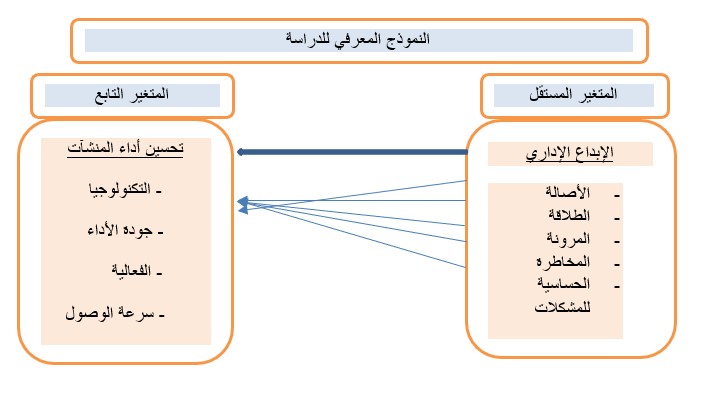
The study aimed to identify the role of administrative creativity in improving the performance of tourism establishments in Yemen. To achieve the study objectives, the descriptive analytical approach was adopted to analyze the results. The community was represented by members of the Yemeni Tourism Federation in the capital, and the sample was selected through a comprehensive inventory method for all general and executive managers of companies and agencies in the capital, numbering (300) individuals. The questionnaire was used as a tool for the study, and the data were analyzed using the (smart, spss) program. The results of the study showed the existence of a statistically significant role for administrative creativity in improving the performance of tourism establishments. The study also recommended the need for tourism establishments to pay attention to the process of development and training for their employees on a permanent and continuous basis, and the importance of supporting the tourism sector and tourism establishments with ideas and alternatives that help in the continuity and diversity of their activities.
عبدالحفيظ يحيي الخزان, Ahmed Ahmed Al-Rahoumi (2025). The role of administrative creativity in improving the performance of tourism establishments (an applied study of a sample tourism companies and agencies in the capital of Yemen). Sana'a University Journal of Human Sciences, 155 – 194. DOI: https://doi.org/10.59628/jhs.v4i4.1490
عبدالحفيظ يحيي الخزان, Ahmed Ahmed Al-Rahoumi. “The role of administrative creativity in improving the performance of tourism establishments (an applied study of a sample tourism companies and agencies in the capital of Yemen).” Sana'a University Journal of Human Sciences, 2025, pp. 155 – 194. https://doi.org/10.59628/jhs.v4i4.1490. Accessed 28 Oct. 2026.
عبدالحفيظ يحيي الخزان, Ahmed Ahmed Al-Rahoumi. 2025. “The role of administrative creativity in improving the performance of tourism establishments (an applied study of a sample tourism companies and agencies in the capital of Yemen).” Sana'a University Journal of Human Sciences : 155 – 194. DOI: https://doi.org/10.59628/jhs.v4i4.1490
عبدالحفيظ يحيي الخزان, Ahmed Ahmed Al-Rahoumi (2025) ‘The role of administrative creativity in improving the performance of tourism establishments (an applied study of a sample tourism companies and agencies in the capital of Yemen)’, Sana'a University Journal of Human Sciences, pp. 155 – 194. doi: 10.59628/jhs.v4i4.1490
@article{jhs2025_art1490,
    author  = {عبدالحفيظ يحيي الخزان, Ahmed Ahmed Al-Rahoumi},
    title   = {The role of administrative creativity in improving the performance of tourism establishments  (an applied study of a sample tourism companies and agencies in the capital of Yemen)},
    journal = {Sana'a University Journal of Human Sciences},    year    = {2025},    month   = {April},    pages   = {155 – 194},    doi     = {10.59628/jhs.v4i4.1490},
    url     = {https://doi.org/10.59628/jhs.v4i4.1490},}
The role of administrative creativity in improving the performance of tourism establishments (an applied study of a sample tourism companies and agencies in the capital of Yemen)

This study investigates the role of assistive technologies in enhancing self-directed learning among visually impaired university students in Sana’a, Yemen. Using a descriptive-analytical approach, data were collected via a questionnaire from 246 students across 17 universities. Findings show that most students rely on smartphones with screen-reading software (89%) and social media applications supporting audio reading (78%), as well as online educational resources such as instructional channels and audio content (52.8%) to support independent learning. Statistical analysis revealed no significant differences in technology use or learning outcomes based on gender, age, academic level, or type of university. However, differences were significant according to the degree of visual impairment, with students with low vision demonstrating greater benefits. The study highlights that assistive technologies facilitate learning organization, optimize students’ abilities, enhance academic engagement, and promote educational independence. It recommends that universities establish supportive technological infrastructures, provide suitable devices and software, and implement training programs to maximize the effective use of assistive technologies, thereby strengthening their integration into higher education and fostering self-directed learning skills among visually impaired students.
Amal Hassan Abdullah Al-Zubaidi, Hadi Hazam Al-Sarabi, Ali Abdulmalik Abbas (2026). The Role of Assistive Technology in Achieving Self-Learning for Students with Visual Impairments in Yemeni Universities in The Capital, Sana'a. Sana'a University Journal of Human Sciences, 120 - 149. DOI: https://doi.org/10.59628/jhs.v5i6.2436
Amal Hassan Abdullah Al-Zubaidi, Hadi Hazam Al-Sarabi, Ali Abdulmalik Abbas. “The Role of Assistive Technology in Achieving Self-Learning for Students with Visual Impairments in Yemeni Universities in The Capital, Sana'a.” Sana'a University Journal of Human Sciences, 2026, pp. 120 - 149. https://doi.org/10.59628/jhs.v5i6.2436. Accessed 28 Oct. 2026.
Amal Hassan Abdullah Al-Zubaidi, Hadi Hazam Al-Sarabi, Ali Abdulmalik Abbas. 2026. “The Role of Assistive Technology in Achieving Self-Learning for Students with Visual Impairments in Yemeni Universities in The Capital, Sana'a.” Sana'a University Journal of Human Sciences : 120 - 149. DOI: https://doi.org/10.59628/jhs.v5i6.2436
Amal Hassan Abdullah Al-Zubaidi, Hadi Hazam Al-Sarabi, Ali Abdulmalik Abbas (2026) ‘The Role of Assistive Technology in Achieving Self-Learning for Students with Visual Impairments in Yemeni Universities in The Capital, Sana'a’, Sana'a University Journal of Human Sciences, pp. 120 - 149. doi: 10.59628/jhs.v5i6.2436
@article{jhs2026_art2436,
    author  = {Amal Hassan Abdullah Al-Zubaidi, Hadi Hazam Al-Sarabi, Ali Abdulmalik Abbas},
    title   = {The Role of Assistive Technology in Achieving Self-Learning for Students with Visual Impairments in Yemeni Universities in The Capital, Sana'a},
    journal = {Sana'a University Journal of Human Sciences},    year    = {2026},    month   = {June},    pages   = {120 - 149},    doi     = {10.59628/jhs.v5i6.2436},
    url     = {https://doi.org/10.59628/jhs.v5i6.2436},}
The Role of Assistive Technology in Achieving Self-Learning for Students with Visual Impairments in Yemeni Universities in The Capital, Sana'a

The aim of the research was to understand the role of caricature art in expressing poverty issues in the social reality of Yemen. The research relied on two methodologies: the descriptive-analytical method and the semiological method. A purposive sample was taken and the research included the analysis of twenty-one caricature drawings (visual discourse) executed by nine Yemeni caricature artists, who were also interviewed in a structured manner. The visual discourses were analyzed using an analysis tool derived from Martin Joly's approach. The research reached a number of conclusions, the most important of which are: poverty was discussed from various aspects. The head of the family was used as a prominent model representing the most affected group by poverty, and on the other hand, as a social model representing all poor Yemenis. The economic indicator is the most discussed factor in the sample images
Rehab Abdo Abdulaziz Al-Dhabhani (2025). The Role of Caricature Art in Portraying Poverty Issues in YEMENI Social Reality A Semiological Analysis of a Collection of Visual Discourses Addressing Poverty Issues in Yemen. Sana'a University Journal of Human Sciences, 275 - 298. DOI: https://doi.org/10.59628/jhs.v4i5.1618
Rehab Abdo Abdulaziz Al-Dhabhani. “The Role of Caricature Art in Portraying Poverty Issues in YEMENI Social Reality A Semiological Analysis of a Collection of Visual Discourses Addressing Poverty Issues in Yemen.” Sana'a University Journal of Human Sciences, 2025, pp. 275 - 298. https://doi.org/10.59628/jhs.v4i5.1618. Accessed 28 Oct. 2026.
Rehab Abdo Abdulaziz Al-Dhabhani. 2025. “The Role of Caricature Art in Portraying Poverty Issues in YEMENI Social Reality A Semiological Analysis of a Collection of Visual Discourses Addressing Poverty Issues in Yemen.” Sana'a University Journal of Human Sciences : 275 - 298. DOI: https://doi.org/10.59628/jhs.v4i5.1618
Rehab Abdo Abdulaziz Al-Dhabhani (2025) ‘The Role of Caricature Art in Portraying Poverty Issues in YEMENI Social Reality A Semiological Analysis of a Collection of Visual Discourses Addressing Poverty Issues in Yemen’, Sana'a University Journal of Human Sciences, pp. 275 - 298. doi: 10.59628/jhs.v4i5.1618
@article{jhs2025_art1618,
    author  = {Rehab Abdo Abdulaziz Al-Dhabhani},
    title   = {The Role of Caricature Art in Portraying Poverty Issues in YEMENI Social Reality       A Semiological Analysis of a Collection of Visual Discourses Addressing  Poverty Issues in Yemen},
    journal = {Sana'a University Journal of Human Sciences},    year    = {2025},    month   = {May},    pages   = {275 - 298},    doi     = {10.59628/jhs.v4i5.1618},
    url     = {https://doi.org/10.59628/jhs.v4i5.1618},}
The Role of Caricature Art in Portraying Poverty Issues in YEMENI Social Reality A Semiological Analysis of a Collection of Visual Discourses Addressing Poverty Issues in Yemen

This study aimed to assess the level of contributions of Civil Society Organizations (CSOs) to promoting social peace in the Republic of Yemen, by exploring their role across three main dimensions: (enhancing social participation, renouncing violence, and peacebuilding). The study also sought to identify the significance of differences in the respondents' perceptions regarding these contributions based on demographic and functional variables (gender, job title, years of experience, educational qualification, organization type, and organization age).
To achieve the study objectives, the researcher adopted the descriptive-analytical approach and used a questionnaire as the data collection instrument. The questionnaire consisted of (42) items distributed across the three dimensions and was administered to a sample of (386) employees working in local and international organizations in Yemen.
The study yielded several results, most notably: The overall level of CSOs' contributions to promoting social peace was (High) across all dimensions. The "Social Participation" dimension ranked first with an arithmetic mean of (3.92) and a relative weight of (78.40%), followed by the "Renouncing Violence" dimension with a mean of (3.77), while the "Peacebuilding" dimension ranked third with a mean of (3.73). The results also revealed statistically significant differences in the level of contributions attributed to the "Organization Type" variable across all dimensions, in favor of "International Organizations." Based on these findings, the study recommended the necessity of institutionalizing the partnership between the government and CSOs, and directing funding toward sustainable development projects that address the root causes of conflict.
Mohammed Ebrahim Alwaisi, Saleh Mohammed Huomid (2026). The Role of Civil Society Organizations in Promoting Social Peace in the Republic of Yemen: A Field Study (2020-2024). Sana'a University Journal of Human Sciences, 338 - 371. DOI: https://doi.org/10.59628/jhs.v5i7.2658
Mohammed Ebrahim Alwaisi, Saleh Mohammed Huomid. “The Role of Civil Society Organizations in Promoting Social Peace in the Republic of Yemen: A Field Study (2020-2024).” Sana'a University Journal of Human Sciences, 2026, pp. 338 - 371. https://doi.org/10.59628/jhs.v5i7.2658. Accessed 28 Oct. 2026.
Mohammed Ebrahim Alwaisi, Saleh Mohammed Huomid. 2026. “The Role of Civil Society Organizations in Promoting Social Peace in the Republic of Yemen: A Field Study (2020-2024).” Sana'a University Journal of Human Sciences : 338 - 371. DOI: https://doi.org/10.59628/jhs.v5i7.2658
Mohammed Ebrahim Alwaisi, Saleh Mohammed Huomid (2026) ‘The Role of Civil Society Organizations in Promoting Social Peace in the Republic of Yemen: A Field Study (2020-2024)’, Sana'a University Journal of Human Sciences, pp. 338 - 371. doi: 10.59628/jhs.v5i7.2658
@article{jhs2026_art2658,
    author  = {Mohammed Ebrahim Alwaisi, Saleh Mohammed Huomid},
    title   = {The Role of Civil Society Organizations in Promoting Social Peace in the Republic of Yemen: A Field Study (2020-2024)},
    journal = {Sana'a University Journal of Human Sciences},    year    = {2026},    month   = {July},    pages   = {338 - 371},    doi     = {10.59628/jhs.v5i7.2658},
    url     = {https://doi.org/10.59628/jhs.v5i7.2658},}
The Role of Civil Society Organizations in Promoting Social Peace in the Republic of Yemen: A Field Study (2020-2024)
The study aimed to understand the nature of the relationship between civil society organizations and small projects، and whether this relationship is positively developmental or not. To achieve this، an analytical descriptive survey methodology was used for the study. A questionnaire was applied to a sample consisting of 90 participants، who were divided among the study's aspects. Out of them، 30 were postgraduate students from the Research and Studies Center for Social Gender and Development at Sana'a University in the capital's Secretariat، who work in civil society organizations that finance small projects. In addition to this، 60 participants were small business owners from various markets in the Seventy Directorate of the capital's secretariat. The study concluded with several findings، the most important of which is that civil society organizations have a developmental، improving، and positive relationship with small projects in terms of health، human، educational and income levels. However، they have a non-developmental and retrogressive relationship from the economic and social aspect due to the general economic weakness. The study recommends the need to study the amount of financing compared to the small project، qualifying project owners، providing facilitation، and removing obstacles in front of loan seekers from small and micro project owners.
Afnan Abdualkader Al-Aqili, Saleh Mohammed Humaid (2023). The Role of Civil Society Organizations in Supporting Small and Micro Development Projects. Sana'a University Journal of Human Sciences. DOI: https://doi.org/10.59628/jhs.v4i2.458
Afnan Abdualkader Al-Aqili, Saleh Mohammed Humaid. “The Role of Civil Society Organizations in Supporting Small and Micro Development Projects.” Sana'a University Journal of Human Sciences, 2023, https://doi.org/10.59628/jhs.v4i2.458. Accessed 28 Oct. 2026.
Afnan Abdualkader Al-Aqili, Saleh Mohammed Humaid. 2023. “The Role of Civil Society Organizations in Supporting Small and Micro Development Projects.” Sana'a University Journal of Human Sciences DOI: https://doi.org/10.59628/jhs.v4i2.458
Afnan Abdualkader Al-Aqili, Saleh Mohammed Humaid (2023) ‘The Role of Civil Society Organizations in Supporting Small and Micro Development Projects’, Sana'a University Journal of Human Sciences. doi: 10.59628/jhs.v4i2.458
@article{jhs2023_art458,
    author  = {Afnan Abdualkader Al-Aqili, Saleh Mohammed Humaid},
    title   = {The Role of Civil Society Organizations in Supporting Small and Micro Development Projects},
    journal = {Sana'a University Journal of Human Sciences},    year    = {2023},    month   = {October},    doi     = {10.59628/jhs.v4i2.458},
    url     = {https://doi.org/10.59628/jhs.v4i2.458},}
The Role of Civil Society Organizations in Supporting Small and Micro Development Projects
The primary objective of this research is to elucidate the impact of inclusive quality management and its key dimensions (customer focus, continuous improvement, training, and top-level management support) on enhancing competitiveness within money exchange companies in the Republic of Yemen. The study employs a descriptive analytical methodology, with a sample size of (167) individuals drawn from a population of (363) individuals. A questionnaire serves as the primary data collection tool. The findings indicated a high level of quality management and competitiveness within Yemeni exchange companies. Furthermore, a positive and statistically significant correlation was observed between the implementation of total quality management practices and the competitiveness of leaders and employees within the studied exchange companies.
The study put forth a series of recommendations, emphasizing the necessity for exchange companies to prioritize employee education programs aimed at fostering a culture of inclusive quality, alongside organizing workshops and seminars to facilitate the practical application of inclusive quality management principles. Additionally, it was suggested that exchange companies management establish a dedicated development unit to enhance programs and services in alignment with quality standards. Moreover, attention should be directed towards assessing customer satisfaction, given its pivotal role in service improvement and development efforts.
Adnan Hammoud Yahya Abashaar, Nabil Muhammad Al-Alfi (2024). The Role of Inclusive Quality Management in Improving Competitive Capabilities: A Field Study on Money Exchange Companies in the Republic of Yemen. Sana'a University Journal of Human Sciences, 236-256. DOI: https://doi.org/10.59628/jhs.v3i3.966
Adnan Hammoud Yahya Abashaar, Nabil Muhammad Al-Alfi. “The Role of Inclusive Quality Management in Improving Competitive Capabilities: A Field Study on Money Exchange Companies in the Republic of Yemen.” Sana'a University Journal of Human Sciences, 2024, pp. 236-256. https://doi.org/10.59628/jhs.v3i3.966. Accessed 28 Oct. 2026.
Adnan Hammoud Yahya Abashaar, Nabil Muhammad Al-Alfi. 2024. “The Role of Inclusive Quality Management in Improving Competitive Capabilities: A Field Study on Money Exchange Companies in the Republic of Yemen.” Sana'a University Journal of Human Sciences : 236-256. DOI: https://doi.org/10.59628/jhs.v3i3.966
Adnan Hammoud Yahya Abashaar, Nabil Muhammad Al-Alfi (2024) ‘The Role of Inclusive Quality Management in Improving Competitive Capabilities: A Field Study on Money Exchange Companies in the Republic of Yemen’, Sana'a University Journal of Human Sciences, pp. 236-256. doi: 10.59628/jhs.v3i3.966
@article{jhs2024_art966,
    author  = {Adnan Hammoud Yahya Abashaar, Nabil Muhammad Al-Alfi},
    title   = {The Role of Inclusive Quality Management in Improving Competitive Capabilities: A Field Study on Money Exchange Companies in the Republic of Yemen},
    journal = {Sana'a University Journal of Human Sciences},    year    = {2024},    month   = {July},    pages   = {236-256},    doi     = {10.59628/jhs.v3i3.966},
    url     = {https://doi.org/10.59628/jhs.v3i3.966},}
The Role of Inclusive Quality Management in Improving Competitive Capabilities: A Field Study on Money Exchange Companies in the Republic of Yemen

The research aimed to identify the role of internal audit - as a governance mechanism - in evaluating the performance of the General Authority of Zakat in the Republic of Yemen. The research problem is summarized in the question that states: What is the role of internal audit in evaluating the performance of the General Authority of Zakat in the Republic of Yemen? The researcher used the descriptive analytical method, and also used the questionnaire tool to collect data from members of the research sample. The research community consisted of technical workers in the General Authority of Zakat in the Republic of Yemen, the main headquarters in the capital Sana’a and its branches in the governorates, the main center in the capital, Sana’a, who numbered (350), and the research sample was chosen in a simple random way, amounting to (184) individuals. The research reached a number of results, including: that there is a role for internal audit in evaluating performance in the General Authority of Zakat in the Republic of Yemen, and that the overall score for applying the internal audit dimension, the performance standards dimension, and the development and improvement of performance dimension in the General Authority of Zakat appeared at a high degree, while the performance evaluation dimension came in at a moderate degree. In light of the results reached, the study recommended that the General Authority of Zakat provide support and assistance to internal auditors and provide the necessary means to enable them to perform their tasks efficiently and effectively, and work on using modern methods in performance evaluation, and benefiting from the results of performance evaluation in developing the capabilities of employees.
Mohammad Ali Qasim Al-Ezzi, Abdulghani Ahmed Abdullah Dawman (2025). The role of internal audit in evaluating the performance of the General Authority of Zakat in the Republic of Yemen. Sana'a University Journal of Human Sciences, 486- 509. DOI: https://doi.org/10.59628/jhs.v4i7.1634
Mohammad Ali Qasim Al-Ezzi, Abdulghani Ahmed Abdullah Dawman. “The role of internal audit in evaluating the performance of the General Authority of Zakat in the Republic of Yemen.” Sana'a University Journal of Human Sciences, 2025, pp. 486- 509. https://doi.org/10.59628/jhs.v4i7.1634. Accessed 28 Oct. 2026.
Mohammad Ali Qasim Al-Ezzi, Abdulghani Ahmed Abdullah Dawman. 2025. “The role of internal audit in evaluating the performance of the General Authority of Zakat in the Republic of Yemen.” Sana'a University Journal of Human Sciences : 486- 509. DOI: https://doi.org/10.59628/jhs.v4i7.1634
Mohammad Ali Qasim Al-Ezzi, Abdulghani Ahmed Abdullah Dawman (2025) ‘The role of internal audit in evaluating the performance of the General Authority of Zakat in the Republic of Yemen’, Sana'a University Journal of Human Sciences, pp. 486- 509. doi: 10.59628/jhs.v4i7.1634
@article{jhs2025_art1634,
    author  = {Mohammad Ali Qasim  Al-Ezzi, Abdulghani Ahmed Abdullah Dawman},
    title   = {The role of internal audit in evaluating the performance of the General Authority of Zakat in the Republic of Yemen},
    journal = {Sana'a University Journal of Human Sciences},    year    = {2025},    month   = {July},    pages   = {486- 509},    doi     = {10.59628/jhs.v4i7.1634},
    url     = {https://doi.org/10.59628/jhs.v4i7.1634},}
The role of internal audit in evaluating the performance of the General Authority of Zakat in the Republic of Yemen

This research aims to shed light on the suffering of women during armed conflicts and provide a comprehensive overview of the general rules for their protection under international humanitarian law. The research reviews the rules for the protection of women as combatants and civilians, as well as the special protection for pregnant and breastfeeding women. A descriptive approach will be used to achieve these goals. The research findings indicate that international humanitarian law, represented by the Geneva Conventions, emphasizes the importance of protecting women during armed conflicts by providing special rules that protect them from violations. The Geneva Conventions also highlight the need to provide special facilities for female prisoners, and the need to take strict measures to criminalize violations, especially violence. We highlight a set of important recommendations, including: strengthening domestic and international laws to protect women during conflicts, establishing special safety zones, and providing specialized healthcare for pregnant women and mothers of children. Finally, it is important to raise awareness and educate about women's rights in conflicts at all levels.
Ashwaq Abdul Rahman Abdullah Al-Taj (2025). The role of international humanitarian law in protecting women during armed conflict. Sana'a University Journal of Human Sciences, 352 - 370. DOI: https://doi.org/10.59628/jhs.v4i6.1467
Ashwaq Abdul Rahman Abdullah Al-Taj. “The role of international humanitarian law in protecting women during armed conflict.” Sana'a University Journal of Human Sciences, 2025, pp. 352 - 370. https://doi.org/10.59628/jhs.v4i6.1467. Accessed 28 Oct. 2026.
Ashwaq Abdul Rahman Abdullah Al-Taj. 2025. “The role of international humanitarian law in protecting women during armed conflict.” Sana'a University Journal of Human Sciences : 352 - 370. DOI: https://doi.org/10.59628/jhs.v4i6.1467
Ashwaq Abdul Rahman Abdullah Al-Taj (2025) ‘The role of international humanitarian law in protecting women during armed conflict’, Sana'a University Journal of Human Sciences, pp. 352 - 370. doi: 10.59628/jhs.v4i6.1467
@article{jhs2025_art1467,
    author  = {Ashwaq Abdul Rahman Abdullah Al-Taj},
    title   = {The role of international humanitarian law in protecting women during armed conflict},
    journal = {Sana'a University Journal of Human Sciences},    year    = {2025},    month   = {June},    pages   = {352 - 370},    doi     = {10.59628/jhs.v4i6.1467},
    url     = {https://doi.org/10.59628/jhs.v4i6.1467},}
The role of international humanitarian law in protecting women during armed conflict
The primary objective of this research is to investigate the role of knowledge management in its dimensions (knowledge generation, knowledge acquisition, knowledge sharing, knowledge storage, and knowledge application) in achieving organizational excellence in Yemeni private universities in the capital Sana’a, and, knowing the level of achieving organizational excellence. In the Yemeni private universities, the study followed the descriptive, analytical, and correlational approach. The study population represented academic and administrative leaders in ten private universities in the capital, Sana’a, and they numbered (524) members. A questionnaire was designed as a tool for collecting data from a sample size of (233) individuals. (221) Valid questionnaires for statistical analysis were retrieved from it, and after conducting the statistical analyses.The findings revealed a notable emphasis on the implementation of knowledge management practices across all dimensions, with the exception of knowledge storage which displayed a higher level of implementation. Furthermore, a relatively high level of organizational excellence was observed across all dimensions, with the exception of structural excellence which was rated as high. Significantly, the study identified a statistically significant relationship between knowledge management practices and the achievement of organizational excellence in Yemeni private universities.
Sameera Saeed Ali Al-Hemyari, Jabr Abdulqaw Ismail Al-Sanabani (2024). The Role of Knowledge Management in Achieving Organizational Excellence in Yemeni Private Universities in the Capital, Sana’a. Sana'a University Journal of Human Sciences, 537 - 566. DOI: https://doi.org/10.59628/jhs.v3i3.1091
Sameera Saeed Ali Al-Hemyari, Jabr Abdulqaw Ismail Al-Sanabani. “The Role of Knowledge Management in Achieving Organizational Excellence in Yemeni Private Universities in the Capital, Sana’a.” Sana'a University Journal of Human Sciences, 2024, pp. 537 - 566. https://doi.org/10.59628/jhs.v3i3.1091. Accessed 28 Oct. 2026.
Sameera Saeed Ali Al-Hemyari, Jabr Abdulqaw Ismail Al-Sanabani. 2024. “The Role of Knowledge Management in Achieving Organizational Excellence in Yemeni Private Universities in the Capital, Sana’a.” Sana'a University Journal of Human Sciences : 537 - 566. DOI: https://doi.org/10.59628/jhs.v3i3.1091
Sameera Saeed Ali Al-Hemyari, Jabr Abdulqaw Ismail Al-Sanabani (2024) ‘The Role of Knowledge Management in Achieving Organizational Excellence in Yemeni Private Universities in the Capital, Sana’a’, Sana'a University Journal of Human Sciences, pp. 537 - 566. doi: 10.59628/jhs.v3i3.1091
@article{jhs2024_art1091,
    author  = {Sameera Saeed Ali Al-Hemyari, Jabr Abdulqaw Ismail  Al-Sanabani},
    title   = {The Role of Knowledge Management in Achieving Organizational Excellence in Yemeni Private Universities in the Capital, Sana’a},
    journal = {Sana'a University Journal of Human Sciences},    year    = {2024},    month   = {July},    pages   = {537 - 566},    doi     = {10.59628/jhs.v3i3.1091},
    url     = {https://doi.org/10.59628/jhs.v3i3.1091},}
The Role of Knowledge Management in Achieving Organizational Excellence in Yemeni Private Universities in the Capital, Sana’a
The study aimed to find out the extent to which Yemeni radio stations are interested in sustainable development issues، directing listeners، and forming their attitudes towards it.
To achieve this، the descriptive survey method was adopted، and a questionnaire was applied to a sample of (46) employees working for Radio Sana'a and Identity، and it reached several results، the most important of which is that the role of the two radio stations in each task is to pay attention to development issues and form attitudes towards them، and the emotional، cognitive and behavioral effects resulting from this role were all of a very high degree.
Sana'a Radio obtained the highest approval rate in the two axes of concern and the formation of trends at a rate of 94.00% compared to 92.60% for Identity Radio، while Identity Radio obtained the highest approval rate in the Antiquities axis at a rate of 88.80%، compared to 86.20% for Sana'a Radio.
Mohammd Abdu-Alwali Al-Sakaf, Assoc. prof .Dr. Saleh Mohammed Humaid (2023). The role of local Yemeni radio stations in directing listeners and shaping their attitudes towards sustainable development issues. Sana'a University Journal of Human Sciences. DOI: https://doi.org/10.59628/jhs.v3i1.133
Mohammd Abdu-Alwali Al-Sakaf, Assoc. prof .Dr. Saleh Mohammed Humaid . “The role of local Yemeni radio stations in directing listeners and shaping their attitudes towards sustainable development issues.” Sana'a University Journal of Human Sciences, 2023, https://doi.org/10.59628/jhs.v3i1.133. Accessed 28 Oct. 2026.
Mohammd Abdu-Alwali Al-Sakaf, Assoc. prof .Dr. Saleh Mohammed Humaid . 2023. “The role of local Yemeni radio stations in directing listeners and shaping their attitudes towards sustainable development issues.” Sana'a University Journal of Human Sciences DOI: https://doi.org/10.59628/jhs.v3i1.133
Mohammd Abdu-Alwali Al-Sakaf, Assoc. prof .Dr. Saleh Mohammed Humaid (2023) ‘The role of local Yemeni radio stations in directing listeners and shaping their attitudes towards sustainable development issues’, Sana'a University Journal of Human Sciences. doi: 10.59628/jhs.v3i1.133
@article{jhs2023_art133,
    author  = {Mohammd Abdu-Alwali Al-Sakaf, Assoc. prof .Dr. Saleh Mohammed Humaid },
    title   = {The role of local Yemeni radio stations in directing listeners and shaping their attitudes towards sustainable development issues},
    journal = {Sana'a University Journal of Human Sciences},    year    = {2023},    month   = {May},    doi     = {10.59628/jhs.v3i1.133},
    url     = {https://doi.org/10.59628/jhs.v3i1.133},}
The role of local Yemeni radio stations in directing listeners and shaping their attitudes towards sustainable development issues

The study aimed to identify the role of medical talent management in achieving competitive advantage and its dimensions (quality, creativity, cost, responsiveness) in private hospitals in Yemen.
The study population and sample consisted of private hospitals in Sana'a, which include most medical specialties and have been rated "A" according to the evaluation by the Ministry of Public Health and Population in 2021, comprising general managers, department managers, and heads of departments.
The descriptive analytical approach was adopted, and the study relied on a questionnaire as a data collection tool. Data were analyzed using the SPSS and AMOS programs.
The study found that private hospitals in Yemen showed a somewhat high level of interest in practicing medical talent management in its dimensions, as well as a high level of interest in practicing competitive advantage in its dimensions.
The results indicated a statistically significant positive effect of medical talent management on achieving competitive advantage and its dimensions (quality, creativity, cost, responsiveness) in private hospitals in Yemen.
The study recommended the necessity of enhancing interest in medical talent management and competitive advantage and their importance in hospitals to achieve their competitive organizational goals.
Ahmed Ali Hasan Hasan, عبدالخالق محسن هادي طواف (2025). The role of medical talent management in achieving competitive advantage in The private Yemeni hospitals. Sana'a University Journal of Human Sciences, 283 - 312. DOI: https://doi.org/10.59628/jhs.v4i9.1815
Ahmed Ali Hasan Hasan, عبدالخالق محسن هادي طواف . “The role of medical talent management in achieving competitive advantage in The private Yemeni hospitals.” Sana'a University Journal of Human Sciences, 2025, pp. 283 - 312. https://doi.org/10.59628/jhs.v4i9.1815. Accessed 28 Oct. 2026.
Ahmed Ali Hasan Hasan, عبدالخالق محسن هادي طواف . 2025. “The role of medical talent management in achieving competitive advantage in The private Yemeni hospitals.” Sana'a University Journal of Human Sciences : 283 - 312. DOI: https://doi.org/10.59628/jhs.v4i9.1815
Ahmed Ali Hasan Hasan, عبدالخالق محسن هادي طواف (2025) ‘The role of medical talent management in achieving competitive advantage in The private Yemeni hospitals’, Sana'a University Journal of Human Sciences, pp. 283 - 312. doi: 10.59628/jhs.v4i9.1815
@article{jhs2025_art1815,
    author  = {Ahmed Ali Hasan Hasan, عبدالخالق محسن هادي طواف },
    title   = {The role of medical talent management in achieving competitive advantage in The private Yemeni hospitals},
    journal = {Sana'a University Journal of Human Sciences},    year    = {2025},    month   = {September},    pages   = {283 - 312},    doi     = {10.59628/jhs.v4i9.1815},
    url     = {https://doi.org/10.59628/jhs.v4i9.1815},}
The role of medical talent management in achieving competitive advantage in The private Yemeni hospitals

The study aimed to know the role of the role of participatory leadership (Participation in decision making, delegation of authority, planning, human relations) in improving institutional performance in the telecommunications sector in Yemen. The study followed the descriptive analytical approach, and the study population was determined as (404) employees in leadership and supervisory positions in three companies in the telecommunications sector in Yemen, and (217) questionnaires were retrieved. As there were (11) questionnaires missing (206) questionnaires were analyzed using (SPSS) program, version 24. The study found that there is a somewhat high level of availability of participatory leadership in the telecommunications sector in Yemen. The study also found that there is a somewhat high level of improving institutional performance in the telecommunications sector in Yemen. The results of the study also showed that there is a statistically significant role for participatory leadership in improving institutional performance.
Nabil Ali Abdullah Al-Samawi, Hamoud Abdullah Saleh Aqlan (2025). The role of participatory leadership in improving institutional performance: an applied study on the communications sector in Yemen. Sana'a University Journal of Human Sciences, 581 - 621. DOI: https://doi.org/10.59628/jhs.v4i11.1648
Nabil Ali Abdullah Al-Samawi, Hamoud Abdullah Saleh Aqlan. “The role of participatory leadership in improving institutional performance: an applied study on the communications sector in Yemen.” Sana'a University Journal of Human Sciences, 2025, pp. 581 - 621. https://doi.org/10.59628/jhs.v4i11.1648. Accessed 28 Oct. 2026.
Nabil Ali Abdullah Al-Samawi, Hamoud Abdullah Saleh Aqlan. 2025. “The role of participatory leadership in improving institutional performance: an applied study on the communications sector in Yemen.” Sana'a University Journal of Human Sciences : 581 - 621. DOI: https://doi.org/10.59628/jhs.v4i11.1648
Nabil Ali Abdullah Al-Samawi, Hamoud Abdullah Saleh Aqlan (2025) ‘The role of participatory leadership in improving institutional performance: an applied study on the communications sector in Yemen’, Sana'a University Journal of Human Sciences, pp. 581 - 621. doi: 10.59628/jhs.v4i11.1648
@article{jhs2025_art1648,
    author  = {Nabil Ali Abdullah Al-Samawi, Hamoud Abdullah Saleh Aqlan},
    title   = {The role of participatory leadership in improving institutional performance: an applied study on the communications sector in Yemen},
    journal = {Sana'a University Journal of Human Sciences},    year    = {2025},    month   = {November},    pages   = {581 - 621},    doi     = {10.59628/jhs.v4i11.1648},
    url     = {https://doi.org/10.59628/jhs.v4i11.1648},}
The role of participatory leadership in improving institutional performance: an applied study on the communications sector in Yemen
The study aimed to know the leading role in business management from the point of view of administrative leaders in investment institutions in the water sector, a variety of descriptive analytical layers, and to collect active data on the questionnaire tool, and the study community was represented by administrative leaders, and since the size of the community (243) individuals, the comprehensive enumeration method was relied upon, and after analyzing the study data and its hypotheses, the study results reached several distinct results: - The presence of agreement (somewhat high) By the study participants on the availability of regulatory immunity in investment institutions in the water sector, through regulatory immunity obtaining a relative weight (74%), the study also showed the existence of a (somewhat high) degree of approval by the study participants on the availability of crisis management in investment institutions in the water sector, through crisis management obtaining a relative weight (73%). In addition to the existence of a direct (positive) correlation relationship Between the independent variable and the dependent variable, and that there is a statistically significant explanatory relationship for organizational immunity on crisis management, and the study recommended the importance of conducting a future study on: the impact of crisis management on the quality of services in investment institutions in the water sector
Zayed Ali AbdulKhaleq Al-manzuoa, Ali Dahesh Mubark Alyaari (2024). The Role of Regulatory immunity in Crisis Management in Investment Institutions in the Water Sector – in Sana'a - Yemen. Sana'a University Journal of Human Sciences, 549 - 572. DOI: https://doi.org/10.59628/jhs.v3i8.1206
Zayed Ali AbdulKhaleq Al-manzuoa, Ali Dahesh Mubark Alyaari. “The Role of Regulatory immunity in Crisis Management in Investment Institutions in the Water Sector – in Sana'a - Yemen.” Sana'a University Journal of Human Sciences, 2024, pp. 549 - 572. https://doi.org/10.59628/jhs.v3i8.1206. Accessed 28 Oct. 2026.
Zayed Ali AbdulKhaleq Al-manzuoa, Ali Dahesh Mubark Alyaari. 2024. “The Role of Regulatory immunity in Crisis Management in Investment Institutions in the Water Sector – in Sana'a - Yemen.” Sana'a University Journal of Human Sciences : 549 - 572. DOI: https://doi.org/10.59628/jhs.v3i8.1206
Zayed Ali AbdulKhaleq Al-manzuoa, Ali Dahesh Mubark Alyaari (2024) ‘The Role of Regulatory immunity in Crisis Management in Investment Institutions in the Water Sector – in Sana'a - Yemen’, Sana'a University Journal of Human Sciences, pp. 549 - 572. doi: 10.59628/jhs.v3i8.1206
@article{jhs2024_art1206,
    author  = {Zayed Ali AbdulKhaleq Al-manzuoa, Ali Dahesh Mubark Alyaari},
    title   = {The Role of Regulatory immunity in Crisis Management in Investment Institutions in the Water Sector – in Sana'a - Yemen},
    journal = {Sana'a University Journal of Human Sciences},    year    = {2024},    month   = {December},    pages   = {549 - 572},    doi     = {10.59628/jhs.v3i8.1206},
    url     = {https://doi.org/10.59628/jhs.v3i8.1206},}
The Role of Regulatory immunity in Crisis Management in Investment Institutions in the Water Sector – in Sana'a - Yemen

The study aimed to study and analyze the role of social responsibility of the Hayel Saeed Anam Companies in the capital Sana'a in achieving sustainable development in Yemeni society, by determining the level of community participation of the group in financing and adopting economic, social and environmental projects and initiatives that benefit all members of society. The study followed the descriptive analytical approach, and data was collected using a questionnaire tool that was distributed in (15) companies of the Hail Saeed Anam Group of Companies in the capital Sana'a. The study sample consisted of (344) individuals, who were selected through the comprehensive inventory method for all leaders working in the group's companies. The results of the study concluded that there is a positive role for practicing social responsibility in all its dimensions (economic responsibility, human responsibility, moral responsibility, legal responsibility) in sustainable development in several aspects such as financing projects and community initiatives that include providing food and living needs, and adopting economic initiatives that support the provision of income for members of society, in addition to providing projects for health, educational and environmental services. The economic responsibility dimension had the highest contributions compared to the rest of the dimensions. While the environmental responsibility dimension was less contributing at the level of economic, social and environmental initiatives and projects in achieving the goals of sustainable development in Yemeni society. The study recommended a number of recommendations, most notably: The importance of focusing the Hayel Saeed Anam Group of Companies in its social responsibility on food provision projects and community aid initiatives for poor families, health and education services and potable water in the most affected directorates and areas.
عبدالرزاق محمد قايد المراني, Abdulrazaq Mohammed Qaid Almarani (2025). The role of social responsibility in achieving sustainable development goals in Hayel Saeed Anam Companies in the capital, Sana'a. Sana'a University Journal of Human Sciences, 78 - 106. DOI: https://doi.org/10.59628/jhs.v4i10.1657
عبدالرزاق محمد قايد المراني, Abdulrazaq Mohammed Qaid Almarani. “The role of social responsibility in achieving sustainable development goals in Hayel Saeed Anam Companies in the capital, Sana'a.” Sana'a University Journal of Human Sciences, 2025, pp. 78 - 106. https://doi.org/10.59628/jhs.v4i10.1657. Accessed 28 Oct. 2026.
عبدالرزاق محمد قايد المراني, Abdulrazaq Mohammed Qaid Almarani. 2025. “The role of social responsibility in achieving sustainable development goals in Hayel Saeed Anam Companies in the capital, Sana'a.” Sana'a University Journal of Human Sciences : 78 - 106. DOI: https://doi.org/10.59628/jhs.v4i10.1657
عبدالرزاق محمد قايد المراني, Abdulrazaq Mohammed Qaid Almarani (2025) ‘The role of social responsibility in achieving sustainable development goals in Hayel Saeed Anam Companies in the capital, Sana'a’, Sana'a University Journal of Human Sciences, pp. 78 - 106. doi: 10.59628/jhs.v4i10.1657
@article{jhs2025_art1657,
    author  = {عبدالرزاق محمد قايد المراني, Abdulrazaq Mohammed Qaid Almarani},
    title   = {The role of social responsibility in achieving sustainable development goals in Hayel Saeed Anam Companies in the capital, Sana'a},
    journal = {Sana'a University Journal of Human Sciences},    year    = {2025},    month   = {October},    pages   = {78 - 106},    doi     = {10.59628/jhs.v4i10.1657},
    url     = {https://doi.org/10.59628/jhs.v4i10.1657},}
The role of social responsibility in achieving sustainable development goals in Hayel Saeed Anam Companies in the capital, Sana'a
This study explores the link between strategic orientation and competitive advantage in Yemeni private universities located in Sana'a. Utilizing a survey approach, the study analyzes the impact of three strategic dimensions (entrepreneurial, market-oriented, and technology-oriented) on three competitive advantage dimensions (quality, excellence, and cost). Findings reveal a statistically significant association between the two constructs, highlighting the importance of strategic alignment for achieving a competitive edge. While the study confirms a generally high level of strategic orientation implementation within these universities, it also identifies room for improvement regarding competitive advantage realization, particularly in the area of excellence. Recommendations emphasize the need for universities to refine their strategic approaches by further understanding market demands and optimizing resource allocation to translate strategic intent into tangible competitive, as well as conducting further studies to analyze the external environment of private universities in Yemen, such as political, economic, social, security and technological factors, and their impact on competitive advantage.
Fuad Ahmed Ahmed Alhada, Jamal Dirhim Ahmed Said (2024). The role of strategic direction in achieving competitive advantage : A field study in Yemeni private universities. Sana'a University Journal of Human Sciences, 619- 646. DOI: https://doi.org/10.59628/jhs.v2i1.819
Fuad Ahmed Ahmed Alhada, Jamal Dirhim Ahmed Said. “The role of strategic direction in achieving competitive advantage : A field study in Yemeni private universities.” Sana'a University Journal of Human Sciences, 2024, pp. 619- 646. https://doi.org/10.59628/jhs.v2i1.819. Accessed 28 Oct. 2026.
Fuad Ahmed Ahmed Alhada, Jamal Dirhim Ahmed Said. 2024. “The role of strategic direction in achieving competitive advantage : A field study in Yemeni private universities.” Sana'a University Journal of Human Sciences : 619- 646. DOI: https://doi.org/10.59628/jhs.v2i1.819
Fuad Ahmed Ahmed Alhada, Jamal Dirhim Ahmed Said (2024) ‘The role of strategic direction in achieving competitive advantage : A field study in Yemeni private universities’, Sana'a University Journal of Human Sciences, pp. 619- 646. doi: 10.59628/jhs.v2i1.819
@article{jhs2024_art819,
    author  = {Fuad Ahmed Ahmed Alhada, Jamal Dirhim Ahmed Said},
    title   = {The role of strategic direction in achieving competitive advantage : A field study in Yemeni private universities},
    journal = {Sana'a University Journal of Human Sciences},    year    = {2024},    month   = {April},    pages   = {619- 646},    doi     = {10.59628/jhs.v2i1.819},
    url     = {https://doi.org/10.59628/jhs.v2i1.819},}
The role of strategic direction in achieving competitive advantage : A field study in Yemeni private universities
This study aimed to measure the role of strategic leadership with its dimensions (Strategic Direction, Preserving core capabilities, developing human capital, organizational culture, balanced organizational oversight, emphasizing ethical practices) in achieving competitive advantage with its dimensions (cost, quality, flexibility, delivery, creativity) in private hospitals in the capital Sana'a.
Through a comprehensive survey, the study targeted all employees of senior leadership (administrative, medical, technical) in private hospitals (Field Study), and the study population totaled (251) leaders and (230) questionnaires were analyzed.
The study followed the descriptive analytical approach and the study relied on the questionnaire as a main tool for a data collection. The data was analyzed using Application of the statistical package for the social sciences (SPSS) and Analysis of Moment Structures ( AMOS).
The study reached a number of conclusions, the most important of which was the existence of a positive role for strategic leadership in achieving the competitive advantage in private hospitals ( field study).
There is also a great concern of the strategic leadership in all its dimensions. The highest of these dimensions was available after the strategic direction and the least of them was the development of human capital. There is also a great interest in competitive advantage as it has been more achieved quality and flexibility, the least of them is creativity.
The study concluded with a number of recommendation, the most important of which was the continuation of the practice of strategic leadership by private hospitals ( field f study) and the advancement of this practice by using modern scientific methods to achieve the goals of hospitals and the need to encourage the participation of workers in decision-making, preparing future leaders, adopting electronic marketing in private hospitals ( field study), granting satisfactory incentives to employees to encourage creativity.
Ali Mohssen Mohyaldeen, Abdu Ahmed Ali Alamri (2023). The role of strategic leadership in achieving competitive advantage A field study in private hospitals in the capital, Sana'a.. Sana'a University Journal of Human Sciences. DOI: https://doi.org/10.59628/jhs.v4i1.331
Ali Mohssen Mohyaldeen, Abdu Ahmed Ali Alamri. “The role of strategic leadership in achieving competitive advantage A field study in private hospitals in the capital, Sana'a..” Sana'a University Journal of Human Sciences, 2023, https://doi.org/10.59628/jhs.v4i1.331. Accessed 28 Oct. 2026.
Ali Mohssen Mohyaldeen, Abdu Ahmed Ali Alamri. 2023. “The role of strategic leadership in achieving competitive advantage A field study in private hospitals in the capital, Sana'a..” Sana'a University Journal of Human Sciences DOI: https://doi.org/10.59628/jhs.v4i1.331
Ali Mohssen Mohyaldeen, Abdu Ahmed Ali Alamri (2023) ‘The role of strategic leadership in achieving competitive advantage A field study in private hospitals in the capital, Sana'a.’, Sana'a University Journal of Human Sciences. doi: 10.59628/jhs.v4i1.331
@article{jhs2023_art331,
    author  = {Ali Mohssen Mohyaldeen, Abdu Ahmed Ali Alamri},
    title   = {The role of strategic leadership in achieving competitive advantage A field study in private hospitals in the capital, Sana'a.},
    journal = {Sana'a University Journal of Human Sciences},    year    = {2023},    month   = {August},    doi     = {10.59628/jhs.v4i1.331},
    url     = {https://doi.org/10.59628/jhs.v4i1.331},}
The role of strategic leadership in achieving competitive advantage A field study in private hospitals in the capital, Sana'a.

This study aimed to measure the role of strategic leadership in its dimensions (determining strategic direction, investing in core capabilities, developing human capital, effective organizational culture, emphasizing ethical practices, balanced organizational control) in achieving institutional excellence in its Yemeni insurance companies.
The study used the quantitative research method, through which the descriptive analytical method was used, and the study relied on the questionnaire as the main tool for collecting data. The study community was represented through a comprehensive survey of all employees from the senior administrative leadership at their various job levels (Chairman of the Board of Directors, Vice Chairman of the Board of Directors, General Manager, Deputy General Manager, Director of Administration, Deputy Director of Administration, Head of Department) with a number of (291) leadership employees in the Yemeni insurance companies in the capital, Sana'a, with a number of (15) operating companies, and a number of (291) questionnaires were distributed to all members of the study sample, (266) valid questionnaires were recovered for analysis, and the data were analyzed using the Statistical Package for the Social Sciences (SPSS. 29) program.
The study reached a number of conclusions, the most important of which is the strong positive role of strategic leadership in achieving institutional excellence in Yemeni insurance companies (the subject of the study). There is also a great interest in the level of strategic leadership practice in all its dimensions, with the highest practice of these dimensions occurring after defining strategic direction, and the least practiced after developing human capital. There is also great interest in institutional excellence, with the most achieved dimension being leadership excellence, and the least achieved dimension being human excellence.
The study concluded with a number of recommendations, the most important of which are: Continuing to practice strategic leadership in all its dimensions by the Yemeni insurance companies under study, and enhancing the practice by adopting modern scientific methods. Also, paying attention to employees to develop their skills and capabilities, granting them the necessary powers and authorities, involving them in appropriate decision-making, encouraging them to undertake creative work, and honoring those who adhere to standards of professional conduct. It is necessary to pay greater attention to the quality of insurance services and develop them continuously in a manner that meets the needs of beneficiaries and achieves their satisfaction.
Mugeeb Farhan Ali Salem, Abdulaziz Mohammed Ahmed Al-Mekhlafi (2026). The Role of Strategic Leadership in Achieving Institutional Excellence. Sana'a University Journal of Human Sciences, 666 - 707. DOI: https://doi.org/10.59628/jhs.v5i2.2066
Mugeeb Farhan Ali Salem, Abdulaziz Mohammed Ahmed Al-Mekhlafi. “The Role of Strategic Leadership in Achieving Institutional Excellence.” Sana'a University Journal of Human Sciences, 2026, pp. 666 - 707. https://doi.org/10.59628/jhs.v5i2.2066. Accessed 28 Oct. 2026.
Mugeeb Farhan Ali Salem, Abdulaziz Mohammed Ahmed Al-Mekhlafi. 2026. “The Role of Strategic Leadership in Achieving Institutional Excellence.” Sana'a University Journal of Human Sciences : 666 - 707. DOI: https://doi.org/10.59628/jhs.v5i2.2066
Mugeeb Farhan Ali Salem, Abdulaziz Mohammed Ahmed Al-Mekhlafi (2026) ‘The Role of Strategic Leadership in Achieving Institutional Excellence’, Sana'a University Journal of Human Sciences, pp. 666 - 707. doi: 10.59628/jhs.v5i2.2066
@article{jhs2026_art2066,
    author  = {Mugeeb Farhan Ali Salem, Abdulaziz Mohammed Ahmed Al-Mekhlafi},
    title   = {The Role of Strategic Leadership in Achieving Institutional Excellence},
    journal = {Sana'a University Journal of Human Sciences},    year    = {2026},    month   = {February},    pages   = {666 - 707},    doi     = {10.59628/jhs.v5i2.2066},
    url     = {https://doi.org/10.59628/jhs.v5i2.2066},}
The Role of Strategic Leadership in Achieving Institutional Excellence
Nothing has been published in this category yet.

Sana'a University Journal
of Human Sciences
A peer-reviewed, open-access journal publishing high-quality research in human sciences since 2023