The Ligand was synthesized by condensation of Indol 3-hydroxy aldehyde, Glycine and Hydrazine hydrate. The reaction of the ligand with ions (CoII, NiII and CuII ions) yielded complexes, these compounds were characterized by physical and spectroscopic techniques. The conductivity showed a non-electrolytic nature for these compounds. The elemental analysis indicated the ligand to metal ratio as 1:1 with general molecular formula M(L)(H2O)nCl2 (L=ligand; M=metal ions. IR data showed the ligand coordinated to the metal ion via azomethine nitrogen and amine of hydrazide in addition to the amine of indol ring with CuΙΙ. The spectral and magnetic studies of the complexes showed that octahedral geometry for CoΙΙ and NiΙΙ while for CuΙΙ distorted octahedral geometry. The particle size and strain of these compounds have been discussed using X-ray diffraction. The antioxidant study for ligand proved to be a good antioxidant. The compounds have been evaluated for their antimicrobial activity against various organisms.
Yasmin M.S Jamil (2023). Synthesis and Spectroscopic methods on the complexation ofCoII, NiII and CuII . Sana'a University Journal of Applied Sciences and Technology. DOI: https://doi.org/10.59628/jast.v1i1.131
Yasmin M.S Jamil . “ Synthesis and Spectroscopic methods on the complexation ofCoII, NiII and CuII .” Sana'a University Journal of Applied Sciences and Technology, 2023, https://doi.org/10.59628/jast.v1i1.131. Accessed 30 Oct. 2026.
Yasmin M.S Jamil . 2023. “ Synthesis and Spectroscopic methods on the complexation ofCoII, NiII and CuII .” Sana'a University Journal of Applied Sciences and Technology DOI: https://doi.org/10.59628/jast.v1i1.131
Yasmin M.S Jamil (2023) ‘ Synthesis and Spectroscopic methods on the complexation ofCoII, NiII and CuII ’, Sana'a University Journal of Applied Sciences and Technology. doi: 10.59628/jast.v1i1.131
@article{jast2023_art131,
    author  = {Yasmin M.S Jamil },
    title   = { Synthesis and Spectroscopic methods on the complexation ofCoII, NiII and CuII },
    journal = {Sana'a University Journal of Applied Sciences and Technology},    year    = {2023},    month   = {January},    doi     = {10.59628/jast.v1i1.131},
    url     = {https://doi.org/10.59628/jast.v1i1.131},}
Synthesis and Spectroscopic methods on the complexation ofCoII, NiII and CuII
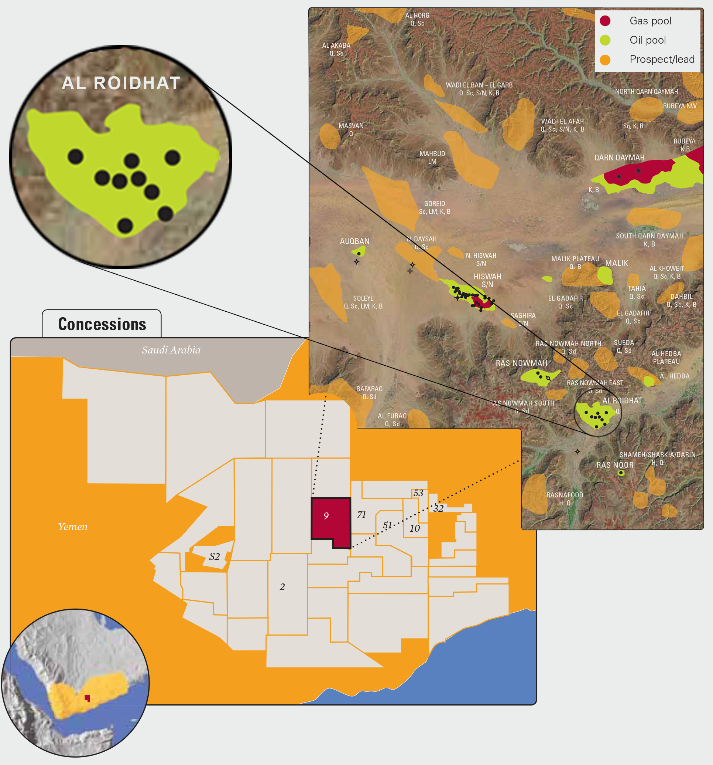
This study addresses a critical knowledge gap by presenting the first comprehensive 3D static geological model of the heavy-oil-bearing Upper Qishn Clastic Member in the Al Roidhat Field, Yemen. The model integrates data from eight wells. The workflow encompassed structural modeling, stratigraphic zonation into three reservoir units (S1, S2, S3), facies modeling using Sequential Indicator Simulation (30 realizations), and petrophysical property modeling using Sequential Gaussian Simulation. Probabilistic volumetric assessment was based on 100 stochastic realizations. Uncertainty analysis yields a P50 Stock-Tank Oil Initially in Place (STOIIP) of 56.81 million barrels (P10–P90 range: 44.40–73.39 MMSTB). The S3 unit exhibits the best reservoir quality (62.8% sand, 0.15 porosity, 47mD permeability), while the S1 unit shows good quality (48.1% sand, 0.14 porosity, 60 mD permeability). Yet, the S1 unit contains 58% of the STOIIP because it lies entirely within the oil column, whereas a significant portion of S3 is submerged below the oil-water contact. Together, S1 and S3 account for approximately 85% of the total resource. This pioneering 3D model quantifies reservoir heterogeneity and structural controls, establishing an essential digital foundation for the field. It demonstrates that structural position can override intrinsic rock quality in governing hydrocarbon distribution, and it clearly identifies the S1 and S3 units as priority targets for future development and enhanced oil-recovery planning in this challenging heavy-oil reservoir.
Saddam AL-Sofi, Mohammed Hail Hakimi, Adel Mohammad Al-Matary, Bassim S. Al khirbash (2026). 3D Static Geological Model and Volumetric Assessment of the Upper Qishn Clastic in Al Roidhat Field, Yemen. Sana'a University Journal of Applied Sciences and Technology, 1924-1937. DOI: https://doi.org/10.59628/jast.v4i4.2602
Saddam AL-Sofi, Mohammed Hail Hakimi, Adel Mohammad Al-Matary, Bassim S. Al khirbash . “3D Static Geological Model and Volumetric Assessment of the Upper Qishn Clastic in Al Roidhat Field, Yemen.” Sana'a University Journal of Applied Sciences and Technology, 2026, pp. 1924-1937. https://doi.org/10.59628/jast.v4i4.2602. Accessed 30 Oct. 2026.
Saddam AL-Sofi, Mohammed Hail Hakimi, Adel Mohammad Al-Matary, Bassim S. Al khirbash . 2026. “3D Static Geological Model and Volumetric Assessment of the Upper Qishn Clastic in Al Roidhat Field, Yemen.” Sana'a University Journal of Applied Sciences and Technology : 1924-1937. DOI: https://doi.org/10.59628/jast.v4i4.2602
Saddam AL-Sofi, Mohammed Hail Hakimi, Adel Mohammad Al-Matary, Bassim S. Al khirbash (2026) ‘3D Static Geological Model and Volumetric Assessment of the Upper Qishn Clastic in Al Roidhat Field, Yemen’, Sana'a University Journal of Applied Sciences and Technology, pp. 1924-1937. doi: 10.59628/jast.v4i4.2602
@article{jast2026_art2602,
    author  = {Saddam AL-Sofi, Mohammed Hail Hakimi, Adel Mohammad Al-Matary, Bassim S. Al khirbash },
    title   = {3D Static Geological Model and Volumetric Assessment of the Upper Qishn Clastic in Al Roidhat Field, Yemen},
    journal = {Sana'a University Journal of Applied Sciences and Technology},    year    = {2026},    month   = {April},    pages   = {1924-1937},    doi     = {10.59628/jast.v4i4.2602},
    url     = {https://doi.org/10.59628/jast.v4i4.2602},}
3D Static Geological Model and Volumetric Assessment of the Upper Qishn Clastic in Al Roidhat Field, Yemen

Hodeidah City, the main port on Yemen’s western coast, is under severe healthcare strain owing to ongoing conflicts and humanitarian crises. Government hospitals operate under pressure with limited data on healthcare workers' adherence to medical precautions. This study aims to explore awareness and safety practices. It uses descriptive and analytical methods to assess healthcare workers’ compliance with medical waste management guidelines, identify knowledge and practice gaps, and evaluate institutional adherence to national and international regulations. Data were gathered through a semi-structured, self-administered questionnaire that was administered to 333 healthcare workers in ten medical institutions in Hodeidah City from January 2022 until January 2023. The present study highlights major gaps in medical waste management and the protection of cleanliness workers in healthcare settings. While medical staff generally follow waste segregation protocols within structured systems, cleanliness workers face challenges such as poor training, limited supervision, inadequate protective gear, and vaccination. Issues such as torn waste bags and lack of medical checkups further expose systemic vulnerabilities. Despite this, many clean workers reported high job satisfaction, reflecting resilience and dedication. To improve safety, healthcare facilities must strengthen their oversight, provide consistent protective equipment, and offer regular health assessments and targeted training. These steps are essential for safeguarding workers, the public, and the environment and for building a more resilient healthcare system in Yemen.
Mohammed Y. Talhi, Hisham M. Nagi (2025). A Survey on Medical Waste Management Practices in Government Healthcare Facilities in Hodeidah City, Yemen. Sana'a University Journal of Applied Sciences and Technology, 1229-1240. DOI: https://doi.org/10.59628/jast.v3i5.1970
Mohammed Y. Talhi, Hisham M. Nagi . “A Survey on Medical Waste Management Practices in Government Healthcare Facilities in Hodeidah City, Yemen.” Sana'a University Journal of Applied Sciences and Technology, 2025, pp. 1229-1240. https://doi.org/10.59628/jast.v3i5.1970. Accessed 30 Oct. 2026.
Mohammed Y. Talhi, Hisham M. Nagi . 2025. “A Survey on Medical Waste Management Practices in Government Healthcare Facilities in Hodeidah City, Yemen.” Sana'a University Journal of Applied Sciences and Technology : 1229-1240. DOI: https://doi.org/10.59628/jast.v3i5.1970
Mohammed Y. Talhi, Hisham M. Nagi (2025) ‘A Survey on Medical Waste Management Practices in Government Healthcare Facilities in Hodeidah City, Yemen’, Sana'a University Journal of Applied Sciences and Technology, pp. 1229-1240. doi: 10.59628/jast.v3i5.1970
@article{jast2025_art1970,
    author  = {Mohammed Y. Talhi, Hisham M. Nagi },
    title   = {A Survey on Medical Waste Management Practices in Government Healthcare Facilities in Hodeidah City, Yemen},
    journal = {Sana'a University Journal of Applied Sciences and Technology},    year    = {2025},    month   = {October},    pages   = {1229-1240},    doi     = {10.59628/jast.v3i5.1970},
    url     = {https://doi.org/10.59628/jast.v3i5.1970},}
A Survey on Medical Waste Management Practices in Government Healthcare Facilities in Hodeidah City, Yemen
Jatropha curcas and Euphorbia Cactus Ehrenb plants which belonging to Euphorbiaceae family is employed to cure different infections in traditional folklore medicine. Antioxidant activity and total phenol contents (TPCs) for latex of this two plants were analyzed and examined its antimicrobial effect. Both plants showed high antioxidant activity and highly phenolic contents. Positive correlation between antioxidant activity and total phenol has been noted. Jatropha curcas latex demonstrated significant inhibition against the test microorganisms.
Faten Hameed Thamer (2023). Antioxidant activity, total phenol contents, and antimacrobial activity of two Yemeni medicinal plants belongs to Euphorbiaceae family(Jatropha curcas and Euphorbia Cactus Ehrenb. Sana'a University Journal of Applied Sciences and Technology. DOI: https://doi.org/10.59628/jast.v1i1.188
Faten Hameed Thamer . “Antioxidant activity, total phenol contents, and antimacrobial activity of two Yemeni medicinal plants belongs to Euphorbiaceae family(Jatropha curcas and Euphorbia Cactus Ehrenb.” Sana'a University Journal of Applied Sciences and Technology, 2023, https://doi.org/10.59628/jast.v1i1.188. Accessed 30 Oct. 2026.
Faten Hameed Thamer . 2023. “Antioxidant activity, total phenol contents, and antimacrobial activity of two Yemeni medicinal plants belongs to Euphorbiaceae family(Jatropha curcas and Euphorbia Cactus Ehrenb.” Sana'a University Journal of Applied Sciences and Technology DOI: https://doi.org/10.59628/jast.v1i1.188
Faten Hameed Thamer (2023) ‘Antioxidant activity, total phenol contents, and antimacrobial activity of two Yemeni medicinal plants belongs to Euphorbiaceae family(Jatropha curcas and Euphorbia Cactus Ehrenb’, Sana'a University Journal of Applied Sciences and Technology. doi: 10.59628/jast.v1i1.188
@article{jast2023_art188,
    author  = {Faten Hameed Thamer },
    title   = {Antioxidant activity, total phenol contents, and antimacrobial activity of two Yemeni medicinal plants belongs to Euphorbiaceae family(Jatropha curcas and Euphorbia Cactus Ehrenb},
    journal = {Sana'a University Journal of Applied Sciences and Technology},    year    = {2023},    month   = {January},    doi     = {10.59628/jast.v1i1.188},
    url     = {https://doi.org/10.59628/jast.v1i1.188},}
Antioxidant activity, total phenol contents, and antimacrobial activity of two Yemeni medicinal plants belongs to Euphorbiaceae family(Jatropha curcas and Euphorbia Cactus Ehrenb
Basin study of 1D-backstrripping analysis was performed on the sediments in in the four exploration wells (Bayoot S1, Bayoot Sw3, Sharyoof 2, and Sharyoof 9) from Block-53, Masilla Basin. 1D backstripping analysis resulted in many curves of the subsidence of the basement during the deposition of the stratigraphic units. The 1D basin models show that the Masilla basin exhibited a complex subsidence history over a period of about 155 Ma and includes three stages of subsidence. The first stage was occurred at 132-155 Ma and shows high subsidence rate about 6.2 cm per1000 years) and deposition rate about 6.13 cm per 1000 years in the southwest part of Block-53. This stage formed as a result of thinning in the curst during the lithospheric extension. The second stage of subsidence was occurred at 66-128Ma and shows decrease the subsidence rates in the range of 1.99- 1.11 cm/1000 years and deposition rates between 1.19 and 0.69 cm/1000 years during the post-rift deposits, which is represented by Qishn Clastic and Carbonate formations (.At the third stage, the subsidence and deposition rates are high in the southwest of block-53 and found to be about 9.3 cm/1000 years and 9.2 cm/1000 years, respectively . The rapid in the subsidence rates during this stage is primary related to the cooling of lithosphere and loading of the sediments
Adel Mohammad Al-Matary, Etimad Nasser Al-Tairi (2024). Basin analysis study of block 53 in the Masilla Basin, Yemen, using a 1D-backstripping method. Sana'a University Journal of Applied Sciences and Technology, 65 - 82. DOI: https://doi.org/10.59628/jast.v2i1.782
Adel Mohammad Al-Matary, Etimad Nasser Al-Tairi . “Basin analysis study of block 53 in the Masilla Basin, Yemen, using a 1D-backstripping method.” Sana'a University Journal of Applied Sciences and Technology, 2024, pp. 65 - 82. https://doi.org/10.59628/jast.v2i1.782. Accessed 30 Oct. 2026.
Adel Mohammad Al-Matary, Etimad Nasser Al-Tairi . 2024. “Basin analysis study of block 53 in the Masilla Basin, Yemen, using a 1D-backstripping method.” Sana'a University Journal of Applied Sciences and Technology : 65 - 82. DOI: https://doi.org/10.59628/jast.v2i1.782
Adel Mohammad Al-Matary, Etimad Nasser Al-Tairi (2024) ‘Basin analysis study of block 53 in the Masilla Basin, Yemen, using a 1D-backstripping method’, Sana'a University Journal of Applied Sciences and Technology, pp. 65 - 82. doi: 10.59628/jast.v2i1.782
@article{jast2024_art782,
    author  = {Adel Mohammad Al-Matary, Etimad Nasser  Al-Tairi  },
    title   = {Basin analysis study of block 53 in the Masilla Basin, Yemen, using a 1D-backstripping method},
    journal = {Sana'a University Journal of Applied Sciences and Technology},    year    = {2024},    month   = {February},    pages   = {65 - 82},    doi     = {10.59628/jast.v2i1.782},
    url     = {https://doi.org/10.59628/jast.v2i1.782},}
Basin analysis study of block 53 in the Masilla Basin, Yemen, using a 1D-backstripping method

This research outlines the production of Titanium dioxide (TiO2) nanoparticles (NPs) through the use of a combined culture of Lactobacillus sp. And Bacillus sp. The study evaluated the antibacterial performance of the TiO2 NPs against strains of Pseudomonas aeruginosa and Staphylococcus aureus that are resistant to multiple drugs. Characterization techniques such as UV-visible spectroscopy, X-ray diffraction (XRD), Fourier-transform infrared spectroscopy (FTIR), and transmission electron microscopy (TEM) were employed to analyze the TiO2 NPs. The results indicate that the biosynthetic process leveraging a bacterial consortium is superior in both speed and efficiency to methods using a single type of bacteria. The XRD analysis substantiated the biological origin of the TiO2 NPs, while FTIR spectroscopy suggested the existence of a protein layer enveloping the nanoparticles, potentially facilitating their synthesis and enhancing their stability. TEM imaging showed that the nanoparticles were spherical in shape with sizes ranging from 5.31 to 19.5 nm. Notably, the biologically synthesized TiO2 NPs exhibited more potent antibacterial activity against S. aureus than against P. aeruginosa.
Morad G. S. S. Al-asbahi, Bashir A. Al-Ofiri, Fuad A. A. Saad, Adnan Alnehia, Murad Q. A. Al-Gunaid (2024). The Biological Production of Titanium Dioxide Nanoparticles by a Combination Culture of Lactobacillus sp. and Bacillus sp. and Assessment of their Bioactivity. Sana'a University Journal of Applied Sciences and Technology, 223-231. DOI: https://doi.org/10.59628/jast.v2i3.792
Morad G. S. S. Al-asbahi, Bashir A. Al-Ofiri, Fuad A. A. Saad, Adnan Alnehia, Murad Q. A. Al-Gunaid . “The Biological Production of Titanium Dioxide Nanoparticles by a Combination Culture of Lactobacillus sp. and Bacillus sp. and Assessment of their Bioactivity.” Sana'a University Journal of Applied Sciences and Technology, 2024, pp. 223-231. https://doi.org/10.59628/jast.v2i3.792. Accessed 30 Oct. 2026.
Morad G. S. S. Al-asbahi, Bashir A. Al-Ofiri, Fuad A. A. Saad, Adnan Alnehia, Murad Q. A. Al-Gunaid . 2024. “The Biological Production of Titanium Dioxide Nanoparticles by a Combination Culture of Lactobacillus sp. and Bacillus sp. and Assessment of their Bioactivity.” Sana'a University Journal of Applied Sciences and Technology : 223-231. DOI: https://doi.org/10.59628/jast.v2i3.792
Morad G. S. S. Al-asbahi, Bashir A. Al-Ofiri, Fuad A. A. Saad, Adnan Alnehia, Murad Q. A. Al-Gunaid (2024) ‘The Biological Production of Titanium Dioxide Nanoparticles by a Combination Culture of Lactobacillus sp. and Bacillus sp. and Assessment of their Bioactivity’, Sana'a University Journal of Applied Sciences and Technology, pp. 223-231. doi: 10.59628/jast.v2i3.792
@article{jast2024_art792,
    author  = {Morad G. S. S. Al-asbahi, Bashir A. Al-Ofiri, Fuad A. A. Saad, Adnan  Alnehia, Murad Q. A. Al-Gunaid },
    title   = {The Biological Production of Titanium Dioxide Nanoparticles by a Combination Culture of Lactobacillus sp. and Bacillus sp. and Assessment of their Bioactivity},
    journal = {Sana'a University Journal of Applied Sciences and Technology},    year    = {2024},    month   = {June},    pages   = {223-231},    doi     = {10.59628/jast.v2i3.792},
    url     = {https://doi.org/10.59628/jast.v2i3.792},}
The Biological Production of Titanium Dioxide Nanoparticles by a Combination Culture of Lactobacillus sp. and Bacillus sp. and Assessment of their Bioactivity
Explore commentaries, corrections, critiques and other scholarly links.
I read with great interest the recently published paper by Quriaa et al [1]. (2026) on the spatiotemporal analysis of rainfall variability in the Sana’a Basin. While the authors tackle a critically important topic for Yemen’s water security, a rigorous methodological review reveals foundational errors that compromise the reliability of the study’s results. This comment focuses on two primary fatal flaws: (1) a severe physical and temporal impossibility regarding the utilization of the Tropical Rainfall Measuring Mission (TRMM) dataset and (2) an inadequate statistical approach to handling missing data through mean imputation.
Khaled Ismail M. Al-Shamii, Abdulla A. Noman (2026). Comment on The Spatiotemporal Analysis of Rainfall Variability in the Sana’a Basin, Yemen: An Integrated Remote Sensing and GIS Approach. Sana'a University Journal of Applied Sciences and Technology, 2400-2402. DOI: https://doi.org/10.59628/jast.v4i8.3568
Khaled Ismail M. Al-Shamii, Abdulla A. Noman . “Comment on The Spatiotemporal Analysis of Rainfall Variability in the Sana’a Basin, Yemen: An Integrated Remote Sensing and GIS Approach.” Sana'a University Journal of Applied Sciences and Technology, 2026, pp. 2400-2402. https://doi.org/10.59628/jast.v4i8.3568. Accessed 30 Oct. 2026.
Khaled Ismail M. Al-Shamii, Abdulla A. Noman . 2026. “Comment on The Spatiotemporal Analysis of Rainfall Variability in the Sana’a Basin, Yemen: An Integrated Remote Sensing and GIS Approach.” Sana'a University Journal of Applied Sciences and Technology : 2400-2402. DOI: https://doi.org/10.59628/jast.v4i8.3568
Khaled Ismail M. Al-Shamii, Abdulla A. Noman (2026) ‘Comment on The Spatiotemporal Analysis of Rainfall Variability in the Sana’a Basin, Yemen: An Integrated Remote Sensing and GIS Approach’, Sana'a University Journal of Applied Sciences and Technology, pp. 2400-2402. doi: 10.59628/jast.v4i8.3568
@article{jast2026_art3568,
    author  = {Khaled Ismail M. Al-Shamii, Abdulla A. Noman },
    title   = {Comment on The Spatiotemporal Analysis of Rainfall Variability in the Sana’a Basin, Yemen: An Integrated Remote Sensing and GIS Approach},
    journal = {Sana'a University Journal of Applied Sciences and Technology},    year    = {2026},    month   = {August},    pages   = {2400-2402},    doi     = {10.59628/jast.v4i8.3568},
    url     = {https://doi.org/10.59628/jast.v4i8.3568},}
Comment on The Spatiotemporal Analysis of Rainfall Variability in the Sana’a Basin, Yemen: An Integrated Remote Sensing and GIS Approach
A new, easy, fast, and cost-effective simultaneous spectrophotometric method for determining the combined concentration of spiramycin and metronidazole in tablet pharmaceutical formulations was developed and proposed. The suggested method was validated using two chemometric techniques, namely partial least square regression (PLS) and principal component regression (PCR). The significance of the proposed method is that pretreatment or separation steps are not required. Various drug concentrations and instrumental spectra of 25 mixed solutions of spiramycin and metronidazole were used for model design and validation. The UV analysis of the prepared mixtures was recorded with respect to a selected solvent blank in the wavelength range of 200–375 nm. The digitized absorbance was sampled at 0.2 nm intervals. The R2 values of 1 and 0.9998 assigned for the PLS of spiramycin and metronidazole, and those of 0.9991 and 0.9998 for the PCR of spiramycin and metronidazole, respectively, exhibited greater prediction efficiencies. The results were statistically compared to those of the HPLC reference method. The statistical comparison between the recommended (PLS and PCR) and reference HPLC method did not find any appreciable variations in accuracy or precision. The suggested approach is simple, effective, and trustworthy enough to be employed as an alternative analytical method for quality control of drug analysis in the pharmaceutical industry.
Maher almaqtari, Najat Al-Odaini, Fares Alarbagi, Bushra Alattab, Hussein Al-Maydama (2023). Development and validation of a new spectrophotometric method for simultaneous determination of spiramycin and metronidazole in tablet pharmaceutical dosage forms using chemometrics technique in comparison with HPLC. Sana'a University Journal of Applied Sciences and Technology. DOI: https://doi.org/10.59628/jast.v1i1.34
Maher almaqtari, Najat Al-Odaini, Fares Alarbagi, Bushra Alattab, Hussein Al-Maydama . “Development and validation of a new spectrophotometric method for simultaneous determination of spiramycin and metronidazole in tablet pharmaceutical dosage forms using chemometrics technique in comparison with HPLC.” Sana'a University Journal of Applied Sciences and Technology, 2023, https://doi.org/10.59628/jast.v1i1.34. Accessed 30 Oct. 2026.
Maher almaqtari, Najat Al-Odaini, Fares Alarbagi, Bushra Alattab, Hussein Al-Maydama . 2023. “Development and validation of a new spectrophotometric method for simultaneous determination of spiramycin and metronidazole in tablet pharmaceutical dosage forms using chemometrics technique in comparison with HPLC.” Sana'a University Journal of Applied Sciences and Technology DOI: https://doi.org/10.59628/jast.v1i1.34
Maher almaqtari, Najat Al-Odaini, Fares Alarbagi, Bushra Alattab, Hussein Al-Maydama (2023) ‘Development and validation of a new spectrophotometric method for simultaneous determination of spiramycin and metronidazole in tablet pharmaceutical dosage forms using chemometrics technique in comparison with HPLC’, Sana'a University Journal of Applied Sciences and Technology. doi: 10.59628/jast.v1i1.34
@article{jast2023_art34,
    author  = {Maher almaqtari, Najat Al-Odaini, Fares Alarbagi, Bushra Alattab, Hussein Al-Maydama },
    title   = {Development and validation of a new spectrophotometric method for simultaneous determination of spiramycin and metronidazole in tablet pharmaceutical dosage forms using chemometrics technique in comparison with HPLC},
    journal = {Sana'a University Journal of Applied Sciences and Technology},    year    = {2023},    month   = {January},    doi     = {10.59628/jast.v1i1.34},
    url     = {https://doi.org/10.59628/jast.v1i1.34},}
Development and validation of a new spectrophotometric method for simultaneous determination of spiramycin and metronidazole in tablet pharmaceutical dosage forms using chemometrics technique in comparison with HPLC

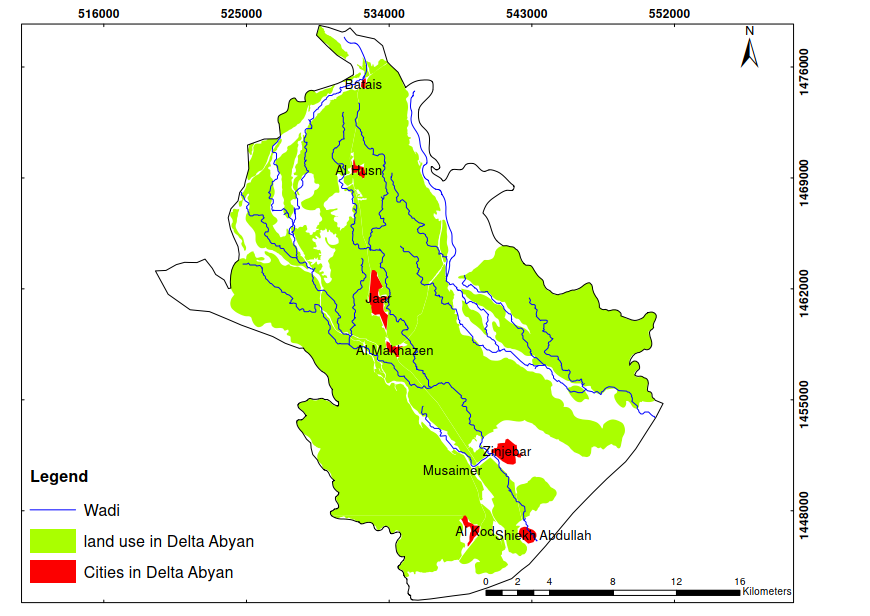
A GIS-based Soil Conservation Service Curve Number (SCS-CN) approach was used to estimate surface-runoff potential in Yemen’s arid Abyan Delta (∼1,237 km2). Sentinel-2 (10 m) imagery was classified into major land-cover types and combined with hydrologic soil groups (HYSOGs) to assign CN values under Antecedent Moisture Condition II. The composite CN map (67–100; mean = 91.8) indicates limited infiltration across large areas of bare or impervious surfaces on clayey soils. Using the standard SCS-CN equations, event runoff was simulated for representative storm depths of 74, 124, and 174 mm. The model produced direct-runoff depths of ∼52, 100, and 150 mm, corresponding to runoff coefficients of ∼71%, 81%, and 86%, and basin-wide volumes of 0.65, 1.24, and 1.85 × 10⁸ m3, respectively. Spatial attribution shows that high-CN zones (notably barren HSG-C/D units and built-up/roads) generate most of the runoff despite covering a smaller fraction of the delta. The results identify priority areas for spate-irrigation, retention, and recharge interventions, and provide a reproducible baseline for flood-risk reduction and water-harvesting planning in data-scarce drylands. The workflow can be readily updated with improved soils, land-use, or climate inputs to support adaptive management.
Sady Alsady, Marwan Al-Badani, Zamzam Mubarak (2025). Estimating Surface Runoff Potential in the Abyan Delta, Yemen Using GIS-Based SCS-Curve Number Method. Sana'a University Journal of Applied Sciences and Technology, 1164-1170. DOI: https://doi.org/10.59628/jast.v3i5.1987
Sady Alsady, Marwan Al-Badani, Zamzam Mubarak . “Estimating Surface Runoff Potential in the Abyan Delta, Yemen Using GIS-Based SCS-Curve Number Method.” Sana'a University Journal of Applied Sciences and Technology, 2025, pp. 1164-1170. https://doi.org/10.59628/jast.v3i5.1987. Accessed 30 Oct. 2026.
Sady Alsady, Marwan Al-Badani, Zamzam Mubarak . 2025. “Estimating Surface Runoff Potential in the Abyan Delta, Yemen Using GIS-Based SCS-Curve Number Method.” Sana'a University Journal of Applied Sciences and Technology : 1164-1170. DOI: https://doi.org/10.59628/jast.v3i5.1987
Sady Alsady, Marwan Al-Badani, Zamzam Mubarak (2025) ‘Estimating Surface Runoff Potential in the Abyan Delta, Yemen Using GIS-Based SCS-Curve Number Method’, Sana'a University Journal of Applied Sciences and Technology, pp. 1164-1170. doi: 10.59628/jast.v3i5.1987
@article{jast2025_art1987,
    author  = {Sady Alsady, Marwan Al-Badani, Zamzam Mubarak },
    title   = {Estimating Surface Runoff Potential in the Abyan Delta, Yemen Using GIS-Based SCS-Curve Number Method},
    journal = {Sana'a University Journal of Applied Sciences and Technology},    year    = {2025},    month   = {October},    pages   = {1164-1170},    doi     = {10.59628/jast.v3i5.1987},
    url     = {https://doi.org/10.59628/jast.v3i5.1987},}
Estimating Surface Runoff Potential in the Abyan Delta, Yemen Using GIS-Based SCS-Curve Number Method

In the present study, the current status of medical waste management in the city of Hodeidah was presented in terms of its definition, components, sources, and threats that may result from improper handling. This investi-gation aims to study the potential environmental and health impacts of existing medical waste produced by the government hospitals and healthcare entities in Hodeidah City, in addition to comparing the applied methods and procedures with the methods and procedures that are applied in developed countries. The research study was carried out from January 2022 until January 2023, and targeted ten government hospitals and healthcare institutions in Hodeidah City. It relied on descriptive and analytical scientific methods, which aim to describe and analyze medical solid waste generated from the selected institutions. The result of the study showed that the total quantities of waste produced in all studied government health facilities amounted to approximately 599,038 kg/year. The percentage of non-hazardous waste was about 67% against hazardous waste which was 33%. Hospitals that receive more patients and have more beds as well as a multiplicity of their specialties generate larger medical wastes. The present research investigation revealed that government hospitals and healthcare centers in the city of Al-Hodeidah have low levels of health and safety conditions. They do not meet the local and international standards and requirements in the Medical Waste Management Guides and Recommendations. The poor management situation of medical waste could expose Yemeni citizens to danger. The healthcare insti-tutions should be supervised and controlled and ensure management of medical waste following environmental regulations and laws.
Mohammed Y. Talhi, Hisham Mohamed Nagi (2024). Evaluation of Medical Waste Generated from Government Hospitals and Healthcare Centers in the City of Hodeidah, Yemen. Sana'a University Journal of Applied Sciences and Technology, 355-362. DOI: https://doi.org/10.59628/jast.v2i4.1046
Mohammed Y. Talhi, Hisham Mohamed Nagi . “Evaluation of Medical Waste Generated from Government Hospitals and Healthcare Centers in the City of Hodeidah, Yemen.” Sana'a University Journal of Applied Sciences and Technology, 2024, pp. 355-362. https://doi.org/10.59628/jast.v2i4.1046. Accessed 30 Oct. 2026.
Mohammed Y. Talhi, Hisham Mohamed Nagi . 2024. “Evaluation of Medical Waste Generated from Government Hospitals and Healthcare Centers in the City of Hodeidah, Yemen.” Sana'a University Journal of Applied Sciences and Technology : 355-362. DOI: https://doi.org/10.59628/jast.v2i4.1046
Mohammed Y. Talhi, Hisham Mohamed Nagi (2024) ‘Evaluation of Medical Waste Generated from Government Hospitals and Healthcare Centers in the City of Hodeidah, Yemen’, Sana'a University Journal of Applied Sciences and Technology, pp. 355-362. doi: 10.59628/jast.v2i4.1046
@article{jast2024_art1046,
    author  = {Mohammed Y. Talhi, Hisham Mohamed Nagi },
    title   = {Evaluation of Medical Waste Generated from Government Hospitals and Healthcare Centers in the City of Hodeidah, Yemen},
    journal = {Sana'a University Journal of Applied Sciences and Technology},    year    = {2024},    month   = {September},    pages   = {355-362},    doi     = {10.59628/jast.v2i4.1046},
    url     = {https://doi.org/10.59628/jast.v2i4.1046},}
Evaluation of Medical Waste Generated from Government Hospitals and Healthcare Centers in the City of Hodeidah, Yemen
Pearl Millet (Pennisetum glaucum (L.) R. Br.) is an important crop plant cultivated in many countries, including Yemen, due to its high nutritional value. Landrace, temperatures, and rainfall are crucial factors when it comes to improving the cultivation of crops for the benefit of man and animals. Therefore, the aim of this study was to statistically evaluate the morphological (Plant height, Leaf area, area index and number, and inflorescence length) & physiological (Biomass, Grain Yield, and Seed weight) parameters of 20 Pearl Millet landraces that comply with the amount of rainfall to produce the best grain yielding and/or high biomass production when cultivated in the Al-Mawasit district, Taiz. The Grain Yield of landrace 25508 (mean grain yield of 3.1 t/ha) was found to be greater than the grain yield produced by the other studied landraces. Moreover, landraces 25366 and 25353 were found to give the greatest biomass (mean biomass of 6.7t/ha).
Alhadi, F. A, Ibrahim, H.M, Alkadasy, A. K (2023). Evaluation of Some Growth Parameters of Millet (Pennisetum glaucum (L.) R. Br.) Landraces Cultivated in Al-Mawaset District, Taiz Governorate, Yemen. Sana'a University Journal of Applied Sciences and Technology. DOI: https://doi.org/10.59628/jast.v1i4.563
Alhadi, F. A, Ibrahim, H.M, Alkadasy, A. K . “Evaluation of Some Growth Parameters of Millet (Pennisetum glaucum (L.) R. Br.) Landraces Cultivated in Al-Mawaset District, Taiz Governorate, Yemen.” Sana'a University Journal of Applied Sciences and Technology, 2023, https://doi.org/10.59628/jast.v1i4.563. Accessed 30 Oct. 2026.
Alhadi, F. A, Ibrahim, H.M, Alkadasy, A. K . 2023. “Evaluation of Some Growth Parameters of Millet (Pennisetum glaucum (L.) R. Br.) Landraces Cultivated in Al-Mawaset District, Taiz Governorate, Yemen.” Sana'a University Journal of Applied Sciences and Technology DOI: https://doi.org/10.59628/jast.v1i4.563
Alhadi, F. A, Ibrahim, H.M, Alkadasy, A. K (2023) ‘Evaluation of Some Growth Parameters of Millet (Pennisetum glaucum (L.) R. Br.) Landraces Cultivated in Al-Mawaset District, Taiz Governorate, Yemen’, Sana'a University Journal of Applied Sciences and Technology. doi: 10.59628/jast.v1i4.563
@article{jast2023_art563,
    author  = {Alhadi, F. A, Ibrahim, H.M, Alkadasy, A. K },
    title   = {Evaluation of Some Growth Parameters of Millet (Pennisetum glaucum (L.) R.   Br.) Landraces Cultivated in Al-Mawaset District, Taiz Governorate, Yemen},
    journal = {Sana'a University Journal of Applied Sciences and Technology},    year    = {2023},    month   = {December},    doi     = {10.59628/jast.v1i4.563},
    url     = {https://doi.org/10.59628/jast.v1i4.563},}
Evaluation of Some Growth Parameters of Millet (Pennisetum glaucum (L.) R. Br.) Landraces Cultivated in Al-Mawaset District, Taiz Governorate, Yemen
In this study, we investigated the effect of Mn doping on the structural properties of barium-zinc ferrites (BZF-NPs) synthesized using the traditional ceramic method. X-ray diffraction (XRD) was used to analyze the structural characteristics of the BZF-NPs, including the structural phases, crystallite size, and lattice parameters. In addition, various physical properties, such as bulk density, X-ray density, porosity, and specific surface area, were investigated. The XRD analysis of the samples revealed that the lattice parameters of the hexagonal M-type structure of the BZF-NPs decreased as the concentration of Mn+2 ions increased. In addition, the average crystallite size of the samples decreased from 52 to 42 nm with increasing Mn+2 concentration. The c/a parameter ratio indicates the formation of a magneto-plumbite structure. Moreover, we found that both the X-ray and bulk densities increased with increasing Mn+2 concentration. This behavior can be attributed to the difference in ionic radii between the donor Mn+2 ions and the host Fe+3 and Zn+2 ions. However, it was observed that the porosity increased with increasing Mn+2 concentration, in contrast to the bulk density behavior. Furthermore, it was observed that as the crystallite size increased, the surface area decreased. This trend can be attributed to the fact that larger crystallites have fewer surface atoms. Finally, it was noted that the bond lengths for both tetrahedral and octahedral structures decreased with increasing Mn2+ ion concentration. Overall, these results provide insights into the impact of Mn+2 ion doping on the structural and physical properties of BZF-NPs and highlight the potential applications of these materials in various fields.
Azmi A. M. Othman, A.H. Al-Hammadi, Sadiq. H. Khoreem (2023). Fabrication and Study of the Effect of Mn-Substituted Ba-Zn Nanoferrites on the Enrichment of Structural Properties. Sana'a University Journal of Applied Sciences and Technology. DOI: https://doi.org/10.59628/jast.v1i2.281
Azmi A. M. Othman, A.H. Al-Hammadi, Sadiq. H. Khoreem . “Fabrication and Study of the Effect of Mn-Substituted Ba-Zn Nanoferrites on the Enrichment of Structural Properties.” Sana'a University Journal of Applied Sciences and Technology, 2023, https://doi.org/10.59628/jast.v1i2.281. Accessed 30 Oct. 2026.
Azmi A. M. Othman, A.H. Al-Hammadi, Sadiq. H. Khoreem . 2023. “Fabrication and Study of the Effect of Mn-Substituted Ba-Zn Nanoferrites on the Enrichment of Structural Properties.” Sana'a University Journal of Applied Sciences and Technology DOI: https://doi.org/10.59628/jast.v1i2.281
Azmi A. M. Othman, A.H. Al-Hammadi, Sadiq. H. Khoreem (2023) ‘Fabrication and Study of the Effect of Mn-Substituted Ba-Zn Nanoferrites on the Enrichment of Structural Properties’, Sana'a University Journal of Applied Sciences and Technology. doi: 10.59628/jast.v1i2.281
@article{jast2023_art281,
    author  = {Azmi A. M. Othman, A.H. Al-Hammadi, Sadiq. H. Khoreem },
    title   = {Fabrication and Study of the Effect of Mn-Substituted Ba-Zn Nanoferrites on the Enrichment of Structural Properties},
    journal = {Sana'a University Journal of Applied Sciences and Technology},    year    = {2023},    month   = {April},    doi     = {10.59628/jast.v1i2.281},
    url     = {https://doi.org/10.59628/jast.v1i2.281},}
Fabrication and Study of the Effect of Mn-Substituted Ba-Zn Nanoferrites on the Enrichment of Structural Properties
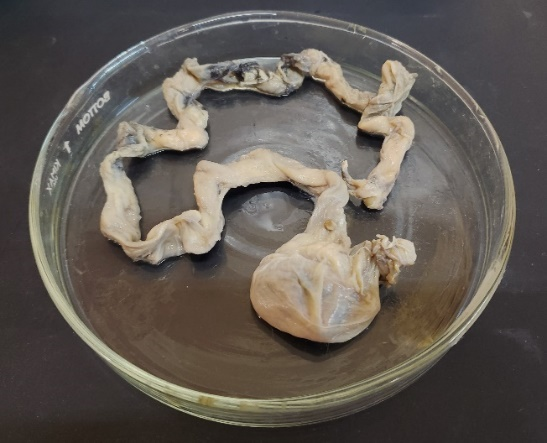
Information on fish feeding ecology is crucial for understanding trophic interactions, energy flow, and ecosystem dynamics in marine environments. Although the feeding ecology of several balistid species has been well documented, the trophic dynamics of the large-scale triggerfish, Canthidermis macrolepis, remain largely unstudied. To address this gap and define its ecological role, we investigated the diet and feeding intensity of C. macrolepis harvested from the Yemeni Red Sea coast between June and October 2025. Stomach content analysis (N = 57) was performed utilizing qualitative taxonomic identification and quantitative metrics, specifically frequency of occurrence (%F) and volumetric percentage composition (%C). The results characterize C. macrolepis as an active pelagic carnivore. The diet was predominantly composed of small teleosts, with zooplanktonic crustaceans serving as a critical secondary resource. Benthic invertebrates (sipunculids and worms), small mollusks, and macroalgae were present only as minor, opportunistic dietary components. Furthermore, feeding intensity was exceptionally high (Fullness Index: 98.25%; Vacuity Index: 1.75%), indicating continuous foraging activity. These findings establish C. macrolepis as a pelagic predator, differentiating its ecological niche from that of heavily benthic-dependent reef triggerfishes, and provide essential baseline trophic data to support regional ecosystem-based fisheries management.
Ebtisam F. Shamsan, Maryam A. Taher (2026). Feeding Ecology of the Large-Scale Triggerfish, Canthidermis macrolepis (Boulenger, 1888), from Yemeni Coastal Waters. Sana'a University Journal of Applied Sciences and Technology, 2612-2618. DOI: https://doi.org/10.59628/jast.v4i10.3435
Ebtisam F. Shamsan, Maryam A. Taher . “Feeding Ecology of the Large-Scale Triggerfish, Canthidermis macrolepis (Boulenger, 1888), from Yemeni Coastal Waters.” Sana'a University Journal of Applied Sciences and Technology, 2026, pp. 2612-2618. https://doi.org/10.59628/jast.v4i10.3435. Accessed 30 Oct. 2026.
Ebtisam F. Shamsan, Maryam A. Taher . 2026. “Feeding Ecology of the Large-Scale Triggerfish, Canthidermis macrolepis (Boulenger, 1888), from Yemeni Coastal Waters.” Sana'a University Journal of Applied Sciences and Technology : 2612-2618. DOI: https://doi.org/10.59628/jast.v4i10.3435
Ebtisam F. Shamsan, Maryam A. Taher (2026) ‘Feeding Ecology of the Large-Scale Triggerfish, Canthidermis macrolepis (Boulenger, 1888), from Yemeni Coastal Waters’, Sana'a University Journal of Applied Sciences and Technology, pp. 2612-2618. doi: 10.59628/jast.v4i10.3435
@article{jast2026_art3435,
    author  = {Ebtisam F. Shamsan, Maryam A. Taher },
    title   = {Feeding Ecology of the Large-Scale Triggerfish, Canthidermis macrolepis (Boulenger, 1888), from Yemeni Coastal Waters},
    journal = {Sana'a University Journal of Applied Sciences and Technology},    year    = {2026},    month   = {October},    pages   = {2612-2618},    doi     = {10.59628/jast.v4i10.3435},
    url     = {https://doi.org/10.59628/jast.v4i10.3435},}
Feeding Ecology of the Large-Scale Triggerfish, Canthidermis macrolepis (Boulenger, 1888), from Yemeni Coastal Waters

The Al-Maqatirah and Al-Ahkum areas are located in SE of Taiz within the southwestern outcrops of the basement rocks of Yemen, which represent the southern extension of the Arabian Nubian Shield (ANS). This paper focuses on the study of gabbroic intrusions that have invaded these basement rocks in these areas. These gabbroic intrusions were unmetamorphosed, variably altered, and sometimes affected by Na-rich fluid fluxes. They exhibit many types of textures and structures, and according to the abundance and appearance of major mineral constituents, these gabbroic rocks are classified into several types. Chemically, these gabbroic intrusions are classified as low-Ti intrusions generated from low-Ti magma, which is characteristic of an intra oceanic island arc setting and formed in a subduction zone setting by partial melting and re-melting of a depleted peridotite mantle source. However, some samples show indications of subsurface mixing of contemporaneous magma batches with low Ti and high Ti compositions. The major element compositions of these gabbroic rocks reflect their derivation from primitive magma subjected to significant degrees of fractional crystallization. These gabbroic intrusions have an ocean island basalt (OIB) signature and transitional character of magma from alkaline to sub-alkaline (tholeiitic) magma series, which indicate their derivation by variable degrees of partial melting of the mantle source at various depths during the change from arc to intraplate setting. The OIB signature of these mafic intrusions suggests lithospheric attenuation and significant upwelling of the asthenosphere caused by continental rifting, which mostly occurs during the formation of the Arabian lithosphere. Finally, the studied gabbroic intrusions can be compared with similar gabbroic intrusions in the Arabian-Nubian shield from Saudi Arabia, which are emplaced post-collision at the end of the Pan-African Orogeny and generated from mafic magma derived from a peridotite mantle source.
Mukhtar A. Nasher, Hussein A. Sultan (2025). Geochemistry and petrogenesis of some gabbroic intrusions invaded the basement rocks from Al-Maqatirah and Al-Ahkum areas, SE Taiz, Republic of Yemen. Sana'a University Journal of Applied Sciences and Technology, 557-576. DOI: https://doi.org/10.59628/jast.v3i1.1266
Mukhtar A. Nasher, Hussein A. Sultan . “Geochemistry and petrogenesis of some gabbroic intrusions invaded the basement rocks from Al-Maqatirah and Al-Ahkum areas, SE Taiz, Republic of Yemen.” Sana'a University Journal of Applied Sciences and Technology, 2025, pp. 557-576. https://doi.org/10.59628/jast.v3i1.1266. Accessed 30 Oct. 2026.
Mukhtar A. Nasher, Hussein A. Sultan . 2025. “Geochemistry and petrogenesis of some gabbroic intrusions invaded the basement rocks from Al-Maqatirah and Al-Ahkum areas, SE Taiz, Republic of Yemen.” Sana'a University Journal of Applied Sciences and Technology : 557-576. DOI: https://doi.org/10.59628/jast.v3i1.1266
Mukhtar A. Nasher, Hussein A. Sultan (2025) ‘Geochemistry and petrogenesis of some gabbroic intrusions invaded the basement rocks from Al-Maqatirah and Al-Ahkum areas, SE Taiz, Republic of Yemen’, Sana'a University Journal of Applied Sciences and Technology, pp. 557-576. doi: 10.59628/jast.v3i1.1266
@article{jast2025_art1266,
    author  = {Mukhtar A. Nasher, Hussein A. Sultan  },
    title   = {Geochemistry and petrogenesis of some gabbroic intrusions invaded the basement rocks from Al-Maqatirah and Al-Ahkum areas, SE Taiz, Republic of Yemen},
    journal = {Sana'a University Journal of Applied Sciences and Technology},    year    = {2025},    month   = {February},    pages   = {557-576},    doi     = {10.59628/jast.v3i1.1266},
    url     = {https://doi.org/10.59628/jast.v3i1.1266},}
Geochemistry and petrogenesis of some gabbroic intrusions invaded the basement rocks from Al-Maqatirah and Al-Ahkum areas, SE Taiz, Republic of Yemen
Biosynthesis of zinc sulfide (ZnS) nanoparticles (NPs) using plant extracts is an alternative method to traditional chemical route. In this study, ZnS-NPs was synthesized via two different routes: (i) bio-based method using leaf extract of Plectranthus barbatus as a capping agent and (ii) using the chemical co-precipitation route as a capping–free method. The effect of synthesis routes on the structural, morphological, and optical properties of the prepared NPs was analyzed. The obtained ZnS-NPs was characterized using UV-Visible, FTIR, XRD, and SEM. According to XRD analysis, the average crystallite size were found to be 2.259 and 3.080 nm for chemically and bio-synthesized ZnS, respectively; while SEM revealed aggregated NPs to be counted. Additionally, the optical energy bandgap were 3.82 and 3.73 eV of the samples synthesized via chemical and green methods, respectively. The obtained results indicates that ZnS-NPs prepared via the capping–free chemical route is is more favored, in term of its morphological and optical properties, compared to the sample prepared by green method.
A.H. Al-Hammadi, Annas Al-Sharabi, Adnan Alnehia (2023). Green and Chemically Prepared Zinc Sulfide Nanoparticles: A Comparative Study. Sana'a University Journal of Applied Sciences and Technology. DOI: https://doi.org/10.59628/jast.v1i1.104
A.H. Al-Hammadi, Annas Al-Sharabi, Adnan Alnehia . “Green and Chemically Prepared Zinc Sulfide Nanoparticles: A Comparative Study.” Sana'a University Journal of Applied Sciences and Technology, 2023, https://doi.org/10.59628/jast.v1i1.104. Accessed 30 Oct. 2026.
A.H. Al-Hammadi, Annas Al-Sharabi, Adnan Alnehia . 2023. “Green and Chemically Prepared Zinc Sulfide Nanoparticles: A Comparative Study.” Sana'a University Journal of Applied Sciences and Technology DOI: https://doi.org/10.59628/jast.v1i1.104
A.H. Al-Hammadi, Annas Al-Sharabi, Adnan Alnehia (2023) ‘Green and Chemically Prepared Zinc Sulfide Nanoparticles: A Comparative Study’, Sana'a University Journal of Applied Sciences and Technology. doi: 10.59628/jast.v1i1.104
@article{jast2023_art104,
    author  = {A.H. Al-Hammadi, Annas Al-Sharabi, Adnan Alnehia },
    title   = {Green and Chemically Prepared Zinc Sulfide Nanoparticles: A Comparative Study},
    journal = {Sana'a University Journal of Applied Sciences and Technology},    year    = {2023},    month   = {January},    doi     = {10.59628/jast.v1i1.104},
    url     = {https://doi.org/10.59628/jast.v1i1.104},}
Green and Chemically Prepared Zinc Sulfide Nanoparticles: A Comparative Study
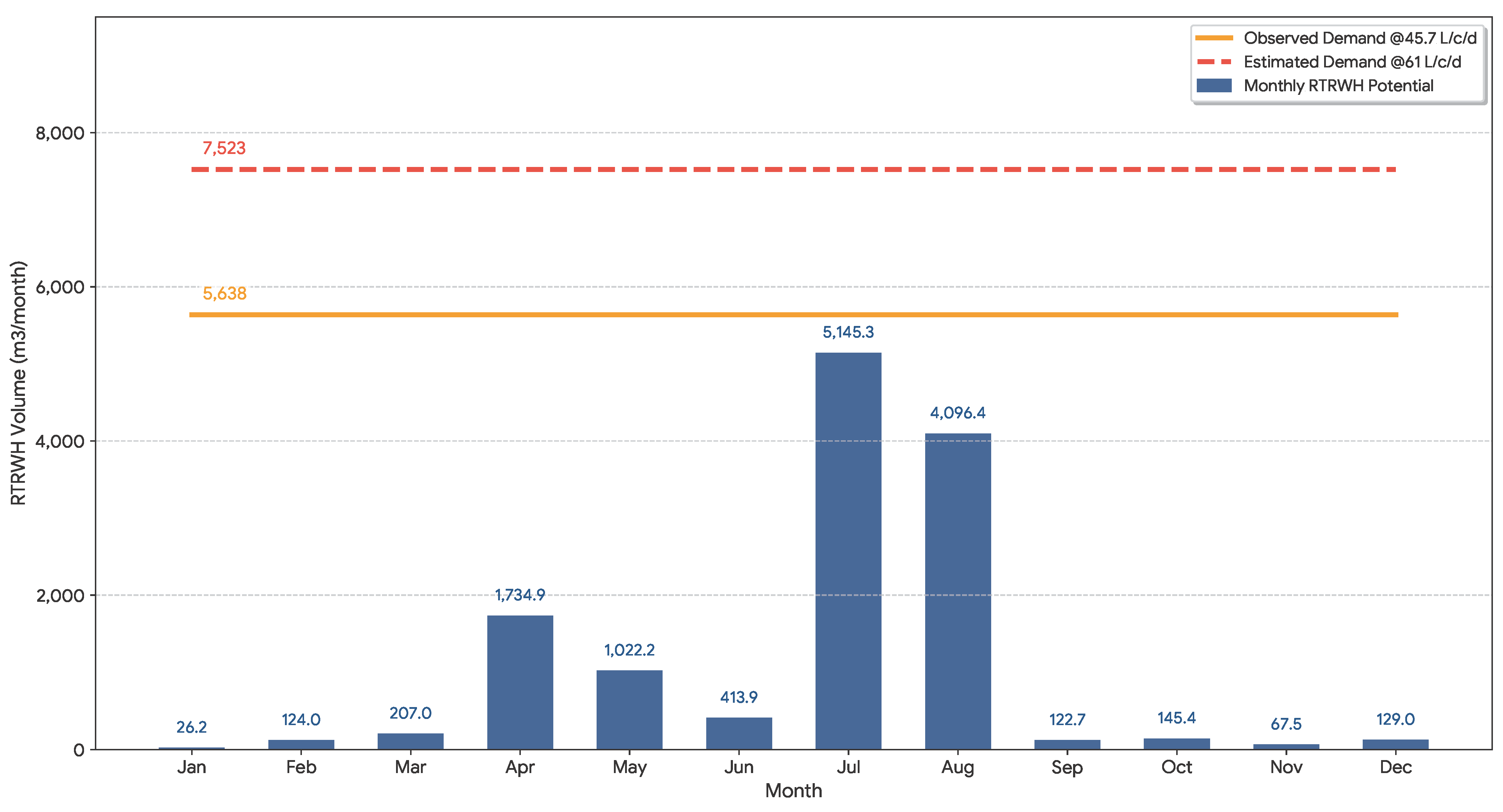
Sana’a City faces severe water scarcity driven by limited rainfall, rapid urban growth, and groundwater overexploitation. This study assessed the potential contribution of rooftop rainwater harvesting (RTRWH) to domestic water supply in Al-Wahdah District, Sana’a City. The methodology integrated household survey data, GIS-based rooftop digitization, roof-material information, and monthly rainfall records for 2013–2022, with an average annual rainfall of 335.4 mm. Of 374 valid surveyed buildings, 277 residential buildings were analyzed after excluding 97 non-residential or unsuitable records. Domestic demand was estimated using observed (47.5 L/c/d) household consumption and the SWSLC benchmark of 61 L/c/d. Current RTRWH use was negligible, contributing less than 1% of consumption. Under a theoretical full rooftop utilization scenario, excluding storage constraints and first-flush losses, RTRWH could provide about 13,234 m3/year, equivalent to 19.6% of observed demand and 14.7% of estimated demand. Results show that RTRWH is a valuable supplementary source, but practical use requires storage and water-quality consideration.
Adel Maaodhah, Marwan Al-Badani, Sharafaddin Salleh (2026). Household-Level Assessment of Urban Rooftop Rainwater Harvesting Potential and Its Contribution to Domestic Water Supply in Al-Wahdah District, Sana’a City, Yemen. Sana'a University Journal of Applied Sciences and Technology, 2344-2351. DOI: https://doi.org/10.59628/jast.v4i8.3287
Adel Maaodhah, Marwan Al-Badani, Sharafaddin Salleh . “Household-Level Assessment of Urban Rooftop Rainwater Harvesting Potential and Its Contribution to Domestic Water Supply in Al-Wahdah District, Sana’a City, Yemen.” Sana'a University Journal of Applied Sciences and Technology, 2026, pp. 2344-2351. https://doi.org/10.59628/jast.v4i8.3287. Accessed 30 Oct. 2026.
Adel Maaodhah, Marwan Al-Badani, Sharafaddin Salleh . 2026. “Household-Level Assessment of Urban Rooftop Rainwater Harvesting Potential and Its Contribution to Domestic Water Supply in Al-Wahdah District, Sana’a City, Yemen.” Sana'a University Journal of Applied Sciences and Technology : 2344-2351. DOI: https://doi.org/10.59628/jast.v4i8.3287
Adel Maaodhah, Marwan Al-Badani, Sharafaddin Salleh (2026) ‘Household-Level Assessment of Urban Rooftop Rainwater Harvesting Potential and Its Contribution to Domestic Water Supply in Al-Wahdah District, Sana’a City, Yemen’, Sana'a University Journal of Applied Sciences and Technology, pp. 2344-2351. doi: 10.59628/jast.v4i8.3287
@article{jast2026_art3287,
    author  = {Adel Maaodhah, Marwan Al-Badani, Sharafaddin Salleh },
    title   = {Household-Level Assessment of Urban Rooftop Rainwater Harvesting Potential and Its Contribution to Domestic Water Supply in Al-Wahdah District, Sana’a City, Yemen},
    journal = {Sana'a University Journal of Applied Sciences and Technology},    year    = {2026},    month   = {August},    pages   = {2344-2351},    doi     = {10.59628/jast.v4i8.3287},
    url     = {https://doi.org/10.59628/jast.v4i8.3287},}
Household-Level Assessment of Urban Rooftop Rainwater Harvesting Potential and Its Contribution to Domestic Water Supply in Al-Wahdah District, Sana’a City, Yemen
The purpose of this research is to determine the impacts of wastewater effluents on groundwater quality of the northern suburbs of Sana’a city. Fourteen duplicate groundwater and wastewater samples were collected from the study area and analyzed. The groundwater samples were analyzed for major elements, and anionic and cationic groups using Atomic Absorption Spectrophotometer (AAS). The wastewater samples were analyzed for Total Coliform (TC), Fecal Coliform (FC), and oxygen demands. For characterizing the groundwater and wastewater qualities of the study area, analysis results were tabulated, statistically treated, and elements and ionic groups were graphically plotted on diagrams and on the Piper well known diagram. The analysis results had shown that some groundwater samples were chemically and biologically contaminated. Moreover, the effluent wastewater samples had shown that all samples contain greater Fecal Coliform (FC) bacteria count and high ammonia content. In addition, the effluent wastewaters are featured with high COD and BOD, reflecting low quality wastewater effluent for the WWTP. Sludge and wastewaters used by farmers, containing high pathogens and parasites, have created or will create significant environmental and health hazards. Similarly, land resources, infrastructure and groundwater quality of the areas are highly, if not already, jeopardized or polluted. Such findings require further detailed studies for monitoring development of pollution in the area.
Bassim Al-Khirbash, Saif Al-hakimi, Hani Al-Aswadi (2024). Impact of wastewaters on groundwater quality of Bani Al-Hareth and Arhab areas in northern Sana’a city, Yemen . Sana'a University Journal of Applied Sciences and Technology, 16 - 29. DOI: https://doi.org/10.59628/jast.v2i1.578
Bassim Al-Khirbash, Saif Al-hakimi, Hani Al-Aswadi . “Impact of wastewaters on groundwater quality of Bani Al-Hareth and Arhab areas in northern Sana’a city, Yemen .” Sana'a University Journal of Applied Sciences and Technology, 2024, pp. 16 - 29. https://doi.org/10.59628/jast.v2i1.578. Accessed 30 Oct. 2026.
Bassim Al-Khirbash, Saif Al-hakimi, Hani Al-Aswadi . 2024. “Impact of wastewaters on groundwater quality of Bani Al-Hareth and Arhab areas in northern Sana’a city, Yemen .” Sana'a University Journal of Applied Sciences and Technology : 16 - 29. DOI: https://doi.org/10.59628/jast.v2i1.578
Bassim Al-Khirbash, Saif Al-hakimi, Hani Al-Aswadi (2024) ‘Impact of wastewaters on groundwater quality of Bani Al-Hareth and Arhab areas in northern Sana’a city, Yemen ’, Sana'a University Journal of Applied Sciences and Technology, pp. 16 - 29. doi: 10.59628/jast.v2i1.578
@article{jast2024_art578,
    author  = {Bassim Al-Khirbash, Saif Al-hakimi, Hani Al-Aswadi },
    title   = {Impact of wastewaters on groundwater quality of Bani Al-Hareth  and Arhab areas in northern Sana’a city, Yemen },
    journal = {Sana'a University Journal of Applied Sciences and Technology},    year    = {2024},    month   = {February},    pages   = {16 - 29},    doi     = {10.59628/jast.v2i1.578},
    url     = {https://doi.org/10.59628/jast.v2i1.578},}
Impact of wastewaters on groundwater quality of Bani Al-Hareth and Arhab areas in northern Sana’a city, Yemen
Research on Material Science has a long tradition, and lead has been used widely in many applications. Because of their low melting temperatures, low cost, and good wettability, tin -lead alloys have been preferred as solder alloys in industrial production, particularly in the electronics sector. However, due to the negative effects of lead on the environment and human health, studies on lead-free solder alloys have been increasing, and the subject is still important today. Furthermore, environmental protection agencies (RoHS and WEEE) have prohibited the use of lead-containing solder alloys in the manufacture of electronic and microelectronic products. In this work, the effect of adding Cu to alloys in five compositions of (81Sn-xCu-(19-x)In) % with x=1, 2, 3, 4, and 5 on the mechanical properties has been studied. The five samples were prepared from high purity (99%) elements (Sn –Cu –In ) using the melting technique. The creep of the ternary alloys was examined at different temperatures (25, 50, and 80 ) under three different loads (2.5, 6.3, and 11.4 MPa). It was found that the creep rate of the ternary alloys was increasing with the increases in Cu –content in all samples at different temperatures and loads. The mean values of the stress exponent were found to be in the range of (0.1-2.5) as well as the activation energies vaied in the range of (0.48-5.33) eV for all alloys under different loads (2.5, 6.3, and 11.4 MPa).
A.H. Al-Hammadi, Ibrahim G. H Loqman , R.M.H. AL-Hdhrami (2023). Mechanical Properties of the (81Sn–xCu–(19-x) In) % Alloys with x=1, 2, 3, 4, and 5 . Sana'a University Journal of Applied Sciences and Technology. DOI: https://doi.org/10.59628/jast.v1i2.339
A.H. Al-Hammadi, Ibrahim G. H Loqman , R.M.H. AL-Hdhrami . “Mechanical Properties of the (81Sn–xCu–(19-x) In) % Alloys with x=1, 2, 3, 4, and 5 .” Sana'a University Journal of Applied Sciences and Technology, 2023, https://doi.org/10.59628/jast.v1i2.339. Accessed 30 Oct. 2026.
A.H. Al-Hammadi, Ibrahim G. H Loqman , R.M.H. AL-Hdhrami . 2023. “Mechanical Properties of the (81Sn–xCu–(19-x) In) % Alloys with x=1, 2, 3, 4, and 5 .” Sana'a University Journal of Applied Sciences and Technology DOI: https://doi.org/10.59628/jast.v1i2.339
A.H. Al-Hammadi, Ibrahim G. H Loqman , R.M.H. AL-Hdhrami (2023) ‘Mechanical Properties of the (81Sn–xCu–(19-x) In) % Alloys with x=1, 2, 3, 4, and 5 ’, Sana'a University Journal of Applied Sciences and Technology. doi: 10.59628/jast.v1i2.339
@article{jast2023_art339,
    author  = {A.H. Al-Hammadi, Ibrahim G. H Loqman	, R.M.H. AL-Hdhrami },
    title   = {Mechanical Properties of the (81Sn–xCu–(19-x) In) % Alloys with x=1, 2, 3, 4, and 5 },
    journal = {Sana'a University Journal of Applied Sciences and Technology},    year    = {2023},    month   = {April},    doi     = {10.59628/jast.v1i2.339},
    url     = {https://doi.org/10.59628/jast.v1i2.339},}
Mechanical Properties of the (81Sn–xCu–(19-x) In) % Alloys with x=1, 2, 3, 4, and 5
Modulated ion acoustic wavepackets have been investigated in a multi-component, dense plasma containing degenerate electrons/positrons, and positive/negative ions. The electrons and positrons assumed to be followed Thomas-Fermi distribution, while the ions considered to be classic. Employing a multi-scale perturbation technique, the nonlinear Schrödinger equation is derived. The criteria for the occurrence of modulational instability of the modulated ion acoustic waves are analyzed. The influences of plasma parameters on the modulational instability and its growth rate have been discussed. The envelope solitons have been discussed as well. The results showed that both modulationally unstable domain and stable domain can be found, depending on the plasma parameters. It is also found that the width of the envelop solitons are significantly modified by related plasma parameters. The present results will be useful in understanding the conditions for modulational instability of ion acoustic waves which are relevant to both space and laboratory dense plasmas.
Mahmood Ahmed Hassan Khaled, Mohmed Ali Shukri, Rowaida Abdullah Abdo Hassan Fare'e (2023). Modulated ion-acoustic wavepackets in a multi-component dense plasma with Thomas-Fermi distribution. Sana'a University Journal of Applied Sciences and Technology. DOI: https://doi.org/10.59628/jast.v1i1.106
Mahmood Ahmed Hassan Khaled, Mohmed Ali Shukri, Rowaida Abdullah Abdo Hassan Fare'e . “Modulated ion-acoustic wavepackets in a multi-component dense plasma with Thomas-Fermi distribution.” Sana'a University Journal of Applied Sciences and Technology, 2023, https://doi.org/10.59628/jast.v1i1.106. Accessed 30 Oct. 2026.
Mahmood Ahmed Hassan Khaled, Mohmed Ali Shukri, Rowaida Abdullah Abdo Hassan Fare'e . 2023. “Modulated ion-acoustic wavepackets in a multi-component dense plasma with Thomas-Fermi distribution.” Sana'a University Journal of Applied Sciences and Technology DOI: https://doi.org/10.59628/jast.v1i1.106
Mahmood Ahmed Hassan Khaled, Mohmed Ali Shukri, Rowaida Abdullah Abdo Hassan Fare'e (2023) ‘Modulated ion-acoustic wavepackets in a multi-component dense plasma with Thomas-Fermi distribution’, Sana'a University Journal of Applied Sciences and Technology. doi: 10.59628/jast.v1i1.106
@article{jast2023_art106,
    author  = {Mahmood Ahmed Hassan Khaled, Mohmed Ali Shukri, Rowaida  Abdullah Abdo Hassan Fare'e },
    title   = {Modulated ion-acoustic wavepackets in a multi-component dense plasma with Thomas-Fermi distribution},
    journal = {Sana'a University Journal of Applied Sciences and Technology},    year    = {2023},    month   = {January},    doi     = {10.59628/jast.v1i1.106},
    url     = {https://doi.org/10.59628/jast.v1i1.106},}
Modulated ion-acoustic wavepackets in a multi-component dense plasma with Thomas-Fermi distribution
Irrigation scheduling is a critical component of effective crop water management, involving the strategic determination of both the timing and volume of water to be applied. This study employed the CROPWAT 8.0 model to assist in optimizing irrigation practices for tomato cultivation. The primary objective was to accurately estimate the crop's water requirements and define the ideal irrigation intervals. A comprehensive dataset, including rainfall, crop type, soil properties, and climatic factors, was integrated into the model for analysis. The results revealed that October experienced the highest reference evapotranspiration (ET₀) at 5.58 mm/day, while July recorded the lowest value at 4.65 mm/day. The lowest daily crop water requirement occurred in the third decade of December, at 10.9 mm, whereas the highest demand was observed in the third decade of October, at 66.5 mm. Over the entire growing season, the total water requirement for tomato crops was determined to be 625.9 mm
Hafidah Ahmed AlMatary, Khaled Mohammed Khanbari, Adel Mohammad Al-Matary (2024). Optimizing Irrigation Scheduling for Tomato Cultivation CROPWAT 8 Case Study from lower Wadi Bana, Abyan Delta, Yemen. Sana'a University Journal of Applied Sciences and Technology, 538-545. DOI: https://doi.org/10.59628/jast.v2i6.1420
Hafidah Ahmed AlMatary, Khaled Mohammed Khanbari, Adel Mohammad Al-Matary . “Optimizing Irrigation Scheduling for Tomato Cultivation CROPWAT 8 Case Study from lower Wadi Bana, Abyan Delta, Yemen.” Sana'a University Journal of Applied Sciences and Technology, 2024, pp. 538-545. https://doi.org/10.59628/jast.v2i6.1420. Accessed 30 Oct. 2026.
Hafidah Ahmed AlMatary, Khaled Mohammed Khanbari, Adel Mohammad Al-Matary . 2024. “Optimizing Irrigation Scheduling for Tomato Cultivation CROPWAT 8 Case Study from lower Wadi Bana, Abyan Delta, Yemen.” Sana'a University Journal of Applied Sciences and Technology : 538-545. DOI: https://doi.org/10.59628/jast.v2i6.1420
Hafidah Ahmed AlMatary, Khaled Mohammed Khanbari, Adel Mohammad Al-Matary (2024) ‘Optimizing Irrigation Scheduling for Tomato Cultivation CROPWAT 8 Case Study from lower Wadi Bana, Abyan Delta, Yemen’, Sana'a University Journal of Applied Sciences and Technology, pp. 538-545. doi: 10.59628/jast.v2i6.1420
@article{jast2024_art1420,
    author  = {Hafidah Ahmed AlMatary, Khaled Mohammed Khanbari, Adel Mohammad Al-Matary },
    title   = {Optimizing Irrigation Scheduling for Tomato Cultivation CROPWAT 8  Case Study from lower Wadi Bana, Abyan Delta, Yemen},
    journal = {Sana'a University Journal of Applied Sciences and Technology},    year    = {2024},    month   = {December},    pages   = {538-545},    doi     = {10.59628/jast.v2i6.1420},
    url     = {https://doi.org/10.59628/jast.v2i6.1420},}
Optimizing Irrigation Scheduling for Tomato Cultivation CROPWAT 8 Case Study from lower Wadi Bana, Abyan Delta, Yemen
The nonlinear cylindrical dust ion acoustic waves are studied in a collisional unmagnetized dense dusty plasma medium containing inertialess degenerated electrons and positrons, fluid ions, negatively charged dust fluid and neutrals in the background, including exchange-correlation effects of both electrons and positrons. Employing the reductive perturbation method, the damped Kadomstev–Petviashvili equation is derived in the framework of two-dimensional cylindrical geometry. An approximate analytical solution of this equation is also discussed. The quantum and geometrical effects on the dust ion acoustic waves have been investigated. It is found that the dust ion acoustic wave is modified by quantum diffraction, Fermi statistics and exchange-correlation potential. Moreover, it has been found that the nebulon structures of quantum dust ions acoustic wave are formed due to the Cartesian geometry and the transverse perturbation. It is also observed that the nebulon structure is significantly modified by the exchange-correlation effects.
Ibrahim G. H Loqman, Mahmood Ahmed Hassan Khaled, Khauther Alkuhlani (2023). Quantum Effects on Cylindrical Dust-ion Acoustic Waves in a Semiclassical Dense Dusty Plasma. Sana'a University Journal of Applied Sciences and Technology. DOI: https://doi.org/10.59628/jast.v1i1.51
Ibrahim G. H Loqman, Mahmood Ahmed Hassan Khaled, Khauther Alkuhlani . “Quantum Effects on Cylindrical Dust-ion Acoustic Waves in a Semiclassical Dense Dusty Plasma.” Sana'a University Journal of Applied Sciences and Technology, 2023, https://doi.org/10.59628/jast.v1i1.51. Accessed 30 Oct. 2026.
Ibrahim G. H Loqman, Mahmood Ahmed Hassan Khaled, Khauther Alkuhlani . 2023. “Quantum Effects on Cylindrical Dust-ion Acoustic Waves in a Semiclassical Dense Dusty Plasma.” Sana'a University Journal of Applied Sciences and Technology DOI: https://doi.org/10.59628/jast.v1i1.51
Ibrahim G. H Loqman, Mahmood Ahmed Hassan Khaled, Khauther Alkuhlani (2023) ‘Quantum Effects on Cylindrical Dust-ion Acoustic Waves in a Semiclassical Dense Dusty Plasma’, Sana'a University Journal of Applied Sciences and Technology. doi: 10.59628/jast.v1i1.51
@article{jast2023_art51,
    author  = {Ibrahim G. H Loqman, Mahmood Ahmed Hassan Khaled, Khauther Alkuhlani },
    title   = {Quantum Effects on Cylindrical Dust-ion Acoustic Waves in a Semiclassical Dense Dusty Plasma},
    journal = {Sana'a University Journal of Applied Sciences and Technology},    year    = {2023},    month   = {January},    doi     = {10.59628/jast.v1i1.51},
    url     = {https://doi.org/10.59628/jast.v1i1.51},}
Quantum Effects on Cylindrical Dust-ion Acoustic Waves in a Semiclassical Dense Dusty Plasma

For the purpose of etablishing a database on benthic foraminifera in Yemen, two hundred and twelve recent benthic foraminifera species have been recorded from 32 sandy samples collected from different localities in Socotra Island during January 2017 and Hadhramout coastline, Yemen during August 2018 from a depth of 0 - 4 m, to identify benthic foraminiferal taxa to the species level. These samples were processed to extract the foraminiferal tests using a water saline brine based on the difference between the density of the shells and the solution. The extracted benthic foraminifera were separated according to the type of wall into three groups; the Agglutinated, Porcellaneous and hyaline walled foraminifera. Porcellaneous tests represent the largest number in the collected samples of the two study areas. One hundred and four species were identified. These species belonging to twenty-eight genera, four superfamilies and eight families. Twenty-nine species of these belong to the genus Quinqueloculina d’Orbigny which are discussed here and illustrated. The systematic classification of the species recorded from these samples was mentioned and compared with the type species. The previous recordings of these species, their geographical distribution regionally and globally, and their abundance in the study samples were tracked. The samples were deposited at the Department of Earth Sciences, Faculty of Petroleum and Natural Resources, Sana’a University.
Mohammed Al-Wosabi, Wafa’a M. Al-Qadassi (2024). Recent Foraminiferal genus Quinqueloculina from Socotra Island and Hadhramout coastlines, Yemen. Sana'a University Journal of Applied Sciences and Technology, 309-326. DOI: https://doi.org/10.59628/jast.v2i3.898
Mohammed Al-Wosabi, Wafa’a M. Al-Qadassi . “Recent Foraminiferal genus Quinqueloculina from Socotra Island and Hadhramout coastlines, Yemen.” Sana'a University Journal of Applied Sciences and Technology, 2024, pp. 309-326. https://doi.org/10.59628/jast.v2i3.898. Accessed 30 Oct. 2026.
Mohammed Al-Wosabi, Wafa’a M. Al-Qadassi . 2024. “Recent Foraminiferal genus Quinqueloculina from Socotra Island and Hadhramout coastlines, Yemen.” Sana'a University Journal of Applied Sciences and Technology : 309-326. DOI: https://doi.org/10.59628/jast.v2i3.898
Mohammed Al-Wosabi, Wafa’a M. Al-Qadassi (2024) ‘Recent Foraminiferal genus Quinqueloculina from Socotra Island and Hadhramout coastlines, Yemen’, Sana'a University Journal of Applied Sciences and Technology, pp. 309-326. doi: 10.59628/jast.v2i3.898
@article{jast2024_art898,
    author  = {Mohammed Al-Wosabi, Wafa’a M. Al-Qadassi },
    title   = {Recent Foraminiferal genus Quinqueloculina from Socotra Island and Hadhramout coastlines, Yemen},
    journal = {Sana'a University Journal of Applied Sciences and Technology},    year    = {2024},    month   = {June},    pages   = {309-326},    doi     = {10.59628/jast.v2i3.898},
    url     = {https://doi.org/10.59628/jast.v2i3.898},}
Recent Foraminiferal genus Quinqueloculina from Socotra Island and Hadhramout coastlines, Yemen
Explore commentaries, corrections, critiques and other scholarly links.
We sincerely thank the commentator for reading our article and recognizing the importance of studying rainfall variability in the Sana’a Basin, a region where water resources are critical for domestic supply, agriculture, and sustainable development. While the comment raises a reasonable question regarding the use of TRMM after 2015 and suggests alternative gap-filling approaches, the comment appears to overstate their impact on the study conclusions. This article is fundamentally a descriptive spatiotemporal assessment based primarily on rain-gauge observations rather than a predictive or trend-modeling exercise. The recommendation to re-run Mann-Kendall and Sen’s slope analyses is not applicable because these analyses were not conducted in the published paper.
Hadi A. Quriaa, Bassim S. Al Khirbash, Hisham M. Nagi, Amer M. Al-Sabri (2026). Reply To Comments On The Spatiotemporal Analysis of Rainfall Variability in the Sana’a Basin, Yemen: An Integrated Remote Sensing and GIS Approach. Sana'a University Journal of Applied Sciences and Technology, 2403-2406. DOI: https://doi.org/10.59628/jast.v4i8.3668
Hadi A. Quriaa, Bassim S. Al Khirbash, Hisham M. Nagi, Amer M. Al-Sabri . “Reply To Comments On The Spatiotemporal Analysis of Rainfall Variability in the Sana’a Basin, Yemen: An Integrated Remote Sensing and GIS Approach.” Sana'a University Journal of Applied Sciences and Technology, 2026, pp. 2403-2406. https://doi.org/10.59628/jast.v4i8.3668. Accessed 30 Oct. 2026.
Hadi A. Quriaa, Bassim S. Al Khirbash, Hisham M. Nagi, Amer M. Al-Sabri . 2026. “Reply To Comments On The Spatiotemporal Analysis of Rainfall Variability in the Sana’a Basin, Yemen: An Integrated Remote Sensing and GIS Approach.” Sana'a University Journal of Applied Sciences and Technology : 2403-2406. DOI: https://doi.org/10.59628/jast.v4i8.3668
Hadi A. Quriaa, Bassim S. Al Khirbash, Hisham M. Nagi, Amer M. Al-Sabri (2026) ‘Reply To Comments On The Spatiotemporal Analysis of Rainfall Variability in the Sana’a Basin, Yemen: An Integrated Remote Sensing and GIS Approach’, Sana'a University Journal of Applied Sciences and Technology, pp. 2403-2406. doi: 10.59628/jast.v4i8.3668
@article{jast2026_art3668,
    author  = {Hadi A. Quriaa, Bassim S. Al Khirbash, Hisham M. Nagi, Amer M. Al-Sabri },
    title   = {Reply To Comments On The Spatiotemporal Analysis of Rainfall Variability in the Sana’a Basin, Yemen: An Integrated Remote Sensing and GIS Approach},
    journal = {Sana'a University Journal of Applied Sciences and Technology},    year    = {2026},    month   = {August},    pages   = {2403-2406},    doi     = {10.59628/jast.v4i8.3668},
    url     = {https://doi.org/10.59628/jast.v4i8.3668},}
Reply To Comments On The Spatiotemporal Analysis of Rainfall Variability in the Sana’a Basin, Yemen: An Integrated Remote Sensing and GIS Approach
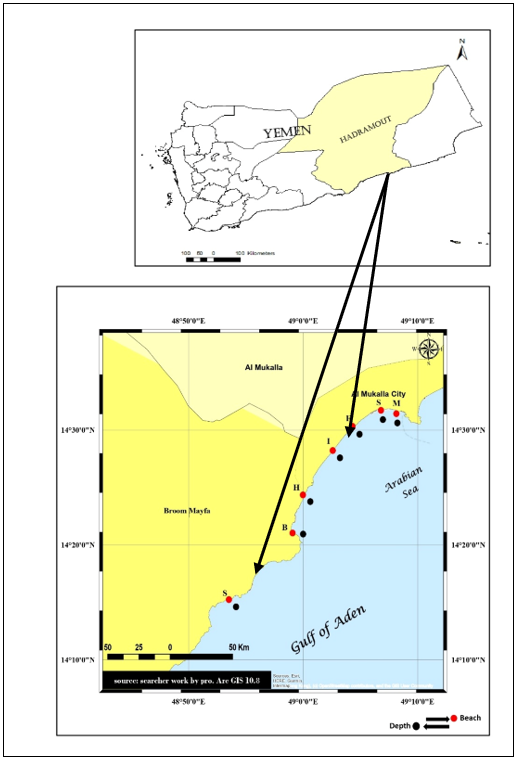
Human activities are the primary sources of pollution, the severity of which has increased significantly in recent decades, placing immense pressure on both human societies and coastal ecosystems. Seasonal conditions play a crucial role in determining the spread, dilution, or accumulation of pollutants in marine environments. Consequently, assessing seasonal variations in marine sediments subjected to sewage pollution is essential for understanding the extent of this dynamic impact, which is of paramount importance for evaluating and developing effective management and protection strategies. This study investigates seasonal variations in some of the physicochemical parameters of marine sediments along the coasts of the Al-Mukalla and Burum districts in the Hadhramaut Governorate, Yemen. A range of statistical methods were employed to analyze a comprehensive dataset on marine sediment quality over two seasons. This research aims to provide some necessary insights into the extent of pollution in coastal sediments near sewage outlets and to assess the quality of sediments that serve as habitats for a diverse array of marine organisms. The results indicated temporal and spatial variations in coastal sediment pollution in both regions during both seasons, exceeding Yemeni and international permissible limits. The concentrations of environmental parameters, such as temperature, pH, Ca2+, Mg2+, Cl-, HCO3-, and SO42- decreased during the first season compared to those during the second. This was accompanied by an increase in both EC and TDS . Overall, this variation may be attributed to its association with varying discharge rates, biological processes, and natural factors affecting the seasons. This also underscores the role of sewage as a primary cause of coastal degradation in marine ecosystems. Such pollution is expected to have significant environmental and health consequences by destroying essential habitat structures (such as coral reefs or seagrass meadows), causing toxicity, impaired growth, and disrupting reproductive processes. In turn, this negatively impacts biodiversity and ecosystem resilience.
Eman H. Ba-Othman, Hisham M. Nagi, Ghazi A. Al-Rashidi, Khaled M. Khanbari (2026). Seasonal Evaluation of Physicochemical Parameters of Marine Sediments on the Coasts of Al-Mukalla and Broom Districts, Hadhramout, Yemen. Sana'a University Journal of Applied Sciences and Technology, 1787-1797. DOI: https://doi.org/10.59628/jast.v4i3.2626
Eman H. Ba-Othman, Hisham M. Nagi, Ghazi A. Al-Rashidi, Khaled M. Khanbari . “Seasonal Evaluation of Physicochemical Parameters of Marine Sediments on the Coasts of Al-Mukalla and Broom Districts, Hadhramout, Yemen.” Sana'a University Journal of Applied Sciences and Technology, 2026, pp. 1787-1797. https://doi.org/10.59628/jast.v4i3.2626. Accessed 30 Oct. 2026.
Eman H. Ba-Othman, Hisham M. Nagi, Ghazi A. Al-Rashidi, Khaled M. Khanbari . 2026. “Seasonal Evaluation of Physicochemical Parameters of Marine Sediments on the Coasts of Al-Mukalla and Broom Districts, Hadhramout, Yemen.” Sana'a University Journal of Applied Sciences and Technology : 1787-1797. DOI: https://doi.org/10.59628/jast.v4i3.2626
Eman H. Ba-Othman, Hisham M. Nagi, Ghazi A. Al-Rashidi, Khaled M. Khanbari (2026) ‘Seasonal Evaluation of Physicochemical Parameters of Marine Sediments on the Coasts of Al-Mukalla and Broom Districts, Hadhramout, Yemen’, Sana'a University Journal of Applied Sciences and Technology, pp. 1787-1797. doi: 10.59628/jast.v4i3.2626
@article{jast2026_art2626,
    author  = {Eman H. Ba-Othman, Hisham M. Nagi, Ghazi A. Al-Rashidi, Khaled M. Khanbari },
    title   = {Seasonal Evaluation of Physicochemical Parameters of Marine Sediments on the Coasts of Al-Mukalla and Broom Districts, Hadhramout, Yemen},
    journal = {Sana'a University Journal of Applied Sciences and Technology},    year    = {2026},    month   = {March},    pages   = {1787-1797},    doi     = {10.59628/jast.v4i3.2626},
    url     = {https://doi.org/10.59628/jast.v4i3.2626},}
Seasonal Evaluation of Physicochemical Parameters of Marine Sediments on the Coasts of Al-Mukalla and Broom Districts, Hadhramout, Yemen
Explore commentaries, corrections, critiques and other scholarly links.
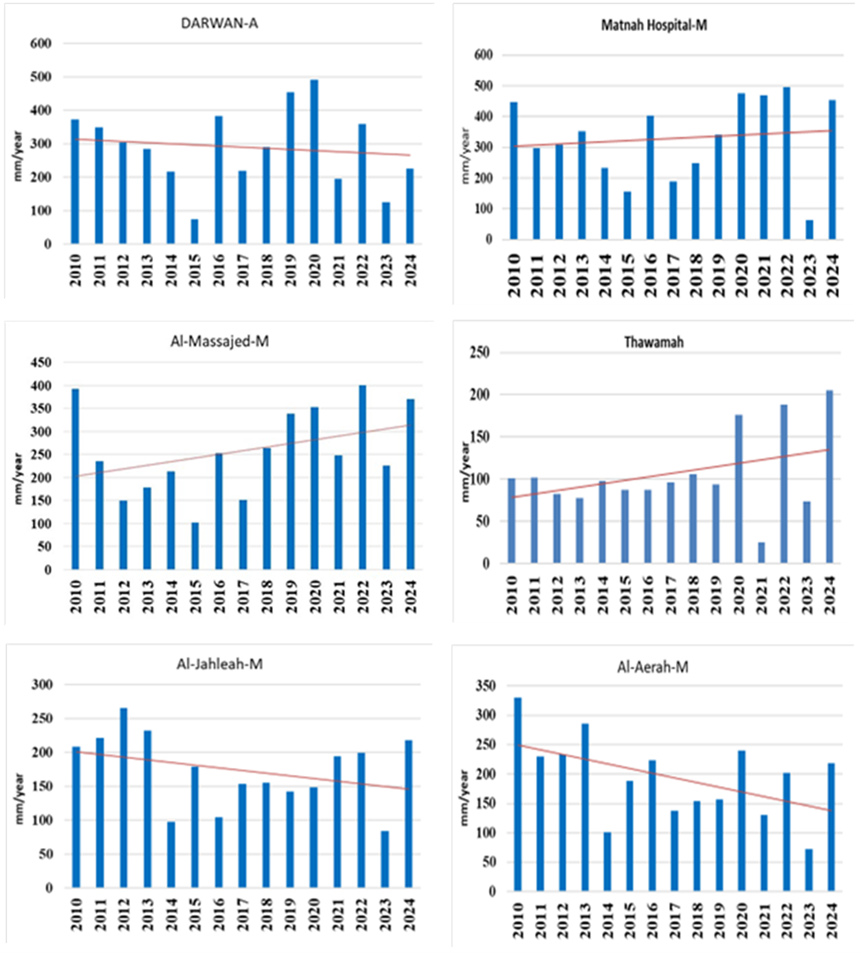
Sana’a Basin in the Central Highlands of Yemen is critical economic importance for drinking water, as well as for rainfed and irrigated agriculture. Consequently, and any shift in rainfall patterns profoundly impact both groundwater recharge on the one hand, and crop ecosystems on the other hand. This study aims to analyze precipitation dynamics in the Sana’a Basin, by analyzing data from 26 meteorological stations distributed across the region to understand the temporal and spatial variations in rainfall. The research utilizes datasets from the National Water Authority for the period from 2010 to 2024. The results revealed significant spatial heterogeneity in rainfalldistribution, with the northeastern and central regions experiencing minimal precipitation, while the western and southern areas recorded considerably higher levels. These patterns are largely driven by orographic lifting and atmospheric dynamics. The observed trends indicate that a systematic decline in rainfall at multiple stations suggests prolonged aridification in specific zones, which could detrimentally affect groundwater replenishment, agricultural productivity, and water security. Conversely, localized increases in rainfall at certain stations suggest potential climate-induced shifts that may elevate flood risks or, alternatively, improve water availability. Furthermore, the study validates the effectiveness of integrating satellite based observations (TRMM) to complement field data, particularly in data-scarce regions. These findings underscore the urgent need for continuous monitoring and the implementation of adaptive water management strategies to mitigate the impacts of climate variability on the basin’s fragile water resources.
Hadi A. Quriaa, Bassim S. Al Khirbash, Hisham M. Nagi, Amer M. Al-Sabri (2026). Spatiotemporal Analysis of Rainfall Variability in the Sana’a Basin, Yemen: An Integrated Remote Sensing and GIS Approach. Sana'a University Journal of Applied Sciences and Technology, 2122-2129. DOI: https://doi.org/10.59628/jast.v4i5.2859
Hadi A. Quriaa, Bassim S. Al Khirbash, Hisham M. Nagi, Amer M. Al-Sabri . “Spatiotemporal Analysis of Rainfall Variability in the Sana’a Basin, Yemen: An Integrated Remote Sensing and GIS Approach.” Sana'a University Journal of Applied Sciences and Technology, 2026, pp. 2122-2129. https://doi.org/10.59628/jast.v4i5.2859. Accessed 30 Oct. 2026.
Hadi A. Quriaa, Bassim S. Al Khirbash, Hisham M. Nagi, Amer M. Al-Sabri . 2026. “Spatiotemporal Analysis of Rainfall Variability in the Sana’a Basin, Yemen: An Integrated Remote Sensing and GIS Approach.” Sana'a University Journal of Applied Sciences and Technology : 2122-2129. DOI: https://doi.org/10.59628/jast.v4i5.2859
Hadi A. Quriaa, Bassim S. Al Khirbash, Hisham M. Nagi, Amer M. Al-Sabri (2026) ‘Spatiotemporal Analysis of Rainfall Variability in the Sana’a Basin, Yemen: An Integrated Remote Sensing and GIS Approach’, Sana'a University Journal of Applied Sciences and Technology, pp. 2122-2129. doi: 10.59628/jast.v4i5.2859
@article{jast2026_art2859,
    author  = {Hadi A. Quriaa, Bassim S. Al Khirbash, Hisham M. Nagi, Amer M. Al-Sabri },
    title   = {Spatiotemporal Analysis of Rainfall Variability in the Sana’a Basin, Yemen: An Integrated Remote Sensing and GIS Approach},
    journal = {Sana'a University Journal of Applied Sciences and Technology},    year    = {2026},    month   = {May},    pages   = {2122-2129},    doi     = {10.59628/jast.v4i5.2859},
    url     = {https://doi.org/10.59628/jast.v4i5.2859},}
Spatiotemporal Analysis of Rainfall Variability in the Sana’a Basin, Yemen: An Integrated Remote Sensing and GIS Approach
Nothing has been published in this category yet.

Sana'a University Journal
of Applied Sciences and Technology
A peer-reviewed, open-access journal publishing high-quality research in applied sciences, engineering, and technology since 2023.
