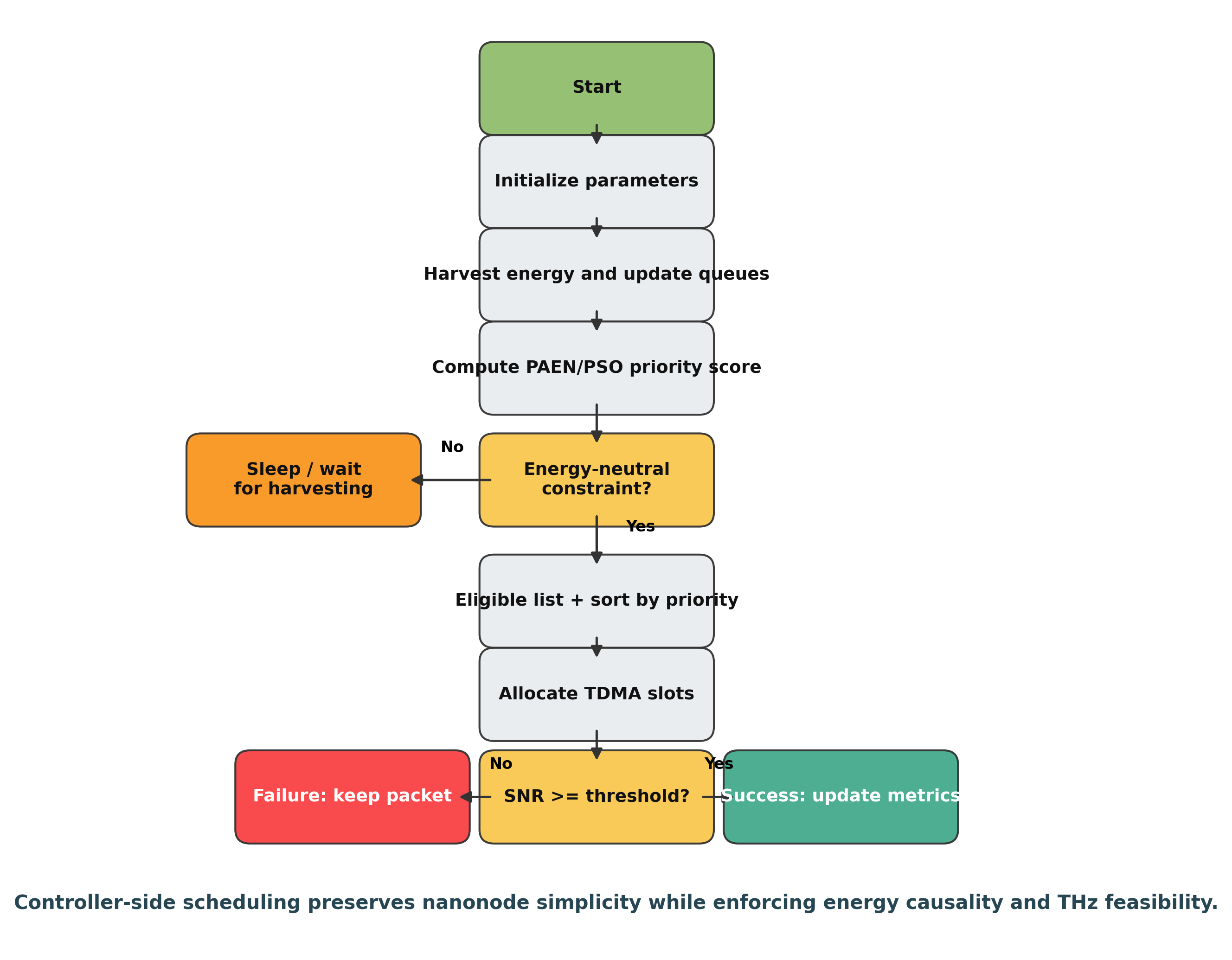
Energy-harvested Internet of Nano Things (IoHNT) systems can enable self-sustainable nanoscale sensing in biomedical monitoring, environmental surveillance, smart materials, and industrial nano-inspection. However, nanodevices have extremely limited energy buffers, and terahertz (THz) nanocommunication is strongly affected by distance-dependent spreading loss and molecular absorption. These coupled restrictions require medium access control decisions that jointly consider energy availability, traffic state, packet urgency, and THz link quality. This paper presents a revised and strengthened cross-layer energy-neutral communication framework for harvested-energy IoNT over THz nanonetworks. The baseline Priority-Aware Energy-Neutral TDMA () protocol ranks nanonodes using residual energy, queue backlog, packet age, and THz distance while allowing transmission only when the energy-neutrality constraint is satisfied. To address the dependence on manually selected priority weights, a Particle Swarm Optimization (PSO)-based extension, named , is introduced to optimize the scheduling weights under high-traffic and low-harvesting conditions. MATLAB simulations with 30 independent runs and 95% confidence intervals compare random access, conventional TDMA, CEH-TDMA-like scheduling, fixed , adaptive , and . The revised validation adds percentage improvement, Welch statistical significance testing, standardized effect-size interpretation, runtime-complexity comparison, and dense network scalability up to 400 nanonodes. Results show that improves throughput, PDR, delay, energy efficiency, and outage probability compared with fixed , including 14.25% delay reduction and 25.93% outage reduction. The optimized weights emphasize residual energy and THz distance, confirming that energy feasibility and channel quality are the main scheduling drivers in severely constrained IoHNT systems.
Murad Abdullah Albahri, Abdulsalam Alkholidi (2026). A Cross-Layer Energy-Neutral Communication Framework for Energy-Harvested Internet of Nano Things over Terahertz Nanonetworks. Sana'a University Journal of Applied Sciences and Technology, 2367-2378. DOI: https://doi.org/10.59628/jast.v4i7.3257
Murad Abdullah Albahri, Abdulsalam Alkholidi . “A Cross-Layer Energy-Neutral Communication Framework for Energy-Harvested Internet of Nano Things over Terahertz Nanonetworks.” Sana'a University Journal of Applied Sciences and Technology, 2026, pp. 2367-2378. https://doi.org/10.59628/jast.v4i7.3257. Accessed 31 Oct. 2026.
Murad Abdullah Albahri, Abdulsalam Alkholidi . 2026. “A Cross-Layer Energy-Neutral Communication Framework for Energy-Harvested Internet of Nano Things over Terahertz Nanonetworks.” Sana'a University Journal of Applied Sciences and Technology : 2367-2378. DOI: https://doi.org/10.59628/jast.v4i7.3257
Murad Abdullah Albahri, Abdulsalam Alkholidi (2026) ‘A Cross-Layer Energy-Neutral Communication Framework for Energy-Harvested Internet of Nano Things over Terahertz Nanonetworks’, Sana'a University Journal of Applied Sciences and Technology, pp. 2367-2378. doi: 10.59628/jast.v4i7.3257
@article{jast2026_art3257,
    author  = {Murad Abdullah Albahri, Abdulsalam Alkholidi },
    title   = {A Cross-Layer Energy-Neutral Communication Framework for Energy-Harvested Internet of Nano Things over Terahertz Nanonetworks},
    journal = {Sana'a University Journal of Applied Sciences and Technology},    year    = {2026},    month   = {July},    pages   = {2367-2378},    doi     = {10.59628/jast.v4i7.3257},
    url     = {https://doi.org/10.59628/jast.v4i7.3257},}
A Cross-Layer Energy-Neutral Communication Framework for Energy-Harvested Internet of Nano Things over Terahertz Nanonetworks
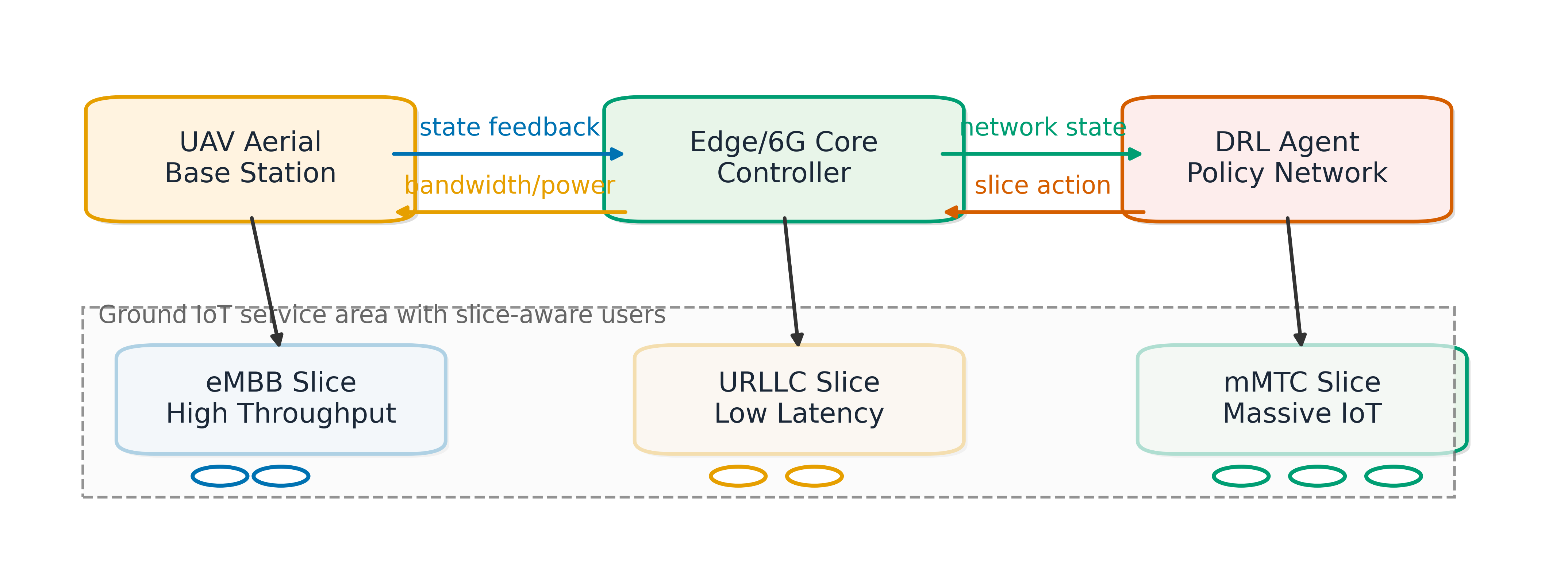
Sixth-generation (6G) wireless networks are expected to support massive Internet of Things (IoT) connectivity, ultra-reliable low latency services, high-throughput multimedia traffic, and intelligent and autonomous infrastructures. Conventional terrestrial deployments may be insufficient in rural areas, disaster recovery scenarios, emergency zones, and temporary high-density IoT events, where rapid coverage extension and adaptive resource management are required. Unmanned aerial vehicles (UAVs) can operate as aerial base stations to enhance service availability; however, limited onboard energy, altitude-dependent air-to ground channels, constrained bandwidth and transmit power, and heterogeneous quality-of-service (QoS) requirements make static resource allocation inefficient. This revised paper proposes an AI driven energy-efficient network slicing framework for UAV assisted 6G IoT communication. The network is divided into enhanced Mobile Broadband (eMBB), Ultra- Reliable Low-Latency Communication (URLLC), and massive Machine-Type Communication (mMTC) slices. A DQN-based deep reinforcement learning (DRL) agent dynamically allocates the slice-level bandwidth, transmit power, and altitude-control actions after converting continuous decision variables into a finite feasible action set. The reward function jointly maximizes the throughput and energy efficiency while penalizing the latency, packet loss, and QoS violations. To address the reviewers’ concerns, the revised manuscript adds an LoS/NLoS air- to-ground channel model, a propulsion-aware UAV energy model, detailed DRL hyperparameters, a nine-action discretization table, Monte Carlo validation over 30 independent seeds, Welch significance testing, DRL variant comparison, computational complexity analysis, and three relevant references from Sana’a University Journal
of Applied Sciences and Technology. The proposed method improves the throughput by 15.7%, reduces the latency by 19.8%, improves the energy efficiency by 16.4%, and reduces the packet loss by 24.6% compared with the greedy baseline. The results confirm that slice-aware DRL improves resource utilization and service reliability in UAV-assisted 6G IoT networks.
Murad Abdullah Abdo Ahmed Albahri (2026). AI-Driven Energy-Efficient Network Slicing for UAV-Assisted 6G IoT Communications Using Deep Reinforcement Learning. Sana'a University Journal of Applied Sciences and Technology, 2334-2343. DOI: https://doi.org/10.59628/jast.v4i8.3250
Murad Abdullah Abdo Ahmed Albahri . “AI-Driven Energy-Efficient Network Slicing for UAV-Assisted 6G IoT Communications Using Deep Reinforcement Learning.” Sana'a University Journal of Applied Sciences and Technology, 2026, pp. 2334-2343. https://doi.org/10.59628/jast.v4i8.3250. Accessed 31 Oct. 2026.
Murad Abdullah Abdo Ahmed Albahri . 2026. “AI-Driven Energy-Efficient Network Slicing for UAV-Assisted 6G IoT Communications Using Deep Reinforcement Learning.” Sana'a University Journal of Applied Sciences and Technology : 2334-2343. DOI: https://doi.org/10.59628/jast.v4i8.3250
Murad Abdullah Abdo Ahmed Albahri (2026) ‘AI-Driven Energy-Efficient Network Slicing for UAV-Assisted 6G IoT Communications Using Deep Reinforcement Learning’, Sana'a University Journal of Applied Sciences and Technology, pp. 2334-2343. doi: 10.59628/jast.v4i8.3250
@article{jast2026_art3250,
    author  = {Murad Abdullah Abdo Ahmed Albahri },
    title   = {AI-Driven Energy-Efficient Network Slicing for UAV-Assisted 6G IoT Communications Using Deep Reinforcement Learning},
    journal = {Sana'a University Journal of Applied Sciences and Technology},    year    = {2026},    month   = {August},    pages   = {2334-2343},    doi     = {10.59628/jast.v4i8.3250},
    url     = {https://doi.org/10.59628/jast.v4i8.3250},}
AI-Driven Energy-Efficient Network Slicing for UAV-Assisted 6G IoT Communications Using Deep Reinforcement Learning
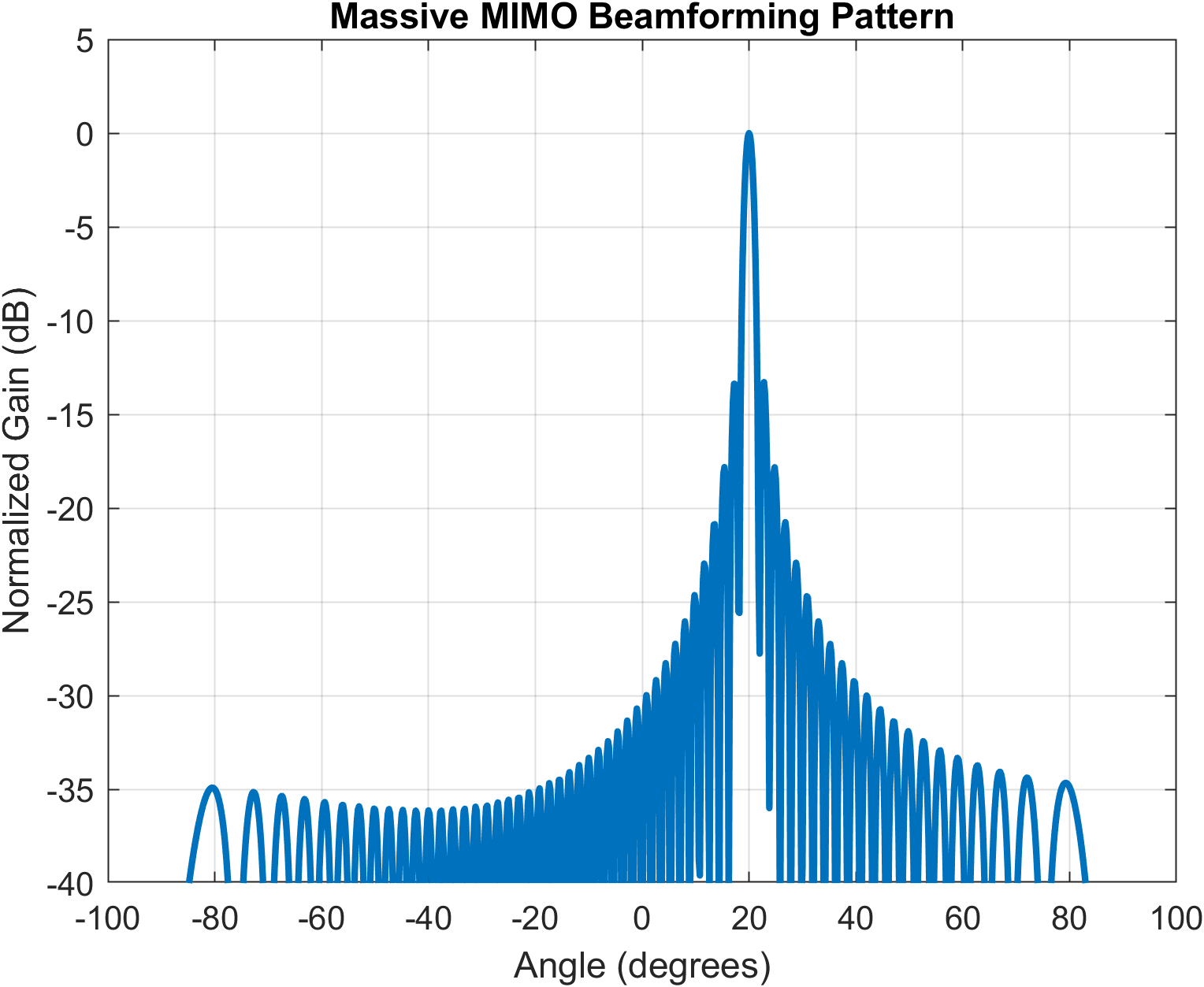
Cell-free massive multiple-input multiple-output (MIMO) improves user fairness by allowing many distributed access points (APs) to cooperatively serve users without fixed cell boundaries. Its practical reliability, however, is limited by pilot contamination, pilot spoofing, channel state-information (CSI) uncertainty, inter-user interference, and inefficient power consumption. This paper proposes an AI-driven secure channel estimation and energy-efficient power allocation (AI-SCE-EEPA) framework for uplink cell-free massive MIMO. The AI component is a lightweight supervised anomaly classifier trained on synthetically generated pilot observations representing clean and spoofed contaminated CSI conditions. Its output is used as a soft reliability gate before minimum mean-square error (MMSE) channel refinement. The refined secure CSI is then used by an adaptive regularized MMSE receiver and an energy-efficient power allocation rule. A reproducible Monte Carlo simulation is conducted under distributed APs, Rayleigh fading, large-scale path loss, log-normal shadowing, QPSK transmission, pilot contamination, and active pilot spoofing/eavesdropping stress. The proposed framework is compared with MR, conventional LMMSE, and adaptive R-MMSE baselines using bit error rate (BER), normalized mean-square error (NMSE), spectral efficiency (SE), energy efficiency (EE), secrecy rate, and power-allocation behavior. At 30 dB, AI-SCE-EEPA improves the reported NMSE, BER, SE, EE, and secrecy-rate indicators over fixed-power LMMSE baselines. The results indicate that combining trainable CSI anomaly detection with interpretable model-based estimation and energy-aware power allocation is a practical direction for secure and green cell-free massive MIMO.
Murad Abdullah Abdo Ahmed Albahri, M. A. Hankel (2026). AI-Driven Secure Channel Estimation and Energy-Efficient Power Allocation for Cell-Free Massive MIMO. Sana'a University Journal of Applied Sciences and Technology, 2692- 2700. DOI: https://doi.org/10.59628/jast.v4i10.3389
Murad Abdullah Abdo Ahmed Albahri, M. A. Hankel . “AI-Driven Secure Channel Estimation and Energy-Efficient Power Allocation for Cell-Free Massive MIMO.” Sana'a University Journal of Applied Sciences and Technology, 2026, pp. 2692- 2700. https://doi.org/10.59628/jast.v4i10.3389. Accessed 31 Oct. 2026.
Murad Abdullah Abdo Ahmed Albahri, M. A. Hankel . 2026. “AI-Driven Secure Channel Estimation and Energy-Efficient Power Allocation for Cell-Free Massive MIMO.” Sana'a University Journal of Applied Sciences and Technology : 2692- 2700. DOI: https://doi.org/10.59628/jast.v4i10.3389
Murad Abdullah Abdo Ahmed Albahri, M. A. Hankel (2026) ‘AI-Driven Secure Channel Estimation and Energy-Efficient Power Allocation for Cell-Free Massive MIMO’, Sana'a University Journal of Applied Sciences and Technology, pp. 2692- 2700. doi: 10.59628/jast.v4i10.3389
@article{jast2026_art3389,
    author  = {Murad Abdullah Abdo Ahmed Albahri, M. A. Hankel },
    title   = {AI-Driven Secure Channel Estimation and Energy-Efficient Power Allocation for Cell-Free Massive MIMO},
    journal = {Sana'a University Journal of Applied Sciences and Technology},    year    = {2026},    month   = {October},    pages   = {2692- 2700},    doi     = {10.59628/jast.v4i10.3389},
    url     = {https://doi.org/10.59628/jast.v4i10.3389},}
AI-Driven Secure Channel Estimation and Energy-Efficient Power Allocation for Cell-Free Massive MIMO
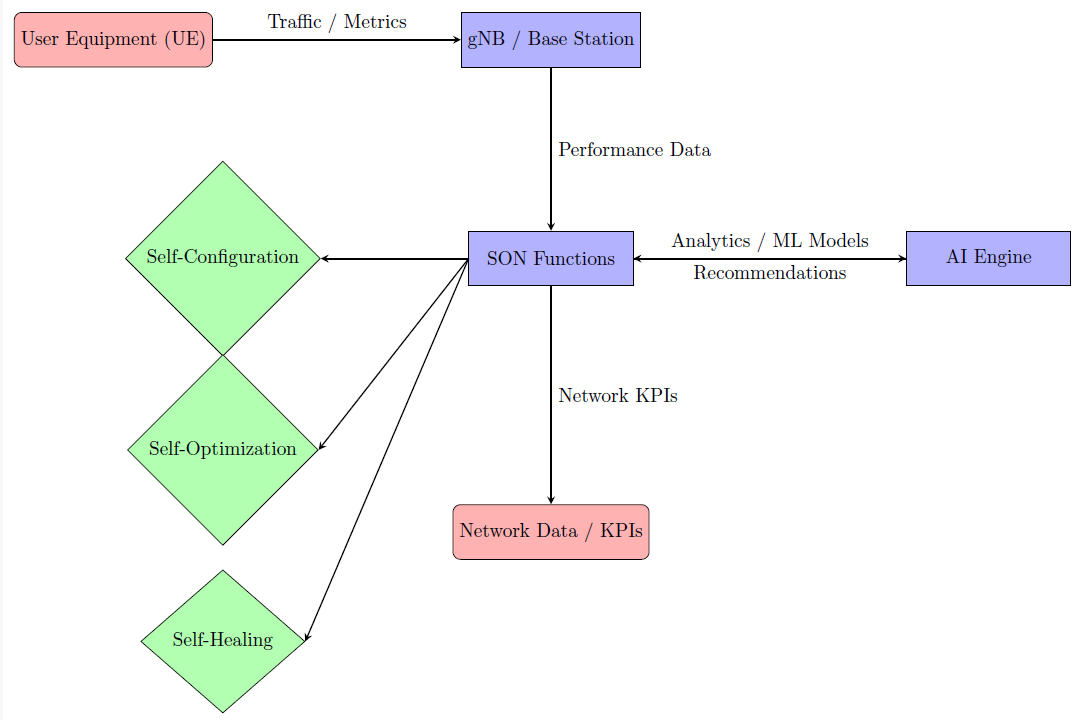
This paper investigates the application of Artificial Intelligence (AI) in Self-Organizing Networks (SON) for 5G networks, focusing on coverage enhancement and reduction of Operational Expenditures (OPEX). A conceptual AI-Self Organizing Networks (SON) framework integrated with O RAN architecture is proposed, and an illustrative Python-based simulation is conducted to demonstrate potential trends in coverage probability, energy consumption, and estimated OPEX savings. The simulation results indicate that AI-SON can achieve near-optimal coverage (coverage probability 0.9985) while reducing energy usage and maintenance costs, with an estimated OPEX reduction of 2030% compared to baseline strategies. The study clarifies that the simulation is illustrative and not experimentally validated, providing a foundation for future rigorous evaluations.
Mohamed Hankal (2026). AI-Driven Self-Organizing Networks (SON) for 5G OPEX Reduction: A Comprehensive Survey and Conceptual Framework. Sana'a University Journal of Applied Sciences and Technology, 1496-1506. DOI: https://doi.org/10.59628/jast.v4i1.2291
Mohamed Hankal . “AI-Driven Self-Organizing Networks (SON) for 5G OPEX Reduction: A Comprehensive Survey and Conceptual Framework.” Sana'a University Journal of Applied Sciences and Technology, 2026, pp. 1496-1506. https://doi.org/10.59628/jast.v4i1.2291. Accessed 31 Oct. 2026.
Mohamed Hankal . 2026. “AI-Driven Self-Organizing Networks (SON) for 5G OPEX Reduction: A Comprehensive Survey and Conceptual Framework.” Sana'a University Journal of Applied Sciences and Technology : 1496-1506. DOI: https://doi.org/10.59628/jast.v4i1.2291
Mohamed Hankal (2026) ‘AI-Driven Self-Organizing Networks (SON) for 5G OPEX Reduction: A Comprehensive Survey and Conceptual Framework’, Sana'a University Journal of Applied Sciences and Technology, pp. 1496-1506. doi: 10.59628/jast.v4i1.2291
@article{jast2026_art2291,
    author  = {Mohamed Hankal },
    title   = {AI-Driven Self-Organizing Networks (SON) for 5G OPEX Reduction: A Comprehensive Survey and Conceptual Framework},
    journal = {Sana'a University Journal of Applied Sciences and Technology},    year    = {2026},    month   = {January},    pages   = {1496-1506},    doi     = {10.59628/jast.v4i1.2291},
    url     = {https://doi.org/10.59628/jast.v4i1.2291},}
AI-Driven Self-Organizing Networks (SON) for 5G OPEX Reduction: A Comprehensive Survey and Conceptual Framework

Power electronics and high-power semiconductor devices are of great importance in the national economy and are closely related to other industries. They can be considered a supporting infrastructure that ensures the functioning of different sectors of the economy. Currently, the main consumer of power electronics products is the manufacturing industry. In the future, the automotive industry may take the palm from it - due to the expansion of the use of electric/hybrid cars, as well as autonomous vehicles. The paper points out the relevance of power electronics to various industries and also assesses the transition from silicon-based devices to the advanced GaN and SiC technologies. The review looks at the trends in the power electronics market, with special attention to industrial and automotive, together with a glance at the growth in demand derived fromelectric and hybrid vehicles. Aside from that, further development of GaN-on-SiC technology and its prospects for application to high-power electronic devices are included in this work.
R. M. Al-Bouthigy, H. AL Makleh (2025). Power Electronics Development Trends. Sana'a University Journal of Applied Sciences and Technology, 698-702. DOI: https://doi.org/10.59628/jast.v3i2.1526
R. M. Al-Bouthigy, H. AL Makleh . “Power Electronics Development Trends.” Sana'a University Journal of Applied Sciences and Technology, 2025, pp. 698-702. https://doi.org/10.59628/jast.v3i2.1526. Accessed 31 Oct. 2026.
R. M. Al-Bouthigy, H. AL Makleh . 2025. “Power Electronics Development Trends.” Sana'a University Journal of Applied Sciences and Technology : 698-702. DOI: https://doi.org/10.59628/jast.v3i2.1526
R. M. Al-Bouthigy, H. AL Makleh (2025) ‘Power Electronics Development Trends’, Sana'a University Journal of Applied Sciences and Technology, pp. 698-702. doi: 10.59628/jast.v3i2.1526
@article{jast2025_art1526,
    author  = {R. M. Al-Bouthigy, H. AL Makleh },
    title   = {Power Electronics Development Trends},
    journal = {Sana'a University Journal of Applied Sciences and Technology},    year    = {2025},    month   = {April},    pages   = {698-702},    doi     = {10.59628/jast.v3i2.1526},
    url     = {https://doi.org/10.59628/jast.v3i2.1526},}
Power Electronics Development Trends

Smart agriculture and industrial Internet-of-Things
(IoT) systems increasingly rely on distributed sensors, edge gate-ways, and networked control services, making privacy-preserving and communication-efficient anomaly detection essential. Centralized learning can expose operational telemetry, increase communication overhead, and degrade under heterogeneous non-independent and identically distributed (non-IID) client conditions. This paper presents SEAF-FL-MLP, a leakage safe federated edge-AI framework for binary anomaly detection across five heterogeneous IoT clients: AGRI, SWAT, WADI, WUSTL-IIoT, and TON-IoT. The framework integrates split-first preprocessing, train-only imputation/encoding/scaling/feature selection, client- specific processing, a compact multilayer perceptron (MLP), FedAvg aggregation, validation-only threshold selection, and test-only final evaluation. In the audited V9 output, the balanced validation-selected threshold achieved Accuracy=96.32%, Precision=96.67%, Recall = 93.74%, F1-score = 95.18%, ROC-AUC = 98.86%, and PR-AUC = 98.03% on the global held-out test set, with a model size of 0.0372 MB and an estimated total communication cost of 4.4682 MB across 12 federated rounds and five clients. Client-wise analysis revealed substantial heterogeneity: WUSTL-IIoT, TON-IoT, and SWAT achieved strong F1-scores, whereas AGRI and WADI remained challenging stress cases. WUSTL shortcut-reduced sensitivity showed that the WUSTL client remained strong after removing high-risk shortcut-sensitive features, although the global pipeline was partially sensitive to replacing WUSTL with the shortcut-reduced version. FedProx did not materially improve performance under the tested configuration, and the ablation results did not support claiming mutual-information feature selection as a performance-improving component in this run. The results position SEAF-FL-MLP as a compact, communication-efficient, and reproducible federated edge-AI baseline while emphasizing the necessity of transparent client-level, fairness, and shortcut-robustness analysis.
Hussein Azzan, Abdulsalam Alkholidi (2026). SEAF-FL-MLP: Audited Federated Edge-AI Anomaly Detection with Client Heterogeneity and Shortcut-Sensitivity Analysis. Sana'a University Journal of Applied Sciences and Technology, 2292-2305. DOI: https://doi.org/10.59628/jast.v4i7.3475
Hussein Azzan, Abdulsalam Alkholidi . “SEAF-FL-MLP: Audited Federated Edge-AI Anomaly Detection with Client Heterogeneity and Shortcut-Sensitivity Analysis.” Sana'a University Journal of Applied Sciences and Technology, 2026, pp. 2292-2305. https://doi.org/10.59628/jast.v4i7.3475. Accessed 31 Oct. 2026.
Hussein Azzan, Abdulsalam Alkholidi . 2026. “SEAF-FL-MLP: Audited Federated Edge-AI Anomaly Detection with Client Heterogeneity and Shortcut-Sensitivity Analysis.” Sana'a University Journal of Applied Sciences and Technology : 2292-2305. DOI: https://doi.org/10.59628/jast.v4i7.3475
Hussein Azzan, Abdulsalam Alkholidi (2026) ‘SEAF-FL-MLP: Audited Federated Edge-AI Anomaly Detection with Client Heterogeneity and Shortcut-Sensitivity Analysis’, Sana'a University Journal of Applied Sciences and Technology, pp. 2292-2305. doi: 10.59628/jast.v4i7.3475
@article{jast2026_art3475,
    author  = {Hussein Azzan, Abdulsalam Alkholidi },
    title   = {SEAF-FL-MLP: Audited Federated Edge-AI Anomaly Detection with Client Heterogeneity and Shortcut-Sensitivity Analysis},
    journal = {Sana'a University Journal of Applied Sciences and Technology},    year    = {2026},    month   = {July},    pages   = {2292-2305},    doi     = {10.59628/jast.v4i7.3475},
    url     = {https://doi.org/10.59628/jast.v4i7.3475},}
SEAF-FL-MLP: Audited Federated Edge-AI Anomaly Detection with Client Heterogeneity and Shortcut-Sensitivity Analysis

Energy Consumption Optimization in the Faculty of Medicine, Sana’a University. The interest of this study is to discover the pattern of energy consumption in the Faculty of Medicine at Sana’a University to reduce energy wastage and enhance efficiency. The study zeroes in on key areas that need optimization in terms of energy use: lighting systems, laboratory equipment, and Heating, Ventilation, and Air Conditioning (HVAC) systems. The strategy to be proposed now will minimize the consumption of energy without affecting the functionality of this faculty by closely analyzing the load profiles and energy audits. This will include upgrading to energy-efficient lighting, optimal equipment scheduling, and adopting energy management systems. This can help the Faculty of Medicine reduce costs related to energy use dramatically, making resource usage more effective and contributing to a better future. The results indicated that these measures can result in considerable cuts in power consumption with maximum estimated savings in electricity up to 59.43%, fuel-57.67, and overall cost-54.61%.
R. M. Al-Bouthigy, H. AL Makleh, B. Al-Thawr , B. Al-Huthaify , N. Nasr (2025). Smoothening of Power Consumption in Academic Institutions: The Case Study of Faculty of Medicine, Sana’a University. Sana'a University Journal of Applied Sciences and Technology, 714-717. DOI: https://doi.org/10.59628/jast.v3i2.1488
R. M. Al-Bouthigy, H. AL Makleh, B. Al-Thawr , B. Al-Huthaify , N. Nasr . “Smoothening of Power Consumption in Academic Institutions: The Case Study of Faculty of Medicine, Sana’a University.” Sana'a University Journal of Applied Sciences and Technology, 2025, pp. 714-717. https://doi.org/10.59628/jast.v3i2.1488. Accessed 31 Oct. 2026.
R. M. Al-Bouthigy, H. AL Makleh, B. Al-Thawr , B. Al-Huthaify , N. Nasr . 2025. “Smoothening of Power Consumption in Academic Institutions: The Case Study of Faculty of Medicine, Sana’a University.” Sana'a University Journal of Applied Sciences and Technology : 714-717. DOI: https://doi.org/10.59628/jast.v3i2.1488
R. M. Al-Bouthigy, H. AL Makleh, B. Al-Thawr , B. Al-Huthaify , N. Nasr (2025) ‘Smoothening of Power Consumption in Academic Institutions: The Case Study of Faculty of Medicine, Sana’a University’, Sana'a University Journal of Applied Sciences and Technology, pp. 714-717. doi: 10.59628/jast.v3i2.1488
@article{jast2025_art1488,
    author  = {R. M. Al-Bouthigy, H. AL Makleh, B.  Al-Thawr , B. Al-Huthaify , N.  Nasr },
    title   = {Smoothening of Power Consumption in Academic Institutions: The Case Study of Faculty of Medicine, Sana’a University},
    journal = {Sana'a University Journal of Applied Sciences and Technology},    year    = {2025},    month   = {April},    pages   = {714-717},    doi     = {10.59628/jast.v3i2.1488},
    url     = {https://doi.org/10.59628/jast.v3i2.1488},}
Smoothening of Power Consumption in Academic Institutions: The Case Study of Faculty of Medicine, Sana’a University
Nothing has been published in this category yet.

Sana'a University Journal
of Applied Sciences and Technology
A peer-reviewed, open-access journal publishing high-quality research in applied sciences, engineering, and technology since 2023.
