Machine Learning and Data Science
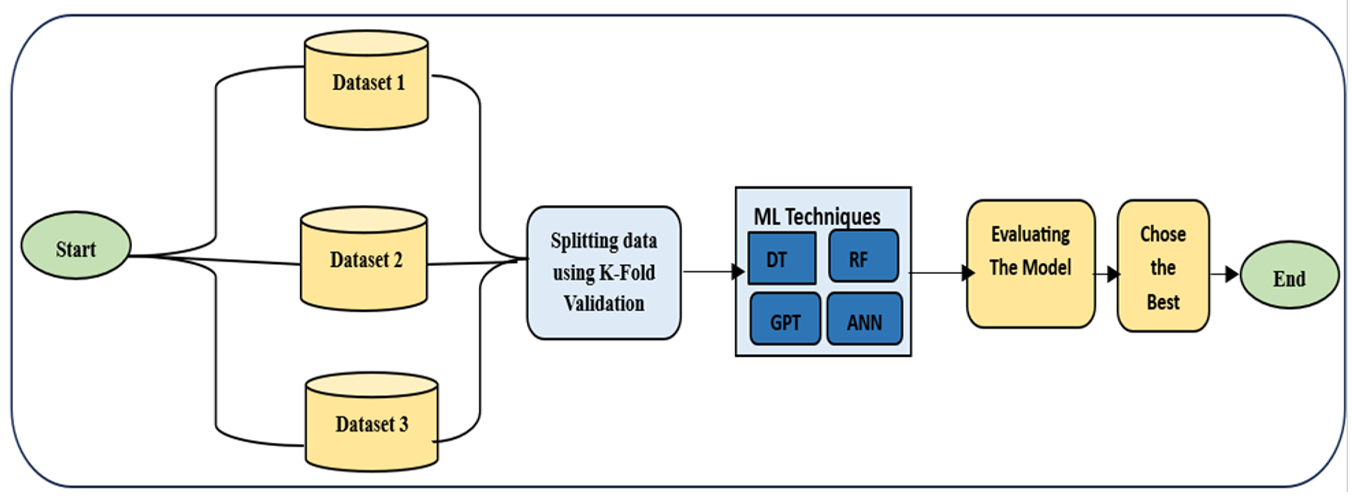
Many factors influence the efficiency of a classification model in Machine Learning, including the dataset’s size and the type of Machine Learning (ML) technique utilized in the classification process. Primarily, the accuracy varies among different machine learning methods. This paper develops a model that analyses and measures the impact of Tax Dataset Augmentation on the Accuracy of Machine Learning Models. The paper compares the performance of different models based on the most common machine learning techniques, namely: DT, RF, SVM, and ANN (MLP). Based on three datasets provided by Yemen’s Tax Authority. The first dataset contains 1083 records, while the second dataset is identical to the previous one, but with nearly five times the number of records, following data preprocessing, which resulted in approximately 5000 additional records. The last dataset is the same as the original dataset, but it has been duplicated nearly ten times, resulting in almost 10,000 records. The dataset partitioning technique utilized k-fold validation using the three datasets. Results show that the performance of ML classifiers such as ANN (MLP), DT, RF, and SVM is affected by dataset augmentation in terms of accuracy, recall, precision, and F-score. Results also show that the performance varies among the first three techniques; however, the SVM Classifier yields the lowest results. In general, despite some techniques leading to overfitting, it is found that most machine learning models utilizing tax datasets with five times the duplicates produced better outcomes than those using the original dataset. These findings provide practical guidance for tax authorities in selecting robust machine learning models under limited data availability and highlight risks associated with naïve dataset expansion.
Abeer Abdullah Shujaaaddeen, Ammar T.Zahary, Fadl Mutaher Ba-Alwi (2026). A Comparative Model to Analyze the Impact of Tax Dataset Augmentation on the Accuracy of Machine Learning Models. Sana'a University Journal of Applied Sciences and Technology, 1914-1923. DOI: https://doi.org/10.59628/jast.v4i4.2121
Abeer Abdullah Shujaaaddeen, Ammar T.Zahary, Fadl Mutaher Ba-Alwi . “A Comparative Model to Analyze the Impact of Tax Dataset Augmentation on the Accuracy of Machine Learning Models.” Sana'a University Journal of Applied Sciences and Technology, 2026, pp. 1914-1923. https://doi.org/10.59628/jast.v4i4.2121. Accessed 31 Oct. 2026.
Abeer Abdullah Shujaaaddeen, Ammar T.Zahary, Fadl Mutaher Ba-Alwi . 2026. “A Comparative Model to Analyze the Impact of Tax Dataset Augmentation on the Accuracy of Machine Learning Models.” Sana'a University Journal of Applied Sciences and Technology : 1914-1923. DOI: https://doi.org/10.59628/jast.v4i4.2121
Abeer Abdullah Shujaaaddeen, Ammar T.Zahary, Fadl Mutaher Ba-Alwi (2026) ‘A Comparative Model to Analyze the Impact of Tax Dataset Augmentation on the Accuracy of Machine Learning Models’, Sana'a University Journal of Applied Sciences and Technology, pp. 1914-1923. doi: 10.59628/jast.v4i4.2121
@article{jast2026_art2121,
    author  = {Abeer Abdullah Shujaaaddeen, Ammar T.Zahary, Fadl Mutaher Ba-Alwi },
    title   = {A Comparative Model to Analyze the Impact of Tax Dataset Augmentation on the Accuracy of Machine Learning Models},
    journal = {Sana'a University Journal of Applied Sciences and Technology},    year    = {2026},    month   = {April},    pages   = {1914-1923},    doi     = {10.59628/jast.v4i4.2121},
    url     = {https://doi.org/10.59628/jast.v4i4.2121},}
A Comparative Model to Analyze the Impact of Tax Dataset Augmentation on the Accuracy of Machine Learning Models
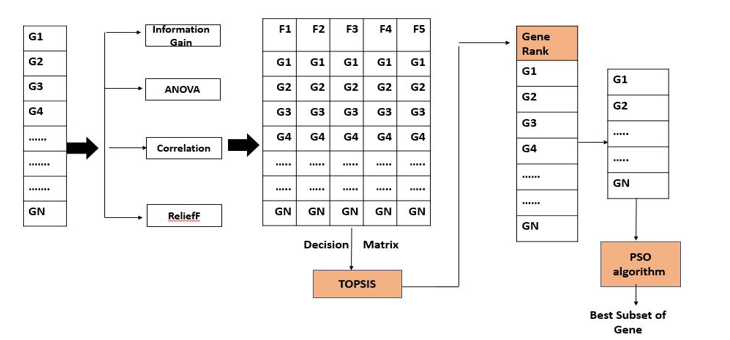
Microarray technology produces data with a large number of dimensions. The abundance of dimensions in the data makes it challenging for machine learning algorithms to extract meaningful information from it. To overcome this limitation, feature selection (FS) techniques can be applied to reduce the dimensionality of the data. FS is a crucial preprocessing step that allows for the handling of high-dimensional data and facilitates more effective and efficient processing. The primary objective of this paper is to develop an efficient FS method that can effectively reduce the dimensionality of microarray data. The Technique for Order Preference by Similarity to Ideal Solution (TOPSIS) is utilized in the first filtering stage to extract informative features. The best feature subset is then determined by using a Particle Swarm Optimization (PSO) algorithm as a wrapper feature selector to identify ideal features. The proposed approach is evaluated using microarray datasets from the Alzheimer’s Disease Neuroimaging Initiative (ADNI) and compared with other algorithms. The experimental findings indicate that the proposed approach outperforms the benchmark methods in terms of classification accuracy.
Heba Al.Marwai, Ghaleb H AL-Gaphari (2024). A hybrid Feature Selection Method Based on Binary PSO Algorithm for Microarray Data Classification. Sana'a University Journal of Applied Sciences and Technology, 375-380. DOI: https://doi.org/10.59628/jast.v2i4.1023
Heba Al.Marwai, Ghaleb H AL-Gaphari . “A hybrid Feature Selection Method Based on Binary PSO Algorithm for Microarray Data Classification.” Sana'a University Journal of Applied Sciences and Technology, 2024, pp. 375-380. https://doi.org/10.59628/jast.v2i4.1023. Accessed 31 Oct. 2026.
Heba Al.Marwai, Ghaleb H AL-Gaphari . 2024. “A hybrid Feature Selection Method Based on Binary PSO Algorithm for Microarray Data Classification.” Sana'a University Journal of Applied Sciences and Technology : 375-380. DOI: https://doi.org/10.59628/jast.v2i4.1023
Heba Al.Marwai, Ghaleb H AL-Gaphari (2024) ‘A hybrid Feature Selection Method Based on Binary PSO Algorithm for Microarray Data Classification’, Sana'a University Journal of Applied Sciences and Technology, pp. 375-380. doi: 10.59628/jast.v2i4.1023
@article{jast2024_art1023,
    author  = {Heba Al.Marwai, Ghaleb H AL-Gaphari },
    title   = {A hybrid Feature Selection Method Based on Binary PSO Algorithm for Microarray Data Classification},
    journal = {Sana'a University Journal of Applied Sciences and Technology},    year    = {2024},    month   = {September},    pages   = {375-380},    doi     = {10.59628/jast.v2i4.1023},
    url     = {https://doi.org/10.59628/jast.v2i4.1023},}
A hybrid Feature Selection Method Based on Binary PSO Algorithm for Microarray Data Classification
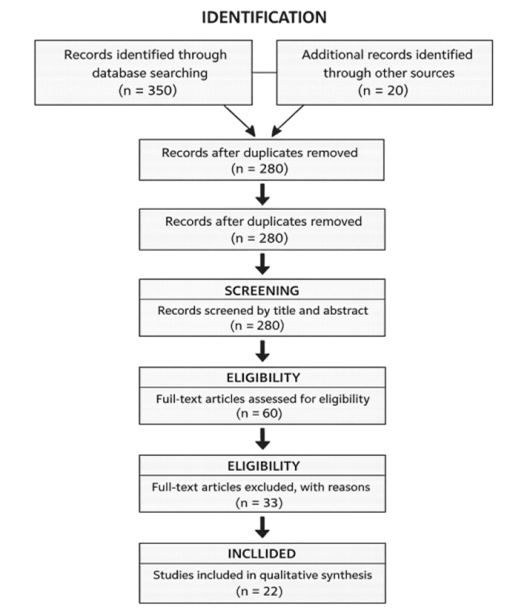
The widespread adoption of face masks during the COVID-19 pandemic created new requirements for facial recognition technology, driving focused innovation in Masked Face Recognition (MFR) systems. This survey synthesizes and analyzes key research developments from 2020 to 2024, examining more than twenty pivotal studies in the field. The review provides a structured comparison of contemporary deep learning methodologies, with particular attention to Convolutional Neural Network (CNN) implementations including ResNet, VGG, and MobileNet architectures. It further evaluates the characteristics and performance outcomes associated with principal publicly available datasets employed in MFR model development. The analysis highlights important considerations for advancing MFR systems, particularly regarding data quality and model generalization. Current research directions emphasize improving the alignment between training data characteristics and real-world application environments. Among available resources, the MaskedFace-Net dataset demonstrates particularly strong performance in benchmark evaluations, with reported recognition rates exceeding 99%, attributed to its specialized design and substantial scale. For practical implementation, the findings support utilizing established CNN-based frameworks, with opportunities for enhancement through complementary approaches such as integration with traditional classifiers. Looking forward, this survey identifies promising pathways for continued progress in MFR technology, centered on evolutionary advancements within proven architectural paradigms, sophisticated data utilization strategies, and optimizations for deployment efficiency. This comprehensive review offers valuable guidance for researchers and engineers working to create effective and adaptable masked face recognition solutions.
Haron M . Ahmed Omer, Fadl Ba-Alwi (2026). Deep Learning Approaches for Masked Face Recognition: A Survey of Research During (2020-2024). Sana'a University Journal of Applied Sciences and Technology, 2130-2138. DOI: https://doi.org/10.59628/jast.v4i5.2643
Haron M . Ahmed Omer, Fadl Ba-Alwi . “Deep Learning Approaches for Masked Face Recognition: A Survey of Research During (2020-2024).” Sana'a University Journal of Applied Sciences and Technology, 2026, pp. 2130-2138. https://doi.org/10.59628/jast.v4i5.2643. Accessed 31 Oct. 2026.
Haron M . Ahmed Omer, Fadl Ba-Alwi . 2026. “Deep Learning Approaches for Masked Face Recognition: A Survey of Research During (2020-2024).” Sana'a University Journal of Applied Sciences and Technology : 2130-2138. DOI: https://doi.org/10.59628/jast.v4i5.2643
Haron M . Ahmed Omer, Fadl Ba-Alwi (2026) ‘Deep Learning Approaches for Masked Face Recognition: A Survey of Research During (2020-2024)’, Sana'a University Journal of Applied Sciences and Technology, pp. 2130-2138. doi: 10.59628/jast.v4i5.2643
@article{jast2026_art2643,
    author  = {Haron M . Ahmed Omer, Fadl Ba-Alwi },
    title   = {Deep Learning Approaches for Masked Face Recognition: A Survey of Research During (2020-2024)},
    journal = {Sana'a University Journal of Applied Sciences and Technology},    year    = {2026},    month   = {May},    pages   = {2130-2138},    doi     = {10.59628/jast.v4i5.2643},
    url     = {https://doi.org/10.59628/jast.v4i5.2643},}
Deep Learning Approaches for Masked Face Recognition: A Survey of Research During (2020-2024)
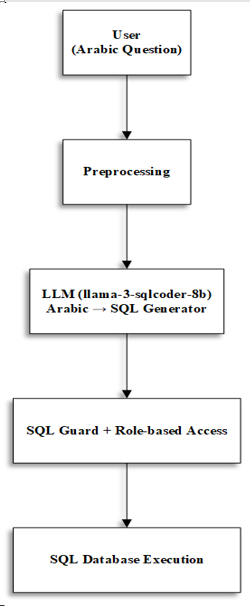
Recent advancements in Natural Language Processing (NLP) and Text-to-SQL systems have enabled easier interaction with relational databases. However, most solutions focus on English, leaving Arabic underrepresented. This study addresses that gap by fine-tuning the Llama-3-SQLCoder model to convert Arabic text into correct and executable SQL, enabling non-technical users to work with databases without learning SQL syntax. We enhanced the model using Low-Rank Adaptation (LoRA) and Unsloth, training it on Arabic questions paired with SQL queries from the Northwind database. To support low-resource environments, the model was converted to the GGUF format, reducing computational requirements while preserving performance. Evaluation results showed an execution accuracy of 90.24% and a validity rate of 97.56%, outperforming the zero-shot baseline (44% and 80%). The model also achieved an Exact Match score of 32% and an F1 score of 0.83, compared to 12% and 0.61 for the baseline. These findings demonstrate that LoRA and Unsloth are effective for adapting SQL-specialized models to Arabic. Despite these improvements, the system still struggles with complex nested queries and dialectal variations, indicating areas for future work. Overall, this study contributes to narrowing the gap between Arabic and other languages in Text-to-SQL research and improves database accessibility for non-technical users.
Mohammed Taj, Mohammed Zayed, Abdulwahid Alhetar, Mohammed Rajeh, Mohammed Abbas Al-Sharafi, Basem Abdulrhman Munassar (2026). Enabling Arabic Database Querying via Parameter-Efficient Fine-Tuning of Large Language Models. Sana'a University Journal of Applied Sciences and Technology, 1507-1519. DOI: https://doi.org/10.59628/jast.v4i1.2248
Mohammed Taj, Mohammed Zayed, Abdulwahid Alhetar, Mohammed Rajeh, Mohammed Abbas Al-Sharafi, Basem Abdulrhman Munassar . “Enabling Arabic Database Querying via Parameter-Efficient Fine-Tuning of Large Language Models.” Sana'a University Journal of Applied Sciences and Technology, 2026, pp. 1507-1519. https://doi.org/10.59628/jast.v4i1.2248. Accessed 31 Oct. 2026.
Mohammed Taj, Mohammed Zayed, Abdulwahid Alhetar, Mohammed Rajeh, Mohammed Abbas Al-Sharafi, Basem Abdulrhman Munassar . 2026. “Enabling Arabic Database Querying via Parameter-Efficient Fine-Tuning of Large Language Models.” Sana'a University Journal of Applied Sciences and Technology : 1507-1519. DOI: https://doi.org/10.59628/jast.v4i1.2248
Mohammed Taj, Mohammed Zayed, Abdulwahid Alhetar, Mohammed Rajeh, Mohammed Abbas Al-Sharafi, Basem Abdulrhman Munassar (2026) ‘Enabling Arabic Database Querying via Parameter-Efficient Fine-Tuning of Large Language Models’, Sana'a University Journal of Applied Sciences and Technology, pp. 1507-1519. doi: 10.59628/jast.v4i1.2248
@article{jast2026_art2248,
    author  = {Mohammed Taj, Mohammed Zayed, Abdulwahid Alhetar, Mohammed  Rajeh, Mohammed Abbas Al-Sharafi, Basem Abdulrhman Munassar },
    title   = {Enabling Arabic Database Querying via Parameter-Efficient Fine-Tuning of Large Language Models},
    journal = {Sana'a University Journal of Applied Sciences and Technology},    year    = {2026},    month   = {January},    pages   = {1507-1519},    doi     = {10.59628/jast.v4i1.2248},
    url     = {https://doi.org/10.59628/jast.v4i1.2248},}
Enabling Arabic Database Querying via Parameter-Efficient Fine-Tuning of Large Language Models
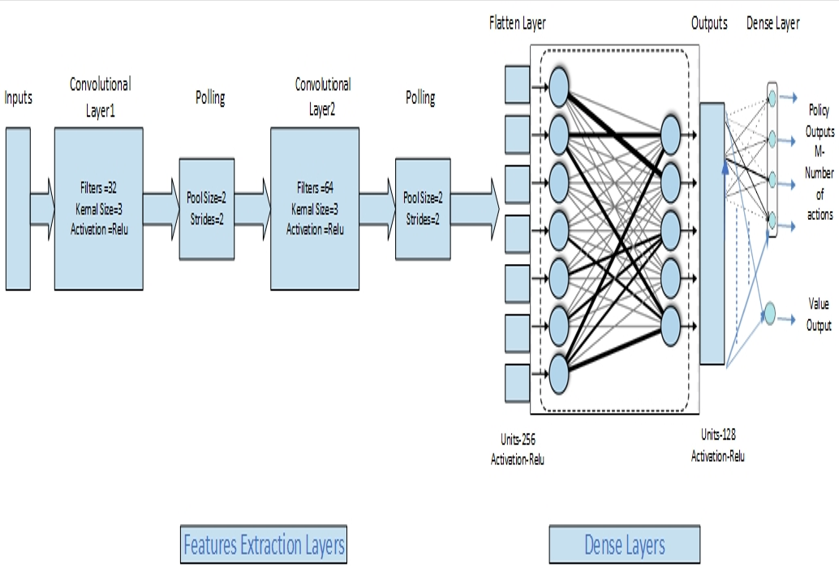
Intrusion detection is crucial for securing Industrial Internet of Things (IIoT) networks, especially within edge computing environments. Traditional Intrusion Detection Systems (IDSs) struggle with the complexity and dynamic nature of IIoT networks, where increasing intrusion classes make classification tasks more challenging. While the Asynchronous Advantage Actor-Critic (A3C) algorithm has shown promise in reinforcement learning-based IDSs, previous A3C implementations suffer from slow convergence, high variance, unstable gradient updates, and inefficient parameter synchronization. These issues limit their ability to accurately classify diverse attack patterns, particularly underrepresented intrusion types. To address these challenges, this research introduces an Enhanced A3C (EA3C) using an enhanced convolutional neural network (CNN) structure to significantly improve feature representation compared to traditional fully connected networks from the dataset before passing them to the policy and value networks. Additionally, gradient clipping will be applied to prevent exploding gradients, and bootstrapping-based reward handling will be used to enhance policy and value estimation for better long-term learning and improved intrusion detection performance. The proposed approach is evaluated using the X-IIoTID dataset, which is a comprehensive benchmark that is effective in detecting a wide range of cyber threats in IIoT environments. Experimental results indicate that the EA3C algorithm significantly outperforms Decision Tree (DT), Adversarial Environment Reinforcement Learning (AERL), Double Deep Q-Network (DDQN), and traditional A3C algorithms, particularly in identifying underrepresented attack classes. The results of EA3C show that its weighted Accuracy, Precision, Recall, and F1-score exceeded 0.98, making it suitable for practical use with the increasing number of labeled classes of cyber-attacks. Although these results are promising, this algorithm needs further improvement, especially for attacks with very small samples or attacks that occur for the first time, such as zero-day attacks.
Abdulssalm M Khako, Sharaf A Alhomdy (2025). Enhanced Asynchronous Advantage Actor-Critic (EA3C) Algorithm for Intrusion Detection in IIoT Environment. Sana'a University Journal of Applied Sciences and Technology, 898-914. DOI: https://doi.org/10.59628/jast.v3i3.1681
Abdulssalm M Khako, Sharaf A Alhomdy . “Enhanced Asynchronous Advantage Actor-Critic (EA3C) Algorithm for Intrusion Detection in IIoT Environment.” Sana'a University Journal of Applied Sciences and Technology, 2025, pp. 898-914. https://doi.org/10.59628/jast.v3i3.1681. Accessed 31 Oct. 2026.
Abdulssalm M Khako, Sharaf A Alhomdy . 2025. “Enhanced Asynchronous Advantage Actor-Critic (EA3C) Algorithm for Intrusion Detection in IIoT Environment.” Sana'a University Journal of Applied Sciences and Technology : 898-914. DOI: https://doi.org/10.59628/jast.v3i3.1681
Abdulssalm M Khako, Sharaf A Alhomdy (2025) ‘Enhanced Asynchronous Advantage Actor-Critic (EA3C) Algorithm for Intrusion Detection in IIoT Environment’, Sana'a University Journal of Applied Sciences and Technology, pp. 898-914. doi: 10.59628/jast.v3i3.1681
@article{jast2025_art1681,
    author  = {Abdulssalm M Khako, Sharaf A Alhomdy },
    title   = {Enhanced Asynchronous Advantage Actor-Critic (EA3C) Algorithm for Intrusion Detection in IIoT Environment},
    journal = {Sana'a University Journal of Applied Sciences and Technology},    year    = {2025},    month   = {June},    pages   = {898-914},    doi     = {10.59628/jast.v3i3.1681},
    url     = {https://doi.org/10.59628/jast.v3i3.1681},}
Enhanced Asynchronous Advantage Actor-Critic (EA3C) Algorithm for Intrusion Detection in IIoT Environment
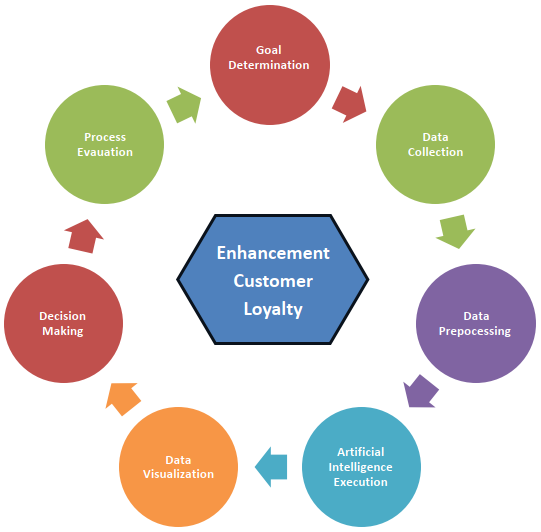
Artificial intelligence (AI) significantly enhances our daily lives, driving many service and financial institutions to seek optimal utilization of it. This paper addresses the problem, which is the inability of some institutions, such as banks, to satisfy customers using outdated methods and solely focusing on acquiring new customers instead of prioritizing customer retention that would be more effective and profitable to them. The main object of this paper is to enhance the quality of service in banks by proposing an intelligent model that leverages customer data to improve services and foster customer loyalty. This paper was motivated by the limited research on customer churn in Yemen and the scarcity of simple intelligent models globally. The methodology employed in this paper includes an in-depth analysis of existing literature on customer churn. Finally, this paper provides a comprehensive and concise conclusion based on the findings.
Sultan Yahya AL-SULTAN, Ibrahim Ahmed Al-Baltah (2024). Enhancement Customer Loyalty Via Data Mining Techniques in Yemeni Banks: Review Study. Sana'a University Journal of Applied Sciences and Technology, 348-354. DOI: https://doi.org/10.59628/jast.v2i4.1059
Sultan Yahya AL-SULTAN, Ibrahim Ahmed Al-Baltah . “Enhancement Customer Loyalty Via Data Mining Techniques in Yemeni Banks: Review Study.” Sana'a University Journal of Applied Sciences and Technology, 2024, pp. 348-354. https://doi.org/10.59628/jast.v2i4.1059. Accessed 31 Oct. 2026.
Sultan Yahya AL-SULTAN, Ibrahim Ahmed Al-Baltah . 2024. “Enhancement Customer Loyalty Via Data Mining Techniques in Yemeni Banks: Review Study.” Sana'a University Journal of Applied Sciences and Technology : 348-354. DOI: https://doi.org/10.59628/jast.v2i4.1059
Sultan Yahya AL-SULTAN, Ibrahim Ahmed Al-Baltah (2024) ‘Enhancement Customer Loyalty Via Data Mining Techniques in Yemeni Banks: Review Study’, Sana'a University Journal of Applied Sciences and Technology, pp. 348-354. doi: 10.59628/jast.v2i4.1059
@article{jast2024_art1059,
    author  = {Sultan Yahya AL-SULTAN, Ibrahim Ahmed Al-Baltah },
    title   = {Enhancement Customer Loyalty Via Data Mining Techniques in Yemeni Banks: Review Study},
    journal = {Sana'a University Journal of Applied Sciences and Technology},    year    = {2024},    month   = {September},    pages   = {348-354},    doi     = {10.59628/jast.v2i4.1059},
    url     = {https://doi.org/10.59628/jast.v2i4.1059},}
Enhancement Customer Loyalty Via Data Mining Techniques in Yemeni Banks: Review Study

Strong cybersecurity measures are becoming vitally crucial as cloud computing utilization rises. Advanced and dynamic cyberthreats are frequently difficult for traditional intrusion detection systems (IDS), which rely on preset signatures and rules, to identify. This study improves the detection of known and unknown intrusions in cloud systems using Machine Learning (ML) methods. The UNSW-NB15 dataset was used to train and assess a num- ber of ML classifiers, including Random Forest (RF), Decision Tree (DT), XGBoost, Naïve Bayes (NB), Support Vector Machine (SVM), Logistic Regression (LR), and Gradient Boosting (GB). It uses full feature training across several classifiers and also investigates the implications of feature reduction, in contrast to many other studies that mainly employ full feature sets to train RF alone. Critical metrics including accuracy (ACC), precision, recall, and F1-score are used to analyze classifier performance and provide a thorough evaluation of their efficacy in in- trusion detection. The findings show that using all characteristics the RF and DT obtained perfect accuracy (1.00). In the case of less characteristics when using feature selection techniques (RF-based selection, information gain, or mutual information), the RF retained the best accuracy (0.94), whereas NB performed the worst overall. This study emphasizes the significance of feature selection in enhancing IDS performance and shows that ML-based techniques may greatly increase threat detection in cloud settings, even when feature dimensionality is lowered.
Khawla Ali Maodah, Fursan Thabit, Sharaf Alhomdy (2025). Enhancing Intrusion Detection System in cloud computing Using Machine Learning Techniqueschine Learning Techniques. Sana'a University Journal of Applied Sciences and Technology, 1203-1221. DOI: https://doi.org/10.59628/jast.v3i5.1777
Khawla Ali Maodah, Fursan Thabit, Sharaf Alhomdy . “Enhancing Intrusion Detection System in cloud computing Using Machine Learning Techniqueschine Learning Techniques.” Sana'a University Journal of Applied Sciences and Technology, 2025, pp. 1203-1221. https://doi.org/10.59628/jast.v3i5.1777. Accessed 31 Oct. 2026.
Khawla Ali Maodah, Fursan Thabit, Sharaf Alhomdy . 2025. “Enhancing Intrusion Detection System in cloud computing Using Machine Learning Techniqueschine Learning Techniques.” Sana'a University Journal of Applied Sciences and Technology : 1203-1221. DOI: https://doi.org/10.59628/jast.v3i5.1777
Khawla Ali Maodah, Fursan Thabit, Sharaf Alhomdy (2025) ‘Enhancing Intrusion Detection System in cloud computing Using Machine Learning Techniqueschine Learning Techniques’, Sana'a University Journal of Applied Sciences and Technology, pp. 1203-1221. doi: 10.59628/jast.v3i5.1777
@article{jast2025_art1777,
    author  = {Khawla Ali Maodah, Fursan Thabit, Sharaf Alhomdy },
    title   = {Enhancing Intrusion Detection System in cloud computing Using Machine Learning Techniqueschine Learning Techniques},
    journal = {Sana'a University Journal of Applied Sciences and Technology},    year    = {2025},    month   = {October},    pages   = {1203-1221},    doi     = {10.59628/jast.v3i5.1777},
    url     = {https://doi.org/10.59628/jast.v3i5.1777},}
Enhancing Intrusion Detection System in cloud computing Using Machine Learning Techniqueschine Learning Techniques
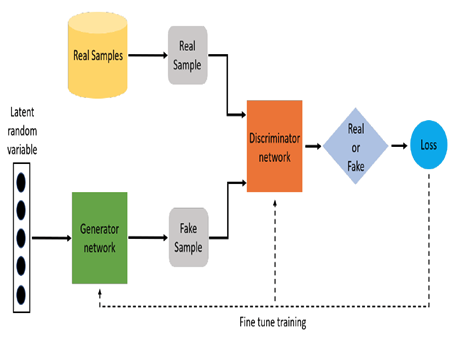
Generative adversarial networks (GANs) represent a ground-breaking advancement in artificial intelligence, revolutionizing data generation and content creation. This systematic review critically analyses literature from 2019-2024, sourced from major databases like IEEE Xplore and Scopus, to go beyond descriptive surveys and provide a synthesized, critical evaluation. We identify a pivotal gap in the existing literature: a frequent disconnect between reporting technical advancements and examining their profound ethical and societal implications. Our analysis yields several integrated insights. First, while GAN applications predominantly excel in visual content generation with architectures like StyleGAN and BigGAN achieving remarkable progress in photorealistic image and video synthesis their efficacy is highly application-specific, revealing significant trade-offs in stability and diversity in domains such as medical imaging and real-time video processing. Second, persistent core challenges like training instability and mode collapse continue to drive architectural innovations; however, we critically examine how solutions like Wasserstein loss or minibatch discrimination demonstrate varying effectiveness and limitations across different tasks and datasets. Third, and most critically, we argue that ethical concerns, particularly regarding deepfakes and data bias, are not peripheral issues but are intrinsically linked to architectural choices and the quality of training data. The key contribution of this review is its novel, integrated framework for evaluating GANs, which concurrently assesses architectural efficacy, application-specific maturity, and associated ethical risks. This holistic and critical synthesis provides researchers with a nuanced reference and outlines clear, responsible directions for future GAN development, emphasizing the need for models that are not only more powerful but also more robust, fair, and accountable.
Samah Ahmed Mohammed AlSarori, Ammar T. Zahary (2026). Generative Adversarial Networks for Visual Content: A Comprehensive Review of Image and Video Synthesis, Challenges, and Ethical Implications. Sana'a University Journal of Applied Sciences and Technology, 1552-1579. DOI: https://doi.org/10.59628/jast.v4i1.2100
Samah Ahmed Mohammed AlSarori, Ammar T. Zahary . “Generative Adversarial Networks for Visual Content: A Comprehensive Review of Image and Video Synthesis, Challenges, and Ethical Implications.” Sana'a University Journal of Applied Sciences and Technology, 2026, pp. 1552-1579. https://doi.org/10.59628/jast.v4i1.2100. Accessed 31 Oct. 2026.
Samah Ahmed Mohammed AlSarori, Ammar T. Zahary . 2026. “Generative Adversarial Networks for Visual Content: A Comprehensive Review of Image and Video Synthesis, Challenges, and Ethical Implications.” Sana'a University Journal of Applied Sciences and Technology : 1552-1579. DOI: https://doi.org/10.59628/jast.v4i1.2100
Samah Ahmed Mohammed AlSarori, Ammar T. Zahary (2026) ‘Generative Adversarial Networks for Visual Content: A Comprehensive Review of Image and Video Synthesis, Challenges, and Ethical Implications’, Sana'a University Journal of Applied Sciences and Technology, pp. 1552-1579. doi: 10.59628/jast.v4i1.2100
@article{jast2026_art2100,
    author  = {Samah Ahmed Mohammed AlSarori, Ammar T. Zahary },
    title   = {Generative Adversarial Networks for Visual Content: A Comprehensive Review of Image and Video Synthesis, Challenges, and Ethical Implications},
    journal = {Sana'a University Journal of Applied Sciences and Technology},    year    = {2026},    month   = {January},    pages   = {1552-1579},    doi     = {10.59628/jast.v4i1.2100},
    url     = {https://doi.org/10.59628/jast.v4i1.2100},}
Generative Adversarial Networks for Visual Content: A Comprehensive Review of Image and Video Synthesis, Challenges, and Ethical Implications
The field of sentiment analysis of Arabic scripts remains a major challenge due to the features, characteristics, and complexity of the Arabic language. Few studies on Arabic Sentiment Analysis (ASA) have been conducted to the best of our knowledge when compared to English or other Latin languages. In addition, for ASA, very few studies have been conducted regarding the comments of the users (customers) of the apps available on the Google Play Store within various mobile application reviews. Most of the current studies have been conducted on datasets collected from Twitter user comments. In this paper, we propose a new approach to the analysis of sentiment in Arabic script based on the comments dataset of users of some mobile applications available on the Google Play Store. The proposed approach involves improving algorithms such as the Levenshtein distance (LD) algorithm for data preprocessing and then combining it with the K-Nearest Neighbor (K-NN) algorithm. Through the proposed approach, the results of the experiment were shown, investigating the impact of utilizing the K-NN and LD algorithms for ASA on mobile applications effectively. The experiments were carried out. The K-NN with LD algorithm has gained a better level of evaluation compared to the K-NN algorithm. K-NN with LD algorithm has achieved the highest accuracy, recall, precision, and F-score, which were 83.11% in accuracy, 66.30% in recall, 85.10% in precision, and 74.53% in f-score evaluation measure when =3.
Ahmed A. Al-Shalabi, Salah Alhagree, Ghaleb Al-Gaphari, Fahd Alqasemi (2023). Investigating the Impact of Utilizing the K-Nearest Neighbor and Levenshtein Distance Algorithms for Arabic Sentiment Analysis on Mobile Applications . Sana'a University Journal of Applied Sciences and Technology. DOI: https://doi.org/10.59628/jast.v1i2.164
Ahmed A. Al-Shalabi, Salah Alhagree, Ghaleb Al-Gaphari, Fahd Alqasemi . “Investigating the Impact of Utilizing the K-Nearest Neighbor and Levenshtein Distance Algorithms for Arabic Sentiment Analysis on Mobile Applications .” Sana'a University Journal of Applied Sciences and Technology, 2023, https://doi.org/10.59628/jast.v1i2.164. Accessed 31 Oct. 2026.
Ahmed A. Al-Shalabi, Salah Alhagree, Ghaleb Al-Gaphari, Fahd Alqasemi . 2023. “Investigating the Impact of Utilizing the K-Nearest Neighbor and Levenshtein Distance Algorithms for Arabic Sentiment Analysis on Mobile Applications .” Sana'a University Journal of Applied Sciences and Technology DOI: https://doi.org/10.59628/jast.v1i2.164
Ahmed A. Al-Shalabi, Salah Alhagree, Ghaleb Al-Gaphari, Fahd Alqasemi (2023) ‘Investigating the Impact of Utilizing the K-Nearest Neighbor and Levenshtein Distance Algorithms for Arabic Sentiment Analysis on Mobile Applications ’, Sana'a University Journal of Applied Sciences and Technology. doi: 10.59628/jast.v1i2.164
@article{jast2023_art164,
    author  = {Ahmed A. Al-Shalabi, Salah Alhagree, Ghaleb Al-Gaphari, Fahd Alqasemi },
    title   = {Investigating the Impact of Utilizing the K-Nearest Neighbor and Levenshtein Distance Algorithms for Arabic Sentiment Analysis on Mobile Applications },
    journal = {Sana'a University Journal of Applied Sciences and Technology},    year    = {2023},    month   = {April},    doi     = {10.59628/jast.v1i2.164},
    url     = {https://doi.org/10.59628/jast.v1i2.164},}
Investigating the Impact of Utilizing the K-Nearest Neighbor and Levenshtein Distance Algorithms for Arabic Sentiment Analysis on Mobile Applications
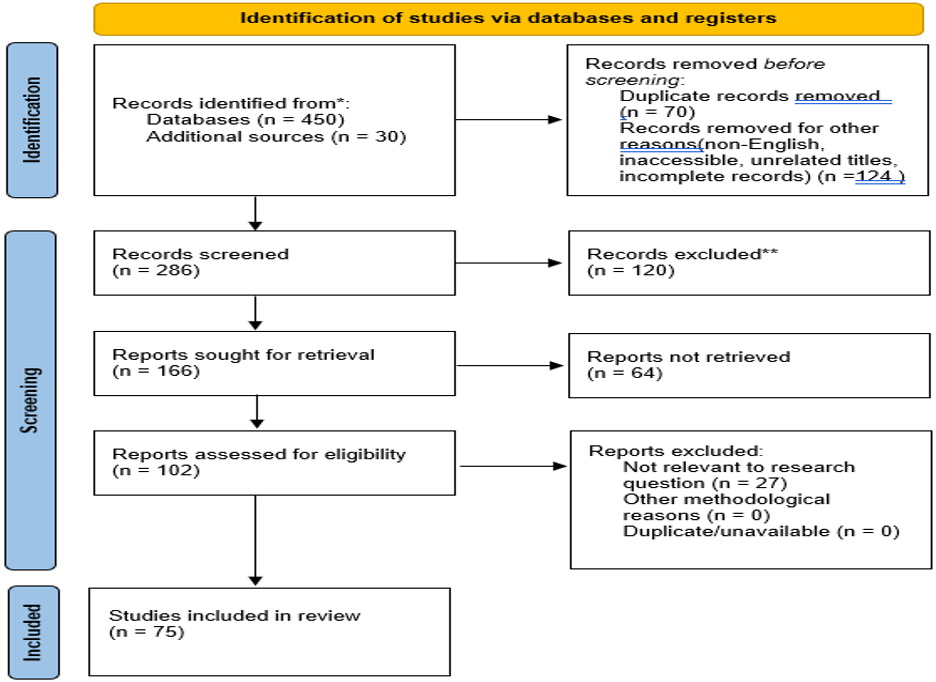
The rapid advancement of Generative Artificial Intelligence (GAI) has led to the proliferation of deepfake media, posing significant threats to digital security, privacy, and information integrity. To overcome this challenge, substantial research efforts have been directed toward developing automated detection techniques using deep learning methodologies. This study presents a comprehensive survey of deep learning-based deepfake detection methods, emphasizing lightweight and hybrid architectures designed for real-time deployment. The survey systematically categorizes the landscape of deepfake generation techniques and evaluates state-of-the-art detection frameworks, including: classical CNNs, efficient backbone architectures (MobileNet, EfficientNet), and spatiotemporal models (CNN LSTM/GRU). Furthermore, this study examines model compression techniques— including pruning and quantization — essential for resource-constrained deployment, and provides a structured analysis of benchmark datasets, major detection architecture categories, and persistent research gaps. By critically examining the trade-off between detection accuracy and computational latency, this paper identifies key open challenges and concludes by highlighting a research gap for probabilistically robust, lightweight frameworks, offering a roadmap for future research toward reliable, real-time deepfake forensics in unconstrained environments.
Azhar Abdulmughni, Nagi AL-Shaibany (2026). Lightweight Hybrid Deep Learning Models for Real-Time Deepfake Video Detection: A Comprehensive Survey. Sana'a University Journal of Applied Sciences and Technology, 2379-2389. DOI: https://doi.org/10.59628/jast.v4i7.3069
Azhar Abdulmughni, Nagi AL-Shaibany . “Lightweight Hybrid Deep Learning Models for Real-Time Deepfake Video Detection: A Comprehensive Survey.” Sana'a University Journal of Applied Sciences and Technology, 2026, pp. 2379-2389. https://doi.org/10.59628/jast.v4i7.3069. Accessed 31 Oct. 2026.
Azhar Abdulmughni, Nagi AL-Shaibany . 2026. “Lightweight Hybrid Deep Learning Models for Real-Time Deepfake Video Detection: A Comprehensive Survey.” Sana'a University Journal of Applied Sciences and Technology : 2379-2389. DOI: https://doi.org/10.59628/jast.v4i7.3069
Azhar Abdulmughni, Nagi AL-Shaibany (2026) ‘Lightweight Hybrid Deep Learning Models for Real-Time Deepfake Video Detection: A Comprehensive Survey’, Sana'a University Journal of Applied Sciences and Technology, pp. 2379-2389. doi: 10.59628/jast.v4i7.3069
@article{jast2026_art3069,
    author  = {Azhar Abdulmughni, Nagi AL-Shaibany },
    title   = {Lightweight Hybrid Deep Learning Models for Real-Time Deepfake Video Detection: A Comprehensive Survey},
    journal = {Sana'a University Journal of Applied Sciences and Technology},    year    = {2026},    month   = {July},    pages   = {2379-2389},    doi     = {10.59628/jast.v4i7.3069},
    url     = {https://doi.org/10.59628/jast.v4i7.3069},}
Lightweight Hybrid Deep Learning Models for Real-Time Deepfake Video Detection: A Comprehensive Survey
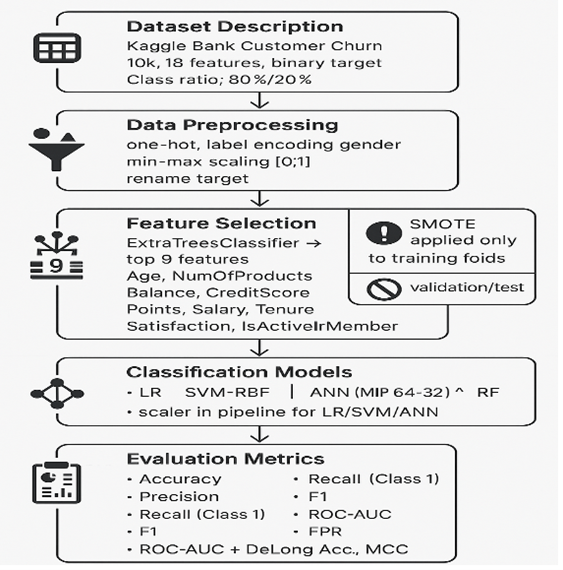
Predicting customer churn in retail banking is essential for sustaining profitability. This study compares four supervised machine-learning models—Logistic Regression (LR), Support Vector Machine (SVM), Random Forest (RF), and Artificial Neural Network (ANN)—using the publicly available bank customer churn dataset from Kaggle (10,000 records, 18 attributes; publicly available at Kaggle repository. Data preprocessing included one-hot encoding for categorical variables, label encoding for gender, and feature selection via an ExtraTreesClassifier retaining nine informative predictors (e.g., age, credit score, balance). To address class imbalance (≈80% nonchurners vs. 20% churners), models were trained and evaluated with and without the Synthetic Minority Oversampling Technique (SMOTE), which was applied only to the training folds under stratified 5-fold cross-validation. Evaluation metrics comprised accuracy, precision, recall (for churn class), F1-score, ROC–AUC, and PR–AUC. RF achieved the best balance between recall (0.484 imbalanced; 0.619 balanced) and accuracy (0.867 imbalanced), while LR with SMOTE attained the highest recall (0.715) at the cost of reduced accuracy (0.718). Overall, the results highlight RF as the most robust model across both distributions and emphasize the importance of imbalance-aware evaluation in bank churn prediction.
Ibrahim Ahmed Al-Baltah, Sultan Yahya Al-Sultan (2026). Machine Learning Algorithms for Customer Churn Prediction in the Banking Sector: A Comparative Study. Sana'a University Journal of Applied Sciences and Technology, 1580-1595. DOI: https://doi.org/10.59628/jast.v4i1.2302
Ibrahim Ahmed Al-Baltah, Sultan Yahya Al-Sultan . “Machine Learning Algorithms for Customer Churn Prediction in the Banking Sector: A Comparative Study.” Sana'a University Journal of Applied Sciences and Technology, 2026, pp. 1580-1595. https://doi.org/10.59628/jast.v4i1.2302. Accessed 31 Oct. 2026.
Ibrahim Ahmed Al-Baltah, Sultan Yahya Al-Sultan . 2026. “Machine Learning Algorithms for Customer Churn Prediction in the Banking Sector: A Comparative Study.” Sana'a University Journal of Applied Sciences and Technology : 1580-1595. DOI: https://doi.org/10.59628/jast.v4i1.2302
Ibrahim Ahmed Al-Baltah, Sultan Yahya Al-Sultan (2026) ‘Machine Learning Algorithms for Customer Churn Prediction in the Banking Sector: A Comparative Study’, Sana'a University Journal of Applied Sciences and Technology, pp. 1580-1595. doi: 10.59628/jast.v4i1.2302
@article{jast2026_art2302,
    author  = {Ibrahim Ahmed Al-Baltah, Sultan Yahya Al-Sultan },
    title   = {Machine Learning Algorithms for Customer Churn Prediction in the Banking Sector: A Comparative Study},
    journal = {Sana'a University Journal of Applied Sciences and Technology},    year    = {2026},    month   = {January},    pages   = {1580-1595},    doi     = {10.59628/jast.v4i1.2302},
    url     = {https://doi.org/10.59628/jast.v4i1.2302},}
Machine Learning Algorithms for Customer Churn Prediction in the Banking Sector: A Comparative Study

The development of large language models (LLMs) that are optimized to obey human commands is a significant advancement in the field of artificial intelligence (AI). One such model is ChatGPT (Chat Generative Pre-trained Transformer) from OpenAI, which has shown itself to be an extremely powerful tool for a variety of tasks such as conversation production, code debugging, and answering questions. Despite the fact that these models are praised for their multilingualism, little research has been done on how well they can analyze sentiment, especially in Arabic. We intend to close this gap by thoroughly assessing ChatGPT’s sentiment analysis skills, particularly with regard to Arabic text, in light of this constraint. When developing applications, recognizing the quality of the application and satisfying user needs are essential. Understanding user requirements is crucial to improving the quality of programs. The use of application review-based sentiment analysis (SA) is one efficient method for accomplishing this. The purpose of this study was to evaluate consumer perceptions of mobile banking apps so that they could be updated and maintained appropriately. Since mobile banking apps are now a necessary part of people’s lives, it is essential to examine user reviews of these apps for SA purposes. User reviews of banking mobile apps on the Google Play Store provided the dataset used in this study. We suggest a new active labeling technique for ChatGPT and examine the effects of using the ChatGPT variants for Arabic sentiment analysis (ASA). Using the accuracy, recall, precision, and F-score measures, we assess the performance of four machine learning (ML) approaches: Naive Bayes (NB), K-Nearest Neighbors (K-NN), Support Vector Machine (SVM), and Random Forest (FR). Additionally, we contrast six approaches to data labeling: manual human labeling, ChatGPT labeling by Assistant-Poe, ChatGPT labeling by Bing-Edge, ChatGPT labeling by Assistant-Poe with humans, ChatGPT labeling by Bing-Edge with humans, and ChatGPT labeling by Assistant-Poe with Bing-Edge. Using different Bing-Edge models for ASA, our experimental results demonstrate that the NB approach performed the best, with an accuracy of 91.22%, recall of 89.62%, precision of 88.90%, and F-score of 89.26%. Additionally, we contrast two approaches of data labeling for ASA: human labeling and labeling with Bard Google. Using Bard Google models for ASA, our experimental results demonstrate that the Naive Bayes technique outperformed the others, attaining an accuracy of 98.07%. Furthermore, when compared to alternative labeling techniques, our suggested active labeling strategy with ChatGPT produced greater accuracy. Our research indicates that our suggested active labeling method and the NB technique with multiple Bing-Edge models are useful strategies for ASA using ChatGPT. Our research provides important insights into efficient methods for this endeavor and advances the field of sentiment analysis in Arabic literature. Additionally, compared to other labeling techniques, our suggested active labeling method using Bard Google produced greater accuracy. According to the proposed study, our suggested active labeling strategy and the Naive Bayes technique with Bard Google models are both efficient methods for Arabic sentiment analysis utilizing Bard Google.
Salah Alhagree, Ghaleb Al-Gaphari (2025). Utilizing Machine Learning based on LLM for Arabic Sentiment Analysis in Assessing User Satisfaction with Mobile Banking Apps: A Case Study of Yemeni Banks. Sana'a University Journal of Applied Sciences and Technology, 645-662. DOI: https://doi.org/10.59628/jast.v3i1.1364
Salah Alhagree, Ghaleb Al-Gaphari . “Utilizing Machine Learning based on LLM for Arabic Sentiment Analysis in Assessing User Satisfaction with Mobile Banking Apps: A Case Study of Yemeni Banks.” Sana'a University Journal of Applied Sciences and Technology, 2025, pp. 645-662. https://doi.org/10.59628/jast.v3i1.1364. Accessed 31 Oct. 2026.
Salah Alhagree, Ghaleb Al-Gaphari . 2025. “Utilizing Machine Learning based on LLM for Arabic Sentiment Analysis in Assessing User Satisfaction with Mobile Banking Apps: A Case Study of Yemeni Banks.” Sana'a University Journal of Applied Sciences and Technology : 645-662. DOI: https://doi.org/10.59628/jast.v3i1.1364
Salah Alhagree, Ghaleb Al-Gaphari (2025) ‘Utilizing Machine Learning based on LLM for Arabic Sentiment Analysis in Assessing User Satisfaction with Mobile Banking Apps: A Case Study of Yemeni Banks’, Sana'a University Journal of Applied Sciences and Technology, pp. 645-662. doi: 10.59628/jast.v3i1.1364
@article{jast2025_art1364,
    author  = {Salah Alhagree, Ghaleb Al-Gaphari },
    title   = {Utilizing Machine Learning based on LLM for Arabic Sentiment Analysis in Assessing User Satisfaction with Mobile Banking Apps: A Case Study of Yemeni Banks},
    journal = {Sana'a University Journal of Applied Sciences and Technology},    year    = {2025},    month   = {February},    pages   = {645-662},    doi     = {10.59628/jast.v3i1.1364},
    url     = {https://doi.org/10.59628/jast.v3i1.1364},}
Utilizing Machine Learning based on LLM for Arabic Sentiment Analysis in Assessing User Satisfaction with Mobile Banking Apps: A Case Study of Yemeni Banks
Nothing has been published in this category yet.

Sana'a University Journal
of Applied Sciences and Technology
A peer-reviewed, open-access journal publishing high-quality research in applied sciences, engineering, and technology since 2023.
