Cloud Computing
Cloud computing technology is one of the hottest trends in information technology (IT) today. It is an important alternative to ensure high data processing and exchange. Thus, this technology can be used in the health sector to exchange patient medical records and health-related information. However, there are fears of the leakage of confidential patient data. This research studied two main contexts, the technological and organizational contexts, to find out the concerns about the use of cloud computing technology in the health sector. The results indicated the desire of hospitals to use cloud computing because of its enormous benefits in the health sector, with concern about data security with cloud computing. For this reason, this paper is proposed. In addition, a model for protecting and storing the patient's medical record using two technologies: cloud computing and blockchain. The model guarantees confidentiality, high protection, and privacy of patient information, and provides all beneficiaries of cloud computing with all the needed information when wanted.
Ebtisam Ali Abdullah Alselwi, Abdulmajed Ahmed Al-Khulaidi, Anwar Al-Shamiri (2023). A Hybrid Model for Using Cloud Computing and Blockchain Technologies to Protect Hospital Records. Sana'a University Journal of Applied Sciences and Technology. DOI: https://doi.org/10.59628/jast.v1i2.220
Ebtisam Ali Abdullah Alselwi, Abdulmajed Ahmed Al-Khulaidi, Anwar Al-Shamiri . “A Hybrid Model for Using Cloud Computing and Blockchain Technologies to Protect Hospital Records.” Sana'a University Journal of Applied Sciences and Technology, 2023, https://doi.org/10.59628/jast.v1i2.220. Accessed 31 Oct. 2026.
Ebtisam Ali Abdullah Alselwi, Abdulmajed Ahmed Al-Khulaidi, Anwar Al-Shamiri . 2023. “A Hybrid Model for Using Cloud Computing and Blockchain Technologies to Protect Hospital Records.” Sana'a University Journal of Applied Sciences and Technology DOI: https://doi.org/10.59628/jast.v1i2.220
Ebtisam Ali Abdullah Alselwi, Abdulmajed Ahmed Al-Khulaidi, Anwar Al-Shamiri (2023) ‘A Hybrid Model for Using Cloud Computing and Blockchain Technologies to Protect Hospital Records’, Sana'a University Journal of Applied Sciences and Technology. doi: 10.59628/jast.v1i2.220
@article{jast2023_art220,
    author  = {Ebtisam Ali Abdullah Alselwi, Abdulmajed Ahmed Al-Khulaidi, Anwar Al-Shamiri },
    title   = {A Hybrid Model for Using Cloud Computing and Blockchain Technologies to Protect Hospital Records},
    journal = {Sana'a University Journal of Applied Sciences and Technology},    year    = {2023},    month   = {April},    doi     = {10.59628/jast.v1i2.220},
    url     = {https://doi.org/10.59628/jast.v1i2.220},}
A Hybrid Model for Using Cloud Computing and Blockchain Technologies to Protect Hospital Records
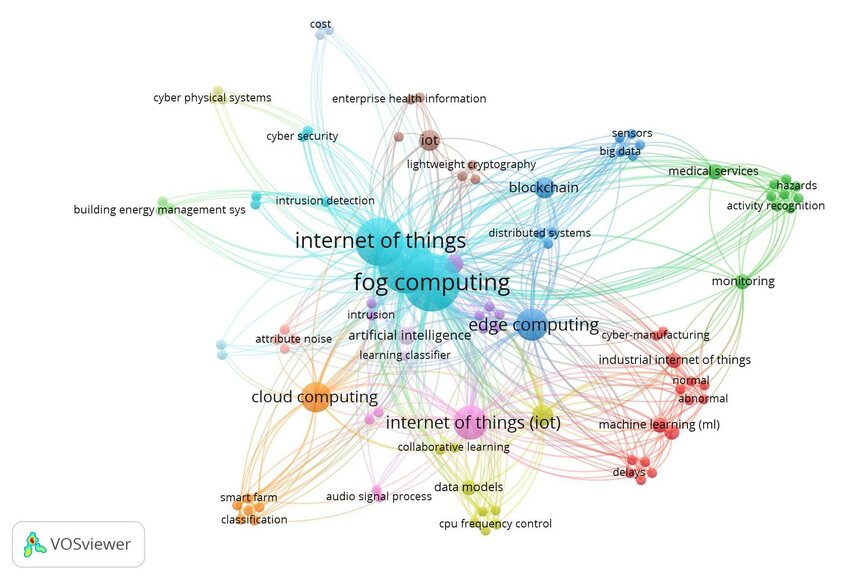
Nowadays, different structures are support clients to hosting their data via cloud computing. A fog-cloud is a part of cloud computing that decentralized computing pattern to get computing assets closer to the edge of the network, where data processed and analysed at the edge of the network, rather than being transmitted to joined data centre for handling, moreover, the Fog nodes could mobilization and compress web things for optimal speed. Numerous of normal techniques for protect Fog computing recently become ineffective because vulnerabilities and additional risks such as Man in the Middle (MitM), Ransomware, and Denial of the Service (DoS). To keep their security procedures, Fog systems of the forthcoming will need capabilities solution of artificial intelligence especially machine learning and deep learning. The emerging technology of fog cloud Paradigm is to must a nonstop updating and up-to-date security model. We here try to get out the core useful knowledge about Fog-cloud system and their issues and many of security application in one figure No. 1.
Mohammad Ahmed Qayed Al-Riyashi, Ammar T. Zahary, Fatek Saeed (2024). A Review for Fog-Cloud Security: Aspects, Attacks, Solutions, and Trends. Sana'a University Journal of Applied Sciences and Technology, 482-491. DOI: https://doi.org/10.59628/jast.v2i5.1128
Mohammad Ahmed Qayed Al-Riyashi, Ammar T. Zahary, Fatek Saeed . “A Review for Fog-Cloud Security: Aspects, Attacks, Solutions, and Trends.” Sana'a University Journal of Applied Sciences and Technology, 2024, pp. 482-491. https://doi.org/10.59628/jast.v2i5.1128. Accessed 31 Oct. 2026.
Mohammad Ahmed Qayed Al-Riyashi, Ammar T. Zahary, Fatek Saeed . 2024. “A Review for Fog-Cloud Security: Aspects, Attacks, Solutions, and Trends.” Sana'a University Journal of Applied Sciences and Technology : 482-491. DOI: https://doi.org/10.59628/jast.v2i5.1128
Mohammad Ahmed Qayed Al-Riyashi, Ammar T. Zahary, Fatek Saeed (2024) ‘A Review for Fog-Cloud Security: Aspects, Attacks, Solutions, and Trends’, Sana'a University Journal of Applied Sciences and Technology, pp. 482-491. doi: 10.59628/jast.v2i5.1128
@article{jast2024_art1128,
    author  = {Mohammad Ahmed Qayed Al-Riyashi, Ammar T. Zahary, Fatek Saeed },
    title   = {A Review for Fog-Cloud Security: Aspects, Attacks, Solutions, and Trends},
    journal = {Sana'a University Journal of Applied Sciences and Technology},    year    = {2024},    month   = {October},    pages   = {482-491},    doi     = {10.59628/jast.v2i5.1128},
    url     = {https://doi.org/10.59628/jast.v2i5.1128},}
A Review for Fog-Cloud Security: Aspects, Attacks, Solutions, and Trends

Strong cybersecurity measures are becoming vitally crucial as cloud computing utilization rises. Advanced and dynamic cyberthreats are frequently difficult for traditional intrusion detection systems (IDS), which rely on preset signatures and rules, to identify. This study improves the detection of known and unknown intrusions in cloud systems using Machine Learning (ML) methods. The UNSW-NB15 dataset was used to train and assess a num- ber of ML classifiers, including Random Forest (RF), Decision Tree (DT), XGBoost, Naïve Bayes (NB), Support Vector Machine (SVM), Logistic Regression (LR), and Gradient Boosting (GB). It uses full feature training across several classifiers and also investigates the implications of feature reduction, in contrast to many other studies that mainly employ full feature sets to train RF alone. Critical metrics including accuracy (ACC), precision, recall, and F1-score are used to analyze classifier performance and provide a thorough evaluation of their efficacy in in- trusion detection. The findings show that using all characteristics the RF and DT obtained perfect accuracy (1.00). In the case of less characteristics when using feature selection techniques (RF-based selection, information gain, or mutual information), the RF retained the best accuracy (0.94), whereas NB performed the worst overall. This study emphasizes the significance of feature selection in enhancing IDS performance and shows that ML-based techniques may greatly increase threat detection in cloud settings, even when feature dimensionality is lowered.
Khawla Ali Maodah, Fursan Thabit, Sharaf Alhomdy (2025). Enhancing Intrusion Detection System in cloud computing Using Machine Learning Techniqueschine Learning Techniques. Sana'a University Journal of Applied Sciences and Technology, 1203-1221. DOI: https://doi.org/10.59628/jast.v3i5.1777
Khawla Ali Maodah, Fursan Thabit, Sharaf Alhomdy . “Enhancing Intrusion Detection System in cloud computing Using Machine Learning Techniqueschine Learning Techniques.” Sana'a University Journal of Applied Sciences and Technology, 2025, pp. 1203-1221. https://doi.org/10.59628/jast.v3i5.1777. Accessed 31 Oct. 2026.
Khawla Ali Maodah, Fursan Thabit, Sharaf Alhomdy . 2025. “Enhancing Intrusion Detection System in cloud computing Using Machine Learning Techniqueschine Learning Techniques.” Sana'a University Journal of Applied Sciences and Technology : 1203-1221. DOI: https://doi.org/10.59628/jast.v3i5.1777
Khawla Ali Maodah, Fursan Thabit, Sharaf Alhomdy (2025) ‘Enhancing Intrusion Detection System in cloud computing Using Machine Learning Techniqueschine Learning Techniques’, Sana'a University Journal of Applied Sciences and Technology, pp. 1203-1221. doi: 10.59628/jast.v3i5.1777
@article{jast2025_art1777,
    author  = {Khawla Ali Maodah, Fursan Thabit, Sharaf Alhomdy },
    title   = {Enhancing Intrusion Detection System in cloud computing Using Machine Learning Techniqueschine Learning Techniques},
    journal = {Sana'a University Journal of Applied Sciences and Technology},    year    = {2025},    month   = {October},    pages   = {1203-1221},    doi     = {10.59628/jast.v3i5.1777},
    url     = {https://doi.org/10.59628/jast.v3i5.1777},}
Enhancing Intrusion Detection System in cloud computing Using Machine Learning Techniqueschine Learning Techniques

Fog computing is employed in widespread sectors; fog computing in higher education will probably enhance the operations of higher education institutions. However, the adoption of fog computing in this context is still in its early stages, and research in this area is limited. So, there appears to be a deficiency in the adoption of fog computing to enhance higher education institutions’ operations. The current paper implements a quantitative methodology the data was gathered through a questionnaire, where 103 surveys were collected from academic and information technology staff at nine universities in Sana’a, Yemen. This study aims to build a conceptual framework to identify factors that affect in adoption of fog technology by higher education institutes and investigate them. where the current study utilizes the Technological, Organizational, and Environmental (TOE) framework as a basis for analysis. Nine factors have been tested in this study, where the factors relative advantage, Compatibility, Security, privacy, Technology Readiness, TOP management, Regulatory Policy, Competitive Pressure, and Socio Culture have a positive effect. The proposed framework was empirically validated using multi-analytical structural equation modelling and artificial neural network (SEM-ANN) method. We identify the relative advantage of the first ranking (100%), Socio-Culture (67%), security (55%), compatibility (49%), privacy (45%), competitive pressure, and technology readiness are in the same ranking, with a score of 31%. Finally, the government regulation and top management support have (23%) and (29%), respectively, as the significant factors that affect in adoption of fog computing by higher education institutes.
Ammar Thabit Zahary, Baker Ali Alzenni (2025). Fog Computing Adoption for Higher Education Institutions: A Perspective of Multi-Analytical Structural Equation Modeling and Artificial Neural Networks. Sana'a University Journal of Applied Sciences and Technology, 777-794. DOI: https://doi.org/10.59628/jast.v3i3.1558
Ammar Thabit Zahary, Baker Ali Alzenni . “Fog Computing Adoption for Higher Education Institutions: A Perspective of Multi-Analytical Structural Equation Modeling and Artificial Neural Networks.” Sana'a University Journal of Applied Sciences and Technology, 2025, pp. 777-794. https://doi.org/10.59628/jast.v3i3.1558. Accessed 31 Oct. 2026.
Ammar Thabit Zahary, Baker Ali Alzenni . 2025. “Fog Computing Adoption for Higher Education Institutions: A Perspective of Multi-Analytical Structural Equation Modeling and Artificial Neural Networks.” Sana'a University Journal of Applied Sciences and Technology : 777-794. DOI: https://doi.org/10.59628/jast.v3i3.1558
Ammar Thabit Zahary, Baker Ali Alzenni (2025) ‘Fog Computing Adoption for Higher Education Institutions: A Perspective of Multi-Analytical Structural Equation Modeling and Artificial Neural Networks’, Sana'a University Journal of Applied Sciences and Technology, pp. 777-794. doi: 10.59628/jast.v3i3.1558
@article{jast2025_art1558,
    author  = {Ammar Thabit Zahary, Baker Ali Alzenni },
    title   = {Fog Computing Adoption for Higher Education Institutions: A Perspective of Multi-Analytical Structural Equation Modeling and Artificial Neural Networks},
    journal = {Sana'a University Journal of Applied Sciences and Technology},    year    = {2025},    month   = {June},    pages   = {777-794},    doi     = {10.59628/jast.v3i3.1558},
    url     = {https://doi.org/10.59628/jast.v3i3.1558},}
Fog Computing Adoption for Higher Education Institutions: A Perspective of Multi-Analytical Structural Equation Modeling and Artificial Neural Networks
Nothing has been published in this category yet.

Sana'a University Journal
of Applied Sciences and Technology
A peer-reviewed, open-access journal publishing high-quality research in applied sciences, engineering, and technology since 2023.
