
The international trade of livestock plays a significant role in the global dissemination of transboundary animal diseases and associated crisis risks. Brucellosis, a silent zoonotic transboundary disease, affects most live- stock species. This study investigated the prevalence of brucellosis among camels, cattle, sheep, and goats exported from Djibouti and Somalia to Yemen. From April 2024 to April 2025, 1500 blood samples were tested using WOAH-officially recognized sero agglutination techniques. Overall, 34 of 1500 samples (2.26%) tested positive for Brucella. Our analysis revealed significant differences in brucellosis positivity across animal types, age groups, and origins. Cattle showed the highest positivity rate, with 24 of 375 samples (6.4%). In contrast, sheep had 6 positive samples (1.6%), goats had 4 (1.1%), and camels had no positive samples (0%). When examining age, the older group (2-3 years) exhibited the highest prevalence, with 17 of 408 samples (4.2%). The positivity rates varied slightly across seasons, peaking in spring (3%) and autumn (2.6%), with lower rates in summer (2.2%) and winter (1.3%). Regarding origin, the Hirshabella district recorded the highest positivity in 13 of 125 samples (10.4%). This was followed by Southwest Somalia (5.5%) and Jubaland (4.4%). This study represents the first reported index of brucellosis among animals exported to Yemen, underscoring a significant risk, particularly for cattle and older animals. These findings highlight the urgent need for comprehensive epi- demiological investigations to provide policymakers with the data necessary to formulate effective regulations, thereby reducing the spread of this transboundary animal disease.
Salahadeen .N. Al-Emad , Abbas Mohammed Al-Azab, Naif Ahmed Al-Gabri (2025). Brucellosis among exported livestock from the Horn of Africa to Yemen: Seroprevalence study associated with risk factors. Sana'a University Journal of Applied Sciences and Technology, 1171-1177. DOI: https://doi.org/10.59628/jast.v3i5.1984
Salahadeen .N. Al-Emad , Abbas Mohammed Al-Azab, Naif Ahmed Al-Gabri . “Brucellosis among exported livestock from the Horn of Africa to Yemen: Seroprevalence study associated with risk factors.” Sana'a University Journal of Applied Sciences and Technology, 2025, pp. 1171-1177. https://doi.org/10.59628/jast.v3i5.1984. Accessed 30 Oct. 2026.
Salahadeen .N. Al-Emad , Abbas Mohammed Al-Azab, Naif Ahmed Al-Gabri . 2025. “Brucellosis among exported livestock from the Horn of Africa to Yemen: Seroprevalence study associated with risk factors.” Sana'a University Journal of Applied Sciences and Technology : 1171-1177. DOI: https://doi.org/10.59628/jast.v3i5.1984
Salahadeen .N. Al-Emad , Abbas Mohammed Al-Azab, Naif Ahmed Al-Gabri (2025) ‘Brucellosis among exported livestock from the Horn of Africa to Yemen: Seroprevalence study associated with risk factors’, Sana'a University Journal of Applied Sciences and Technology, pp. 1171-1177. doi: 10.59628/jast.v3i5.1984
@article{jast2025_art1984,
    author  = {Salahadeen .N. Al-Emad , Abbas Mohammed Al-Azab, Naif Ahmed Al-Gabri },
    title   = {Brucellosis among exported livestock from the Horn of Africa to Yemen: Seroprevalence study associated with risk factors},
    journal = {Sana'a University Journal of Applied Sciences and Technology},    year    = {2025},    month   = {October},    pages   = {1171-1177},    doi     = {10.59628/jast.v3i5.1984},
    url     = {https://doi.org/10.59628/jast.v3i5.1984},}
Brucellosis among exported livestock from the Horn of Africa to Yemen: Seroprevalence study associated with risk factors

Fats, a broad term for fats and oils, are sourced from either plants or animals. They function as energy storage and are crucial in various biological processes. This study aimed to examine the effects of tallow and olive oil on certain hematological and biochemical parameters in healthy albino rats. Twenty-eight male albino rats were divided into four groups, each containing seven animals. Groups given different treatments orally: Distilled water (control group), sheep tallow (Sh-T group), bovine tallow (B-T group), and olive oil (OO group). At the end of the third month, blood samples were collected from the fasting rats for hematological and biochemical analysis. Our results show that the oral administration of Sh-T, B-T, and OO did not cause significant changes in body weight (BW), food intake (FI) and level of serum of fibrinogen (FIB), albumin (ALB), C-reactive protein (CRP), or blood cell counts, including white blood cells (WBCs), red blood cells (RBCs), lymphocytes, neutrophils, platelets, and the erythrocyte sedimentation rate (ESR), when compared to the control group. However, total protein levels in the Sh-T and B-T groups, as well as globulin levels in the Sh-T and OO groups, showed significant increases, whereas the OO and B-T groups demonstrated a significant decrease in monocyte and eosinophil counts compared to the control group. It can be concluded that neither sheep nor bovine tallow nor olive oil negatively affects body weight or serum liver proteins, nor do they induce substantial hematological alterations
Arwa A. Al-Subari, Bushra Y. AL-Khatib, Abdul Haleem S. Al-Tamimi, Ateeq M. Al-Arami (2025). Effect of Tallow and Olive Oil on Some Biochemical and Hematological Parameters in Healthy Male Albino Rats. Sana'a University Journal of Applied Sciences and Technology, 915-921. DOI: https://doi.org/10.59628/jast.v3i3.1786
Arwa A. Al-Subari, Bushra Y. AL-Khatib, Abdul Haleem S. Al-Tamimi, Ateeq M. Al-Arami . “Effect of Tallow and Olive Oil on Some Biochemical and Hematological Parameters in Healthy Male Albino Rats.” Sana'a University Journal of Applied Sciences and Technology, 2025, pp. 915-921. https://doi.org/10.59628/jast.v3i3.1786. Accessed 30 Oct. 2026.
Arwa A. Al-Subari, Bushra Y. AL-Khatib, Abdul Haleem S. Al-Tamimi, Ateeq M. Al-Arami . 2025. “Effect of Tallow and Olive Oil on Some Biochemical and Hematological Parameters in Healthy Male Albino Rats.” Sana'a University Journal of Applied Sciences and Technology : 915-921. DOI: https://doi.org/10.59628/jast.v3i3.1786
Arwa A. Al-Subari, Bushra Y. AL-Khatib, Abdul Haleem S. Al-Tamimi, Ateeq M. Al-Arami (2025) ‘Effect of Tallow and Olive Oil on Some Biochemical and Hematological Parameters in Healthy Male Albino Rats’, Sana'a University Journal of Applied Sciences and Technology, pp. 915-921. doi: 10.59628/jast.v3i3.1786
@article{jast2025_art1786,
    author  = {Arwa A. Al-Subari, Bushra Y. AL-Khatib, Abdul Haleem S. Al-Tamimi, Ateeq M. Al-Arami },
    title   = {Effect of Tallow and Olive Oil on Some Biochemical and Hematological Parameters in Healthy Male Albino Rats},
    journal = {Sana'a University Journal of Applied Sciences and Technology},    year    = {2025},    month   = {June},    pages   = {915-921},    doi     = {10.59628/jast.v3i3.1786},
    url     = {https://doi.org/10.59628/jast.v3i3.1786},}
Effect of Tallow and Olive Oil on Some Biochemical and Hematological Parameters in Healthy Male Albino Rats
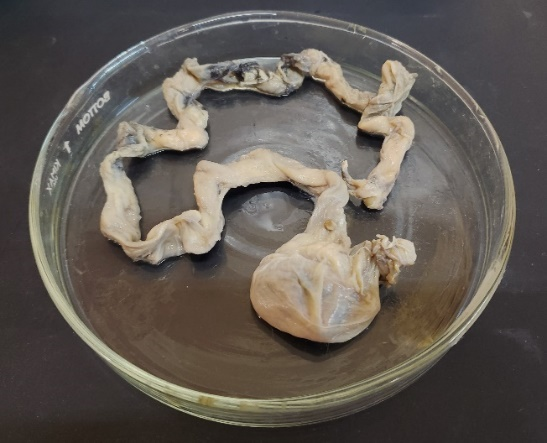
Information on fish feeding ecology is crucial for understanding trophic interactions, energy flow, and ecosystem dynamics in marine environments. Although the feeding ecology of several balistid species has been well documented, the trophic dynamics of the large-scale triggerfish, Canthidermis macrolepis, remain largely unstudied. To address this gap and define its ecological role, we investigated the diet and feeding intensity of C. macrolepis harvested from the Yemeni Red Sea coast between June and October 2025. Stomach content analysis (N = 57) was performed utilizing qualitative taxonomic identification and quantitative metrics, specifically frequency of occurrence (%F) and volumetric percentage composition (%C). The results characterize C. macrolepis as an active pelagic carnivore. The diet was predominantly composed of small teleosts, with zooplanktonic crustaceans serving as a critical secondary resource. Benthic invertebrates (sipunculids and worms), small mollusks, and macroalgae were present only as minor, opportunistic dietary components. Furthermore, feeding intensity was exceptionally high (Fullness Index: 98.25%; Vacuity Index: 1.75%), indicating continuous foraging activity. These findings establish C. macrolepis as a pelagic predator, differentiating its ecological niche from that of heavily benthic-dependent reef triggerfishes, and provide essential baseline trophic data to support regional ecosystem-based fisheries management.
Ebtisam F. Shamsan, Maryam A. Taher (2026). Feeding Ecology of the Large-Scale Triggerfish, Canthidermis macrolepis (Boulenger, 1888), from Yemeni Coastal Waters. Sana'a University Journal of Applied Sciences and Technology, 2612-2618. DOI: https://doi.org/10.59628/jast.v4i10.3435
Ebtisam F. Shamsan, Maryam A. Taher . “Feeding Ecology of the Large-Scale Triggerfish, Canthidermis macrolepis (Boulenger, 1888), from Yemeni Coastal Waters.” Sana'a University Journal of Applied Sciences and Technology, 2026, pp. 2612-2618. https://doi.org/10.59628/jast.v4i10.3435. Accessed 30 Oct. 2026.
Ebtisam F. Shamsan, Maryam A. Taher . 2026. “Feeding Ecology of the Large-Scale Triggerfish, Canthidermis macrolepis (Boulenger, 1888), from Yemeni Coastal Waters.” Sana'a University Journal of Applied Sciences and Technology : 2612-2618. DOI: https://doi.org/10.59628/jast.v4i10.3435
Ebtisam F. Shamsan, Maryam A. Taher (2026) ‘Feeding Ecology of the Large-Scale Triggerfish, Canthidermis macrolepis (Boulenger, 1888), from Yemeni Coastal Waters’, Sana'a University Journal of Applied Sciences and Technology, pp. 2612-2618. doi: 10.59628/jast.v4i10.3435
@article{jast2026_art3435,
    author  = {Ebtisam F. Shamsan, Maryam A. Taher },
    title   = {Feeding Ecology of the Large-Scale Triggerfish, Canthidermis macrolepis (Boulenger, 1888), from Yemeni Coastal Waters},
    journal = {Sana'a University Journal of Applied Sciences and Technology},    year    = {2026},    month   = {October},    pages   = {2612-2618},    doi     = {10.59628/jast.v4i10.3435},
    url     = {https://doi.org/10.59628/jast.v4i10.3435},}
Feeding Ecology of the Large-Scale Triggerfish, Canthidermis macrolepis (Boulenger, 1888), from Yemeni Coastal Waters
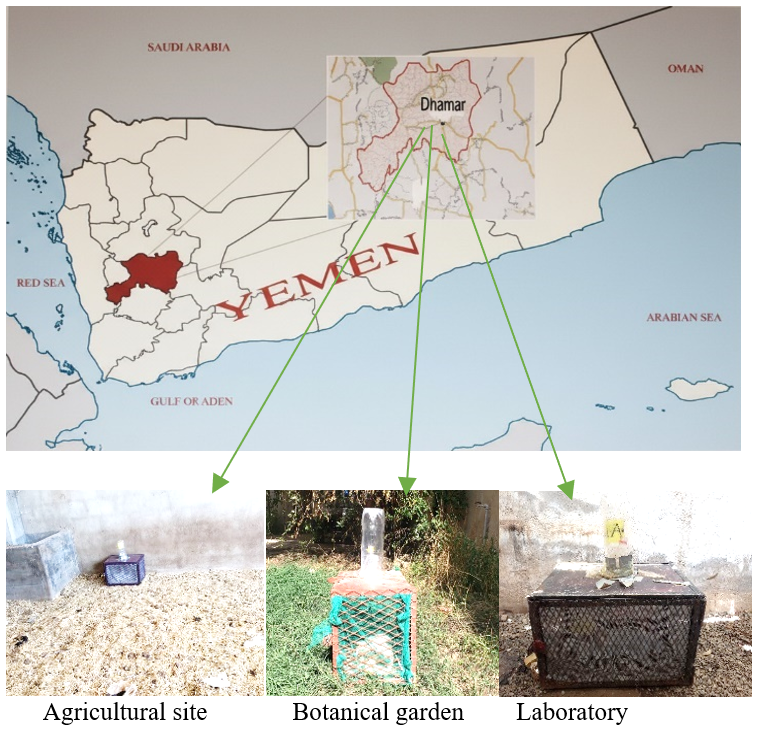
Forensic entomology is a branch of forensic science that utilizes insects to assist in criminal investigations. Building on the foundational principles of forensic entomology, this study investigates of entomofauna’s role in decomposing rabbit carcasses ( Oryctolagus cuniculus L.), across varied environments. Using a consistent collection and analysis protocol, we monitored the decomposition process and insect activity in three different environments in Dhamar City, Yemen. Two carcasses were outdoors: one in a botanical garden and another in an open agricultural area. The third was indoors in a laboratory at the Faculty of Agriculture at Thamar University. The research was conducted over two periods: September and November 2023, as well as October 2024. Urban environments, including both botanical gardens and controlled indoor settings, typically exhibit higher temperatures and lower humidity, which accelerates decomposition more than in agricultural sites. The dry stage was reached by day 30 in urban environments, whereas in agricultural areas, it took approximately 52 days. A total of 1270 adult insect specimens were collected, with outdoor habitats exhibiting the highest abundance. Chrysomya albiceps (Calliphoridae) was the dominant species at all sites in the early phases of decomposition, confirming its forensic usefulness in determining postmortem intervals (PMIs). This study describes insect succession resulting from carrion decomposition in both indoor and outdoor habitats in Dhamar City, Yemen. It establishes baseline data essential for estimating the post-mortem interval (PMI) in the locality.
Wed Abdullah Al Raeeini, Abbas Mohammed Al-Azab, Fahd Mohammed Abd Al Galil (2026). Forensic Insect Succession and Carrion Decomposition in Indoor and Outdoor Habitats:Implications for Post-mortem Interval Estimation in Dhamar, Yemen. Sana'a University Journal of Applied Sciences and Technology, 1903-1913. DOI: https://doi.org/10.59628/jast.v4i4.2778
Wed Abdullah Al Raeeini, Abbas Mohammed Al-Azab, Fahd Mohammed Abd Al Galil . “Forensic Insect Succession and Carrion Decomposition in Indoor and Outdoor Habitats:Implications for Post-mortem Interval Estimation in Dhamar, Yemen.” Sana'a University Journal of Applied Sciences and Technology, 2026, pp. 1903-1913. https://doi.org/10.59628/jast.v4i4.2778. Accessed 30 Oct. 2026.
Wed Abdullah Al Raeeini, Abbas Mohammed Al-Azab, Fahd Mohammed Abd Al Galil . 2026. “Forensic Insect Succession and Carrion Decomposition in Indoor and Outdoor Habitats:Implications for Post-mortem Interval Estimation in Dhamar, Yemen.” Sana'a University Journal of Applied Sciences and Technology : 1903-1913. DOI: https://doi.org/10.59628/jast.v4i4.2778
Wed Abdullah Al Raeeini, Abbas Mohammed Al-Azab, Fahd Mohammed Abd Al Galil (2026) ‘Forensic Insect Succession and Carrion Decomposition in Indoor and Outdoor Habitats:Implications for Post-mortem Interval Estimation in Dhamar, Yemen’, Sana'a University Journal of Applied Sciences and Technology, pp. 1903-1913. doi: 10.59628/jast.v4i4.2778
@article{jast2026_art2778,
    author  = {Wed Abdullah Al Raeeini, Abbas Mohammed Al-Azab, Fahd Mohammed Abd Al Galil },
    title   = {Forensic Insect Succession and Carrion Decomposition in Indoor and Outdoor Habitats:Implications for Post-mortem Interval Estimation in Dhamar, Yemen},
    journal = {Sana'a University Journal of Applied Sciences and Technology},    year    = {2026},    month   = {April},    pages   = {1903-1913},    doi     = {10.59628/jast.v4i4.2778},
    url     = {https://doi.org/10.59628/jast.v4i4.2778},}
Forensic Insect Succession and Carrion Decomposition in Indoor and Outdoor Habitats:Implications for Post-mortem Interval Estimation in Dhamar, Yemen
The study was carried out to evaluate the protective effects of Ziziphus Spina Christi (ZSC) leaves, fruits and seed extracts to ameliorate the adverse effects of hyperglycemia induced in Albino rats.
Ziziphus Spina Christi seeds, fruit and leaves extracts revealed positive results for carbohydrates, phenols, saponins, alkaloids, tannins, steroids, and flavonoids. High-fat diet intake has been associated with many pathological alterations in all studied parameters; one of these pathological alterations was hyperglycemia. Treatment of hyperglycemic rats with ZSC leaves, fruits and seeds extracts reduced these pathological alterations. Hyperglycemic rats were treated with ZSC seeds, fruit and leaves ethanolic extracts separately and in combination for 7 weeks. Results showed that the extracts succeeded in reducing the elevated glucose, insulin and HbA1C levels. On the other hand, the extracts improved histological alterations induced by a hyperlipidemic diet.
Elham A. S. Al-Shaibani, Dawlat Ali A. Al-Ameri, Mohammed A. Al-Hegami (2024). The Effect of Zizyphus spina-christi Extracts on hyperglycemia induced by hyperlipidemic diet in Albino rats. Sana'a University Journal of Applied Sciences and Technology, 1- 6. DOI: https://doi.org/10.59628/jast.v2i1.649
Elham A. S. Al-Shaibani, Dawlat Ali A. Al-Ameri, Mohammed A. Al-Hegami . “The Effect of Zizyphus spina-christi Extracts on hyperglycemia induced by hyperlipidemic diet in Albino rats.” Sana'a University Journal of Applied Sciences and Technology, 2024, pp. 1- 6. https://doi.org/10.59628/jast.v2i1.649. Accessed 30 Oct. 2026.
Elham A. S. Al-Shaibani, Dawlat Ali A. Al-Ameri, Mohammed A. Al-Hegami . 2024. “The Effect of Zizyphus spina-christi Extracts on hyperglycemia induced by hyperlipidemic diet in Albino rats.” Sana'a University Journal of Applied Sciences and Technology : 1- 6. DOI: https://doi.org/10.59628/jast.v2i1.649
Elham A. S. Al-Shaibani, Dawlat Ali A. Al-Ameri, Mohammed A. Al-Hegami (2024) ‘The Effect of Zizyphus spina-christi Extracts on hyperglycemia induced by hyperlipidemic diet in Albino rats’, Sana'a University Journal of Applied Sciences and Technology, pp. 1- 6. doi: 10.59628/jast.v2i1.649
@article{jast2024_art649,
    author  = {Elham A. S. Al-Shaibani, Dawlat Ali A. Al-Ameri, Mohammed A. Al-Hegami },
    title   = {The Effect of Zizyphus spina-christi Extracts on hyperglycemia induced by hyperlipidemic diet  in Albino rats},
    journal = {Sana'a University Journal of Applied Sciences and Technology},    year    = {2024},    month   = {February},    pages   = {1- 6},    doi     = {10.59628/jast.v2i1.649},
    url     = {https://doi.org/10.59628/jast.v2i1.649},}
The Effect of Zizyphus spina-christi Extracts on hyperglycemia induced by hyperlipidemic diet in Albino rats
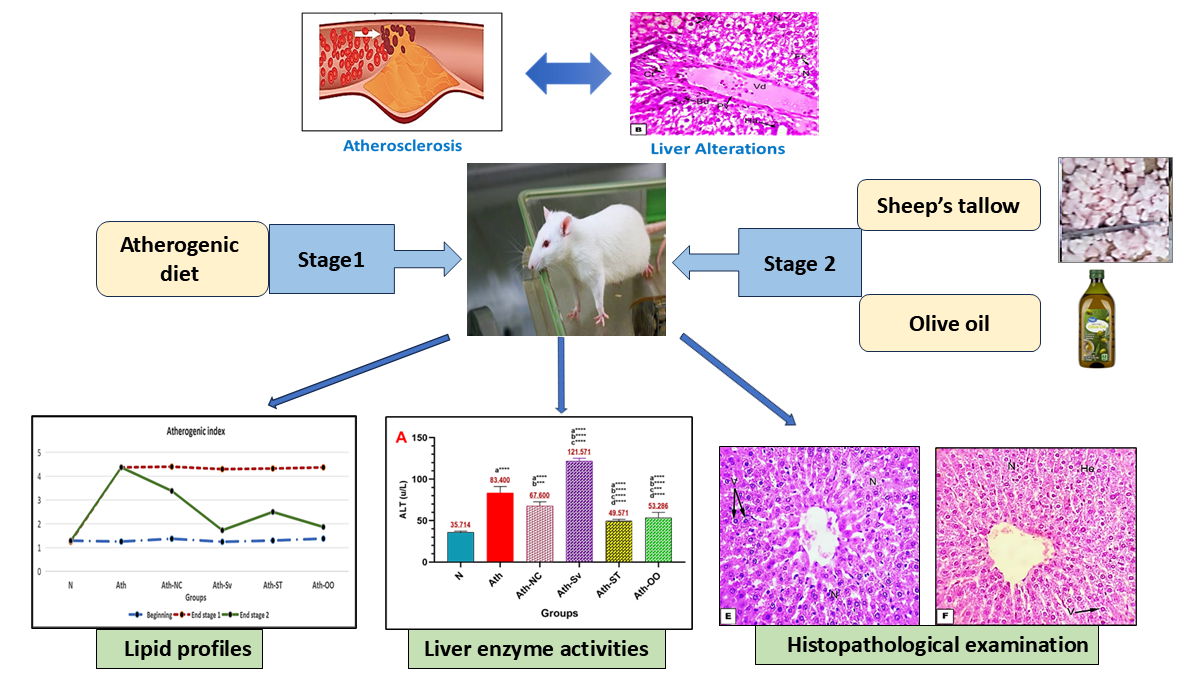
Background: Atherosclerosis is a chronic, multifactorial disease characterized by the accumulation of lipid-rich plaques within the arterial endothelium, frequently resulting in multi-organ morbidity. Given the central role of the liver as the primary metabolic hub for lipid homeostasis, this study investigated the therapeutic potential of olive oil (OO) and sheep tallow (ST) in mitigating atherosclerosis-associated hepatic structural and functional alterations.
Methodology: Atherosclerosis was experimentally induced in rats using an atherogenic diet (AGD). The subjects were randomized into six equal groups (n = 7 rats/group): normal baseline control, atherogenic positive control, untreated atherogenic negative control, and three experimental groups treated with simvastatin, ST, or OO. This study evaluated the serum lipid profiles, hepatic protein concentrations, and liver enzyme activities, along with comprehensive histopathological examinations of the hepatic tissues.
Results: AGD administration induced marked dyslipidemia and hepatic dysfunction. However, therapeutic interventions with OO and ST substantially ameliorated the disrupted serum lipid profiles. Furthermore, serum total protein and globulin levels exhibited highly significant improvements (p < 0.0001) following OO and ST administration. The elevated hepatic enzyme activities characteristic of atherogenic injury were significantly attenuated by both dietary fats, most notably by alanine aminotransferase (ALT; p < 0.0001). Histomorphological evaluations confirmed that OO and ST treatments promoted significant hepatocellular repair, considerably reducing necrosis, vacuolation, degeneration, and inflammatory infiltration, which were mainly observed in the untreated atherogenic group.
Conclusion: OO and ST administration in experimental rats exerted therapeutic and hepatoprotective effects, effectively restoring lipid homeostasis and ameliorating functional and structural hepatic alterations induced by atherosclerosis.
Bushra Yahya Hassan AL-Khatib, Arwa Ali AL-Subari (2026). The Therapeutic Effect of Olive Oil and Sheep Tallow on Liver Alterations Linked to Induced Atherosclerosis in Male Albino Rats. Sana'a University Journal of Applied Sciences and Technology, 2475-2486. DOI: https://doi.org/10.59628/jast.v4i9.3299
Bushra Yahya Hassan AL-Khatib, Arwa Ali AL-Subari . “The Therapeutic Effect of Olive Oil and Sheep Tallow on Liver Alterations Linked to Induced Atherosclerosis in Male Albino Rats.” Sana'a University Journal of Applied Sciences and Technology, 2026, pp. 2475-2486. https://doi.org/10.59628/jast.v4i9.3299. Accessed 30 Oct. 2026.
Bushra Yahya Hassan AL-Khatib, Arwa Ali AL-Subari . 2026. “The Therapeutic Effect of Olive Oil and Sheep Tallow on Liver Alterations Linked to Induced Atherosclerosis in Male Albino Rats.” Sana'a University Journal of Applied Sciences and Technology : 2475-2486. DOI: https://doi.org/10.59628/jast.v4i9.3299
Bushra Yahya Hassan AL-Khatib, Arwa Ali AL-Subari (2026) ‘The Therapeutic Effect of Olive Oil and Sheep Tallow on Liver Alterations Linked to Induced Atherosclerosis in Male Albino Rats’, Sana'a University Journal of Applied Sciences and Technology, pp. 2475-2486. doi: 10.59628/jast.v4i9.3299
@article{jast2026_art3299,
    author  = {Bushra Yahya Hassan AL-Khatib, Arwa Ali AL-Subari },
    title   = {The Therapeutic Effect of Olive Oil and Sheep Tallow on Liver Alterations Linked to Induced Atherosclerosis in Male Albino Rats},
    journal = {Sana'a University Journal of Applied Sciences and Technology},    year    = {2026},    month   = {September},    pages   = {2475-2486},    doi     = {10.59628/jast.v4i9.3299},
    url     = {https://doi.org/10.59628/jast.v4i9.3299},}
The Therapeutic Effect of Olive Oil and Sheep Tallow on Liver Alterations Linked to Induced Atherosclerosis in Male Albino Rats
Nothing has been published in this category yet.
Sana'a University Journal
of Applied Sciences and Technology
A peer-reviewed, open-access journal publishing high-quality research in applied sciences, engineering, and technology since 2023.
