Sana'a University Journal of Applied Sciences and Technology
The second volume - the sixth issue in the Sana'a University Journal of Applied Sciences and Technology
Article
How to Cite This Article
Mukhtar A. Nasher, Hussein A. Sultan (2025). Geochemistry and petrogenesis of some gabbroic intrusions invaded the basement rocks from Al-Maqatirah and Al-Ahkum areas, SE Taiz, Republic of Yemen. Sana'a University Journal of Applied Sciences and Technology, 557-576. DOI: https://doi.org/10.59628/jast.v3i1.1266
Mukhtar A. Nasher, Hussein A. Sultan . “Geochemistry and petrogenesis of some gabbroic intrusions invaded the basement rocks from Al-Maqatirah and Al-Ahkum areas, SE Taiz, Republic of Yemen.” Sana'a University Journal of Applied Sciences and Technology, 2025, pp. 557-576. https://doi.org/10.59628/jast.v3i1.1266. Accessed 6 Sep. 2026.
Mukhtar A. Nasher, Hussein A. Sultan . 2025. “Geochemistry and petrogenesis of some gabbroic intrusions invaded the basement rocks from Al-Maqatirah and Al-Ahkum areas, SE Taiz, Republic of Yemen.” Sana'a University Journal of Applied Sciences and Technology : 557-576. DOI: https://doi.org/10.59628/jast.v3i1.1266
Mukhtar A. Nasher, Hussein A. Sultan (2025) ‘Geochemistry and petrogenesis of some gabbroic intrusions invaded the basement rocks from Al-Maqatirah and Al-Ahkum areas, SE Taiz, Republic of Yemen’, Sana'a University Journal of Applied Sciences and Technology, pp. 557-576. doi: 10.59628/jast.v3i1.1266
@article{jast2025_art1266,
author = {Mukhtar A. Nasher, Hussein A. Sultan },
title = {Geochemistry and petrogenesis of some gabbroic intrusions invaded the basement rocks from Al-Maqatirah and Al-Ahkum areas, SE Taiz, Republic of Yemen},
journal = {Sana'a University Journal of Applied Sciences and Technology}, year = {2025}, month = {February}, pages = {557-576}, doi = {10.59628/jast.v3i1.1266},
url = {https://doi.org/10.59628/jast.v3i1.1266},}
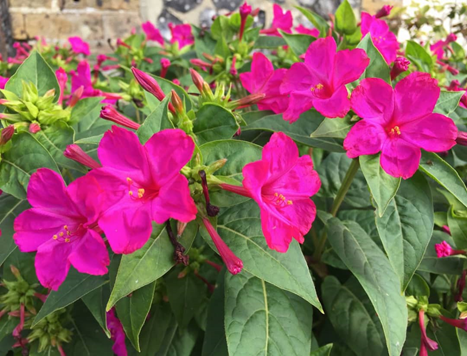
Phytochemical Screening, Antioxidant and Antimicrobial Activities of red and yellow flowered Mirabilis jalapa
Abstract
The phytochemical content, antioxidant capacity, and antimicrobial efficacy of leaf extracts from two forms of Mirabilis jalapa (M. jalapa) - red and yellow flowered- were investigated. Using the cold maceration method with 70% methanol, the presence of alkaloids, flavonoids, carbohydrate, protein, amino acid, phenol, tannins, saponins, , and steroids was confirmed. Fourier-transform infrared (FT-IR) spectrum analysis detected hydroxyl groups (OH), aromatic and aliphatic C-H bonds, aromatic C=C bonds, carbonyl group (C=O), amines (-C-N), and C-O group in both forms red and yellow leaves of M. jalapa.
The antioxidant activity assessed using the1,1-Diphenyl-2-picrylhydrazyl (DPPH) radical scavenging method showed higher free radical scavenging activities for the red -flowered leaves compared to the yellow-flowered ones at different concentrations. Four human pathogenic microorganisms; Staphylococcus aureus(S. aureus), Escherichia coli(E. coli), Pseudomonas aeruginosa(P. aeruginosa), and Candida albicans(C. albicans) were evaluated for antimicrobial activity by agar well diffusion method.The red-flowered form exhibited higher activity against the tested pathogens compared to the yellow form, likely due to its higher content of phenols and flavonoids in the methanol extracts. The minimum inhibitory concentration (MIC) was found to be 0.195 mg/ml against S. aureus and 0.049 mg/ml against E. coli and P. aeruginosa; for both forms, it was 0.025 mg/ml against C. albicans.
Keywords
How to Cite This Article
Amani A.M. Al-Gaadbi, Mutea A.S. Almoharrmy, Bushra .M. Alattab, Hassan M. Ibrahim, Maher A. Almaqtari, Fatma M. Al-Jawfi (2025). Phytochemical Screening, Antioxidant and Antimicrobial Activities of red and yellow flowered Mirabilis jalapa. Sana'a University Journal of Applied Sciences and Technology, 587-596. DOI: https://doi.org/10.59628/jast.v3i1.1437
Amani A.M. Al-Gaadbi, Mutea A.S. Almoharrmy, Bushra .M. Alattab, Hassan M. Ibrahim, Maher A. Almaqtari, Fatma M. Al-Jawfi . “Phytochemical Screening, Antioxidant and Antimicrobial Activities of red and yellow flowered Mirabilis jalapa.” Sana'a University Journal of Applied Sciences and Technology, 2025, pp. 587-596. https://doi.org/10.59628/jast.v3i1.1437. Accessed 6 Sep. 2026.
Amani A.M. Al-Gaadbi, Mutea A.S. Almoharrmy, Bushra .M. Alattab, Hassan M. Ibrahim, Maher A. Almaqtari, Fatma M. Al-Jawfi . 2025. “Phytochemical Screening, Antioxidant and Antimicrobial Activities of red and yellow flowered Mirabilis jalapa.” Sana'a University Journal of Applied Sciences and Technology : 587-596. DOI: https://doi.org/10.59628/jast.v3i1.1437
Amani A.M. Al-Gaadbi, Mutea A.S. Almoharrmy, Bushra .M. Alattab, Hassan M. Ibrahim, Maher A. Almaqtari, Fatma M. Al-Jawfi (2025) ‘Phytochemical Screening, Antioxidant and Antimicrobial Activities of red and yellow flowered Mirabilis jalapa’, Sana'a University Journal of Applied Sciences and Technology, pp. 587-596. doi: 10.59628/jast.v3i1.1437
@article{jast2025_art1437,
author = {Amani A.M. Al-Gaadbi, Mutea A.S. Almoharrmy, Bushra .M. Alattab, Hassan M. Ibrahim, Maher A. Almaqtari, Fatma M. Al-Jawfi },
title = {Phytochemical Screening, Antioxidant and Antimicrobial Activities of red and yellow flowered Mirabilis jalapa},
journal = {Sana'a University Journal of Applied Sciences and Technology}, year = {2025}, month = {February}, pages = {587-596}, doi = {10.59628/jast.v3i1.1437},
url = {https://doi.org/10.59628/jast.v3i1.1437},}
Big Data Formation, Reduction, and Its Impact on Sampling: A survey
Abstract
The emergence of data in recent years, characterized by the "6Vs" (Volume, Velocity, Variety, Veracity, Value, and Variability), has started the era of big data. While this data holds great potential for uncovering valuable insights and knowledge, its size presents significant challenges for analysis. This paper explores two critical big data reduction techniques: feature selection and sampling. Feature selection focuses on identifying and eliminating irrelevant or redundant features, reducing data dimensionality. Sampling, on the other hand, selects a representative subset of data points for analysis. We compare and contrast these techniques, highlighting their strengths and weaknesses. The paper explores when each approach is most suitable and suggest the potential benefits of combining them for even more efficient big data analysis.
Keywords
How to Cite This Article
Mohammed Zayed, Fadl Mutaher Ba-Alwi (2025). Big Data Formation, Reduction, and Its Impact on Sampling: A survey. Sana'a University Journal of Applied Sciences and Technology, 597-603. DOI: https://doi.org/10.59628/jast.v3i1.1516
Mohammed Zayed, Fadl Mutaher Ba-Alwi . “Big Data Formation, Reduction, and Its Impact on Sampling: A survey.” Sana'a University Journal of Applied Sciences and Technology, 2025, pp. 597-603. https://doi.org/10.59628/jast.v3i1.1516. Accessed 6 Sep. 2026.
Mohammed Zayed, Fadl Mutaher Ba-Alwi . 2025. “Big Data Formation, Reduction, and Its Impact on Sampling: A survey.” Sana'a University Journal of Applied Sciences and Technology : 597-603. DOI: https://doi.org/10.59628/jast.v3i1.1516
Mohammed Zayed, Fadl Mutaher Ba-Alwi (2025) ‘Big Data Formation, Reduction, and Its Impact on Sampling: A survey’, Sana'a University Journal of Applied Sciences and Technology, pp. 597-603. doi: 10.59628/jast.v3i1.1516
@article{jast2025_art1516,
author = {Mohammed Zayed, Fadl Mutaher Ba-Alwi },
title = {Big Data Formation, Reduction, and Its Impact on Sampling: A survey},
journal = {Sana'a University Journal of Applied Sciences and Technology}, year = {2025}, month = {February}, pages = {597-603}, doi = {10.59628/jast.v3i1.1516},
url = {https://doi.org/10.59628/jast.v3i1.1516},}
Boswellia sacra in South Arabian Peninsula: A Review
Abstract
Boswellia sacra, belonging to the genus Boswellia (family: Burseraceae), is a natural source of fragrant resin known as frankincense (Luban), which has held significant economic, medicinal, and religious importance since ancient Yemeni civilization. Predominantly distributed in the South Arabian Peninsula, frankincense resin contains diverse chemical compounds, including terpenoids, essential oils, gum acids, sesquiterpenes, phenolic compounds, and aldehydes, each contributing to its medicinal, therapeutic, and aromatic properties. The aromatic oleo-gum-resin from B. sacra is renowned for its use in traditional medicine to treat gastric disorders, hepatic ailments, and more. Additionally, frankincense finds applications in the cosmetic, perfume, beverage, and food industries due to its rich bioactive compounds, particularly boswellic acids and their derivatives. Although several studies have explored the constituents and pharmacological activities of frankincense, comprehensive research consolidating the valuable information on B. sacra is scarce. This review highlights the phytochemistry, traditional uses, and pharmacological activities of B. sacra, with a focus on its description, distribution, biochemical composition, and biological activities within the Arabian Peninsula. The aim is to provide a holistic understanding of B. sacra’s potential therapeutic applications and pharmacological properties.
Keywords
How to Cite This Article
Qais Yusuf M. Abdullah, Bushra .M. Alattab, Amani A.M. Al-Gaadbi, Saad Al-Arnoot, Khaled Hussein, Amal A. Abu Al-rejal, Hassan M. Ibrahim, Maher A. Al.Maqtari, Athmar Riyadh (2025). Boswellia sacra in South Arabian Peninsula: A Review. Sana'a University Journal of Applied Sciences and Technology, 604-620. DOI: https://doi.org/10.59628/jast.v3i1.1475
Qais Yusuf M. Abdullah, Bushra .M. Alattab, Amani A.M. Al-Gaadbi, Saad Al-Arnoot, Khaled Hussein, Amal A. Abu Al-rejal, Hassan M. Ibrahim, Maher A. Al.Maqtari, Athmar Riyadh . “Boswellia sacra in South Arabian Peninsula: A Review.” Sana'a University Journal of Applied Sciences and Technology, 2025, pp. 604-620. https://doi.org/10.59628/jast.v3i1.1475. Accessed 6 Sep. 2026.
Qais Yusuf M. Abdullah, Bushra .M. Alattab, Amani A.M. Al-Gaadbi, Saad Al-Arnoot, Khaled Hussein, Amal A. Abu Al-rejal, Hassan M. Ibrahim, Maher A. Al.Maqtari, Athmar Riyadh . 2025. “Boswellia sacra in South Arabian Peninsula: A Review.” Sana'a University Journal of Applied Sciences and Technology : 604-620. DOI: https://doi.org/10.59628/jast.v3i1.1475
Qais Yusuf M. Abdullah, Bushra .M. Alattab, Amani A.M. Al-Gaadbi, Saad Al-Arnoot, Khaled Hussein, Amal A. Abu Al-rejal, Hassan M. Ibrahim, Maher A. Al.Maqtari, Athmar Riyadh (2025) ‘Boswellia sacra in South Arabian Peninsula: A Review’, Sana'a University Journal of Applied Sciences and Technology, pp. 604-620. doi: 10.59628/jast.v3i1.1475
@article{jast2025_art1475,
author = {Qais Yusuf M. Abdullah, Bushra .M. Alattab, Amani A.M. Al-Gaadbi, Saad Al-Arnoot, Khaled Hussein, Amal A. Abu Al-rejal, Hassan M. Ibrahim, Maher A. Al.Maqtari, Athmar Riyadh },
title = {Boswellia sacra in South Arabian Peninsula: A Review},
journal = {Sana'a University Journal of Applied Sciences and Technology}, year = {2025}, month = {February}, pages = {604-620}, doi = {10.59628/jast.v3i1.1475},
url = {https://doi.org/10.59628/jast.v3i1.1475},}
Measurement of Radioactivity in Common Powered Milk Consumed in Sana’a, Yemen and Estimation of the Associated Annual Effective Dose
Abstract
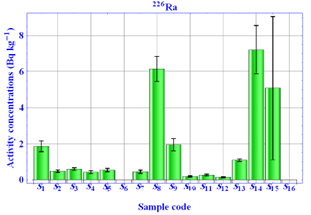
This study focuses on measuring the radioactivity in milk, given its critical importance and sensitivity as a fundamental component of humannutrition, particularly due to its vital role as a primary food source for children during the early stages of life. The radionuclides of 232Th, 226 Ra and 40K were measured in 16 brands of powdered milk consumed in Yemen, imported from various regions worldwide. The measurements were conducted using gamma-ray spectroscopy with an HPGe detector, equipped with a specially designed shield. The range of 226 Ra from (0.42±0.08 to 1.86±0.30 with an average of 0.77±0.12) Bq/kg, the range of 232Th from (0.21±0.05 to 0.40±0.07 with an average of 0.30±0.05) Bq/kg, and the range of 40K (from 140.69±3.90 to 195.96±5.29 with an average of 169.06±4.63) Bq/kg, respectively, for infant group (≤ 1 year). The range of 226Ra from (0.14±0.03 to 7.21±1.34 with an average of 1.88±0.54) Bq/kg, the range of 232Th from (0.25±0.04 to 1.22±0.34 with an average of 0.68±0.15) Bq/kg, and the range of 40K (from 141.52±3.90 to 534.39±13.54 with an average of 320.36±8.35) Bq/kg, respectively, for individuals above 2 years, respectively. The total average annual effective dose due to ingestion of radionuclides was calculated for three age groups and found to be (214.50, 123.27, and 41 μSv/year) for infant group (≤ 1 year), children (2-17 years), and adults (>17 years), respectively. Overall, these values are lower than the WHO/FAO and ICRP recommended limit of (1.0 mSv/year) for all age groups, indicating that the radioactivity levels in the tested powdered milk are within acceptable safety limits.
Keywords
How to Cite This Article
Abdulmalek A. M. Hulif, Mohammed Q. Al-Motawakel, Zaid Abdullah Eadan, Nabilah Ali Al-Sowaidi (2025). Measurement of Radioactivity in Common Powered Milk Consumed in Sana’a, Yemen and Estimation of the Associated Annual Effective Dose. Sana'a University Journal of Applied Sciences and Technology, 621-627. DOI: https://doi.org/10.59628/jast.v3i1.1243
Abdulmalek A. M. Hulif, Mohammed Q. Al-Motawakel, Zaid Abdullah Eadan, Nabilah Ali Al-Sowaidi . “Measurement of Radioactivity in Common Powered Milk Consumed in Sana’a, Yemen and Estimation of the Associated Annual Effective Dose.” Sana'a University Journal of Applied Sciences and Technology, 2025, pp. 621-627. https://doi.org/10.59628/jast.v3i1.1243. Accessed 6 Sep. 2026.
Abdulmalek A. M. Hulif, Mohammed Q. Al-Motawakel, Zaid Abdullah Eadan, Nabilah Ali Al-Sowaidi . 2025. “Measurement of Radioactivity in Common Powered Milk Consumed in Sana’a, Yemen and Estimation of the Associated Annual Effective Dose.” Sana'a University Journal of Applied Sciences and Technology : 621-627. DOI: https://doi.org/10.59628/jast.v3i1.1243
Abdulmalek A. M. Hulif, Mohammed Q. Al-Motawakel, Zaid Abdullah Eadan, Nabilah Ali Al-Sowaidi (2025) ‘Measurement of Radioactivity in Common Powered Milk Consumed in Sana’a, Yemen and Estimation of the Associated Annual Effective Dose’, Sana'a University Journal of Applied Sciences and Technology, pp. 621-627. doi: 10.59628/jast.v3i1.1243
@article{jast2025_art1243,
author = {Abdulmalek A. M. Hulif, Mohammed Q. Al-Motawakel, Zaid Abdullah Eadan, Nabilah Ali Al-Sowaidi },
title = {Measurement of Radioactivity in Common Powered Milk Consumed in Sana’a, Yemen and Estimation of the Associated Annual Effective Dose},
journal = {Sana'a University Journal of Applied Sciences and Technology}, year = {2025}, month = {February}, pages = {621-627}, doi = {10.59628/jast.v3i1.1243},
url = {https://doi.org/10.59628/jast.v3i1.1243},}
Degradation Analysis of 8.65-year-old Polycrystalline Silicon PV Modules under the Weather Conditions of Sana’a – Yemen
Abstract
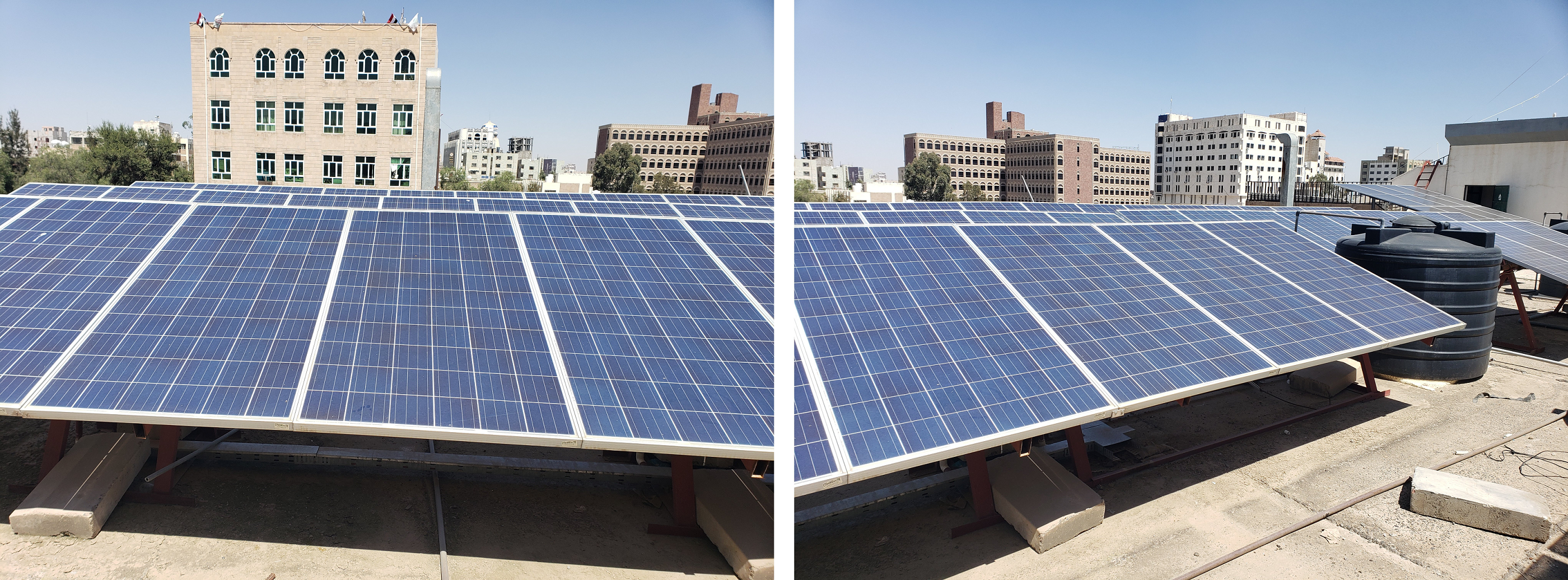
In 2016, an off-grid PV system (14.64 KW) of (48) multicrystalline silicon (mc-Si) modules were installed on the roof of the Yemen Standardization, Metrology and Quality Control Organization (YSMO) in Sana’a – Yemen. In this work, thirty-eight modules from this system were selected for studying the performance degradation after 8.65 years of operation. Degradation analysis of the selected modules was done using visual inspection and current–voltage (I-V) characterization techniques. Results show that the degradation rates in Pmax of the modules under study, over the outdoor exposure period (8.65 years), were found to be between 2.44% and 7.99% with mean of 5.42% and median of 5.24%. By comparing the annual degradation rates with the industry linear warranty based on nominal power of this module, out of the 38 PV modules studied, only 2 modules have been degraded more than 0.7%/year, which implies that these two modules are likely to fail before 25 years in operation under outdoor conditions of Sana’a, Yemen. The remaining 36 PV modules degraded less than 0.7%/year, which are likely to operate reliably for 25 years under outdoor conditions of Sana’a, Yemen. The analysis of electrical performance indicated that the Pmax reduction of the studied modules are mainly related to the losses in the ISC and Imp. Losses in Imp can be ascribed to the decreases of the shunt resistance (Rsh). On the other hand, the reduction in ISC of the modules under study can be correlated to the encapsulation discoloration. The most noticeable visual defect in the studied modules was a discoloring of EVA encapsulant. The encapsulant discoloration reduced the incident photons that reach the solar cells and thus, decreased the ISC and output power (Pmax) of the modules. Corrosion of the metallisation was also observed in some modules. This defect can lead to reducing the FF of the modules.
Keywords
How to Cite This Article
Mohammed Dahesh, Mohammed Al-Matwakel (2025). Degradation Analysis of 8.65-year-old Polycrystalline Silicon PV Modules under the Weather Conditions of Sana’a – Yemen. Sana'a University Journal of Applied Sciences and Technology, 628-633. DOI: https://doi.org/10.59628/jast.v3i1.1492
Mohammed Dahesh, Mohammed Al-Matwakel . “Degradation Analysis of 8.65-year-old Polycrystalline Silicon PV Modules under the Weather Conditions of Sana’a – Yemen.” Sana'a University Journal of Applied Sciences and Technology, 2025, pp. 628-633. https://doi.org/10.59628/jast.v3i1.1492. Accessed 6 Sep. 2026.
Mohammed Dahesh, Mohammed Al-Matwakel . 2025. “Degradation Analysis of 8.65-year-old Polycrystalline Silicon PV Modules under the Weather Conditions of Sana’a – Yemen.” Sana'a University Journal of Applied Sciences and Technology : 628-633. DOI: https://doi.org/10.59628/jast.v3i1.1492
Mohammed Dahesh, Mohammed Al-Matwakel (2025) ‘Degradation Analysis of 8.65-year-old Polycrystalline Silicon PV Modules under the Weather Conditions of Sana’a – Yemen’, Sana'a University Journal of Applied Sciences and Technology, pp. 628-633. doi: 10.59628/jast.v3i1.1492
@article{jast2025_art1492,
author = {Mohammed Dahesh, Mohammed Al-Matwakel },
title = {Degradation Analysis of 8.65-year-old Polycrystalline Silicon PV Modules under the Weather Conditions of Sana’a – Yemen},
journal = {Sana'a University Journal of Applied Sciences and Technology}, year = {2025}, month = {February}, pages = {628-633}, doi = {10.59628/jast.v3i1.1492},
url = {https://doi.org/10.59628/jast.v3i1.1492},}
Assessing Wind Power Potential at Sana’a and Amran in Yemen
Abstract
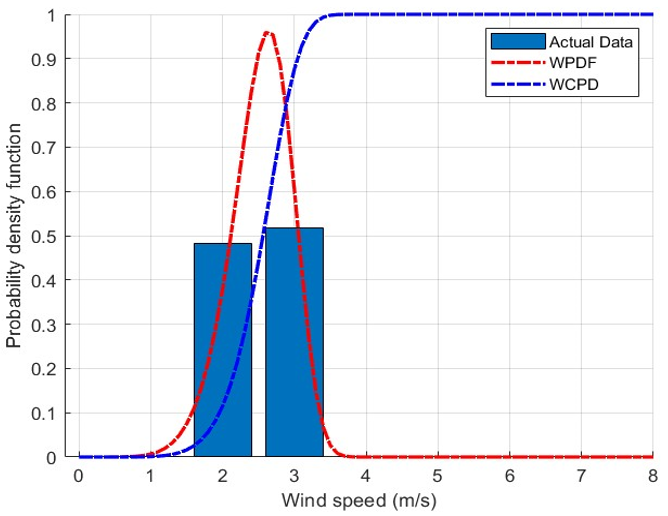
In the field of electricity generation, one promising area is wind energy, since it is accessible and renewable worldwide. This study evaluated the wind power potential (WPP) at the selected locations (Sana’a and Amran). This study makes use of wind speed data that was recorded at a height of 10 meters over five years (2010–2014). The mean and maximum values of the recorded wind speeds are shown in this study. Analysis was done on the monthly, seasonal, and annual changes in wind speed. Weibull distribution function (WDF) has been used to examine the wind properties and power potential of the suggested locations. Using the real data that was recorded over the five years, the annual mean wind speeds (MWS) in Sana’a were determined to be 2.513, 2.6, 2.445, 2.462 and 2.6 m/s respectively and in Amran, they were determined to be 2.899, 2.656, 2.88, 2.945, 3.05 m/s respectively. The mean power and energy densities over the five years were found to be 8.207 W/m2 and 71.889 kWh/m2; 11.803 W/m2 and 103.396 kWh/m2 for Sana’a and Amran respectively. The power density (PD) determined using the WDF and the power density PD determined using actual wind data were almost identical. Based on the findings, the MWS at the two sites chosen for the study is less than 4.0 m/s, which is far slower than the cut-in wind speed of many wind turbines from modern models. So, we recommend that some studies should be conducted to evaluate the potential for wind energy at some sites in Sana’a and Amran governorates outside the cities especially in or near mountainous site.
Keywords
How to Cite This Article
Waleed S A Hasan, Ali Saif M Hassan, Mohammed A Shukri (2025). Assessing Wind Power Potential at Sana’a and Amran in Yemen. Sana'a University Journal of Applied Sciences and Technology, 634-644. DOI: https://doi.org/10.59628/jast.v3i1.1535
Waleed S A Hasan, Ali Saif M Hassan, Mohammed A Shukri . “Assessing Wind Power Potential at Sana’a and Amran in Yemen.” Sana'a University Journal of Applied Sciences and Technology, 2025, pp. 634-644. https://doi.org/10.59628/jast.v3i1.1535. Accessed 6 Sep. 2026.
Waleed S A Hasan, Ali Saif M Hassan, Mohammed A Shukri . 2025. “Assessing Wind Power Potential at Sana’a and Amran in Yemen.” Sana'a University Journal of Applied Sciences and Technology : 634-644. DOI: https://doi.org/10.59628/jast.v3i1.1535
Waleed S A Hasan, Ali Saif M Hassan, Mohammed A Shukri (2025) ‘Assessing Wind Power Potential at Sana’a and Amran in Yemen’, Sana'a University Journal of Applied Sciences and Technology, pp. 634-644. doi: 10.59628/jast.v3i1.1535
@article{jast2025_art1535,
author = {Waleed S A Hasan, Ali Saif M Hassan, Mohammed A Shukri },
title = {Assessing Wind Power Potential at Sana’a and Amran in Yemen},
journal = {Sana'a University Journal of Applied Sciences and Technology}, year = {2025}, month = {February}, pages = {634-644}, doi = {10.59628/jast.v3i1.1535},
url = {https://doi.org/10.59628/jast.v3i1.1535},}
Utilizing Machine Learning based on LLM for Arabic Sentiment Analysis in Assessing User Satisfaction with Mobile Banking Apps: A Case Study of Yemeni Banks
Abstract
The development of large language models (LLMs) that are optimized to obey human commands is a significant advancement in the field of artificial intelligence (AI). One such model is ChatGPT (Chat Generative Pre-trained Transformer) from OpenAI, which has shown itself to be an extremely powerful tool for a variety of tasks such as conversation production, code debugging, and answering questions. Despite the fact that these models are praised for their multilingualism, little research has been done on how well they can analyze sentiment, especially in Arabic. We intend to close this gap by thoroughly assessing ChatGPT’s sentiment analysis skills, particularly with regard to Arabic text, in light of this constraint. When developing applications, recognizing the quality of the application and satisfying user needs are essential. Understanding user requirements is crucial to improving the quality of programs. The use of application review-based sentiment analysis (SA) is one efficient method for accomplishing this. The purpose of this study was to evaluate consumer perceptions of mobile banking apps so that they could be updated and maintained appropriately. Since mobile banking apps are now a necessary part of people’s lives, it is essential to examine user reviews of these apps for SA purposes. User reviews of banking mobile apps on the Google Play Store provided the dataset used in this study. We suggest a new active labeling technique for ChatGPT and examine the effects of using the ChatGPT variants for Arabic sentiment analysis (ASA). Using the accuracy, recall, precision, and F-score measures, we assess the performance of four machine learning (ML) approaches: Naive Bayes (NB), K-Nearest Neighbors (K-NN), Support Vector Machine (SVM), and Random Forest (FR). Additionally, we contrast six approaches to data labeling: manual human labeling, ChatGPT labeling by Assistant-Poe, ChatGPT labeling by Bing-Edge, ChatGPT labeling by Assistant-Poe with humans, ChatGPT labeling by Bing-Edge with humans, and ChatGPT labeling by Assistant-Poe with Bing-Edge. Using different Bing-Edge models for ASA, our experimental results demonstrate that the NB approach performed the best, with an accuracy of 91.22%, recall of 89.62%, precision of 88.90%, and F-score of 89.26%. Additionally, we contrast two approaches of data labeling for ASA: human labeling and labeling with Bard Google. Using Bard Google models for ASA, our experimental results demonstrate that the Naive Bayes technique outperformed the others, attaining an accuracy of 98.07%. Furthermore, when compared to alternative labeling techniques, our suggested active labeling strategy with ChatGPT produced greater accuracy. Our research indicates that our suggested active labeling method and the NB technique with multiple Bing-Edge models are useful strategies for ASA using ChatGPT. Our research provides important insights into efficient methods for this endeavor and advances the field of sentiment analysis in Arabic literature. Additionally, compared to other labeling techniques, our suggested active labeling method using Bard Google produced greater accuracy. According to the proposed study, our suggested active labeling strategy and the Naive Bayes technique with Bard Google models are both efficient methods for Arabic sentiment analysis utilizing Bard Google.
Keywords
How to Cite This Article
Salah Alhagree, Ghaleb Al-Gaphari (2025). Utilizing Machine Learning based on LLM for Arabic Sentiment Analysis in Assessing User Satisfaction with Mobile Banking Apps: A Case Study of Yemeni Banks. Sana'a University Journal of Applied Sciences and Technology, 645-662. DOI: https://doi.org/10.59628/jast.v3i1.1364
Salah Alhagree, Ghaleb Al-Gaphari . “Utilizing Machine Learning based on LLM for Arabic Sentiment Analysis in Assessing User Satisfaction with Mobile Banking Apps: A Case Study of Yemeni Banks.” Sana'a University Journal of Applied Sciences and Technology, 2025, pp. 645-662. https://doi.org/10.59628/jast.v3i1.1364. Accessed 6 Sep. 2026.
Salah Alhagree, Ghaleb Al-Gaphari . 2025. “Utilizing Machine Learning based on LLM for Arabic Sentiment Analysis in Assessing User Satisfaction with Mobile Banking Apps: A Case Study of Yemeni Banks.” Sana'a University Journal of Applied Sciences and Technology : 645-662. DOI: https://doi.org/10.59628/jast.v3i1.1364
Salah Alhagree, Ghaleb Al-Gaphari (2025) ‘Utilizing Machine Learning based on LLM for Arabic Sentiment Analysis in Assessing User Satisfaction with Mobile Banking Apps: A Case Study of Yemeni Banks’, Sana'a University Journal of Applied Sciences and Technology, pp. 645-662. doi: 10.59628/jast.v3i1.1364
@article{jast2025_art1364,
author = {Salah Alhagree, Ghaleb Al-Gaphari },
title = {Utilizing Machine Learning based on LLM for Arabic Sentiment Analysis in Assessing User Satisfaction with Mobile Banking Apps: A Case Study of Yemeni Banks},
journal = {Sana'a University Journal of Applied Sciences and Technology}, year = {2025}, month = {February}, pages = {645-662}, doi = {10.59628/jast.v3i1.1364},
url = {https://doi.org/10.59628/jast.v3i1.1364},}
Perception of Some of Agricultural Extension workers to the Importance of the Agricultural Extension Areas and Their Training Needs Assessment (Case study)
Abstract
The population of the study were (39) respondents who attended the training programs during 2009, data was collected through a questionnaire that was specially designed for assessing the study objectives, the frequencies, percentages, mean, standard deviation, and Borich model to estimate, analyze, and interpret the results. The most important results of the study were that the majority of respondents (84.61%) had knowledge of the agricultural extension areas and were moderately full, 82% of the respondents recognized the importance of the indicative areas of work that significantly and very important, and 64.1% of the respondents their ability was in both medium and low level. The study shows that the degree of the respondent's training needs assessment was in the field of development, maintenance, and use of natural resources (5.4 degrees) as first training needs, then the area of raising the efficiency of marketing of agricultural products (4.90 degrees), and finally the development and A positive significant relationship was found at the level of (0.05) between the degree of knowledge and age and educational level and the value of the correlation coefficient was (0.296 and 0.359). A negative significant relationship at the level of (0.01) between the degree of knowledge and the date of the last course participated. The value of the correlation coefficient was (-0.374) and with a negative relationship at the level of (0.05) between the degree of knowledge and the number of training courses, the value of the correlation coefficient was (-0.180). A positive significant relationship between the degree of perception at the level of (0.05) and the educational level, the value of the correlation coefficient was (0.321), and a positive perception relationship between the degree of ability of the respondents at the level of (0.05) and between specialization and the value of the correlation coefficient was (0.309).
Keywords
How to Cite This Article
Ahmed Abdulwali Ali Al-Samawi (2025). Perception of Some of Agricultural Extension workers to the Importance of the Agricultural Extension Areas and Their Training Needs Assessment (Case study). Sana'a University Journal of Applied Sciences and Technology, 663-678. DOI: https://doi.org/10.59628/jast.v3i1.1228
Ahmed Abdulwali Ali Al-Samawi . “Perception of Some of Agricultural Extension workers to the Importance of the Agricultural Extension Areas and Their Training Needs Assessment (Case study).” Sana'a University Journal of Applied Sciences and Technology, 2025, pp. 663-678. https://doi.org/10.59628/jast.v3i1.1228. Accessed 6 Sep. 2026.
Ahmed Abdulwali Ali Al-Samawi . 2025. “Perception of Some of Agricultural Extension workers to the Importance of the Agricultural Extension Areas and Their Training Needs Assessment (Case study).” Sana'a University Journal of Applied Sciences and Technology : 663-678. DOI: https://doi.org/10.59628/jast.v3i1.1228
Ahmed Abdulwali Ali Al-Samawi (2025) ‘Perception of Some of Agricultural Extension workers to the Importance of the Agricultural Extension Areas and Their Training Needs Assessment (Case study)’, Sana'a University Journal of Applied Sciences and Technology, pp. 663-678. doi: 10.59628/jast.v3i1.1228
@article{jast2025_art1228,
author = {Ahmed Abdulwali Ali Al-Samawi },
title = {Perception of Some of Agricultural Extension workers to the Importance of the Agricultural Extension Areas and Their Training Needs Assessment (Case study)},
journal = {Sana'a University Journal of Applied Sciences and Technology}, year = {2025}, month = {February}, pages = {663-678}, doi = {10.59628/jast.v3i1.1228},
url = {https://doi.org/10.59628/jast.v3i1.1228},}
The Reasons of Avoiding Yemeni Beekeepers to use the Modern Hives
Abstract
The study aimed mainly to identify reasons and difficulties behind low levels of modern hives adoption among Yemeni beekeepers. The research was implemented on a sample of one hundred beekeepers in three governorates at northern heights. Data has been collected by using a questionnaire through personal interview.
Results showed that main reasons behind low levels of modern hives adoption were as following: unavailability in local markets (47%), lack of knowledge to use it (44%), get open during transportation and travelling (31%), its heavy weight (22%), it needs more time to work with (16%) and uncertainty of its success (14%).
Results showed that users of modern hives did not exceed 12% among the research sample. Users of modern hives cleared that they are facing six problems: 1- Wax base addition (58.3%), 2- Queen replacement (50%), 3- Gets open during transportation and travelling (50%), 4- Weakness of bees (25%), 5- It needs more time to work with (25%) , 6- Its heavy weight (16.7%).
Generally, results reflect an excessive gap in extension and training programs in the beekeeping section, which needs a lot of work in the seeing future.
Keywords: Honeybees, difficulties, adoption, modern hives.
How to Cite This Article
Taha Y. Al-Adimi, Ahmed A. Al-Samawi (2025). The Reasons of Avoiding Yemeni Beekeepers to use the Modern Hives . Sana'a University Journal of Applied Sciences and Technology, 679 - 689. DOI: https://doi.org/10.59628/jast.v3i1.1229
Taha Y. Al-Adimi, Ahmed A. Al-Samawi . “The Reasons of Avoiding Yemeni Beekeepers to use the Modern Hives .” Sana'a University Journal of Applied Sciences and Technology, 2025, pp. 679 - 689. https://doi.org/10.59628/jast.v3i1.1229. Accessed 6 Sep. 2026.
Taha Y. Al-Adimi, Ahmed A. Al-Samawi . 2025. “The Reasons of Avoiding Yemeni Beekeepers to use the Modern Hives .” Sana'a University Journal of Applied Sciences and Technology : 679 - 689. DOI: https://doi.org/10.59628/jast.v3i1.1229
Taha Y. Al-Adimi, Ahmed A. Al-Samawi (2025) ‘The Reasons of Avoiding Yemeni Beekeepers to use the Modern Hives ’, Sana'a University Journal of Applied Sciences and Technology, pp. 679 - 689. doi: 10.59628/jast.v3i1.1229
@article{jast2025_art1229,
author = {Taha Y. Al-Adimi, Ahmed A. Al-Samawi },
title = {The Reasons of Avoiding Yemeni Beekeepers to use the Modern Hives },
journal = {Sana'a University Journal of Applied Sciences and Technology}, year = {2025}, month = {February}, pages = {679 - 689}, doi = {10.59628/jast.v3i1.1229},
url = {https://doi.org/10.59628/jast.v3i1.1229},}