

Current Issue
Sana'a University Journal of Applied Sciences and Technology
Vol. 2 No. 5 (2024)
2024-10-31
8 Articles
The second volume - the fifth issue in the Sana'a University Journal of Applied Sciences and Technology
Article
8 Articles
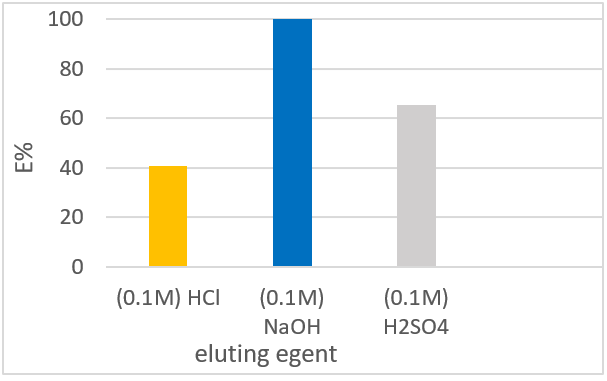
How to Cite This Article
Mahfoudh M. AL-Hamadi, Anass A. Alnedhary, Hadi Ali Quria’a, Ghadeer M. al-mutawakel (2024). Adsorption Isotherm, Kinetic and Thermodynamic Studies for Removal of Fluoride Ions from Drinking Water Using Modified Natural Pumice. Sana'a University Journal of Applied Sciences and Technology, 403-412. DOI: https://doi.org/10.59628/jast.v2i5.1151
Mahfoudh M. AL-Hamadi, Anass A. Alnedhary, Hadi Ali Quria’a, Ghadeer M. al-mutawakel . “Adsorption Isotherm, Kinetic and Thermodynamic Studies for Removal of Fluoride Ions from Drinking Water Using Modified Natural Pumice.” Sana'a University Journal of Applied Sciences and Technology, 2024, pp. 403-412. https://doi.org/10.59628/jast.v2i5.1151. Accessed 27 Oct. 2026.
Mahfoudh M. AL-Hamadi, Anass A. Alnedhary, Hadi Ali Quria’a, Ghadeer M. al-mutawakel . 2024. “Adsorption Isotherm, Kinetic and Thermodynamic Studies for Removal of Fluoride Ions from Drinking Water Using Modified Natural Pumice.” Sana'a University Journal of Applied Sciences and Technology : 403-412. DOI: https://doi.org/10.59628/jast.v2i5.1151
Mahfoudh M. AL-Hamadi, Anass A. Alnedhary, Hadi Ali Quria’a, Ghadeer M. al-mutawakel (2024) ‘Adsorption Isotherm, Kinetic and Thermodynamic Studies for Removal of Fluoride Ions from Drinking Water Using Modified Natural Pumice’, Sana'a University Journal of Applied Sciences and Technology, pp. 403-412. doi: 10.59628/jast.v2i5.1151
@article{jast2024_art1151,
    author  = {Mahfoudh M. AL-Hamadi, Anass A.  Alnedhary, Hadi Ali Quria’a, Ghadeer M. al-mutawakel },
    title   = {Adsorption Isotherm, Kinetic and Thermodynamic Studies for Removal of Fluoride Ions from Drinking Water Using Modified Natural Pumice},
    journal = {Sana'a University Journal of Applied Sciences and Technology},    year    = {2024},    month   = {October},    pages   = {403-412},    doi     = {10.59628/jast.v2i5.1151},
    url     = {https://doi.org/10.59628/jast.v2i5.1151},}
Citation copied!
Contact Authors
Adsorption Isotherm, Kinetic and Thermodynamic Studies for Removal of Fluoride Ions from Drinking Water Using Modified Natural Pumice
Email copied!
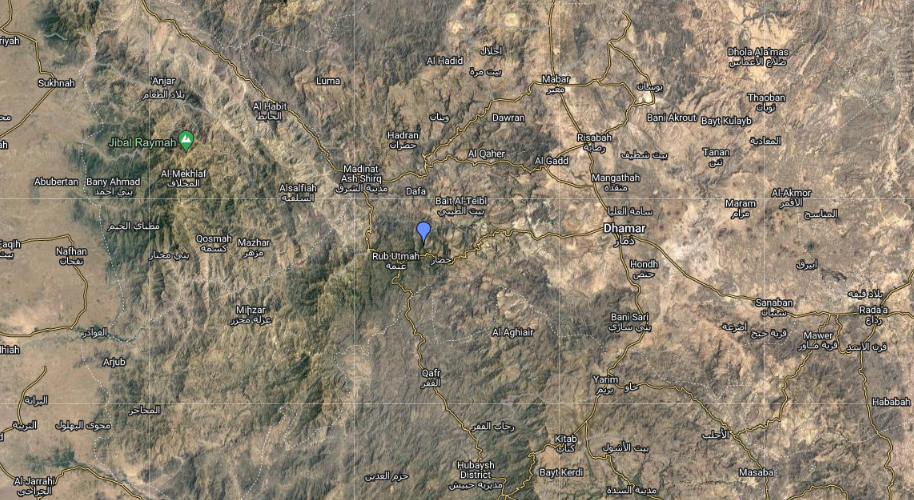
Investigation of Edaphic and Climatic Factors for Thymus laevigatus in Utmah Natural Reserve, Yemen
Adel Sultan Alqadasi, Younis Ahmed Humaid
413-421
2024-10-30
Abstract
In natural habitats of wild plants, growth, and productivity are influenced by various environmental factors, including edaphic and climatic conditions. Yemen has many natural habitats that contain endemic plants. Thymus laevigatus is one of these plants distributed in higher mountain areas in the Northern part of the country. Assessment of environmental factors in these areas is still limited. So, this study aimed to analyze the edaphic and climatic factors affecting the growth of wild thyme in the Utmah Natural Reserve. Soils 0-25, and 25-50 cm deep were randomly sampled from the rhizosphere of the thyme. Edaphic factors include soil texture, organic matter, pH, EC, mobile potassium (K2O) and phosphorous (P2O5), Exchangeable (Ca, Mg, Na), Available (Fe, Zn, Mn), and total Calcium carbonate (CaCO3). The meteorological data (precipitation, temperature, and average monthly sunshine duration) for 2015-2022 were obtained from the Water and Environment Center – Sana’a University. Results showed that K2O, Zn, and Ca concentrations are deficient; Mn is adequate; Mg is near moderate; P2O5 is moderate; Fe and organic matter are adequate; Na is high. Soil is without salinity and pH is alkaline. The soil texture is sandy loam. The bioclimatic zone is semi-arid with a temperate winter. Wet periods are months of April, May, mid-July, August, and October with a yearly average rainfall of 377.13 mm. Minimum temperatures are between 6.83-15.01°C, while the maximum is between 23.21-31.16°C. The average sunshine hours during thyme growth season are 10.68 h/ day. The obtained results represent the basic requirements for the growth and productivity of thyme in its natural habitats. Also, it provides preliminary information that can be used to plan conservation projects for this plant and contribute to its domestication and cultivation.
Keywords
Bioclimatic zone
Climatic
Edaphic
Thymus laevigatus
Yemen
How to Cite This Article
Adel Sultan Alqadasi, Younis Ahmed Humaid (2024). Investigation of Edaphic and Climatic Factors for Thymus laevigatus in Utmah Natural Reserve, Yemen. Sana'a University Journal of Applied Sciences and Technology, 413-421. DOI: https://doi.org/10.59628/jast.v2i5.1096
Adel Sultan Alqadasi, Younis Ahmed Humaid . “Investigation of Edaphic and Climatic Factors for Thymus laevigatus in Utmah Natural Reserve, Yemen.” Sana'a University Journal of Applied Sciences and Technology, 2024, pp. 413-421. https://doi.org/10.59628/jast.v2i5.1096. Accessed 27 Oct. 2026.
Adel Sultan Alqadasi, Younis Ahmed Humaid . 2024. “Investigation of Edaphic and Climatic Factors for Thymus laevigatus in Utmah Natural Reserve, Yemen.” Sana'a University Journal of Applied Sciences and Technology : 413-421. DOI: https://doi.org/10.59628/jast.v2i5.1096
Adel Sultan Alqadasi, Younis Ahmed Humaid (2024) ‘Investigation of Edaphic and Climatic Factors for Thymus laevigatus in Utmah Natural Reserve, Yemen’, Sana'a University Journal of Applied Sciences and Technology, pp. 413-421. doi: 10.59628/jast.v2i5.1096
@article{jast2024_art1096,
    author  = {Adel Sultan Alqadasi, Younis Ahmed Humaid },
    title   = {Investigation of Edaphic and Climatic Factors for Thymus laevigatus in Utmah Natural Reserve, Yemen},
    journal = {Sana'a University Journal of Applied Sciences and Technology},    year    = {2024},    month   = {October},    pages   = {413-421},    doi     = {10.59628/jast.v2i5.1096},
    url     = {https://doi.org/10.59628/jast.v2i5.1096},}
Citation copied!
Contact Authors
Investigation of Edaphic and Climatic Factors for Thymus laevigatus in Utmah Natural Reserve, Yemen
Email copied!
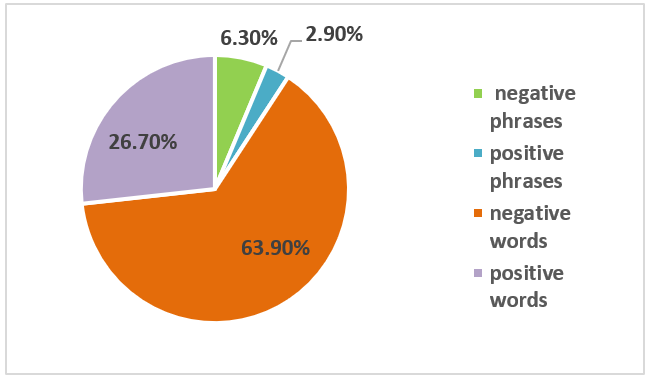
Lexicon-Based Approach in Sentiment Analysis of Yemeni Dialect for Social Media Network
Alaa Abdulkareem Hameed Brihi, Mossa Ghurab
422-431
2024-10-31
Abstract
Recently, the number of Yemeni users has been expanding quickly on social media platforms. Most research in Arabic sentiment analysis has gained on Modern Standard Arabic (MSA) and some specific dialects, such as Egyptian, Levantine, and Gulf. However, there is a noticeable gap in Yemeni dialect sentiment analysis research. The reason for that is the lack of reliable Yemeni lexical and corpus and a real dataset for social media sentiment analysis. This research addresses this lack by presenting the Yemeni Dialect sentiment lexicon and corpus. This lexicon and corpus provide valuable resources for researchers and practitioners seeking to analyze sentiment in Yemeni dialect social media content, contributing to a better understanding of Yemeni public opinion, social media monitoring, marketing, cultural understanding, and assisting in efforts to respond to crises in Yemen. The Yemeni Dialect sentiment lexicon is enriched with a reasonable number of words and phrases categorized according to their positive and negative sentiment tendencies. Moreover, we constructed a corpus dataset of more than 54,000 comments built from the Facebook platform. A large dataset of unlabeled comments from the main Yemeni telecommunications companies in Yemen (Yemen Telecom, Yemen Mobile, YOU, and Sabafon), are people commenting on a public issue related to the services provided by those companies. The lexicon-based approach is used to extract the sentiment’s polarity and label each of the provided comments to formulate a corpus dataset as being either positive, negative, or neutral. The evaluation metrics of experiments are accuracy, recall, precision, f-measure, and the confusion matrix. The accuracy result of the lexicon-based labeling approach was calculated through a comparison between the achieved results and the ones achieved through manually labeled comments by three Yemeni experts. Evaluation results using a lexicon-based approach achieved an accuracy of 90.05%.
Keywords
Arabic Sentiment Analysis
Yemeni Dialect
Lexicon-Based
Yemeni Lexicon and courps
How to Cite This Article
Alaa Abdulkareem Hameed Brihi, Mossa Ghurab (2024). Lexicon-Based Approach in Sentiment Analysis of Yemeni Dialect for Social Media Network. Sana'a University Journal of Applied Sciences and Technology, 422-431. DOI: https://doi.org/10.59628/jast.v2i5.1058
Alaa Abdulkareem Hameed Brihi, Mossa Ghurab . “Lexicon-Based Approach in Sentiment Analysis of Yemeni Dialect for Social Media Network.” Sana'a University Journal of Applied Sciences and Technology, 2024, pp. 422-431. https://doi.org/10.59628/jast.v2i5.1058. Accessed 27 Oct. 2026.
Alaa Abdulkareem Hameed Brihi, Mossa Ghurab . 2024. “Lexicon-Based Approach in Sentiment Analysis of Yemeni Dialect for Social Media Network.” Sana'a University Journal of Applied Sciences and Technology : 422-431. DOI: https://doi.org/10.59628/jast.v2i5.1058
Alaa Abdulkareem Hameed Brihi, Mossa Ghurab (2024) ‘Lexicon-Based Approach in Sentiment Analysis of Yemeni Dialect for Social Media Network’, Sana'a University Journal of Applied Sciences and Technology, pp. 422-431. doi: 10.59628/jast.v2i5.1058
@article{jast2024_art1058,
    author  = {Alaa Abdulkareem Hameed Brihi, Mossa Ghurab },
    title   = {Lexicon-Based Approach in Sentiment Analysis of Yemeni Dialect for Social Media Network},
    journal = {Sana'a University Journal of Applied Sciences and Technology},    year    = {2024},    month   = {October},    pages   = {422-431},    doi     = {10.59628/jast.v2i5.1058},
    url     = {https://doi.org/10.59628/jast.v2i5.1058},}
Citation copied!
Contact Authors
Lexicon-Based Approach in Sentiment Analysis of Yemeni Dialect for Social Media Network
Email copied!
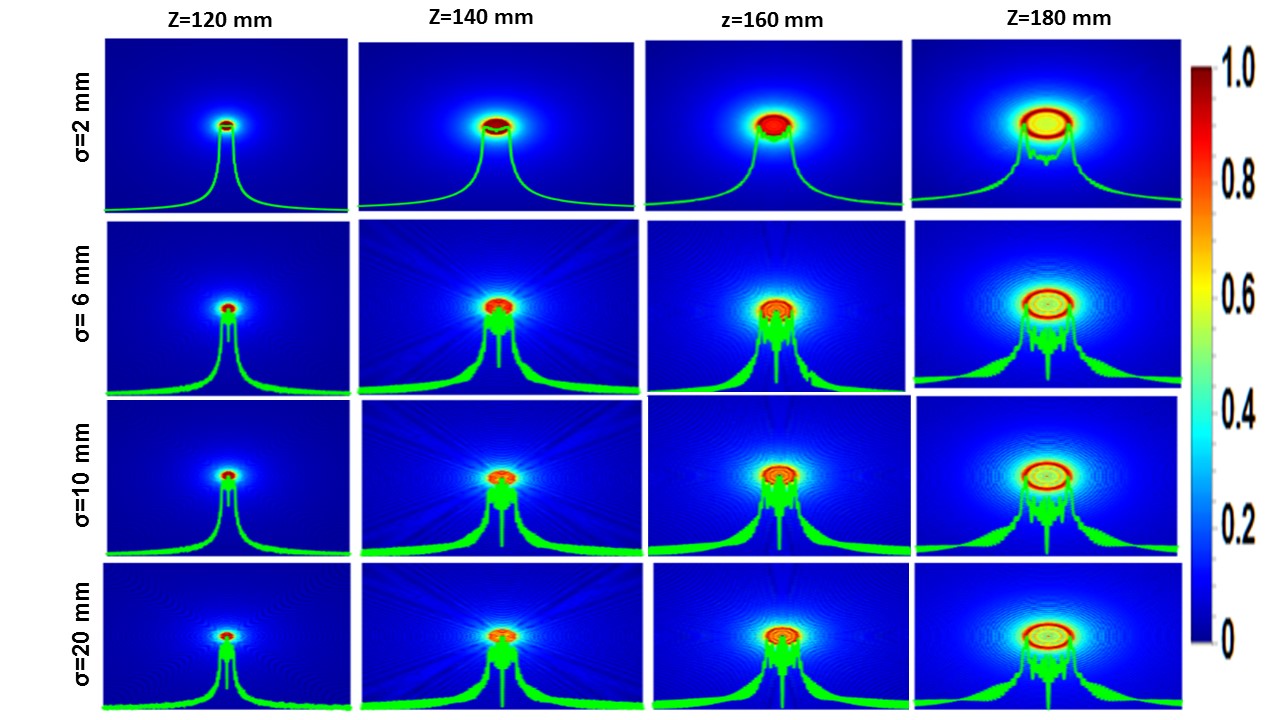
Influence of astigmatic aberration on partially coherent Gaussian-Schell vortex beam focused by lensacon
H. O. Al-Nadary, Shukri kaid, Abdu A. Alkelly, Hassan T. Al-Ahsab, M. S. Qusaila
432-439
2024-10-30
Abstract
Based on the mathematical framework of the partially coherent Gaussian Schell model vortex (PCGSMV) beam and the Huygens-Fresnel integral, we conducted a study to analyze the intensity distribution and depth of focus (DOF) of the PCGSMV beam as it propagates through a classical axicon. Our numerical results indicate the influence of factors such as the beam width, spatial degree of coherence, topological charge, and axicon base angle on the intensity distribution and DOF. In addition, we investigated the relationship between the beam spot size and propagation distance, as well as the effects of the spatial degree of coherence and propagation distance on the intensity profile. Our findings highlight the importance of the intensity values along the DOF for various applications, including the optical trapping and manipulation of micro particles.
Keywords
partially coherent
Gaussian Schell model
vor- tex
dark hollow
lensacon
astigmatic aberra- tion
depth of focus.
How to Cite This Article
H. O. Al-Nadary, Shukri kaid, Abdu A. Alkelly, Hassan T. Al-Ahsab, M. S. Qusaila (2024). Influence of astigmatic aberration on partially coherent Gaussian-Schell vortex beam focused by lensacon. Sana'a University Journal of Applied Sciences and Technology, 432-439. DOI: https://doi.org/10.59628/jast.v2i5.1274
H. O. Al-Nadary, Shukri kaid, Abdu A. Alkelly, Hassan T. Al-Ahsab, M. S. Qusaila . “Influence of astigmatic aberration on partially coherent Gaussian-Schell vortex beam focused by lensacon.” Sana'a University Journal of Applied Sciences and Technology, 2024, pp. 432-439. https://doi.org/10.59628/jast.v2i5.1274. Accessed 27 Oct. 2026.
H. O. Al-Nadary, Shukri kaid, Abdu A. Alkelly, Hassan T. Al-Ahsab, M. S. Qusaila . 2024. “Influence of astigmatic aberration on partially coherent Gaussian-Schell vortex beam focused by lensacon.” Sana'a University Journal of Applied Sciences and Technology : 432-439. DOI: https://doi.org/10.59628/jast.v2i5.1274
H. O. Al-Nadary, Shukri kaid, Abdu A. Alkelly, Hassan T. Al-Ahsab, M. S. Qusaila (2024) ‘Influence of astigmatic aberration on partially coherent Gaussian-Schell vortex beam focused by lensacon’, Sana'a University Journal of Applied Sciences and Technology, pp. 432-439. doi: 10.59628/jast.v2i5.1274
@article{jast2024_art1274,
    author  = {H. O. Al-Nadary, Shukri kaid, Abdu A. Alkelly, Hassan T. Al-Ahsab, M. S. Qusaila },
    title   = {Influence of astigmatic aberration on partially coherent Gaussian-Schell vortex beam focused by lensacon},
    journal = {Sana'a University Journal of Applied Sciences and Technology},    year    = {2024},    month   = {October},    pages   = {432-439},    doi     = {10.59628/jast.v2i5.1274},
    url     = {https://doi.org/10.59628/jast.v2i5.1274},}
Citation copied!
Contact Authors
Influence of astigmatic aberration on partially coherent Gaussian-Schell vortex beam focused by lensacon
Email copied!

Line-of-Sight Probability Models for 5G/6G Millimeter-Wave Networks: A Review
Basheer Ameen Raddwan, Ibrahim Ahmed Al-Baltah
440-452
2024-10-31
Abstract
In the fifth-generation (5G) and future wireless networks, coverage planning for millimeter-wave (mm-wave) networks in a three-dimensional (3D) urban environment depends on the communication channel and line-of-sight (LoS) probability models. This is especially true when there are big stationary obstructions. The current literature lacks a complete review of the existing LoS probability models. To bridge this gap, this paper reviews modeling approaches and mathematical models of the LoS probability. We discovered that, due to the complexity of modeling a large number of 3D layouts, most existing models have focused on a few urban layouts. We developed a 3D synthetic urban layout generator that is based on game engine technology to simulate any ITU-R P.1410 urban layouts and collect the ray-tracing. We provided a proof-of-concept to show that the game technology could handle the complexity of simulating ray-tracing in 3D urban environments. Moreover, we addressed some of the biggest challenges and gaps in the current LoS probability literature and suggested some valid opportunities.
Keywords
Line-of-sight probability model
ray-tracing
air-to-ground communication channels
unmanned aerial vehicles
ground-to-ground
air- to-air
large static blockages
urban
How to Cite This Article
Basheer Ameen Raddwan, Ibrahim Ahmed Al-Baltah (2024). Line-of-Sight Probability Models for 5G/6G Millimeter-Wave Networks: A Review. Sana'a University Journal of Applied Sciences and Technology, 440-452. DOI: https://doi.org/10.59628/jast.v2i5.1054
Basheer Ameen Raddwan, Ibrahim Ahmed Al-Baltah . “Line-of-Sight Probability Models for 5G/6G Millimeter-Wave Networks: A Review.” Sana'a University Journal of Applied Sciences and Technology, 2024, pp. 440-452. https://doi.org/10.59628/jast.v2i5.1054. Accessed 27 Oct. 2026.
Basheer Ameen Raddwan, Ibrahim Ahmed Al-Baltah . 2024. “Line-of-Sight Probability Models for 5G/6G Millimeter-Wave Networks: A Review.” Sana'a University Journal of Applied Sciences and Technology : 440-452. DOI: https://doi.org/10.59628/jast.v2i5.1054
Basheer Ameen Raddwan, Ibrahim Ahmed Al-Baltah (2024) ‘Line-of-Sight Probability Models for 5G/6G Millimeter-Wave Networks: A Review’, Sana'a University Journal of Applied Sciences and Technology, pp. 440-452. doi: 10.59628/jast.v2i5.1054
@article{jast2024_art1054,
    author  = {Basheer Ameen Raddwan, Ibrahim Ahmed Al-Baltah },
    title   = {Line-of-Sight Probability Models for 5G/6G Millimeter-Wave Networks: A Review},
    journal = {Sana'a University Journal of Applied Sciences and Technology},    year    = {2024},    month   = {October},    pages   = {440-452},    doi     = {10.59628/jast.v2i5.1054},
    url     = {https://doi.org/10.59628/jast.v2i5.1054},}
Citation copied!
Contact Authors
Line-of-Sight Probability Models for 5G/6G Millimeter-Wave Networks: A Review
Email copied!
Leveraging Contemporary Project Management Techniques and Technology for Sustainable Telecommunications Advancement in Yemen
Nabeel Alsohybe, Rana Hashem Mahmood Mohmed
453-466
2024-10-30
Abstract
The digital techniques and technology have transformed formal project management field dramatically by enhancing communication, resource management and efficiency. This study aims to evaluate the efficacy of contemporary project management methodologies in promoting and facilitating sustainable development within the telecommunications sector in Yemen. Situated within the broader discourse on achieving the United Nations Sustainable Development Goals, the research employs a mixed methods approach to gather both quantitative and qualitative data. Quantitative data was collected through a survey of 150 professionals across major telecommunications firms in Yemen. The survey examined familiarity and application of techniques and technology such as waterfall, agile, six sigma, and lean. Qualitative insights were derived from 22 in-depth interviews with project managers and stakeholders. The findings of the study indicate that there is a narrow scope for integrating sustainability in Yemen’s telecommunications sector projects. Despite the research indicating a considerable level of awareness and utilization of contemporary methodologies, the integration of sustainability objectives varies considerably between projects. While numerous projects adopt environmental sustainability strategies, such as enhancing energy efficiency to reduce environmental impact and minimize carbon emissions, they lack comprehensive sustainability strategies that encompass economic, social, and environmental aspects in an integrated manner. The qualitative interviews yielded insights into the significant challenges to sustainable implementation, including insufficient training, organizational obstacles, and the effects of the ongoing conflict. In light of these findings, the paper addresses these challenges and provides recommendations and effective strategies to overcome them.
Keywords
Agile Project Management (APM)
Code Division Multiple Access (CDMA)
Lean Thinking Concept
Modern project management methodologies
SIX SIGMA MODEL
Sustainable Develop-ment
Telecommunications sector
How to Cite This Article
Nabeel Alsohybe, Rana Hashem Mahmood Mohmed (2024). Leveraging Contemporary Project Management Techniques and Technology for Sustainable Telecommunications Advancement in Yemen. Sana'a University Journal of Applied Sciences and Technology, 453-466. DOI: https://doi.org/10.59628/jast.v2i5.1214
Nabeel Alsohybe, Rana Hashem Mahmood Mohmed . “Leveraging Contemporary Project Management Techniques and Technology for Sustainable Telecommunications Advancement in Yemen.” Sana'a University Journal of Applied Sciences and Technology, 2024, pp. 453-466. https://doi.org/10.59628/jast.v2i5.1214. Accessed 27 Oct. 2026.
Nabeel Alsohybe, Rana Hashem Mahmood Mohmed . 2024. “Leveraging Contemporary Project Management Techniques and Technology for Sustainable Telecommunications Advancement in Yemen.” Sana'a University Journal of Applied Sciences and Technology : 453-466. DOI: https://doi.org/10.59628/jast.v2i5.1214
Nabeel Alsohybe, Rana Hashem Mahmood Mohmed (2024) ‘Leveraging Contemporary Project Management Techniques and Technology for Sustainable Telecommunications Advancement in Yemen’, Sana'a University Journal of Applied Sciences and Technology, pp. 453-466. doi: 10.59628/jast.v2i5.1214
@article{jast2024_art1214,
    author  = {Nabeel Alsohybe, Rana Hashem Mahmood Mohmed },
    title   = {Leveraging Contemporary Project Management Techniques and Technology for Sustainable Telecommunications Advancement in Yemen},
    journal = {Sana'a University Journal of Applied Sciences and Technology},    year    = {2024},    month   = {October},    pages   = {453-466},    doi     = {10.59628/jast.v2i5.1214},
    url     = {https://doi.org/10.59628/jast.v2i5.1214},}
Citation copied!
Contact Authors
Leveraging Contemporary Project Management Techniques and Technology for Sustainable Telecommunications Advancement in Yemen
Email copied!

Measurements of Heavy Elements and Radioactivity Concentration Levels in Types of Fertilizers and Pesticides Commonly Used in Sana’a Yemen
Ahmed K. Abdul-Rahim, Bassam Mohammed Mughalles Hijab
467-481
2024-10-30
Abstract
This study aims to measure heavy metals (HMs) concentration and radioactivity concentration levels in fertilizer and pesticide samples collected from local markets in Sana’a, Yemen. Gamma spectroscopy employing a Survey Sodium Iodide NaI (TI) RIIDEYM-G detector was used for radiation and dose assessments. As for heavy metal analyses, this study used Inductively Coupled Optical Emission Spectroscopy (ICP-OES). Thirty samples were collected from local markets in Sana’a, Yemen. Radioactivity measurements show low levels of radioactivity concentration. The average dose rates due to fertilizer and pesticide samples were 1.14 and 1.07 mSv/y, respectively. These values are nearly equal to the recommended annual radiation dose rate limit (1mSv/y) recommended by the International Commission on Radiological Protection (ICRP). For heavy metal analysis, it was found that the average concentrations of heavy metals (HMs) (cadmium (Cd), chromium (Cr), copper (Cu), iron (Fe), nickel (Ni), lead (Pb), and zinc (Zn)) in the fertilizer samples were 1.08 mg/kg, 4.944 mg/kg, 13.8495 mg/kg, 274.371 mg/kg, 3.30446 mg/kg, 15.35686 mg/kg, and 24.4547 mg/kg, respectively. Heavy metal concentrations in fertilizer samples were mainly less than European (EU) guideline limits, with the exception of a few samples. The average concentrations of heavy metals (Cd, Cr, Cu, Fe, Ni, Pb, and Zn) in the pesticide samples were 0.8 mg/kg, 0.5784 mg/kg, 52.280 mg/kg, 73.4651 mg/kg, 2.4482 mg/kg, 3.199 mg/kg, and 1.1309 mg/kg, respectively. The heavy metal concentrations in pesticide samples were less than the corresponding values in fertilizer samples.
Keywords
Radioactivity
Dose Rate
Heavy Metals
Gamma Spectroscopy
Inductively Coupled Optical Emission spectroscopy (ICP-OES).
How to Cite This Article
Ahmed K. Abdul-Rahim, Bassam Mohammed Mughalles Hijab (2024). Measurements of Heavy Elements and Radioactivity Concentration Levels in Types of Fertilizers and Pesticides Commonly Used in Sana’a Yemen. Sana'a University Journal of Applied Sciences and Technology, 467-481. DOI: https://doi.org/10.59628/jast.v2i5.1169
Ahmed K. Abdul-Rahim, Bassam Mohammed Mughalles Hijab . “Measurements of Heavy Elements and Radioactivity Concentration Levels in Types of Fertilizers and Pesticides Commonly Used in Sana’a Yemen.” Sana'a University Journal of Applied Sciences and Technology, 2024, pp. 467-481. https://doi.org/10.59628/jast.v2i5.1169. Accessed 27 Oct. 2026.
Ahmed K. Abdul-Rahim, Bassam Mohammed Mughalles Hijab . 2024. “Measurements of Heavy Elements and Radioactivity Concentration Levels in Types of Fertilizers and Pesticides Commonly Used in Sana’a Yemen.” Sana'a University Journal of Applied Sciences and Technology : 467-481. DOI: https://doi.org/10.59628/jast.v2i5.1169
Ahmed K. Abdul-Rahim, Bassam Mohammed Mughalles Hijab (2024) ‘Measurements of Heavy Elements and Radioactivity Concentration Levels in Types of Fertilizers and Pesticides Commonly Used in Sana’a Yemen’, Sana'a University Journal of Applied Sciences and Technology, pp. 467-481. doi: 10.59628/jast.v2i5.1169
@article{jast2024_art1169,
    author  = {Ahmed K. Abdul-Rahim, Bassam Mohammed Mughalles Hijab },
    title   = {Measurements of Heavy Elements and Radioactivity Concentration Levels in Types of Fertilizers and Pesticides Commonly Used in Sana’a Yemen},
    journal = {Sana'a University Journal of Applied Sciences and Technology},    year    = {2024},    month   = {October},    pages   = {467-481},    doi     = {10.59628/jast.v2i5.1169},
    url     = {https://doi.org/10.59628/jast.v2i5.1169},}
Citation copied!
Contact Authors
Measurements of Heavy Elements and Radioactivity Concentration Levels in Types of Fertilizers and Pesticides Commonly Used in Sana’a Yemen
Email copied!

A Review for Fog-Cloud Security: Aspects, Attacks, Solutions, and Trends
Mohammad Ahmed Qayed Al-Riyashi, Ammar T. Zahary, Fatek Saeed
482-491
2024-10-31
Abstract
Nowadays, different structures are support clients to hosting their data via cloud computing. A fog-cloud is a part of cloud computing that decentralized computing pattern to get computing assets closer to the edge of the network, where data processed and analysed at the edge of the network, rather than being transmitted to joined data centre for handling, moreover, the Fog nodes could mobilization and compress web things for optimal speed. Numerous of normal techniques for protect Fog computing recently become ineffective because vulnerabilities and additional risks such as Man in the Middle (MitM), Ransomware, and Denial of the Service (DoS). To keep their security procedures, Fog systems of the forthcoming will need capabilities solution of artificial intelligence especially machine learning and deep learning. The emerging technology of fog cloud Paradigm is to must a nonstop updating and up-to-date security model. We here try to get out the core useful knowledge about Fog-cloud system and their issues and many of security application in one figure No. 1.
Keywords
Fog-cloud Computing
Cybersecurity
Machin Learning
IoT
Deep Learning.
How to Cite This Article
Mohammad Ahmed Qayed Al-Riyashi, Ammar T. Zahary, Fatek Saeed (2024). A Review for Fog-Cloud Security: Aspects, Attacks, Solutions, and Trends. Sana'a University Journal of Applied Sciences and Technology, 482-491. DOI: https://doi.org/10.59628/jast.v2i5.1128
Mohammad Ahmed Qayed Al-Riyashi, Ammar T. Zahary, Fatek Saeed . “A Review for Fog-Cloud Security: Aspects, Attacks, Solutions, and Trends.” Sana'a University Journal of Applied Sciences and Technology, 2024, pp. 482-491. https://doi.org/10.59628/jast.v2i5.1128. Accessed 27 Oct. 2026.
Mohammad Ahmed Qayed Al-Riyashi, Ammar T. Zahary, Fatek Saeed . 2024. “A Review for Fog-Cloud Security: Aspects, Attacks, Solutions, and Trends.” Sana'a University Journal of Applied Sciences and Technology : 482-491. DOI: https://doi.org/10.59628/jast.v2i5.1128
Mohammad Ahmed Qayed Al-Riyashi, Ammar T. Zahary, Fatek Saeed (2024) ‘A Review for Fog-Cloud Security: Aspects, Attacks, Solutions, and Trends’, Sana'a University Journal of Applied Sciences and Technology, pp. 482-491. doi: 10.59628/jast.v2i5.1128
@article{jast2024_art1128,
    author  = {Mohammad Ahmed Qayed Al-Riyashi, Ammar T. Zahary, Fatek Saeed },
    title   = {A Review for Fog-Cloud Security: Aspects, Attacks, Solutions, and Trends},
    journal = {Sana'a University Journal of Applied Sciences and Technology},    year    = {2024},    month   = {October},    pages   = {482-491},    doi     = {10.59628/jast.v2i5.1128},
    url     = {https://doi.org/10.59628/jast.v2i5.1128},}
Citation copied!
Contact Authors
A Review for Fog-Cloud Security: Aspects, Attacks, Solutions, and Trends
Email copied!
