
Current Issue
Sana'a University Journal of Applied Sciences and Technology
Vol. 4 No. 4 (2026)
2026-04-28
11 Articles
The fourth volume – the fourth issue in the Sana'a University Journal of Applied Sciences and Technology
Article
9 Articles
How to Cite This Article
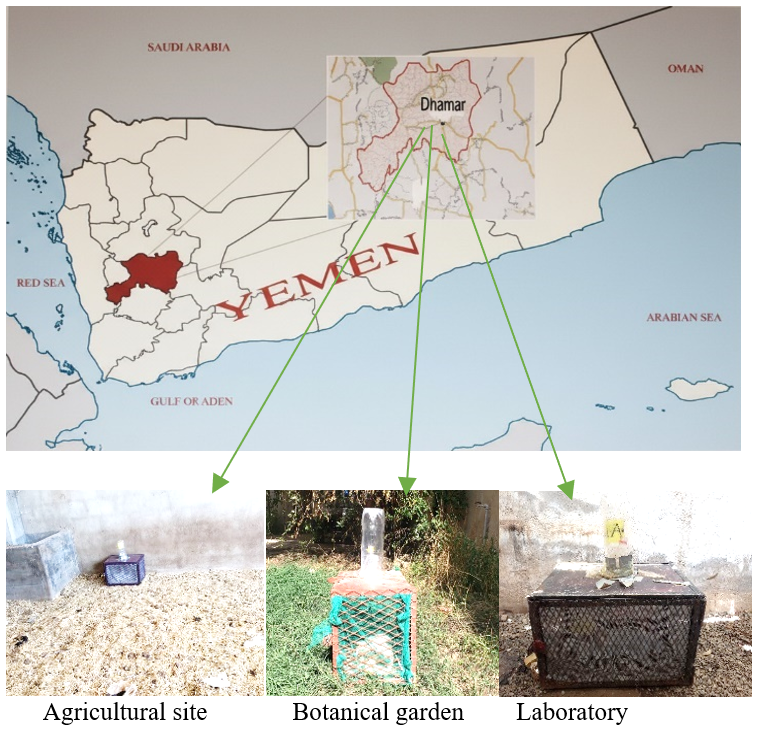
Wed Abdullah Al Raeeini, Abbas Mohammed Al-Azab, Fahd Mohammed Abd Al Galil (2026). Forensic Insect Succession and Carrion Decomposition in Indoor and Outdoor Habitats:Implications for Post-mortem Interval Estimation in Dhamar, Yemen. Sana'a University Journal of Applied Sciences and Technology, 1903-1913. DOI: https://doi.org/10.59628/jast.v4i4.2778
Wed Abdullah Al Raeeini, Abbas Mohammed Al-Azab, Fahd Mohammed Abd Al Galil . “Forensic Insect Succession and Carrion Decomposition in Indoor and Outdoor Habitats:Implications for Post-mortem Interval Estimation in Dhamar, Yemen.” Sana'a University Journal of Applied Sciences and Technology, 2026, pp. 1903-1913. https://doi.org/10.59628/jast.v4i4.2778. Accessed 30 Oct. 2026.
Wed Abdullah Al Raeeini, Abbas Mohammed Al-Azab, Fahd Mohammed Abd Al Galil . 2026. “Forensic Insect Succession and Carrion Decomposition in Indoor and Outdoor Habitats:Implications for Post-mortem Interval Estimation in Dhamar, Yemen.” Sana'a University Journal of Applied Sciences and Technology : 1903-1913. DOI: https://doi.org/10.59628/jast.v4i4.2778
Wed Abdullah Al Raeeini, Abbas Mohammed Al-Azab, Fahd Mohammed Abd Al Galil (2026) ‘Forensic Insect Succession and Carrion Decomposition in Indoor and Outdoor Habitats:Implications for Post-mortem Interval Estimation in Dhamar, Yemen’, Sana'a University Journal of Applied Sciences and Technology, pp. 1903-1913. doi: 10.59628/jast.v4i4.2778
@article{jast2026_art2778,
    author  = {Wed Abdullah Al Raeeini, Abbas Mohammed Al-Azab, Fahd Mohammed Abd Al Galil },
    title   = {Forensic Insect Succession and Carrion Decomposition in Indoor and Outdoor Habitats:Implications for Post-mortem Interval Estimation in Dhamar, Yemen},
    journal = {Sana'a University Journal of Applied Sciences and Technology},    year    = {2026},    month   = {April},    pages   = {1903-1913},    doi     = {10.59628/jast.v4i4.2778},
    url     = {https://doi.org/10.59628/jast.v4i4.2778},}
Citation copied!
Contact Authors
Forensic Insect Succession and Carrion Decomposition in Indoor and Outdoor Habitats:Implications for Post-mortem Interval Estimation in Dhamar, Yemen
Email copied!
A Comparative Model to Analyze the Impact of Tax Dataset Augmentation on the Accuracy of Machine Learning Models
Abeer Abdullah Shujaaaddeen, Ammar T.Zahary, Fadl Mutaher Ba-Alwi
1914-1923
2026-04-28
Abstract
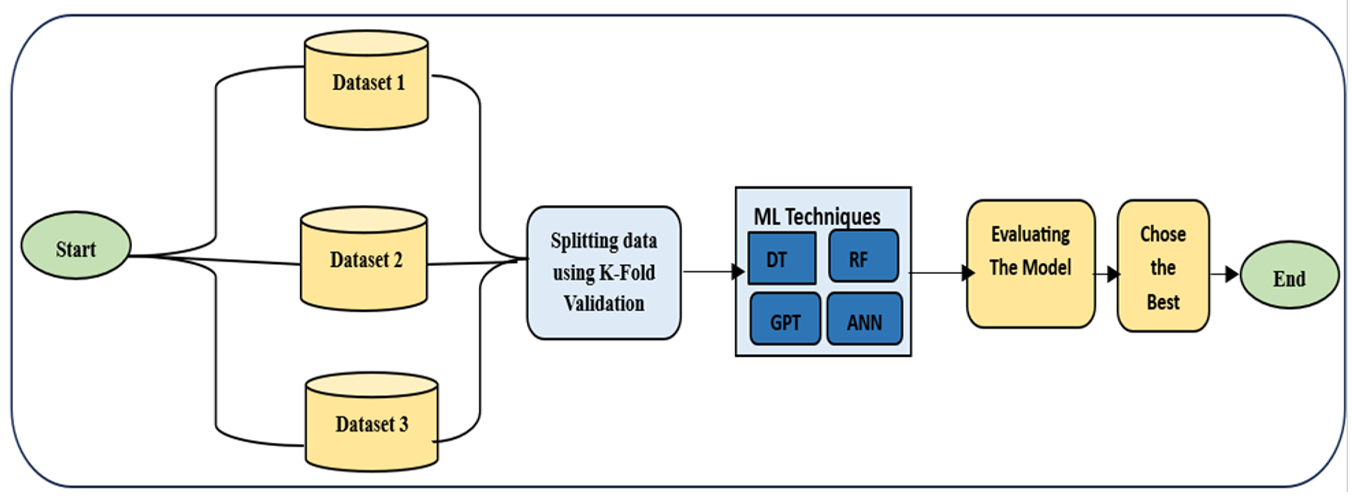
Many factors influence the efficiency of a classification model in Machine Learning, including the dataset’s size and the type of Machine Learning (ML) technique utilized in the classification process. Primarily, the accuracy varies among different machine learning methods. This paper develops a model that analyses and measures the impact of Tax Dataset Augmentation on the Accuracy of Machine Learning Models. The paper compares the performance of different models based on the most common machine learning techniques, namely: DT, RF, SVM, and ANN (MLP). Based on three datasets provided by Yemen’s Tax Authority. The first dataset contains 1083 records, while the second dataset is identical to the previous one, but with nearly five times the number of records, following data preprocessing, which resulted in approximately 5000 additional records. The last dataset is the same as the original dataset, but it has been duplicated nearly ten times, resulting in almost 10,000 records. The dataset partitioning technique utilized k-fold validation using the three datasets. Results show that the performance of ML classifiers such as ANN (MLP), DT, RF, and SVM is affected by dataset augmentation in terms of accuracy, recall, precision, and F-score. Results also show that the performance varies among the first three techniques; however, the SVM Classifier yields the lowest results. In general, despite some techniques leading to overfitting, it is found that most machine learning models utilizing tax datasets with five times the duplicates produced better outcomes than those using the original dataset. These findings provide practical guidance for tax authorities in selecting robust machine learning models under limited data availability and highlight risks associated with naïve dataset expansion.
Keywords
ML Techniques
DT, RF
ANN
Performance Measures
Tax Dataset
How to Cite This Article
Abeer Abdullah Shujaaaddeen, Ammar T.Zahary, Fadl Mutaher Ba-Alwi (2026). A Comparative Model to Analyze the Impact of Tax Dataset Augmentation on the Accuracy of Machine Learning Models. Sana'a University Journal of Applied Sciences and Technology, 1914-1923. DOI: https://doi.org/10.59628/jast.v4i4.2121
Abeer Abdullah Shujaaaddeen, Ammar T.Zahary, Fadl Mutaher Ba-Alwi . “A Comparative Model to Analyze the Impact of Tax Dataset Augmentation on the Accuracy of Machine Learning Models.” Sana'a University Journal of Applied Sciences and Technology, 2026, pp. 1914-1923. https://doi.org/10.59628/jast.v4i4.2121. Accessed 30 Oct. 2026.
Abeer Abdullah Shujaaaddeen, Ammar T.Zahary, Fadl Mutaher Ba-Alwi . 2026. “A Comparative Model to Analyze the Impact of Tax Dataset Augmentation on the Accuracy of Machine Learning Models.” Sana'a University Journal of Applied Sciences and Technology : 1914-1923. DOI: https://doi.org/10.59628/jast.v4i4.2121
Abeer Abdullah Shujaaaddeen, Ammar T.Zahary, Fadl Mutaher Ba-Alwi (2026) ‘A Comparative Model to Analyze the Impact of Tax Dataset Augmentation on the Accuracy of Machine Learning Models’, Sana'a University Journal of Applied Sciences and Technology, pp. 1914-1923. doi: 10.59628/jast.v4i4.2121
@article{jast2026_art2121,
    author  = {Abeer Abdullah Shujaaaddeen, Ammar T.Zahary, Fadl Mutaher Ba-Alwi },
    title   = {A Comparative Model to Analyze the Impact of Tax Dataset Augmentation on the Accuracy of Machine Learning Models},
    journal = {Sana'a University Journal of Applied Sciences and Technology},    year    = {2026},    month   = {April},    pages   = {1914-1923},    doi     = {10.59628/jast.v4i4.2121},
    url     = {https://doi.org/10.59628/jast.v4i4.2121},}
Citation copied!
Contact Authors
A Comparative Model to Analyze the Impact of Tax Dataset Augmentation on the Accuracy of Machine Learning Models
Email copied!
3D Static Geological Model and Volumetric Assessment of the Upper Qishn Clastic in Al Roidhat Field, Yemen
Saddam AL-Sofi, Mohammed Hail Hakimi, Adel Mohammad Al-Matary, Bassim S. Al khirbash
1924-1937
2026-04-28
Abstract
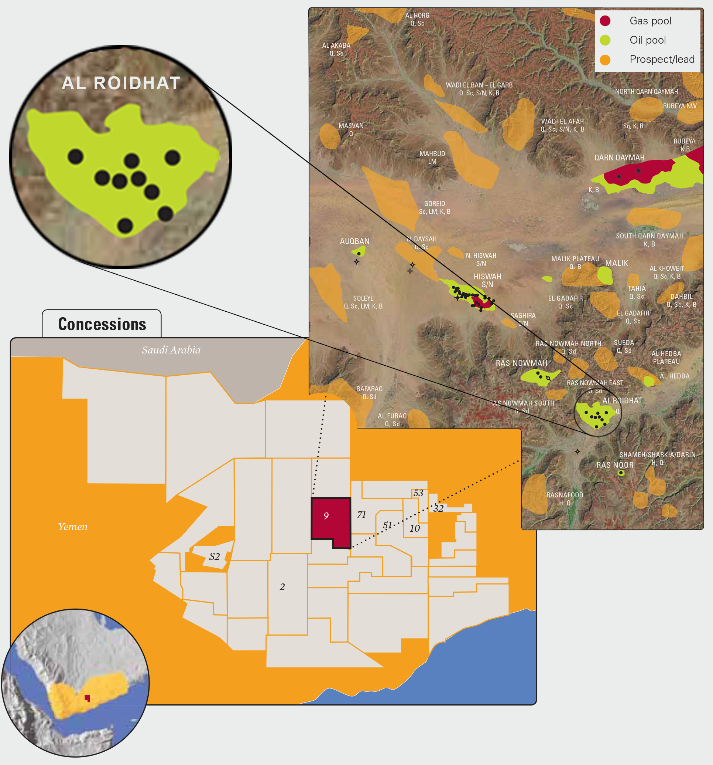
This study addresses a critical knowledge gap by presenting the first comprehensive 3D static geological model of the heavy-oil-bearing Upper Qishn Clastic Member in the Al Roidhat Field, Yemen. The model integrates data from eight wells. The workflow encompassed structural modeling, stratigraphic zonation into three reservoir units (S1, S2, S3), facies modeling using Sequential Indicator Simulation (30 realizations), and petrophysical property modeling using Sequential Gaussian Simulation. Probabilistic volumetric assessment was based on 100 stochastic realizations. Uncertainty analysis yields a P50 Stock-Tank Oil Initially in Place (STOIIP) of 56.81 million barrels (P10–P90 range: 44.40–73.39 MMSTB). The S3 unit exhibits the best reservoir quality (62.8% sand, 0.15 porosity, 47mD permeability), while the S1 unit shows good quality (48.1% sand, 0.14 porosity, 60 mD permeability). Yet, the S1 unit contains 58% of the STOIIP because it lies entirely within the oil column, whereas a significant portion of S3 is submerged below the oil-water contact. Together, S1 and S3 account for approximately 85% of the total resource. This pioneering 3D model quantifies reservoir heterogeneity and structural controls, establishing an essential digital foundation for the field. It demonstrates that structural position can override intrinsic rock quality in governing hydrocarbon distribution, and it clearly identifies the S1 and S3 units as priority targets for future development and enhanced oil-recovery planning in this challenging heavy-oil reservoir.
Keywords
3D Geological Model
Heavy Oil
Upper Qishn Clastic
Uncertainty Analysis
Reservoir Characterization
Al Roidhat Field
STOIIP
How to Cite This Article
Saddam AL-Sofi, Mohammed Hail Hakimi, Adel Mohammad Al-Matary, Bassim S. Al khirbash (2026). 3D Static Geological Model and Volumetric Assessment of the Upper Qishn Clastic in Al Roidhat Field, Yemen. Sana'a University Journal of Applied Sciences and Technology, 1924-1937. DOI: https://doi.org/10.59628/jast.v4i4.2602
Saddam AL-Sofi, Mohammed Hail Hakimi, Adel Mohammad Al-Matary, Bassim S. Al khirbash . “3D Static Geological Model and Volumetric Assessment of the Upper Qishn Clastic in Al Roidhat Field, Yemen.” Sana'a University Journal of Applied Sciences and Technology, 2026, pp. 1924-1937. https://doi.org/10.59628/jast.v4i4.2602. Accessed 30 Oct. 2026.
Saddam AL-Sofi, Mohammed Hail Hakimi, Adel Mohammad Al-Matary, Bassim S. Al khirbash . 2026. “3D Static Geological Model and Volumetric Assessment of the Upper Qishn Clastic in Al Roidhat Field, Yemen.” Sana'a University Journal of Applied Sciences and Technology : 1924-1937. DOI: https://doi.org/10.59628/jast.v4i4.2602
Saddam AL-Sofi, Mohammed Hail Hakimi, Adel Mohammad Al-Matary, Bassim S. Al khirbash (2026) ‘3D Static Geological Model and Volumetric Assessment of the Upper Qishn Clastic in Al Roidhat Field, Yemen’, Sana'a University Journal of Applied Sciences and Technology, pp. 1924-1937. doi: 10.59628/jast.v4i4.2602
@article{jast2026_art2602,
    author  = {Saddam AL-Sofi, Mohammed Hail Hakimi, Adel Mohammad Al-Matary, Bassim S. Al khirbash },
    title   = {3D Static Geological Model and Volumetric Assessment of the Upper Qishn Clastic in Al Roidhat Field, Yemen},
    journal = {Sana'a University Journal of Applied Sciences and Technology},    year    = {2026},    month   = {April},    pages   = {1924-1937},    doi     = {10.59628/jast.v4i4.2602},
    url     = {https://doi.org/10.59628/jast.v4i4.2602},}
Citation copied!
Contact Authors
3D Static Geological Model and Volumetric Assessment of the Upper Qishn Clastic in Al Roidhat Field, Yemen
Email copied!
A Proposed Incremental Distance Based Clustering of Interesting Patterns for Big Data
Akram A. M. Mustafa, Abdulmajed A. G. Al-Khulidi, Ahmed S. Al-Hegami
1938-1949
2026-04-28
Abstract
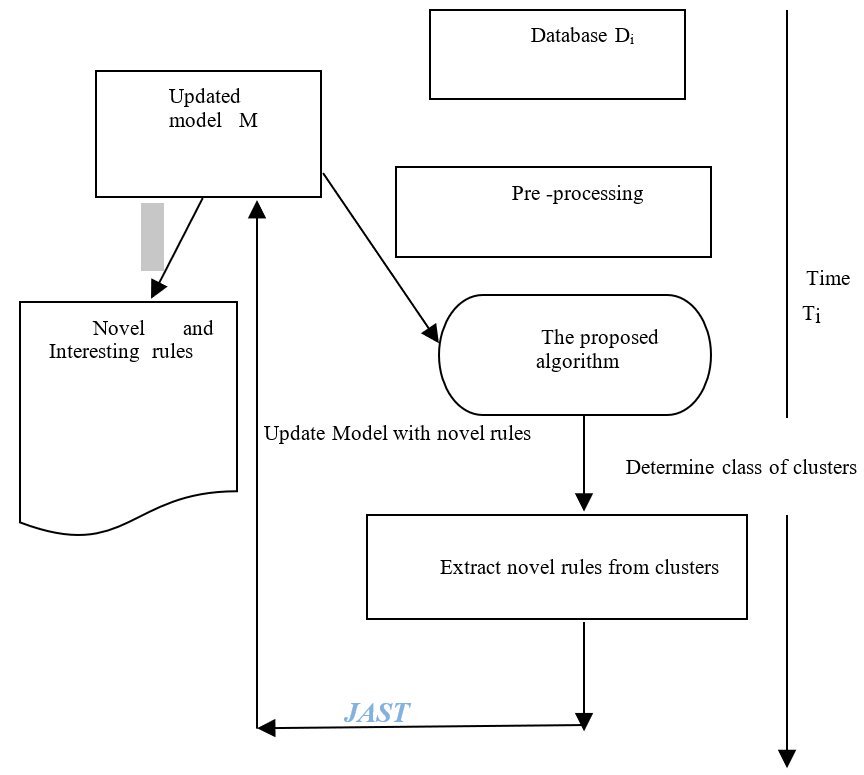
Clustering is a fundamental task in unsupervised learning, aiming to group similar data points while maximizing inter-group dissimilarity. Traditional clustering algorithms often struggle with large-scale datasets containing mixed data types (numerical and categorical). This Research introduces an incremental clustering algorithm that incorporates a novelty criterion to identify only interesting patterns from big data. The novelty criterion functions as a distance metric, measuring deviation between instances and labeling an instance as novel if its deviation exceeds a user-defined threshold. Unlike conventional methods such as k-means, the proposed approach does not require predefining the number of clusters; instead, it dynamically determines them during execution. This flexibility enhances its applicability to complex datasets. The algorithm was implemented and evaluated using public datasets, Through experimentation it became clear that the proposed algorithm achieved the same high accuracy of 81.5% as the DBSCAN algorithm. and However it surpassed it in speed, taking only 22 seconds compared to 100 seconds. This means it is more efficient the same level of accuracy but in significantly less time, making it a better option for practical applications.
Keywords
Data mining
incremental clustering
parallel mining
machine learning
novelty measure
How to Cite This Article
Akram A. M. Mustafa, Abdulmajed A. G. Al-Khulidi, Ahmed S. Al-Hegami (2026). A Proposed Incremental Distance Based Clustering of Interesting Patterns for Big Data. Sana'a University Journal of Applied Sciences and Technology, 1938-1949. DOI: https://doi.org/10.59628/jast.v4i4.2271
Akram A. M. Mustafa, Abdulmajed A. G. Al-Khulidi, Ahmed S. Al-Hegami . “A Proposed Incremental Distance Based Clustering of Interesting Patterns for Big Data.” Sana'a University Journal of Applied Sciences and Technology, 2026, pp. 1938-1949. https://doi.org/10.59628/jast.v4i4.2271. Accessed 30 Oct. 2026.
Akram A. M. Mustafa, Abdulmajed A. G. Al-Khulidi, Ahmed S. Al-Hegami . 2026. “A Proposed Incremental Distance Based Clustering of Interesting Patterns for Big Data.” Sana'a University Journal of Applied Sciences and Technology : 1938-1949. DOI: https://doi.org/10.59628/jast.v4i4.2271
Akram A. M. Mustafa, Abdulmajed A. G. Al-Khulidi, Ahmed S. Al-Hegami (2026) ‘A Proposed Incremental Distance Based Clustering of Interesting Patterns for Big Data’, Sana'a University Journal of Applied Sciences and Technology, pp. 1938-1949. doi: 10.59628/jast.v4i4.2271
@article{jast2026_art2271,
    author  = {Akram A. M. Mustafa, Abdulmajed A. G. Al-Khulidi, Ahmed S. Al-Hegami },
    title   = {A Proposed Incremental Distance Based Clustering of Interesting Patterns for Big Data},
    journal = {Sana'a University Journal of Applied Sciences and Technology},    year    = {2026},    month   = {April},    pages   = {1938-1949},    doi     = {10.59628/jast.v4i4.2271},
    url     = {https://doi.org/10.59628/jast.v4i4.2271},}
Citation copied!
Contact Authors
A Proposed Incremental Distance Based Clustering of Interesting Patterns for Big Data
Email copied!
Defining a new type of α-supra open soft sets using parametric supra topologies
Tareq M. Al-shami, S. Saleh, Mohammed Jameel
1950-1958
2026-04-28
Abstract
In this paper, we introduce novel concepts that represent unique contributions to the framework of supra soft topological spaces. First, we define and characterize the notion of feeble α-supra open soft subsets, establishing their fundamental properties. Through illustrative examples, we demonstrate the relationships between this class
of soft subsets and existing generalizations of supra open soft sets. Then, we put forward the concepts of interior, closure, frontier, and accumulation operators induced by the class of feeble α-supra open soft and α-closed subsets, deriving their key properties and establishing fundamental relationships through some formulas
Keywords
feeble α-supra open soft set
feeble α-supra soft interior
feeble α-supra closure operators.
How to Cite This Article
Tareq M. Al-shami, S. Saleh, Mohammed Jameel (2026). Defining a new type of α-supra open soft sets using parametric supra topologies. Sana'a University Journal of Applied Sciences and Technology, 1950-1958. DOI: https://doi.org/10.59628/jast.v4i4.2704
Tareq M. Al-shami, S. Saleh, Mohammed Jameel . “Defining a new type of α-supra open soft sets using parametric supra topologies.” Sana'a University Journal of Applied Sciences and Technology, 2026, pp. 1950-1958. https://doi.org/10.59628/jast.v4i4.2704. Accessed 30 Oct. 2026.
Tareq M. Al-shami, S. Saleh, Mohammed Jameel . 2026. “Defining a new type of α-supra open soft sets using parametric supra topologies.” Sana'a University Journal of Applied Sciences and Technology : 1950-1958. DOI: https://doi.org/10.59628/jast.v4i4.2704
Tareq M. Al-shami, S. Saleh, Mohammed Jameel (2026) ‘Defining a new type of α-supra open soft sets using parametric supra topologies’, Sana'a University Journal of Applied Sciences and Technology, pp. 1950-1958. doi: 10.59628/jast.v4i4.2704
@article{jast2026_art2704,
    author  = {Tareq M. Al-shami, S. Saleh, Mohammed Jameel },
    title   = {Defining a new type of α-supra open soft sets using parametric supra topologies},
    journal = {Sana'a University Journal of Applied Sciences and Technology},    year    = {2026},    month   = {April},    pages   = {1950-1958},    doi     = {10.59628/jast.v4i4.2704},
    url     = {https://doi.org/10.59628/jast.v4i4.2704},}
Citation copied!
Contact Authors
Defining a new type of α-supra open soft sets using parametric supra topologies
Email copied!
Performance of Encryption schemes in 5G Networks
Mohamed Hankal
1959-1966
2026-04-28
Abstract
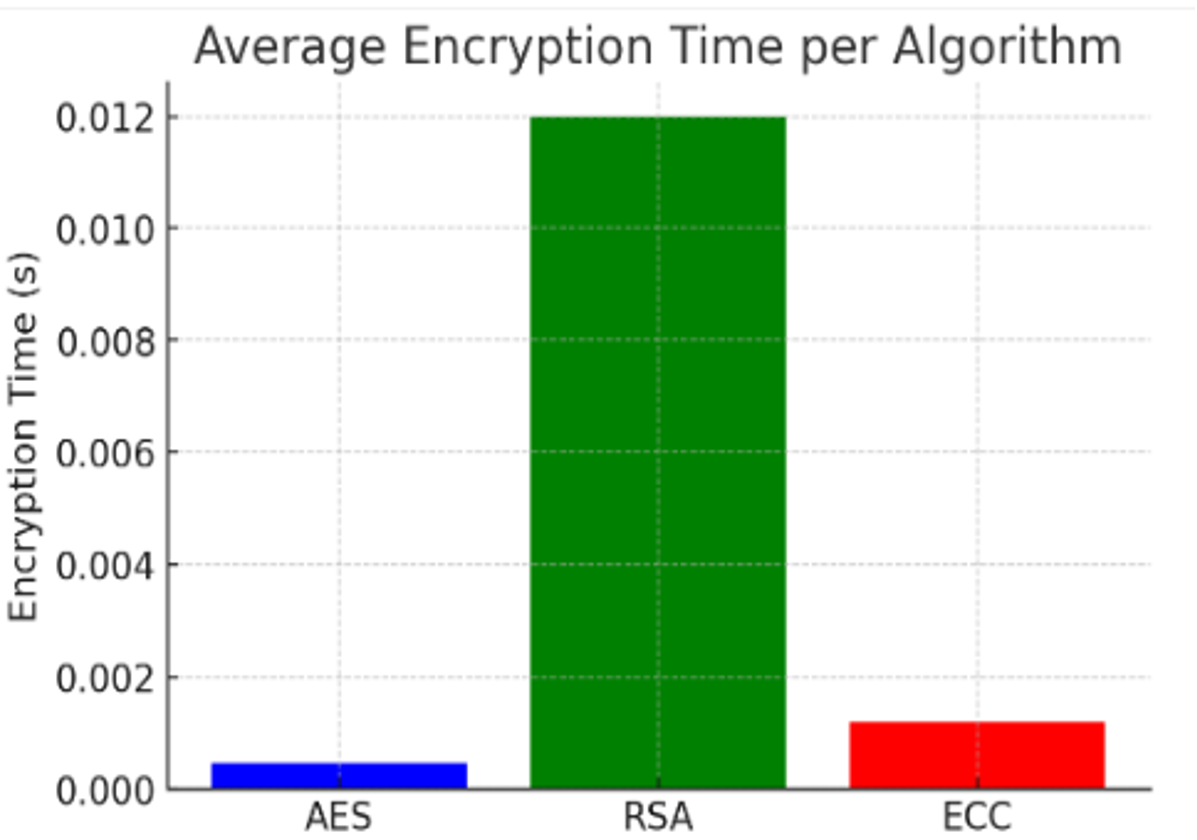
The rapid evolution of 5G networks introduces unprecedented high-speed communication and massive connectivity, but it also intensifies security challenges. Ensuring confidentiality, integrity, and availability of data requires robust encryption mechanisms. This study evaluates the performance and overhead of Advanced Encryption Standard (AES), Rivest–Shamir–Adleman (RSA), and Elliptic Curve Cryptography (ECC) in 5G networks using simulation-based analysis. Metrics considered include latency (ms), throughput (%), encryption/decryption time per MB, and computational cost on UE-class hardware, providing quantitative comparison across typical 5G scenarios (high mobility eMBB, URLLC, and mMTCIoT devices).
Key findings: AES achieves low latency and high throughput for bulk data; ECC provides secure, lightweight key exchange; RSA is suitable only for session key establishment due to higher computational overhead. Overall, hybrid AES+ECC provides the best tradeoff between security and performance in realistic 5G environments.
Keywords
5G
AES
RSA
ECC
Encryption
Network Security
How to Cite This Article
Mohamed Hankal (2026). Performance of Encryption schemes in 5G Networks. Sana'a University Journal of Applied Sciences and Technology, 1959-1966. DOI: https://doi.org/10.59628/jast.v4i4.2317
Mohamed Hankal . “Performance of Encryption schemes in 5G Networks.” Sana'a University Journal of Applied Sciences and Technology, 2026, pp. 1959-1966. https://doi.org/10.59628/jast.v4i4.2317. Accessed 30 Oct. 2026.
Mohamed Hankal . 2026. “Performance of Encryption schemes in 5G Networks.” Sana'a University Journal of Applied Sciences and Technology : 1959-1966. DOI: https://doi.org/10.59628/jast.v4i4.2317
Mohamed Hankal (2026) ‘Performance of Encryption schemes in 5G Networks’, Sana'a University Journal of Applied Sciences and Technology, pp. 1959-1966. doi: 10.59628/jast.v4i4.2317
@article{jast2026_art2317,
    author  = {Mohamed Hankal },
    title   = {Performance of Encryption schemes in 5G Networks},
    journal = {Sana'a University Journal of Applied Sciences and Technology},    year    = {2026},    month   = {April},    pages   = {1959-1966},    doi     = {10.59628/jast.v4i4.2317},
    url     = {https://doi.org/10.59628/jast.v4i4.2317},}
Citation copied!
Contact Authors
Performance of Encryption schemes in 5G Networks
Email copied!
The Discriminate Analysis with Applied on Diabetes non- Diabetes in Sana’a, Yemen for the Year 2025
Amtalteef M.A. Al-Hamzi, Amani M.A. Al-Hamzi
1967-1976
2026-04-28
Abstract
This study aimed to identify the most significant factors distinguishing between diabetes and non-diabetes, using linear discriminant analysis LDA. A sample of 368 individuals (225 diabetes mellitus, 143 non- diabetes mellitus) was analyzed based on data collected through via personal interviews and Al-Thawrah General Hospital in the capital Sana’a records, for the year 2025. The stepwise discriminant analysis led to the building of a statistically significant model. Results revealed that the variables (x5) body mass index BMI, (x10) Cholesterol, ( x6) Gout, (x9) Blood pressure, and ( x2) Age, had the highest discriminative power, as indicated by standardized coefficients and Wilks’ Lambda values (p < 0.05). These variables significantly contributed to classifying cases, while the remaining variables did not demonstrate a significant effect. The overall correct classification rate for diabetes mellitus DM reached 87.3%, when the overall classification accuracy of the model reached 89.9%, confirming its strong predictive power.
Keywords
Diabetes Mellitus DM
Linear Discriminant
Analysis LDA
Discriminant Function DF
Classification Function CF.
How to Cite This Article
Amtalteef M.A. Al-Hamzi, Amani M.A. Al-Hamzi (2026). The Discriminate Analysis with Applied on Diabetes non- Diabetes in Sana’a, Yemen for the Year 2025. Sana'a University Journal of Applied Sciences and Technology, 1967-1976. DOI: https://doi.org/10.59628/jast.v4i4.2555
Amtalteef M.A. Al-Hamzi, Amani M.A. Al-Hamzi . “The Discriminate Analysis with Applied on Diabetes non- Diabetes in Sana’a, Yemen for the Year 2025.” Sana'a University Journal of Applied Sciences and Technology, 2026, pp. 1967-1976. https://doi.org/10.59628/jast.v4i4.2555. Accessed 30 Oct. 2026.
Amtalteef M.A. Al-Hamzi, Amani M.A. Al-Hamzi . 2026. “The Discriminate Analysis with Applied on Diabetes non- Diabetes in Sana’a, Yemen for the Year 2025.” Sana'a University Journal of Applied Sciences and Technology : 1967-1976. DOI: https://doi.org/10.59628/jast.v4i4.2555
Amtalteef M.A. Al-Hamzi, Amani M.A. Al-Hamzi (2026) ‘The Discriminate Analysis with Applied on Diabetes non- Diabetes in Sana’a, Yemen for the Year 2025’, Sana'a University Journal of Applied Sciences and Technology, pp. 1967-1976. doi: 10.59628/jast.v4i4.2555
@article{jast2026_art2555,
    author  = {Amtalteef M.A. Al-Hamzi, Amani M.A. Al-Hamzi },
    title   = {The Discriminate Analysis with Applied on Diabetes non- Diabetes in Sana’a, Yemen for the Year 2025},
    journal = {Sana'a University Journal of Applied Sciences and Technology},    year    = {2026},    month   = {April},    pages   = {1967-1976},    doi     = {10.59628/jast.v4i4.2555},
    url     = {https://doi.org/10.59628/jast.v4i4.2555},}
Citation copied!
Contact Authors
The Discriminate Analysis with Applied on Diabetes non- Diabetes in Sana’a, Yemen for the Year 2025
Email copied!
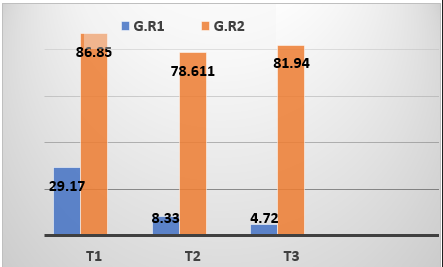
Mutation Induction in a Yemeni Coffee Variety Using Sodium Azide and Peganum harmala seeds Extract
Buthaina Othman Abdullah Bahwirth, Amin Abdo Sofian AL-Hakimi, Mahasen Al-Munibari
1977-1997
2026-04-28
Abstract
The research was carried out during 2023/2024, in the laboratory of the Participatory Foundation for Research and Dissemination and the Faculty of Agriculture, Foods, and Environment, Sana'a University, Yemen under controlled condition, for the objective to improve genetic variation in Yemeni coffee. The seeds of a local variety "Udini" were used, and four treatments, namely the control without any treatment of the seeds, the second treatment was soaked with sodium azide solution at a concentration of 0.1 molar and the third treatment was treated with the seeds extract of the Harmel plant (Peganum harmala L.), and the fourth by dipping the roots of the coffee seedlings after germination with the extract of Harmel, in this treatment all the plants were died within the first weeks of dipping the seedling roots in the Harmal extract, this indicates the importance of using lower concentrations and immersion times. The results showed that the use of mutational chemicals had a role in causing changes in the speed and rate of seed germination, in the length of seedlings, and in the number and length of roots, and the analysis of the frequency curves showed that the distribution of the frequency of the natural plant population was clearly affected in the treatments by the mutagenic substances compared to the natural control group in relation to the most traits. The phenotypic transformations that appeared on the cotyledon leaves and on the real leaves developing on the first node were recorded, and seven forms of deformations were distinguished, represented in heterogeneity in the cotyledon leaves and in the real leaves and in the cotyledon leaves and real leaves together. These results clearly indicate that mutations can be used as a tool to improve genetic variation in Yemeni coffee.
Keywords
.Coffea arabica L
Mutations
Sodium Azaid
.Peganum harmala L
Genetic Improvement
Foliar transformations
How to Cite This Article
Buthaina Othman Abdullah Bahwirth, Amin Abdo Sofian AL-Hakimi, Mahasen Al-Munibari (2026). Mutation Induction in a Yemeni Coffee Variety Using Sodium Azide and Peganum harmala seeds Extract. Sana'a University Journal of Applied Sciences and Technology, 1977-1997. DOI: https://doi.org/10.59628/jast.v4i4.2538
Buthaina Othman Abdullah Bahwirth, Amin Abdo Sofian AL-Hakimi, Mahasen Al-Munibari . “Mutation Induction in a Yemeni Coffee Variety Using Sodium Azide and Peganum harmala seeds Extract.” Sana'a University Journal of Applied Sciences and Technology, 2026, pp. 1977-1997. https://doi.org/10.59628/jast.v4i4.2538. Accessed 30 Oct. 2026.
Buthaina Othman Abdullah Bahwirth, Amin Abdo Sofian AL-Hakimi, Mahasen Al-Munibari . 2026. “Mutation Induction in a Yemeni Coffee Variety Using Sodium Azide and Peganum harmala seeds Extract.” Sana'a University Journal of Applied Sciences and Technology : 1977-1997. DOI: https://doi.org/10.59628/jast.v4i4.2538
Buthaina Othman Abdullah Bahwirth, Amin Abdo Sofian AL-Hakimi, Mahasen Al-Munibari (2026) ‘Mutation Induction in a Yemeni Coffee Variety Using Sodium Azide and Peganum harmala seeds Extract’, Sana'a University Journal of Applied Sciences and Technology, pp. 1977-1997. doi: 10.59628/jast.v4i4.2538
@article{jast2026_art2538,
    author  = {Buthaina Othman Abdullah Bahwirth, Amin Abdo Sofian AL-Hakimi, Mahasen Al-Munibari },
    title   = {Mutation Induction in a Yemeni Coffee Variety Using Sodium Azide and Peganum harmala seeds Extract},
    journal = {Sana'a University Journal of Applied Sciences and Technology},    year    = {2026},    month   = {April},    pages   = {1977-1997},    doi     = {10.59628/jast.v4i4.2538},
    url     = {https://doi.org/10.59628/jast.v4i4.2538},}
Citation copied!
Contact Authors
Mutation Induction in a Yemeni Coffee Variety Using Sodium Azide and Peganum harmala seeds Extract
Email copied!
A New Family of Self-Adjoint Quantum Operators with Logarithmic Potential: From Self-Adjointness to Sharp Spectral Asymptotics and Green’s Function Analysis
Osama Aldahyani, Abdu A. Alkelly
1998-2009
2026-04-28
Abstract
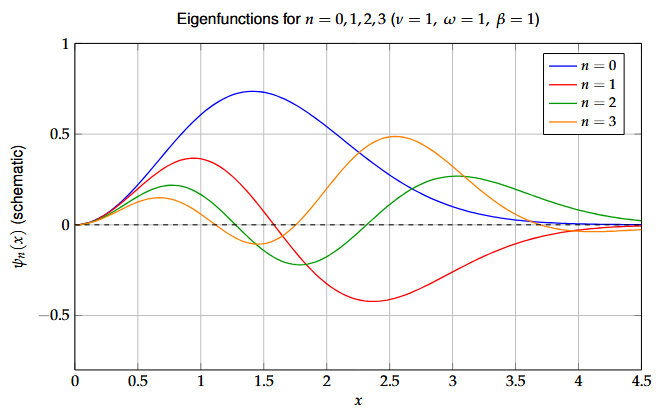
The Schrödinger operator with a combined singular, confining, and logarithmic potential arises in diverse physical contexts—from quantum dots and Bose–Einstein condensates to effective field theories. Despite its broad relevance, a rigorous spectral analysis of this operator family has remained elusive due to the simultaneous presence of three challenging features: a $1/x^{2}$ singularity at the origin, an unbounded logarithmic term, and harmonic confinement at infinity.
We introduce and rigorously analyze the one-parameter family of operators
\[H = -\frac{d^2}{dx^2} + \frac{\nu(\nu + 1)}{x^2} + \omega^2 x^2 + \beta \ln x,\qquad \nu > 0,\;\beta \in \mathbb{R},\;\omega > 0,\]
acting on $L^{2}(0,\infty)$. Self-adjointness is established through a combination of Weyl's limit-point/limit-circle classification and the KLMN theorem for quadratic forms, circumventing the failure of standard Kato–Rellich perturbation theory. The spectrum is shown to be purely discrete and bounded below, with simple eigenvalues that depend analytically on the logarithmic coupling $\beta$.
The central result of this work is the sharp asymptotic expansion of the eigenvalues for large quantum numbers:
\[E_{n} = 2\omega n + \beta \ln n + \gamma_{0} + \frac{\beta}{2n} + \mathcal{O}\left(\frac{1}{n^{2}}\right),\]
where the constant
\[\gamma_{0} = \omega \left(\nu + \tfrac{3}{2}\right) + \beta \left(\ln \sqrt{\tfrac{2}{\omega}} - \tfrac{1}{2}\right)\]
is determined explicitly from the Langer-corrected WKB quantization condition. This expansion reveals a distinctive logarithmic growth that modifies the standard linear Weyl law, yielding the spectral counting function
\[N(E) = \frac{E}{2\omega} - \frac{\beta}{2\omega}\ln E + \mathcal{O}(1).\]
To complement the asymptotic analysis, we construct the exact Green's function and prove the Hilbert–Schmidt property of the resolvent. Numerical diagonalization using a logarithmic grid confirms the asymptotic formula with relative errors below $0.02\%$ for all $n \geq 5$, validating both the analytic predictions and the underlying WKB methodology.
These results provide the first complete spectral characterization of Schrödinger operators with logarithmic potentials in the presence of singular and confining terms, with potential applications to few-body quantum systems, spectral geometry, and the analysis of trace formulae.
Keywords
Schrödinger operators
logarithmic potential
spectral asymptotics
WKB method
Langer correction
self-adjointness
Green’s function
Hilbert-Schmidt property
modified Weyl law
quantum dots
Bose-Einstein condensates.
How to Cite This Article
Osama Aldahyani, Abdu A. Alkelly (2026). A New Family of Self-Adjoint Quantum Operators with Logarithmic Potential: From Self-Adjointness to Sharp Spectral Asymptotics and Green’s Function Analysis. Sana'a University Journal of Applied Sciences and Technology, 1998-2009. DOI: https://doi.org/10.59628/jast.v4i4.2966
Osama Aldahyani, Abdu A. Alkelly . “A New Family of Self-Adjoint Quantum Operators with Logarithmic Potential: From Self-Adjointness to Sharp Spectral Asymptotics and Green’s Function Analysis.” Sana'a University Journal of Applied Sciences and Technology, 2026, pp. 1998-2009. https://doi.org/10.59628/jast.v4i4.2966. Accessed 30 Oct. 2026.
Osama Aldahyani, Abdu A. Alkelly . 2026. “A New Family of Self-Adjoint Quantum Operators with Logarithmic Potential: From Self-Adjointness to Sharp Spectral Asymptotics and Green’s Function Analysis.” Sana'a University Journal of Applied Sciences and Technology : 1998-2009. DOI: https://doi.org/10.59628/jast.v4i4.2966
Osama Aldahyani, Abdu A. Alkelly (2026) ‘A New Family of Self-Adjoint Quantum Operators with Logarithmic Potential: From Self-Adjointness to Sharp Spectral Asymptotics and Green’s Function Analysis’, Sana'a University Journal of Applied Sciences and Technology, pp. 1998-2009. doi: 10.59628/jast.v4i4.2966
@article{jast2026_art2966,
    author  = {Osama Aldahyani, Abdu A. Alkelly },
    title   = {A New Family of Self-Adjoint Quantum Operators with Logarithmic Potential: From Self-Adjointness to Sharp Spectral Asymptotics and Green’s Function Analysis},
    journal = {Sana'a University Journal of Applied Sciences and Technology},    year    = {2026},    month   = {April},    pages   = {1998-2009},    doi     = {10.59628/jast.v4i4.2966},
    url     = {https://doi.org/10.59628/jast.v4i4.2966},}
Citation copied!
Contact Authors
A New Family of Self-Adjoint Quantum Operators with Logarithmic Potential: From Self-Adjointness to Sharp Spectral Asymptotics and Green’s Function Analysis
Email copied!
Review
2 Articles
Organizational AI Readiness for Telecom Project Management: A Conceptual Review and Diagnostic Framework
Mohammed Abdullah Thabit Al-maazi, Ibrahim Alameri, Farouk A. Al-Fahaidy
2010-2024
2026-04-28
Abstract
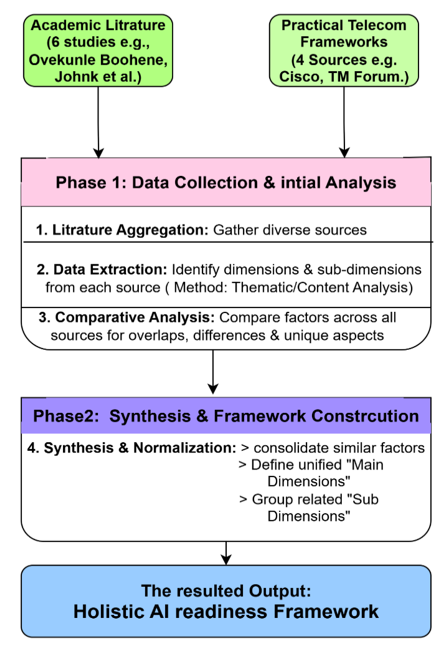
Telecommunications operators are under increasing pressure to use Artificial Intelligence (AI) to keep up with the recent technologies and stay ahead in the service provision advancement. However, within organizations that are not adequately prepared for AI adoption, many of these initiatives fail to gain traction. The study explores how existing academic research and practical frameworks can conceptualize organizational AI readiness in project-based telecom contexts. It synthesizes six peer-reviewed academic studies on AI readiness and digital transformation and four telecom-relevant AI readiness and maturity frameworks from industry bodies. Using a hybrid Technology–Organization–Environment (TOE) and People Process–Technology-in-use–Data (PPTD) lens, the 80 readiness indicators derived from the academic and practical resources were coded. Then, analyzed them through reflexive thematic analysis and identified nine interrelated AI readiness themes: strategic AI vision and business alignment; leadership, culture and change climate; human capital and AI skills; data assets, governance and protection; technology and infrastructure backbone; AI solutions, lifecycle and experimentation; organizational processes, governance and project operations; value realization and performance impact; and external ecosystem, regulation and partnerships. These themes are integrated into a conceptual diagnostic framework tailored to project management in telecom organizations and motivated by the challenges of communication service providers in contexts such as Yemen. The resulted framework addresses the gap of fragmented academic and practical perspectives. This offers telecom project management offices (PMOs) a conceptualizing mechanism to reflect on AI readiness, identify potential gaps and prioritizing interventions. In the same time, it provides a basis for future empirical validation and cross-sector comparison.
Keywords
Artificial Intelligence
Organizational Readiness
Project Management
Telecommunications
Digital Transformation
Readiness Framework
How to Cite This Article
Mohammed Abdullah Thabit Al-maazi, Ibrahim Alameri, Farouk A. Al-Fahaidy (2026). Organizational AI Readiness for Telecom Project Management: A Conceptual Review and Diagnostic Framework. Sana'a University Journal of Applied Sciences and Technology, 2010-2024. DOI: https://doi.org/10.59628/jast.v4i4.2682
Mohammed Abdullah Thabit Al-maazi, Ibrahim Alameri, Farouk A. Al-Fahaidy . “Organizational AI Readiness for Telecom Project Management: A Conceptual Review and Diagnostic Framework.” Sana'a University Journal of Applied Sciences and Technology, 2026, pp. 2010-2024. https://doi.org/10.59628/jast.v4i4.2682. Accessed 30 Oct. 2026.
Mohammed Abdullah Thabit Al-maazi, Ibrahim Alameri, Farouk A. Al-Fahaidy . 2026. “Organizational AI Readiness for Telecom Project Management: A Conceptual Review and Diagnostic Framework.” Sana'a University Journal of Applied Sciences and Technology : 2010-2024. DOI: https://doi.org/10.59628/jast.v4i4.2682
Mohammed Abdullah Thabit Al-maazi, Ibrahim Alameri, Farouk A. Al-Fahaidy (2026) ‘Organizational AI Readiness for Telecom Project Management: A Conceptual Review and Diagnostic Framework’, Sana'a University Journal of Applied Sciences and Technology, pp. 2010-2024. doi: 10.59628/jast.v4i4.2682
@article{jast2026_art2682,
    author  = {Mohammed Abdullah Thabit Al-maazi, Ibrahim Alameri, Farouk A. Al-Fahaidy },
    title   = {Organizational AI Readiness for Telecom Project Management: A Conceptual Review and Diagnostic Framework},
    journal = {Sana'a University Journal of Applied Sciences and Technology},    year    = {2026},    month   = {April},    pages   = {2010-2024},    doi     = {10.59628/jast.v4i4.2682},
    url     = {https://doi.org/10.59628/jast.v4i4.2682},}
Citation copied!
Contact Authors
Organizational AI Readiness for Telecom Project Management: A Conceptual Review and Diagnostic Framework
Email copied!
Smart cybersecurity strategies based on deep reinforcement learning : A Literature Review
Aleah Abdulkaher Alshamiri, Ghaleb H. Al Gaphari
2025-2033
2026-04-28
DOI:
10.59628/d80zj848
Abstract
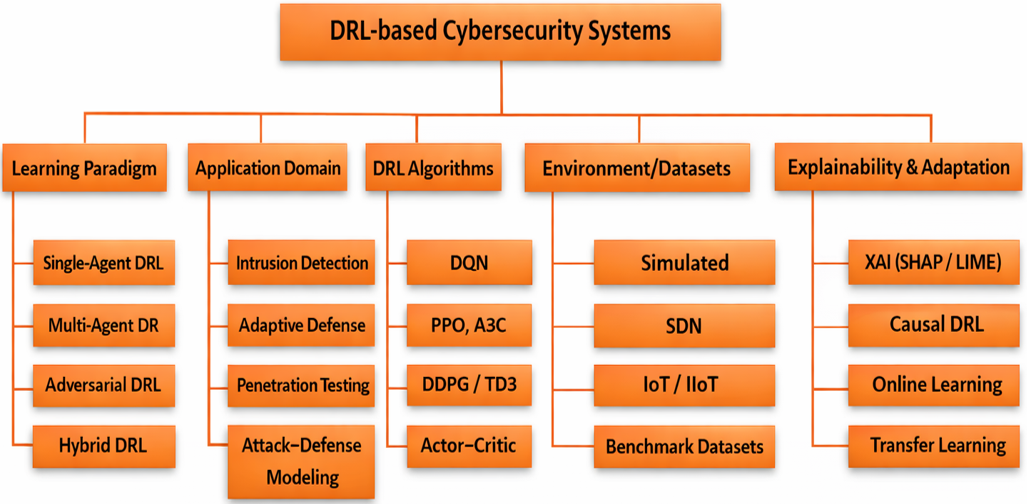
This paper presents a literature review on the application of deep reinforcement learning (DRL) in cybersecurity. It focuses on key domains, including intrusion detection, adaptive cyber defense, multi-agent coordination, and automated penetration testing. A total of 18 peer-reviewed studies published between 2022 and 2025 were selected through a structured review process and analyzed using performance metrics such as accuracy, precision, recall, and F1-score.The results indicate that multi-agent DRL approaches generally outperform single-agent models in dynamic attack environments. Hybrid DRL models that integrate deep learning techniques, such as convolutional and recurrent neural networks and attention mechanisms, show improved detection accuracy and adaptability. DRL-based penetration testing methods also demonstrate the ability to autonomously explore vulnerabilities and optimize attack strategies. However, challenges remain, including limited generalization to real-world scenarios, high computational costs, low interpretability, and the lack of standardized datasets. Addressing these issues can enable the development of more adaptive, efficient, and reliable cybersecurity systems.
Keywords
Deep Reinforcement Learning
Cybersecurity
Threat Detection
Automated Penetration Testing
Explainable Artificial Intelligence
Multi- Agent Systems.
How to Cite This Article
Aleah Abdulkaher Alshamiri, Ghaleb H. Al Gaphari (2026). Smart cybersecurity strategies based on deep reinforcement learning : A Literature Review. Sana'a University Journal of Applied Sciences and Technology, 2025-2033. DOI: https://doi.org/10.59628/d80zj848
Aleah Abdulkaher Alshamiri, Ghaleb H. Al Gaphari . “Smart cybersecurity strategies based on deep reinforcement learning : A Literature Review.” Sana'a University Journal of Applied Sciences and Technology, 2026, pp. 2025-2033. https://doi.org/10.59628/d80zj848. Accessed 30 Oct. 2026.
Aleah Abdulkaher Alshamiri, Ghaleb H. Al Gaphari . 2026. “Smart cybersecurity strategies based on deep reinforcement learning : A Literature Review.” Sana'a University Journal of Applied Sciences and Technology : 2025-2033. DOI: https://doi.org/10.59628/d80zj848
Aleah Abdulkaher Alshamiri, Ghaleb H. Al Gaphari (2026) ‘Smart cybersecurity strategies based on deep reinforcement learning : A Literature Review’, Sana'a University Journal of Applied Sciences and Technology, pp. 2025-2033. doi: 10.59628/d80zj848
@article{jast2026_art2574,
    author  = {Aleah Abdulkaher Alshamiri, Ghaleb H. Al Gaphari },
    title   = {Smart cybersecurity strategies based on deep reinforcement learning : A Literature Review},
    journal = {Sana'a University Journal of Applied Sciences and Technology},    year    = {2026},    month   = {April},    pages   = {2025-2033},    doi     = {10.59628/d80zj848},
    url     = {https://doi.org/10.59628/d80zj848},}
Citation copied!
Contact Authors
Smart cybersecurity strategies based on deep reinforcement learning : A Literature Review
Email copied!
