
Current Issue
Sana'a University Journal of Applied Sciences and Technology
Vol. 4 No. 8 (2026)
2026-08-28
15 Articles
The Fourth Volume – The Eighth Issue of the Sana'a University Journal of Applied Sciences and Technology
Article
14 Articles
How to Cite This Article
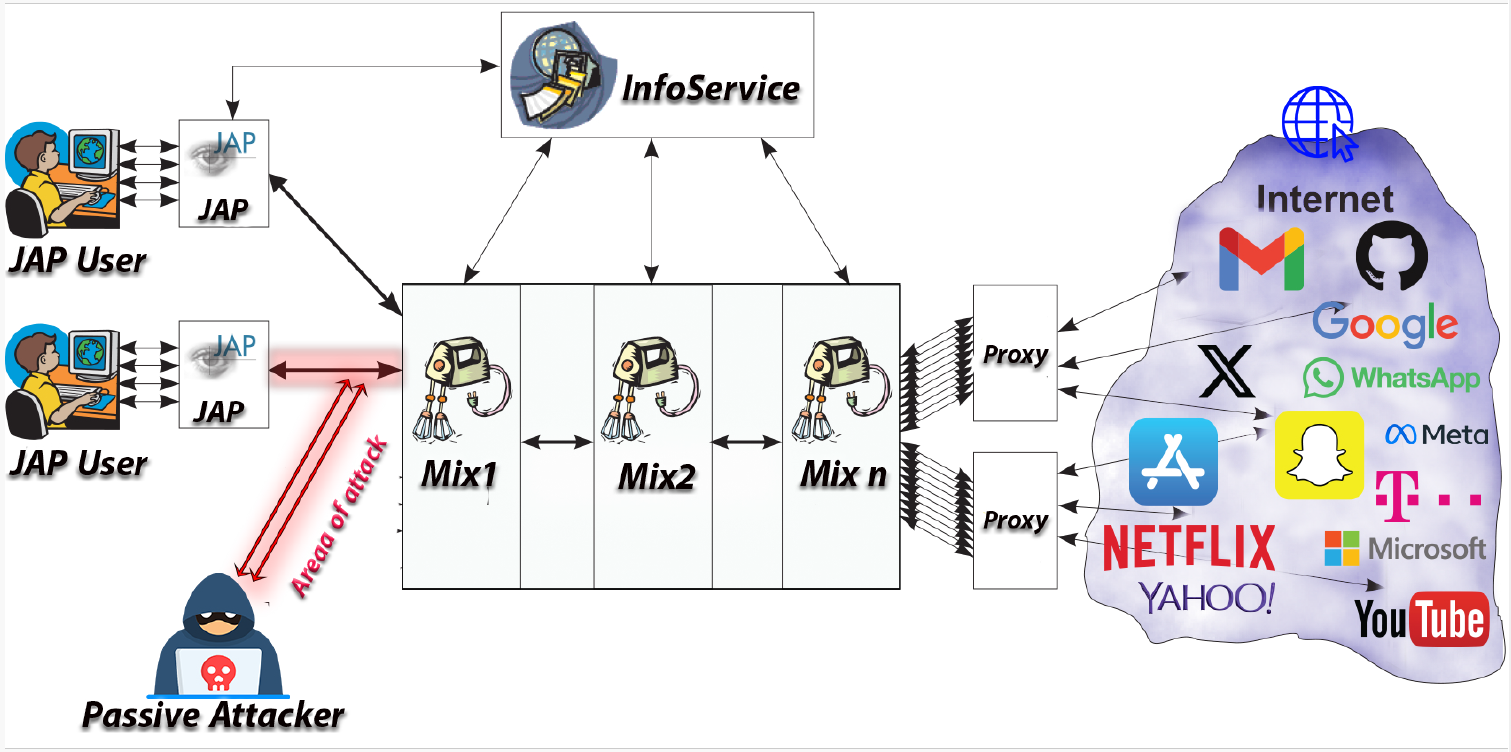
Abdulqader Shaawa, Abdoulwase Al Azzani (2026). A Comparative Analysis of Feature Representation Paradigms for Website Fingerprinting on the Java Anon Proxy Network. Sana'a University Journal of Applied Sciences and Technology, 2292- 2301. DOI: https://doi.org/10.59628/jast.v4i8.3272
Abdulqader Shaawa, Abdoulwase Al Azzani . “A Comparative Analysis of Feature Representation Paradigms for Website Fingerprinting on the Java Anon Proxy Network.” Sana'a University Journal of Applied Sciences and Technology, 2026, pp. 2292- 2301. https://doi.org/10.59628/jast.v4i8.3272. Accessed 30 Oct. 2026.
Abdulqader Shaawa, Abdoulwase Al Azzani . 2026. “A Comparative Analysis of Feature Representation Paradigms for Website Fingerprinting on the Java Anon Proxy Network.” Sana'a University Journal of Applied Sciences and Technology : 2292- 2301. DOI: https://doi.org/10.59628/jast.v4i8.3272
Abdulqader Shaawa, Abdoulwase Al Azzani (2026) ‘A Comparative Analysis of Feature Representation Paradigms for Website Fingerprinting on the Java Anon Proxy Network’, Sana'a University Journal of Applied Sciences and Technology, pp. 2292- 2301. doi: 10.59628/jast.v4i8.3272
@article{jast2026_art3272,
    author  = {Abdulqader Shaawa, Abdoulwase Al Azzani },
    title   = {A Comparative Analysis of Feature Representation Paradigms for Website Fingerprinting on the Java Anon Proxy Network},
    journal = {Sana'a University Journal of Applied Sciences and Technology},    year    = {2026},    month   = {August},    pages   = {2292- 2301},    doi     = {10.59628/jast.v4i8.3272},
    url     = {https://doi.org/10.59628/jast.v4i8.3272},}
Citation copied!
Contact Authors
A Comparative Analysis of Feature Representation Paradigms for Website Fingerprinting on the Java Anon Proxy Network
Email copied!
تأثير مزج المياه الرمادية ومياه المجاري المعالجة مع المياه الجوفية على التربة الكلسية وإنتاجية علف الذرة الرفيعة: دراسة في الاستدامة البيئية
علي محمد عبدالرحمن المساوى
2302-2323
2026-08-28
Abstract
أُجريت هذه التجربة عام 2022م في بيت زجاجي بكلية الزراعة - جامعة صنعاء خلال الموسم الزراعي للذرة، حيث امتدت الفترة الزمنية للتجربة من الأول من يونيو وحتى الثاني والعشرين من يوليو بواقع 52 يوماً لتقييم تأثير ري الذرة الرفيعة في تربة كلسية طميية بمستويات مختلفة من المياه الرمادية ومياه المجاري المعالجة جزئياً/أولية الممزوجة بالمياه الجوفية. ويُقصد بنسب المزج: النسب الحجمية المعتمدة للمزج بين المياه الجوفية والمياه الرمادية والمجاري المعالجة، والتي شملت خمسة مستويات(4:0، 3:1، 1:1، 1:3، 0:4 . ( أظهرت النتائج أن مياه المجاري غير الممزوجة (4:0) رفعت ملوحة التربة (ECe) إلى 1.36 ديسيسيمنز/متر مقارنة بـ 0.24 ديسيسيمنز/متر قبل التجربة، وزادت تركيز النحاس الميسر إلى 17.00 ملغم/لتر. في المقابل، حققت نسبة المزج 1:3 (جوفية: مجاري) أعلى وزن طازج للمحصول بلغ 18.67 جم/أصيص بزيادة قدرها 17.3% عن المعاملة غير الممزوجة. كما حققت نسبة المزج 1:1 لكل من مياه المجاري والمياه الرمادية أعلى وزن جاف للعلف بلغ 5.05 و 4.68 جم/أصيص على التوالي، مما يثبت دور نسب المزج الكمية في تحسين الإنتاجية والحد من تدهور التربة.
Keywords
المياه الرمادية
مياه المجاري المعالجة جزئياً
خواص التربة
مزج المياه
التربة الكلسية
علف الذرة الرفيعة
How to Cite This Article
علي محمد عبدالرحمن المساوى (2026). تأثير مزج المياه الرمادية ومياه المجاري المعالجة مع المياه الجوفية على التربة الكلسية وإنتاجية علف الذرة الرفيعة: دراسة في الاستدامة البيئية. Sana'a University Journal of Applied Sciences and Technology, 2302-2323. DOI: https://doi.org/10.59628/jast.v4i8.3400
علي محمد عبدالرحمن المساوى . “تأثير مزج المياه الرمادية ومياه المجاري المعالجة مع المياه الجوفية على التربة الكلسية وإنتاجية علف الذرة الرفيعة: دراسة في الاستدامة البيئية.” Sana'a University Journal of Applied Sciences and Technology, 2026, pp. 2302-2323. https://doi.org/10.59628/jast.v4i8.3400. Accessed 30 Oct. 2026.
علي محمد عبدالرحمن المساوى . 2026. “تأثير مزج المياه الرمادية ومياه المجاري المعالجة مع المياه الجوفية على التربة الكلسية وإنتاجية علف الذرة الرفيعة: دراسة في الاستدامة البيئية.” Sana'a University Journal of Applied Sciences and Technology : 2302-2323. DOI: https://doi.org/10.59628/jast.v4i8.3400
علي محمد عبدالرحمن المساوى (2026) ‘تأثير مزج المياه الرمادية ومياه المجاري المعالجة مع المياه الجوفية على التربة الكلسية وإنتاجية علف الذرة الرفيعة: دراسة في الاستدامة البيئية’, Sana'a University Journal of Applied Sciences and Technology, pp. 2302-2323. doi: 10.59628/jast.v4i8.3400
@article{jast2026_art3400,
    author  = {علي محمد عبدالرحمن المساوى },
    title   = {تأثير مزج المياه الرمادية ومياه المجاري المعالجة مع المياه الجوفية على التربة الكلسية وإنتاجية علف الذرة الرفيعة: دراسة في الاستدامة البيئية},
    journal = {Sana'a University Journal of Applied Sciences and Technology},    year    = {2026},    month   = {August},    pages   = {2302-2323},    doi     = {10.59628/jast.v4i8.3400},
    url     = {https://doi.org/10.59628/jast.v4i8.3400},}
Citation copied!
Contact Authors
تأثير مزج المياه الرمادية ومياه المجاري المعالجة مع المياه الجوفية على التربة الكلسية وإنتاجية علف الذرة الرفيعة: دراسة في الاستدامة البيئية
Email copied!
Method Development for the Detection of Lard in Lotion Cosmetics Using Gas Chromatography-Flame Ionization Detection and Chemometrics
Raja’a A. H. Saif, Ranya A. Al-Alie, Mahfoudh M. AL-Hamadi, Anass A. Al-Nedhary, Najwa S. AL-Darwish, Fatima A. Murshed
2324-2333
2026-08-28
Abstract
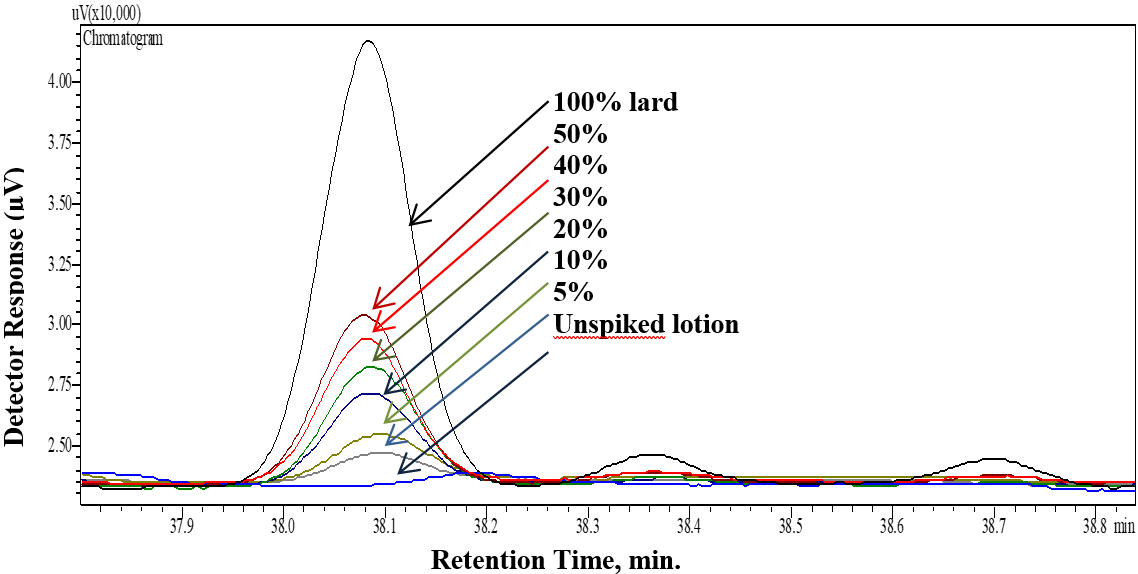
A Gas Chromatography-Flame Ionization Detector method was optimized for the rapid detection of lard in cosmetic lotion samples. Lard was extracted using the Soxhlet method, and lotion oils were isolated via liquid liquid extraction at 60 ◦C. The method demonstrated high linearity (R2) ranging from 0.9983 to 0.9998 across a concentration range from 1 to 100 μg/mL for four fatty acids: C20:2, C20:3n6, C20:3n3, and C20:4, which are biomarkers for lard. The precision was high, with a Relative Standard Deviation not exceeding 5.82%. The recovery rates from the spiked samples ranged between 93.00% and 103.58%. The Limit of Detection and Limit of Quantitation were 0.16–0.25 μg/mL and 0.54–0.84 μg mL, respectively. The validated method was applied to 20 commercial lotion brands collected from Yemeni markets. None of the analyzed samples showed the characteristic fatty acid markers of Lard. The developed GC-FID method, combined with principal component analysis provides a rapid, reliable, and cost-effective approach for halal authentication of cosmetic products.
Keywords
Lard
GC-FID
Lotion Cosmetics
Chemometrics
Yemen
How to Cite This Article
Raja’a A. H. Saif, Ranya A. Al-Alie, Mahfoudh M. AL-Hamadi, Anass A. Al-Nedhary, Najwa S. AL-Darwish, Fatima A. Murshed (2026). Method Development for the Detection of Lard in Lotion Cosmetics Using Gas Chromatography-Flame Ionization Detection and Chemometrics. Sana'a University Journal of Applied Sciences and Technology, 2324-2333. DOI: https://doi.org/10.59628/jast.v4i8.3112
Raja’a A. H. Saif, Ranya A. Al-Alie, Mahfoudh M. AL-Hamadi, Anass A. Al-Nedhary, Najwa S. AL-Darwish, Fatima A. Murshed . “Method Development for the Detection of Lard in Lotion Cosmetics Using Gas Chromatography-Flame Ionization Detection and Chemometrics.” Sana'a University Journal of Applied Sciences and Technology, 2026, pp. 2324-2333. https://doi.org/10.59628/jast.v4i8.3112. Accessed 30 Oct. 2026.
Raja’a A. H. Saif, Ranya A. Al-Alie, Mahfoudh M. AL-Hamadi, Anass A. Al-Nedhary, Najwa S. AL-Darwish, Fatima A. Murshed . 2026. “Method Development for the Detection of Lard in Lotion Cosmetics Using Gas Chromatography-Flame Ionization Detection and Chemometrics.” Sana'a University Journal of Applied Sciences and Technology : 2324-2333. DOI: https://doi.org/10.59628/jast.v4i8.3112
Raja’a A. H. Saif, Ranya A. Al-Alie, Mahfoudh M. AL-Hamadi, Anass A. Al-Nedhary, Najwa S. AL-Darwish, Fatima A. Murshed (2026) ‘Method Development for the Detection of Lard in Lotion Cosmetics Using Gas Chromatography-Flame Ionization Detection and Chemometrics’, Sana'a University Journal of Applied Sciences and Technology, pp. 2324-2333. doi: 10.59628/jast.v4i8.3112
@article{jast2026_art3112,
    author  = {Raja’a A. H. Saif, Ranya A. Al-Alie, Mahfoudh M. AL-Hamadi, Anass A. Al-Nedhary, Najwa S. AL-Darwish, Fatima A. Murshed },
    title   = {Method Development for the Detection of Lard in Lotion Cosmetics Using Gas Chromatography-Flame Ionization Detection and Chemometrics},
    journal = {Sana'a University Journal of Applied Sciences and Technology},    year    = {2026},    month   = {August},    pages   = {2324-2333},    doi     = {10.59628/jast.v4i8.3112},
    url     = {https://doi.org/10.59628/jast.v4i8.3112},}
Citation copied!
Contact Authors
Method Development for the Detection of Lard in Lotion Cosmetics Using Gas Chromatography-Flame Ionization Detection and Chemometrics
Email copied!
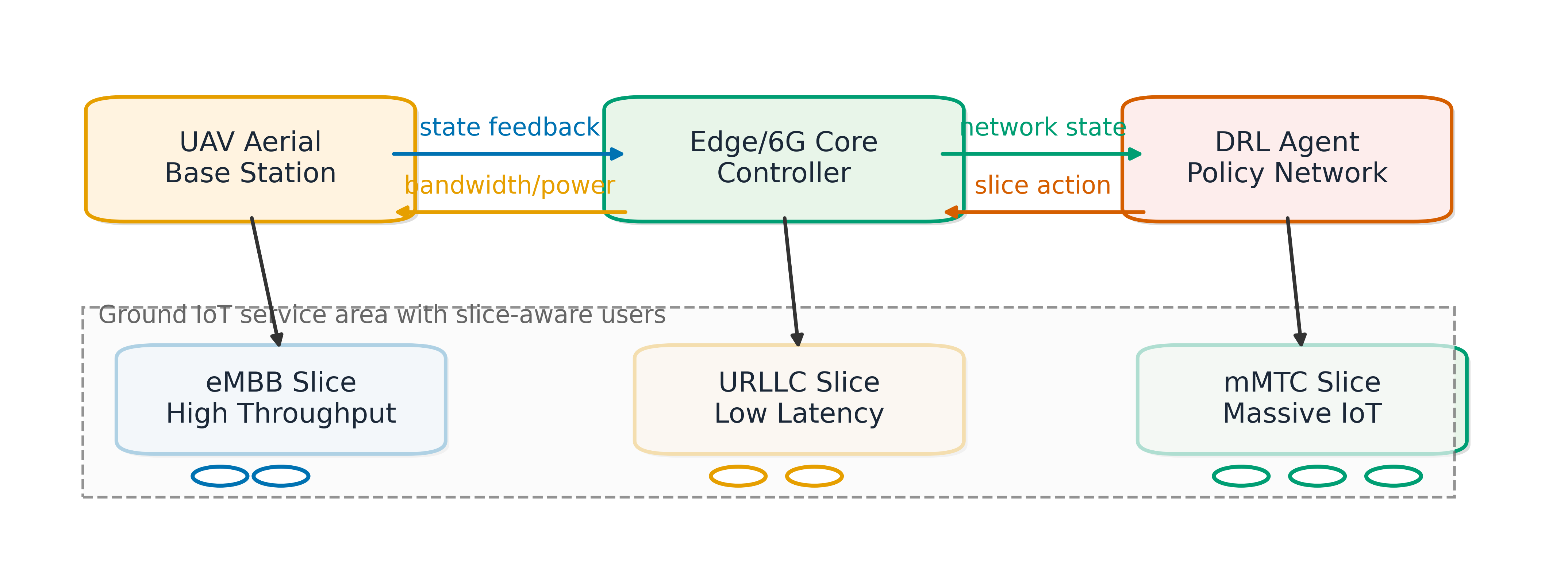
AI-Driven Energy-Efficient Network Slicing for UAV-Assisted 6G IoT Communications Using Deep Reinforcement Learning
Murad Abdullah Abdo Ahmed Albahri
2334-2343
2026-08-28
Abstract
Sixth-generation (6G) wireless networks are expected to support massive Internet of Things (IoT) connectivity, ultra-reliable low latency services, high-throughput multimedia traffic, and intelligent and autonomous infrastructures. Conventional terrestrial deployments may be insufficient in rural areas, disaster recovery scenarios, emergency zones, and temporary high-density IoT events, where rapid coverage extension and adaptive resource management are required. Unmanned aerial vehicles (UAVs) can operate as aerial base stations to enhance service availability; however, limited onboard energy, altitude-dependent air-to ground channels, constrained bandwidth and transmit power, and heterogeneous quality-of-service (QoS) requirements make static resource allocation inefficient. This revised paper proposes an AI driven energy-efficient network slicing framework for UAV assisted 6G IoT communication. The network is divided into enhanced Mobile Broadband (eMBB), Ultra- Reliable Low-Latency Communication (URLLC), and massive Machine-Type Communication (mMTC) slices. A DQN-based deep reinforcement learning (DRL) agent dynamically allocates the slice-level bandwidth, transmit power, and altitude-control actions after converting continuous decision variables into a finite feasible action set. The reward function jointly maximizes the throughput and energy efficiency while penalizing the latency, packet loss, and QoS violations. To address the reviewers’ concerns, the revised manuscript adds an LoS/NLoS air- to-ground channel model, a propulsion-aware UAV energy model, detailed DRL hyperparameters, a nine-action discretization table, Monte Carlo validation over 30 independent seeds, Welch significance testing, DRL variant comparison, computational complexity analysis, and three relevant references from Sana’a University Journal
of Applied Sciences and Technology. The proposed method improves the throughput by 15.7%, reduces the latency by 19.8%, improves the energy efficiency by 16.4%, and reduces the packet loss by 24.6% compared with the greedy baseline. The results confirm that slice-aware DRL improves resource utilization and service reliability in UAV-assisted 6G IoT networks.
Keywords
6G
UAV communications
network slicing
deep reinforcement learning
energy efficiency.
How to Cite This Article
Murad Abdullah Abdo Ahmed Albahri (2026). AI-Driven Energy-Efficient Network Slicing for UAV-Assisted 6G IoT Communications Using Deep Reinforcement Learning. Sana'a University Journal of Applied Sciences and Technology, 2334-2343. DOI: https://doi.org/10.59628/jast.v4i8.3250
Murad Abdullah Abdo Ahmed Albahri . “AI-Driven Energy-Efficient Network Slicing for UAV-Assisted 6G IoT Communications Using Deep Reinforcement Learning.” Sana'a University Journal of Applied Sciences and Technology, 2026, pp. 2334-2343. https://doi.org/10.59628/jast.v4i8.3250. Accessed 30 Oct. 2026.
Murad Abdullah Abdo Ahmed Albahri . 2026. “AI-Driven Energy-Efficient Network Slicing for UAV-Assisted 6G IoT Communications Using Deep Reinforcement Learning.” Sana'a University Journal of Applied Sciences and Technology : 2334-2343. DOI: https://doi.org/10.59628/jast.v4i8.3250
Murad Abdullah Abdo Ahmed Albahri (2026) ‘AI-Driven Energy-Efficient Network Slicing for UAV-Assisted 6G IoT Communications Using Deep Reinforcement Learning’, Sana'a University Journal of Applied Sciences and Technology, pp. 2334-2343. doi: 10.59628/jast.v4i8.3250
@article{jast2026_art3250,
    author  = {Murad Abdullah Abdo Ahmed Albahri },
    title   = {AI-Driven Energy-Efficient Network Slicing for UAV-Assisted 6G IoT Communications Using Deep Reinforcement Learning},
    journal = {Sana'a University Journal of Applied Sciences and Technology},    year    = {2026},    month   = {August},    pages   = {2334-2343},    doi     = {10.59628/jast.v4i8.3250},
    url     = {https://doi.org/10.59628/jast.v4i8.3250},}
Citation copied!
Contact Authors
AI-Driven Energy-Efficient Network Slicing for UAV-Assisted 6G IoT Communications Using Deep Reinforcement Learning
Email copied!
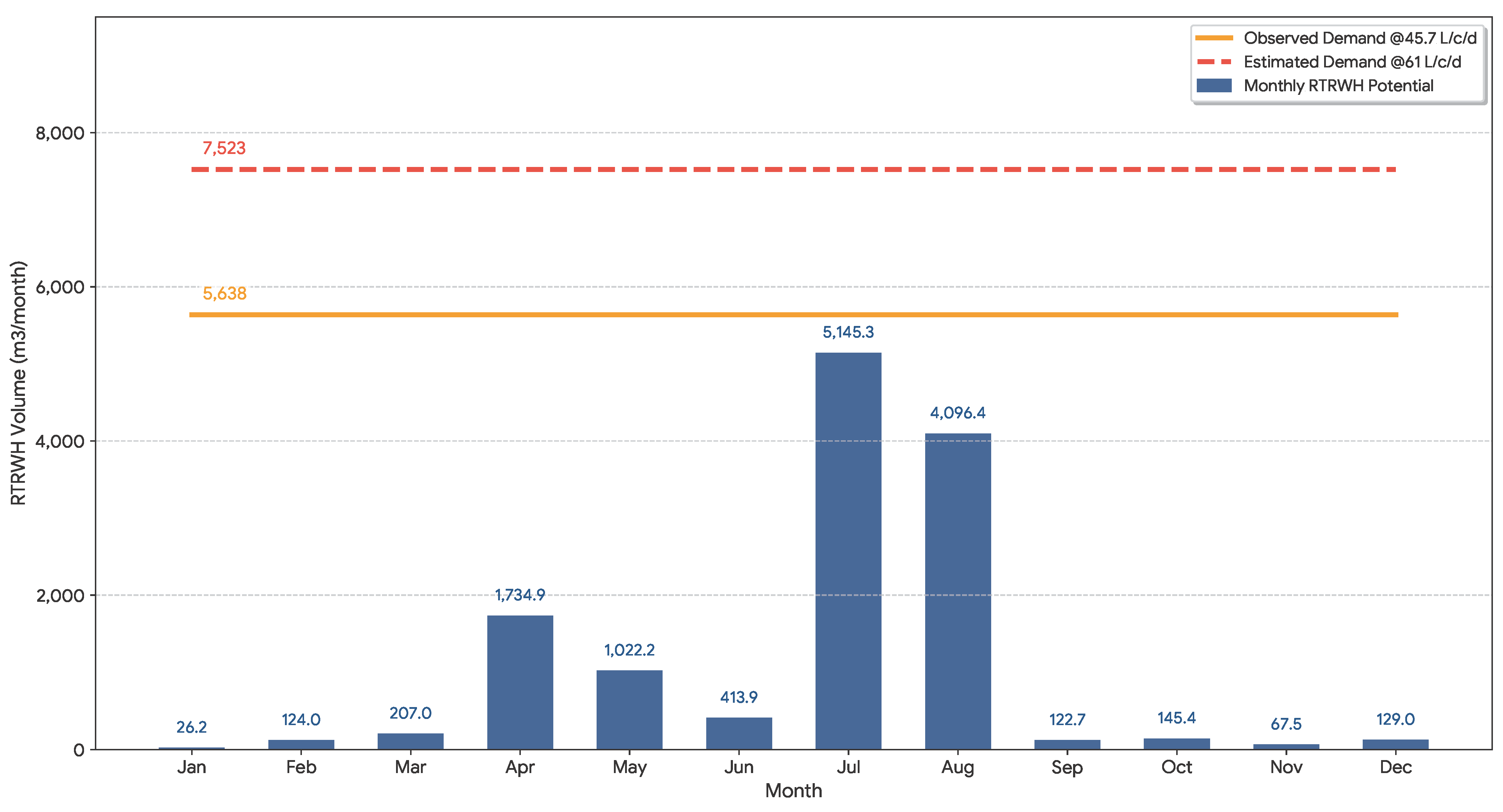
Household-Level Assessment of Urban Rooftop Rainwater Harvesting Potential and Its Contribution to Domestic Water Supply in Al-Wahdah District, Sana’a City, Yemen
Adel Maaodhah, Marwan Al-Badani, Sharafaddin Salleh
2344-2351
2026-08-28
Abstract
Sana’a City faces severe water scarcity driven by limited rainfall, rapid urban growth, and groundwater overexploitation. This study assessed the potential contribution of rooftop rainwater harvesting (RTRWH) to domestic water supply in Al-Wahdah District, Sana’a City. The methodology integrated household survey data, GIS-based rooftop digitization, roof-material information, and monthly rainfall records for 2013–2022, with an average annual rainfall of 335.4 mm. Of 374 valid surveyed buildings, 277 residential buildings were analyzed after excluding 97 non-residential or unsuitable records. Domestic demand was estimated using observed (47.5 L/c/d) household consumption and the SWSLC benchmark of 61 L/c/d. Current RTRWH use was negligible, contributing less than 1% of consumption. Under a theoretical full rooftop utilization scenario, excluding storage constraints and first-flush losses, RTRWH could provide about 13,234 m3/year, equivalent to 19.6% of observed demand and 14.7% of estimated demand. Results show that RTRWH is a valuable supplementary source, but practical use requires storage and water-quality consideration.
Keywords
Rooftop rainwater harvesting
domestic water demand
GIS
urban water scarcity
Sana’a City
Yemen.
How to Cite This Article
Adel Maaodhah, Marwan Al-Badani, Sharafaddin Salleh (2026). Household-Level Assessment of Urban Rooftop Rainwater Harvesting Potential and Its Contribution to Domestic Water Supply in Al-Wahdah District, Sana’a City, Yemen. Sana'a University Journal of Applied Sciences and Technology, 2344-2351. DOI: https://doi.org/10.59628/jast.v4i8.3287
Adel Maaodhah, Marwan Al-Badani, Sharafaddin Salleh . “Household-Level Assessment of Urban Rooftop Rainwater Harvesting Potential and Its Contribution to Domestic Water Supply in Al-Wahdah District, Sana’a City, Yemen.” Sana'a University Journal of Applied Sciences and Technology, 2026, pp. 2344-2351. https://doi.org/10.59628/jast.v4i8.3287. Accessed 30 Oct. 2026.
Adel Maaodhah, Marwan Al-Badani, Sharafaddin Salleh . 2026. “Household-Level Assessment of Urban Rooftop Rainwater Harvesting Potential and Its Contribution to Domestic Water Supply in Al-Wahdah District, Sana’a City, Yemen.” Sana'a University Journal of Applied Sciences and Technology : 2344-2351. DOI: https://doi.org/10.59628/jast.v4i8.3287
Adel Maaodhah, Marwan Al-Badani, Sharafaddin Salleh (2026) ‘Household-Level Assessment of Urban Rooftop Rainwater Harvesting Potential and Its Contribution to Domestic Water Supply in Al-Wahdah District, Sana’a City, Yemen’, Sana'a University Journal of Applied Sciences and Technology, pp. 2344-2351. doi: 10.59628/jast.v4i8.3287
@article{jast2026_art3287,
    author  = {Adel Maaodhah, Marwan Al-Badani, Sharafaddin Salleh },
    title   = {Household-Level Assessment of Urban Rooftop Rainwater Harvesting Potential and Its Contribution to Domestic Water Supply in Al-Wahdah District, Sana’a City, Yemen},
    journal = {Sana'a University Journal of Applied Sciences and Technology},    year    = {2026},    month   = {August},    pages   = {2344-2351},    doi     = {10.59628/jast.v4i8.3287},
    url     = {https://doi.org/10.59628/jast.v4i8.3287},}
Citation copied!
Contact Authors
Household-Level Assessment of Urban Rooftop Rainwater Harvesting Potential and Its Contribution to Domestic Water Supply in Al-Wahdah District, Sana’a City, Yemen
Email copied!
Hematological and Platelet Indices Alterations Associated with Khat Chewing Among University Students in Conflict-Affected Yemen: A Cross-Sectional Study
Naif Taleb Ali, Radfan Saleh Abdullah, Mansour Abdulnabi H. Mehdi, Mohammed Ali Qassem, Amira Tawfiq, Anhar Sufyan, Bashar Omer, Mohammed Fissal, Sondas Amin, Wazira Saleh, Abdulaziz Abdullah, Alawi Abdul Salam, Ahmed Naji Abbas, Emad Mohammed, Fadl kamal Fadl, Fekri Saif Taher, Laila Ahmed Hamid, Nasser Jamal Ahmed, Osama Abdul Qader, Qusay Ashal Saleh, Younes Adel Saleh
2352-2360
2026-08-28
Abstract
Background: Khat chewing is prevalent among Yemeni youth; however, its impact on hematological parameters in conflict settings remains underexplored.
Objective: To assess the association between khat chewing and complete blood count (CBC) parameters, particularly platelet indices, among university students in Al-Dhale’e, Yemen.
Methods: A cross-sectional study was conducted with 226 undergraduate students. Khat use was assessed using a structured questionnaire, and CBC was analyzed using an automated hematology analyzer. Statistical analyses included independent t-tests, Mann-Whitney U tests, and multiple linear regression adjusted for age, sex, smoking, body mass index (BMI), caffeine intake, and psychological stress score.
Results: The prevalence of khat chewing was 77.9% (176/226). Compared with non-chewers, chewers had significantly higher mean platelet volume (MPV: 9.7 vs. 8.8 fL; p < 0.001; d = 0.78), higher platelet distribution width (PDW: 16.1 vs. 15.0%; p = 0.003; d = 0.48), higher white blood cell count (WBC: 7.6 vs. 6.8 × 10⁹/L; p = 0.004; d = 0.46), and lower hemoglobin (13.7 vs. 14.3 g dL; p = 0.006; d = -0.46). Regression analysis confirmed khat as an independent predictor of elevated MPV (β = 0.85, p < 0.001), elevated WBC (β = 0.78, p = 0.008), and reduced hemoglobin levels (β = -0.52, p = 0.012). Trend analysis suggested graded associations with the frequency and duration of use.
Conclusion: Khat chewing is independently associated with elevated MPV and WBC, suggesting a possible proinflammatory state and reduced hemoglobin levels. Routine CBC monitoring should be considered for habitual khat users in resource-limited settings.
Keywords
Khat
Mean Platelet Volume
Platelet Indices
Hematological Parameters
Yemen
University Students
Inflammation
Thrombosis.
How to Cite This Article
Naif Taleb Ali, Radfan Saleh Abdullah, Mansour Abdulnabi H. Mehdi, Mohammed Ali Qassem, Amira Tawfiq, Anhar Sufyan, Bashar Omer, Mohammed Fissal, Sondas Amin, Wazira Saleh, Abdulaziz Abdullah, Alawi Abdul Salam, Ahmed Naji Abbas, Emad Mohammed, Fadl kamal Fadl, Fekri Saif Taher, Laila Ahmed Hamid, Nasser Jamal Ahmed, Osama Abdul Qader, Qusay Ashal Saleh, Younes Adel Saleh (2026). Hematological and Platelet Indices Alterations Associated with Khat Chewing Among University Students in Conflict-Affected Yemen: A Cross-Sectional Study. Sana'a University Journal of Applied Sciences and Technology, 2352-2360. DOI: https://doi.org/10.59628/jast.v4i8.3106
Naif Taleb Ali, Radfan Saleh Abdullah, Mansour Abdulnabi H. Mehdi, Mohammed Ali Qassem, Amira Tawfiq, Anhar Sufyan, Bashar Omer, Mohammed Fissal, Sondas Amin, Wazira Saleh, Abdulaziz Abdullah, Alawi Abdul Salam, Ahmed Naji Abbas, Emad Mohammed, Fadl kamal Fadl, Fekri Saif Taher, Laila Ahmed Hamid, Nasser Jamal Ahmed, Osama Abdul Qader, Qusay Ashal Saleh, Younes Adel Saleh . “Hematological and Platelet Indices Alterations Associated with Khat Chewing Among University Students in Conflict-Affected Yemen: A Cross-Sectional Study.” Sana'a University Journal of Applied Sciences and Technology, 2026, pp. 2352-2360. https://doi.org/10.59628/jast.v4i8.3106. Accessed 30 Oct. 2026.
Naif Taleb Ali, Radfan Saleh Abdullah, Mansour Abdulnabi H. Mehdi, Mohammed Ali Qassem, Amira Tawfiq, Anhar Sufyan, Bashar Omer, Mohammed Fissal, Sondas Amin, Wazira Saleh, Abdulaziz Abdullah, Alawi Abdul Salam, Ahmed Naji Abbas, Emad Mohammed, Fadl kamal Fadl, Fekri Saif Taher, Laila Ahmed Hamid, Nasser Jamal Ahmed, Osama Abdul Qader, Qusay Ashal Saleh, Younes Adel Saleh . 2026. “Hematological and Platelet Indices Alterations Associated with Khat Chewing Among University Students in Conflict-Affected Yemen: A Cross-Sectional Study.” Sana'a University Journal of Applied Sciences and Technology : 2352-2360. DOI: https://doi.org/10.59628/jast.v4i8.3106
Naif Taleb Ali, Radfan Saleh Abdullah, Mansour Abdulnabi H. Mehdi, Mohammed Ali Qassem, Amira Tawfiq, Anhar Sufyan, Bashar Omer, Mohammed Fissal, Sondas Amin, Wazira Saleh, Abdulaziz Abdullah, Alawi Abdul Salam, Ahmed Naji Abbas, Emad Mohammed, Fadl kamal Fadl, Fekri Saif Taher, Laila Ahmed Hamid, Nasser Jamal Ahmed, Osama Abdul Qader, Qusay Ashal Saleh, Younes Adel Saleh (2026) ‘Hematological and Platelet Indices Alterations Associated with Khat Chewing Among University Students in Conflict-Affected Yemen: A Cross-Sectional Study’, Sana'a University Journal of Applied Sciences and Technology, pp. 2352-2360. doi: 10.59628/jast.v4i8.3106
@article{jast2026_art3106,
    author  = {Naif Taleb Ali, Radfan Saleh Abdullah, Mansour Abdulnabi H. Mehdi, Mohammed Ali Qassem, Amira Tawfiq, Anhar Sufyan, Bashar Omer, Mohammed Fissal, Sondas Amin, Wazira Saleh, Abdulaziz Abdullah, Alawi Abdul Salam, Ahmed Naji Abbas, Emad Mohammed, Fadl kamal Fadl, Fekri Saif Taher, Laila Ahmed Hamid, Nasser Jamal Ahmed, Osama Abdul Qader, Qusay Ashal Saleh, Younes Adel Saleh },
    title   = {Hematological and Platelet Indices Alterations Associated with Khat Chewing Among University Students in Conflict-Affected Yemen: A Cross-Sectional Study},
    journal = {Sana'a University Journal of Applied Sciences and Technology},    year    = {2026},    month   = {August},    pages   = {2352-2360},    doi     = {10.59628/jast.v4i8.3106},
    url     = {https://doi.org/10.59628/jast.v4i8.3106},}
Citation copied!
Contact Authors
Hematological and Platelet Indices Alterations Associated with Khat Chewing Among University Students in Conflict-Affected Yemen: A Cross-Sectional Study
Email copied!
Moisture Stability and Sensory Quality of Metallized-Packaged Biscuits During Storage: A Comparison with Non-Metallized Packaging in a Single Product
Khaled Mohammed Assag, Jalal Fadel, Abdulmajid Bajash
2361-2383
2026-08-28
Abstract
Biscuits are dry food products that are highly susceptible to moisture uptake during storage due to their porous structure and low initial moisture content, making the control of water vapor transfer a critical factor in maintaining product stability. This study aimed to evaluate the effectiveness of metallized biaxially oriented polypropylene (Metallized BOPP) packaging in reducing moisture uptake through a direct comparison with non-metallized biaxially oriented polypropylene (BOPP) packaging in a single biscuit product, while also monitoring the response of three biscuit products stored under metallized packaging. A longitudinal field study was conducted over a twelve-month period at three storage locations in Yemen. Monthly measurements of moisture content, water activity, and sensory properties were collected, and the data were analyzed using linear mixed models. The results showed that metallized packaging was associated with significantly lower moisture content and water activity compared with BOPP packaging in the product used for the direct packaging comparison, accompanied by a clear improvement in crispness. The analysis also indicated that storage time was the factor most strongly associated with changes in both physical and sensory properties. Among the products stored under metallized packaging only, no significant differences were observed in moisture content, whereas differences were detected in water activity and sensory properties. These findings support the effectiveness of metallized packaging within the limits of a direct comparison conducted on a single product, while highlighting differences in product responses under the same packaging system.
Keywords
Biscuits
Metallized BOPP
Moisture uptake
Water activity
Sensory properties
Longitudinal analysis
Mixed-effects model
How to Cite This Article
Khaled Mohammed Assag, Jalal Fadel, Abdulmajid Bajash (2026). Moisture Stability and Sensory Quality of Metallized-Packaged Biscuits During Storage: A Comparison with Non-Metallized Packaging in a Single Product. Sana'a University Journal of Applied Sciences and Technology, 2361-2383. DOI: https://doi.org/10.59628/jast.v4i8.3050
Khaled Mohammed Assag, Jalal Fadel, Abdulmajid Bajash . “Moisture Stability and Sensory Quality of Metallized-Packaged Biscuits During Storage: A Comparison with Non-Metallized Packaging in a Single Product.” Sana'a University Journal of Applied Sciences and Technology, 2026, pp. 2361-2383. https://doi.org/10.59628/jast.v4i8.3050. Accessed 30 Oct. 2026.
Khaled Mohammed Assag, Jalal Fadel, Abdulmajid Bajash . 2026. “Moisture Stability and Sensory Quality of Metallized-Packaged Biscuits During Storage: A Comparison with Non-Metallized Packaging in a Single Product.” Sana'a University Journal of Applied Sciences and Technology : 2361-2383. DOI: https://doi.org/10.59628/jast.v4i8.3050
Khaled Mohammed Assag, Jalal Fadel, Abdulmajid Bajash (2026) ‘Moisture Stability and Sensory Quality of Metallized-Packaged Biscuits During Storage: A Comparison with Non-Metallized Packaging in a Single Product’, Sana'a University Journal of Applied Sciences and Technology, pp. 2361-2383. doi: 10.59628/jast.v4i8.3050
@article{jast2026_art3050,
    author  = {Khaled Mohammed Assag, Jalal Fadel, Abdulmajid Bajash },
    title   = {Moisture Stability and Sensory Quality of Metallized-Packaged Biscuits During Storage: A Comparison with Non-Metallized Packaging in a Single Product},
    journal = {Sana'a University Journal of Applied Sciences and Technology},    year    = {2026},    month   = {August},    pages   = {2361-2383},    doi     = {10.59628/jast.v4i8.3050},
    url     = {https://doi.org/10.59628/jast.v4i8.3050},}
Citation copied!
Contact Authors
Moisture Stability and Sensory Quality of Metallized-Packaged Biscuits During Storage: A Comparison with Non-Metallized Packaging in a Single Product
Email copied!
Comment on “Quantum Fundamental Speed Theory: Mathematical Derivations of Dark Matter and Dark Energy from the Speed Field
Elie Almurr
2384-2386
2026-08-28
↔
Related Publications
Explore commentaries, corrections, critiques and other scholarly links.
↓
Related Publications
Explore commentaries, corrections, critiques and other scholarly links.
Related to this publication
Abstract
This Comment examines the reproducibility of selected central derivations in the article by R. A. M. S. Aoudh, "Quantum Fundamental Speed Theory: Mathematical Derivations of Dark Matter and Dark Energy from the Speed Field," published in Sana'a University Journal of Applied Sciences and Technology. The analysis is limited to whether several mathematical and numerical conclusions follow from the equations printed in the article. Four technical concerns are identified: the screening-length linearization, the Taylor expansion of the logarithmic potential, the energy-density/mass-density matching in the dark-energy calculation, and the interpretation of lower bounds on the predicted ultralight mass.
Keywords
Reproducibility
Derivation verification
Speed field theory
How to Cite This Article
Elie Almurr (2026). Comment on “Quantum Fundamental Speed Theory: Mathematical Derivations of Dark Matter and Dark Energy from the Speed Field. Sana'a University Journal of Applied Sciences and Technology, 2384-2386. DOI: https://doi.org/10.59628/jast.v4i8.3675
Elie Almurr . “Comment on “Quantum Fundamental Speed Theory: Mathematical Derivations of Dark Matter and Dark Energy from the Speed Field.” Sana'a University Journal of Applied Sciences and Technology, 2026, pp. 2384-2386. https://doi.org/10.59628/jast.v4i8.3675. Accessed 30 Oct. 2026.
Elie Almurr . 2026. “Comment on “Quantum Fundamental Speed Theory: Mathematical Derivations of Dark Matter and Dark Energy from the Speed Field.” Sana'a University Journal of Applied Sciences and Technology : 2384-2386. DOI: https://doi.org/10.59628/jast.v4i8.3675
Elie Almurr (2026) ‘Comment on “Quantum Fundamental Speed Theory: Mathematical Derivations of Dark Matter and Dark Energy from the Speed Field’, Sana'a University Journal of Applied Sciences and Technology, pp. 2384-2386. doi: 10.59628/jast.v4i8.3675
@article{jast2026_art3675,
    author  = {Elie Almurr },
    title   = {Comment on “Quantum Fundamental Speed Theory: Mathematical Derivations of Dark Matter and Dark Energy from the Speed Field},
    journal = {Sana'a University Journal of Applied Sciences and Technology},    year    = {2026},    month   = {August},    pages   = {2384-2386},    doi     = {10.59628/jast.v4i8.3675},
    url     = {https://doi.org/10.59628/jast.v4i8.3675},}
Citation copied!
Contact Authors
Comment on “Quantum Fundamental Speed Theory: Mathematical Derivations of Dark Matter and Dark Energy from the Speed Field
Email copied!
Reply to the Comment on “Quantum Fundamental Speed Theory: Mathematical Derivations of Dark Matter and Dark Energy from the Speed Field”
Raheb Ali Mohammed Saleh Aoudh
2387-2388
2026-08-28
↔
Related Publications
Explore commentaries, corrections, critiques and other scholarly links.
↓
Related Publications
Explore commentaries, corrections, critiques and other scholarly links.
Abstract
This document provides a detailed, point-by-point response to the Technical Note submitted on August 3, 2026, concerning my paper "Quantum Fundamental Speed Theory: Mathematical Derivations of Dark Matter and Dark Energy from the Speed Field" (DOI: 10.59628/jast.v4i7.3446). The Technical Note raises four main criticisms regarding (1) the linearization used to derive the screening length, (2) the Taylor expansion of the logarithmic potential, (3) the units used in the dark-energy density calculation, and (4) the interpretation of ultralight dark-matter bounds. I demonstrate that three of these criticisms are based on misunderstandings of the physical context or on algebraic/unit errors in the Technical Note itself. One criticism—concerning the Taylor expansion of the logarithmic potential—is acknowledged as correct analytically, but it does not affect the final numerical results, which are obtained from a full numerical solution of the coupled background system. I provide detailed derivations, dimensional analyses, and references to the existing literature to support my responses
Keywords
Fundamental speed field
Dark matter
Dark energy
How to Cite This Article
Raheb Ali Mohammed Saleh Aoudh (2026). Reply to the Comment on “Quantum Fundamental Speed Theory: Mathematical Derivations of Dark Matter and Dark Energy from the Speed Field”. Sana'a University Journal of Applied Sciences and Technology, 2387-2388. DOI: https://doi.org/10.59628/jast.v4i8.3678
Raheb Ali Mohammed Saleh Aoudh . “Reply to the Comment on “Quantum Fundamental Speed Theory: Mathematical Derivations of Dark Matter and Dark Energy from the Speed Field”.” Sana'a University Journal of Applied Sciences and Technology, 2026, pp. 2387-2388. https://doi.org/10.59628/jast.v4i8.3678. Accessed 30 Oct. 2026.
Raheb Ali Mohammed Saleh Aoudh . 2026. “Reply to the Comment on “Quantum Fundamental Speed Theory: Mathematical Derivations of Dark Matter and Dark Energy from the Speed Field”.” Sana'a University Journal of Applied Sciences and Technology : 2387-2388. DOI: https://doi.org/10.59628/jast.v4i8.3678
Raheb Ali Mohammed Saleh Aoudh (2026) ‘Reply to the Comment on “Quantum Fundamental Speed Theory: Mathematical Derivations of Dark Matter and Dark Energy from the Speed Field”’, Sana'a University Journal of Applied Sciences and Technology, pp. 2387-2388. doi: 10.59628/jast.v4i8.3678
@article{jast2026_art3678,
    author  = {Raheb Ali Mohammed Saleh Aoudh },
    title   = {Reply to the Comment on “Quantum Fundamental Speed Theory: Mathematical Derivations of Dark Matter and Dark Energy from the Speed Field”},
    journal = {Sana'a University Journal of Applied Sciences and Technology},    year    = {2026},    month   = {August},    pages   = {2387-2388},    doi     = {10.59628/jast.v4i8.3678},
    url     = {https://doi.org/10.59628/jast.v4i8.3678},}
Citation copied!
Contact Authors
Reply to the Comment on “Quantum Fundamental Speed Theory: Mathematical Derivations of Dark Matter and Dark Energy from the Speed Field”
Email copied!
Formal Comment on “Quantum Fundamental Speed Theory: Mathematical Derivations of Dark Matter and Dark Energy from the Speed Field”
Osama Abdullah Hassan Al-Dhuhyani
2389-2394
2026-08-28
↔
Related Publications
Explore commentaries, corrections, critiques and other scholarly links.
↓
Related Publications
Explore commentaries, corrections, critiques and other scholarly links.
Related to this publication
Abstract
This paper presents a critical analysis of “Quantum Funda-
mental Speed Theory: Mathematical Derivations of Dark
Matter and Dark Energy from the Speed Field” (JAST,
Vol.4, No.7, 2026). The theory claims to explain dark mat-
ter and dark energy via a “fundamental speed field” and is
the third in a series of papers, the primary references [1]
and [3] being non-peer-reviewed preprints.
Keywords
Speed field theory
How to Cite This Article
Osama Abdullah Hassan Al-Dhuhyani (2026). Formal Comment on “Quantum Fundamental Speed Theory: Mathematical Derivations of Dark Matter and Dark Energy from the Speed Field”. Sana'a University Journal of Applied Sciences and Technology, 2389-2394. DOI: https://doi.org/10.59628/jast.v4i8.3625
Osama Abdullah Hassan Al-Dhuhyani . “Formal Comment on “Quantum Fundamental Speed Theory: Mathematical Derivations of Dark Matter and Dark Energy from the Speed Field”.” Sana'a University Journal of Applied Sciences and Technology, 2026, pp. 2389-2394. https://doi.org/10.59628/jast.v4i8.3625. Accessed 30 Oct. 2026.
Osama Abdullah Hassan Al-Dhuhyani . 2026. “Formal Comment on “Quantum Fundamental Speed Theory: Mathematical Derivations of Dark Matter and Dark Energy from the Speed Field”.” Sana'a University Journal of Applied Sciences and Technology : 2389-2394. DOI: https://doi.org/10.59628/jast.v4i8.3625
Osama Abdullah Hassan Al-Dhuhyani (2026) ‘Formal Comment on “Quantum Fundamental Speed Theory: Mathematical Derivations of Dark Matter and Dark Energy from the Speed Field”’, Sana'a University Journal of Applied Sciences and Technology, pp. 2389-2394. doi: 10.59628/jast.v4i8.3625
@article{jast2026_art3625,
    author  = {Osama Abdullah Hassan Al-Dhuhyani },
    title   = {Formal Comment on “Quantum Fundamental Speed Theory: Mathematical Derivations of Dark Matter and Dark Energy from the Speed Field”},
    journal = {Sana'a University Journal of Applied Sciences and Technology},    year    = {2026},    month   = {August},    pages   = {2389-2394},    doi     = {10.59628/jast.v4i8.3625},
    url     = {https://doi.org/10.59628/jast.v4i8.3625},}
Citation copied!
Contact Authors
Formal Comment on “Quantum Fundamental Speed Theory: Mathematical Derivations of Dark Matter and Dark Energy from the Speed Field”
Email copied!
Formal Reply to the Formal Comment on''Quantum Fundamental Speed Theory: Mathematical Derivations of Dark Matter and Dark Energy from the Speed Field''
Raheb Ali Mohammed Saleh Aoudh
2395-2399
2026-08-28
↔
Related Publications
Explore commentaries, corrections, critiques and other scholarly links.
↓
Related Publications
Explore commentaries, corrections, critiques and other scholarly links.
Abstract
This document provides a detailed, point-by-point response to the Referee Report on my paper "Quantum Fundamental Speed Theory: Mathematical Derivations of Dark Matter and Dark Energy from the Speed Field" (DOI: 10.59628/jast.v4i7.3446). The Referee raises ten criticisms. I demonstrate that the majority of these criticisms arise from (i) evaluating an Effective Field Theory (EFT) outside its low-energy regime, (ii) misinterpreting the physical boundary conditions of galactic screening, (iii) omitting the Stueckelberg/BRST gauge-fixing conditions in the quantum sector, and (iv) misunderstanding the statistical treatment of observational data. I provide detailed derivations, dimensional analyses, and references to the existing literature to support my responses
Keywords
Effective Field Theory (EFT)
Speed field cosmology
How to Cite This Article
Raheb Ali Mohammed Saleh Aoudh (2026). Formal Reply to the Formal Comment on''Quantum Fundamental Speed Theory: Mathematical Derivations of Dark Matter and Dark Energy from the Speed Field''. Sana'a University Journal of Applied Sciences and Technology, 2395-2399. DOI: https://doi.org/10.59628/jast.v4i8.3677
Raheb Ali Mohammed Saleh Aoudh . “Formal Reply to the Formal Comment on''Quantum Fundamental Speed Theory: Mathematical Derivations of Dark Matter and Dark Energy from the Speed Field''.” Sana'a University Journal of Applied Sciences and Technology, 2026, pp. 2395-2399. https://doi.org/10.59628/jast.v4i8.3677. Accessed 30 Oct. 2026.
Raheb Ali Mohammed Saleh Aoudh . 2026. “Formal Reply to the Formal Comment on''Quantum Fundamental Speed Theory: Mathematical Derivations of Dark Matter and Dark Energy from the Speed Field''.” Sana'a University Journal of Applied Sciences and Technology : 2395-2399. DOI: https://doi.org/10.59628/jast.v4i8.3677
Raheb Ali Mohammed Saleh Aoudh (2026) ‘Formal Reply to the Formal Comment on''Quantum Fundamental Speed Theory: Mathematical Derivations of Dark Matter and Dark Energy from the Speed Field''’, Sana'a University Journal of Applied Sciences and Technology, pp. 2395-2399. doi: 10.59628/jast.v4i8.3677
@article{jast2026_art3677,
    author  = {Raheb Ali Mohammed Saleh Aoudh },
    title   = {Formal Reply to the Formal Comment on''Quantum Fundamental Speed Theory: Mathematical Derivations of Dark Matter and Dark Energy from the Speed Field''},
    journal = {Sana'a University Journal of Applied Sciences and Technology},    year    = {2026},    month   = {August},    pages   = {2395-2399},    doi     = {10.59628/jast.v4i8.3677},
    url     = {https://doi.org/10.59628/jast.v4i8.3677},}
Citation copied!
Contact Authors
Formal Reply to the Formal Comment on''Quantum Fundamental Speed Theory: Mathematical Derivations of Dark Matter and Dark Energy from the Speed Field''
Email copied!
Comment on The Spatiotemporal Analysis of Rainfall Variability in the Sana’a Basin, Yemen: An Integrated Remote Sensing and GIS Approach
Khaled Ismail M. Al-Shamii, Abdulla A. Noman
2400-2402
2026-08-28
↔
Related Publications
Explore commentaries, corrections, critiques and other scholarly links.
↓
Related Publications
Explore commentaries, corrections, critiques and other scholarly links.
Related to this publication
Abstract
I read with great interest the recently published paper by Quriaa et al [1]. (2026) on the spatiotemporal analysis of rainfall variability in the Sana’a Basin. While the authors tackle a critically important topic for Yemen’s water security, a rigorous methodological review reveals foundational errors that compromise the reliability of the study’s results. This comment focuses on two primary fatal flaws: (1) a severe physical and temporal impossibility regarding the utilization of the Tropical Rainfall Measuring Mission (TRMM) dataset and (2) an inadequate statistical approach to handling missing data through mean imputation.
Keywords
Rainfall variability
TRMM (Tropical Rainfall Measuring Mission)
How to Cite This Article
Khaled Ismail M. Al-Shamii, Abdulla A. Noman (2026). Comment on The Spatiotemporal Analysis of Rainfall Variability in the Sana’a Basin, Yemen: An Integrated Remote Sensing and GIS Approach. Sana'a University Journal of Applied Sciences and Technology, 2400-2402. DOI: https://doi.org/10.59628/jast.v4i8.3568
Khaled Ismail M. Al-Shamii, Abdulla A. Noman . “Comment on The Spatiotemporal Analysis of Rainfall Variability in the Sana’a Basin, Yemen: An Integrated Remote Sensing and GIS Approach.” Sana'a University Journal of Applied Sciences and Technology, 2026, pp. 2400-2402. https://doi.org/10.59628/jast.v4i8.3568. Accessed 30 Oct. 2026.
Khaled Ismail M. Al-Shamii, Abdulla A. Noman . 2026. “Comment on The Spatiotemporal Analysis of Rainfall Variability in the Sana’a Basin, Yemen: An Integrated Remote Sensing and GIS Approach.” Sana'a University Journal of Applied Sciences and Technology : 2400-2402. DOI: https://doi.org/10.59628/jast.v4i8.3568
Khaled Ismail M. Al-Shamii, Abdulla A. Noman (2026) ‘Comment on The Spatiotemporal Analysis of Rainfall Variability in the Sana’a Basin, Yemen: An Integrated Remote Sensing and GIS Approach’, Sana'a University Journal of Applied Sciences and Technology, pp. 2400-2402. doi: 10.59628/jast.v4i8.3568
@article{jast2026_art3568,
    author  = {Khaled Ismail M. Al-Shamii, Abdulla A. Noman },
    title   = {Comment on The Spatiotemporal Analysis of Rainfall Variability in the Sana’a Basin, Yemen: An Integrated Remote Sensing and GIS Approach},
    journal = {Sana'a University Journal of Applied Sciences and Technology},    year    = {2026},    month   = {August},    pages   = {2400-2402},    doi     = {10.59628/jast.v4i8.3568},
    url     = {https://doi.org/10.59628/jast.v4i8.3568},}
Citation copied!
Contact Authors
Comment on The Spatiotemporal Analysis of Rainfall Variability in the Sana’a Basin, Yemen: An Integrated Remote Sensing and GIS Approach
Email copied!
Reply To Comments On The Spatiotemporal Analysis of Rainfall Variability in the Sana’a Basin, Yemen: An Integrated Remote Sensing and GIS Approach
Hadi A. Quriaa, Bassim S. Al Khirbash, Hisham M. Nagi, Amer M. Al-Sabri
2403-2406
2026-08-28
↔
Related Publications
Explore commentaries, corrections, critiques and other scholarly links.
↓
Related Publications
Explore commentaries, corrections, critiques and other scholarly links.
From this publication
Abstract
We sincerely thank the commentator for reading our article and recognizing the importance of studying rainfall variability in the Sana’a Basin, a region where water resources are critical for domestic supply, agriculture, and sustainable development. While the comment raises a reasonable question regarding the use of TRMM after 2015 and suggests alternative gap-filling approaches, the comment appears to overstate their impact on the study conclusions. This article is fundamentally a descriptive spatiotemporal assessment based primarily on rain-gauge observations rather than a predictive or trend-modeling exercise. The recommendation to re-run Mann-Kendall and Sen’s slope analyses is not applicable because these analyses were not conducted in the published paper.
Keywords
Rainfall variability
Descriptive spatiotemporal assessment
How to Cite This Article
Hadi A. Quriaa, Bassim S. Al Khirbash, Hisham M. Nagi, Amer M. Al-Sabri (2026). Reply To Comments On The Spatiotemporal Analysis of Rainfall Variability in the Sana’a Basin, Yemen: An Integrated Remote Sensing and GIS Approach. Sana'a University Journal of Applied Sciences and Technology, 2403-2406. DOI: https://doi.org/10.59628/jast.v4i8.3668
Hadi A. Quriaa, Bassim S. Al Khirbash, Hisham M. Nagi, Amer M. Al-Sabri . “Reply To Comments On The Spatiotemporal Analysis of Rainfall Variability in the Sana’a Basin, Yemen: An Integrated Remote Sensing and GIS Approach.” Sana'a University Journal of Applied Sciences and Technology, 2026, pp. 2403-2406. https://doi.org/10.59628/jast.v4i8.3668. Accessed 30 Oct. 2026.
Hadi A. Quriaa, Bassim S. Al Khirbash, Hisham M. Nagi, Amer M. Al-Sabri . 2026. “Reply To Comments On The Spatiotemporal Analysis of Rainfall Variability in the Sana’a Basin, Yemen: An Integrated Remote Sensing and GIS Approach.” Sana'a University Journal of Applied Sciences and Technology : 2403-2406. DOI: https://doi.org/10.59628/jast.v4i8.3668
Hadi A. Quriaa, Bassim S. Al Khirbash, Hisham M. Nagi, Amer M. Al-Sabri (2026) ‘Reply To Comments On The Spatiotemporal Analysis of Rainfall Variability in the Sana’a Basin, Yemen: An Integrated Remote Sensing and GIS Approach’, Sana'a University Journal of Applied Sciences and Technology, pp. 2403-2406. doi: 10.59628/jast.v4i8.3668
@article{jast2026_art3668,
    author  = {Hadi A. Quriaa, Bassim S. Al Khirbash, Hisham M. Nagi, Amer M. Al-Sabri },
    title   = {Reply To Comments On The Spatiotemporal Analysis of Rainfall Variability in the Sana’a Basin, Yemen: An Integrated Remote Sensing and GIS Approach},
    journal = {Sana'a University Journal of Applied Sciences and Technology},    year    = {2026},    month   = {August},    pages   = {2403-2406},    doi     = {10.59628/jast.v4i8.3668},
    url     = {https://doi.org/10.59628/jast.v4i8.3668},}
Citation copied!
Contact Authors
Reply To Comments On The Spatiotemporal Analysis of Rainfall Variability in the Sana’a Basin, Yemen: An Integrated Remote Sensing and GIS Approach
Email copied!
Solar-Driven Photocatalytic Degradation of Pharmaceutical Wastewater using ZnO Nanoparticles
Rehab Sh. AL-Selwi, Anass A. Alnedhary, Mahfoudh M. AL-Hamadi
2407-2415
2026-08-28
Abstract
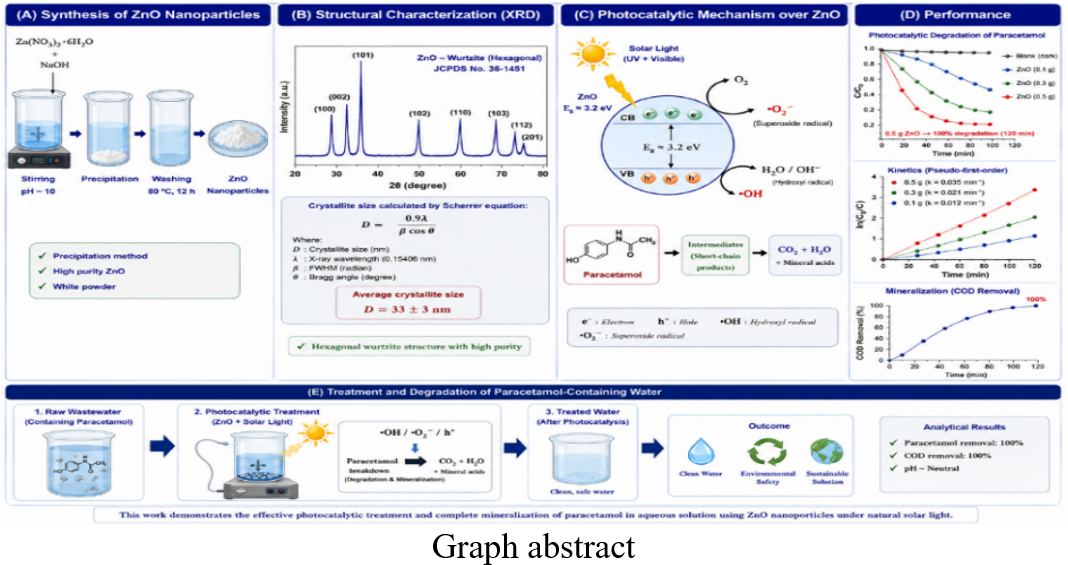
The increasing discharge of pharmaceutical residues into aquatic environments poses a serious environmental threat due to their persistence and resistance to conventional wastewater treatment processes. In this study, zinc oxide nanoparticles (ZnO NPs) were synthesized via a simple precipitation method and applied as an efficient photocatalyst for the degradation and mineralization of paracetamol under UV irradiation (365 nm) and natural solar irradiation. The structural, optical, and crystalline properties were confirmed using Ultraviolet–Visible Spectrophotometer, Fourier-Transform Infrared Spectroscopy and X-ray Diffraction analyses, revealing high crystallinity and nanoscale features with an average crystallite size ranging between 32.4 and 36.4 nm, which directly facilitated the surface-driven photocatalytic pathway. The results demonstrated that the synthesized ZnO NPs achieved 100% degradation of 10 mg/L paracetamol within 60 min under optimized solar irradiation conditions (pH 11, 2.5 g/L catalyst dose, 600 rpm stirring speed at room temperature). Furthermore, Chemical Oxygen Demand (COD) analysis confirmed complete mineralization of organic content, reducing the initial COD of real wastewater from 21,780 mg/L to 0.5 mg/L, achieving a 99.99% removal efficiency while High Performance Liquid Chromatography results verified the fully degraded parent compound. A major strength of this study is the utilization of both paracetamol and real pharmaceutical industrial wastewater, which enhances the environmental relevance and practical applicability of the proposed treatment system. The study highlights ZnO NPs as a highly efficient, low-cost, and sustainable photocatalyst for solar-driven wastewater treatment applications, with strong potential for large-scale environmental remediation.
Keywords
ZnO NPs
Photocatalytic degradation
Pharmaceutical Wastewater treatment
Paracetamol
How to Cite This Article
Rehab Sh. AL-Selwi, Anass A. Alnedhary, Mahfoudh M. AL-Hamadi (2026). Solar-Driven Photocatalytic Degradation of Pharmaceutical Wastewater using ZnO Nanoparticles. Sana'a University Journal of Applied Sciences and Technology, 2407-2415. DOI: https://doi.org/10.59628/jast.v4i8.3246
Rehab Sh. AL-Selwi, Anass A. Alnedhary, Mahfoudh M. AL-Hamadi . “Solar-Driven Photocatalytic Degradation of Pharmaceutical Wastewater using ZnO Nanoparticles.” Sana'a University Journal of Applied Sciences and Technology, 2026, pp. 2407-2415. https://doi.org/10.59628/jast.v4i8.3246. Accessed 30 Oct. 2026.
Rehab Sh. AL-Selwi, Anass A. Alnedhary, Mahfoudh M. AL-Hamadi . 2026. “Solar-Driven Photocatalytic Degradation of Pharmaceutical Wastewater using ZnO Nanoparticles.” Sana'a University Journal of Applied Sciences and Technology : 2407-2415. DOI: https://doi.org/10.59628/jast.v4i8.3246
Rehab Sh. AL-Selwi, Anass A. Alnedhary, Mahfoudh M. AL-Hamadi (2026) ‘Solar-Driven Photocatalytic Degradation of Pharmaceutical Wastewater using ZnO Nanoparticles’, Sana'a University Journal of Applied Sciences and Technology, pp. 2407-2415. doi: 10.59628/jast.v4i8.3246
@article{jast2026_art3246,
    author  = {Rehab Sh. AL-Selwi, Anass A. Alnedhary, Mahfoudh M. AL-Hamadi },
    title   = {Solar-Driven Photocatalytic Degradation of Pharmaceutical Wastewater using ZnO Nanoparticles},
    journal = {Sana'a University Journal of Applied Sciences and Technology},    year    = {2026},    month   = {August},    pages   = {2407-2415},    doi     = {10.59628/jast.v4i8.3246},
    url     = {https://doi.org/10.59628/jast.v4i8.3246},}
Citation copied!
Contact Authors
Solar-Driven Photocatalytic Degradation of Pharmaceutical Wastewater using ZnO Nanoparticles
Email copied!
Review
1 Articles
Stability-Aware and Feasibility-Sensitive Aggregation in Federated Reinforcement Learning for Edge-IoT Systems: A Review
Majid A. Aslan, Ahmed A. S. AL-SHalabi, Ahmed S. Al-Hegami
2416-2427
2026-08-28
Abstract
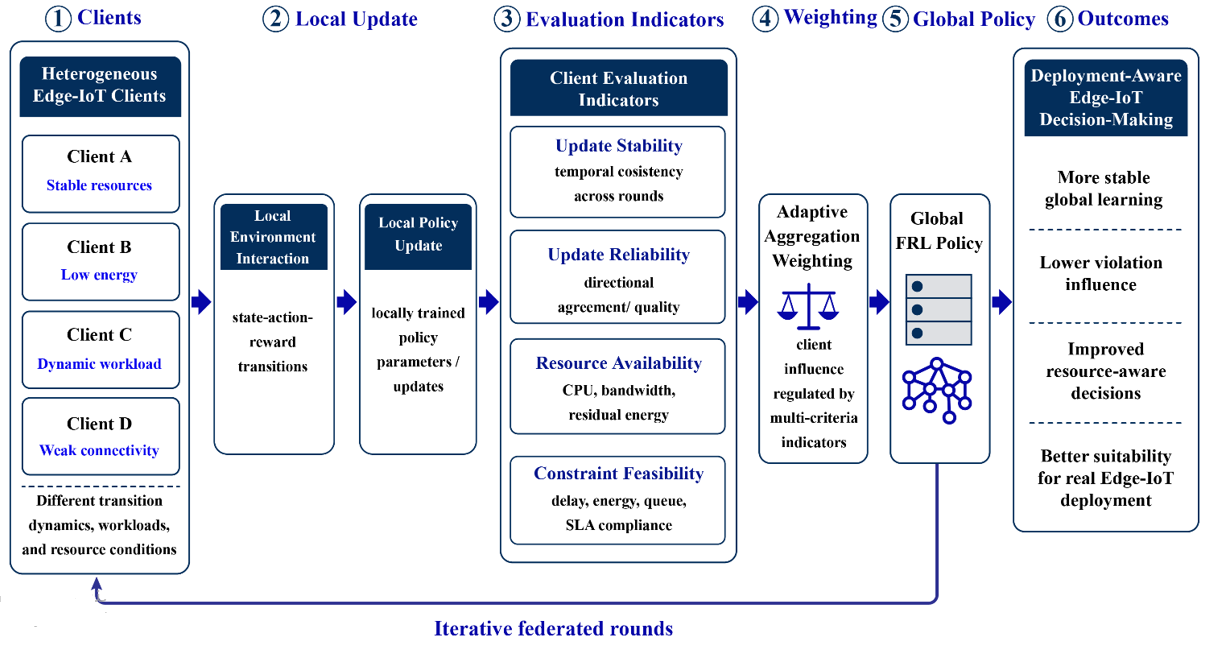
Federated Reinforcement Learning (FRL) provides a useful basis for distributed policy learning in Edge-IoT systems, where clients interact with local environments without transferring raw operational data to a central server. Yet aggregation becomes difficult when clients operate under different transition dynamics, workloads, resource capacities, communication conditions, and operational constraints. In these settings, local policy updates may not differ only in magnitude or direction; they may also differ in stability, reliability, resource support, and operational feasibility. Conventional averaging is therefore limited, since it does not distinguish stable and feasible updates from unstable or constraint-violating ones. This paper examines aggregation stability and feasibility-sensitive aggregation in FRL for Edge-IoT systems. It reviews and synthesizes related literature across four connected streams: heterogeneous Federated Learning, FRL-based edge decision-making, constrained and safe Reinforcement Learning, and adaptive or reliability-aware aggregation. The reviewed studies are analyzed through six dimensions: learning paradigm, type of heterogeneity, role of policy learning, treatment of operational constraints, aggregation strategy, and whether local feasibility signals influence global aggregation weights. The analysis indicates that existing studies provide valuable foundations, but they usually treat heterogeneity, constraint handling, and aggregation adaptation as separate concerns. The paper identifies a need for aggregation mechanisms that jointly account for update stability, update reliability, resource availability, and constraint feasibility. It positions aggregation as adaptive client influence regulation rather than passive averaging in future Edge-IoT FRL systems.
Keywords
Federated Reinforcement Learning
Edge-IoT
Adaptive Aggregation
Aggregation Stability
Constraint Feasibility.
How to Cite This Article
Majid A. Aslan, Ahmed A. S. AL-SHalabi, Ahmed S. Al-Hegami (2026). Stability-Aware and Feasibility-Sensitive Aggregation in Federated Reinforcement Learning for Edge-IoT Systems: A Review. Sana'a University Journal of Applied Sciences and Technology, 2416-2427. DOI: https://doi.org/10.59628/jast.v4i8.3275
Majid A. Aslan, Ahmed A. S. AL-SHalabi, Ahmed S. Al-Hegami . “Stability-Aware and Feasibility-Sensitive Aggregation in Federated Reinforcement Learning for Edge-IoT Systems: A Review.” Sana'a University Journal of Applied Sciences and Technology, 2026, pp. 2416-2427. https://doi.org/10.59628/jast.v4i8.3275. Accessed 30 Oct. 2026.
Majid A. Aslan, Ahmed A. S. AL-SHalabi, Ahmed S. Al-Hegami . 2026. “Stability-Aware and Feasibility-Sensitive Aggregation in Federated Reinforcement Learning for Edge-IoT Systems: A Review.” Sana'a University Journal of Applied Sciences and Technology : 2416-2427. DOI: https://doi.org/10.59628/jast.v4i8.3275
Majid A. Aslan, Ahmed A. S. AL-SHalabi, Ahmed S. Al-Hegami (2026) ‘Stability-Aware and Feasibility-Sensitive Aggregation in Federated Reinforcement Learning for Edge-IoT Systems: A Review’, Sana'a University Journal of Applied Sciences and Technology, pp. 2416-2427. doi: 10.59628/jast.v4i8.3275
@article{jast2026_art3275,
    author  = {Majid A. Aslan, Ahmed A. S. AL-SHalabi, Ahmed S. Al-Hegami },
    title   = {Stability-Aware and Feasibility-Sensitive Aggregation in Federated Reinforcement Learning for Edge-IoT Systems: A Review},
    journal = {Sana'a University Journal of Applied Sciences and Technology},    year    = {2026},    month   = {August},    pages   = {2416-2427},    doi     = {10.59628/jast.v4i8.3275},
    url     = {https://doi.org/10.59628/jast.v4i8.3275},}
Citation copied!
Contact Authors
Stability-Aware and Feasibility-Sensitive Aggregation in Federated Reinforcement Learning for Edge-IoT Systems: A Review
Email copied!
