

Current Issue
Sana'a University Journal of Applied Sciences and Technology
Vol. 3 No. 4 (2025)
2025-08-28
11 Articles
The third volume - the fourth issue in the Sana'a University Journal of Applied Sciences and Technology
Article
9 Articles
How to Cite This Article
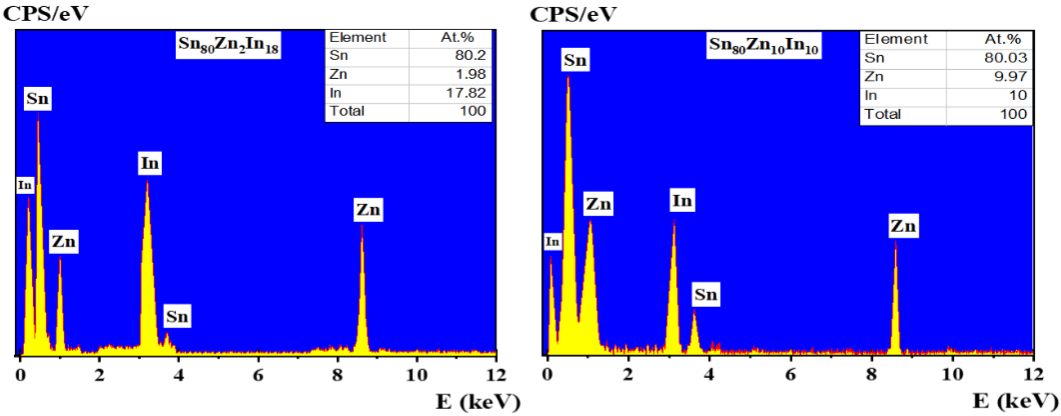
Salam A.Q. ALarnoot, A.H. Al-Hammadi, Ahmed. M.A. Haider (2025). Zinc-Induced Effects on the Structural and Morphological Properties of Sn-Zn-In Triple Alloys: Insights from XRD, EDX, and SEM Analysis. Sana'a University Journal of Applied Sciences and Technology, 922-932. DOI: https://doi.org/10.59628/jast.v3i4.1649
Salam A.Q. ALarnoot, A.H. Al-Hammadi, Ahmed. M.A. Haider . “Zinc-Induced Effects on the Structural and Morphological Properties of Sn-Zn-In Triple Alloys: Insights from XRD, EDX, and SEM Analysis.” Sana'a University Journal of Applied Sciences and Technology, 2025, pp. 922-932. https://doi.org/10.59628/jast.v3i4.1649. Accessed 27 Oct. 2026.
Salam A.Q. ALarnoot, A.H. Al-Hammadi, Ahmed. M.A. Haider . 2025. “Zinc-Induced Effects on the Structural and Morphological Properties of Sn-Zn-In Triple Alloys: Insights from XRD, EDX, and SEM Analysis.” Sana'a University Journal of Applied Sciences and Technology : 922-932. DOI: https://doi.org/10.59628/jast.v3i4.1649
Salam A.Q. ALarnoot, A.H. Al-Hammadi, Ahmed. M.A. Haider (2025) ‘Zinc-Induced Effects on the Structural and Morphological Properties of Sn-Zn-In Triple Alloys: Insights from XRD, EDX, and SEM Analysis’, Sana'a University Journal of Applied Sciences and Technology, pp. 922-932. doi: 10.59628/jast.v3i4.1649
@article{jast2025_art1649,
    author  = {Salam A.Q. ALarnoot, A.H. Al-Hammadi, Ahmed. M.A. Haider },
    title   = {Zinc-Induced Effects on the Structural and Morphological Properties of Sn-Zn-In Triple Alloys: Insights from XRD, EDX, and SEM Analysis},
    journal = {Sana'a University Journal of Applied Sciences and Technology},    year    = {2025},    month   = {August},    pages   = {922-932},    doi     = {10.59628/jast.v3i4.1649},
    url     = {https://doi.org/10.59628/jast.v3i4.1649},}
Citation copied!
Contact Authors
Zinc-Induced Effects on the Structural and Morphological Properties of Sn-Zn-In Triple Alloys: Insights from XRD, EDX, and SEM Analysis
Email copied!

EASD Exploiting ASDM Vulnerabilities and Proactive Defense Strategies Against Sophisticated Malware in Cisco ASA Firewalls Security
Malek Algabri, Jamil Rashid, Ehab Al-junid
933-940
2025-08-28
Abstract
As cyber threats continue to evolve in sophistication, this study investigates critical vulnerabilities within Cisco ASA firewalls, with a particular emphasis on the Adaptive Security Device Manager (ASDM) interface. The research demonstrates how advanced malware can exploit the file-based architecture of ASDM to circumvent traditional firewall protections. A controlled virtual environment was established using VMware, incorporating a native Cisco ASA 5512-X firewall running software version 8.6(1), a Windows 10-based victim machine, and a Kali Linux attacker system. To facilitate the exploitation process, substantial modifications were applied to the open source tool “theway”, enabling it to extract and reassemble the .bin installation package without altering the structure of its internal components. Additionally, 7-Zip was employed to unpack the embedded .msi installer files, allowing for the insertion of malicious payloads. The WiX Toolset, used in its unmodified state, was then utilized to rebuild the .msi packages. These .msi files were selected as the primary attack vector due to their broad compatibility across ASDM versions and reduced likelihood of detection. In contrast, attempts to inject unsigned Java .class files into the pdm.sgz archive were unsuccessful, as recent ASDM versions enforce strict digital signature verification. The attack scenarios simulated in this study included reverse shell injection and credential interception through a man-in-the middle (MITM) attack. Results revealed significant weaknesses in Cisco ASA’s file validation procedures and outbound traffic monitoring mechanisms. To address these issues, a comprehensive multi-layered defense strategy is proposed, incorporating SIEM/EDR integration, robust digital signature enforcement, and internal network segmentation. The findings of this research contribute to both academic and practical efforts to enhance the security posture of enterprise firewall deployments against sophisticated malware threats.
Keywords
Firewall Bypass
Malware Injection
MITM At- tack
Reverse Shell Attack
WiX Toolset
Adaptive Security Device Manager (ASDM)
MSI File Manipulation
How to Cite This Article
Malek Algabri, Jamil Rashid, Ehab Al-junid (2025). EASD Exploiting ASDM Vulnerabilities and Proactive Defense Strategies Against Sophisticated Malware in Cisco ASA Firewalls Security. Sana'a University Journal of Applied Sciences and Technology, 933-940. DOI: https://doi.org/10.59628/jast.v3i4.1866
Malek Algabri, Jamil Rashid, Ehab Al-junid . “EASD Exploiting ASDM Vulnerabilities and Proactive Defense Strategies Against Sophisticated Malware in Cisco ASA Firewalls Security.” Sana'a University Journal of Applied Sciences and Technology, 2025, pp. 933-940. https://doi.org/10.59628/jast.v3i4.1866. Accessed 27 Oct. 2026.
Malek Algabri, Jamil Rashid, Ehab Al-junid . 2025. “EASD Exploiting ASDM Vulnerabilities and Proactive Defense Strategies Against Sophisticated Malware in Cisco ASA Firewalls Security.” Sana'a University Journal of Applied Sciences and Technology : 933-940. DOI: https://doi.org/10.59628/jast.v3i4.1866
Malek Algabri, Jamil Rashid, Ehab Al-junid (2025) ‘EASD Exploiting ASDM Vulnerabilities and Proactive Defense Strategies Against Sophisticated Malware in Cisco ASA Firewalls Security’, Sana'a University Journal of Applied Sciences and Technology, pp. 933-940. doi: 10.59628/jast.v3i4.1866
@article{jast2025_art1866,
    author  = {Malek Algabri, Jamil Rashid, Ehab Al-junid },
    title   = {EASD Exploiting ASDM Vulnerabilities and Proactive Defense Strategies Against Sophisticated Malware in Cisco ASA Firewalls Security},
    journal = {Sana'a University Journal of Applied Sciences and Technology},    year    = {2025},    month   = {August},    pages   = {933-940},    doi     = {10.59628/jast.v3i4.1866},
    url     = {https://doi.org/10.59628/jast.v3i4.1866},}
Citation copied!
Contact Authors
EASD Exploiting ASDM Vulnerabilities and Proactive Defense Strategies Against Sophisticated Malware in Cisco ASA Firewalls Security
Email copied!

Optical Injection Locking for Enhancing Communication Systems in Telesurgery: A Simulation-Based Study
Abdulsalam Tonin, Malek Algabri, Mansour N. Ali, Mossa Ghurab, Abdualmajed A. G. Al-Khulaidi, Ibrahim Ahmed Al-Balatah
941-948
2025-08-28
Abstract
The growing complexity of remote robotic surgery (RRS) has heightened the demand for communication systems that deliver ultralow latency, high bandwidth, and stable signal transmission. Conventional optical and wireless communication architectures often fail to satisfy these stringent requirements, particularly in time critical and high-fidelity data-exchange scenarios. In this study, a simulation-based evaluation of Optical Injection Locking (OIL) was conducted to investigate its potential in enhancing the signal quality and transmission efficiency for telesurgical applications. The results demonstrated that OIL significantly improves the frequency response characteristics, with the bandwidth reaching up to 32 GHz through controlled variation of the injection ratio. Furthermore, phase-noise suppression and spectral narrowing were observed with increasing wavelength detuning, contributing to improved signal coherence and reduced dispersion. The end-to-end latency was maintained below 50 ms, satisfying the safety constraints for real-time surgical interaction. The system also exhibited a 30% reduction in power consumption compared with conventional optical fiber systems. These findings confirmed the technical feasibility of OIL as a high-performance communication approach for latency-sensitive biomedical applications. Future work will focus on the prototype development and real-world integration of OIL-based links for next generation telesurgery platforms.
Keywords
Optical Injection Locking (OIL)
Remote Robtic Surgery
Low Latency Communication
HighBandwidth Transmission
Telesurgery
Packet Loss Minimization
Biomedical Communication
How to Cite This Article
Abdulsalam Tonin, Malek Algabri, Mansour N. Ali, Mossa Ghurab, Abdualmajed A. G. Al-Khulaidi, Ibrahim Ahmed Al-Balatah (2025). Optical Injection Locking for Enhancing Communication Systems in Telesurgery: A Simulation-Based Study. Sana'a University Journal of Applied Sciences and Technology, 941-948. DOI: https://doi.org/10.59628/jast.v3i4.1887
Abdulsalam Tonin, Malek Algabri, Mansour N. Ali, Mossa Ghurab, Abdualmajed A. G. Al-Khulaidi, Ibrahim Ahmed Al-Balatah . “Optical Injection Locking for Enhancing Communication Systems in Telesurgery: A Simulation-Based Study.” Sana'a University Journal of Applied Sciences and Technology, 2025, pp. 941-948. https://doi.org/10.59628/jast.v3i4.1887. Accessed 27 Oct. 2026.
Abdulsalam Tonin, Malek Algabri, Mansour N. Ali, Mossa Ghurab, Abdualmajed A. G. Al-Khulaidi, Ibrahim Ahmed Al-Balatah . 2025. “Optical Injection Locking for Enhancing Communication Systems in Telesurgery: A Simulation-Based Study.” Sana'a University Journal of Applied Sciences and Technology : 941-948. DOI: https://doi.org/10.59628/jast.v3i4.1887
Abdulsalam Tonin, Malek Algabri, Mansour N. Ali, Mossa Ghurab, Abdualmajed A. G. Al-Khulaidi, Ibrahim Ahmed Al-Balatah (2025) ‘Optical Injection Locking for Enhancing Communication Systems in Telesurgery: A Simulation-Based Study’, Sana'a University Journal of Applied Sciences and Technology, pp. 941-948. doi: 10.59628/jast.v3i4.1887
@article{jast2025_art1887,
    author  = {Abdulsalam Tonin, Malek Algabri, Mansour N. Ali, Mossa Ghurab, Abdualmajed A. G.  Al-Khulaidi, Ibrahim Ahmed  Al-Balatah },
    title   = {Optical Injection Locking for Enhancing Communication Systems in Telesurgery: A Simulation-Based Study},
    journal = {Sana'a University Journal of Applied Sciences and Technology},    year    = {2025},    month   = {August},    pages   = {941-948},    doi     = {10.59628/jast.v3i4.1887},
    url     = {https://doi.org/10.59628/jast.v3i4.1887},}
Citation copied!
Contact Authors
Optical Injection Locking for Enhancing Communication Systems in Telesurgery: A Simulation-Based Study
Email copied!
Synthesis and characteristics of Silica nanoparticles (SiO2NPs) from Bamboo Leaves Ash by precipitation method
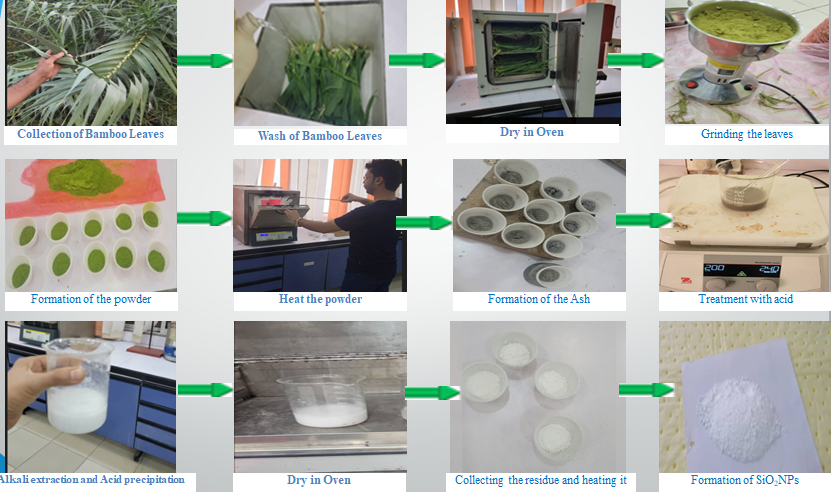
Fursan Thabet A. Saleh, Sadeq H. Azzam, Amani A. Al-Gaadbi, Bushra M. Alattab, Saad A. Al-Arnoot, Hussein M.A. Al-Maydama, Maher Ali Almaqtari
949-953
2025-08-28
Abstract
This study illustrates the low-cost, eco-friendly synthesis of silica nanoparticles using local bamboo leaves collected in August 2024 from the Aqqan Valley in the Al-Masimir District of Lahij Governorate, Yemen. Nanosilica powder synthesis by precipitation method is generated subsequent to thermal treatment of BLA at 750°C followed by characterization using advanced characterization techniques. The absorption peaks close to λmax = 240 nm in the UV spectrum showed silica nanoparticles, which were observed using UV-Vis spectroscopy. The presence of a siloxane group (Si-O-Si) in the experimental FT-IR spectral data indicated the high purity of the nanosilica particles. The prepared silica showed a high purity of 97.82% using XRF. The particle size determined by transmission electron microscopy (TEM) was found to be between 10.79 nm and 22.73 nm with minor agglomerations. Analysis of the nanosilica by X-ray diffraction (XRD) confirmed an amorphous structure with a
peak intensity at 2θ=23°.
Keywords
Low-Cost Synthesis
Silica Nanoparticles
Precipitation Technique
Bamboo leaf ash
Physicochemical Characterization.
How to Cite This Article
Fursan Thabet A. Saleh, Sadeq H. Azzam, Amani A. Al-Gaadbi, Bushra M. Alattab, Saad A. Al-Arnoot, Hussein M.A. Al-Maydama, Maher Ali Almaqtari (2025). Synthesis and characteristics of Silica nanoparticles (SiO2NPs) from Bamboo Leaves Ash by precipitation method. Sana'a University Journal of Applied Sciences and Technology, 949-953. DOI: https://doi.org/10.59628/jast.v3i4.1792
Fursan Thabet A. Saleh, Sadeq H. Azzam, Amani A. Al-Gaadbi, Bushra M. Alattab, Saad A. Al-Arnoot, Hussein M.A. Al-Maydama, Maher Ali Almaqtari . “Synthesis and characteristics of Silica nanoparticles (SiO2NPs) from Bamboo Leaves Ash by precipitation method.” Sana'a University Journal of Applied Sciences and Technology, 2025, pp. 949-953. https://doi.org/10.59628/jast.v3i4.1792. Accessed 27 Oct. 2026.
Fursan Thabet A. Saleh, Sadeq H. Azzam, Amani A. Al-Gaadbi, Bushra M. Alattab, Saad A. Al-Arnoot, Hussein M.A. Al-Maydama, Maher Ali Almaqtari . 2025. “Synthesis and characteristics of Silica nanoparticles (SiO2NPs) from Bamboo Leaves Ash by precipitation method.” Sana'a University Journal of Applied Sciences and Technology : 949-953. DOI: https://doi.org/10.59628/jast.v3i4.1792
Fursan Thabet A. Saleh, Sadeq H. Azzam, Amani A. Al-Gaadbi, Bushra M. Alattab, Saad A. Al-Arnoot, Hussein M.A. Al-Maydama, Maher Ali Almaqtari (2025) ‘Synthesis and characteristics of Silica nanoparticles (SiO2NPs) from Bamboo Leaves Ash by precipitation method’, Sana'a University Journal of Applied Sciences and Technology, pp. 949-953. doi: 10.59628/jast.v3i4.1792
@article{jast2025_art1792,
    author  = {Fursan Thabet A.  Saleh, Sadeq H. Azzam, Amani A. Al-Gaadbi, Bushra M. Alattab, Saad A. Al-Arnoot, Hussein M.A. Al-Maydama, Maher Ali  Almaqtari },
    title   = {Synthesis and characteristics of Silica nanoparticles (SiO2NPs) from Bamboo Leaves Ash by precipitation method},
    journal = {Sana'a University Journal of Applied Sciences and Technology},    year    = {2025},    month   = {August},    pages   = {949-953},    doi     = {10.59628/jast.v3i4.1792},
    url     = {https://doi.org/10.59628/jast.v3i4.1792},}
Citation copied!
Contact Authors
Synthesis and characteristics of Silica nanoparticles (SiO2NPs) from Bamboo Leaves Ash by precipitation method
Email copied!
Advanced Techniques in Age-Invariant Face Recognition: A Survey
Somaia Abduh AL-bahri, Nagi Ali AL-Shaibany
954-963
2025-08-28
Abstract
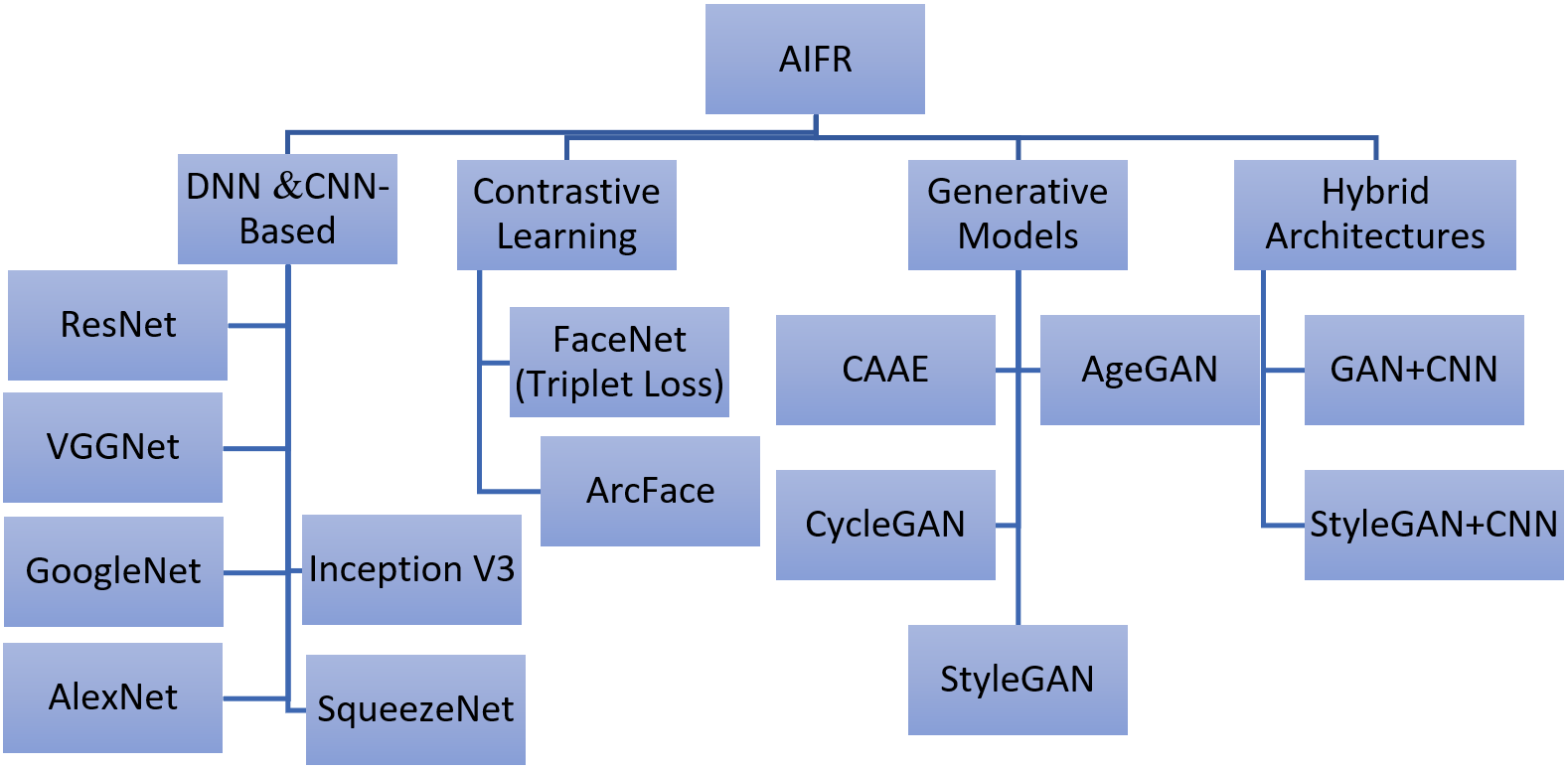
Age-Invariant Face Recognition (AIFR) addresses the critical challenge of identifying individuals despite age induced facial changes over time. This paper presents a structured survey of recent advancements in AIFR, emphasizing deep learning-based solutions, particularly Generative Adversarial Networks (GANs). Through a comparative analysis of benchmark datasets MORPH-II, FG-NET, and CACD we highlight the performance trends and limitations of current models. GANs have shown exceptional promise in synthesizing realistic age- progressed or age regressed facial images, thereby improving recognition accuracy across age gaps. Further- more, we analyze key factors affecting model performance, including dataset diversity, illumination, and pose variations. Despite significant progress, challenges remain in generalizing across ethnicities, age ranges, and real-world conditions.
Keywords
AIFR
Face Recognition
Face Aging
Contrastive Learning
GANs
Deep Learning
How to Cite This Article
Somaia Abduh AL-bahri, Nagi Ali AL-Shaibany (2025). Advanced Techniques in Age-Invariant Face Recognition: A Survey. Sana'a University Journal of Applied Sciences and Technology, 954-963. DOI: https://doi.org/10.59628/jast.v3i4.1729
Somaia Abduh AL-bahri, Nagi Ali AL-Shaibany . “Advanced Techniques in Age-Invariant Face Recognition: A Survey.” Sana'a University Journal of Applied Sciences and Technology, 2025, pp. 954-963. https://doi.org/10.59628/jast.v3i4.1729. Accessed 27 Oct. 2026.
Somaia Abduh AL-bahri, Nagi Ali AL-Shaibany . 2025. “Advanced Techniques in Age-Invariant Face Recognition: A Survey.” Sana'a University Journal of Applied Sciences and Technology : 954-963. DOI: https://doi.org/10.59628/jast.v3i4.1729
Somaia Abduh AL-bahri, Nagi Ali AL-Shaibany (2025) ‘Advanced Techniques in Age-Invariant Face Recognition: A Survey’, Sana'a University Journal of Applied Sciences and Technology, pp. 954-963. doi: 10.59628/jast.v3i4.1729
@article{jast2025_art1729,
    author  = {Somaia Abduh AL-bahri, Nagi Ali  AL-Shaibany },
    title   = {Advanced Techniques in Age-Invariant Face Recognition: A Survey},
    journal = {Sana'a University Journal of Applied Sciences and Technology},    year    = {2025},    month   = {August},    pages   = {954-963},    doi     = {10.59628/jast.v3i4.1729},
    url     = {https://doi.org/10.59628/jast.v3i4.1729},}
Citation copied!
Contact Authors
Advanced Techniques in Age-Invariant Face Recognition: A Survey
Email copied!
A Hybrid CNN-BLSTM Model for Phishing Attack Detection Using Deep Learning to Strengthen Internet Security
Abdulrahman A. Alsabri, Marwa A. Al-Hadi
964-972
2025-08-28
Abstract
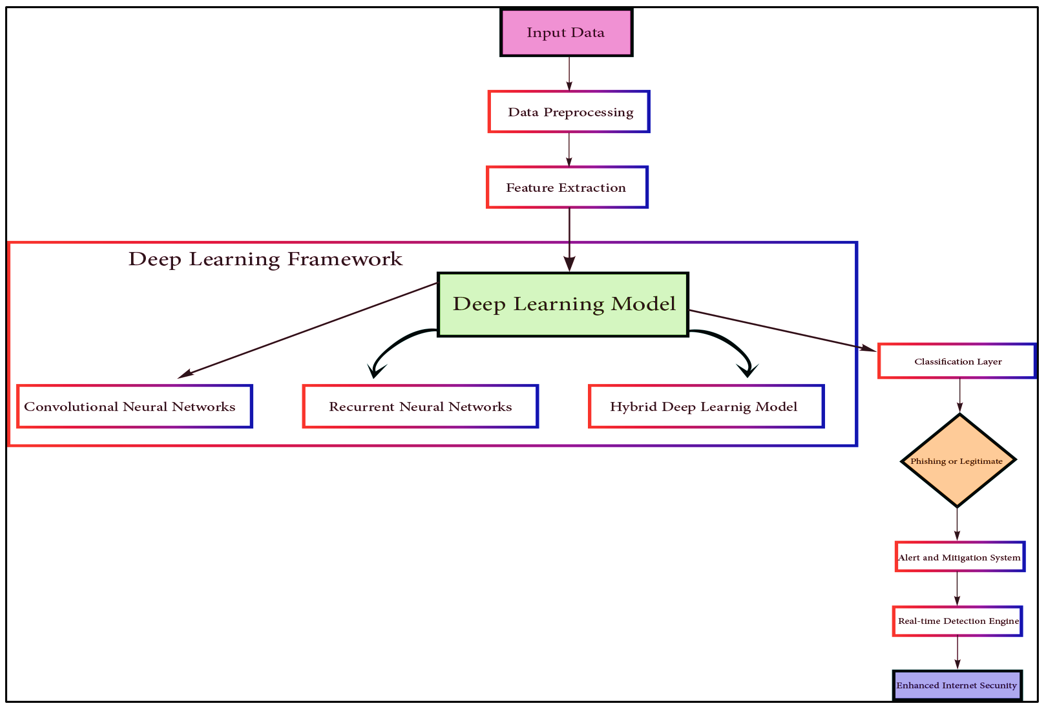
Phishing attacks continue to be a persistent and critical challenge in the cybersecurity landscape, exploiting weaknesses in Internet security through sophisticated tactics, such as social engineering, deceptive domain names, and URL obfuscation. Traditional detection systems often fail to identify these evolving threats because of their limited adaptability and high false positive rates. In this study, a deep learning approach is proposed to enhance the accuracy of phishing detection and minimize erroneous classifications. Leveraging a comprehensive dataset composed of key URL-related features, including URL structure, domain age, presence of HTTPS, and lexical patterns, we implemented and compared the performance of four deep learning models: Convolutional Neural Network with Bidirectional Long Short-Term Memory (CNN-BLSTM), Self-Normalizing Neural Network (SNN), Transformer, and Deep Belief Network (DBN). Among these, the CNN-BLSTM model achieved the highest accuracy of 81\%, demonstrating its superior ability to capture sequential and spatial patterns inherent in phishing URLs. The experimental results confirm that deep-learning methods outperform conventional techniques in detecting phishing attempts. However, challenges such as high computational complexity limit real-time deployment. This study highlights the transformative potential of deep learning for strengthening online threat detection and enhancing cybersecurity defenses.
Keywords
Phishing Detection
Deep Learning Models
Cybersecurity
URL Obfuscation
CNN-BLSTM Network
How to Cite This Article
Abdulrahman A. Alsabri, Marwa A. Al-Hadi (2025). A Hybrid CNN-BLSTM Model for Phishing Attack Detection Using Deep Learning to Strengthen Internet Security. Sana'a University Journal of Applied Sciences and Technology, 964-972. DOI: https://doi.org/10.59628/jast.v3i4.1822
Abdulrahman A. Alsabri, Marwa A. Al-Hadi . “A Hybrid CNN-BLSTM Model for Phishing Attack Detection Using Deep Learning to Strengthen Internet Security.” Sana'a University Journal of Applied Sciences and Technology, 2025, pp. 964-972. https://doi.org/10.59628/jast.v3i4.1822. Accessed 27 Oct. 2026.
Abdulrahman A. Alsabri, Marwa A. Al-Hadi . 2025. “A Hybrid CNN-BLSTM Model for Phishing Attack Detection Using Deep Learning to Strengthen Internet Security.” Sana'a University Journal of Applied Sciences and Technology : 964-972. DOI: https://doi.org/10.59628/jast.v3i4.1822
Abdulrahman A. Alsabri, Marwa A. Al-Hadi (2025) ‘A Hybrid CNN-BLSTM Model for Phishing Attack Detection Using Deep Learning to Strengthen Internet Security’, Sana'a University Journal of Applied Sciences and Technology, pp. 964-972. doi: 10.59628/jast.v3i4.1822
@article{jast2025_art1822,
    author  = {Abdulrahman A. Alsabri, Marwa A.  Al-Hadi },
    title   = {A Hybrid CNN-BLSTM Model for Phishing Attack Detection Using Deep Learning to Strengthen Internet Security},
    journal = {Sana'a University Journal of Applied Sciences and Technology},    year    = {2025},    month   = {August},    pages   = {964-972},    doi     = {10.59628/jast.v3i4.1822},
    url     = {https://doi.org/10.59628/jast.v3i4.1822},}
Citation copied!
Contact Authors
A Hybrid CNN-BLSTM Model for Phishing Attack Detection Using Deep Learning to Strengthen Internet Security
Email copied!

تأثير سماد الحديد النانوي والسماد التجاري على بعض خصائص التربة ونمو نبات الجزر (Daucus carota L. var. sativa)
ليلى حفظ الله جريد العنسي , نجيب محمد حسين المغربي
973-989
2025-08-28
Abstract
يُعدّ الحديد عنصرًا أساسيًا في تغذية النبات، حيث يساهم في تحسين نموه وإنتاجيته. وتُعاني الترب القاعدية من انخفاض تيسر عنصر الحديد رغم توفره بكميات كافية، وذلك نتيجة لارتفاع درجة تفاعل التربة (pH) الناجم عن زيادة نسبة كربونات الكالسيوم، مما يؤدي إلى تثبيت الحديد وظهور أعراض نقصه على النبات. وعلى الرغم من استخدام الأسمدة التقليدية المحتوية على الحديد، إلا أنها لم تحقق الكفاءة المطلوبة في تحسين خصوبة التربة. في السنوات الأخيرة، برزت الأسمدة النانوية كبديل واعد لتعزيز امتصاص العناصر الغذائية وتحسين خصوبة التربة. وهدفت هذه الدراسة إلى تقييم تأثير سماد الحديد النانوي المحضّر باستخدام مستخلص ثمار الليمون، مقارنةً بالحديد التجاري، على بعض خصائص التربة ونمو نبات الجزر، بالإضافة إلى تحليل تأثير مستويات مختلفة من السماد النانوي على تركيز العناصر الغذائية في التربة وخصائصها الكيميائية. نُفّذت التجربة في البيت المحمي التابع لكلية الزراعة والأغذية والبيئة بجامعة صنعاء خلال الموسم الخريفي 2022–2023، باستخدام تصميم القطاعات العشوائية الكاملة (RCBD) بثلاث مكررات. تم تطبيق الحديد النانوي بأربعة مستويات (0.5، 1، 1.5، 2 ملغم/لتر) بطريقة الإضافة الأرضية، ومقارنته بسماد الحديد التجاري بتركيز 1.5 غم/لتر، بالإضافة إلى معاملة الشاهد (دون إضافة الحديد). أظهرت النتائج تفوّق السماد النانوي على السماد التجاري في معظم الصفات المدروسة، حيث حققت معاملة الحديد النانوي (2 ملغم/لتر) أعلى القيم في تركيز النيتروجين الكلي (0.21%)، والبوتاسيوم الميسر (103.07 جزء في المليون)، مع انخفاض في التوصيل الكهربائي (0.42 ديسيمنز/متر)، وزيادة في تركيز المنغنيز (81.23 جزء في المليون)، وارتفاع النبات (19.28 سم)، ومحتوى الكلوروفيل (1.31 ملغم/جم وزن طري)، والوزن الجاف للمجموع الخضري (4.98 غرام/نبات). كما تميزت معاملة الحديد النانوي (1 ملغم/لتر) بزيادة تركيز الفسفور الميسر (7.30 جزء في المليون) وخفض درجة حموضة التربة. (7.63) تؤكد نتائج الدراسة أن السماد النانوي المحضّر من ثمار الليمون يعزز خصوبة التربة ويزيد من توافر العناصر الغذائية مقارنةً بالحديد التجاري، مما يساهم في تحسين نمو نبات الجزر. وعليه، تُظهر الأسمدة النانوية إمكانات كبيرة كبديل مستدام وفعّال لتعزيز إنتاجية المحاصيل.
Keywords
الحديد
الأسمدة النانوية
خواص التربة
الجزر
How to Cite This Article
ليلى حفظ الله جريد العنسي , نجيب محمد حسين المغربي (2025). تأثير سماد الحديد النانوي والسماد التجاري على بعض خصائص التربة ونمو نبات الجزر (Daucus carota L. var. sativa). Sana'a University Journal of Applied Sciences and Technology, 973-989. DOI: https://doi.org/10.59628/jast.v3i4.1594
ليلى حفظ الله جريد العنسي , نجيب محمد حسين المغربي . “تأثير سماد الحديد النانوي والسماد التجاري على بعض خصائص التربة ونمو نبات الجزر (Daucus carota L. var. sativa).” Sana'a University Journal of Applied Sciences and Technology, 2025, pp. 973-989. https://doi.org/10.59628/jast.v3i4.1594. Accessed 27 Oct. 2026.
ليلى حفظ الله جريد العنسي , نجيب محمد حسين المغربي . 2025. “تأثير سماد الحديد النانوي والسماد التجاري على بعض خصائص التربة ونمو نبات الجزر (Daucus carota L. var. sativa).” Sana'a University Journal of Applied Sciences and Technology : 973-989. DOI: https://doi.org/10.59628/jast.v3i4.1594
ليلى حفظ الله جريد العنسي , نجيب محمد حسين المغربي (2025) ‘تأثير سماد الحديد النانوي والسماد التجاري على بعض خصائص التربة ونمو نبات الجزر (Daucus carota L. var. sativa)’, Sana'a University Journal of Applied Sciences and Technology, pp. 973-989. doi: 10.59628/jast.v3i4.1594
@article{jast2025_art1594,
    author  = {ليلى حفظ الله جريد  العنسي , نجيب محمد حسين المغربي },
    title   = {تأثير سماد الحديد النانوي والسماد التجاري على بعض خصائص التربة ونمو نبات الجزر  (Daucus carota L. var. sativa)},
    journal = {Sana'a University Journal of Applied Sciences and Technology},    year    = {2025},    month   = {August},    pages   = {973-989},    doi     = {10.59628/jast.v3i4.1594},
    url     = {https://doi.org/10.59628/jast.v3i4.1594},}
Citation copied!
Contact Authors
تأثير سماد الحديد النانوي والسماد التجاري على بعض خصائص التربة ونمو نبات الجزر (Daucus carota L. var. sativa)
Email copied!
Structural, Optical and Cytotoxic Analysis of Sr-Doped CuS Nanoparticles for Lung Cancer Applications
Asma’a Ahmed AL-Adhreai, A.M. Abdulwahab, A. H. Al-Hammadi
990-998
2025-08-28
Abstract
Copper sulfide (CuS) nanoparticles have garnered significant interest due to their unique structural, optical, and biological properties, making them promising candidates for cancer therapy. This work systematically examines how strontium incorporation influences the structural properties, optical behavior, and anticancer activity of copper sulfide nanoparticles for potential lung cancer therapeutics. Using the co-precipitation approach, Sr-doped CuS nanoparticles with different Sr concentrations were produced. Characterization techniques, including XRD, TEM, and UV-VIS-NIR spectroscopy, were employed to analyze their physicochemical properties. The results indicate that Sr doping enhances crystallinity, modifies the bandgap, and influences optical conductivity. Cytotoxicity analysis using MTT assays on A549 lung cancer cells emonstrated that Sr-doped CuS nanoparticles exhibit enhanced anticancer activity compared to pure CuS. The 2.5% Sr-doped sample showed the most significant reduction in cell viability. These findings suggest that Sr-doped CuS nanoparticles are promising candidates for biomedical applications. However, further studies are needed to assess their photothermal and photodynamic effects under controlled light exposure.
Keywords
Chemical co-precipitation
Sr doping
Hexagonal structure
Anti-cancer activity.
How to Cite This Article
Asma’a Ahmed AL-Adhreai, A.M. Abdulwahab, A. H. Al-Hammadi (2025). Structural, Optical and Cytotoxic Analysis of Sr-Doped CuS Nanoparticles for Lung Cancer Applications. Sana'a University Journal of Applied Sciences and Technology, 990-998. DOI: https://doi.org/10.59628/jast.v3i4.1728
Asma’a Ahmed AL-Adhreai, A.M. Abdulwahab, A. H. Al-Hammadi . “Structural, Optical and Cytotoxic Analysis of Sr-Doped CuS Nanoparticles for Lung Cancer Applications.” Sana'a University Journal of Applied Sciences and Technology, 2025, pp. 990-998. https://doi.org/10.59628/jast.v3i4.1728. Accessed 27 Oct. 2026.
Asma’a Ahmed AL-Adhreai, A.M. Abdulwahab, A. H. Al-Hammadi . 2025. “Structural, Optical and Cytotoxic Analysis of Sr-Doped CuS Nanoparticles for Lung Cancer Applications.” Sana'a University Journal of Applied Sciences and Technology : 990-998. DOI: https://doi.org/10.59628/jast.v3i4.1728
Asma’a Ahmed AL-Adhreai, A.M. Abdulwahab, A. H. Al-Hammadi (2025) ‘Structural, Optical and Cytotoxic Analysis of Sr-Doped CuS Nanoparticles for Lung Cancer Applications’, Sana'a University Journal of Applied Sciences and Technology, pp. 990-998. doi: 10.59628/jast.v3i4.1728
@article{jast2025_art1728,
    author  = {Asma’a Ahmed AL-Adhreai, A.M. Abdulwahab, A. H. Al-Hammadi },
    title   = {Structural, Optical and Cytotoxic Analysis of Sr-Doped CuS Nanoparticles for Lung Cancer Applications},
    journal = {Sana'a University Journal of Applied Sciences and Technology},    year    = {2025},    month   = {August},    pages   = {990-998},    doi     = {10.59628/jast.v3i4.1728},
    url     = {https://doi.org/10.59628/jast.v3i4.1728},}
Citation copied!
Contact Authors
Structural, Optical and Cytotoxic Analysis of Sr-Doped CuS Nanoparticles for Lung Cancer Applications
Email copied!
Suitability Analysis of Solar Energy Plant Sites in Yemen Using AHP, BWM, and GIS Methods
A. N. Algawbery, M. A. Shukri, M. K. AL-Moutawakel
999-1007
2025-08-28
Abstract
The study presents a comprehensive evaluation of optimal locations for solar energy facilities in Yemen by com-
bining Geographic Information System (GIS) technology with Multi-Criteria Decision-Making (MCDM) methodolo-
gies. It identifies twelve crucial criteria, assigning weights through the Analytical Hierarchy Process (AHP) and
subsequently validating them using the Best-Worst Method (BWM). A weighted overlay analysis conducted in
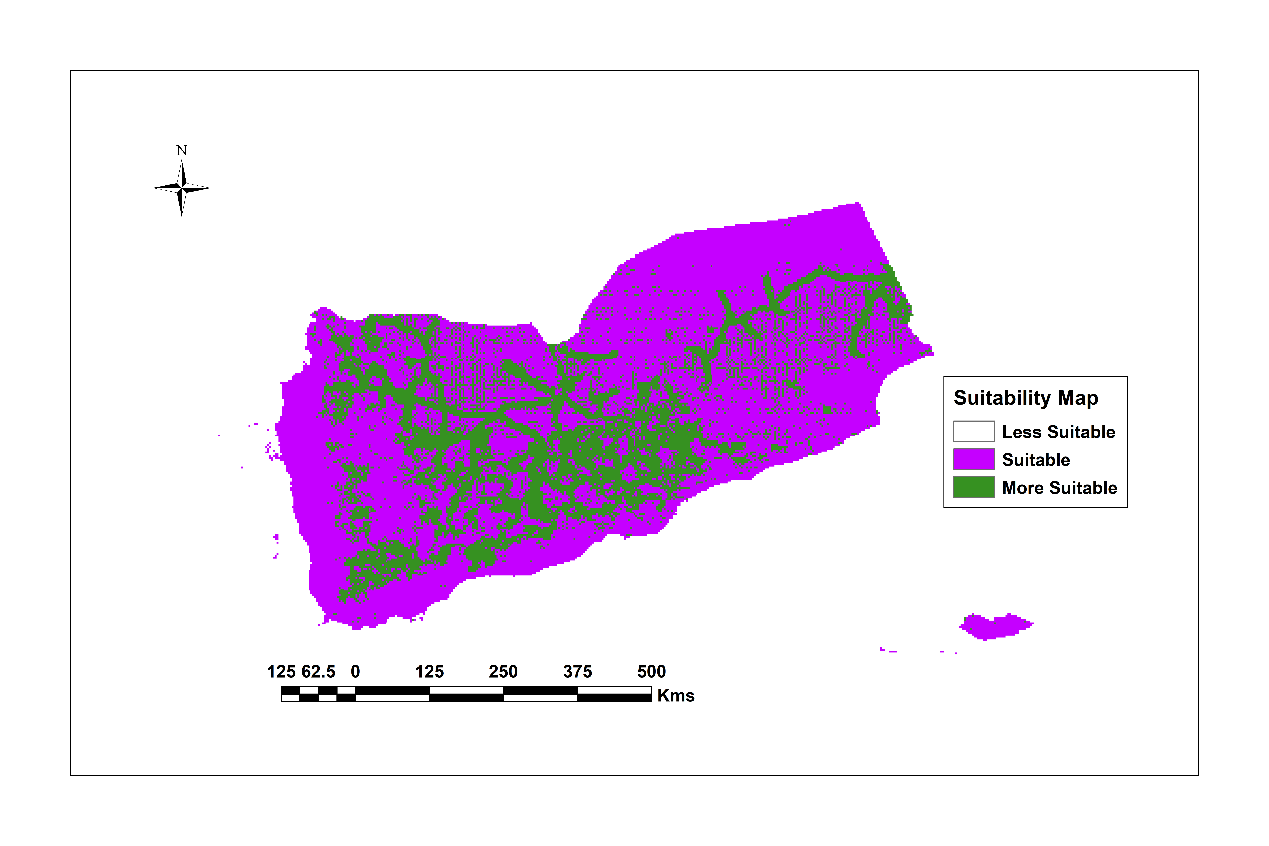
GIS resulted in a national suitability map, indicating that the eastern, southern, and northern regions of Yemen are
particularly well-suited for solar energy development. The findings reveal that 30.84% of the country is classified
as highly suitable, while 69.16% is moderately suitable, and merely 0.0022% is deemed less suitable for solar
installations. The sensitivity analysis highlights the significant influence of weighting the criteria, as even slight modifications to factors such as Global Horizontal Irradiance (GHI) and slope can lead to substantial changes in suitability assessments. Overall, the integration of AHP, BWM, and GIS is shown to create a robust framework for solar site selection, providing practical guidance for policymakers and energy planners in Yemen.
Keywords
Solar Energy
Site Suitability Analysis Yemen Renewable Energy Planning
Multi-Criteria Decision (MCD); Best-Worst Method (BWM)
Best-Worst Method (BWM)
Multi-Criteria Decision Making (MCDM)
Geo- graphic Information System (GIS)
Analytical Hierarchy Process (AHP).
How to Cite This Article
A. N. Algawbery, M. A. Shukri, M. K. AL-Moutawakel (2025). Suitability Analysis of Solar Energy Plant Sites in Yemen Using AHP, BWM, and GIS Methods. Sana'a University Journal of Applied Sciences and Technology, 999-1007. DOI: https://doi.org/10.59628/jast.v3i4.2068
A. N. Algawbery, M. A. Shukri, M. K. AL-Moutawakel . “Suitability Analysis of Solar Energy Plant Sites in Yemen Using AHP, BWM, and GIS Methods.” Sana'a University Journal of Applied Sciences and Technology, 2025, pp. 999-1007. https://doi.org/10.59628/jast.v3i4.2068. Accessed 27 Oct. 2026.
A. N. Algawbery, M. A. Shukri, M. K. AL-Moutawakel . 2025. “Suitability Analysis of Solar Energy Plant Sites in Yemen Using AHP, BWM, and GIS Methods.” Sana'a University Journal of Applied Sciences and Technology : 999-1007. DOI: https://doi.org/10.59628/jast.v3i4.2068
A. N. Algawbery, M. A. Shukri, M. K. AL-Moutawakel (2025) ‘Suitability Analysis of Solar Energy Plant Sites in Yemen Using AHP, BWM, and GIS Methods’, Sana'a University Journal of Applied Sciences and Technology, pp. 999-1007. doi: 10.59628/jast.v3i4.2068
@article{jast2025_art2068,
    author  = {A. N. Algawbery, M. A. Shukri, M. K. AL-Moutawakel },
    title   = {Suitability Analysis of Solar Energy Plant Sites in Yemen Using AHP, BWM, and GIS Methods},
    journal = {Sana'a University Journal of Applied Sciences and Technology},    year    = {2025},    month   = {August},    pages   = {999-1007},    doi     = {10.59628/jast.v3i4.2068},
    url     = {https://doi.org/10.59628/jast.v3i4.2068},}
Citation copied!
Contact Authors
Suitability Analysis of Solar Energy Plant Sites in Yemen Using AHP, BWM, and GIS Methods
Email copied!
Review
2 Articles

Comprehensive Review of Yemeni Commiphora myrrha: Phytochemicals, Extraction Methods, Therapeutic Properties, and Medicinal Applications
Sadeq H. Azzam, Qais Y.M. Abdullah, Ebrahim A. Al-Mamary, Khaled M. Naji
1008-1032
2025-08-28
Abstract
Myrrh, derived from Commiphora myrrha (C. myrrha) has been valued since biblical times for its use in incense, perfumes, and traditional medicines. Scientific investigations of its chemical composition began more than a century ago. This review compiles recent findings on the historical significance, geographical distribution, traditional medicinal uses, phytochemical constituents, biological activities, pharmaceutical effects, toxicity, and extraction techniques of C. myrrha. Particular focus is given to the components of the volatile oil, resin, and gum. Information was sourced from digital databases (PubMed, Google Scholar, Web of Science) and ethnopharmacological literature published between 2000 and December 2024. Traditionally, C. myrrha has been used to treat ulcers, pain, digestive and bone disorders, wounds, arthritis, and circulatory problems, particularly in Ayurvedic and Chinese medicines. Pharmacological studies have confirmed its antioxidant, anti-inflammatory, cytotoxic, antimicrobial, hepatoprotective, antiviral, and antiulcer properties, with emerging interest in its potential role in the treatment of Coronavirus Disease 2019. In addition, it is widely used in cosmetics and aromatherapy. Analytical studies have identified essential oils, terpenoids, and steroids, with the resin being particularly rich in bioactive compounds. Future research on the stem, bark, and leaves may uncover additional therapeutic agents.
Keywords
Commiphora myrrha
Phytochemical
Anti-inflammatory
Isolation, Volatile oil.
How to Cite This Article
Sadeq H. Azzam, Qais Y.M. Abdullah, Ebrahim A. Al-Mamary, Khaled M. Naji (2025). Comprehensive Review of Yemeni Commiphora myrrha: Phytochemicals, Extraction Methods, Therapeutic Properties, and Medicinal Applications. Sana'a University Journal of Applied Sciences and Technology, 1008-1032. DOI: https://doi.org/10.59628/jast.v3i4.1787
Sadeq H. Azzam, Qais Y.M. Abdullah, Ebrahim A. Al-Mamary, Khaled M. Naji . “Comprehensive Review of Yemeni Commiphora myrrha: Phytochemicals, Extraction Methods, Therapeutic Properties, and Medicinal Applications.” Sana'a University Journal of Applied Sciences and Technology, 2025, pp. 1008-1032. https://doi.org/10.59628/jast.v3i4.1787. Accessed 27 Oct. 2026.
Sadeq H. Azzam, Qais Y.M. Abdullah, Ebrahim A. Al-Mamary, Khaled M. Naji . 2025. “Comprehensive Review of Yemeni Commiphora myrrha: Phytochemicals, Extraction Methods, Therapeutic Properties, and Medicinal Applications.” Sana'a University Journal of Applied Sciences and Technology : 1008-1032. DOI: https://doi.org/10.59628/jast.v3i4.1787
Sadeq H. Azzam, Qais Y.M. Abdullah, Ebrahim A. Al-Mamary, Khaled M. Naji (2025) ‘Comprehensive Review of Yemeni Commiphora myrrha: Phytochemicals, Extraction Methods, Therapeutic Properties, and Medicinal Applications’, Sana'a University Journal of Applied Sciences and Technology, pp. 1008-1032. doi: 10.59628/jast.v3i4.1787
@article{jast2025_art1787,
    author  = {Sadeq H.  Azzam, Qais Y.M.  Abdullah, Ebrahim A. Al-Mamary, Khaled M. Naji },
    title   = {Comprehensive Review of Yemeni Commiphora myrrha: Phytochemicals, Extraction Methods, Therapeutic Properties, and Medicinal Applications},
    journal = {Sana'a University Journal of Applied Sciences and Technology},    year    = {2025},    month   = {August},    pages   = {1008-1032},    doi     = {10.59628/jast.v3i4.1787},
    url     = {https://doi.org/10.59628/jast.v3i4.1787},}
Citation copied!
Contact Authors
Comprehensive Review of Yemeni Commiphora myrrha: Phytochemicals, Extraction Methods, Therapeutic Properties, and Medicinal Applications
Email copied!
Comprehensive Review of Polycystic Ovary Syndrome Detection Techniques
Sawsan Mohammed Al-Sharsi, Ghalab Hamoud Al-Gaphari
1033-1042
2025-08-28
Abstract
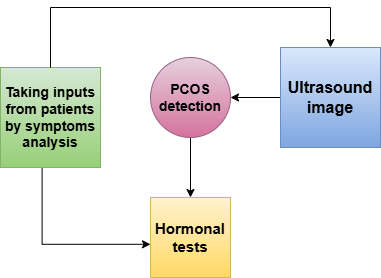
Polycystic ovary syndrome (PCOS) is a serious hormonal disorder that affects women and significantly impacts their quality of life. In modern times, women are increasingly susceptible to this syndrome, which is a major cause of numerous health problems, most notably infertility. Early detection of PCOS significantly reduces complications, making an early and accurate diagnosis system crucial.
Among all diagnostic techniques, machine learning (ML) has demonstrated superior performance due to its ability to extract features and patterns from data. Therefore, this field has received widespread attention from researchers, and numerous studies have been conducted to detect PCOS using machine learning techniques. These methods have included convolutional neural networks (CNN), support vector machines (SVM), k-nearest neighbors (KNN), random forests, logistic regression, decision trees, and the Naive Bayes algorithm, among others.
This paper aims to shed light on all current techniques used in PCOS detection using machine learning algorithms, providing a comprehensive descriptive and contextual review. It also provides a detailed analysis of how various ML techniques have been used in this field over the past decades, with an in-depth discussion of these approaches. A comprehensive review of the various datasets used in PCOS diagnosis is also provided, comparing the performance of algorithms from both quantitative and qualitative perspectives. Finally, the paper discusses the most prominent challenges facing this field, in addition to exploring future research prospects.
Keywords
Random forest (RF)
Polycystic ovary syndrome (PCOS)
Machine learning
CNN
SVM
PCOS detection
Ultrasound image
KNN
How to Cite This Article
Sawsan Mohammed Al-Sharsi, Ghalab Hamoud Al-Gaphari (2025). Comprehensive Review of Polycystic Ovary Syndrome Detection Techniques. Sana'a University Journal of Applied Sciences and Technology, 1033-1042. DOI: https://doi.org/10.59628/jast.v3i4.1776
Sawsan Mohammed Al-Sharsi, Ghalab Hamoud Al-Gaphari . “Comprehensive Review of Polycystic Ovary Syndrome Detection Techniques.” Sana'a University Journal of Applied Sciences and Technology, 2025, pp. 1033-1042. https://doi.org/10.59628/jast.v3i4.1776. Accessed 27 Oct. 2026.
Sawsan Mohammed Al-Sharsi, Ghalab Hamoud Al-Gaphari . 2025. “Comprehensive Review of Polycystic Ovary Syndrome Detection Techniques.” Sana'a University Journal of Applied Sciences and Technology : 1033-1042. DOI: https://doi.org/10.59628/jast.v3i4.1776
Sawsan Mohammed Al-Sharsi, Ghalab Hamoud Al-Gaphari (2025) ‘Comprehensive Review of Polycystic Ovary Syndrome Detection Techniques’, Sana'a University Journal of Applied Sciences and Technology, pp. 1033-1042. doi: 10.59628/jast.v3i4.1776
@article{jast2025_art1776,
    author  = {Sawsan Mohammed Al-Sharsi, Ghalab Hamoud Al-Gaphari },
    title   = {Comprehensive Review of Polycystic Ovary Syndrome Detection Techniques},
    journal = {Sana'a University Journal of Applied Sciences and Technology},    year    = {2025},    month   = {August},    pages   = {1033-1042},    doi     = {10.59628/jast.v3i4.1776},
    url     = {https://doi.org/10.59628/jast.v3i4.1776},}
Citation copied!
Contact Authors
Comprehensive Review of Polycystic Ovary Syndrome Detection Techniques
Email copied!
