

Current Issue
Sana'a University Journal of Applied Sciences and Technology
Vol. 3 No. 3 (2025)
2025-06-30
11 Articles
The third volume - the third issue in the Sana'a University Journal of Applied Sciences and Technology
Article
11 Articles

How to Cite This Article
Ammar Thabit Zahary, Baker Ali Alzenni (2025). Fog Computing Adoption for Higher Education Institutions: A Perspective of Multi-Analytical Structural Equation Modeling and Artificial Neural Networks. Sana'a University Journal of Applied Sciences and Technology, 777-794. DOI: https://doi.org/10.59628/jast.v3i3.1558
Ammar Thabit Zahary, Baker Ali Alzenni . “Fog Computing Adoption for Higher Education Institutions: A Perspective of Multi-Analytical Structural Equation Modeling and Artificial Neural Networks.” Sana'a University Journal of Applied Sciences and Technology, 2025, pp. 777-794. https://doi.org/10.59628/jast.v3i3.1558. Accessed 27 Oct. 2026.
Ammar Thabit Zahary, Baker Ali Alzenni . 2025. “Fog Computing Adoption for Higher Education Institutions: A Perspective of Multi-Analytical Structural Equation Modeling and Artificial Neural Networks.” Sana'a University Journal of Applied Sciences and Technology : 777-794. DOI: https://doi.org/10.59628/jast.v3i3.1558
Ammar Thabit Zahary, Baker Ali Alzenni (2025) ‘Fog Computing Adoption for Higher Education Institutions: A Perspective of Multi-Analytical Structural Equation Modeling and Artificial Neural Networks’, Sana'a University Journal of Applied Sciences and Technology, pp. 777-794. doi: 10.59628/jast.v3i3.1558
@article{jast2025_art1558,
    author  = {Ammar Thabit Zahary, Baker Ali Alzenni },
    title   = {Fog Computing Adoption for Higher Education Institutions: A Perspective of Multi-Analytical Structural Equation Modeling and Artificial Neural Networks},
    journal = {Sana'a University Journal of Applied Sciences and Technology},    year    = {2025},    month   = {June},    pages   = {777-794},    doi     = {10.59628/jast.v3i3.1558},
    url     = {https://doi.org/10.59628/jast.v3i3.1558},}
Citation copied!
Contact Authors
Fog Computing Adoption for Higher Education Institutions: A Perspective of Multi-Analytical Structural Equation Modeling and Artificial Neural Networks
Email copied!

The Impact of Human Cytomegalovirus among Children Patients with Acute Leukemia Undergoing Chemotherapy in Sana’a City-Yemen
Hanan Ahmed Ahmed Saad Al-jubani, Salwa H. Alkhyat
795-799
2025-06-30
Abstract
Human cytomegalovirus (HCMV) is a DNA virus categorized under the Herpesviridae family and is exclusively present in humans. This study aimed to identify HCMV antibodies and blood parameters in pediatric patients with pediatric leukemia patients with compromised immune systems in Sana‘a - Yemen. A cross sectional study was conducted to examine cytomegalovirus in pediatric leukemia cases are detecting HCMV antibodies and analyzing hematological parameters.in Sana’a city, Yemen, from June to October 2024. A total of 100 blood samples were collected from participants who had compromised immunity. Hematological parameters were evaluated and HCMV antibodies were alongside CMV detection using the ECLIA Cobas e 411 system. The majority of participants under the age of 12, 100% IgG positivity and this recent infection, 4% IgM positivity and this recent infection for HCMV in pediatric leukemia patients and the elevated WBC and PLT counts observed but no numerical data provided. These findings indicated that a high prevalence of HCMV antibodies in children with acute leukemia patients a significant increase of white blood cells (WBCs) and low platelet (PLT) counts in these patients.
Keywords
Human Cytomegalovirus
Yemen
Children patients
Acute leukemia
How to Cite This Article
Hanan Ahmed Ahmed Saad Al-jubani, Salwa H. Alkhyat (2025). The Impact of Human Cytomegalovirus among Children Patients with Acute Leukemia Undergoing Chemotherapy in Sana’a City-Yemen. Sana'a University Journal of Applied Sciences and Technology, 795-799. DOI: https://doi.org/10.59628/jast.v3i3.1589
Hanan Ahmed Ahmed Saad Al-jubani, Salwa H. Alkhyat . “The Impact of Human Cytomegalovirus among Children Patients with Acute Leukemia Undergoing Chemotherapy in Sana’a City-Yemen.” Sana'a University Journal of Applied Sciences and Technology, 2025, pp. 795-799. https://doi.org/10.59628/jast.v3i3.1589. Accessed 27 Oct. 2026.
Hanan Ahmed Ahmed Saad Al-jubani, Salwa H. Alkhyat . 2025. “The Impact of Human Cytomegalovirus among Children Patients with Acute Leukemia Undergoing Chemotherapy in Sana’a City-Yemen.” Sana'a University Journal of Applied Sciences and Technology : 795-799. DOI: https://doi.org/10.59628/jast.v3i3.1589
Hanan Ahmed Ahmed Saad Al-jubani, Salwa H. Alkhyat (2025) ‘The Impact of Human Cytomegalovirus among Children Patients with Acute Leukemia Undergoing Chemotherapy in Sana’a City-Yemen’, Sana'a University Journal of Applied Sciences and Technology, pp. 795-799. doi: 10.59628/jast.v3i3.1589
@article{jast2025_art1589,
    author  = {Hanan Ahmed Ahmed Saad Al-jubani, Salwa H. Alkhyat },
    title   = {The Impact of Human Cytomegalovirus among Children Patients with Acute Leukemia Undergoing Chemotherapy in Sana’a City-Yemen},
    journal = {Sana'a University Journal of Applied Sciences and Technology},    year    = {2025},    month   = {June},    pages   = {795-799},    doi     = {10.59628/jast.v3i3.1589},
    url     = {https://doi.org/10.59628/jast.v3i3.1589},}
Citation copied!
Contact Authors
The Impact of Human Cytomegalovirus among Children Patients with Acute Leukemia Undergoing Chemotherapy in Sana’a City-Yemen
Email copied!

Salicylic Acid Alleviates Moderate Salinity-Induced Stress in Petroselinum crispum (Mill.), within Reduced Effectiveness under Prolonged High Salinity Conditions
Isam Al-madhagi, Emtiyaaz AL-Maqtary , Khalid AL-Mureish
800-818
2025-06-30
Abstract
This study elucidates the role of salicylic acid (SA) in modulating salinity stress responses in parsley through a controlled RCBD experiment at Taiz University. Plants exposed to incremental NaCl concentrations (0–200 mM) either alone or in combination with three SA concentrations (0, 0.1, and 0.5 mM) exhibited dose-dependent growth inhibition. With 200 mM NaCl, reduced shoot length by 42% and dry matter by 35%, while concurrently suppressing protein content (28%) and catalase activity (40%) but elevating proline accumulation (69%). SA application (0.1 mM) significantly alleviated moderate stress (100 mM NaCl), restoring physiological parameters and enhancing antioxidant defenses, notably increasing catalase activity by 30–35% and reducing proline by 25–30%. Intriguingly, SA’s efficacy was temporally constrained, with optimal protection at 15 days that diminished under prolonged exposure. Biochemical profiling revealed a stress-threshold response: ascorbate peroxidase activity remained stable at ≤ 150 mM NaCl but increased 20–25% at 50–100 mM NaCl with 0.5 mM SA. Critically, high SA (0.5 mM) synergized with extreme salinity (200 mM NaCl) to induce complete mortality, demonstrating a concentration-dependent phytotoxic shift. These findings establish 0.1 mM SA and 100 mM NaCl as critical thresholds for stress mitigation.
Keywords
Antioxidant
Osmatic stress
Parsley
Salicylic acid
Salinity
How to Cite This Article
Isam Al-madhagi, Emtiyaaz AL-Maqtary , Khalid AL-Mureish (2025). Salicylic Acid Alleviates Moderate Salinity-Induced Stress in Petroselinum crispum (Mill.), within Reduced Effectiveness under Prolonged High Salinity Conditions. Sana'a University Journal of Applied Sciences and Technology, 800-818. DOI: https://doi.org/10.59628/jast.v3i3.1651
Isam Al-madhagi, Emtiyaaz AL-Maqtary , Khalid AL-Mureish . “Salicylic Acid Alleviates Moderate Salinity-Induced Stress in Petroselinum crispum (Mill.), within Reduced Effectiveness under Prolonged High Salinity Conditions.” Sana'a University Journal of Applied Sciences and Technology, 2025, pp. 800-818. https://doi.org/10.59628/jast.v3i3.1651. Accessed 27 Oct. 2026.
Isam Al-madhagi, Emtiyaaz AL-Maqtary , Khalid AL-Mureish . 2025. “Salicylic Acid Alleviates Moderate Salinity-Induced Stress in Petroselinum crispum (Mill.), within Reduced Effectiveness under Prolonged High Salinity Conditions.” Sana'a University Journal of Applied Sciences and Technology : 800-818. DOI: https://doi.org/10.59628/jast.v3i3.1651
Isam Al-madhagi, Emtiyaaz AL-Maqtary , Khalid AL-Mureish (2025) ‘Salicylic Acid Alleviates Moderate Salinity-Induced Stress in Petroselinum crispum (Mill.), within Reduced Effectiveness under Prolonged High Salinity Conditions’, Sana'a University Journal of Applied Sciences and Technology, pp. 800-818. doi: 10.59628/jast.v3i3.1651
@article{jast2025_art1651,
    author  = {Isam Al-madhagi, Emtiyaaz AL-Maqtary , Khalid AL-Mureish  },
    title   = {Salicylic Acid Alleviates Moderate Salinity-Induced Stress in Petroselinum crispum (Mill.), within Reduced Effectiveness under Prolonged High Salinity Conditions},
    journal = {Sana'a University Journal of Applied Sciences and Technology},    year    = {2025},    month   = {June},    pages   = {800-818},    doi     = {10.59628/jast.v3i3.1651},
    url     = {https://doi.org/10.59628/jast.v3i3.1651},}
Citation copied!
Contact Authors
Salicylic Acid Alleviates Moderate Salinity-Induced Stress in Petroselinum crispum (Mill.), within Reduced Effectiveness under Prolonged High Salinity Conditions
Email copied!
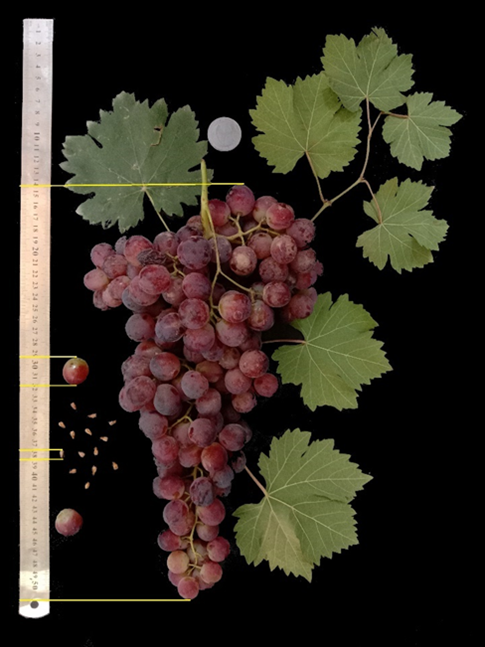
Ampelographic Characterization of the A’asmi Cultivar of Yemeni Grape (Vitis vinifera L.)
Taiseer M. Al-Sanhani, Hasan A. Aldobai
819-847
2025-06-30
Abstract
The study was conducted to characterize the morphological traits of A’asmi Cultivar of Yemeni grape (Vitis vinifera L.) in the Bani Hashish district during the 2021 and 2022 seasons, based on OIV, UPOV, and IPGRI standards. The aim was to establish a database documenting the morphological characteristics and certain chemical properties of the Cultivar, to support breeding programs, preserve genetic diversity, and enhance agricultural productivity amid environmental challenges. The study involved 10 fruiting vines from a farm in the village of Bayt al-Nukhif, Wadi al-Sir, where 105 traits were measured, encompassing young and mature shoots, leaves, flowers, clusters, berries, and seeds, in addition to the evaluation of selected chemical properties such as soluble sugars, acidity, pH, and vitamin C using standardized methodologies. The results revealed a notable coherence in the morphological traits of the Cultivar. The young shoot was characterized by an open and fully developed apex before the node, indicating vigorous vegetative growth and an ability to adapt to warm seasons, while a weak expression of anthocyanins on the pubescence suggested a potential genetic limitation in expressing this pigment and its effect on the plant’s response to environmental stresses. The mature shoot exhibited a nearly vertical growth pattern with a balanced color distribution on its sides and a reduced pubescence density, which may improve ventilation and reduce the risk of fungal diseases. The leaves maintained stability in terms of shape, size, and number of lobes, with a balanced pigment distribution that reflects an equilibrium between genetic and environmental factors to enhance photosynthetic efficiency and nutrient transport. At the cluster and berry level, productive traits were manifested through a loose distribution of berries and a long conical shape, along with an increase in berry number and stability in dimensional ratios and weight. The seeds showed dimensional stability with variations in biomass accumulation, reflecting the influence of environmental factors. Furthermore, the hermaphroditic floral structure contributed to both self- and cross-pollination, thereby enhancing genetic diversity. Overall, the study comprehensively documented and evaluated the morphological and chemical performance of the A’asmi Cultivar under changing environmental conditions.
Keywords
Grapes
Yemeni grape
Ampelography
A’asmi cultivar
Genetic diversity
How to Cite This Article
Taiseer M. Al-Sanhani, Hasan A. Aldobai (2025). Ampelographic Characterization of the A’asmi Cultivar of Yemeni Grape (Vitis vinifera L.). Sana'a University Journal of Applied Sciences and Technology, 819-847. DOI: https://doi.org/10.59628/jast.v3i3.1628
Taiseer M. Al-Sanhani, Hasan A. Aldobai . “Ampelographic Characterization of the A’asmi Cultivar of Yemeni Grape (Vitis vinifera L.).” Sana'a University Journal of Applied Sciences and Technology, 2025, pp. 819-847. https://doi.org/10.59628/jast.v3i3.1628. Accessed 27 Oct. 2026.
Taiseer M. Al-Sanhani, Hasan A. Aldobai . 2025. “Ampelographic Characterization of the A’asmi Cultivar of Yemeni Grape (Vitis vinifera L.).” Sana'a University Journal of Applied Sciences and Technology : 819-847. DOI: https://doi.org/10.59628/jast.v3i3.1628
Taiseer M. Al-Sanhani, Hasan A. Aldobai (2025) ‘Ampelographic Characterization of the A’asmi Cultivar of Yemeni Grape (Vitis vinifera L.)’, Sana'a University Journal of Applied Sciences and Technology, pp. 819-847. doi: 10.59628/jast.v3i3.1628
@article{jast2025_art1628,
    author  = {Taiseer M. Al-Sanhani, Hasan A. Aldobai },
    title   = {Ampelographic Characterization of the A’asmi Cultivar of Yemeni Grape (Vitis vinifera L.)},
    journal = {Sana'a University Journal of Applied Sciences and Technology},    year    = {2025},    month   = {June},    pages   = {819-847},    doi     = {10.59628/jast.v3i3.1628},
    url     = {https://doi.org/10.59628/jast.v3i3.1628},}
Citation copied!
Contact Authors
Ampelographic Characterization of the A’asmi Cultivar of Yemeni Grape (Vitis vinifera L.)
Email copied!

The Neutrosophic Cosets and Neutrosophic Normal Subgroups of Neutrosophic Groups Associated With Gt1 [I]
Adel Mohammed Al-Odhari
848- 860
2025-06-30
Abstract
The Article discusses neutrosophic left/right cosets, their properties, neutrosophic normal subgroups, and neutrosophic quotient groups with some theories and examples. The concept of Neutrosophic Groups was introduced by Kandasamy and Smarandache in their work in 2006 as part of a broader field of research in neutrosophy. Neutrosophic Groups are defined by classical NeutroAxioms according to the Neutrosophic Set theory, which has type-1, The paper explores various structures related to Neutrosophic Groups, including examples of neutrosophic groups, neutrosophic left/right cosets, neutrosophic normal subgroups, Neutrosophic Lagrange’s theorem, quotient groups, and their properties, several results of the theorems, and examples are demonstrated with Gt1 [I].
Keywords
Neutrosophic Groups
Neutrosophic Cosets
Neutrosophic Normal Subgroups
Neutrosophic Quotient Groups Propagation
How to Cite This Article
Adel Mohammed Al-Odhari (2025). The Neutrosophic Cosets and Neutrosophic Normal Subgroups of Neutrosophic Groups Associated With Gt1 [I]. Sana'a University Journal of Applied Sciences and Technology, 848- 860. DOI: https://doi.org/10.59628/jast.v3i3.1666
Adel Mohammed Al-Odhari . “The Neutrosophic Cosets and Neutrosophic Normal Subgroups of Neutrosophic Groups Associated With Gt1 [I].” Sana'a University Journal of Applied Sciences and Technology, 2025, pp. 848- 860. https://doi.org/10.59628/jast.v3i3.1666. Accessed 27 Oct. 2026.
Adel Mohammed Al-Odhari . 2025. “The Neutrosophic Cosets and Neutrosophic Normal Subgroups of Neutrosophic Groups Associated With Gt1 [I].” Sana'a University Journal of Applied Sciences and Technology : 848- 860. DOI: https://doi.org/10.59628/jast.v3i3.1666
Adel Mohammed Al-Odhari (2025) ‘The Neutrosophic Cosets and Neutrosophic Normal Subgroups of Neutrosophic Groups Associated With Gt1 [I]’, Sana'a University Journal of Applied Sciences and Technology, pp. 848- 860. doi: 10.59628/jast.v3i3.1666
@article{jast2025_art1666,
    author  = {Adel Mohammed Al-Odhari },
    title   = {The Neutrosophic Cosets and Neutrosophic Normal Subgroups of Neutrosophic Groups Associated With Gt1 [I]},
    journal = {Sana'a University Journal of Applied Sciences and Technology},    year    = {2025},    month   = {June},    pages   = {848- 860},    doi     = {10.59628/jast.v3i3.1666},
    url     = {https://doi.org/10.59628/jast.v3i3.1666},}
Citation copied!
Contact Authors
The Neutrosophic Cosets and Neutrosophic Normal Subgroups of Neutrosophic Groups Associated With Gt1 [I]
Email copied!

Phytochemical Screening of Ethanol and n-hexane Extracts of the Plant Parts and Callus of Pulicaria jaubertii
Fathia M. N. Salam, Fatima A. Alhadi, Ebraheem A. A. Al-Nawd, Enas J. Al-Sanabany, Esam M. Aqlan
861-867
2025-06-30
Abstract
Pulicaria jaubertii is a spicing and medicinal plant belonging to the family Asteraceae. Studies found that this plant contains various important phytochemicals. However, these studies have not covered the identification of these compounds found in its callus produced by in vitro micropropagation. This study screens and compares, for the first time, the phytochemicals found in the ethanol and n-Hexane extracts of this plant's parts and callus. Native plant parts were collected and washed. Some of them were cultured on MS medium to produce callus, and the others were dried. Each sample was then powdered and extracted by ethanol and n-Hexane solvents and screened for the presence of some biologically important phytochemicals. Screening tests in the ethanol extract revealed the presence of alkaloids, flavonoids, saponins, reducing sugars, cardiac glycosides, carbonyls, phenols/tannins, phlobatanin, terpenoids, and steroids in the callus and most of the plant parts. n-Hexane extracts revealed the presence of fewer phytochemical groups in the callus and plant parts. In conclusion, ethanol and n-Hexane extracts of plant parts and callus of P. jaubertii contain several bioactive metabolites. Interestingly, callus extracts revealed some compounds that are not found in certain plant parts. Further studies, including extraction by other solvents, using more advanced separation techniques are recommended.
Keywords
Pulicaria jaubertii
Phytochemicals
Callus
Ethanol extract
n-hexane extrac
How to Cite This Article
Fathia M. N. Salam, Fatima A. Alhadi, Ebraheem A. A. Al-Nawd, Enas J. Al-Sanabany, Esam M. Aqlan (2025). Phytochemical Screening of Ethanol and n-hexane Extracts of the Plant Parts and Callus of Pulicaria jaubertii. Sana'a University Journal of Applied Sciences and Technology, 861-867. DOI: https://doi.org/10.59628/jast.v3i3.1585
Fathia M. N. Salam, Fatima A. Alhadi, Ebraheem A. A. Al-Nawd, Enas J. Al-Sanabany, Esam M. Aqlan . “Phytochemical Screening of Ethanol and n-hexane Extracts of the Plant Parts and Callus of Pulicaria jaubertii.” Sana'a University Journal of Applied Sciences and Technology, 2025, pp. 861-867. https://doi.org/10.59628/jast.v3i3.1585. Accessed 27 Oct. 2026.
Fathia M. N. Salam, Fatima A. Alhadi, Ebraheem A. A. Al-Nawd, Enas J. Al-Sanabany, Esam M. Aqlan . 2025. “Phytochemical Screening of Ethanol and n-hexane Extracts of the Plant Parts and Callus of Pulicaria jaubertii.” Sana'a University Journal of Applied Sciences and Technology : 861-867. DOI: https://doi.org/10.59628/jast.v3i3.1585
Fathia M. N. Salam, Fatima A. Alhadi, Ebraheem A. A. Al-Nawd, Enas J. Al-Sanabany, Esam M. Aqlan (2025) ‘Phytochemical Screening of Ethanol and n-hexane Extracts of the Plant Parts and Callus of Pulicaria jaubertii’, Sana'a University Journal of Applied Sciences and Technology, pp. 861-867. doi: 10.59628/jast.v3i3.1585
@article{jast2025_art1585,
    author  = {Fathia M. N. Salam, Fatima A.  Alhadi, Ebraheem A. A.  Al-Nawd, Enas J. Al-Sanabany, Esam M. Aqlan },
    title   = {Phytochemical Screening of Ethanol and n-hexane Extracts of the Plant Parts and Callus of Pulicaria jaubertii},
    journal = {Sana'a University Journal of Applied Sciences and Technology},    year    = {2025},    month   = {June},    pages   = {861-867},    doi     = {10.59628/jast.v3i3.1585},
    url     = {https://doi.org/10.59628/jast.v3i3.1585},}
Citation copied!
Contact Authors
Phytochemical Screening of Ethanol and n-hexane Extracts of the Plant Parts and Callus of Pulicaria jaubertii
Email copied!

Plant Extracts Are a Promising Solution to Alleviate Salinity Stress at the Chili Pepper Germination Stage
Elham Arraf, Isam Al-madhagi, Hemiar Haissam
868- 884
2025-06-30
Abstract
Salinity is one of the most pervasive abiotic stressors limiting global agricultural productivity, particularly by impairing seed germination in sensitive species, such as chili peppers (Capsicum spp.). This study rigorously evaluated the potential of nature-derived biostimulants to alleviate salinityinduced germination inhibition in three agronomically important Yemeni chili pepper genotypes: Haimi (H), Hajjah (J), and Jawfi3 (V3). Aqueous extracts from red beetroot, prickly pear fruit, carrot roots, and moringa leaves and flowers were subjected to an optimized 18-hour seed priming protocol. The seeds were germinated at three salinity levels (0, 150, and 250 mM NaCl) in a randomized complete block design. The results revealed a striking mitigation of salinity stress at 150 mM NaCl by all plant extracts, with substantial protective effects observed at the extreme 250 mM NaCl concentration. Notably, beetroot extract emerged as the most potent biostimulant, consistently delivering the highest Extract Stimulation Index (ESI%) across all germination parameters including germination percentage (GrP%), mean germination time (MGT), germination speed (GSC), and radicle length. Its performance was robust across all genotypes and salinity levels, thereby highlighting its broad-spectrum efficacy.
These findings provide the first empirical evidence that cost-effective natural extracts, particularly from red beetroot and prickly pear fruit, can match or surpass synthetic priming agents in enhancing seed germination under saline conditions.
Keywords
Chili
Germination
Plant
Salinity
How to Cite This Article
Elham Arraf, Isam Al-madhagi, Hemiar Haissam (2025). Plant Extracts Are a Promising Solution to Alleviate Salinity Stress at the Chili Pepper Germination Stage. Sana'a University Journal of Applied Sciences and Technology, 868- 884. DOI: https://doi.org/10.59628/jast.v3i3.1663
Elham Arraf, Isam Al-madhagi, Hemiar Haissam . “Plant Extracts Are a Promising Solution to Alleviate Salinity Stress at the Chili Pepper Germination Stage.” Sana'a University Journal of Applied Sciences and Technology, 2025, pp. 868- 884. https://doi.org/10.59628/jast.v3i3.1663. Accessed 27 Oct. 2026.
Elham Arraf, Isam Al-madhagi, Hemiar Haissam . 2025. “Plant Extracts Are a Promising Solution to Alleviate Salinity Stress at the Chili Pepper Germination Stage.” Sana'a University Journal of Applied Sciences and Technology : 868- 884. DOI: https://doi.org/10.59628/jast.v3i3.1663
Elham Arraf, Isam Al-madhagi, Hemiar Haissam (2025) ‘Plant Extracts Are a Promising Solution to Alleviate Salinity Stress at the Chili Pepper Germination Stage’, Sana'a University Journal of Applied Sciences and Technology, pp. 868- 884. doi: 10.59628/jast.v3i3.1663
@article{jast2025_art1663,
    author  = {Elham Arraf, Isam Al-madhagi, Hemiar Haissam },
    title   = {Plant Extracts Are a Promising Solution to Alleviate Salinity Stress at the Chili Pepper Germination Stage},
    journal = {Sana'a University Journal of Applied Sciences and Technology},    year    = {2025},    month   = {June},    pages   = {868- 884},    doi     = {10.59628/jast.v3i3.1663},
    url     = {https://doi.org/10.59628/jast.v3i3.1663},}
Citation copied!
Contact Authors
Plant Extracts Are a Promising Solution to Alleviate Salinity Stress at the Chili Pepper Germination Stage
Email copied!
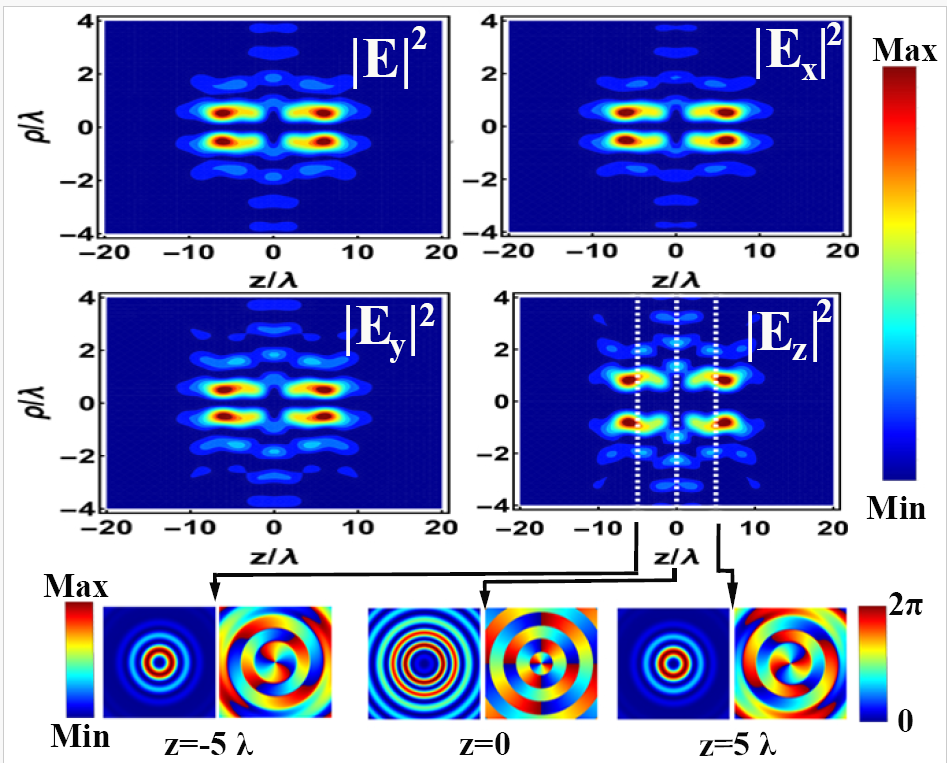
Enhanced Focus Shaping of Circularly Polarized Laguerre–Gaussian Vortex Beams Using a Binary Axicon
Hassan T. Al-Ahsab, Mingjian Cheng, Ibrahim G. H. Loqman, Shukri Kaid, Abdu A. Alkelly
885- 890
2025-06-30
Abstract
The focus shaping of light beams is crucial for a range of optical applications, including trapping, imaging, and material processing. In this work, based on the vector diffraction theory, the focus shaping of a circularly polarized Laguerre–Gaussian vortex beam by a binary axicon was investigated. By analyzing the effects of beam parameters such as order p, topological charge m, truncation parameter β, and optical system characteristics including obstruction δ and NA, this study demonstrates how these factors influence the focal intensity distribution. By appropriately choosing specific parameters, different focal shapes, such as multifoci and double spots, were formed in the focal region of the binary axicon. The findings underscore the potential of binary axicons as versatile tools for advanced focus engineering in optical trapping and particle manipulation.
Keywords
Focus shaping
Laguerre--Gaussian vortex beam
Vector diffraction theory
Circular polarization
Binary axicon
How to Cite This Article
Hassan T. Al-Ahsab, Mingjian Cheng, Ibrahim G. H. Loqman, Shukri Kaid, Abdu A. Alkelly (2025). Enhanced Focus Shaping of Circularly Polarized Laguerre–Gaussian Vortex Beams Using a Binary Axicon. Sana'a University Journal of Applied Sciences and Technology, 885- 890. DOI: https://doi.org/10.59628/jast.v3i3.1761
Hassan T. Al-Ahsab, Mingjian Cheng, Ibrahim G. H. Loqman, Shukri Kaid, Abdu A. Alkelly . “Enhanced Focus Shaping of Circularly Polarized Laguerre–Gaussian Vortex Beams Using a Binary Axicon.” Sana'a University Journal of Applied Sciences and Technology, 2025, pp. 885- 890. https://doi.org/10.59628/jast.v3i3.1761. Accessed 27 Oct. 2026.
Hassan T. Al-Ahsab, Mingjian Cheng, Ibrahim G. H. Loqman, Shukri Kaid, Abdu A. Alkelly . 2025. “Enhanced Focus Shaping of Circularly Polarized Laguerre–Gaussian Vortex Beams Using a Binary Axicon.” Sana'a University Journal of Applied Sciences and Technology : 885- 890. DOI: https://doi.org/10.59628/jast.v3i3.1761
Hassan T. Al-Ahsab, Mingjian Cheng, Ibrahim G. H. Loqman, Shukri Kaid, Abdu A. Alkelly (2025) ‘Enhanced Focus Shaping of Circularly Polarized Laguerre–Gaussian Vortex Beams Using a Binary Axicon’, Sana'a University Journal of Applied Sciences and Technology, pp. 885- 890. doi: 10.59628/jast.v3i3.1761
@article{jast2025_art1761,
    author  = {Hassan T. Al-Ahsab, Mingjian Cheng, Ibrahim G. H. Loqman, Shukri Kaid, Abdu A. Alkelly },
    title   = {Enhanced Focus Shaping of Circularly Polarized Laguerre–Gaussian Vortex Beams Using a Binary Axicon},
    journal = {Sana'a University Journal of Applied Sciences and Technology},    year    = {2025},    month   = {June},    pages   = {885- 890},    doi     = {10.59628/jast.v3i3.1761},
    url     = {https://doi.org/10.59628/jast.v3i3.1761},}
Citation copied!
Contact Authors
Enhanced Focus Shaping of Circularly Polarized Laguerre–Gaussian Vortex Beams Using a Binary Axicon
Email copied!
A systematic review of the prevalence of Campylobacter jejuni in chicken populations within Middle East and North Africa (2014–2025)
Mohammed N. Q. Al-Bana, Saeed M. S. Al-Ghalibi, Qais Y. M. Abdullah, Saad Al-Arnoot, Assem Al-Thobhani, Basim Al-Akhali
891-897
2025-06-30
Abstract
Campylobacter jejuni is a leading bacterial agent of foodborne illnesses worldwide, with poultry serving as its
primary reservoir. This systematic review aimed to document and compare the prevalence of C. jejuni in chickens across countries in the MENA region from 2014 to early 2025. A structured search of the PubMed, Scopus, and Google Scholar databases was conducted to identify peer-reviewed studies that reported prevalence data. Twenty-eight studies from 13 MENA countries met the inclusion criteria, covering a range of sample types and diagnostic methods, including culture and PCR. The reported prevalence varies widely, from as low as 6% to over 80%, largely influenced by sampling methods, biosecurity practices, and environmental conditions. Algeria and Iran are among the countries with the highest reported prevalence rates. A meta-analysis was not feasible owing to methodological heterogeneity. Therefore, the findings were synthesized descriptively. The results emphasize significant gaps in poultry hygiene practices and surveillance infrastructure, which may contribute to the ongoing public health burden of C. jejuni in the region. Additionally, this review highlights emerging antimicrobial resistance trends associated with poultry farming. These findings underscore the urgency of coordinated regional efforts to enhance epidemiological monitoring and implement evidence-based poultry safety measures.
Keywords
Campylobacter jejuni, Prevalence
Middle East
Poultry
Food safety
How to Cite This Article
Mohammed N. Q. Al-Bana, Saeed M. S. Al-Ghalibi, Qais Y. M. Abdullah, Saad Al-Arnoot, Assem Al-Thobhani, Basim Al-Akhali (2025). A systematic review of the prevalence of Campylobacter jejuni in chicken populations within Middle East and North Africa (2014–2025). Sana'a University Journal of Applied Sciences and Technology, 891-897. DOI: https://doi.org/10.59628/jast.v3i3.1672
Mohammed N. Q. Al-Bana, Saeed M. S. Al-Ghalibi, Qais Y. M. Abdullah, Saad Al-Arnoot, Assem Al-Thobhani, Basim Al-Akhali . “A systematic review of the prevalence of Campylobacter jejuni in chicken populations within Middle East and North Africa (2014–2025).” Sana'a University Journal of Applied Sciences and Technology, 2025, pp. 891-897. https://doi.org/10.59628/jast.v3i3.1672. Accessed 27 Oct. 2026.
Mohammed N. Q. Al-Bana, Saeed M. S. Al-Ghalibi, Qais Y. M. Abdullah, Saad Al-Arnoot, Assem Al-Thobhani, Basim Al-Akhali . 2025. “A systematic review of the prevalence of Campylobacter jejuni in chicken populations within Middle East and North Africa (2014–2025).” Sana'a University Journal of Applied Sciences and Technology : 891-897. DOI: https://doi.org/10.59628/jast.v3i3.1672
Mohammed N. Q. Al-Bana, Saeed M. S. Al-Ghalibi, Qais Y. M. Abdullah, Saad Al-Arnoot, Assem Al-Thobhani, Basim Al-Akhali (2025) ‘A systematic review of the prevalence of Campylobacter jejuni in chicken populations within Middle East and North Africa (2014–2025)’, Sana'a University Journal of Applied Sciences and Technology, pp. 891-897. doi: 10.59628/jast.v3i3.1672
@article{jast2025_art1672,
    author  = {Mohammed N. Q. Al-Bana, Saeed M. S. Al-Ghalibi, Qais Y. M. Abdullah, Saad Al-Arnoot, Assem Al-Thobhani, Basim Al-Akhali },
    title   = {A systematic review of the prevalence of Campylobacter jejuni in chicken populations within Middle East and North Africa (2014–2025)},
    journal = {Sana'a University Journal of Applied Sciences and Technology},    year    = {2025},    month   = {June},    pages   = {891-897},    doi     = {10.59628/jast.v3i3.1672},
    url     = {https://doi.org/10.59628/jast.v3i3.1672},}
Citation copied!
Contact Authors
A systematic review of the prevalence of Campylobacter jejuni in chicken populations within Middle East and North Africa (2014–2025)
Email copied!
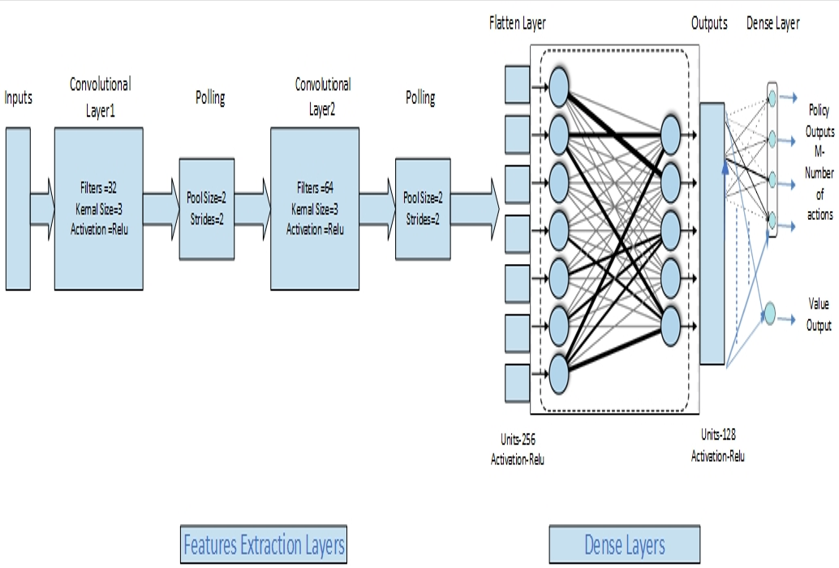
Enhanced Asynchronous Advantage Actor-Critic (EA3C) Algorithm for Intrusion Detection in IIoT Environment
Abdulssalm M Khako, Sharaf A Alhomdy
898-914
2025-06-30
Abstract
Intrusion detection is crucial for securing Industrial Internet of Things (IIoT) networks, especially within edge computing environments. Traditional Intrusion Detection Systems (IDSs) struggle with the complexity and dynamic nature of IIoT networks, where increasing intrusion classes make classification tasks more challenging. While the Asynchronous Advantage Actor-Critic (A3C) algorithm has shown promise in reinforcement learning-based IDSs, previous A3C implementations suffer from slow convergence, high variance, unstable gradient updates, and inefficient parameter synchronization. These issues limit their ability to accurately classify diverse attack patterns, particularly underrepresented intrusion types. To address these challenges, this research introduces an Enhanced A3C (EA3C) using an enhanced convolutional neural network (CNN) structure to significantly improve feature representation compared to traditional fully connected networks from the dataset before passing them to the policy and value networks. Additionally, gradient clipping will be applied to prevent exploding gradients, and bootstrapping-based reward handling will be used to enhance policy and value estimation for better long-term learning and improved intrusion detection performance. The proposed approach is evaluated using the X-IIoTID dataset, which is a comprehensive benchmark that is effective in detecting a wide range of cyber threats in IIoT environments. Experimental results indicate that the EA3C algorithm significantly outperforms Decision Tree (DT), Adversarial Environment Reinforcement Learning (AERL), Double Deep Q-Network (DDQN), and traditional A3C algorithms, particularly in identifying underrepresented attack classes. The results of EA3C show that its weighted Accuracy, Precision, Recall, and F1-score exceeded 0.98, making it suitable for practical use with the increasing number of labeled classes of cyber-attacks. Although these results are promising, this algorithm needs further improvement, especially for attacks with very small samples or attacks that occur for the first time, such as zero-day attacks.
Keywords
A3C
DRL
IDS
IIoT
X-IIoTID
How to Cite This Article
Abdulssalm M Khako, Sharaf A Alhomdy (2025). Enhanced Asynchronous Advantage Actor-Critic (EA3C) Algorithm for Intrusion Detection in IIoT Environment. Sana'a University Journal of Applied Sciences and Technology, 898-914. DOI: https://doi.org/10.59628/jast.v3i3.1681
Abdulssalm M Khako, Sharaf A Alhomdy . “Enhanced Asynchronous Advantage Actor-Critic (EA3C) Algorithm for Intrusion Detection in IIoT Environment.” Sana'a University Journal of Applied Sciences and Technology, 2025, pp. 898-914. https://doi.org/10.59628/jast.v3i3.1681. Accessed 27 Oct. 2026.
Abdulssalm M Khako, Sharaf A Alhomdy . 2025. “Enhanced Asynchronous Advantage Actor-Critic (EA3C) Algorithm for Intrusion Detection in IIoT Environment.” Sana'a University Journal of Applied Sciences and Technology : 898-914. DOI: https://doi.org/10.59628/jast.v3i3.1681
Abdulssalm M Khako, Sharaf A Alhomdy (2025) ‘Enhanced Asynchronous Advantage Actor-Critic (EA3C) Algorithm for Intrusion Detection in IIoT Environment’, Sana'a University Journal of Applied Sciences and Technology, pp. 898-914. doi: 10.59628/jast.v3i3.1681
@article{jast2025_art1681,
    author  = {Abdulssalm M Khako, Sharaf A Alhomdy },
    title   = {Enhanced Asynchronous Advantage Actor-Critic (EA3C) Algorithm for Intrusion Detection in IIoT Environment},
    journal = {Sana'a University Journal of Applied Sciences and Technology},    year    = {2025},    month   = {June},    pages   = {898-914},    doi     = {10.59628/jast.v3i3.1681},
    url     = {https://doi.org/10.59628/jast.v3i3.1681},}
Citation copied!
Contact Authors
Enhanced Asynchronous Advantage Actor-Critic (EA3C) Algorithm for Intrusion Detection in IIoT Environment
Email copied!

Effect of Tallow and Olive Oil on Some Biochemical and Hematological Parameters in Healthy Male Albino Rats
Arwa A. Al-Subari, Bushra Y. AL-Khatib, Abdul Haleem S. Al-Tamimi, Ateeq M. Al-Arami
915-921
2025-06-30
Abstract
Fats, a broad term for fats and oils, are sourced from either plants or animals. They function as energy storage and are crucial in various biological processes. This study aimed to examine the effects of tallow and olive oil on certain hematological and biochemical parameters in healthy albino rats. Twenty-eight male albino rats were divided into four groups, each containing seven animals. Groups given different treatments orally: Distilled water (control group), sheep tallow (Sh-T group), bovine tallow (B-T group), and olive oil (OO group). At the end of the third month, blood samples were collected from the fasting rats for hematological and biochemical analysis. Our results show that the oral administration of Sh-T, B-T, and OO did not cause significant changes in body weight (BW), food intake (FI) and level of serum of fibrinogen (FIB), albumin (ALB), C-reactive protein (CRP), or blood cell counts, including white blood cells (WBCs), red blood cells (RBCs), lymphocytes, neutrophils, platelets, and the erythrocyte sedimentation rate (ESR), when compared to the control group. However, total protein levels in the Sh-T and B-T groups, as well as globulin levels in the Sh-T and OO groups, showed significant increases, whereas the OO and B-T groups demonstrated a significant decrease in monocyte and eosinophil counts compared to the control group. It can be concluded that neither sheep nor bovine tallow nor olive oil negatively affects body weight or serum liver proteins, nor do they induce substantial hematological alterations
Keywords
Tallow
Olive Oil
Albino Rats
C-reactive protein
Fibrinogen
Sheep
Bovine
How to Cite This Article
Arwa A. Al-Subari, Bushra Y. AL-Khatib, Abdul Haleem S. Al-Tamimi, Ateeq M. Al-Arami (2025). Effect of Tallow and Olive Oil on Some Biochemical and Hematological Parameters in Healthy Male Albino Rats. Sana'a University Journal of Applied Sciences and Technology, 915-921. DOI: https://doi.org/10.59628/jast.v3i3.1786
Arwa A. Al-Subari, Bushra Y. AL-Khatib, Abdul Haleem S. Al-Tamimi, Ateeq M. Al-Arami . “Effect of Tallow and Olive Oil on Some Biochemical and Hematological Parameters in Healthy Male Albino Rats.” Sana'a University Journal of Applied Sciences and Technology, 2025, pp. 915-921. https://doi.org/10.59628/jast.v3i3.1786. Accessed 27 Oct. 2026.
Arwa A. Al-Subari, Bushra Y. AL-Khatib, Abdul Haleem S. Al-Tamimi, Ateeq M. Al-Arami . 2025. “Effect of Tallow and Olive Oil on Some Biochemical and Hematological Parameters in Healthy Male Albino Rats.” Sana'a University Journal of Applied Sciences and Technology : 915-921. DOI: https://doi.org/10.59628/jast.v3i3.1786
Arwa A. Al-Subari, Bushra Y. AL-Khatib, Abdul Haleem S. Al-Tamimi, Ateeq M. Al-Arami (2025) ‘Effect of Tallow and Olive Oil on Some Biochemical and Hematological Parameters in Healthy Male Albino Rats’, Sana'a University Journal of Applied Sciences and Technology, pp. 915-921. doi: 10.59628/jast.v3i3.1786
@article{jast2025_art1786,
    author  = {Arwa A. Al-Subari, Bushra Y. AL-Khatib, Abdul Haleem S. Al-Tamimi, Ateeq M. Al-Arami },
    title   = {Effect of Tallow and Olive Oil on Some Biochemical and Hematological Parameters in Healthy Male Albino Rats},
    journal = {Sana'a University Journal of Applied Sciences and Technology},    year    = {2025},    month   = {June},    pages   = {915-921},    doi     = {10.59628/jast.v3i3.1786},
    url     = {https://doi.org/10.59628/jast.v3i3.1786},}
Citation copied!
Contact Authors
Effect of Tallow and Olive Oil on Some Biochemical and Hematological Parameters in Healthy Male Albino Rats
Email copied!
