
The environmentally friendly methods for synthesizing metal oxide nanoparticles effectively save time, money, and effort. These methods involve the phytosynthesis process, which depends on plant extracts. To produce zinc oxide nanoparticles (ZnO − NPs), we used at this work an extract of Aloe Fleurentinorum Leaves (AFL) as a reducing, capping, and stabilizing agent. As well as the effect of altering some parameters on the synthesis of ZnO − NPs, such as the Temperature (T), the potential of hydrogen (pH), and the volume ratio (V/V), was studied using an X-ray diffractometer (XRD), crystallite size, and microstrain was determined, and the average crystallite size was between 16.50, and 25.99 nm. Also, ZnO − NPs were characterized optically by a UV-Vis spectrophotometer and got 3.13 eV band gap energy. Fourier transfer infrared spectroscopy was used for characterization. The antibacterial activities of ZnO − NPs were investigated against four bacterial species, and the results exhibit a noticeable effect, especially against gram-positive species, with inhibition zones ranging from 17 to 20 mm for the different concentrations. Also, the DPPH free radical method was used to evaluate the antioxidant properties of the synthesized zinc oxide nanoparticles at various concentrations, which showed a moderate scavenging efficiency of 52.74% at 800 µg/mL.
Yasmin M.S. Jamil, Hussein M.A. Al-Maydama, Ahmed N. Al-Hakimi, Ghadeer Y.S. Al-Mahwiti, Hassan M. Ibrahim, Basem Al-Akhali (2024). the Characterization, Antibacterial and Antioxidant of Phytosynthesized Zinc Oxide Nanoparticles Using Aloe Fleurentinorum Leaves Extract. Sana'a University Journal of Applied Sciences and Technology, 339-347. DOI: https://doi.org/10.59628/jast.v2i4.1011
Yasmin M.S. Jamil, Hussein M.A. Al-Maydama, Ahmed N. Al-Hakimi, Ghadeer Y.S. Al-Mahwiti, Hassan M. Ibrahim, Basem Al-Akhali . “the Characterization, Antibacterial and Antioxidant of Phytosynthesized Zinc Oxide Nanoparticles Using Aloe Fleurentinorum Leaves Extract.” Sana'a University Journal of Applied Sciences and Technology, 2024, pp. 339-347. https://doi.org/10.59628/jast.v2i4.1011. Accessed 30 Oct. 2026.
Yasmin M.S. Jamil, Hussein M.A. Al-Maydama, Ahmed N. Al-Hakimi, Ghadeer Y.S. Al-Mahwiti, Hassan M. Ibrahim, Basem Al-Akhali . 2024. “the Characterization, Antibacterial and Antioxidant of Phytosynthesized Zinc Oxide Nanoparticles Using Aloe Fleurentinorum Leaves Extract.” Sana'a University Journal of Applied Sciences and Technology : 339-347. DOI: https://doi.org/10.59628/jast.v2i4.1011
Yasmin M.S. Jamil, Hussein M.A. Al-Maydama, Ahmed N. Al-Hakimi, Ghadeer Y.S. Al-Mahwiti, Hassan M. Ibrahim, Basem Al-Akhali (2024) ‘the Characterization, Antibacterial and Antioxidant of Phytosynthesized Zinc Oxide Nanoparticles Using Aloe Fleurentinorum Leaves Extract’, Sana'a University Journal of Applied Sciences and Technology, pp. 339-347. doi: 10.59628/jast.v2i4.1011
@article{jast2024_art1011,
    author  = {Yasmin M.S. Jamil, Hussein M.A. Al-Maydama, Ahmed N. Al-Hakimi, Ghadeer Y.S.  Al-Mahwiti, Hassan M. Ibrahim, Basem Al-Akhali },
    title   = {the Characterization, Antibacterial and Antioxidant of Phytosynthesized Zinc Oxide Nanoparticles Using Aloe Fleurentinorum Leaves Extract},
    journal = {Sana'a University Journal of Applied Sciences and Technology},    year    = {2024},    month   = {August},    pages   = {339-347},    doi     = {10.59628/jast.v2i4.1011},
    url     = {https://doi.org/10.59628/jast.v2i4.1011},}
the Characterization, Antibacterial and Antioxidant of Phytosynthesized Zinc Oxide Nanoparticles Using Aloe Fleurentinorum Leaves Extract
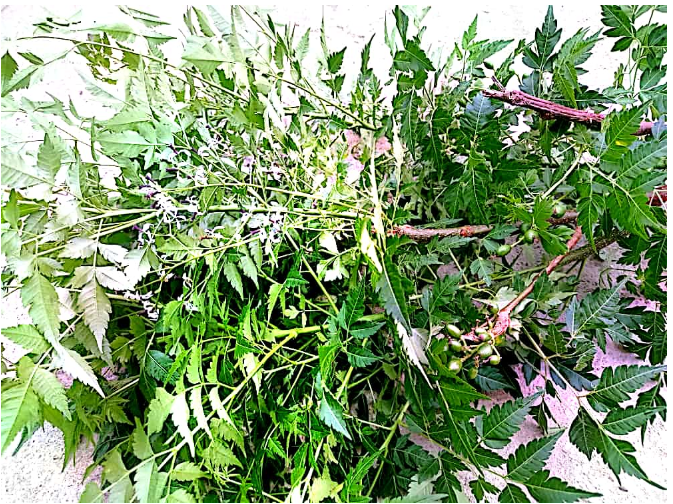
Neem (Azadirachta indica), has long been recognized for its medicinal properties. This study evaluates the antibacterial, antioxidant using the Ferric-Biperidine Reducing Capacity of Total Antioxidants (FBRC), Ferric-Reduced Antioxidant Method (FRAP), and scavenging activity by the 1, 1-diphenyl 2-picrylhyorazyl (DPPH) method. The total phenolic content of neem leaf and seed extracts was determined using Folin-Ciocalteu Aliquot method. Among the extracts analyzed, the aqueous soaked leaf extract exhibited the highest antioxidant activity, followed by the ethanolic-soaked leaf extracts, while the ethanolic Soxhlet seed extracts demonstrated the lowest activity. the total phenolic content was the highest in ethanolic Soxhlet seed extracts (6.319 mg/mg AAE) and aqueous soaked leaf extracts (4.838 mg/mg), with ethanolic soaked leaf extracts showing the lowest concentration (4.165 mg/mg). Antibacterial activity against Escherichia coli and Staphylococcus aureus was observed exclusively in ethanol-soaked leaf extracts, with significant inhibition of S. aureus (18 mm). These findings high-light the potent antioxidant and antimicrobial properties of neem extracts, supporting their potential application in medicinal treatments.
Maher A. Almaqtari, Faten H. Thamer, Adlia A. Abduljabbar, Amani A. AlGaadbi, Afraah M. Alfaatesh, Hussein M. A. Al-Maydama (2024). Evaluation of Antioxidant and Antibacterial Activities of Leaf and Seeds Extracts of Neem (Azadirachta indica) Using Different Extraction. Sana'a University Journal of Applied Sciences and Technology, 520-526. DOI: https://doi.org/10.59628/jast.v2i6.1379
Maher A. Almaqtari, Faten H. Thamer, Adlia A. Abduljabbar, Amani A. AlGaadbi, Afraah M. Alfaatesh, Hussein M. A. Al-Maydama . “Evaluation of Antioxidant and Antibacterial Activities of Leaf and Seeds Extracts of Neem (Azadirachta indica) Using Different Extraction.” Sana'a University Journal of Applied Sciences and Technology, 2024, pp. 520-526. https://doi.org/10.59628/jast.v2i6.1379. Accessed 30 Oct. 2026.
Maher A. Almaqtari, Faten H. Thamer, Adlia A. Abduljabbar, Amani A. AlGaadbi, Afraah M. Alfaatesh, Hussein M. A. Al-Maydama . 2024. “Evaluation of Antioxidant and Antibacterial Activities of Leaf and Seeds Extracts of Neem (Azadirachta indica) Using Different Extraction.” Sana'a University Journal of Applied Sciences and Technology : 520-526. DOI: https://doi.org/10.59628/jast.v2i6.1379
Maher A. Almaqtari, Faten H. Thamer, Adlia A. Abduljabbar, Amani A. AlGaadbi, Afraah M. Alfaatesh, Hussein M. A. Al-Maydama (2024) ‘Evaluation of Antioxidant and Antibacterial Activities of Leaf and Seeds Extracts of Neem (Azadirachta indica) Using Different Extraction’, Sana'a University Journal of Applied Sciences and Technology, pp. 520-526. doi: 10.59628/jast.v2i6.1379
@article{jast2024_art1379,
    author  = {Maher A. Almaqtari, Faten H. Thamer, Adlia A. Abduljabbar, Amani A. AlGaadbi, Afraah M. Alfaatesh, Hussein M. A. Al-Maydama },
    title   = {Evaluation of Antioxidant and Antibacterial Activities of Leaf and Seeds Extracts of Neem (Azadirachta indica) Using Different Extraction},
    journal = {Sana'a University Journal of Applied Sciences and Technology},    year    = {2024},    month   = {December},    pages   = {520-526},    doi     = {10.59628/jast.v2i6.1379},
    url     = {https://doi.org/10.59628/jast.v2i6.1379},}
Evaluation of Antioxidant and Antibacterial Activities of Leaf and Seeds Extracts of Neem (Azadirachta indica) Using Different Extraction
Moringa oleifera is a versatile tree with nutritional, medicinal and environmental benefits making it a valuable resource for communities in many regions of the world. This study aimed to extracted oil from Yemeni Moringa oleifera seeds oil (YMOSO) using two methods (cold pressing and seoxhlet n-hexane). The yields of the oils were 16.12% and 28.34, % respectively. The yields of the oils were 16.12% % and 28.34% respectively. Where it was investigate the chemical and physical characteristics by two method cold press and soxhlet n-hexane showed of Yemeni Moringa oleifera seeds oil (YMOSO), including a free fatty acid (FFA) content of 1.12 % and 2.98 %, an acid value of 5.99±0.5 mg/g and 6.52±0.5 mg/g, an iodine value of 67.68±0.1 mg/g and 67.43±0.1 mg/g, a saponification value of 189.51±0.1 mg/g and 188.49±0.1 mg/g, a refractive index of 1.46±0.01 and 1.47±0.01 at 25 °,C a moisture content of 0.24±0.03% and 0.36±0.03%, a density of 0.90±0.05 g/ml and 0.89±0.05 g/ml at 25 °C, a specific gravity of 0.968±0.03 g/ml and 0.956±0.03 g/ml at 25 °C, and a viscosity of 48 and 47 cP at 25 °C respectively. the chemical components of the oil were determined using Fourier transform infrared (FTIR) spectroscopy and Gas Chromatography-Mass Spectroscopy (GS-MS).
Maher Ail Al-Maqtari , Hussen Al-Maydama, Murad Bahadi, Hani Barfed (2024). Extraction and Comparative Evaluation on the Physicochemical Characteristics of Yemeni Moringa oleifera Seeds Oil. Sana'a University Journal of Applied Sciences and Technology, 83 - 95. DOI: https://doi.org/10.59628/jast.v2i1.789
Maher Ail Al-Maqtari , Hussen Al-Maydama, Murad Bahadi, Hani Barfed . “Extraction and Comparative Evaluation on the Physicochemical Characteristics of Yemeni Moringa oleifera Seeds Oil.” Sana'a University Journal of Applied Sciences and Technology, 2024, pp. 83 - 95. https://doi.org/10.59628/jast.v2i1.789. Accessed 30 Oct. 2026.
Maher Ail Al-Maqtari , Hussen Al-Maydama, Murad Bahadi, Hani Barfed . 2024. “Extraction and Comparative Evaluation on the Physicochemical Characteristics of Yemeni Moringa oleifera Seeds Oil.” Sana'a University Journal of Applied Sciences and Technology : 83 - 95. DOI: https://doi.org/10.59628/jast.v2i1.789
Maher Ail Al-Maqtari , Hussen Al-Maydama, Murad Bahadi, Hani Barfed (2024) ‘Extraction and Comparative Evaluation on the Physicochemical Characteristics of Yemeni Moringa oleifera Seeds Oil’, Sana'a University Journal of Applied Sciences and Technology, pp. 83 - 95. doi: 10.59628/jast.v2i1.789
@article{jast2024_art789,
    author  = {Maher Ail Al-Maqtari , Hussen Al-Maydama, Murad Bahadi, Hani Barfed },
    title   = {Extraction and Comparative Evaluation on the Physicochemical Characteristics of Yemeni Moringa oleifera Seeds Oil},
    journal = {Sana'a University Journal of Applied Sciences and Technology},    year    = {2024},    month   = {February},    pages   = {83 - 95},    doi     = {10.59628/jast.v2i1.789},
    url     = {https://doi.org/10.59628/jast.v2i1.789},}
Extraction and Comparative Evaluation on the Physicochemical Characteristics of Yemeni Moringa oleifera Seeds Oil
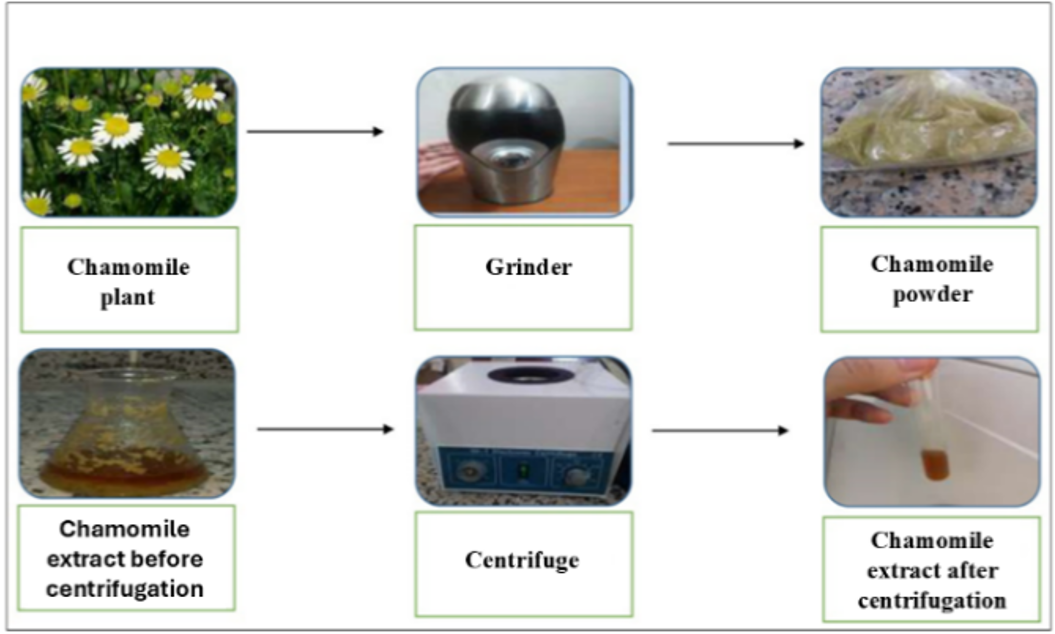
Green synthesis offers an environmentally benign approach for producing functional metal oxide nanomaterials. In this study, chamomile extract was employed as a natural reducing and stabilizing agent to synthesize ZnO and MgO nanoparticles under identical reaction conditions. The nanoparticles were prepared at 30 °C for 30 min under neutral pH, followed by heat treatment at 400 °C for five hours to remove residual moisture and promote crystallization. Structural and morphological characteristics were examined using X-ray diffraction (XRD), UV–visible spectroscopy and scanning electron microscopy (SEM). The UV–Vis spectra exhibited characteristic absorption peaks at 369 nm for ZnO and 265 nm for MgO. XRD analysis confirmed the formation of hexagonal wurtzite ZnO and face-centered cubic MgO phases, with calculated crystallite sizes of 8.35 nm and 11.58 nm, respectively. SEM images revealed predominantly spherical ZnO nanoparticles forming agglomerated secondary structures (55–70 nm) and spherical MgO nanoparticles with primary sizes ranging from 60–75 nm. The results demonstrate that chamomile extract serves as an effective biotemplate for controlling the nucleation and growth of ZnO and MgO nanoparticles, leading to well-defined structural and morphological features. This study highlights the potential of plant-mediated synthesis as a sustainable route for producing stable nanomaterials suitable for biomedical and environmental applications, reinforcing the role of green chemistry in advancing eco-friendly nanotechnology.
Ali Hashim Mohammed, Ali Maajal Ali, Mohaimen Baseem Awf, Rafaa Abd Alkareem Abdulwahid, Laith Saleh, Ghassan Adnan Naeem (2026). Green Synthesis and Characterization of ZnO and MgO Nanoparticles Using Chamomile Extract. Sana'a University Journal of Applied Sciences and Technology, 1825-1830. DOI: https://doi.org/10.59628/jast.v4i3.2488
Ali Hashim Mohammed, Ali Maajal Ali, Mohaimen Baseem Awf, Rafaa Abd Alkareem Abdulwahid, Laith Saleh, Ghassan Adnan Naeem . “Green Synthesis and Characterization of ZnO and MgO Nanoparticles Using Chamomile Extract.” Sana'a University Journal of Applied Sciences and Technology, 2026, pp. 1825-1830. https://doi.org/10.59628/jast.v4i3.2488. Accessed 30 Oct. 2026.
Ali Hashim Mohammed, Ali Maajal Ali, Mohaimen Baseem Awf, Rafaa Abd Alkareem Abdulwahid, Laith Saleh, Ghassan Adnan Naeem . 2026. “Green Synthesis and Characterization of ZnO and MgO Nanoparticles Using Chamomile Extract.” Sana'a University Journal of Applied Sciences and Technology : 1825-1830. DOI: https://doi.org/10.59628/jast.v4i3.2488
Ali Hashim Mohammed, Ali Maajal Ali, Mohaimen Baseem Awf, Rafaa Abd Alkareem Abdulwahid, Laith Saleh, Ghassan Adnan Naeem (2026) ‘Green Synthesis and Characterization of ZnO and MgO Nanoparticles Using Chamomile Extract’, Sana'a University Journal of Applied Sciences and Technology, pp. 1825-1830. doi: 10.59628/jast.v4i3.2488
@article{jast2026_art2488,
    author  = {Ali Hashim Mohammed, Ali Maajal Ali, Mohaimen Baseem Awf, Rafaa Abd Alkareem Abdulwahid, Laith Saleh, Ghassan Adnan Naeem },
    title   = {Green Synthesis and Characterization of ZnO and MgO Nanoparticles Using Chamomile Extract},
    journal = {Sana'a University Journal of Applied Sciences and Technology},    year    = {2026},    month   = {March},    pages   = {1825-1830},    doi     = {10.59628/jast.v4i3.2488},
    url     = {https://doi.org/10.59628/jast.v4i3.2488},}
Green Synthesis and Characterization of ZnO and MgO Nanoparticles Using Chamomile Extract
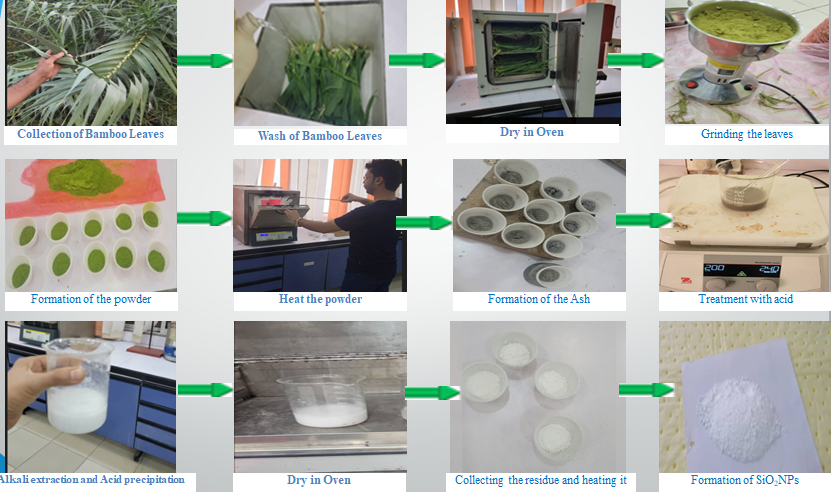
This study illustrates the low-cost, eco-friendly synthesis of silica nanoparticles using local bamboo leaves collected in August 2024 from the Aqqan Valley in the Al-Masimir District of Lahij Governorate, Yemen. Nanosilica powder synthesis by precipitation method is generated subsequent to thermal treatment of BLA at 750°C followed by characterization using advanced characterization techniques. The absorption peaks close to λmax = 240 nm in the UV spectrum showed silica nanoparticles, which were observed using UV-Vis spectroscopy. The presence of a siloxane group (Si-O-Si) in the experimental FT-IR spectral data indicated the high purity of the nanosilica particles. The prepared silica showed a high purity of 97.82% using XRF. The particle size determined by transmission electron microscopy (TEM) was found to be between 10.79 nm and 22.73 nm with minor agglomerations. Analysis of the nanosilica by X-ray diffraction (XRD) confirmed an amorphous structure with a
peak intensity at 2θ=23°.
Fursan Thabet A. Saleh, Sadeq H. Azzam, Amani A. Al-Gaadbi, Bushra M. Alattab, Saad A. Al-Arnoot, Hussein M.A. Al-Maydama, Maher Ali Almaqtari (2025). Synthesis and characteristics of Silica nanoparticles (SiO2NPs) from Bamboo Leaves Ash by precipitation method. Sana'a University Journal of Applied Sciences and Technology, 949-953. DOI: https://doi.org/10.59628/jast.v3i4.1792
Fursan Thabet A. Saleh, Sadeq H. Azzam, Amani A. Al-Gaadbi, Bushra M. Alattab, Saad A. Al-Arnoot, Hussein M.A. Al-Maydama, Maher Ali Almaqtari . “Synthesis and characteristics of Silica nanoparticles (SiO2NPs) from Bamboo Leaves Ash by precipitation method.” Sana'a University Journal of Applied Sciences and Technology, 2025, pp. 949-953. https://doi.org/10.59628/jast.v3i4.1792. Accessed 30 Oct. 2026.
Fursan Thabet A. Saleh, Sadeq H. Azzam, Amani A. Al-Gaadbi, Bushra M. Alattab, Saad A. Al-Arnoot, Hussein M.A. Al-Maydama, Maher Ali Almaqtari . 2025. “Synthesis and characteristics of Silica nanoparticles (SiO2NPs) from Bamboo Leaves Ash by precipitation method.” Sana'a University Journal of Applied Sciences and Technology : 949-953. DOI: https://doi.org/10.59628/jast.v3i4.1792
Fursan Thabet A. Saleh, Sadeq H. Azzam, Amani A. Al-Gaadbi, Bushra M. Alattab, Saad A. Al-Arnoot, Hussein M.A. Al-Maydama, Maher Ali Almaqtari (2025) ‘Synthesis and characteristics of Silica nanoparticles (SiO2NPs) from Bamboo Leaves Ash by precipitation method’, Sana'a University Journal of Applied Sciences and Technology, pp. 949-953. doi: 10.59628/jast.v3i4.1792
@article{jast2025_art1792,
    author  = {Fursan Thabet A.  Saleh, Sadeq H. Azzam, Amani A. Al-Gaadbi, Bushra M. Alattab, Saad A. Al-Arnoot, Hussein M.A. Al-Maydama, Maher Ali  Almaqtari },
    title   = {Synthesis and characteristics of Silica nanoparticles (SiO2NPs) from Bamboo Leaves Ash by precipitation method},
    journal = {Sana'a University Journal of Applied Sciences and Technology},    year    = {2025},    month   = {August},    pages   = {949-953},    doi     = {10.59628/jast.v3i4.1792},
    url     = {https://doi.org/10.59628/jast.v3i4.1792},}
Synthesis and characteristics of Silica nanoparticles (SiO2NPs) from Bamboo Leaves Ash by precipitation method
Nothing has been published in this category yet.

Sana'a University Journal
of Applied Sciences and Technology
A peer-reviewed, open-access journal publishing high-quality research in applied sciences, engineering, and technology since 2023.
