chemistry
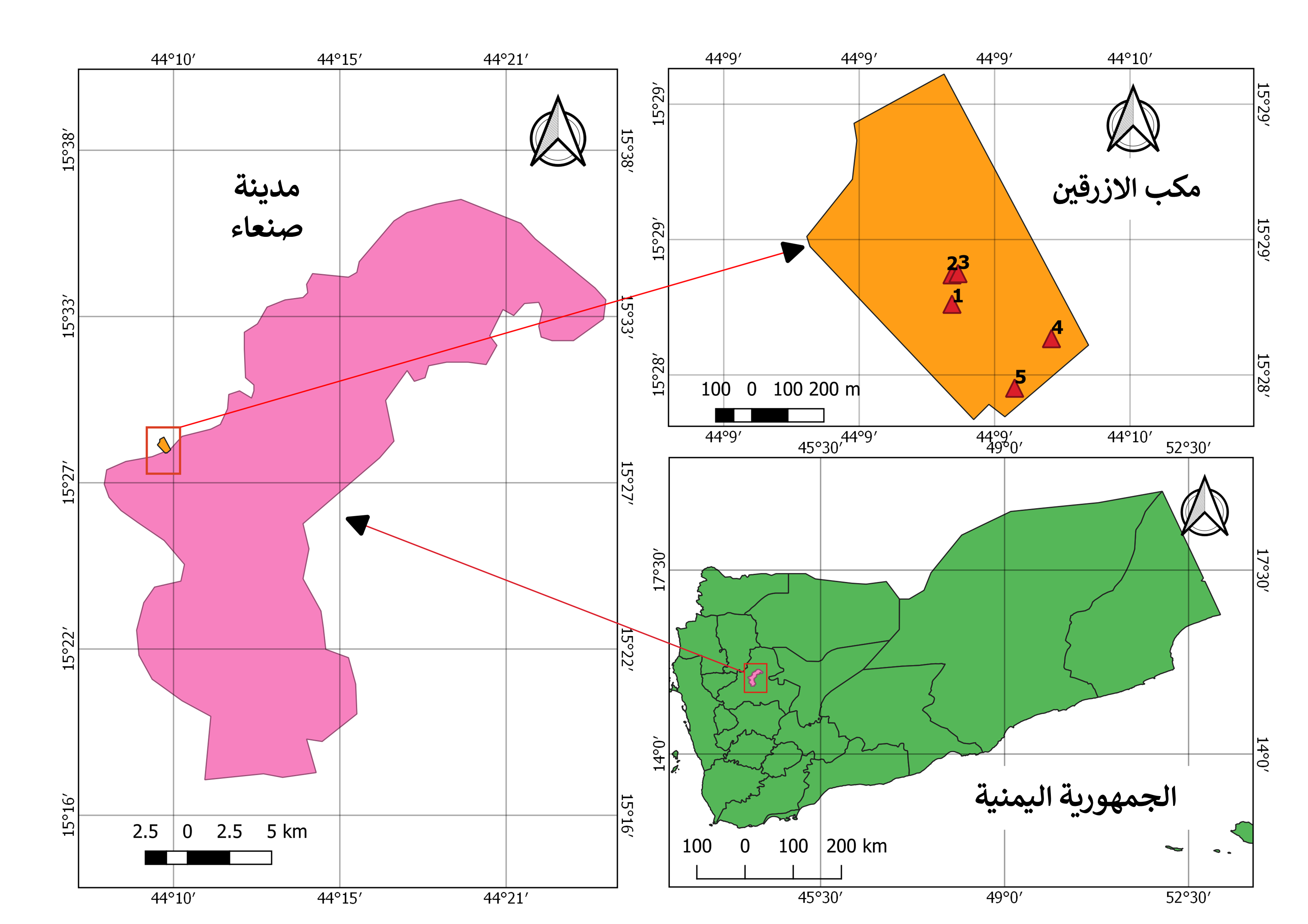
تعتبر البيانات عن جودة عصارة مكب الازرقين في صنعاء شبة معدومة. تهدف هذه الدراسة الى سد هذه الفجوة واجراء توصيف جيوكيميائي شامل لتلك العصارة. تم جمع خمس عينات تمثل جميع مواقع العصارة في المكب وقياس المؤشرات الفيزيائية والكيميائية مثل pH، EC، TDS، TOC، TKN، والعناصر الاساسية والثقيلة مثل K، Ca، Mn، Fe، Zn، Cu، As، U، Pb وNi بتقنية TXRF. كما تم حساب مؤشر تلوث العصارة (LPI)، واجراء التحليل العنقودي الهرمي (HCA). تشير النتائج الى ان المكب لم يصل بعد الى المرحلة الميثانية المستقرة، حيث احتوت العصارة على مستويات عالية من الحمل العضوي والاملاح والعناصر الأساسية والثقيلة مع قيم pH تميل الى الحمضية. كما كشف التحليل بتقنية TXRF عن مستويات مرتفعة من النيكل واليورانيوم في معظم العينات. في العينة 5 المأخوذة من المستنقع الرئيسي أسفل المكب، تجاوزت كلا من TDS، COD، TKN، Fe، Ni، As وCu المعايير اليمنية المقترحة لتصريف المياه الملوثة الى البيئة بتراكيز بلغت 25100، 10875، 2242، 28.155، 9.3، 0.828 و0.257 ملجم/لتر على الترتيب. بناء على قيم LPI التي تراوحت بين 24.57 و32.76 متجاوزة القيمة 7.378 المسموح بها للتصريف الامن في المجاري المائية، تصنف عصارة مكب الازرقين على انها عصارة عالية الخطورة وقد تشكل تهديدا خطيرا على مصادر المياه الجوفية والبيئة المحيطة. كما كشف التحليل التجميعي الهرمي HCA عن ارتباط الحمل العضوي بالعناصر الثقيلة ودوره المحتمل في جعلها اكثر قابلية للحركة. تمثل هذه الدراسة اول توصيف جيوكيميائي لعصارة مكب الازرقين، وتوفر بيانات مرجعية تدعم متخذي القرار لوضع برامج المراقبة والمعالجة المناسبة. كما توصي باجراء دراسات مستقبلية تشمل التغيرات الموسمية وتقييم التأثيرات المحتملة للعصارة على المياه الجوفية والتربة المحيطة.
فؤاد محمد احمد الشويع, عبد الرحمن عبد العزيز صلاح (2026). التوصيف الجيوكيميائي وتقييم المخاطر البيئية لعصارة مكب الأزرقين باستخدام مؤشر التلوث (LPI) والتحليل الإحصائي متعدد المتغيرات. Sana'a University Journal of Applied Sciences and Technology, 2533-2561. DOI: https://doi.org/10.59628/jast.v4i9.3119
فؤاد محمد احمد الشويع, عبد الرحمن عبد العزيز صلاح . “التوصيف الجيوكيميائي وتقييم المخاطر البيئية لعصارة مكب الأزرقين باستخدام مؤشر التلوث (LPI) والتحليل الإحصائي متعدد المتغيرات.” Sana'a University Journal of Applied Sciences and Technology, 2026, pp. 2533-2561. https://doi.org/10.59628/jast.v4i9.3119. Accessed 30 Oct. 2026.
فؤاد محمد احمد الشويع, عبد الرحمن عبد العزيز صلاح . 2026. “التوصيف الجيوكيميائي وتقييم المخاطر البيئية لعصارة مكب الأزرقين باستخدام مؤشر التلوث (LPI) والتحليل الإحصائي متعدد المتغيرات.” Sana'a University Journal of Applied Sciences and Technology : 2533-2561. DOI: https://doi.org/10.59628/jast.v4i9.3119
فؤاد محمد احمد الشويع, عبد الرحمن عبد العزيز صلاح (2026) ‘التوصيف الجيوكيميائي وتقييم المخاطر البيئية لعصارة مكب الأزرقين باستخدام مؤشر التلوث (LPI) والتحليل الإحصائي متعدد المتغيرات’, Sana'a University Journal of Applied Sciences and Technology, pp. 2533-2561. doi: 10.59628/jast.v4i9.3119
@article{jast2026_art3119,
    author  = {فؤاد محمد احمد الشويع, عبد الرحمن عبد العزيز صلاح },
    title   = {التوصيف الجيوكيميائي وتقييم المخاطر البيئية لعصارة مكب الأزرقين باستخدام مؤشر التلوث (LPI) والتحليل الإحصائي متعدد المتغيرات},
    journal = {Sana'a University Journal of Applied Sciences and Technology},    year    = {2026},    month   = {September},    pages   = {2533-2561},    doi     = {10.59628/jast.v4i9.3119},
    url     = {https://doi.org/10.59628/jast.v4i9.3119},}
التوصيف الجيوكيميائي وتقييم المخاطر البيئية لعصارة مكب الأزرقين باستخدام مؤشر التلوث (LPI) والتحليل الإحصائي متعدد المتغيرات

Artificial photosynthesis has emerged as a promising strategy for sustainable solar-to-chemical energy conversion by mimicking natural photosynthetic processes to produce fuels from water and carbon dioxide. In recent years, significant chemical advances have been achieved in light-harvesting materials, molecular and heterogeneous catalysts, and integrated photoelectrochemical systems. Progress in self photosensitizing molecular catalysts, metal-organic and covalent organic frameworks, and earth-abundant water oxidation and CO2 reduction catalysts has enhanced charge separation, catalytic efficiency, and product selectivity. Meanwhile, artificial leaf architectures and hybrid systems have demonstrated improved solar-to-chemical conversion efficiencies under increasingly practical conditions. Notably, several laboratory scale photoelectrochemical (PEC) systems have recently reported solar-to-hydrogen conversion efficiencies approaching 10% (unassisted, AM 1.5G illumination), reaching the threshold for commercial viability. Despite these advances, challenges related to long-term catalyst stability, efficiency losses, and large-scale implementation remain. This review summarizes key chemical developments from the past 3–5 years (2020–2025), highlighting emerging design strategies and integrated approaches that are shaping the future of scalable and sustainable artificial photosynthesis.
Amir Alqahm (2026). A A Short Review of Recent Advances in ArtificialP hotosynthesis Chemistry. Sana'a University Journal of Applied Sciences and Technology, 2284-2291. DOI: https://doi.org/10.59628/jast.v4i6.2751
Amir Alqahm . “A A Short Review of Recent Advances in ArtificialP hotosynthesis Chemistry.” Sana'a University Journal of Applied Sciences and Technology, 2026, pp. 2284-2291. https://doi.org/10.59628/jast.v4i6.2751. Accessed 30 Oct. 2026.
Amir Alqahm . 2026. “A A Short Review of Recent Advances in ArtificialP hotosynthesis Chemistry.” Sana'a University Journal of Applied Sciences and Technology : 2284-2291. DOI: https://doi.org/10.59628/jast.v4i6.2751
Amir Alqahm (2026) ‘A A Short Review of Recent Advances in ArtificialP hotosynthesis Chemistry’, Sana'a University Journal of Applied Sciences and Technology, pp. 2284-2291. doi: 10.59628/jast.v4i6.2751
@article{jast2026_art2751,
    author  = {Amir Alqahm },
    title   = {A A Short Review of Recent Advances in ArtificialP hotosynthesis Chemistry},
    journal = {Sana'a University Journal of Applied Sciences and Technology},    year    = {2026},    month   = {June},    pages   = {2284-2291},    doi     = {10.59628/jast.v4i6.2751},
    url     = {https://doi.org/10.59628/jast.v4i6.2751},}
A A Short Review of Recent Advances in ArtificialP hotosynthesis Chemistry
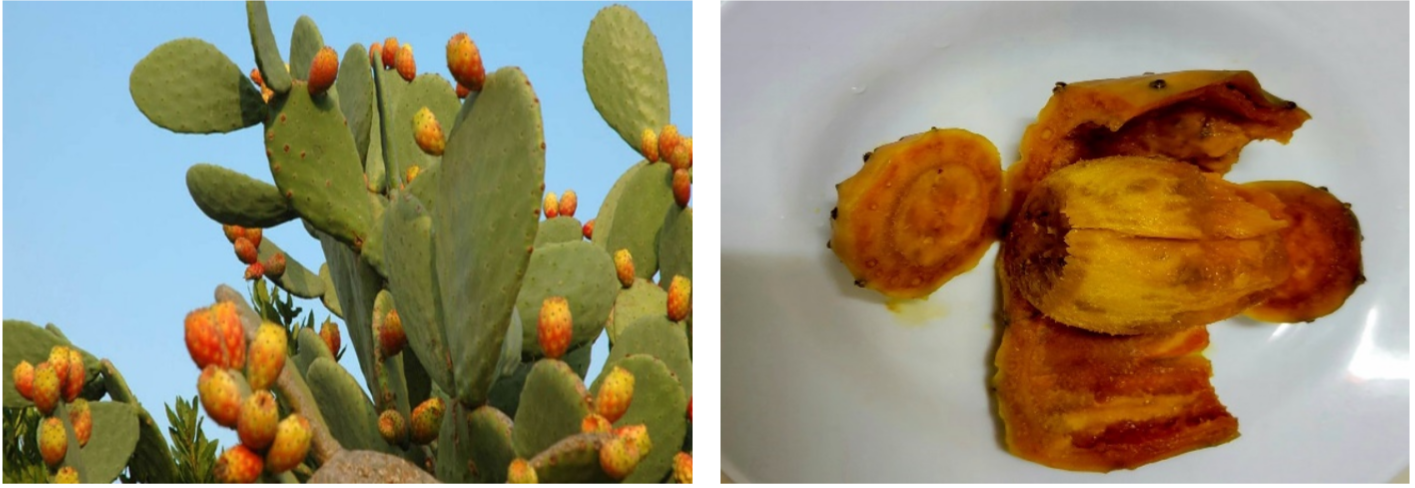
This study investigates the phytochemical properties and antioxidant potential of Opuntia ficus-indica grown in Yemen across diverse topographical regions, including Dhamar, Ibb, Sana’a, and Taiz. Despite its prevalence, Yemeni varieties remain scientifically under-characterized within the local context. This research focused on optimizing extraction protocols and quantifying the antioxidant content using spectrophotometric methods. The extraction optimization identified deionized water as the superior solvent for bioactive recovery. The 2-minute vortex extraction technique was selected for its high efficiency and rapid processing, yielding 909.40 ± 23.12 mg AAE/kg FW. Method validation demonstrated excellent linearity (R2 ≥ 0.9967), high precision (%RSD < 3.665%), and recovery (%R 91.29 –101.22%). Analysis of 25 real samples collected from various topographical regions in Yemen revealed that TAA ranged from 767.95 to 929.49 mg AAE/kg FW, TPC values ranged from 535.95 to 673.20 mg GAE/kg FW, and TFC varied between 28.75 and 87.50 mg QE/kg FW. These results establish a comprehensive phytochemical profile for Yemeni varieties of Opuntia ficus-indica, enhancing their economic and industrial value in the food and pharmaceutical sectors.
Lebnan A. H. Al-tnobi, Mahfoudh M. AL-Hamadi, Anass A. Alnedhary, Taiseer H. Al-Hoded (2026). Antioxidant Profiling of Yemeni Varieties of Opuntia ficus-indica Pulp: Method Optimization, Validation, and Regional Evaluation. Sana'a University Journal of Applied Sciences and Technology, 2464-2474. DOI: https://doi.org/10.59628/jast.v4i9.3123
Lebnan A. H. Al-tnobi, Mahfoudh M. AL-Hamadi, Anass A. Alnedhary, Taiseer H. Al-Hoded . “Antioxidant Profiling of Yemeni Varieties of Opuntia ficus-indica Pulp: Method Optimization, Validation, and Regional Evaluation.” Sana'a University Journal of Applied Sciences and Technology, 2026, pp. 2464-2474. https://doi.org/10.59628/jast.v4i9.3123. Accessed 30 Oct. 2026.
Lebnan A. H. Al-tnobi, Mahfoudh M. AL-Hamadi, Anass A. Alnedhary, Taiseer H. Al-Hoded . 2026. “Antioxidant Profiling of Yemeni Varieties of Opuntia ficus-indica Pulp: Method Optimization, Validation, and Regional Evaluation.” Sana'a University Journal of Applied Sciences and Technology : 2464-2474. DOI: https://doi.org/10.59628/jast.v4i9.3123
Lebnan A. H. Al-tnobi, Mahfoudh M. AL-Hamadi, Anass A. Alnedhary, Taiseer H. Al-Hoded (2026) ‘Antioxidant Profiling of Yemeni Varieties of Opuntia ficus-indica Pulp: Method Optimization, Validation, and Regional Evaluation’, Sana'a University Journal of Applied Sciences and Technology, pp. 2464-2474. doi: 10.59628/jast.v4i9.3123
@article{jast2026_art3123,
    author  = {Lebnan A. H. Al-tnobi, Mahfoudh M. AL-Hamadi, Anass A. Alnedhary, Taiseer H. Al-Hoded },
    title   = {Antioxidant Profiling of Yemeni Varieties of Opuntia ficus-indica Pulp: Method Optimization, Validation, and Regional Evaluation},
    journal = {Sana'a University Journal of Applied Sciences and Technology},    year    = {2026},    month   = {September},    pages   = {2464-2474},    doi     = {10.59628/jast.v4i9.3123},
    url     = {https://doi.org/10.59628/jast.v4i9.3123},}
Antioxidant Profiling of Yemeni Varieties of Opuntia ficus-indica Pulp: Method Optimization, Validation, and Regional Evaluation
The emergence of antibiotic-resistant bacteria is a major global public health concern. Antibacterial agents are one of the most exciting areas for the use of nanoparticles and have shown great potential as alternative antibacterial agents due to their outstanding physical and chemical properties. The biosynthesis and antibacterial activities of Silver Nanoparticles (AgNPs) could contribute to the development of innovative antimicrobial drugs with potential for a variety of medical applications.
The X Ray Diffraction (XRD) results showed that the formed particles were pure silver nanoparticles with a cubic crystal structure and granular size. Fourier-transform infrared (FTIR) also showed that functional aggregates formed, and the thumb region confirmed the presence of silver nanoparticles. In addition, we investigated the Uv-Visible and biological activity of AgNPs. A study of the biological activity of gram-positive (Staphylococcus aureus) and gram-negative (Escherichia coli, and Klebsiella pneumonia) bacteria showed the importance of nano-silver particle biosynthesis.
Maher.A. Al-Maqtari, Bushra.M. Alattab, Ahmed.Ali. Qaid (2023). Biosynthesis of Silver Based Nanoparticles Using Plant Leaves Extracts and Their Antibacterial Activities. Sana'a University Journal of Applied Sciences and Technology. DOI: https://doi.org/10.59628/jast.v1i4.619
Maher.A. Al-Maqtari, Bushra.M. Alattab, Ahmed.Ali. Qaid . “Biosynthesis of Silver Based Nanoparticles Using Plant Leaves Extracts and Their Antibacterial Activities.” Sana'a University Journal of Applied Sciences and Technology, 2023, https://doi.org/10.59628/jast.v1i4.619. Accessed 30 Oct. 2026.
Maher.A. Al-Maqtari, Bushra.M. Alattab, Ahmed.Ali. Qaid . 2023. “Biosynthesis of Silver Based Nanoparticles Using Plant Leaves Extracts and Their Antibacterial Activities.” Sana'a University Journal of Applied Sciences and Technology DOI: https://doi.org/10.59628/jast.v1i4.619
Maher.A. Al-Maqtari, Bushra.M. Alattab, Ahmed.Ali. Qaid (2023) ‘Biosynthesis of Silver Based Nanoparticles Using Plant Leaves Extracts and Their Antibacterial Activities’, Sana'a University Journal of Applied Sciences and Technology. doi: 10.59628/jast.v1i4.619
@article{jast2023_art619,
    author  = {Maher.A. Al-Maqtari, Bushra.M. Alattab, Ahmed.Ali. Qaid },
    title   = {Biosynthesis of Silver Based Nanoparticles Using Plant Leaves  Extracts and Their Antibacterial Activities},
    journal = {Sana'a University Journal of Applied Sciences and Technology},    year    = {2023},    month   = {December},    doi     = {10.59628/jast.v1i4.619},
    url     = {https://doi.org/10.59628/jast.v1i4.619},}
Biosynthesis of Silver Based Nanoparticles Using Plant Leaves Extracts and Their Antibacterial Activities

The oleo-gum resin of Commiphora myrrha (Nees) Engl. has been a cornerstone of traditional Yemeni medicine for centuries. This study provides a comparative chemical and bioactivity evaluation of two distinct fractions: a polar fraction (E1) obtained via aqueous maceration and a lipophilic fraction (E5) obtained via methanolic Soxhlet extraction. The crude resin exhibited moisture content (10.28 ± 0.14%), ash content (7.44 ± 0.11%), pH (4.31 ± 0.16), viscosity (0.932 mPa·s), and protein content (17.06 ± 0.61%). Antimicrobial assays demonstrated that E5 exhibited significant inhibitory activity against gram-positive bacteria and Candida albicans, whereas E1 remained inactive. Gas chromatography–Mass spectrometry (GC-MS) analysis revealed that E5 is rich in bioactive oxygenated sesquiterpenes and sesquiterpene lactones, whereas E1 is dominated by fatty acid esters with min- imal bioactivity. The superior antioxidant capacity of E5 (IC50 ≈ 170g/mL) exceeded E1 (IC50 ≈ 1480μg/mL) strongly correlated with higher phytochemical yields: total phenolics (46.04 vs. 6.35 mg gallic acid equivalents per gram of dry extract (mg GAE/g)), flavonoids (6.55 vs. 0.69 mg quercetin equivalents per gram (mg QE/g)), and tannins (19.49 vs. 4.48 mg tannic acid equivalents per gram (mg TAE/g)). These results confirm that the primary bioactivity of C. myrrha is sequestered within the resinous terpenoid fraction. This study establishes critical quality control parameters for Yemeni C. myrrha and supports a dual-use strategy: E5 for pharmaceutical development and E1 for industrial applications as a natural hydrocolloid.
Ebrahim A. Al-Mamary, Sadeq Azzam, Qais Y.M. Abdullah, Khalid M. Naji, Basem Al-Akhali, Monther A. Al-Hakemi (2026). Comparative Chemical and Bioactivity Profiling of Polar and Resinous Fractions of Yemeni Commiphora myrrha.. Sana'a University Journal of Applied Sciences and Technology, 2410-2423. DOI: https://doi.org/10.59628/jast.v4i7.3146
Ebrahim A. Al-Mamary, Sadeq Azzam, Qais Y.M. Abdullah, Khalid M. Naji, Basem Al-Akhali, Monther A. Al-Hakemi . “Comparative Chemical and Bioactivity Profiling of Polar and Resinous Fractions of Yemeni Commiphora myrrha..” Sana'a University Journal of Applied Sciences and Technology, 2026, pp. 2410-2423. https://doi.org/10.59628/jast.v4i7.3146. Accessed 30 Oct. 2026.
Ebrahim A. Al-Mamary, Sadeq Azzam, Qais Y.M. Abdullah, Khalid M. Naji, Basem Al-Akhali, Monther A. Al-Hakemi . 2026. “Comparative Chemical and Bioactivity Profiling of Polar and Resinous Fractions of Yemeni Commiphora myrrha..” Sana'a University Journal of Applied Sciences and Technology : 2410-2423. DOI: https://doi.org/10.59628/jast.v4i7.3146
Ebrahim A. Al-Mamary, Sadeq Azzam, Qais Y.M. Abdullah, Khalid M. Naji, Basem Al-Akhali, Monther A. Al-Hakemi (2026) ‘Comparative Chemical and Bioactivity Profiling of Polar and Resinous Fractions of Yemeni Commiphora myrrha.’, Sana'a University Journal of Applied Sciences and Technology, pp. 2410-2423. doi: 10.59628/jast.v4i7.3146
@article{jast2026_art3146,
    author  = {Ebrahim A. Al-Mamary, Sadeq Azzam, Qais Y.M. Abdullah, Khalid M. Naji, Basem Al-Akhali, Monther A. Al-Hakemi },
    title   = {Comparative Chemical and Bioactivity Profiling of Polar and Resinous Fractions of Yemeni Commiphora myrrha.},
    journal = {Sana'a University Journal of Applied Sciences and Technology},    year    = {2026},    month   = {July},    pages   = {2410-2423},    doi     = {10.59628/jast.v4i7.3146},
    url     = {https://doi.org/10.59628/jast.v4i7.3146},}
Comparative Chemical and Bioactivity Profiling of Polar and Resinous Fractions of Yemeni Commiphora myrrha.

This study addresses persistent methodological inconsistencies in phytochemical assays by developing a harmonized, high-sensitivity framework for TAC, TPC, and TFC. Using the Ferric Bipyridyl Reducing Capacity (FBRC), Folin-Ciocalteu, and Aluminum Chloride methods, critical parameters—including maximum wavelength (λmax), temperature, kinetics, pH, and stoichiometry—were systematically re-evaluated and optimized. The novelty of this work lies in the transition from empirical "snapshot" measurements to kinetically optimized and AOAC-validated protocols that ensure inter-laboratory reproducibility. Optimized conditions for TAC were established at 520 nm, pH 4, and 30 minutes at 50°C. TPC was optimized at 750 nm (20 min at 50°C), while TFC achieved stability at 430 nm after 10 minutes at ambient temperature. Unlike conventional methods that often suffer from baseline drift, these refined protocols achieved superior sensitivity. Comprehensive validation in accordance with AOAC guidelines confirmed high precision, with repeatability (%RSD) ranges of 0.82–5.68% (TAC), 0.85–6.22% (TPC), and 0.29–5.09% (TFC). Linearity was established over concentration ranges of 0.2–5 ppm for TAC (ascorbic acid equivalent), 1–10 ppm for TPC (gallic acid equivalent), and 2–20 ppm for TFC (quercetin equivalent). All methods demonstrated excellent linearity (R2 = 0.9978) and significantly lower limits of detection (LODs: 0.027, 0.164, and 0.065 ppm) than those reported in the literature. These protocols offer a rapid, cost-effective, standardized alternative to expensive chromatography. By resolving the kinetic and chemical variables that typically cause discrepancies in research, this study provides a validated "gold-standard" approach that ensures the global comparability of phytochemical data across diverse plant matrices.
Anass A. Alnedhary, Fatima A. Murshed, Maher A. Almaqtari, Amal A. S. AL Huzaim, Fadhailah A. Al-herdy Al-herdy (2026). Determination Standardization and Validation of Optimized Spectrophotometric Assays for Total Antioxidant, Polyphenol, and Flavonoid Determination: A Kinetic and Methodological Framework. Sana'a University Journal of Applied Sciences and Technology, 2166-2177. DOI: https://doi.org/10.59628/jast.v4i6.2774
Anass A. Alnedhary, Fatima A. Murshed, Maher A. Almaqtari, Amal A. S. AL Huzaim, Fadhailah A. Al-herdy Al-herdy . “Determination Standardization and Validation of Optimized Spectrophotometric Assays for Total Antioxidant, Polyphenol, and Flavonoid Determination: A Kinetic and Methodological Framework.” Sana'a University Journal of Applied Sciences and Technology, 2026, pp. 2166-2177. https://doi.org/10.59628/jast.v4i6.2774. Accessed 30 Oct. 2026.
Anass A. Alnedhary, Fatima A. Murshed, Maher A. Almaqtari, Amal A. S. AL Huzaim, Fadhailah A. Al-herdy Al-herdy . 2026. “Determination Standardization and Validation of Optimized Spectrophotometric Assays for Total Antioxidant, Polyphenol, and Flavonoid Determination: A Kinetic and Methodological Framework.” Sana'a University Journal of Applied Sciences and Technology : 2166-2177. DOI: https://doi.org/10.59628/jast.v4i6.2774
Anass A. Alnedhary, Fatima A. Murshed, Maher A. Almaqtari, Amal A. S. AL Huzaim, Fadhailah A. Al-herdy Al-herdy (2026) ‘Determination Standardization and Validation of Optimized Spectrophotometric Assays for Total Antioxidant, Polyphenol, and Flavonoid Determination: A Kinetic and Methodological Framework’, Sana'a University Journal of Applied Sciences and Technology, pp. 2166-2177. doi: 10.59628/jast.v4i6.2774
@article{jast2026_art2774,
    author  = {Anass A. Alnedhary, Fatima A. Murshed, Maher A. Almaqtari, Amal A. S. AL Huzaim, Fadhailah A. Al-herdy Al-herdy },
    title   = {Determination Standardization and Validation of Optimized Spectrophotometric Assays for Total Antioxidant, Polyphenol, and Flavonoid Determination: A Kinetic and Methodological Framework},
    journal = {Sana'a University Journal of Applied Sciences and Technology},    year    = {2026},    month   = {June},    pages   = {2166-2177},    doi     = {10.59628/jast.v4i6.2774},
    url     = {https://doi.org/10.59628/jast.v4i6.2774},}
Determination Standardization and Validation of Optimized Spectrophotometric Assays for Total Antioxidant, Polyphenol, and Flavonoid Determination: A Kinetic and Methodological Framework
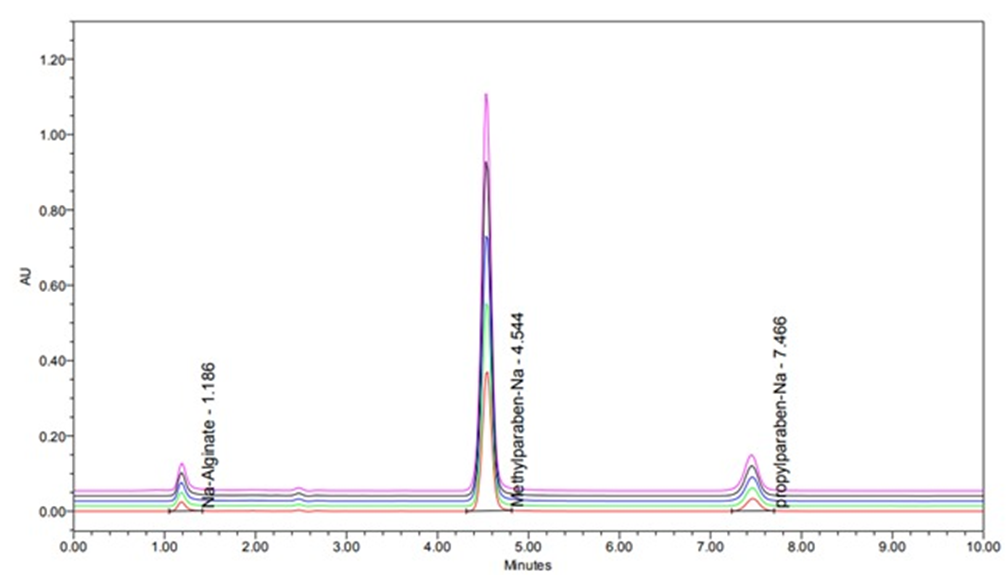
A stability-indicating high-performance liquid chromatographic (HPLC) method was developed and validated for simultaneous quantification of sodium alginate (Na Alg), sodium methylparaben (Na-MP), and sodium propylparaben (Na-PP) in oral suspension formulations. This method addresses the need for reliable quality control of complex pharmaceutical matrices. Separation was achieved on an Ultisil XB-CN(Cyanopropyl) column at 40 °C, using an isocratic mobile phase composed of 0.05 M potassium dihydrogen phosphate buffer (pH 5.2) and acetonitrile (80:20, v/v) at a flow rate of 1.5 mL/min, with detection at 210 nm. The method was validated in accordance with the ICH Q2(R1) and USP guidelines to assess linearity, accuracy, precision, specificity, and robustness. The technique demonstrated excellent linearity (R2 > 0.9998) over the concentration ranges of 10–1500, 1–150, and 0.16–24 μg/mL for Na-Alg, Na-MP, and Na-PP, respectively. The validation results showed high accuracy expressed as recovery (98.65–101.88%) across the tested concentration range of 50% to 150%, precision (%RSD < 1.9%), and sensitivity (LODs: 5.30, 0.038, and 0.062 μg/mL; LOQs: 17.65, 0.127, and 0.207 μg/mL) for Na-Alg, Na MP, and Na-PP, respectively. The degradation products were successfully resolved from the analytes, thereby confirming the specificity of the method. The developed HPLC method used to analyze 34 commercial alginate suspension samples was highly precise (%RSD < 1.5%) and accurate (94.66%–105.20% recovery). It reliably quantified Na-Alg and preservatives (Na-MP and Na-PP), with results consistently matching the label claims. This robust method is suitable for routine quality control and stability testing, and effectively combines regulatory compliance with practical pharmaceutical analysis.
Ahmed Y. M. Al-Saggier , Anass A. Alnedhary , Fatima A. Murshed (2026). Development and Validation of a Stability-Indicating HPLC Method for the Simultaneous Determination of Sodium Alginate and Parabens in Pharmaceutical Oral Suspensions. Sana'a University Journal of Applied Sciences and Technology, 1751-1765. DOI: https://doi.org/10.59628/jast.v4i2.2311
Ahmed Y. M. Al-Saggier , Anass A. Alnedhary , Fatima A. Murshed . “Development and Validation of a Stability-Indicating HPLC Method for the Simultaneous Determination of Sodium Alginate and Parabens in Pharmaceutical Oral Suspensions.” Sana'a University Journal of Applied Sciences and Technology, 2026, pp. 1751-1765. https://doi.org/10.59628/jast.v4i2.2311. Accessed 30 Oct. 2026.
Ahmed Y. M. Al-Saggier , Anass A. Alnedhary , Fatima A. Murshed . 2026. “Development and Validation of a Stability-Indicating HPLC Method for the Simultaneous Determination of Sodium Alginate and Parabens in Pharmaceutical Oral Suspensions.” Sana'a University Journal of Applied Sciences and Technology : 1751-1765. DOI: https://doi.org/10.59628/jast.v4i2.2311
Ahmed Y. M. Al-Saggier , Anass A. Alnedhary , Fatima A. Murshed (2026) ‘Development and Validation of a Stability-Indicating HPLC Method for the Simultaneous Determination of Sodium Alginate and Parabens in Pharmaceutical Oral Suspensions’, Sana'a University Journal of Applied Sciences and Technology, pp. 1751-1765. doi: 10.59628/jast.v4i2.2311
@article{jast2026_art2311,
    author  = {Ahmed Y. M. Al-Saggier , Anass A. Alnedhary , Fatima A. Murshed  },
    title   = {Development and Validation of a Stability-Indicating HPLC Method for the Simultaneous Determination of Sodium Alginate and Parabens in Pharmaceutical Oral Suspensions},
    journal = {Sana'a University Journal of Applied Sciences and Technology},    year    = {2026},    month   = {February},    pages   = {1751-1765},    doi     = {10.59628/jast.v4i2.2311},
    url     = {https://doi.org/10.59628/jast.v4i2.2311},}
Development and Validation of a Stability-Indicating HPLC Method for the Simultaneous Determination of Sodium Alginate and Parabens in Pharmaceutical Oral Suspensions
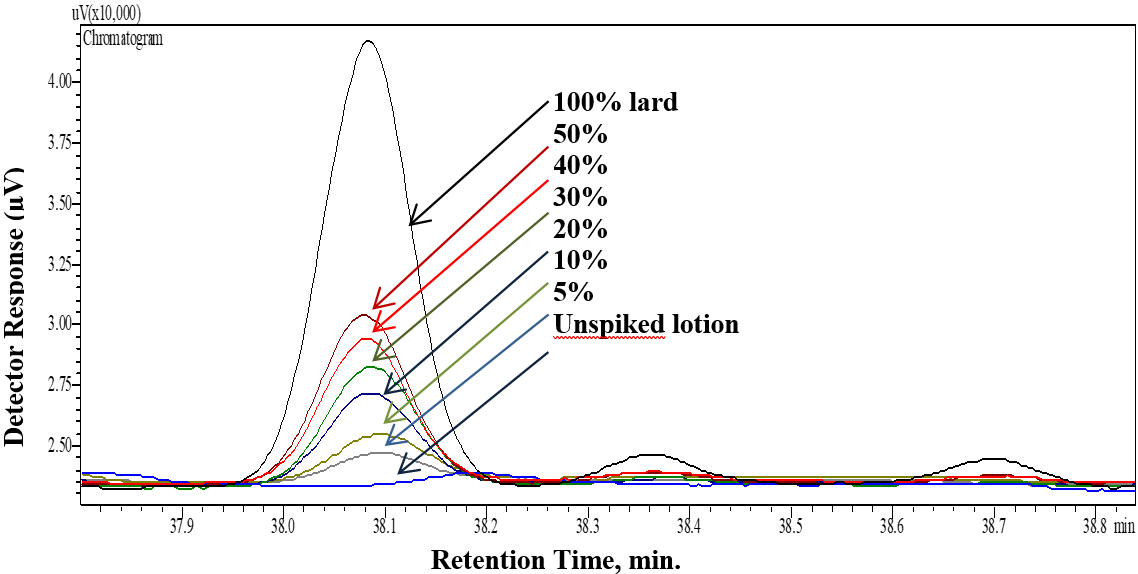
A Gas Chromatography-Flame Ionization Detector method was optimized for the rapid detection of lard in cosmetic lotion samples. Lard was extracted using the Soxhlet method, and lotion oils were isolated via liquid liquid extraction at 60 ◦C. The method demonstrated high linearity (R2) ranging from 0.9983 to 0.9998 across a concentration range from 1 to 100 μg/mL for four fatty acids: C20:2, C20:3n6, C20:3n3, and C20:4, which are biomarkers for lard. The precision was high, with a Relative Standard Deviation not exceeding 5.82%. The recovery rates from the spiked samples ranged between 93.00% and 103.58%. The Limit of Detection and Limit of Quantitation were 0.16–0.25 μg/mL and 0.54–0.84 μg mL, respectively. The validated method was applied to 20 commercial lotion brands collected from Yemeni markets. None of the analyzed samples showed the characteristic fatty acid markers of Lard. The developed GC-FID method, combined with principal component analysis provides a rapid, reliable, and cost-effective approach for halal authentication of cosmetic products.
Raja’a A. H. Saif, Ranya A. Al-Alie, Mahfoudh M. AL-Hamadi, Anass A. Al-Nedhary, Najwa S. AL-Darwish, Fatima A. Murshed (2026). Method Development for the Detection of Lard in Lotion Cosmetics Using Gas Chromatography-Flame Ionization Detection and Chemometrics. Sana'a University Journal of Applied Sciences and Technology, 2324-2333. DOI: https://doi.org/10.59628/jast.v4i8.3112
Raja’a A. H. Saif, Ranya A. Al-Alie, Mahfoudh M. AL-Hamadi, Anass A. Al-Nedhary, Najwa S. AL-Darwish, Fatima A. Murshed . “Method Development for the Detection of Lard in Lotion Cosmetics Using Gas Chromatography-Flame Ionization Detection and Chemometrics.” Sana'a University Journal of Applied Sciences and Technology, 2026, pp. 2324-2333. https://doi.org/10.59628/jast.v4i8.3112. Accessed 30 Oct. 2026.
Raja’a A. H. Saif, Ranya A. Al-Alie, Mahfoudh M. AL-Hamadi, Anass A. Al-Nedhary, Najwa S. AL-Darwish, Fatima A. Murshed . 2026. “Method Development for the Detection of Lard in Lotion Cosmetics Using Gas Chromatography-Flame Ionization Detection and Chemometrics.” Sana'a University Journal of Applied Sciences and Technology : 2324-2333. DOI: https://doi.org/10.59628/jast.v4i8.3112
Raja’a A. H. Saif, Ranya A. Al-Alie, Mahfoudh M. AL-Hamadi, Anass A. Al-Nedhary, Najwa S. AL-Darwish, Fatima A. Murshed (2026) ‘Method Development for the Detection of Lard in Lotion Cosmetics Using Gas Chromatography-Flame Ionization Detection and Chemometrics’, Sana'a University Journal of Applied Sciences and Technology, pp. 2324-2333. doi: 10.59628/jast.v4i8.3112
@article{jast2026_art3112,
    author  = {Raja’a A. H. Saif, Ranya A. Al-Alie, Mahfoudh M. AL-Hamadi, Anass A. Al-Nedhary, Najwa S. AL-Darwish, Fatima A. Murshed },
    title   = {Method Development for the Detection of Lard in Lotion Cosmetics Using Gas Chromatography-Flame Ionization Detection and Chemometrics},
    journal = {Sana'a University Journal of Applied Sciences and Technology},    year    = {2026},    month   = {August},    pages   = {2324-2333},    doi     = {10.59628/jast.v4i8.3112},
    url     = {https://doi.org/10.59628/jast.v4i8.3112},}
Method Development for the Detection of Lard in Lotion Cosmetics Using Gas Chromatography-Flame Ionization Detection and Chemometrics

The quality of grapes is an important issue for nutritional value and content of antioxidants, which are essential for human health. Yemen is Famous for growing different types of grapes in large quantities. This study aims to validate the analysis methods of determination of total antioxidants (TAC), polyphenols (TPC), flavonoids (TFC), and vitamin C (Vit. C) contents, in terms of linearity, repeatability, accuracy, and limits of detection (LOD) and quantification (LOQ), for measuring TAC, TPC, TFC, and Vit. C in grape samples, with good linearity (R2) are 0.9968, 0.9967, 0.9971, and 0.9966, exhibited high repeatability(% RSD) are ranged (1.452 – 4.836%), (0.720 – 3.240%), (0.766 - 6.001%), and (0.539-2.976%), also high sensitivity (LOD = 0.279, 0.243, 0.288, and 76.376 ppm), LOQ = (0.928, 0.809, 0.961, and 245.588 ppm), and the high accuracy (%R) (80.80-95.00%), (91.44-104.35%), (92.37-101.87), and (88.89-104.65%), respectively. The analysis results of fourteen Yemeni grape samples indicated that the highest value of TAC for a Black grape sample was 6755.3 mg AAE/kg, while the lowest value for the Asmi grape sample was 1621.7 mg AAE/kg. For the TPC, the highest value was 4718.3 mg GAE/kg for the Black grape whereas the lowest content was 1382.3 mg GAE/kg for the Asmi grape. TFC ranged from 341.8 for the Black grape to 32.0 mg QE /kg for the Asmi grape—lastly, Vit. C ranged from 2418.1mg AAE/kg Black grape to 766.5 mg AAE/kg for Asmi grape. This study indicated that Yemeni grape varieties exhibit high TAC, TPC, TFC, and Vit. C contents, which can be used as a natural source of antioxidants.
fatima murshed, Anass A. Alnedhary , Maher A. Almaqtari, Fadhailah A. Al-herdy (2025). Method Validation and Determination of Total Antioxidants, Polyphenols, Flavonoids, and Vitamin C Contents in the Yemeni Grapes. Sana'a University Journal of Applied Sciences and Technology, 740-748. DOI: https://doi.org/10.59628/jast.v3i2.1499
fatima murshed, Anass A. Alnedhary , Maher A. Almaqtari, Fadhailah A. Al-herdy . “Method Validation and Determination of Total Antioxidants, Polyphenols, Flavonoids, and Vitamin C Contents in the Yemeni Grapes.” Sana'a University Journal of Applied Sciences and Technology, 2025, pp. 740-748. https://doi.org/10.59628/jast.v3i2.1499. Accessed 30 Oct. 2026.
fatima murshed, Anass A. Alnedhary , Maher A. Almaqtari, Fadhailah A. Al-herdy . 2025. “Method Validation and Determination of Total Antioxidants, Polyphenols, Flavonoids, and Vitamin C Contents in the Yemeni Grapes.” Sana'a University Journal of Applied Sciences and Technology : 740-748. DOI: https://doi.org/10.59628/jast.v3i2.1499
fatima murshed, Anass A. Alnedhary , Maher A. Almaqtari, Fadhailah A. Al-herdy (2025) ‘Method Validation and Determination of Total Antioxidants, Polyphenols, Flavonoids, and Vitamin C Contents in the Yemeni Grapes’, Sana'a University Journal of Applied Sciences and Technology, pp. 740-748. doi: 10.59628/jast.v3i2.1499
@article{jast2025_art1499,
    author  = {fatima murshed, Anass A. Alnedhary , Maher A. Almaqtari, Fadhailah A. Al-herdy },
    title   = {Method Validation and Determination of Total Antioxidants, Polyphenols, Flavonoids, and Vitamin C Contents in the Yemeni Grapes},
    journal = {Sana'a University Journal of Applied Sciences and Technology},    year    = {2025},    month   = {April},    pages   = {740-748},    doi     = {10.59628/jast.v3i2.1499},
    url     = {https://doi.org/10.59628/jast.v3i2.1499},}
Method Validation and Determination of Total Antioxidants, Polyphenols, Flavonoids, and Vitamin C Contents in the Yemeni Grapes
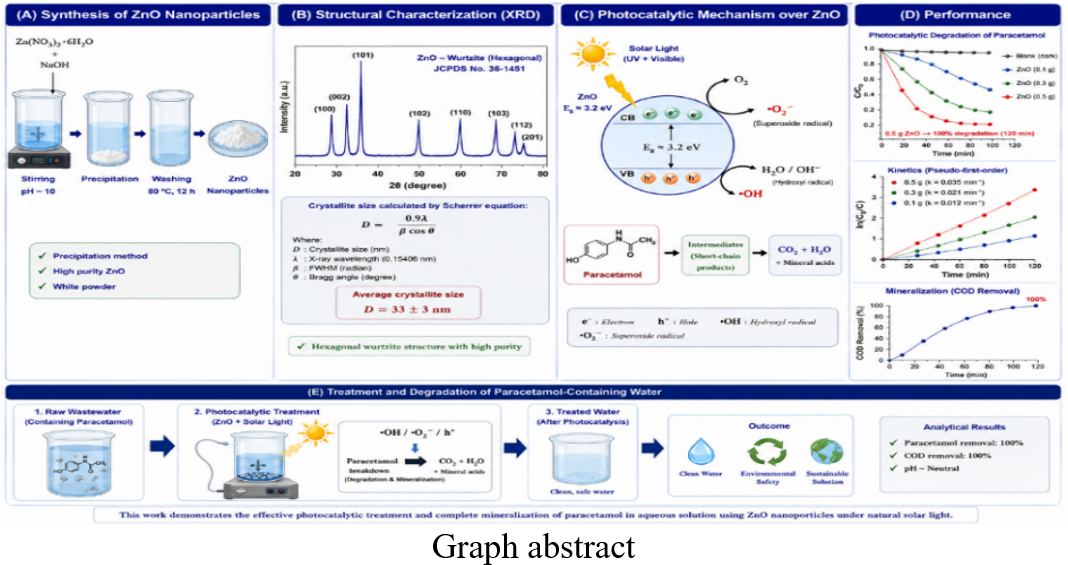
The increasing discharge of pharmaceutical residues into aquatic environments poses a serious environmental threat due to their persistence and resistance to conventional wastewater treatment processes. In this study, zinc oxide nanoparticles (ZnO NPs) were synthesized via a simple precipitation method and applied as an efficient photocatalyst for the degradation and mineralization of paracetamol under UV irradiation (365 nm) and natural solar irradiation. The structural, optical, and crystalline properties were confirmed using Ultraviolet–Visible Spectrophotometer, Fourier-Transform Infrared Spectroscopy and X-ray Diffraction analyses, revealing high crystallinity and nanoscale features with an average crystallite size ranging between 32.4 and 36.4 nm, which directly facilitated the surface-driven photocatalytic pathway. The results demonstrated that the synthesized ZnO NPs achieved 100% degradation of 10 mg/L paracetamol within 60 min under optimized solar irradiation conditions (pH 11, 2.5 g/L catalyst dose, 600 rpm stirring speed at room temperature). Furthermore, Chemical Oxygen Demand (COD) analysis confirmed complete mineralization of organic content, reducing the initial COD of real wastewater from 21,780 mg/L to 0.5 mg/L, achieving a 99.99% removal efficiency while High Performance Liquid Chromatography results verified the fully degraded parent compound. A major strength of this study is the utilization of both paracetamol and real pharmaceutical industrial wastewater, which enhances the environmental relevance and practical applicability of the proposed treatment system. The study highlights ZnO NPs as a highly efficient, low-cost, and sustainable photocatalyst for solar-driven wastewater treatment applications, with strong potential for large-scale environmental remediation.
Rehab Sh. AL-Selwi, Anass A. Alnedhary, Mahfoudh M. AL-Hamadi (2026). Solar-Driven Photocatalytic Degradation of Pharmaceutical Wastewater using ZnO Nanoparticles. Sana'a University Journal of Applied Sciences and Technology, 2407-2415. DOI: https://doi.org/10.59628/jast.v4i8.3246
Rehab Sh. AL-Selwi, Anass A. Alnedhary, Mahfoudh M. AL-Hamadi . “Solar-Driven Photocatalytic Degradation of Pharmaceutical Wastewater using ZnO Nanoparticles.” Sana'a University Journal of Applied Sciences and Technology, 2026, pp. 2407-2415. https://doi.org/10.59628/jast.v4i8.3246. Accessed 30 Oct. 2026.
Rehab Sh. AL-Selwi, Anass A. Alnedhary, Mahfoudh M. AL-Hamadi . 2026. “Solar-Driven Photocatalytic Degradation of Pharmaceutical Wastewater using ZnO Nanoparticles.” Sana'a University Journal of Applied Sciences and Technology : 2407-2415. DOI: https://doi.org/10.59628/jast.v4i8.3246
Rehab Sh. AL-Selwi, Anass A. Alnedhary, Mahfoudh M. AL-Hamadi (2026) ‘Solar-Driven Photocatalytic Degradation of Pharmaceutical Wastewater using ZnO Nanoparticles’, Sana'a University Journal of Applied Sciences and Technology, pp. 2407-2415. doi: 10.59628/jast.v4i8.3246
@article{jast2026_art3246,
    author  = {Rehab Sh. AL-Selwi, Anass A. Alnedhary, Mahfoudh M. AL-Hamadi },
    title   = {Solar-Driven Photocatalytic Degradation of Pharmaceutical Wastewater using ZnO Nanoparticles},
    journal = {Sana'a University Journal of Applied Sciences and Technology},    year    = {2026},    month   = {August},    pages   = {2407-2415},    doi     = {10.59628/jast.v4i8.3246},
    url     = {https://doi.org/10.59628/jast.v4i8.3246},}
Solar-Driven Photocatalytic Degradation of Pharmaceutical Wastewater using ZnO Nanoparticles
Nothing has been published in this category yet.

Sana'a University Journal
of Applied Sciences and Technology
A peer-reviewed, open-access journal publishing high-quality research in applied sciences, engineering, and technology since 2023.
