Sana'a University Journal of Human Sciences
Volume Four - Issue Four - 2025 - Sana'a University Journal for Human Sciences
Download Full Issue
Articles
How to Cite This Article
Naseem Ali Ahmed Al-Wazeer, Abdulhameed Ashjua'a (2025). Comparative Genre Analysis of Interactional Metadiscourse Markers in Research Article Abstracts of Medical Law and IT Law. Sana'a University Journal of Human Sciences, 1 - 26. DOI: https://doi.org/10.59628/jhs.v4i4.1465
Naseem Ali Ahmed Al-Wazeer, Abdulhameed Ashjua'a. “Comparative Genre Analysis of Interactional Metadiscourse Markers in Research Article Abstracts of Medical Law and IT Law.” Sana'a University Journal of Human Sciences, 2025, pp. 1 - 26. https://doi.org/10.59628/jhs.v4i4.1465. Accessed 14 Jul. 2026.
Naseem Ali Ahmed Al-Wazeer, Abdulhameed Ashjua'a. 2025. “Comparative Genre Analysis of Interactional Metadiscourse Markers in Research Article Abstracts of Medical Law and IT Law.” Sana'a University Journal of Human Sciences : 1 - 26. DOI: https://doi.org/10.59628/jhs.v4i4.1465
Naseem Ali Ahmed Al-Wazeer, Abdulhameed Ashjua'a (2025) ‘Comparative Genre Analysis of Interactional Metadiscourse Markers in Research Article Abstracts of Medical Law and IT Law’, Sana'a University Journal of Human Sciences, pp. 1 - 26. doi: 10.59628/jhs.v4i4.1465
@article{jhs2025_art1465,
author = {Naseem Ali Ahmed Al-Wazeer, Abdulhameed Ashjua'a},
title = {Comparative Genre Analysis of Interactional Metadiscourse Markers in Research Article Abstracts of Medical Law and IT Law},
journal = {Sana'a University Journal of Human Sciences}, year = {2025}, month = {April}, pages = {1 - 26}, doi = {10.59628/jhs.v4i4.1465},
url = {https://doi.org/10.59628/jhs.v4i4.1465},}
The Uses of Yemeni University Students for Social Media Sites and the Achieved Gratifications (A Survey Study)
Abstract
This study aimed to identify the uses of Yemeni university students for social media sites and the achieved gratifications as a result of their use. It also aimed to identify the extent to which they are keen to obtain news and information that interest them through these sites. This study belongs to the quantitative descriptive studies, using the survey method to collect data from a sample of students from the University of Sana’a and the University of Science and Technology.
The study was applied to students from both universities, who are from all Yemeni governorates. The sample consisted of 412 students from the University of Sana'a (259) and the University of Science and Technology (153). The study found several results, including:
- Most university students are keen to obtain news and information that interest them through social media sites.
- WhatsApp is the most used social media site among university students, followed by Facebook, YouTube, and Google+.
- The achieved gratifications of students as a result of their use of social media sites include cognitive and skill gratifications, media and communication gratifications, social gratifications, and entertainment and leisure gratifications.
- There is a positive correlation between the use of social media sites by university students and their motivations for using them.
- There is a positive correlation between the benefits of using social media sites by university students and the improvement of their academic achievement.
The study recommended several recommendations, including:
- Guiding and directing university students on how to use social media sites safely and effectively.
- Encouraging Yemeni universities to pay attention to social media sites and their role in the educational process.
- Using social media sites to serve the educational process and communication between faculty members and students to benefit from them in developing the educational process.
Keywords
How to Cite This Article
Ahmed Mohammed Abdullah Alagel, Abdelbaset Mohammed Abdulwahab Alhattami (2025). The Uses of Yemeni University Students for Social Media Sites and the Achieved Gratifications (A Survey Study). Sana'a University Journal of Human Sciences, 27– 68. DOI: https://doi.org/10.59628/jhs.v4i4.1344
Ahmed Mohammed Abdullah Alagel, Abdelbaset Mohammed Abdulwahab Alhattami. “The Uses of Yemeni University Students for Social Media Sites and the Achieved Gratifications (A Survey Study).” Sana'a University Journal of Human Sciences, 2025, pp. 27– 68. https://doi.org/10.59628/jhs.v4i4.1344. Accessed 14 Jul. 2026.
Ahmed Mohammed Abdullah Alagel, Abdelbaset Mohammed Abdulwahab Alhattami. 2025. “The Uses of Yemeni University Students for Social Media Sites and the Achieved Gratifications (A Survey Study).” Sana'a University Journal of Human Sciences : 27– 68. DOI: https://doi.org/10.59628/jhs.v4i4.1344
Ahmed Mohammed Abdullah Alagel, Abdelbaset Mohammed Abdulwahab Alhattami (2025) ‘The Uses of Yemeni University Students for Social Media Sites and the Achieved Gratifications (A Survey Study)’, Sana'a University Journal of Human Sciences, pp. 27– 68. doi: 10.59628/jhs.v4i4.1344
@article{jhs2025_art1344,
author = {Ahmed Mohammed Abdullah Alagel, Abdelbaset Mohammed Abdulwahab Alhattami},
title = {The Uses of Yemeni University Students for Social Media Sites and the Achieved Gratifications (A Survey Study)},
journal = {Sana'a University Journal of Human Sciences}, year = {2025}, month = {April}, pages = {27– 68}, doi = {10.59628/jhs.v4i4.1344},
url = {https://doi.org/10.59628/jhs.v4i4.1344},}
The Impact of the Aggressive War on Yemen Children in the Basic Education Stage from a Psychological Perspective: A Field Study on Taiz Governorate
Abstract
The current study aimed to investigate the psychological effects of the aggressive war on Yemen on children in the basic education stage: Taiz Governorate, Al-Madina directorates as a model. The researcher used the descriptive analytical approach and a questionnaire as a tool to collect data from the study sample, which consisted of (380) male and female students. The results indicated that the level of psychological and behavioral effects resulting from the war among children is significant, with a mean score of (3.54). The averages of these effects ranged from (3.07) as the lowest to (4.59) as the highest. The results also showed that the highest psychological and behavioral disorders resulting from the war among children were represented by statement (5), which reads, "I hate war because it kills children," with a mean score of (4.59).
The results revealed that the averages of statements (11, 8, 7, 3, 1) fall between a mean score of (3.54) as the lowest and (4.16) as the highest, which are related to the following: "I am afraid of the sound of airplanes and missiles," "I feel scared for myself because of the war," "I worry whenever I think about the future due to the war," "I feel scared when I think about the war," "I feel sad because of the war," and "I feel depressed because of the war." These statements represented significant effects. On the other hand, the results showed that the averages of statements (18, 17, 16, 15, 9, 6, 4, 3, 2) fall between a mean score of (3.08) as the lowest and (3.39) as the highest, which are related to the following: "I often think about the war unintentionally," "I have disturbing dreams while sleeping," "I feel tense when talking to others," "I suffer from a lack of focus," "I am withdrawn from others because of the war," "I doubt the people around me as a result of the war," "My aggressive behavior towards others has increased due to the war," "I suffer from isolation and withdrawal," and "I suffer from nail-biting due to feeling anxious." These statements represented moderate effects.
The results indicated that the overall post-traumatic stress disorders among children resulting from the war are significant, with a mean score of (3.40). These effects ranged from a mean score of (3.01) as the lowest to (3.88) as the highest.
The results clarified that the averages of statements (4, 3, 2, 1) fall between a mean score of (3.51) as the lowest and (3.84) as the highest, which are related to the following: "I feel a loss of trust towards others," "War has become a scary part of my daily life," "I avoid people who talk about the war," and "I am afraid of staying alone in the dark." These statements represented significant effects. The results also showed that the averages of statements (10, 9, 8, 7, 6, 5) fall between a mean score of (3.01) as the lowest and (3.27) as the highest, which are related to the following: "I have difficulty concentrating," "I do not feel safe," "I suffer from interrupted sleep," "I get angry quickly for trivial reasons," and "I have disturbing dreams." These statements represented moderate post-traumatic stress disorders among children resulting from the war.
Keywords
How to Cite This Article
Abdu Al-Ghani Ali Yahia Abdu Al-Jalil (2025). The Impact of the Aggressive War on Yemen Children in the Basic Education Stage from a Psychological Perspective: A Field Study on Taiz Governorate. Sana'a University Journal of Human Sciences, 69 – 99. DOI: https://doi.org/10.59628/jhs.v4i4.1480
Abdu Al-Ghani Ali Yahia Abdu Al-Jalil. “The Impact of the Aggressive War on Yemen Children in the Basic Education Stage from a Psychological Perspective: A Field Study on Taiz Governorate.” Sana'a University Journal of Human Sciences, 2025, pp. 69 – 99. https://doi.org/10.59628/jhs.v4i4.1480. Accessed 14 Jul. 2026.
Abdu Al-Ghani Ali Yahia Abdu Al-Jalil. 2025. “The Impact of the Aggressive War on Yemen Children in the Basic Education Stage from a Psychological Perspective: A Field Study on Taiz Governorate.” Sana'a University Journal of Human Sciences : 69 – 99. DOI: https://doi.org/10.59628/jhs.v4i4.1480
Abdu Al-Ghani Ali Yahia Abdu Al-Jalil (2025) ‘The Impact of the Aggressive War on Yemen Children in the Basic Education Stage from a Psychological Perspective: A Field Study on Taiz Governorate’, Sana'a University Journal of Human Sciences, pp. 69 – 99. doi: 10.59628/jhs.v4i4.1480
@article{jhs2025_art1480,
author = {Abdu Al-Ghani Ali Yahia Abdu Al-Jalil},
title = {The Impact of the Aggressive War on Yemen Children in the Basic Education Stage from a Psychological Perspective: A Field Study on Taiz Governorate},
journal = {Sana'a University Journal of Human Sciences}, year = {2025}, month = {April}, pages = {69 – 99}, doi = {10.59628/jhs.v4i4.1480},
url = {https://doi.org/10.59628/jhs.v4i4.1480},}
Nasr bin Muzahim And the Narratives that Accused by Ibn Adi"
Abstract
This study examines the figure of Nasr bin Muzahim Al-Manqari and the narratives attributed to him, which have been accused by Ibn Uday. Specifically, it focuses on five hadiths cited in Ibn Uday's work, "Al-Kamil fi Du'afa al-Rijal," in relation to Nasr bin Muzahim. The primary objective of this research is to conduct a thorough analysis of Nasr bin Muzahim's character through the lens of criticism (jarh) and endorsement (ta'dil). This involves a comprehensive review of the statements made about him, an examination of the contested narratives, and an evaluation of the supporting evidence.
The methodology employed includes both an inductive approach and a comparative analytical framework. The study meticulously follows the assertions made by scholars of jarh and ta'dil regarding Nasr bin Muzahim, while also scrutinizing the hadiths for which he has been deemed weak. The research is structured into two main sections: the first section provides a biographical account of Nasr bin Muzahim Al-Manqari, which is further divided into four subsections: (1) his name and lineage, (2) his teachers, students, and literary contributions, (3) the evaluations of scholars concerning his reliability, and (4) a discussion of the criticisms leveled against him. The second section addresses the specific narratives that have been labeled as weak in connection with Nasr bin Muzahim.
The findings of this research indicate that Nasr bin Muzahim Al-Manqari is a documented figure, with criticisms primarily stemming from sectarian biases related to his Shiite affiliations, which constitute a doctrinal critique. Furthermore, there exists substantial evidence and corroboration for the aforementioned hadiths. The study concludes with a recommendation for further analysis and investigation into all accounts reported by Nasr bin Muzahim, along with a thorough examination of their evidentiary support in other sources, in order to ascertain their authenticity through a rigorous scientific methodology.
Keywords
How to Cite This Article
Yahya Mohammed Hassan Al-Jiwry (2025). Nasr bin Muzahim And the Narratives that Accused by Ibn Adi". Sana'a University Journal of Human Sciences, 100 – 126. DOI: https://doi.org/10.59628/jhs.v4i4.1496
Yahya Mohammed Hassan Al-Jiwry. “Nasr bin Muzahim And the Narratives that Accused by Ibn Adi".” Sana'a University Journal of Human Sciences, 2025, pp. 100 – 126. https://doi.org/10.59628/jhs.v4i4.1496. Accessed 14 Jul. 2026.
Yahya Mohammed Hassan Al-Jiwry. 2025. “Nasr bin Muzahim And the Narratives that Accused by Ibn Adi".” Sana'a University Journal of Human Sciences : 100 – 126. DOI: https://doi.org/10.59628/jhs.v4i4.1496
Yahya Mohammed Hassan Al-Jiwry (2025) ‘Nasr bin Muzahim And the Narratives that Accused by Ibn Adi"’, Sana'a University Journal of Human Sciences, pp. 100 – 126. doi: 10.59628/jhs.v4i4.1496
@article{jhs2025_art1496,
author = {Yahya Mohammed Hassan Al-Jiwry},
title = {Nasr bin Muzahim And the Narratives that Accused by Ibn Adi"},
journal = {Sana'a University Journal of Human Sciences}, year = {2025}, month = {April}, pages = {100 – 126}, doi = {10.59628/jhs.v4i4.1496},
url = {https://doi.org/10.59628/jhs.v4i4.1496},}
The ethical leadership of school principals of the Directorate of Education of the Kasbah of Irbid and its relationship to developing the creative behavior of teachers from their point of view
Abstract
This study aimed to explore the ethical leadership of the principals of the schools of the Directorate of Education in the Kasbah of Irbid, and to analyze its relationship to the development of creative behavior among teachers from their point of view. The sample included (363) male and female teachers during the academic year (2024-2025), and the descriptive survey approach was used, and a questionnaire was developed as the main tool for the study, consisting of (35) items distributed on two main axes. The results showed that the general arithmetic average of the practice of ethical leadership by school principals, according to the opinions of teachers, was at an average level, and the level of creative behavior among school teachers was also average, and the study found a statistically significant positive relationship between the moral leadership of school principals and the development of creative behavior among teachers from their point of view, and the results also revealed that there were statistically significant differences in the degree of ethical leadership practice attributed to gender, where the differences were in favor of males, while no differences appeared Statistically significant based on the variables of academic qualification and years of experience. However, statistically significant differences were found in the development of creative behavior among teachers based on years of experience, where the differences were in favor of teachers with less than (10) years of experience, and there were no differences according to the variables of academic qualification and gender.
Keywords
How to Cite This Article
Rami Mahmou Ismail Ababneh (2025). The ethical leadership of school principals of the Directorate of Education of the Kasbah of Irbid and its relationship to developing the creative behavior of teachers from their point of view. Sana'a University Journal of Human Sciences, 127 – 154. DOI: https://doi.org/10.59628/jhs.v4i4.1620
Rami Mahmou Ismail Ababneh . “The ethical leadership of school principals of the Directorate of Education of the Kasbah of Irbid and its relationship to developing the creative behavior of teachers from their point of view.” Sana'a University Journal of Human Sciences, 2025, pp. 127 – 154. https://doi.org/10.59628/jhs.v4i4.1620. Accessed 14 Jul. 2026.
Rami Mahmou Ismail Ababneh . 2025. “The ethical leadership of school principals of the Directorate of Education of the Kasbah of Irbid and its relationship to developing the creative behavior of teachers from their point of view.” Sana'a University Journal of Human Sciences : 127 – 154. DOI: https://doi.org/10.59628/jhs.v4i4.1620
Rami Mahmou Ismail Ababneh (2025) ‘The ethical leadership of school principals of the Directorate of Education of the Kasbah of Irbid and its relationship to developing the creative behavior of teachers from their point of view’, Sana'a University Journal of Human Sciences, pp. 127 – 154. doi: 10.59628/jhs.v4i4.1620
@article{jhs2025_art1620,
author = {Rami Mahmou Ismail Ababneh },
title = {The ethical leadership of school principals of the Directorate of Education of the Kasbah of Irbid and its relationship to developing the creative behavior of teachers from their point of view},
journal = {Sana'a University Journal of Human Sciences}, year = {2025}, month = {April}, pages = {127 – 154}, doi = {10.59628/jhs.v4i4.1620},
url = {https://doi.org/10.59628/jhs.v4i4.1620},}
The role of administrative creativity in improving the performance of tourism establishments (an applied study of a sample tourism companies and agencies in the capital of Yemen)
Abstract
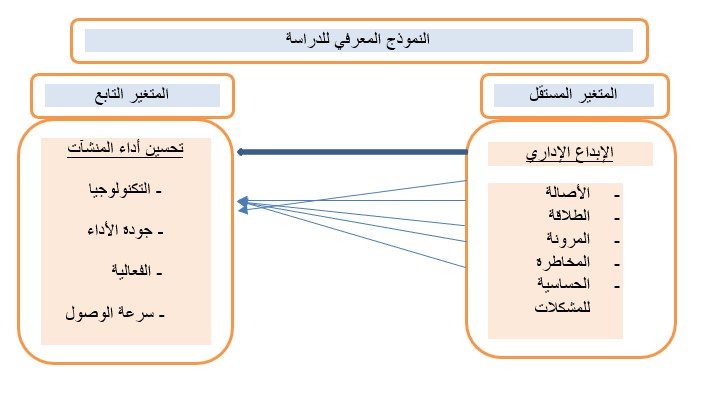
The study aimed to identify the role of administrative creativity in improving the performance of tourism establishments in Yemen. To achieve the study objectives, the descriptive analytical approach was adopted to analyze the results. The community was represented by members of the Yemeni Tourism Federation in the capital, and the sample was selected through a comprehensive inventory method for all general and executive managers of companies and agencies in the capital, numbering (300) individuals. The questionnaire was used as a tool for the study, and the data were analyzed using the (smart, spss) program. The results of the study showed the existence of a statistically significant role for administrative creativity in improving the performance of tourism establishments. The study also recommended the need for tourism establishments to pay attention to the process of development and training for their employees on a permanent and continuous basis, and the importance of supporting the tourism sector and tourism establishments with ideas and alternatives that help in the continuity and diversity of their activities.
Keywords
How to Cite This Article
عبدالحفيظ يحيي الخزان, Ahmed Ahmed Al-Rahoumi (2025). The role of administrative creativity in improving the performance of tourism establishments (an applied study of a sample tourism companies and agencies in the capital of Yemen). Sana'a University Journal of Human Sciences, 155 – 194. DOI: https://doi.org/10.59628/jhs.v4i4.1490
عبدالحفيظ يحيي الخزان, Ahmed Ahmed Al-Rahoumi. “The role of administrative creativity in improving the performance of tourism establishments (an applied study of a sample tourism companies and agencies in the capital of Yemen).” Sana'a University Journal of Human Sciences, 2025, pp. 155 – 194. https://doi.org/10.59628/jhs.v4i4.1490. Accessed 14 Jul. 2026.
عبدالحفيظ يحيي الخزان, Ahmed Ahmed Al-Rahoumi. 2025. “The role of administrative creativity in improving the performance of tourism establishments (an applied study of a sample tourism companies and agencies in the capital of Yemen).” Sana'a University Journal of Human Sciences : 155 – 194. DOI: https://doi.org/10.59628/jhs.v4i4.1490
عبدالحفيظ يحيي الخزان, Ahmed Ahmed Al-Rahoumi (2025) ‘The role of administrative creativity in improving the performance of tourism establishments (an applied study of a sample tourism companies and agencies in the capital of Yemen)’, Sana'a University Journal of Human Sciences, pp. 155 – 194. doi: 10.59628/jhs.v4i4.1490
@article{jhs2025_art1490,
author = {عبدالحفيظ يحيي الخزان, Ahmed Ahmed Al-Rahoumi},
title = {The role of administrative creativity in improving the performance of tourism establishments (an applied study of a sample tourism companies and agencies in the capital of Yemen)},
journal = {Sana'a University Journal of Human Sciences}, year = {2025}, month = {April}, pages = {155 – 194}, doi = {10.59628/jhs.v4i4.1490},
url = {https://doi.org/10.59628/jhs.v4i4.1490},}
The role of intellectual capital in achieving strategic success A field study of the Hayel Saeed Anam group
Abstract
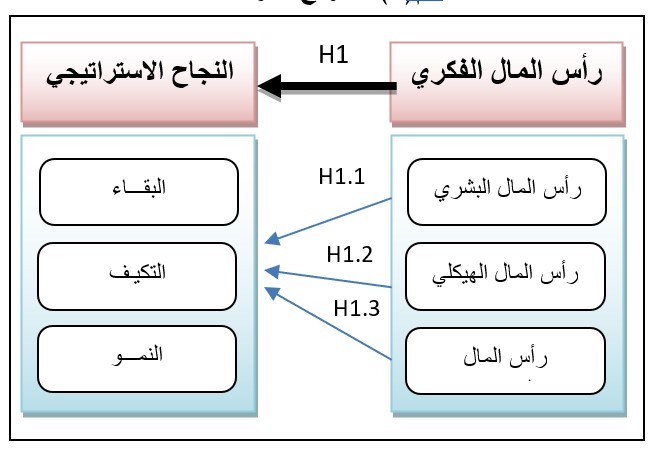
This study examines the role of intellectual capital in achieving strategic success within the Hayel Saeed Anam Group, a prominent business conglomerate in Yemen. The research focuses on three dimensions of intellectual capital—human capital, structural capital, and relational capital—and their impact on the organization's strategic success, defined by survival, adaptation, and growth.
Employing a descriptive and analytical approach, the study surveyed (207) leaders across (12) companies within the group, utilizing a comprehensive sampling method. Data was collected through a structured questionnaire designed to assess both the availability of intellectual capital and the level of strategic success.
Results indicate high levels of both intellectual capital and strategic success within the organization. A strong positive correlation was found between intellectual capital and strategic success. Notably, the study revealed varying contributions from the three components of intellectual capital, with relational capital emerging as the most significant, followed by human capital and structural capital.
The findings underscore the importance of intellectual capital in driving strategic success and provide valuable insights for organizational leadership. Recommendations include developing targeted strategies to enhance stakeholder relationships, implementing comprehensive human resource development programs, and conducting a thorough review of organizational structures to ensure alignment with strategic objectives.
This research contributes to the growing body of literature on intellectual capital and its strategic implications, offering practical insights for businesses operating in dynamic environments
Keywords
How to Cite This Article
Hussein Abdullah M. Al-Moayed, Abdullah Abdullah Al-Sanafi (2025). The role of intellectual capital in achieving strategic success A field study of the Hayel Saeed Anam group. Sana'a University Journal of Human Sciences, 195 – 227. DOI: https://doi.org/10.59628/jhs.v4i4.1272
Hussein Abdullah M. Al-Moayed, Abdullah Abdullah Al-Sanafi. “The role of intellectual capital in achieving strategic success A field study of the Hayel Saeed Anam group.” Sana'a University Journal of Human Sciences, 2025, pp. 195 – 227. https://doi.org/10.59628/jhs.v4i4.1272. Accessed 14 Jul. 2026.
Hussein Abdullah M. Al-Moayed, Abdullah Abdullah Al-Sanafi. 2025. “The role of intellectual capital in achieving strategic success A field study of the Hayel Saeed Anam group.” Sana'a University Journal of Human Sciences : 195 – 227. DOI: https://doi.org/10.59628/jhs.v4i4.1272
Hussein Abdullah M. Al-Moayed, Abdullah Abdullah Al-Sanafi (2025) ‘The role of intellectual capital in achieving strategic success A field study of the Hayel Saeed Anam group’, Sana'a University Journal of Human Sciences, pp. 195 – 227. doi: 10.59628/jhs.v4i4.1272
@article{jhs2025_art1272,
author = {Hussein Abdullah M. Al-Moayed, Abdullah Abdullah Al-Sanafi},
title = {The role of intellectual capital in achieving strategic success A field study of the Hayel Saeed Anam group},
journal = {Sana'a University Journal of Human Sciences}, year = {2025}, month = {April}, pages = {195 – 227}, doi = {10.59628/jhs.v4i4.1272},
url = {https://doi.org/10.59628/jhs.v4i4.1272},}
Examining the Mediating Role of Functional Flexibility in the Relationship Between Human Resources Management Functions & Educational Services Quality at University of Dongola
Abstract
The study aimed to examining the mediating role of Functional Flexibility in the relationship between Human Resources Management Functions & Educational Services Quality in University of Dongola. The problem of the study focuses on decrease of Educational Services Quality level in University of Dongola because of unawareness of implementing effective managerial systems as well as Human Resources Management The study was conducted on a sample of (187) teaching staff members working at University of Dongola, using the survey method. The results of path analysis showed that the partial mediation was achieved, as the value of the indirect effect of Human Resources Management Functions on Educational Services Quality through the median variable (Functional Flexibility) (0.176) was statistically significant. The study recommends that the need to increase awareness of achieving Functional Flexibility for teaching staff members, and focusing on applying Human Resources Management Functions at University of Dongola.
Keywords
How to Cite This Article
Mahmoud Abdelmuty Hashim Abdelhameed (2025). Examining the Mediating Role of Functional Flexibility in the Relationship Between Human Resources Management Functions & Educational Services Quality at University of Dongola. Sana'a University Journal of Human Sciences, 228 – 256. DOI: https://doi.org/10.59628/jhs.v4i4.1421
Mahmoud Abdelmuty Hashim Abdelhameed . “Examining the Mediating Role of Functional Flexibility in the Relationship Between Human Resources Management Functions & Educational Services Quality at University of Dongola.” Sana'a University Journal of Human Sciences, 2025, pp. 228 – 256. https://doi.org/10.59628/jhs.v4i4.1421. Accessed 14 Jul. 2026.
Mahmoud Abdelmuty Hashim Abdelhameed . 2025. “Examining the Mediating Role of Functional Flexibility in the Relationship Between Human Resources Management Functions & Educational Services Quality at University of Dongola.” Sana'a University Journal of Human Sciences : 228 – 256. DOI: https://doi.org/10.59628/jhs.v4i4.1421
Mahmoud Abdelmuty Hashim Abdelhameed (2025) ‘Examining the Mediating Role of Functional Flexibility in the Relationship Between Human Resources Management Functions & Educational Services Quality at University of Dongola’, Sana'a University Journal of Human Sciences, pp. 228 – 256. doi: 10.59628/jhs.v4i4.1421
@article{jhs2025_art1421,
author = {Mahmoud Abdelmuty Hashim Abdelhameed },
title = {Examining the Mediating Role of Functional Flexibility in the Relationship Between Human Resources Management Functions & Educational Services Quality at University of Dongola},
journal = {Sana'a University Journal of Human Sciences}, year = {2025}, month = {April}, pages = {228 – 256}, doi = {10.59628/jhs.v4i4.1421},
url = {https://doi.org/10.59628/jhs.v4i4.1421},}
A Summary of the Statement on the Conditions and Pillars of Qiyas
Abstract
This research endeavors to clarify the concept of Qiyas, a fundamental principle in Islamic jurisprudence, by defining its boundaries and identifying its pillars and conditions. Employing an inductive, analytical, and deductive approach, this study aims to explore the objectives of Qiyas and its significance in deriving Islamic rulings. The main areas of investigation include the definition of Qiyas, its pillars and conditions, and its role in Islamic legislation. The findings of this study reveal that Qiyas is a crucial tool in Islamic jurisprudence, with its own set of conditions and pillars that must be fulfilled to ensure its validity. The research concludes that Qiyas is an independent source of legislation, alongside the Quran, Sunnah, and Ijma', and that its conditions and pillars must be met for it to be considered a valid legislative tool.
Keywords
How to Cite This Article
Sadeq Abdullah Esmail Abdulwahed (2025). A Summary of the Statement on the Conditions and Pillars of Qiyas. Sana'a University Journal of Human Sciences, 257 – 282. DOI: https://doi.org/10.59628/jhs.v4i4.1493
Sadeq Abdullah Esmail Abdulwahed . “A Summary of the Statement on the Conditions and Pillars of Qiyas.” Sana'a University Journal of Human Sciences, 2025, pp. 257 – 282. https://doi.org/10.59628/jhs.v4i4.1493. Accessed 14 Jul. 2026.
Sadeq Abdullah Esmail Abdulwahed . 2025. “A Summary of the Statement on the Conditions and Pillars of Qiyas.” Sana'a University Journal of Human Sciences : 257 – 282. DOI: https://doi.org/10.59628/jhs.v4i4.1493
Sadeq Abdullah Esmail Abdulwahed (2025) ‘A Summary of the Statement on the Conditions and Pillars of Qiyas’, Sana'a University Journal of Human Sciences, pp. 257 – 282. doi: 10.59628/jhs.v4i4.1493
@article{jhs2025_art1493,
author = {Sadeq Abdullah Esmail Abdulwahed },
title = {A Summary of the Statement on the Conditions and Pillars of Qiyas},
journal = {Sana'a University Journal of Human Sciences}, year = {2025}, month = {April}, pages = {257 – 282}, doi = {10.59628/jhs.v4i4.1493},
url = {https://doi.org/10.59628/jhs.v4i4.1493},}
Sharia Supervision of Business Activities “Fraud as an Example” Maqasid vision
Abstract
The present paper comprises a comparative study that tackles the Islamic law surveillance over business and how it affects the commercial fraud. It explores the concept and types of “Islamic law surveillance” and illustrates with examples of the business surveillance practiced during the periods of Prophet Mohammed (pbuh) and Caliphates as well. In addition, it investigates “fraud”, its forms, proscription evidences, and consequent harms at the individual and collective levels. The research aims at elucidating the positions of both the Islamic law and Yemeni legislation on surveillance and its impact on commercial fraud. It applies the inductive method, which extrapolates and analyzes the jurisprudence scholars’ views about the topic sorted out by their particular approaches. The conclusion sums up the findings and recommendations of the study.
Keywords
How to Cite This Article
Abdul Karim Abdo Yahya Al-Akkad (2025). Sharia Supervision of Business Activities “Fraud as an Example” Maqasid vision . Sana'a University Journal of Human Sciences, 283 – 305. DOI: https://doi.org/10.59628/jhs.v4i4.1474
Abdul Karim Abdo Yahya Al-Akkad. “Sharia Supervision of Business Activities “Fraud as an Example” Maqasid vision .” Sana'a University Journal of Human Sciences, 2025, pp. 283 – 305. https://doi.org/10.59628/jhs.v4i4.1474. Accessed 14 Jul. 2026.
Abdul Karim Abdo Yahya Al-Akkad. 2025. “Sharia Supervision of Business Activities “Fraud as an Example” Maqasid vision .” Sana'a University Journal of Human Sciences : 283 – 305. DOI: https://doi.org/10.59628/jhs.v4i4.1474
Abdul Karim Abdo Yahya Al-Akkad (2025) ‘Sharia Supervision of Business Activities “Fraud as an Example” Maqasid vision ’, Sana'a University Journal of Human Sciences, pp. 283 – 305. doi: 10.59628/jhs.v4i4.1474
@article{jhs2025_art1474,
author = {Abdul Karim Abdo Yahya Al-Akkad},
title = {Sharia Supervision of Business Activities “Fraud as an Example” Maqasid vision },
journal = {Sana'a University Journal of Human Sciences}, year = {2025}, month = {April}, pages = {283 – 305}, doi = {10.59628/jhs.v4i4.1474},
url = {https://doi.org/10.59628/jhs.v4i4.1474},}
Exegesis of Rulings Verses in the Book "Al-Manhaj Al-Qawim" (By Imam Ali bin Yahya Al-Banna) Surah Aal Imran as a Module
Abstract
This research aims to highlight the verses of rulings from Surah Aal Imran and the detailed issues and rulings they contain، to benefit from them and apply them in a more comprehensive manner. Imam Ali bin Yahya Al-Banna is a well-established scholar and esteemed exegete، possesses extensive knowledge in various fields، particularly in exegesis، jurisprudence، and language. He is considered a rare scientific treasure، full with abundant information and precious insights.
The research used both inductive and analytical approaches. The research is divided into an introduction and two chapters. The introduction addresses the research problem، its importance، objectives، previous studies، research methodology، and structure. The first chapter highlights Al-Banna’s life، personality، and background، while the second chapter explores the exegesis of the rulings’ verses in Surah Al-Imran. The research concludes with a summary of the main findings and recommendations.
Keywords
How to Cite This Article
Abdul Rahman Abdul Baqi Ghalib Abduh (2025). Exegesis of Rulings Verses in the Book "Al-Manhaj Al-Qawim" (By Imam Ali bin Yahya Al-Banna) Surah Aal Imran as a Module. Sana'a University Journal of Human Sciences, 306 – 325 . DOI: https://doi.org/10.59628/jhs.v4i4.1450
Abdul Rahman Abdul Baqi Ghalib Abduh. “Exegesis of Rulings Verses in the Book "Al-Manhaj Al-Qawim" (By Imam Ali bin Yahya Al-Banna) Surah Aal Imran as a Module.” Sana'a University Journal of Human Sciences, 2025, pp. 306 – 325 . https://doi.org/10.59628/jhs.v4i4.1450. Accessed 14 Jul. 2026.
Abdul Rahman Abdul Baqi Ghalib Abduh. 2025. “Exegesis of Rulings Verses in the Book "Al-Manhaj Al-Qawim" (By Imam Ali bin Yahya Al-Banna) Surah Aal Imran as a Module.” Sana'a University Journal of Human Sciences : 306 – 325 . DOI: https://doi.org/10.59628/jhs.v4i4.1450
Abdul Rahman Abdul Baqi Ghalib Abduh (2025) ‘Exegesis of Rulings Verses in the Book "Al-Manhaj Al-Qawim" (By Imam Ali bin Yahya Al-Banna) Surah Aal Imran as a Module’, Sana'a University Journal of Human Sciences, pp. 306 – 325 . doi: 10.59628/jhs.v4i4.1450
@article{jhs2025_art1450,
author = {Abdul Rahman Abdul Baqi Ghalib Abduh},
title = {Exegesis of Rulings Verses in the Book "Al-Manhaj Al-Qawim" (By Imam Ali bin Yahya Al-Banna) Surah Aal Imran as a Module},
journal = {Sana'a University Journal of Human Sciences}, year = {2025}, month = {April}, pages = {306 – 325 }, doi = {10.59628/jhs.v4i4.1450},
url = {https://doi.org/10.59628/jhs.v4i4.1450},}
The Effect of Strategic Intelligence in Achieving Organizational Excellence Engagement A Field Study in Private Hospitals in Taiz Governorate
Abstract
The study aimed to understand the current state of strategic intelligence practices in private hospitals in Taiz Governorate and to determine the level of organizational excellence within them. It also sought to measure the impact of strategic intelligence, with its dimensions (foresight, future vision, systems thinking, partnership, and motivation), both collectively and individually, on achieving organizational excellence in the studied hospitals.
The study population consisted of 657 employees, including administrative staff, doctors, and technicians working in these hospitals, distributed across 14 hospitals in Taiz Governorate. A sample of 340 questionnaires was selected using stratified random sampling, out of which 305 questionnaires were used for statistical analysis. To achieve the study's objectives, a descriptive methodology was employed, along with various statistical methods and structural equation modeling using the Partial Least Squares (PLS) approach, facilitated by the SPSS and AMOS programs.
The results indicated that the level of strategic intelligence practice in the studied hospitals was moderate, with a relative importance of 64%. More specifically, the foresight dimension ranked first in terms of availability and practice, with a percentage importance of 65.3% and a moderate level. The future vision dimension ranked second with a percentage importance of 64.8% and a moderate level. The partnership dimension came in third with a percentage importance of 64.7% and a moderate level, while the systems thinking dimension ranked fourth with a percentage importance of 63.8%. Lastly, the motivation dimension ranked fifth with a percentage importance of 63.2%.
The results also revealed that the availability of organizational excellence in the studied hospitals was at a medium adoption level, with a percentage importance of 64.6%. More specifically, the organizational structure excellence ranked first in terms of adoption, with a percentage importance of 65% and a high level. The cultural excellence dimension ranked second with a percentage importance of 64.9%, while the human resources excellence ranked third with a percentage importance of 64.4%. The leadership excellence dimension ranked fourth with a percentage importance of 64%, and finally, the strategic excellence dimension ranked fifth with a percentage importance of 63%. This indicates that all aspects of the dependent variable received moderate approval according to the established criteria.
Furthermore, the results showed a statistically significant effect of strategic intelligence, with its dimensions collectively, on organizational excellence. It also revealed the existence of an effect from the dimensions of strategic intelligence (foresight, future vision, systems thinking, partnership, and motivation) individually on organizational excellence in private hospitals in Taiz Governorate.

Keywords
How to Cite This Article
Fawaz Qassim Saeed Naji AL-Kamali, Abdulrahman Mohammed Ahmed Al-Sufyani (2025). The Effect of Strategic Intelligence in Achieving Organizational Excellence Engagement A Field Study in Private Hospitals in Taiz Governorate. Sana'a University Journal of Human Sciences, 326 - 365. DOI: https://doi.org/10.59628/jhs.v4i4.1452

Fawaz Qassim Saeed Naji AL-Kamali, Abdulrahman Mohammed Ahmed Al-Sufyani. “The Effect of Strategic Intelligence in Achieving Organizational Excellence Engagement A Field Study in Private Hospitals in Taiz Governorate.” Sana'a University Journal of Human Sciences, 2025, pp. 326 - 365. https://doi.org/10.59628/jhs.v4i4.1452. Accessed 14 Jul. 2026.
Fawaz Qassim Saeed Naji AL-Kamali, Abdulrahman Mohammed Ahmed Al-Sufyani. 2025. “The Effect of Strategic Intelligence in Achieving Organizational Excellence Engagement A Field Study in Private Hospitals in Taiz Governorate.” Sana'a University Journal of Human Sciences : 326 - 365. DOI: https://doi.org/10.59628/jhs.v4i4.1452
Fawaz Qassim Saeed Naji AL-Kamali, Abdulrahman Mohammed Ahmed Al-Sufyani (2025) ‘The Effect of Strategic Intelligence in Achieving Organizational Excellence Engagement A Field Study in Private Hospitals in Taiz Governorate’, Sana'a University Journal of Human Sciences, pp. 326 - 365. doi: 10.59628/jhs.v4i4.1452
@article{jhs2025_art1452,
author = {Fawaz Qassim Saeed Naji AL-Kamali, Abdulrahman Mohammed Ahmed Al-Sufyani},
title = {The Effect of Strategic Intelligence in Achieving Organizational Excellence Engagement A Field Study in Private Hospitals in Taiz Governorate},
journal = {Sana'a University Journal of Human Sciences}, year = {2025}, month = {April}, pages = {326 - 365}, doi = {10.59628/jhs.v4i4.1452},
url = {https://doi.org/10.59628/jhs.v4i4.1452},}
The efficiency of the Public Prosecution in supervising the investigation work
Abstract
The importance of the research is highlighted in improving the efficiency of the Public Prosecution in the investigation phase and enhancing legal and professional skills, which would improve the quality of evidence, avoid errors, and reduce procedural times. The study aimed to evaluate the efficiency of the Public Prosecution in supervising evidence work, identify the factors affecting its efficiency, and provide recommendations for improving it. The method used in the research is the inductive method. As for the most prominent results of the research, they are that the supervisory efficiency of the Public Prosecution affects the quality and accuracy of evidence, and effective supervision reduces judicial errors. Continuous evaluation, correction of errors, and cooperation between parties play an important role in achieving justice and ensuring the proper and correct application of the law and enhances community confidence by preventing any action that violates the law or would infringe on the rights and freedoms of individuals; The effective supervision of the Public Prosecution at this stage allows it to act on the criminal case with sufficient knowledge and awareness of the facts of the matter. The investigation work also allows the investigating authority to close many cases, complaints and violations that appear not to rise to the level of a crime, thus reducing the burden on the courts from the trouble of considering those cases and complaints, and allowing them to devote themselves to serious and important cases.
Keywords
How to Cite This Article
Abdul Majeed Abdullah Mohammed Dhafer Al-Jabali (2025). The efficiency of the Public Prosecution in supervising the investigation work. Sana'a University Journal of Human Sciences, 366 – 406 . DOI: https://doi.org/10.59628/jhs.v4i4.1541
Abdul Majeed Abdullah Mohammed Dhafer Al-Jabali. “The efficiency of the Public Prosecution in supervising the investigation work.” Sana'a University Journal of Human Sciences, 2025, pp. 366 – 406 . https://doi.org/10.59628/jhs.v4i4.1541. Accessed 14 Jul. 2026.
Abdul Majeed Abdullah Mohammed Dhafer Al-Jabali. 2025. “The efficiency of the Public Prosecution in supervising the investigation work.” Sana'a University Journal of Human Sciences : 366 – 406 . DOI: https://doi.org/10.59628/jhs.v4i4.1541
Abdul Majeed Abdullah Mohammed Dhafer Al-Jabali (2025) ‘The efficiency of the Public Prosecution in supervising the investigation work’, Sana'a University Journal of Human Sciences, pp. 366 – 406 . doi: 10.59628/jhs.v4i4.1541
@article{jhs2025_art1541,
author = {Abdul Majeed Abdullah Mohammed Dhafer Al-Jabali},
title = {The efficiency of the Public Prosecution in supervising the investigation work},
journal = {Sana'a University Journal of Human Sciences}, year = {2025}, month = {April}, pages = {366 – 406 }, doi = {10.59628/jhs.v4i4.1541},
url = {https://doi.org/10.59628/jhs.v4i4.1541},}
The agreements between the two imams, Al-Dailami and Al-Mawardi, in the mutawatir readings through their interpretations "Al-Burhan" and "Al-Nukat wal-Uyun". A study from the beginning of Surah Maryam to the end of Surah Al-Ankabut. Comparative study
Abstract
This research aims to introduce the two imams, Al-Dailami (d. 444 AH) and Al-Mawardi (d. 450 AH), and to highlight their agreement on the mutawatir Quranic readings in their interpretations: Al-Burhan and Al-Nukat wal-Uyun. It also seeks to discuss the importance of these two books, their sources, and their significance as major references in the field of Tafsir. The researcher used the descriptive approach based on induction and analysis, when listing the issues in which the two imams agreed, and the issues in which each imam was unique. He also explained the doctrine of each imam and his approach to interpretation. The researcher also used the comparative approach when comparing the statements in which the two imams agreed and the statements in which each of them was unique. He addressed them with some commentary and supported them with the statements of scholars when they agreed or were unique, whenever possible. The researcher employed the historical inductive method to introduce the two imams and their books, and the descriptive method to highlight their agreements on mutawatir readings, their approach to presenting and directing them. The research is divided into two sections: the first section introduces the two imams, Al-Dailami and Al-Mawardi, and their books, while the second section discusses the agreements between them on mutawatir Quranic readings.
One of the most prominent findings of the researcher was that both imams, Al-Dailami and Al-Mawardi, discussed the mutawatir Quranic readings in their interpretations and gave them significant attention. They mentioned only the seven canonical readings and did not address the three additional readings that complete the ten. They both directed the mutawatir readings, explaining their impact on the meaning and on the interpretive and linguistic aspects. Regarding the attribution of the mutawatir readings to their reciters, Imam Al-Mawardi usually attributed them, whereas Imam Al-Dailami did not attribute them to their reciters, opting instead to express this using the passive voice with the term "Quri’a" (it was read).
Keywords
How to Cite This Article
Mohammad Abdul Karim Rajeh Ali (2025). The agreements between the two imams, Al-Dailami and Al-Mawardi, in the mutawatir readings through their interpretations "Al-Burhan" and "Al-Nukat wal-Uyun". A study from the beginning of Surah Maryam to the end of Surah Al-Ankabut. Comparative study. Sana'a University Journal of Human Sciences, 407 – 436 . DOI: https://doi.org/10.59628/jhs.v4i4.1519
Mohammad Abdul Karim Rajeh Ali. “The agreements between the two imams, Al-Dailami and Al-Mawardi, in the mutawatir readings through their interpretations "Al-Burhan" and "Al-Nukat wal-Uyun". A study from the beginning of Surah Maryam to the end of Surah Al-Ankabut. Comparative study.” Sana'a University Journal of Human Sciences, 2025, pp. 407 – 436 . https://doi.org/10.59628/jhs.v4i4.1519. Accessed 14 Jul. 2026.
Mohammad Abdul Karim Rajeh Ali. 2025. “The agreements between the two imams, Al-Dailami and Al-Mawardi, in the mutawatir readings through their interpretations "Al-Burhan" and "Al-Nukat wal-Uyun". A study from the beginning of Surah Maryam to the end of Surah Al-Ankabut. Comparative study.” Sana'a University Journal of Human Sciences : 407 – 436 . DOI: https://doi.org/10.59628/jhs.v4i4.1519
Mohammad Abdul Karim Rajeh Ali (2025) ‘The agreements between the two imams, Al-Dailami and Al-Mawardi, in the mutawatir readings through their interpretations "Al-Burhan" and "Al-Nukat wal-Uyun". A study from the beginning of Surah Maryam to the end of Surah Al-Ankabut. Comparative study’, Sana'a University Journal of Human Sciences, pp. 407 – 436 . doi: 10.59628/jhs.v4i4.1519
@article{jhs2025_art1519,
author = {Mohammad Abdul Karim Rajeh Ali},
title = {The agreements between the two imams, Al-Dailami and Al-Mawardi, in the mutawatir readings through their interpretations "Al-Burhan" and "Al-Nukat wal-Uyun". A study from the beginning of Surah Maryam to the end of Surah Al-Ankabut. Comparative study},
journal = {Sana'a University Journal of Human Sciences}, year = {2025}, month = {April}, pages = {407 – 436 }, doi = {10.59628/jhs.v4i4.1519},
url = {https://doi.org/10.59628/jhs.v4i4.1519},}
The Economic and Educational Impacts of the War on Yemeni Women A Field Study in the Capital City of Sana'a and Al-Hudaydah Governorate (2015-2023)
Abstract
This research aims to examine the economic and educational impacts of the war in Yemen from 2015 to 2023 on Yemeni women in the capital, Sana’a, and
Al-Hodeidah governorate. It also seeks to analyze the differences in the degree of these impacts based on variables such as educational level, employment status, job type, and income source. The researcher employed the descriptive method to analyze the theoretical and conceptual aspects, alongside the statistical method for examining the field aspects of the study. Data were collected using a questionnaire as the main tool, and the research sample consisted of 761 women selected through a non-random (purposive) sampling technique.
The key findings revealed a significant increase in the number of women bearing the responsibility of supporting their families, along with a rise in poverty rates among women and the spread of begging, particularly among displaced women. In terms of educational impacts, the results indicated a decline in the efficiency of some teachers due to salary cuts, an increase in the dropout rate of girls from education, particularly displaced girls, as well as girls leaving school due to the lack of textbooks and other school supplies, and early marriage. The war has also contributed to a rise in female illiteracy rates.
Keywords
How to Cite This Article
Amal Ali Ahmed Al-Matari (2025). The Economic and Educational Impacts of the War on Yemeni Women A Field Study in the Capital City of Sana'a and Al-Hudaydah Governorate (2015-2023). Sana'a University Journal of Human Sciences, 437 – 469. DOI: https://doi.org/10.59628/jhs.v4i4.1268
Amal Ali Ahmed Al-Matari. “The Economic and Educational Impacts of the War on Yemeni Women A Field Study in the Capital City of Sana'a and Al-Hudaydah Governorate (2015-2023).” Sana'a University Journal of Human Sciences, 2025, pp. 437 – 469. https://doi.org/10.59628/jhs.v4i4.1268. Accessed 14 Jul. 2026.
Amal Ali Ahmed Al-Matari. 2025. “The Economic and Educational Impacts of the War on Yemeni Women A Field Study in the Capital City of Sana'a and Al-Hudaydah Governorate (2015-2023).” Sana'a University Journal of Human Sciences : 437 – 469. DOI: https://doi.org/10.59628/jhs.v4i4.1268
Amal Ali Ahmed Al-Matari (2025) ‘The Economic and Educational Impacts of the War on Yemeni Women A Field Study in the Capital City of Sana'a and Al-Hudaydah Governorate (2015-2023)’, Sana'a University Journal of Human Sciences, pp. 437 – 469. doi: 10.59628/jhs.v4i4.1268
@article{jhs2025_art1268,
author = {Amal Ali Ahmed Al-Matari},
title = {The Economic and Educational Impacts of the War on Yemeni Women A Field Study in the Capital City of Sana'a and Al-Hudaydah Governorate (2015-2023)},
journal = {Sana'a University Journal of Human Sciences}, year = {2025}, month = {April}, pages = {437 – 469}, doi = {10.59628/jhs.v4i4.1268},
url = {https://doi.org/10.59628/jhs.v4i4.1268},}
Property right according to Imam Al-Murtada Muhammad bin Imam Al-Hadi and Yemeni law, a comparative study
Abstract
The right to property is one of the original rights, as it is part of human rights, and is characterized by an economic and social nature. It has been studied and regulated in various ancient and modern laws. The research problem arises in the following question: What is the concept of the right of property according to Imam al-Murtada, as well as Yemeni law? Is the right to property according to Imam Al-Murtada and Yemeni law absolute or restricted? What are the restrictions on the queen's right? To what extent does Yemeni law agree with Imam Al-Murtada on the above issues?
As for the approach followed in the research: there are three approaches: The inductive approach: This is in tracking the texts related to the right of ownership according to Imam Al-Murtada, as well as Yemeni law.
- The descriptive and analytical approach: This is done by describing and analyzing texts related to the right of ownership according to Imam Al-Murtada, as well as Yemeni law.
- Comparative approach: This is through comparison between the texts of Imam Al-Murtada and the law regarding the right to property.
The most important results reached by the research:
- The concept of ownership according to Imam Al-Murtada, as well as Yemeni law: It is an authority that the Sharia or the law grants its owner over a specific thing to use, exploit, and dispose of in accordance with the Sharia or the law.
- The right of ownership, although it is an original human right, is not absolute in circumstances according to Imam al-Murtada and Yemeni law.
- There are restrictions on the right of ownership according to Imam al-Murtada and Yemeni law, which include not being arbitrarily used, the right to irrigation and drainage, and the right to views and skylights.
- The Yemeni Civil Law agrees with Imam Al-Murtada in matters of property rights in most of the issues presented for study.
Keywords
How to Cite This Article
Jamal Alshami (2025). Property right according to Imam Al-Murtada Muhammad bin Imam Al-Hadi and Yemeni law, a comparative study. Sana'a University Journal of Human Sciences, 470 – 488 . DOI: https://doi.org/10.59628/jhs.v4i4.865
Jamal Alshami . “ Property right according to Imam Al-Murtada Muhammad bin Imam Al-Hadi and Yemeni law, a comparative study.” Sana'a University Journal of Human Sciences, 2025, pp. 470 – 488 . https://doi.org/10.59628/jhs.v4i4.865. Accessed 14 Jul. 2026.
Jamal Alshami . 2025. “ Property right according to Imam Al-Murtada Muhammad bin Imam Al-Hadi and Yemeni law, a comparative study.” Sana'a University Journal of Human Sciences : 470 – 488 . DOI: https://doi.org/10.59628/jhs.v4i4.865
Jamal Alshami (2025) ‘ Property right according to Imam Al-Murtada Muhammad bin Imam Al-Hadi and Yemeni law, a comparative study’, Sana'a University Journal of Human Sciences, pp. 470 – 488 . doi: 10.59628/jhs.v4i4.865
@article{jhs2025_art865,
author = {Jamal Alshami },
title = { Property right according to Imam Al-Murtada Muhammad bin Imam Al-Hadi and Yemeni law, a comparative study},
journal = {Sana'a University Journal of Human Sciences}, year = {2025}, month = {April}, pages = { 470 – 488 }, doi = {10.59628/jhs.v4i4.865},
url = {https://doi.org/10.59628/jhs.v4i4.865},}
The manifestations of normalisation with the Zionist enemy and the Quran's view of it
Abstract
This research aims to define normalization, elucidate its manifestations and domains, and to understand the true nature of the Jews and their malevolent psychology. It also seeks to highlight the danger they pose to the Arab and Islamic nations, and to foster awareness and insight in dealing with the Jews. Furthermore, the research aims to instill a sense of responsibility regarding the crimes committed by the Zionist enemy in Gaza and Lebanon. A descriptive-analytical methodology was adopted. The research delves into two primary objectives: defining normalization and exploring its various dimensions, including economic, security, media, and educational aspects. It also examines the Quranic perspective on the Jews, focusing on their dealings with Allah, angels, prophets, and scriptures, as well as their interactions with other human beings. In addition, the attributes and characteristics of the Jews in the Holy Quran are analyzed, such as their deviation from the path of God, concealment of the truth, transformation of religion into nationalism, violation of covenants, fear of death, hardness of heart, and disobedience. The research concludes that Muslims must exercise extreme caution in their dealings with the Jews, avoiding allegiance, obedience, and following them. Instead, Muslims should firmly confront them and consider the Jews as historical enemies of the nation. Those Muslims who ally themselves with the Jews should be opposed, and a boycott should be imposed on anything that could benefit the Jews in their targeting of the Arab and Islamic nations. The research emphasizes the need to prepare for the means of strength to confront the aggressor Jews, halt their aggression, and liberate people from their evil.
Keywords
How to Cite This Article
Salem Saghir Yahya AL-waili (2025). The manifestations of normalisation with the Zionist enemy and the Quran's view of it. Sana'a University Journal of Human Sciences, 489 – 510 . DOI: https://doi.org/10.59628/jhs.v4i4.1458
Salem Saghir Yahya AL-waili. “The manifestations of normalisation with the Zionist enemy and the Quran's view of it.” Sana'a University Journal of Human Sciences, 2025, pp. 489 – 510 . https://doi.org/10.59628/jhs.v4i4.1458. Accessed 14 Jul. 2026.
Salem Saghir Yahya AL-waili. 2025. “The manifestations of normalisation with the Zionist enemy and the Quran's view of it.” Sana'a University Journal of Human Sciences : 489 – 510 . DOI: https://doi.org/10.59628/jhs.v4i4.1458
Salem Saghir Yahya AL-waili (2025) ‘The manifestations of normalisation with the Zionist enemy and the Quran's view of it’, Sana'a University Journal of Human Sciences, pp. 489 – 510 . doi: 10.59628/jhs.v4i4.1458
@article{jhs2025_art1458,
author = {Salem Saghir Yahya AL-waili},
title = {The manifestations of normalisation with the Zionist enemy and the Quran's view of it},
journal = {Sana'a University Journal of Human Sciences}, year = {2025}, month = {April}, pages = {489 – 510 }, doi = {10.59628/jhs.v4i4.1458},
url = {https://doi.org/10.59628/jhs.v4i4.1458},}
Difficulties Encountered by Postgraduate Translation Students in Translating English–Arabic Banking Terminology
Abstract
study aimed to identify the social and cultural challenges that affect the political empowerment of Yemeni women. In approaching and presenting the study, the researcher relied on the descriptive and analytical method, which is considered the most widely used method in the sciences of a psychological nature on the one hand, and which is appropriate to the subject of the study on the other hand, through the use of tools Collecting appropriate data, specifically the questionnaire tool that was applied to a purposive sample of women working in the public and private sectors, estimated at (120) workers, in addition to the interview tool that was conducted with some female political activists. And jurists in the field of women. The study reached a set of results, the most important of which is:
- Yemeni women face many social and cultural challenges that affect their political empowerment. Such as the marriage of minors, the discriminatory view based on gender, illiteracy, the traditional culture of the role of women, in addition to the absence of the role of civil society organizations in supporting women and defending their rights and the misunderstanding of the Islamic religion’s opposition to education and work. Woman.
- The low political empowerment of Yemeni women and their political marginalization are the result of several factors closely linked to the social and cultural challenges affecting them.
Keywords
How to Cite This Article
Khireyah Ali Mohmmed M. AL-Radae (2025). Difficulties Encountered by Postgraduate Translation Students in Translating English–Arabic Banking Terminology. Sana'a University Journal of Human Sciences, 511 – 531. DOI: https://doi.org/10.59628/jhs.v4i4.1431
Khireyah Ali Mohmmed M. AL-Radae. “Difficulties Encountered by Postgraduate Translation Students in Translating English–Arabic Banking Terminology.” Sana'a University Journal of Human Sciences, 2025, pp. 511 – 531. https://doi.org/10.59628/jhs.v4i4.1431. Accessed 14 Jul. 2026.
Khireyah Ali Mohmmed M. AL-Radae. 2025. “Difficulties Encountered by Postgraduate Translation Students in Translating English–Arabic Banking Terminology.” Sana'a University Journal of Human Sciences : 511 – 531. DOI: https://doi.org/10.59628/jhs.v4i4.1431
Khireyah Ali Mohmmed M. AL-Radae (2025) ‘Difficulties Encountered by Postgraduate Translation Students in Translating English–Arabic Banking Terminology’, Sana'a University Journal of Human Sciences, pp. 511 – 531. doi: 10.59628/jhs.v4i4.1431
@article{jhs2025_art1431,
author = {Khireyah Ali Mohmmed M. AL-Radae},
title = {Difficulties Encountered by Postgraduate Translation Students in Translating English–Arabic Banking Terminology},
journal = {Sana'a University Journal of Human Sciences}, year = {2025}, month = {April}, pages = {511 – 531}, doi = {10.59628/jhs.v4i4.1431},
url = {https://doi.org/10.59628/jhs.v4i4.1431},}
Marching The Out Puts Of Higher Education With Require Men's Of Yemen's Labor Marketing In The Light Of National Vision 2030
Abstract
The aim of the study was to know the relevance of the outputs of higher Education institutions to the requirements of labor market in the Republic of Yemen in the light of the National Vision 2030. To achieve the objective of the study. The descriptive approach was used both survey and analytical types, the National Vision literature was also survey to know its strategic objectives to improve the outcomes of higher education institutions and adapt them to the requirements of labor market. The result of the study reached the most notable results of weakest alignments between the outputs of higher education institutions and the requirements of labor market. There is a gap between the outputs of higher education institutions and needs of labor market is not involved in formulating educational policies and strategic plants. To identify of the requirements of labor market, the study presented a number of recommendations, the most important are:
Restructuring the faculties of humanities to meet the needs of labor market from the outputs of educational institutions, re-draw the higher education policy in Yemen to meet the goal and objectives of the National Vision institutions.
Keywords
How to Cite This Article
Mohamed Ali Hussien Alshami, Fathia Ahmed Hussien Alalaya, Eleen Ali Mohammed Al-Ammari (2025). Marching The Out Puts Of Higher Education With Require Men's Of Yemen's Labor Marketing In The Light Of National Vision 2030. Sana'a University Journal of Human Sciences, 532 – 560. DOI: https://doi.org/10.59628/jhs.v4i4.1326
Mohamed Ali Hussien Alshami, Fathia Ahmed Hussien Alalaya, Eleen Ali Mohammed Al-Ammari. “Marching The Out Puts Of Higher Education With Require Men's Of Yemen's Labor Marketing In The Light Of National Vision 2030.” Sana'a University Journal of Human Sciences, 2025, pp. 532 – 560. https://doi.org/10.59628/jhs.v4i4.1326. Accessed 14 Jul. 2026.
Mohamed Ali Hussien Alshami, Fathia Ahmed Hussien Alalaya, Eleen Ali Mohammed Al-Ammari. 2025. “Marching The Out Puts Of Higher Education With Require Men's Of Yemen's Labor Marketing In The Light Of National Vision 2030.” Sana'a University Journal of Human Sciences : 532 – 560. DOI: https://doi.org/10.59628/jhs.v4i4.1326
Mohamed Ali Hussien Alshami, Fathia Ahmed Hussien Alalaya, Eleen Ali Mohammed Al-Ammari (2025) ‘Marching The Out Puts Of Higher Education With Require Men's Of Yemen's Labor Marketing In The Light Of National Vision 2030’, Sana'a University Journal of Human Sciences, pp. 532 – 560. doi: 10.59628/jhs.v4i4.1326
@article{jhs2025_art1326,
author = {Mohamed Ali Hussien Alshami, Fathia Ahmed Hussien Alalaya, Eleen Ali Mohammed Al-Ammari},
title = {Marching The Out Puts Of Higher Education With Require Men's Of Yemen's Labor Marketing In The Light Of National Vision 2030},
journal = {Sana'a University Journal of Human Sciences}, year = {2025}, month = {April}, pages = {532 – 560}, doi = {10.59628/jhs.v4i4.1326},
url = {https://doi.org/10.59628/jhs.v4i4.1326},}
Obstacles to the application of Yemeni universities to the elements of a research university
Abstract
The aim of the research is to identify the obstacles to the application of Yemeni universities to the elements of a research university. To achieve the objectives of the research, the researcher used the analytical descriptive survey method, and the tool required for collecting data and information was a questionnaire consisting of five areas that included (49) items. (Large) with an arithmetic mean (2.86), a standard deviation (0.25), and a relative weight (96%) for the tool in general. And that the degree of impediments to the application of Yemeni universities for the elements of the research university varied from one field to another, and was confined between two values, which are (2.90 and 2.82), with an estimate of (large). The research reached a number of recommendations and proposals in this regard.
Keywords
How to Cite This Article
Majed Mohammed Omar Al-Sabae (2025). Obstacles to the application of Yemeni universities to the elements of a research university. Sana'a University Journal of Human Sciences, 561 – 588 . DOI: https://doi.org/10.59628/jhs.v4i4.1399
Majed Mohammed Omar Al-Sabae. “Obstacles to the application of Yemeni universities to the elements of a research university.” Sana'a University Journal of Human Sciences, 2025, pp. 561 – 588 . https://doi.org/10.59628/jhs.v4i4.1399. Accessed 14 Jul. 2026.
Majed Mohammed Omar Al-Sabae. 2025. “Obstacles to the application of Yemeni universities to the elements of a research university.” Sana'a University Journal of Human Sciences : 561 – 588 . DOI: https://doi.org/10.59628/jhs.v4i4.1399
Majed Mohammed Omar Al-Sabae (2025) ‘Obstacles to the application of Yemeni universities to the elements of a research university’, Sana'a University Journal of Human Sciences, pp. 561 – 588 . doi: 10.59628/jhs.v4i4.1399
@article{jhs2025_art1399,
author = {Majed Mohammed Omar Al-Sabae},
title = {Obstacles to the application of Yemeni universities to the elements of a research university},
journal = {Sana'a University Journal of Human Sciences}, year = {2025}, month = {April}, pages = {561 – 588 }, doi = {10.59628/jhs.v4i4.1399},
url = {https://doi.org/10.59628/jhs.v4i4.1399},}
he discourse of interpretation of Adwa' Al_Bayan in clarifying the Qur'an using the Qur'an and its impact on the coherence of the text Semantic
Abstract
Semantic cohesion is the second criterion of textually according to Robert de Beaugrand. It is concerned with the content in the text and the ways of semantic interconnection between the ideas of the text on the one hand, and between them and knowledge of the world on the other hand. It is concerned with studying the consistent relationships between the issues expressed by complex sentences and sequences of sentences. It is also concerned with semantic structures of a major comprehensive nature, which are not It is characterized by direct characteristics such as the existence of relationships between individual issues. Rather, it is distinguished by looking at the structures of propositions, sequences of complex sentences, and sequences of discourse issues ( ), and because the subject of the discourse performs two basic functions: the first: as a basis for integrating the ideas that it conveys, and contributes to organizing them, and the second: as an indicator that indicates... To the reader’s or listener’s knowledge of the world related to the topic, as well as the context; Because it reveals to us the intended meaning of the verbal common, the meaning of the Quranic word, and determining the type of addressee.
The research relied on a main problem, which is: What is the role of the discourse of interpretation of Adwaa al-Bayan in clarifying the Qur’an with the Qur’an in the semantic cohesion of the text?
The research relied on a descriptive analytical approach based on monitoring textual facts and approaching their linguistic connections with semantic reliance. Thus, the research reached a set of results, the most important of which are:
The research confirms Al-Shanqeeti’s interest in the semantic level in terms of: focusing on the topic of the discourse and its importance.
- The research revealed Al-Shanqeeti’s care in showing the aspects of coherence in the single topic and multiple contexts, and defining the type of discourse, and the guarantor in explaining the meaning of the Qur’anic word, its suitability, and the secret of choosing it so that it suits the context.
The ultimate goal and lofty goal that the research has reached is the extent of the flexibility of traditional Arabic texts in how they are analyzed, and their ability to adhere to the various mechanisms and procedures produced by various modern studies, including: towards a text that has successful mechanisms in how it deals with texts.
Keywords
How to Cite This Article
Tawfik Hefdhallah Saleh Hassan (2025). he discourse of interpretation of Adwa' Al_Bayan in clarifying the Qur'an using the Qur'an and its impact on the coherence of the text Semantic . Sana'a University Journal of Human Sciences, 589 – 628 . DOI: https://doi.org/10.59628/jhs.v4i4.1454
Tawfik Hefdhallah Saleh Hassan. “he discourse of interpretation of Adwa' Al_Bayan in clarifying the Qur'an using the Qur'an and its impact on the coherence of the text Semantic .” Sana'a University Journal of Human Sciences, 2025, pp. 589 – 628 . https://doi.org/10.59628/jhs.v4i4.1454. Accessed 14 Jul. 2026.
Tawfik Hefdhallah Saleh Hassan. 2025. “he discourse of interpretation of Adwa' Al_Bayan in clarifying the Qur'an using the Qur'an and its impact on the coherence of the text Semantic .” Sana'a University Journal of Human Sciences : 589 – 628 . DOI: https://doi.org/10.59628/jhs.v4i4.1454
Tawfik Hefdhallah Saleh Hassan (2025) ‘he discourse of interpretation of Adwa' Al_Bayan in clarifying the Qur'an using the Qur'an and its impact on the coherence of the text Semantic ’, Sana'a University Journal of Human Sciences, pp. 589 – 628 . doi: 10.59628/jhs.v4i4.1454
@article{jhs2025_art1454,
author = {Tawfik Hefdhallah Saleh Hassan},
title = {he discourse of interpretation of Adwa' Al_Bayan in clarifying the Qur'an using the Qur'an and its impact on the coherence of the text Semantic },
journal = {Sana'a University Journal of Human Sciences}, year = {2025}, month = {April}, pages = {589 – 628 }, doi = {10.59628/jhs.v4i4.1454},
url = {https://doi.org/10.59628/jhs.v4i4.1454},}
The Investigation of the Frequency and Genre Distribution of the English Synonymous Verbs Denoting Change in Light of the Corpus of Contemporary American English
Abstract
Preferring one synonym to another is a daunting challenge for EFL learners. This corpus-based study aims at analyzing the frequency and genres of the English synonymous Verbs denoting change utilizing the corpus-based as well as the qualitative and quantitative methodology. The findings demonstrate that the target verbs in this study differed from one another in terms of their overall frequency in the Corpus of Contemporary American English (COCA) to a great extent. From highest to lowest, the target verbs are ranked in COCA in this order, change, adjust, adapt, alter, and modify, respectively. Of the genre distribution, aside from change which tend to emerge in both formal and informal discourses, the other verbs have a propensity to appear most commonly in formal discourses and thus they are marked with high degree of formality. Additionally, formality of these verbs is confirmed by Coxhead’s (2000) except for adapt which is absent from Coxhead’s academic words though reported in this study to be most frequent in the academic texts of COCA. The specificities of these verbs enhance the claim that near-synonymous verbs cannot be used interchangeably in all contexts. Hence, course designers and teachers are recommended to utilize corpora to teach synonyms considering their frequency and genres as this information is overlooked by contemporary dictionaries
Keywords
How to Cite This Article
علي احمد حزام جعلل, Yahya Mohammed Ali Al-Marrani (2025). The Investigation of the Frequency and Genre Distribution of the English Synonymous Verbs Denoting Change in Light of the Corpus of Contemporary American English. Sana'a University Journal of Human Sciences, 629 – 647 . DOI: https://doi.org/10.59628/jhs.v4i4.1500
علي احمد حزام جعلل, Yahya Mohammed Ali Al-Marrani. “The Investigation of the Frequency and Genre Distribution of the English Synonymous Verbs Denoting Change in Light of the Corpus of Contemporary American English.” Sana'a University Journal of Human Sciences, 2025, pp. 629 – 647 . https://doi.org/10.59628/jhs.v4i4.1500. Accessed 14 Jul. 2026.
علي احمد حزام جعلل, Yahya Mohammed Ali Al-Marrani. 2025. “The Investigation of the Frequency and Genre Distribution of the English Synonymous Verbs Denoting Change in Light of the Corpus of Contemporary American English.” Sana'a University Journal of Human Sciences : 629 – 647 . DOI: https://doi.org/10.59628/jhs.v4i4.1500
علي احمد حزام جعلل, Yahya Mohammed Ali Al-Marrani (2025) ‘The Investigation of the Frequency and Genre Distribution of the English Synonymous Verbs Denoting Change in Light of the Corpus of Contemporary American English’, Sana'a University Journal of Human Sciences, pp. 629 – 647 . doi: 10.59628/jhs.v4i4.1500
@article{jhs2025_art1500,
author = {علي احمد حزام جعلل, Yahya Mohammed Ali Al-Marrani},
title = {The Investigation of the Frequency and Genre Distribution of the English Synonymous Verbs Denoting Change in Light of the Corpus of Contemporary American English},
journal = {Sana'a University Journal of Human Sciences}, year = {2025}, month = {April}, pages = {629 – 647 }, doi = {10.59628/jhs.v4i4.1500},
url = {https://doi.org/10.59628/jhs.v4i4.1500},}
The link between Strategic Leadership Practices and Organizational Performance: A Field study in Yemeni Banking Sector
Abstract
The study aimed to determine the link between strategic leadership practices and organizational performance in Yemeni banking sector. The specific objectives of the study were to determine the influence of strategic direction, core competencies, human capital development and balanced organizational control on the performance of Yemeni banking sector.
For achieving this goal, the study has been applied at Yemeni banking sector. The descriptive approach was conducted, and a questionnaire was developed to collect data from 312 respondents who have supervisory position in ten YBS.
The study found several results and among the most important one was that the presence of a positive effect of strategic leadership in the organizational performance of the banks related to the study’s population. The results of this study provide strong evidence that strategic direction, visionary communication, core competencies, human capital, and balanced organizational control have a positive and statistically significant impact on organizational performance in Yemeni banks.
Keywords
How to Cite This Article
Abdulhakim Mohammed Hasan AL-Sharafi, Senan Ghalb Redhwan Al-Marhdi (2025). The link between Strategic Leadership Practices and Organizational Performance: A Field study in Yemeni Banking Sector. Sana'a University Journal of Human Sciences, 648 – 664 . DOI: https://doi.org/10.59628/jhs.v4i4.895
Abdulhakim Mohammed Hasan AL-Sharafi, Senan Ghalb Redhwan Al-Marhdi . “The link between Strategic Leadership Practices and Organizational Performance: A Field study in Yemeni Banking Sector.” Sana'a University Journal of Human Sciences, 2025, pp. 648 – 664 . https://doi.org/10.59628/jhs.v4i4.895. Accessed 14 Jul. 2026.
Abdulhakim Mohammed Hasan AL-Sharafi, Senan Ghalb Redhwan Al-Marhdi . 2025. “The link between Strategic Leadership Practices and Organizational Performance: A Field study in Yemeni Banking Sector.” Sana'a University Journal of Human Sciences : 648 – 664 . DOI: https://doi.org/10.59628/jhs.v4i4.895
Abdulhakim Mohammed Hasan AL-Sharafi, Senan Ghalb Redhwan Al-Marhdi (2025) ‘The link between Strategic Leadership Practices and Organizational Performance: A Field study in Yemeni Banking Sector’, Sana'a University Journal of Human Sciences, pp. 648 – 664 . doi: 10.59628/jhs.v4i4.895
@article{jhs2025_art895,
author = {Abdulhakim Mohammed Hasan AL-Sharafi, Senan Ghalb Redhwan Al-Marhdi },
title = {The link between Strategic Leadership Practices and Organizational Performance: A Field study in Yemeni Banking Sector},
journal = {Sana'a University Journal of Human Sciences}, year = {2025}, month = {April}, pages = {648 – 664 }, doi = {10.59628/jhs.v4i4.895},
url = {https://doi.org/10.59628/jhs.v4i4.895},}
Cohesion Difficulties of M.A. Students in the Departments of English at Yemeni Universities
Abstract
This study is an attempt to investigate cohesion difficulties that M.A. students of the English Departments at Sana'a and Aden Universities in Yemen faced in academic writing and explored instructors’ perspectives on overcoming these difficulties. The study employed a mixed-methods design and collected data through questionnaires from 30 students and interviews from 7 instructors. Data were analyzed using SPSS descriptive statistics. The results show high difficulties in using cohesive devices, where substitution and ellipsis were the most difficult, and reference and conjunction devices were the least problematic. Instructors highlighted key strategies to overcome cohesion difficulties, including practicing writing regularly, reading, revising, consulting language resources, and having feedback. This study underscores the importance of targeted interventions, including workshops, mentorship programs, and the integration of technology, to address these issues. The results contribute valuable insights into improving academic writing among M.A. students and propose recommendations for future research and practical applications
Keywords
How to Cite This Article
Nasr Mohsen Ali Saleh , Abdullah Mohammed Salem Alwai (2025). Cohesion Difficulties of M.A. Students in the Departments of English at Yemeni Universities. Sana'a University Journal of Human Sciences, 665 – 685. DOI: https://doi.org/10.59628/jhs.v4i4.1522
Nasr Mohsen Ali Saleh , Abdullah Mohammed Salem Alwai . “Cohesion Difficulties of M.A. Students in the Departments of English at Yemeni Universities.” Sana'a University Journal of Human Sciences, 2025, pp. 665 – 685. https://doi.org/10.59628/jhs.v4i4.1522. Accessed 14 Jul. 2026.
Nasr Mohsen Ali Saleh , Abdullah Mohammed Salem Alwai . 2025. “Cohesion Difficulties of M.A. Students in the Departments of English at Yemeni Universities.” Sana'a University Journal of Human Sciences : 665 – 685. DOI: https://doi.org/10.59628/jhs.v4i4.1522
Nasr Mohsen Ali Saleh , Abdullah Mohammed Salem Alwai (2025) ‘Cohesion Difficulties of M.A. Students in the Departments of English at Yemeni Universities’, Sana'a University Journal of Human Sciences, pp. 665 – 685. doi: 10.59628/jhs.v4i4.1522
@article{jhs2025_art1522,
author = {Nasr Mohsen Ali Saleh , Abdullah Mohammed Salem Alwai },
title = {Cohesion Difficulties of M.A. Students in the Departments of English at Yemeni Universities},
journal = {Sana'a University Journal of Human Sciences}, year = {2025}, month = {April}, pages = {665 – 685}, doi = {10.59628/jhs.v4i4.1522},
url = {https://doi.org/10.59628/jhs.v4i4.1522},}