
العدد الحالي
Sana'a University Journal of Applied Sciences and Technology
مجلد 4 عدد 10 (2026)
2026-10-28
12 مقال
The Fourth Volume – The tenth Issue of the Sana'a University Journal of Applied Sciences and Technology
المقالات
12 مقالات
كيفية الاقتباس
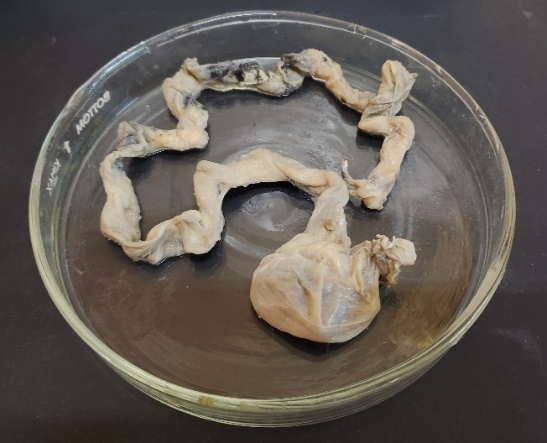
Ebtisam F. Shamsan، Maryam A. Taher (المؤلف) (2026). Feeding Ecology of the Large-Scale Triggerfish, Canthidermis macrolepis (Boulenger, 1888), from Yemeni Coastal Waters. مجلة جامعة صنعاء للعلوم التطبيقية والتكنولوجيا, 2612-2618. DOI: https://doi.org/10.59628/jast.v4i10.3435
Ebtisam F. Shamsan، Maryam A. Taher (المؤلف). “Feeding Ecology of the Large-Scale Triggerfish, Canthidermis macrolepis (Boulenger, 1888), from Yemeni Coastal Waters.” مجلة جامعة صنعاء للعلوم التطبيقية والتكنولوجيا, 2026, pp. 2612-2618. https://doi.org/10.59628/jast.v4i10.3435. Accessed 30 أكتوبر. 2026.
Ebtisam F. Shamsan، Maryam A. Taher (المؤلف). 2026. “Feeding Ecology of the Large-Scale Triggerfish, Canthidermis macrolepis (Boulenger, 1888), from Yemeni Coastal Waters.” مجلة جامعة صنعاء للعلوم التطبيقية والتكنولوجيا : 2612-2618. DOI: https://doi.org/10.59628/jast.v4i10.3435
Ebtisam F. Shamsan، Maryam A. Taher (المؤلف) (2026) ‘Feeding Ecology of the Large-Scale Triggerfish, Canthidermis macrolepis (Boulenger, 1888), from Yemeni Coastal Waters’, مجلة جامعة صنعاء للعلوم التطبيقية والتكنولوجيا, pp. 2612-2618. doi: 10.59628/jast.v4i10.3435
@article{jast2026_art3435,
    author  = {Ebtisam F. Shamsan، Maryam A. Taher (المؤلف)},
    title   = {Feeding Ecology of the Large-Scale Triggerfish, Canthidermis macrolepis (Boulenger, 1888), from Yemeni Coastal Waters},
    journal = {مجلة جامعة صنعاء للعلوم التطبيقية والتكنولوجيا},    year    = {2026},    month   = {أكتوبر},    pages   = {2612-2618},    doi     = {10.59628/jast.v4i10.3435},
    url     = {https://doi.org/10.59628/jast.v4i10.3435},}
تم نسخ الاقتباس!
التواصل مع المؤلفين
Feeding Ecology of the Large-Scale Triggerfish, Canthidermis macrolepis (Boulenger, 1888), from Yemeni Coastal Waters
تم نسخ البريد الإلكتروني!
A Scoping Review of Sentiment Analysis for Customer Satisfaction in Digital Banking: Mapping the Research Gap Toward Multimodal Integration
Maimona AL_Maamari، Ghaleb Al-Gaphari (المؤلف)
2619-2634
2026-10-28
الملخص
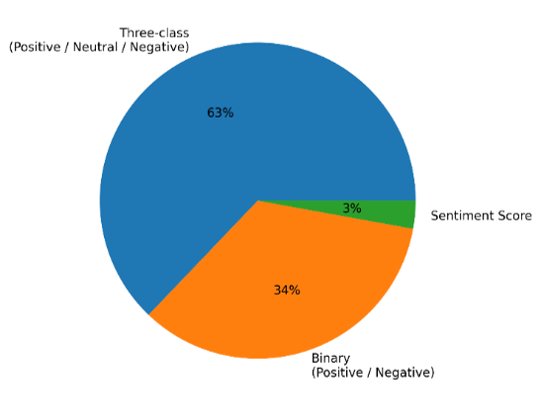
Sentiment analysis has become increasingly important for interpreting customer-generated content across social media and digital technologies. However, research on digital banking continues to rely predominantly on textonly data, with limited attention to multimodal integration. This scoping review mapped the literature on sentiment analysis for customer satisfaction in digital banking, identified research gaps, and outlined future directions. The review followed the PRISMA-ScR guidelines and searched six databases—ScienceDirect, IEEE Xplore, Wiley Online Library, ACM Digital Library, SpringerLink, and Google Scholar—for English-language studies published from 2015 to 2026; the final search was conducted on May 10, 2026. Of 1,631 records identified, 35 studies met the inclusion criteria. Text only data were used in 31 studies (88.6%), multi-source text was used in one study (2.9%), text combined with survey data in two studies (5.7%), and numerical time-series data in one study (2.9%); no included study integrated text, audio, and video within a single sentiment analysis framework. The literature was geographically concentrated and relied mainly on traditional machine-learning and hybrid approaches, whereas transformer/LLM based methods, explainable AI, and real-time approaches remained limited. The absence of banking-specific multimodal datasets is a key barrier to progress. Future research should prioritize privacy-preserving multimodal datasets, multilingual and culturally diverse models, explainable AI, and real-time deployment to support more reliable assessment of customer experience in digital banking.
الكلمات المفتاحية
Sentiment Analysis
Digital Banking
Scoping Review
Multimodal
Customer Satisfaction
Text-Based Data
Traditional Machine Learning
Hybrid Approach.
كيفية الاقتباس
Maimona AL_Maamari، Ghaleb Al-Gaphari (المؤلف) (2026). A Scoping Review of Sentiment Analysis for Customer Satisfaction in Digital Banking: Mapping the Research Gap Toward Multimodal Integration. مجلة جامعة صنعاء للعلوم التطبيقية والتكنولوجيا, 2619-2634. DOI: https://doi.org/10.59628/jast.v4i10.3463
Maimona AL_Maamari، Ghaleb Al-Gaphari (المؤلف). “A Scoping Review of Sentiment Analysis for Customer Satisfaction in Digital Banking: Mapping the Research Gap Toward Multimodal Integration.” مجلة جامعة صنعاء للعلوم التطبيقية والتكنولوجيا, 2026, pp. 2619-2634. https://doi.org/10.59628/jast.v4i10.3463. Accessed 30 أكتوبر. 2026.
Maimona AL_Maamari، Ghaleb Al-Gaphari (المؤلف). 2026. “A Scoping Review of Sentiment Analysis for Customer Satisfaction in Digital Banking: Mapping the Research Gap Toward Multimodal Integration.” مجلة جامعة صنعاء للعلوم التطبيقية والتكنولوجيا : 2619-2634. DOI: https://doi.org/10.59628/jast.v4i10.3463
Maimona AL_Maamari، Ghaleb Al-Gaphari (المؤلف) (2026) ‘A Scoping Review of Sentiment Analysis for Customer Satisfaction in Digital Banking: Mapping the Research Gap Toward Multimodal Integration’, مجلة جامعة صنعاء للعلوم التطبيقية والتكنولوجيا, pp. 2619-2634. doi: 10.59628/jast.v4i10.3463
@article{jast2026_art3463,
    author  = {Maimona AL_Maamari، Ghaleb Al-Gaphari (المؤلف)},
    title   = {A Scoping Review of Sentiment Analysis for Customer Satisfaction in Digital Banking: Mapping the Research Gap Toward Multimodal Integration},
    journal = {مجلة جامعة صنعاء للعلوم التطبيقية والتكنولوجيا},    year    = {2026},    month   = {أكتوبر},    pages   = {2619-2634},    doi     = {10.59628/jast.v4i10.3463},
    url     = {https://doi.org/10.59628/jast.v4i10.3463},}
تم نسخ الاقتباس!
التواصل مع المؤلفين
A Scoping Review of Sentiment Analysis for Customer Satisfaction in Digital Banking: Mapping the Research Gap Toward Multimodal Integration
تم نسخ البريد الإلكتروني!
تقييم جودة المنتفخات والمقرمشات المصنعة محلياً من جريش الذرة باستخدام تقنية البثق
م. أسماء قائد الغويل، أ.د/ جلال أحمد فضل، أ.د/ عبدالمجيد بجاش عبدالله (المؤلف)
2635-2652
2026-10-28
الملخص
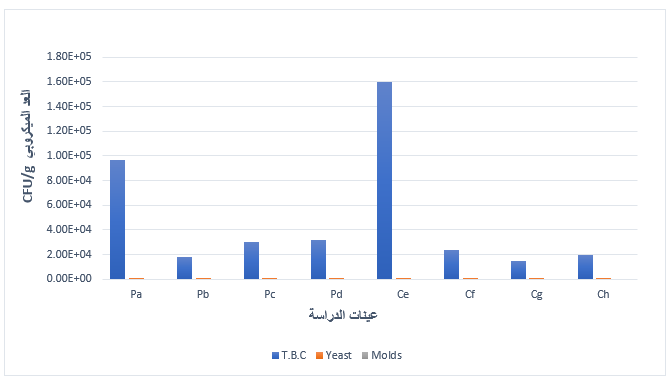
تُعد الأغذية المبثوقة من المنتجات المتداولة في السوق اليمنية، مما يستدعي تقييم جودتها وسلامتها الغذائية. هدفت الدراسة إلى تقييم جودة وسلامة بعض الأغذية المبثوقة المصنعة محلياً من جريش الذرة، من خلال تقدير بعض المواد المضافة والعناصر المعدنية، وتقييم الخصائص الفيزيائية والحسية والميكروبيولوجية لثماني عينات، شملت أربع عينات من منتفخات الذرة وأربع عينات من مقرمشات الذرة. أظهرت النتائج خلو جميع العينات من المواد الحافظة، ممثلةً بحمض البنزويك وحمض السوربيك، والمحليات الصناعية، وهي الأسبارتام وسكارين الصوديوم وأسيسلفام البوتاسيوم. تراوحت تراكيز المغنيسيوم بين 116–226 ملغم/كجم، والزنك بين 0.1–16.8 ملغم/كجم، والمنجنيز بين 0.41–5.11 ملغم/كجم، والنيكل بين 0.1–1.5 ملغم/كجم، في حين لم يُكشف عن الحديد في معظم العينات، باستثناء ثلاث عينات تراوحت بين 44.7-0.7ملغم/كجم ، ولم يُرصد النحاس والكادميوم. تراوحت درجات التقييم الحسي بين 2.89–3.84 من 5 درجات، وتفوقت العينة Pd من المنتفخات في المظهر العام والطعم والقوام، بينما سجلت العينة Ch من المقرمشات أعلى قيمة للملمس بالفم. كما أظهرت العينة Pd أقل كثافة ظاهرية بلغت 0.07 جم/سم³، وأعلى نسبة تمدد بلغت 5.79 مرة، بينما سجلت العينة Cg أعلى نسبة زيادة في المنتج بلغت 98.33%. ومكروبيولوجياً، خلت جميع العينات من الأعفان، وتراوحت أعداد الخمائر بين 1×10²–1×10³ CFU/g وكانت ضمن الحدود المسموح بها، في حين بلغ العد البكتيري الكلي في العينة Ce نحو 1.6×10⁵ CFU/g، متجاوزاً الحد المسموح به. وتشير النتائج إلى قبول معظم العينات من حيث الجودة والسلامة الميكروبيولوجية، مع تفاوت في خصائصها المعدنية والفيزيائية والحسية، وتجاوز العد البكتيري الكلي في العينة Ce للحد المسموح به. ويؤكد ذلك أهمية الرقابة الدورية والالتزام بالممارسات التصنيعية الجيدة لضمان جودة المنتجات وسلامتها.
الكلمات المفتاحية
تقنية البثق
الأغذية الخفيفة
الخصائص الفيزوكيميائية
التقييم الحسي
سلامة الغذاء
كيفية الاقتباس
م. أسماء قائد الغويل، أ.د/ جلال أحمد فضل، أ.د/ عبدالمجيد بجاش عبدالله (المؤلف) (2026). تقييم جودة المنتفخات والمقرمشات المصنعة محلياً من جريش الذرة باستخدام تقنية البثق. مجلة جامعة صنعاء للعلوم التطبيقية والتكنولوجيا, 2635-2652. DOI: https://doi.org/10.59628/jast.v4i10.3597
م. أسماء قائد الغويل، أ.د/ جلال أحمد فضل، أ.د/ عبدالمجيد بجاش عبدالله (المؤلف). “تقييم جودة المنتفخات والمقرمشات المصنعة محلياً من جريش الذرة باستخدام تقنية البثق.” مجلة جامعة صنعاء للعلوم التطبيقية والتكنولوجيا, 2026, pp. 2635-2652. https://doi.org/10.59628/jast.v4i10.3597. Accessed 30 أكتوبر. 2026.
م. أسماء قائد الغويل، أ.د/ جلال أحمد فضل، أ.د/ عبدالمجيد بجاش عبدالله (المؤلف). 2026. “تقييم جودة المنتفخات والمقرمشات المصنعة محلياً من جريش الذرة باستخدام تقنية البثق.” مجلة جامعة صنعاء للعلوم التطبيقية والتكنولوجيا : 2635-2652. DOI: https://doi.org/10.59628/jast.v4i10.3597
م. أسماء قائد الغويل، أ.د/ جلال أحمد فضل، أ.د/ عبدالمجيد بجاش عبدالله (المؤلف) (2026) ‘تقييم جودة المنتفخات والمقرمشات المصنعة محلياً من جريش الذرة باستخدام تقنية البثق’, مجلة جامعة صنعاء للعلوم التطبيقية والتكنولوجيا, pp. 2635-2652. doi: 10.59628/jast.v4i10.3597
@article{jast2026_art3597,
    author  = {م. أسماء قائد الغويل، أ.د/ جلال أحمد فضل، أ.د/ عبدالمجيد بجاش عبدالله (المؤلف)},
    title   = {تقييم جودة المنتفخات والمقرمشات المصنعة محلياً من جريش الذرة باستخدام تقنية البثق},
    journal = {مجلة جامعة صنعاء للعلوم التطبيقية والتكنولوجيا},    year    = {2026},    month   = {أكتوبر},    pages   = {2635-2652},    doi     = {10.59628/jast.v4i10.3597},
    url     = {https://doi.org/10.59628/jast.v4i10.3597},}
تم نسخ الاقتباس!
التواصل مع المؤلفين
تقييم جودة المنتفخات والمقرمشات المصنعة محلياً من جريش الذرة باستخدام تقنية البثق
تم نسخ البريد الإلكتروني!
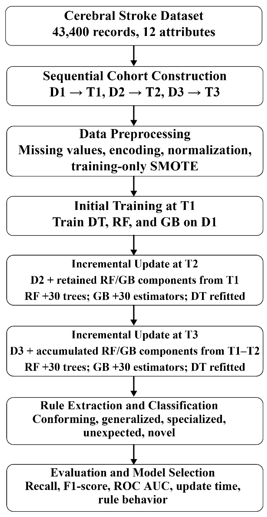
Interpretable Incremental Tree-Based Learning for Brain Stroke Prediction with Rule Evolution
Majid A. Aslan، Ahmed A. AL-Shalabi، Ahmed S. Al-Hegami (المؤلف)
2653-2667
2026-10-28
الملخص
Accurate brain stroke prediction requires models that can detect high-risk cases while adapting to newly arriving clinical data. This study proposes an interpretable incremental tree-based learning approach for brain stroke prediction using Decision Tree, Random Forest, and Gradient Boosting. Experiments were conducted using the Cerebral Stroke Dataset, a public imbalanced stroke prediction dataset with 43,400 records and 12 attributes. Since the dataset does not provide verified patient-level timestamps, the data were divided into three sequential simulated cohorts to evaluate model behavior under progressive data availability. Decision Tree was used as a refitted interpretable baseline, while Random Forest and Gradient Boosting were updated using a warm-start strategy by appending additional estimators at later stages. Rule extraction and rule classification were used to translate tree-based decision logic into readable rules and categorize them as conforming, generalized, specialized, unexpected, or novel, enabling analysis of rule evolution across cohorts. Experimental results showed that the incremental approach improved sensitivity oriented performance and reduced update time compared with traditional retraining. At the final stage, incremental Gradient Boosting achieved 98.044% accuracy, 75.32% F1-score, 91.03% recall, and 94.66% ROC AUC, with only 40 false negatives. Therefore, incremental Gradient Boosting provided the most clinically suitable trade-off between stroke-case detection, update efficiency, and interpretable rule behavior.
الكلمات المفتاحية
Brain Stroke Prediction
Incremental Learning
Tree-Based Models
Decision Tree
Random Forest
Gradient Boosting
Streaming Data
Rule Evolution.
كيفية الاقتباس
Majid A. Aslan، Ahmed A. AL-Shalabi، Ahmed S. Al-Hegami (المؤلف) (2026). Interpretable Incremental Tree-Based Learning for Brain Stroke Prediction with Rule Evolution. مجلة جامعة صنعاء للعلوم التطبيقية والتكنولوجيا, 2653-2667. DOI: https://doi.org/10.59628/jast.v4i10.3271
Majid A. Aslan، Ahmed A. AL-Shalabi، Ahmed S. Al-Hegami (المؤلف). “Interpretable Incremental Tree-Based Learning for Brain Stroke Prediction with Rule Evolution.” مجلة جامعة صنعاء للعلوم التطبيقية والتكنولوجيا, 2026, pp. 2653-2667. https://doi.org/10.59628/jast.v4i10.3271. Accessed 30 أكتوبر. 2026.
Majid A. Aslan، Ahmed A. AL-Shalabi، Ahmed S. Al-Hegami (المؤلف). 2026. “Interpretable Incremental Tree-Based Learning for Brain Stroke Prediction with Rule Evolution.” مجلة جامعة صنعاء للعلوم التطبيقية والتكنولوجيا : 2653-2667. DOI: https://doi.org/10.59628/jast.v4i10.3271
Majid A. Aslan، Ahmed A. AL-Shalabi، Ahmed S. Al-Hegami (المؤلف) (2026) ‘Interpretable Incremental Tree-Based Learning for Brain Stroke Prediction with Rule Evolution’, مجلة جامعة صنعاء للعلوم التطبيقية والتكنولوجيا, pp. 2653-2667. doi: 10.59628/jast.v4i10.3271
@article{jast2026_art3271,
    author  = {Majid A. Aslan، Ahmed A. AL-Shalabi، Ahmed S. Al-Hegami (المؤلف)},
    title   = {Interpretable Incremental Tree-Based Learning for Brain Stroke Prediction with Rule Evolution},
    journal = {مجلة جامعة صنعاء للعلوم التطبيقية والتكنولوجيا},    year    = {2026},    month   = {أكتوبر},    pages   = {2653-2667},    doi     = {10.59628/jast.v4i10.3271},
    url     = {https://doi.org/10.59628/jast.v4i10.3271},}
تم نسخ الاقتباس!
التواصل مع المؤلفين
Interpretable Incremental Tree-Based Learning for Brain Stroke Prediction with Rule Evolution
تم نسخ البريد الإلكتروني!
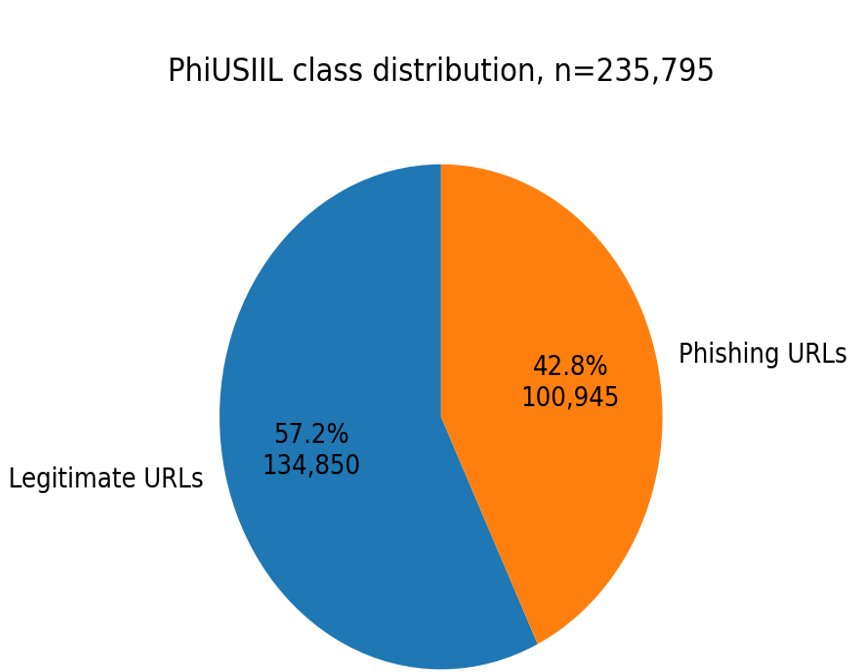
An Explainable Zero-Trust Framework for Detecting Generative-AI-Enhanced Phishing and Credential Theft Using Real-World Threat Data
Mohammed Ameen Saleh Al-Bareda (المؤلف)
2668-2678
2026-10-28
الملخص
Phishing has evolved from simple fraudulent messages into a multi-channel credential-theft ecosystem that
combines malicious URLs, QR-code phishing, adversary-in-the-middle proxying, business e-mail compromise,
deepfake-assisted social engineering, and generative-AI-assisted content generation. This paper proposes an
explainable zero-trust framework for detecting and reducing phishing-related credential exposure using real-world
threat intelligence and the PhiUSIIL public benchmark dataset. The study integrates APWG observations from
2024 through Q3 2025 with a benchmark containing 235,795 URLs, 54 variables, 134,850 legitimate samples,
and 100,945 phishing samples. The framework combines URL and page-content features, brand-mismatch evi-
dence, QR-code detonation, sender-authentication signals, phishing-resistant MFA, conditional access, browser
isolation, and human-readable explanations. A supervised benchmark experiment was conducted using a single
stratified 80/20 train-test split and three baseline classifiers. Decision Tree achieved 100.00% F1-score, Random
Forest achieved 99.9975% F1-score, and Gaussian Naive Bayes achieved 98.1923% F1-score on the held-out
test set. These single-split benchmark results support a layered conclusion: URL detection is useful, but stronger
risk reduction is achieved when detection, identity, isolation, reporting, and continuous governance operate as
one zero-trust system.
الكلمات المفتاحية
Phishing Detection
Generative AI
Zero Trust
Credential Theft
Passkeys
FIDO2/WebAuthn
Quishing
Explainable AI
Threat Intelligence
Cybersecurity Framework.
كيفية الاقتباس
Mohammed Ameen Saleh Al-Bareda (المؤلف) (2026). An Explainable Zero-Trust Framework for Detecting Generative-AI-Enhanced Phishing and Credential Theft Using Real-World Threat Data. مجلة جامعة صنعاء للعلوم التطبيقية والتكنولوجيا, 2668-2678. DOI: https://doi.org/10.59628/jast.v4i10.3204
Mohammed Ameen Saleh Al-Bareda (المؤلف). “An Explainable Zero-Trust Framework for Detecting Generative-AI-Enhanced Phishing and Credential Theft Using Real-World Threat Data.” مجلة جامعة صنعاء للعلوم التطبيقية والتكنولوجيا, 2026, pp. 2668-2678. https://doi.org/10.59628/jast.v4i10.3204. Accessed 30 أكتوبر. 2026.
Mohammed Ameen Saleh Al-Bareda (المؤلف). 2026. “An Explainable Zero-Trust Framework for Detecting Generative-AI-Enhanced Phishing and Credential Theft Using Real-World Threat Data.” مجلة جامعة صنعاء للعلوم التطبيقية والتكنولوجيا : 2668-2678. DOI: https://doi.org/10.59628/jast.v4i10.3204
Mohammed Ameen Saleh Al-Bareda (المؤلف) (2026) ‘An Explainable Zero-Trust Framework for Detecting Generative-AI-Enhanced Phishing and Credential Theft Using Real-World Threat Data’, مجلة جامعة صنعاء للعلوم التطبيقية والتكنولوجيا, pp. 2668-2678. doi: 10.59628/jast.v4i10.3204
@article{jast2026_art3204,
    author  = {Mohammed Ameen Saleh Al-Bareda (المؤلف)},
    title   = {An Explainable Zero-Trust Framework for Detecting Generative-AI-Enhanced Phishing and Credential Theft Using Real-World Threat Data},
    journal = {مجلة جامعة صنعاء للعلوم التطبيقية والتكنولوجيا},    year    = {2026},    month   = {أكتوبر},    pages   = {2668-2678},    doi     = {10.59628/jast.v4i10.3204},
    url     = {https://doi.org/10.59628/jast.v4i10.3204},}
تم نسخ الاقتباس!
التواصل مع المؤلفين
An Explainable Zero-Trust Framework for Detecting Generative-AI-Enhanced Phishing and Credential Theft Using Real-World Threat Data
تم نسخ البريد الإلكتروني!
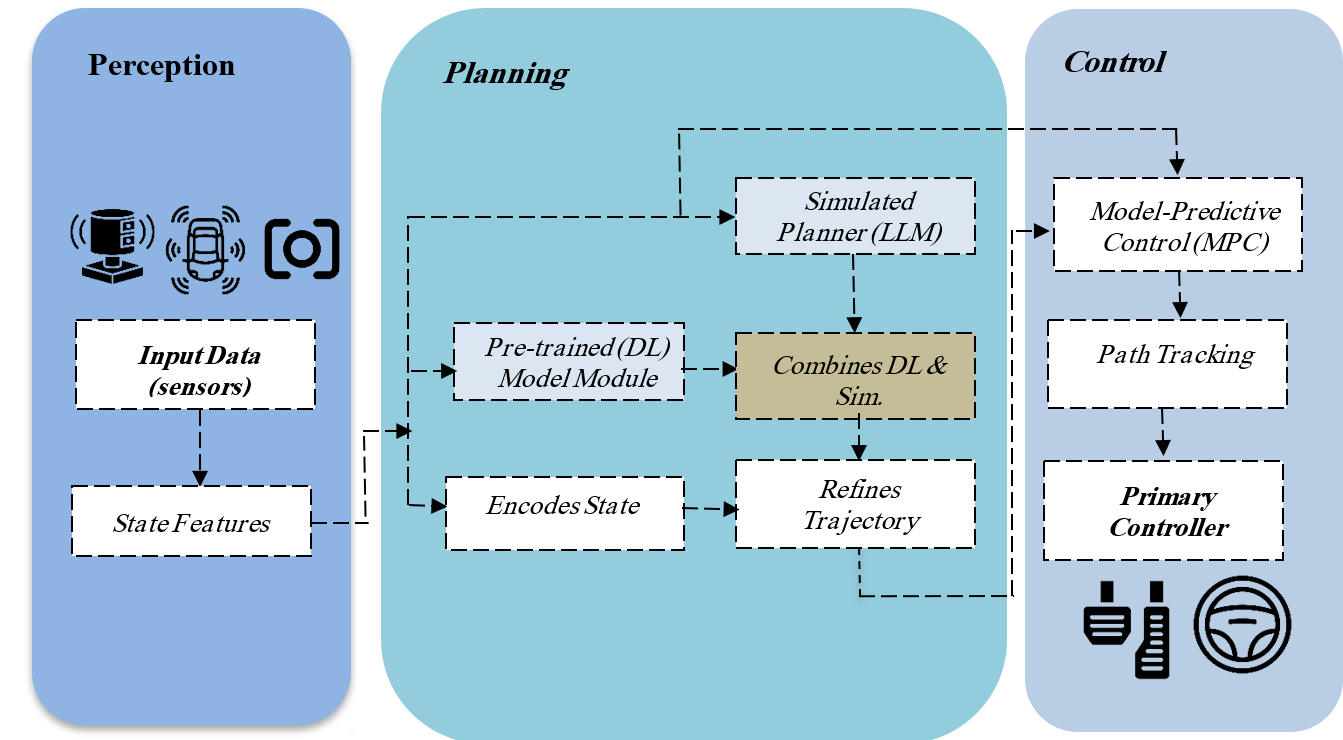
LLM-DNN Fusion for Data-Efficient Trajectory Generation in Autonomous Driving: A Hybrid Approach with MPC Optimization
Yusuf Al-jamaly، Khaleel AL-Hattab، Adel Rawea (المؤلف)
2679-2691
2026-10-28
الملخص
Autonomous vehicle (AV) trajectory planning in dense urban environments requires models that generalize to rare or previously unseen scenario types. Deep neural networks (DNNs) trained on large datasets perform poorly in such data-scarce conditions, while large language models (LLMs) generalize well but lack the numerical precision required for low-level vehicle control. This paper presents a hybrid trajectory planning framework that fuses a finetuned LLM with a multi-branch DNN at the trajectory level and applies a Model Predictive Control (MPC) controller as a final optimization stage. Gemini 1.5 Flash, fine-tuned on 479 labeled scenario-trajectory pairs, generates 15- aypoint trajectory proposals from structured textual scene descriptions. A modular DNN processes the same scene as a numerical input vector and produces a parallel trajectory proposal. The two proposals are fused by a learned trajectory refinement network, and the output is passed to an MPC controller that enforces vehicle dynamics constraints while minimizing a multi-objective cost function. Training relies on a three-step distortion- based augmentation technique, curve distortion, scale distortion, and Gaussian smoothing, that generates semi-realistic trajectory variants from a base dataset of over 70,000 labeled rows, reducing the data volume required for effective DNN training. Evaluation across 200 runs in the CARLA simulator on unseen urban scenarios shows that the MPC-enhanced hybrid model achieves an Average Displacement Error (ADE) of 0.66 m and a Final Displacement Error (FDE) of 1.94 m, corresponding to improvements of 37.7% and 34.3% over the DNN-only baseline. The collision rate (CR) decreases from 3.71% to 2.90%, a 21.8% reduction. These results establish that trajectory-level fusion of LLM semantic reasoning with DNN-based feature extraction delivers measurable accuracy and safety gains in data-efficient autonomous driving conditions. The ADE/FDE improvements are statistically significant (p < 0.001). The collision-rate reduction is a consistent trend across ablations, but it is not statistically significant at n = 200 runs (see Section 4.4).
الكلمات المفتاحية
Autonomous vehicles
trajectory planning
large language models
deep neural networks
model predictive control
data-efficient learning
CARLA simulation
كيفية الاقتباس
Yusuf Al-jamaly، Khaleel AL-Hattab، Adel Rawea (المؤلف) (2026). LLM-DNN Fusion for Data-Efficient Trajectory Generation in Autonomous Driving: A Hybrid Approach with MPC Optimization. مجلة جامعة صنعاء للعلوم التطبيقية والتكنولوجيا, 2679-2691. DOI: https://doi.org/10.59628/jast.v4i10.3391
Yusuf Al-jamaly، Khaleel AL-Hattab، Adel Rawea (المؤلف). “LLM-DNN Fusion for Data-Efficient Trajectory Generation in Autonomous Driving: A Hybrid Approach with MPC Optimization.” مجلة جامعة صنعاء للعلوم التطبيقية والتكنولوجيا, 2026, pp. 2679-2691. https://doi.org/10.59628/jast.v4i10.3391. Accessed 30 أكتوبر. 2026.
Yusuf Al-jamaly، Khaleel AL-Hattab، Adel Rawea (المؤلف). 2026. “LLM-DNN Fusion for Data-Efficient Trajectory Generation in Autonomous Driving: A Hybrid Approach with MPC Optimization.” مجلة جامعة صنعاء للعلوم التطبيقية والتكنولوجيا : 2679-2691. DOI: https://doi.org/10.59628/jast.v4i10.3391
Yusuf Al-jamaly، Khaleel AL-Hattab، Adel Rawea (المؤلف) (2026) ‘LLM-DNN Fusion for Data-Efficient Trajectory Generation in Autonomous Driving: A Hybrid Approach with MPC Optimization’, مجلة جامعة صنعاء للعلوم التطبيقية والتكنولوجيا, pp. 2679-2691. doi: 10.59628/jast.v4i10.3391
@article{jast2026_art3391,
    author  = {Yusuf Al-jamaly، Khaleel AL-Hattab، Adel Rawea (المؤلف)},
    title   = {LLM-DNN Fusion for Data-Efficient Trajectory Generation in Autonomous Driving: A Hybrid Approach with MPC Optimization},
    journal = {مجلة جامعة صنعاء للعلوم التطبيقية والتكنولوجيا},    year    = {2026},    month   = {أكتوبر},    pages   = {2679-2691},    doi     = {10.59628/jast.v4i10.3391},
    url     = {https://doi.org/10.59628/jast.v4i10.3391},}
تم نسخ الاقتباس!
التواصل مع المؤلفين
LLM-DNN Fusion for Data-Efficient Trajectory Generation in Autonomous Driving: A Hybrid Approach with MPC Optimization
تم نسخ البريد الإلكتروني!
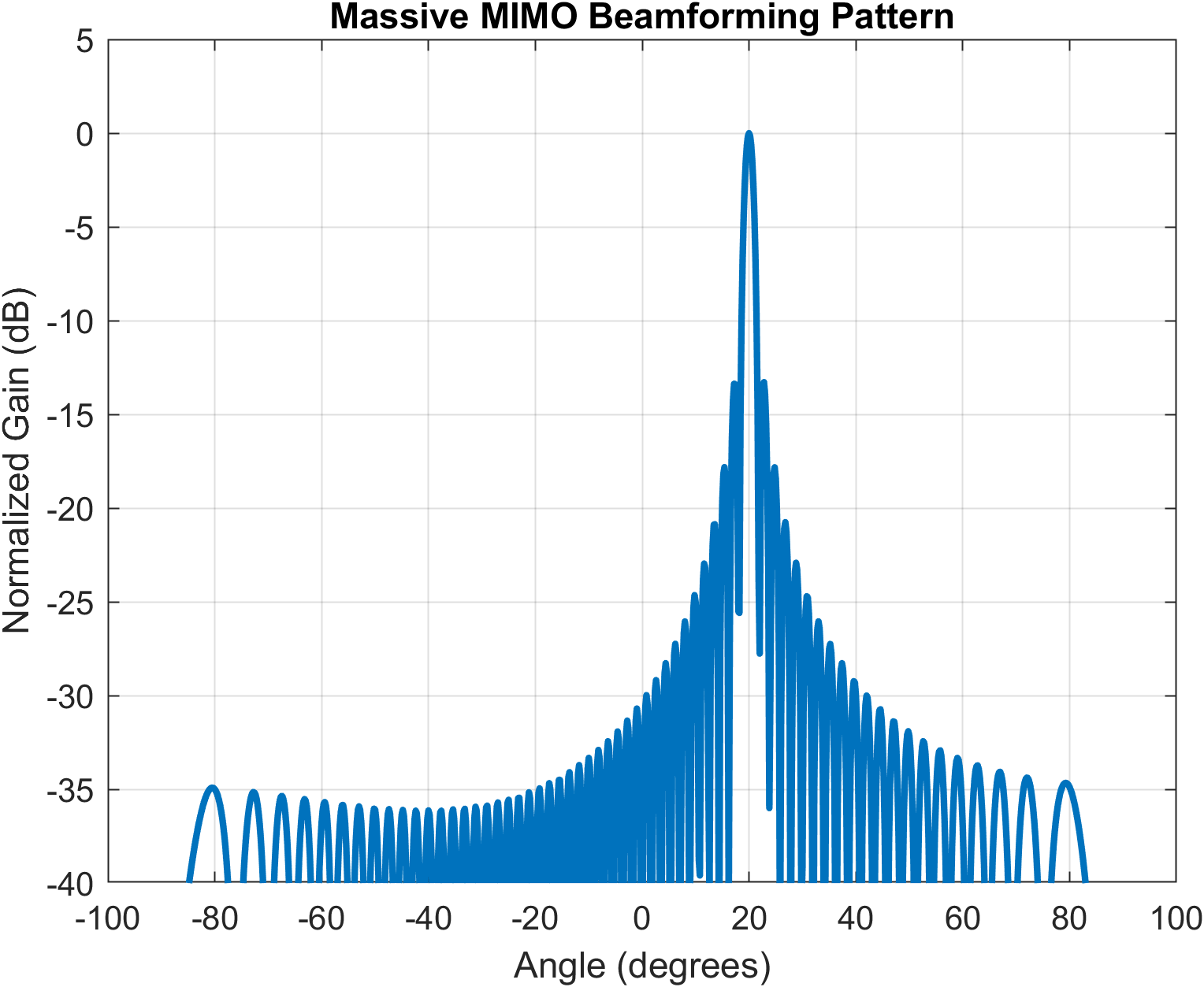
AI-Driven Secure Channel Estimation and Energy-Efficient Power Allocation for Cell-Free Massive MIMO
Murad Abdullah Abdo Ahmed Albahri، M. A. Hankel (المؤلف)
2692- 2700
2026-10-28
الملخص
Cell-free massive multiple-input multiple-output (MIMO) improves user fairness by allowing many distributed access points (APs) to cooperatively serve users without fixed cell boundaries. Its practical reliability, however, is limited by pilot contamination, pilot spoofing, channel state-information (CSI) uncertainty, inter-user interference, and inefficient power consumption. This paper proposes an AI-driven secure channel estimation and energy-efficient power allocation (AI-SCE-EEPA) framework for uplink cell-free massive MIMO. The AI component is a lightweight supervised anomaly classifier trained on synthetically generated pilot observations representing clean and spoofed contaminated CSI conditions. Its output is used as a soft reliability gate before minimum mean-square error (MMSE) channel refinement. The refined secure CSI is then used by an adaptive regularized MMSE receiver and an energy-efficient power allocation rule. A reproducible Monte Carlo simulation is conducted under distributed APs, Rayleigh fading, large-scale path loss, log-normal shadowing, QPSK transmission, pilot contamination, and active pilot spoofing/eavesdropping stress. The proposed framework is compared with MR, conventional LMMSE, and adaptive R-MMSE baselines using bit error rate (BER), normalized mean-square error (NMSE), spectral efficiency (SE), energy efficiency (EE), secrecy rate, and power-allocation behavior. At 30 dB, AI-SCE-EEPA improves the reported NMSE, BER, SE, EE, and secrecy-rate indicators over fixed-power LMMSE baselines. The results indicate that combining trainable CSI anomaly detection with interpretable model-based estimation and energy-aware power allocation is a practical direction for secure and green cell-free massive MIMO.
الكلمات المفتاحية
Cell-free massive MIMO
AI-based channel estimation
pilot spoofing detection
power allocation
energy efficiency.
كيفية الاقتباس
Murad Abdullah Abdo Ahmed Albahri، M. A. Hankel (المؤلف) (2026). AI-Driven Secure Channel Estimation and Energy-Efficient Power Allocation for Cell-Free Massive MIMO. مجلة جامعة صنعاء للعلوم التطبيقية والتكنولوجيا, 2692- 2700. DOI: https://doi.org/10.59628/jast.v4i10.3389
Murad Abdullah Abdo Ahmed Albahri، M. A. Hankel (المؤلف). “AI-Driven Secure Channel Estimation and Energy-Efficient Power Allocation for Cell-Free Massive MIMO.” مجلة جامعة صنعاء للعلوم التطبيقية والتكنولوجيا, 2026, pp. 2692- 2700. https://doi.org/10.59628/jast.v4i10.3389. Accessed 30 أكتوبر. 2026.
Murad Abdullah Abdo Ahmed Albahri، M. A. Hankel (المؤلف). 2026. “AI-Driven Secure Channel Estimation and Energy-Efficient Power Allocation for Cell-Free Massive MIMO.” مجلة جامعة صنعاء للعلوم التطبيقية والتكنولوجيا : 2692- 2700. DOI: https://doi.org/10.59628/jast.v4i10.3389
Murad Abdullah Abdo Ahmed Albahri، M. A. Hankel (المؤلف) (2026) ‘AI-Driven Secure Channel Estimation and Energy-Efficient Power Allocation for Cell-Free Massive MIMO’, مجلة جامعة صنعاء للعلوم التطبيقية والتكنولوجيا, pp. 2692- 2700. doi: 10.59628/jast.v4i10.3389
@article{jast2026_art3389,
    author  = {Murad Abdullah Abdo Ahmed Albahri، M. A. Hankel (المؤلف)},
    title   = {AI-Driven Secure Channel Estimation and Energy-Efficient Power Allocation for Cell-Free Massive MIMO},
    journal = {مجلة جامعة صنعاء للعلوم التطبيقية والتكنولوجيا},    year    = {2026},    month   = {أكتوبر},    pages   = {2692- 2700},    doi     = {10.59628/jast.v4i10.3389},
    url     = {https://doi.org/10.59628/jast.v4i10.3389},}
تم نسخ الاقتباس!
التواصل مع المؤلفين
AI-Driven Secure Channel Estimation and Energy-Efficient Power Allocation for Cell-Free Massive MIMO
تم نسخ البريد الإلكتروني!
GIS-Based Multi-Criteria Analysis for Identifying Suitable Rainwater Harvesting Sites to Enhance Groundwater Recharge: A Case Study of the Western Wellfield in Thaqban Area, Sana’a, Yemen
Mohammed Modaess، Yahia Alwathaf، Nabil M. Al-Areeq، Alkhateeb Al-Kebsi (المؤلف)
2701-2716
2026-10-28
الملخص
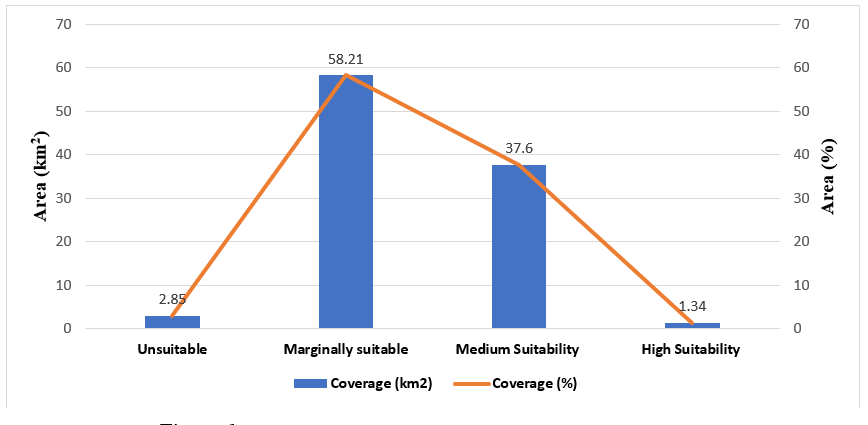
Groundwater depletion in the Sana’a Basin, Yemen, has intensified due to over-abstraction, rapid urbanization, and limited natural recharge. The Western Wellfield, which supplies a significant portion of Sana’a City’s domestic water demand, has experienced substantial groundwater level declines, highlighting the need for sustainable recharge interventions. This study evaluates the potential of rainwater harvesting (RWH) for enhancing groundwater recharge in the Thaqban area using a Geographic Information System (GIS)-based Multi Criteria Decision Analysis (MCDA) integrated with the Analytic Hierarchy Process (AHP). Ten thematic criteria were considered, including rainfall, runoff depth, slope, geological media, soil texture, land use/land cover, drainage density, distance to wadis, distance to groundwater wells, and groundwater depth. The criteria were weighted using AHP and combined through a weighted linear combination (WLC) approach to generate an RWH suitability map. The results show that 1.34% of the study area is highly suitable for RWH implementation, 37.60% is moderately suitable, 58.21% is marginally suitable, and 2.85% is unsuitable. Highly suitable areas are mainly associated with permeable geological formations, favorable topography, and proximity to production wells. This study demonstrates the usefulness of GIS-MCDA techniques for identifying priority recharge zones and supporting sustainable groundwater management in arid environments.
الكلمات المفتاحية
Rainwater harvesting
Groundwater recharge
GIS
MCDA
Western Wellfield
Yemen
كيفية الاقتباس
Mohammed Modaess، Yahia Alwathaf، Nabil M. Al-Areeq، Alkhateeb Al-Kebsi (المؤلف) (2026). GIS-Based Multi-Criteria Analysis for Identifying Suitable Rainwater Harvesting Sites to Enhance Groundwater Recharge: A Case Study of the Western Wellfield in Thaqban Area, Sana’a, Yemen. مجلة جامعة صنعاء للعلوم التطبيقية والتكنولوجيا, 2701-2716. DOI: https://doi.org/10.59628/jast.v4i10.3437
Mohammed Modaess، Yahia Alwathaf، Nabil M. Al-Areeq، Alkhateeb Al-Kebsi (المؤلف). “GIS-Based Multi-Criteria Analysis for Identifying Suitable Rainwater Harvesting Sites to Enhance Groundwater Recharge: A Case Study of the Western Wellfield in Thaqban Area, Sana’a, Yemen.” مجلة جامعة صنعاء للعلوم التطبيقية والتكنولوجيا, 2026, pp. 2701-2716. https://doi.org/10.59628/jast.v4i10.3437. Accessed 30 أكتوبر. 2026.
Mohammed Modaess، Yahia Alwathaf، Nabil M. Al-Areeq، Alkhateeb Al-Kebsi (المؤلف). 2026. “GIS-Based Multi-Criteria Analysis for Identifying Suitable Rainwater Harvesting Sites to Enhance Groundwater Recharge: A Case Study of the Western Wellfield in Thaqban Area, Sana’a, Yemen.” مجلة جامعة صنعاء للعلوم التطبيقية والتكنولوجيا : 2701-2716. DOI: https://doi.org/10.59628/jast.v4i10.3437
Mohammed Modaess، Yahia Alwathaf، Nabil M. Al-Areeq، Alkhateeb Al-Kebsi (المؤلف) (2026) ‘GIS-Based Multi-Criteria Analysis for Identifying Suitable Rainwater Harvesting Sites to Enhance Groundwater Recharge: A Case Study of the Western Wellfield in Thaqban Area, Sana’a, Yemen’, مجلة جامعة صنعاء للعلوم التطبيقية والتكنولوجيا, pp. 2701-2716. doi: 10.59628/jast.v4i10.3437
@article{jast2026_art3437,
    author  = {Mohammed Modaess، Yahia Alwathaf، Nabil M. Al-Areeq، Alkhateeb Al-Kebsi (المؤلف)},
    title   = {GIS-Based Multi-Criteria Analysis for Identifying Suitable Rainwater Harvesting Sites to Enhance Groundwater Recharge: A Case Study of the Western Wellfield in Thaqban Area, Sana’a, Yemen},
    journal = {مجلة جامعة صنعاء للعلوم التطبيقية والتكنولوجيا},    year    = {2026},    month   = {أكتوبر},    pages   = {2701-2716},    doi     = {10.59628/jast.v4i10.3437},
    url     = {https://doi.org/10.59628/jast.v4i10.3437},}
تم نسخ الاقتباس!
التواصل مع المؤلفين
GIS-Based Multi-Criteria Analysis for Identifying Suitable Rainwater Harvesting Sites to Enhance Groundwater Recharge: A Case Study of the Western Wellfield in Thaqban Area, Sana’a, Yemen
تم نسخ البريد الإلكتروني!
Geohistory Analysis of Block 14, Say’un–Masilah Basin, Yemen.
Zahrah Abdualaziz Al-Shawafi، Adel Mohammad Al-Matary (المؤلف)
2717-2728
2026-10-28
الملخص
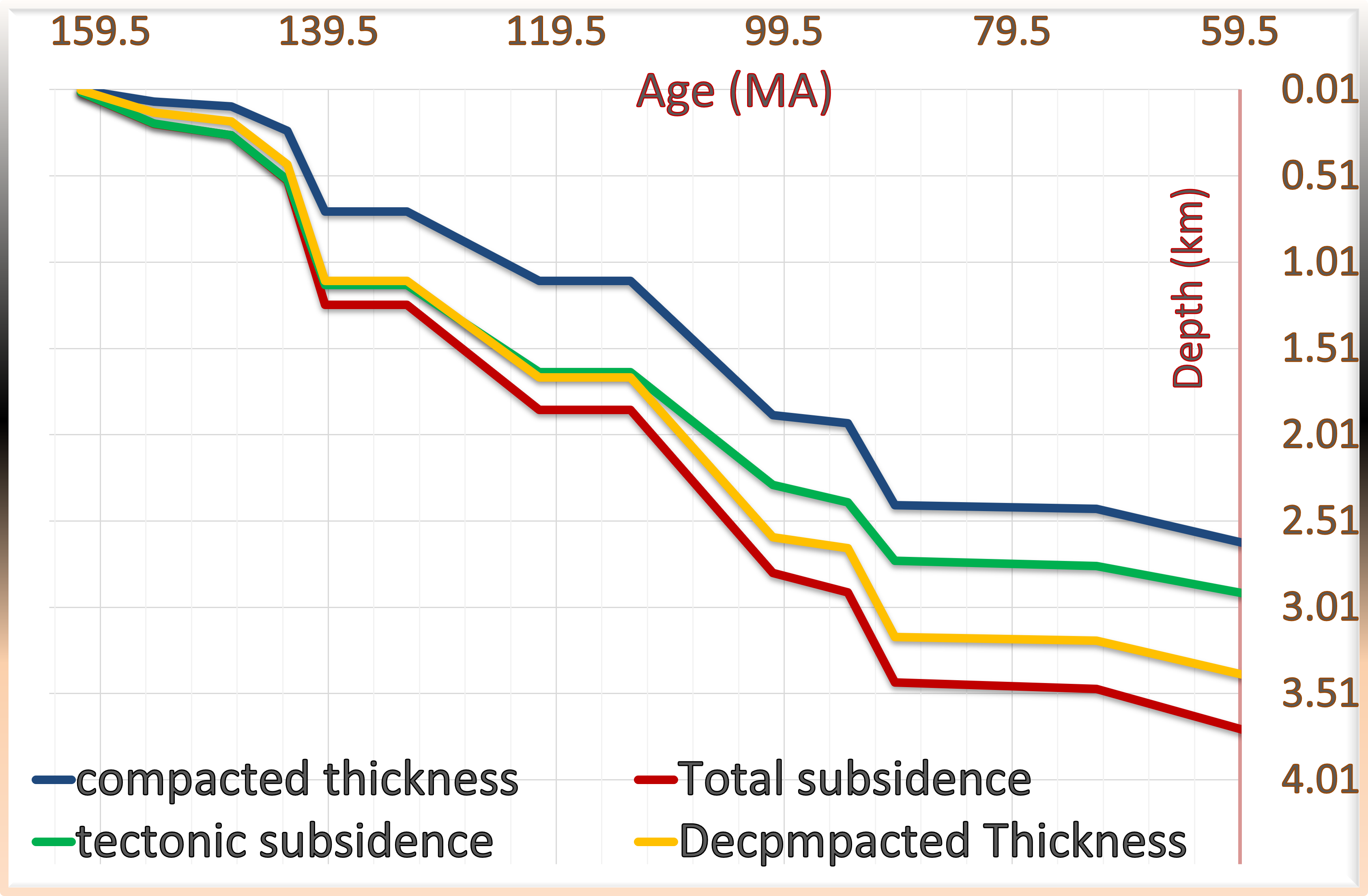
This study presents a comprehensive geohistory analysis of Block 14 (Masila Block), Say’un–Masilah Basin, eastern Yemen, based on one-dimensional (1D) Airy backstripping of stratigraphic data from 22 wells across the Cammal, Sunah, and Tawilah fields. Eleven formations spanning approximately 161 million years (Ma), from the Middle Jurassic Kuhlan Formation (161.2 Ma) to the Paleogene Umm Er Radhuma Formation (56 Ma), were analyzed. For each formation and well, present day and initial porosity, decompacted sediment thicknesses, total and tectonic subsidence and their rates, and sedimentation rates were quantified. Decompacted thickness consistently exceeds present-day values across all formations, with the greatest compaction effect recorded in the Shuqra Formation at Sunah-01 (∼ 60 mlost to compaction). Total subsidence ranges from 28 m (Kuhlan Formation) to 943 m (Harshiyat Formation). Tectonic subsidence was lowest during pre-rift Kuhlan deposition (∼ 25 m average), increased during syn-rift Naifa deposition (∼ 162 m average), and peaked during Harshiyat deposition (∼ 665 m; 5.33 cm/1,000 yr). The Mukalla Formation records the highest sedimentation rate (14.5 cm/1,000 yr average). Sunah-01, located in the northeastern part of the study area, records the highest cumu- lative total subsidence (3779 m) and tectonic subsidence (2970 m), corresponding to the thickest sedimentary succession. Tawilah-99, in the southeastern part of the study area, records the lowest cumulative values (total: 2479 m; tectonic: 1813 m), corresponding to the thinnest succession. These results provide a quantitative geohistory framework for Block 14 and a basis for future petroleum system modeling within the Say’un–Masilah Basin.
الكلمات المفتاحية
Yemen
Backstripping
Geohistory
Masilah Basin
Block 14
Basin Analysis
كيفية الاقتباس
Zahrah Abdualaziz Al-Shawafi، Adel Mohammad Al-Matary (المؤلف) (2026). Geohistory Analysis of Block 14, Say’un–Masilah Basin, Yemen.. مجلة جامعة صنعاء للعلوم التطبيقية والتكنولوجيا, 2717-2728. DOI: https://doi.org/10.59628/jast.v4i10.3197
Zahrah Abdualaziz Al-Shawafi، Adel Mohammad Al-Matary (المؤلف). “Geohistory Analysis of Block 14, Say’un–Masilah Basin, Yemen..” مجلة جامعة صنعاء للعلوم التطبيقية والتكنولوجيا, 2026, pp. 2717-2728. https://doi.org/10.59628/jast.v4i10.3197. Accessed 30 أكتوبر. 2026.
Zahrah Abdualaziz Al-Shawafi، Adel Mohammad Al-Matary (المؤلف). 2026. “Geohistory Analysis of Block 14, Say’un–Masilah Basin, Yemen..” مجلة جامعة صنعاء للعلوم التطبيقية والتكنولوجيا : 2717-2728. DOI: https://doi.org/10.59628/jast.v4i10.3197
Zahrah Abdualaziz Al-Shawafi، Adel Mohammad Al-Matary (المؤلف) (2026) ‘Geohistory Analysis of Block 14, Say’un–Masilah Basin, Yemen.’, مجلة جامعة صنعاء للعلوم التطبيقية والتكنولوجيا, pp. 2717-2728. doi: 10.59628/jast.v4i10.3197
@article{jast2026_art3197,
    author  = {Zahrah Abdualaziz Al-Shawafi، Adel Mohammad Al-Matary (المؤلف)},
    title   = {Geohistory Analysis of Block 14, Say’un–Masilah Basin, Yemen.},
    journal = {مجلة جامعة صنعاء للعلوم التطبيقية والتكنولوجيا},    year    = {2026},    month   = {أكتوبر},    pages   = {2717-2728},    doi     = {10.59628/jast.v4i10.3197},
    url     = {https://doi.org/10.59628/jast.v4i10.3197},}
تم نسخ الاقتباس!
التواصل مع المؤلفين
Geohistory Analysis of Block 14, Say’un–Masilah Basin, Yemen.
تم نسخ البريد الإلكتروني!
Comment on The Identifying the Key Factors Affecting the Success of Occupational Health and Safety Management during the Implementation of Construction Projects for NGOs in Sana’a, Yemen
Khaled Ismail M. Al-Shami (المؤلف)
2729-2732
2026-10-28
↔
المنشورات المرتبطة
استكشف التعليقات والتصحيحات والنقد والروابط العلمية الأخرى.
↓
المنشورات المرتبطة
استكشف التعليقات والتصحيحات والنقد والروابط العلمية الأخرى.
الملخص
This commentary welcomes the research effort presented by Al-Maancey et al (2026) [1] to contextualize Occupational Health and Safety (OHS) management within the construction projects in Sana’a, Yemen. However, a careful methodological audit reveals critical gaps in construct validity, regulatory compliance, and statistical consistency. This epistemological disconnect within the introduction is evident across three primary areas:
كيفية الاقتباس
Khaled Ismail M. Al-Shami (المؤلف) (2026). Comment on The Identifying the Key Factors Affecting the Success of Occupational Health and Safety Management during the Implementation of Construction Projects for NGOs in Sana’a, Yemen. مجلة جامعة صنعاء للعلوم التطبيقية والتكنولوجيا, 2729-2732. DOI: https://doi.org/10.59628/jast.v4i10.3960
Khaled Ismail M. Al-Shami (المؤلف). “Comment on The Identifying the Key Factors Affecting the Success of Occupational Health and Safety Management during the Implementation of Construction Projects for NGOs in Sana’a, Yemen.” مجلة جامعة صنعاء للعلوم التطبيقية والتكنولوجيا, 2026, pp. 2729-2732. https://doi.org/10.59628/jast.v4i10.3960. Accessed 30 أكتوبر. 2026.
Khaled Ismail M. Al-Shami (المؤلف). 2026. “Comment on The Identifying the Key Factors Affecting the Success of Occupational Health and Safety Management during the Implementation of Construction Projects for NGOs in Sana’a, Yemen.” مجلة جامعة صنعاء للعلوم التطبيقية والتكنولوجيا : 2729-2732. DOI: https://doi.org/10.59628/jast.v4i10.3960
Khaled Ismail M. Al-Shami (المؤلف) (2026) ‘Comment on The Identifying the Key Factors Affecting the Success of Occupational Health and Safety Management during the Implementation of Construction Projects for NGOs in Sana’a, Yemen’, مجلة جامعة صنعاء للعلوم التطبيقية والتكنولوجيا, pp. 2729-2732. doi: 10.59628/jast.v4i10.3960
@article{jast2026_art3960,
    author  = {Khaled Ismail M. Al-Shami (المؤلف)},
    title   = {Comment on The Identifying the Key Factors Affecting the Success of Occupational Health and Safety Management during the Implementation of Construction Projects for NGOs in Sana’a, Yemen},
    journal = {مجلة جامعة صنعاء للعلوم التطبيقية والتكنولوجيا},    year    = {2026},    month   = {أكتوبر},    pages   = {2729-2732},    doi     = {10.59628/jast.v4i10.3960},
    url     = {https://doi.org/10.59628/jast.v4i10.3960},}
تم نسخ الاقتباس!
التواصل مع المؤلفين
Comment on The Identifying the Key Factors Affecting the Success of Occupational Health and Safety Management during the Implementation of Construction Projects for NGOs in Sana’a, Yemen
تم نسخ البريد الإلكتروني!
Reply to Comment on The Identifying the Key Factors Affecting the Success of Occupational Health and Safety Management during the Implementation of Construction Projects for NGOs in Sana’a, Yemen
Ibtisam M. H. Al-Ma’anisi، Fadhl A. S. Al-Nozaily، Tariq A. Barakat (المؤلف)
2733-2740
2026-10-28
↔
المنشورات المرتبطة
استكشف التعليقات والتصحيحات والنقد والروابط العلمية الأخرى.
↓
المنشورات المرتبطة
استكشف التعليقات والتصحيحات والنقد والروابط العلمية الأخرى.
الملخص
This document provides a detailed methodological and scientific response to the commentary on our published study of factors influencing the success of occupational health and safety (OHS) management in NGO-related construction projects in Sana’a, Yemen. The response clarifies the study’s empirical scope, sampling rationale, interpretation of questionnaire-based evidence, psychometric results, institutional context, and use of ISO 45001:2018 as an analytical framework. It also acknowledges the distinction between perceived management priorities and objective safety performance indicators and explains how the study’s recommendations were derived from the evidence collected. The authors have revised the presentation of the response to maintain a respectful academic tone and to distinguish clearly between textual clarification, methodological justification, and points that may warrant further discussion.
كيفية الاقتباس
Ibtisam M. H. Al-Ma’anisi، Fadhl A. S. Al-Nozaily، Tariq A. Barakat (المؤلف) (2026). Reply to Comment on The Identifying the Key Factors Affecting the Success of Occupational Health and Safety Management during the Implementation of Construction Projects for NGOs in Sana’a, Yemen. مجلة جامعة صنعاء للعلوم التطبيقية والتكنولوجيا, 2733-2740. DOI: https://doi.org/10.59628/jast.v4i10.4021
Ibtisam M. H. Al-Ma’anisi، Fadhl A. S. Al-Nozaily، Tariq A. Barakat (المؤلف). “Reply to Comment on The Identifying the Key Factors Affecting the Success of Occupational Health and Safety Management during the Implementation of Construction Projects for NGOs in Sana’a, Yemen.” مجلة جامعة صنعاء للعلوم التطبيقية والتكنولوجيا, 2026, pp. 2733-2740. https://doi.org/10.59628/jast.v4i10.4021. Accessed 30 أكتوبر. 2026.
Ibtisam M. H. Al-Ma’anisi، Fadhl A. S. Al-Nozaily، Tariq A. Barakat (المؤلف). 2026. “Reply to Comment on The Identifying the Key Factors Affecting the Success of Occupational Health and Safety Management during the Implementation of Construction Projects for NGOs in Sana’a, Yemen.” مجلة جامعة صنعاء للعلوم التطبيقية والتكنولوجيا : 2733-2740. DOI: https://doi.org/10.59628/jast.v4i10.4021
Ibtisam M. H. Al-Ma’anisi، Fadhl A. S. Al-Nozaily، Tariq A. Barakat (المؤلف) (2026) ‘Reply to Comment on The Identifying the Key Factors Affecting the Success of Occupational Health and Safety Management during the Implementation of Construction Projects for NGOs in Sana’a, Yemen’, مجلة جامعة صنعاء للعلوم التطبيقية والتكنولوجيا, pp. 2733-2740. doi: 10.59628/jast.v4i10.4021
@article{jast2026_art4021,
    author  = {Ibtisam M. H. Al-Ma’anisi، Fadhl A. S. Al-Nozaily، Tariq A. Barakat (المؤلف)},
    title   = {Reply to Comment on The Identifying the Key Factors Affecting the Success of Occupational Health and Safety Management during the Implementation of Construction Projects for NGOs in Sana’a, Yemen},
    journal = {مجلة جامعة صنعاء للعلوم التطبيقية والتكنولوجيا},    year    = {2026},    month   = {أكتوبر},    pages   = {2733-2740},    doi     = {10.59628/jast.v4i10.4021},
    url     = {https://doi.org/10.59628/jast.v4i10.4021},}
تم نسخ الاقتباس!
التواصل مع المؤلفين
Reply to Comment on The Identifying the Key Factors Affecting the Success of Occupational Health and Safety Management during the Implementation of Construction Projects for NGOs in Sana’a, Yemen
تم نسخ البريد الإلكتروني!
Logarithmic Deformations of Spectral Systems —Part I: Spectral Analysis and Classification of Logarithmically Perturbed Harmonic Systems
Osama A. H. Al-Dahyani، Abdu A. Alkelly (المؤلف)
2026-10-28
الملخص
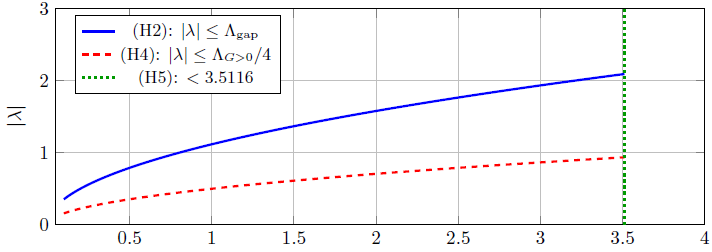
In this first paper of a series, we develop the complete spectral and classification structure of the half-line Schrödinger operator O0 = − d2 /dx2 + μ(μ+1) /x2 + ω2 x2 (x > 0, μ > 1/2, ω > 0) deformed by a logarithmic potential γ log x. Building on the established spectral properties of O0, we introduce a spectral-transcendental framework and prove: 1 Spectral Zeta: A closed form for the logarithmic spectral zeta S(s; ω) = ∑n≥0 Vlog nn /Asn (Re(s) > 1) in terms of the Hurwitz zeta function. We establish its meromorphic continuation to C, featuring a double pole at s = 1, a simple pole at s = 0, and simple poles at negative integers. 2 Spectral Sum Classification: A complete classification of {Sk(N) k,N≥1: Sk(N) ∈ Q + Q log 2 for N even; Sk(N) ∈ Q for N ≥ 2k + 1 odd; and Sk(N) ∈ Q + Qπ2 for N ≤ 2k − 1 odd. 3 Exact Constants: Closed-form evaluations for key constants, including B0(1, 1) = 23π4
/46080 − γE ζ(3) 32 + γ2E π2 768 ≈ 0.03122, C(1) = 1, the MZV constant c, and the Borel-2 constant CBorel 1 . 4 Commutator Trace Identity: The analytical identity T(α) = 1/2 ζH (4, (α + 1)/2) for α ∈ {0, 1, 2}, its general conjecture for all α > 0, and the Pochhammer-ratio obstruction at non-integer values.
الكلمات المفتاحية
Schrödinger operator
logarithmic deformation
spectral zeta
logarithmic matrix elements
digamma classification
multiple zeta values
PSLQ analysis
Pochhammer-twisted Euler sums
explicit constants.
كيفية الاقتباس
Osama A. H. Al-Dahyani، Abdu A. Alkelly (المؤلف) (2026). Logarithmic Deformations of Spectral Systems —Part I: Spectral Analysis and Classification of Logarithmically Perturbed Harmonic Systems. مجلة جامعة صنعاء للعلوم التطبيقية والتكنولوجيا. DOI: https://doi.org/10.59628/jast.v4i10.3894
Osama A. H. Al-Dahyani، Abdu A. Alkelly (المؤلف). “Logarithmic Deformations of Spectral Systems —Part I: Spectral Analysis and Classification of Logarithmically Perturbed Harmonic Systems.” مجلة جامعة صنعاء للعلوم التطبيقية والتكنولوجيا, 2026, https://doi.org/10.59628/jast.v4i10.3894. Accessed 30 أكتوبر. 2026.
Osama A. H. Al-Dahyani، Abdu A. Alkelly (المؤلف). 2026. “Logarithmic Deformations of Spectral Systems —Part I: Spectral Analysis and Classification of Logarithmically Perturbed Harmonic Systems.” مجلة جامعة صنعاء للعلوم التطبيقية والتكنولوجيا DOI: https://doi.org/10.59628/jast.v4i10.3894
Osama A. H. Al-Dahyani، Abdu A. Alkelly (المؤلف) (2026) ‘Logarithmic Deformations of Spectral Systems —Part I: Spectral Analysis and Classification of Logarithmically Perturbed Harmonic Systems’, مجلة جامعة صنعاء للعلوم التطبيقية والتكنولوجيا. doi: 10.59628/jast.v4i10.3894
@article{jast2026_art3894,
    author  = {Osama A. H. Al-Dahyani، Abdu A. Alkelly (المؤلف)},
    title   = {Logarithmic Deformations of Spectral Systems —Part I: Spectral Analysis and Classification of Logarithmically Perturbed Harmonic Systems},
    journal = {مجلة جامعة صنعاء للعلوم التطبيقية والتكنولوجيا},    year    = {2026},    month   = {أكتوبر},    doi     = {10.59628/jast.v4i10.3894},
    url     = {https://doi.org/10.59628/jast.v4i10.3894},}
تم نسخ الاقتباس!
التواصل مع المؤلفين
Logarithmic Deformations of Spectral Systems —Part I: Spectral Analysis and Classification of Logarithmically Perturbed Harmonic Systems
تم نسخ البريد الإلكتروني!
