علم النبات
Tribulus terrestris herb possesses various biological activities due to the active substances in its composition. This study aimed to evaluate the potential effect of the aqueous extract of the leaves of Tribulus terrestris L. on Triticum aestivum, Hordeum vulgare, and Vici faba seeds under laboratory conditions. The effect of various concentrations (5%, 3%, 1%, and 0.5%) on germination and seed growth was observed and compared to the control (distilled water). The concentrations of the aqueous extract had an allelopathic effect on imbibition, germination rate, radicle length, and plumule length. It was noticed that the rate of inhibition increased with the increasing concentration. Overall, the active substances in the aqueous extract of the leaf of the Tribulus terrestris L. plant had an allelopathic effect that increased with increasing concentration.
Abeer Ahmed Al-Weshali، Fatima A. Alhadi ، Ashar Khalil (المؤلف) (2025). Effects of Different Concentrations of Leaf Aqueous Extract of Tribulus terrestris L. on the Germination of Economic Seeds. مجلة جامعة صنعاء للعلوم التطبيقية والتكنولوجيا, 1323-1329. DOI: https://doi.org/10.59628/jast.v3i6.1560
Abeer Ahmed Al-Weshali، Fatima A. Alhadi ، Ashar Khalil (المؤلف). “Effects of Different Concentrations of Leaf Aqueous Extract of Tribulus terrestris L. on the Germination of Economic Seeds.” مجلة جامعة صنعاء للعلوم التطبيقية والتكنولوجيا, 2025, pp. 1323-1329. https://doi.org/10.59628/jast.v3i6.1560. Accessed 31 أكتوبر. 2026.
Abeer Ahmed Al-Weshali، Fatima A. Alhadi ، Ashar Khalil (المؤلف). 2025. “Effects of Different Concentrations of Leaf Aqueous Extract of Tribulus terrestris L. on the Germination of Economic Seeds.” مجلة جامعة صنعاء للعلوم التطبيقية والتكنولوجيا : 1323-1329. DOI: https://doi.org/10.59628/jast.v3i6.1560
Abeer Ahmed Al-Weshali، Fatima A. Alhadi ، Ashar Khalil (المؤلف) (2025) ‘Effects of Different Concentrations of Leaf Aqueous Extract of Tribulus terrestris L. on the Germination of Economic Seeds’, مجلة جامعة صنعاء للعلوم التطبيقية والتكنولوجيا, pp. 1323-1329. doi: 10.59628/jast.v3i6.1560
@article{jast2025_art1560,
    author  = {Abeer Ahmed Al-Weshali، Fatima A. Alhadi ، Ashar Khalil (المؤلف)},
    title   = {Effects of Different Concentrations of Leaf Aqueous Extract of Tribulus terrestris L. on the Germination of Economic Seeds},
    journal = {مجلة جامعة صنعاء للعلوم التطبيقية والتكنولوجيا},    year    = {2025},    month   = {ديسمبر},    pages   = {1323-1329},    doi     = {10.59628/jast.v3i6.1560},
    url     = {https://doi.org/10.59628/jast.v3i6.1560},}
Effects of Different Concentrations of Leaf Aqueous Extract of Tribulus terrestris L. on the Germination of Economic Seeds
Pearl Millet (Pennisetum glaucum (L.) R. Br.) is an important crop plant cultivated in many countries, including Yemen, due to its high nutritional value. Landrace, temperatures, and rainfall are crucial factors when it comes to improving the cultivation of crops for the benefit of man and animals. Therefore, the aim of this study was to statistically evaluate the morphological (Plant height, Leaf area, area index and number, and inflorescence length) & physiological (Biomass, Grain Yield, and Seed weight) parameters of 20 Pearl Millet landraces that comply with the amount of rainfall to produce the best grain yielding and/or high biomass production when cultivated in the Al-Mawasit district, Taiz. The Grain Yield of landrace 25508 (mean grain yield of 3.1 t/ha) was found to be greater than the grain yield produced by the other studied landraces. Moreover, landraces 25366 and 25353 were found to give the greatest biomass (mean biomass of 6.7t/ha).
Alhadi, F. A، Ibrahim, H.M، Alkadasy, A. K (المؤلف) (2023). Evaluation of Some Growth Parameters of Millet (Pennisetum glaucum (L.) R. Br.) Landraces Cultivated in Al-Mawaset District, Taiz Governorate, Yemen. مجلة جامعة صنعاء للعلوم التطبيقية والتكنولوجيا. DOI: https://doi.org/10.59628/jast.v1i4.563
Alhadi, F. A، Ibrahim, H.M، Alkadasy, A. K (المؤلف). “Evaluation of Some Growth Parameters of Millet (Pennisetum glaucum (L.) R. Br.) Landraces Cultivated in Al-Mawaset District, Taiz Governorate, Yemen.” مجلة جامعة صنعاء للعلوم التطبيقية والتكنولوجيا, 2023, https://doi.org/10.59628/jast.v1i4.563. Accessed 31 أكتوبر. 2026.
Alhadi, F. A، Ibrahim, H.M، Alkadasy, A. K (المؤلف). 2023. “Evaluation of Some Growth Parameters of Millet (Pennisetum glaucum (L.) R. Br.) Landraces Cultivated in Al-Mawaset District, Taiz Governorate, Yemen.” مجلة جامعة صنعاء للعلوم التطبيقية والتكنولوجيا DOI: https://doi.org/10.59628/jast.v1i4.563
Alhadi, F. A، Ibrahim, H.M، Alkadasy, A. K (المؤلف) (2023) ‘Evaluation of Some Growth Parameters of Millet (Pennisetum glaucum (L.) R. Br.) Landraces Cultivated in Al-Mawaset District, Taiz Governorate, Yemen’, مجلة جامعة صنعاء للعلوم التطبيقية والتكنولوجيا. doi: 10.59628/jast.v1i4.563
@article{jast2023_art563,
    author  = {Alhadi, F. A، Ibrahim, H.M، Alkadasy, A. K (المؤلف)},
    title   = {Evaluation of Some Growth Parameters of Millet (Pennisetum glaucum (L.) R.   Br.) Landraces Cultivated in Al-Mawaset District, Taiz Governorate, Yemen},
    journal = {مجلة جامعة صنعاء للعلوم التطبيقية والتكنولوجيا},    year    = {2023},    month   = {ديسمبر},    doi     = {10.59628/jast.v1i4.563},
    url     = {https://doi.org/10.59628/jast.v1i4.563},}
Evaluation of Some Growth Parameters of Millet (Pennisetum glaucum (L.) R. Br.) Landraces Cultivated in Al-Mawaset District, Taiz Governorate, Yemen

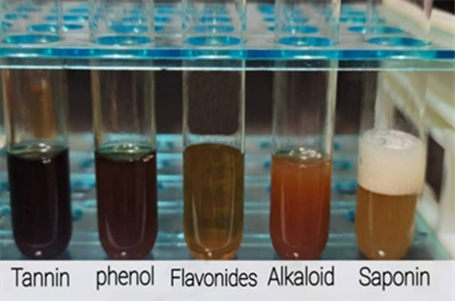
Pulicaria jaubertii is a spicing and medicinal plant belonging to the family Asteraceae. Studies found that this plant contains various important phytochemicals. However, these studies have not covered the identification of these compounds found in its callus produced by in vitro micropropagation. This study screens and compares, for the first time, the phytochemicals found in the ethanol and n-Hexane extracts of this plant's parts and callus. Native plant parts were collected and washed. Some of them were cultured on MS medium to produce callus, and the others were dried. Each sample was then powdered and extracted by ethanol and n-Hexane solvents and screened for the presence of some biologically important phytochemicals. Screening tests in the ethanol extract revealed the presence of alkaloids, flavonoids, saponins, reducing sugars, cardiac glycosides, carbonyls, phenols/tannins, phlobatanin, terpenoids, and steroids in the callus and most of the plant parts. n-Hexane extracts revealed the presence of fewer phytochemical groups in the callus and plant parts. In conclusion, ethanol and n-Hexane extracts of plant parts and callus of P. jaubertii contain several bioactive metabolites. Interestingly, callus extracts revealed some compounds that are not found in certain plant parts. Further studies, including extraction by other solvents, using more advanced separation techniques are recommended.
Fathia M. N. Salam، Fatima A. Alhadi، Ebraheem A. A. Al-Nawd، Enas J. Al-Sanabany، Esam M. Aqlan (المؤلف) (2025). Phytochemical Screening of Ethanol and n-hexane Extracts of the Plant Parts and Callus of Pulicaria jaubertii. مجلة جامعة صنعاء للعلوم التطبيقية والتكنولوجيا, 861-867. DOI: https://doi.org/10.59628/jast.v3i3.1585
Fathia M. N. Salam، Fatima A. Alhadi، Ebraheem A. A. Al-Nawd، Enas J. Al-Sanabany، Esam M. Aqlan (المؤلف). “Phytochemical Screening of Ethanol and n-hexane Extracts of the Plant Parts and Callus of Pulicaria jaubertii.” مجلة جامعة صنعاء للعلوم التطبيقية والتكنولوجيا, 2025, pp. 861-867. https://doi.org/10.59628/jast.v3i3.1585. Accessed 31 أكتوبر. 2026.
Fathia M. N. Salam، Fatima A. Alhadi، Ebraheem A. A. Al-Nawd، Enas J. Al-Sanabany، Esam M. Aqlan (المؤلف). 2025. “Phytochemical Screening of Ethanol and n-hexane Extracts of the Plant Parts and Callus of Pulicaria jaubertii.” مجلة جامعة صنعاء للعلوم التطبيقية والتكنولوجيا : 861-867. DOI: https://doi.org/10.59628/jast.v3i3.1585
Fathia M. N. Salam، Fatima A. Alhadi، Ebraheem A. A. Al-Nawd، Enas J. Al-Sanabany، Esam M. Aqlan (المؤلف) (2025) ‘Phytochemical Screening of Ethanol and n-hexane Extracts of the Plant Parts and Callus of Pulicaria jaubertii’, مجلة جامعة صنعاء للعلوم التطبيقية والتكنولوجيا, pp. 861-867. doi: 10.59628/jast.v3i3.1585
@article{jast2025_art1585,
    author  = {Fathia M. N. Salam، Fatima A.  Alhadi، Ebraheem A. A.  Al-Nawd، Enas J. Al-Sanabany، Esam M. Aqlan (المؤلف)},
    title   = {Phytochemical Screening of Ethanol and n-hexane Extracts of the Plant Parts and Callus of Pulicaria jaubertii},
    journal = {مجلة جامعة صنعاء للعلوم التطبيقية والتكنولوجيا},    year    = {2025},    month   = {يونيو},    pages   = {861-867},    doi     = {10.59628/jast.v3i3.1585},
    url     = {https://doi.org/10.59628/jast.v3i3.1585},}
Phytochemical Screening of Ethanol and n-hexane Extracts of the Plant Parts and Callus of Pulicaria jaubertii

Yemen is home to many coffee cultivars due to its unique topography and soil, especially in mountain areas. Soil samples were collected from twelve coffee plantations located in three districts from three governorates. The soil texture of the four coffee cultivars (Bura’ai, Dawairi, Tufahi, and Udaini) ranged from sandy loam to loamy sand. The soil chemical features ranged between 7.08- 8.28 for pH; 3.2 to 4.9% for Nitrogen, 10 to 80 ppm for Sodium, 4 to 6 ppm for Potassium, 21.3 to 33 ppm for Phosphorous, 10.4 to 19.2ppm for Iron, 0.64 to1.93ppm for Manganite, 0.83 to 2.78 ppm for Zinc, 10 to16% for Calcium Carbonate amounts and by employing the Two Way Cluster Analysis, the four main coffee cultivars in Yemen were divided into two categories. The first category included Tufahi while the second category included Bura’ai, Dawairi, and Udaini, this can guide farmers when cultivating new coffee crops.
Hassan Ibrahim، F. A. Alhadi، S. A. A. Alhaidrai (المؤلف) (2024). Soil Characters of the Four Main Coffea arabica L. Cultivars in Yemen. مجلة جامعة صنعاء للعلوم التطبيقية والتكنولوجيا, 241-253. DOI: https://doi.org/10.59628/jast.v2i3.1065
Hassan Ibrahim، F. A. Alhadi، S. A. A. Alhaidrai (المؤلف). “Soil Characters of the Four Main Coffea arabica L. Cultivars in Yemen.” مجلة جامعة صنعاء للعلوم التطبيقية والتكنولوجيا, 2024, pp. 241-253. https://doi.org/10.59628/jast.v2i3.1065. Accessed 31 أكتوبر. 2026.
Hassan Ibrahim، F. A. Alhadi، S. A. A. Alhaidrai (المؤلف). 2024. “Soil Characters of the Four Main Coffea arabica L. Cultivars in Yemen.” مجلة جامعة صنعاء للعلوم التطبيقية والتكنولوجيا : 241-253. DOI: https://doi.org/10.59628/jast.v2i3.1065
Hassan Ibrahim، F. A. Alhadi، S. A. A. Alhaidrai (المؤلف) (2024) ‘Soil Characters of the Four Main Coffea arabica L. Cultivars in Yemen’, مجلة جامعة صنعاء للعلوم التطبيقية والتكنولوجيا, pp. 241-253. doi: 10.59628/jast.v2i3.1065
@article{jast2024_art1065,
    author  = {Hassan Ibrahim، F. A. Alhadi، S. A. A. Alhaidrai  (المؤلف)},
    title   = {Soil Characters of the Four Main Coffea arabica L. Cultivars in Yemen},
    journal = {مجلة جامعة صنعاء للعلوم التطبيقية والتكنولوجيا},    year    = {2024},    month   = {يونيو},    pages   = {241-253},    doi     = {10.59628/jast.v2i3.1065},
    url     = {https://doi.org/10.59628/jast.v2i3.1065},}
Soil Characters of the Four Main Coffea arabica L. Cultivars in Yemen
لم يتم نشر أي شيء من هذه الفئة بعد.

مجلة جامعة صنعاء
للعلوم التطبيقية والتكنولوجيا
مجلة علمية محكمة ومتاحة للجميع، تنشر أبحاثاً عالية الجودة في مجالات العلوم التطبيقية والهندسة والحاسوب منذ عام 2023.
