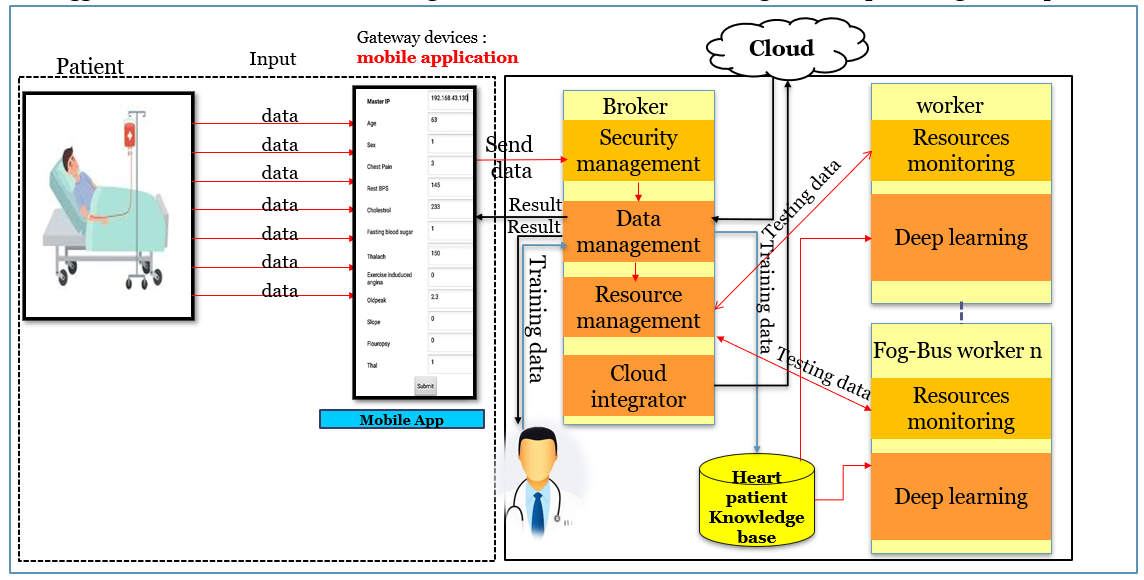
Using Internet of Things (IoT) and deep learning techniques in the healthcare sector has gained significant momentum in recent years. These technologies have the potential to transform traditional healthcare monitoring systems into real-time data collection, analysis, and decision-making capabilities. While several models have been developed to assist people with heart diseases, numerous obstacles still impede the effectiveness of the current solutions, such as power consumption, latency, accuracy, and scalability. Therefore, this study aims to develop a promising smart healthcare monitoring model that integrates IoT and deep learning techniques for saving patient lives. In addition, it clarifies the current research gap. The methodology used in this study was a literature review, which was conducted to identify relevant studies on IoT and deep learning applications in healthcare and find the gaps in each. This model consists of three main components: data acquisition through IoT devices, data processing using deep learning algorithms, and decision-making based on analyzed data. Moreover, it showed an unstable rate of accuracy in the current studies, which were taken from 2021 to 2023. In the future, our proposed smart healthcare monitoring model will solve that gap, which is already available in the current studies, and that will be proven using real-time materials such as Arduino and heart disease sensors.
marwa Al-Hadi، Ghaleb Hamoud Al-Gaphari، Ibrahim Ahmed Al-Baltah، Francisco Bacallao Julian (المؤلف) (2024). A Promising Smart Healthcare Monitoring Model based on Internet of Things and Deep Learning Techniques. مجلة جامعة صنعاء للعلوم التطبيقية والتكنولوجيا, 147-153. DOI: https://doi.org/10.59628/jast.v2i2.811
marwa Al-Hadi، Ghaleb Hamoud Al-Gaphari، Ibrahim Ahmed Al-Baltah، Francisco Bacallao Julian (المؤلف). “A Promising Smart Healthcare Monitoring Model based on Internet of Things and Deep Learning Techniques.” مجلة جامعة صنعاء للعلوم التطبيقية والتكنولوجيا, 2024, pp. 147-153. https://doi.org/10.59628/jast.v2i2.811. Accessed 30 أكتوبر. 2026.
marwa Al-Hadi، Ghaleb Hamoud Al-Gaphari، Ibrahim Ahmed Al-Baltah، Francisco Bacallao Julian (المؤلف). 2024. “A Promising Smart Healthcare Monitoring Model based on Internet of Things and Deep Learning Techniques.” مجلة جامعة صنعاء للعلوم التطبيقية والتكنولوجيا : 147-153. DOI: https://doi.org/10.59628/jast.v2i2.811
marwa Al-Hadi، Ghaleb Hamoud Al-Gaphari، Ibrahim Ahmed Al-Baltah، Francisco Bacallao Julian (المؤلف) (2024) ‘A Promising Smart Healthcare Monitoring Model based on Internet of Things and Deep Learning Techniques’, مجلة جامعة صنعاء للعلوم التطبيقية والتكنولوجيا, pp. 147-153. doi: 10.59628/jast.v2i2.811
@article{jast2024_art811,
    author  = {marwa Al-Hadi، Ghaleb Hamoud  Al-Gaphari، Ibrahim Ahmed Al-Baltah، Francisco Bacallao Julian (المؤلف)},
    title   = {A Promising Smart Healthcare Monitoring Model based on Internet of Things and Deep Learning Techniques},
    journal = {مجلة جامعة صنعاء للعلوم التطبيقية والتكنولوجيا},    year    = {2024},    month   = {مايو},    pages   = {147-153},    doi     = {10.59628/jast.v2i2.811},
    url     = {https://doi.org/10.59628/jast.v2i2.811},}
A Promising Smart Healthcare Monitoring Model based on Internet of Things and Deep Learning Techniques

Clustering is a fundamental task in unsupervised learning, aiming to group similar data points while maximizing inter-group dissimilarity. Traditional clustering algorithms often struggle with large-scale datasets containing mixed data types (numerical and categorical). This Research introduces an incremental clustering algorithm that incorporates a novelty criterion to identify only interesting patterns from big data. The novelty criterion functions as a distance metric, measuring deviation between instances and labeling an instance as novel if its deviation exceeds a user-defined threshold. Unlike conventional methods such as k-means, the proposed approach does not require predefining the number of clusters; instead, it dynamically determines them during execution. This flexibility enhances its applicability to complex datasets. The algorithm was implemented and evaluated using public datasets, Through experimentation it became clear that the proposed algorithm achieved the same high accuracy of 81.5% as the DBSCAN algorithm. and However it surpassed it in speed, taking only 22 seconds compared to 100 seconds. This means it is more efficient the same level of accuracy but in significantly less time, making it a better option for practical applications.
Akram A. M. Mustafa، Abdulmajed A. G. Al-Khulidi، Ahmed S. Al-Hegami (المؤلف) (2026). A Proposed Incremental Distance Based Clustering of Interesting Patterns for Big Data. مجلة جامعة صنعاء للعلوم التطبيقية والتكنولوجيا, 1938-1949. DOI: https://doi.org/10.59628/jast.v4i4.2271
Akram A. M. Mustafa، Abdulmajed A. G. Al-Khulidi، Ahmed S. Al-Hegami (المؤلف). “A Proposed Incremental Distance Based Clustering of Interesting Patterns for Big Data.” مجلة جامعة صنعاء للعلوم التطبيقية والتكنولوجيا, 2026, pp. 1938-1949. https://doi.org/10.59628/jast.v4i4.2271. Accessed 30 أكتوبر. 2026.
Akram A. M. Mustafa، Abdulmajed A. G. Al-Khulidi، Ahmed S. Al-Hegami (المؤلف). 2026. “A Proposed Incremental Distance Based Clustering of Interesting Patterns for Big Data.” مجلة جامعة صنعاء للعلوم التطبيقية والتكنولوجيا : 1938-1949. DOI: https://doi.org/10.59628/jast.v4i4.2271
Akram A. M. Mustafa، Abdulmajed A. G. Al-Khulidi، Ahmed S. Al-Hegami (المؤلف) (2026) ‘A Proposed Incremental Distance Based Clustering of Interesting Patterns for Big Data’, مجلة جامعة صنعاء للعلوم التطبيقية والتكنولوجيا, pp. 1938-1949. doi: 10.59628/jast.v4i4.2271
@article{jast2026_art2271,
    author  = {Akram A. M. Mustafa، Abdulmajed A. G. Al-Khulidi، Ahmed S. Al-Hegami (المؤلف)},
    title   = {A Proposed Incremental Distance Based Clustering of Interesting Patterns for Big Data},
    journal = {مجلة جامعة صنعاء للعلوم التطبيقية والتكنولوجيا},    year    = {2026},    month   = {أبريل},    pages   = {1938-1949},    doi     = {10.59628/jast.v4i4.2271},
    url     = {https://doi.org/10.59628/jast.v4i4.2271},}
A Proposed Incremental Distance Based Clustering of Interesting Patterns for Big Data
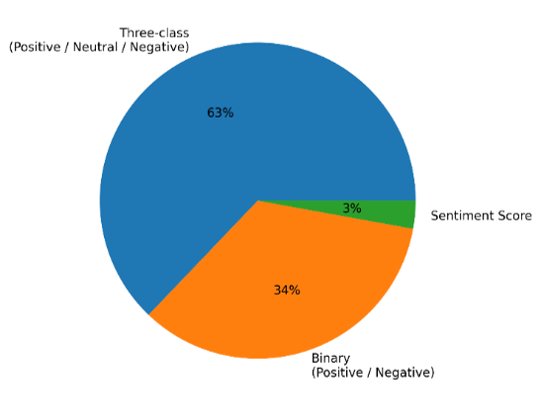
Sentiment analysis has become increasingly important for interpreting customer-generated content across social media and digital technologies. However, research on digital banking continues to rely predominantly on textonly data, with limited attention to multimodal integration. This scoping review mapped the literature on sentiment analysis for customer satisfaction in digital banking, identified research gaps, and outlined future directions. The review followed the PRISMA-ScR guidelines and searched six databases—ScienceDirect, IEEE Xplore, Wiley Online Library, ACM Digital Library, SpringerLink, and Google Scholar—for English-language studies published from 2015 to 2026; the final search was conducted on May 10, 2026. Of 1,631 records identified, 35 studies met the inclusion criteria. Text only data were used in 31 studies (88.6%), multi-source text was used in one study (2.9%), text combined with survey data in two studies (5.7%), and numerical time-series data in one study (2.9%); no included study integrated text, audio, and video within a single sentiment analysis framework. The literature was geographically concentrated and relied mainly on traditional machine-learning and hybrid approaches, whereas transformer/LLM based methods, explainable AI, and real-time approaches remained limited. The absence of banking-specific multimodal datasets is a key barrier to progress. Future research should prioritize privacy-preserving multimodal datasets, multilingual and culturally diverse models, explainable AI, and real-time deployment to support more reliable assessment of customer experience in digital banking.
Maimona AL_Maamari، Ghaleb Al-Gaphari (المؤلف) (2026). A Scoping Review of Sentiment Analysis for Customer Satisfaction in Digital Banking: Mapping the Research Gap Toward Multimodal Integration. مجلة جامعة صنعاء للعلوم التطبيقية والتكنولوجيا, 2619-2634. DOI: https://doi.org/10.59628/jast.v4i10.3463
Maimona AL_Maamari، Ghaleb Al-Gaphari (المؤلف). “A Scoping Review of Sentiment Analysis for Customer Satisfaction in Digital Banking: Mapping the Research Gap Toward Multimodal Integration.” مجلة جامعة صنعاء للعلوم التطبيقية والتكنولوجيا, 2026, pp. 2619-2634. https://doi.org/10.59628/jast.v4i10.3463. Accessed 30 أكتوبر. 2026.
Maimona AL_Maamari، Ghaleb Al-Gaphari (المؤلف). 2026. “A Scoping Review of Sentiment Analysis for Customer Satisfaction in Digital Banking: Mapping the Research Gap Toward Multimodal Integration.” مجلة جامعة صنعاء للعلوم التطبيقية والتكنولوجيا : 2619-2634. DOI: https://doi.org/10.59628/jast.v4i10.3463
Maimona AL_Maamari، Ghaleb Al-Gaphari (المؤلف) (2026) ‘A Scoping Review of Sentiment Analysis for Customer Satisfaction in Digital Banking: Mapping the Research Gap Toward Multimodal Integration’, مجلة جامعة صنعاء للعلوم التطبيقية والتكنولوجيا, pp. 2619-2634. doi: 10.59628/jast.v4i10.3463
@article{jast2026_art3463,
    author  = {Maimona AL_Maamari، Ghaleb Al-Gaphari (المؤلف)},
    title   = {A Scoping Review of Sentiment Analysis for Customer Satisfaction in Digital Banking: Mapping the Research Gap Toward Multimodal Integration},
    journal = {مجلة جامعة صنعاء للعلوم التطبيقية والتكنولوجيا},    year    = {2026},    month   = {أكتوبر},    pages   = {2619-2634},    doi     = {10.59628/jast.v4i10.3463},
    url     = {https://doi.org/10.59628/jast.v4i10.3463},}
A Scoping Review of Sentiment Analysis for Customer Satisfaction in Digital Banking: Mapping the Research Gap Toward Multimodal Integration
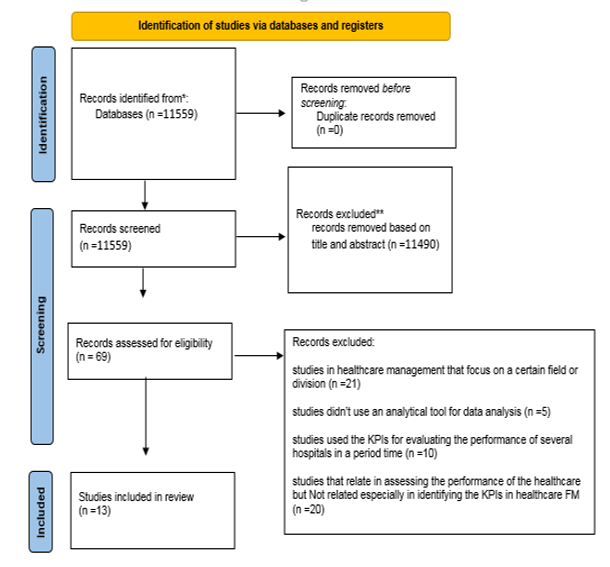
The healthcare performance measurement system is a critical indicator for assessing hospital management performance. This study aims to identify the most frequent critical performance indicators (CSFs) in measuring and evaluating healthcare performance. This paper conducts a systematic review based on Preferred Reporting Items for Systematic Reviews and Meta Analyses (PRISMA). A literature review that includes "key performance indicators for health facility management (FM) or analyzing the most used key performance indicators," and an in-depth view were used to classify relevant KPIs for healthcare FM performance measurement. The findings show that patient satisfaction, cash flow, infection rate, length of stay, average waiting time, number of accidents per year, incidents and errors, and bed occupancy are the most significant CSFs for health facility management (HFM). The results of this paper provide valuable insights to inform future KPI development for the Yemeni healthcare environment. In future work, the Delphi method and the analytic hierarchy process (AHP) will be employed to prioritize the performance indicators of the Yemeni healthcare environment.
wafaa Abdullah، Fadl Ba-Alwi ، Marwa Al-Hadi، Ammar T. Zahary (المؤلف) (2024). A Systematic Review and Meta-Analysis on the Most Useful Key Performance Indicators in Measuring and Evaluating Healthcare Performance. مجلة جامعة صنعاء للعلوم التطبيقية والتكنولوجيا, 293-302. DOI: https://doi.org/10.59628/jast.v2i3.1019
wafaa Abdullah، Fadl Ba-Alwi ، Marwa Al-Hadi، Ammar T. Zahary (المؤلف). “A Systematic Review and Meta-Analysis on the Most Useful Key Performance Indicators in Measuring and Evaluating Healthcare Performance.” مجلة جامعة صنعاء للعلوم التطبيقية والتكنولوجيا, 2024, pp. 293-302. https://doi.org/10.59628/jast.v2i3.1019. Accessed 30 أكتوبر. 2026.
wafaa Abdullah، Fadl Ba-Alwi ، Marwa Al-Hadi، Ammar T. Zahary (المؤلف). 2024. “A Systematic Review and Meta-Analysis on the Most Useful Key Performance Indicators in Measuring and Evaluating Healthcare Performance.” مجلة جامعة صنعاء للعلوم التطبيقية والتكنولوجيا : 293-302. DOI: https://doi.org/10.59628/jast.v2i3.1019
wafaa Abdullah، Fadl Ba-Alwi ، Marwa Al-Hadi، Ammar T. Zahary (المؤلف) (2024) ‘A Systematic Review and Meta-Analysis on the Most Useful Key Performance Indicators in Measuring and Evaluating Healthcare Performance’, مجلة جامعة صنعاء للعلوم التطبيقية والتكنولوجيا, pp. 293-302. doi: 10.59628/jast.v2i3.1019
@article{jast2024_art1019,
    author  = {wafaa Abdullah، Fadl Ba-Alwi ، Marwa  Al-Hadi، Ammar T. Zahary (المؤلف)},
    title   = {A Systematic Review and Meta-Analysis on the Most Useful Key Performance Indicators in Measuring and Evaluating Healthcare Performance},
    journal = {مجلة جامعة صنعاء للعلوم التطبيقية والتكنولوجيا},    year    = {2024},    month   = {يونيو},    pages   = {293-302},    doi     = {10.59628/jast.v2i3.1019},
    url     = {https://doi.org/10.59628/jast.v2i3.1019},}
A Systematic Review and Meta-Analysis on the Most Useful Key Performance Indicators in Measuring and Evaluating Healthcare Performance

Automated Examination Systems (AES) are increasingly central to modern assessment, particularly as schools move toward broader digital transformation. Automated Exam Systems (AES) have emerged as transformative tools for improving assessment efficiency, accuracy, and transparency. This study examines how AES are adopted and used in resource-limited Yemeni schools, focusing on the technological, organizational, and environmental factors that shape their performance. It investigates the implementation of AES in Yemeni schools, highlighting applications, challenges, and prospects. A quantitative methodology was employed to collect data from 108 participants, comprising students, supervisors, technicians, and teachers, using structured questionnaires. The Technology-Organization-Environment (TOE) was applied to examine factors affecting AES adoption. Statistical analysis using SPSS, including Pearson correlation, Cronbach’s Alpha, and multiple linear regression, revealed significant relationships between technological, organizational, and human factors and the performance of AES. Key challenges, such as infrastructure limitations, inadequate training, and resistance to change, are discussed, along with practical solutions. The findings provided insights for effective AES implementation and future research directions in the Yemeni educational context.
Ammar T. Zahary، Ishraq Sharaf، Mossa Ghurab (المؤلف) (2026). A Technology Adoption Framework for Digitally Transforming Automated Examination Systems in Resource-Limited Environments: Evidence from Yemeni Schools. مجلة جامعة صنعاء للعلوم التطبيقية والتكنولوجيا, 1857-1870. DOI: https://doi.org/10.59628/jast.v4i3.2611
Ammar T. Zahary، Ishraq Sharaf، Mossa Ghurab (المؤلف). “A Technology Adoption Framework for Digitally Transforming Automated Examination Systems in Resource-Limited Environments: Evidence from Yemeni Schools.” مجلة جامعة صنعاء للعلوم التطبيقية والتكنولوجيا, 2026, pp. 1857-1870. https://doi.org/10.59628/jast.v4i3.2611. Accessed 30 أكتوبر. 2026.
Ammar T. Zahary، Ishraq Sharaf، Mossa Ghurab (المؤلف). 2026. “A Technology Adoption Framework for Digitally Transforming Automated Examination Systems in Resource-Limited Environments: Evidence from Yemeni Schools.” مجلة جامعة صنعاء للعلوم التطبيقية والتكنولوجيا : 1857-1870. DOI: https://doi.org/10.59628/jast.v4i3.2611
Ammar T. Zahary، Ishraq Sharaf، Mossa Ghurab (المؤلف) (2026) ‘A Technology Adoption Framework for Digitally Transforming Automated Examination Systems in Resource-Limited Environments: Evidence from Yemeni Schools’, مجلة جامعة صنعاء للعلوم التطبيقية والتكنولوجيا, pp. 1857-1870. doi: 10.59628/jast.v4i3.2611
@article{jast2026_art2611,
    author  = {Ammar T. Zahary، Ishraq Sharaf، Mossa Ghurab (المؤلف)},
    title   = {A Technology Adoption Framework for Digitally Transforming Automated Examination Systems in Resource-Limited Environments: Evidence from Yemeni Schools},
    journal = {مجلة جامعة صنعاء للعلوم التطبيقية والتكنولوجيا},    year    = {2026},    month   = {مارس},    pages   = {1857-1870},    doi     = {10.59628/jast.v4i3.2611},
    url     = {https://doi.org/10.59628/jast.v4i3.2611},}
A Technology Adoption Framework for Digitally Transforming Automated Examination Systems in Resource-Limited Environments: Evidence from Yemeni Schools
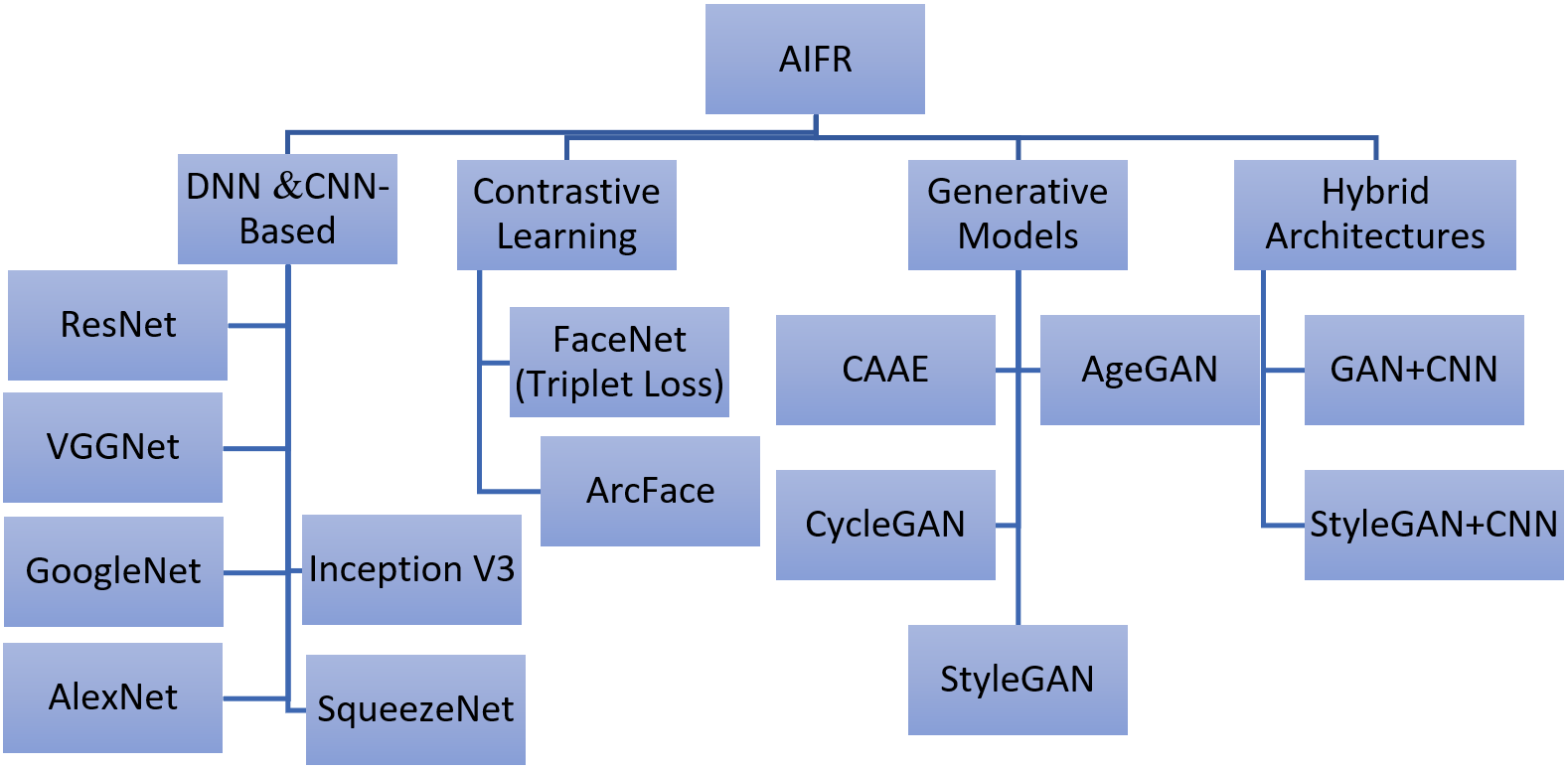
Age-Invariant Face Recognition (AIFR) addresses the critical challenge of identifying individuals despite age induced facial changes over time. This paper presents a structured survey of recent advancements in AIFR, emphasizing deep learning-based solutions, particularly Generative Adversarial Networks (GANs). Through a comparative analysis of benchmark datasets MORPH-II, FG-NET, and CACD we highlight the performance trends and limitations of current models. GANs have shown exceptional promise in synthesizing realistic age- progressed or age regressed facial images, thereby improving recognition accuracy across age gaps. Further- more, we analyze key factors affecting model performance, including dataset diversity, illumination, and pose variations. Despite significant progress, challenges remain in generalizing across ethnicities, age ranges, and real-world conditions.
Somaia Abduh AL-bahri، Nagi Ali AL-Shaibany (المؤلف) (2025). Advanced Techniques in Age-Invariant Face Recognition: A Survey. مجلة جامعة صنعاء للعلوم التطبيقية والتكنولوجيا, 954-963. DOI: https://doi.org/10.59628/jast.v3i4.1729
Somaia Abduh AL-bahri، Nagi Ali AL-Shaibany (المؤلف). “Advanced Techniques in Age-Invariant Face Recognition: A Survey.” مجلة جامعة صنعاء للعلوم التطبيقية والتكنولوجيا, 2025, pp. 954-963. https://doi.org/10.59628/jast.v3i4.1729. Accessed 30 أكتوبر. 2026.
Somaia Abduh AL-bahri، Nagi Ali AL-Shaibany (المؤلف). 2025. “Advanced Techniques in Age-Invariant Face Recognition: A Survey.” مجلة جامعة صنعاء للعلوم التطبيقية والتكنولوجيا : 954-963. DOI: https://doi.org/10.59628/jast.v3i4.1729
Somaia Abduh AL-bahri، Nagi Ali AL-Shaibany (المؤلف) (2025) ‘Advanced Techniques in Age-Invariant Face Recognition: A Survey’, مجلة جامعة صنعاء للعلوم التطبيقية والتكنولوجيا, pp. 954-963. doi: 10.59628/jast.v3i4.1729
@article{jast2025_art1729,
    author  = {Somaia Abduh  AL-bahri، Nagi Ali  AL-Shaibany (المؤلف)},
    title   = {Advanced Techniques in Age-Invariant Face Recognition: A Survey},
    journal = {مجلة جامعة صنعاء للعلوم التطبيقية والتكنولوجيا},    year    = {2025},    month   = {أغسطس},    pages   = {954-963},    doi     = {10.59628/jast.v3i4.1729},
    url     = {https://doi.org/10.59628/jast.v3i4.1729},}
Advanced Techniques in Age-Invariant Face Recognition: A Survey
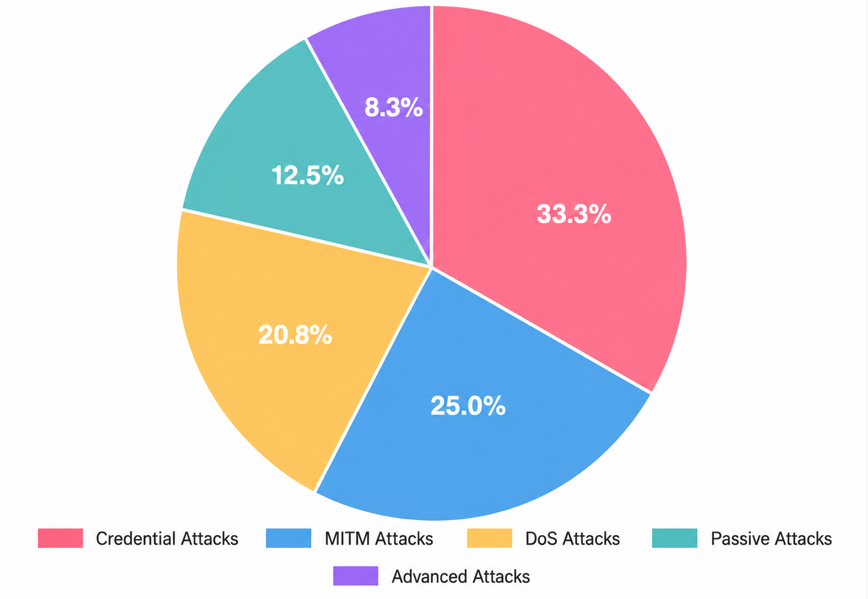
Wireless networking technologies have become a foundational element of today’s digital infrastructure, yet their open transmission nature exposes them to a wide spectrum of security threats . This paper introduces an empirically-validated analytical framework for examining Wi-Fi attack techniques and assessing corresponding defense mechanisms, with emphasis on protocol weaknesses and layered protection models. Multiple attack categories—including passive interception, Man-in-the-Middle manipulation, management frame abuse, password-guessing attacks, and rogue access point scenarios—are examined through controlled experimental validation across four protocol generations.
The proposed framework connects attack behaviors to protocol design limitations across legacy and modern standards, including WEP, WPA, WPA2, and WPA3. Modern countermeasures—such as SAE authentication, Protected Management Frames, wireless intrusion detection platforms, and segmented network architectures—are evaluated using empirical data from 240 controlled attack executions in a dedicated wireless testbed .The experimental results demonstrate that WPA3-SAE provides complete resistance to offline dictionary attacks (0% success rate vs. 90% for WPA2-PSK) and key reinstallation attacks (0% vs. 95% for unpatched WPA2), while layered defense strategies reduce overall attack success by 94% compared to protocol-only protection The study highlights that sustainable wireless protection requires a multi-layer defensive strategy that combines protocol hardening, monitoring, and enforcement policies .
Mohammed Ameen Saleh Al-Bareda (المؤلف) (2026). An Analytical Framework for Wi-Fi Network Attacks and Protection Techniques.. مجلة جامعة صنعاء للعلوم التطبيقية والتكنولوجيا, 2518-2532. DOI: https://doi.org/10.59628/jast.v4i9.2816
Mohammed Ameen Saleh Al-Bareda (المؤلف). “An Analytical Framework for Wi-Fi Network Attacks and Protection Techniques..” مجلة جامعة صنعاء للعلوم التطبيقية والتكنولوجيا, 2026, pp. 2518-2532. https://doi.org/10.59628/jast.v4i9.2816. Accessed 30 أكتوبر. 2026.
Mohammed Ameen Saleh Al-Bareda (المؤلف). 2026. “An Analytical Framework for Wi-Fi Network Attacks and Protection Techniques..” مجلة جامعة صنعاء للعلوم التطبيقية والتكنولوجيا : 2518-2532. DOI: https://doi.org/10.59628/jast.v4i9.2816
Mohammed Ameen Saleh Al-Bareda (المؤلف) (2026) ‘An Analytical Framework for Wi-Fi Network Attacks and Protection Techniques.’, مجلة جامعة صنعاء للعلوم التطبيقية والتكنولوجيا, pp. 2518-2532. doi: 10.59628/jast.v4i9.2816
@article{jast2026_art2816,
    author  = {Mohammed Ameen Saleh Al-Bareda (المؤلف)},
    title   = {An Analytical Framework for Wi-Fi Network Attacks and Protection Techniques.},
    journal = {مجلة جامعة صنعاء للعلوم التطبيقية والتكنولوجيا},    year    = {2026},    month   = {سبتمبر},    pages   = {2518-2532},    doi     = {10.59628/jast.v4i9.2816},
    url     = {https://doi.org/10.59628/jast.v4i9.2816},}
An Analytical Framework for Wi-Fi Network Attacks and Protection Techniques.

Artificial intelligence (AI) is reshaping academic practice across research and learning. To address fragmented evidence, this review aims to (i) map commonly used academic AI tools, (ii) synthesize reported effects on research and learning performance, and (iii) outline risks and governance needs. We conducted a qualitative content analysis using publicly available “materials,” including official tool documentation and websites, major academic databases , and user reports; records were screened for relevance to higher education and research, data were charted on features, use-cases, and ethical considerations, and tools were categorized into five domains: AI writing assistants; literature-review & citation tools; data analysis & visualization; productivity & organization; and learning & tutoring. Main results show comparative feature tables that support tool selection and consistent benefit signals: higher research efficiency and writing support, and within education—greater engagement and personalization; persistent risks include academic integrity, privacy, bias, and over-reliance, implying the need for clear governance and assessment design. Verification relied on human fact-checking against primary sources and consistency checks across categories; the review is exploratory and descriptive and doesnot include benchmarking or controlled experiments.
Jehan Wajeh Almaqtari، Emad Alramada، Ayman Alsabry (المؤلف) (2026). An Overview and Impact Analysis of AI Tools in Academic Research, Learning, and Educational Performance. مجلة جامعة صنعاء للعلوم التطبيقية والتكنولوجيا, 1665-1681. DOI: https://doi.org/10.59628/jast.v4i2.1921
Jehan Wajeh Almaqtari، Emad Alramada، Ayman Alsabry (المؤلف). “An Overview and Impact Analysis of AI Tools in Academic Research, Learning, and Educational Performance.” مجلة جامعة صنعاء للعلوم التطبيقية والتكنولوجيا, 2026, pp. 1665-1681. https://doi.org/10.59628/jast.v4i2.1921. Accessed 30 أكتوبر. 2026.
Jehan Wajeh Almaqtari، Emad Alramada، Ayman Alsabry (المؤلف). 2026. “An Overview and Impact Analysis of AI Tools in Academic Research, Learning, and Educational Performance.” مجلة جامعة صنعاء للعلوم التطبيقية والتكنولوجيا : 1665-1681. DOI: https://doi.org/10.59628/jast.v4i2.1921
Jehan Wajeh Almaqtari، Emad Alramada، Ayman Alsabry (المؤلف) (2026) ‘An Overview and Impact Analysis of AI Tools in Academic Research, Learning, and Educational Performance’, مجلة جامعة صنعاء للعلوم التطبيقية والتكنولوجيا, pp. 1665-1681. doi: 10.59628/jast.v4i2.1921
@article{jast2026_art1921,
    author  = {Jehan Wajeh Almaqtari، Emad Alramada، Ayman Alsabry (المؤلف)},
    title   = {An Overview and Impact Analysis of AI Tools in Academic Research, Learning, and Educational Performance},
    journal = {مجلة جامعة صنعاء للعلوم التطبيقية والتكنولوجيا},    year    = {2026},    month   = {فبراير},    pages   = {1665-1681},    doi     = {10.59628/jast.v4i2.1921},
    url     = {https://doi.org/10.59628/jast.v4i2.1921},}
An Overview and Impact Analysis of AI Tools in Academic Research, Learning, and Educational Performance
Frequent set-item mining is a widely used technique in the field of data mining. The algorithm utilized in Association Rules constitutes the primary source of contention; this approach is memory-intensive and time-intensive. The extraction process for concealed patterns of frequent item sets, on the other hand, becomes more time-consuming as the volume of data grows. Therefore, the necessary algorithm for mining the patterns of frequently occurring concealed item sets must be memory-efficient and fast-running. By analyzing various algorithms for locating frequent item sets, this paper aims to contribute to the development of a more efficient algorithm in this domain. The paper will evaluate the efficiency of different algorithms by considering their memory usage and runtime. Additionally, it will explore potential improvements to existing algorithms to enhance their performance in mining frequently occurring concealed item sets.
Abdulkader Mohammed Abdulla Al-Badani، Abdualmajed A. G. Al-Khulaidi (المؤلف) (2023). Analysis Of Mining Algorithms for Patterns of Frequent Item sets and Hidden. مجلة جامعة صنعاء للعلوم التطبيقية والتكنولوجيا. DOI: https://doi.org/10.59628/jast.v1i4.663
Abdulkader Mohammed Abdulla Al-Badani، Abdualmajed A. G. Al-Khulaidi (المؤلف). “Analysis Of Mining Algorithms for Patterns of Frequent Item sets and Hidden.” مجلة جامعة صنعاء للعلوم التطبيقية والتكنولوجيا, 2023, https://doi.org/10.59628/jast.v1i4.663. Accessed 30 أكتوبر. 2026.
Abdulkader Mohammed Abdulla Al-Badani، Abdualmajed A. G. Al-Khulaidi (المؤلف). 2023. “Analysis Of Mining Algorithms for Patterns of Frequent Item sets and Hidden.” مجلة جامعة صنعاء للعلوم التطبيقية والتكنولوجيا DOI: https://doi.org/10.59628/jast.v1i4.663
Abdulkader Mohammed Abdulla Al-Badani، Abdualmajed A. G. Al-Khulaidi (المؤلف) (2023) ‘Analysis Of Mining Algorithms for Patterns of Frequent Item sets and Hidden’, مجلة جامعة صنعاء للعلوم التطبيقية والتكنولوجيا. doi: 10.59628/jast.v1i4.663
@article{jast2023_art663,
    author  = {Abdulkader Mohammed Abdulla  Al-Badani، Abdualmajed A. G. Al-Khulaidi  (المؤلف)},
    title   = {Analysis Of Mining Algorithms for Patterns  of Frequent Item sets and Hidden},
    journal = {مجلة جامعة صنعاء للعلوم التطبيقية والتكنولوجيا},    year    = {2023},    month   = {ديسمبر},    doi     = {10.59628/jast.v1i4.663},
    url     = {https://doi.org/10.59628/jast.v1i4.663},}
Analysis Of Mining Algorithms for Patterns of Frequent Item sets and Hidden

Linguistic annotation provides additional information associated with a particular purpose in a document or another piece of information. It is widely used in various fields, ranging from computing and bioinformatics to psychology, law, and linguistics. This study aimed to develop a linguistic annotator for nominal Arabic sentences. The annotator detects both the Inchoative (I) and Predicate (P) phrases within nominal sentences in Arabic text. This is based on a shallow parsing method for chunking sentence constituents. The motivation behind this study is to produce a tool that enables further analysis, such as rhetorical parsing. This annotator can help improve the accuracy of linguistic parsers and enhance natural language understanding. The experiments were conducted on a standard dataset supported by a competitive case study. These results are promising and encouraging.
Saeed AL-Dobai، Bakeel Azman، Ghalib AL-Gaphari، Monier Ana’am (المؤلف) (2025). Annotation of Inchoative and Predicate in Arabic Nominal Sentence. مجلة جامعة صنعاء للعلوم التطبيقية والتكنولوجيا, 1178-1186. DOI: https://doi.org/10.59628/jast.v3i5.1468
Saeed AL-Dobai، Bakeel Azman، Ghalib AL-Gaphari، Monier Ana’am (المؤلف). “Annotation of Inchoative and Predicate in Arabic Nominal Sentence.” مجلة جامعة صنعاء للعلوم التطبيقية والتكنولوجيا, 2025, pp. 1178-1186. https://doi.org/10.59628/jast.v3i5.1468. Accessed 30 أكتوبر. 2026.
Saeed AL-Dobai، Bakeel Azman، Ghalib AL-Gaphari، Monier Ana’am (المؤلف). 2025. “Annotation of Inchoative and Predicate in Arabic Nominal Sentence.” مجلة جامعة صنعاء للعلوم التطبيقية والتكنولوجيا : 1178-1186. DOI: https://doi.org/10.59628/jast.v3i5.1468
Saeed AL-Dobai، Bakeel Azman، Ghalib AL-Gaphari، Monier Ana’am (المؤلف) (2025) ‘Annotation of Inchoative and Predicate in Arabic Nominal Sentence’, مجلة جامعة صنعاء للعلوم التطبيقية والتكنولوجيا, pp. 1178-1186. doi: 10.59628/jast.v3i5.1468
@article{jast2025_art1468,
    author  = {Saeed AL-Dobai، Bakeel Azman، Ghalib AL-Gaphari، Monier Ana’am (المؤلف)},
    title   = {Annotation of Inchoative and Predicate in Arabic Nominal Sentence},
    journal = {مجلة جامعة صنعاء للعلوم التطبيقية والتكنولوجيا},    year    = {2025},    month   = {أكتوبر},    pages   = {1178-1186},    doi     = {10.59628/jast.v3i5.1468},
    url     = {https://doi.org/10.59628/jast.v3i5.1468},}
Annotation of Inchoative and Predicate in Arabic Nominal Sentence
The emergence of data in recent years, characterized by the "6Vs" (Volume, Velocity, Variety, Veracity, Value, and Variability), has started the era of big data. While this data holds great potential for uncovering valuable insights and knowledge, its size presents significant challenges for analysis. This paper explores two critical big data reduction techniques: feature selection and sampling. Feature selection focuses on identifying and eliminating irrelevant or redundant features, reducing data dimensionality. Sampling, on the other hand, selects a representative subset of data points for analysis. We compare and contrast these techniques, highlighting their strengths and weaknesses. The paper explores when each approach is most suitable and suggest the potential benefits of combining them for even more efficient big data analysis.
Mohammed Zayed، Fadl Mutaher Ba-Alwi (المؤلف) (2025). Big Data Formation, Reduction, and Its Impact on Sampling: A survey. مجلة جامعة صنعاء للعلوم التطبيقية والتكنولوجيا, 597-603. DOI: https://doi.org/10.59628/jast.v3i1.1516
Mohammed Zayed، Fadl Mutaher Ba-Alwi (المؤلف). “Big Data Formation, Reduction, and Its Impact on Sampling: A survey.” مجلة جامعة صنعاء للعلوم التطبيقية والتكنولوجيا, 2025, pp. 597-603. https://doi.org/10.59628/jast.v3i1.1516. Accessed 30 أكتوبر. 2026.
Mohammed Zayed، Fadl Mutaher Ba-Alwi (المؤلف). 2025. “Big Data Formation, Reduction, and Its Impact on Sampling: A survey.” مجلة جامعة صنعاء للعلوم التطبيقية والتكنولوجيا : 597-603. DOI: https://doi.org/10.59628/jast.v3i1.1516
Mohammed Zayed، Fadl Mutaher Ba-Alwi (المؤلف) (2025) ‘Big Data Formation, Reduction, and Its Impact on Sampling: A survey’, مجلة جامعة صنعاء للعلوم التطبيقية والتكنولوجيا, pp. 597-603. doi: 10.59628/jast.v3i1.1516
@article{jast2025_art1516,
    author  = {Mohammed Zayed، Fadl  Mutaher Ba-Alwi (المؤلف)},
    title   = {Big Data Formation, Reduction, and Its Impact on Sampling: A survey},
    journal = {مجلة جامعة صنعاء للعلوم التطبيقية والتكنولوجيا},    year    = {2025},    month   = {فبراير},    pages   = {597-603},    doi     = {10.59628/jast.v3i1.1516},
    url     = {https://doi.org/10.59628/jast.v3i1.1516},}
Big Data Formation, Reduction, and Its Impact on Sampling: A survey
Arabic information retrieval is challenging due to the language's complex morphology and syntax. Preprocessing and stemming improve the accuracy and efficiency of Arabic information retrieval. This paper provides a comprehensive analysis of the existing literature on Arabic preprocessing and stemming techniques. The paper identifies the limitations and challenges of these techniques. The paper emphasizes the importance of preprocessing and stemming and underscores the need for further research to improve Arabic information retrieval. This study evaluates ten stemmers on a public dataset. The results show that root-based stemmers: Lucene, and khoja got the highest reduction rate 90.9%, and 85% respectively. The results emphasize that root-based stemmers have good conflating ability for similar terms, while light-based stemmers under-stem similar terms.
Abdualmajed A. G. Al-Khulaidi ، Samer Mohammed Yaseen (المؤلف) (2023). Comparative Analysis and Evaluation of Stemming and Preprocessing Techniques for Arabic Text . مجلة جامعة صنعاء للعلوم التطبيقية والتكنولوجيا. DOI: https://doi.org/10.59628/jast.v1i4.588
Abdualmajed A. G. Al-Khulaidi ، Samer Mohammed Yaseen (المؤلف). “Comparative Analysis and Evaluation of Stemming and Preprocessing Techniques for Arabic Text .” مجلة جامعة صنعاء للعلوم التطبيقية والتكنولوجيا, 2023, https://doi.org/10.59628/jast.v1i4.588. Accessed 30 أكتوبر. 2026.
Abdualmajed A. G. Al-Khulaidi ، Samer Mohammed Yaseen (المؤلف). 2023. “Comparative Analysis and Evaluation of Stemming and Preprocessing Techniques for Arabic Text .” مجلة جامعة صنعاء للعلوم التطبيقية والتكنولوجيا DOI: https://doi.org/10.59628/jast.v1i4.588
Abdualmajed A. G. Al-Khulaidi ، Samer Mohammed Yaseen (المؤلف) (2023) ‘Comparative Analysis and Evaluation of Stemming and Preprocessing Techniques for Arabic Text ’, مجلة جامعة صنعاء للعلوم التطبيقية والتكنولوجيا. doi: 10.59628/jast.v1i4.588
@article{jast2023_art588,
    author  = {Abdualmajed A. G. Al-Khulaidi ، Samer Mohammed Yaseen (المؤلف)},
    title   = {Comparative Analysis and Evaluation of Stemming and  Preprocessing Techniques for Arabic Text  },
    journal = {مجلة جامعة صنعاء للعلوم التطبيقية والتكنولوجيا},    year    = {2023},    month   = {ديسمبر},    doi     = {10.59628/jast.v1i4.588},
    url     = {https://doi.org/10.59628/jast.v1i4.588},}
Comparative Analysis and Evaluation of Stemming and Preprocessing Techniques for Arabic Text

In Yemen, years of conflict have weakened the health system, limiting access to essential health services and worsening the burden of NCDs. This study proposes a conceptual framework for NCD management in Yemen using the open-source District Health Information System 2 (DHIS2). The framework aims to establish an NCD database that strengthens health information systems to support evidence-based decision making. This study applies a PESTEL analysis of the external environment alongside a SWOT analysis of DHIS2 adoption to assess readiness to adopt this framework. By combining these approaches, the framework aims to close critical data gaps and mitigate NCD-related complications. The analysis results suggest that DHIS2 is a context-appropriate option for NCD programs.
Roqiah Atef، Mansoor N.Ali (المؤلف) (2026). Conceptual Readiness for DHIS2 Adoption in Yemen’s NCD Program: SWOT, PESTEL.. مجلة جامعة صنعاء للعلوم التطبيقية والتكنولوجيا, 2244-2253. DOI: https://doi.org/10.59628/jast.v4i6.2796
Roqiah Atef، Mansoor N.Ali (المؤلف). “Conceptual Readiness for DHIS2 Adoption in Yemen’s NCD Program: SWOT, PESTEL..” مجلة جامعة صنعاء للعلوم التطبيقية والتكنولوجيا, 2026, pp. 2244-2253. https://doi.org/10.59628/jast.v4i6.2796. Accessed 30 أكتوبر. 2026.
Roqiah Atef، Mansoor N.Ali (المؤلف). 2026. “Conceptual Readiness for DHIS2 Adoption in Yemen’s NCD Program: SWOT, PESTEL..” مجلة جامعة صنعاء للعلوم التطبيقية والتكنولوجيا : 2244-2253. DOI: https://doi.org/10.59628/jast.v4i6.2796
Roqiah Atef، Mansoor N.Ali (المؤلف) (2026) ‘Conceptual Readiness for DHIS2 Adoption in Yemen’s NCD Program: SWOT, PESTEL.’, مجلة جامعة صنعاء للعلوم التطبيقية والتكنولوجيا, pp. 2244-2253. doi: 10.59628/jast.v4i6.2796
@article{jast2026_art2796,
    author  = {Roqiah Atef، Mansoor N.Ali (المؤلف)},
    title   = {Conceptual Readiness for DHIS2 Adoption in Yemen’s NCD Program: SWOT, PESTEL.},
    journal = {مجلة جامعة صنعاء للعلوم التطبيقية والتكنولوجيا},    year    = {2026},    month   = {يونيو},    pages   = {2244-2253},    doi     = {10.59628/jast.v4i6.2796},
    url     = {https://doi.org/10.59628/jast.v4i6.2796},}
Conceptual Readiness for DHIS2 Adoption in Yemen’s NCD Program: SWOT, PESTEL.

Fingerprint recognition has widespread security applications owing to its uniqueness, permanence, and simplicity
in capture. However, conventional fingerprint authentication systems face high false acceptance and rejection rates and susceptibility to spoofing attacks. To address these issues, this study proposes a deep learning-based fingerprint authentication system using a Convolutional Neural Network (CNN) with five convolution layers to derive robust spatial features. The model was trained and cross-validated on the SOCOFing dataset with regularization and data augmentation to enhance generalization and spoof resistance. Experimental results show that the proposed CNN achieved a training accuracy of 99.10% with a loss of 0.0223 and a validation accuracy of 98.89% with a loss of 0.0114. Moreover, the model maintained a low false acceptance rate of 0.33% and false rejection rate of 0.25%, demonstrating its efficacy and credibility for secure and real-time biometric authentication. A rigorous comparison with conventional CNN models and DCCN architectures confirmed that the proposed model provides higher accuracy, lower computational cost, and stronger resistance to spoofing attacks. These findings indicate that the proposed system successfully addresses existing limitations and offers a practical, scalable, and reliable solution for fingerprint verification using deep CNN architectures.
Ghaleb H. Aljafary ، Abdulrahman Hussian (المؤلف) (2025). Deep Convolutional Neural Networks for Fingerprint Classification. مجلة جامعة صنعاء للعلوم التطبيقية والتكنولوجيا, 1145-1154. DOI: https://doi.org/10.59628/jast.v3i5.1831
Ghaleb H. Aljafary ، Abdulrahman Hussian (المؤلف). “Deep Convolutional Neural Networks for Fingerprint Classification.” مجلة جامعة صنعاء للعلوم التطبيقية والتكنولوجيا, 2025, pp. 1145-1154. https://doi.org/10.59628/jast.v3i5.1831. Accessed 30 أكتوبر. 2026.
Ghaleb H. Aljafary ، Abdulrahman Hussian (المؤلف). 2025. “Deep Convolutional Neural Networks for Fingerprint Classification.” مجلة جامعة صنعاء للعلوم التطبيقية والتكنولوجيا : 1145-1154. DOI: https://doi.org/10.59628/jast.v3i5.1831
Ghaleb H. Aljafary ، Abdulrahman Hussian (المؤلف) (2025) ‘Deep Convolutional Neural Networks for Fingerprint Classification’, مجلة جامعة صنعاء للعلوم التطبيقية والتكنولوجيا, pp. 1145-1154. doi: 10.59628/jast.v3i5.1831
@article{jast2025_art1831,
    author  = {Ghaleb H. Aljafary ، Abdulrahman Hussian (المؤلف)},
    title   = {Deep Convolutional Neural Networks for Fingerprint Classification},
    journal = {مجلة جامعة صنعاء للعلوم التطبيقية والتكنولوجيا},    year    = {2025},    month   = {أكتوبر},    pages   = {1145-1154},    doi     = {10.59628/jast.v3i5.1831},
    url     = {https://doi.org/10.59628/jast.v3i5.1831},}
Deep Convolutional Neural Networks for Fingerprint Classification

The widespread adoption of face masks during the COVID-19 pandemic created new requirements for facial recognition technology, driving focused innovation in Masked Face Recognition (MFR) systems. This survey synthesizes and analyzes key research developments from 2020 to 2024, examining more than twenty pivotal studies in the field. The review provides a structured comparison of contemporary deep learning methodologies, with particular attention to Convolutional Neural Network (CNN) implementations including ResNet, VGG, and MobileNet architectures. It further evaluates the characteristics and performance outcomes associated with principal publicly available datasets employed in MFR model development. The analysis highlights important considerations for advancing MFR systems, particularly regarding data quality and model generalization. Current research directions emphasize improving the alignment between training data characteristics and real-world application environments. Among available resources, the MaskedFace-Net dataset demonstrates particularly strong performance in benchmark evaluations, with reported recognition rates exceeding 99%, attributed to its specialized design and substantial scale. For practical implementation, the findings support utilizing established CNN-based frameworks, with opportunities for enhancement through complementary approaches such as integration with traditional classifiers. Looking forward, this survey identifies promising pathways for continued progress in MFR technology, centered on evolutionary advancements within proven architectural paradigms, sophisticated data utilization strategies, and optimizations for deployment efficiency. This comprehensive review offers valuable guidance for researchers and engineers working to create effective and adaptable masked face recognition solutions.
Haron M . Ahmed Omer، Fadl Ba-Alwi (المؤلف) (2026). Deep Learning Approaches for Masked Face Recognition: A Survey of Research During (2020-2024). مجلة جامعة صنعاء للعلوم التطبيقية والتكنولوجيا, 2130-2138. DOI: https://doi.org/10.59628/jast.v4i5.2643
Haron M . Ahmed Omer، Fadl Ba-Alwi (المؤلف). “Deep Learning Approaches for Masked Face Recognition: A Survey of Research During (2020-2024).” مجلة جامعة صنعاء للعلوم التطبيقية والتكنولوجيا, 2026, pp. 2130-2138. https://doi.org/10.59628/jast.v4i5.2643. Accessed 30 أكتوبر. 2026.
Haron M . Ahmed Omer، Fadl Ba-Alwi (المؤلف). 2026. “Deep Learning Approaches for Masked Face Recognition: A Survey of Research During (2020-2024).” مجلة جامعة صنعاء للعلوم التطبيقية والتكنولوجيا : 2130-2138. DOI: https://doi.org/10.59628/jast.v4i5.2643
Haron M . Ahmed Omer، Fadl Ba-Alwi (المؤلف) (2026) ‘Deep Learning Approaches for Masked Face Recognition: A Survey of Research During (2020-2024)’, مجلة جامعة صنعاء للعلوم التطبيقية والتكنولوجيا, pp. 2130-2138. doi: 10.59628/jast.v4i5.2643
@article{jast2026_art2643,
    author  = {Haron M . Ahmed Omer، Fadl Ba-Alwi (المؤلف)},
    title   = {Deep Learning Approaches for Masked Face Recognition: A Survey of Research During (2020-2024)},
    journal = {مجلة جامعة صنعاء للعلوم التطبيقية والتكنولوجيا},    year    = {2026},    month   = {مايو},    pages   = {2130-2138},    doi     = {10.59628/jast.v4i5.2643},
    url     = {https://doi.org/10.59628/jast.v4i5.2643},}
Deep Learning Approaches for Masked Face Recognition: A Survey of Research During (2020-2024)
The signature verification process has many applications, such as its use in financial operations, providing the electronic signature of documents, and providing an additional confidentiality standard to verify the identity of users in computer systems. This process has the advantage of being accepted by the community and is less intrusive compared to other biological methods. Deep learning (DL) and CNN (Convolutional Neural Network) are widely used by bioinformaticians. Due to the difficulty in extracting features in other systems or models, DL and CNN-based signature verification systems have been significantly improved. Yet Hyperparameter optimization for CNN models remains a challenging problem in designing highly efficient models with the most accurate results. It is often convolutional neural network (CNN) models that are manually designed. The proposed method is focused on a genetic algorithm that develops a population of CNN models in order to find the best fit architecture for designing an offline signature verification model. Our model is tested on more than one dataset, BHSig260-Bengali, BHSig260-Hindiin, GPDS, and CEDAR. The result of the approach proposed in this paper has the highest discrimination rate of FRR of 2.5, FAR 3.2, EER 2.35, and 97.73 %-accuracy rate.
Abdulbaset Mohammed Qaied Musleh، Abdoulwase Mohammed Obaid Al-Azzani (المؤلف) (2023). Developing a Model for Offline Signature Verification Using CNN Architectures and Genetic Algorithm. مجلة جامعة صنعاء للعلوم التطبيقية والتكنولوجيا. DOI: https://doi.org/10.59628/jast.v1i3.314
Abdulbaset Mohammed Qaied Musleh، Abdoulwase Mohammed Obaid Al-Azzani (المؤلف). “Developing a Model for Offline Signature Verification Using CNN Architectures and Genetic Algorithm.” مجلة جامعة صنعاء للعلوم التطبيقية والتكنولوجيا, 2023, https://doi.org/10.59628/jast.v1i3.314. Accessed 30 أكتوبر. 2026.
Abdulbaset Mohammed Qaied Musleh، Abdoulwase Mohammed Obaid Al-Azzani (المؤلف). 2023. “Developing a Model for Offline Signature Verification Using CNN Architectures and Genetic Algorithm.” مجلة جامعة صنعاء للعلوم التطبيقية والتكنولوجيا DOI: https://doi.org/10.59628/jast.v1i3.314
Abdulbaset Mohammed Qaied Musleh، Abdoulwase Mohammed Obaid Al-Azzani (المؤلف) (2023) ‘Developing a Model for Offline Signature Verification Using CNN Architectures and Genetic Algorithm’, مجلة جامعة صنعاء للعلوم التطبيقية والتكنولوجيا. doi: 10.59628/jast.v1i3.314
@article{jast2023_art314,
    author  = {Abdulbaset Mohammed Qaied Musleh، Abdoulwase Mohammed Obaid Al-Azzani (المؤلف)},
    title   = {Developing a Model for Offline Signature Verification Using CNN Architectures and Genetic Algorithm},
    journal = {مجلة جامعة صنعاء للعلوم التطبيقية والتكنولوجيا},    year    = {2023},    month   = {سبتمبر},    doi     = {10.59628/jast.v1i3.314},
    url     = {https://doi.org/10.59628/jast.v1i3.314},}
Developing a Model for Offline Signature Verification Using CNN Architectures and Genetic Algorithm
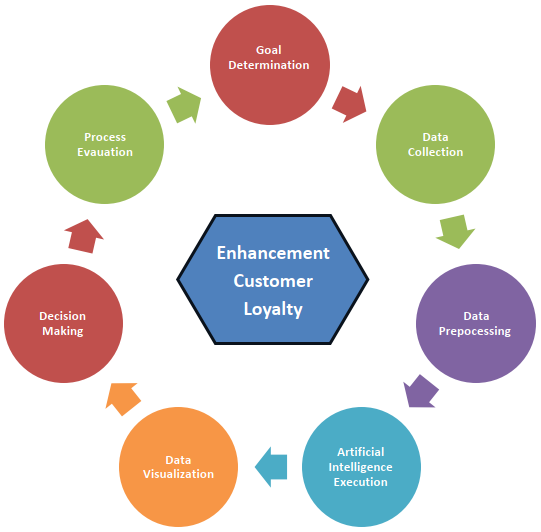
Artificial intelligence (AI) significantly enhances our daily lives, driving many service and financial institutions to seek optimal utilization of it. This paper addresses the problem, which is the inability of some institutions, such as banks, to satisfy customers using outdated methods and solely focusing on acquiring new customers instead of prioritizing customer retention that would be more effective and profitable to them. The main object of this paper is to enhance the quality of service in banks by proposing an intelligent model that leverages customer data to improve services and foster customer loyalty. This paper was motivated by the limited research on customer churn in Yemen and the scarcity of simple intelligent models globally. The methodology employed in this paper includes an in-depth analysis of existing literature on customer churn. Finally, this paper provides a comprehensive and concise conclusion based on the findings.
SULTAN AL-SULTAN، Ibrahim Ahmed Al-Baltah (المؤلف) (2024). Enhancement Customer Loyalty Via Data Mining Techniques in Yemeni Banks: Review Study. مجلة جامعة صنعاء للعلوم التطبيقية والتكنولوجيا, 348-354. DOI: https://doi.org/10.59628/jast.v2i4.1059
SULTAN AL-SULTAN، Ibrahim Ahmed Al-Baltah (المؤلف). “Enhancement Customer Loyalty Via Data Mining Techniques in Yemeni Banks: Review Study.” مجلة جامعة صنعاء للعلوم التطبيقية والتكنولوجيا, 2024, pp. 348-354. https://doi.org/10.59628/jast.v2i4.1059. Accessed 30 أكتوبر. 2026.
SULTAN AL-SULTAN، Ibrahim Ahmed Al-Baltah (المؤلف). 2024. “Enhancement Customer Loyalty Via Data Mining Techniques in Yemeni Banks: Review Study.” مجلة جامعة صنعاء للعلوم التطبيقية والتكنولوجيا : 348-354. DOI: https://doi.org/10.59628/jast.v2i4.1059
SULTAN AL-SULTAN، Ibrahim Ahmed Al-Baltah (المؤلف) (2024) ‘Enhancement Customer Loyalty Via Data Mining Techniques in Yemeni Banks: Review Study’, مجلة جامعة صنعاء للعلوم التطبيقية والتكنولوجيا, pp. 348-354. doi: 10.59628/jast.v2i4.1059
@article{jast2024_art1059,
    author  = {SULTAN AL-SULTAN، Ibrahim Ahmed Al-Baltah (المؤلف)},
    title   = {Enhancement Customer Loyalty Via Data Mining Techniques in Yemeni Banks: Review Study},
    journal = {مجلة جامعة صنعاء للعلوم التطبيقية والتكنولوجيا},    year    = {2024},    month   = {سبتمبر},    pages   = {348-354},    doi     = {10.59628/jast.v2i4.1059},
    url     = {https://doi.org/10.59628/jast.v2i4.1059},}
Enhancement Customer Loyalty Via Data Mining Techniques in Yemeni Banks: Review Study
In today's world, social media has become one of the most accessible sources of news for people worldwide due to its low cost, easy accessibility, and rapid dissemination. However, the harmful effects of fake news on individuals and society have been evident for a long time. Despite the challenges in detecting false information, numerous scholars are working to understand the issue and its characteristics.
The purpose of this paper is to analyze contemporary frameworks that make use of different machine learning techniques in order to further our understanding of false news identification. The efficiency of these frameworks in recognizing and halting the spread of false information may be compared by examining various methods. A particular technique was used in the review process to provide a thorough and instructive assessment.
Even though a lot of research has been done to identify false news, more can be done in the future. These studies have many limitations such as biased data, adaptability, credibility analysis and the news is only categorized as legitimate or unauthentic by their solutions. Nevertheless, a system of ratings or scores to assess the reliability of news is necessary for a workable approach.
Malek Algabri، Ebtsam Nasser Ali Abu Huliqah، Mossa Ghurab، Abdualmajed A. G. Al-Khulaidi، Ghaleb H. Al Gaphari (المؤلف) (2024). Fake News Detection On Social Media:Review of Literature. مجلة جامعة صنعاء للعلوم التطبيقية والتكنولوجيا, 7 - 15. DOI: https://doi.org/10.59628/jast.v2i1.369
Malek Algabri، Ebtsam Nasser Ali Abu Huliqah، Mossa Ghurab، Abdualmajed A. G. Al-Khulaidi، Ghaleb H. Al Gaphari (المؤلف). “Fake News Detection On Social Media:Review of Literature.” مجلة جامعة صنعاء للعلوم التطبيقية والتكنولوجيا, 2024, pp. 7 - 15. https://doi.org/10.59628/jast.v2i1.369. Accessed 30 أكتوبر. 2026.
Malek Algabri، Ebtsam Nasser Ali Abu Huliqah، Mossa Ghurab، Abdualmajed A. G. Al-Khulaidi، Ghaleb H. Al Gaphari (المؤلف). 2024. “Fake News Detection On Social Media:Review of Literature.” مجلة جامعة صنعاء للعلوم التطبيقية والتكنولوجيا : 7 - 15. DOI: https://doi.org/10.59628/jast.v2i1.369
Malek Algabri، Ebtsam Nasser Ali Abu Huliqah، Mossa Ghurab، Abdualmajed A. G. Al-Khulaidi، Ghaleb H. Al Gaphari (المؤلف) (2024) ‘Fake News Detection On Social Media:Review of Literature’, مجلة جامعة صنعاء للعلوم التطبيقية والتكنولوجيا, pp. 7 - 15. doi: 10.59628/jast.v2i1.369
@article{jast2024_art369,
    author  = {Malek Algabri، Ebtsam Nasser Ali Abu Huliqah، Mossa Ghurab، Abdualmajed A. G. Al-Khulaidi، Ghaleb H. Al Gaphari (المؤلف)},
    title   = {Fake News Detection On Social Media:Review of Literature},
    journal = {مجلة جامعة صنعاء للعلوم التطبيقية والتكنولوجيا},    year    = {2024},    month   = {فبراير},    pages   = {7 - 15},    doi     = {10.59628/jast.v2i1.369},
    url     = {https://doi.org/10.59628/jast.v2i1.369},}
Fake News Detection On Social Media:Review of Literature
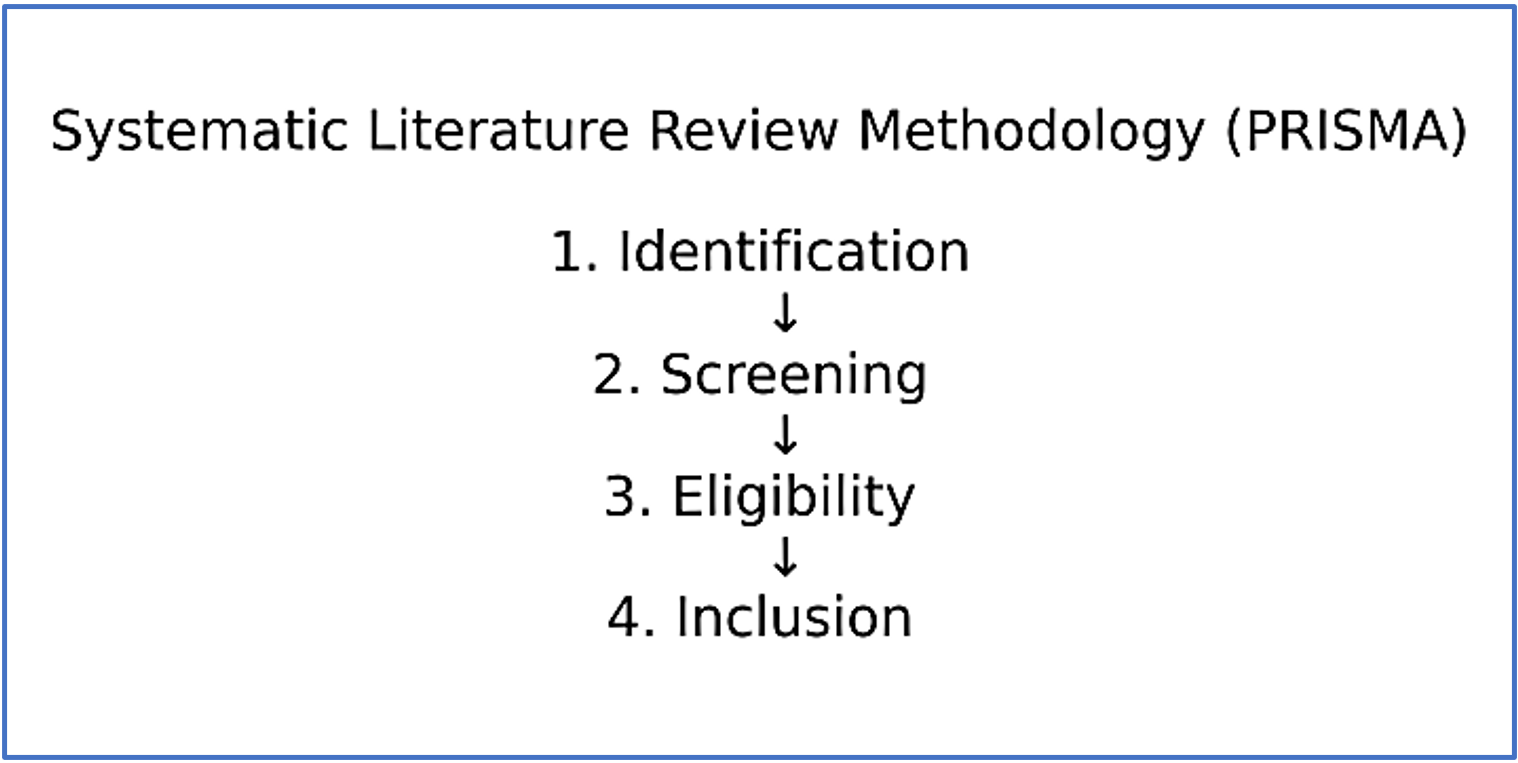
Face recognition and identity verification are now critical components of current security and verification technology. The main objective of this review is to identify the most important deep learning techniques that have contributed to the improvement in the accuracy and reliability of facial recognition systems, as well as highlighting existing problems and potential future research areas. An extensive literature review was conducted with the assistance of leading scientific databases such as IEEE Xplore, ScienceDirect, and SpringerLink and covered studies from the period 2015 to 2024. The studies of interest were related to the application of deep neural networks, i.e., CNN, Siamese, and Transformer-based models, in face recognition and identity verification systems. Deep learning-based approaches have been shown through cross-sectional studies to improve recognition accuracy under diverse environmental and demographic conditions. Anti-counterfeiting (Anti-Spoofing) and real presence detection features integrated into systems have likewise enhanced system security against advanced attacks such as 3D masks, false images and videos, and Deepfake technology. Future trends point to the need to develop deep, multi-sensory and interpretable learning models, and adopt learning strategies based on limited data, while adhering to legal and ethical frameworks to ensure fairness and
transparency.
Rusul Hussein Hasan ، Rasha Majid Hassoon، Inaam Salman Aboud (المؤلف) (2025). From Algorithms to Applications: A Review of AI-Based Face Recognition and Identity Verification. مجلة جامعة صنعاء للعلوم التطبيقية والتكنولوجيا, 1452-1459. DOI: https://doi.org/10.59628/jast.v3i6.2286
Rusul Hussein Hasan ، Rasha Majid Hassoon، Inaam Salman Aboud (المؤلف). “From Algorithms to Applications: A Review of AI-Based Face Recognition and Identity Verification.” مجلة جامعة صنعاء للعلوم التطبيقية والتكنولوجيا, 2025, pp. 1452-1459. https://doi.org/10.59628/jast.v3i6.2286. Accessed 30 أكتوبر. 2026.
Rusul Hussein Hasan ، Rasha Majid Hassoon، Inaam Salman Aboud (المؤلف). 2025. “From Algorithms to Applications: A Review of AI-Based Face Recognition and Identity Verification.” مجلة جامعة صنعاء للعلوم التطبيقية والتكنولوجيا : 1452-1459. DOI: https://doi.org/10.59628/jast.v3i6.2286
Rusul Hussein Hasan ، Rasha Majid Hassoon، Inaam Salman Aboud (المؤلف) (2025) ‘From Algorithms to Applications: A Review of AI-Based Face Recognition and Identity Verification’, مجلة جامعة صنعاء للعلوم التطبيقية والتكنولوجيا, pp. 1452-1459. doi: 10.59628/jast.v3i6.2286
@article{jast2025_art2286,
    author  = {Rusul Hussein Hasan ، Rasha Majid Hassoon، Inaam Salman Aboud (المؤلف)},
    title   = {From Algorithms to Applications: A Review of AI-Based Face Recognition and Identity Verification},
    journal = {مجلة جامعة صنعاء للعلوم التطبيقية والتكنولوجيا},    year    = {2025},    month   = {ديسمبر},    pages   = {1452-1459},    doi     = {10.59628/jast.v3i6.2286},
    url     = {https://doi.org/10.59628/jast.v3i6.2286},}
From Algorithms to Applications: A Review of AI-Based Face Recognition and Identity Verification
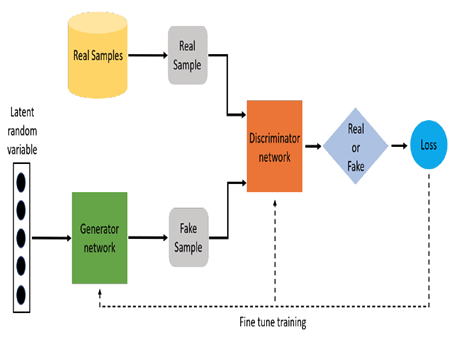
Generative adversarial networks (GANs) represent a ground-breaking advancement in artificial intelligence, revolutionizing data generation and content creation. This systematic review critically analyses literature from 2019-2024, sourced from major databases like IEEE Xplore and Scopus, to go beyond descriptive surveys and provide a synthesized, critical evaluation. We identify a pivotal gap in the existing literature: a frequent disconnect between reporting technical advancements and examining their profound ethical and societal implications. Our analysis yields several integrated insights. First, while GAN applications predominantly excel in visual content generation with architectures like StyleGAN and BigGAN achieving remarkable progress in photorealistic image and video synthesis their efficacy is highly application-specific, revealing significant trade-offs in stability and diversity in domains such as medical imaging and real-time video processing. Second, persistent core challenges like training instability and mode collapse continue to drive architectural innovations; however, we critically examine how solutions like Wasserstein loss or minibatch discrimination demonstrate varying effectiveness and limitations across different tasks and datasets. Third, and most critically, we argue that ethical concerns, particularly regarding deepfakes and data bias, are not peripheral issues but are intrinsically linked to architectural choices and the quality of training data. The key contribution of this review is its novel, integrated framework for evaluating GANs, which concurrently assesses architectural efficacy, application-specific maturity, and associated ethical risks. This holistic and critical synthesis provides researchers with a nuanced reference and outlines clear, responsible directions for future GAN development, emphasizing the need for models that are not only more powerful but also more robust, fair, and accountable.
Samah Ahmed Mohammed AlSarori، Ammar T. Zahary (المؤلف) (2026). Generative Adversarial Networks for Visual Content: A Comprehensive Review of Image and Video Synthesis, Challenges, and Ethical Implications. مجلة جامعة صنعاء للعلوم التطبيقية والتكنولوجيا, 1552-1579. DOI: https://doi.org/10.59628/jast.v4i1.2100
Samah Ahmed Mohammed AlSarori، Ammar T. Zahary (المؤلف). “Generative Adversarial Networks for Visual Content: A Comprehensive Review of Image and Video Synthesis, Challenges, and Ethical Implications.” مجلة جامعة صنعاء للعلوم التطبيقية والتكنولوجيا, 2026, pp. 1552-1579. https://doi.org/10.59628/jast.v4i1.2100. Accessed 30 أكتوبر. 2026.
Samah Ahmed Mohammed AlSarori، Ammar T. Zahary (المؤلف). 2026. “Generative Adversarial Networks for Visual Content: A Comprehensive Review of Image and Video Synthesis, Challenges, and Ethical Implications.” مجلة جامعة صنعاء للعلوم التطبيقية والتكنولوجيا : 1552-1579. DOI: https://doi.org/10.59628/jast.v4i1.2100
Samah Ahmed Mohammed AlSarori، Ammar T. Zahary (المؤلف) (2026) ‘Generative Adversarial Networks for Visual Content: A Comprehensive Review of Image and Video Synthesis, Challenges, and Ethical Implications’, مجلة جامعة صنعاء للعلوم التطبيقية والتكنولوجيا, pp. 1552-1579. doi: 10.59628/jast.v4i1.2100
@article{jast2026_art2100,
    author  = {Samah Ahmed Mohammed AlSarori، Ammar T. Zahary (المؤلف)},
    title   = {Generative Adversarial Networks for Visual Content: A Comprehensive Review of Image and Video Synthesis, Challenges, and Ethical Implications},
    journal = {مجلة جامعة صنعاء للعلوم التطبيقية والتكنولوجيا},    year    = {2026},    month   = {يناير},    pages   = {1552-1579},    doi     = {10.59628/jast.v4i1.2100},
    url     = {https://doi.org/10.59628/jast.v4i1.2100},}
Generative Adversarial Networks for Visual Content: A Comprehensive Review of Image and Video Synthesis, Challenges, and Ethical Implications
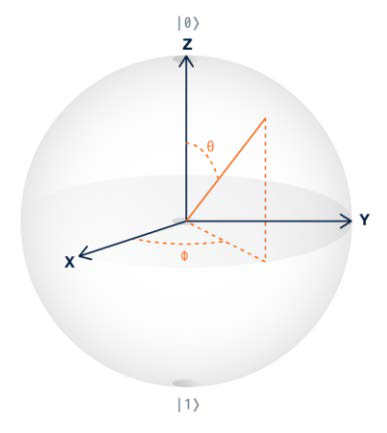
Quantum entanglement has gained significant attention in recent years owing to its diverse application in quantum informatics. Its nonlocal nature makes it a crucial resource in quantum information, especially in quantum communication and networking. Entanglement plays a vital role in advancing quantum computation and technology.
This study discusses the creation of entangled quantum states using photon pairs and the measurement of entanglement, utilizing the IBM Q Experience the first industrial initiative to develop universal quantum computers and provide widespread access to these technologies through cloud platforms. The introduction of the Qiskit tool has enabled researchers, educators, developers, and enthusiasts to write code and conduct experiments on quantum machines. In this study, we implemented and tested circuits on the IBM Q quantum computing platform using Qiskit to execute quantum computing programs such as the Bell Inequality, CHSH Inequality, and Five-Qubit GHZ States, with two successful programming presented, these tools, along with the associated Jupyter Notebook pages, serve as additional resources for users of the IBM Q Experience. We present the results which will help evaluate these prototypes’ performance. Where quantum computers are designed to process information units that go beyond mere abstract mathematical entities, as suggested by Shannon’s theory; instead, they represent real physical objects defined by one of the two fundamental physical theories—quantum mechanics.
saida alkurkushi، Malek N. Algabri، Ali Saif M. Hassan (المؤلف) (2024). Investigating Quantum Entanglement by Using IBM’s Quantum Information Science Kit (QISKit). مجلة جامعة صنعاء للعلوم التطبيقية والتكنولوجيا, 499-513. DOI: https://doi.org/10.59628/jast.v2i6.1328
saida alkurkushi، Malek N. Algabri، Ali Saif M. Hassan (المؤلف). “Investigating Quantum Entanglement by Using IBM’s Quantum Information Science Kit (QISKit).” مجلة جامعة صنعاء للعلوم التطبيقية والتكنولوجيا, 2024, pp. 499-513. https://doi.org/10.59628/jast.v2i6.1328. Accessed 30 أكتوبر. 2026.
saida alkurkushi، Malek N. Algabri، Ali Saif M. Hassan (المؤلف). 2024. “Investigating Quantum Entanglement by Using IBM’s Quantum Information Science Kit (QISKit).” مجلة جامعة صنعاء للعلوم التطبيقية والتكنولوجيا : 499-513. DOI: https://doi.org/10.59628/jast.v2i6.1328
saida alkurkushi، Malek N. Algabri، Ali Saif M. Hassan (المؤلف) (2024) ‘Investigating Quantum Entanglement by Using IBM’s Quantum Information Science Kit (QISKit)’, مجلة جامعة صنعاء للعلوم التطبيقية والتكنولوجيا, pp. 499-513. doi: 10.59628/jast.v2i6.1328
@article{jast2024_art1328,
    author  = {saida alkurkushi، Malek N. Algabri، Ali Saif M. Hassan (المؤلف)},
    title   = {Investigating Quantum Entanglement by Using IBM’s Quantum Information Science Kit (QISKit)},
    journal = {مجلة جامعة صنعاء للعلوم التطبيقية والتكنولوجيا},    year    = {2024},    month   = {ديسمبر},    pages   = {499-513},    doi     = {10.59628/jast.v2i6.1328},
    url     = {https://doi.org/10.59628/jast.v2i6.1328},}
Investigating Quantum Entanglement by Using IBM’s Quantum Information Science Kit (QISKit)
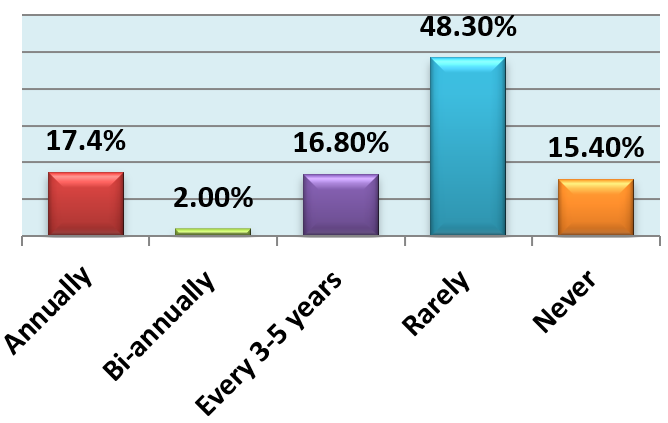
The digital techniques and technology have transformed formal project management field dramatically by enhancing communication, resource management and efficiency. This study aims to evaluate the efficacy of contemporary project management methodologies in promoting and facilitating sustainable development within the telecommunications sector in Yemen. Situated within the broader discourse on achieving the United Nations Sustainable Development Goals, the research employs a mixed methods approach to gather both quantitative and qualitative data. Quantitative data was collected through a survey of 150 professionals across major telecommunications firms in Yemen. The survey examined familiarity and application of techniques and technology such as waterfall, agile, six sigma, and lean. Qualitative insights were derived from 22 in-depth interviews with project managers and stakeholders. The findings of the study indicate that there is a narrow scope for integrating sustainability in Yemen’s telecommunications sector projects. Despite the research indicating a considerable level of awareness and utilization of contemporary methodologies, the integration of sustainability objectives varies considerably between projects. While numerous projects adopt environmental sustainability strategies, such as enhancing energy efficiency to reduce environmental impact and minimize carbon emissions, they lack comprehensive sustainability strategies that encompass economic, social, and environmental aspects in an integrated manner. The qualitative interviews yielded insights into the significant challenges to sustainable implementation, including insufficient training, organizational obstacles, and the effects of the ongoing conflict. In light of these findings, the paper addresses these challenges and provides recommendations and effective strategies to overcome them.
Nabeel Alsohybe، Rana Hashem Mahmood Mohmed (المؤلف) (2024). Leveraging Contemporary Project Management Techniques and Technology for Sustainable Telecommunications Advancement in Yemen. مجلة جامعة صنعاء للعلوم التطبيقية والتكنولوجيا, 453-466. DOI: https://doi.org/10.59628/jast.v2i5.1214
Nabeel Alsohybe، Rana Hashem Mahmood Mohmed (المؤلف). “Leveraging Contemporary Project Management Techniques and Technology for Sustainable Telecommunications Advancement in Yemen.” مجلة جامعة صنعاء للعلوم التطبيقية والتكنولوجيا, 2024, pp. 453-466. https://doi.org/10.59628/jast.v2i5.1214. Accessed 30 أكتوبر. 2026.
Nabeel Alsohybe، Rana Hashem Mahmood Mohmed (المؤلف). 2024. “Leveraging Contemporary Project Management Techniques and Technology for Sustainable Telecommunications Advancement in Yemen.” مجلة جامعة صنعاء للعلوم التطبيقية والتكنولوجيا : 453-466. DOI: https://doi.org/10.59628/jast.v2i5.1214
Nabeel Alsohybe، Rana Hashem Mahmood Mohmed (المؤلف) (2024) ‘Leveraging Contemporary Project Management Techniques and Technology for Sustainable Telecommunications Advancement in Yemen’, مجلة جامعة صنعاء للعلوم التطبيقية والتكنولوجيا, pp. 453-466. doi: 10.59628/jast.v2i5.1214
@article{jast2024_art1214,
    author  = {Nabeel Alsohybe، Rana Hashem Mahmood Mohmed (المؤلف)},
    title   = {Leveraging Contemporary Project Management Techniques and Technology for Sustainable Telecommunications Advancement in Yemen},
    journal = {مجلة جامعة صنعاء للعلوم التطبيقية والتكنولوجيا},    year    = {2024},    month   = {أكتوبر},    pages   = {453-466},    doi     = {10.59628/jast.v2i5.1214},
    url     = {https://doi.org/10.59628/jast.v2i5.1214},}
Leveraging Contemporary Project Management Techniques and Technology for Sustainable Telecommunications Advancement in Yemen
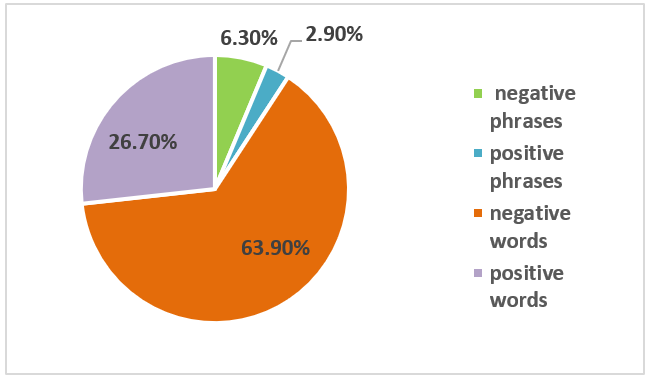
Recently, the number of Yemeni users has been expanding quickly on social media platforms. Most research in Arabic sentiment analysis has gained on Modern Standard Arabic (MSA) and some specific dialects, such as Egyptian, Levantine, and Gulf. However, there is a noticeable gap in Yemeni dialect sentiment analysis research. The reason for that is the lack of reliable Yemeni lexical and corpus and a real dataset for social media sentiment analysis. This research addresses this lack by presenting the Yemeni Dialect sentiment lexicon and corpus. This lexicon and corpus provide valuable resources for researchers and practitioners seeking to analyze sentiment in Yemeni dialect social media content, contributing to a better understanding of Yemeni public opinion, social media monitoring, marketing, cultural understanding, and assisting in efforts to respond to crises in Yemen. The Yemeni Dialect sentiment lexicon is enriched with a reasonable number of words and phrases categorized according to their positive and negative sentiment tendencies. Moreover, we constructed a corpus dataset of more than 54,000 comments built from the Facebook platform. A large dataset of unlabeled comments from the main Yemeni telecommunications companies in Yemen (Yemen Telecom, Yemen Mobile, YOU, and Sabafon), are people commenting on a public issue related to the services provided by those companies. The lexicon-based approach is used to extract the sentiment’s polarity and label each of the provided comments to formulate a corpus dataset as being either positive, negative, or neutral. The evaluation metrics of experiments are accuracy, recall, precision, f-measure, and the confusion matrix. The accuracy result of the lexicon-based labeling approach was calculated through a comparison between the achieved results and the ones achieved through manually labeled comments by three Yemeni experts. Evaluation results using a lexicon-based approach achieved an accuracy of 90.05%.
Alaa Abdulkareem Hameed Brihi، Mossa Ghurab (المؤلف) (2024). Lexicon-Based Approach in Sentiment Analysis of Yemeni Dialect for Social Media Network. مجلة جامعة صنعاء للعلوم التطبيقية والتكنولوجيا, 422-431. DOI: https://doi.org/10.59628/jast.v2i5.1058
Alaa Abdulkareem Hameed Brihi، Mossa Ghurab (المؤلف). “Lexicon-Based Approach in Sentiment Analysis of Yemeni Dialect for Social Media Network.” مجلة جامعة صنعاء للعلوم التطبيقية والتكنولوجيا, 2024, pp. 422-431. https://doi.org/10.59628/jast.v2i5.1058. Accessed 30 أكتوبر. 2026.
Alaa Abdulkareem Hameed Brihi، Mossa Ghurab (المؤلف). 2024. “Lexicon-Based Approach in Sentiment Analysis of Yemeni Dialect for Social Media Network.” مجلة جامعة صنعاء للعلوم التطبيقية والتكنولوجيا : 422-431. DOI: https://doi.org/10.59628/jast.v2i5.1058
Alaa Abdulkareem Hameed Brihi، Mossa Ghurab (المؤلف) (2024) ‘Lexicon-Based Approach in Sentiment Analysis of Yemeni Dialect for Social Media Network’, مجلة جامعة صنعاء للعلوم التطبيقية والتكنولوجيا, pp. 422-431. doi: 10.59628/jast.v2i5.1058
@article{jast2024_art1058,
    author  = {Alaa Abdulkareem Hameed Brihi، Mossa Ghurab (المؤلف)},
    title   = {Lexicon-Based Approach in Sentiment Analysis of Yemeni Dialect for Social Media Network},
    journal = {مجلة جامعة صنعاء للعلوم التطبيقية والتكنولوجيا},    year    = {2024},    month   = {أكتوبر},    pages   = {422-431},    doi     = {10.59628/jast.v2i5.1058},
    url     = {https://doi.org/10.59628/jast.v2i5.1058},}
Lexicon-Based Approach in Sentiment Analysis of Yemeni Dialect for Social Media Network
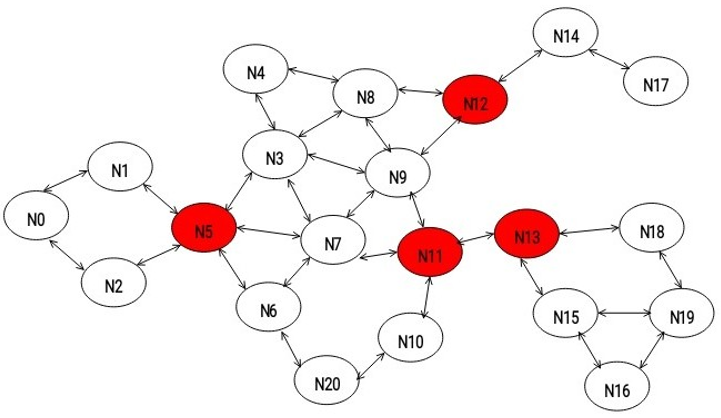
Mobile ad-hoc networks are deployed in different fields and it can be effective in applications that depend on the inter-node interaction such as search and rescue, surveillance, and battlefield reconnaissance. Due to this importance, in this article, we have reviewed the latest energy optimization solutions for mobile ad-hoc networks (MANET). Since the typical layered inflexible architecture is unable to handle the features of MANETs, battery consumption is the primary concern in the context of MANETs. Along with this, authors proposed categorizing energy optimization solutions into seven categories: techniques based on load balancing adaptation algorithms, methods based on multicast algorithms, and schemes based on the radio state adaptation algorithms, position-based routing protocols, schemes based on proactive algorithms, energy efficient reactive protocols, and techniques based on control of transmission energy algorithms. The authors reviewed the suggested resolutions in every domain, providing details on the methodology utilized, metrics for performance assessment, and the advantages and disadvantages related to each suggestion. We believe that the review presented in this article will be been sufficiently useful for researchers to optimize energy consumption for MANETs. Dummy text.
Abdulsalam Tonin، Malek Algabri، Ayman Alsabry، Ali Abdullah Mohammed Ali، Abdualmajed A. G. Al-Khulaidi، Mossa Ghurab (المؤلف) (2024). Survey: State-of-the-Art Energy-Consumption Optimization Solutions for Mobile Ad-Hoc Networks. مجلة جامعة صنعاء للعلوم التطبيقية والتكنولوجيا, 275-292. DOI: https://doi.org/10.59628/jast.v2i3.925
Abdulsalam Tonin، Malek Algabri، Ayman Alsabry، Ali Abdullah Mohammed Ali، Abdualmajed A. G. Al-Khulaidi، Mossa Ghurab (المؤلف). “Survey: State-of-the-Art Energy-Consumption Optimization Solutions for Mobile Ad-Hoc Networks.” مجلة جامعة صنعاء للعلوم التطبيقية والتكنولوجيا, 2024, pp. 275-292. https://doi.org/10.59628/jast.v2i3.925. Accessed 30 أكتوبر. 2026.
Abdulsalam Tonin، Malek Algabri، Ayman Alsabry، Ali Abdullah Mohammed Ali، Abdualmajed A. G. Al-Khulaidi، Mossa Ghurab (المؤلف). 2024. “Survey: State-of-the-Art Energy-Consumption Optimization Solutions for Mobile Ad-Hoc Networks.” مجلة جامعة صنعاء للعلوم التطبيقية والتكنولوجيا : 275-292. DOI: https://doi.org/10.59628/jast.v2i3.925
Abdulsalam Tonin، Malek Algabri، Ayman Alsabry، Ali Abdullah Mohammed Ali، Abdualmajed A. G. Al-Khulaidi، Mossa Ghurab (المؤلف) (2024) ‘Survey: State-of-the-Art Energy-Consumption Optimization Solutions for Mobile Ad-Hoc Networks’, مجلة جامعة صنعاء للعلوم التطبيقية والتكنولوجيا, pp. 275-292. doi: 10.59628/jast.v2i3.925
@article{jast2024_art925,
    author  = {Abdulsalam Tonin، Malek  Algabri، Ayman Alsabry، Ali Abdullah Mohammed Ali، Abdualmajed A. G. Al-Khulaidi، Mossa Ghurab (المؤلف)},
    title   = {Survey: State-of-the-Art Energy-Consumption Optimization Solutions for Mobile Ad-Hoc Networks},
    journal = {مجلة جامعة صنعاء للعلوم التطبيقية والتكنولوجيا},    year    = {2024},    month   = {يونيو},    pages   = {275-292},    doi     = {10.59628/jast.v2i3.925},
    url     = {https://doi.org/10.59628/jast.v2i3.925},}
Survey: State-of-the-Art Energy-Consumption Optimization Solutions for Mobile Ad-Hoc Networks
لم يتم نشر أي شيء من هذه الفئة بعد.

مجلة جامعة صنعاء
للعلوم التطبيقية والتكنولوجيا
مجلة علمية محكمة ومتاحة للجميع، تنشر أبحاثاً عالية الجودة في مجالات العلوم التطبيقية والهندسة والحاسوب منذ عام 2023.
