تطوير البرامج المستقلة

Because of the enhanced efficiency and value that come with implementing ERP systems and e-government, these systems have taken center stage in government organizations throughout both developed and developing nations. To provide more efficient government and better services to citizens, public administrations and agencies have invested in Enterprise Resource Planning (ERP) systems as their core technological infrastructure for e-government. Despite recognizing the importance of management information systems in electronic government, most Arab countries in the Middle East and other underdeveloped countries are still dealing with issues with adopting these technologies. This study introduced a Systematic Literature Review (SLR) to identify the Critical Success Factors influencing the adoption of GRP systems, the benefits of GRP systems, and their challenges. Studies from 2015 to 2024 were selected from databases such as Scopus and IEEE Explore. This study proposed a conceptual model based on technological, organizational, and environmental factors. The study also analyzes the importance of the CSFs. It also summarized the most significant challenges and difficulties in adopting GRP systems, as well as future trends, thereby creating numerous opportunities to develop various solutions.
Hana’a A. Johar ، Adnan Al-Mutawkkil، Ammar T. Zahary، Suad M. Othman (المؤلف) (2026). A Systematic Literature Review of Factors Influencing the Adoption of GRP System. مجلة جامعة صنعاء للعلوم التطبيقية والتكنولوجيا, 1622-1639. DOI: https://doi.org/10.59628/jast.v4i1.2341
Hana’a A. Johar ، Adnan Al-Mutawkkil، Ammar T. Zahary، Suad M. Othman (المؤلف). “A Systematic Literature Review of Factors Influencing the Adoption of GRP System.” مجلة جامعة صنعاء للعلوم التطبيقية والتكنولوجيا, 2026, pp. 1622-1639. https://doi.org/10.59628/jast.v4i1.2341. Accessed 30 أكتوبر. 2026.
Hana’a A. Johar ، Adnan Al-Mutawkkil، Ammar T. Zahary، Suad M. Othman (المؤلف). 2026. “A Systematic Literature Review of Factors Influencing the Adoption of GRP System.” مجلة جامعة صنعاء للعلوم التطبيقية والتكنولوجيا : 1622-1639. DOI: https://doi.org/10.59628/jast.v4i1.2341
Hana’a A. Johar ، Adnan Al-Mutawkkil، Ammar T. Zahary، Suad M. Othman (المؤلف) (2026) ‘A Systematic Literature Review of Factors Influencing the Adoption of GRP System’, مجلة جامعة صنعاء للعلوم التطبيقية والتكنولوجيا, pp. 1622-1639. doi: 10.59628/jast.v4i1.2341
@article{jast2026_art2341,
    author  = {Hana’a A. Johar ، Adnan Al-Mutawkkil، Ammar T. Zahary، Suad M. Othman (المؤلف)},
    title   = {A Systematic Literature Review of Factors Influencing the Adoption of GRP System},
    journal = {مجلة جامعة صنعاء للعلوم التطبيقية والتكنولوجيا},    year    = {2026},    month   = {يناير},    pages   = {1622-1639},    doi     = {10.59628/jast.v4i1.2341},
    url     = {https://doi.org/10.59628/jast.v4i1.2341},}
A Systematic Literature Review of Factors Influencing the Adoption of GRP System

In Yemen, years of conflict have weakened the health system, limiting access to essential health services and worsening the burden of NCDs. This study proposes a conceptual framework for NCD management in Yemen using the open-source District Health Information System 2 (DHIS2). The framework aims to establish an NCD database that strengthens health information systems to support evidence-based decision making. This study applies a PESTEL analysis of the external environment alongside a SWOT analysis of DHIS2 adoption to assess readiness to adopt this framework. By combining these approaches, the framework aims to close critical data gaps and mitigate NCD-related complications. The analysis results suggest that DHIS2 is a context-appropriate option for NCD programs.
Roqiah Atef، Mansoor N.Ali (المؤلف) (2026). Conceptual Readiness for DHIS2 Adoption in Yemen’s NCD Program: SWOT, PESTEL.. مجلة جامعة صنعاء للعلوم التطبيقية والتكنولوجيا, 2244-2253. DOI: https://doi.org/10.59628/jast.v4i6.2796
Roqiah Atef، Mansoor N.Ali (المؤلف). “Conceptual Readiness for DHIS2 Adoption in Yemen’s NCD Program: SWOT, PESTEL..” مجلة جامعة صنعاء للعلوم التطبيقية والتكنولوجيا, 2026, pp. 2244-2253. https://doi.org/10.59628/jast.v4i6.2796. Accessed 30 أكتوبر. 2026.
Roqiah Atef، Mansoor N.Ali (المؤلف). 2026. “Conceptual Readiness for DHIS2 Adoption in Yemen’s NCD Program: SWOT, PESTEL..” مجلة جامعة صنعاء للعلوم التطبيقية والتكنولوجيا : 2244-2253. DOI: https://doi.org/10.59628/jast.v4i6.2796
Roqiah Atef، Mansoor N.Ali (المؤلف) (2026) ‘Conceptual Readiness for DHIS2 Adoption in Yemen’s NCD Program: SWOT, PESTEL.’, مجلة جامعة صنعاء للعلوم التطبيقية والتكنولوجيا, pp. 2244-2253. doi: 10.59628/jast.v4i6.2796
@article{jast2026_art2796,
    author  = {Roqiah Atef، Mansoor N.Ali (المؤلف)},
    title   = {Conceptual Readiness for DHIS2 Adoption in Yemen’s NCD Program: SWOT, PESTEL.},
    journal = {مجلة جامعة صنعاء للعلوم التطبيقية والتكنولوجيا},    year    = {2026},    month   = {يونيو},    pages   = {2244-2253},    doi     = {10.59628/jast.v4i6.2796},
    url     = {https://doi.org/10.59628/jast.v4i6.2796},}
Conceptual Readiness for DHIS2 Adoption in Yemen’s NCD Program: SWOT, PESTEL.
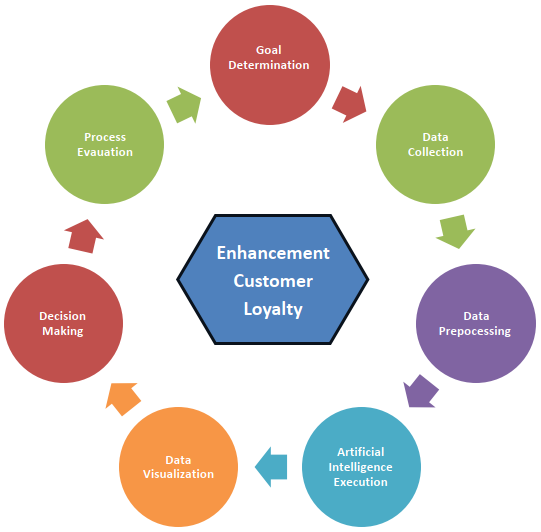
Artificial intelligence (AI) significantly enhances our daily lives, driving many service and financial institutions to seek optimal utilization of it. This paper addresses the problem, which is the inability of some institutions, such as banks, to satisfy customers using outdated methods and solely focusing on acquiring new customers instead of prioritizing customer retention that would be more effective and profitable to them. The main object of this paper is to enhance the quality of service in banks by proposing an intelligent model that leverages customer data to improve services and foster customer loyalty. This paper was motivated by the limited research on customer churn in Yemen and the scarcity of simple intelligent models globally. The methodology employed in this paper includes an in-depth analysis of existing literature on customer churn. Finally, this paper provides a comprehensive and concise conclusion based on the findings.
SULTAN AL-SULTAN، Ibrahim Ahmed Al-Baltah (المؤلف) (2024). Enhancement Customer Loyalty Via Data Mining Techniques in Yemeni Banks: Review Study. مجلة جامعة صنعاء للعلوم التطبيقية والتكنولوجيا, 348-354. DOI: https://doi.org/10.59628/jast.v2i4.1059
SULTAN AL-SULTAN، Ibrahim Ahmed Al-Baltah (المؤلف). “Enhancement Customer Loyalty Via Data Mining Techniques in Yemeni Banks: Review Study.” مجلة جامعة صنعاء للعلوم التطبيقية والتكنولوجيا, 2024, pp. 348-354. https://doi.org/10.59628/jast.v2i4.1059. Accessed 30 أكتوبر. 2026.
SULTAN AL-SULTAN، Ibrahim Ahmed Al-Baltah (المؤلف). 2024. “Enhancement Customer Loyalty Via Data Mining Techniques in Yemeni Banks: Review Study.” مجلة جامعة صنعاء للعلوم التطبيقية والتكنولوجيا : 348-354. DOI: https://doi.org/10.59628/jast.v2i4.1059
SULTAN AL-SULTAN، Ibrahim Ahmed Al-Baltah (المؤلف) (2024) ‘Enhancement Customer Loyalty Via Data Mining Techniques in Yemeni Banks: Review Study’, مجلة جامعة صنعاء للعلوم التطبيقية والتكنولوجيا, pp. 348-354. doi: 10.59628/jast.v2i4.1059
@article{jast2024_art1059,
    author  = {SULTAN AL-SULTAN، Ibrahim Ahmed Al-Baltah (المؤلف)},
    title   = {Enhancement Customer Loyalty Via Data Mining Techniques in Yemeni Banks: Review Study},
    journal = {مجلة جامعة صنعاء للعلوم التطبيقية والتكنولوجيا},    year    = {2024},    month   = {سبتمبر},    pages   = {348-354},    doi     = {10.59628/jast.v2i4.1059},
    url     = {https://doi.org/10.59628/jast.v2i4.1059},}
Enhancement Customer Loyalty Via Data Mining Techniques in Yemeni Banks: Review Study
لم يتم نشر أي شيء من هذه الفئة بعد.

مجلة جامعة صنعاء
للعلوم التطبيقية والتكنولوجيا
مجلة علمية محكمة ومتاحة للجميع، تنشر أبحاثاً عالية الجودة في مجالات العلوم التطبيقية والهندسة والحاسوب منذ عام 2023.
