
العدد الحالي
Sana'a University Journal of Applied Sciences and Technology
مجلد 4 عدد 1 (2026)
2026-01-29
10 مقال
The fourth volume – the first issue in the Sana'a University Journal of Applied Sciences and Technology
المقالات
6 مقالات
كيفية الاقتباس
Mohammed Ahmed M. Aqlan، Wael Alaghbari، Farouk A. Al-Fahaidy (المؤلف) (2026). KEY INTERNAL FACTORS CAUSING SCHEDULE DELAYS IN YEMEN-MOBILE TELECOM TRANSCEIVER SITES PROJECTS. مجلة جامعة صنعاء للعلوم التطبيقية والتكنولوجيا, 1481-1495. DOI: https://doi.org/10.59628/jast.v4i1.2292
Mohammed Ahmed M. Aqlan، Wael Alaghbari، Farouk A. Al-Fahaidy (المؤلف). “KEY INTERNAL FACTORS CAUSING SCHEDULE DELAYS IN YEMEN-MOBILE TELECOM TRANSCEIVER SITES PROJECTS.” مجلة جامعة صنعاء للعلوم التطبيقية والتكنولوجيا, 2026, pp. 1481-1495. https://doi.org/10.59628/jast.v4i1.2292. Accessed 27 أكتوبر. 2026.
Mohammed Ahmed M. Aqlan، Wael Alaghbari، Farouk A. Al-Fahaidy (المؤلف). 2026. “KEY INTERNAL FACTORS CAUSING SCHEDULE DELAYS IN YEMEN-MOBILE TELECOM TRANSCEIVER SITES PROJECTS.” مجلة جامعة صنعاء للعلوم التطبيقية والتكنولوجيا : 1481-1495. DOI: https://doi.org/10.59628/jast.v4i1.2292
Mohammed Ahmed M. Aqlan، Wael Alaghbari، Farouk A. Al-Fahaidy (المؤلف) (2026) ‘KEY INTERNAL FACTORS CAUSING SCHEDULE DELAYS IN YEMEN-MOBILE TELECOM TRANSCEIVER SITES PROJECTS’, مجلة جامعة صنعاء للعلوم التطبيقية والتكنولوجيا, pp. 1481-1495. doi: 10.59628/jast.v4i1.2292
@article{jast2026_art2292,
    author  = {Mohammed Ahmed M. Aqlan، Wael Alaghbari، Farouk A. Al-Fahaidy (المؤلف)},
    title   = {KEY INTERNAL FACTORS CAUSING SCHEDULE DELAYS IN YEMEN-MOBILE TELECOM TRANSCEIVER SITES PROJECTS},
    journal = {مجلة جامعة صنعاء للعلوم التطبيقية والتكنولوجيا},    year    = {2026},    month   = {يناير},    pages   = {1481-1495},    doi     = {10.59628/jast.v4i1.2292},
    url     = {https://doi.org/10.59628/jast.v4i1.2292},}
تم نسخ الاقتباس!
التواصل مع المؤلفين
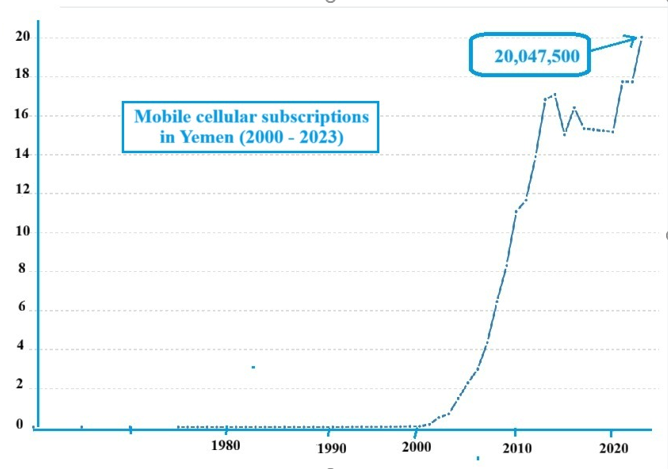
KEY INTERNAL FACTORS CAUSING SCHEDULE DELAYS IN YEMEN-MOBILE TELECOM TRANSCEIVER SITES PROJECTS
تم نسخ البريد الإلكتروني!
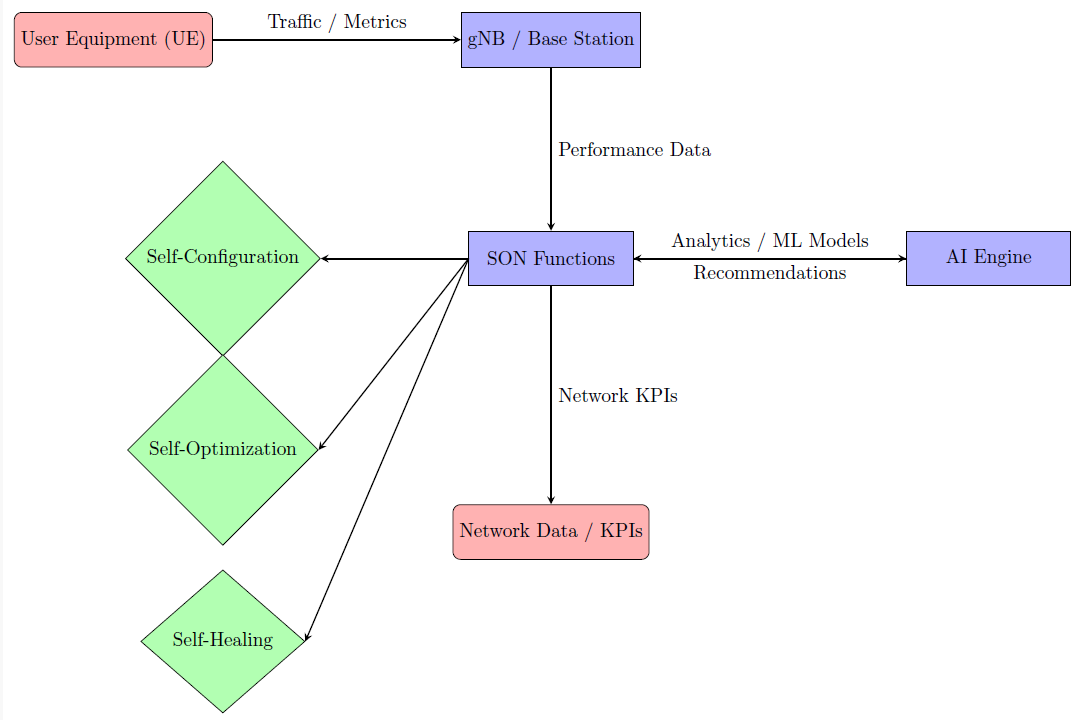
AI-Driven Self-Organizing Networks (SON) for 5G OPEX Reduction: A Comprehensive Survey and Conceptual Framework
Mohamed Hankal (المؤلف)
1496-1506
2026-01-29
الملخص
This paper investigates the application of Artificial Intelligence (AI) in Self-Organizing Networks (SON) for 5G networks, focusing on coverage enhancement and reduction of Operational Expenditures (OPEX). A conceptual AI-Self Organizing Networks (SON) framework integrated with O RAN architecture is proposed, and an illustrative Python-based simulation is conducted to demonstrate potential trends in coverage probability, energy consumption, and estimated OPEX savings. The simulation results indicate that AI-SON can achieve near-optimal coverage (coverage probability 0.9985) while reducing energy usage and maintenance costs, with an estimated OPEX reduction of 2030% compared to baseline strategies. The study clarifies that the simulation is illustrative and not experimentally validated, providing a foundation for future rigorous evaluations.
الكلمات المفتاحية
Self-Organizing Network
AI-SON
5G
O-RAN
Operational Expenditures (OPEX)
Reinforcement Learning
كيفية الاقتباس
Mohamed Hankal (المؤلف) (2026). AI-Driven Self-Organizing Networks (SON) for 5G OPEX Reduction: A Comprehensive Survey and Conceptual Framework. مجلة جامعة صنعاء للعلوم التطبيقية والتكنولوجيا, 1496-1506. DOI: https://doi.org/10.59628/jast.v4i1.2291
Mohamed Hankal (المؤلف). “AI-Driven Self-Organizing Networks (SON) for 5G OPEX Reduction: A Comprehensive Survey and Conceptual Framework.” مجلة جامعة صنعاء للعلوم التطبيقية والتكنولوجيا, 2026, pp. 1496-1506. https://doi.org/10.59628/jast.v4i1.2291. Accessed 27 أكتوبر. 2026.
Mohamed Hankal (المؤلف). 2026. “AI-Driven Self-Organizing Networks (SON) for 5G OPEX Reduction: A Comprehensive Survey and Conceptual Framework.” مجلة جامعة صنعاء للعلوم التطبيقية والتكنولوجيا : 1496-1506. DOI: https://doi.org/10.59628/jast.v4i1.2291
Mohamed Hankal (المؤلف) (2026) ‘AI-Driven Self-Organizing Networks (SON) for 5G OPEX Reduction: A Comprehensive Survey and Conceptual Framework’, مجلة جامعة صنعاء للعلوم التطبيقية والتكنولوجيا, pp. 1496-1506. doi: 10.59628/jast.v4i1.2291
@article{jast2026_art2291,
    author  = {Mohamed Hankal (المؤلف)},
    title   = {AI-Driven Self-Organizing Networks (SON) for 5G OPEX Reduction: A Comprehensive Survey and Conceptual Framework},
    journal = {مجلة جامعة صنعاء للعلوم التطبيقية والتكنولوجيا},    year    = {2026},    month   = {يناير},    pages   = {1496-1506},    doi     = {10.59628/jast.v4i1.2291},
    url     = {https://doi.org/10.59628/jast.v4i1.2291},}
تم نسخ الاقتباس!
التواصل مع المؤلفين
AI-Driven Self-Organizing Networks (SON) for 5G OPEX Reduction: A Comprehensive Survey and Conceptual Framework
تم نسخ البريد الإلكتروني!
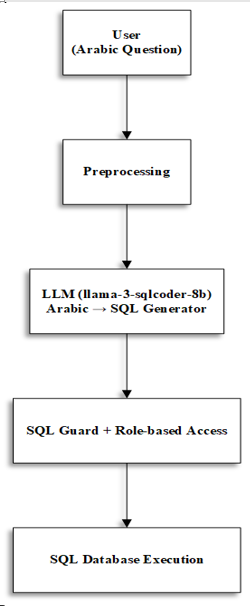
Enabling Arabic Database Querying via Parameter-Efficient Fine-Tuning of Large Language Models
Mohammed Taj، Mohammed Zayed، Abdulwahid Alhetar، Mohammed Rajeh، Mohammed Abbas Al-Sharafi، Basem Abdulrhman Munassar (المؤلف)
1507-1519
2026-01-29
الملخص
Recent advancements in Natural Language Processing (NLP) and Text-to-SQL systems have enabled easier interaction with relational databases. However, most solutions focus on English, leaving Arabic underrepresented. This study addresses that gap by fine-tuning the Llama-3-SQLCoder model to convert Arabic text into correct and executable SQL, enabling non-technical users to work with databases without learning SQL syntax. We enhanced the model using Low-Rank Adaptation (LoRA) and Unsloth, training it on Arabic questions paired with SQL queries from the Northwind database. To support low-resource environments, the model was converted to the GGUF format, reducing computational requirements while preserving performance. Evaluation results showed an execution accuracy of 90.24% and a validity rate of 97.56%, outperforming the zero-shot baseline (44% and 80%). The model also achieved an Exact Match score of 32% and an F1 score of 0.83, compared to 12% and 0.61 for the baseline. These findings demonstrate that LoRA and Unsloth are effective for adapting SQL-specialized models to Arabic. Despite these improvements, the system still struggles with complex nested queries and dialectal variations, indicating areas for future work. Overall, this study contributes to narrowing the gap between Arabic and other languages in Text-to-SQL research and improves database accessibility for non-technical users.
الكلمات المفتاحية
Text-to-SQL
Large Language Models (LLMs)
Natural Language Processing (NLP)
Parameter-Efficient Fine-Tuning (PEFT)
Low-Rank Adaptation (LoRA)
GGUF Quantization
Unsloth
كيفية الاقتباس
Mohammed Taj، Mohammed Zayed، Abdulwahid Alhetar، Mohammed Rajeh، Mohammed Abbas Al-Sharafi، Basem Abdulrhman Munassar (المؤلف) (2026). Enabling Arabic Database Querying via Parameter-Efficient Fine-Tuning of Large Language Models. مجلة جامعة صنعاء للعلوم التطبيقية والتكنولوجيا, 1507-1519. DOI: https://doi.org/10.59628/jast.v4i1.2248
Mohammed Taj، Mohammed Zayed، Abdulwahid Alhetar، Mohammed Rajeh، Mohammed Abbas Al-Sharafi، Basem Abdulrhman Munassar (المؤلف). “Enabling Arabic Database Querying via Parameter-Efficient Fine-Tuning of Large Language Models.” مجلة جامعة صنعاء للعلوم التطبيقية والتكنولوجيا, 2026, pp. 1507-1519. https://doi.org/10.59628/jast.v4i1.2248. Accessed 27 أكتوبر. 2026.
Mohammed Taj، Mohammed Zayed، Abdulwahid Alhetar، Mohammed Rajeh، Mohammed Abbas Al-Sharafi، Basem Abdulrhman Munassar (المؤلف). 2026. “Enabling Arabic Database Querying via Parameter-Efficient Fine-Tuning of Large Language Models.” مجلة جامعة صنعاء للعلوم التطبيقية والتكنولوجيا : 1507-1519. DOI: https://doi.org/10.59628/jast.v4i1.2248
Mohammed Taj، Mohammed Zayed، Abdulwahid Alhetar، Mohammed Rajeh، Mohammed Abbas Al-Sharafi، Basem Abdulrhman Munassar (المؤلف) (2026) ‘Enabling Arabic Database Querying via Parameter-Efficient Fine-Tuning of Large Language Models’, مجلة جامعة صنعاء للعلوم التطبيقية والتكنولوجيا, pp. 1507-1519. doi: 10.59628/jast.v4i1.2248
@article{jast2026_art2248,
    author  = {Mohammed Taj، Mohammed Zayed، Abdulwahid Alhetar، Mohammed  Rajeh، Mohammed Abbas Al-Sharafi، Basem Abdulrhman Munassar (المؤلف)},
    title   = {Enabling Arabic Database Querying via Parameter-Efficient Fine-Tuning of Large Language Models},
    journal = {مجلة جامعة صنعاء للعلوم التطبيقية والتكنولوجيا},    year    = {2026},    month   = {يناير},    pages   = {1507-1519},    doi     = {10.59628/jast.v4i1.2248},
    url     = {https://doi.org/10.59628/jast.v4i1.2248},}
تم نسخ الاقتباس!
التواصل مع المؤلفين
Enabling Arabic Database Querying via Parameter-Efficient Fine-Tuning of Large Language Models
تم نسخ البريد الإلكتروني!
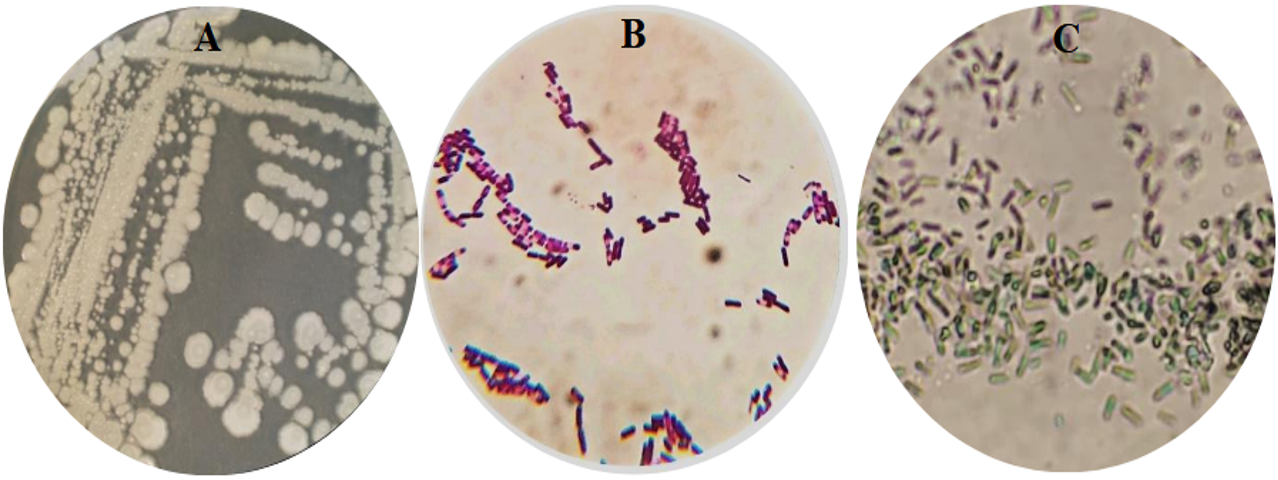
Antimicrobial activity of Bacillus species isolated from Yemeni soils against some human pathogens
Nesrain A. Al-Mekhlafi، Kholoud G. Badi، Roua A. Al-Refai، Sara M. Al-bana’a (المؤلف)
1520-1527
2026-01-29
الملخص
Bacillus species represent one of the most dominant soil bacteria and are capable of producing diverse metabolites with antimicrobial properties. This study aimed to isolate Bacillus spp. from Yemeni soils and evaluate their antimicrobial activity. Thirty soil samples were collected, and the isolates were characterized using phenotypic and biochemical tests. Their antimicrobial potential was assessed against Staphylococcus aureus, Escherichia coli, Pseudomonas sp., Salmonella sp., and Candida albicans using agar disc and well diffusion methods. In agar disc assays, the strongest inhibitory effects were observed against Salmonella sp. (13–32.5 mm), followed by E. coli (13–25.4 mm), C. albicans (10–18.5 mm), and S. aureus (10–15.5 mm). Five isolates exhibited antibacterial activity against Salmonella sp. in well diffusion assay. These results highlight the significant antimicrobial potential of Bacillus isolates derived from Yemeni soils. Further studies are recommended to identify bioactive metabolites and explore their suitability for the development of novel therapeutic agents.
الكلمات المفتاحية
Soil
<em> Bacillus</em> spp.
Antimicrobial activity
Human pathogens.
كيفية الاقتباس
Nesrain A. Al-Mekhlafi، Kholoud G. Badi، Roua A. Al-Refai، Sara M. Al-bana’a (المؤلف) (2026). Antimicrobial activity of Bacillus species isolated from Yemeni soils against some human pathogens. مجلة جامعة صنعاء للعلوم التطبيقية والتكنولوجيا, 1520-1527. DOI: https://doi.org/10.59628/jast.v4i1.2137
Nesrain A. Al-Mekhlafi، Kholoud G. Badi، Roua A. Al-Refai، Sara M. Al-bana’a (المؤلف). “Antimicrobial activity of Bacillus species isolated from Yemeni soils against some human pathogens.” مجلة جامعة صنعاء للعلوم التطبيقية والتكنولوجيا, 2026, pp. 1520-1527. https://doi.org/10.59628/jast.v4i1.2137. Accessed 27 أكتوبر. 2026.
Nesrain A. Al-Mekhlafi، Kholoud G. Badi، Roua A. Al-Refai، Sara M. Al-bana’a (المؤلف). 2026. “Antimicrobial activity of Bacillus species isolated from Yemeni soils against some human pathogens.” مجلة جامعة صنعاء للعلوم التطبيقية والتكنولوجيا : 1520-1527. DOI: https://doi.org/10.59628/jast.v4i1.2137
Nesrain A. Al-Mekhlafi، Kholoud G. Badi، Roua A. Al-Refai، Sara M. Al-bana’a (المؤلف) (2026) ‘Antimicrobial activity of Bacillus species isolated from Yemeni soils against some human pathogens’, مجلة جامعة صنعاء للعلوم التطبيقية والتكنولوجيا, pp. 1520-1527. doi: 10.59628/jast.v4i1.2137
@article{jast2026_art2137,
    author  = {Nesrain A. Al-Mekhlafi، Kholoud G.  Badi، Roua A. Al-Refai، Sara M. Al-bana’a (المؤلف)},
    title   = {Antimicrobial activity of Bacillus species isolated from Yemeni soils against some human pathogens},
    journal = {مجلة جامعة صنعاء للعلوم التطبيقية والتكنولوجيا},    year    = {2026},    month   = {يناير},    pages   = {1520-1527},    doi     = {10.59628/jast.v4i1.2137},
    url     = {https://doi.org/10.59628/jast.v4i1.2137},}
تم نسخ الاقتباس!
التواصل مع المؤلفين
Antimicrobial activity of Bacillus species isolated from Yemeni soils against some human pathogens
تم نسخ البريد الإلكتروني!
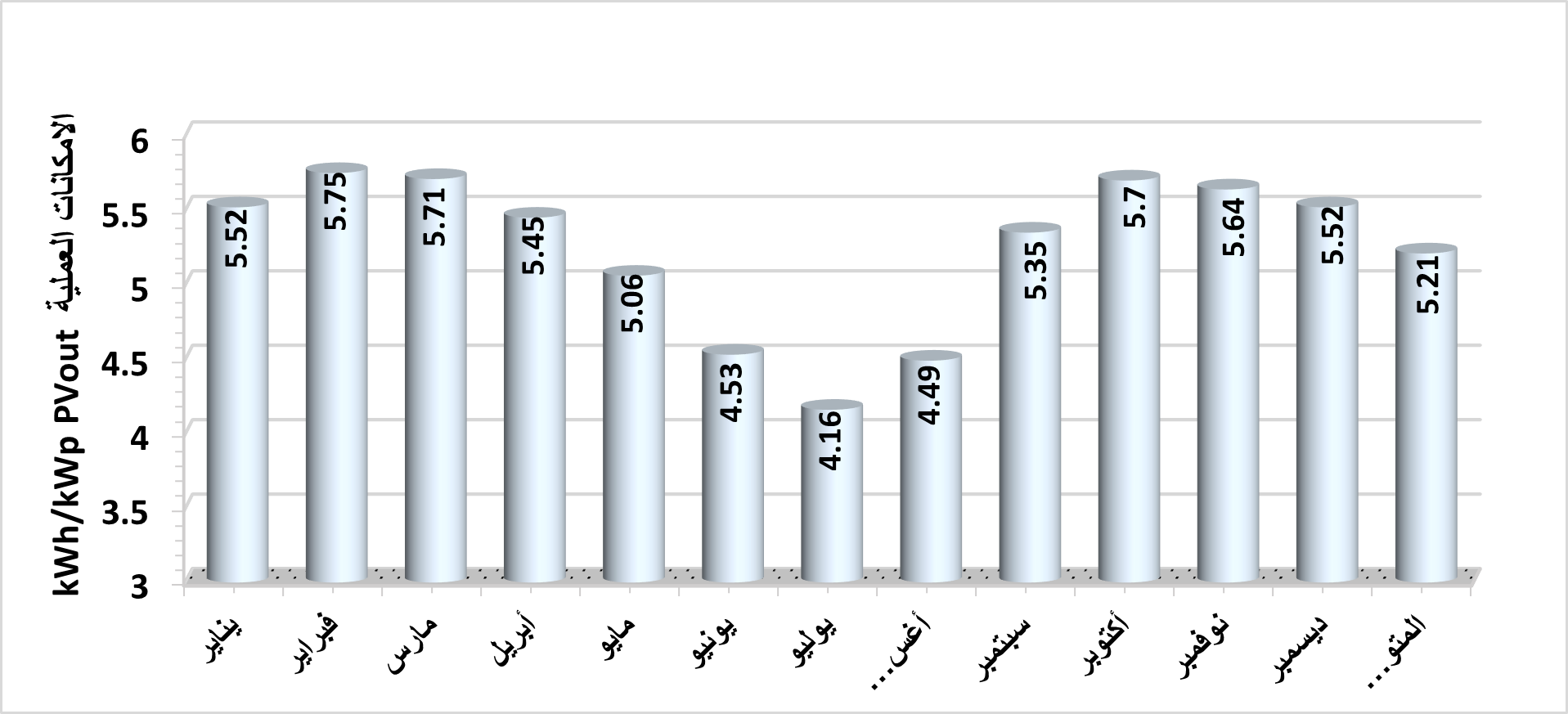
Assessment of the Potential Photovoltaic Power in Yemen Using Satellite Data and GIS
Adel M. Al-Weshali، Abdullah M. Yaya (المؤلف)
1528-1544
2026-01-29
الملخص
يتناول هذا البحث تقييماً شاملاً للإمكانات النظرية والعملية للطاقة الشمسية في الجمهورية اليمنية، بالاعتماد على بيانات الأقمار الصناعية الصادرة عن منصة "سولار جيس" (SolarGIS) المتاحة عبر "أطلس الطاقة الشمسية العالمي". تم تحليل عدة مؤشرات رئيسية، شملت الإشعاع الشمسي المباشر (DNI)، الإشعاع المنتشر (DIF)، الإشعاع الأفقي الشامل (GHI)، والإشعاع على السطح المائل بالإمالة المثلى (GTI)، إلى جانب عوامل مساعدة مثل زاوية الميل المثلى، درجة حرارة الهواء، والارتفاع عن مستوى سطح البحر. أظهرت نتائج الإشعاع الشمسي الأفقي (GHI) أن القيم تراوحت بين 5.46 و6.88 كيلوواط ساعي لكل متر مربع يوميًا، حيث تمتلك 7.62% من مساحة اليمن أعلى إمكانات نظرية (6.8–7.05)، بينما تمتلك 47.27% إمكانات عالية جداً (6.6–6.8). أما الإشعاع المباشر (DNI)، فقد بلغ أقصاه 7.29 وأدناه 3.76، مع تميّز 1.45% من المساحة بأعلى الإمكانات عالميًا (7.2–7.75)، و15.38% ضمن فئة مرتفعة. (6.7–7.2) وفيما يخص الإشعاع المنتشر (DIF)، تراوحت القيم بين 1.83 و2.76، حيث تقع 38.5% من المساحة ضمن الفئة (2.1–2.2). أما الإشعاع المائل (GTI)، فقد بلغ أعلى قيمة 7.27 وأدناها 5.66، مع 13.64% من المساحة ضمن فئة عالية (7.1–7.3). وفيما يتعلق بالإمكانات الكهروضوئية العملية (PVOUT)، بينت النتائج أن 2.35% من المساحة تمتلك أعلى كفاءة إنتاج (5.6–5.9 كيلوواط ساعي لكل كيلوواط مثبت يوميًا)، و24.41% ضمن فئة عالية جداً (5.4–5.6)، بينما لا تقل الإمكانات في 90.09% من المساحة عن 5. وفقًا لمستويات التقييم الثلاثة (0، 1، 2)، بلغت المساحات 455,112 كم²، 235,748 كم²، و219,364 كم² على التوالي، ما يعادل 86.2%، 44.65%، و41.54% من إجمالي مساحة اليمن. بينما غطّت المناطق ذات الإمكانات الأعلى من 5.6 نحو 1.7–2% من المساحة، وبلغت المساحة التي تفوق الإمكانات فيها المتوسط الوطني (5.2) حوالي 152,007 كم². تؤكد هذه النتائج توفر موارد شمسية واعدة في اليمن، ما يعزز إمكانية الاعتماد على الطاقة الشمسية كخيار استراتيجي مستدام لإنتاج الكهرباء وتحقيق التنمية.
الكلمات المفتاحية
الطاقة الشمسية
بيانات الاقمار الصناعية
القدرة الكهروضوئية
الطاقة المتجددة
(Solar GIS) سولار جيس
كيفية الاقتباس
Adel M. Al-Weshali، Abdullah M. Yaya (المؤلف) (2026). Assessment of the Potential Photovoltaic Power in Yemen Using Satellite Data and GIS. مجلة جامعة صنعاء للعلوم التطبيقية والتكنولوجيا, 1528-1544. DOI: https://doi.org/10.59628/jast.v4i1.2155
Adel M. Al-Weshali، Abdullah M. Yaya (المؤلف). “Assessment of the Potential Photovoltaic Power in Yemen Using Satellite Data and GIS.” مجلة جامعة صنعاء للعلوم التطبيقية والتكنولوجيا, 2026, pp. 1528-1544. https://doi.org/10.59628/jast.v4i1.2155. Accessed 27 أكتوبر. 2026.
Adel M. Al-Weshali، Abdullah M. Yaya (المؤلف). 2026. “Assessment of the Potential Photovoltaic Power in Yemen Using Satellite Data and GIS.” مجلة جامعة صنعاء للعلوم التطبيقية والتكنولوجيا : 1528-1544. DOI: https://doi.org/10.59628/jast.v4i1.2155
Adel M. Al-Weshali، Abdullah M. Yaya (المؤلف) (2026) ‘Assessment of the Potential Photovoltaic Power in Yemen Using Satellite Data and GIS’, مجلة جامعة صنعاء للعلوم التطبيقية والتكنولوجيا, pp. 1528-1544. doi: 10.59628/jast.v4i1.2155
@article{jast2026_art2155,
    author  = {Adel  M. Al-Weshali، Abdullah M. Yaya (المؤلف)},
    title   = {Assessment of the Potential Photovoltaic Power in Yemen Using Satellite Data and GIS},
    journal = {مجلة جامعة صنعاء للعلوم التطبيقية والتكنولوجيا},    year    = {2026},    month   = {يناير},    pages   = {1528-1544},    doi     = {10.59628/jast.v4i1.2155},
    url     = {https://doi.org/10.59628/jast.v4i1.2155},}
تم نسخ الاقتباس!
التواصل مع المؤلفين
Assessment of the Potential Photovoltaic Power in Yemen Using Satellite Data and GIS
تم نسخ البريد الإلكتروني!
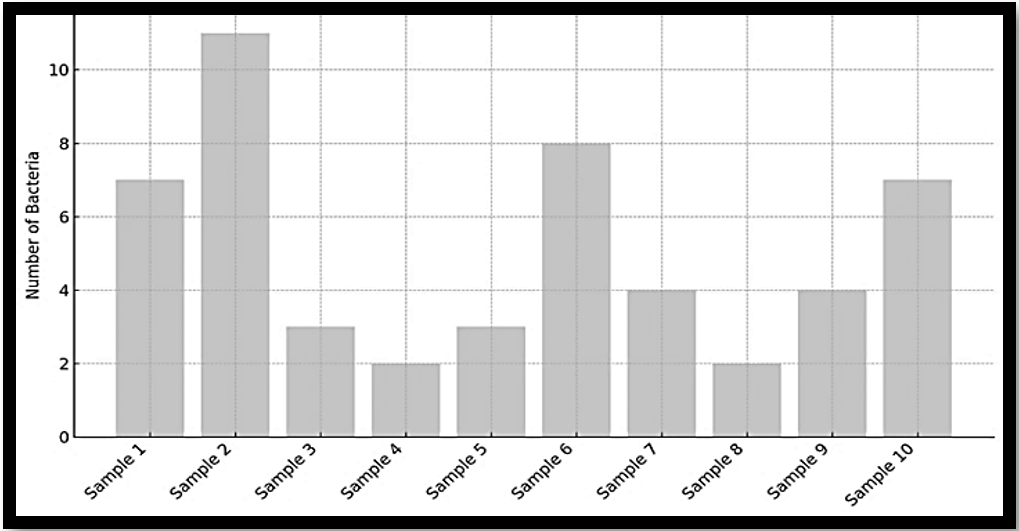
Antibacterial Activity of Soil Bacteria against Escherichia coli and GC-MS Analysis of their Organic Compounds
Miadah M. Mojahed، Abdulrahman A. Humaid (المؤلف)
1545-1551
2026-01-29
الملخص
Antimicrobial agents encompass a wide range of compounds, including antibiotics, bacteriocins, and lipopeptides, which play a crucial role in combating infectious diseases. Antibiotics, in particular, are secondary metabolites of low molecular weight predominantly synthesized by soil dwelling microorganisms. These microbial metabolites have long served as a vital source of clinically important therapeutic agents. Members of the genus Bacillus and other rhizosphere-associated bacteria are especially known for producing diverse antimicrobial substances. In this study, ten rhizosphere soil samples were collected from different sites in Sana’a city, Yemen. From these samples, 50 antibiotic-producing soil bacteria were isolated. Bioactive metabolites were extracted using the solvent extraction method with chloroform and Ethanol. The crude extracts were analyzed by Gas Chromatography–Mass Spectrometry (GC–MS) to identify their organic composition. Among the 50 bacterial isolates, 14 showed antibacterial activity against resistant Escherichia coli using the agar well diffusion method. Further secondary screening revealed that the filtrates of four isolates Pseudomonas fluorescens, Bacillus subtilis, Acinetobacter baylyi, and Azotobacter vinelandii exhibited the strongest antibacterial effects. GC–MS analysis showed that each isolate produced more than eighty organic compounds; however, only a subset demonstrated antibacterial activity. The most notable bioactive compounds detected included Phenol, 4-(2-aminoethyl)- (CAS: tyramine), 2,4-di-tert-butylphenol, and n-hexadecanoic acid. This study highlights the potential of rhizosphere soil bacteria as promising sources of novel bioactive compounds. The identification of active metabolites and their antibacterial properties against resistant E. coli underscores their possible application in the development of alternative therapeutic strategiesto address antibiotic resistance.
الكلمات المفتاحية
Secondary metabolites
GC-MS spectrophotometer
Escherichia coli
Soil bacteria
Organic compounds
Chloroform
Ethanol
كيفية الاقتباس
Miadah M. Mojahed، Abdulrahman A. Humaid (المؤلف) (2026). Antibacterial Activity of Soil Bacteria against Escherichia coli and GC-MS Analysis of their Organic Compounds. مجلة جامعة صنعاء للعلوم التطبيقية والتكنولوجيا, 1545-1551. DOI: https://doi.org/10.59628/jast.v4i1.1931
Miadah M. Mojahed، Abdulrahman A. Humaid (المؤلف). “Antibacterial Activity of Soil Bacteria against Escherichia coli and GC-MS Analysis of their Organic Compounds.” مجلة جامعة صنعاء للعلوم التطبيقية والتكنولوجيا, 2026, pp. 1545-1551. https://doi.org/10.59628/jast.v4i1.1931. Accessed 27 أكتوبر. 2026.
Miadah M. Mojahed، Abdulrahman A. Humaid (المؤلف). 2026. “Antibacterial Activity of Soil Bacteria against Escherichia coli and GC-MS Analysis of their Organic Compounds.” مجلة جامعة صنعاء للعلوم التطبيقية والتكنولوجيا : 1545-1551. DOI: https://doi.org/10.59628/jast.v4i1.1931
Miadah M. Mojahed، Abdulrahman A. Humaid (المؤلف) (2026) ‘Antibacterial Activity of Soil Bacteria against Escherichia coli and GC-MS Analysis of their Organic Compounds’, مجلة جامعة صنعاء للعلوم التطبيقية والتكنولوجيا, pp. 1545-1551. doi: 10.59628/jast.v4i1.1931
@article{jast2026_art1931,
    author  = {Miadah M. Mojahed، Abdulrahman A. Humaid (المؤلف)},
    title   = {Antibacterial Activity of Soil Bacteria against Escherichia coli and GC-MS Analysis of their Organic Compounds},
    journal = {مجلة جامعة صنعاء للعلوم التطبيقية والتكنولوجيا},    year    = {2026},    month   = {يناير},    pages   = {1545-1551},    doi     = {10.59628/jast.v4i1.1931},
    url     = {https://doi.org/10.59628/jast.v4i1.1931},}
تم نسخ الاقتباس!
التواصل مع المؤلفين
Antibacterial Activity of Soil Bacteria against Escherichia coli and GC-MS Analysis of their Organic Compounds
تم نسخ البريد الإلكتروني!
مراجعة
4 مقالات
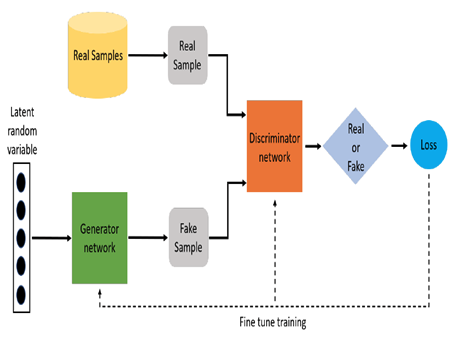
Generative Adversarial Networks for Visual Content: A Comprehensive Review of Image and Video Synthesis, Challenges, and Ethical Implications
Samah Ahmed Mohammed AlSarori، Ammar T. Zahary (المؤلف)
1552-1579
2026-01-29
الملخص
Generative adversarial networks (GANs) represent a ground-breaking advancement in artificial intelligence, revolutionizing data generation and content creation. This systematic review critically analyses literature from 2019-2024, sourced from major databases like IEEE Xplore and Scopus, to go beyond descriptive surveys and provide a synthesized, critical evaluation. We identify a pivotal gap in the existing literature: a frequent disconnect between reporting technical advancements and examining their profound ethical and societal implications. Our analysis yields several integrated insights. First, while GAN applications predominantly excel in visual content generation with architectures like StyleGAN and BigGAN achieving remarkable progress in photorealistic image and video synthesis their efficacy is highly application-specific, revealing significant trade-offs in stability and diversity in domains such as medical imaging and real-time video processing. Second, persistent core challenges like training instability and mode collapse continue to drive architectural innovations; however, we critically examine how solutions like Wasserstein loss or minibatch discrimination demonstrate varying effectiveness and limitations across different tasks and datasets. Third, and most critically, we argue that ethical concerns, particularly regarding deepfakes and data bias, are not peripheral issues but are intrinsically linked to architectural choices and the quality of training data. The key contribution of this review is its novel, integrated framework for evaluating GANs, which concurrently assesses architectural efficacy, application-specific maturity, and associated ethical risks. This holistic and critical synthesis provides researchers with a nuanced reference and outlines clear, responsible directions for future GAN development, emphasizing the need for models that are not only more powerful but also more robust, fair, and accountable.
الكلمات المفتاحية
التعلم الآلي
التعلم العميق
الشبكة التوليدية التنافسية
الذكاء الإصطناعي
كيفية الاقتباس
Samah Ahmed Mohammed AlSarori، Ammar T. Zahary (المؤلف) (2026). Generative Adversarial Networks for Visual Content: A Comprehensive Review of Image and Video Synthesis, Challenges, and Ethical Implications. مجلة جامعة صنعاء للعلوم التطبيقية والتكنولوجيا, 1552-1579. DOI: https://doi.org/10.59628/jast.v4i1.2100
Samah Ahmed Mohammed AlSarori، Ammar T. Zahary (المؤلف). “Generative Adversarial Networks for Visual Content: A Comprehensive Review of Image and Video Synthesis, Challenges, and Ethical Implications.” مجلة جامعة صنعاء للعلوم التطبيقية والتكنولوجيا, 2026, pp. 1552-1579. https://doi.org/10.59628/jast.v4i1.2100. Accessed 27 أكتوبر. 2026.
Samah Ahmed Mohammed AlSarori، Ammar T. Zahary (المؤلف). 2026. “Generative Adversarial Networks for Visual Content: A Comprehensive Review of Image and Video Synthesis, Challenges, and Ethical Implications.” مجلة جامعة صنعاء للعلوم التطبيقية والتكنولوجيا : 1552-1579. DOI: https://doi.org/10.59628/jast.v4i1.2100
Samah Ahmed Mohammed AlSarori، Ammar T. Zahary (المؤلف) (2026) ‘Generative Adversarial Networks for Visual Content: A Comprehensive Review of Image and Video Synthesis, Challenges, and Ethical Implications’, مجلة جامعة صنعاء للعلوم التطبيقية والتكنولوجيا, pp. 1552-1579. doi: 10.59628/jast.v4i1.2100
@article{jast2026_art2100,
    author  = {Samah Ahmed Mohammed AlSarori، Ammar T. Zahary (المؤلف)},
    title   = {Generative Adversarial Networks for Visual Content: A Comprehensive Review of Image and Video Synthesis, Challenges, and Ethical Implications},
    journal = {مجلة جامعة صنعاء للعلوم التطبيقية والتكنولوجيا},    year    = {2026},    month   = {يناير},    pages   = {1552-1579},    doi     = {10.59628/jast.v4i1.2100},
    url     = {https://doi.org/10.59628/jast.v4i1.2100},}
تم نسخ الاقتباس!
التواصل مع المؤلفين
Generative Adversarial Networks for Visual Content: A Comprehensive Review of Image and Video Synthesis, Challenges, and Ethical Implications
تم نسخ البريد الإلكتروني!
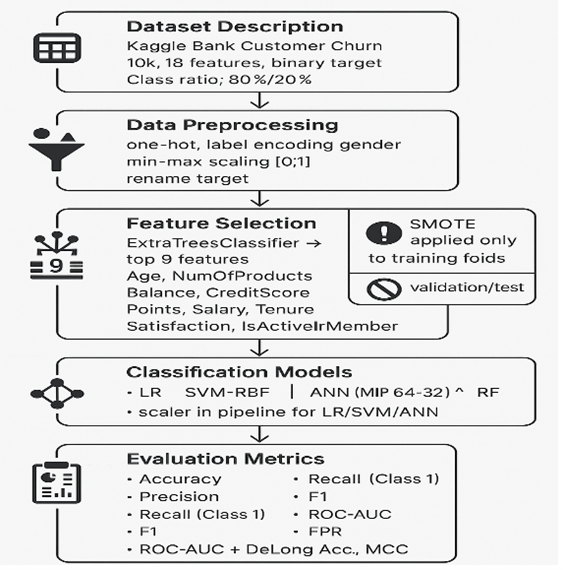
Machine Learning Algorithms for Customer Churn Prediction in the Banking Sector: A Comparative Study
Ibrahim Ahmed Al-Baltah، Sultan Yahya Al-Sultan (المؤلف)
1580-1595
2026-01-29
الملخص
Predicting customer churn in retail banking is essential for sustaining profitability. This study compares four supervised machine-learning models—Logistic Regression (LR), Support Vector Machine (SVM), Random Forest (RF), and Artificial Neural Network (ANN)—using the publicly available bank customer churn dataset from Kaggle (10,000 records, 18 attributes; publicly available at Kaggle repository. Data preprocessing included one-hot encoding for categorical variables, label encoding for gender, and feature selection via an ExtraTreesClassifier retaining nine informative predictors (e.g., age, credit score, balance). To address class imbalance (≈80% nonchurners vs. 20% churners), models were trained and evaluated with and without the Synthetic Minority Oversampling Technique (SMOTE), which was applied only to the training folds under stratified 5-fold cross-validation. Evaluation metrics comprised accuracy, precision, recall (for churn class), F1-score, ROC–AUC, and PR–AUC. RF achieved the best balance between recall (0.484 imbalanced; 0.619 balanced) and accuracy (0.867 imbalanced), while LR with SMOTE attained the highest recall (0.715) at the cost of reduced accuracy (0.718). Overall, the results highlight RF as the most robust model across both distributions and emphasize the importance of imbalance-aware evaluation in bank churn prediction.
الكلمات المفتاحية
Predicting Customer Churn
Machine Learning
Class Imbalance
Random Forest
SMOTE
كيفية الاقتباس
Ibrahim Ahmed Al-Baltah، Sultan Yahya Al-Sultan (المؤلف) (2026). Machine Learning Algorithms for Customer Churn Prediction in the Banking Sector: A Comparative Study. مجلة جامعة صنعاء للعلوم التطبيقية والتكنولوجيا, 1580-1595. DOI: https://doi.org/10.59628/jast.v4i1.2302
Ibrahim Ahmed Al-Baltah، Sultan Yahya Al-Sultan (المؤلف). “Machine Learning Algorithms for Customer Churn Prediction in the Banking Sector: A Comparative Study.” مجلة جامعة صنعاء للعلوم التطبيقية والتكنولوجيا, 2026, pp. 1580-1595. https://doi.org/10.59628/jast.v4i1.2302. Accessed 27 أكتوبر. 2026.
Ibrahim Ahmed Al-Baltah، Sultan Yahya Al-Sultan (المؤلف). 2026. “Machine Learning Algorithms for Customer Churn Prediction in the Banking Sector: A Comparative Study.” مجلة جامعة صنعاء للعلوم التطبيقية والتكنولوجيا : 1580-1595. DOI: https://doi.org/10.59628/jast.v4i1.2302
Ibrahim Ahmed Al-Baltah، Sultan Yahya Al-Sultan (المؤلف) (2026) ‘Machine Learning Algorithms for Customer Churn Prediction in the Banking Sector: A Comparative Study’, مجلة جامعة صنعاء للعلوم التطبيقية والتكنولوجيا, pp. 1580-1595. doi: 10.59628/jast.v4i1.2302
@article{jast2026_art2302,
    author  = {Ibrahim Ahmed Al-Baltah، Sultan Yahya Al-Sultan (المؤلف)},
    title   = {Machine Learning Algorithms for Customer Churn Prediction in the Banking Sector: A Comparative Study},
    journal = {مجلة جامعة صنعاء للعلوم التطبيقية والتكنولوجيا},    year    = {2026},    month   = {يناير},    pages   = {1580-1595},    doi     = {10.59628/jast.v4i1.2302},
    url     = {https://doi.org/10.59628/jast.v4i1.2302},}
تم نسخ الاقتباس!
التواصل مع المؤلفين
Machine Learning Algorithms for Customer Churn Prediction in the Banking Sector: A Comparative Study
تم نسخ البريد الإلكتروني!
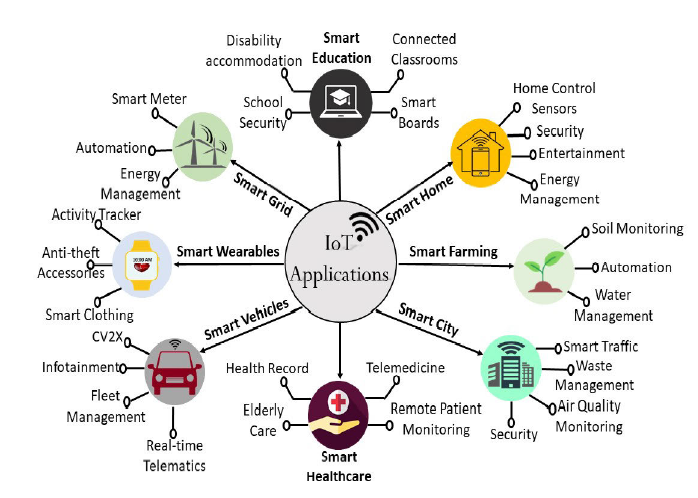
Survey On Intelligent Anomaly Detection Techniques In IOT Security
Haifa Hamoud Al-Hamadi ، Ibrahim Ahmed Al-Baltah، Nagi Ali Al-shaibany (المؤلف)
1596-1621
2026-01-29
الملخص
The rapid development of various advanced technologies, including the Internet of Things (IoT), coupled with users’ heavy reliance on technology in various aspects of their daily lives, has led to an increase in the number of devices connected to the Internet. As a result of this rapid growth, the amount of data generated will increase significantly, as the Internet of Things covers many areas, from industrial and healthcare sectors to smart cities and smart homes. However, many challenges, attacks, vulnerabilities, and various anomalies related to the security of IoT devices arise, negatively impacting individuals and organizations. Several anomaly detection techniques have emerged, including machine learning and deep learning, which in turn detect anomalies. This enhances the security, integrity, reliability, and effectiveness of IoT systems. This paper provides a comprehensive survey of peer-reviewed articles from 2018 up to the present that focus on machine learning and deep learning in anomaly detection and attacks on various layers of the Internet of Things architecture. The survey results provide potential insights and recommendations for future research endeavors.
الكلمات المفتاحية
Anomaly detection
Internet of Things (IOT)
Machine learning (ML)
Deep learning (DL)
IOT Security
IOT layer attacks
كيفية الاقتباس
Haifa Hamoud Al-Hamadi ، Ibrahim Ahmed Al-Baltah، Nagi Ali Al-shaibany (المؤلف) (2026). Survey On Intelligent Anomaly Detection Techniques In IOT Security. مجلة جامعة صنعاء للعلوم التطبيقية والتكنولوجيا, 1596-1621. DOI: https://doi.org/10.59628/jast.v4i1.2234
Haifa Hamoud Al-Hamadi ، Ibrahim Ahmed Al-Baltah، Nagi Ali Al-shaibany (المؤلف). “Survey On Intelligent Anomaly Detection Techniques In IOT Security.” مجلة جامعة صنعاء للعلوم التطبيقية والتكنولوجيا, 2026, pp. 1596-1621. https://doi.org/10.59628/jast.v4i1.2234. Accessed 27 أكتوبر. 2026.
Haifa Hamoud Al-Hamadi ، Ibrahim Ahmed Al-Baltah، Nagi Ali Al-shaibany (المؤلف). 2026. “Survey On Intelligent Anomaly Detection Techniques In IOT Security.” مجلة جامعة صنعاء للعلوم التطبيقية والتكنولوجيا : 1596-1621. DOI: https://doi.org/10.59628/jast.v4i1.2234
Haifa Hamoud Al-Hamadi ، Ibrahim Ahmed Al-Baltah، Nagi Ali Al-shaibany (المؤلف) (2026) ‘Survey On Intelligent Anomaly Detection Techniques In IOT Security’, مجلة جامعة صنعاء للعلوم التطبيقية والتكنولوجيا, pp. 1596-1621. doi: 10.59628/jast.v4i1.2234
@article{jast2026_art2234,
    author  = {Haifa Hamoud Al-Hamadi ، Ibrahim Ahmed Al-Baltah، Nagi Ali Al-shaibany (المؤلف)},
    title   = {Survey On Intelligent Anomaly Detection Techniques In IOT Security},
    journal = {مجلة جامعة صنعاء للعلوم التطبيقية والتكنولوجيا},    year    = {2026},    month   = {يناير},    pages   = {1596-1621},    doi     = {10.59628/jast.v4i1.2234},
    url     = {https://doi.org/10.59628/jast.v4i1.2234},}
تم نسخ الاقتباس!
التواصل مع المؤلفين
Survey On Intelligent Anomaly Detection Techniques In IOT Security
تم نسخ البريد الإلكتروني!
![Sample GRP Architecture [22]](https://journals.su.edu.ye/public/journals/5/submission_2341_2341_coverImage_ar_IQ.png)
A Systematic Literature Review of Factors Influencing the Adoption of GRP System
Hana’a A. Johar ، Adnan Al-Mutawkkil، Ammar T. Zahary، Suad M. Othman (المؤلف)
1622-1639
2026-01-29
الملخص
Because of the enhanced efficiency and value that come with implementing ERP systems and e-government, these systems have taken center stage in government organizations throughout both developed and developing nations. To provide more efficient government and better services to citizens, public administrations and agencies have invested in Enterprise Resource Planning (ERP) systems as their core technological infrastructure for e-government. Despite recognizing the importance of management information systems in electronic government, most Arab countries in the Middle East and other underdeveloped countries are still dealing with issues with adopting these technologies. This study introduced a Systematic Literature Review (SLR) to identify the Critical Success Factors influencing the adoption of GRP systems, the benefits of GRP systems, and their challenges. Studies from 2015 to 2024 were selected from databases such as Scopus and IEEE Explore. This study proposed a conceptual model based on technological, organizational, and environmental factors. The study also analyzes the importance of the CSFs. It also summarized the most significant challenges and difficulties in adopting GRP systems, as well as future trends, thereby creating numerous opportunities to develop various solutions.
الكلمات المفتاحية
GRP
Factors Influencing
A Systematic Literature Review
Adoption
Systems
كيفية الاقتباس
Hana’a A. Johar ، Adnan Al-Mutawkkil، Ammar T. Zahary، Suad M. Othman (المؤلف) (2026). A Systematic Literature Review of Factors Influencing the Adoption of GRP System. مجلة جامعة صنعاء للعلوم التطبيقية والتكنولوجيا, 1622-1639. DOI: https://doi.org/10.59628/jast.v4i1.2341
Hana’a A. Johar ، Adnan Al-Mutawkkil، Ammar T. Zahary، Suad M. Othman (المؤلف). “A Systematic Literature Review of Factors Influencing the Adoption of GRP System.” مجلة جامعة صنعاء للعلوم التطبيقية والتكنولوجيا, 2026, pp. 1622-1639. https://doi.org/10.59628/jast.v4i1.2341. Accessed 27 أكتوبر. 2026.
Hana’a A. Johar ، Adnan Al-Mutawkkil، Ammar T. Zahary، Suad M. Othman (المؤلف). 2026. “A Systematic Literature Review of Factors Influencing the Adoption of GRP System.” مجلة جامعة صنعاء للعلوم التطبيقية والتكنولوجيا : 1622-1639. DOI: https://doi.org/10.59628/jast.v4i1.2341
Hana’a A. Johar ، Adnan Al-Mutawkkil، Ammar T. Zahary، Suad M. Othman (المؤلف) (2026) ‘A Systematic Literature Review of Factors Influencing the Adoption of GRP System’, مجلة جامعة صنعاء للعلوم التطبيقية والتكنولوجيا, pp. 1622-1639. doi: 10.59628/jast.v4i1.2341
@article{jast2026_art2341,
    author  = {Hana’a A. Johar ، Adnan Al-Mutawkkil، Ammar T. Zahary، Suad M. Othman (المؤلف)},
    title   = {A Systematic Literature Review of Factors Influencing the Adoption of GRP System},
    journal = {مجلة جامعة صنعاء للعلوم التطبيقية والتكنولوجيا},    year    = {2026},    month   = {يناير},    pages   = {1622-1639},    doi     = {10.59628/jast.v4i1.2341},
    url     = {https://doi.org/10.59628/jast.v4i1.2341},}
تم نسخ الاقتباس!
التواصل مع المؤلفين
A Systematic Literature Review of Factors Influencing the Adoption of GRP System
تم نسخ البريد الإلكتروني!
