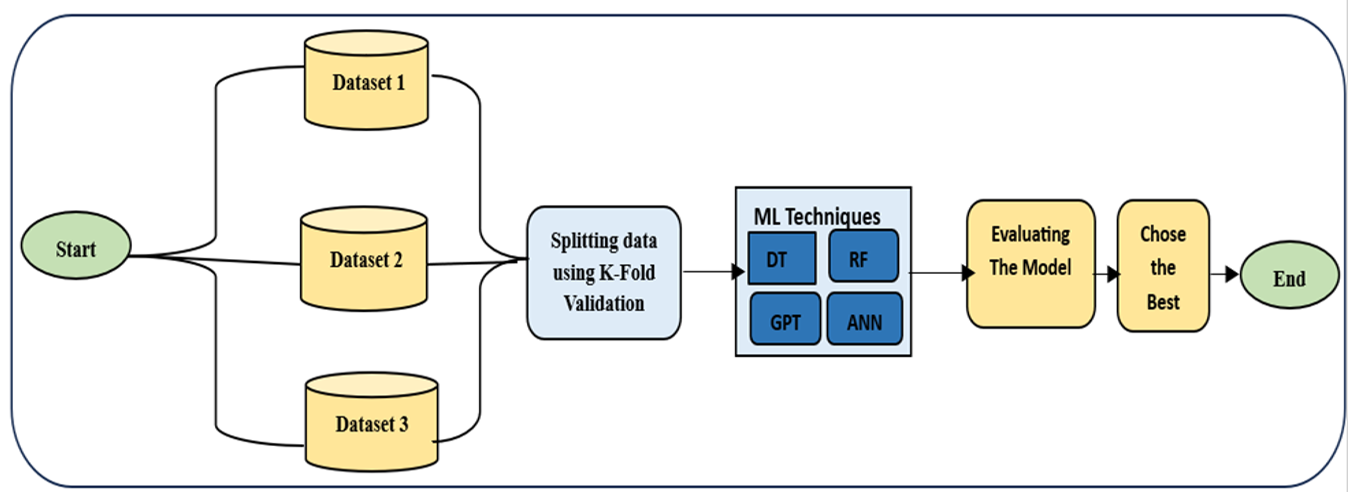
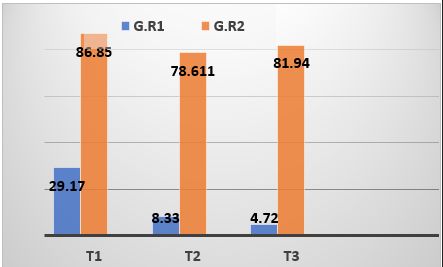
Many factors influence the efficiency of a classification model in Machine Learning, including the dataset’s size and the type of Machine Learning (ML) technique utilized in the classification process. Primarily, the accuracy varies among different machine learning methods. This paper develops a model that analyses and measures the impact of Tax Dataset Augmentation on the Accuracy of Machine Learning Models. The paper compares the performance of different models based on the most common machine learning techniques, namely: DT, RF, SVM, and ANN (MLP). Based on three datasets provided by Yemen’s Tax Authority. The first dataset contains 1083 records, while the second dataset is identical to the previous one, but with nearly five times the number of records, following data preprocessing, which resulted in approximately 5000 additional records. The last dataset is the same as the original dataset, but it has been duplicated nearly ten times, resulting in almost 10,000 records. The dataset partitioning technique utilized k-fold validation using the three datasets. Results show that the performance of ML classifiers such as ANN (MLP), DT, RF, and SVM is affected by dataset augmentation in terms of accuracy, recall, precision, and F-score. Results also show that the performance varies among the first three techniques; however, the SVM Classifier yields the lowest results. In general, despite some techniques leading to overfitting, it is found that most machine learning models utilizing tax datasets with five times the duplicates produced better outcomes than those using the original dataset. These findings provide practical guidance for tax authorities in selecting robust machine learning models under limited data availability and highlight risks associated with naïve dataset expansion.