
Current Issue
Sana’a University Journal of Medicine and Health Sciences
Vol. 18 No. 3 (2024)
2024-09-18
8 Articles
Volume Eighteen - Issue Three (2024): Sana’a University Journal of Medicine and Health Sciences
Article
8 Articles
How to Cite This Article
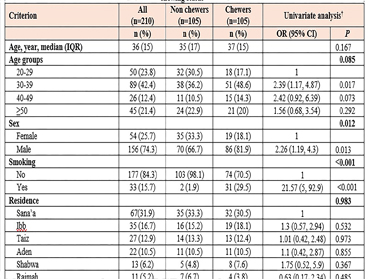
Khalid AlShoba, Samira H Hanash, Basel Al-Haydari, Anwar G Al-Madhaji, Aref AlAfif, Saleh S Bahaj (2024). Association between khat chewing and high viral load in chronic hepatitis B infection. Sana'a University Journal of Medicine and Health Sciences, 1 - 10. DOI: https://doi.org/10.59628/jchm.v18i3.1129
Khalid AlShoba, Samira H Hanash, Basel Al-Haydari, Anwar G Al-Madhaji, Aref AlAfif, Saleh S Bahaj . “Association between khat chewing and high viral load in chronic hepatitis B infection.” Sana'a University Journal of Medicine and Health Sciences, 2024, pp. 1 - 10. https://doi.org/10.59628/jchm.v18i3.1129. Accessed 10 Nov. 2026.
Khalid AlShoba, Samira H Hanash, Basel Al-Haydari, Anwar G Al-Madhaji, Aref AlAfif, Saleh S Bahaj . 2024. “Association between khat chewing and high viral load in chronic hepatitis B infection.” Sana'a University Journal of Medicine and Health Sciences : 1 - 10. DOI: https://doi.org/10.59628/jchm.v18i3.1129
Khalid AlShoba, Samira H Hanash, Basel Al-Haydari, Anwar G Al-Madhaji, Aref AlAfif, Saleh S Bahaj (2024) ‘Association between khat chewing and high viral load in chronic hepatitis B infection’, Sana'a University Journal of Medicine and Health Sciences, pp. 1 - 10. doi: 10.59628/jchm.v18i3.1129
@article{jchm2024_art1129,
    author  = {Khalid AlShoba, Samira H Hanash, Basel Al-Haydari, Anwar G Al-Madhaji, Aref AlAfif, Saleh S Bahaj },
    title   = {Association between khat chewing and high viral load in chronic hepatitis B infection},
    journal = {Sana'a University Journal of Medicine and Health Sciences},    year    = {2024},    month   = {September},    pages   = {1 - 10},    doi     = {10.59628/jchm.v18i3.1129},
    url     = {https://doi.org/10.59628/jchm.v18i3.1129},}
Citation copied!
Contact Authors
Association between khat chewing and high viral load in chronic hepatitis B infection
Email copied!
Anthropometric recovery of children 6-59 months with complicated severe acute malnutrition, treated in public hospitals of Sana’a City
Mohammed Abdullah Al Amad, Yahyia Ahmed Raja'a, Khaled Algendari
11 - 22
2024-09-18
Abstract
Background: The management of severe acute malnutrition (SAM) in inpatient therapeutic feeding centers (TFCs) is a life-saving intervention for children 6-59 months in Yemen.
Aims: To evaluate the anthropometric recovery of children admitted to the TFCs and transferred to complete treatment in outpatient programs (OTPs) of Sana’a City Public Hospitals.
Methods: A prospective follow-up study for children admitted to TFCs from September 2023 to April 2024 was conducted. The anthropometry measurements of the Weight-for-Height Z score (WHZ) and Mid-Upper Arm Circumference (MUAC) were calculated and used to follow the progression in recovery until the discharge from OTPs.
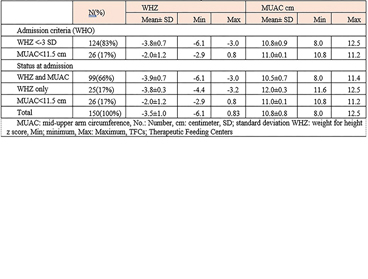
Results: Of the total 150 children admitted to TFCs, 48 (32%) were males, and 75 (50%) were aged 6-<12 months; 99 (66%) had both WHZ <-3 and MUAC <11.5); 25 (17%) had WHZ <-3; and 26 (17%) had MUAC<11.5 cm. At the point of transfer from TFCs, 72% (108) were with SAM, and 28% (42/150) with Moderate Acute Malnutrition (MAM). At discharge from OTP, 19% (28/150) were with non-acute malnutrition (NAM); the progression to NAM was among 48% (20/42) and 7% (8/108) of children transferred with MAM and SAM, P value (<0.001).
In conclusion, 88% (132/150) of children transferred from TFCs were discharged as cured from OTP, 21% (28/132) of them were anthropometrically recovered, and 79% were prematurely discharged.
Keywords
Complicated SAM ;Children 6-59 months ;full anthropometric recovery
How to Cite This Article
Mohammed Abdullah Al Amad, Yahyia Ahmed Raja'a, Khaled Algendari (2024). Anthropometric recovery of children 6-59 months with complicated severe acute malnutrition, treated in public hospitals of Sana’a City. Sana'a University Journal of Medicine and Health Sciences, 11 - 22. DOI: https://doi.org/10.59628/jchm.v18i3.1102
Mohammed Abdullah Al Amad, Yahyia Ahmed Raja'a, Khaled Algendari . “Anthropometric recovery of children 6-59 months with complicated severe acute malnutrition, treated in public hospitals of Sana’a City.” Sana'a University Journal of Medicine and Health Sciences, 2024, pp. 11 - 22. https://doi.org/10.59628/jchm.v18i3.1102. Accessed 10 Nov. 2026.
Mohammed Abdullah Al Amad, Yahyia Ahmed Raja'a, Khaled Algendari . 2024. “Anthropometric recovery of children 6-59 months with complicated severe acute malnutrition, treated in public hospitals of Sana’a City.” Sana'a University Journal of Medicine and Health Sciences : 11 - 22. DOI: https://doi.org/10.59628/jchm.v18i3.1102
Mohammed Abdullah Al Amad, Yahyia Ahmed Raja'a, Khaled Algendari (2024) ‘Anthropometric recovery of children 6-59 months with complicated severe acute malnutrition, treated in public hospitals of Sana’a City’, Sana'a University Journal of Medicine and Health Sciences, pp. 11 - 22. doi: 10.59628/jchm.v18i3.1102
@article{jchm2024_art1102,
    author  = {Mohammed Abdullah  Al Amad, Yahyia Ahmed  Raja'a, Khaled  Algendari },
    title   = {Anthropometric recovery of children 6-59 months with complicated severe acute malnutrition, treated in public hospitals of Sana’a City},
    journal = {Sana'a University Journal of Medicine and Health Sciences},    year    = {2024},    month   = {September},    pages   = {11 - 22},    doi     = {10.59628/jchm.v18i3.1102},
    url     = {https://doi.org/10.59628/jchm.v18i3.1102},}
Citation copied!
Contact Authors
Anthropometric recovery of children 6-59 months with complicated severe acute malnutrition, treated in public hospitals of Sana’a City
Email copied!
Personal and environmental risk factors for chikungunya virus infection: cross-sectional hospital-based study among febrile patients receiving treatment in AI-Hodayda city hospitals, Yemen
Nagwa Abdo Ali Mohammed , Abdulwahab Mohammed Almutahar , Hassan Abdulwahab Al-Shamahy, Ahmed Y Al-Jaufy, Anwar K. Al-Madhagi, Omar Ismail Al-Dosary
23 - 32
2024-09-18
Abstract
Background: Mosquitoes carry the illness known as chikungunya, which is becoming more common throughout Yemen. It is a serious matter concerning public health. In the hospitals located in AI-Thawrah, AI-Amal, and AI-Aqsa in AI-Hodayda city, Yemen, feverish patients seeking treatment were the subjects of this study, which aimed to investigate host and environmental risk factors.
Methods: Patients with fever were enrolled in the trial at the authorized hospitals in AI-Hodayda city between June and June 2023. For febrile patients, a set of questionnaires was employed to collect clinical, sociodemographic, and related risk factors. Using an enzyme-linked immunosorbent assay, patients were tested for chikungunya antibodies as well as immunoglobulin M (IgM) and G (IgG). Reverse transcriptase polymerase chain reaction (RT-PCR), which searches for CHIK viral RNA, was used to confirm the findings.
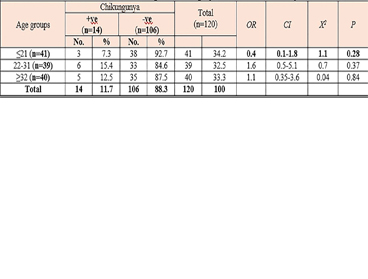
Results: In all, 120 patients with fever were included in the research. According to RT-PCR, ELISA, and/or RDTs, the total prevalence of chikungunya infection was 14 (11.7%). The study found a correlation between gender and chikungunya infection, with males having a slightly higher rate (12.2%) compared to females (10.9%). The age group of 22-31 years had a higher rate (15.4%) than the ≤21 (7.3%) and a slightly higher (12.5%) group of ≥32 years. The study also identified risk factors associated with chikungunya infections in individuals experiencing fever in Hodiedah city. These included living in a rural area, living in a bog, lacking sewage in homes, failing to use a bed net, having an exposed water tank, not having a window screen, not wearing full body cloths, having trash around or near the patients' houses, and having another ill person with a fever of unknown origin in the patients' houses.
Conclusions: The research involved 120 patients with fever, revealing a 11.7% prevalence of chikungunya infection. Gender was found to be a significant factor, with males having a slightly higher rate. Age groups 22-31 had a higher rate than other age groups. Risk factors associated with chikungunya infections included rural living, bog living, lack of sewage, bed net use, exposed water tanks, and trash.
Keywords
Chikungunya, Reverse Transcriptase Polymerase Chain Reaction (RT-PCR), seroprevalence, risk factors, AI-Hodayda city
How to Cite This Article
Nagwa Abdo Ali Mohammed , Abdulwahab Mohammed Almutahar , Hassan Abdulwahab Al-Shamahy, Ahmed Y Al-Jaufy, Anwar K. Al-Madhagi, Omar Ismail Al-Dosary (2024). Personal and environmental risk factors for chikungunya virus infection: cross-sectional hospital-based study among febrile patients receiving treatment in AI-Hodayda city hospitals, Yemen. Sana'a University Journal of Medicine and Health Sciences, 23 - 32. DOI: https://doi.org/10.59628/jchm.v18i3.1177
Nagwa Abdo Ali Mohammed , Abdulwahab Mohammed Almutahar , Hassan Abdulwahab Al-Shamahy, Ahmed Y Al-Jaufy, Anwar K. Al-Madhagi, Omar Ismail Al-Dosary . “Personal and environmental risk factors for chikungunya virus infection: cross-sectional hospital-based study among febrile patients receiving treatment in AI-Hodayda city hospitals, Yemen.” Sana'a University Journal of Medicine and Health Sciences, 2024, pp. 23 - 32. https://doi.org/10.59628/jchm.v18i3.1177. Accessed 10 Nov. 2026.
Nagwa Abdo Ali Mohammed , Abdulwahab Mohammed Almutahar , Hassan Abdulwahab Al-Shamahy, Ahmed Y Al-Jaufy, Anwar K. Al-Madhagi, Omar Ismail Al-Dosary . 2024. “Personal and environmental risk factors for chikungunya virus infection: cross-sectional hospital-based study among febrile patients receiving treatment in AI-Hodayda city hospitals, Yemen.” Sana'a University Journal of Medicine and Health Sciences : 23 - 32. DOI: https://doi.org/10.59628/jchm.v18i3.1177
Nagwa Abdo Ali Mohammed , Abdulwahab Mohammed Almutahar , Hassan Abdulwahab Al-Shamahy, Ahmed Y Al-Jaufy, Anwar K. Al-Madhagi, Omar Ismail Al-Dosary (2024) ‘Personal and environmental risk factors for chikungunya virus infection: cross-sectional hospital-based study among febrile patients receiving treatment in AI-Hodayda city hospitals, Yemen’, Sana'a University Journal of Medicine and Health Sciences, pp. 23 - 32. doi: 10.59628/jchm.v18i3.1177
@article{jchm2024_art1177,
    author  = {Nagwa Abdo Ali Mohammed , Abdulwahab Mohammed Almutahar , Hassan Abdulwahab Al-Shamahy, Ahmed Y Al-Jaufy, Anwar K. Al-Madhagi, Omar Ismail  Al-Dosary },
    title   = {Personal and environmental risk factors for chikungunya virus infection: cross-sectional hospital-based study among febrile patients receiving treatment in AI-Hodayda city hospitals, Yemen},
    journal = {Sana'a University Journal of Medicine and Health Sciences},    year    = {2024},    month   = {September},    pages   = {23 - 32},    doi     = {10.59628/jchm.v18i3.1177},
    url     = {https://doi.org/10.59628/jchm.v18i3.1177},}
Citation copied!
Contact Authors
Personal and environmental risk factors for chikungunya virus infection: cross-sectional hospital-based study among febrile patients receiving treatment in AI-Hodayda city hospitals, Yemen
Email copied!

Tracing HIV Infection among high-risk Tuberculosis Patients in Hodiedah Referral Center, Yemen
khaled Alselwi, Mohamed.A Suhail
33 - 37
2024-09-18
Abstract
Background: HIV and tuberculosis [TB] are major public health concerns in Yemen. However, in this population, there is limited information on the prevalence of HIV infection among TB patients. This study aims to trace and describe cases of HIV infection among high-risk tuberculosis patients attending the Hodiedah referral center in Yemen.
Methods: A cross-sectional study design was employed, and a convenience sampling method was used to select 40 high-risk tuberculosis patients out of 164 confirmed cases. Data was collected through a questionnaire regarding sociodemographic features and clinical signs.
Results: Of 40 high-risk TB patients, only 4 tested positive for HIV, indicating a 10% prevalence. More than half [55.0%] were aged between 18 and 40 years, with the majority [57.5%] being male. Over half [57.5%] resided in urban areas, and approximately two-thirds [62.5%] had no formal education. Most participants [87.5%] belonged to a low socioeconomic status, with a monthly income of less than 50,000 Yemeni Riyals. The age group of 18–40 years had the highest frequency of HIV-positive cases [50.0%]. All HIV-positive cases occurred in males. Younger age and travel history showed higher odds of HIV positivity. Diarrhea, bone pain, and abdominal pain were associated with HIV-TB co-infection.
Conclusion: A relatively high HIV prevalence points to an urgent need to scale up integrated screening, testing, and treatment programs within existing TB clinics to address this unmet HIV/TB burden. Males, younger ages, and travel outside the country emerged as potential high-risk groups that could be prioritized for screening; incorporating symptom-based algorithms into clinical protocols may help front-line workers recognize and refer to suspected co-infection cases for testing. Larger studies are warranted to validate the findings and better inform control programs.
Keywords
HIV prevalence,TB high-risk groups,demographic factors,Hodiedah Referral
How to Cite This Article
khaled Alselwi, Mohamed.A Suhail (2024). Tracing HIV Infection among high-risk Tuberculosis Patients in Hodiedah Referral Center, Yemen . Sana'a University Journal of Medicine and Health Sciences, 33 - 37. DOI: https://doi.org/10.59628/jchm.v18i3.565
khaled Alselwi, Mohamed.A Suhail . “Tracing HIV Infection among high-risk Tuberculosis Patients in Hodiedah Referral Center, Yemen .” Sana'a University Journal of Medicine and Health Sciences, 2024, pp. 33 - 37. https://doi.org/10.59628/jchm.v18i3.565. Accessed 10 Nov. 2026.
khaled Alselwi, Mohamed.A Suhail . 2024. “Tracing HIV Infection among high-risk Tuberculosis Patients in Hodiedah Referral Center, Yemen .” Sana'a University Journal of Medicine and Health Sciences : 33 - 37. DOI: https://doi.org/10.59628/jchm.v18i3.565
khaled Alselwi, Mohamed.A Suhail (2024) ‘Tracing HIV Infection among high-risk Tuberculosis Patients in Hodiedah Referral Center, Yemen ’, Sana'a University Journal of Medicine and Health Sciences, pp. 33 - 37. doi: 10.59628/jchm.v18i3.565
@article{jchm2024_art565,
    author  = {khaled Alselwi, Mohamed.A Suhail },
    title   = {Tracing HIV Infection among high-risk Tuberculosis Patients in Hodiedah Referral Center, Yemen },
    journal = {Sana'a University Journal of Medicine and Health Sciences},    year    = {2024},    month   = {September},    pages   = {33 - 37},    doi     = {10.59628/jchm.v18i3.565},
    url     = {https://doi.org/10.59628/jchm.v18i3.565},}
Citation copied!
Contact Authors
Tracing HIV Infection among high-risk Tuberculosis Patients in Hodiedah Referral Center, Yemen
Email copied!

Systemic lupus erythematosus: an unusual presentation of stroke - a case report from Azal hospital, Sana'a, Yemen
Adnan Al-Adhal, Yahya El-Izzi , Ahmed Qayed , Abdullah Al-Adhal
38 - 41
2024-09-18
Abstract
Systemic lupus erythematosus (SLE) is a chronic autoimmune disorder characterized by various clinical manifestations and potential multi-organ involvement. It predominantly affects women, with peak incidence during middle age. Case report: This case report describes a 36-year-old female patient who presented with right-sided body weakness, fever, and headache but maintained normal speech. The patient, with a known history of SLE, was diagnosed with an ischemic stroke. Following appropriate fluid resuscitation and medical management, the patient improved. Notably, the patient had a previous ischemic stroke four years ago while on warfarin but without antiplatelet therapy. Conclusion: Our findings suggest that stroke may be an initial presentation of SLE and that warfarin alone may not adequately protect against stroke in this patient population.
Keywords
Systemic lupus erythematosus ;SLE; stroke
How to Cite This Article
Adnan Al-Adhal, Yahya El-Izzi , Ahmed Qayed , Abdullah Al-Adhal (2024). Systemic lupus erythematosus: an unusual presentation of stroke - a case report from Azal hospital, Sana'a, Yemen. Sana'a University Journal of Medicine and Health Sciences, 38 - 41. DOI: https://doi.org/10.59628/jchm.v18i3.1207
Adnan Al-Adhal, Yahya El-Izzi , Ahmed Qayed , Abdullah Al-Adhal . “Systemic lupus erythematosus: an unusual presentation of stroke - a case report from Azal hospital, Sana'a, Yemen.” Sana'a University Journal of Medicine and Health Sciences, 2024, pp. 38 - 41. https://doi.org/10.59628/jchm.v18i3.1207. Accessed 10 Nov. 2026.
Adnan Al-Adhal, Yahya El-Izzi , Ahmed Qayed , Abdullah Al-Adhal . 2024. “Systemic lupus erythematosus: an unusual presentation of stroke - a case report from Azal hospital, Sana'a, Yemen.” Sana'a University Journal of Medicine and Health Sciences : 38 - 41. DOI: https://doi.org/10.59628/jchm.v18i3.1207
Adnan Al-Adhal, Yahya El-Izzi , Ahmed Qayed , Abdullah Al-Adhal (2024) ‘Systemic lupus erythematosus: an unusual presentation of stroke - a case report from Azal hospital, Sana'a, Yemen’, Sana'a University Journal of Medicine and Health Sciences, pp. 38 - 41. doi: 10.59628/jchm.v18i3.1207
@article{jchm2024_art1207,
    author  = {Adnan Al-Adhal, Yahya El-Izzi , Ahmed Qayed , Abdullah Al-Adhal  },
    title   = {Systemic lupus erythematosus: an unusual presentation of stroke - a case report from Azal hospital, Sana'a, Yemen},
    journal = {Sana'a University Journal of Medicine and Health Sciences},    year    = {2024},    month   = {September},    pages   = {38 - 41},    doi     = {10.59628/jchm.v18i3.1207},
    url     = {https://doi.org/10.59628/jchm.v18i3.1207},}
Citation copied!
Contact Authors
Systemic lupus erythematosus: an unusual presentation of stroke - a case report from Azal hospital, Sana'a, Yemen
Email copied!
Knowledge, attitudes and practices towards toxoplasmosis among pregnant women receiving antenatal care in Sana'a city, Yemen
Rashad Abdul-Ghani, Asma’a Al-Awadi, Abeer S. Oqbah, Fowziea A. Hujaira, Manal A. Alkokbany, Moniba E. Gaber, Taghreed M. Al-Mansouri, Taif A. Al-Dubai, Tayba G. Al-Dhubhani
42 - 55
2024-09-18
Abstract
Background and Aims: There is a lack of studies on pregnant women’s knowledge, attitudes, and practices (KAPs) towards toxoplasmosis in Yemen. Therefore, this study assessed these KAPs among pregnant women receiving antenatal care in Sana’a city, Yemen.
Subjects and Methods: A KAP survey was conducted among 410 pregnant women in Sana’a using a structured questionnaire. The association between women’s characteristics and their KAPs was then studied.
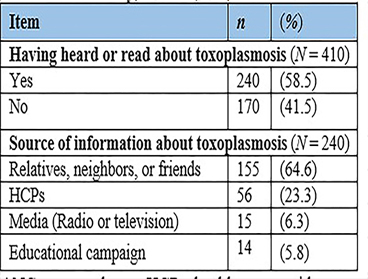
Results: Of 410 women, 58.5% had heard of toxoplasmosis. Of these, 53.3% had good knowledge and 73.3% had positive attitudes towards it. Women with no previous miscarriage or premature birth had significantly higher levels of poor knowledge (OR = 4.1, 95% CI: 2.39–7.10; p <0.001 and OR = 2.9, 95% CI: 1.61–5.05; p <0.001, respectively) and negative attitudes (OR = 5.6, 95% CI: 23.00–10.57; p <0.001 and OR = 2.7, 95% CI: 1.36–5.48; p = 0.004, respectively) than their counterparts. Negative attitudes were significantly higher in primigravida than multigravida women (OR = 2.1, 95% CI: 1.17–3.79; p = 0.012), but significantly lower among women in the first (OR = 0.3, 95% CI: 0.20–0.56; p <0.001) or second trimester (OR = 0.2, 95% CI: 0.10–0.48; p <0.001) than their counterparts. Acceptable practices were reported by 95.4% of women, with no association with demographic or obstetric characteristics.
Conclusion: There is a need for educational interventions for pregnant women in Sana’a about toxoplasmosis to prevent its potential adverse events in their fetuses.
Keywords
Attitude; Knowledge Practice Pregnancy
How to Cite This Article
Rashad Abdul-Ghani, Asma’a Al-Awadi, Abeer S. Oqbah, Fowziea A. Hujaira, Manal A. Alkokbany, Moniba E. Gaber, Taghreed M. Al-Mansouri, Taif A. Al-Dubai, Tayba G. Al-Dhubhani (2024). Knowledge, attitudes and practices towards toxoplasmosis among pregnant women receiving antenatal care in Sana'a city, Yemen. Sana'a University Journal of Medicine and Health Sciences, 42 - 55. DOI: https://doi.org/10.59628/jchm.v18i3.1034
Rashad Abdul-Ghani, Asma’a Al-Awadi, Abeer S. Oqbah, Fowziea A. Hujaira, Manal A. Alkokbany, Moniba E. Gaber, Taghreed M. Al-Mansouri, Taif A. Al-Dubai, Tayba G. Al-Dhubhani . “Knowledge, attitudes and practices towards toxoplasmosis among pregnant women receiving antenatal care in Sana'a city, Yemen.” Sana'a University Journal of Medicine and Health Sciences, 2024, pp. 42 - 55. https://doi.org/10.59628/jchm.v18i3.1034. Accessed 10 Nov. 2026.
Rashad Abdul-Ghani, Asma’a Al-Awadi, Abeer S. Oqbah, Fowziea A. Hujaira, Manal A. Alkokbany, Moniba E. Gaber, Taghreed M. Al-Mansouri, Taif A. Al-Dubai, Tayba G. Al-Dhubhani . 2024. “Knowledge, attitudes and practices towards toxoplasmosis among pregnant women receiving antenatal care in Sana'a city, Yemen.” Sana'a University Journal of Medicine and Health Sciences : 42 - 55. DOI: https://doi.org/10.59628/jchm.v18i3.1034
Rashad Abdul-Ghani, Asma’a Al-Awadi, Abeer S. Oqbah, Fowziea A. Hujaira, Manal A. Alkokbany, Moniba E. Gaber, Taghreed M. Al-Mansouri, Taif A. Al-Dubai, Tayba G. Al-Dhubhani (2024) ‘Knowledge, attitudes and practices towards toxoplasmosis among pregnant women receiving antenatal care in Sana'a city, Yemen’, Sana'a University Journal of Medicine and Health Sciences, pp. 42 - 55. doi: 10.59628/jchm.v18i3.1034
@article{jchm2024_art1034,
    author  = {Rashad Abdul-Ghani, Asma’a Al-Awadi, Abeer S. Oqbah, Fowziea A. Hujaira, Manal A. Alkokbany, Moniba E. Gaber, Taghreed M.  Al-Mansouri, Taif A. Al-Dubai, Tayba G. Al-Dhubhani },
    title   = {Knowledge, attitudes and practices towards toxoplasmosis among pregnant women receiving antenatal care in Sana'a city, Yemen},
    journal = {Sana'a University Journal of Medicine and Health Sciences},    year    = {2024},    month   = {September},    pages   = {42 - 55},    doi     = {10.59628/jchm.v18i3.1034},
    url     = {https://doi.org/10.59628/jchm.v18i3.1034},}
Citation copied!
Contact Authors
Knowledge, attitudes and practices towards toxoplasmosis among pregnant women receiving antenatal care in Sana'a city, Yemen
Email copied!
Acute Myeloid Leukemia among Patients attending Sana’a Hospitals, Yemen: Prevalence, Subtypes and Hematological Patterns
Mohammed Abdulkader Al-Nuzaili, Khaled Abdulkarem Al-Moyed, Yehia Hamoud Al-Shami, Khaled Saad Al-Khamesy, Abdulwahab Mohammed Al-Mutahar, Sumiah Hamoud Abu Huroob
56 - 63
2024-09-18
Abstract
Objectives: Acute myeloid leukemia (AML) is malignant disorder of cells of myeloid lineage in the bone marrow due to chromosomal abnormalities, leading to accumulation of myeloblasts in the bone marrow and infiltration to peripheral tissues. The aim of this study was to determine the prevalence, subtypes and hematological patterns of AML among patients attending Sana’a hospitals, Yemen.
Materials and methods: This cross-sectional study was carried out on total 257 patients with hematological malignancies (HMs) during the period from November 1, 2023 to March 31, 2024. Among HMs, there were 79 patients diagnosed with AML by complete blood count (CBC), by Giemsa stained blood/BM films, and by immunophenotyping using flow cytometry. Data was analyzed using SPSS-26.
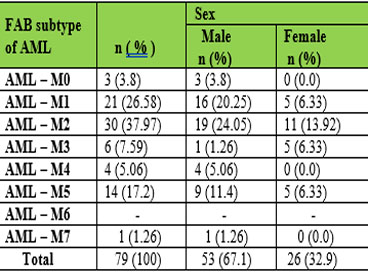
Results: Among 257 patients with HMs, AML was found in 79 patients with prevalence of 30.7%. AML patients included 53 (67.1%) males and 26 (32.9%) females., with M:F ratio of 2:1 and aged between 4 and 80 years, FAB-M2 was the most common subtype of AML in 30 (37.97%) of patients; among them, there were 19 (24.05%) males and 11 (13.92%) females, the M:F ratio is 1.7:1. FAB-M2 was followed by M1 (26.58), M5 (17.2), M3 (7.59), M4 (5.06), M0 (3.8) and M7 (1.26). The hematological patterns included decreased Hb, increased WBC and decreased platelets in 97.5%, 82.3% and 96.2% of patients, respectively.
Conclusion: Leukemia was the most prevalent type among hematological malignancies. The prevalence of AML was high and represent the second leukemia type. AML-M2 was the common subtype of AML.
Keywords
Acute myeloid leukemia, Prevalence, Subtypes, Hematological patterns, Sana’a, Yemen.
How to Cite This Article
Mohammed Abdulkader Al-Nuzaili, Khaled Abdulkarem Al-Moyed, Yehia Hamoud Al-Shami, Khaled Saad Al-Khamesy, Abdulwahab Mohammed Al-Mutahar, Sumiah Hamoud Abu Huroob (2024). Acute Myeloid Leukemia among Patients attending Sana’a Hospitals, Yemen: Prevalence, Subtypes and Hematological Patterns. Sana'a University Journal of Medicine and Health Sciences, 56 - 63. DOI: https://doi.org/10.59628/jchm.v18i3.1212
Mohammed Abdulkader Al-Nuzaili, Khaled Abdulkarem Al-Moyed, Yehia Hamoud Al-Shami, Khaled Saad Al-Khamesy, Abdulwahab Mohammed Al-Mutahar, Sumiah Hamoud Abu Huroob . “Acute Myeloid Leukemia among Patients attending Sana’a Hospitals, Yemen: Prevalence, Subtypes and Hematological Patterns.” Sana'a University Journal of Medicine and Health Sciences, 2024, pp. 56 - 63. https://doi.org/10.59628/jchm.v18i3.1212. Accessed 10 Nov. 2026.
Mohammed Abdulkader Al-Nuzaili, Khaled Abdulkarem Al-Moyed, Yehia Hamoud Al-Shami, Khaled Saad Al-Khamesy, Abdulwahab Mohammed Al-Mutahar, Sumiah Hamoud Abu Huroob . 2024. “Acute Myeloid Leukemia among Patients attending Sana’a Hospitals, Yemen: Prevalence, Subtypes and Hematological Patterns.” Sana'a University Journal of Medicine and Health Sciences : 56 - 63. DOI: https://doi.org/10.59628/jchm.v18i3.1212
Mohammed Abdulkader Al-Nuzaili, Khaled Abdulkarem Al-Moyed, Yehia Hamoud Al-Shami, Khaled Saad Al-Khamesy, Abdulwahab Mohammed Al-Mutahar, Sumiah Hamoud Abu Huroob (2024) ‘Acute Myeloid Leukemia among Patients attending Sana’a Hospitals, Yemen: Prevalence, Subtypes and Hematological Patterns’, Sana'a University Journal of Medicine and Health Sciences, pp. 56 - 63. doi: 10.59628/jchm.v18i3.1212
@article{jchm2024_art1212,
    author  = {Mohammed Abdulkader Al-Nuzaili, Khaled Abdulkarem Al-Moyed, Yehia Hamoud Al-Shami, Khaled Saad Al-Khamesy, Abdulwahab Mohammed Al-Mutahar, Sumiah Hamoud Abu Huroob },
    title   = {Acute Myeloid Leukemia among Patients attending Sana’a Hospitals, Yemen: Prevalence, Subtypes and Hematological Patterns},
    journal = {Sana'a University Journal of Medicine and Health Sciences},    year    = {2024},    month   = {September},    pages   = {56 - 63},    doi     = {10.59628/jchm.v18i3.1212},
    url     = {https://doi.org/10.59628/jchm.v18i3.1212},}
Citation copied!
Contact Authors
Acute Myeloid Leukemia among Patients attending Sana’a Hospitals, Yemen: Prevalence, Subtypes and Hematological Patterns
Email copied!
Vulvovaginal candidiasis clinical signs, and distribution of Candida species
Abeer Abdulmahamood Mohammed Nasher , Hassan A Al-Shamahy, Ahmed Y Al-Jaufy, Azhar Azher Mohammed Al-Ankoshy, Emad Hassan Al-Shamahi
64 - 72
2024-09-18
Abstract
Background: Vulvovaginal candidiasis is a global issue of concern due to its association with economic costs, sexually transmitted infections, and ascending genital tract infection. The aim of this study was to determine clinical signs and species distribution of Candida species causing vulvovaginal candidiasis.
Methods: A cross-sectional study was conducted from December to June 2021-2024 among 400 women attending Obstetrics and Gynecology outpatient clinics in Sana'a City. The study involved collecting vaginal swabs from each participant and analyzing them in a microbiology laboratory. The swabs were used to identify yeast cells, fungal culturing, and germ tube formation tests. The study also used the VITEK II system to confirm species identification, with the VITEK® 2 YST ID identification card being used to identify Candida species.
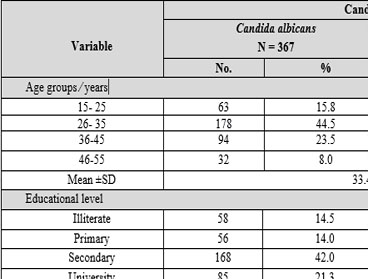
Results: A study of 400 women found that 91.8% were infected with Candida albicans, while 8.2% were infected with other non-Candida albicans. The majority were aged 26-35, with secondary education being the most common. Most were married, with 1-3 pregnancies. The most common sign distribution was vaginal discharge with a 99.5% prevalence. Dysuria was the lowest, with a 65.0% prevalence. Candida species were most frequently isolated, with Candida albicans being the most common. Candida tropicalis was found in 1 out of 6 women, while Candida dubliniensis, Candida famata, Candida glabrata, and Candida lusitaniae were found in 1 out of 6 women.
Conclusions: The high prevalence rate of vulvovaginal candidiasis and observation of a low prevalence rate of nonalbicans Candida species in the present study substantiate the importance of conducting continuous epidemiological surveys to measure changes in species distribution from C. albicans to non-albicans Candida species in Yemen.
Keywords
Candida albicans; Non-albicans Candida species ;Vulvovaginal candidiasis
How to Cite This Article
Abeer Abdulmahamood Mohammed Nasher , Hassan A Al-Shamahy, Ahmed Y Al-Jaufy, Azhar Azher Mohammed Al-Ankoshy, Emad Hassan Al-Shamahi (2024). Vulvovaginal candidiasis clinical signs, and distribution of Candida species . Sana'a University Journal of Medicine and Health Sciences, 64 - 72. DOI: https://doi.org/10.59628/jchm.v18i3.1249
Abeer Abdulmahamood Mohammed Nasher , Hassan A Al-Shamahy, Ahmed Y Al-Jaufy, Azhar Azher Mohammed Al-Ankoshy, Emad Hassan Al-Shamahi . “Vulvovaginal candidiasis clinical signs, and distribution of Candida species .” Sana'a University Journal of Medicine and Health Sciences, 2024, pp. 64 - 72. https://doi.org/10.59628/jchm.v18i3.1249. Accessed 10 Nov. 2026.
Abeer Abdulmahamood Mohammed Nasher , Hassan A Al-Shamahy, Ahmed Y Al-Jaufy, Azhar Azher Mohammed Al-Ankoshy, Emad Hassan Al-Shamahi . 2024. “Vulvovaginal candidiasis clinical signs, and distribution of Candida species .” Sana'a University Journal of Medicine and Health Sciences : 64 - 72. DOI: https://doi.org/10.59628/jchm.v18i3.1249
Abeer Abdulmahamood Mohammed Nasher , Hassan A Al-Shamahy, Ahmed Y Al-Jaufy, Azhar Azher Mohammed Al-Ankoshy, Emad Hassan Al-Shamahi (2024) ‘Vulvovaginal candidiasis clinical signs, and distribution of Candida species ’, Sana'a University Journal of Medicine and Health Sciences, pp. 64 - 72. doi: 10.59628/jchm.v18i3.1249
@article{jchm2024_art1249,
    author  = {Abeer Abdulmahamood Mohammed Nasher , Hassan A Al-Shamahy, Ahmed Y Al-Jaufy, Azhar Azher Mohammed Al-Ankoshy, Emad Hassan  Al-Shamahi },
    title   = {Vulvovaginal candidiasis clinical signs, and distribution of Candida species },
    journal = {Sana'a University Journal of Medicine and Health Sciences},    year    = {2024},    month   = {September},    pages   = {64 - 72},    doi     = {10.59628/jchm.v18i3.1249},
    url     = {https://doi.org/10.59628/jchm.v18i3.1249},}
Citation copied!
Contact Authors
Vulvovaginal candidiasis clinical signs, and distribution of Candida species
Email copied!