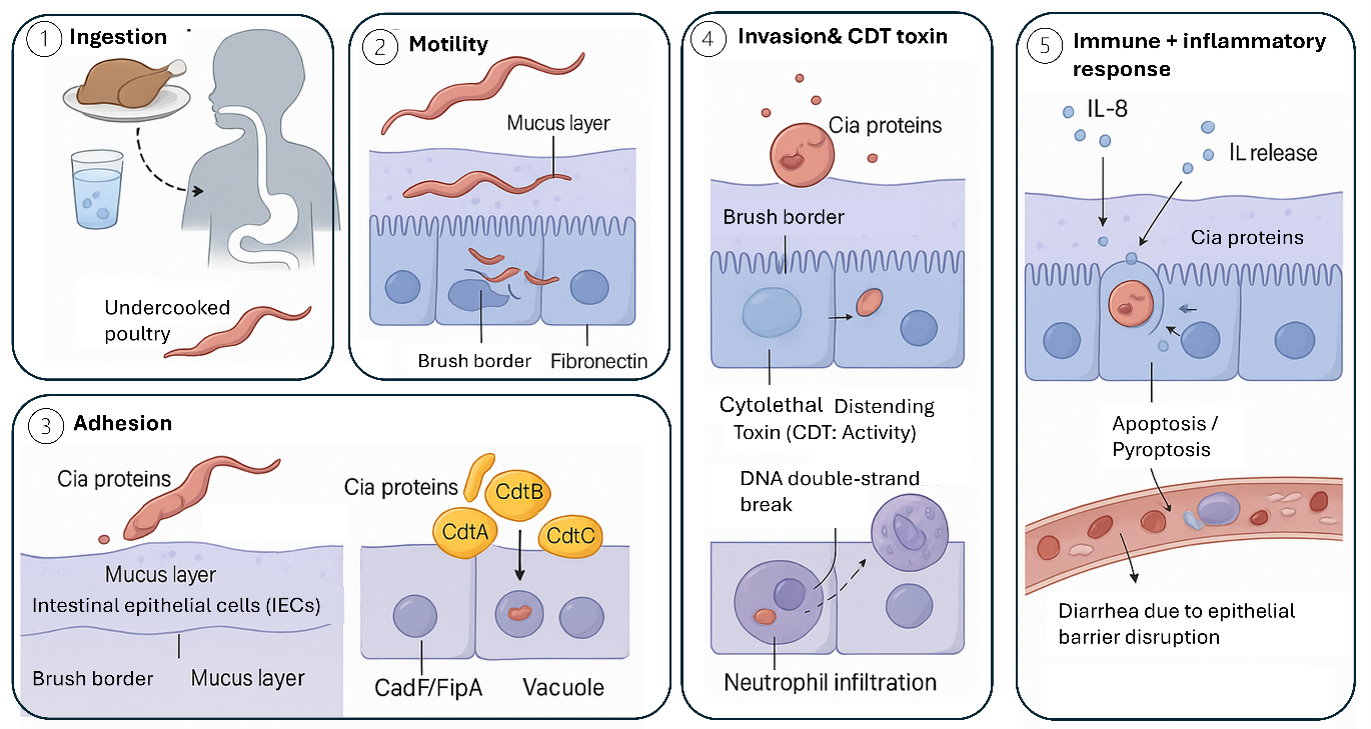
Diarrheal diseases continue to be a leading cause of illness and death among children under five years of age, particularly in low- and middle-income countries (LMICs), where inadequate water, sanitation, and hygiene (WASH), food contamination, and limited access to healthcare perpetuate a high burden of disease. Among bacterial pathogens, Campylobacter jejuni and Campylobacter coli are the major causes of pediatric gastroenteritis, most commonly transmitted through contaminated poultry, water sources, and contact with animals. This review summarizes recent evidence on pediatric Campylobacter infections, focusing on epidemiology, pathogenesis, and antimicrobial resistance (AMR), with an emphasis on LMICs and the specific context of Yemen. Infection rates are highest among children aged 6–24 months, coinciding with weaning practices, increased environmental exposure, and immature immune defense. Key virulence factors, including flagellar motility (FlaA), adhesion proteins (CadF, FlpA), invasion antigens (Cia), and cytolethal distending toxin (CDT), enable intestinal colonization, epithelial invasion, inflammation, and impaired nutrient absorption, contributing to growth faltering and environmental enteric dysfunction. Rising resistance to first-line therapies, particularly macrolides and fluoroquinolones, driven by mutations in gyrA and 23S rRNA, erm(B)-mediated methylation, and CmeABC efflux mechanisms, presents significant treatment challenges in pediatric populations. The interconnected roles of human, animal, and environmental reservoirs underscore the need for a One Health approach that integrates WASH improvements, food safety measures, and antimicrobial stewardship. Enhancing diagnostic capacity, AMR surveillance, and vaccine development while addressing vulnerabilities is critical for reducing Campylobacter-associated morbidity and improving child health outcomes in LMICs