
Microleakage Evaluation of PMMA Provisional Crowns Made with CAD/CAM Technique
الشريط الجانبي للمقالة
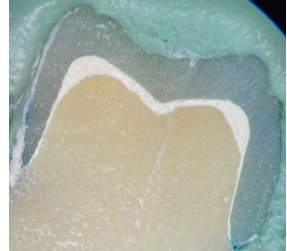
محتوى المقالة الرئيسي
الملخص
Background and Objective: The provisional phase in crown and bridgework significantly influences the success or failure of the final restoration. They protect the prepared teeth, maintain occlusal stability, and meet
aesthetic and functional needs during the period between tooth preparation and the final crown placement. Inadequate marginal sealing of temporary restorations may result in various complications; however, advancements
in digital dentistry have recently enhanced the precision and marginal integrity of these restorations. This study
aimed to evaluate the microleakage of poly methyl methacrylate (PMMA) provisional crowns made using the
computer-aided design/computer-aided manufacturing (CAD/CAM) technique.
Materials and Methods: This in vitro experimental study was conducted using 12 identical resin dies milled from
one extracted, standardized human mandibular first molar after preparation. Provisional crowns were designed
and fabricated using CAD/CAM techniques from pre-polymerized PMMA blocks. All crowns were cemented with
non-eugenol zinc oxide temporary cement (GC Free eugenol, Japan), subjected to static artificial aging in distilled
water at 55 °C for 5 days, and loaded with a 5 kg vertical force to simulate clinical seating. The samples were
then immersed in 2% methylene blue solution for 24 h, buccolingually sectioned using a low-speed diamond disc,
and examined under a stereomicroscope (Cambridge, UK) at 30× magnification. A total of 12 specimens were
evaluated, with four distinct areas examined in each specimen (Buccal A, Buccal B, Lingual A, Lingual B), and a
total of 48 areas were assessed for microleakage. Dye penetration was scored from 0 to 4 (0 = no penetration;
4 = penetration up to the occlusal surface). Data were analyzed using IBM SPSS Statistics (version 27). The
Wilcoxon signed-rank test was used to compare the buccal and lingual surfaces within the same sample. Friedman tests were used to assess the variations across all surfaces, and the chi-square test was used to evaluate
the association between fabrication technique and leakage score categories. The significance level was set at p
< 0.05.
Results: The CAD/CAM provisional crowns showed significantly low microleakage scores. Moreover, the buccal surfaces showed less microleakage than the lingual surfaces. Regarding occlusal surface microleakage, the
CAD/CAM provisional crowns showed no occlusal leakage. However, the differences in microleakage on the
lingual surfaces were not statistically significant. Furthermore, comparisons within the same group of surfaces
were not significant.
Conclusion: According to the findings of the present study, CAD/CAM-fabricated temporary crowns demonstrated good marginal integrity and low scores of microleakage. The lower values on the buccal surfaces and
the lack of occlusal microleakage indicate improved CAD/CAM restorative accuracy and adaptability.
التنزيلات
تفاصيل المقالة

هذا العمل مرخص بموجب Creative Commons Attribution-NonCommercial-NoDerivatives 4.0 International License.